Terrorist

Border czar says Catholic leaders should ‘support’ safety #Catholic 
 
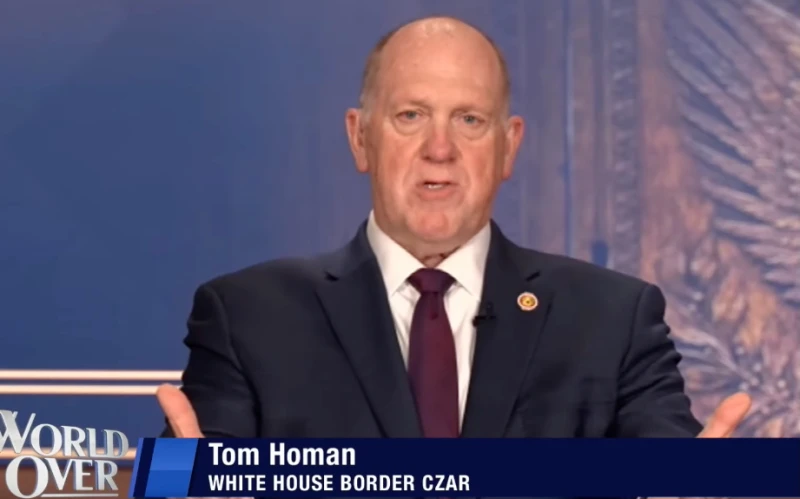
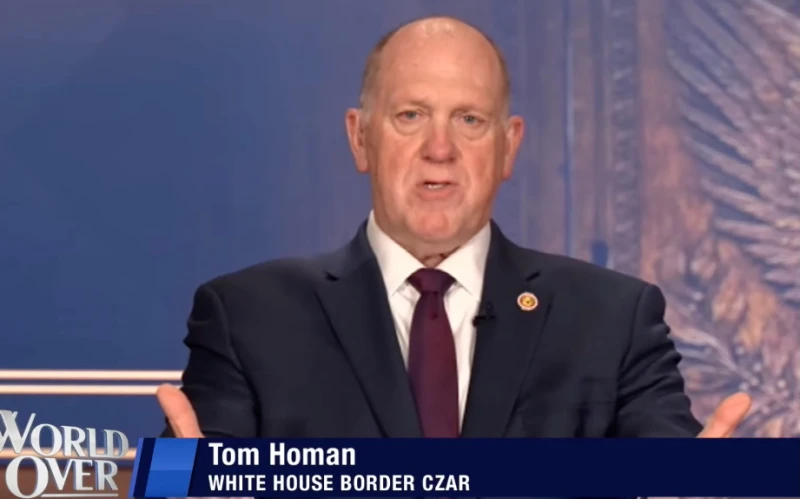
 Trump administration Border Czar Tom Homan interviewed on "The World Over with Raymond Arroyo" on Dec. 11, 2025. / Credit: EWTN News "The World Over with Raymond Arroyo"/Screenshot

Washington, D.C. Newsroom, Dec 12, 2025 / 07:00 am (CNA).
U.S. border czar Tom Homan said “the Catholic Church should support keeping the community safe” through a secure border and immigration enforcement. In an interview on “The World Over with Raymond Arroyo” on Thursday, Homan discussed President Donald Trump’s mass deportation policy and immigration enforcement.   “As President Trump promised on day one, we’re going to enforce immigration law,” Homan said. “That’s what he was voted into office to do, and that’s what we’re doing. We’re going to keep this promise to the American people.”“We’re going to prioritize public safety threats and national security threats,” Homan said. “The majority of people we arrest … have a criminal history. But also, like I’ve said from day one, if you’re in the country illegally, you’re not off the table.”Data on detainees’ criminal history is disputed. A Cato Institute report in November said 5% of people detained by ICE have violent convictions, and 73% had no convictions. Other analyses of deportation data also have shown a lower incidence of people arrested with prior criminal convictions.“Many people who’ve lived for years and years and years, never causing problems, have been deeply affected by what’s going on right now,” Pope Leo XIV said Nov. 4.Since President Trump began his second term, there have been about 600,000 deportations, Homan said. He added: The “results have been outstanding.”Family separationDuring the Biden administration, “just about a half a million children were smuggled into the country, separated from their families, put in the hands of criminal cartels,” Homan said. Homan said the administration has located tens of thousands of children during deportation operations.During the first two years of Trump’s first administration, U.S. authorities separated over 5,000 children from their parents at the U.S.-Mexico border, before ending the practice. In 2021, the Biden administration created a family reunification task force, and a federal judge ruled that border officials cannot use family separation as a deterrence tactic through 2031. Under the second Trump administration, enforcement actions have caused family separations through detentions.Homan told Arroyo: “President Trump promised from day one that we’re going to find these children because the last administration, even though half a million came across, they lost track of 300,000. They couldn’t find them. They weren’t responding to inquiries and their check-ins.”As of Dec. 5 there were 62,456 children “the Trump administration already found,” Homan reported.  “Some of these children were safe and with family. They’re just hiding out because they don’t want to be deported. But many of these children, and one is too many, we found were either in forced labor or forced sexual slavery. Some of these children are in really, really bad conditions,” Homan said.“About half that, 300,000, according to records, have already aged out, which means they’re over 18 already. But … we’re still going to try to locate them … We’re going to do everything we can till the last day of this administration to find these kids. Personally, I’ll do everything I can until I take my last breath on this Earth to find these kids,” Homan said.Carrying out deportations as a CatholicThe United States Conference of Catholic Bishops (USCCB) expressed concern “about the conditions in detention centers and the lack of access to pastoral care.” They wrote: “Human dignity and national security are not in conflict.” When asked how he reconciles bishops’ comments on immigration enforcement with his faith and duties, Homan said he is “willing to sit down with anybody in the Catholic Church and talk about it.”When Catholic leaders “talk about why these laws shouldn’t be enforced … they need to understand, if we don’t enforce laws, what message does that send to the world?” Homan said. He says it sends the message: “Cross the border. It’s illegal, but don’t worry about it.”People need to understand “a border wall saves lives,” Homan said. “I would ask the Catholic leadership, go talk to the hundreds of… moms and dads that have buried their children because their children were killed by someone that wasn’t supposed to be here.”During Biden’s presidency, Homan said “a record number of Americans died from fentanyl because that border was wide open … Hundreds of thousands of Americans died from a drug that came across an open border.”He said a “record number of people from terrorist-related countries” entered the country and said there was “historic increase in sex trafficking of women and children because enforcement was removed from the border.”“Over 4,000 aliens died making that journey, because we sent a message that there’s no consequences here,” Homan said. Response to Catholic leadershipThe USCCB through remarks and messages has called for humane treatment of migrants. In response, Homan said: “We treat everybody with dignity.” Bishops also stated their opposition to “the indiscriminate mass deportation of people.”Homan said: “When you come across the border illegally, not only is it a crime, but you’re cheating the system.”“There are millions of people, millions that are standing in line, taking their test, doing the background investigation, paying their fees to be part of the greatest nation on Earth,” Homan said.“The most humane thing you can do is enforce the law, secure the border, because it saves lives. The Catholic Church should support keeping the community safe again. But I’m saying this, if you’re in the country legally, it’s not OK. Illegal migration is not a victimless crime. I wish Catholic leadership would go with me. Take a border trip with me,” Homan said.“Look at some of the investigations I do. Wear my shoes … You may not agree with me 100% in the end, but you will certainly understand the importance of border security,” Homan said.

Border czar says Catholic leaders should ‘support’ safety #Catholic Trump administration Border Czar Tom Homan interviewed on "The World Over with Raymond Arroyo" on Dec. 11, 2025. / Credit: EWTN News "The World Over with Raymond Arroyo"/Screenshot Washington, D.C. Newsroom, Dec 12, 2025 / 07:00 am (CNA). U.S. border czar Tom Homan said “the Catholic Church should support keeping the community safe” through a secure border and immigration enforcement. In an interview on “The World Over with Raymond Arroyo” on Thursday, Homan discussed President Donald Trump’s mass deportation policy and immigration enforcement.   “As President Trump promised on day one, we’re going to enforce immigration law,” Homan said. “That’s what he was voted into office to do, and that’s what we’re doing. We’re going to keep this promise to the American people.”“We’re going to prioritize public safety threats and national security threats,” Homan said. “The majority of people we arrest … have a criminal history. But also, like I’ve said from day one, if you’re in the country illegally, you’re not off the table.”Data on detainees’ criminal history is disputed. A Cato Institute report in November said 5% of people detained by ICE have violent convictions, and 73% had no convictions. Other analyses of deportation data also have shown a lower incidence of people arrested with prior criminal convictions.“Many people who’ve lived for years and years and years, never causing problems, have been deeply affected by what’s going on right now,” Pope Leo XIV said Nov. 4.Since President Trump began his second term, there have been about 600,000 deportations, Homan said. He added: The “results have been outstanding.”Family separationDuring the Biden administration, “just about a half a million children were smuggled into the country, separated from their families, put in the hands of criminal cartels,” Homan said. Homan said the administration has located tens of thousands of children during deportation operations.During the first two years of Trump’s first administration, U.S. authorities separated over 5,000 children from their parents at the U.S.-Mexico border, before ending the practice. In 2021, the Biden administration created a family reunification task force, and a federal judge ruled that border officials cannot use family separation as a deterrence tactic through 2031. Under the second Trump administration, enforcement actions have caused family separations through detentions.Homan told Arroyo: “President Trump promised from day one that we’re going to find these children because the last administration, even though half a million came across, they lost track of 300,000. They couldn’t find them. They weren’t responding to inquiries and their check-ins.”As of Dec. 5 there were 62,456 children “the Trump administration already found,” Homan reported.  “Some of these children were safe and with family. They’re just hiding out because they don’t want to be deported. But many of these children, and one is too many, we found were either in forced labor or forced sexual slavery. Some of these children are in really, really bad conditions,” Homan said.“About half that, 300,000, according to records, have already aged out, which means they’re over 18 already. But … we’re still going to try to locate them … We’re going to do everything we can till the last day of this administration to find these kids. Personally, I’ll do everything I can until I take my last breath on this Earth to find these kids,” Homan said.Carrying out deportations as a CatholicThe United States Conference of Catholic Bishops (USCCB) expressed concern “about the conditions in detention centers and the lack of access to pastoral care.” They wrote: “Human dignity and national security are not in conflict.” When asked how he reconciles bishops’ comments on immigration enforcement with his faith and duties, Homan said he is “willing to sit down with anybody in the Catholic Church and talk about it.”When Catholic leaders “talk about why these laws shouldn’t be enforced … they need to understand, if we don’t enforce laws, what message does that send to the world?” Homan said. He says it sends the message: “Cross the border. It’s illegal, but don’t worry about it.”People need to understand “a border wall saves lives,” Homan said. “I would ask the Catholic leadership, go talk to the hundreds of… moms and dads that have buried their children because their children were killed by someone that wasn’t supposed to be here.”During Biden’s presidency, Homan said “a record number of Americans died from fentanyl because that border was wide open … Hundreds of thousands of Americans died from a drug that came across an open border.”He said a “record number of people from terrorist-related countries” entered the country and said there was “historic increase in sex trafficking of women and children because enforcement was removed from the border.”“Over 4,000 aliens died making that journey, because we sent a message that there’s no consequences here,” Homan said. Response to Catholic leadershipThe USCCB through remarks and messages has called for humane treatment of migrants. In response, Homan said: “We treat everybody with dignity.” Bishops also stated their opposition to “the indiscriminate mass deportation of people.”Homan said: “When you come across the border illegally, not only is it a crime, but you’re cheating the system.”“There are millions of people, millions that are standing in line, taking their test, doing the background investigation, paying their fees to be part of the greatest nation on Earth,” Homan said.“The most humane thing you can do is enforce the law, secure the border, because it saves lives. The Catholic Church should support keeping the community safe again. But I’m saying this, if you’re in the country legally, it’s not OK. Illegal migration is not a victimless crime. I wish Catholic leadership would go with me. Take a border trip with me,” Homan said.“Look at some of the investigations I do. Wear my shoes … You may not agree with me 100% in the end, but you will certainly understand the importance of border security,” Homan said.


Trump administration Border Czar Tom Homan interviewed on "The World Over with Raymond Arroyo" on Dec. 11, 2025. / Credit: EWTN News "The World Over with Raymond Arroyo"/Screenshot

Washington, D.C. Newsroom, Dec 12, 2025 / 07:00 am (CNA).

U.S. border czar Tom Homan said “the Catholic Church should support keeping the community safe” through a secure border and immigration enforcement. 

In an interview on “The World Over with Raymond Arroyo” on Thursday, Homan discussed President Donald Trump’s mass deportation policy and immigration enforcement.   

“As President Trump promised on day one, we’re going to enforce immigration law,” Homan said. “That’s what he was voted into office to do, and that’s what we’re doing. We’re going to keep this promise to the American people.”

“We’re going to prioritize public safety threats and national security threats,” Homan said. “The majority of people we arrest … have a criminal history. But also, like I’ve said from day one, if you’re in the country illegally, you’re not off the table.”

Data on detainees’ criminal history is disputed. A Cato Institute report in November said 5% of people detained by ICE have violent convictions, and 73% had no convictions. Other analyses of deportation data also have shown a lower incidence of people arrested with prior criminal convictions.

“Many people who’ve lived for years and years and years, never causing problems, have been deeply affected by what’s going on right now,” Pope Leo XIV said Nov. 4.

Since President Trump began his second term, there have been about 600,000 deportations, Homan said. He added: The “results have been outstanding.”

Family separation

During the Biden administration, “just about a half a million children were smuggled into the country, separated from their families, put in the hands of criminal cartels,” Homan said. Homan said the administration has located tens of thousands of children during deportation operations.

During the first two years of Trump’s first administration, U.S. authorities separated over 5,000 children from their parents at the U.S.-Mexico border, before ending the practice. In 2021, the Biden administration created a family reunification task force, and a federal judge ruled that border officials cannot use family separation as a deterrence tactic through 2031. 

Under the second Trump administration, enforcement actions have caused family separations through detentions.

Homan told Arroyo: “President Trump promised from day one that we’re going to find these children because the last administration, even though half a million came across, they lost track of 300,000. They couldn’t find them. They weren’t responding to inquiries and their check-ins.”

As of Dec. 5 there were 62,456 children “the Trump administration already found,” Homan reported.  

“Some of these children were safe and with family. They’re just hiding out because they don’t want to be deported. But many of these children, and one is too many, we found were either in forced labor or forced sexual slavery. Some of these children are in really, really bad conditions,” Homan said.

“About half that, 300,000, according to records, have already aged out, which means they’re over 18 already. But … we’re still going to try to locate them … We’re going to do everything we can till the last day of this administration to find these kids. Personally, I’ll do everything I can until I take my last breath on this Earth to find these kids,” Homan said.

Carrying out deportations as a Catholic

The United States Conference of Catholic Bishops (USCCB) expressed concern “about the conditions in detention centers and the lack of access to pastoral care.” They wrote: “Human dignity and national security are not in conflict.” 

When asked how he reconciles bishops’ comments on immigration enforcement with his faith and duties, Homan said he is “willing to sit down with anybody in the Catholic Church and talk about it.”

When Catholic leaders “talk about why these laws shouldn’t be enforced … they need to understand, if we don’t enforce laws, what message does that send to the world?” Homan said. He says it sends the message: “Cross the border. It’s illegal, but don’t worry about it.”

People need to understand “a border wall saves lives,” Homan said. “I would ask the Catholic leadership, go talk to the hundreds of… moms and dads that have buried their children because their children were killed by someone that wasn’t supposed to be here.”

During Biden’s presidency, Homan said “a record number of Americans died from fentanyl because that border was wide open … Hundreds of thousands of Americans died from a drug that came across an open border.”

He said a “record number of people from terrorist-related countries” entered the country and said there was “historic increase in sex trafficking of women and children because enforcement was removed from the border.”

“Over 4,000 aliens died making that journey, because we sent a message that there’s no consequences here,” Homan said. 

Response to Catholic leadership

The USCCB through remarks and messages has called for humane treatment of migrants. In response, Homan said: “We treat everybody with dignity.” 

Bishops also stated their opposition to “the indiscriminate mass deportation of people.”

Homan said: “When you come across the border illegally, not only is it a crime, but you’re cheating the system.”

“There are millions of people, millions that are standing in line, taking their test, doing the background investigation, paying their fees to be part of the greatest nation on Earth,” Homan said.

“The most humane thing you can do is enforce the law, secure the border, because it saves lives. The Catholic Church should support keeping the community safe again. But I’m saying this, if you’re in the country legally, it’s not OK. Illegal migration is not a victimless crime. I wish Catholic leadership would go with me. Take a border trip with me,” Homan said.

“Look at some of the investigations I do. Wear my shoes … You may not agree with me 100% in the end, but you will certainly understand the importance of border security,” Homan said.

Read More
Filipino archbishop asks Catholics to attend protests against government corruption #Catholic 
 
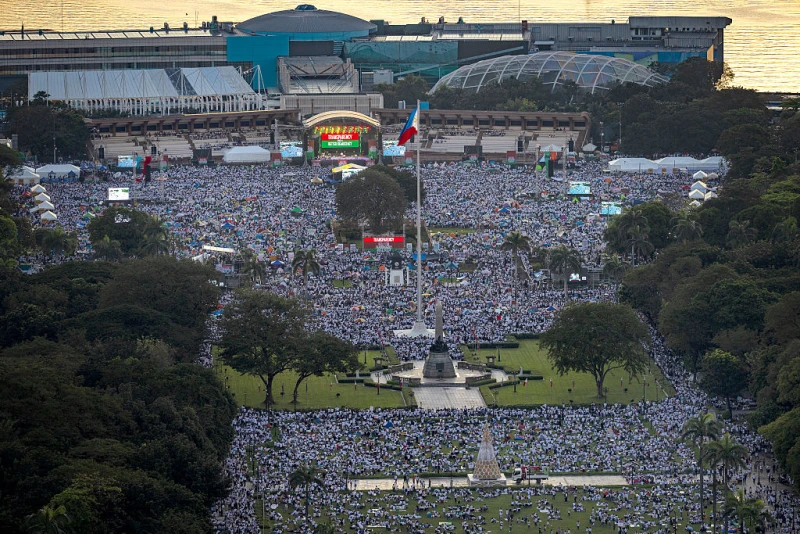
 Members of Iglesia ni Cristo take part in a protest against corruption on Nov. 16, 2025 in Manila, Philippines. A powerful Philippine megachurch, Iglesia ni Cristo, mobilized over half a million members to join growing protests over alleged corruption in multibillion-peso flood control projects. Catholic leaders in the Philippines have also mobilized Catholics to participate in similar marches. / Credit: Ezra Acayan/Getty Images

CNA Staff, Nov 28, 2025 / 05:53 am (CNA).
Here is a roundup of Catholic world news from the past week that you might have missed. Filipino archbishop asks Catholics to attend protests against government corruptionCardinal Pablo Virgilio David, the outgoing president of the Catholic Bishops’ Conference of the Philippines, has invited Filipinos across the country to attend rallies this weekend in Manila to protest government corruption. The protest comes on the heels of the Trillion Peso March held on Sept. 21, which drew hundreds of thousands.Thousands of Filipinos are expected to participate in the march Sunday, according to Herald Malaysia Online. The protests come amid a growing political crisis and rising public anger over scandals and abuses of government funds.Priest and security guard attacked in Trinidad A priest and a security guard at St. Benedict’s Roman Catholic Church in La Romaine, Trinidad, were the victims of an attack and robbery on Monday, Trinidad Express reported. Five attackers cut the electricity, bound the security guard, entered the rectory, woke and tied up the priest Father Derek Anton, and stole various electronics and cash. The crime is being investigated and the Archdiocese of Port of Spain has confirmed it. “At this time we ask you all for your prayers [for the victims] and for all victims of crime,” the archdiocese said in its statement.Mozambique archbishop pleads for humanitarian support to aid displaced peopleArchbishop Inacio Saure of Namula, Mozambique, has issued an urgent plea for humanitarian aid for more than 30,000 people who have been displaced in the Alua district of Memba. Saure, who is also president of the Episcopal Conference of Mozambique told Vatican News that the people have fled their homes “are currently sheltering in the administrative post of Alua” due to recent terrorist incursions in Nampula province. The archbishop said he has instructed Caritas in Nampula to respond to the crisis. Catholic Church rallies in Thailand to assist victims of historic flooding Historic flooding in southern Thailand has impacted over two million people, causing death and destruction and stranding many tourists. According to Vatican News, in response to the disaster Bishop Paul Trairong Multree of the Diocese of Surat Thani called a meeting Tuesday of Church-led relief groups. “Our relief team will get working tomorrow morning immediately with [the Catholic Office for Emergency Relief and Refugees], bringing drinking water and essentials to the people affected,” Trairong reportedly told LiCAS News, adding that supplies are expected to arrive from Bangkok and other dioceses. Tensions between Pakistanis and Afghans may erupt into new war, says Karachi priestEscalating tensions between Pakistan and Afghanistan have created fear that a new war may be on the horizon, according to Father Mario Angelo Rodrigues, a priest of the Archdiocese of Karachi and rector of St. Patrick’s Catholic High School in Karachi. He told Fides that resentments and fears have built in the wake of the influx of Afghani refugees and recent terrorist attacks. “To re-establish a climate of mutual trust and embark on a path to peace, the Pakistani government should accept the situation and grant residency to Afghan refugees who are living peacefully and have no links to terrorism, in the spirit of an open and pluralistic society,” the priest said. He also noted that “the government in Kabul should cooperate in combating terrorism, our common enemy. As Pakistani Christians, we support paths of acceptance and brotherhood so that we can live in true peace within our society and with our neighbors." Nun who fights human trafficking reacts to new UN report on femicideIn the wake of a new UN report highlighting the high numbers of women killed by men and new forms of violence being caused by tech developments, Sister Abby Avelino, the international coordinator of Talitha Kum, an international group that fights human trafficking, told Vatican News that, “Digital violence is increasingly widespread, and the online world is now a major site of exploitation.” The UN report shows that more than 38% of women are estimated to have experienced online violence, while 85% have witnessed abuse directed at other women on digital platforms.

Filipino archbishop asks Catholics to attend protests against government corruption #Catholic Members of Iglesia ni Cristo take part in a protest against corruption on Nov. 16, 2025 in Manila, Philippines. A powerful Philippine megachurch, Iglesia ni Cristo, mobilized over half a million members to join growing protests over alleged corruption in multibillion-peso flood control projects. Catholic leaders in the Philippines have also mobilized Catholics to participate in similar marches. / Credit: Ezra Acayan/Getty Images CNA Staff, Nov 28, 2025 / 05:53 am (CNA). Here is a roundup of Catholic world news from the past week that you might have missed. Filipino archbishop asks Catholics to attend protests against government corruptionCardinal Pablo Virgilio David, the outgoing president of the Catholic Bishops’ Conference of the Philippines, has invited Filipinos across the country to attend rallies this weekend in Manila to protest government corruption. The protest comes on the heels of the Trillion Peso March held on Sept. 21, which drew hundreds of thousands.Thousands of Filipinos are expected to participate in the march Sunday, according to Herald Malaysia Online. The protests come amid a growing political crisis and rising public anger over scandals and abuses of government funds.Priest and security guard attacked in Trinidad A priest and a security guard at St. Benedict’s Roman Catholic Church in La Romaine, Trinidad, were the victims of an attack and robbery on Monday, Trinidad Express reported. Five attackers cut the electricity, bound the security guard, entered the rectory, woke and tied up the priest Father Derek Anton, and stole various electronics and cash. The crime is being investigated and the Archdiocese of Port of Spain has confirmed it. “At this time we ask you all for your prayers [for the victims] and for all victims of crime,” the archdiocese said in its statement.Mozambique archbishop pleads for humanitarian support to aid displaced peopleArchbishop Inacio Saure of Namula, Mozambique, has issued an urgent plea for humanitarian aid for more than 30,000 people who have been displaced in the Alua district of Memba. Saure, who is also president of the Episcopal Conference of Mozambique told Vatican News that the people have fled their homes “are currently sheltering in the administrative post of Alua” due to recent terrorist incursions in Nampula province. The archbishop said he has instructed Caritas in Nampula to respond to the crisis. Catholic Church rallies in Thailand to assist victims of historic flooding Historic flooding in southern Thailand has impacted over two million people, causing death and destruction and stranding many tourists. According to Vatican News, in response to the disaster Bishop Paul Trairong Multree of the Diocese of Surat Thani called a meeting Tuesday of Church-led relief groups. “Our relief team will get working tomorrow morning immediately with [the Catholic Office for Emergency Relief and Refugees], bringing drinking water and essentials to the people affected,” Trairong reportedly told LiCAS News, adding that supplies are expected to arrive from Bangkok and other dioceses. Tensions between Pakistanis and Afghans may erupt into new war, says Karachi priestEscalating tensions between Pakistan and Afghanistan have created fear that a new war may be on the horizon, according to Father Mario Angelo Rodrigues, a priest of the Archdiocese of Karachi and rector of St. Patrick’s Catholic High School in Karachi. He told Fides that resentments and fears have built in the wake of the influx of Afghani refugees and recent terrorist attacks. “To re-establish a climate of mutual trust and embark on a path to peace, the Pakistani government should accept the situation and grant residency to Afghan refugees who are living peacefully and have no links to terrorism, in the spirit of an open and pluralistic society,” the priest said. He also noted that “the government in Kabul should cooperate in combating terrorism, our common enemy. As Pakistani Christians, we support paths of acceptance and brotherhood so that we can live in true peace within our society and with our neighbors.” Nun who fights human trafficking reacts to new UN report on femicideIn the wake of a new UN report highlighting the high numbers of women killed by men and new forms of violence being caused by tech developments, Sister Abby Avelino, the international coordinator of Talitha Kum, an international group that fights human trafficking, told Vatican News that, “Digital violence is increasingly widespread, and the online world is now a major site of exploitation.” The UN report shows that more than 38% of women are estimated to have experienced online violence, while 85% have witnessed abuse directed at other women on digital platforms.


Members of Iglesia ni Cristo take part in a protest against corruption on Nov. 16, 2025 in Manila, Philippines. A powerful Philippine megachurch, Iglesia ni Cristo, mobilized over half a million members to join growing protests over alleged corruption in multibillion-peso flood control projects. Catholic leaders in the Philippines have also mobilized Catholics to participate in similar marches. / Credit: Ezra Acayan/Getty Images

CNA Staff, Nov 28, 2025 / 05:53 am (CNA).

Here is a roundup of Catholic world news from the past week that you might have missed. 

Filipino archbishop asks Catholics to attend protests against government corruption

Cardinal Pablo Virgilio David, the outgoing president of the Catholic Bishops’ Conference of the Philippines, has invited Filipinos across the country to attend rallies this weekend in Manila to protest government corruption. The protest comes on the heels of the Trillion Peso March held on Sept. 21, which drew hundreds of thousands.

Thousands of Filipinos are expected to participate in the march Sunday, according to Herald Malaysia Online. The protests come amid a growing political crisis and rising public anger over scandals and abuses of government funds.

Priest and security guard attacked in Trinidad 

A priest and a security guard at St. Benedict’s Roman Catholic Church in La Romaine, Trinidad, were the victims of an attack and robbery on Monday, Trinidad Express reported.

Five attackers cut the electricity, bound the security guard, entered the rectory, woke and tied up the priest Father Derek Anton, and stole various electronics and cash.

The crime is being investigated and the Archdiocese of Port of Spain has confirmed it. “At this time we ask you all for your prayers [for the victims] and for all victims of crime,” the archdiocese said in its statement.

Mozambique archbishop pleads for humanitarian support to aid displaced people

Archbishop Inacio Saure of Namula, Mozambique, has issued an urgent plea for humanitarian aid for more than 30,000 people who have been displaced in the Alua district of Memba.

Saure, who is also president of the Episcopal Conference of Mozambique told Vatican News that the people have fled their homes “are currently sheltering in the administrative post of Alua” due to recent terrorist incursions in Nampula province. The archbishop said he has instructed Caritas in Nampula to respond to the crisis. 

Catholic Church rallies in Thailand to assist victims of historic flooding

Historic flooding in southern Thailand has impacted over two million people, causing death and destruction and stranding many tourists. According to Vatican News, in response to the disaster Bishop Paul Trairong Multree of the Diocese of Surat Thani called a meeting Tuesday of Church-led relief groups.

“Our relief team will get working tomorrow morning immediately with [the Catholic Office for Emergency Relief and Refugees], bringing drinking water and essentials to the people affected,” Trairong reportedly told LiCAS News, adding that supplies are expected to arrive from Bangkok and other dioceses.

Tensions between Pakistanis and Afghans may erupt into new war, says Karachi priest

Escalating tensions between Pakistan and Afghanistan have created fear that a new war may be on the horizon, according to Father Mario Angelo Rodrigues, a priest of the Archdiocese of Karachi and rector of St. Patrick’s Catholic High School in Karachi.

He told Fides that resentments and fears have built in the wake of the influx of Afghani refugees and recent terrorist attacks. 

“To re-establish a climate of mutual trust and embark on a path to peace, the Pakistani government should accept the situation and grant residency to Afghan refugees who are living peacefully and have no links to terrorism, in the spirit of an open and pluralistic society,” the priest said.

He also noted that “the government in Kabul should cooperate in combating terrorism, our common enemy. As Pakistani Christians, we support paths of acceptance and brotherhood so that we can live in true peace within our society and with our neighbors.”

Nun who fights human trafficking reacts to new UN report on femicide

In the wake of a new UN report highlighting the high numbers of women killed by men and new forms of violence being caused by tech developments, Sister Abby Avelino, the international coordinator of Talitha Kum, an international group that fights human trafficking, told Vatican News that, “Digital violence is increasingly widespread, and the online world is now a major site of exploitation.” 

The UN report shows that more than 38% of women are estimated to have experienced online violence, while 85% have witnessed abuse directed at other women on digital platforms.

Read More
Report details persecution of Turkish Christians ahead of Pope Leo XIV's visit #Catholic 
 
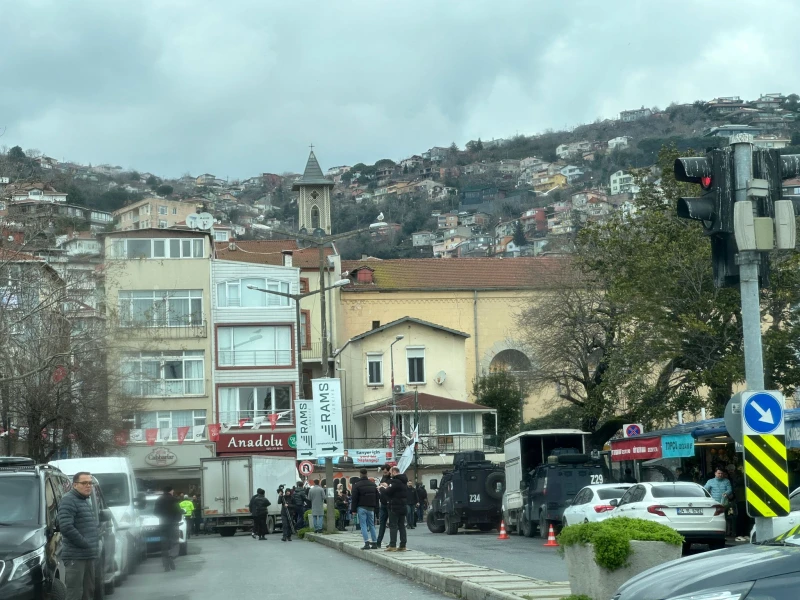
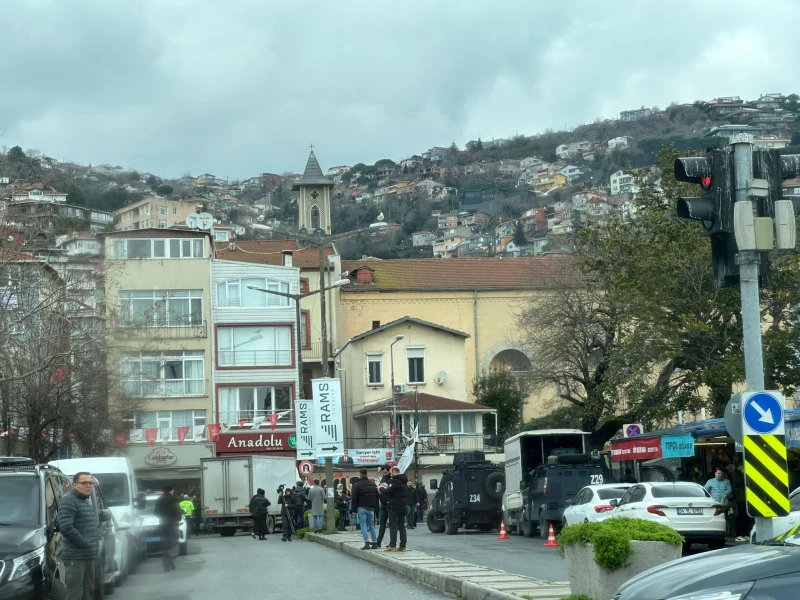
 The scene outside a Catholic church in Istanbul, Turkey, where a reported armed attack took place on Jan. 28, 2024. / Credit: Rudolf Gehrig/EWTN

Washington, D.C. Newsroom, Nov 26, 2025 / 16:15 pm (CNA).
A Christian advocacy group’s report details “legal, institutional, and social hostility” toward Turkish Christians as Pope Leo XIV begins his six-day visit to Turkey and Lebanon Thursday.The report from The European Centre for Law and Justice (ECLJ), titled “The Persecution of Christians in Turkey,” explores government interference against clergy and Christian entities, restrictions on foreign Christians who visit the country, and widespread social animosity toward the faithful, which sometimes includes direct violence.“Communities that were once integral to the cultural, religious, and historical fabric of Anatolia have been reduced to a fragile remnant,” the authors state.“Their disappearance is not the product of a single event but the cumulative result of restrictive legislation, administrative obstruction, property confiscations, denial of legal personality, and — more recently — arbitrary expulsions of clergy, missionaries, and converts,” they add.Modern-day Turkey, which was governed by Christians prior to the Ottoman Empire invasions in late Middle Ages, is still home to about 257,000 Christians. In 1915, Christians still accounted for about 20% of the Turkish population, but the number has dwindled over the past century and they now account for less than 0.3% of the population.Persecution of ChristiansThe report says hostility toward Christians is kept alive through environmental factors, such as Turkey’s refusal to recognize its past by continuing to deny the genocide of Armenians and other Christians during World War I. At that time, about 1.5 million Armenians and 500,000 other Christians were forcibly deported or massacred, and Turkey’s criminalization of “insulting the Turkish nation” and “insulting Turkishness” is often enforced to quell speech about the historical events, according to the report.It notes that politicians and state-run media frequently scapegoat Christians for societal issues and depict them as an external and internal threat, with one example being President Recep Tayyip Erdoğan referring to survivors of the genocide as “terrorists escaped from the sword” and another being the state-run Yeni Akit allegedly editing Wikipedia to smear Christians, Jews, and other groups.In some cases, this hostility yields violence, including a 2024 terrorist attack on a Catholic church that killed one person, and other acts of violence and vandalism.The report notes that Turkey signed the Treaty of Lausanne after the Armenian genocide, which granted people who believe some non-majority faiths full legal recognition and property rights.Yet, a narrow interpretation of the treaty ensures “a national narrative that presents Sunni Islam as the primary marker of Turkish identity,” the report says. The treaty also fails to recognize all Christians, only giving a specific reference to Greek Orthodox, Armenian Apostolic Christians, and Jews, but not Catholics or Protestants, according to the report.It states that Sunni Islam is often tied to Turkish identity in public education and the process to be exempt from compulsory Islamic education is burdensome for Christians not covered under the treaty.No church holds legal personality as a religious institution, which means patriarchates, dioceses, and churches cannot “own property in their own name, initiate legal proceedings, employ staff, open bank accounts, or formally interact with public authorities,” the report states.The government also interferes with religious leadership, prohibiting non-Turkish citizens from being elected as Ecumenical Patriarch, sitting on the Holy Synod, or participating in patriarchal elections in the Greek Orthodox Church. The government also regulates elections for leadership in the Armenian Apostolic Church.Turkey shut down the Greek Orthodox Halki Seminary in 1971 and — despite promises to let it reopen — keeps it shut down, according to the report.The report also says Turkey imposes legal constraints and administrative obstruction on Christian “community foundations,” which operate churches, schools, hospitals, and charitable institutions.This includes blocking board elections and failing to enforce court orders. One of the more egregious violations is imposing “mazbut” trusteeship, which ends Christian institutions’ legal recognition and grants control to the government, which essentially confiscates property, the report said.“These practices reveal a structural system designed to undermine the autonomy, continuity, and survival of Christian communities in Turkey,” the report states.According to the report, foreign Protestant pastors are often expelled from seminaries. More broadly, it states that foreign missionaries and converts are often targeted as “national security” threats and frequently expelled from Turkey. The authors encouraged Turkey to grant full legal recognition to all churches, halt interference in Christian organizations, protect places of worship, end arbitrary expulsions, and return property that has been confiscated.

Report details persecution of Turkish Christians ahead of Pope Leo XIV's visit #Catholic The scene outside a Catholic church in Istanbul, Turkey, where a reported armed attack took place on Jan. 28, 2024. / Credit: Rudolf Gehrig/EWTN Washington, D.C. Newsroom, Nov 26, 2025 / 16:15 pm (CNA). A Christian advocacy group’s report details “legal, institutional, and social hostility” toward Turkish Christians as Pope Leo XIV begins his six-day visit to Turkey and Lebanon Thursday.The report from The European Centre for Law and Justice (ECLJ), titled “The Persecution of Christians in Turkey,” explores government interference against clergy and Christian entities, restrictions on foreign Christians who visit the country, and widespread social animosity toward the faithful, which sometimes includes direct violence.“Communities that were once integral to the cultural, religious, and historical fabric of Anatolia have been reduced to a fragile remnant,” the authors state.“Their disappearance is not the product of a single event but the cumulative result of restrictive legislation, administrative obstruction, property confiscations, denial of legal personality, and — more recently — arbitrary expulsions of clergy, missionaries, and converts,” they add.Modern-day Turkey, which was governed by Christians prior to the Ottoman Empire invasions in late Middle Ages, is still home to about 257,000 Christians. In 1915, Christians still accounted for about 20% of the Turkish population, but the number has dwindled over the past century and they now account for less than 0.3% of the population.Persecution of ChristiansThe report says hostility toward Christians is kept alive through environmental factors, such as Turkey’s refusal to recognize its past by continuing to deny the genocide of Armenians and other Christians during World War I. At that time, about 1.5 million Armenians and 500,000 other Christians were forcibly deported or massacred, and Turkey’s criminalization of “insulting the Turkish nation” and “insulting Turkishness” is often enforced to quell speech about the historical events, according to the report.It notes that politicians and state-run media frequently scapegoat Christians for societal issues and depict them as an external and internal threat, with one example being President Recep Tayyip Erdoğan referring to survivors of the genocide as “terrorists escaped from the sword” and another being the state-run Yeni Akit allegedly editing Wikipedia to smear Christians, Jews, and other groups.In some cases, this hostility yields violence, including a 2024 terrorist attack on a Catholic church that killed one person, and other acts of violence and vandalism.The report notes that Turkey signed the Treaty of Lausanne after the Armenian genocide, which granted people who believe some non-majority faiths full legal recognition and property rights.Yet, a narrow interpretation of the treaty ensures “a national narrative that presents Sunni Islam as the primary marker of Turkish identity,” the report says. The treaty also fails to recognize all Christians, only giving a specific reference to Greek Orthodox, Armenian Apostolic Christians, and Jews, but not Catholics or Protestants, according to the report.It states that Sunni Islam is often tied to Turkish identity in public education and the process to be exempt from compulsory Islamic education is burdensome for Christians not covered under the treaty.No church holds legal personality as a religious institution, which means patriarchates, dioceses, and churches cannot “own property in their own name, initiate legal proceedings, employ staff, open bank accounts, or formally interact with public authorities,” the report states.The government also interferes with religious leadership, prohibiting non-Turkish citizens from being elected as Ecumenical Patriarch, sitting on the Holy Synod, or participating in patriarchal elections in the Greek Orthodox Church. The government also regulates elections for leadership in the Armenian Apostolic Church.Turkey shut down the Greek Orthodox Halki Seminary in 1971 and — despite promises to let it reopen — keeps it shut down, according to the report.The report also says Turkey imposes legal constraints and administrative obstruction on Christian “community foundations,” which operate churches, schools, hospitals, and charitable institutions.This includes blocking board elections and failing to enforce court orders. One of the more egregious violations is imposing “mazbut” trusteeship, which ends Christian institutions’ legal recognition and grants control to the government, which essentially confiscates property, the report said.“These practices reveal a structural system designed to undermine the autonomy, continuity, and survival of Christian communities in Turkey,” the report states.According to the report, foreign Protestant pastors are often expelled from seminaries. More broadly, it states that foreign missionaries and converts are often targeted as “national security” threats and frequently expelled from Turkey. The authors encouraged Turkey to grant full legal recognition to all churches, halt interference in Christian organizations, protect places of worship, end arbitrary expulsions, and return property that has been confiscated.


The scene outside a Catholic church in Istanbul, Turkey, where a reported armed attack took place on Jan. 28, 2024. / Credit: Rudolf Gehrig/EWTN

Washington, D.C. Newsroom, Nov 26, 2025 / 16:15 pm (CNA).

A Christian advocacy group’s report details “legal, institutional, and social hostility” toward Turkish Christians as Pope Leo XIV begins his six-day visit to Turkey and Lebanon Thursday.

The report from The European Centre for Law and Justice (ECLJ), titled “The Persecution of Christians in Turkey,” explores government interference against clergy and Christian entities, restrictions on foreign Christians who visit the country, and widespread social animosity toward the faithful, which sometimes includes direct violence.

“Communities that were once integral to the cultural, religious, and historical fabric of Anatolia have been reduced to a fragile remnant,” the authors state.

“Their disappearance is not the product of a single event but the cumulative result of restrictive legislation, administrative obstruction, property confiscations, denial of legal personality, and — more recently — arbitrary expulsions of clergy, missionaries, and converts,” they add.

Modern-day Turkey, which was governed by Christians prior to the Ottoman Empire invasions in late Middle Ages, is still home to about 257,000 Christians. In 1915, Christians still accounted for about 20% of the Turkish population, but the number has dwindled over the past century and they now account for less than 0.3% of the population.

Persecution of Christians

The report says hostility toward Christians is kept alive through environmental factors, such as Turkey’s refusal to recognize its past by continuing to deny the genocide of Armenians and other Christians during World War I. 

At that time, about 1.5 million Armenians and 500,000 other Christians were forcibly deported or massacred, and Turkey’s criminalization of “insulting the Turkish nation” and “insulting Turkishness” is often enforced to quell speech about the historical events, according to the report.

It notes that politicians and state-run media frequently scapegoat Christians for societal issues and depict them as an external and internal threat, with one example being President Recep Tayyip Erdoğan referring to survivors of the genocide as “terrorists escaped from the sword” and another being the state-run Yeni Akit allegedly editing Wikipedia to smear Christians, Jews, and other groups.

In some cases, this hostility yields violence, including a 2024 terrorist attack on a Catholic church that killed one person, and other acts of violence and vandalism.

The report notes that Turkey signed the Treaty of Lausanne after the Armenian genocide, which granted people who believe some non-majority faiths full legal recognition and property rights.

Yet, a narrow interpretation of the treaty ensures “a national narrative that presents Sunni Islam as the primary marker of Turkish identity,” the report says. The treaty also fails to recognize all Christians, only giving a specific reference to Greek Orthodox, Armenian Apostolic Christians, and Jews, but not Catholics or Protestants, according to the report.

It states that Sunni Islam is often tied to Turkish identity in public education and the process to be exempt from compulsory Islamic education is burdensome for Christians not covered under the treaty.

No church holds legal personality as a religious institution, which means patriarchates, dioceses, and churches cannot “own property in their own name, initiate legal proceedings, employ staff, open bank accounts, or formally interact with public authorities,” the report states.

The government also interferes with religious leadership, prohibiting non-Turkish citizens from being elected as Ecumenical Patriarch, sitting on the Holy Synod, or participating in patriarchal elections in the Greek Orthodox Church. The government also regulates elections for leadership in the Armenian Apostolic Church.

Turkey shut down the Greek Orthodox Halki Seminary in 1971 and — despite promises to let it reopen — keeps it shut down, according to the report.

The report also says Turkey imposes legal constraints and administrative obstruction on Christian “community foundations,” which operate churches, schools, hospitals, and charitable institutions.

This includes blocking board elections and failing to enforce court orders. One of the more egregious violations is imposing “mazbut” trusteeship, which ends Christian institutions’ legal recognition and grants control to the government, which essentially confiscates property, the report said.

“These practices reveal a structural system designed to undermine the autonomy, continuity, and survival of Christian communities in Turkey,” the report states.

According to the report, foreign Protestant pastors are often expelled from seminaries. More broadly, it states that foreign missionaries and converts are often targeted as “national security” threats and frequently expelled from Turkey. 

The authors encouraged Turkey to grant full legal recognition to all churches, halt interference in Christian organizations, protect places of worship, end arbitrary expulsions, and return property that has been confiscated.

Read More