thoughts

Disability advocates sue Delaware over allegedly ‘discriminatory’ assisted suicide law  #Catholic 
 
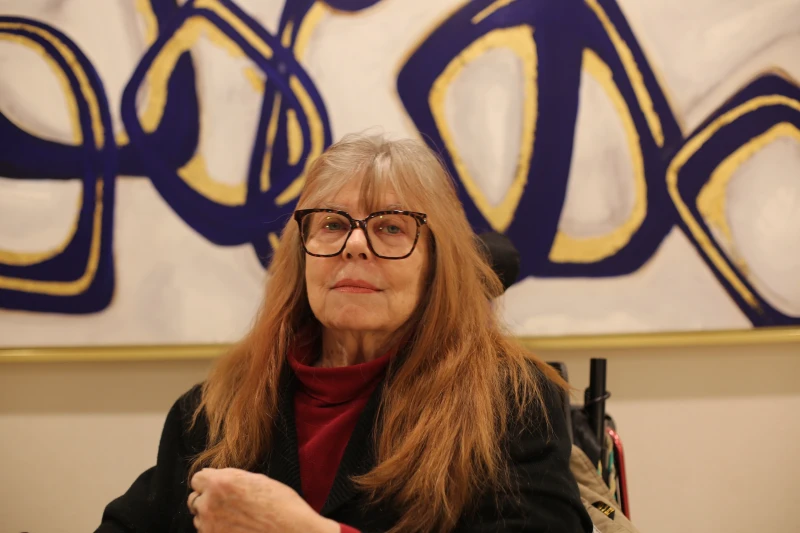
 “For patients with serious disabilities, this law will put us at risk of deadly discrimination," says Daniese McMullin-Powell, a polio survivor who has used a wheelchair for most of her life. / Credit: Institute for Patients' Rights

CNA Staff, Dec 10, 2025 / 06:10 am (CNA).
Several disability and patient advocacy groups filed a lawsuit in the U.S. District Court in Delaware on Dec. 8 alleging that Delaware’s new physician-assisted suicide law discriminates against people with disabilities. In May 2025, Delaware passed a bill legalizing physician-assisted suicide for terminally ill adults with a prognosis of six months or less to live. The law, which goes into effect Jan. 1, 2026, allows patients to self-administer lethal medication. The 74-page complaint alleges that the new law is unconstitutional under both Delaware and federal law and violates the Americans with Disabilities Act as well as the Fourteenth Amendment’s Equal Protection Clause, among other challenges.  Plaintiffs include the Institute for Patients’ Rights; The Freedom Center for Independent Living, Inc., in Middletown; the Delaware chapter of ADAPT; Not Dead Yet; United Spinal Association, the National Council on Independent Living; and disability advocate Sean Curran.The lawsuit, which names Gov. Matthew Meyer and the Delaware Department of Health and Human Services as two of several defendants, said that “people with life-threatening disabilities” are at “imminent risk” because of Delaware’s new law.   “Throughout the country, a state-endorsed narrative is rapidly spreading that threatens people with disabilities: namely, that people with life-threatening disabilities should be directed to suicide help and not suicide prevention,” the lawsuit read.“At its core, this is discrimination plain and simple,” the lawsuit continued. “With cuts in healthcare spending at the federal level, persons with life-threatening disabilities are now more vulnerable than ever.”The lawsuit alleges that, under the new law, people with life-threatening disabilities who express suicidal thoughts will be treated differently than other people who express suicidal thoughts. The new law lacks requirements for mental health screening for depression or other mental illness, “all of which are necessary for informed consent and a truly autonomous choice,” according to the lawsuit. Curran, a Delaware resident who has lived with a severe spinal cord injury for 36 years, called the law “repugnant.”“The act tells people like me that they should qualify for suicide help, not suicide prevention,” said Curran, who is a quadriplegic, meaning he is paralyzed in all four limbs.”The act devalues people like me,” Curran continued in a press release shared with CNA. “I have led a full life despite my disability.” Daniese McMullin-Powell, who is representing Delaware ADAPT in the lawsuit, said that the medical system already neglects people with disabilities.  “We do not need exacerbate its brokenness by adding an element where some patients are steered toward suicide,” said McMullin-Powell, who is a polio survivor and has used a wheelchair for most of her life. “For patients with serious disabilities, this law will put us at risk of deadly discrimination from doctors and insurance companies in Delaware to make subjective and speculative judgments based on their perception of our quality of life,” McMullin-Powell said, according to the press release. The legal group Ted Kittila of Halloran Farkas + Kittila LLP, who are representing the plaintiffs, called the law “ill-considered” and said it will “cause real harm to people who need real help.”“For too long, assisted suicide has been pitched as an act of mercy,” the group said in the press release. “For those in the disability community, it represents a real threat of continued discrimination.”  The office of Gov. Meyer did not respond to a request for comment in time for publication.

Disability advocates sue Delaware over allegedly ‘discriminatory’ assisted suicide law  #Catholic “For patients with serious disabilities, this law will put us at risk of deadly discrimination," says Daniese McMullin-Powell, a polio survivor who has used a wheelchair for most of her life. / Credit: Institute for Patients' Rights CNA Staff, Dec 10, 2025 / 06:10 am (CNA). Several disability and patient advocacy groups filed a lawsuit in the U.S. District Court in Delaware on Dec. 8 alleging that Delaware’s new physician-assisted suicide law discriminates against people with disabilities. In May 2025, Delaware passed a bill legalizing physician-assisted suicide for terminally ill adults with a prognosis of six months or less to live. The law, which goes into effect Jan. 1, 2026, allows patients to self-administer lethal medication. The 74-page complaint alleges that the new law is unconstitutional under both Delaware and federal law and violates the Americans with Disabilities Act as well as the Fourteenth Amendment’s Equal Protection Clause, among other challenges.  Plaintiffs include the Institute for Patients’ Rights; The Freedom Center for Independent Living, Inc., in Middletown; the Delaware chapter of ADAPT; Not Dead Yet; United Spinal Association, the National Council on Independent Living; and disability advocate Sean Curran.The lawsuit, which names Gov. Matthew Meyer and the Delaware Department of Health and Human Services as two of several defendants, said that “people with life-threatening disabilities” are at “imminent risk” because of Delaware’s new law.   “Throughout the country, a state-endorsed narrative is rapidly spreading that threatens people with disabilities: namely, that people with life-threatening disabilities should be directed to suicide help and not suicide prevention,” the lawsuit read.“At its core, this is discrimination plain and simple,” the lawsuit continued. “With cuts in healthcare spending at the federal level, persons with life-threatening disabilities are now more vulnerable than ever.”The lawsuit alleges that, under the new law, people with life-threatening disabilities who express suicidal thoughts will be treated differently than other people who express suicidal thoughts. The new law lacks requirements for mental health screening for depression or other mental illness, “all of which are necessary for informed consent and a truly autonomous choice,” according to the lawsuit. Curran, a Delaware resident who has lived with a severe spinal cord injury for 36 years, called the law “repugnant.”“The act tells people like me that they should qualify for suicide help, not suicide prevention,” said Curran, who is a quadriplegic, meaning he is paralyzed in all four limbs.”The act devalues people like me,” Curran continued in a press release shared with CNA. “I have led a full life despite my disability.” Daniese McMullin-Powell, who is representing Delaware ADAPT in the lawsuit, said that the medical system already neglects people with disabilities.  “We do not need exacerbate its brokenness by adding an element where some patients are steered toward suicide,” said McMullin-Powell, who is a polio survivor and has used a wheelchair for most of her life. “For patients with serious disabilities, this law will put us at risk of deadly discrimination from doctors and insurance companies in Delaware to make subjective and speculative judgments based on their perception of our quality of life,” McMullin-Powell said, according to the press release. The legal group Ted Kittila of Halloran Farkas + Kittila LLP, who are representing the plaintiffs, called the law “ill-considered” and said it will “cause real harm to people who need real help.”“For too long, assisted suicide has been pitched as an act of mercy,” the group said in the press release. “For those in the disability community, it represents a real threat of continued discrimination.”  The office of Gov. Meyer did not respond to a request for comment in time for publication.


“For patients with serious disabilities, this law will put us at risk of deadly discrimination," says Daniese McMullin-Powell, a polio survivor who has used a wheelchair for most of her life. / Credit: Institute for Patients' Rights

CNA Staff, Dec 10, 2025 / 06:10 am (CNA).

Several disability and patient advocacy groups filed a lawsuit in the U.S. District Court in Delaware on Dec. 8 alleging that Delaware’s new physician-assisted suicide law discriminates against people with disabilities. 

In May 2025, Delaware passed a bill legalizing physician-assisted suicide for terminally ill adults with a prognosis of six months or less to live. The law, which goes into effect Jan. 1, 2026, allows patients to self-administer lethal medication. 

The 74-page complaint alleges that the new law is unconstitutional under both Delaware and federal law and violates the Americans with Disabilities Act as well as the Fourteenth Amendment’s Equal Protection Clause, among other challenges.  

Plaintiffs include the Institute for Patients’ Rights; The Freedom Center for Independent Living, Inc., in Middletown; the Delaware chapter of ADAPT; Not Dead Yet; United Spinal Association, the National Council on Independent Living; and disability advocate Sean Curran.

The lawsuit, which names Gov. Matthew Meyer and the Delaware Department of Health and Human Services as two of several defendants, said that “people with life-threatening disabilities” are at “imminent risk” because of Delaware’s new law.   

“Throughout the country, a state-endorsed narrative is rapidly spreading that threatens people with disabilities: namely, that people with life-threatening disabilities should be directed to suicide help and not suicide prevention,” the lawsuit read.

“At its core, this is discrimination plain and simple,” the lawsuit continued. “With cuts in healthcare spending at the federal level, persons with life-threatening disabilities are now more vulnerable than ever.”

The lawsuit alleges that, under the new law, people with life-threatening disabilities who express suicidal thoughts will be treated differently than other people who express suicidal thoughts. The new law lacks requirements for mental health screening for depression or other mental illness, “all of which are necessary for informed consent and a truly autonomous choice,” according to the lawsuit. 

Curran, a Delaware resident who has lived with a severe spinal cord injury for 36 years, called the law “repugnant.”

“The act tells people like me that they should qualify for suicide help, not suicide prevention,” said Curran, who is a quadriplegic, meaning he is paralyzed in all four limbs.

“The act devalues people like me,” Curran continued in a press release shared with CNA. “I have led a full life despite my disability.” 

Daniese McMullin-Powell, who is representing Delaware ADAPT in the lawsuit, said that the medical system already neglects people with disabilities.  

“We do not need exacerbate its brokenness by adding an element where some patients are steered toward suicide,” said McMullin-Powell, who is a polio survivor and has used a wheelchair for most of her life. 

“For patients with serious disabilities, this law will put us at risk of deadly discrimination from doctors and insurance companies in Delaware to make subjective and speculative judgments based on their perception of our quality of life,” McMullin-Powell said, according to the press release. 

The legal group Ted Kittila of Halloran Farkas + Kittila LLP, who are representing the plaintiffs, called the law “ill-considered” and said it will “cause real harm to people who need real help.”

“For too long, assisted suicide has been pitched as an act of mercy,” the group said in the press release. “For those in the disability community, it represents a real threat of continued discrimination.”  

The office of Gov. Meyer did not respond to a request for comment in time for publication.

Read More
PHOTOS: Tickhill Psalter’s Jesse Tree shines in Morgan Library’s Advent exhibit #Catholic 
 
 Death of Uriah; David in Penance, from the Morgan’s famed Farnese Hours, demonstrates the enduring appeal of the penitential Psalms of David as seen in this early Renaissance book of hours. Italy, Rome, 1546. The Morgan Library & Museum, New York, MS M.69, fols, 63v-63r. Photography by Janny Chiu. / Credit: Courtesy of the New York Library

New York City, New York, Nov 30, 2025 / 08:00 am (CNA).
Part of the New York Public Library’s Spencer Collection, the Tickhill Psalter is on view throughout Advent and Christmas at The Morgan Library & Museum in its exhibit “Sing a New Song: The Psalms in Medieval Art and Life.” A full-page Jesse Tree introduces the Psalms in the Tickhill Psalter, a 14th-century illuminated manuscript from the Augustinian Worksop Priory in Nottinghamshire, England. Tree of Jesse (Psalm 1), from the Tickhill Psalter, England, Nottinghamshire, Worksop Priory, 1303-14, New York Public Library, Spencer 26. fol. 6v. The Medieval manuscript is on display in Morgan Library’s Advent exhibit. Credit: Courtesy of the Morgan LibraryDavid appears in the historiated B of Psalm 1, providing a conceptual link to scenes from his life in the Jesse Tree on the facing page. “Beatus vir,” or “Blessed is the man,” the first stanza opens in celebration of the one who delights in God’s law, concluding: “That person is like a tree planted by streams of water, which yields its fruit in season and whose leaf does not wither, — what they do prospers.” These words and their historiated B, with its visual link to the facing page, highlight David as key author of the Psalms and their prefiguration of Christ, the good fruit of the Jesse Tree, a theme common to medieval illuminated manuscripts.King David as Psalmist, from Florence, Italy, ca. 1408-10, by Lorenzo Monaco, who was born Piero di Giovanni but took the name Lorenzo Monaco, or Lorenzo the Monk, upon joining the monastery of Santa Maria degli Angeli, where he became a skilled illuminator and translated themes common to illuminated manuscripts into panel paintings, like this tempera on wood with gold ground depicting David seated on a stone bench tuning a psaltery, lips parted, prepared to sing, with a halo backing the crown he wears to signify the divine inspiration of his compositions. The Metropolitan Museum of Art, New York, 65.14.4. November 2025. Credit: Courtesy of the Metropolitan Museum of Art, New YorkProphets stand in architectural niches on either side of the Tickhill Psalter’s Jesse Tree, heralding the Psalms as prophecy. Credit: Courtesy of the New York LibraryThe central panel of a 1490 Flemish triptych with scenes from the life of Saint Augustine contextualizes the exhibit. This five-by-five-foot oil on wood painting references Augustine’s use of allegory, essential to his understanding of scripture and interpretation of the psalms as prophecy. One scene captures Augustine’s realization of the Trinity as boundless mystery that dwarfs human understanding, allegorized by a child trying to pour the sea into a hole in the sand. Scenes from the life of St. Augustine of Hippo, 1490, Bruges, Belgium, by the unnamed master of St. Augustine, amplifies the Church’s leading theologian on the allegorical interpretation of Psalms. At center, his installation as bishop of Hippo highlights his teaching authority, flanked by scenes of ordination and preaching on the left. On the right, he engages in scholarly discourse and converses with a child trying to pour the sea into a hole in the sand, illustrating the importance of allegory in Augustinian thought. Credit: Courtesy of the New York Public LibraryLate 12th-century book comprised of Augustine’s Gradual Psalms and his Enchiridion (Greek for “handbook”). The well-worn and annotated pages reflect the proliferation of Augustinian influence on interpretation of Scripture. Spain, Santa Maria de Benevivere, near Palencia. Free Library of Philadelphia, Lewis E22, fols. 68v-69r. Credit: Courtesy of the New York Public LibraryIn the book accompanying the exhibit, Morgan curator Deirdre Jackson extends the psalms’ significance to this triptych through a reference to a surviving panel housed in Ireland that shows Augustine on his deathbed. It’s a scene described by contemporary bishop Possidius of Calama, who said that Augustine “ordered those psalms of David which are especially penitential to be copied out and, when he was very weak, used to lie in bed, facing the wall where the written sheets were put up, gazing at them and reading them, and copiously and continuously weeping as he read.”Death of Uriah; David in Penance, from the Morgan’s famed Farnese Hours, demonstrates the enduring appeal of the penitential Psalms of David as seen in this early Renaissance book of hours. Italy, Rome, 1546. The Morgan Library & Museum, New York, MS M.69, fols, 63v-63r. Photography by Janny Chiu. Credit: Courtesy of the New York Public LibraryScenes from the Life of David, depicting the story of David and Goliath, exemplifies the significance attached to the figure of David in medieval illuminated manuscripts. Winchester Bible, England, Winchester, ca. 1160-80. The Morgan Library & Museum, New York, MS M.619v. Photography by Graham S. Haber. Credit: Courtesy of the New York LibraryIn his book “The Tickhill Psalter and Related Manuscripts,” 20th-century art historian Donald Drew Egbert speculates that the Tickhill Psalter was decorated by highly skilled illuminators working for Augustinian monasteries and patrons of Augustinian houses during a high point of book arts in England.St. Thomas More, “in tribulation vehementi et in carcere” (annotation), from the Prayer Book of Thomas More, France, Paris, 1522 (Psalter) and 1530 (Book of Hours), Beinecke Rare Book & Manuscript Library, Yale University, New Haven, MS Vault More, fol. 68v (Psalter section). Credit: Courtesy of the New York LibraryThis high point inspired a trend of books as personalized treasures, best exemplified in this exhibit by St. Thomas More’s prayer book. Containing much of his own writing in the margins, it consists of a Book of Hours and a Psalter and was with him in the Tower of London while he awaited execution. More’s notes during that time show his preoccupation with the psalms of David’s tribulations. Beside Psalm 87:5-10, “a man without help … in the dark places, and in the shadow of death,” More writes, “in severe tribulation and in prison.”The Prayer Book of Thomas More is backed by a wall-sized image of Hans Holbein’s “Sir Thomas More,” positioned to look like More is gazing intently across the gallery at an image of David from the Crusader Bible. Engelhard Gallery, Photography by Janny Chiu, October 2025. Credit: Courtesy of the New York LibraryMore’s thoughts in distress demonstrate the appeal of David’s story to the human heart, a reality repeatedly expressed throughout the treasures of this exhibit. In the Tickhill Psalter’s Jesse Tree, David is encircled by branches springing from a tree that grows out of his father, Jesse, sprawled in an active sleep, his elbow supporting a hand planted against his head as though dreaming of all that is to come. A crop of the enter of Tickhill Psalter showing the Virgin and Child and the figure of David playing a harp. Credit: Courtesy of the New York LibraryThe branches of the tree wind around David and directly overhead to encircle the Virgin and Child, tracing Christ’s lineage through Mary to the House of David. At the top, the branches surround Christ enthroned in majesty, fulfilling the promise of victory over sin and death foreshadowed in the psalms.David strikes a joyous pose and plays a harp in celebration, and foliage on either side of the main branch wraps around prophets who unfurl scrolls to hint at mysteries about to be foretold in the reading of the psalms.Beneath the figure of Jesse, two separate depictions of David protecting his sheep from wild animals cast his actions as allegory in the fight against evil, segueing to his likeness in the historiated B, dancing and singing his story into the Psalms to animate their prefiguration of Christ.

PHOTOS: Tickhill Psalter’s Jesse Tree shines in Morgan Library’s Advent exhibit #Catholic Death of Uriah; David in Penance, from the Morgan’s famed Farnese Hours, demonstrates the enduring appeal of the penitential Psalms of David as seen in this early Renaissance book of hours. Italy, Rome, 1546. The Morgan Library & Museum, New York, MS M.69, fols, 63v-63r. Photography by Janny Chiu. / Credit: Courtesy of the New York Library New York City, New York, Nov 30, 2025 / 08:00 am (CNA). Part of the New York Public Library’s Spencer Collection, the Tickhill Psalter is on view throughout Advent and Christmas at The Morgan Library & Museum in its exhibit “Sing a New Song: The Psalms in Medieval Art and Life.” A full-page Jesse Tree introduces the Psalms in the Tickhill Psalter, a 14th-century illuminated manuscript from the Augustinian Worksop Priory in Nottinghamshire, England. Tree of Jesse (Psalm 1), from the Tickhill Psalter, England, Nottinghamshire, Worksop Priory, 1303-14, New York Public Library, Spencer 26. fol. 6v. The Medieval manuscript is on display in Morgan Library’s Advent exhibit. Credit: Courtesy of the Morgan LibraryDavid appears in the historiated B of Psalm 1, providing a conceptual link to scenes from his life in the Jesse Tree on the facing page. “Beatus vir,” or “Blessed is the man,” the first stanza opens in celebration of the one who delights in God’s law, concluding: “That person is like a tree planted by streams of water, which yields its fruit in season and whose leaf does not wither, — what they do prospers.” These words and their historiated B, with its visual link to the facing page, highlight David as key author of the Psalms and their prefiguration of Christ, the good fruit of the Jesse Tree, a theme common to medieval illuminated manuscripts.King David as Psalmist, from Florence, Italy, ca. 1408-10, by Lorenzo Monaco, who was born Piero di Giovanni but took the name Lorenzo Monaco, or Lorenzo the Monk, upon joining the monastery of Santa Maria degli Angeli, where he became a skilled illuminator and translated themes common to illuminated manuscripts into panel paintings, like this tempera on wood with gold ground depicting David seated on a stone bench tuning a psaltery, lips parted, prepared to sing, with a halo backing the crown he wears to signify the divine inspiration of his compositions. The Metropolitan Museum of Art, New York, 65.14.4. November 2025. Credit: Courtesy of the Metropolitan Museum of Art, New YorkProphets stand in architectural niches on either side of the Tickhill Psalter’s Jesse Tree, heralding the Psalms as prophecy. Credit: Courtesy of the New York LibraryThe central panel of a 1490 Flemish triptych with scenes from the life of Saint Augustine contextualizes the exhibit. This five-by-five-foot oil on wood painting references Augustine’s use of allegory, essential to his understanding of scripture and interpretation of the psalms as prophecy. One scene captures Augustine’s realization of the Trinity as boundless mystery that dwarfs human understanding, allegorized by a child trying to pour the sea into a hole in the sand. Scenes from the life of St. Augustine of Hippo, 1490, Bruges, Belgium, by the unnamed master of St. Augustine, amplifies the Church’s leading theologian on the allegorical interpretation of Psalms. At center, his installation as bishop of Hippo highlights his teaching authority, flanked by scenes of ordination and preaching on the left. On the right, he engages in scholarly discourse and converses with a child trying to pour the sea into a hole in the sand, illustrating the importance of allegory in Augustinian thought. Credit: Courtesy of the New York Public LibraryLate 12th-century book comprised of Augustine’s Gradual Psalms and his Enchiridion (Greek for “handbook”). The well-worn and annotated pages reflect the proliferation of Augustinian influence on interpretation of Scripture. Spain, Santa Maria de Benevivere, near Palencia. Free Library of Philadelphia, Lewis E22, fols. 68v-69r. Credit: Courtesy of the New York Public LibraryIn the book accompanying the exhibit, Morgan curator Deirdre Jackson extends the psalms’ significance to this triptych through a reference to a surviving panel housed in Ireland that shows Augustine on his deathbed. It’s a scene described by contemporary bishop Possidius of Calama, who said that Augustine “ordered those psalms of David which are especially penitential to be copied out and, when he was very weak, used to lie in bed, facing the wall where the written sheets were put up, gazing at them and reading them, and copiously and continuously weeping as he read.”Death of Uriah; David in Penance, from the Morgan’s famed Farnese Hours, demonstrates the enduring appeal of the penitential Psalms of David as seen in this early Renaissance book of hours. Italy, Rome, 1546. The Morgan Library & Museum, New York, MS M.69, fols, 63v-63r. Photography by Janny Chiu. Credit: Courtesy of the New York Public LibraryScenes from the Life of David, depicting the story of David and Goliath, exemplifies the significance attached to the figure of David in medieval illuminated manuscripts. Winchester Bible, England, Winchester, ca. 1160-80. The Morgan Library & Museum, New York, MS M.619v. Photography by Graham S. Haber. Credit: Courtesy of the New York LibraryIn his book “The Tickhill Psalter and Related Manuscripts,” 20th-century art historian Donald Drew Egbert speculates that the Tickhill Psalter was decorated by highly skilled illuminators working for Augustinian monasteries and patrons of Augustinian houses during a high point of book arts in England.St. Thomas More, “in tribulation vehementi et in carcere” (annotation), from the Prayer Book of Thomas More, France, Paris, 1522 (Psalter) and 1530 (Book of Hours), Beinecke Rare Book & Manuscript Library, Yale University, New Haven, MS Vault More, fol. 68v (Psalter section). Credit: Courtesy of the New York LibraryThis high point inspired a trend of books as personalized treasures, best exemplified in this exhibit by St. Thomas More’s prayer book. Containing much of his own writing in the margins, it consists of a Book of Hours and a Psalter and was with him in the Tower of London while he awaited execution. More’s notes during that time show his preoccupation with the psalms of David’s tribulations. Beside Psalm 87:5-10, “a man without help … in the dark places, and in the shadow of death,” More writes, “in severe tribulation and in prison.”The Prayer Book of Thomas More is backed by a wall-sized image of Hans Holbein’s “Sir Thomas More,” positioned to look like More is gazing intently across the gallery at an image of David from the Crusader Bible. Engelhard Gallery, Photography by Janny Chiu, October 2025. Credit: Courtesy of the New York LibraryMore’s thoughts in distress demonstrate the appeal of David’s story to the human heart, a reality repeatedly expressed throughout the treasures of this exhibit. In the Tickhill Psalter’s Jesse Tree, David is encircled by branches springing from a tree that grows out of his father, Jesse, sprawled in an active sleep, his elbow supporting a hand planted against his head as though dreaming of all that is to come. A crop of the enter of Tickhill Psalter showing the Virgin and Child and the figure of David playing a harp. Credit: Courtesy of the New York LibraryThe branches of the tree wind around David and directly overhead to encircle the Virgin and Child, tracing Christ’s lineage through Mary to the House of David. At the top, the branches surround Christ enthroned in majesty, fulfilling the promise of victory over sin and death foreshadowed in the psalms.David strikes a joyous pose and plays a harp in celebration, and foliage on either side of the main branch wraps around prophets who unfurl scrolls to hint at mysteries about to be foretold in the reading of the psalms.Beneath the figure of Jesse, two separate depictions of David protecting his sheep from wild animals cast his actions as allegory in the fight against evil, segueing to his likeness in the historiated B, dancing and singing his story into the Psalms to animate their prefiguration of Christ.


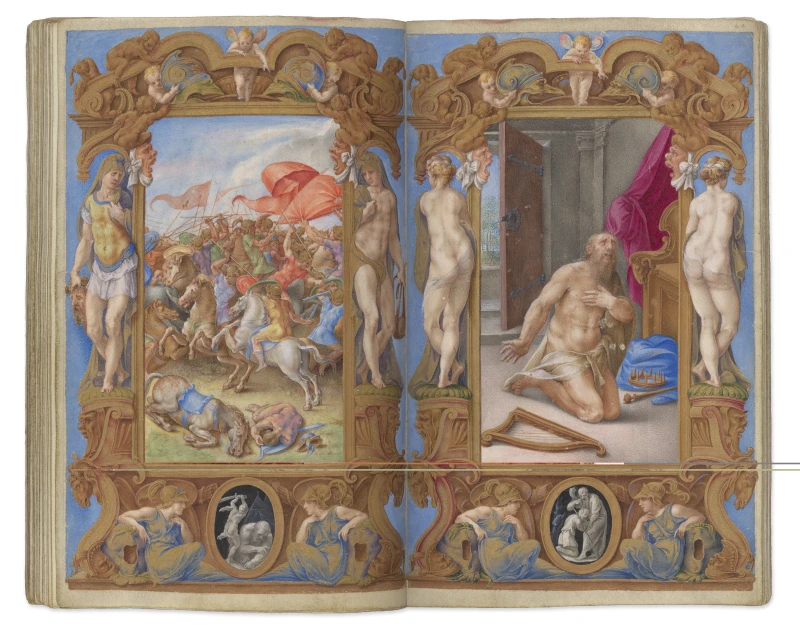
Death of Uriah; David in Penance, from the Morgan’s famed Farnese Hours, demonstrates the enduring appeal of the penitential Psalms of David as seen in this early Renaissance book of hours. Italy, Rome, 1546. The Morgan Library & Museum, New York, MS M.69, fols, 63v-63r. Photography by Janny Chiu. / Credit: Courtesy of the New York Library

New York City, New York, Nov 30, 2025 / 08:00 am (CNA).

Part of the New York Public Library’s Spencer Collection, the Tickhill Psalter is on view throughout Advent and Christmas at The Morgan Library & Museum in its exhibit “Sing a New Song: The Psalms in Medieval Art and Life.” A full-page Jesse Tree introduces the Psalms in the Tickhill Psalter, a 14th-century illuminated manuscript from the Augustinian Worksop Priory in Nottinghamshire, England.

Tree of Jesse (Psalm 1), from the Tickhill Psalter, England, Nottinghamshire, Worksop Priory, 1303-14, New York Public Library, Spencer 26. fol. 6v. The Medieval manuscript is on display in Morgan Library’s Advent exhibit. Credit: Courtesy of the Morgan Library

David appears in the historiated B of Psalm 1, providing a conceptual link to scenes from his life in the Jesse Tree on the facing page. “Beatus vir,” or “Blessed is the man,” the first stanza opens in celebration of the one who delights in God’s law, concluding: “That person is like a tree planted by streams of water, which yields its fruit in season and whose leaf does not wither, — what they do prospers.” 

These words and their historiated B, with its visual link to the facing page, highlight David as key author of the Psalms and their prefiguration of Christ, the good fruit of the Jesse Tree, a theme common to medieval illuminated manuscripts.

King David as Psalmist, from Florence, Italy, ca. 1408-10, by Lorenzo Monaco, who was born Piero di Giovanni but took the name Lorenzo Monaco, or Lorenzo the Monk, upon joining the monastery of Santa Maria degli Angeli, where he became a skilled illuminator and translated themes common to illuminated manuscripts into panel paintings, like this tempera on wood with gold ground depicting David seated on a stone bench tuning a psaltery, lips parted, prepared to sing, with a halo backing the crown he wears to signify the divine inspiration of his compositions. The Metropolitan Museum of Art, New York, 65.14.4. November 2025. Credit: Courtesy of the Metropolitan Museum of Art, New York
Prophets stand in architectural niches on either side of the Tickhill Psalter’s Jesse Tree, heralding the Psalms as prophecy. Credit: Courtesy of the New York Library

The central panel of a 1490 Flemish triptych with scenes from the life of Saint Augustine contextualizes the exhibit. This five-by-five-foot oil on wood painting references Augustine’s use of allegory, essential to his understanding of scripture and interpretation of the psalms as prophecy. One scene captures Augustine’s realization of the Trinity as boundless mystery that dwarfs human understanding, allegorized by a child trying to pour the sea into a hole in the sand. 

Scenes from the life of St. Augustine of Hippo, 1490, Bruges, Belgium, by the unnamed master of St. Augustine, amplifies the Church’s leading theologian on the allegorical interpretation of Psalms. At center, his installation as bishop of Hippo highlights his teaching authority, flanked by scenes of ordination and preaching on the left. On the right, he engages in scholarly discourse and converses with a child trying to pour the sea into a hole in the sand, illustrating the importance of allegory in Augustinian thought. Credit: Courtesy of the New York Public Library
Late 12th-century book comprised of Augustine’s Gradual Psalms and his Enchiridion (Greek for “handbook”). The well-worn and annotated pages reflect the proliferation of Augustinian influence on interpretation of Scripture. Spain, Santa Maria de Benevivere, near Palencia. Free Library of Philadelphia, Lewis E22, fols. 68v-69r. Credit: Courtesy of the New York Public Library

In the book accompanying the exhibit, Morgan curator Deirdre Jackson extends the psalms’ significance to this triptych through a reference to a surviving panel housed in Ireland that shows Augustine on his deathbed. It’s a scene described by contemporary bishop Possidius of Calama, who said that Augustine “ordered those psalms of David which are especially penitential to be copied out and, when he was very weak, used to lie in bed, facing the wall where the written sheets were put up, gazing at them and reading them, and copiously and continuously weeping as he read.”

Death of Uriah; David in Penance, from the Morgan’s famed Farnese Hours, demonstrates the enduring appeal of the penitential Psalms of David as seen in this early Renaissance book of hours. Italy, Rome, 1546. The Morgan Library & Museum, New York, MS M.69, fols, 63v-63r. Photography by Janny Chiu. Credit: Courtesy of the New York Public Library
Scenes from the Life of David, depicting the story of David and Goliath, exemplifies the significance attached to the figure of David in medieval illuminated manuscripts. Winchester Bible, England, Winchester, ca. 1160-80. The Morgan Library & Museum, New York, MS M.619v. Photography by Graham S. Haber. Credit: Courtesy of the New York Library

In his book “The Tickhill Psalter and Related Manuscripts,” 20th-century art historian Donald Drew Egbert speculates that the Tickhill Psalter was decorated by highly skilled illuminators working for Augustinian monasteries and patrons of Augustinian houses during a high point of book arts in England.

St. Thomas More, “in tribulation vehementi et in carcere” (annotation), from the Prayer Book of Thomas More, France, Paris, 1522 (Psalter) and 1530 (Book of Hours), Beinecke Rare Book & Manuscript Library, Yale University, New Haven, MS Vault More, fol. 68v (Psalter section). Credit: Courtesy of the New York Library

This high point inspired a trend of books as personalized treasures, best exemplified in this exhibit by St. Thomas More’s prayer book. Containing much of his own writing in the margins, it consists of a Book of Hours and a Psalter and was with him in the Tower of London while he awaited execution. More’s notes during that time show his preoccupation with the psalms of David’s tribulations. Beside Psalm 87:5-10, “a man without help … in the dark places, and in the shadow of death,” More writes, “in severe tribulation and in prison.”

The Prayer Book of Thomas More is backed by a wall-sized image of Hans Holbein’s "Sir Thomas More," positioned to look like More is gazing intently across the gallery at an image of David from the Crusader Bible. Engelhard Gallery, Photography by Janny Chiu, October 2025. Credit: Courtesy of the New York Library
The Prayer Book of Thomas More is backed by a wall-sized image of Hans Holbein’s “Sir Thomas More,” positioned to look like More is gazing intently across the gallery at an image of David from the Crusader Bible. Engelhard Gallery, Photography by Janny Chiu, October 2025. Credit: Courtesy of the New York Library

More’s thoughts in distress demonstrate the appeal of David’s story to the human heart, a reality repeatedly expressed throughout the treasures of this exhibit. In the Tickhill Psalter’s Jesse Tree, David is encircled by branches springing from a tree that grows out of his father, Jesse, sprawled in an active sleep, his elbow supporting a hand planted against his head as though dreaming of all that is to come. 

A crop of the enter of Tickhill Psalter showing the Virgin and Child and the figure of David playing a harp. Credit: Courtesy of the New York Library

The branches of the tree wind around David and directly overhead to encircle the Virgin and Child, tracing Christ’s lineage through Mary to the House of David. At the top, the branches surround Christ enthroned in majesty, fulfilling the promise of victory over sin and death foreshadowed in the psalms.

David strikes a joyous pose and plays a harp in celebration, and foliage on either side of the main branch wraps around prophets who unfurl scrolls to hint at mysteries about to be foretold in the reading of the psalms.

Beneath the figure of Jesse, two separate depictions of David protecting his sheep from wild animals cast his actions as allegory in the fight against evil, segueing to his likeness in the historiated B, dancing and singing his story into the Psalms to animate their prefiguration of Christ.

Read More
5 Catholic resources to help you grow closer to Christ this Advent #Catholic 
 
 null / Credit: Kara Monroe via Flickr (CC BY-NC-SA 2.0)

CNA Staff, Nov 23, 2025 / 06:00 am (CNA).
As Advent quickly approaches and the hustle and bustle of the holiday season begins to make its way into our lives, here are five resources to help you prepare to welcome Jesus this Christmas. From Ascension: Join Father Mike Schmitz this Advent for “Waiting Well: Advent with Fr. Mike Schmitz” on the Ascension app. Beginning Nov. 30, a 26-day video series will guide viewers on becoming aware of how God is shaping them through seasons of waiting and how to wait well. Each day a five-minute video will be released and feature a reflection from Schmitz that unpacks the daily Mass reading as well as Scripture versus, catechism excerpts, and reflection questions to encourage participants to go deeper into the meaning of Advent. Ascension’s “Waiting Well: Advent with Fr. Mike Schmitz” video series. Credit: AscensionSchmitz’s weekly homily videos during Advent are part of the “Waiting Well” series and available for free on YouTube. However, the daily reflections will only be available on the Ascension app with a subscription or free trial.This year’s video reflections will also be accompanied by the “Waiting Well” printed journal for individuals, parishes, and small-group study. It is designed to help readers slow down for 15 minutes a day as they prepare to meet Christ in the manger. Each day includes a word or Scripture verse to pray with, a reflection, and a prompt to write down your thoughts and insights. From Hallow:Hallow’s annual “Advent Prayer Challenge” is back once again. Beginning Dec. 1, “Pray25: Be Still” features Jonathan Roumie; Chris Pratt; Gwen Stefani; Father John Burns; Mother Natalia; Sister Miriam James Heidland, SOLT; and Father Pierre Toussaint, CFR. This Advent, listeners are invited to discover deeper stillness amid the chaos of the holiday season, just like the Blessed Mother did that first Christmas. Roumie and Heidland will lead reflections on “The Reed of God” by Caryll Houselander, while Pratt will guide sessions on “The Ruthless Elimination of Hurry” by John Mark Comer. Stefani and Mother Natalia will guide sessions focusing on being still, using the lives of saints as inspiration. Burns will guide listeners through sessions of imaginative prayer and Toussaint will offer homily reflections each Sunday during Advent.From Blessed Is She:Blessed Is She has Advent devotionals for the whole family this year — women, men, and children. “In Time: An Advent Devotional for Women” invites readers to reflect on God’s continuous presence in our lives. Written by Claire Dwyer, this devotional helps women see that waiting is filled with God’s loving action. “Feast: An Advent Devotional for Men” is written by Paul George, rooted in Scripture, and inspired by the story of the prodigal son. This devotional invites men to return to God the Father with courage, humility, and hope. It also aims to encourage those seeking renewal, healing, and deeper faith during Advent. Both the devotionals for men and women include daily Scripture readings, prayer, and reflection.Lastly, “Watch and Wait: A Kids Advent Devotional” written by Olivia Spears helps kids prepare for Christmas with daily prayers, reflections, and simple Scripture-based activities. This devotional teaches children to wait with hope and joy as they prepare for the birth of Christ. It is recommended for children older than 7 years old.The Augustine Institute’s campus in St. Louis. Credit: Courtesy of the Augustine InstituteFrom the Augustine Institute:The Augustine Institute is inviting Catholics to enter into the Advent season with renewed purpose and joyful expectation with a new video series titled “How To Advent.” The video series will consist of four 12- to 15-minute-long episodes that explore the beauty and meaning of Advent traditions in an engaging and meaningful way and highlight a different cherished Advent tradition — the Advent calendar, Advent wreath, Jesse Tree, and Nativity scene. The video series is available on Formed. From EWTN’s Religious Catalogue:The EWTN Religious Catalogue offers a wide variety of Advent devotionals including “Encountering Emmanuel: A Guided Advent Journal for Prayer and Meditation” by Heather Khym, cohost of the “Abiding Together” podcast, and “The True Gifts of Christmas” by Megan Alexander, which takes readers on a journey through the deeper meaning of our most cherished Christmas traditions. (Editor’s note: EWTN is CNA’s parent company.)

5 Catholic resources to help you grow closer to Christ this Advent #Catholic null / Credit: Kara Monroe via Flickr (CC BY-NC-SA 2.0) CNA Staff, Nov 23, 2025 / 06:00 am (CNA). As Advent quickly approaches and the hustle and bustle of the holiday season begins to make its way into our lives, here are five resources to help you prepare to welcome Jesus this Christmas. From Ascension: Join Father Mike Schmitz this Advent for “Waiting Well: Advent with Fr. Mike Schmitz” on the Ascension app. Beginning Nov. 30, a 26-day video series will guide viewers on becoming aware of how God is shaping them through seasons of waiting and how to wait well. Each day a five-minute video will be released and feature a reflection from Schmitz that unpacks the daily Mass reading as well as Scripture versus, catechism excerpts, and reflection questions to encourage participants to go deeper into the meaning of Advent. Ascension’s “Waiting Well: Advent with Fr. Mike Schmitz” video series. Credit: AscensionSchmitz’s weekly homily videos during Advent are part of the “Waiting Well” series and available for free on YouTube. However, the daily reflections will only be available on the Ascension app with a subscription or free trial.This year’s video reflections will also be accompanied by the “Waiting Well” printed journal for individuals, parishes, and small-group study. It is designed to help readers slow down for 15 minutes a day as they prepare to meet Christ in the manger. Each day includes a word or Scripture verse to pray with, a reflection, and a prompt to write down your thoughts and insights. From Hallow:Hallow’s annual “Advent Prayer Challenge” is back once again. Beginning Dec. 1, “Pray25: Be Still” features Jonathan Roumie; Chris Pratt; Gwen Stefani; Father John Burns; Mother Natalia; Sister Miriam James Heidland, SOLT; and Father Pierre Toussaint, CFR. This Advent, listeners are invited to discover deeper stillness amid the chaos of the holiday season, just like the Blessed Mother did that first Christmas. Roumie and Heidland will lead reflections on “The Reed of God” by Caryll Houselander, while Pratt will guide sessions on “The Ruthless Elimination of Hurry” by John Mark Comer. Stefani and Mother Natalia will guide sessions focusing on being still, using the lives of saints as inspiration. Burns will guide listeners through sessions of imaginative prayer and Toussaint will offer homily reflections each Sunday during Advent.From Blessed Is She:Blessed Is She has Advent devotionals for the whole family this year — women, men, and children. “In Time: An Advent Devotional for Women” invites readers to reflect on God’s continuous presence in our lives. Written by Claire Dwyer, this devotional helps women see that waiting is filled with God’s loving action. “Feast: An Advent Devotional for Men” is written by Paul George, rooted in Scripture, and inspired by the story of the prodigal son. This devotional invites men to return to God the Father with courage, humility, and hope. It also aims to encourage those seeking renewal, healing, and deeper faith during Advent. Both the devotionals for men and women include daily Scripture readings, prayer, and reflection.Lastly, “Watch and Wait: A Kids Advent Devotional” written by Olivia Spears helps kids prepare for Christmas with daily prayers, reflections, and simple Scripture-based activities. This devotional teaches children to wait with hope and joy as they prepare for the birth of Christ. It is recommended for children older than 7 years old.The Augustine Institute’s campus in St. Louis. Credit: Courtesy of the Augustine InstituteFrom the Augustine Institute:The Augustine Institute is inviting Catholics to enter into the Advent season with renewed purpose and joyful expectation with a new video series titled “How To Advent.” The video series will consist of four 12- to 15-minute-long episodes that explore the beauty and meaning of Advent traditions in an engaging and meaningful way and highlight a different cherished Advent tradition — the Advent calendar, Advent wreath, Jesse Tree, and Nativity scene. The video series is available on Formed. From EWTN’s Religious Catalogue:The EWTN Religious Catalogue offers a wide variety of Advent devotionals including “Encountering Emmanuel: A Guided Advent Journal for Prayer and Meditation” by Heather Khym, cohost of the “Abiding Together” podcast, and “The True Gifts of Christmas” by Megan Alexander, which takes readers on a journey through the deeper meaning of our most cherished Christmas traditions. (Editor’s note: EWTN is CNA’s parent company.)


null / Credit: Kara Monroe via Flickr (CC BY-NC-SA 2.0)

CNA Staff, Nov 23, 2025 / 06:00 am (CNA).

As Advent quickly approaches and the hustle and bustle of the holiday season begins to make its way into our lives, here are five resources to help you prepare to welcome Jesus this Christmas. 

From Ascension: 

Join Father Mike Schmitz this Advent for “Waiting Well: Advent with Fr. Mike Schmitz” on the Ascension app. 

Beginning Nov. 30, a 26-day video series will guide viewers on becoming aware of how God is shaping them through seasons of waiting and how to wait well. Each day a five-minute video will be released and feature a reflection from Schmitz that unpacks the daily Mass reading as well as Scripture versus, catechism excerpts, and reflection questions to encourage participants to go deeper into the meaning of Advent. 

Ascension's "Waiting Well: Advent with Fr. Mike Schmitz" video series. Credit: Ascension
Ascension’s “Waiting Well: Advent with Fr. Mike Schmitz” video series. Credit: Ascension

Schmitz’s weekly homily videos during Advent are part of the “Waiting Well” series and available for free on YouTube. However, the daily reflections will only be available on the Ascension app with a subscription or free trial.

This year’s video reflections will also be accompanied by the “Waiting Well” printed journal for individuals, parishes, and small-group study. It is designed to help readers slow down for 15 minutes a day as they prepare to meet Christ in the manger. Each day includes a word or Scripture verse to pray with, a reflection, and a prompt to write down your thoughts and insights. 

From Hallow:

Hallow’s annual “Advent Prayer Challenge” is back once again. Beginning Dec. 1, “Pray25: Be Still” features Jonathan Roumie; Chris Pratt; Gwen Stefani; Father John Burns; Mother Natalia; Sister Miriam James Heidland, SOLT; and Father Pierre Toussaint, CFR. This Advent, listeners are invited to discover deeper stillness amid the chaos of the holiday season, just like the Blessed Mother did that first Christmas. 

Roumie and Heidland will lead reflections on “The Reed of God” by Caryll Houselander, while Pratt will guide sessions on “The Ruthless Elimination of Hurry” by John Mark Comer. Stefani and Mother Natalia will guide sessions focusing on being still, using the lives of saints as inspiration. Burns will guide listeners through sessions of imaginative prayer and Toussaint will offer homily reflections each Sunday during Advent.

From Blessed Is She:

Blessed Is She has Advent devotionals for the whole family this year — women, men, and children. “In Time: An Advent Devotional for Women” invites readers to reflect on God’s continuous presence in our lives. Written by Claire Dwyer, this devotional helps women see that waiting is filled with God’s loving action. 

Feast: An Advent Devotional for Men” is written by Paul George, rooted in Scripture, and inspired by the story of the prodigal son. This devotional invites men to return to God the Father with courage, humility, and hope. It also aims to encourage those seeking renewal, healing, and deeper faith during Advent. Both the devotionals for men and women include daily Scripture readings, prayer, and reflection.

Lastly, “Watch and Wait: A Kids Advent Devotional” written by Olivia Spears helps kids prepare for Christmas with daily prayers, reflections, and simple Scripture-based activities. This devotional teaches children to wait with hope and joy as they prepare for the birth of Christ. It is recommended for children older than 7 years old.

The Augustine Institute’s campus in St. Louis. Credit: Courtesy of the Augustine Institute

From the Augustine Institute:

The Augustine Institute is inviting Catholics to enter into the Advent season with renewed purpose and joyful expectation with a new video series titled “How To Advent.” 

The video series will consist of four 12- to 15-minute-long episodes that explore the beauty and meaning of Advent traditions in an engaging and meaningful way and highlight a different cherished Advent tradition — the Advent calendar, Advent wreath, Jesse Tree, and Nativity scene. The video series is available on Formed. 

From EWTN’s Religious Catalogue:

The EWTN Religious Catalogue offers a wide variety of Advent devotionals including “Encountering Emmanuel: A Guided Advent Journal for Prayer and Meditation” by Heather Khym, cohost of the “Abiding Together” podcast, and “The True Gifts of Christmas” by Megan Alexander, which takes readers on a journey through the deeper meaning of our most cherished Christmas traditions. (Editor’s note: EWTN is CNA’s parent company.)

Read More