Threat

Disability advocates sue Delaware over allegedly ‘discriminatory’ assisted suicide law  #Catholic 
 
 “For patients with serious disabilities, this law will put us at risk of deadly discrimination," says Daniese McMullin-Powell, a polio survivor who has used a wheelchair for most of her life. / Credit: Institute for Patients' Rights

CNA Staff, Dec 10, 2025 / 06:10 am (CNA).
Several disability and patient advocacy groups filed a lawsuit in the U.S. District Court in Delaware on Dec. 8 alleging that Delaware’s new physician-assisted suicide law discriminates against people with disabilities. In May 2025, Delaware passed a bill legalizing physician-assisted suicide for terminally ill adults with a prognosis of six months or less to live. The law, which goes into effect Jan. 1, 2026, allows patients to self-administer lethal medication. The 74-page complaint alleges that the new law is unconstitutional under both Delaware and federal law and violates the Americans with Disabilities Act as well as the Fourteenth Amendment’s Equal Protection Clause, among other challenges.  Plaintiffs include the Institute for Patients’ Rights; The Freedom Center for Independent Living, Inc., in Middletown; the Delaware chapter of ADAPT; Not Dead Yet; United Spinal Association, the National Council on Independent Living; and disability advocate Sean Curran.The lawsuit, which names Gov. Matthew Meyer and the Delaware Department of Health and Human Services as two of several defendants, said that “people with life-threatening disabilities” are at “imminent risk” because of Delaware’s new law.   “Throughout the country, a state-endorsed narrative is rapidly spreading that threatens people with disabilities: namely, that people with life-threatening disabilities should be directed to suicide help and not suicide prevention,” the lawsuit read.“At its core, this is discrimination plain and simple,” the lawsuit continued. “With cuts in healthcare spending at the federal level, persons with life-threatening disabilities are now more vulnerable than ever.”The lawsuit alleges that, under the new law, people with life-threatening disabilities who express suicidal thoughts will be treated differently than other people who express suicidal thoughts. The new law lacks requirements for mental health screening for depression or other mental illness, “all of which are necessary for informed consent and a truly autonomous choice,” according to the lawsuit. Curran, a Delaware resident who has lived with a severe spinal cord injury for 36 years, called the law “repugnant.”“The act tells people like me that they should qualify for suicide help, not suicide prevention,” said Curran, who is a quadriplegic, meaning he is paralyzed in all four limbs.”The act devalues people like me,” Curran continued in a press release shared with CNA. “I have led a full life despite my disability.” Daniese McMullin-Powell, who is representing Delaware ADAPT in the lawsuit, said that the medical system already neglects people with disabilities.  “We do not need exacerbate its brokenness by adding an element where some patients are steered toward suicide,” said McMullin-Powell, who is a polio survivor and has used a wheelchair for most of her life. “For patients with serious disabilities, this law will put us at risk of deadly discrimination from doctors and insurance companies in Delaware to make subjective and speculative judgments based on their perception of our quality of life,” McMullin-Powell said, according to the press release. The legal group Ted Kittila of Halloran Farkas + Kittila LLP, who are representing the plaintiffs, called the law “ill-considered” and said it will “cause real harm to people who need real help.”“For too long, assisted suicide has been pitched as an act of mercy,” the group said in the press release. “For those in the disability community, it represents a real threat of continued discrimination.”  The office of Gov. Meyer did not respond to a request for comment in time for publication.

Disability advocates sue Delaware over allegedly ‘discriminatory’ assisted suicide law  #Catholic “For patients with serious disabilities, this law will put us at risk of deadly discrimination," says Daniese McMullin-Powell, a polio survivor who has used a wheelchair for most of her life. / Credit: Institute for Patients' Rights CNA Staff, Dec 10, 2025 / 06:10 am (CNA). Several disability and patient advocacy groups filed a lawsuit in the U.S. District Court in Delaware on Dec. 8 alleging that Delaware’s new physician-assisted suicide law discriminates against people with disabilities. In May 2025, Delaware passed a bill legalizing physician-assisted suicide for terminally ill adults with a prognosis of six months or less to live. The law, which goes into effect Jan. 1, 2026, allows patients to self-administer lethal medication. The 74-page complaint alleges that the new law is unconstitutional under both Delaware and federal law and violates the Americans with Disabilities Act as well as the Fourteenth Amendment’s Equal Protection Clause, among other challenges.  Plaintiffs include the Institute for Patients’ Rights; The Freedom Center for Independent Living, Inc., in Middletown; the Delaware chapter of ADAPT; Not Dead Yet; United Spinal Association, the National Council on Independent Living; and disability advocate Sean Curran.The lawsuit, which names Gov. Matthew Meyer and the Delaware Department of Health and Human Services as two of several defendants, said that “people with life-threatening disabilities” are at “imminent risk” because of Delaware’s new law.   “Throughout the country, a state-endorsed narrative is rapidly spreading that threatens people with disabilities: namely, that people with life-threatening disabilities should be directed to suicide help and not suicide prevention,” the lawsuit read.“At its core, this is discrimination plain and simple,” the lawsuit continued. “With cuts in healthcare spending at the federal level, persons with life-threatening disabilities are now more vulnerable than ever.”The lawsuit alleges that, under the new law, people with life-threatening disabilities who express suicidal thoughts will be treated differently than other people who express suicidal thoughts. The new law lacks requirements for mental health screening for depression or other mental illness, “all of which are necessary for informed consent and a truly autonomous choice,” according to the lawsuit. Curran, a Delaware resident who has lived with a severe spinal cord injury for 36 years, called the law “repugnant.”“The act tells people like me that they should qualify for suicide help, not suicide prevention,” said Curran, who is a quadriplegic, meaning he is paralyzed in all four limbs.”The act devalues people like me,” Curran continued in a press release shared with CNA. “I have led a full life despite my disability.” Daniese McMullin-Powell, who is representing Delaware ADAPT in the lawsuit, said that the medical system already neglects people with disabilities.  “We do not need exacerbate its brokenness by adding an element where some patients are steered toward suicide,” said McMullin-Powell, who is a polio survivor and has used a wheelchair for most of her life. “For patients with serious disabilities, this law will put us at risk of deadly discrimination from doctors and insurance companies in Delaware to make subjective and speculative judgments based on their perception of our quality of life,” McMullin-Powell said, according to the press release. The legal group Ted Kittila of Halloran Farkas + Kittila LLP, who are representing the plaintiffs, called the law “ill-considered” and said it will “cause real harm to people who need real help.”“For too long, assisted suicide has been pitched as an act of mercy,” the group said in the press release. “For those in the disability community, it represents a real threat of continued discrimination.”  The office of Gov. Meyer did not respond to a request for comment in time for publication.


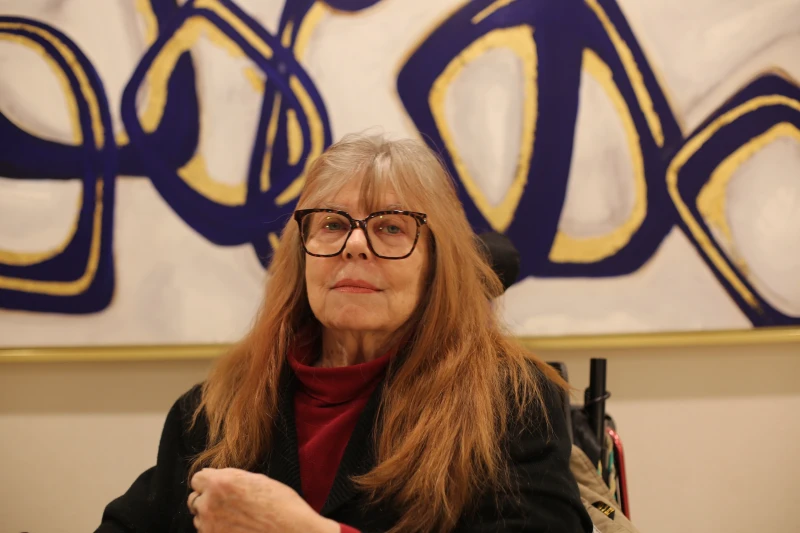
“For patients with serious disabilities, this law will put us at risk of deadly discrimination," says Daniese McMullin-Powell, a polio survivor who has used a wheelchair for most of her life. / Credit: Institute for Patients' Rights

CNA Staff, Dec 10, 2025 / 06:10 am (CNA).

Several disability and patient advocacy groups filed a lawsuit in the U.S. District Court in Delaware on Dec. 8 alleging that Delaware’s new physician-assisted suicide law discriminates against people with disabilities. 

In May 2025, Delaware passed a bill legalizing physician-assisted suicide for terminally ill adults with a prognosis of six months or less to live. The law, which goes into effect Jan. 1, 2026, allows patients to self-administer lethal medication. 

The 74-page complaint alleges that the new law is unconstitutional under both Delaware and federal law and violates the Americans with Disabilities Act as well as the Fourteenth Amendment’s Equal Protection Clause, among other challenges.  

Plaintiffs include the Institute for Patients’ Rights; The Freedom Center for Independent Living, Inc., in Middletown; the Delaware chapter of ADAPT; Not Dead Yet; United Spinal Association, the National Council on Independent Living; and disability advocate Sean Curran.

The lawsuit, which names Gov. Matthew Meyer and the Delaware Department of Health and Human Services as two of several defendants, said that “people with life-threatening disabilities” are at “imminent risk” because of Delaware’s new law.   

“Throughout the country, a state-endorsed narrative is rapidly spreading that threatens people with disabilities: namely, that people with life-threatening disabilities should be directed to suicide help and not suicide prevention,” the lawsuit read.

“At its core, this is discrimination plain and simple,” the lawsuit continued. “With cuts in healthcare spending at the federal level, persons with life-threatening disabilities are now more vulnerable than ever.”

The lawsuit alleges that, under the new law, people with life-threatening disabilities who express suicidal thoughts will be treated differently than other people who express suicidal thoughts. The new law lacks requirements for mental health screening for depression or other mental illness, “all of which are necessary for informed consent and a truly autonomous choice,” according to the lawsuit. 

Curran, a Delaware resident who has lived with a severe spinal cord injury for 36 years, called the law “repugnant.”

“The act tells people like me that they should qualify for suicide help, not suicide prevention,” said Curran, who is a quadriplegic, meaning he is paralyzed in all four limbs.

“The act devalues people like me,” Curran continued in a press release shared with CNA. “I have led a full life despite my disability.” 

Daniese McMullin-Powell, who is representing Delaware ADAPT in the lawsuit, said that the medical system already neglects people with disabilities.  

“We do not need exacerbate its brokenness by adding an element where some patients are steered toward suicide,” said McMullin-Powell, who is a polio survivor and has used a wheelchair for most of her life. 

“For patients with serious disabilities, this law will put us at risk of deadly discrimination from doctors and insurance companies in Delaware to make subjective and speculative judgments based on their perception of our quality of life,” McMullin-Powell said, according to the press release. 

The legal group Ted Kittila of Halloran Farkas + Kittila LLP, who are representing the plaintiffs, called the law “ill-considered” and said it will “cause real harm to people who need real help.”

“For too long, assisted suicide has been pitched as an act of mercy,” the group said in the press release. “For those in the disability community, it represents a real threat of continued discrimination.”  

The office of Gov. Meyer did not respond to a request for comment in time for publication.

Read More
U.S. Supreme Court hears dispute over faith-based pregnancy centers #Catholic 
 
 null / Credit: Wolfgang Schaller/Shutterstock

Washington, D.C., Dec 2, 2025 / 17:04 pm (CNA).
The U.S. Supreme Court heard oral arguments Tuesday on whether a New Jersey faith-based pregnancy center may immediately assert its First Amendment right to challenge a state subpoena demanding donor information — including names, addresses, and places of employment — in federal court, or whether it must first proceed through the state court system.The case, First Choice Women’s Resource Centers, Inc. v. Platkin, has drawn support from a diverse array of groups, including the U.S. Conference of Catholic Bishops, The Church of Jesus Christ of Latter-day Saints, members of Congress, the Trump administration, and the ACLU. All argue that First Choice should be able to challenge the subpoena in federal court without first litigating the issue in New Jersey state court.At the center of the dispute is a 2023 subpoena issued by New Jersey Attorney General Matthew J. Platkin seeking extensive donor information from First Choice. In 2022, Platkin created what he called a “reproductive rights strike force” to “protect access to abortion care,” and his office issued a “consumer alert” describing crisis pregnancy centers like First Choice as organizations that may provide “false or misleading information about the safety and legality of abortion.”In its Supreme Court brief, First Choice describes itself as a faith-based nonprofit serving women in New Jersey by providing material support and medical services such as ultrasounds and pregnancy tests under a licensed medical director. The organization does not provide or refer for abortions, a point it plainly and repeatedly states on its website.Platkin’s subpoena commanded First Choice to produce documents and information responsive to 28 separate demands, including the full names, phone numbers, addresses, and current or last known employers of every donor who contributed money by any means other than one specific website. It warned that failure to comply could result in contempt of court and other legal penalties.The attorney general’s office said it needed donor identities to determine whether contributors were “misled” into believing First Choice provided abortions. Platkin argued he needed donor contact information so he could “contact a representative sample and determine what they did or did not know about their donations.”First Choice quickly sued in federal court, arguing the subpoena violated its First Amendment rights by chilling its speech and freedom of association. The federal district court dismissed the case as “unripe,” ruling that the pregnancy center must wait until a New Jersey court seeks to enforce the subpoena. The Supreme Court later agreed to hear the case to determine whether First Choice may pursue its challenge in federal court now.At oral argument, First Choice’s attorney, Erin M. Hawley, told the justices that the court has “long safeguarded the freedom of association by protecting the membership and donor lists of nonprofit organizations.” Yet, she said, “the attorney general of New Jersey issued a sweeping subpoena commanding on pain of contempt that First Choice produce donor names, addresses, and phone numbers so his office could contact and question them. That violates the right of association.”Hawley urged the court to recognize that the subpoena was issued by “a hostile attorney general who has issued a consumer alert, urged New Jerseyans to beware of pregnancy centers, and assembled a strike force against them.”She also noted that the attorney general “has never identified a single complaint against First Choice” and that the threat of contempt and business dissolution is “a death knell for nonprofits like First Choice.”Arguing for New Jersey, Sundeep Iyer, the attorney general’s chief counsel, said First Choice had not demonstrated that the subpoena “objectively chilled” its First Amendment rights. He argued that the subpoena is “non-self-executing,” meaning it imposes no immediate obligation and cannot require compliance unless a court orders enforcement.Justice Neil Gorsuch appeared skeptical, noting that New Jersey law gives attorney general subpoenas the force of law and allows the attorney general to seek contempt orders against those who fail to comply. “I don’t know how to read that other than it’s pretty self-executing to me, counsel,” he said.Justice Elena Kagan questioned whether an “ordinary person” receiving such a subpoena would feel reassured by the claim that it required court approval before being enforced. A donor, she said, is unlikely “to take that as very reassuring.”In an amicus curiae brief, the U.S. Conference of Catholic Bishops urged the court to side with First Choice. “Compelling disclosure of a religious organization’s financial support violates the constitutional guarantee of freedom of religion,” the bishops wrote. Forced donor disclosure, they argued, interferes with a religious organization’s mission and burdens the free-exercise rights of donors who give anonymously in accordance with scriptural teachings.The Supreme Court is expected to issue a decision in the coming months.

U.S. Supreme Court hears dispute over faith-based pregnancy centers #Catholic null / Credit: Wolfgang Schaller/Shutterstock Washington, D.C., Dec 2, 2025 / 17:04 pm (CNA). The U.S. Supreme Court heard oral arguments Tuesday on whether a New Jersey faith-based pregnancy center may immediately assert its First Amendment right to challenge a state subpoena demanding donor information — including names, addresses, and places of employment — in federal court, or whether it must first proceed through the state court system.The case, First Choice Women’s Resource Centers, Inc. v. Platkin, has drawn support from a diverse array of groups, including the U.S. Conference of Catholic Bishops, The Church of Jesus Christ of Latter-day Saints, members of Congress, the Trump administration, and the ACLU. All argue that First Choice should be able to challenge the subpoena in federal court without first litigating the issue in New Jersey state court.At the center of the dispute is a 2023 subpoena issued by New Jersey Attorney General Matthew J. Platkin seeking extensive donor information from First Choice. In 2022, Platkin created what he called a “reproductive rights strike force” to “protect access to abortion care,” and his office issued a “consumer alert” describing crisis pregnancy centers like First Choice as organizations that may provide “false or misleading information about the safety and legality of abortion.”In its Supreme Court brief, First Choice describes itself as a faith-based nonprofit serving women in New Jersey by providing material support and medical services such as ultrasounds and pregnancy tests under a licensed medical director. The organization does not provide or refer for abortions, a point it plainly and repeatedly states on its website.Platkin’s subpoena commanded First Choice to produce documents and information responsive to 28 separate demands, including the full names, phone numbers, addresses, and current or last known employers of every donor who contributed money by any means other than one specific website. It warned that failure to comply could result in contempt of court and other legal penalties.The attorney general’s office said it needed donor identities to determine whether contributors were “misled” into believing First Choice provided abortions. Platkin argued he needed donor contact information so he could “contact a representative sample and determine what they did or did not know about their donations.”First Choice quickly sued in federal court, arguing the subpoena violated its First Amendment rights by chilling its speech and freedom of association. The federal district court dismissed the case as “unripe,” ruling that the pregnancy center must wait until a New Jersey court seeks to enforce the subpoena. The Supreme Court later agreed to hear the case to determine whether First Choice may pursue its challenge in federal court now.At oral argument, First Choice’s attorney, Erin M. Hawley, told the justices that the court has “long safeguarded the freedom of association by protecting the membership and donor lists of nonprofit organizations.” Yet, she said, “the attorney general of New Jersey issued a sweeping subpoena commanding on pain of contempt that First Choice produce donor names, addresses, and phone numbers so his office could contact and question them. That violates the right of association.”Hawley urged the court to recognize that the subpoena was issued by “a hostile attorney general who has issued a consumer alert, urged New Jerseyans to beware of pregnancy centers, and assembled a strike force against them.”She also noted that the attorney general “has never identified a single complaint against First Choice” and that the threat of contempt and business dissolution is “a death knell for nonprofits like First Choice.”Arguing for New Jersey, Sundeep Iyer, the attorney general’s chief counsel, said First Choice had not demonstrated that the subpoena “objectively chilled” its First Amendment rights. He argued that the subpoena is “non-self-executing,” meaning it imposes no immediate obligation and cannot require compliance unless a court orders enforcement.Justice Neil Gorsuch appeared skeptical, noting that New Jersey law gives attorney general subpoenas the force of law and allows the attorney general to seek contempt orders against those who fail to comply. “I don’t know how to read that other than it’s pretty self-executing to me, counsel,” he said.Justice Elena Kagan questioned whether an “ordinary person” receiving such a subpoena would feel reassured by the claim that it required court approval before being enforced. A donor, she said, is unlikely “to take that as very reassuring.”In an amicus curiae brief, the U.S. Conference of Catholic Bishops urged the court to side with First Choice. “Compelling disclosure of a religious organization’s financial support violates the constitutional guarantee of freedom of religion,” the bishops wrote. Forced donor disclosure, they argued, interferes with a religious organization’s mission and burdens the free-exercise rights of donors who give anonymously in accordance with scriptural teachings.The Supreme Court is expected to issue a decision in the coming months.


null / Credit: Wolfgang Schaller/Shutterstock

Washington, D.C., Dec 2, 2025 / 17:04 pm (CNA).

The U.S. Supreme Court heard oral arguments Tuesday on whether a New Jersey faith-based pregnancy center may immediately assert its First Amendment right to challenge a state subpoena demanding donor information — including names, addresses, and places of employment — in federal court, or whether it must first proceed through the state court system.

The case, First Choice Women’s Resource Centers, Inc. v. Platkin, has drawn support from a diverse array of groups, including the U.S. Conference of Catholic Bishops, The Church of Jesus Christ of Latter-day Saints, members of Congress, the Trump administration, and the ACLU. All argue that First Choice should be able to challenge the subpoena in federal court without first litigating the issue in New Jersey state court.

At the center of the dispute is a 2023 subpoena issued by New Jersey Attorney General Matthew J. Platkin seeking extensive donor information from First Choice. In 2022, Platkin created what he called a “reproductive rights strike force” to “protect access to abortion care,” and his office issued a “consumer alert” describing crisis pregnancy centers like First Choice as organizations that may provide “false or misleading information about the safety and legality of abortion.”

In its Supreme Court brief, First Choice describes itself as a faith-based nonprofit serving women in New Jersey by providing material support and medical services such as ultrasounds and pregnancy tests under a licensed medical director. The organization does not provide or refer for abortions, a point it plainly and repeatedly states on its website.

Platkin’s subpoena commanded First Choice to produce documents and information responsive to 28 separate demands, including the full names, phone numbers, addresses, and current or last known employers of every donor who contributed money by any means other than one specific website. It warned that failure to comply could result in contempt of court and other legal penalties.

The attorney general’s office said it needed donor identities to determine whether contributors were “misled” into believing First Choice provided abortions. Platkin argued he needed donor contact information so he could “contact a representative sample and determine what they did or did not know about their donations.”

First Choice quickly sued in federal court, arguing the subpoena violated its First Amendment rights by chilling its speech and freedom of association. The federal district court dismissed the case as “unripe,” ruling that the pregnancy center must wait until a New Jersey court seeks to enforce the subpoena. The Supreme Court later agreed to hear the case to determine whether First Choice may pursue its challenge in federal court now.

At oral argument, First Choice’s attorney, Erin M. Hawley, told the justices that the court has “long safeguarded the freedom of association by protecting the membership and donor lists of nonprofit organizations.” Yet, she said, “the attorney general of New Jersey issued a sweeping subpoena commanding on pain of contempt that First Choice produce donor names, addresses, and phone numbers so his office could contact and question them. That violates the right of association.”

Hawley urged the court to recognize that the subpoena was issued by “a hostile attorney general who has issued a consumer alert, urged New Jerseyans to beware of pregnancy centers, and assembled a strike force against them.”

She also noted that the attorney general “has never identified a single complaint against First Choice” and that the threat of contempt and business dissolution is “a death knell for nonprofits like First Choice.”

Arguing for New Jersey, Sundeep Iyer, the attorney general’s chief counsel, said First Choice had not demonstrated that the subpoena “objectively chilled” its First Amendment rights. He argued that the subpoena is “non-self-executing,” meaning it imposes no immediate obligation and cannot require compliance unless a court orders enforcement.

Justice Neil Gorsuch appeared skeptical, noting that New Jersey law gives attorney general subpoenas the force of law and allows the attorney general to seek contempt orders against those who fail to comply. “I don’t know how to read that other than it’s pretty self-executing to me, counsel,” he said.

Justice Elena Kagan questioned whether an “ordinary person” receiving such a subpoena would feel reassured by the claim that it required court approval before being enforced. A donor, she said, is unlikely “to take that as very reassuring.”

In an amicus curiae brief, the U.S. Conference of Catholic Bishops urged the court to side with First Choice. “Compelling disclosure of a religious organization’s financial support violates the constitutional guarantee of freedom of religion,” the bishops wrote. Forced donor disclosure, they argued, interferes with a religious organization’s mission and burdens the free-exercise rights of donors who give anonymously in accordance with scriptural teachings.

The Supreme Court is expected to issue a decision in the coming months.

Read More
Report details persecution of Turkish Christians ahead of Pope Leo XIV's visit #Catholic 
 
 The scene outside a Catholic church in Istanbul, Turkey, where a reported armed attack took place on Jan. 28, 2024. / Credit: Rudolf Gehrig/EWTN

Washington, D.C. Newsroom, Nov 26, 2025 / 16:15 pm (CNA).
A Christian advocacy group’s report details “legal, institutional, and social hostility” toward Turkish Christians as Pope Leo XIV begins his six-day visit to Turkey and Lebanon Thursday.The report from The European Centre for Law and Justice (ECLJ), titled “The Persecution of Christians in Turkey,” explores government interference against clergy and Christian entities, restrictions on foreign Christians who visit the country, and widespread social animosity toward the faithful, which sometimes includes direct violence.“Communities that were once integral to the cultural, religious, and historical fabric of Anatolia have been reduced to a fragile remnant,” the authors state.“Their disappearance is not the product of a single event but the cumulative result of restrictive legislation, administrative obstruction, property confiscations, denial of legal personality, and — more recently — arbitrary expulsions of clergy, missionaries, and converts,” they add.Modern-day Turkey, which was governed by Christians prior to the Ottoman Empire invasions in late Middle Ages, is still home to about 257,000 Christians. In 1915, Christians still accounted for about 20% of the Turkish population, but the number has dwindled over the past century and they now account for less than 0.3% of the population.Persecution of ChristiansThe report says hostility toward Christians is kept alive through environmental factors, such as Turkey’s refusal to recognize its past by continuing to deny the genocide of Armenians and other Christians during World War I. At that time, about 1.5 million Armenians and 500,000 other Christians were forcibly deported or massacred, and Turkey’s criminalization of “insulting the Turkish nation” and “insulting Turkishness” is often enforced to quell speech about the historical events, according to the report.It notes that politicians and state-run media frequently scapegoat Christians for societal issues and depict them as an external and internal threat, with one example being President Recep Tayyip Erdoğan referring to survivors of the genocide as “terrorists escaped from the sword” and another being the state-run Yeni Akit allegedly editing Wikipedia to smear Christians, Jews, and other groups.In some cases, this hostility yields violence, including a 2024 terrorist attack on a Catholic church that killed one person, and other acts of violence and vandalism.The report notes that Turkey signed the Treaty of Lausanne after the Armenian genocide, which granted people who believe some non-majority faiths full legal recognition and property rights.Yet, a narrow interpretation of the treaty ensures “a national narrative that presents Sunni Islam as the primary marker of Turkish identity,” the report says. The treaty also fails to recognize all Christians, only giving a specific reference to Greek Orthodox, Armenian Apostolic Christians, and Jews, but not Catholics or Protestants, according to the report.It states that Sunni Islam is often tied to Turkish identity in public education and the process to be exempt from compulsory Islamic education is burdensome for Christians not covered under the treaty.No church holds legal personality as a religious institution, which means patriarchates, dioceses, and churches cannot “own property in their own name, initiate legal proceedings, employ staff, open bank accounts, or formally interact with public authorities,” the report states.The government also interferes with religious leadership, prohibiting non-Turkish citizens from being elected as Ecumenical Patriarch, sitting on the Holy Synod, or participating in patriarchal elections in the Greek Orthodox Church. The government also regulates elections for leadership in the Armenian Apostolic Church.Turkey shut down the Greek Orthodox Halki Seminary in 1971 and — despite promises to let it reopen — keeps it shut down, according to the report.The report also says Turkey imposes legal constraints and administrative obstruction on Christian “community foundations,” which operate churches, schools, hospitals, and charitable institutions.This includes blocking board elections and failing to enforce court orders. One of the more egregious violations is imposing “mazbut” trusteeship, which ends Christian institutions’ legal recognition and grants control to the government, which essentially confiscates property, the report said.“These practices reveal a structural system designed to undermine the autonomy, continuity, and survival of Christian communities in Turkey,” the report states.According to the report, foreign Protestant pastors are often expelled from seminaries. More broadly, it states that foreign missionaries and converts are often targeted as “national security” threats and frequently expelled from Turkey. The authors encouraged Turkey to grant full legal recognition to all churches, halt interference in Christian organizations, protect places of worship, end arbitrary expulsions, and return property that has been confiscated.

Report details persecution of Turkish Christians ahead of Pope Leo XIV's visit #Catholic The scene outside a Catholic church in Istanbul, Turkey, where a reported armed attack took place on Jan. 28, 2024. / Credit: Rudolf Gehrig/EWTN Washington, D.C. Newsroom, Nov 26, 2025 / 16:15 pm (CNA). A Christian advocacy group’s report details “legal, institutional, and social hostility” toward Turkish Christians as Pope Leo XIV begins his six-day visit to Turkey and Lebanon Thursday.The report from The European Centre for Law and Justice (ECLJ), titled “The Persecution of Christians in Turkey,” explores government interference against clergy and Christian entities, restrictions on foreign Christians who visit the country, and widespread social animosity toward the faithful, which sometimes includes direct violence.“Communities that were once integral to the cultural, religious, and historical fabric of Anatolia have been reduced to a fragile remnant,” the authors state.“Their disappearance is not the product of a single event but the cumulative result of restrictive legislation, administrative obstruction, property confiscations, denial of legal personality, and — more recently — arbitrary expulsions of clergy, missionaries, and converts,” they add.Modern-day Turkey, which was governed by Christians prior to the Ottoman Empire invasions in late Middle Ages, is still home to about 257,000 Christians. In 1915, Christians still accounted for about 20% of the Turkish population, but the number has dwindled over the past century and they now account for less than 0.3% of the population.Persecution of ChristiansThe report says hostility toward Christians is kept alive through environmental factors, such as Turkey’s refusal to recognize its past by continuing to deny the genocide of Armenians and other Christians during World War I. At that time, about 1.5 million Armenians and 500,000 other Christians were forcibly deported or massacred, and Turkey’s criminalization of “insulting the Turkish nation” and “insulting Turkishness” is often enforced to quell speech about the historical events, according to the report.It notes that politicians and state-run media frequently scapegoat Christians for societal issues and depict them as an external and internal threat, with one example being President Recep Tayyip Erdoğan referring to survivors of the genocide as “terrorists escaped from the sword” and another being the state-run Yeni Akit allegedly editing Wikipedia to smear Christians, Jews, and other groups.In some cases, this hostility yields violence, including a 2024 terrorist attack on a Catholic church that killed one person, and other acts of violence and vandalism.The report notes that Turkey signed the Treaty of Lausanne after the Armenian genocide, which granted people who believe some non-majority faiths full legal recognition and property rights.Yet, a narrow interpretation of the treaty ensures “a national narrative that presents Sunni Islam as the primary marker of Turkish identity,” the report says. The treaty also fails to recognize all Christians, only giving a specific reference to Greek Orthodox, Armenian Apostolic Christians, and Jews, but not Catholics or Protestants, according to the report.It states that Sunni Islam is often tied to Turkish identity in public education and the process to be exempt from compulsory Islamic education is burdensome for Christians not covered under the treaty.No church holds legal personality as a religious institution, which means patriarchates, dioceses, and churches cannot “own property in their own name, initiate legal proceedings, employ staff, open bank accounts, or formally interact with public authorities,” the report states.The government also interferes with religious leadership, prohibiting non-Turkish citizens from being elected as Ecumenical Patriarch, sitting on the Holy Synod, or participating in patriarchal elections in the Greek Orthodox Church. The government also regulates elections for leadership in the Armenian Apostolic Church.Turkey shut down the Greek Orthodox Halki Seminary in 1971 and — despite promises to let it reopen — keeps it shut down, according to the report.The report also says Turkey imposes legal constraints and administrative obstruction on Christian “community foundations,” which operate churches, schools, hospitals, and charitable institutions.This includes blocking board elections and failing to enforce court orders. One of the more egregious violations is imposing “mazbut” trusteeship, which ends Christian institutions’ legal recognition and grants control to the government, which essentially confiscates property, the report said.“These practices reveal a structural system designed to undermine the autonomy, continuity, and survival of Christian communities in Turkey,” the report states.According to the report, foreign Protestant pastors are often expelled from seminaries. More broadly, it states that foreign missionaries and converts are often targeted as “national security” threats and frequently expelled from Turkey. The authors encouraged Turkey to grant full legal recognition to all churches, halt interference in Christian organizations, protect places of worship, end arbitrary expulsions, and return property that has been confiscated.


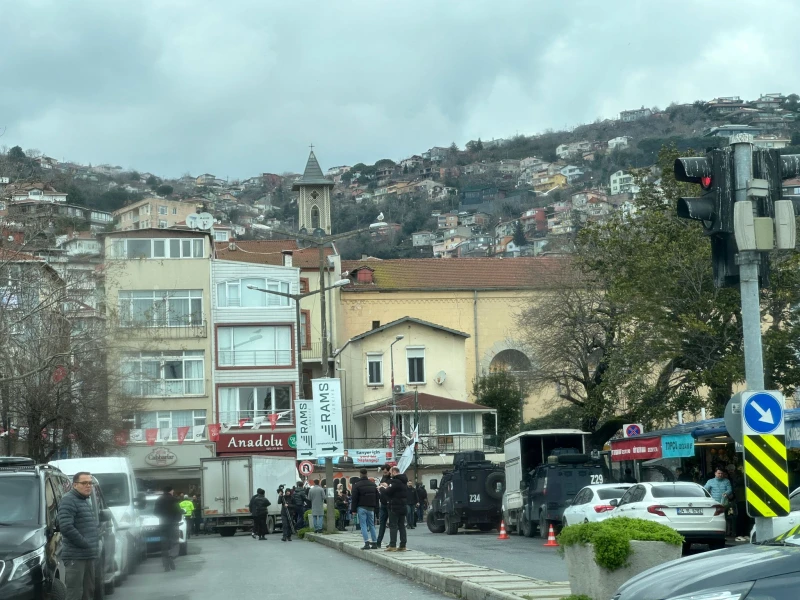
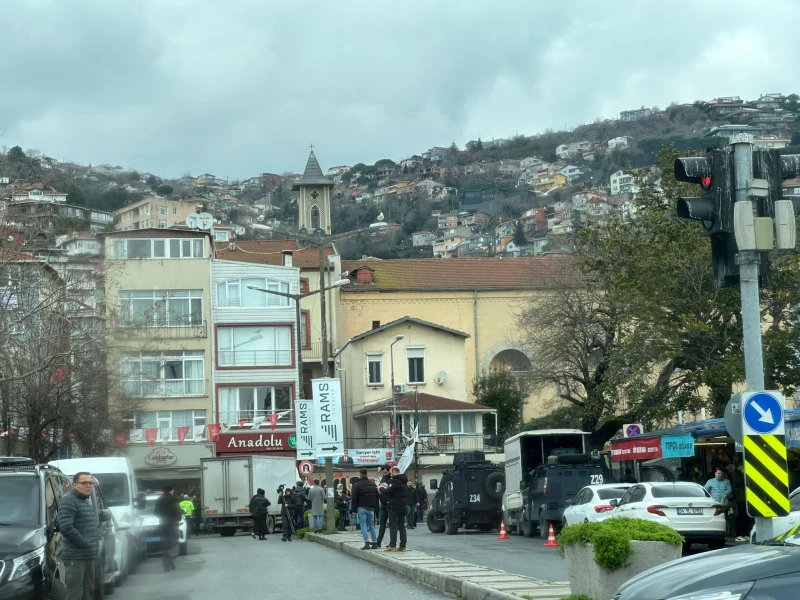
The scene outside a Catholic church in Istanbul, Turkey, where a reported armed attack took place on Jan. 28, 2024. / Credit: Rudolf Gehrig/EWTN

Washington, D.C. Newsroom, Nov 26, 2025 / 16:15 pm (CNA).

A Christian advocacy group’s report details “legal, institutional, and social hostility” toward Turkish Christians as Pope Leo XIV begins his six-day visit to Turkey and Lebanon Thursday.

The report from The European Centre for Law and Justice (ECLJ), titled “The Persecution of Christians in Turkey,” explores government interference against clergy and Christian entities, restrictions on foreign Christians who visit the country, and widespread social animosity toward the faithful, which sometimes includes direct violence.

“Communities that were once integral to the cultural, religious, and historical fabric of Anatolia have been reduced to a fragile remnant,” the authors state.

“Their disappearance is not the product of a single event but the cumulative result of restrictive legislation, administrative obstruction, property confiscations, denial of legal personality, and — more recently — arbitrary expulsions of clergy, missionaries, and converts,” they add.

Modern-day Turkey, which was governed by Christians prior to the Ottoman Empire invasions in late Middle Ages, is still home to about 257,000 Christians. In 1915, Christians still accounted for about 20% of the Turkish population, but the number has dwindled over the past century and they now account for less than 0.3% of the population.

Persecution of Christians

The report says hostility toward Christians is kept alive through environmental factors, such as Turkey’s refusal to recognize its past by continuing to deny the genocide of Armenians and other Christians during World War I. 

At that time, about 1.5 million Armenians and 500,000 other Christians were forcibly deported or massacred, and Turkey’s criminalization of “insulting the Turkish nation” and “insulting Turkishness” is often enforced to quell speech about the historical events, according to the report.

It notes that politicians and state-run media frequently scapegoat Christians for societal issues and depict them as an external and internal threat, with one example being President Recep Tayyip Erdoğan referring to survivors of the genocide as “terrorists escaped from the sword” and another being the state-run Yeni Akit allegedly editing Wikipedia to smear Christians, Jews, and other groups.

In some cases, this hostility yields violence, including a 2024 terrorist attack on a Catholic church that killed one person, and other acts of violence and vandalism.

The report notes that Turkey signed the Treaty of Lausanne after the Armenian genocide, which granted people who believe some non-majority faiths full legal recognition and property rights.

Yet, a narrow interpretation of the treaty ensures “a national narrative that presents Sunni Islam as the primary marker of Turkish identity,” the report says. The treaty also fails to recognize all Christians, only giving a specific reference to Greek Orthodox, Armenian Apostolic Christians, and Jews, but not Catholics or Protestants, according to the report.

It states that Sunni Islam is often tied to Turkish identity in public education and the process to be exempt from compulsory Islamic education is burdensome for Christians not covered under the treaty.

No church holds legal personality as a religious institution, which means patriarchates, dioceses, and churches cannot “own property in their own name, initiate legal proceedings, employ staff, open bank accounts, or formally interact with public authorities,” the report states.

The government also interferes with religious leadership, prohibiting non-Turkish citizens from being elected as Ecumenical Patriarch, sitting on the Holy Synod, or participating in patriarchal elections in the Greek Orthodox Church. The government also regulates elections for leadership in the Armenian Apostolic Church.

Turkey shut down the Greek Orthodox Halki Seminary in 1971 and — despite promises to let it reopen — keeps it shut down, according to the report.

The report also says Turkey imposes legal constraints and administrative obstruction on Christian “community foundations,” which operate churches, schools, hospitals, and charitable institutions.

This includes blocking board elections and failing to enforce court orders. One of the more egregious violations is imposing “mazbut” trusteeship, which ends Christian institutions’ legal recognition and grants control to the government, which essentially confiscates property, the report said.

“These practices reveal a structural system designed to undermine the autonomy, continuity, and survival of Christian communities in Turkey,” the report states.

According to the report, foreign Protestant pastors are often expelled from seminaries. More broadly, it states that foreign missionaries and converts are often targeted as “national security” threats and frequently expelled from Turkey. 

The authors encouraged Turkey to grant full legal recognition to all churches, halt interference in Christian organizations, protect places of worship, end arbitrary expulsions, and return property that has been confiscated.

Read More
DHS blasts order for improvements to migrant facility, says it houses ‘worst of the worst’ #Catholic 
 
 Auxiliary Bishop Jose María García-Maldonado attempts to visit detainees at the Broadview, Illinois, immigration facility and was not admitted Nov. 1, 2025. / Credit: Bryan Sebastian, courtesy of Coalition for Spiritual and Public Leadership

Washington, D.C., Nov 7, 2025 / 18:40 pm (CNA).
The Trump administration this week denounced a Chicago-based federal judge’s ruling that mandated cleanliness and hygiene standards as well as adequate legal representation at a U.S. Immigration and Customs Enforcement (ICE) facility in Illinois.Government lawyers said Nov. 7 they are in compliance or are in the midst of complying with the judge’s conditions. The detainees’ attorneys, however, say they “are doubtful” the government is “actually in compliance” with some of the conditions, “including as to facility cleaning, the provision of food and water, and the provision of prescription medication.” The detainees’ attorneys asked the court to conduct an inspection with an expert and have the government provide immediate proof of compliance.Administration officials said an “activist judge” issued the temporary restraining order and based it on hoaxes, while religious and civil-rights advocates pressed for detainees’ access to the Eucharist. Access to CommunionA group of 19 spiritual leaders including six priests renewed a request to offer pastoral care and Communion at the Broadview facility in a Nov. 6 letter to ICE and asked to discuss “procedures by which our small delegation of religious ministers can be granted access.” The delegation bringing Communion was denied access Nov. 1.Scene from Nov. 1, 2025, Mass outside the Broadview facility near Chicago where immigration advocates allege federal authorities inhumanely treat detainees. Credit: Bryan Sebastian, courtesy of Coalition for Spiritual and Public LeadershipThe judge’s temporary restraining order followed an Oct. 30 lawsuit in which detainees claimed they were placed in unsanitary conditions, provided inadequate food and water, and unconstitutionally deprived of access to legal representation and spiritual care. The Department of Homeland Security (DHS) said ICE’s Broadview facility houses “criminal illegal aliens” whom it described as “some of the worst of the worst.”“Some of the worst of the worst including pedophiles, gang members, and rapists have been processed through the facility in recent weeks,” Tricia McLaughlin, assistant Homeland Security secretary for public affairs, said in a Nov. 5 statement.The list included Jose Manuel Escobar-Cardona, described by DHS as “a criminal illegal alien” from Honduras who was convicted of multiple charges of lewd or lascivious acts with a minor, assault, driving under the influence of liquor, making a false report, illegal reentry, and making a false report.Also named by DHS was Alfonso Batalla-Garcia, “a criminal illegal alien from Mexico, convicted of sex assault, kidnapping an adult to sexually assault, and homicide.”Other detainees named by DHS included migrants who were said to have been convicted of drug trafficking, kidnapping, first-degree murder, and weapons trafficking. Publicly reported individuals detained by ICE in November also included a day care worker at the Rayito De Sol center, a Chicago preschool where the woman was removed in front of children.Pope Leo XIV on Nov. 4 said: “Many people who’ve lived for years and years and years, never causing problems, have been deeply affected by what’s going on right now.” Leo invited authorities to allow pastoral workers to attend to the needs of detainees.He reminded that “Jesus says very clearly … at the end of the world, we’re going to be asked … how did you receive the foreigner? Did you receive him and welcome him or not? And I think that there’s a deep reflection that needs to be made in terms of what’s happening.”A detainee testified he spent six days at the Broadview ICE facility before Judge Robert Gettleman ordered bedding, three meals a day, free water, hygiene products, papers translated into Spanish, a clock in each hold room, and free phone service for detainees to talk to counsel. Gettleman also ordered DHS to list all detainees on the Locator Online Detainee Locator System of ICE.DHS says facilities such as Broadview are designed to serve only as short-term holding centers, typically for about 12 hours, where individuals are briefly held for processing before being moved to longer-term detention facilities.“Despite hoaxes spread by criminal illegal aliens, the complicit media, and now an activist judge, the ICE Broadview facility does not have subpar conditions,” McLaughlin said. She said detainees receive three meals a day, access to water, and proper medical care.Neither McLaughlin’s statement nor the judge’s order addressed the lawsuit’s claims that Broadview detainees have been unconstitutionally denied access to faith leaders and clergy.McLaughlin wrote on X that “religious organizations have ALWAYS been welcome to provide services to detainees in ICE detention facilities. Religious leaders may request access to facilities through proper channels and have those requests approved.”McLaughlin also responded to questions from CNA, saying dangerous conditions — including belligerent actions and “attacks,” such as the use of tear gas, by protesters — and Broadview’s status as a short-term “field office” have prevented ICE from accommodating requests by religious organizations seeking access to detainees there.“ICE staff has repeatedly informed religious organizations that, due to Broadview’s status as a field office and the ongoing threat to civilians, detainees, and officers, they are not able to accommodate these requests at this time,” McLaughlin told CNA. “Even before the attacks on the Broadview facility, it was not within standard operating procedure for religious services to be provided in a field office, as detainees are continuously brought in, processed, and transferred out.”Chicago faith leaders wrote to ICE Nov. 7: “We understand that in past years ministers were granted access to the Broadview ICE facility for pastoral purposes. We also note public statements by DHS acknowledging detainees’ rights to chaplaincy and religious resources, while noting that requests for entry may require advance approval.”‘Careful review’Bishop Robert E. Barron of the Diocese of Winona-Rochester, Minnesota, who serves on the Department of Justice’s Religious Liberty Commission, said on X that senior officials in the U.S. government “assured” him that detainees in immigration custody will have access to Catholic sacraments and that the situation is “under careful review.”The Catholic Legal Immigration Network (CLINIC) said in a email Nov. 7: “CLINIC is disturbed by these instances in which the human and constitutional right to religious practice is being restricted. We hope the administration follows up on its ‘careful review’ by rectifying this and taking further action.”Pope Leo’s recent exhortation Dilexi Te says: “The Church, like a mother, accompanies those who are walking. Where the world sees threats, she sees children; where walls are built, she builds bridges. She knows that her proclamation of the Gospel is credible only when it is translated into gestures of closeness and welcome. And she knows that in every rejected migrant, it is Christ himself who knocks at the door of the community.”

DHS blasts order for improvements to migrant facility, says it houses ‘worst of the worst’ #Catholic Auxiliary Bishop Jose María García-Maldonado attempts to visit detainees at the Broadview, Illinois, immigration facility and was not admitted Nov. 1, 2025. / Credit: Bryan Sebastian, courtesy of Coalition for Spiritual and Public Leadership Washington, D.C., Nov 7, 2025 / 18:40 pm (CNA). The Trump administration this week denounced a Chicago-based federal judge’s ruling that mandated cleanliness and hygiene standards as well as adequate legal representation at a U.S. Immigration and Customs Enforcement (ICE) facility in Illinois.Government lawyers said Nov. 7 they are in compliance or are in the midst of complying with the judge’s conditions. The detainees’ attorneys, however, say they “are doubtful” the government is “actually in compliance” with some of the conditions, “including as to facility cleaning, the provision of food and water, and the provision of prescription medication.” The detainees’ attorneys asked the court to conduct an inspection with an expert and have the government provide immediate proof of compliance.Administration officials said an “activist judge” issued the temporary restraining order and based it on hoaxes, while religious and civil-rights advocates pressed for detainees’ access to the Eucharist. Access to CommunionA group of 19 spiritual leaders including six priests renewed a request to offer pastoral care and Communion at the Broadview facility in a Nov. 6 letter to ICE and asked to discuss “procedures by which our small delegation of religious ministers can be granted access.” The delegation bringing Communion was denied access Nov. 1.Scene from Nov. 1, 2025, Mass outside the Broadview facility near Chicago where immigration advocates allege federal authorities inhumanely treat detainees. Credit: Bryan Sebastian, courtesy of Coalition for Spiritual and Public LeadershipThe judge’s temporary restraining order followed an Oct. 30 lawsuit in which detainees claimed they were placed in unsanitary conditions, provided inadequate food and water, and unconstitutionally deprived of access to legal representation and spiritual care. The Department of Homeland Security (DHS) said ICE’s Broadview facility houses “criminal illegal aliens” whom it described as “some of the worst of the worst.”“Some of the worst of the worst including pedophiles, gang members, and rapists have been processed through the facility in recent weeks,” Tricia McLaughlin, assistant Homeland Security secretary for public affairs, said in a Nov. 5 statement.The list included Jose Manuel Escobar-Cardona, described by DHS as “a criminal illegal alien” from Honduras who was convicted of multiple charges of lewd or lascivious acts with a minor, assault, driving under the influence of liquor, making a false report, illegal reentry, and making a false report.Also named by DHS was Alfonso Batalla-Garcia, “a criminal illegal alien from Mexico, convicted of sex assault, kidnapping an adult to sexually assault, and homicide.”Other detainees named by DHS included migrants who were said to have been convicted of drug trafficking, kidnapping, first-degree murder, and weapons trafficking. Publicly reported individuals detained by ICE in November also included a day care worker at the Rayito De Sol center, a Chicago preschool where the woman was removed in front of children.Pope Leo XIV on Nov. 4 said: “Many people who’ve lived for years and years and years, never causing problems, have been deeply affected by what’s going on right now.” Leo invited authorities to allow pastoral workers to attend to the needs of detainees.He reminded that “Jesus says very clearly … at the end of the world, we’re going to be asked … how did you receive the foreigner? Did you receive him and welcome him or not? And I think that there’s a deep reflection that needs to be made in terms of what’s happening.”A detainee testified he spent six days at the Broadview ICE facility before Judge Robert Gettleman ordered bedding, three meals a day, free water, hygiene products, papers translated into Spanish, a clock in each hold room, and free phone service for detainees to talk to counsel. Gettleman also ordered DHS to list all detainees on the Locator Online Detainee Locator System of ICE.DHS says facilities such as Broadview are designed to serve only as short-term holding centers, typically for about 12 hours, where individuals are briefly held for processing before being moved to longer-term detention facilities.“Despite hoaxes spread by criminal illegal aliens, the complicit media, and now an activist judge, the ICE Broadview facility does not have subpar conditions,” McLaughlin said. She said detainees receive three meals a day, access to water, and proper medical care.Neither McLaughlin’s statement nor the judge’s order addressed the lawsuit’s claims that Broadview detainees have been unconstitutionally denied access to faith leaders and clergy.McLaughlin wrote on X that “religious organizations have ALWAYS been welcome to provide services to detainees in ICE detention facilities. Religious leaders may request access to facilities through proper channels and have those requests approved.”McLaughlin also responded to questions from CNA, saying dangerous conditions — including belligerent actions and “attacks,” such as the use of tear gas, by protesters — and Broadview’s status as a short-term “field office” have prevented ICE from accommodating requests by religious organizations seeking access to detainees there.“ICE staff has repeatedly informed religious organizations that, due to Broadview’s status as a field office and the ongoing threat to civilians, detainees, and officers, they are not able to accommodate these requests at this time,” McLaughlin told CNA. “Even before the attacks on the Broadview facility, it was not within standard operating procedure for religious services to be provided in a field office, as detainees are continuously brought in, processed, and transferred out.”Chicago faith leaders wrote to ICE Nov. 7: “We understand that in past years ministers were granted access to the Broadview ICE facility for pastoral purposes. We also note public statements by DHS acknowledging detainees’ rights to chaplaincy and religious resources, while noting that requests for entry may require advance approval.”‘Careful review’Bishop Robert E. Barron of the Diocese of Winona-Rochester, Minnesota, who serves on the Department of Justice’s Religious Liberty Commission, said on X that senior officials in the U.S. government “assured” him that detainees in immigration custody will have access to Catholic sacraments and that the situation is “under careful review.”The Catholic Legal Immigration Network (CLINIC) said in a email Nov. 7: “CLINIC is disturbed by these instances in which the human and constitutional right to religious practice is being restricted. We hope the administration follows up on its ‘careful review’ by rectifying this and taking further action.”Pope Leo’s recent exhortation Dilexi Te says: “The Church, like a mother, accompanies those who are walking. Where the world sees threats, she sees children; where walls are built, she builds bridges. She knows that her proclamation of the Gospel is credible only when it is translated into gestures of closeness and welcome. And she knows that in every rejected migrant, it is Christ himself who knocks at the door of the community.”


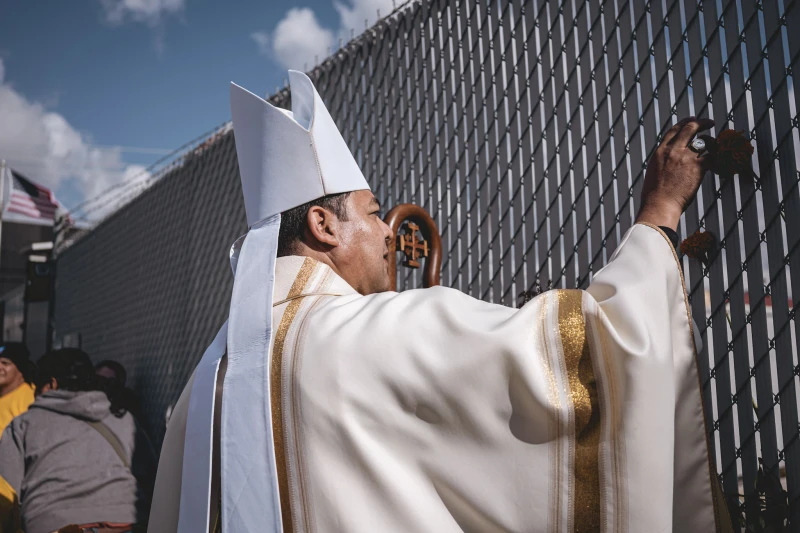
Auxiliary Bishop Jose María García-Maldonado attempts to visit detainees at the Broadview, Illinois, immigration facility and was not admitted Nov. 1, 2025. / Credit: Bryan Sebastian, courtesy of Coalition for Spiritual and Public Leadership

Washington, D.C., Nov 7, 2025 / 18:40 pm (CNA).

The Trump administration this week denounced a Chicago-based federal judge’s ruling that mandated cleanliness and hygiene standards as well as adequate legal representation at a U.S. Immigration and Customs Enforcement (ICE) facility in Illinois.

Government lawyers said Nov. 7 they are in compliance or are in the midst of complying with the judge’s conditions. The detainees’ attorneys, however, say they “are doubtful” the government is “actually in compliance” with some of the conditions, “including as to facility cleaning, the provision of food and water, and the provision of prescription medication.” 

The detainees’ attorneys asked the court to conduct an inspection with an expert and have the government provide immediate proof of compliance.

Administration officials said an “activist judge” issued the temporary restraining order and based it on hoaxes, while religious and civil-rights advocates pressed for detainees’ access to the Eucharist. 

Access to Communion

A group of 19 spiritual leaders including six priests renewed a request to offer pastoral care and Communion at the Broadview facility in a Nov. 6 letter to ICE and asked to discuss “procedures by which our small delegation of religious ministers can be granted access.” The delegation bringing Communion was denied access Nov. 1.

Scene from Nov. 1, 2025, Mass outside the Broadview facility near Chicago where immigration advocates allege federal authorities inhumanely treat detainees. Credit: Bryan Sebastian, courtesy of Coalition for Spiritual and Public Leadership

The judge’s temporary restraining order followed an Oct. 30 lawsuit in which detainees claimed they were placed in unsanitary conditions, provided inadequate food and water, and unconstitutionally deprived of access to legal representation and spiritual care. The Department of Homeland Security (DHS) said ICE’s Broadview facility houses “criminal illegal aliens” whom it described as “some of the worst of the worst.”

“Some of the worst of the worst including pedophiles, gang members, and rapists have been processed through the facility in recent weeks,” Tricia McLaughlin, assistant Homeland Security secretary for public affairs, said in a Nov. 5 statement.

The list included Jose Manuel Escobar-Cardona, described by DHS as “a criminal illegal alien” from Honduras who was convicted of multiple charges of lewd or lascivious acts with a minor, assault, driving under the influence of liquor, making a false report, illegal reentry, and making a false report.

Also named by DHS was Alfonso Batalla-Garcia, “a criminal illegal alien from Mexico, convicted of sex assault, kidnapping an adult to sexually assault, and homicide.”

Other detainees named by DHS included migrants who were said to have been convicted of drug trafficking, kidnapping, first-degree murder, and weapons trafficking. 

Publicly reported individuals detained by ICE in November also included a day care worker at the Rayito De Sol center, a Chicago preschool where the woman was removed in front of children.

Pope Leo XIV on Nov. 4 said: “Many people who’ve lived for years and years and years, never causing problems, have been deeply affected by what’s going on right now.” Leo invited authorities to allow pastoral workers to attend to the needs of detainees.

He reminded that “Jesus says very clearly … at the end of the world, we’re going to be asked … how did you receive the foreigner? Did you receive him and welcome him or not? And I think that there’s a deep reflection that needs to be made in terms of what’s happening.”

A detainee testified he spent six days at the Broadview ICE facility before Judge Robert Gettleman ordered bedding, three meals a day, free water, hygiene products, papers translated into Spanish, a clock in each hold room, and free phone service for detainees to talk to counsel. Gettleman also ordered DHS to list all detainees on the Locator Online Detainee Locator System of ICE.

DHS says facilities such as Broadview are designed to serve only as short-term holding centers, typically for about 12 hours, where individuals are briefly held for processing before being moved to longer-term detention facilities.

“Despite hoaxes spread by criminal illegal aliens, the complicit media, and now an activist judge, the ICE Broadview facility does not have subpar conditions,” McLaughlin said. She said detainees receive three meals a day, access to water, and proper medical care.

Neither McLaughlin’s statement nor the judge’s order addressed the lawsuit’s claims that Broadview detainees have been unconstitutionally denied access to faith leaders and clergy.

McLaughlin wrote on X that “religious organizations have ALWAYS been welcome to provide services to detainees in ICE detention facilities. Religious leaders may request access to facilities through proper channels and have those requests approved.”

McLaughlin also responded to questions from CNA, saying dangerous conditions — including belligerent actions and “attacks,” such as the use of tear gas, by protesters — and Broadview’s status as a short-term “field office” have prevented ICE from accommodating requests by religious organizations seeking access to detainees there.

“ICE staff has repeatedly informed religious organizations that, due to Broadview’s status as a field office and the ongoing threat to civilians, detainees, and officers, they are not able to accommodate these requests at this time,” McLaughlin told CNA. “Even before the attacks on the Broadview facility, it was not within standard operating procedure for religious services to be provided in a field office, as detainees are continuously brought in, processed, and transferred out.”

Chicago faith leaders wrote to ICE Nov. 7: “We understand that in past years ministers were granted access to the Broadview ICE facility for pastoral purposes. We also note public statements by DHS acknowledging detainees’ rights to chaplaincy and religious resources, while noting that requests for entry may require advance approval.”

‘Careful review’

Bishop Robert E. Barron of the Diocese of Winona-Rochester, Minnesota, who serves on the Department of Justice’s Religious Liberty Commission, said on X that senior officials in the U.S. government “assured” him that detainees in immigration custody will have access to Catholic sacraments and that the situation is “under careful review.”

The Catholic Legal Immigration Network (CLINIC) said in a email Nov. 7: “CLINIC is disturbed by these instances in which the human and constitutional right to religious practice is being restricted. We hope the administration follows up on its ‘careful review’ by rectifying this and taking further action.”

Pope Leo’s recent exhortation Dilexi Te says: “The Church, like a mother, accompanies those who are walking. Where the world sees threats, she sees children; where walls are built, she builds bridges. She knows that her proclamation of the Gospel is credible only when it is translated into gestures of closeness and welcome. And she knows that in every rejected migrant, it is Christ himself who knocks at the door of the community.”

Read More
U.S. bishops urge world leaders to address climate change at upcoming conference #Catholic 
 
 null / Credit: Harvepino/Shutterstock

Washington, D.C. Newsroom, Nov 4, 2025 / 17:47 pm (CNA).
U.S. bishops and other Catholic leaders are offering “prayers of support and solidarity” for world leaders who will discuss climate change and other environmental matters at an upcoming conference.The 30th annual United Nations Climate Change Conference (COP30) is scheduled for Nov. 10–21 in Belém, Brazil. World leaders, scientists, and representatives from civil society will discuss ways to implement solutions to combat climate change and form new national action plans. Archbishop Borys Gudziak, chair of the United States Conference of Catholic Bishops’ (USCCB) Committee on Domestic Justice and Human Development; Bishop A. Elias Zaidan, chair of the Committee on International Justice and Peace; and Sean Callahan, CEO of Catholic Relief Services (CRS), are calling for “urgent, courageous action to protect God’s creation and people.” “This year’s COP30 convenes while the Catholic Church celebrates the Jubilee Year of Hope,” the leaders said in a Nov. 4 statement. It is “a sacred opportunity to restore relationships and renew creation at a time when the gift of life is under grave threat.”“Pope Leo XIV called for the participants of COP30 to ‘listen to the cry of the Earth and the cry of the poor, families, Indigenous peoples, involuntary migrants and believers throughout the world,’” the leaders said.“Climate change, biodiversity loss, and environmental degradation are devastating communities already burdened by poverty and exclusion. Farming and fishing families confront threats to their livelihoods; Indigenous peoples face destruction of their ancestral lands; children’s health, safety, and futures are at risk,” the statement said.“A decade ago, in Laudato Si’, Pope Francis reminded us that the climate is a common good, belonging to all and meant for all, and that intergenerational solidarity is not optional,” the statement said. “Failing to steward God’s creation ignores our responsibility as one human family.”The leaders are calling on world leaders to act “urgently” to implement the Paris Agreement, a 2015 international treaty to limit global warming that “protects God’s creation and people.”The leaders asked that countries and civil society organizations recommit to implementation that fosters economic opportunities, commits to efforts that reduce climate warming emissions, and pledges loss and damage financing that guarantees priority and direct access to vulnerable communities. They also asked that they ensure a just transition to a sustainable economy centered on workers, communities, and creation and make financing for climate solutions timely and transparent while also upholding human dignity.“As all of us are impacted, so must we all be responsible for addressing this global challenge,” the leaders said. “Together, these actions can work towards integral ecology and ‘give priority to the poor and marginalized in the process.’”

U.S. bishops urge world leaders to address climate change at upcoming conference #Catholic null / Credit: Harvepino/Shutterstock Washington, D.C. Newsroom, Nov 4, 2025 / 17:47 pm (CNA). U.S. bishops and other Catholic leaders are offering “prayers of support and solidarity” for world leaders who will discuss climate change and other environmental matters at an upcoming conference.The 30th annual United Nations Climate Change Conference (COP30) is scheduled for Nov. 10–21 in Belém, Brazil. World leaders, scientists, and representatives from civil society will discuss ways to implement solutions to combat climate change and form new national action plans. Archbishop Borys Gudziak, chair of the United States Conference of Catholic Bishops’ (USCCB) Committee on Domestic Justice and Human Development; Bishop A. Elias Zaidan, chair of the Committee on International Justice and Peace; and Sean Callahan, CEO of Catholic Relief Services (CRS), are calling for “urgent, courageous action to protect God’s creation and people.” “This year’s COP30 convenes while the Catholic Church celebrates the Jubilee Year of Hope,” the leaders said in a Nov. 4 statement. It is “a sacred opportunity to restore relationships and renew creation at a time when the gift of life is under grave threat.”“Pope Leo XIV called for the participants of COP30 to ‘listen to the cry of the Earth and the cry of the poor, families, Indigenous peoples, involuntary migrants and believers throughout the world,’” the leaders said.“Climate change, biodiversity loss, and environmental degradation are devastating communities already burdened by poverty and exclusion. Farming and fishing families confront threats to their livelihoods; Indigenous peoples face destruction of their ancestral lands; children’s health, safety, and futures are at risk,” the statement said.“A decade ago, in Laudato Si’, Pope Francis reminded us that the climate is a common good, belonging to all and meant for all, and that intergenerational solidarity is not optional,” the statement said. “Failing to steward God’s creation ignores our responsibility as one human family.”The leaders are calling on world leaders to act “urgently” to implement the Paris Agreement, a 2015 international treaty to limit global warming that “protects God’s creation and people.”The leaders asked that countries and civil society organizations recommit to implementation that fosters economic opportunities, commits to efforts that reduce climate warming emissions, and pledges loss and damage financing that guarantees priority and direct access to vulnerable communities. They also asked that they ensure a just transition to a sustainable economy centered on workers, communities, and creation and make financing for climate solutions timely and transparent while also upholding human dignity.“As all of us are impacted, so must we all be responsible for addressing this global challenge,” the leaders said. “Together, these actions can work towards integral ecology and ‘give priority to the poor and marginalized in the process.’”


null / Credit: Harvepino/Shutterstock

Washington, D.C. Newsroom, Nov 4, 2025 / 17:47 pm (CNA).

U.S. bishops and other Catholic leaders are offering “prayers of support and solidarity” for world leaders who will discuss climate change and other environmental matters at an upcoming conference.

The 30th annual United Nations Climate Change Conference (COP30) is scheduled for Nov. 10–21 in Belém, Brazil. World leaders, scientists, and representatives from civil society will discuss ways to implement solutions to combat climate change and form new national action plans. 

Archbishop Borys Gudziak, chair of the United States Conference of Catholic Bishops’ (USCCB) Committee on Domestic Justice and Human Development; Bishop A. Elias Zaidan, chair of the Committee on International Justice and Peace; and Sean Callahan, CEO of Catholic Relief Services (CRS), are calling for “urgent, courageous action to protect God’s creation and people.” 

“This year’s COP30 convenes while the Catholic Church celebrates the Jubilee Year of Hope,” the leaders said in a Nov. 4 statement. It is “a sacred opportunity to restore relationships and renew creation at a time when the gift of life is under grave threat.”

“Pope Leo XIV called for the participants of COP30 to ‘listen to the cry of the Earth and the cry of the poor, families, Indigenous peoples, involuntary migrants and believers throughout the world,’” the leaders said.

“Climate change, biodiversity loss, and environmental degradation are devastating communities already burdened by poverty and exclusion. Farming and fishing families confront threats to their livelihoods; Indigenous peoples face destruction of their ancestral lands; children’s health, safety, and futures are at risk,” the statement said.

“A decade ago, in Laudato Si’, Pope Francis reminded us that the climate is a common good, belonging to all and meant for all, and that intergenerational solidarity is not optional,” the statement said. “Failing to steward God’s creation ignores our responsibility as one human family.”

The leaders are calling on world leaders to act “urgently” to implement the Paris Agreement, a 2015 international treaty to limit global warming that “protects God’s creation and people.”

The leaders asked that countries and civil society organizations recommit to implementation that fosters economic opportunities, commits to efforts that reduce climate warming emissions, and pledges loss and damage financing that guarantees priority and direct access to vulnerable communities. 

They also asked that they ensure a just transition to a sustainable economy centered on workers, communities, and creation and make financing for climate solutions timely and transparent while also upholding human dignity.

“As all of us are impacted, so must we all be responsible for addressing this global challenge,” the leaders said. “Together, these actions can work towards integral ecology and ‘give priority to the poor and marginalized in the process.’”

Read More