Tree

Trump honors Mary’s ‘freedom from original sin’ in Immaculate Conception message #Catholic 
 
 U.S. President Donald Trump delivers remarks on Dec. 6, 2025, in Washington, D.C. / Credit: Aaron Schwartz/Getty Images

Washington, D.C. Newsroom, Dec 8, 2025 / 18:09 pm (CNA).
President Donald Trump honored the feast of the Immaculate Conception on Dec. 8, which appears to be the first time an American president formally recognized the Catholic holy day.The presidential statement recognized the role Mary played in the salvation of humanity and the importance she has in American history. The statement does, however, contain one theological error about the Incarnation. It says God became man when Christ was born, although Catholic doctrine recognizes God becoming man at the Incarnation: when Mary conceived him.“Today, I recognize every American celebrating Dec. 8 as a holy day honoring the faith, humility, and love of Mary, mother of Jesus and one of the greatest figures in the Bible,” the statement said. Trump, who is not Catholic and describes himself as a “non-denominational Christian,” has cultivated strong bonds with a broad range of Christians and frequently referenced religious holidays and symbols in ways that resonate with supporters.CNA could not find similar proclamations on the Immaculate Conception from other presidents, including none from the only two Catholic presidents: John F. Kennedy and Joe Biden. Other presidents have spoken about Mary and the Immaculate Conception, sometimes in messages relating to Christmas or other topics, but not in a formal recognition of this feast.“On the feast of the Immaculate Conception, Catholics celebrate what they believe to be Mary’s freedom from original sin as the mother of God,” the statement read.The feast day celebrates the miracle in which Mary was conceived without the stain of original sin. Every person — with the exception of Mary and Jesus Christ — receives the hereditary stain of original sin, which was brought onto humanity through the first sin of Adam and Eve when they disobeyed God by eating fruit from the tree of knowledge of good and evil.Mary’s importance to humanity and the United StatesThe presidential statement said Mary’s agreement at the Annunciation to conceive and bear the child Christ was “one of the most profound and consequential acts of history,” and Mary “heroically accepted God’s will with trust and humility.” It cites Luke 1:38: “Behold, I am the handmaid of the Lord. May it be done to me according to your word.” “Mary’s decision forever altered the course of humanity,” the statement read, adding that Christ “would go on to offer his life on the Cross for the redemption of sins and the salvation of the world.”President Trump’s statement also describes the annunciation by the archangel Gabriel, who calls the Blessed Mother “favored one” and tells her “you will conceive in your womb and bear a son, and you shall name him Jesus.”Later in the document, the presidential message says “we remember the sacred words that have brought aid, comfort, and support to generations of American believers in times of need,” and includes the text of the Hail Mary.Trump’s statement also acknowledges the “distinct role” Mary has played “in our great American story.”The president’s statement also specifically references Bishop John Carroll’s consecration of the United States to the Blessed Mother. Carroll was the only Catholic to sign the Declaration of Independence. In addition, the statement references the annual Mass of Thanksgiving in New Orleans on Jan. 8, in which Catholics celebrate Mary’s perceived assistance to U.S. troops under the command of General Andrew Jackson in winning the Battle of New Orleans.The message notes that “American legends” including St. Elizabeth Ann Seton, St. Frances Xavier Cabrini, and Venerable Fulton Sheen “held a deep devotion to Mary” and that many American churches, hospitals, universities, and schools bear her name. It adds that many Americans will also celebrate Our Lady of Guadalupe on Dec. 12.“As we approach 250 years of glorious American independence, we acknowledge and give thanks, with total gratitude, for Mary’s role in advancing peace, hope, and love in America and beyond our shores,” the presidential message reads.The presidential message also recognizes Pope Benedict XV dedicating a statue of Mary, Queen of Peace, to encourage Christians “to look to her example of peace by praying for a stop to the horrific slaughter” occurring in World War I, which then ended just a few months later.“Today, we look to Mary once again for inspiration and encouragement as we pray for an end to war and for a new and lasting era of peace, prosperity, and harmony in Europe and throughout the world,” Trump’s statement added.Catholics react to Trump’s messageChad Pecknold, a political science professor at The Catholic University of America, said he welcomed the president’s recognition of the feast day.“The more America publicly honors Christian feast days such as Christmas, Good Friday, and Easter, and the more we remember our greatest saints, as well as our national heroes, the better oriented our nation will be to God,” he said. “This is the spiritual key to raising up the Res Americana for the next 250 years.”Susan Hanssen, a history professor at the University of Dallas (a Catholic institution), called the presidential message “a jaw-droppingly historic event.” For a president to celebrate Mary as “full of grace” and celebrate “the centrality of the Incarnation,” she said “goes beyond anything that Americans have ever heard in presidential public speeches.”“This pronouncement, along with the first American pope in world history, marks a watershed moment in American cultural history,” Hanssen said. Caleb Henry, a political science professor at Franciscan University, told CNA Trump’s message appears to be an extension of the president’s America Prays campaign, which asks Americans to pray for the country ahead of the 250th anniversary of the Declaration of Independence next year.Henry said the initiative seeks to “reconnect America’s people of faith with … the signing of the Declaration of Independence.” He said the Immaculate Conception statement appears to be “a message to America’s Catholic faithful,” that the country’s history “while complicated, is rooted in these truths of natural law, laws of nature, and of nature’s God.”“We have a Marian tradition here in our country as well,” he said. The statement comes as the nation’s Catholic bishops have welcomed some of Trump’s policies, such as regarding gender ideology. Bishops also have expressed dismay about indiscriminate immigration enforcement and a plan to expand in vitro fertilization (IVF).The United States Conference of Catholic Bishops issued a unified special pastoral message against “indiscriminate mass deportations” on Nov. 12.Henry said a message like the one issued on the Immaculate Conception is “a typical Trump move” by “ignoring all existing hierarchies and going straight to the people.”Theological error in the messageThe statement contains a theological error. After discussing the Annunciation, the message states “nine months later, God became man when Mary gave birth to a son, Jesus.”Christ became man at the moment of the Incarnation, when Mary conceived him, not when he was born. Father Aquinas Guilbeau, OP, told CNA that although early councils clarified this teaching, the misunderstanding “endures today.” He said: “Even among Christians, sadly. It remains a favorite of poets.” He noted that even in “Silent Night,” the verse that says “Jesus, Lord, at thy birth” falls into this error because: “Jesus is Lord before his birth. He is Lord at his conception.”“Wherever it appears, the error may be pious and well-intentioned but it remains theologically inaccurate,” Guilbeau said.

Trump honors Mary’s ‘freedom from original sin’ in Immaculate Conception message #Catholic U.S. President Donald Trump delivers remarks on Dec. 6, 2025, in Washington, D.C. / Credit: Aaron Schwartz/Getty Images Washington, D.C. Newsroom, Dec 8, 2025 / 18:09 pm (CNA). President Donald Trump honored the feast of the Immaculate Conception on Dec. 8, which appears to be the first time an American president formally recognized the Catholic holy day.The presidential statement recognized the role Mary played in the salvation of humanity and the importance she has in American history. The statement does, however, contain one theological error about the Incarnation. It says God became man when Christ was born, although Catholic doctrine recognizes God becoming man at the Incarnation: when Mary conceived him.“Today, I recognize every American celebrating Dec. 8 as a holy day honoring the faith, humility, and love of Mary, mother of Jesus and one of the greatest figures in the Bible,” the statement said. Trump, who is not Catholic and describes himself as a “non-denominational Christian,” has cultivated strong bonds with a broad range of Christians and frequently referenced religious holidays and symbols in ways that resonate with supporters.CNA could not find similar proclamations on the Immaculate Conception from other presidents, including none from the only two Catholic presidents: John F. Kennedy and Joe Biden. Other presidents have spoken about Mary and the Immaculate Conception, sometimes in messages relating to Christmas or other topics, but not in a formal recognition of this feast.“On the feast of the Immaculate Conception, Catholics celebrate what they believe to be Mary’s freedom from original sin as the mother of God,” the statement read.The feast day celebrates the miracle in which Mary was conceived without the stain of original sin. Every person — with the exception of Mary and Jesus Christ — receives the hereditary stain of original sin, which was brought onto humanity through the first sin of Adam and Eve when they disobeyed God by eating fruit from the tree of knowledge of good and evil.Mary’s importance to humanity and the United StatesThe presidential statement said Mary’s agreement at the Annunciation to conceive and bear the child Christ was “one of the most profound and consequential acts of history,” and Mary “heroically accepted God’s will with trust and humility.” It cites Luke 1:38: “Behold, I am the handmaid of the Lord. May it be done to me according to your word.” “Mary’s decision forever altered the course of humanity,” the statement read, adding that Christ “would go on to offer his life on the Cross for the redemption of sins and the salvation of the world.”President Trump’s statement also describes the annunciation by the archangel Gabriel, who calls the Blessed Mother “favored one” and tells her “you will conceive in your womb and bear a son, and you shall name him Jesus.”Later in the document, the presidential message says “we remember the sacred words that have brought aid, comfort, and support to generations of American believers in times of need,” and includes the text of the Hail Mary.Trump’s statement also acknowledges the “distinct role” Mary has played “in our great American story.”The president’s statement also specifically references Bishop John Carroll’s consecration of the United States to the Blessed Mother. Carroll was the only Catholic to sign the Declaration of Independence. In addition, the statement references the annual Mass of Thanksgiving in New Orleans on Jan. 8, in which Catholics celebrate Mary’s perceived assistance to U.S. troops under the command of General Andrew Jackson in winning the Battle of New Orleans.The message notes that “American legends” including St. Elizabeth Ann Seton, St. Frances Xavier Cabrini, and Venerable Fulton Sheen “held a deep devotion to Mary” and that many American churches, hospitals, universities, and schools bear her name. It adds that many Americans will also celebrate Our Lady of Guadalupe on Dec. 12.“As we approach 250 years of glorious American independence, we acknowledge and give thanks, with total gratitude, for Mary’s role in advancing peace, hope, and love in America and beyond our shores,” the presidential message reads.The presidential message also recognizes Pope Benedict XV dedicating a statue of Mary, Queen of Peace, to encourage Christians “to look to her example of peace by praying for a stop to the horrific slaughter” occurring in World War I, which then ended just a few months later.“Today, we look to Mary once again for inspiration and encouragement as we pray for an end to war and for a new and lasting era of peace, prosperity, and harmony in Europe and throughout the world,” Trump’s statement added.Catholics react to Trump’s messageChad Pecknold, a political science professor at The Catholic University of America, said he welcomed the president’s recognition of the feast day.“The more America publicly honors Christian feast days such as Christmas, Good Friday, and Easter, and the more we remember our greatest saints, as well as our national heroes, the better oriented our nation will be to God,” he said. “This is the spiritual key to raising up the Res Americana for the next 250 years.”Susan Hanssen, a history professor at the University of Dallas (a Catholic institution), called the presidential message “a jaw-droppingly historic event.” For a president to celebrate Mary as “full of grace” and celebrate “the centrality of the Incarnation,” she said “goes beyond anything that Americans have ever heard in presidential public speeches.”“This pronouncement, along with the first American pope in world history, marks a watershed moment in American cultural history,” Hanssen said. Caleb Henry, a political science professor at Franciscan University, told CNA Trump’s message appears to be an extension of the president’s America Prays campaign, which asks Americans to pray for the country ahead of the 250th anniversary of the Declaration of Independence next year.Henry said the initiative seeks to “reconnect America’s people of faith with … the signing of the Declaration of Independence.” He said the Immaculate Conception statement appears to be “a message to America’s Catholic faithful,” that the country’s history “while complicated, is rooted in these truths of natural law, laws of nature, and of nature’s God.”“We have a Marian tradition here in our country as well,” he said. The statement comes as the nation’s Catholic bishops have welcomed some of Trump’s policies, such as regarding gender ideology. Bishops also have expressed dismay about indiscriminate immigration enforcement and a plan to expand in vitro fertilization (IVF).The United States Conference of Catholic Bishops issued a unified special pastoral message against “indiscriminate mass deportations” on Nov. 12.Henry said a message like the one issued on the Immaculate Conception is “a typical Trump move” by “ignoring all existing hierarchies and going straight to the people.”Theological error in the messageThe statement contains a theological error. After discussing the Annunciation, the message states “nine months later, God became man when Mary gave birth to a son, Jesus.”Christ became man at the moment of the Incarnation, when Mary conceived him, not when he was born. Father Aquinas Guilbeau, OP, told CNA that although early councils clarified this teaching, the misunderstanding “endures today.” He said: “Even among Christians, sadly. It remains a favorite of poets.” He noted that even in “Silent Night,” the verse that says “Jesus, Lord, at thy birth” falls into this error because: “Jesus is Lord before his birth. He is Lord at his conception.”“Wherever it appears, the error may be pious and well-intentioned but it remains theologically inaccurate,” Guilbeau said.


U.S. President Donald Trump delivers remarks on Dec. 6, 2025, in Washington, D.C. / Credit: Aaron Schwartz/Getty Images

Washington, D.C. Newsroom, Dec 8, 2025 / 18:09 pm (CNA).

President Donald Trump honored the feast of the Immaculate Conception on Dec. 8, which appears to be the first time an American president formally recognized the Catholic holy day.

The presidential statement recognized the role Mary played in the salvation of humanity and the importance she has in American history. The statement does, however, contain one theological error about the Incarnation. It says God became man when Christ was born, although Catholic doctrine recognizes God becoming man at the Incarnation: when Mary conceived him.

“Today, I recognize every American celebrating Dec. 8 as a holy day honoring the faith, humility, and love of Mary, mother of Jesus and one of the greatest figures in the Bible,” the statement said. Trump, who is not Catholic and describes himself as a “non-denominational Christian,” has cultivated strong bonds with a broad range of Christians and frequently referenced religious holidays and symbols in ways that resonate with supporters.

CNA could not find similar proclamations on the Immaculate Conception from other presidents, including none from the only two Catholic presidents: John F. Kennedy and Joe Biden. Other presidents have spoken about Mary and the Immaculate Conception, sometimes in messages relating to Christmas or other topics, but not in a formal recognition of this feast.

“On the feast of the Immaculate Conception, Catholics celebrate what they believe to be Mary’s freedom from original sin as the mother of God,” the statement read.

The feast day celebrates the miracle in which Mary was conceived without the stain of original sin. Every person — with the exception of Mary and Jesus Christ — receives the hereditary stain of original sin, which was brought onto humanity through the first sin of Adam and Eve when they disobeyed God by eating fruit from the tree of knowledge of good and evil.

Mary’s importance to humanity and the United States

The presidential statement said Mary’s agreement at the Annunciation to conceive and bear the child Christ was “one of the most profound and consequential acts of history,” and Mary “heroically accepted God’s will with trust and humility.” 

It cites Luke 1:38: “Behold, I am the handmaid of the Lord. May it be done to me according to your word.” 

“Mary’s decision forever altered the course of humanity,” the statement read, adding that Christ “would go on to offer his life on the Cross for the redemption of sins and the salvation of the world.”

President Trump’s statement also describes the annunciation by the archangel Gabriel, who calls the Blessed Mother “favored one” and tells her “you will conceive in your womb and bear a son, and you shall name him Jesus.”

Later in the document, the presidential message says “we remember the sacred words that have brought aid, comfort, and support to generations of American believers in times of need,” and includes the text of the Hail Mary.

Trump’s statement also acknowledges the “distinct role” Mary has played “in our great American story.”

The president’s statement also specifically references Bishop John Carroll’s consecration of the United States to the Blessed Mother. Carroll was the only Catholic to sign the Declaration of Independence. In addition, the statement references the annual Mass of Thanksgiving in New Orleans on Jan. 8, in which Catholics celebrate Mary’s perceived assistance to U.S. troops under the command of General Andrew Jackson in winning the Battle of New Orleans.

The message notes that “American legends” including St. Elizabeth Ann Seton, St. Frances Xavier Cabrini, and Venerable Fulton Sheen “held a deep devotion to Mary” and that many American churches, hospitals, universities, and schools bear her name. It adds that many Americans will also celebrate Our Lady of Guadalupe on Dec. 12.

“As we approach 250 years of glorious American independence, we acknowledge and give thanks, with total gratitude, for Mary’s role in advancing peace, hope, and love in America and beyond our shores,” the presidential message reads.

The presidential message also recognizes Pope Benedict XV dedicating a statue of Mary, Queen of Peace, to encourage Christians “to look to her example of peace by praying for a stop to the horrific slaughter” occurring in World War I, which then ended just a few months later.

“Today, we look to Mary once again for inspiration and encouragement as we pray for an end to war and for a new and lasting era of peace, prosperity, and harmony in Europe and throughout the world,” Trump’s statement added.

Catholics react to Trump’s message

Chad Pecknold, a political science professor at The Catholic University of America, said he welcomed the president’s recognition of the feast day.

“The more America publicly honors Christian feast days such as Christmas, Good Friday, and Easter, and the more we remember our greatest saints, as well as our national heroes, the better oriented our nation will be to God,” he said. “This is the spiritual key to raising up the Res Americana for the next 250 years.”

Susan Hanssen, a history professor at the University of Dallas (a Catholic institution), called the presidential message “a jaw-droppingly historic event.” For a president to celebrate Mary as “full of grace” and celebrate “the centrality of the Incarnation,” she said “goes beyond anything that Americans have ever heard in presidential public speeches.”

“This pronouncement, along with the first American pope in world history, marks a watershed moment in American cultural history,” Hanssen said. 

Caleb Henry, a political science professor at Franciscan University, told CNA Trump’s message appears to be an extension of the president’s America Prays campaign, which asks Americans to pray for the country ahead of the 250th anniversary of the Declaration of Independence next year.

Henry said the initiative seeks to “reconnect America’s people of faith with … the signing of the Declaration of Independence.” He said the Immaculate Conception statement appears to be “a message to America’s Catholic faithful,” that the country’s history “while complicated, is rooted in these truths of natural law, laws of nature, and of nature’s God.”

“We have a Marian tradition here in our country as well,” he said. 

The statement comes as the nation’s Catholic bishops have welcomed some of Trump’s policies, such as regarding gender ideology. Bishops also have expressed dismay about indiscriminate immigration enforcement and a plan to expand in vitro fertilization (IVF).

The United States Conference of Catholic Bishops issued a unified special pastoral message against “indiscriminate mass deportations” on Nov. 12.

Henry said a message like the one issued on the Immaculate Conception is “a typical Trump move” by “ignoring all existing hierarchies and going straight to the people.”

Theological error in the message

The statement contains a theological error. After discussing the Annunciation, the message states “nine months later, God became man when Mary gave birth to a son, Jesus.”

Christ became man at the moment of the Incarnation, when Mary conceived him, not when he was born. 

Father Aquinas Guilbeau, OP, told CNA that although early councils clarified this teaching, the misunderstanding “endures today.” He said: “Even among Christians, sadly. It remains a favorite of poets.” 

He noted that even in “Silent Night,” the verse that says “Jesus, Lord, at thy birth” falls into this error because: “Jesus is Lord before his birth. He is Lord at his conception.”

“Wherever it appears, the error may be pious and well-intentioned but it remains theologically inaccurate,” Guilbeau said.

Read More
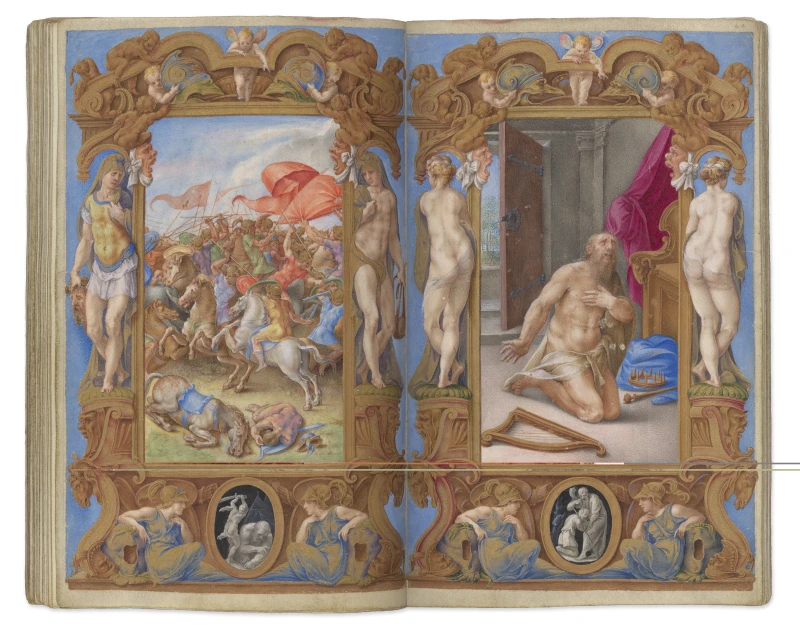
PHOTOS: Tickhill Psalter’s Jesse Tree shines in Morgan Library’s Advent exhibit #Catholic 
 
 Death of Uriah; David in Penance, from the Morgan’s famed Farnese Hours, demonstrates the enduring appeal of the penitential Psalms of David as seen in this early Renaissance book of hours. Italy, Rome, 1546. The Morgan Library & Museum, New York, MS M.69, fols, 63v-63r. Photography by Janny Chiu. / Credit: Courtesy of the New York Library

New York City, New York, Nov 30, 2025 / 08:00 am (CNA).
Part of the New York Public Library’s Spencer Collection, the Tickhill Psalter is on view throughout Advent and Christmas at The Morgan Library & Museum in its exhibit “Sing a New Song: The Psalms in Medieval Art and Life.” A full-page Jesse Tree introduces the Psalms in the Tickhill Psalter, a 14th-century illuminated manuscript from the Augustinian Worksop Priory in Nottinghamshire, England. Tree of Jesse (Psalm 1), from the Tickhill Psalter, England, Nottinghamshire, Worksop Priory, 1303-14, New York Public Library, Spencer 26. fol. 6v. The Medieval manuscript is on display in Morgan Library’s Advent exhibit. Credit: Courtesy of the Morgan LibraryDavid appears in the historiated B of Psalm 1, providing a conceptual link to scenes from his life in the Jesse Tree on the facing page. “Beatus vir,” or “Blessed is the man,” the first stanza opens in celebration of the one who delights in God’s law, concluding: “That person is like a tree planted by streams of water, which yields its fruit in season and whose leaf does not wither, — what they do prospers.” These words and their historiated B, with its visual link to the facing page, highlight David as key author of the Psalms and their prefiguration of Christ, the good fruit of the Jesse Tree, a theme common to medieval illuminated manuscripts.King David as Psalmist, from Florence, Italy, ca. 1408-10, by Lorenzo Monaco, who was born Piero di Giovanni but took the name Lorenzo Monaco, or Lorenzo the Monk, upon joining the monastery of Santa Maria degli Angeli, where he became a skilled illuminator and translated themes common to illuminated manuscripts into panel paintings, like this tempera on wood with gold ground depicting David seated on a stone bench tuning a psaltery, lips parted, prepared to sing, with a halo backing the crown he wears to signify the divine inspiration of his compositions. The Metropolitan Museum of Art, New York, 65.14.4. November 2025. Credit: Courtesy of the Metropolitan Museum of Art, New YorkProphets stand in architectural niches on either side of the Tickhill Psalter’s Jesse Tree, heralding the Psalms as prophecy. Credit: Courtesy of the New York LibraryThe central panel of a 1490 Flemish triptych with scenes from the life of Saint Augustine contextualizes the exhibit. This five-by-five-foot oil on wood painting references Augustine’s use of allegory, essential to his understanding of scripture and interpretation of the psalms as prophecy. One scene captures Augustine’s realization of the Trinity as boundless mystery that dwarfs human understanding, allegorized by a child trying to pour the sea into a hole in the sand. Scenes from the life of St. Augustine of Hippo, 1490, Bruges, Belgium, by the unnamed master of St. Augustine, amplifies the Church’s leading theologian on the allegorical interpretation of Psalms. At center, his installation as bishop of Hippo highlights his teaching authority, flanked by scenes of ordination and preaching on the left. On the right, he engages in scholarly discourse and converses with a child trying to pour the sea into a hole in the sand, illustrating the importance of allegory in Augustinian thought. Credit: Courtesy of the New York Public LibraryLate 12th-century book comprised of Augustine’s Gradual Psalms and his Enchiridion (Greek for “handbook”). The well-worn and annotated pages reflect the proliferation of Augustinian influence on interpretation of Scripture. Spain, Santa Maria de Benevivere, near Palencia. Free Library of Philadelphia, Lewis E22, fols. 68v-69r. Credit: Courtesy of the New York Public LibraryIn the book accompanying the exhibit, Morgan curator Deirdre Jackson extends the psalms’ significance to this triptych through a reference to a surviving panel housed in Ireland that shows Augustine on his deathbed. It’s a scene described by contemporary bishop Possidius of Calama, who said that Augustine “ordered those psalms of David which are especially penitential to be copied out and, when he was very weak, used to lie in bed, facing the wall where the written sheets were put up, gazing at them and reading them, and copiously and continuously weeping as he read.”Death of Uriah; David in Penance, from the Morgan’s famed Farnese Hours, demonstrates the enduring appeal of the penitential Psalms of David as seen in this early Renaissance book of hours. Italy, Rome, 1546. The Morgan Library & Museum, New York, MS M.69, fols, 63v-63r. Photography by Janny Chiu. Credit: Courtesy of the New York Public LibraryScenes from the Life of David, depicting the story of David and Goliath, exemplifies the significance attached to the figure of David in medieval illuminated manuscripts. Winchester Bible, England, Winchester, ca. 1160-80. The Morgan Library & Museum, New York, MS M.619v. Photography by Graham S. Haber. Credit: Courtesy of the New York LibraryIn his book “The Tickhill Psalter and Related Manuscripts,” 20th-century art historian Donald Drew Egbert speculates that the Tickhill Psalter was decorated by highly skilled illuminators working for Augustinian monasteries and patrons of Augustinian houses during a high point of book arts in England.St. Thomas More, “in tribulation vehementi et in carcere” (annotation), from the Prayer Book of Thomas More, France, Paris, 1522 (Psalter) and 1530 (Book of Hours), Beinecke Rare Book & Manuscript Library, Yale University, New Haven, MS Vault More, fol. 68v (Psalter section). Credit: Courtesy of the New York LibraryThis high point inspired a trend of books as personalized treasures, best exemplified in this exhibit by St. Thomas More’s prayer book. Containing much of his own writing in the margins, it consists of a Book of Hours and a Psalter and was with him in the Tower of London while he awaited execution. More’s notes during that time show his preoccupation with the psalms of David’s tribulations. Beside Psalm 87:5-10, “a man without help … in the dark places, and in the shadow of death,” More writes, “in severe tribulation and in prison.”The Prayer Book of Thomas More is backed by a wall-sized image of Hans Holbein’s “Sir Thomas More,” positioned to look like More is gazing intently across the gallery at an image of David from the Crusader Bible. Engelhard Gallery, Photography by Janny Chiu, October 2025. Credit: Courtesy of the New York LibraryMore’s thoughts in distress demonstrate the appeal of David’s story to the human heart, a reality repeatedly expressed throughout the treasures of this exhibit. In the Tickhill Psalter’s Jesse Tree, David is encircled by branches springing from a tree that grows out of his father, Jesse, sprawled in an active sleep, his elbow supporting a hand planted against his head as though dreaming of all that is to come. A crop of the enter of Tickhill Psalter showing the Virgin and Child and the figure of David playing a harp. Credit: Courtesy of the New York LibraryThe branches of the tree wind around David and directly overhead to encircle the Virgin and Child, tracing Christ’s lineage through Mary to the House of David. At the top, the branches surround Christ enthroned in majesty, fulfilling the promise of victory over sin and death foreshadowed in the psalms.David strikes a joyous pose and plays a harp in celebration, and foliage on either side of the main branch wraps around prophets who unfurl scrolls to hint at mysteries about to be foretold in the reading of the psalms.Beneath the figure of Jesse, two separate depictions of David protecting his sheep from wild animals cast his actions as allegory in the fight against evil, segueing to his likeness in the historiated B, dancing and singing his story into the Psalms to animate their prefiguration of Christ.

PHOTOS: Tickhill Psalter’s Jesse Tree shines in Morgan Library’s Advent exhibit #Catholic Death of Uriah; David in Penance, from the Morgan’s famed Farnese Hours, demonstrates the enduring appeal of the penitential Psalms of David as seen in this early Renaissance book of hours. Italy, Rome, 1546. The Morgan Library & Museum, New York, MS M.69, fols, 63v-63r. Photography by Janny Chiu. / Credit: Courtesy of the New York Library New York City, New York, Nov 30, 2025 / 08:00 am (CNA). Part of the New York Public Library’s Spencer Collection, the Tickhill Psalter is on view throughout Advent and Christmas at The Morgan Library & Museum in its exhibit “Sing a New Song: The Psalms in Medieval Art and Life.” A full-page Jesse Tree introduces the Psalms in the Tickhill Psalter, a 14th-century illuminated manuscript from the Augustinian Worksop Priory in Nottinghamshire, England. Tree of Jesse (Psalm 1), from the Tickhill Psalter, England, Nottinghamshire, Worksop Priory, 1303-14, New York Public Library, Spencer 26. fol. 6v. The Medieval manuscript is on display in Morgan Library’s Advent exhibit. Credit: Courtesy of the Morgan LibraryDavid appears in the historiated B of Psalm 1, providing a conceptual link to scenes from his life in the Jesse Tree on the facing page. “Beatus vir,” or “Blessed is the man,” the first stanza opens in celebration of the one who delights in God’s law, concluding: “That person is like a tree planted by streams of water, which yields its fruit in season and whose leaf does not wither, — what they do prospers.” These words and their historiated B, with its visual link to the facing page, highlight David as key author of the Psalms and their prefiguration of Christ, the good fruit of the Jesse Tree, a theme common to medieval illuminated manuscripts.King David as Psalmist, from Florence, Italy, ca. 1408-10, by Lorenzo Monaco, who was born Piero di Giovanni but took the name Lorenzo Monaco, or Lorenzo the Monk, upon joining the monastery of Santa Maria degli Angeli, where he became a skilled illuminator and translated themes common to illuminated manuscripts into panel paintings, like this tempera on wood with gold ground depicting David seated on a stone bench tuning a psaltery, lips parted, prepared to sing, with a halo backing the crown he wears to signify the divine inspiration of his compositions. The Metropolitan Museum of Art, New York, 65.14.4. November 2025. Credit: Courtesy of the Metropolitan Museum of Art, New YorkProphets stand in architectural niches on either side of the Tickhill Psalter’s Jesse Tree, heralding the Psalms as prophecy. Credit: Courtesy of the New York LibraryThe central panel of a 1490 Flemish triptych with scenes from the life of Saint Augustine contextualizes the exhibit. This five-by-five-foot oil on wood painting references Augustine’s use of allegory, essential to his understanding of scripture and interpretation of the psalms as prophecy. One scene captures Augustine’s realization of the Trinity as boundless mystery that dwarfs human understanding, allegorized by a child trying to pour the sea into a hole in the sand. Scenes from the life of St. Augustine of Hippo, 1490, Bruges, Belgium, by the unnamed master of St. Augustine, amplifies the Church’s leading theologian on the allegorical interpretation of Psalms. At center, his installation as bishop of Hippo highlights his teaching authority, flanked by scenes of ordination and preaching on the left. On the right, he engages in scholarly discourse and converses with a child trying to pour the sea into a hole in the sand, illustrating the importance of allegory in Augustinian thought. Credit: Courtesy of the New York Public LibraryLate 12th-century book comprised of Augustine’s Gradual Psalms and his Enchiridion (Greek for “handbook”). The well-worn and annotated pages reflect the proliferation of Augustinian influence on interpretation of Scripture. Spain, Santa Maria de Benevivere, near Palencia. Free Library of Philadelphia, Lewis E22, fols. 68v-69r. Credit: Courtesy of the New York Public LibraryIn the book accompanying the exhibit, Morgan curator Deirdre Jackson extends the psalms’ significance to this triptych through a reference to a surviving panel housed in Ireland that shows Augustine on his deathbed. It’s a scene described by contemporary bishop Possidius of Calama, who said that Augustine “ordered those psalms of David which are especially penitential to be copied out and, when he was very weak, used to lie in bed, facing the wall where the written sheets were put up, gazing at them and reading them, and copiously and continuously weeping as he read.”Death of Uriah; David in Penance, from the Morgan’s famed Farnese Hours, demonstrates the enduring appeal of the penitential Psalms of David as seen in this early Renaissance book of hours. Italy, Rome, 1546. The Morgan Library & Museum, New York, MS M.69, fols, 63v-63r. Photography by Janny Chiu. Credit: Courtesy of the New York Public LibraryScenes from the Life of David, depicting the story of David and Goliath, exemplifies the significance attached to the figure of David in medieval illuminated manuscripts. Winchester Bible, England, Winchester, ca. 1160-80. The Morgan Library & Museum, New York, MS M.619v. Photography by Graham S. Haber. Credit: Courtesy of the New York LibraryIn his book “The Tickhill Psalter and Related Manuscripts,” 20th-century art historian Donald Drew Egbert speculates that the Tickhill Psalter was decorated by highly skilled illuminators working for Augustinian monasteries and patrons of Augustinian houses during a high point of book arts in England.St. Thomas More, “in tribulation vehementi et in carcere” (annotation), from the Prayer Book of Thomas More, France, Paris, 1522 (Psalter) and 1530 (Book of Hours), Beinecke Rare Book & Manuscript Library, Yale University, New Haven, MS Vault More, fol. 68v (Psalter section). Credit: Courtesy of the New York LibraryThis high point inspired a trend of books as personalized treasures, best exemplified in this exhibit by St. Thomas More’s prayer book. Containing much of his own writing in the margins, it consists of a Book of Hours and a Psalter and was with him in the Tower of London while he awaited execution. More’s notes during that time show his preoccupation with the psalms of David’s tribulations. Beside Psalm 87:5-10, “a man without help … in the dark places, and in the shadow of death,” More writes, “in severe tribulation and in prison.”The Prayer Book of Thomas More is backed by a wall-sized image of Hans Holbein’s “Sir Thomas More,” positioned to look like More is gazing intently across the gallery at an image of David from the Crusader Bible. Engelhard Gallery, Photography by Janny Chiu, October 2025. Credit: Courtesy of the New York LibraryMore’s thoughts in distress demonstrate the appeal of David’s story to the human heart, a reality repeatedly expressed throughout the treasures of this exhibit. In the Tickhill Psalter’s Jesse Tree, David is encircled by branches springing from a tree that grows out of his father, Jesse, sprawled in an active sleep, his elbow supporting a hand planted against his head as though dreaming of all that is to come. A crop of the enter of Tickhill Psalter showing the Virgin and Child and the figure of David playing a harp. Credit: Courtesy of the New York LibraryThe branches of the tree wind around David and directly overhead to encircle the Virgin and Child, tracing Christ’s lineage through Mary to the House of David. At the top, the branches surround Christ enthroned in majesty, fulfilling the promise of victory over sin and death foreshadowed in the psalms.David strikes a joyous pose and plays a harp in celebration, and foliage on either side of the main branch wraps around prophets who unfurl scrolls to hint at mysteries about to be foretold in the reading of the psalms.Beneath the figure of Jesse, two separate depictions of David protecting his sheep from wild animals cast his actions as allegory in the fight against evil, segueing to his likeness in the historiated B, dancing and singing his story into the Psalms to animate their prefiguration of Christ.


Death of Uriah; David in Penance, from the Morgan’s famed Farnese Hours, demonstrates the enduring appeal of the penitential Psalms of David as seen in this early Renaissance book of hours. Italy, Rome, 1546. The Morgan Library & Museum, New York, MS M.69, fols, 63v-63r. Photography by Janny Chiu. / Credit: Courtesy of the New York Library

New York City, New York, Nov 30, 2025 / 08:00 am (CNA).

Part of the New York Public Library’s Spencer Collection, the Tickhill Psalter is on view throughout Advent and Christmas at The Morgan Library & Museum in its exhibit “Sing a New Song: The Psalms in Medieval Art and Life.” A full-page Jesse Tree introduces the Psalms in the Tickhill Psalter, a 14th-century illuminated manuscript from the Augustinian Worksop Priory in Nottinghamshire, England.

Tree of Jesse (Psalm 1), from the Tickhill Psalter, England, Nottinghamshire, Worksop Priory, 1303-14, New York Public Library, Spencer 26. fol. 6v. The Medieval manuscript is on display in Morgan Library’s Advent exhibit. Credit: Courtesy of the Morgan Library

David appears in the historiated B of Psalm 1, providing a conceptual link to scenes from his life in the Jesse Tree on the facing page. “Beatus vir,” or “Blessed is the man,” the first stanza opens in celebration of the one who delights in God’s law, concluding: “That person is like a tree planted by streams of water, which yields its fruit in season and whose leaf does not wither, — what they do prospers.” 

These words and their historiated B, with its visual link to the facing page, highlight David as key author of the Psalms and their prefiguration of Christ, the good fruit of the Jesse Tree, a theme common to medieval illuminated manuscripts.

King David as Psalmist, from Florence, Italy, ca. 1408-10, by Lorenzo Monaco, who was born Piero di Giovanni but took the name Lorenzo Monaco, or Lorenzo the Monk, upon joining the monastery of Santa Maria degli Angeli, where he became a skilled illuminator and translated themes common to illuminated manuscripts into panel paintings, like this tempera on wood with gold ground depicting David seated on a stone bench tuning a psaltery, lips parted, prepared to sing, with a halo backing the crown he wears to signify the divine inspiration of his compositions. The Metropolitan Museum of Art, New York, 65.14.4. November 2025. Credit: Courtesy of the Metropolitan Museum of Art, New York
Prophets stand in architectural niches on either side of the Tickhill Psalter’s Jesse Tree, heralding the Psalms as prophecy. Credit: Courtesy of the New York Library

The central panel of a 1490 Flemish triptych with scenes from the life of Saint Augustine contextualizes the exhibit. This five-by-five-foot oil on wood painting references Augustine’s use of allegory, essential to his understanding of scripture and interpretation of the psalms as prophecy. One scene captures Augustine’s realization of the Trinity as boundless mystery that dwarfs human understanding, allegorized by a child trying to pour the sea into a hole in the sand. 

Scenes from the life of St. Augustine of Hippo, 1490, Bruges, Belgium, by the unnamed master of St. Augustine, amplifies the Church’s leading theologian on the allegorical interpretation of Psalms. At center, his installation as bishop of Hippo highlights his teaching authority, flanked by scenes of ordination and preaching on the left. On the right, he engages in scholarly discourse and converses with a child trying to pour the sea into a hole in the sand, illustrating the importance of allegory in Augustinian thought. Credit: Courtesy of the New York Public Library
Late 12th-century book comprised of Augustine’s Gradual Psalms and his Enchiridion (Greek for “handbook”). The well-worn and annotated pages reflect the proliferation of Augustinian influence on interpretation of Scripture. Spain, Santa Maria de Benevivere, near Palencia. Free Library of Philadelphia, Lewis E22, fols. 68v-69r. Credit: Courtesy of the New York Public Library

In the book accompanying the exhibit, Morgan curator Deirdre Jackson extends the psalms’ significance to this triptych through a reference to a surviving panel housed in Ireland that shows Augustine on his deathbed. It’s a scene described by contemporary bishop Possidius of Calama, who said that Augustine “ordered those psalms of David which are especially penitential to be copied out and, when he was very weak, used to lie in bed, facing the wall where the written sheets were put up, gazing at them and reading them, and copiously and continuously weeping as he read.”

Death of Uriah; David in Penance, from the Morgan’s famed Farnese Hours, demonstrates the enduring appeal of the penitential Psalms of David as seen in this early Renaissance book of hours. Italy, Rome, 1546. The Morgan Library & Museum, New York, MS M.69, fols, 63v-63r. Photography by Janny Chiu. Credit: Courtesy of the New York Public Library
Scenes from the Life of David, depicting the story of David and Goliath, exemplifies the significance attached to the figure of David in medieval illuminated manuscripts. Winchester Bible, England, Winchester, ca. 1160-80. The Morgan Library & Museum, New York, MS M.619v. Photography by Graham S. Haber. Credit: Courtesy of the New York Library

In his book “The Tickhill Psalter and Related Manuscripts,” 20th-century art historian Donald Drew Egbert speculates that the Tickhill Psalter was decorated by highly skilled illuminators working for Augustinian monasteries and patrons of Augustinian houses during a high point of book arts in England.

St. Thomas More, “in tribulation vehementi et in carcere” (annotation), from the Prayer Book of Thomas More, France, Paris, 1522 (Psalter) and 1530 (Book of Hours), Beinecke Rare Book & Manuscript Library, Yale University, New Haven, MS Vault More, fol. 68v (Psalter section). Credit: Courtesy of the New York Library

This high point inspired a trend of books as personalized treasures, best exemplified in this exhibit by St. Thomas More’s prayer book. Containing much of his own writing in the margins, it consists of a Book of Hours and a Psalter and was with him in the Tower of London while he awaited execution. More’s notes during that time show his preoccupation with the psalms of David’s tribulations. Beside Psalm 87:5-10, “a man without help … in the dark places, and in the shadow of death,” More writes, “in severe tribulation and in prison.”

The Prayer Book of Thomas More is backed by a wall-sized image of Hans Holbein’s "Sir Thomas More," positioned to look like More is gazing intently across the gallery at an image of David from the Crusader Bible. Engelhard Gallery, Photography by Janny Chiu, October 2025. Credit: Courtesy of the New York Library
The Prayer Book of Thomas More is backed by a wall-sized image of Hans Holbein’s “Sir Thomas More,” positioned to look like More is gazing intently across the gallery at an image of David from the Crusader Bible. Engelhard Gallery, Photography by Janny Chiu, October 2025. Credit: Courtesy of the New York Library

More’s thoughts in distress demonstrate the appeal of David’s story to the human heart, a reality repeatedly expressed throughout the treasures of this exhibit. In the Tickhill Psalter’s Jesse Tree, David is encircled by branches springing from a tree that grows out of his father, Jesse, sprawled in an active sleep, his elbow supporting a hand planted against his head as though dreaming of all that is to come. 

A crop of the enter of Tickhill Psalter showing the Virgin and Child and the figure of David playing a harp. Credit: Courtesy of the New York Library

The branches of the tree wind around David and directly overhead to encircle the Virgin and Child, tracing Christ’s lineage through Mary to the House of David. At the top, the branches surround Christ enthroned in majesty, fulfilling the promise of victory over sin and death foreshadowed in the psalms.

David strikes a joyous pose and plays a harp in celebration, and foliage on either side of the main branch wraps around prophets who unfurl scrolls to hint at mysteries about to be foretold in the reading of the psalms.

Beneath the figure of Jesse, two separate depictions of David protecting his sheep from wild animals cast his actions as allegory in the fight against evil, segueing to his likeness in the historiated B, dancing and singing his story into the Psalms to animate their prefiguration of Christ.

Read More
Advent: What is it and how should it be celebrated? #Catholic 
 
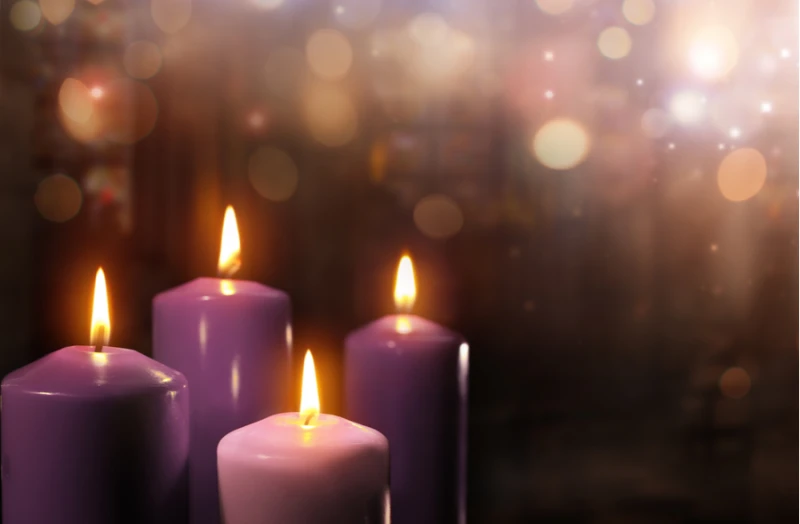
 Advent candles. / Credit: Romolo Tavini/Shutterstock

CNA Staff, Nov 30, 2025 / 04:00 am (CNA).
Advent begins this year on Sunday, Nov. 30. Most Catholics — even those who don’t often go to Mass — know that Advent involves a wreath with candles, possibly a “calendar” of hidden chocolates, and untangling strings of Christmas lights. But Advent is much more than that. Here’s an explainer of what Advent is really about.What is Advent?The people of Israel waited for generations for the promised Messiah to arrive. Their poetry, their songs and stories, and their religious worship focused on an awaited savior who would come to them to set them free from captivity and to lead them to the fulfillment of all that God had promised.Israel longed for a Messiah, and John the Baptist, who came before Jesus, promised that the Messiah was coming and could be found in Jesus Christ, God’s Son, the “Lamb of God who takes away the sins of the world.”Advent is a season in the Church’s life intended to renew the experience of waiting and longing for the Messiah. Though Christ has already come into the world, the Church invites us to renew our desire for the Lord more deeply in our lives and to renew our desire for Christ’s triumphant second coming into the world.Advent is the time in which we prepare for Christmas, the memorial of Jesus Christ being born into the world. Preparations are practical, like decorating trees and gift giving, but they’re also intended to be spiritual.During Advent, we’re invited to enter more frequently into silence, into prayer and reflection, into Scripture, and into the sacramental life of the Church — all to prepare for celebrating Christmas.The Catechism of the Catholic Church says the goal of Advent is to make present for ourselves and our families the “ancient expectancy of the Messiah … by sharing in the long preparation for the Savior’s first coming.”What does the word ‘Advent’ mean?Advent comes from the Latin “ad + venire,” which means, essentially, “to come to” or “to come toward.” “Ad + venire” is the root of the Latin “adventus,” which means “arrival.”So Advent is the season of arrival: the arrival of Christ in our hearts, in the world, and into God’s extraordinary plan for our salvation.So, it’s four weeks long?Advent is a slightly different length each year. It starts four Sundays before Christmas. But because Christmas is on a fixed date and could fall on different days of the week, Advent can be as short as three weeks and a day or as long as four weeks. Does Advent mark a ‘new year’?The Church’s feasts and celebrations run on a yearlong cycle, which we call the “liturgical year.” The “liturgical year” starts on the first Sunday of Advent. So it’s a new liturgical year when Advent starts. But the Church also uses the ordinary calendar, so it would probably be a bit weird to have a “New Year’s Eve” party the night before Advent starts.What is the significance of the Advent wreath? The Catholic Church has been using Advent wreaths since the Middle Ages. Lighting candles as we prepare for Christmas reminds us that Christ is the light of the world. And the evergreen boughs remind us of new and eternal life in Christ, the eternal son of the Father.It is definitely true that Germanic people were lighting up candle wreaths in wintertime long before the Gospel arrived in their homeland. They did so because candle wreaths in winter are beautiful and warm. That a Christian symbol emerged from that tradition is an indication that the Gospel can be expressed through the language, customs, and symbols of cultures that come to believe that Christ Jesus is Lord.One candle is pink on the wreath — why?There are four candles on the Advent wreath. Three are purple and lit on the first, second, and fourth Sundays of Advent. The pink candle is lit on the third Sunday of Advent, which we call Gaudete Sunday. On that Sunday, in addition to the pink candle, the priest wears a pink vestment, which he might refer to as “rose.”Gaudete is a word that means “rejoice,” and we rejoice on Gaudete Sunday because we are halfway through Advent. Some people have the custom of throwing Gaudete parties, and this is also a day on which Christmas carolers may begin caroling door to door.The three purple candles are sometimes said to represent prayer, fasting, and almsgiving — the three spiritual disciplines that are key to a fruitful Advent.Is it wrong to sing Christmas songs during Advent?No, but there are a lot of great Advent hymns and songs, such as “O Come O Come Emmanuel,” “Come Thou Long Expected Jesus,” “O Come Divine Messiah,” “Come Thou Fount,” and “Hark! A Thrilling Voice Is Sounding.”When should the tree go up?When to put up the tree is a decision that families decide on their own. Some people put up their tree and decorate it on the first Sunday of Advent to make a big transformation in their home and get them into “preparing for Christmas” mode. Some put up the tree on the first Sunday of Advent, put on lights the next Sunday, ornaments the next, and decorate it more and more as they get closer to Christmas. Some put up the tree on Gaudete Sunday, as a kind of rejoicing, and decorate it in the weeks between Gaudate and Christmas. When the tree goes up and gets decorated is up to the individual and family, but having a Christmas tree is a big part of many people’s Advent traditions. This story was first published in November 2019 and has been updated.

Advent: What is it and how should it be celebrated? #Catholic Advent candles. / Credit: Romolo Tavini/Shutterstock CNA Staff, Nov 30, 2025 / 04:00 am (CNA). Advent begins this year on Sunday, Nov. 30. Most Catholics — even those who don’t often go to Mass — know that Advent involves a wreath with candles, possibly a “calendar” of hidden chocolates, and untangling strings of Christmas lights. But Advent is much more than that. Here’s an explainer of what Advent is really about.What is Advent?The people of Israel waited for generations for the promised Messiah to arrive. Their poetry, their songs and stories, and their religious worship focused on an awaited savior who would come to them to set them free from captivity and to lead them to the fulfillment of all that God had promised.Israel longed for a Messiah, and John the Baptist, who came before Jesus, promised that the Messiah was coming and could be found in Jesus Christ, God’s Son, the “Lamb of God who takes away the sins of the world.”Advent is a season in the Church’s life intended to renew the experience of waiting and longing for the Messiah. Though Christ has already come into the world, the Church invites us to renew our desire for the Lord more deeply in our lives and to renew our desire for Christ’s triumphant second coming into the world.Advent is the time in which we prepare for Christmas, the memorial of Jesus Christ being born into the world. Preparations are practical, like decorating trees and gift giving, but they’re also intended to be spiritual.During Advent, we’re invited to enter more frequently into silence, into prayer and reflection, into Scripture, and into the sacramental life of the Church — all to prepare for celebrating Christmas.The Catechism of the Catholic Church says the goal of Advent is to make present for ourselves and our families the “ancient expectancy of the Messiah … by sharing in the long preparation for the Savior’s first coming.”What does the word ‘Advent’ mean?Advent comes from the Latin “ad + venire,” which means, essentially, “to come to” or “to come toward.” “Ad + venire” is the root of the Latin “adventus,” which means “arrival.”So Advent is the season of arrival: the arrival of Christ in our hearts, in the world, and into God’s extraordinary plan for our salvation.So, it’s four weeks long?Advent is a slightly different length each year. It starts four Sundays before Christmas. But because Christmas is on a fixed date and could fall on different days of the week, Advent can be as short as three weeks and a day or as long as four weeks. Does Advent mark a ‘new year’?The Church’s feasts and celebrations run on a yearlong cycle, which we call the “liturgical year.” The “liturgical year” starts on the first Sunday of Advent. So it’s a new liturgical year when Advent starts. But the Church also uses the ordinary calendar, so it would probably be a bit weird to have a “New Year’s Eve” party the night before Advent starts.What is the significance of the Advent wreath? The Catholic Church has been using Advent wreaths since the Middle Ages. Lighting candles as we prepare for Christmas reminds us that Christ is the light of the world. And the evergreen boughs remind us of new and eternal life in Christ, the eternal son of the Father.It is definitely true that Germanic people were lighting up candle wreaths in wintertime long before the Gospel arrived in their homeland. They did so because candle wreaths in winter are beautiful and warm. That a Christian symbol emerged from that tradition is an indication that the Gospel can be expressed through the language, customs, and symbols of cultures that come to believe that Christ Jesus is Lord.One candle is pink on the wreath — why?There are four candles on the Advent wreath. Three are purple and lit on the first, second, and fourth Sundays of Advent. The pink candle is lit on the third Sunday of Advent, which we call Gaudete Sunday. On that Sunday, in addition to the pink candle, the priest wears a pink vestment, which he might refer to as “rose.”Gaudete is a word that means “rejoice,” and we rejoice on Gaudete Sunday because we are halfway through Advent. Some people have the custom of throwing Gaudete parties, and this is also a day on which Christmas carolers may begin caroling door to door.The three purple candles are sometimes said to represent prayer, fasting, and almsgiving — the three spiritual disciplines that are key to a fruitful Advent.Is it wrong to sing Christmas songs during Advent?No, but there are a lot of great Advent hymns and songs, such as “O Come O Come Emmanuel,” “Come Thou Long Expected Jesus,” “O Come Divine Messiah,” “Come Thou Fount,” and “Hark! A Thrilling Voice Is Sounding.”When should the tree go up?When to put up the tree is a decision that families decide on their own. Some people put up their tree and decorate it on the first Sunday of Advent to make a big transformation in their home and get them into “preparing for Christmas” mode. Some put up the tree on the first Sunday of Advent, put on lights the next Sunday, ornaments the next, and decorate it more and more as they get closer to Christmas. Some put up the tree on Gaudete Sunday, as a kind of rejoicing, and decorate it in the weeks between Gaudate and Christmas. When the tree goes up and gets decorated is up to the individual and family, but having a Christmas tree is a big part of many people’s Advent traditions. This story was first published in November 2019 and has been updated.


Advent candles. / Credit: Romolo Tavini/Shutterstock

CNA Staff, Nov 30, 2025 / 04:00 am (CNA).

Advent begins this year on Sunday, Nov. 30. Most Catholics — even those who don’t often go to Mass — know that Advent involves a wreath with candles, possibly a “calendar” of hidden chocolates, and untangling strings of Christmas lights. But Advent is much more than that. Here’s an explainer of what Advent is really about.

What is Advent?

The people of Israel waited for generations for the promised Messiah to arrive. Their poetry, their songs and stories, and their religious worship focused on an awaited savior who would come to them to set them free from captivity and to lead them to the fulfillment of all that God had promised.

Israel longed for a Messiah, and John the Baptist, who came before Jesus, promised that the Messiah was coming and could be found in Jesus Christ, God’s Son, the “Lamb of God who takes away the sins of the world.”

Advent is a season in the Church’s life intended to renew the experience of waiting and longing for the Messiah. Though Christ has already come into the world, the Church invites us to renew our desire for the Lord more deeply in our lives and to renew our desire for Christ’s triumphant second coming into the world.

Advent is the time in which we prepare for Christmas, the memorial of Jesus Christ being born into the world. Preparations are practical, like decorating trees and gift giving, but they’re also intended to be spiritual.

During Advent, we’re invited to enter more frequently into silence, into prayer and reflection, into Scripture, and into the sacramental life of the Church — all to prepare for celebrating Christmas.

The Catechism of the Catholic Church says the goal of Advent is to make present for ourselves and our families the “ancient expectancy of the Messiah … by sharing in the long preparation for the Savior’s first coming.”

What does the word ‘Advent’ mean?

Advent comes from the Latin “ad + venire,” which means, essentially, “to come to” or “to come toward.” “Ad + venire” is the root of the Latin “adventus,” which means “arrival.”

So Advent is the season of arrival: the arrival of Christ in our hearts, in the world, and into God’s extraordinary plan for our salvation.

So, it’s four weeks long?

Advent is a slightly different length each year. It starts four Sundays before Christmas. But because Christmas is on a fixed date and could fall on different days of the week, Advent can be as short as three weeks and a day or as long as four weeks.

Does Advent mark a ‘new year’?

The Church’s feasts and celebrations run on a yearlong cycle, which we call the “liturgical year.” The “liturgical year” starts on the first Sunday of Advent. So it’s a new liturgical year when Advent starts. But the Church also uses the ordinary calendar, so it would probably be a bit weird to have a “New Year’s Eve” party the night before Advent starts.

What is the significance of the Advent wreath?

The Catholic Church has been using Advent wreaths since the Middle Ages. Lighting candles as we prepare for Christmas reminds us that Christ is the light of the world. And the evergreen boughs remind us of new and eternal life in Christ, the eternal son of the Father.

It is definitely true that Germanic people were lighting up candle wreaths in wintertime long before the Gospel arrived in their homeland. They did so because candle wreaths in winter are beautiful and warm. That a Christian symbol emerged from that tradition is an indication that the Gospel can be expressed through the language, customs, and symbols of cultures that come to believe that Christ Jesus is Lord.

One candle is pink on the wreath — why?

There are four candles on the Advent wreath. Three are purple and lit on the first, second, and fourth Sundays of Advent. The pink candle is lit on the third Sunday of Advent, which we call Gaudete Sunday. On that Sunday, in addition to the pink candle, the priest wears a pink vestment, which he might refer to as “rose.”

Gaudete is a word that means “rejoice,” and we rejoice on Gaudete Sunday because we are halfway through Advent. Some people have the custom of throwing Gaudete parties, and this is also a day on which Christmas carolers may begin caroling door to door.

The three purple candles are sometimes said to represent prayer, fasting, and almsgiving — the three spiritual disciplines that are key to a fruitful Advent.

Is it wrong to sing Christmas songs during Advent?

No, but there are a lot of great Advent hymns and songs, such as “O Come O Come Emmanuel,” “Come Thou Long Expected Jesus,” “O Come Divine Messiah,” “Come Thou Fount,” and “Hark! A Thrilling Voice Is Sounding.”

When should the tree go up?

When to put up the tree is a decision that families decide on their own. Some people put up their tree and decorate it on the first Sunday of Advent to make a big transformation in their home and get them into “preparing for Christmas” mode.

Some put up the tree on the first Sunday of Advent, put on lights the next Sunday, ornaments the next, and decorate it more and more as they get closer to Christmas.

Some put up the tree on Gaudete Sunday, as a kind of rejoicing, and decorate it in the weeks between Gaudate and Christmas.

When the tree goes up and gets decorated is up to the individual and family, but having a Christmas tree is a big part of many people’s Advent traditions.

This story was first published in November 2019 and has been updated.

Read More
5 Catholic resources to help you grow closer to Christ this Advent #Catholic 
 
 null / Credit: Kara Monroe via Flickr (CC BY-NC-SA 2.0)

CNA Staff, Nov 23, 2025 / 06:00 am (CNA).
As Advent quickly approaches and the hustle and bustle of the holiday season begins to make its way into our lives, here are five resources to help you prepare to welcome Jesus this Christmas. From Ascension: Join Father Mike Schmitz this Advent for “Waiting Well: Advent with Fr. Mike Schmitz” on the Ascension app. Beginning Nov. 30, a 26-day video series will guide viewers on becoming aware of how God is shaping them through seasons of waiting and how to wait well. Each day a five-minute video will be released and feature a reflection from Schmitz that unpacks the daily Mass reading as well as Scripture versus, catechism excerpts, and reflection questions to encourage participants to go deeper into the meaning of Advent. Ascension’s “Waiting Well: Advent with Fr. Mike Schmitz” video series. Credit: AscensionSchmitz’s weekly homily videos during Advent are part of the “Waiting Well” series and available for free on YouTube. However, the daily reflections will only be available on the Ascension app with a subscription or free trial.This year’s video reflections will also be accompanied by the “Waiting Well” printed journal for individuals, parishes, and small-group study. It is designed to help readers slow down for 15 minutes a day as they prepare to meet Christ in the manger. Each day includes a word or Scripture verse to pray with, a reflection, and a prompt to write down your thoughts and insights. From Hallow:Hallow’s annual “Advent Prayer Challenge” is back once again. Beginning Dec. 1, “Pray25: Be Still” features Jonathan Roumie; Chris Pratt; Gwen Stefani; Father John Burns; Mother Natalia; Sister Miriam James Heidland, SOLT; and Father Pierre Toussaint, CFR. This Advent, listeners are invited to discover deeper stillness amid the chaos of the holiday season, just like the Blessed Mother did that first Christmas. Roumie and Heidland will lead reflections on “The Reed of God” by Caryll Houselander, while Pratt will guide sessions on “The Ruthless Elimination of Hurry” by John Mark Comer. Stefani and Mother Natalia will guide sessions focusing on being still, using the lives of saints as inspiration. Burns will guide listeners through sessions of imaginative prayer and Toussaint will offer homily reflections each Sunday during Advent.From Blessed Is She:Blessed Is She has Advent devotionals for the whole family this year — women, men, and children. “In Time: An Advent Devotional for Women” invites readers to reflect on God’s continuous presence in our lives. Written by Claire Dwyer, this devotional helps women see that waiting is filled with God’s loving action. “Feast: An Advent Devotional for Men” is written by Paul George, rooted in Scripture, and inspired by the story of the prodigal son. This devotional invites men to return to God the Father with courage, humility, and hope. It also aims to encourage those seeking renewal, healing, and deeper faith during Advent. Both the devotionals for men and women include daily Scripture readings, prayer, and reflection.Lastly, “Watch and Wait: A Kids Advent Devotional” written by Olivia Spears helps kids prepare for Christmas with daily prayers, reflections, and simple Scripture-based activities. This devotional teaches children to wait with hope and joy as they prepare for the birth of Christ. It is recommended for children older than 7 years old.The Augustine Institute’s campus in St. Louis. Credit: Courtesy of the Augustine InstituteFrom the Augustine Institute:The Augustine Institute is inviting Catholics to enter into the Advent season with renewed purpose and joyful expectation with a new video series titled “How To Advent.” The video series will consist of four 12- to 15-minute-long episodes that explore the beauty and meaning of Advent traditions in an engaging and meaningful way and highlight a different cherished Advent tradition — the Advent calendar, Advent wreath, Jesse Tree, and Nativity scene. The video series is available on Formed. From EWTN’s Religious Catalogue:The EWTN Religious Catalogue offers a wide variety of Advent devotionals including “Encountering Emmanuel: A Guided Advent Journal for Prayer and Meditation” by Heather Khym, cohost of the “Abiding Together” podcast, and “The True Gifts of Christmas” by Megan Alexander, which takes readers on a journey through the deeper meaning of our most cherished Christmas traditions. (Editor’s note: EWTN is CNA’s parent company.)

5 Catholic resources to help you grow closer to Christ this Advent #Catholic null / Credit: Kara Monroe via Flickr (CC BY-NC-SA 2.0) CNA Staff, Nov 23, 2025 / 06:00 am (CNA). As Advent quickly approaches and the hustle and bustle of the holiday season begins to make its way into our lives, here are five resources to help you prepare to welcome Jesus this Christmas. From Ascension: Join Father Mike Schmitz this Advent for “Waiting Well: Advent with Fr. Mike Schmitz” on the Ascension app. Beginning Nov. 30, a 26-day video series will guide viewers on becoming aware of how God is shaping them through seasons of waiting and how to wait well. Each day a five-minute video will be released and feature a reflection from Schmitz that unpacks the daily Mass reading as well as Scripture versus, catechism excerpts, and reflection questions to encourage participants to go deeper into the meaning of Advent. Ascension’s “Waiting Well: Advent with Fr. Mike Schmitz” video series. Credit: AscensionSchmitz’s weekly homily videos during Advent are part of the “Waiting Well” series and available for free on YouTube. However, the daily reflections will only be available on the Ascension app with a subscription or free trial.This year’s video reflections will also be accompanied by the “Waiting Well” printed journal for individuals, parishes, and small-group study. It is designed to help readers slow down for 15 minutes a day as they prepare to meet Christ in the manger. Each day includes a word or Scripture verse to pray with, a reflection, and a prompt to write down your thoughts and insights. From Hallow:Hallow’s annual “Advent Prayer Challenge” is back once again. Beginning Dec. 1, “Pray25: Be Still” features Jonathan Roumie; Chris Pratt; Gwen Stefani; Father John Burns; Mother Natalia; Sister Miriam James Heidland, SOLT; and Father Pierre Toussaint, CFR. This Advent, listeners are invited to discover deeper stillness amid the chaos of the holiday season, just like the Blessed Mother did that first Christmas. Roumie and Heidland will lead reflections on “The Reed of God” by Caryll Houselander, while Pratt will guide sessions on “The Ruthless Elimination of Hurry” by John Mark Comer. Stefani and Mother Natalia will guide sessions focusing on being still, using the lives of saints as inspiration. Burns will guide listeners through sessions of imaginative prayer and Toussaint will offer homily reflections each Sunday during Advent.From Blessed Is She:Blessed Is She has Advent devotionals for the whole family this year — women, men, and children. “In Time: An Advent Devotional for Women” invites readers to reflect on God’s continuous presence in our lives. Written by Claire Dwyer, this devotional helps women see that waiting is filled with God’s loving action. “Feast: An Advent Devotional for Men” is written by Paul George, rooted in Scripture, and inspired by the story of the prodigal son. This devotional invites men to return to God the Father with courage, humility, and hope. It also aims to encourage those seeking renewal, healing, and deeper faith during Advent. Both the devotionals for men and women include daily Scripture readings, prayer, and reflection.Lastly, “Watch and Wait: A Kids Advent Devotional” written by Olivia Spears helps kids prepare for Christmas with daily prayers, reflections, and simple Scripture-based activities. This devotional teaches children to wait with hope and joy as they prepare for the birth of Christ. It is recommended for children older than 7 years old.The Augustine Institute’s campus in St. Louis. Credit: Courtesy of the Augustine InstituteFrom the Augustine Institute:The Augustine Institute is inviting Catholics to enter into the Advent season with renewed purpose and joyful expectation with a new video series titled “How To Advent.” The video series will consist of four 12- to 15-minute-long episodes that explore the beauty and meaning of Advent traditions in an engaging and meaningful way and highlight a different cherished Advent tradition — the Advent calendar, Advent wreath, Jesse Tree, and Nativity scene. The video series is available on Formed. From EWTN’s Religious Catalogue:The EWTN Religious Catalogue offers a wide variety of Advent devotionals including “Encountering Emmanuel: A Guided Advent Journal for Prayer and Meditation” by Heather Khym, cohost of the “Abiding Together” podcast, and “The True Gifts of Christmas” by Megan Alexander, which takes readers on a journey through the deeper meaning of our most cherished Christmas traditions. (Editor’s note: EWTN is CNA’s parent company.)


null / Credit: Kara Monroe via Flickr (CC BY-NC-SA 2.0)

CNA Staff, Nov 23, 2025 / 06:00 am (CNA).

As Advent quickly approaches and the hustle and bustle of the holiday season begins to make its way into our lives, here are five resources to help you prepare to welcome Jesus this Christmas. 

From Ascension: 

Join Father Mike Schmitz this Advent for “Waiting Well: Advent with Fr. Mike Schmitz” on the Ascension app. 

Beginning Nov. 30, a 26-day video series will guide viewers on becoming aware of how God is shaping them through seasons of waiting and how to wait well. Each day a five-minute video will be released and feature a reflection from Schmitz that unpacks the daily Mass reading as well as Scripture versus, catechism excerpts, and reflection questions to encourage participants to go deeper into the meaning of Advent. 

Ascension's "Waiting Well: Advent with Fr. Mike Schmitz" video series. Credit: Ascension
Ascension’s “Waiting Well: Advent with Fr. Mike Schmitz” video series. Credit: Ascension

Schmitz’s weekly homily videos during Advent are part of the “Waiting Well” series and available for free on YouTube. However, the daily reflections will only be available on the Ascension app with a subscription or free trial.

This year’s video reflections will also be accompanied by the “Waiting Well” printed journal for individuals, parishes, and small-group study. It is designed to help readers slow down for 15 minutes a day as they prepare to meet Christ in the manger. Each day includes a word or Scripture verse to pray with, a reflection, and a prompt to write down your thoughts and insights. 

From Hallow:

Hallow’s annual “Advent Prayer Challenge” is back once again. Beginning Dec. 1, “Pray25: Be Still” features Jonathan Roumie; Chris Pratt; Gwen Stefani; Father John Burns; Mother Natalia; Sister Miriam James Heidland, SOLT; and Father Pierre Toussaint, CFR. This Advent, listeners are invited to discover deeper stillness amid the chaos of the holiday season, just like the Blessed Mother did that first Christmas. 

Roumie and Heidland will lead reflections on “The Reed of God” by Caryll Houselander, while Pratt will guide sessions on “The Ruthless Elimination of Hurry” by John Mark Comer. Stefani and Mother Natalia will guide sessions focusing on being still, using the lives of saints as inspiration. Burns will guide listeners through sessions of imaginative prayer and Toussaint will offer homily reflections each Sunday during Advent.

From Blessed Is She:

Blessed Is She has Advent devotionals for the whole family this year — women, men, and children. “In Time: An Advent Devotional for Women” invites readers to reflect on God’s continuous presence in our lives. Written by Claire Dwyer, this devotional helps women see that waiting is filled with God’s loving action. 

Feast: An Advent Devotional for Men” is written by Paul George, rooted in Scripture, and inspired by the story of the prodigal son. This devotional invites men to return to God the Father with courage, humility, and hope. It also aims to encourage those seeking renewal, healing, and deeper faith during Advent. Both the devotionals for men and women include daily Scripture readings, prayer, and reflection.

Lastly, “Watch and Wait: A Kids Advent Devotional” written by Olivia Spears helps kids prepare for Christmas with daily prayers, reflections, and simple Scripture-based activities. This devotional teaches children to wait with hope and joy as they prepare for the birth of Christ. It is recommended for children older than 7 years old.

The Augustine Institute’s campus in St. Louis. Credit: Courtesy of the Augustine Institute

From the Augustine Institute:

The Augustine Institute is inviting Catholics to enter into the Advent season with renewed purpose and joyful expectation with a new video series titled “How To Advent.” 

The video series will consist of four 12- to 15-minute-long episodes that explore the beauty and meaning of Advent traditions in an engaging and meaningful way and highlight a different cherished Advent tradition — the Advent calendar, Advent wreath, Jesse Tree, and Nativity scene. The video series is available on Formed. 

From EWTN’s Religious Catalogue:

The EWTN Religious Catalogue offers a wide variety of Advent devotionals including “Encountering Emmanuel: A Guided Advent Journal for Prayer and Meditation” by Heather Khym, cohost of the “Abiding Together” podcast, and “The True Gifts of Christmas” by Megan Alexander, which takes readers on a journey through the deeper meaning of our most cherished Christmas traditions. (Editor’s note: EWTN is CNA’s parent company.)

Read More
In the spirit of Leonid Afremov, reimagine Jerry N. Uelsmann’s “Untitl

Reimagining Jerry N. Uelsmann’s “Untitled” (1967) through the lens of Leonid Afremov’s style creates a vibrant tapestry of surrealism. Imagine Uelsmann’s intricate blend of multiple exposures bathed in neon green, electric blue, and vibrant magenta hues, all set against a dark, atmospheric backdrop. Afremov’s signature brushstrokes, reminiscent of oil palette knives, infuse the composition with dynamic movement and emotion. This interpretation pays homage to Uelsmann’s original concept of blending reality and imagination while incorporating Afremov’s distinctive artistic vigor, resulting in a visually captivating piece that enchants with its neon brilliance and dreamlike ambiance.

Read More
Reimagining Jerry N. Uelsmann’s “Untitled” #AIart

Reimagining Jerry N. Uelsmann’s “Untitled” (1967) in the style of Leonid Afremov transforms the photomontage into a vibrant tapestry of surrealism. Picture Uelsmann’s intricate blend of multiple exposures now saturated with neon green, electric blue, and vibrant magenta, set against a dark, atmospheric backdrop. Afremov’s trademark brushstrokes, akin to oil palette knives, infuse the composition with dynamic movement and emotion. This approach honors Uelsmann’s original concept of blending reality and imagination while incorporating Afremov’s distinctive artistic vigor, resulting in a visually arresting piece that dazzles with its neon brilliance and dreamlike ambiance.

Read More