trip

Border czar says Catholic leaders should ‘support’ safety #Catholic 
 
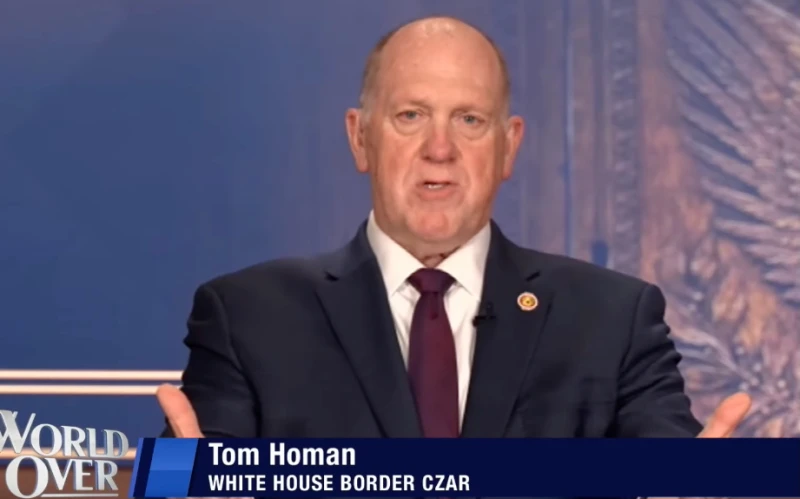
 Trump administration Border Czar Tom Homan interviewed on "The World Over with Raymond Arroyo" on Dec. 11, 2025. / Credit: EWTN News "The World Over with Raymond Arroyo"/Screenshot

Washington, D.C. Newsroom, Dec 12, 2025 / 07:00 am (CNA).
U.S. border czar Tom Homan said “the Catholic Church should support keeping the community safe” through a secure border and immigration enforcement. In an interview on “The World Over with Raymond Arroyo” on Thursday, Homan discussed President Donald Trump’s mass deportation policy and immigration enforcement.   “As President Trump promised on day one, we’re going to enforce immigration law,” Homan said. “That’s what he was voted into office to do, and that’s what we’re doing. We’re going to keep this promise to the American people.”“We’re going to prioritize public safety threats and national security threats,” Homan said. “The majority of people we arrest … have a criminal history. But also, like I’ve said from day one, if you’re in the country illegally, you’re not off the table.”Data on detainees’ criminal history is disputed. A Cato Institute report in November said 5% of people detained by ICE have violent convictions, and 73% had no convictions. Other analyses of deportation data also have shown a lower incidence of people arrested with prior criminal convictions.“Many people who’ve lived for years and years and years, never causing problems, have been deeply affected by what’s going on right now,” Pope Leo XIV said Nov. 4.Since President Trump began his second term, there have been about 600,000 deportations, Homan said. He added: The “results have been outstanding.”Family separationDuring the Biden administration, “just about a half a million children were smuggled into the country, separated from their families, put in the hands of criminal cartels,” Homan said. Homan said the administration has located tens of thousands of children during deportation operations.During the first two years of Trump’s first administration, U.S. authorities separated over 5,000 children from their parents at the U.S.-Mexico border, before ending the practice. In 2021, the Biden administration created a family reunification task force, and a federal judge ruled that border officials cannot use family separation as a deterrence tactic through 2031. Under the second Trump administration, enforcement actions have caused family separations through detentions.Homan told Arroyo: “President Trump promised from day one that we’re going to find these children because the last administration, even though half a million came across, they lost track of 300,000. They couldn’t find them. They weren’t responding to inquiries and their check-ins.”As of Dec. 5 there were 62,456 children “the Trump administration already found,” Homan reported.  “Some of these children were safe and with family. They’re just hiding out because they don’t want to be deported. But many of these children, and one is too many, we found were either in forced labor or forced sexual slavery. Some of these children are in really, really bad conditions,” Homan said.“About half that, 300,000, according to records, have already aged out, which means they’re over 18 already. But … we’re still going to try to locate them … We’re going to do everything we can till the last day of this administration to find these kids. Personally, I’ll do everything I can until I take my last breath on this Earth to find these kids,” Homan said.Carrying out deportations as a CatholicThe United States Conference of Catholic Bishops (USCCB) expressed concern “about the conditions in detention centers and the lack of access to pastoral care.” They wrote: “Human dignity and national security are not in conflict.” When asked how he reconciles bishops’ comments on immigration enforcement with his faith and duties, Homan said he is “willing to sit down with anybody in the Catholic Church and talk about it.”When Catholic leaders “talk about why these laws shouldn’t be enforced … they need to understand, if we don’t enforce laws, what message does that send to the world?” Homan said. He says it sends the message: “Cross the border. It’s illegal, but don’t worry about it.”People need to understand “a border wall saves lives,” Homan said. “I would ask the Catholic leadership, go talk to the hundreds of… moms and dads that have buried their children because their children were killed by someone that wasn’t supposed to be here.”During Biden’s presidency, Homan said “a record number of Americans died from fentanyl because that border was wide open … Hundreds of thousands of Americans died from a drug that came across an open border.”He said a “record number of people from terrorist-related countries” entered the country and said there was “historic increase in sex trafficking of women and children because enforcement was removed from the border.”“Over 4,000 aliens died making that journey, because we sent a message that there’s no consequences here,” Homan said. Response to Catholic leadershipThe USCCB through remarks and messages has called for humane treatment of migrants. In response, Homan said: “We treat everybody with dignity.” Bishops also stated their opposition to “the indiscriminate mass deportation of people.”Homan said: “When you come across the border illegally, not only is it a crime, but you’re cheating the system.”“There are millions of people, millions that are standing in line, taking their test, doing the background investigation, paying their fees to be part of the greatest nation on Earth,” Homan said.“The most humane thing you can do is enforce the law, secure the border, because it saves lives. The Catholic Church should support keeping the community safe again. But I’m saying this, if you’re in the country legally, it’s not OK. Illegal migration is not a victimless crime. I wish Catholic leadership would go with me. Take a border trip with me,” Homan said.“Look at some of the investigations I do. Wear my shoes … You may not agree with me 100% in the end, but you will certainly understand the importance of border security,” Homan said.

Border czar says Catholic leaders should ‘support’ safety #Catholic Trump administration Border Czar Tom Homan interviewed on "The World Over with Raymond Arroyo" on Dec. 11, 2025. / Credit: EWTN News "The World Over with Raymond Arroyo"/Screenshot Washington, D.C. Newsroom, Dec 12, 2025 / 07:00 am (CNA). U.S. border czar Tom Homan said “the Catholic Church should support keeping the community safe” through a secure border and immigration enforcement. In an interview on “The World Over with Raymond Arroyo” on Thursday, Homan discussed President Donald Trump’s mass deportation policy and immigration enforcement.   “As President Trump promised on day one, we’re going to enforce immigration law,” Homan said. “That’s what he was voted into office to do, and that’s what we’re doing. We’re going to keep this promise to the American people.”“We’re going to prioritize public safety threats and national security threats,” Homan said. “The majority of people we arrest … have a criminal history. But also, like I’ve said from day one, if you’re in the country illegally, you’re not off the table.”Data on detainees’ criminal history is disputed. A Cato Institute report in November said 5% of people detained by ICE have violent convictions, and 73% had no convictions. Other analyses of deportation data also have shown a lower incidence of people arrested with prior criminal convictions.“Many people who’ve lived for years and years and years, never causing problems, have been deeply affected by what’s going on right now,” Pope Leo XIV said Nov. 4.Since President Trump began his second term, there have been about 600,000 deportations, Homan said. He added: The “results have been outstanding.”Family separationDuring the Biden administration, “just about a half a million children were smuggled into the country, separated from their families, put in the hands of criminal cartels,” Homan said. Homan said the administration has located tens of thousands of children during deportation operations.During the first two years of Trump’s first administration, U.S. authorities separated over 5,000 children from their parents at the U.S.-Mexico border, before ending the practice. In 2021, the Biden administration created a family reunification task force, and a federal judge ruled that border officials cannot use family separation as a deterrence tactic through 2031. Under the second Trump administration, enforcement actions have caused family separations through detentions.Homan told Arroyo: “President Trump promised from day one that we’re going to find these children because the last administration, even though half a million came across, they lost track of 300,000. They couldn’t find them. They weren’t responding to inquiries and their check-ins.”As of Dec. 5 there were 62,456 children “the Trump administration already found,” Homan reported.  “Some of these children were safe and with family. They’re just hiding out because they don’t want to be deported. But many of these children, and one is too many, we found were either in forced labor or forced sexual slavery. Some of these children are in really, really bad conditions,” Homan said.“About half that, 300,000, according to records, have already aged out, which means they’re over 18 already. But … we’re still going to try to locate them … We’re going to do everything we can till the last day of this administration to find these kids. Personally, I’ll do everything I can until I take my last breath on this Earth to find these kids,” Homan said.Carrying out deportations as a CatholicThe United States Conference of Catholic Bishops (USCCB) expressed concern “about the conditions in detention centers and the lack of access to pastoral care.” They wrote: “Human dignity and national security are not in conflict.” When asked how he reconciles bishops’ comments on immigration enforcement with his faith and duties, Homan said he is “willing to sit down with anybody in the Catholic Church and talk about it.”When Catholic leaders “talk about why these laws shouldn’t be enforced … they need to understand, if we don’t enforce laws, what message does that send to the world?” Homan said. He says it sends the message: “Cross the border. It’s illegal, but don’t worry about it.”People need to understand “a border wall saves lives,” Homan said. “I would ask the Catholic leadership, go talk to the hundreds of… moms and dads that have buried their children because their children were killed by someone that wasn’t supposed to be here.”During Biden’s presidency, Homan said “a record number of Americans died from fentanyl because that border was wide open … Hundreds of thousands of Americans died from a drug that came across an open border.”He said a “record number of people from terrorist-related countries” entered the country and said there was “historic increase in sex trafficking of women and children because enforcement was removed from the border.”“Over 4,000 aliens died making that journey, because we sent a message that there’s no consequences here,” Homan said. Response to Catholic leadershipThe USCCB through remarks and messages has called for humane treatment of migrants. In response, Homan said: “We treat everybody with dignity.” Bishops also stated their opposition to “the indiscriminate mass deportation of people.”Homan said: “When you come across the border illegally, not only is it a crime, but you’re cheating the system.”“There are millions of people, millions that are standing in line, taking their test, doing the background investigation, paying their fees to be part of the greatest nation on Earth,” Homan said.“The most humane thing you can do is enforce the law, secure the border, because it saves lives. The Catholic Church should support keeping the community safe again. But I’m saying this, if you’re in the country legally, it’s not OK. Illegal migration is not a victimless crime. I wish Catholic leadership would go with me. Take a border trip with me,” Homan said.“Look at some of the investigations I do. Wear my shoes … You may not agree with me 100% in the end, but you will certainly understand the importance of border security,” Homan said.


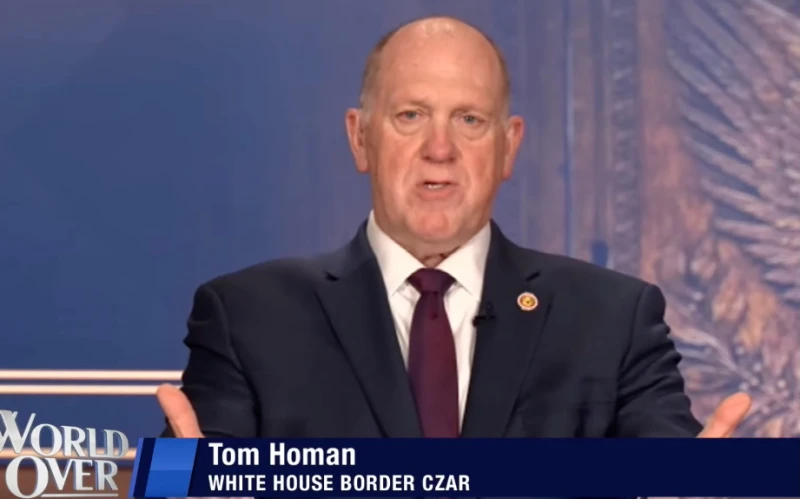
Trump administration Border Czar Tom Homan interviewed on "The World Over with Raymond Arroyo" on Dec. 11, 2025. / Credit: EWTN News "The World Over with Raymond Arroyo"/Screenshot

Washington, D.C. Newsroom, Dec 12, 2025 / 07:00 am (CNA).

U.S. border czar Tom Homan said “the Catholic Church should support keeping the community safe” through a secure border and immigration enforcement. 

In an interview on “The World Over with Raymond Arroyo” on Thursday, Homan discussed President Donald Trump’s mass deportation policy and immigration enforcement.   

“As President Trump promised on day one, we’re going to enforce immigration law,” Homan said. “That’s what he was voted into office to do, and that’s what we’re doing. We’re going to keep this promise to the American people.”

“We’re going to prioritize public safety threats and national security threats,” Homan said. “The majority of people we arrest … have a criminal history. But also, like I’ve said from day one, if you’re in the country illegally, you’re not off the table.”

Data on detainees’ criminal history is disputed. A Cato Institute report in November said 5% of people detained by ICE have violent convictions, and 73% had no convictions. Other analyses of deportation data also have shown a lower incidence of people arrested with prior criminal convictions.

“Many people who’ve lived for years and years and years, never causing problems, have been deeply affected by what’s going on right now,” Pope Leo XIV said Nov. 4.

Since President Trump began his second term, there have been about 600,000 deportations, Homan said. He added: The “results have been outstanding.”

Family separation

During the Biden administration, “just about a half a million children were smuggled into the country, separated from their families, put in the hands of criminal cartels,” Homan said. Homan said the administration has located tens of thousands of children during deportation operations.

During the first two years of Trump’s first administration, U.S. authorities separated over 5,000 children from their parents at the U.S.-Mexico border, before ending the practice. In 2021, the Biden administration created a family reunification task force, and a federal judge ruled that border officials cannot use family separation as a deterrence tactic through 2031. 

Under the second Trump administration, enforcement actions have caused family separations through detentions.

Homan told Arroyo: “President Trump promised from day one that we’re going to find these children because the last administration, even though half a million came across, they lost track of 300,000. They couldn’t find them. They weren’t responding to inquiries and their check-ins.”

As of Dec. 5 there were 62,456 children “the Trump administration already found,” Homan reported.  

“Some of these children were safe and with family. They’re just hiding out because they don’t want to be deported. But many of these children, and one is too many, we found were either in forced labor or forced sexual slavery. Some of these children are in really, really bad conditions,” Homan said.

“About half that, 300,000, according to records, have already aged out, which means they’re over 18 already. But … we’re still going to try to locate them … We’re going to do everything we can till the last day of this administration to find these kids. Personally, I’ll do everything I can until I take my last breath on this Earth to find these kids,” Homan said.

Carrying out deportations as a Catholic

The United States Conference of Catholic Bishops (USCCB) expressed concern “about the conditions in detention centers and the lack of access to pastoral care.” They wrote: “Human dignity and national security are not in conflict.” 

When asked how he reconciles bishops’ comments on immigration enforcement with his faith and duties, Homan said he is “willing to sit down with anybody in the Catholic Church and talk about it.”

When Catholic leaders “talk about why these laws shouldn’t be enforced … they need to understand, if we don’t enforce laws, what message does that send to the world?” Homan said. He says it sends the message: “Cross the border. It’s illegal, but don’t worry about it.”

People need to understand “a border wall saves lives,” Homan said. “I would ask the Catholic leadership, go talk to the hundreds of… moms and dads that have buried their children because their children were killed by someone that wasn’t supposed to be here.”

During Biden’s presidency, Homan said “a record number of Americans died from fentanyl because that border was wide open … Hundreds of thousands of Americans died from a drug that came across an open border.”

He said a “record number of people from terrorist-related countries” entered the country and said there was “historic increase in sex trafficking of women and children because enforcement was removed from the border.”

“Over 4,000 aliens died making that journey, because we sent a message that there’s no consequences here,” Homan said. 

Response to Catholic leadership

The USCCB through remarks and messages has called for humane treatment of migrants. In response, Homan said: “We treat everybody with dignity.” 

Bishops also stated their opposition to “the indiscriminate mass deportation of people.”

Homan said: “When you come across the border illegally, not only is it a crime, but you’re cheating the system.”

“There are millions of people, millions that are standing in line, taking their test, doing the background investigation, paying their fees to be part of the greatest nation on Earth,” Homan said.

“The most humane thing you can do is enforce the law, secure the border, because it saves lives. The Catholic Church should support keeping the community safe again. But I’m saying this, if you’re in the country legally, it’s not OK. Illegal migration is not a victimless crime. I wish Catholic leadership would go with me. Take a border trip with me,” Homan said.

“Look at some of the investigations I do. Wear my shoes … You may not agree with me 100% in the end, but you will certainly understand the importance of border security,” Homan said.

Read More
‘Say thank you to someone’ this Thanksgiving, Pope Leo XIV says #Catholic 
 
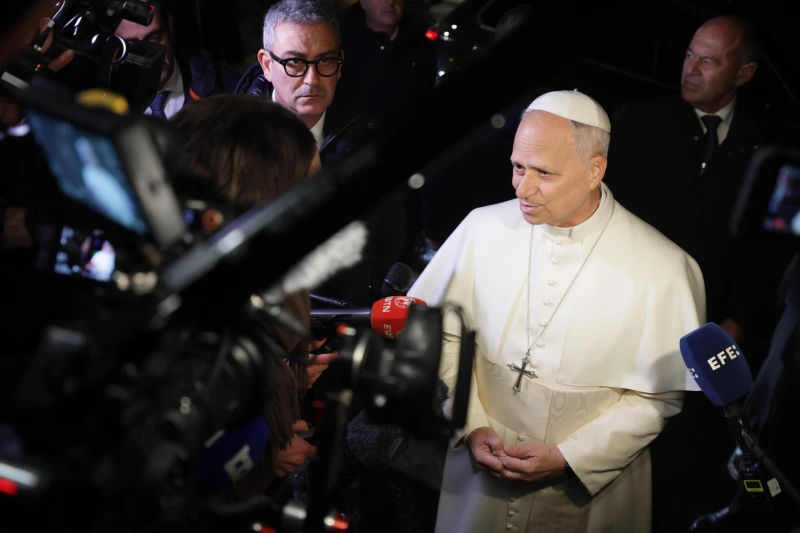
 Pope Leo XIV speaks to reporters after a daylong stay at the papal villa of Castel Gandolfo on Nov. 25, 2025. / Credit: Daniel Ibáñez/CNA

Castel Gandolfo, Italy, Nov 25, 2025 / 15:31 pm (CNA).
Pope Leo XIV on Tuesday suggested that people “say thank you to someone” this Thanksgiving and he addressed concerns about violence in Lebanon ahead of his trip there later this week.Speaking two days before Thanksgiving, the first U.S.-born pope celebrated what he called “this beautiful feast that we have in the United States, which unites all people, people of different faiths, people who perhaps do not have the gift of faith.” The pope urged all people, not just Americans, to take the occasion “to recognize that we all have received so many gifts, first and foremost, the gift of life, the gift of faith, the gift of unity … and to give thanks to God for the many gifts we’ve been given.” Pope Leo answered questions from reporters as he left for Rome after a daylong stay at the papal villa of Castel Gandolfo.Pope Leo XIV speaks to reporters after a daylong stay at the papal villa of Castel Gandolfo on Nov. 25, 2025. Credit: Daniel Ibáñez/CNALeo is set to begin his first international trip as pope Nov. 27, a six-day visit to Turkey and Lebanon. The foreign trip is the fulfillment of a promise made by Pope Francis to visit Lebanon, a Muslim-majority country. Regional instability and internal crises have battered the small country where about a third of the population is Christian.Reporters asked Leo if violence in Lebanon is a concern.“It’s always a concern,” the pope said. “Again, I would invite all people to look for ways, to abandon the use of arms as a way of solving problems, and to come together, to respect one another, to sit down together at the table, to dialogue and to work together for solutions for the problems that affect us.”Pope Leo XIV answers questions from reporters as he leaves for Rome after a daylong stay at the papal villa of Castel Gandolfo on Nov. 25, 2025. Credit: Daniel Ibáñez/CNARegarding a message for Israel, the pope said he likewise encourages all people “to look for peace, to look for justice, because oftentimes violence occurs as a result of injustices. And I think we have to work together, look for greater unity, respect for all people and all religions.”Pope Leo XIV exits the papal villa of Castel Gandolfo on Nov. 25, 2025. Credit: Daniel Ibáñez/CNA

‘Say thank you to someone’ this Thanksgiving, Pope Leo XIV says #Catholic Pope Leo XIV speaks to reporters after a daylong stay at the papal villa of Castel Gandolfo on Nov. 25, 2025. / Credit: Daniel Ibáñez/CNA Castel Gandolfo, Italy, Nov 25, 2025 / 15:31 pm (CNA). Pope Leo XIV on Tuesday suggested that people “say thank you to someone” this Thanksgiving and he addressed concerns about violence in Lebanon ahead of his trip there later this week.Speaking two days before Thanksgiving, the first U.S.-born pope celebrated what he called “this beautiful feast that we have in the United States, which unites all people, people of different faiths, people who perhaps do not have the gift of faith.” The pope urged all people, not just Americans, to take the occasion “to recognize that we all have received so many gifts, first and foremost, the gift of life, the gift of faith, the gift of unity … and to give thanks to God for the many gifts we’ve been given.” Pope Leo answered questions from reporters as he left for Rome after a daylong stay at the papal villa of Castel Gandolfo.Pope Leo XIV speaks to reporters after a daylong stay at the papal villa of Castel Gandolfo on Nov. 25, 2025. Credit: Daniel Ibáñez/CNALeo is set to begin his first international trip as pope Nov. 27, a six-day visit to Turkey and Lebanon. The foreign trip is the fulfillment of a promise made by Pope Francis to visit Lebanon, a Muslim-majority country. Regional instability and internal crises have battered the small country where about a third of the population is Christian.Reporters asked Leo if violence in Lebanon is a concern.“It’s always a concern,” the pope said. “Again, I would invite all people to look for ways, to abandon the use of arms as a way of solving problems, and to come together, to respect one another, to sit down together at the table, to dialogue and to work together for solutions for the problems that affect us.”Pope Leo XIV answers questions from reporters as he leaves for Rome after a daylong stay at the papal villa of Castel Gandolfo on Nov. 25, 2025. Credit: Daniel Ibáñez/CNARegarding a message for Israel, the pope said he likewise encourages all people “to look for peace, to look for justice, because oftentimes violence occurs as a result of injustices. And I think we have to work together, look for greater unity, respect for all people and all religions.”Pope Leo XIV exits the papal villa of Castel Gandolfo on Nov. 25, 2025. Credit: Daniel Ibáñez/CNA


Pope Leo XIV speaks to reporters after a daylong stay at the papal villa of Castel Gandolfo on Nov. 25, 2025. / Credit: Daniel Ibáñez/CNA

Castel Gandolfo, Italy, Nov 25, 2025 / 15:31 pm (CNA).

Pope Leo XIV on Tuesday suggested that people “say thank you to someone” this Thanksgiving and he addressed concerns about violence in Lebanon ahead of his trip there later this week.

Speaking two days before Thanksgiving, the first U.S.-born pope celebrated what he called “this beautiful feast that we have in the United States, which unites all people, people of different faiths, people who perhaps do not have the gift of faith.” 

The pope urged all people, not just Americans, to take the occasion “to recognize that we all have received so many gifts, first and foremost, the gift of life, the gift of faith, the gift of unity … and to give thanks to God for the many gifts we’ve been given.” 

Pope Leo answered questions from reporters as he left for Rome after a daylong stay at the papal villa of Castel Gandolfo.

Pope Leo XIV speaks to reporters after a daylong stay at the papal villa of Castel Gandolfo on Nov. 25, 2025. Credit: Daniel Ibáñez/CNA

Leo is set to begin his first international trip as pope Nov. 27, a six-day visit to Turkey and Lebanon. The foreign trip is the fulfillment of a promise made by Pope Francis to visit Lebanon, a Muslim-majority country. Regional instability and internal crises have battered the small country where about a third of the population is Christian.

Reporters asked Leo if violence in Lebanon is a concern.

“It’s always a concern,” the pope said. “Again, I would invite all people to look for ways, to abandon the use of arms as a way of solving problems, and to come together, to respect one another, to sit down together at the table, to dialogue and to work together for solutions for the problems that affect us.”

Pope Leo XIV answers questions from reporters as he leaves for Rome after a daylong stay at the papal villa of Castel Gandolfo on Nov. 25, 2025. Credit: Daniel Ibáñez/CNA

Regarding a message for Israel, the pope said he likewise encourages all people “to look for peace, to look for justice, because oftentimes violence occurs as a result of injustices. And I think we have to work together, look for greater unity, respect for all people and all religions.”

Pope Leo XIV exits the papal villa of Castel Gandolfo on Nov. 25, 2025. Credit: Daniel Ibáñez/CNA

Read More
Mother Frances Cabrini: The unsinkable saint who missed the Titanic #Catholic 
 
 A photo of St. Frances Cabrini from 1880, the year she founded her order, is seen against a 1913 painting by Harry J. Jansen, “The Steamship Titanic.” / Credit: National Maritime Museum, Greenwich, England, public domain via Wikimedia Commons

National Catholic Register, Nov 13, 2025 / 04:00 am (CNA).
In April 1912, Mother Frances Cabrini was in Italy with her sisters. Her plans were to visit her foundations in France, Spain, and England before sailing back to the United States in mid-April to continue work in New York City. Her sisters in England were eagerly awaiting this visit from their 62-year-old founder and superior. To help make her journey back to the U.S. more comfortable, they bought her a ticket and booked passage on a new ocean liner, the RMS Titanic.Although an intrepid traveler who would eventually make 24 transatlantic crossings to establish her foundation, hospitals, and orphanages, Mother Cabrini was not a fan of ocean voyages since she had almost drowned as a child.While the sisters in England waited, word got to Mother Cabrini that there was trouble at the Columbus Hospital she had established in New York. It was overflowing and there was urgent business to settle connected to a new expansion. She could not wait. She had to get back to raise desperately needed money to proceed with the project. So she changed her plans and left early, sailing from Naples, disappointing the sisters in England who had booked her passage on the Titanic.The prefix “RMS” in “RMS Titanic” stood for “Royal Mail Ship” because it would also carry mail under contract to the British Royal Mail — an important bit of context for something she wrote in a May 5, 1912, letter to a Sister Gesuina Dotti:“Only two of your letters I have received so far, and if you have sent five, then it must be said that it went down into the depths with the Titanic. If I was going to London, I might have left with it, but Divine Providence, which is constantly watching, did not allow it. God be blessed.”Another close call at seaThis was not Frances Cabrini’s only miss with an iceberg.In 1890, on her second trip to New York, she was among 1,000 passengers on a ship called La Normandie. The seas were very heavy one night and most skipped dinner and stayed in their cabins — except Mother Cabrini and five other souls. She knew of the dangerous situation and back in the cabin remained ready to save her sisters and herself if the call came to go to the lifeboats. She would later report that “the Good Lord … lulled us all to sleep on a great seesaw, rocking us back and forth.”But that was only the beginning. As the storm raged on the next day, she braved going on deck, finding a chair in a relatively safe place, and continued writing a letter. In it, she wrote:“You should see how beautiful the sea is in its great movement, how it swells and foams! It is truly a marvel! … If you were all here with me, daughters, crossing this immense ocean, you would exclaim, ‘Oh how great and wonderful is God in his works!’”Now that is enlightenment from someone who did not like sailing one bit. Maybe because two days earlier she had, as told in an article about her, “compared the tranquility of the sea to the joy experienced by a soul abiding in the peace of God’s grace. No matter what the circumstances, she was able to see the love of Jesus shining through.”That was not all on this trip. Next, around midnight, “we felt a strong jolt and the ship stopped suddenly,” she would write about one such event after another on this journey. She and her sisters dressed and readied to board lifeboats if necessary. The trouble turned out to be something wrong with the engine. At that point “the sea became calm and beautiful” and the ship remained practically motionless until the engine was fixed by the morning and the ship was again able to continue. The breakdown caused an 11-hour delay — a delay that likely saved the ship and passengers from a disaster.Two days later, Mother Cabrini said, “toward 11 we saw ourselves surrounded by icebergs on every part of the horizon … they were about 12 times the size of our ship.” The captain reduced the ship’s speed to weave slowly and carefully through the ice field to avoid colliding with the “immense, jagged fortresses.”A story recorded at her shrine described it this way: “Mother Cabrini noted that though they had complained when the engine broke, the crisis was a great grace. Without that delay, the ship’s encounter with the icebergs would have occurred in the dark, most likely with dire consequences.”‘Supported by my Beloved’Then there was the time the train she was riding from one orphanage to another was shot at outside of Dallas by enemies of the railroad. She remained unruffled and recounted later how one bullet “aimed at my head fell to my side, while it should have pierced my cranium.” When those aboard were aghast about her escape, she told them: “It was the Sacred Heart to whom I had entrusted the journey.”Shortly after this incident, she wrote a letter stating: “Didn’t I write and tell you that I am alive miraculously?”From the Titanic to La Normandie to Dallas, there was no question about divine providence in Mother Cabrini’s life. As she would write: “Supported by my Beloved, none of these adversities can shake me. But if I trust in myself, I will fall.” And: “In whatever difficulty I may encounter I want to trust in the goodness of the Sacred Heart of Jesus, who will never abandon me.”This story was first published by the National Catholic Register, CNA’s sister news partner, and has been adapted by CNA.

Mother Frances Cabrini: The unsinkable saint who missed the Titanic #Catholic A photo of St. Frances Cabrini from 1880, the year she founded her order, is seen against a 1913 painting by Harry J. Jansen, “The Steamship Titanic.” / Credit: National Maritime Museum, Greenwich, England, public domain via Wikimedia Commons National Catholic Register, Nov 13, 2025 / 04:00 am (CNA). In April 1912, Mother Frances Cabrini was in Italy with her sisters. Her plans were to visit her foundations in France, Spain, and England before sailing back to the United States in mid-April to continue work in New York City. Her sisters in England were eagerly awaiting this visit from their 62-year-old founder and superior. To help make her journey back to the U.S. more comfortable, they bought her a ticket and booked passage on a new ocean liner, the RMS Titanic.Although an intrepid traveler who would eventually make 24 transatlantic crossings to establish her foundation, hospitals, and orphanages, Mother Cabrini was not a fan of ocean voyages since she had almost drowned as a child.While the sisters in England waited, word got to Mother Cabrini that there was trouble at the Columbus Hospital she had established in New York. It was overflowing and there was urgent business to settle connected to a new expansion. She could not wait. She had to get back to raise desperately needed money to proceed with the project. So she changed her plans and left early, sailing from Naples, disappointing the sisters in England who had booked her passage on the Titanic.The prefix “RMS” in “RMS Titanic” stood for “Royal Mail Ship” because it would also carry mail under contract to the British Royal Mail — an important bit of context for something she wrote in a May 5, 1912, letter to a Sister Gesuina Dotti:“Only two of your letters I have received so far, and if you have sent five, then it must be said that it went down into the depths with the Titanic. If I was going to London, I might have left with it, but Divine Providence, which is constantly watching, did not allow it. God be blessed.”Another close call at seaThis was not Frances Cabrini’s only miss with an iceberg.In 1890, on her second trip to New York, she was among 1,000 passengers on a ship called La Normandie. The seas were very heavy one night and most skipped dinner and stayed in their cabins — except Mother Cabrini and five other souls. She knew of the dangerous situation and back in the cabin remained ready to save her sisters and herself if the call came to go to the lifeboats. She would later report that “the Good Lord … lulled us all to sleep on a great seesaw, rocking us back and forth.”But that was only the beginning. As the storm raged on the next day, she braved going on deck, finding a chair in a relatively safe place, and continued writing a letter. In it, she wrote:“You should see how beautiful the sea is in its great movement, how it swells and foams! It is truly a marvel! … If you were all here with me, daughters, crossing this immense ocean, you would exclaim, ‘Oh how great and wonderful is God in his works!’”Now that is enlightenment from someone who did not like sailing one bit. Maybe because two days earlier she had, as told in an article about her, “compared the tranquility of the sea to the joy experienced by a soul abiding in the peace of God’s grace. No matter what the circumstances, she was able to see the love of Jesus shining through.”That was not all on this trip. Next, around midnight, “we felt a strong jolt and the ship stopped suddenly,” she would write about one such event after another on this journey. She and her sisters dressed and readied to board lifeboats if necessary. The trouble turned out to be something wrong with the engine. At that point “the sea became calm and beautiful” and the ship remained practically motionless until the engine was fixed by the morning and the ship was again able to continue. The breakdown caused an 11-hour delay — a delay that likely saved the ship and passengers from a disaster.Two days later, Mother Cabrini said, “toward 11 we saw ourselves surrounded by icebergs on every part of the horizon … they were about 12 times the size of our ship.” The captain reduced the ship’s speed to weave slowly and carefully through the ice field to avoid colliding with the “immense, jagged fortresses.”A story recorded at her shrine described it this way: “Mother Cabrini noted that though they had complained when the engine broke, the crisis was a great grace. Without that delay, the ship’s encounter with the icebergs would have occurred in the dark, most likely with dire consequences.”‘Supported by my Beloved’Then there was the time the train she was riding from one orphanage to another was shot at outside of Dallas by enemies of the railroad. She remained unruffled and recounted later how one bullet “aimed at my head fell to my side, while it should have pierced my cranium.” When those aboard were aghast about her escape, she told them: “It was the Sacred Heart to whom I had entrusted the journey.”Shortly after this incident, she wrote a letter stating: “Didn’t I write and tell you that I am alive miraculously?”From the Titanic to La Normandie to Dallas, there was no question about divine providence in Mother Cabrini’s life. As she would write: “Supported by my Beloved, none of these adversities can shake me. But if I trust in myself, I will fall.” And: “In whatever difficulty I may encounter I want to trust in the goodness of the Sacred Heart of Jesus, who will never abandon me.”This story was first published by the National Catholic Register, CNA’s sister news partner, and has been adapted by CNA.


A photo of St. Frances Cabrini from 1880, the year she founded her order, is seen against a 1913 painting by Harry J. Jansen, “The Steamship Titanic.” / Credit: National Maritime Museum, Greenwich, England, public domain via Wikimedia Commons

National Catholic Register, Nov 13, 2025 / 04:00 am (CNA).

In April 1912, Mother Frances Cabrini was in Italy with her sisters. Her plans were to visit her foundations in France, Spain, and England before sailing back to the United States in mid-April to continue work in New York City. Her sisters in England were eagerly awaiting this visit from their 62-year-old founder and superior. To help make her journey back to the U.S. more comfortable, they bought her a ticket and booked passage on a new ocean liner, the RMS Titanic.

Although an intrepid traveler who would eventually make 24 transatlantic crossings to establish her foundation, hospitals, and orphanages, Mother Cabrini was not a fan of ocean voyages since she had almost drowned as a child.

While the sisters in England waited, word got to Mother Cabrini that there was trouble at the Columbus Hospital she had established in New York. It was overflowing and there was urgent business to settle connected to a new expansion. She could not wait. She had to get back to raise desperately needed money to proceed with the project. So she changed her plans and left early, sailing from Naples, disappointing the sisters in England who had booked her passage on the Titanic.

The prefix “RMS” in “RMS Titanic” stood for “Royal Mail Ship” because it would also carry mail under contract to the British Royal Mail — an important bit of context for something she wrote in a May 5, 1912, letter to a Sister Gesuina Dotti:

“Only two of your letters I have received so far, and if you have sent five, then it must be said that it went down into the depths with the Titanic. If I was going to London, I might have left with it, but Divine Providence, which is constantly watching, did not allow it. God be blessed.”

Another close call at sea

This was not Frances Cabrini’s only miss with an iceberg.

In 1890, on her second trip to New York, she was among 1,000 passengers on a ship called La Normandie. The seas were very heavy one night and most skipped dinner and stayed in their cabins — except Mother Cabrini and five other souls. She knew of the dangerous situation and back in the cabin remained ready to save her sisters and herself if the call came to go to the lifeboats. She would later report that “the Good Lord … lulled us all to sleep on a great seesaw, rocking us back and forth.”

But that was only the beginning. As the storm raged on the next day, she braved going on deck, finding a chair in a relatively safe place, and continued writing a letter. In it, she wrote:

“You should see how beautiful the sea is in its great movement, how it swells and foams! It is truly a marvel! … If you were all here with me, daughters, crossing this immense ocean, you would exclaim, ‘Oh how great and wonderful is God in his works!’”

Now that is enlightenment from someone who did not like sailing one bit. Maybe because two days earlier she had, as told in an article about her, “compared the tranquility of the sea to the joy experienced by a soul abiding in the peace of God’s grace. No matter what the circumstances, she was able to see the love of Jesus shining through.”

That was not all on this trip.

Next, around midnight, “we felt a strong jolt and the ship stopped suddenly,” she would write about one such event after another on this journey. She and her sisters dressed and readied to board lifeboats if necessary. The trouble turned out to be something wrong with the engine. At that point “the sea became calm and beautiful” and the ship remained practically motionless until the engine was fixed by the morning and the ship was again able to continue. The breakdown caused an 11-hour delay — a delay that likely saved the ship and passengers from a disaster.

Two days later, Mother Cabrini said, “toward 11 we saw ourselves surrounded by icebergs on every part of the horizon … they were about 12 times the size of our ship.” The captain reduced the ship’s speed to weave slowly and carefully through the ice field to avoid colliding with the “immense, jagged fortresses.”

A story recorded at her shrine described it this way: “Mother Cabrini noted that though they had complained when the engine broke, the crisis was a great grace. Without that delay, the ship’s encounter with the icebergs would have occurred in the dark, most likely with dire consequences.”

‘Supported by my Beloved’

Then there was the time the train she was riding from one orphanage to another was shot at outside of Dallas by enemies of the railroad. She remained unruffled and recounted later how one bullet “aimed at my head fell to my side, while it should have pierced my cranium.” When those aboard were aghast about her escape, she told them: “It was the Sacred Heart to whom I had entrusted the journey.”

Shortly after this incident, she wrote a letter stating: “Didn’t I write and tell you that I am alive miraculously?”

From the Titanic to La Normandie to Dallas, there was no question about divine providence in Mother Cabrini’s life. As she would write: “Supported by my Beloved, none of these adversities can shake me. But if I trust in myself, I will fall.” And: “In whatever difficulty I may encounter I want to trust in the goodness of the Sacred Heart of Jesus, who will never abandon me.”

This story was first published by the National Catholic Register, CNA’s sister news partner, and has been adapted by CNA.

Read More
A beloved Iowa priest and immigrant advocate dies at 39 #Catholic 
 
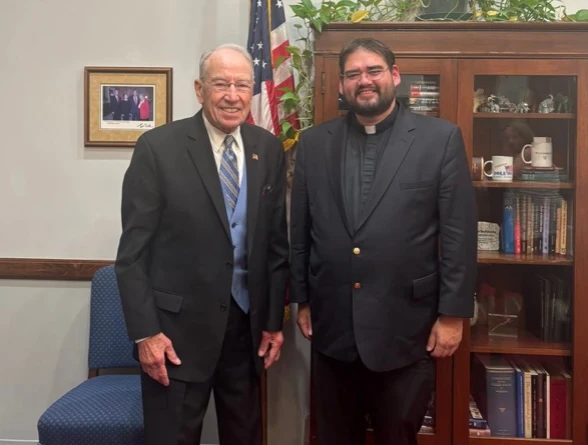
 Father Guillermo Treviño Jr.’s national profile stemmed from his immigrant rights work with Escucha Mi Voz Iowa (“Hear My Voice Iowa”), a group aiding Latino workers, including immigrants. He is shown here during a meeting earlier this year with U.S. Sen.Chuck Grassley, R-Iowa. / Credit: Photo courtesy of Escucha Mi Voz Iowa

CNA Staff, Nov 5, 2025 / 17:33 pm (CNA).
Father Guillermo Treviño Jr., a 39-year-old priest who advocated for the rights of immigrants in the Diocese of Davenport, Iowa, passed away suddenly on Oct. 31, just hours after returning from a trip to the Vatican. His death from sepsis after a fatal stomach perforation was a complication of undiagnosed diabetes, according to his sister, Mariela Treviño-Luna, who had traveled with him to Italy.Due to a shortage of priests in Iowa, Treviño served as a pastor of St. Joseph Church in Columbus Junction as well as St. Joseph Church in West Liberty, southeast of Iowa City.Treviño’s national profile stemmed from his immigrant rights work as a founder, board president, and chaplain of Escucha Mi Voz Iowa, a group aiding Latino workers, including immigrants. Treviño had just returned from Rome, where he represented the group at Pope Leo XIV’s World Meeting of Popular Movements.He fought deportations, notably for his godson, 18-year-old Pascual Pedro, a West Liberty High School soccer star U.S. Immigration and Customs Enforcement (ICE) deported this summer despite his Deferred Action for Childhood Arrivals (DACA) status. In a statement issued on the day of his death by the Diocese of Davenport, Bishop Dennis Walsh said: “Father Guillermo’s heart was consistently with those in need. Throughout the current migrant crises, he showed great compassion for the many migrants who find themselves on edge due to aggressive immigration enforcement action.” As pastor of both St. Joseph churches, Treviño nurtured the meatpacking and farming communities there with “remarkable authenticity,” Walsh said. “His voice was becoming a beacon of hope and advocacy on this vital issue, gaining national prominence,” Walsh continued in the statement. “He was recently invited to be part of a panel discussion at Georgetown University and had the distinct honor of traveling to the Vatican as part of the World Gathering of Popular Movements. His leadership and commitment to justice will be deeply missed by the Church and the wider community he so faithfully served.” Archbishop Thomas Zinkula of Dubuque recalled Treviño’s “playful and serious sides,” telling the Des Moines Register this week that “Father Guillermo loved movies, Star Wars, and professional wrestling. But he also was passionate about serving and advocating for immigrants. I was inspired by his total commitment to seeking justice and mercy for people on that particular margin of society.”Born on March 7, 1986, in San Antonio, Texas, to Maria Luna and Guillermo Treviño Sr., Treviño and his family moved to Moline, Illinois, when he was 3. He earned an associate’s degree from Black Hawk College before entering seminary at Conception Seminary College and Mundelein Seminary. Despite an initial rejection, he said at the time that his faith — rekindled after his father’s early death — drove him forward. Ordained on June 6, 2015, he quickly became a force in rural Hispanic parishes.According to the diocese’s statement, Treviño “received the National 2022 Cardinal Bernardin New Leadership Award. The award recognizes a ‘young faith-filled Catholic who has demonstrated leadership against poverty and injustice in the United States,’ according to the USCCB [U.S. Conference of Catholic Bishops].”“It recognizes the leadership, energy, and diverse skills that young people bring to the anti-poverty work of low-income projects and Catholic parishes. It highlights the gifts of young leaders and their Gospel commitment to the poor,” the statement said.Treviño’s funeral Mass is set for Nov. 7 at Sacred Heart Cathedral in Davenport and will be livestreamed on YouTube. He is survived by his mother, sisters, and extended family.

A beloved Iowa priest and immigrant advocate dies at 39 #Catholic Father Guillermo Treviño Jr.’s national profile stemmed from his immigrant rights work with Escucha Mi Voz Iowa (“Hear My Voice Iowa”), a group aiding Latino workers, including immigrants. He is shown here during a meeting earlier this year with U.S. Sen.Chuck Grassley, R-Iowa. / Credit: Photo courtesy of Escucha Mi Voz Iowa CNA Staff, Nov 5, 2025 / 17:33 pm (CNA). Father Guillermo Treviño Jr., a 39-year-old priest who advocated for the rights of immigrants in the Diocese of Davenport, Iowa, passed away suddenly on Oct. 31, just hours after returning from a trip to the Vatican. His death from sepsis after a fatal stomach perforation was a complication of undiagnosed diabetes, according to his sister, Mariela Treviño-Luna, who had traveled with him to Italy.Due to a shortage of priests in Iowa, Treviño served as a pastor of St. Joseph Church in Columbus Junction as well as St. Joseph Church in West Liberty, southeast of Iowa City.Treviño’s national profile stemmed from his immigrant rights work as a founder, board president, and chaplain of Escucha Mi Voz Iowa, a group aiding Latino workers, including immigrants. Treviño had just returned from Rome, where he represented the group at Pope Leo XIV’s World Meeting of Popular Movements.He fought deportations, notably for his godson, 18-year-old Pascual Pedro, a West Liberty High School soccer star U.S. Immigration and Customs Enforcement (ICE) deported this summer despite his Deferred Action for Childhood Arrivals (DACA) status. In a statement issued on the day of his death by the Diocese of Davenport, Bishop Dennis Walsh said: “Father Guillermo’s heart was consistently with those in need. Throughout the current migrant crises, he showed great compassion for the many migrants who find themselves on edge due to aggressive immigration enforcement action.” As pastor of both St. Joseph churches, Treviño nurtured the meatpacking and farming communities there with “remarkable authenticity,” Walsh said. “His voice was becoming a beacon of hope and advocacy on this vital issue, gaining national prominence,” Walsh continued in the statement. “He was recently invited to be part of a panel discussion at Georgetown University and had the distinct honor of traveling to the Vatican as part of the World Gathering of Popular Movements. His leadership and commitment to justice will be deeply missed by the Church and the wider community he so faithfully served.” Archbishop Thomas Zinkula of Dubuque recalled Treviño’s “playful and serious sides,” telling the Des Moines Register this week that “Father Guillermo loved movies, Star Wars, and professional wrestling. But he also was passionate about serving and advocating for immigrants. I was inspired by his total commitment to seeking justice and mercy for people on that particular margin of society.”Born on March 7, 1986, in San Antonio, Texas, to Maria Luna and Guillermo Treviño Sr., Treviño and his family moved to Moline, Illinois, when he was 3. He earned an associate’s degree from Black Hawk College before entering seminary at Conception Seminary College and Mundelein Seminary. Despite an initial rejection, he said at the time that his faith — rekindled after his father’s early death — drove him forward. Ordained on June 6, 2015, he quickly became a force in rural Hispanic parishes.According to the diocese’s statement, Treviño “received the National 2022 Cardinal Bernardin New Leadership Award. The award recognizes a ‘young faith-filled Catholic who has demonstrated leadership against poverty and injustice in the United States,’ according to the USCCB [U.S. Conference of Catholic Bishops].”“It recognizes the leadership, energy, and diverse skills that young people bring to the anti-poverty work of low-income projects and Catholic parishes. It highlights the gifts of young leaders and their Gospel commitment to the poor,” the statement said.Treviño’s funeral Mass is set for Nov. 7 at Sacred Heart Cathedral in Davenport and will be livestreamed on YouTube. He is survived by his mother, sisters, and extended family.


Father Guillermo Treviño Jr.’s national profile stemmed from his immigrant rights work with Escucha Mi Voz Iowa (“Hear My Voice Iowa”), a group aiding Latino workers, including immigrants. He is shown here during a meeting earlier this year with U.S. Sen.Chuck Grassley, R-Iowa. / Credit: Photo courtesy of Escucha Mi Voz Iowa

CNA Staff, Nov 5, 2025 / 17:33 pm (CNA).

Father Guillermo Treviño Jr., a 39-year-old priest who advocated for the rights of immigrants in the Diocese of Davenport, Iowa, passed away suddenly on Oct. 31, just hours after returning from a trip to the Vatican. 

His death from sepsis after a fatal stomach perforation was a complication of undiagnosed diabetes, according to his sister, Mariela Treviño-Luna, who had traveled with him to Italy.

Due to a shortage of priests in Iowa, Treviño served as a pastor of St. Joseph Church in Columbus Junction as well as St. Joseph Church in West Liberty, southeast of Iowa City.

Treviño’s national profile stemmed from his immigrant rights work as a founder, board president, and chaplain of Escucha Mi Voz Iowa, a group aiding Latino workers, including immigrants. Treviño had just returned from Rome, where he represented the group at Pope Leo XIV’s World Meeting of Popular Movements.

He fought deportations, notably for his godson, 18-year-old Pascual Pedro, a West Liberty High School soccer star U.S. Immigration and Customs Enforcement (ICE) deported this summer despite his Deferred Action for Childhood Arrivals (DACA) status. 

In a statement issued on the day of his death by the Diocese of Davenport, Bishop Dennis Walsh said: “Father Guillermo’s heart was consistently with those in need. Throughout the current migrant crises, he showed great compassion for the many migrants who find themselves on edge due to aggressive immigration enforcement action.” 

As pastor of both St. Joseph churches, Treviño nurtured the meatpacking and farming communities there with “remarkable authenticity,” Walsh said. 

“His voice was becoming a beacon of hope and advocacy on this vital issue, gaining national prominence,” Walsh continued in the statement. “He was recently invited to be part of a panel discussion at Georgetown University and had the distinct honor of traveling to the Vatican as part of the World Gathering of Popular Movements. His leadership and commitment to justice will be deeply missed by the Church and the wider community he so faithfully served.” 

Archbishop Thomas Zinkula of Dubuque recalled Treviño’s “playful and serious sides,” telling the Des Moines Register this week that “Father Guillermo loved movies, Star Wars, and professional wrestling. But he also was passionate about serving and advocating for immigrants. I was inspired by his total commitment to seeking justice and mercy for people on that particular margin of society.”

Born on March 7, 1986, in San Antonio, Texas, to Maria Luna and Guillermo Treviño Sr., Treviño and his family moved to Moline, Illinois, when he was 3. He earned an associate’s degree from Black Hawk College before entering seminary at Conception Seminary College and Mundelein Seminary. Despite an initial rejection, he said at the time that his faith — rekindled after his father’s early death — drove him forward. Ordained on June 6, 2015, he quickly became a force in rural Hispanic parishes.

According to the diocese’s statement, Treviño “received the National 2022 Cardinal Bernardin New Leadership Award. The award recognizes a ‘young faith-filled Catholic who has demonstrated leadership against poverty and injustice in the United States,’ according to the USCCB [U.S. Conference of Catholic Bishops].”

“It recognizes the leadership, energy, and diverse skills that young people bring to the anti-poverty work of low-income projects and Catholic parishes. It highlights the gifts of young leaders and their Gospel commitment to the poor,” the statement said.

Treviño’s funeral Mass is set for Nov. 7 at Sacred Heart Cathedral in Davenport and will be livestreamed on YouTube. He is survived by his mother, sisters, and extended family.

Read More