witnessing

College campus ministries register remarkable growth in baptisms, confirmations #Catholic 
 
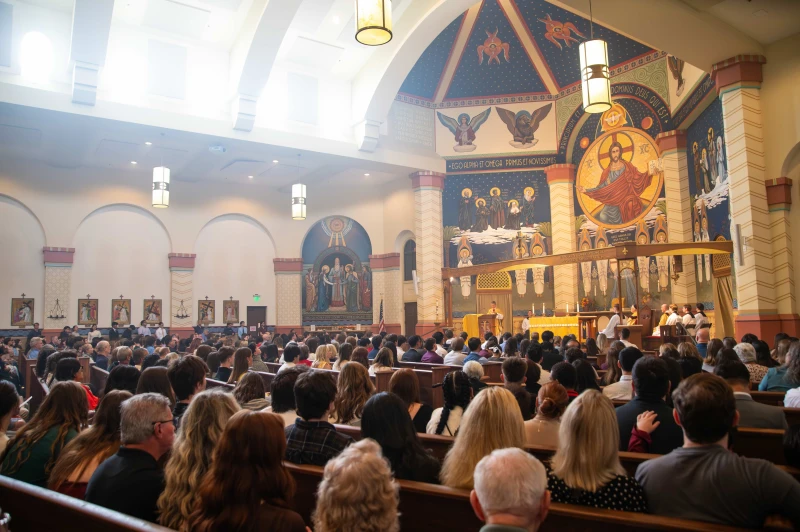
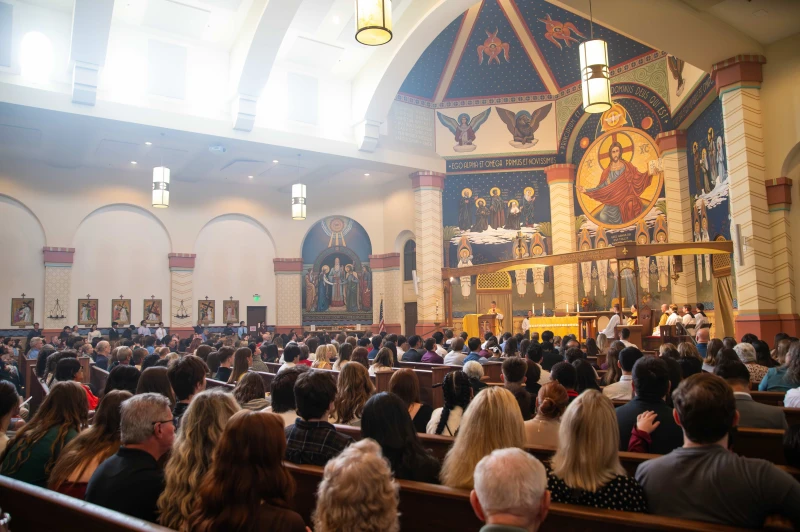
 Mass at Arizona State University’s Newman Center chapel. / Credit: Photo courtesy of Father Bill Clements, director of ASU Newman Center

Ann Arbor, Michigan, Dec 15, 2025 / 07:00 am (CNA).
Several college campuses across the country are witnessing a notable rise in baptisms and confirmations among students. Catholic evangelists tell CNA that this growth reflects a deepening desire among young adults for certainty, stability, and faith amid today’s turbulent cultural landscape.For example, at Arizona State University, the Newman Center is experiencing its largest group of students entering the Church. Ryan Ayala, a former seminarian and campus minister who has served at ASU for three years, oversees the evangelization efforts. “This past semester, we welcomed 52 students into the Church at Christ the King Parish” in Mesa, Ayala said. “And we are expecting 50 more for the Easter Vigil this spring.” According to Ayala, this year marked a record number of students received into the Catholic Church at ASU.Each year, ASU’s campus ministry prepares students for baptism, confirmation, and full communion through a fall vigil held in collaboration with Christ the King Parish. Students enter the Church from a wide range of backgrounds: Some encounter Christianity for the first time, others come from Protestant communities, and still others are baptized Catholics preparing to complete their sacraments. Yailen Cho (at left) was one of 52 Arizona State University students received into the Church last month. Credit: Photo courtesy of Yailen ChoThis year’s group included eight catechumens who were baptized, 26 Christians who made affirmations of faith, and a significant number of Catholics who received confirmation. The ceremony took place on the feast of Christ the King, Nov. 23.Ayala attributes the growth in part to simple, consistent outreach. “No phone call goes unanswered,” he said. Students come from Lutheran, Methodist, Presbyterian, and nondenominational evangelical backgrounds. Those not yet baptized often come from nonreligious homes, and two identified as atheists. One Muslim student is expected to join the program in January. ASU enrolls approximately 200,000 students.Overall, participation in ASU’s OCIA (Order of Christian Initiation of Adults) program has more than doubled. “This is by far the biggest class we’ve had,” Ayala said.Supporting this expansion are missionaries from the Fellowship of Catholic University Students (FOCUS), who lead Bible studies and accompany students in their growing faith. Ayala supervises the missionaries and has completed FOCUS formation himself. The Newman Center offers a focused nine-week OCIA process — shorter than the traditional yearlong program — requiring weekly sessions alongside FOCUS Bible studies.Reflecting on the surge of interest, Ayala sees both cultural and pastoral dynamics at work. “Two things are going on in this surge. There’s a trend in Gen Z. They are asking deeper, philosophical, and theological questions. Some students were shaken up by the shooting of Charlie Kirk. The other thing is simply responding to emails. I ask my staff to be diligent to inquirers. The most important thing is to respond and give them clarity about how to become Catholic.”“Our main strategy is to have an urgency to respond to them,” he added. “It was so moving to see all those students from other faith traditions stand up and make the commitment to become Catholic.” Ayala also noted the role of Catholic media, highlighting one student influenced by Father Mike Schmitz’s online ministry. He further praised the spiritual guidance of Father Bill Clements, who leads the Newman Center. “He does a great job humanizing the priesthood but also removing a lot of the anxieties that newcomers to the faith may have.”Clements, who has directed the Newman Center for 15 years, reports that about 400 students participate in weekly FOCUS Bible studies, and approximately 1,500 attend one of the six weekend Masses. He said he has seen a clear shift in the past two years. “In the last two years, a switch was flipped. I think people are tired of crazy. They’re hungry for some direction, truth, goodness, and beauty. We have one of the most beautiful Newman chapels in the country,” he said, “and that has been a huge attraction.”To meet the growing demand, Clements expanded the OCIA schedule. “I revamped the OCIA process here. When people would hit me up at this time of year, I would have to tell them that we start that in the fall. But I couldn’t stand making people wait. So now I have three sessions: fall, spring, and summer.” He credited FOCUS missionaries for their close accompaniment of students. “They appeal to students. It affords students a chance to connect with other Catholics, and it’s been instrumental in reviving interest in the Church. The missionaries work hard,” he said.One student, Yailen Cho, received baptism and confirmation on Nov. 23 at the ASU Newman Chapel. She told CNA: “I didn’t grow up very religious at all. My dad became Catholic two years ago, but I didn’t have any religious background.” Cho now regularly attends Mass and says the FOCUS program helped deepen her reading of the Gospels. Reflecting on her journey, she shared: “I’d had a prayer relationship with God for a while, and I had prayed that my heart would be softened towards God.” After wrestling with questions of faith, she reached out to the Newman Center, which she said she found “very warm and welcoming.” Directing a message to others considering the Catholic faith, she said: “I want everyone to be happy, and I want to be happy. If you live by the Word, as the Bible says, you can be happy in heaven forever.”Meanwhile, in Michigan and NebraskaSimilar momentum is evident at the University of Michigan in Ann Arbor. Rita Zyber, OCIA coordinator at St. Mary Student Parish, said 50 students are currently preparing to enter the Church. Last Easter, 30 students were received, compared with about 20 in 2024.With daily liturgies and seven weekend Masses, the parish remains consistently full. One Mass was added this year to accommodate greater attendance. “They are packed,” Zyber said.Reflecting on the increase, she noted: “There is so much chaos in the world. They are looking for structure, stability, and some grounding in God.”The parish is staffed by Jesuit priests whose Ignatian spirituality resonates strongly with students, Zyber said. She added that other campus and parish OCIA programs across Michigan are seeing similar growth.In a report last month in the National Catholic Register, CNA’s sister news partner, Father Ryan Kaup, pastor of St. Thomas Aquinas Church and Newman Center at the University of Nebraska-Lincoln, characterized the current situation as “a golden age of campus ministry.” Kaup reported that this past spring, 72 converts entered the Church at the Easter Vigil. So far this semester, they already have 125 students interested in joining the Church, he said.

College campus ministries register remarkable growth in baptisms, confirmations #Catholic Mass at Arizona State University’s Newman Center chapel. / Credit: Photo courtesy of Father Bill Clements, director of ASU Newman Center Ann Arbor, Michigan, Dec 15, 2025 / 07:00 am (CNA). Several college campuses across the country are witnessing a notable rise in baptisms and confirmations among students. Catholic evangelists tell CNA that this growth reflects a deepening desire among young adults for certainty, stability, and faith amid today’s turbulent cultural landscape.For example, at Arizona State University, the Newman Center is experiencing its largest group of students entering the Church. Ryan Ayala, a former seminarian and campus minister who has served at ASU for three years, oversees the evangelization efforts. “This past semester, we welcomed 52 students into the Church at Christ the King Parish” in Mesa, Ayala said. “And we are expecting 50 more for the Easter Vigil this spring.” According to Ayala, this year marked a record number of students received into the Catholic Church at ASU.Each year, ASU’s campus ministry prepares students for baptism, confirmation, and full communion through a fall vigil held in collaboration with Christ the King Parish. Students enter the Church from a wide range of backgrounds: Some encounter Christianity for the first time, others come from Protestant communities, and still others are baptized Catholics preparing to complete their sacraments. Yailen Cho (at left) was one of 52 Arizona State University students received into the Church last month. Credit: Photo courtesy of Yailen ChoThis year’s group included eight catechumens who were baptized, 26 Christians who made affirmations of faith, and a significant number of Catholics who received confirmation. The ceremony took place on the feast of Christ the King, Nov. 23.Ayala attributes the growth in part to simple, consistent outreach. “No phone call goes unanswered,” he said. Students come from Lutheran, Methodist, Presbyterian, and nondenominational evangelical backgrounds. Those not yet baptized often come from nonreligious homes, and two identified as atheists. One Muslim student is expected to join the program in January. ASU enrolls approximately 200,000 students.Overall, participation in ASU’s OCIA (Order of Christian Initiation of Adults) program has more than doubled. “This is by far the biggest class we’ve had,” Ayala said.Supporting this expansion are missionaries from the Fellowship of Catholic University Students (FOCUS), who lead Bible studies and accompany students in their growing faith. Ayala supervises the missionaries and has completed FOCUS formation himself. The Newman Center offers a focused nine-week OCIA process — shorter than the traditional yearlong program — requiring weekly sessions alongside FOCUS Bible studies.Reflecting on the surge of interest, Ayala sees both cultural and pastoral dynamics at work. “Two things are going on in this surge. There’s a trend in Gen Z. They are asking deeper, philosophical, and theological questions. Some students were shaken up by the shooting of Charlie Kirk. The other thing is simply responding to emails. I ask my staff to be diligent to inquirers. The most important thing is to respond and give them clarity about how to become Catholic.”“Our main strategy is to have an urgency to respond to them,” he added. “It was so moving to see all those students from other faith traditions stand up and make the commitment to become Catholic.” Ayala also noted the role of Catholic media, highlighting one student influenced by Father Mike Schmitz’s online ministry. He further praised the spiritual guidance of Father Bill Clements, who leads the Newman Center. “He does a great job humanizing the priesthood but also removing a lot of the anxieties that newcomers to the faith may have.”Clements, who has directed the Newman Center for 15 years, reports that about 400 students participate in weekly FOCUS Bible studies, and approximately 1,500 attend one of the six weekend Masses. He said he has seen a clear shift in the past two years. “In the last two years, a switch was flipped. I think people are tired of crazy. They’re hungry for some direction, truth, goodness, and beauty. We have one of the most beautiful Newman chapels in the country,” he said, “and that has been a huge attraction.”To meet the growing demand, Clements expanded the OCIA schedule. “I revamped the OCIA process here. When people would hit me up at this time of year, I would have to tell them that we start that in the fall. But I couldn’t stand making people wait. So now I have three sessions: fall, spring, and summer.” He credited FOCUS missionaries for their close accompaniment of students. “They appeal to students. It affords students a chance to connect with other Catholics, and it’s been instrumental in reviving interest in the Church. The missionaries work hard,” he said.One student, Yailen Cho, received baptism and confirmation on Nov. 23 at the ASU Newman Chapel. She told CNA: “I didn’t grow up very religious at all. My dad became Catholic two years ago, but I didn’t have any religious background.” Cho now regularly attends Mass and says the FOCUS program helped deepen her reading of the Gospels. Reflecting on her journey, she shared: “I’d had a prayer relationship with God for a while, and I had prayed that my heart would be softened towards God.” After wrestling with questions of faith, she reached out to the Newman Center, which she said she found “very warm and welcoming.” Directing a message to others considering the Catholic faith, she said: “I want everyone to be happy, and I want to be happy. If you live by the Word, as the Bible says, you can be happy in heaven forever.”Meanwhile, in Michigan and NebraskaSimilar momentum is evident at the University of Michigan in Ann Arbor. Rita Zyber, OCIA coordinator at St. Mary Student Parish, said 50 students are currently preparing to enter the Church. Last Easter, 30 students were received, compared with about 20 in 2024.With daily liturgies and seven weekend Masses, the parish remains consistently full. One Mass was added this year to accommodate greater attendance. “They are packed,” Zyber said.Reflecting on the increase, she noted: “There is so much chaos in the world. They are looking for structure, stability, and some grounding in God.”The parish is staffed by Jesuit priests whose Ignatian spirituality resonates strongly with students, Zyber said. She added that other campus and parish OCIA programs across Michigan are seeing similar growth.In a report last month in the National Catholic Register, CNA’s sister news partner, Father Ryan Kaup, pastor of St. Thomas Aquinas Church and Newman Center at the University of Nebraska-Lincoln, characterized the current situation as “a golden age of campus ministry.” Kaup reported that this past spring, 72 converts entered the Church at the Easter Vigil. So far this semester, they already have 125 students interested in joining the Church, he said.


Mass at Arizona State University’s Newman Center chapel. / Credit: Photo courtesy of Father Bill Clements, director of ASU Newman Center

Ann Arbor, Michigan, Dec 15, 2025 / 07:00 am (CNA).

Several college campuses across the country are witnessing a notable rise in baptisms and confirmations among students. Catholic evangelists tell CNA that this growth reflects a deepening desire among young adults for certainty, stability, and faith amid today’s turbulent cultural landscape.

For example, at Arizona State University, the Newman Center is experiencing its largest group of students entering the Church. Ryan Ayala, a former seminarian and campus minister who has served at ASU for three years, oversees the evangelization efforts. 

“This past semester, we welcomed 52 students into the Church at Christ the King Parish” in Mesa, Ayala said. “And we are expecting 50 more for the Easter Vigil this spring.” According to Ayala, this year marked a record number of students received into the Catholic Church at ASU.

Each year, ASU’s campus ministry prepares students for baptism, confirmation, and full communion through a fall vigil held in collaboration with Christ the King Parish. Students enter the Church from a wide range of backgrounds: Some encounter Christianity for the first time, others come from Protestant communities, and still others are baptized Catholics preparing to complete their sacraments. 

Yailen Cho (at left) was one of 52 Arizona State University students received into the Church last month. Credit: Photo courtesy of Yailen Cho

This year’s group included eight catechumens who were baptized, 26 Christians who made affirmations of faith, and a significant number of Catholics who received confirmation. The ceremony took place on the feast of Christ the King, Nov. 23.

Ayala attributes the growth in part to simple, consistent outreach. “No phone call goes unanswered,” he said. Students come from Lutheran, Methodist, Presbyterian, and nondenominational evangelical backgrounds. Those not yet baptized often come from nonreligious homes, and two identified as atheists. One Muslim student is expected to join the program in January. ASU enrolls approximately 200,000 students.

Overall, participation in ASU’s OCIA (Order of Christian Initiation of Adults) program has more than doubled. “This is by far the biggest class we’ve had,” Ayala said.

Supporting this expansion are missionaries from the Fellowship of Catholic University Students (FOCUS), who lead Bible studies and accompany students in their growing faith. Ayala supervises the missionaries and has completed FOCUS formation himself. The Newman Center offers a focused nine-week OCIA process — shorter than the traditional yearlong program — requiring weekly sessions alongside FOCUS Bible studies.

Reflecting on the surge of interest, Ayala sees both cultural and pastoral dynamics at work. “Two things are going on in this surge. There’s a trend in Gen Z. They are asking deeper, philosophical, and theological questions. Some students were shaken up by the shooting of Charlie Kirk. The other thing is simply responding to emails. I ask my staff to be diligent to inquirers. The most important thing is to respond and give them clarity about how to become Catholic.”

“Our main strategy is to have an urgency to respond to them,” he added. “It was so moving to see all those students from other faith traditions stand up and make the commitment to become Catholic.”

Ayala also noted the role of Catholic media, highlighting one student influenced by Father Mike Schmitz’s online ministry. He further praised the spiritual guidance of Father Bill Clements, who leads the Newman Center. “He does a great job humanizing the priesthood but also removing a lot of the anxieties that newcomers to the faith may have.”

Clements, who has directed the Newman Center for 15 years, reports that about 400 students participate in weekly FOCUS Bible studies, and approximately 1,500 attend one of the six weekend Masses. He said he has seen a clear shift in the past two years.

“In the last two years, a switch was flipped. I think people are tired of crazy. They’re hungry for some direction, truth, goodness, and beauty. We have one of the most beautiful Newman chapels in the country,” he said, “and that has been a huge attraction.”

To meet the growing demand, Clements expanded the OCIA schedule. “I revamped the OCIA process here. When people would hit me up at this time of year, I would have to tell them that we start that in the fall. But I couldn’t stand making people wait. So now I have three sessions: fall, spring, and summer.”

He credited FOCUS missionaries for their close accompaniment of students. “They appeal to students. It affords students a chance to connect with other Catholics, and it’s been instrumental in reviving interest in the Church. The missionaries work hard,” he said.

One student, Yailen Cho, received baptism and confirmation on Nov. 23 at the ASU Newman Chapel. She told CNA: “I didn’t grow up very religious at all. My dad became Catholic two years ago, but I didn’t have any religious background.” 

Cho now regularly attends Mass and says the FOCUS program helped deepen her reading of the Gospels. Reflecting on her journey, she shared: “I’d had a prayer relationship with God for a while, and I had prayed that my heart would be softened towards God.”

After wrestling with questions of faith, she reached out to the Newman Center, which she said she found “very warm and welcoming.”

Directing a message to others considering the Catholic faith, she said: “I want everyone to be happy, and I want to be happy. If you live by the Word, as the Bible says, you can be happy in heaven forever.”

Meanwhile, in Michigan and Nebraska

Similar momentum is evident at the University of Michigan in Ann Arbor. Rita Zyber, OCIA coordinator at St. Mary Student Parish, said 50 students are currently preparing to enter the Church. Last Easter, 30 students were received, compared with about 20 in 2024.

With daily liturgies and seven weekend Masses, the parish remains consistently full. One Mass was added this year to accommodate greater attendance. “They are packed,” Zyber said.

Reflecting on the increase, she noted: “There is so much chaos in the world. They are looking for structure, stability, and some grounding in God.”

The parish is staffed by Jesuit priests whose Ignatian spirituality resonates strongly with students, Zyber said. She added that other campus and parish OCIA programs across Michigan are seeing similar growth.

In a report last month in the National Catholic Register, CNA’s sister news partner, Father Ryan Kaup, pastor of St. Thomas Aquinas Church and Newman Center at the University of Nebraska-Lincoln, characterized the current situation as “a golden age of campus ministry.”

Kaup reported that this past spring, 72 converts entered the Church at the Easter Vigil. So far this semester, they already have 125 students interested in joining the Church, he said.

Read More


Cupid goes Catholic: New faith-based dating show brings faith and matchmaking together #Catholic 
 
 “The Catholic Dating Show” recently launched on CatholicMatch, a Catholic dating site, and has quickly become a fan favorite. / Credit: CatholicMatch/Tony Tibbetts

CNA Staff, Dec 13, 2025 / 07:00 am (CNA).
Secular dating shows like “The Bachelor,” “Farmer Wants a Wife,” and “Love Is Blind” are among a plethora of programs that aim to bring singles together. But what would it look like to add faith to matchmaking in a dating show? CatholicMatch, one of the first Catholic dating sites, seeks to do just that with the launch of “The Catholic Dating Show.”Earlier this year, CatholicMatch released a new platform called “Relate.” This platform is meant to bring users together for weekly live, virtual events such as trivia nights, discussions with prominent Catholic speakers, and “The Catholic Dating Show.”The show has quickly become a fan favorite, bringing in over 600 live viewers through the dating site and even more when it is uploaded to CatholicMatch’s YouTube channel the next day for nonmembers to watch.Taking place two Saturdays a month, “The Catholic Dating Show” is an hourlong event that features one single woman and three single men. During the first half of the show, the woman asks her suitors questions to get to know them better. The three men also have their cameras off for this part so the woman cannot see them.Once she is done asking questions, the live audience lets her know, via a live poll, whom they think she should continue with into the second half of the show. She can either take their advice or not. Once she picks one of the three suitors, the two go on to play compatibility games to get to know each other further. The show finishes with another live poll from the audience asking if the two should meet in person for a date. “It’s just been so much fun,” Tony Tibbetts, live events manager at CatholicMatch and the host of the dating show, told CNA in an interview. “We’re having a blast and people love it.”Tibbetts pointed out that through the Relate platform, CatholicMatch is not only trying to address a singleness epidemic but “also a loneliness epidemic.” As someone who works with Catholic singles on a daily basis, Tibbetts shared that he is witnessing that “there’s a great sense of distrust in the world and the feeling of you’re going to get burned” and “that lack of vulnerability has become very rampant in the Catholic community when it comes to Catholic dating.”Tony Tibbetts, live events manager at CatholicMatch, hosts an episode of “The Catholic Dating Show.” Credit: CatholicMatch/Tony TibbettsDue to this, CatholicMatch is working to be more than just a dating app but also to “build something unique in the dating world, especially with this Relate platform — to not only be the name you think of when you think of Catholic online dating, but it will also be something that people desire to be part of.”“So we’re helping people to be able to join in the Catholic community — because we all need community — of singles and who knows, maybe you just might find ‘the one’ while you’re there,” he explained. He added: “Our stated mission is to help facilitate as many holy, Catholic marriages as possible, and so we want to do that for you as quickly as possible, as quickly as we can, but while you’re on it as well, we want you to get the most out of your dating experience. Dating should be fun. Dating shouldn’t be stressful … We want to help facilitate that joy in people and that excitement for community, for possibly finding other people like you, for possibly finding ‘the one.’”Through the live events, Tibbetts said he believes CatholicMatch is enabling users to “go beyond the profile of somebody to be able to get to know them.”One of their newest additions to the Relate platform is the dating hotline, which allows users to call in with questions about dating or ask for advice and have their questions answered live by the male and female hosts. Tibbetts said the primary goal is “trying to facilitate joy among Catholic singles.”“With that, we hope and pray that the Lord will move something within them where we can create marriages, we can create holy, Catholic relationships with it … We’re trying to create joyful lives for Catholics and hopefully create some Catholic marriages along the way.”

Cupid goes Catholic: New faith-based dating show brings faith and matchmaking together #Catholic “The Catholic Dating Show” recently launched on CatholicMatch, a Catholic dating site, and has quickly become a fan favorite. / Credit: CatholicMatch/Tony Tibbetts CNA Staff, Dec 13, 2025 / 07:00 am (CNA). Secular dating shows like “The Bachelor,” “Farmer Wants a Wife,” and “Love Is Blind” are among a plethora of programs that aim to bring singles together. But what would it look like to add faith to matchmaking in a dating show? CatholicMatch, one of the first Catholic dating sites, seeks to do just that with the launch of “The Catholic Dating Show.”Earlier this year, CatholicMatch released a new platform called “Relate.” This platform is meant to bring users together for weekly live, virtual events such as trivia nights, discussions with prominent Catholic speakers, and “The Catholic Dating Show.”The show has quickly become a fan favorite, bringing in over 600 live viewers through the dating site and even more when it is uploaded to CatholicMatch’s YouTube channel the next day for nonmembers to watch.Taking place two Saturdays a month, “The Catholic Dating Show” is an hourlong event that features one single woman and three single men. During the first half of the show, the woman asks her suitors questions to get to know them better. The three men also have their cameras off for this part so the woman cannot see them.Once she is done asking questions, the live audience lets her know, via a live poll, whom they think she should continue with into the second half of the show. She can either take their advice or not. Once she picks one of the three suitors, the two go on to play compatibility games to get to know each other further. The show finishes with another live poll from the audience asking if the two should meet in person for a date. “It’s just been so much fun,” Tony Tibbetts, live events manager at CatholicMatch and the host of the dating show, told CNA in an interview. “We’re having a blast and people love it.”Tibbetts pointed out that through the Relate platform, CatholicMatch is not only trying to address a singleness epidemic but “also a loneliness epidemic.” As someone who works with Catholic singles on a daily basis, Tibbetts shared that he is witnessing that “there’s a great sense of distrust in the world and the feeling of you’re going to get burned” and “that lack of vulnerability has become very rampant in the Catholic community when it comes to Catholic dating.”Tony Tibbetts, live events manager at CatholicMatch, hosts an episode of “The Catholic Dating Show.” Credit: CatholicMatch/Tony TibbettsDue to this, CatholicMatch is working to be more than just a dating app but also to “build something unique in the dating world, especially with this Relate platform — to not only be the name you think of when you think of Catholic online dating, but it will also be something that people desire to be part of.”“So we’re helping people to be able to join in the Catholic community — because we all need community — of singles and who knows, maybe you just might find ‘the one’ while you’re there,” he explained. He added: “Our stated mission is to help facilitate as many holy, Catholic marriages as possible, and so we want to do that for you as quickly as possible, as quickly as we can, but while you’re on it as well, we want you to get the most out of your dating experience. Dating should be fun. Dating shouldn’t be stressful … We want to help facilitate that joy in people and that excitement for community, for possibly finding other people like you, for possibly finding ‘the one.’”Through the live events, Tibbetts said he believes CatholicMatch is enabling users to “go beyond the profile of somebody to be able to get to know them.”One of their newest additions to the Relate platform is the dating hotline, which allows users to call in with questions about dating or ask for advice and have their questions answered live by the male and female hosts. Tibbetts said the primary goal is “trying to facilitate joy among Catholic singles.”“With that, we hope and pray that the Lord will move something within them where we can create marriages, we can create holy, Catholic relationships with it … We’re trying to create joyful lives for Catholics and hopefully create some Catholic marriages along the way.”


“The Catholic Dating Show” recently launched on CatholicMatch, a Catholic dating site, and has quickly become a fan favorite. / Credit: CatholicMatch/Tony Tibbetts

CNA Staff, Dec 13, 2025 / 07:00 am (CNA).

Secular dating shows like “The Bachelor,” “Farmer Wants a Wife,” and “Love Is Blind” are among a plethora of programs that aim to bring singles together. But what would it look like to add faith to matchmaking in a dating show? CatholicMatch, one of the first Catholic dating sites, seeks to do just that with the launch of “The Catholic Dating Show.”

Earlier this year, CatholicMatch released a new platform called “Relate.” This platform is meant to bring users together for weekly live, virtual events such as trivia nights, discussions with prominent Catholic speakers, and “The Catholic Dating Show.”

The show has quickly become a fan favorite, bringing in over 600 live viewers through the dating site and even more when it is uploaded to CatholicMatch’s YouTube channel the next day for nonmembers to watch.

Taking place two Saturdays a month, “The Catholic Dating Show” is an hourlong event that features one single woman and three single men. During the first half of the show, the woman asks her suitors questions to get to know them better. The three men also have their cameras off for this part so the woman cannot see them.

Once she is done asking questions, the live audience lets her know, via a live poll, whom they think she should continue with into the second half of the show. She can either take their advice or not. Once she picks one of the three suitors, the two go on to play compatibility games to get to know each other further. The show finishes with another live poll from the audience asking if the two should meet in person for a date. 

“It’s just been so much fun,” Tony Tibbetts, live events manager at CatholicMatch and the host of the dating show, told CNA in an interview. “We’re having a blast and people love it.”

Tibbetts pointed out that through the Relate platform, CatholicMatch is not only trying to address a singleness epidemic but “also a loneliness epidemic.” 

As someone who works with Catholic singles on a daily basis, Tibbetts shared that he is witnessing that “there’s a great sense of distrust in the world and the feeling of you’re going to get burned” and “that lack of vulnerability has become very rampant in the Catholic community when it comes to Catholic dating.”

Tony Tibbetts, live events manager at CatholicMatch, hosts an episode of "The Catholic Dating Show." Credit: CatholicMatch/Tony Tibbetts
Tony Tibbetts, live events manager at CatholicMatch, hosts an episode of “The Catholic Dating Show.” Credit: CatholicMatch/Tony Tibbetts

Due to this, CatholicMatch is working to be more than just a dating app but also to “build something unique in the dating world, especially with this Relate platform — to not only be the name you think of when you think of Catholic online dating, but it will also be something that people desire to be part of.”

“So we’re helping people to be able to join in the Catholic community — because we all need community — of singles and who knows, maybe you just might find ‘the one’ while you’re there,” he explained. 

He added: “Our stated mission is to help facilitate as many holy, Catholic marriages as possible, and so we want to do that for you as quickly as possible, as quickly as we can, but while you’re on it as well, we want you to get the most out of your dating experience. Dating should be fun. Dating shouldn’t be stressful … We want to help facilitate that joy in people and that excitement for community, for possibly finding other people like you, for possibly finding ‘the one.’”

Through the live events, Tibbetts said he believes CatholicMatch is enabling users to “go beyond the profile of somebody to be able to get to know them.”

One of their newest additions to the Relate platform is the dating hotline, which allows users to call in with questions about dating or ask for advice and have their questions answered live by the male and female hosts. 

Tibbetts said the primary goal is “trying to facilitate joy among Catholic singles.”

“With that, we hope and pray that the Lord will move something within them where we can create marriages, we can create holy, Catholic relationships with it … We’re trying to create joyful lives for Catholics and hopefully create some Catholic marriages along the way.”

Read More
What do we know about the presentation of Mary? #Catholic 
 
 Alessandro Allori, “The Presentation of Mary,” 1598. / Credit: Public domain

National Catholic Register, Nov 21, 2025 / 04:00 am (CNA).
It’s easy to conceptualize the presentation of the Lord because we find it in Scripture. Luke’s Gospel tells of the Holy Family’s journey to the Temple when Jesus was 8 days old. According to Jewish custom, Jesus was to be circumcised and Mary purified. There Mary and Joseph meet the prophets Anna and Simeon, who recognized the child as the Messiah who would bring about the fall and rise of many and become a sign of contradiction and the cause of a sword that would one day pierce Mary’s heart. We celebrate the feast of the Presentation of the Lord annually on Feb. 2.The presentation of Mary, however, is not found in Scripture. Instead, we learn about Mary’s presentation from accounts that have come to us from apostolic times. What we know is found mainly in Chapter 7 of the “Protoevangelium of James,” which has been dated by historians before the year A.D. 200.The “Protoevangelium of James” was ostensibly written by the apostle of the same name. It gives a detailed account in which Mary’s father, Joachim, tells his wife, Anna, that he wishes to bring their daughter to the Temple and consecrate her to God. Anna responds that they should wait until Mary is 3 years old so that she will not need her parents as much. On the agreed day for Mary to be taken to the Temple, Hebrew virgins accompanied the family with burning lamps. The Temple priest received Mary, kissed her, and blessed her. According to James’ writing, the priest then proclaimed: “The Lord has magnified thy name in all generations. In thee, the Lord will manifest his redemption to the sons of Israel.” After that, Mary was placed on the third step of the Temple and danced with joy. All the House of Israel loved Mary, and she was nurtured from then on in the Temple while her parents returned to their Nazareth home, glorifying God.The celebration of the feast of the Presentation of the Blessed Virgin Mary grew slowly over the years. On Nov. 21, 543, Emperor Justinian dedicated a church to Mary in the Temple area of Jerusalem. Many of the early Church Fathers celebrated this feast day, such as St. Germanus and St. John Damascene. In 1373, it was formally celebrated in Avignon, France, and in 1472, Pope Sixtus IV extended it to the universal Church. The Byzantine Church considers Mary’s Presentation one of the 12 great feasts of the liturgical year.In 1974, Pope Paul VI wrote about this feast in his encyclical Marialis Cultus, saying: “Despite its apocryphal content, it presents lofty and exemplary values and carries on the venerable traditions having their origins in the Eastern Churches.”The memorial of the Presentation of Mary has been noted in the Church since its early years and yet is easily forgotten or misunderstood. Since it’s classified as a memorial and not a solemnity or holy day of obligation, it doesn’t draw much attention to itself other than a special opening prayer in the Mass. With this memorial, we celebrate the fact that God chose to dwell in Mary in a unique way. In response, she placed her whole self at his service. By our baptism, God invites us, too, into his service.But there’s more to celebrating the presentation of Mary. This feast gives us cause for great joy since Mary is truly our mother, given to us by Christ as he hung dying on the cross. Because we are part of her Son’s body, she loves us with as much devotion and tenderness as she loves Jesus. When we celebrate Mary’s presentation, we are giving Mary the honor she deserves and witnessing to her perfect purity as the virgin of Nazareth, the mother of God, and our mother.Sts. Joachim and Anne surrendered their only daughter to God so that she would be completely free to follow his holy will. Although they loved her dearly, they knew that in the Temple Mary would always be near the Holy of Holies, surrounded by an atmosphere of godliness and grace. She would be instructed in Scripture and the history of the Jewish people. She would be under the guardianship and tutelage of the holy women of the Temple who had given their lives to God. One of them, Scripture scholars believe, was Anna — the woman who prophesied at the presentation of Our Lord. In the Temple, Mary would be completely focused on God and well prepared for becoming the mother of the Savior and mother of the body of Christ.When we celebrate the presentation of the Blessed Virgin Mary, we remember the tremendous sacrifice Sts. Joachim and Anne made for our sakes. We give honor and respect to the Virgin, who is an example for all of us in our struggle for holiness. It is a privilege and an opportunity to express our gratitude for the gift of a pure, tender, and always-loving mother.This story was first published by the National Catholic Register, CNA’s sister news partner, on Nov. 21, 2023, and has been adapted and updated by CNA.

What do we know about the presentation of Mary? #Catholic Alessandro Allori, “The Presentation of Mary,” 1598. / Credit: Public domain National Catholic Register, Nov 21, 2025 / 04:00 am (CNA). It’s easy to conceptualize the presentation of the Lord because we find it in Scripture. Luke’s Gospel tells of the Holy Family’s journey to the Temple when Jesus was 8 days old. According to Jewish custom, Jesus was to be circumcised and Mary purified. There Mary and Joseph meet the prophets Anna and Simeon, who recognized the child as the Messiah who would bring about the fall and rise of many and become a sign of contradiction and the cause of a sword that would one day pierce Mary’s heart. We celebrate the feast of the Presentation of the Lord annually on Feb. 2.The presentation of Mary, however, is not found in Scripture. Instead, we learn about Mary’s presentation from accounts that have come to us from apostolic times. What we know is found mainly in Chapter 7 of the “Protoevangelium of James,” which has been dated by historians before the year A.D. 200.The “Protoevangelium of James” was ostensibly written by the apostle of the same name. It gives a detailed account in which Mary’s father, Joachim, tells his wife, Anna, that he wishes to bring their daughter to the Temple and consecrate her to God. Anna responds that they should wait until Mary is 3 years old so that she will not need her parents as much. On the agreed day for Mary to be taken to the Temple, Hebrew virgins accompanied the family with burning lamps. The Temple priest received Mary, kissed her, and blessed her. According to James’ writing, the priest then proclaimed: “The Lord has magnified thy name in all generations. In thee, the Lord will manifest his redemption to the sons of Israel.” After that, Mary was placed on the third step of the Temple and danced with joy. All the House of Israel loved Mary, and she was nurtured from then on in the Temple while her parents returned to their Nazareth home, glorifying God.The celebration of the feast of the Presentation of the Blessed Virgin Mary grew slowly over the years. On Nov. 21, 543, Emperor Justinian dedicated a church to Mary in the Temple area of Jerusalem. Many of the early Church Fathers celebrated this feast day, such as St. Germanus and St. John Damascene. In 1373, it was formally celebrated in Avignon, France, and in 1472, Pope Sixtus IV extended it to the universal Church. The Byzantine Church considers Mary’s Presentation one of the 12 great feasts of the liturgical year.In 1974, Pope Paul VI wrote about this feast in his encyclical Marialis Cultus, saying: “Despite its apocryphal content, it presents lofty and exemplary values and carries on the venerable traditions having their origins in the Eastern Churches.”The memorial of the Presentation of Mary has been noted in the Church since its early years and yet is easily forgotten or misunderstood. Since it’s classified as a memorial and not a solemnity or holy day of obligation, it doesn’t draw much attention to itself other than a special opening prayer in the Mass. With this memorial, we celebrate the fact that God chose to dwell in Mary in a unique way. In response, she placed her whole self at his service. By our baptism, God invites us, too, into his service.But there’s more to celebrating the presentation of Mary. This feast gives us cause for great joy since Mary is truly our mother, given to us by Christ as he hung dying on the cross. Because we are part of her Son’s body, she loves us with as much devotion and tenderness as she loves Jesus. When we celebrate Mary’s presentation, we are giving Mary the honor she deserves and witnessing to her perfect purity as the virgin of Nazareth, the mother of God, and our mother.Sts. Joachim and Anne surrendered their only daughter to God so that she would be completely free to follow his holy will. Although they loved her dearly, they knew that in the Temple Mary would always be near the Holy of Holies, surrounded by an atmosphere of godliness and grace. She would be instructed in Scripture and the history of the Jewish people. She would be under the guardianship and tutelage of the holy women of the Temple who had given their lives to God. One of them, Scripture scholars believe, was Anna — the woman who prophesied at the presentation of Our Lord. In the Temple, Mary would be completely focused on God and well prepared for becoming the mother of the Savior and mother of the body of Christ.When we celebrate the presentation of the Blessed Virgin Mary, we remember the tremendous sacrifice Sts. Joachim and Anne made for our sakes. We give honor and respect to the Virgin, who is an example for all of us in our struggle for holiness. It is a privilege and an opportunity to express our gratitude for the gift of a pure, tender, and always-loving mother.This story was first published by the National Catholic Register, CNA’s sister news partner, on Nov. 21, 2023, and has been adapted and updated by CNA.


Alessandro Allori, “The Presentation of Mary,” 1598. / Credit: Public domain

National Catholic Register, Nov 21, 2025 / 04:00 am (CNA).

It’s easy to conceptualize the presentation of the Lord because we find it in Scripture. Luke’s Gospel tells of the Holy Family’s journey to the Temple when Jesus was 8 days old. According to Jewish custom, Jesus was to be circumcised and Mary purified.

There Mary and Joseph meet the prophets Anna and Simeon, who recognized the child as the Messiah who would bring about the fall and rise of many and become a sign of contradiction and the cause of a sword that would one day pierce Mary’s heart. We celebrate the feast of the Presentation of the Lord annually on Feb. 2.

The presentation of Mary, however, is not found in Scripture. Instead, we learn about Mary’s presentation from accounts that have come to us from apostolic times. What we know is found mainly in Chapter 7 of the “Protoevangelium of James,” which has been dated by historians before the year A.D. 200.

The “Protoevangelium of James” was ostensibly written by the apostle of the same name. It gives a detailed account in which Mary’s father, Joachim, tells his wife, Anna, that he wishes to bring their daughter to the Temple and consecrate her to God. Anna responds that they should wait until Mary is 3 years old so that she will not need her parents as much. 

On the agreed day for Mary to be taken to the Temple, Hebrew virgins accompanied the family with burning lamps. The Temple priest received Mary, kissed her, and blessed her. According to James’ writing, the priest then proclaimed: “The Lord has magnified thy name in all generations. In thee, the Lord will manifest his redemption to the sons of Israel.” 

After that, Mary was placed on the third step of the Temple and danced with joy. All the House of Israel loved Mary, and she was nurtured from then on in the Temple while her parents returned to their Nazareth home, glorifying God.

The celebration of the feast of the Presentation of the Blessed Virgin Mary grew slowly over the years. 

On Nov. 21, 543, Emperor Justinian dedicated a church to Mary in the Temple area of Jerusalem. Many of the early Church Fathers celebrated this feast day, such as St. Germanus and St. John Damascene. In 1373, it was formally celebrated in Avignon, France, and in 1472, Pope Sixtus IV extended it to the universal Church. The Byzantine Church considers Mary’s Presentation one of the 12 great feasts of the liturgical year.

In 1974, Pope Paul VI wrote about this feast in his encyclical Marialis Cultus, saying: “Despite its apocryphal content, it presents lofty and exemplary values and carries on the venerable traditions having their origins in the Eastern Churches.”

The memorial of the Presentation of Mary has been noted in the Church since its early years and yet is easily forgotten or misunderstood. 

Since it’s classified as a memorial and not a solemnity or holy day of obligation, it doesn’t draw much attention to itself other than a special opening prayer in the Mass. With this memorial, we celebrate the fact that God chose to dwell in Mary in a unique way. In response, she placed her whole self at his service. By our baptism, God invites us, too, into his service.

But there’s more to celebrating the presentation of Mary. 

This feast gives us cause for great joy since Mary is truly our mother, given to us by Christ as he hung dying on the cross. Because we are part of her Son’s body, she loves us with as much devotion and tenderness as she loves Jesus. When we celebrate Mary’s presentation, we are giving Mary the honor she deserves and witnessing to her perfect purity as the virgin of Nazareth, the mother of God, and our mother.

Sts. Joachim and Anne surrendered their only daughter to God so that she would be completely free to follow his holy will. Although they loved her dearly, they knew that in the Temple Mary would always be near the Holy of Holies, surrounded by an atmosphere of godliness and grace. She would be instructed in Scripture and the history of the Jewish people. She would be under the guardianship and tutelage of the holy women of the Temple who had given their lives to God. One of them, Scripture scholars believe, was Anna — the woman who prophesied at the presentation of Our Lord. In the Temple, Mary would be completely focused on God and well prepared for becoming the mother of the Savior and mother of the body of Christ.

When we celebrate the presentation of the Blessed Virgin Mary, we remember the tremendous sacrifice Sts. Joachim and Anne made for our sakes. We give honor and respect to the Virgin, who is an example for all of us in our struggle for holiness. It is a privilege and an opportunity to express our gratitude for the gift of a pure, tender, and always-loving mother.

This story was first published by the National Catholic Register, CNA’s sister news partner, on Nov. 21, 2023, and has been adapted and updated by CNA.

Read More