agreement

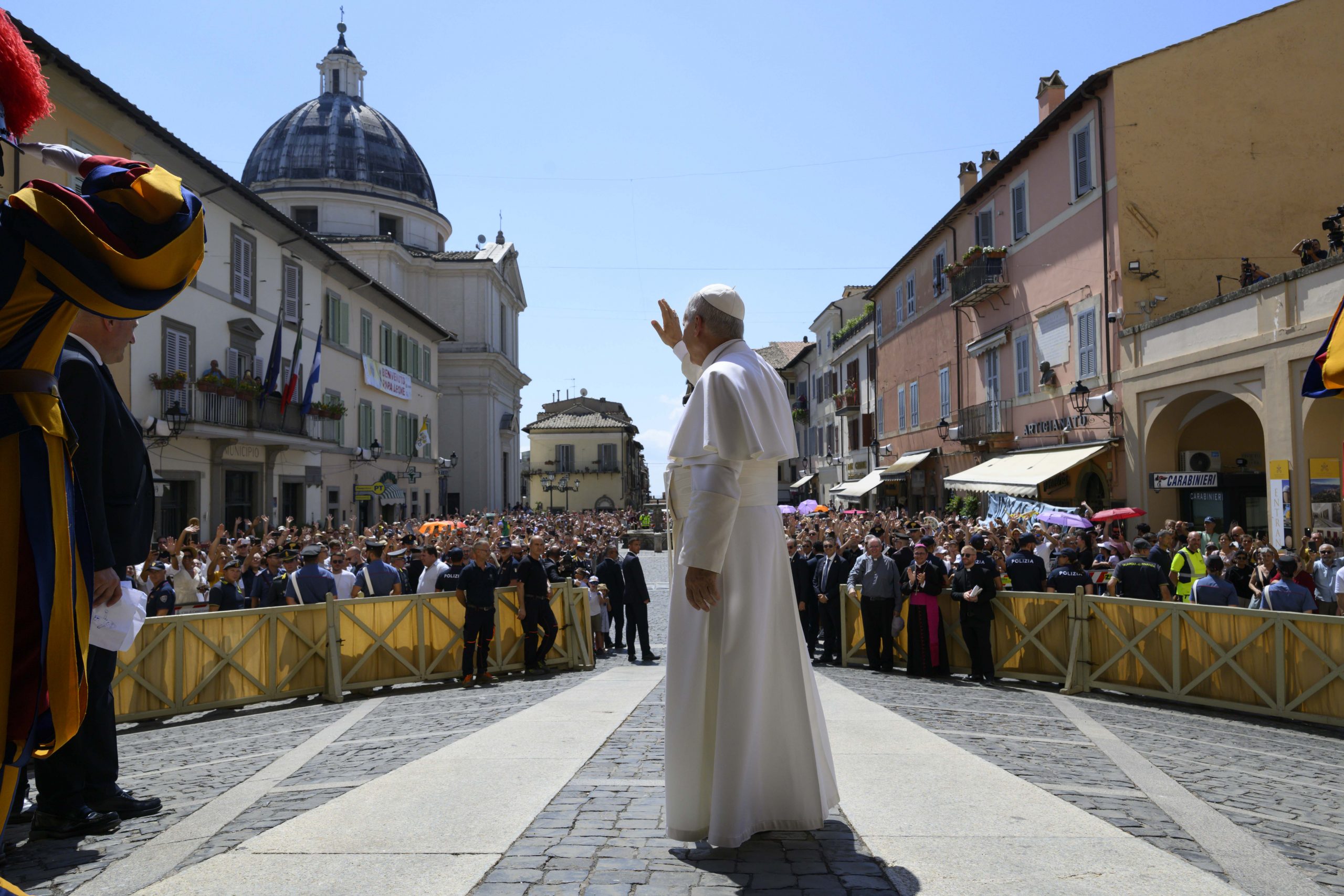
Pope Leo XIV: Violence against Palestinians in West Bank must stop #Catholic In his Sunday Angelus address on Aug. 16, Pope Leo XIV renewed his appeal for peace in the Israel-Palestine conflict, calling for a two-state solution and an end to violence against Palestinians in the West Bank.“I renew my appeal for an end to the ongoing violence against the Palestinian civilian population in the West Bank, and I urgently call on the international community to work toward advancing the two-state solution, for a just and lasting peace,“ Leo said in his address.The pope delivered his Angelus address once more from the Apostolic Palace of Castel Gandolfo after traveling there from the Vatican to celebrate the feast of the Assumption on Aug. 15, for which he also delivered an Angelus address. He will remain there from Aug. 12–18.The Vatican’s longtime support for a 2-state solutionThe pope and the Holy See have consistently called for a two-state solution to the conflict in the Holy Land.In 2025, Leo met separately with the Israeli and Palestinian presidents and discussed the solution with both heads of state.During a Sept. 23 press briefing with reporters at Castel Gandolfo, the pope highlighted the Vatican’s long-standing support for the two-state solution.“The Holy See has supported the two-state solution for many years,” the pope recalled, pointing out that the Vatican formally recognized Palestine in 2015 with the signing of the Comprehensive Agreement. “The Holy See recognized the two-state solution some time ago. That is clear: We must seek a path that respects all peoples.”Despite challenges, each person has own place with the FatherDuring his Angelus, Leo also preached on the Gospel of the day, recounting Jesus healing the daughter of a Canaanite woman. The pope noted the woman’s persistence and faith in seeking a miracle, despite Jesus and his disciples initially refusing her.“The disciples see her as a nuisance, and Jesus himself resists her pleas,” the pope said. “Reflecting upon this, we can understand Jesus’ obedience in fulfilling his mission by allowing himself to be moved by what he sees and hears. Finally, he says to her: ‘Woman, great is your faith! Let it be done for you as you wish.’”From her persistence, Leo explained, the faithful can learn “humility and determination” and that “each person has his or her own place with the Father.”Tweet

Pope Leo XIV: Violence against Palestinians in West Bank must stop #Catholic In his Sunday Angelus address on Aug. 16, Pope Leo XIV renewed his appeal for peace in the Israel-Palestine conflict, calling for a two-state solution and an end to violence against Palestinians in the West Bank.“I renew my appeal for an end to the ongoing violence against the Palestinian civilian population in the West Bank, and I urgently call on the international community to work toward advancing the two-state solution, for a just and lasting peace,“ Leo said in his address.The pope delivered his Angelus address once more from the Apostolic Palace of Castel Gandolfo after traveling there from the Vatican to celebrate the feast of the Assumption on Aug. 15, for which he also delivered an Angelus address. He will remain there from Aug. 12–18.The Vatican’s longtime support for a 2-state solutionThe pope and the Holy See have consistently called for a two-state solution to the conflict in the Holy Land.In 2025, Leo met separately with the Israeli and Palestinian presidents and discussed the solution with both heads of state.During a Sept. 23 press briefing with reporters at Castel Gandolfo, the pope highlighted the Vatican’s long-standing support for the two-state solution.“The Holy See has supported the two-state solution for many years,” the pope recalled, pointing out that the Vatican formally recognized Palestine in 2015 with the signing of the Comprehensive Agreement. “The Holy See recognized the two-state solution some time ago. That is clear: We must seek a path that respects all peoples.”Despite challenges, each person has own place with the FatherDuring his Angelus, Leo also preached on the Gospel of the day, recounting Jesus healing the daughter of a Canaanite woman. The pope noted the woman’s persistence and faith in seeking a miracle, despite Jesus and his disciples initially refusing her.“The disciples see her as a nuisance, and Jesus himself resists her pleas,” the pope said. “Reflecting upon this, we can understand Jesus’ obedience in fulfilling his mission by allowing himself to be moved by what he sees and hears. Finally, he says to her: ‘Woman, great is your faith! Let it be done for you as you wish.’”From her persistence, Leo explained, the faithful can learn “humility and determination” and that “each person has his or her own place with the Father.”Tweet

During his Aug. 16 Angelus address at Castel Gandolfo, the pontiff urged a 2-state solution in the Israel-Palestine conflict.
Read More
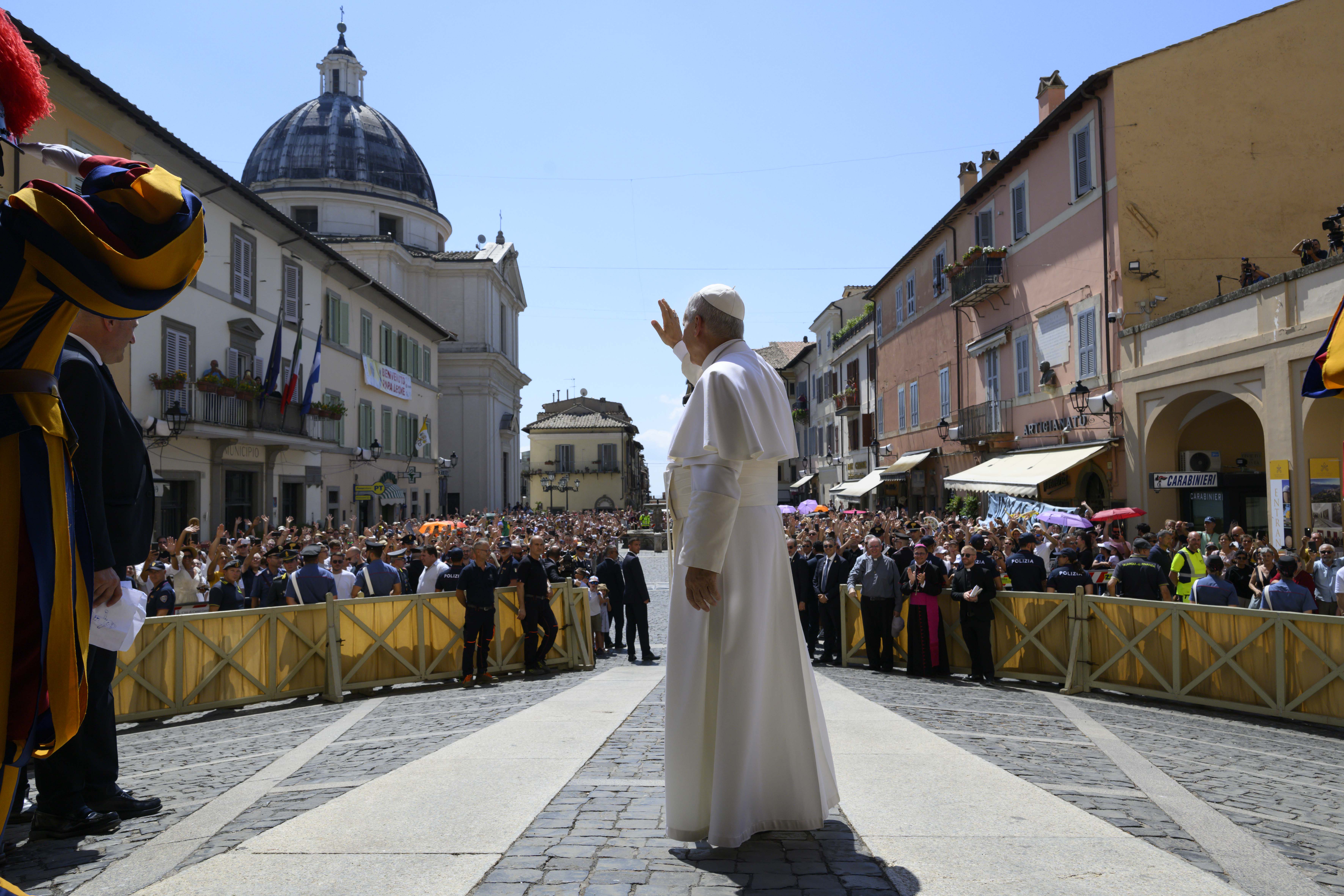
Medicaid formally ends funds for ‘sex-rejecting procedures’ for minors with final rule #Catholic The Centers for Medicare & Medicaid Services (CMS) announced it has implemented a final rule that formally bans using funds for “sex-rejecting procedures” for minors, which are drugs and surgeries used to facilitate “gender transitions.”According to a CMS news release, this includes puberty blockers, cross-sex hormones, and surgical operations. It states these medical procedures cause irreversible damage, including infertility, impaired sexual function, diminished bone density, altered brain development, and other physiological effects.The move formalizes a policy of President Donald Trump’s administration to prevent minors from accessing these drugs and surgeries. In January 2025, Trump signed an executive order that instructed agencies to adopt rules to “end the chemical and surgical mutilation of children.”The final rule includes a tapering-off period of up to six months for children who are receiving cross-sex hormones, which allows them to be gradually weaned off the medicine. It does not affect mental health services.“Children deserve our protection, not experimental interventions that pose serious risks and convey no proven benefits,” CMS Administrator Dr. Mehmet Oz said in a statement.“By cutting off federal funds for these sex-rejecting procedures, we’re following the science, saving taxpayer dollars, and, most importantly, protecting children from potentially irreversible harm so they can truly flourish,” he said.Rachel N. Morrison, director of the Ethics and Public Policy Center’s Administrative State Accountability Project, told EWTN News that government funding should never support “harmful, sterilizing, and often irreversible sex-rejecting procedures.”“I am grateful to CMS and the Trump administration for their efforts to combat gender ideology, protect children from the harms [of] sex-rejecting procedures, and advance policies that reflect a true understanding of the nature of the human person,” she said.The Church’s positionThe U.S. Conference of Catholic Bishops (USCCB) referred EWTN News to a Feb. 17 letter to CMS, which said the proposed ban on federal funding “aligns with Catholic teaching on the nature of the human person” and “reflects true distinctions between the sexes.” “Rejection of our God-given bodies, such as by modifying them to appear as the opposite sex, is a grave matter, and when done with full knowledge and complete consent, is a grave sin,” the letter states.In November 2025, the USCCB published a new edition of its ”Ethical and Religious Directives for Catholic Health Care Services” guidelines, which prohibit Catholic institutions from providing treatments that “aim not to restore but rather to alter the fundamental order of the human body in its form or function” such as “interventions that aim to transform sexual characteristics of a human body into those of the opposite sex (or to nullify sexual characteristics…).”Joseph Meaney, past president and senior ethicist for the National Catholic Bioethics Center (NCBC), told EWTN News CMS “should be applauded for putting an end to federal taxpayer funding of transgender procedures on children.”“There is substantial agreement between U.S. government policy and Catholic teaching in this area of healthcare policy,” he said.Father Tadeusz Pacholczyk, an NCBC senior ethicist, told EWTN News that the implementation of the rule “is very sensible and long overdue.”“Countless youth have already been railroaded along this path, placing themselves at great risk and damaging their bodies as they struggle with this confusion,” Pacholczyk said. “Once a young person steps onto that train, they often become ‘regular business customers,’ with a lifelong dependence on the continued prescribing of hormones and additional cycles of expensive surgeries.”He said tax money should not pay for “a hysterectomy on a girl who wants to live as a boy, nor to provide breast implants into a boy who thinks he is a girl.” He said children “deserve far better from the world of medicine and psychiatry.”“They are entitled to solid psychotherapy as a means of assisting them to reintegrate their subjective gender identity with their objective lifelong biology so they can recognize and embrace the beautiful gift of the biological sex they have been endowed with from the beginning,” Pacholczyk said.

Medicaid formally ends funds for ‘sex-rejecting procedures’ for minors with final rule #Catholic The Centers for Medicare & Medicaid Services (CMS) announced it has implemented a final rule that formally bans using funds for “sex-rejecting procedures” for minors, which are drugs and surgeries used to facilitate “gender transitions.”According to a CMS news release, this includes puberty blockers, cross-sex hormones, and surgical operations. It states these medical procedures cause irreversible damage, including infertility, impaired sexual function, diminished bone density, altered brain development, and other physiological effects.The move formalizes a policy of President Donald Trump’s administration to prevent minors from accessing these drugs and surgeries. In January 2025, Trump signed an executive order that instructed agencies to adopt rules to “end the chemical and surgical mutilation of children.”The final rule includes a tapering-off period of up to six months for children who are receiving cross-sex hormones, which allows them to be gradually weaned off the medicine. It does not affect mental health services.“Children deserve our protection, not experimental interventions that pose serious risks and convey no proven benefits,” CMS Administrator Dr. Mehmet Oz said in a statement.“By cutting off federal funds for these sex-rejecting procedures, we’re following the science, saving taxpayer dollars, and, most importantly, protecting children from potentially irreversible harm so they can truly flourish,” he said.Rachel N. Morrison, director of the Ethics and Public Policy Center’s Administrative State Accountability Project, told EWTN News that government funding should never support “harmful, sterilizing, and often irreversible sex-rejecting procedures.”“I am grateful to CMS and the Trump administration for their efforts to combat gender ideology, protect children from the harms [of] sex-rejecting procedures, and advance policies that reflect a true understanding of the nature of the human person,” she said.The Church’s positionThe U.S. Conference of Catholic Bishops (USCCB) referred EWTN News to a Feb. 17 letter to CMS, which said the proposed ban on federal funding “aligns with Catholic teaching on the nature of the human person” and “reflects true distinctions between the sexes.” “Rejection of our God-given bodies, such as by modifying them to appear as the opposite sex, is a grave matter, and when done with full knowledge and complete consent, is a grave sin,” the letter states.In November 2025, the USCCB published a new edition of its ”Ethical and Religious Directives for Catholic Health Care Services” guidelines, which prohibit Catholic institutions from providing treatments that “aim not to restore but rather to alter the fundamental order of the human body in its form or function” such as “interventions that aim to transform sexual characteristics of a human body into those of the opposite sex (or to nullify sexual characteristics…).”Joseph Meaney, past president and senior ethicist for the National Catholic Bioethics Center (NCBC), told EWTN News CMS “should be applauded for putting an end to federal taxpayer funding of transgender procedures on children.”“There is substantial agreement between U.S. government policy and Catholic teaching in this area of healthcare policy,” he said.Father Tadeusz Pacholczyk, an NCBC senior ethicist, told EWTN News that the implementation of the rule “is very sensible and long overdue.”“Countless youth have already been railroaded along this path, placing themselves at great risk and damaging their bodies as they struggle with this confusion,” Pacholczyk said. “Once a young person steps onto that train, they often become ‘regular business customers,’ with a lifelong dependence on the continued prescribing of hormones and additional cycles of expensive surgeries.”He said tax money should not pay for “a hysterectomy on a girl who wants to live as a boy, nor to provide breast implants into a boy who thinks he is a girl.” He said children “deserve far better from the world of medicine and psychiatry.”“They are entitled to solid psychotherapy as a means of assisting them to reintegrate their subjective gender identity with their objective lifelong biology so they can recognize and embrace the beautiful gift of the biological sex they have been endowed with from the beginning,” Pacholczyk said.

The development formalizes a policy of the Trump administration. The U.S. Conference of Catholic Bishops has urged government action in this area.
Read More
Texas Children’s Hospital fined for performing illegal ‘sex-rejecting’ procedures on minors #Catholic The historic settlement agreement between Texas Children’s Hospital, the U.S. Department of Justice (DOJ), and the state of Texas has been fully executed, Texas Attorney General Ken Paxton said this week.Under the terms of the settlement agreement, first announced by Paxton’s office in May, Texas Children’s, the largest children’s hospital in the United States, said it would no longer provide “gender-transition” interventions, including puberty blockers and cross-sex hormones, to minors, per Texas law.“This historic settlement is a resounding defeat for the radical gender ideology that has preyed on Texas children under the guise of ‘care,’” Paxton said in a press release Aug. 5.Per the executed agreement, Texas Children’s “will pay a total of  million to resolve these claims,” with ,576,000 going to the state of Texas. It will also fund, for five years, a detransition clinic offering free restorative medical care to patients who previously underwent such procedures. The clinic must open by the end of October.“Texas Children’s has agreed to pay millions back to Texas,” Paxton said. “The detransition clinic, which is the first of its kind, must open within months. Activist doctors who harmed children have been fired.”The agreement also required the permanent termination and revocation of privileges for five physicians who performed these interventions.The hospital is permanently barred from rehiring or credentialing the doctors and must implement new compliance measures, including bylaw changes that will automatically revoke privileges for any physician who violates Texas law prohibiting such procedures on children.“This settlement sends an unmistakable message,” Paxton said. “If you put radical ideology over childrenʼs health, my office will go after you. We will continue to lead the way in stopping the far-left’s radical gender agenda.”The settlement agreement resolves a yearslong investigation of the hospital by the DOJ and the state of Texas that began after whistleblower allegations surfaced claiming the hospital had continued performing sex-change procedures on minors in secret even after state lawmakers made such procedures illegal.The Justice Department said in May that the Houston-based hospital had agreed to pay millions in civil penalties and damages for allegedly falsely billing Medicaid and other insurers for “pediatric sex-rejecting procedures.”The federal government had alleged that the hospital violated the Federal Food, Drug, and Cosmetic Act, the False Claims Act, and federal fraud and conspiracy laws.Following the publication of a directive by Texas Gov. Greg Abbott that transgender procedures on minors that could be considered “child abuse” under existing state law, Texas Children’s announced in 2022 that it would cease “sex-change” therapies and procedures, citing concerns that these practices were potentially illegal.In 2023 Texas passed a law that explicitly banned puberty blockers, cross-sex hormones, and gender-transition surgeries for minors under 18.Nevertheless, at least three doctors associated with Texas Children’s — Richard Roberts, David Paul, and Kristy Rialon — continued to perform “sex-rejecting” procedures on children throughout 2022 and 2023, according to whistleblower evidence published by Christopher Rufo, a fellow at the Manhattan Institute.Rufo claimed that Rialon had been performing surgeries on minors ranging in age from 15 to as young as 1.Calling the settlement “historic,” Paxton said in May that it “will ensure that the deranged child mutilators who hurt our kids are fired and held accountable.”According to Acting Attorney General Todd Blanche, the DOJ “will use every weapon at its disposal to end the destructive and discredited practice of so-called ‘gender-affirming care’ for children.”The Department of Justice noted that Texas Children’s cooperated with the investigation and took proactive steps that contributed to the resolution. The claims resolved in the settlement remain allegations, with no determination of liability.“I am grateful that Texas Children’s wants to be part of the solution and no longer the problem,” said Brett Shumate, assistant attorney general for the Civil Division.

Texas Children’s Hospital fined for performing illegal ‘sex-rejecting’ procedures on minors #Catholic The historic settlement agreement between Texas Children’s Hospital, the U.S. Department of Justice (DOJ), and the state of Texas has been fully executed, Texas Attorney General Ken Paxton said this week.Under the terms of the settlement agreement, first announced by Paxton’s office in May, Texas Children’s, the largest children’s hospital in the United States, said it would no longer provide “gender-transition” interventions, including puberty blockers and cross-sex hormones, to minors, per Texas law.“This historic settlement is a resounding defeat for the radical gender ideology that has preyed on Texas children under the guise of ‘care,’” Paxton said in a press release Aug. 5.Per the executed agreement, Texas Children’s “will pay a total of $10 million to resolve these claims,” with $8,576,000 going to the state of Texas. It will also fund, for five years, a detransition clinic offering free restorative medical care to patients who previously underwent such procedures. The clinic must open by the end of October.“Texas Children’s has agreed to pay millions back to Texas,” Paxton said. “The detransition clinic, which is the first of its kind, must open within months. Activist doctors who harmed children have been fired.”The agreement also required the permanent termination and revocation of privileges for five physicians who performed these interventions.The hospital is permanently barred from rehiring or credentialing the doctors and must implement new compliance measures, including bylaw changes that will automatically revoke privileges for any physician who violates Texas law prohibiting such procedures on children.“This settlement sends an unmistakable message,” Paxton said. “If you put radical ideology over childrenʼs health, my office will go after you. We will continue to lead the way in stopping the far-left’s radical gender agenda.”The settlement agreement resolves a yearslong investigation of the hospital by the DOJ and the state of Texas that began after whistleblower allegations surfaced claiming the hospital had continued performing sex-change procedures on minors in secret even after state lawmakers made such procedures illegal.The Justice Department said in May that the Houston-based hospital had agreed to pay millions in civil penalties and damages for allegedly falsely billing Medicaid and other insurers for “pediatric sex-rejecting procedures.”The federal government had alleged that the hospital violated the Federal Food, Drug, and Cosmetic Act, the False Claims Act, and federal fraud and conspiracy laws.Following the publication of a directive by Texas Gov. Greg Abbott that transgender procedures on minors that could be considered “child abuse” under existing state law, Texas Children’s announced in 2022 that it would cease “sex-change” therapies and procedures, citing concerns that these practices were potentially illegal.In 2023 Texas passed a law that explicitly banned puberty blockers, cross-sex hormones, and gender-transition surgeries for minors under 18.Nevertheless, at least three doctors associated with Texas Children’s — Richard Roberts, David Paul, and Kristy Rialon — continued to perform “sex-rejecting” procedures on children throughout 2022 and 2023, according to whistleblower evidence published by Christopher Rufo, a fellow at the Manhattan Institute.Rufo claimed that Rialon had been performing surgeries on minors ranging in age from 15 to as young as 1.Calling the settlement “historic,” Paxton said in May that it “will ensure that the deranged child mutilators who hurt our kids are fired and held accountable.”According to Acting Attorney General Todd Blanche, the DOJ “will use every weapon at its disposal to end the destructive and discredited practice of so-called ‘gender-affirming care’ for children.”The Department of Justice noted that Texas Children’s cooperated with the investigation and took proactive steps that contributed to the resolution. The claims resolved in the settlement remain allegations, with no determination of liability.“I am grateful that Texas Children’s wants to be part of the solution and no longer the problem,” said Brett Shumate, assistant attorney general for the Civil Division.

Texas Children’s will pay $10 million to resolve the claims, with $8,576,000 going to the state of Texas, as well as fund, for five years, a first-of-its kind detransition clinic.


Read More
Michigan ends restriction on Catholic counselors who treat kids with gender dysphoria #Catholic Catholic counselors in Michigan who offer Catholic-based “talk therapy” to children who struggle with gender dysphoria and gender identity will be allowed to continue their services, according to a federal court order issued on July 31.Government officials in Michigan have agreed they will not enforce the state ban on "conversion therapy” on the counselors who work for Catholic Charities of Jackson, Lenawee, and Hillsdale Counties or any other counselors engaged in “talk therapy.”The Catholic Charities affiliate sued Democratic Gov. Gretchen Whitmer and other state officials after the governor signed into law a ban on “conversion therapy.” This prohibited treatments that seek to “change an individual’s sexual orientation or gender identity.” This includes “efforts to change behavior or gender expression.”According to the law, counselors were allowed to offer “acceptance, support, or understanding” of a child who self-identifies with a gender inconsistent with his or her sex. The lawsuit filed by the Catholic Charities affiliate argued the law forced them to “affirm” that the child could identify with a gender that is inconsistent with his or her sex, which conflicts with Catholic teaching.The Catechism of the Catholic Church teaches that “everyone, man and woman, should acknowledge and accept his sexual identity.” The Vatican’s 2019 document “Male and Female He Created Them” teaches that sexual identity is a reality “given” through one’s biological and physiological nature. Officials in Michigan consented to a court order that acknowledges that the law — as enforced against the Catholic Charities affiliate — violates the counselors’ First Amendment right to freedom of speech.According to the court order, the state cannot enforce this law against the Catholic counselors or any other counselors in the state if the treatment “consists exclusively of talking.” The order is permanent and took effect immediately, upon the signature of Judge Jane M. Beckering.The Catholic Charities affiliate was represented by lawyers at the Becket Fund. Luke Goodrich, senior counsel at Becket and lead attorney for the counselors, said in a statement that the order is “a major victory for children, counselors, and common sense.”“Kids who are hurting deserve compassion, not a one-way ticket to harmful drugs, hormones, and surgery,” he said. “Now counselors can offer compassionate counseling without fearing that state bureaucrats will come knocking.”This agreement comes four months after the U.S. Supreme Court ruled 8-1 that a similar ban on “conversion therapy” in Colorado violated the First Amendment rights of counselors, warning the state-level bans “suppress speech based on viewpoint.”Kimberly Bush, a spokesperson for Michigan’s attorney general’s office, said in a statement to EWTN News that Michigan entered into the agreement because of the Supreme Court ruling, but added: “We remain deeply disappointed in this decision and have grave concerns for the implications this could bring for the safety and welfare of Michigan’s children.”A spokesperson for Whitmer also expressed disappointment in the agreement in a statement to EWTN News."Governor Whitmer believes that every young person deserves the right to grow up safe, supported, and free to be themselves,” the spokesperson said.“This order is disappointing and represents a step back for the LGBTQ+ community,” the spokesperson added. “Michigan will never support any practice that harms or shames LGBTQ+ youth. The governor will continue to fight to ensure that LGBTQ+ individuals are protected from attacks and that their voices are heard.”In June, Oregonʼs Board of Licensed Professional Counselors and Therapists withdrew disciplinary action against Catholic counselors who engaged in similar talk therapy, citing the Supreme Court decision as its reason.

Michigan ends restriction on Catholic counselors who treat kids with gender dysphoria #Catholic Catholic counselors in Michigan who offer Catholic-based “talk therapy” to children who struggle with gender dysphoria and gender identity will be allowed to continue their services, according to a federal court order issued on July 31.Government officials in Michigan have agreed they will not enforce the state ban on "conversion therapy” on the counselors who work for Catholic Charities of Jackson, Lenawee, and Hillsdale Counties or any other counselors engaged in “talk therapy.”The Catholic Charities affiliate sued Democratic Gov. Gretchen Whitmer and other state officials after the governor signed into law a ban on “conversion therapy.” This prohibited treatments that seek to “change an individual’s sexual orientation or gender identity.” This includes “efforts to change behavior or gender expression.”According to the law, counselors were allowed to offer “acceptance, support, or understanding” of a child who self-identifies with a gender inconsistent with his or her sex. The lawsuit filed by the Catholic Charities affiliate argued the law forced them to “affirm” that the child could identify with a gender that is inconsistent with his or her sex, which conflicts with Catholic teaching.The Catechism of the Catholic Church teaches that “everyone, man and woman, should acknowledge and accept his sexual identity.” The Vatican’s 2019 document “Male and Female He Created Them” teaches that sexual identity is a reality “given” through one’s biological and physiological nature. Officials in Michigan consented to a court order that acknowledges that the law — as enforced against the Catholic Charities affiliate — violates the counselors’ First Amendment right to freedom of speech.According to the court order, the state cannot enforce this law against the Catholic counselors or any other counselors in the state if the treatment “consists exclusively of talking.” The order is permanent and took effect immediately, upon the signature of Judge Jane M. Beckering.The Catholic Charities affiliate was represented by lawyers at the Becket Fund. Luke Goodrich, senior counsel at Becket and lead attorney for the counselors, said in a statement that the order is “a major victory for children, counselors, and common sense.”“Kids who are hurting deserve compassion, not a one-way ticket to harmful drugs, hormones, and surgery,” he said. “Now counselors can offer compassionate counseling without fearing that state bureaucrats will come knocking.”This agreement comes four months after the U.S. Supreme Court ruled 8-1 that a similar ban on “conversion therapy” in Colorado violated the First Amendment rights of counselors, warning the state-level bans “suppress speech based on viewpoint.”Kimberly Bush, a spokesperson for Michigan’s attorney general’s office, said in a statement to EWTN News that Michigan entered into the agreement because of the Supreme Court ruling, but added: “We remain deeply disappointed in this decision and have grave concerns for the implications this could bring for the safety and welfare of Michigan’s children.”A spokesperson for Whitmer also expressed disappointment in the agreement in a statement to EWTN News."Governor Whitmer believes that every young person deserves the right to grow up safe, supported, and free to be themselves,” the spokesperson said.“This order is disappointing and represents a step back for the LGBTQ+ community,” the spokesperson added. “Michigan will never support any practice that harms or shames LGBTQ+ youth. The governor will continue to fight to ensure that LGBTQ+ individuals are protected from attacks and that their voices are heard.”In June, Oregonʼs Board of Licensed Professional Counselors and Therapists withdrew disciplinary action against Catholic counselors who engaged in similar talk therapy, citing the Supreme Court decision as its reason.

A Catholic Charities affiliate sued Democratic Gov. Gretchen Whitmer and other state officials after the governor signed into law a ban on “conversion therapy.”

Read More
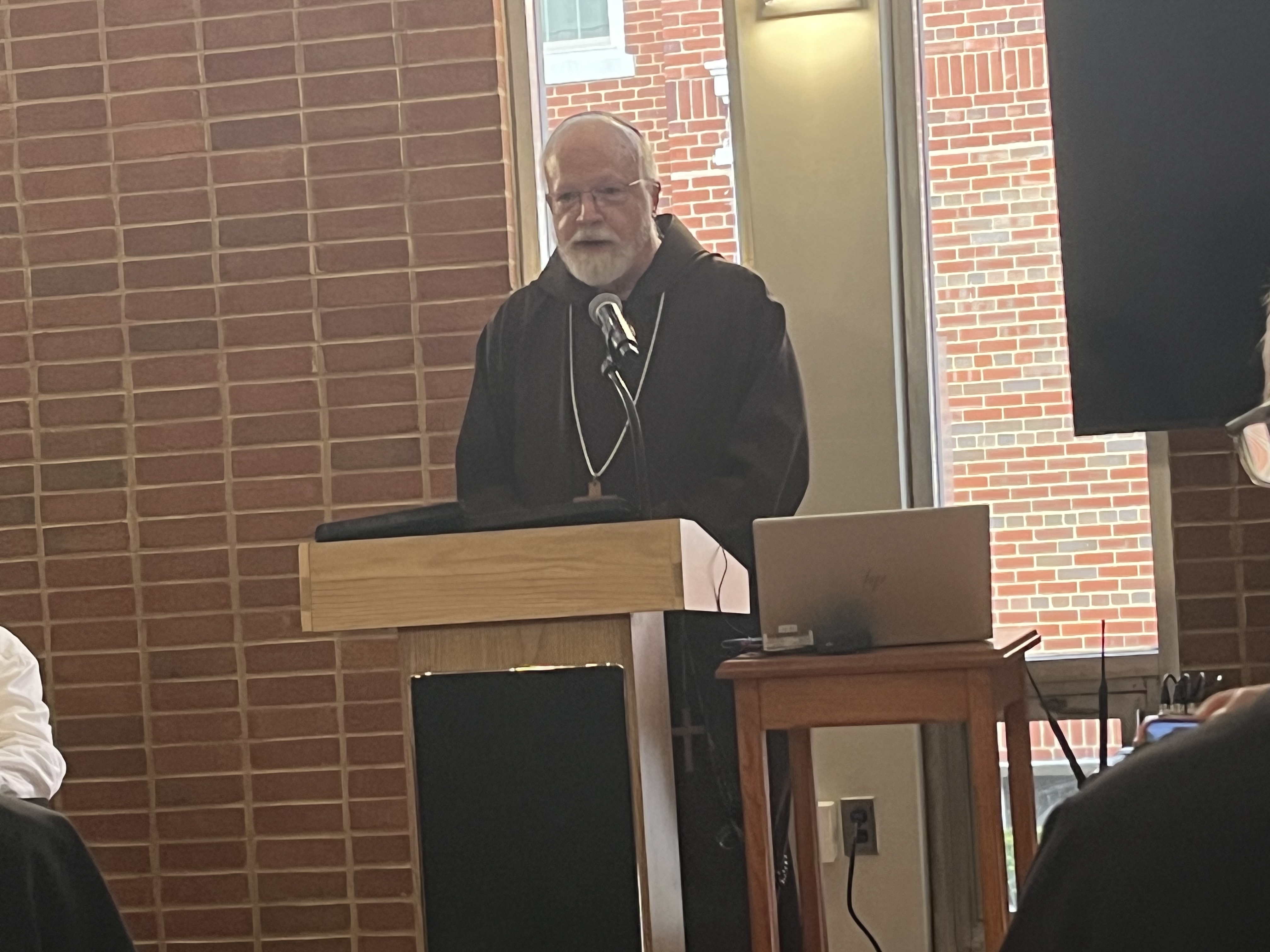
Cardinal O’Malley at Catholic-Orthodox conference: ‘Come together and pray for unity’ #Catholic WASHINGTON — Cardinal Seán Patrick OʼMalley, retired archbishop of Boston, encouraged Catholic and Eastern Orthodox Christians to pray together for reunification at a joint conference focused on healing the nearly 1,000-year schism between the churches.“Come together and pray for unity,” O’Malley said at the conference, hosted by the Orientale Lumen Foundation at the retreat house for the St. John Paul II National Shrine on July 13–15.Speakers included Roman Catholic, Eastern Catholic, and Eastern Orthodox bishops, and a few dozen laity and clergy focused on ecumenism attended. Along with O’Malley, speakers included Archbishop Flavio Pace — secretary of the Vatican’s Dicastery for Promoting Christian Unity — and Metropolitan Tikhon Mollard, primate of the Orthodox Church in America (OCA).O’Malley encouraged concrete steps to integrate Catholic and Orthodox communities, one of the most important of which was “praying together.” Just prior to his speech, the Catholic and Orthodox clergy — including O’Malley, Pace, and Mollard — prayed daily vespers together in the form used in Eastern churches.The cardinal, speaking to those gathered, said unity will ultimately be achieved as a gift to the faithful granted by Christ and will come about “how he wills [it].” He said he considers joint prayer to be crucial because it is the Holy Spirit who will “illuminate the way” toward East-West communion.‘Work for unity’In his address, O’Malley discussed his concern with the disunity of Christianity, which he said “weakens our ability [as Christians] to proclaim the Gospel with coherence and authority.”He recalled his early work in the 1970s with the Order of Friars Minor Capuchin. The order was deeply involved in missionary work in Papua New Guinea. Although O’Malley himself was not a missionary there, he spoke about conversations with colleagues who were working with people accepting Christianity in large numbers.O’Malley noted that when new converts had learned about the various Christian denominations, many felt “sad and embarrassed.” Although many Christians view the disunity as “normative,” he said, the people of Papua New Guinea correctly recognized it as “scandalous.”“All disciples of Jesus Christ must feel an impulse to work for unity among Christians,” O’Malley said.O’Malley said Catholics should see Orthodoxy as the “greatest possibility of success in this task in fulfilling Christ’s wish so that we all become one so the world may believe.” He noted that the two share “so many saints and devotions” and are more similar to Catholics in theology than any other Christian community.He expressed joy that many Orthodox churches send representatives to meetings held by the Vatican and the U.S. Conference of Catholic Bishops, and that the Catholic Church also sent representatives to the Orthodox Council of Crete in 2016. Yet, he encouraged a stronger bond.O’Malley urged the bodies to “consider the possibility of joint pastoral letters or statements” on issues of mutual agreement like world hunger, euthanasia, and abortion. He said they should establish committees together to organize joint prayer, study sessions, and works of mercy.His idea of unity, he explained, would be “communion without absorption” and said there is a difference between “unity and uniformity.” He said people should look to the Eastern Catholic Churches as a model, saying “they are bridges for reconciliation and laboratories for synodal communion.”Although Rome’s relationship with the Eastern Catholics was not always perfect (O’Malley noted historical attempts at forced Latinization), the cardinal said there is an opportunity to work more closely with Eastern Catholics as part of ecumenical efforts, focused on “greater respect for their uniqueness.”Mollard, speaking from the Orthodox position, echoed O’Malley’s desire for unity and the feeling of pain over continued separation.“It affects the faithful in the parishes and how they live their lives,” the metropolitan said. “And perhaps encourage[s] us all to not just reach out and educate but really inspire in people that faith in Christ and love for the Church can drive … [the path toward] unity.”O’Malley told EWTN News that ecumenism requires “different groups that would be Catholic and Orthodox, working together,” and Church leaders should be “letting people know the progress that has been made in the dialogue.”He said Eastern Orthodox Christians “have the sacraments,” they have apostolic succession, and “the differences are not great.” Although theological disputes remain a division between Catholicism and Orthodoxy, he said he believes the causes of the schism were more political and cultural.“Most Catholics and Orthodox in the pews are not focused on those fine points of theology,” O’Malley said.Ongoing Vatican ecumenical workMany theological disputes, however, are being hashed out at the highest levels of the Catholic and Eastern Orthodox Churches. Some of the biggest include questions of papal supremacy, primacy, and jurisdiction as well as the language of the Nicene Creed and subsequently certain details about the Holy Trinity.Pace, who flew in from Rome, discussed some of the history and recent progress on ecumenism related to these subjects during his speech, noting that the end goal is “full unity” between the East and the West.
 
 Archbishop Flavio Pace, secretary of the Vatican’s Dicastery for Promoting Christian Unity, speaks at the Orientale Lumen Foundation conference at the retreat house for the St. John Paul II National Shrine in Washington, D.C., on July 15, 2026. | Credit: Tyler Arnold/EWTN News

 
 The Joint International Commission for Theological Dialogue between the Roman Catholic Church and the Orthodox Church, formed in 1980, created two subcommittees in 2024. One focuses on infallibility, which is the current priority. The other is about the dispute about the Nicene Creed."We have to prepare a very good draft,” Pace told EWTN News.He said once the subcommittee completes its draft on infallibility, the body will consider a call for a full meeting for approval. He said the subcommittee must “arrive to a good document that the [full committee] can discuss and approve.”The First Vatican Council teaches that the pope speaks infallibly on matters of faith and morals when defining matters of doctrine and invoking his papal authority, binding the declaration on the entire Church.Bishop Anthony Vrame, a Greek Orthodox bishop and director of Holy Cross Orthodox Press, said in a panel discussion that Orthodoxy recognizes the indefectibility of councils: “When the Church gathers together in council, … no error is possible.” Yet, papal infallibility is different, as it is “designated to one person.”Cardinal Kurt Koch, president of the Vatican’s Dicastery for Promoting Christian Unity, offered a prerecorded video message for the conference, stating that he hopes the eventual documents will be received by the Catholic Church and Eastern Orthodox churches.Koch emphasized the importance of clergy informing the laity when there are developments, so the progress is “not to be remained known only by experts.”

Cardinal O’Malley at Catholic-Orthodox conference: ‘Come together and pray for unity’ #Catholic WASHINGTON — Cardinal Seán Patrick OʼMalley, retired archbishop of Boston, encouraged Catholic and Eastern Orthodox Christians to pray together for reunification at a joint conference focused on healing the nearly 1,000-year schism between the churches.“Come together and pray for unity,” O’Malley said at the conference, hosted by the Orientale Lumen Foundation at the retreat house for the St. John Paul II National Shrine on July 13–15.Speakers included Roman Catholic, Eastern Catholic, and Eastern Orthodox bishops, and a few dozen laity and clergy focused on ecumenism attended. Along with O’Malley, speakers included Archbishop Flavio Pace — secretary of the Vatican’s Dicastery for Promoting Christian Unity — and Metropolitan Tikhon Mollard, primate of the Orthodox Church in America (OCA).O’Malley encouraged concrete steps to integrate Catholic and Orthodox communities, one of the most important of which was “praying together.” Just prior to his speech, the Catholic and Orthodox clergy — including O’Malley, Pace, and Mollard — prayed daily vespers together in the form used in Eastern churches.The cardinal, speaking to those gathered, said unity will ultimately be achieved as a gift to the faithful granted by Christ and will come about “how he wills [it].” He said he considers joint prayer to be crucial because it is the Holy Spirit who will “illuminate the way” toward East-West communion.‘Work for unity’In his address, O’Malley discussed his concern with the disunity of Christianity, which he said “weakens our ability [as Christians] to proclaim the Gospel with coherence and authority.”He recalled his early work in the 1970s with the Order of Friars Minor Capuchin. The order was deeply involved in missionary work in Papua New Guinea. Although O’Malley himself was not a missionary there, he spoke about conversations with colleagues who were working with people accepting Christianity in large numbers.O’Malley noted that when new converts had learned about the various Christian denominations, many felt “sad and embarrassed.” Although many Christians view the disunity as “normative,” he said, the people of Papua New Guinea correctly recognized it as “scandalous.”“All disciples of Jesus Christ must feel an impulse to work for unity among Christians,” O’Malley said.O’Malley said Catholics should see Orthodoxy as the “greatest possibility of success in this task in fulfilling Christ’s wish so that we all become one so the world may believe.” He noted that the two share “so many saints and devotions” and are more similar to Catholics in theology than any other Christian community.He expressed joy that many Orthodox churches send representatives to meetings held by the Vatican and the U.S. Conference of Catholic Bishops, and that the Catholic Church also sent representatives to the Orthodox Council of Crete in 2016. Yet, he encouraged a stronger bond.O’Malley urged the bodies to “consider the possibility of joint pastoral letters or statements” on issues of mutual agreement like world hunger, euthanasia, and abortion. He said they should establish committees together to organize joint prayer, study sessions, and works of mercy.His idea of unity, he explained, would be “communion without absorption” and said there is a difference between “unity and uniformity.” He said people should look to the Eastern Catholic Churches as a model, saying “they are bridges for reconciliation and laboratories for synodal communion.”Although Rome’s relationship with the Eastern Catholics was not always perfect (O’Malley noted historical attempts at forced Latinization), the cardinal said there is an opportunity to work more closely with Eastern Catholics as part of ecumenical efforts, focused on “greater respect for their uniqueness.”Mollard, speaking from the Orthodox position, echoed O’Malley’s desire for unity and the feeling of pain over continued separation.“It affects the faithful in the parishes and how they live their lives,” the metropolitan said. “And perhaps encourage[s] us all to not just reach out and educate but really inspire in people that faith in Christ and love for the Church can drive … [the path toward] unity.”O’Malley told EWTN News that ecumenism requires “different groups that would be Catholic and Orthodox, working together,” and Church leaders should be “letting people know the progress that has been made in the dialogue.”He said Eastern Orthodox Christians “have the sacraments,” they have apostolic succession, and “the differences are not great.” Although theological disputes remain a division between Catholicism and Orthodoxy, he said he believes the causes of the schism were more political and cultural.“Most Catholics and Orthodox in the pews are not focused on those fine points of theology,” O’Malley said.Ongoing Vatican ecumenical workMany theological disputes, however, are being hashed out at the highest levels of the Catholic and Eastern Orthodox Churches. Some of the biggest include questions of papal supremacy, primacy, and jurisdiction as well as the language of the Nicene Creed and subsequently certain details about the Holy Trinity.Pace, who flew in from Rome, discussed some of the history and recent progress on ecumenism related to these subjects during his speech, noting that the end goal is “full unity” between the East and the West. Archbishop Flavio Pace, secretary of the Vatican’s Dicastery for Promoting Christian Unity, speaks at the Orientale Lumen Foundation conference at the retreat house for the St. John Paul II National Shrine in Washington, D.C., on July 15, 2026. | Credit: Tyler Arnold/EWTN News The Joint International Commission for Theological Dialogue between the Roman Catholic Church and the Orthodox Church, formed in 1980, created two subcommittees in 2024. One focuses on infallibility, which is the current priority. The other is about the dispute about the Nicene Creed."We have to prepare a very good draft,” Pace told EWTN News.He said once the subcommittee completes its draft on infallibility, the body will consider a call for a full meeting for approval. He said the subcommittee must “arrive to a good document that the [full committee] can discuss and approve.”The First Vatican Council teaches that the pope speaks infallibly on matters of faith and morals when defining matters of doctrine and invoking his papal authority, binding the declaration on the entire Church.Bishop Anthony Vrame, a Greek Orthodox bishop and director of Holy Cross Orthodox Press, said in a panel discussion that Orthodoxy recognizes the indefectibility of councils: “When the Church gathers together in council, … no error is possible.” Yet, papal infallibility is different, as it is “designated to one person.”Cardinal Kurt Koch, president of the Vatican’s Dicastery for Promoting Christian Unity, offered a prerecorded video message for the conference, stating that he hopes the eventual documents will be received by the Catholic Church and Eastern Orthodox churches.Koch emphasized the importance of clergy informing the laity when there are developments, so the progress is “not to be remained known only by experts.”

Cardinal Seán O’Malley discussed ways in which Catholics and Orthodox Christians can build closer bonds. Archbishop Flavio Pace discussed ongoing Vatican efforts to help bring about unity.

Read More
France legalizes euthanasia after forceful push through Parliament #Catholic The French National Assembly gave final approval on July 15 to a bill legalizing euthanasia and assisted suicide, making France one of the few European countries to legalize the practice along with Belgium, the Netherlands, Luxembourg, and Spain. The 291-241 vote came three years after President Emmanuel Macron, who had made it one of his key campaign promises, first opened the question to national debate.The vote ended an unusual parliamentary stalemate between the National Assembly and the Senate. Members of the National Assembly passed the bill three times over the course of 14 months — most recently on June 30 by a vote of 295 to 232 — and senators rejected it just as many times. On July 7, the Senate passed, by a narrow majority of 169 to 164, with 11 abstentions, a preliminary motion to outright reject the bill rather than debate it, and this motion itself called on the government to end the legislative process. Rather than heeding this call, Prime Minister Sébastien Lecornu invoked Article 45 of the Constitution, which allows the government to give the National Assembly the final say when repeated readings fail to produce an agreement between the two chambers. He then referred the bill back to the National Assembly for a fourth and final vote instead of a fourth reading in the Senate.The July 15 vote, however, did not close the matter. On July 14, Lecornu announced he would refer part of the text to the Constitutional Council, a step Senate President Gérard Larcher had also urged, citing in particular how the billʼs conscience clause would interact with health and social care facilities built around end-of-life accompaniment that exclude assisted dying. The council must rule within a month, or eight days if the government asks for an expedited review, meaning the law cannot be promulgated until that review is complete even though the Assembly has now adopted it.The end-of-life law covers both euthanasia, administered by a doctor or nurse, and assisted suicide, in which the patient self-administers a lethal substance, under five cumulative conditions: A person must be an adult, a stable resident of France, diagnosed with a serious and incurable condition, in an advanced or terminal phase of that condition, and suffering in a way current treatment cannot relieve, while remaining able to express a free and informed decision. Self-administration is supposed to be the default rule, with the law providing for intervention by a healthcare professional only when the patient is physically unable to act.A supporting measure aimed at expanding access to palliative care was adopted with much broader support, passing its first reading in the Senate by a vote of 307 to 17. To date, more than 20% of French departments still lack a palliative care unit, according to figures cited repeatedly by the Bishops’ Conference of France during the debate.The push to legalize assisted dying traces back to September 2022, when the National Consultative Ethics Committee reversed its earlier opposition to assisted dying and endorsed an “ethical” application of the practice. A citizens’ panel Macron had convened spent the following winter weighing the question and backed legalization.The French president unveiled the outline of a bill in March 2024, but the initiative stalled when he dissolved the Assembly in June the same year. Deputy Olivier Falorni, who had filed an earlier and unsuccessful end-of-life bill, revived it in 2025.Critics argue the newly adopted framework is among the most permissive of its kind in the world. Grégor Puppinck, a Catholic lawyer and director general of the European Centre for Law and Justice, has published a point-by-point analysis contending that the entire process rests on the judgment of a single physician, who may meet the patient for the first time on the day of the request and need not be the one already treating them.The two additional professionals that physician must consult are chosen by the same person, are not required to examine the patient in person, and may be consulted by videoconference. Puppinck noted the statute sets no minimum interval between the decision and the act itself beyond a two-day reflection window, relatives have no guaranteed right to be informed beforehand, and they cannot challenge the outcome in court. Doctors who object in conscience must still refer patients to a colleague willing to proceed, and private and religious institutions, including nursing homes, must accommodate mobile euthanasia teams under threat of administrative penalties. Oversight, in Puppinck’s account, comes only after death, based on a report filed by the same clinician who carried it out.The founders of the ethics collective Democracy, Ethics, and Solidarity, Laurent Frémont and Emmanuel Hirsch, wrote in Le Journal du Dimanche that the law’s eligibility criteria — primarily a “serious and incurable condition” causing “unbearable suffering,” are defined vaguely enough that a strict medical interpretation could make more than 1 million people eligible, including patients with chronic illnesses, psychiatric disorders, or advanced age, without requiring a prior written request, a peer review by medical colleagues, or a psychiatric evaluation.A 2025 study by the Fondation pour l’innovation politique estimated the measure could save the state around 1.4 billion euros (.6 billion) a year in health, eldercare, and pension spending, a projection critics have cited as evidence of the pressures vulnerable and elderly patients could face once the law takes effect.The French bishops’ conference called the text a threat to “the most fragile” among French citizens in a statement issued in May 2025 ahead of the Assembly’s first vote on the bill. The archbishop of Paris, Laurent Ulrich, has repeatedly urged lawmakers to reconsider their position, asserting that true solidarity is built through caring for others rather than through death. “More than assistance in dying, our society needs assistance in living,” he has repeatedly stated.In a video appeal to lawmakers released before the vote, Archbishop Vincent Jordy of Tours invoked François Rabelais’ centuries-old warning that “science without conscience is but the ruin of the soul.” What is underway, he said, is “an anthropological shift,” a new way of viewing life and its end that will gradually reshape the country, touching caregivers, families, people with disabilities, and the relationship between generations. He pointed to the Netherlands, where regulators had layered on safeguards for two decades and where health officials confirmed in June that a child under 12 had been euthanized for the first time, under a 2024 expansion of the law to children between the ages of 1 and 12. Making a law, Jordy said, is also opening doors toward things “one had perhaps not imagined” when it was written.

France legalizes euthanasia after forceful push through Parliament #Catholic The French National Assembly gave final approval on July 15 to a bill legalizing euthanasia and assisted suicide, making France one of the few European countries to legalize the practice along with Belgium, the Netherlands, Luxembourg, and Spain. The 291-241 vote came three years after President Emmanuel Macron, who had made it one of his key campaign promises, first opened the question to national debate.The vote ended an unusual parliamentary stalemate between the National Assembly and the Senate. Members of the National Assembly passed the bill three times over the course of 14 months — most recently on June 30 by a vote of 295 to 232 — and senators rejected it just as many times. On July 7, the Senate passed, by a narrow majority of 169 to 164, with 11 abstentions, a preliminary motion to outright reject the bill rather than debate it, and this motion itself called on the government to end the legislative process. Rather than heeding this call, Prime Minister Sébastien Lecornu invoked Article 45 of the Constitution, which allows the government to give the National Assembly the final say when repeated readings fail to produce an agreement between the two chambers. He then referred the bill back to the National Assembly for a fourth and final vote instead of a fourth reading in the Senate.The July 15 vote, however, did not close the matter. On July 14, Lecornu announced he would refer part of the text to the Constitutional Council, a step Senate President Gérard Larcher had also urged, citing in particular how the billʼs conscience clause would interact with health and social care facilities built around end-of-life accompaniment that exclude assisted dying. The council must rule within a month, or eight days if the government asks for an expedited review, meaning the law cannot be promulgated until that review is complete even though the Assembly has now adopted it.The end-of-life law covers both euthanasia, administered by a doctor or nurse, and assisted suicide, in which the patient self-administers a lethal substance, under five cumulative conditions: A person must be an adult, a stable resident of France, diagnosed with a serious and incurable condition, in an advanced or terminal phase of that condition, and suffering in a way current treatment cannot relieve, while remaining able to express a free and informed decision. Self-administration is supposed to be the default rule, with the law providing for intervention by a healthcare professional only when the patient is physically unable to act.A supporting measure aimed at expanding access to palliative care was adopted with much broader support, passing its first reading in the Senate by a vote of 307 to 17. To date, more than 20% of French departments still lack a palliative care unit, according to figures cited repeatedly by the Bishops’ Conference of France during the debate.The push to legalize assisted dying traces back to September 2022, when the National Consultative Ethics Committee reversed its earlier opposition to assisted dying and endorsed an “ethical” application of the practice. A citizens’ panel Macron had convened spent the following winter weighing the question and backed legalization.The French president unveiled the outline of a bill in March 2024, but the initiative stalled when he dissolved the Assembly in June the same year. Deputy Olivier Falorni, who had filed an earlier and unsuccessful end-of-life bill, revived it in 2025.Critics argue the newly adopted framework is among the most permissive of its kind in the world. Grégor Puppinck, a Catholic lawyer and director general of the European Centre for Law and Justice, has published a point-by-point analysis contending that the entire process rests on the judgment of a single physician, who may meet the patient for the first time on the day of the request and need not be the one already treating them.The two additional professionals that physician must consult are chosen by the same person, are not required to examine the patient in person, and may be consulted by videoconference. Puppinck noted the statute sets no minimum interval between the decision and the act itself beyond a two-day reflection window, relatives have no guaranteed right to be informed beforehand, and they cannot challenge the outcome in court. Doctors who object in conscience must still refer patients to a colleague willing to proceed, and private and religious institutions, including nursing homes, must accommodate mobile euthanasia teams under threat of administrative penalties. Oversight, in Puppinck’s account, comes only after death, based on a report filed by the same clinician who carried it out.The founders of the ethics collective Democracy, Ethics, and Solidarity, Laurent Frémont and Emmanuel Hirsch, wrote in Le Journal du Dimanche that the law’s eligibility criteria — primarily a “serious and incurable condition” causing “unbearable suffering,” are defined vaguely enough that a strict medical interpretation could make more than 1 million people eligible, including patients with chronic illnesses, psychiatric disorders, or advanced age, without requiring a prior written request, a peer review by medical colleagues, or a psychiatric evaluation.A 2025 study by the Fondation pour l’innovation politique estimated the measure could save the state around 1.4 billion euros ($1.6 billion) a year in health, eldercare, and pension spending, a projection critics have cited as evidence of the pressures vulnerable and elderly patients could face once the law takes effect.The French bishops’ conference called the text a threat to “the most fragile” among French citizens in a statement issued in May 2025 ahead of the Assembly’s first vote on the bill. The archbishop of Paris, Laurent Ulrich, has repeatedly urged lawmakers to reconsider their position, asserting that true solidarity is built through caring for others rather than through death. “More than assistance in dying, our society needs assistance in living,” he has repeatedly stated.In a video appeal to lawmakers released before the vote, Archbishop Vincent Jordy of Tours invoked François Rabelais’ centuries-old warning that “science without conscience is but the ruin of the soul.” What is underway, he said, is “an anthropological shift,” a new way of viewing life and its end that will gradually reshape the country, touching caregivers, families, people with disabilities, and the relationship between generations. He pointed to the Netherlands, where regulators had layered on safeguards for two decades and where health officials confirmed in June that a child under 12 had been euthanized for the first time, under a 2024 expansion of the law to children between the ages of 1 and 12. Making a law, Jordy said, is also opening doors toward things “one had perhaps not imagined” when it was written.

The vote, ending an unusual parliamentary stalemate between the National Assembly and the Senate, came three years after President Emmanuel Macron first opened the question to national debate.


Read More
Catholic Relief Services to receive 5 million in food aid for Sudan, Ethiopia #Catholic The U.S. Department of Agriculture (USDA) will provide up to 5 million through Catholic Relief Services (CRS) for emergency food and nutrition assistance in Sudan and Ethiopia amid widespread hunger.“More than 110,000 metric tons of U.S.-grown agricultural commodities” will be delivered to the two East African countries under an agreement in principle between CRS and the USDA, according to a July 14 USDA announcement.“American farmers feed, fuel, and clothe the world, and under President Trump’s leadership, we’re utilizing that bounty to serve those in need while ensuring that the benefits of U.S. food aid flow back to America’s hardworking farmers, ranchers, and producers that make this assistance possible,” Michelle Bekkering, USDA’s deputy undersecretary for trade and foreign agricultural affairs, said in a statement. “We’re also enforcing strict accountability so that aid goes to those who actually need it, safeguarding hard-earned taxpayer dollars, and delivering aid that builds self-reliance instead of long-term dependence.” “Authorized under Title II of the Food for Peace Act,” the announcement said, “the agreement leverages Catholic Relief Services’ operational footprints in East Africa, including the Sudan Emergency Project and the Joint Emergency Operation in Ethiopia.”CRS has faced a sharp drop in federal support after the Trump administration collapsed global‑health and humanitarian functions of the U.S. Agency for International Development into the State Department in 2025. USAID earlier supplied roughly half of the agency’s .5 billion budget.CRS President and CEO Sean Callahan said in a July 14 press release that the agreement came “at a critical moment for struggling families in Sudan and Ethiopia.”“For decades, our partnership with USDA has connected the generosity and productivity of American farmers with some of the world’s most vulnerable communities,” Callahan said. “We are committed to ensuring these resources are managed responsibly and translated into meaningful support for families working to overcome crisis.”“We are hopeful fellow trusted organizations carrying out lifesaving work across the world are supported in their efforts to meet these critical needs for extremely vulnerable families and communities,” he said.Callahan told EWTN News that CRS tracks the delivery of food commodities “to the last mile and employs robust monitoring, verification, and financial oversight to help ensure assistance reaches the people it is intended to serve.”“We continually assess security conditions, adjust operations as needed, and work closely with local partners to help ensure assistance reaches the people it is intended to serve,” he said.Maura O’Brien, a former USAID official who led its Sudan and South Sudan office and serves as coordinator for the Michael B. Kim Institute for Ethical Inquiry and Leadership at Haverford College, said CRS has been a trusted partner but USAID’s absence will be felt.“Not having any U.S. presence in the field makes any assistance more vulnerable to fraud, waste, and abuse — especially in a conflict environment. Oversight and coordination are essential to effectively delivering desperately needed relief to communities in East Africa," O’Brien said.USDA did not immediately reply to a request for comment.

Catholic Relief Services to receive $235 million in food aid for Sudan, Ethiopia #Catholic The U.S. Department of Agriculture (USDA) will provide up to $235 million through Catholic Relief Services (CRS) for emergency food and nutrition assistance in Sudan and Ethiopia amid widespread hunger.“More than 110,000 metric tons of U.S.-grown agricultural commodities” will be delivered to the two East African countries under an agreement in principle between CRS and the USDA, according to a July 14 USDA announcement.“American farmers feed, fuel, and clothe the world, and under President Trump’s leadership, we’re utilizing that bounty to serve those in need while ensuring that the benefits of U.S. food aid flow back to America’s hardworking farmers, ranchers, and producers that make this assistance possible,” Michelle Bekkering, USDA’s deputy undersecretary for trade and foreign agricultural affairs, said in a statement. “We’re also enforcing strict accountability so that aid goes to those who actually need it, safeguarding hard-earned taxpayer dollars, and delivering aid that builds self-reliance instead of long-term dependence.” “Authorized under Title II of the Food for Peace Act,” the announcement said, “the agreement leverages Catholic Relief Services’ operational footprints in East Africa, including the Sudan Emergency Project and the Joint Emergency Operation in Ethiopia.”CRS has faced a sharp drop in federal support after the Trump administration collapsed global‑health and humanitarian functions of the U.S. Agency for International Development into the State Department in 2025. USAID earlier supplied roughly half of the agency’s $1.5 billion budget.CRS President and CEO Sean Callahan said in a July 14 press release that the agreement came “at a critical moment for struggling families in Sudan and Ethiopia.”“For decades, our partnership with USDA has connected the generosity and productivity of American farmers with some of the world’s most vulnerable communities,” Callahan said. “We are committed to ensuring these resources are managed responsibly and translated into meaningful support for families working to overcome crisis.”“We are hopeful fellow trusted organizations carrying out lifesaving work across the world are supported in their efforts to meet these critical needs for extremely vulnerable families and communities,” he said.Callahan told EWTN News that CRS tracks the delivery of food commodities “to the last mile and employs robust monitoring, verification, and financial oversight to help ensure assistance reaches the people it is intended to serve.”“We continually assess security conditions, adjust operations as needed, and work closely with local partners to help ensure assistance reaches the people it is intended to serve,” he said.Maura O’Brien, a former USAID official who led its Sudan and South Sudan office and serves as coordinator for the Michael B. Kim Institute for Ethical Inquiry and Leadership at Haverford College, said CRS has been a trusted partner but USAID’s absence will be felt.“Not having any U.S. presence in the field makes any assistance more vulnerable to fraud, waste, and abuse — especially in a conflict environment. Oversight and coordination are essential to effectively delivering desperately needed relief to communities in East Africa," O’Brien said.USDA did not immediately reply to a request for comment.

“More than 110,000 metric tons of U.S.-grown agricultural commodities” will be delivered under an agreement in principle between Catholic Relief Services and the U.S. Department of Agriculture.

Read More