conference

Catholic bishops urge prayers against abortion by mail that ‘leaves women vulnerable’ #Catholic With an increasing number of abortions done via sending pills through the U.S. mail, the U.S. Conference of Catholic Bishops (USCCB) is urging Catholics across the nation to pray to St. Joseph to “stop the spread” of abortion pills.The bishops are calling for sustained and dedicated prayer from Aug. 18 to Oct. 31, with the campaign launching ahead of Respect Month Life in October.USCCB President Archbishop Paul Coakley and Bishop Daniel Thomas, who heads the bishops’ committee on pro-life activities, urged Catholics to “join a focused effort of prayer and action to stop the spread of abortion pills.” Activists have criticized the mailing of abortion pills as a largely unregulated and dangerous practice. Pro-life advocates were dealt a blow in May when the U.S. Supreme Court temporarily allowed for the continued mailing of abortion pills throughout the U.S. amid a legal dispute over the practice. “Every abortion involves the death of a child and harm to the mother,” the two bishops wrote in an Aug. 18 letter. “Now with easier access to abortion pills, the abortion rate is tragically climbing, along with increased health risks.”“The Food and Drug Administration has enabled a nationwide mail-order abortion industry by allowing abortion pills to be prescribed in telehealth appointments and sold both at neighborhood pharmacies and online, circumventing state laws that protect life in the womb,” the bishops wrote.They said the federal government’s lack of regulation makes women “vulnerable to suffering an abortion alone at home, without any medical supervision” and “sets up additional opportunities for exploitation by violent partners or human traffickers.”The bishops urged Catholics to visit the USCCB’s Respect Life campaign website, where visitors can “learn about the danger of abortion pills [and] send messages to pharmacies and pharmaceutical companies that are involved.”

Catholic bishops urge prayers against abortion by mail that ‘leaves women vulnerable’ #Catholic With an increasing number of abortions done via sending pills through the U.S. mail, the U.S. Conference of Catholic Bishops (USCCB) is urging Catholics across the nation to pray to St. Joseph to “stop the spread” of abortion pills.The bishops are calling for sustained and dedicated prayer from Aug. 18 to Oct. 31, with the campaign launching ahead of Respect Month Life in October.USCCB President Archbishop Paul Coakley and Bishop Daniel Thomas, who heads the bishops’ committee on pro-life activities, urged Catholics to “join a focused effort of prayer and action to stop the spread of abortion pills.” Activists have criticized the mailing of abortion pills as a largely unregulated and dangerous practice. Pro-life advocates were dealt a blow in May when the U.S. Supreme Court temporarily allowed for the continued mailing of abortion pills throughout the U.S. amid a legal dispute over the practice. “Every abortion involves the death of a child and harm to the mother,” the two bishops wrote in an Aug. 18 letter. “Now with easier access to abortion pills, the abortion rate is tragically climbing, along with increased health risks.”“The Food and Drug Administration has enabled a nationwide mail-order abortion industry by allowing abortion pills to be prescribed in telehealth appointments and sold both at neighborhood pharmacies and online, circumventing state laws that protect life in the womb,” the bishops wrote.They said the federal government’s lack of regulation makes women “vulnerable to suffering an abortion alone at home, without any medical supervision” and “sets up additional opportunities for exploitation by violent partners or human traffickers.”The bishops urged Catholics to visit the USCCB’s Respect Life campaign website, where visitors can “learn about the danger of abortion pills [and] send messages to pharmacies and pharmaceutical companies that are involved.”

Leading U.S. Catholic bishops are calling for a dedicated time of prayer as chemical abortions by mail are on the rise.
Read More
Archbishop Moth urges UN to act against global persecution of believers #Catholic Archbishop Richard Moth of Westminster in England issued “a vital call to action in support of people around the world oppressed for their faith” to national governments and the United Nations.Moth, president of the Catholic Bishops’ Conference of England and Wales, called on Catholics and people of goodwill to sign a petition urging world leaders to ensure countries fulfill the religious freedom requirements in Article 18 of the Universal Declaration of Human Rights.“Religious freedom is a right not a privilege,” Moth said in the Aug. 18 statement.The article, created and adopted in 1948, “affirms the right to freedom of religion or belief,” he said. “It was ratified by the United Nations and quickly became recognised around the world.”“The Second Vatican Council affirmed this right, teaching that ‘this freedom means that all people are to be immune from coercion… in such a way that no one is to be forced to act in a manner contrary to his or her own beliefs,’” he said.The petition is part of a campaign organized by the Catholic charity Aid to the Church in Need (ACN). It is intended to advocate for Article 18 ahead of the 10-year anniversary of Red Wednesday, an annual global campaign by ACN to raise awareness about religious persecution.It is “a critical moment to act,” as “more than 5 billion people live in countries where persecution, oppression, and discrimination restrict religious freedom, including more than 200 million Christians,” ACN reported.Despite Article 18’s recognition, “all too often Article 18 is ignored,” Moth said.The bishop said: “Men and women are imprisoned, others are driven from their homes, or even killed, simply because of their peacefully held beliefs.”“In some countries women and girls are kidnapped, forced to renounce their faith and marry their abductors; children are denied the right to learn about their faith; many people — young and old alike — are the victims of religious hatred; they suffer abuse and discrimination in the streets, at school and at work.”“We need to stand up for our brothers and sisters in Christ and stand in support of all those who suffer for their beliefs, recognising religious freedom as a universal human right,” Moth said.Answering Pope Leo’s callThe bishop echoed Pope Leo XIV’s call to not abandon persecuted believers.“As Pope Leo has said, ‘Religious freedom is not merely a legal right or a privilege granted to us by governments. It is a foundational condition that makes authentic reconciliation possible,’” Moth said. “In the words of the Holy Father, there can be … ’no peace without freedom of religion, freedom of thought, freedom of expression, and respect for the views of others,’” he concluded.

Archbishop Moth urges UN to act against global persecution of believers #Catholic Archbishop Richard Moth of Westminster in England issued “a vital call to action in support of people around the world oppressed for their faith” to national governments and the United Nations.Moth, president of the Catholic Bishops’ Conference of England and Wales, called on Catholics and people of goodwill to sign a petition urging world leaders to ensure countries fulfill the religious freedom requirements in Article 18 of the Universal Declaration of Human Rights.“Religious freedom is a right not a privilege,” Moth said in the Aug. 18 statement.The article, created and adopted in 1948, “affirms the right to freedom of religion or belief,” he said. “It was ratified by the United Nations and quickly became recognised around the world.”“The Second Vatican Council affirmed this right, teaching that ‘this freedom means that all people are to be immune from coercion… in such a way that no one is to be forced to act in a manner contrary to his or her own beliefs,’” he said.The petition is part of a campaign organized by the Catholic charity Aid to the Church in Need (ACN). It is intended to advocate for Article 18 ahead of the 10-year anniversary of Red Wednesday, an annual global campaign by ACN to raise awareness about religious persecution.It is “a critical moment to act,” as “more than 5 billion people live in countries where persecution, oppression, and discrimination restrict religious freedom, including more than 200 million Christians,” ACN reported.Despite Article 18’s recognition, “all too often Article 18 is ignored,” Moth said.The bishop said: “Men and women are imprisoned, others are driven from their homes, or even killed, simply because of their peacefully held beliefs.”“In some countries women and girls are kidnapped, forced to renounce their faith and marry their abductors; children are denied the right to learn about their faith; many people — young and old alike — are the victims of religious hatred; they suffer abuse and discrimination in the streets, at school and at work.”“We need to stand up for our brothers and sisters in Christ and stand in support of all those who suffer for their beliefs, recognising religious freedom as a universal human right,” Moth said.Answering Pope Leo’s callThe bishop echoed Pope Leo XIV’s call to not abandon persecuted believers.“As Pope Leo has said, ‘Religious freedom is not merely a legal right or a privilege granted to us by governments. It is a foundational condition that makes authentic reconciliation possible,’” Moth said. “In the words of the Holy Father, there can be … ’no peace without freedom of religion, freedom of thought, freedom of expression, and respect for the views of others,’” he concluded.

The president of the Catholic Bishops’ Conference of England and Wales urged world leaders to enforce religious freedom standards in the Universal Declaration of Human Rights.
Read More
U.S. bishops urge Supreme Court to require 12-person juries for criminal cases #Catholic The U.S. Conference of Catholic Bishops is urging the U.S. Supreme Court to require 12-person juries in criminal cases, with the bishops arguing against a Florida policy allowing smaller six-person juries in many cases. The case Kian v. Florida, which the Supreme Court agreed to hear in June, was brought after Florida chiropractor Hamed Kian was convicted of five felony counts for practicing without a license. Kian was found guilty by a six-person jury; the state of Florida only requires 12-person juries in capital cases. Several other states have similar rules. Kian sued the state arguing that the Sixth Amendment to the U.S. Constitution guarantees a right to a 12-person jury. He lost his appeal at the Fourth District Court of Appeal of Florida and subsequently appealed directly to the Supreme Court, which will hold arguments in the case in its upcoming term. In their amicus filing, the U.S. bishops argued that the term “jury” in the U.S. has historically referenced a body of 12 jurors; the bishops pointed to “Founding-era dictionaries” as well as “common-law history.” The bishops said they have a “strong interest” in the case, insofar as the Catholic Church over the centuries has played a “central role in shaping the legal culture from which the common-law jury emerged.”Among the historical examples of 12-person juries the bishops cited include the General Fundamentals of Plymouth, “the earliest codified legal system by English colonists in North America,” which guaranteed that “all trials” would be “tried by a jury of twelve good and lawful men.” The prelates disputed the Supreme Court’s 1970 ruling in the case Williams v. Florida, which held that the Sixth Amendment does not require 12 jurors in court cases. That ruling in part “discard[ed] the robust common-law history of the jury right,” while the high court in that decision “set far too high a bar for historical relevance,” they said.The bishops further cited the biblical commandment to “love your neighbor justly.” They pointed to the Catholic catechism’s mandate for public authorities to “dispense justice humanely by respecting the rights of everyone.” They urged the Supreme Court to “return to its previously long-held understanding that the Constitution entitles criminal defendants to a jury of twelve of their peers.”Numerous advocacy groups have also filed amicus briefs advocating the 12-juror standard, including the American Civil Liberties Union, the Innocence Project, several dozen current and former prosecutors, and the Florida Association of Criminal Defense Lawyers.

U.S. bishops urge Supreme Court to require 12-person juries for criminal cases #Catholic The U.S. Conference of Catholic Bishops is urging the U.S. Supreme Court to require 12-person juries in criminal cases, with the bishops arguing against a Florida policy allowing smaller six-person juries in many cases. The case Kian v. Florida, which the Supreme Court agreed to hear in June, was brought after Florida chiropractor Hamed Kian was convicted of five felony counts for practicing without a license. Kian was found guilty by a six-person jury; the state of Florida only requires 12-person juries in capital cases. Several other states have similar rules. Kian sued the state arguing that the Sixth Amendment to the U.S. Constitution guarantees a right to a 12-person jury. He lost his appeal at the Fourth District Court of Appeal of Florida and subsequently appealed directly to the Supreme Court, which will hold arguments in the case in its upcoming term. In their amicus filing, the U.S. bishops argued that the term “jury” in the U.S. has historically referenced a body of 12 jurors; the bishops pointed to “Founding-era dictionaries” as well as “common-law history.” The bishops said they have a “strong interest” in the case, insofar as the Catholic Church over the centuries has played a “central role in shaping the legal culture from which the common-law jury emerged.”Among the historical examples of 12-person juries the bishops cited include the General Fundamentals of Plymouth, “the earliest codified legal system by English colonists in North America,” which guaranteed that “all trials” would be “tried by a jury of twelve good and lawful men.” The prelates disputed the Supreme Court’s 1970 ruling in the case Williams v. Florida, which held that the Sixth Amendment does not require 12 jurors in court cases. That ruling in part “discard[ed] the robust common-law history of the jury right,” while the high court in that decision “set far too high a bar for historical relevance,” they said.The bishops further cited the biblical commandment to “love your neighbor justly.” They pointed to the Catholic catechism’s mandate for public authorities to “dispense justice humanely by respecting the rights of everyone.” They urged the Supreme Court to “return to its previously long-held understanding that the Constitution entitles criminal defendants to a jury of twelve of their peers.”Numerous advocacy groups have also filed amicus briefs advocating the 12-juror standard, including the American Civil Liberties Union, the Innocence Project, several dozen current and former prosecutors, and the Florida Association of Criminal Defense Lawyers.

The bishops argue that the term “jury” in the U.S. has historically referenced a body of 12 jurors.

Read More
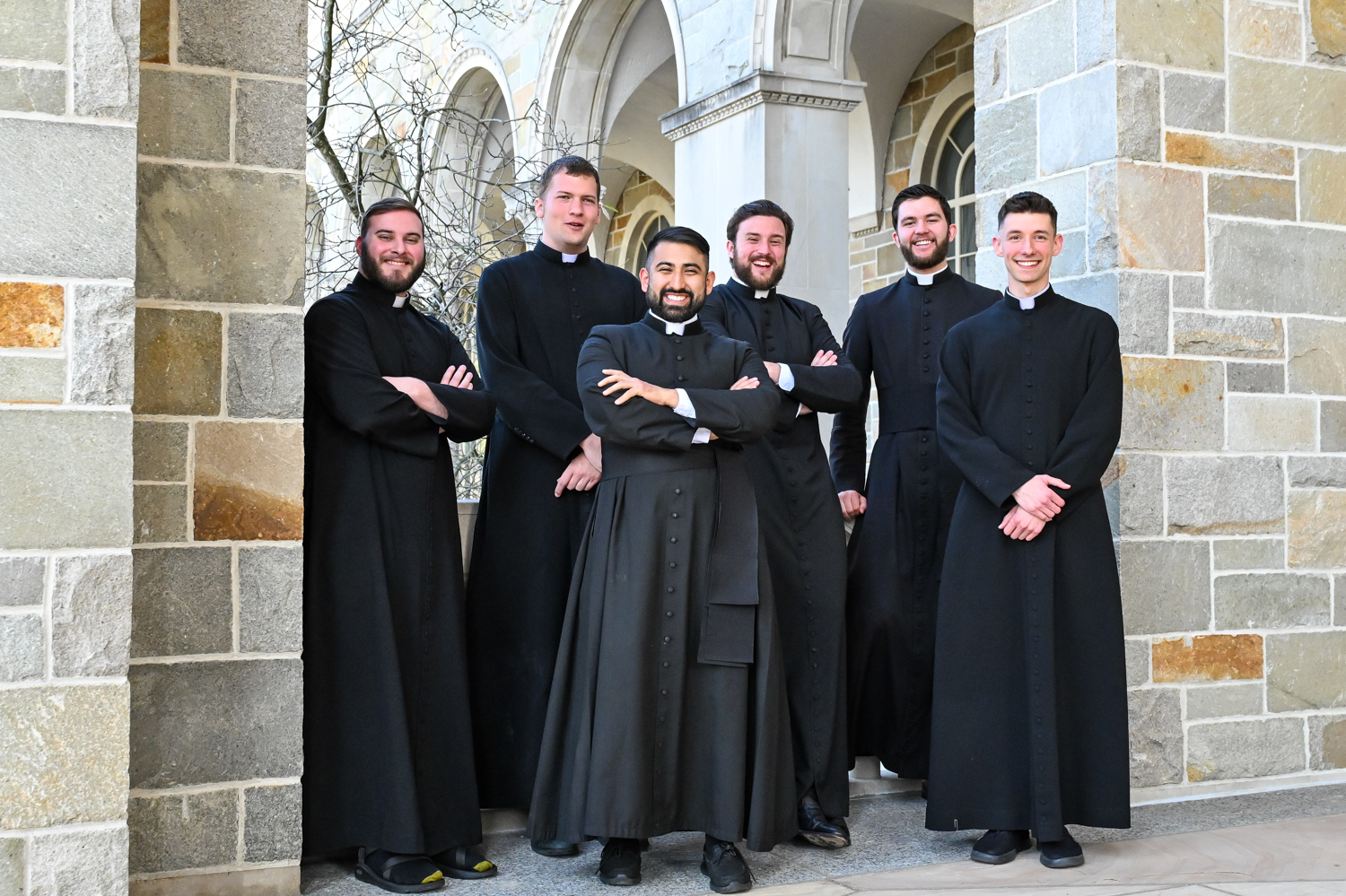
‘It’s always the Holy Spirit’: Meet 3 dioceses seeing large numbers of priestly ordinations #Catholic What drives a young man to discern into the priesthood — a supportive family, a vibrant parish, a proactive pastor, an outspoken bishop? Father John Eckert’s response: “Yes.” Eckert, the vocations director for the Diocese of Charlotte, North Carolina, chuckled a little when describing the myriad paths that a young man may take when finding his way to holy orders. But, he said, “it’s always the Holy Spirit at work. It’s always cooperating with the grace of God.” The Charlotte Diocese is among those in the U.S. seeing high numbers of seminarians and priestly ordinations. The diocese in western North Carolina saw a record 10 young men ordained to the priesthood earlier in 2026; that followed six ordinations in 2025 and seven in 2024. “We’re blessed in the Diocese of Charlotte,” Eckert said. “It’s a beautiful moment.” The priest just wrapped up his first full year as vocations director there. He said one of the strengths of the diocese is in its vibrant faith life, which he attributed partly to the “evangelical Bible-belt roots” of the region. “This is Billy Graham territory,” he joked. The diocese itself bears out that witness, he said. “The Church is growing like crazy down here,” he said. “We have wonderful families. We have faithful, hardworking priests. We’ve had five bishops who keep on striving to bear the Gospel message and bring that to every corner of the diocese.”The growing ranks of the priesthood is proof of that high spirit, though Eckert said it can be tricky to tease out just what contributes to years of high ordinations. One of the diocese’s strengths, he said, is its own “in-house college seminary.” “It’s so wonderful that if we have a young man interested in the priesthood, we can actually just bring him to this place and show him where the initial years of formation will take place,” he said. The school offers prospective seminarians a chance to see “a group of men living this out, being very intentional about their prayer life, striving to grow in love of Our Lord.”Charlotte Bishop Michael Martin, OFM Conv, told EWTN News that when seeing such high levels of devotion to the priesthood, “we often have to just marvel at God’s work.” Priests in the diocese, he said, excel at offering candidates to the priesthood “the opportunity to see a healthy, holy, good person that they can see themselves becoming.” Families, meanwhile, have become “far more open” to communicating to their sons that they would be “honored to see [them] consider the priesthood.”“That dynamic has come about because the presbyterate gives a good example,” the bishop said. “It makes families, and parents in particular, more willing to be able to create that environment in their own families.”Both Martin and Eckert said that at a certain point Church leaders simply have to acknowledge the work of the Holy Spirit. “To fully try to understand it is important,” Martin said, “but in some ways it’s best just to appreciate and enjoy it and be grateful for it.”Eckert, meanwhile, cited as an example 1 Corinthians 3:6, in which Paul tells the Church at Corinth about its faith: “I planted, Apollos watered, but God gave the growth.”The priest spoke joyfully about his work in the diocesan vocations office, though he downplayed his own role in bringing men to holy orders. He recounted with a laugh what a speaker told a group of vocations directors at a recent conference: “Gentlemen, get over yourselves. Nobody ever entered seminary because of their vocations director.”Priestly vocation ‘seen as a natural, fulfilling life’Father Garett Burns, the director of vocations promotion in the Diocese of Wichita, Kansas, admitted that the Midwestern diocese is “blessed with a strong culture of vocations.” “For example, this past May six men were ordained to the priesthood,” he said. “We’ve been blessed to generally have a steady number of ordinations each year. There have been 22 priestly ordinations since 2020 and 44 priestly ordinations in the last 10 years. We will begin this academic year with 50 seminarians in formation.”He said that it is “difficult to capture succinctly” why a diocese might have such abundant vocations, describing every Catholic’s vocation as a “mystery of grace.” But he said promoting vocations throughout every aspect of Church life — including in families, schools, and parishes — has borne steady fruit. The diocese has an abundance of Eucharistic adoration, he said, including perpetual adoration. Such chapels present opportunities for young people to spend time in silence before Christ, he said, and “these moments are where vocations grow and flourish.”Priests and bishops in the diocese, meanwhile, are “deeply committed to the Lord.” “When priests love their priesthood and enjoy each other, that is attractive to young men,” he said. A local seminary program has also borne fruit, he said, allowing young men to form a close, core connection with the Church “at home.” The priest said he hesitates to offer advice to other dioceses, admitting that there is “no universal solution” given the unique histories, gifts, and challenges of each diocese. But expanding opportunities for Eucharistic adoration, he said, offers “one viable option that promises to deepen the culture of vocations.”Father Noah Morey, the vocations director in the Diocese of Arlington, Virginia, echoed the assessment of his fellow vocations directors: “It’s not just one thing, it’s everything,” he told EWTN News. The Arlington Diocese saw seven new priests ordained in 2026; it recorded 12 ordinations in 2025. Morey noted that when it comes to ordinations, “it’s not about numbers, it’s about quality.” But he said the Arlington Diocese has a “strong culture of vocations” that has helped produce exemplary priests over the years. The diocese has promoted vocations since its founding in 1974. Its first leader, Bishop Thomas Welsh, “really fostered that culture” in part by bringing a Poor Clares monastery to the diocese. “Our bishops have all taken a hands-on approach of fostering vocations in young men from a young age,” Morey said. Bishops in Arlington regularly attend seminary events and meet personally with aspiring priests, he said. Eucharistic adoration is prolific throughout the diocese, meanwhile; several years ago, Morey said, current Bishop Michael Burbidge asked every pastor in the diocese to institute 40 hours of Eucharistic adoration annually.The diocese also holds St. Andrew dinners several times a year, which allows young men to speak to both the bishop and diocesan priests about their potential discernment. “I tell the young men, it’s a very low-commitment event — you’re not signing your life away!” he said. “You just show up for a free dinner with the bishop.” A yearly “Quo Vadis?” summer camp offers another opportunity for young men to have face-to-face discernment with Church leaders. An active, vibrant priesthood in the diocese also helps foster vocational discernment, he said. “If a young man sees a priest who’s in love with the Lord, that’s really attractive to the priesthood,” he said. And faith-filled and encouraging families are equally to credit for fostering vocations in young men, Morey continued. He offered a baseball analogy to describe the process by which young men find their way to the priesthood. “The families are the starting pitchers,” he said. “The priests are the middle relievers. And the vocations director is the closer.”Globally the Church has continued to see lower vocations; the most recent data shows a continued drop in priests, with significant declines in Europe and the Americas, though Africa and Asia saw notable increases. In the first 15 months of his pontificate Pope Leo XIV has continued to emphasize the importance of vocations. In June 2025 he told vocations ministers at the Vatican that their job consisted of “forming men capable of loving, listening, praying, and serving as a community.”The pope said God “continues to call and remains faithful to his promises.” He urged leaders to help bring about the creation of appropriate conditions “to hear [God’s] voice.”In Charlotte, Bishop Martin said the best response to an increase in vocations is to be both joyful for the gift and determined to help it flourish. “There’s something in God’s design that’s beyond even what I can say,” he said. “I can provide some insights, but at the end of the day, this is the work of the Holy Spirit.” Eckert, meanwhile, said an increase in vocations is a blessing no matter where it develops.“The job that I think we all have is being intentional in our discipleship of Jesus Christ,” he said. “I pray for myself and all my brother vocations directors out there. Whether it happens in Peoria or it happens in Charlotte, it’s good for all of us.”

‘It’s always the Holy Spirit’: Meet 3 dioceses seeing large numbers of priestly ordinations #Catholic What drives a young man to discern into the priesthood — a supportive family, a vibrant parish, a proactive pastor, an outspoken bishop? Father John Eckert’s response: “Yes.” Eckert, the vocations director for the Diocese of Charlotte, North Carolina, chuckled a little when describing the myriad paths that a young man may take when finding his way to holy orders. But, he said, “it’s always the Holy Spirit at work. It’s always cooperating with the grace of God.” The Charlotte Diocese is among those in the U.S. seeing high numbers of seminarians and priestly ordinations. The diocese in western North Carolina saw a record 10 young men ordained to the priesthood earlier in 2026; that followed six ordinations in 2025 and seven in 2024. “We’re blessed in the Diocese of Charlotte,” Eckert said. “It’s a beautiful moment.” The priest just wrapped up his first full year as vocations director there. He said one of the strengths of the diocese is in its vibrant faith life, which he attributed partly to the “evangelical Bible-belt roots” of the region. “This is Billy Graham territory,” he joked. The diocese itself bears out that witness, he said. “The Church is growing like crazy down here,” he said. “We have wonderful families. We have faithful, hardworking priests. We’ve had five bishops who keep on striving to bear the Gospel message and bring that to every corner of the diocese.”The growing ranks of the priesthood is proof of that high spirit, though Eckert said it can be tricky to tease out just what contributes to years of high ordinations. One of the diocese’s strengths, he said, is its own “in-house college seminary.” “It’s so wonderful that if we have a young man interested in the priesthood, we can actually just bring him to this place and show him where the initial years of formation will take place,” he said. The school offers prospective seminarians a chance to see “a group of men living this out, being very intentional about their prayer life, striving to grow in love of Our Lord.”Charlotte Bishop Michael Martin, OFM Conv, told EWTN News that when seeing such high levels of devotion to the priesthood, “we often have to just marvel at God’s work.” Priests in the diocese, he said, excel at offering candidates to the priesthood “the opportunity to see a healthy, holy, good person that they can see themselves becoming.” Families, meanwhile, have become “far more open” to communicating to their sons that they would be “honored to see [them] consider the priesthood.”“That dynamic has come about because the presbyterate gives a good example,” the bishop said. “It makes families, and parents in particular, more willing to be able to create that environment in their own families.”Both Martin and Eckert said that at a certain point Church leaders simply have to acknowledge the work of the Holy Spirit. “To fully try to understand it is important,” Martin said, “but in some ways it’s best just to appreciate and enjoy it and be grateful for it.”Eckert, meanwhile, cited as an example 1 Corinthians 3:6, in which Paul tells the Church at Corinth about its faith: “I planted, Apollos watered, but God gave the growth.”The priest spoke joyfully about his work in the diocesan vocations office, though he downplayed his own role in bringing men to holy orders. He recounted with a laugh what a speaker told a group of vocations directors at a recent conference: “Gentlemen, get over yourselves. Nobody ever entered seminary because of their vocations director.”Priestly vocation ‘seen as a natural, fulfilling life’Father Garett Burns, the director of vocations promotion in the Diocese of Wichita, Kansas, admitted that the Midwestern diocese is “blessed with a strong culture of vocations.” “For example, this past May six men were ordained to the priesthood,” he said. “We’ve been blessed to generally have a steady number of ordinations each year. There have been 22 priestly ordinations since 2020 and 44 priestly ordinations in the last 10 years. We will begin this academic year with 50 seminarians in formation.”He said that it is “difficult to capture succinctly” why a diocese might have such abundant vocations, describing every Catholic’s vocation as a “mystery of grace.” But he said promoting vocations throughout every aspect of Church life — including in families, schools, and parishes — has borne steady fruit. The diocese has an abundance of Eucharistic adoration, he said, including perpetual adoration. Such chapels present opportunities for young people to spend time in silence before Christ, he said, and “these moments are where vocations grow and flourish.”Priests and bishops in the diocese, meanwhile, are “deeply committed to the Lord.” “When priests love their priesthood and enjoy each other, that is attractive to young men,” he said. A local seminary program has also borne fruit, he said, allowing young men to form a close, core connection with the Church “at home.” The priest said he hesitates to offer advice to other dioceses, admitting that there is “no universal solution” given the unique histories, gifts, and challenges of each diocese. But expanding opportunities for Eucharistic adoration, he said, offers “one viable option that promises to deepen the culture of vocations.”Father Noah Morey, the vocations director in the Diocese of Arlington, Virginia, echoed the assessment of his fellow vocations directors: “It’s not just one thing, it’s everything,” he told EWTN News. The Arlington Diocese saw seven new priests ordained in 2026; it recorded 12 ordinations in 2025. Morey noted that when it comes to ordinations, “it’s not about numbers, it’s about quality.” But he said the Arlington Diocese has a “strong culture of vocations” that has helped produce exemplary priests over the years. The diocese has promoted vocations since its founding in 1974. Its first leader, Bishop Thomas Welsh, “really fostered that culture” in part by bringing a Poor Clares monastery to the diocese. “Our bishops have all taken a hands-on approach of fostering vocations in young men from a young age,” Morey said. Bishops in Arlington regularly attend seminary events and meet personally with aspiring priests, he said. Eucharistic adoration is prolific throughout the diocese, meanwhile; several years ago, Morey said, current Bishop Michael Burbidge asked every pastor in the diocese to institute 40 hours of Eucharistic adoration annually.The diocese also holds St. Andrew dinners several times a year, which allows young men to speak to both the bishop and diocesan priests about their potential discernment. “I tell the young men, it’s a very low-commitment event — you’re not signing your life away!” he said. “You just show up for a free dinner with the bishop.” A yearly “Quo Vadis?” summer camp offers another opportunity for young men to have face-to-face discernment with Church leaders. An active, vibrant priesthood in the diocese also helps foster vocational discernment, he said. “If a young man sees a priest who’s in love with the Lord, that’s really attractive to the priesthood,” he said. And faith-filled and encouraging families are equally to credit for fostering vocations in young men, Morey continued. He offered a baseball analogy to describe the process by which young men find their way to the priesthood. “The families are the starting pitchers,” he said. “The priests are the middle relievers. And the vocations director is the closer.”Globally the Church has continued to see lower vocations; the most recent data shows a continued drop in priests, with significant declines in Europe and the Americas, though Africa and Asia saw notable increases. In the first 15 months of his pontificate Pope Leo XIV has continued to emphasize the importance of vocations. In June 2025 he told vocations ministers at the Vatican that their job consisted of “forming men capable of loving, listening, praying, and serving as a community.”The pope said God “continues to call and remains faithful to his promises.” He urged leaders to help bring about the creation of appropriate conditions “to hear [God’s] voice.”In Charlotte, Bishop Martin said the best response to an increase in vocations is to be both joyful for the gift and determined to help it flourish. “There’s something in God’s design that’s beyond even what I can say,” he said. “I can provide some insights, but at the end of the day, this is the work of the Holy Spirit.” Eckert, meanwhile, said an increase in vocations is a blessing no matter where it develops.“The job that I think we all have is being intentional in our discipleship of Jesus Christ,” he said. “I pray for myself and all my brother vocations directors out there. Whether it happens in Peoria or it happens in Charlotte, it’s good for all of us.”

Multiple dioceses throughout the U.S. are bucking national trends and seeing large numbers of men discern into the priesthood.
Read More
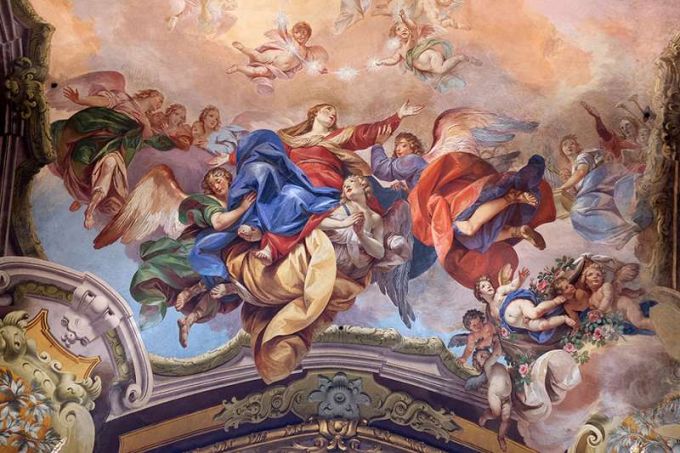
Is the Assumption of the Blessed Virgin Mary a holy day of obligation this year? #Catholic Catholics celebrate the solemnity of the Assumption of the Blessed Virgin Mary each year on Aug. 15. The solemnity commemorates the Church’s teaching that Mary, at the end of her earthly life, was taken body and soul into heaven.In 1950, Pope Pius XII confirmed this belief about the Virgin Mary when he defined it formally — “ex cathedra” — as a dogma of the Catholic faith. In his apostolic constitution Munificentissimus Deus, it states “that the Immaculate Mother of God, the ever-Virgin Mary, having completed the course of her earthly life, was assumed body and soul into heavenly glory.”So, is this solemnity a holy day of obligation? It depends on what day it falls on.In the United States, Latin-rite Catholics are bound by the United States Conference of Catholic Bishops’ (USCCB) canon law norms, which require Mass attendance on Sundays and six specific holy days of obligation. However, regional exceptions and calendar-based rule adjustments can apply depending on the day of the week a feast lands.The six holy days of obligations are: Jan. 1, solemnity of Mary, Mother of God; Thursday of the sixth week of Easter, solemnity of the Ascension; Aug. 15, solemnity of the Assumption of the Blessed Virgin Mary; Nov. 1, solemnity of All Saints; Dec. 8, solemnity of the Immaculate Conception; and Dec. 25, Nativity of Our Lord Jesus Christ.However, when Jan. 1, the solemnity of Mary, Mother of God; Aug. 15, the solemnity of the Assumption; or Nov. 1, the solemnity of All Saints, falls on a Saturday or on a Monday, the obligation to attend Mass is lifted.According to Canon 1246, paragraph 2, of the Code of Canon Law, “the conference of bishops can abolish certain holy days of obligation or transfer them to a Sunday with prior approval of the Apostolic See.”Since the solemnity of the Assumption of the Blessed Virgin Mary falls on a Saturday this year, 2026, Catholics are not required to attend Mass in addition to the regular Sunday obligation.

Is the Assumption of the Blessed Virgin Mary a holy day of obligation this year? #Catholic Catholics celebrate the solemnity of the Assumption of the Blessed Virgin Mary each year on Aug. 15. The solemnity commemorates the Church’s teaching that Mary, at the end of her earthly life, was taken body and soul into heaven.In 1950, Pope Pius XII confirmed this belief about the Virgin Mary when he defined it formally — “ex cathedra” — as a dogma of the Catholic faith. In his apostolic constitution Munificentissimus Deus, it states “that the Immaculate Mother of God, the ever-Virgin Mary, having completed the course of her earthly life, was assumed body and soul into heavenly glory.”So, is this solemnity a holy day of obligation? It depends on what day it falls on.In the United States, Latin-rite Catholics are bound by the United States Conference of Catholic Bishops’ (USCCB) canon law norms, which require Mass attendance on Sundays and six specific holy days of obligation. However, regional exceptions and calendar-based rule adjustments can apply depending on the day of the week a feast lands.The six holy days of obligations are: Jan. 1, solemnity of Mary, Mother of God; Thursday of the sixth week of Easter, solemnity of the Ascension; Aug. 15, solemnity of the Assumption of the Blessed Virgin Mary; Nov. 1, solemnity of All Saints; Dec. 8, solemnity of the Immaculate Conception; and Dec. 25, Nativity of Our Lord Jesus Christ.However, when Jan. 1, the solemnity of Mary, Mother of God; Aug. 15, the solemnity of the Assumption; or Nov. 1, the solemnity of All Saints, falls on a Saturday or on a Monday, the obligation to attend Mass is lifted.According to Canon 1246, paragraph 2, of the Code of Canon Law, “the conference of bishops can abolish certain holy days of obligation or transfer them to a Sunday with prior approval of the Apostolic See.”Since the solemnity of the Assumption of the Blessed Virgin Mary falls on a Saturday this year, 2026, Catholics are not required to attend Mass in addition to the regular Sunday obligation.

The obligation to attend Mass on the solemnity of the Assumption of the Blessed Virgin Mary depends on what day it falls on.
Read More
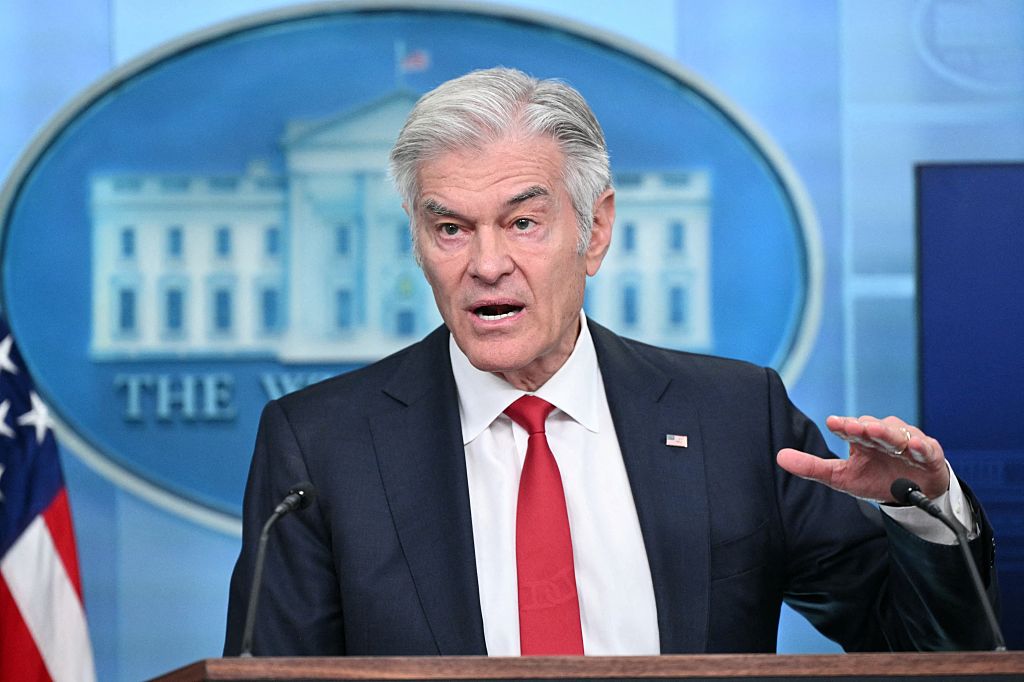
Medicaid formally ends funds for ‘sex-rejecting procedures’ for minors with final rule #Catholic The Centers for Medicare & Medicaid Services (CMS) announced it has implemented a final rule that formally bans using funds for “sex-rejecting procedures” for minors, which are drugs and surgeries used to facilitate “gender transitions.”According to a CMS news release, this includes puberty blockers, cross-sex hormones, and surgical operations. It states these medical procedures cause irreversible damage, including infertility, impaired sexual function, diminished bone density, altered brain development, and other physiological effects.The move formalizes a policy of President Donald Trump’s administration to prevent minors from accessing these drugs and surgeries. In January 2025, Trump signed an executive order that instructed agencies to adopt rules to “end the chemical and surgical mutilation of children.”The final rule includes a tapering-off period of up to six months for children who are receiving cross-sex hormones, which allows them to be gradually weaned off the medicine. It does not affect mental health services.“Children deserve our protection, not experimental interventions that pose serious risks and convey no proven benefits,” CMS Administrator Dr. Mehmet Oz said in a statement.“By cutting off federal funds for these sex-rejecting procedures, we’re following the science, saving taxpayer dollars, and, most importantly, protecting children from potentially irreversible harm so they can truly flourish,” he said.Rachel N. Morrison, director of the Ethics and Public Policy Center’s Administrative State Accountability Project, told EWTN News that government funding should never support “harmful, sterilizing, and often irreversible sex-rejecting procedures.”“I am grateful to CMS and the Trump administration for their efforts to combat gender ideology, protect children from the harms [of] sex-rejecting procedures, and advance policies that reflect a true understanding of the nature of the human person,” she said.The Church’s positionThe U.S. Conference of Catholic Bishops (USCCB) referred EWTN News to a Feb. 17 letter to CMS, which said the proposed ban on federal funding “aligns with Catholic teaching on the nature of the human person” and “reflects true distinctions between the sexes.” “Rejection of our God-given bodies, such as by modifying them to appear as the opposite sex, is a grave matter, and when done with full knowledge and complete consent, is a grave sin,” the letter states.In November 2025, the USCCB published a new edition of its ”Ethical and Religious Directives for Catholic Health Care Services” guidelines, which prohibit Catholic institutions from providing treatments that “aim not to restore but rather to alter the fundamental order of the human body in its form or function” such as “interventions that aim to transform sexual characteristics of a human body into those of the opposite sex (or to nullify sexual characteristics…).”Joseph Meaney, past president and senior ethicist for the National Catholic Bioethics Center (NCBC), told EWTN News CMS “should be applauded for putting an end to federal taxpayer funding of transgender procedures on children.”“There is substantial agreement between U.S. government policy and Catholic teaching in this area of healthcare policy,” he said.Father Tadeusz Pacholczyk, an NCBC senior ethicist, told EWTN News that the implementation of the rule “is very sensible and long overdue.”“Countless youth have already been railroaded along this path, placing themselves at great risk and damaging their bodies as they struggle with this confusion,” Pacholczyk said. “Once a young person steps onto that train, they often become ‘regular business customers,’ with a lifelong dependence on the continued prescribing of hormones and additional cycles of expensive surgeries.”He said tax money should not pay for “a hysterectomy on a girl who wants to live as a boy, nor to provide breast implants into a boy who thinks he is a girl.” He said children “deserve far better from the world of medicine and psychiatry.”“They are entitled to solid psychotherapy as a means of assisting them to reintegrate their subjective gender identity with their objective lifelong biology so they can recognize and embrace the beautiful gift of the biological sex they have been endowed with from the beginning,” Pacholczyk said.

Medicaid formally ends funds for ‘sex-rejecting procedures’ for minors with final rule #Catholic The Centers for Medicare & Medicaid Services (CMS) announced it has implemented a final rule that formally bans using funds for “sex-rejecting procedures” for minors, which are drugs and surgeries used to facilitate “gender transitions.”According to a CMS news release, this includes puberty blockers, cross-sex hormones, and surgical operations. It states these medical procedures cause irreversible damage, including infertility, impaired sexual function, diminished bone density, altered brain development, and other physiological effects.The move formalizes a policy of President Donald Trump’s administration to prevent minors from accessing these drugs and surgeries. In January 2025, Trump signed an executive order that instructed agencies to adopt rules to “end the chemical and surgical mutilation of children.”The final rule includes a tapering-off period of up to six months for children who are receiving cross-sex hormones, which allows them to be gradually weaned off the medicine. It does not affect mental health services.“Children deserve our protection, not experimental interventions that pose serious risks and convey no proven benefits,” CMS Administrator Dr. Mehmet Oz said in a statement.“By cutting off federal funds for these sex-rejecting procedures, we’re following the science, saving taxpayer dollars, and, most importantly, protecting children from potentially irreversible harm so they can truly flourish,” he said.Rachel N. Morrison, director of the Ethics and Public Policy Center’s Administrative State Accountability Project, told EWTN News that government funding should never support “harmful, sterilizing, and often irreversible sex-rejecting procedures.”“I am grateful to CMS and the Trump administration for their efforts to combat gender ideology, protect children from the harms [of] sex-rejecting procedures, and advance policies that reflect a true understanding of the nature of the human person,” she said.The Church’s positionThe U.S. Conference of Catholic Bishops (USCCB) referred EWTN News to a Feb. 17 letter to CMS, which said the proposed ban on federal funding “aligns with Catholic teaching on the nature of the human person” and “reflects true distinctions between the sexes.” “Rejection of our God-given bodies, such as by modifying them to appear as the opposite sex, is a grave matter, and when done with full knowledge and complete consent, is a grave sin,” the letter states.In November 2025, the USCCB published a new edition of its ”Ethical and Religious Directives for Catholic Health Care Services” guidelines, which prohibit Catholic institutions from providing treatments that “aim not to restore but rather to alter the fundamental order of the human body in its form or function” such as “interventions that aim to transform sexual characteristics of a human body into those of the opposite sex (or to nullify sexual characteristics…).”Joseph Meaney, past president and senior ethicist for the National Catholic Bioethics Center (NCBC), told EWTN News CMS “should be applauded for putting an end to federal taxpayer funding of transgender procedures on children.”“There is substantial agreement between U.S. government policy and Catholic teaching in this area of healthcare policy,” he said.Father Tadeusz Pacholczyk, an NCBC senior ethicist, told EWTN News that the implementation of the rule “is very sensible and long overdue.”“Countless youth have already been railroaded along this path, placing themselves at great risk and damaging their bodies as they struggle with this confusion,” Pacholczyk said. “Once a young person steps onto that train, they often become ‘regular business customers,’ with a lifelong dependence on the continued prescribing of hormones and additional cycles of expensive surgeries.”He said tax money should not pay for “a hysterectomy on a girl who wants to live as a boy, nor to provide breast implants into a boy who thinks he is a girl.” He said children “deserve far better from the world of medicine and psychiatry.”“They are entitled to solid psychotherapy as a means of assisting them to reintegrate their subjective gender identity with their objective lifelong biology so they can recognize and embrace the beautiful gift of the biological sex they have been endowed with from the beginning,” Pacholczyk said.

The development formalizes a policy of the Trump administration. The U.S. Conference of Catholic Bishops has urged government action in this area.
Read More
Pope Leo XIV expresses sorrow for the victims of earthquake in Colombia #Catholic Amid the devastation of a 7.4-magnitude earthquake that struck western Colombia on Aug. 10, Pope Leo XIV has sent his condolences to all victims of the disaster and assured them of his closeness.In a telegram dated Aug. 11 and signed by Secretary of State Cardinal Pietro Parolin, the pope expressed his sorrow upon learning of the earthquake, which, according to an Aug. 11 BBC news report, has killed at least 132 people and injured 570.It has also severely damaged several buildings, including the Cathedral Basilica of Our Lady of the Rosary, also known as the Manizales Cathedral.“The Holy Father,” according to the telegram, is “deeply saddened to learn of the sorrowful news of the earthquake that has severely affected several areas of Colombia, causing casualties and numerous injuries, as well as serious material damage, including to many churches.” The telegram added that the pontiff “offers prayers for the eternal rest of the deceased and raises his prayers to the Lord for the speedy recovery of those affected by this tragedy.”TweetThe message, addressed to the archbishop of Cartagena and president of the bishops’ conference of Colombia, Archbishop Francisco Javier Múnera Correa, ICM, asks him “to convey the heartfelt condolences of His Holiness Leo XIV to the families who, in this hour of profound sorrow, mourn the loss of their loved ones.”Local and national authorities continue to assess the casualties and damage from the earthquake, concentrated in the municipality of San José del Palmar in the department of Chocó, located on the Pacific coast.On its social media, the Archdiocese of Manizales shared a video showing cracks in the facade and the partial collapse of one of the side towers of the Manizales Cathedral, which stands 390 feet tall, making it the tallest cathedral in Colombia and the tallest neo-Gothic church in the Americas.

Pope Leo XIV expresses sorrow for the victims of earthquake in Colombia #Catholic Amid the devastation of a 7.4-magnitude earthquake that struck western Colombia on Aug. 10, Pope Leo XIV has sent his condolences to all victims of the disaster and assured them of his closeness.In a telegram dated Aug. 11 and signed by Secretary of State Cardinal Pietro Parolin, the pope expressed his sorrow upon learning of the earthquake, which, according to an Aug. 11 BBC news report, has killed at least 132 people and injured 570.It has also severely damaged several buildings, including the Cathedral Basilica of Our Lady of the Rosary, also known as the Manizales Cathedral.“The Holy Father,” according to the telegram, is “deeply saddened to learn of the sorrowful news of the earthquake that has severely affected several areas of Colombia, causing casualties and numerous injuries, as well as serious material damage, including to many churches.” The telegram added that the pontiff “offers prayers for the eternal rest of the deceased and raises his prayers to the Lord for the speedy recovery of those affected by this tragedy.”TweetThe message, addressed to the archbishop of Cartagena and president of the bishops’ conference of Colombia, Archbishop Francisco Javier Múnera Correa, ICM, asks him “to convey the heartfelt condolences of His Holiness Leo XIV to the families who, in this hour of profound sorrow, mourn the loss of their loved ones.”Local and national authorities continue to assess the casualties and damage from the earthquake, concentrated in the municipality of San José del Palmar in the department of Chocó, located on the Pacific coast.On its social media, the Archdiocese of Manizales shared a video showing cracks in the facade and the partial collapse of one of the side towers of the Manizales Cathedral, which stands 390 feet tall, making it the tallest cathedral in Colombia and the tallest neo-Gothic church in the Americas.

The pontiff expressed his closeness to the Colombian people in a message on Aug. 11.

Read More
Catholic legal group criticizes Trump’s birthright-citizenship order as bishops plan to monitor #Catholic A Catholic legal group criticized President Donald Trump’s executive orders to restrict birthright citizenship, and the U.S. Conference of Catholic Bishops (USCCB) is reviewing and monitoring them.The executive orders issued Aug. 6 direct the government to stop allowing foreign visitors to enter the United States on short‑term visas for the purpose of giving birth and impose a narrower limit on birthright citizenship after the U.S. Supreme Court struck down a broader attempt to end citizenship for children born to people in the country temporarily or unlawfully.One executive order would end automatic birthright citizenship for the children of parents who are not U.S. citizens and engage in a commercial transaction or fraudulent activity to ensure the mother is inside U.S. territory to give birth. It also would end birthright citizenship for a child born of a parent considered an “alien enemy,” including members of terrorist organizations.A second executive order titled “Ending Birth Tourism” authorizes federal departments to implement rules that prevent the entry of pregnant foreign women seeking to give birth in the United States and allow removal if they enter the country. The order refers to noncitizens entering the U.S. for the purpose of giving birth on American soil and efforts from a foreign national to coordinate such entries.Under existing State Department guidance, consular officers can deny a B‑1/B‑2 visitor visa if they believe the applicant’s primary purpose is to give birth in the U.S. to obtain citizenship for the child.Anna Gallagher, executive director of the Catholic Legal Immigration Network (CLINIC), criticized the birthright citizenship executive order in a statement to EWTN News.“The Supreme Court has already spoken: birthright citizenship is guaranteed by the Constitution,” Gallagher said.“This latest attempt by the Trump administration to circumvent settled law only creates needless fear and uncertainty for immigrant families,” she added. “Catholic social teaching calls us to uphold the dignity of every person and welcome the stranger — not seek new ways to exclude them.”The USCCB has not taken a clear position on the executive orders yet, but it is monitoring how they are enforced and potential judicial proceedings.“The USCCB supports the application of constitutional principles and the rule of law in a manner consistent with the God-given dignity of every human person,” USCCB spokesperson Chieko Noguchi told EWTN News.“We’re reviewing the executive orders and will continue to monitor for administrative actions taken and possible judicial proceedings concerning their implementation,” she said.In June, the Supreme Court ruled the 14th Amendment of the Constitution protects automatic birthright citizenship with few exceptions. The protection extends to children who are born to people who are in the country unlawfully.Although the majority opinion did not directly address “birth tourism,” it did clearly say birthright citizenship applies to the children of parents who are “unlawfully or temporarily present” in the country.The “birth tourism” concern appeared in the dissents authored by both Justice Samuel Alito and Justice Clarence Thomas.Alito, in his dissent, wrote that he believed the majority’s opinion protects birthright citizenship to “the children of ‘birth tourists,’” though saying he does not not agree with the ruling.Thomas wrote in his dissent that people have taken advantage of birthright citizenship through “birth tourism” and said there are companies that “collect large fees from wealthy foreigners to facilitate their trips to give birth in the United States.”However, in the majority opinion, Chief Justice John Roberts wrote that words like “temporary” and “lawful” do not appear in the citizenship clause of the 14th Amendment: “For a simple reason: they did not matter.”Ashley Feasley, a legal expert for the Immigration Law and Policy Initiative at The Catholic University of America, told EWTN News she believes the executive orders are “an attempt to undermine” the Supreme Court.“Although they will almost certainly face legal challenge, in the interim they will place a profound burden on some of the most vulnerable migrants, pregnant women, and on the officers who work diligently to defend our borders,” she said.“Requiring Department of Homeland Security officials to interrogate women, many of whom have legal visas, about their pregnancies, even turning them away from ports of entry without clearly defined criteria for doing so, risks harming both woman and unborn child and diverts DHS officers' attention from the vital missions of border security and trade facilitation,” Feasley said. Legal challenges have not yet been filed.

Catholic legal group criticizes Trump’s birthright-citizenship order as bishops plan to monitor #Catholic A Catholic legal group criticized President Donald Trump’s executive orders to restrict birthright citizenship, and the U.S. Conference of Catholic Bishops (USCCB) is reviewing and monitoring them.The executive orders issued Aug. 6 direct the government to stop allowing foreign visitors to enter the United States on short‑term visas for the purpose of giving birth and impose a narrower limit on birthright citizenship after the U.S. Supreme Court struck down a broader attempt to end citizenship for children born to people in the country temporarily or unlawfully.One executive order would end automatic birthright citizenship for the children of parents who are not U.S. citizens and engage in a commercial transaction or fraudulent activity to ensure the mother is inside U.S. territory to give birth. It also would end birthright citizenship for a child born of a parent considered an “alien enemy,” including members of terrorist organizations.A second executive order titled “Ending Birth Tourism” authorizes federal departments to implement rules that prevent the entry of pregnant foreign women seeking to give birth in the United States and allow removal if they enter the country. The order refers to noncitizens entering the U.S. for the purpose of giving birth on American soil and efforts from a foreign national to coordinate such entries.Under existing State Department guidance, consular officers can deny a B‑1/B‑2 visitor visa if they believe the applicant’s primary purpose is to give birth in the U.S. to obtain citizenship for the child.Anna Gallagher, executive director of the Catholic Legal Immigration Network (CLINIC), criticized the birthright citizenship executive order in a statement to EWTN News.“The Supreme Court has already spoken: birthright citizenship is guaranteed by the Constitution,” Gallagher said.“This latest attempt by the Trump administration to circumvent settled law only creates needless fear and uncertainty for immigrant families,” she added. “Catholic social teaching calls us to uphold the dignity of every person and welcome the stranger — not seek new ways to exclude them.”The USCCB has not taken a clear position on the executive orders yet, but it is monitoring how they are enforced and potential judicial proceedings.“The USCCB supports the application of constitutional principles and the rule of law in a manner consistent with the God-given dignity of every human person,” USCCB spokesperson Chieko Noguchi told EWTN News.“We’re reviewing the executive orders and will continue to monitor for administrative actions taken and possible judicial proceedings concerning their implementation,” she said.In June, the Supreme Court ruled the 14th Amendment of the Constitution protects automatic birthright citizenship with few exceptions. The protection extends to children who are born to people who are in the country unlawfully.Although the majority opinion did not directly address “birth tourism,” it did clearly say birthright citizenship applies to the children of parents who are “unlawfully or temporarily present” in the country.The “birth tourism” concern appeared in the dissents authored by both Justice Samuel Alito and Justice Clarence Thomas.Alito, in his dissent, wrote that he believed the majority’s opinion protects birthright citizenship to “the children of ‘birth tourists,’” though saying he does not not agree with the ruling.Thomas wrote in his dissent that people have taken advantage of birthright citizenship through “birth tourism” and said there are companies that “collect large fees from wealthy foreigners to facilitate their trips to give birth in the United States.”However, in the majority opinion, Chief Justice John Roberts wrote that words like “temporary” and “lawful” do not appear in the citizenship clause of the 14th Amendment: “For a simple reason: they did not matter.”Ashley Feasley, a legal expert for the Immigration Law and Policy Initiative at The Catholic University of America, told EWTN News she believes the executive orders are “an attempt to undermine” the Supreme Court.“Although they will almost certainly face legal challenge, in the interim they will place a profound burden on some of the most vulnerable migrants, pregnant women, and on the officers who work diligently to defend our borders,” she said.“Requiring Department of Homeland Security officials to interrogate women, many of whom have legal visas, about their pregnancies, even turning them away from ports of entry without clearly defined criteria for doing so, risks harming both woman and unborn child and diverts DHS officers' attention from the vital missions of border security and trade facilitation,” Feasley said. Legal challenges have not yet been filed.

The Catholic Legal Immigration Network (CLINIC) criticized an executive order targeting birthright citizenship. The U.S. Catholic bishops are reviewing and monitoring the order.
Read More
U.S. Catholic bishops urge ‘fair representation’ on Voting Rights Act anniversary #Catholic A subcommittee of the U.S. Conference of Catholic Bishops (USCCB) urged policymakers to protect “fair representation” in elections ahead of the 61st anniversary of President Lyndon B. Johnson signing the Voting Rights Act of 1965.“The Voting Rights Act of 1965 emerged from the sacrifices and perseverance of countless individuals who worked to secure the fundamental right to vote, particularly for communities of color that had long faced discrimination and exclusion,” said Bishop Daniel E. Garcia, chair of the USCCB Subcommittee for the Promotion of Racial Justice and Reconciliation.The USCCB issued the statement on Aug. 5, one day before the anniversary. The Voting Rights Act was enacted to combat Jim Crow laws that were designed to disenfranchise Black Americans.“For decades, the U.S. bishops have advocated for the right of eligible citizens to participate fully in public life, including the protection of voting rights,” said Garcia, bishop of Austin, Texas. “We encourage all citizens to exercise their right to vote and urge policymakers to safeguard voting rights and promote fair representation for all.”“Today is also an occasion to remember the hard-won history of voting rights in our country, and to recommit to the work which remains,” he added.Garcia also said in his statement that “today, many communities of color worry about how recent developments will impact their fair representation and future participation in the democratic process.”Recent developments could affect fair district maps, equal representation, and long‑term participation in elections. One development includes a 2013 Supreme Court decision, which ruled unconstitutional a provision of the Voting Rights Act that required certain states to obtain federal approval to change voting laws if that state had a history of disenfranchising voters.Another development included a 2020 ruling that upheld Arizona election laws that required voters to cast ballots in their assigned precincts and banned people from submitting another person’s ballot (unless that person is a family or household member).Rulings in 2023 and 2026 addressed racial gerrymandering, which is illegal under the Voting Rights Act. The 2023 ruling found a 2023 Alabama congressional district map to be illegal for not having any Black-majority districts and the 2026 ruling struck down Louisiana maps for relying too much on race in crafting districts.Although racial gerrymandering is illegal, federal law does not prohibit partisan gerrymandering.Garcia quoted Pope Leo XIV’s encyclical Magnifica Humanitas, saying the bishops “affirm the value of democracy ‘insofar as it guarantees the effective participation of citizens’ as a reflection of their dignity.”“May we continue to work together for the common good and for a society in which all citizens are able to participate fully and faithfully in our democracy,” Garcia said.

U.S. Catholic bishops urge ‘fair representation’ on Voting Rights Act anniversary #Catholic A subcommittee of the U.S. Conference of Catholic Bishops (USCCB) urged policymakers to protect “fair representation” in elections ahead of the 61st anniversary of President Lyndon B. Johnson signing the Voting Rights Act of 1965.“The Voting Rights Act of 1965 emerged from the sacrifices and perseverance of countless individuals who worked to secure the fundamental right to vote, particularly for communities of color that had long faced discrimination and exclusion,” said Bishop Daniel E. Garcia, chair of the USCCB Subcommittee for the Promotion of Racial Justice and Reconciliation.The USCCB issued the statement on Aug. 5, one day before the anniversary. The Voting Rights Act was enacted to combat Jim Crow laws that were designed to disenfranchise Black Americans.“For decades, the U.S. bishops have advocated for the right of eligible citizens to participate fully in public life, including the protection of voting rights,” said Garcia, bishop of Austin, Texas. “We encourage all citizens to exercise their right to vote and urge policymakers to safeguard voting rights and promote fair representation for all.”“Today is also an occasion to remember the hard-won history of voting rights in our country, and to recommit to the work which remains,” he added.Garcia also said in his statement that “today, many communities of color worry about how recent developments will impact their fair representation and future participation in the democratic process.”Recent developments could affect fair district maps, equal representation, and long‑term participation in elections. One development includes a 2013 Supreme Court decision, which ruled unconstitutional a provision of the Voting Rights Act that required certain states to obtain federal approval to change voting laws if that state had a history of disenfranchising voters.Another development included a 2020 ruling that upheld Arizona election laws that required voters to cast ballots in their assigned precincts and banned people from submitting another person’s ballot (unless that person is a family or household member).Rulings in 2023 and 2026 addressed racial gerrymandering, which is illegal under the Voting Rights Act. The 2023 ruling found a 2023 Alabama congressional district map to be illegal for not having any Black-majority districts and the 2026 ruling struck down Louisiana maps for relying too much on race in crafting districts.Although racial gerrymandering is illegal, federal law does not prohibit partisan gerrymandering.Garcia quoted Pope Leo XIV’s encyclical Magnifica Humanitas, saying the bishops “affirm the value of democracy ‘insofar as it guarantees the effective participation of citizens’ as a reflection of their dignity.”“May we continue to work together for the common good and for a society in which all citizens are able to participate fully and faithfully in our democracy,” Garcia said.

Bishop Daniel E. Garcia said the Voting Rights Act was born from the sacrifice of those who fought to secure equal access to the ballot, especially for communities of color long denied that right.
Read More
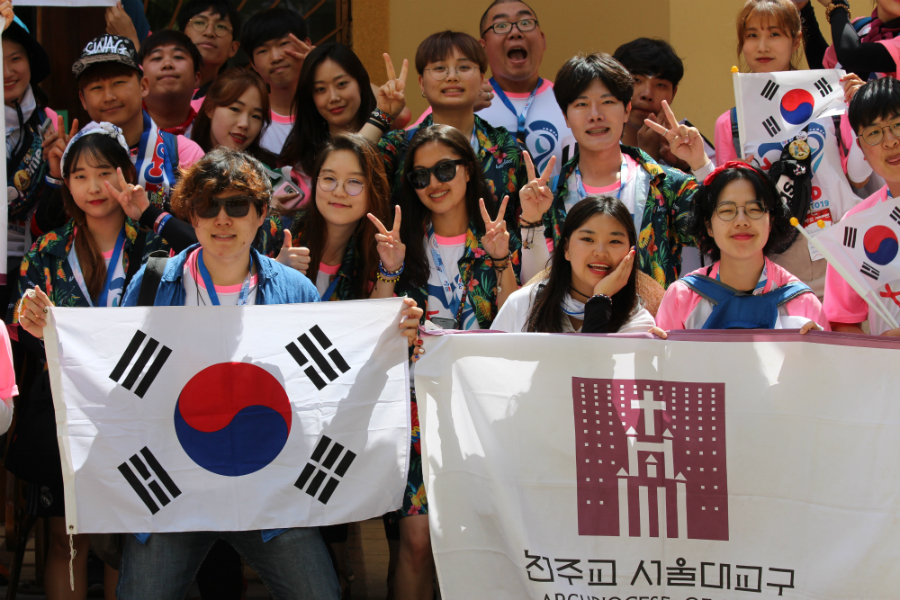
Countdown to World Youth Day Seoul 2027 begins: Here’s what we know so far #Catholic One year from now, Catholics from around the world — alongside Pope Leo XIV — will gather for World Youth Day 2027 in Seoul, South Korea, from Aug. 3–8, 2027.The announcement was made by Pope Francis at the closing Mass of World Youth Day 2023 in Lisbon, Portugal. Catholics from South Korea in attendance responded with happiness and excitement to the news.This is only the second time an Asian country has hosted a World Youth Day — the last being in Manila, Philippines, in 1995 — and the first hosted in a nation where Catholicism is a minority religion.With the date quickly approaching, South Korea is already preparing for this historic event. Here’s what you need to know:The venuesThe specific venues for the many events taking place are still being finalized by the Vatican and the WYD Seoul 2027 local organizing committee (LOC), which is led by Archbishop Peter Soon-taick Chung, archbishop of the Archdiocese of Seoul, with Bishop Paul Kyung-Sang Lee serving as the general coordinator. Additionally, Bishop Job Yobi Koo helps the LOC as the episcopal coordinator.The theme The theme of WYD 2027 is taken from the Gospel of John 16:33: “Take Courage! I Have Overcome the World.”The programWhile the schedule is still being finalized, attendees can expect an opening Mass to be celebrated by the archbishop of Seoul, morning catechesis sessions led by bishops from around the world, a papal welcome ceremony, the Way of the Cross, a pilgrimage walk to the grounds where the closing Mass will take place, Eucharistic adoration, and a prayer vigil with Pope Leo XIV as well as the closing Mass celebrated by the Holy Father.Additionally, the youth festival will include concerts, cultural performances, and other events for the young people in attendance. Attendees will also be able to visit reconciliation park and the vocations fair.The patron saints The five patron saints of WYD Seoul 2027 are St. John Paul II, founder of World Youth Day; St. Andrew Kim Taegon and his companion martyrs; St. Frances Xavier Cabrini; St. Josephine Bakhita, and St. Carlo Acutis.St. John Paul II (1920–2005) is remembered for centering much of his pastoral teaching on young people, the family, and the defense of the dignity of human life. St. Andrew Kim Taegon (1821–1846), the first Korean Catholic priest, together with his companion martyrs, represents a powerful witness of faith and courage, sealed by martyrdom at a young age.St. Frances Xavier Cabrini (1850–1917) was a tireless missionary, known especially for her work on behalf of migrants and the poor. St. Josephine Bakhita (1869–1947), a former slave who became a religious sister, is a witness of hope, freedom, and faith transformed through suffering. St. Carlo Acutis (1991–2006), meanwhile, embodies the witness of holiness in the digital age and remains a model of evangelization for young people today.The official theme songThe official theme song for WYD 2027 was released on Aug. 3. The song, “Confidite, Ego Vici Mundum” (“Take Courage! I Have Overcome the World,” in Latin), was the winning composition from 434 submissions and was written by Korean composer Francis Jiyoon Kim.How many Catholics are in South KoreaAccording to data released by the Catholic Bishops’ Conference of Korea in 2022, South Korea has approximately 6 million Catholics, which is just 11% of the total population.A 2020 survey by a Korean research journal tracking recent religious demographic changes in the country found that now about 50% of South Koreans are nonreligious, while 32% are Protestant Christians and 16% are Buddhist.Pray for WYD 2027You can find the official prayer for WYD Seoul 2027 here.

Countdown to World Youth Day Seoul 2027 begins: Here’s what we know so far #Catholic One year from now, Catholics from around the world — alongside Pope Leo XIV — will gather for World Youth Day 2027 in Seoul, South Korea, from Aug. 3–8, 2027.The announcement was made by Pope Francis at the closing Mass of World Youth Day 2023 in Lisbon, Portugal. Catholics from South Korea in attendance responded with happiness and excitement to the news.This is only the second time an Asian country has hosted a World Youth Day — the last being in Manila, Philippines, in 1995 — and the first hosted in a nation where Catholicism is a minority religion.With the date quickly approaching, South Korea is already preparing for this historic event. Here’s what you need to know:The venuesThe specific venues for the many events taking place are still being finalized by the Vatican and the WYD Seoul 2027 local organizing committee (LOC), which is led by Archbishop Peter Soon-taick Chung, archbishop of the Archdiocese of Seoul, with Bishop Paul Kyung-Sang Lee serving as the general coordinator. Additionally, Bishop Job Yobi Koo helps the LOC as the episcopal coordinator.The theme The theme of WYD 2027 is taken from the Gospel of John 16:33: “Take Courage! I Have Overcome the World.”The programWhile the schedule is still being finalized, attendees can expect an opening Mass to be celebrated by the archbishop of Seoul, morning catechesis sessions led by bishops from around the world, a papal welcome ceremony, the Way of the Cross, a pilgrimage walk to the grounds where the closing Mass will take place, Eucharistic adoration, and a prayer vigil with Pope Leo XIV as well as the closing Mass celebrated by the Holy Father.Additionally, the youth festival will include concerts, cultural performances, and other events for the young people in attendance. Attendees will also be able to visit reconciliation park and the vocations fair.The patron saints The five patron saints of WYD Seoul 2027 are St. John Paul II, founder of World Youth Day; St. Andrew Kim Taegon and his companion martyrs; St. Frances Xavier Cabrini; St. Josephine Bakhita, and St. Carlo Acutis.St. John Paul II (1920–2005) is remembered for centering much of his pastoral teaching on young people, the family, and the defense of the dignity of human life. St. Andrew Kim Taegon (1821–1846), the first Korean Catholic priest, together with his companion martyrs, represents a powerful witness of faith and courage, sealed by martyrdom at a young age.St. Frances Xavier Cabrini (1850–1917) was a tireless missionary, known especially for her work on behalf of migrants and the poor. St. Josephine Bakhita (1869–1947), a former slave who became a religious sister, is a witness of hope, freedom, and faith transformed through suffering. St. Carlo Acutis (1991–2006), meanwhile, embodies the witness of holiness in the digital age and remains a model of evangelization for young people today.The official theme songThe official theme song for WYD 2027 was released on Aug. 3. The song, “Confidite, Ego Vici Mundum” (“Take Courage! I Have Overcome the World,” in Latin), was the winning composition from 434 submissions and was written by Korean composer Francis Jiyoon Kim.How many Catholics are in South KoreaAccording to data released by the Catholic Bishops’ Conference of Korea in 2022, South Korea has approximately 6 million Catholics, which is just 11% of the total population.A 2020 survey by a Korean research journal tracking recent religious demographic changes in the country found that now about 50% of South Koreans are nonreligious, while 32% are Protestant Christians and 16% are Buddhist.Pray for WYD 2027You can find the official prayer for WYD Seoul 2027 here.

WYD Seoul 2027 will take place Aug. 3–8, 2027, in Seoul, South Korea.

Read More
Archbishop Wenski meets lawmakers to gain support for Haitian migrants amid deportation fears #Catholic Miami Archbishop Thomas Wenski traveled to Washington, D.C., on July 28 to advocate on behalf of Haitian migrants who fear they will soon be targets of President Donald Trump’s mass deportation efforts.Wenski’s meetings with lawmakers came one day after the expiration of the automatic work‑permit extension under temporary protected status (TPS) for Haitians. The Supreme Court ruled last month that the administration has the authority to terminate TPS, which ended their work authorization and could subject them to deportation orders. “Haiti is a house on fire,” Wenski told “EWTN News Nightly” Capitol Hill correspondent Erik Rosales before entering the office of Sen. Tim Kaine, D-Virginia.The archbishop said TPS expiration and possible deportation of hundreds of thousands of Haitians is bad for the migrants — who would be sent back to an unstable country — and for the American communities in which the migrants live and work. About 353,000 Haitian nationals hold TPS status in the U.S., according to the Department of Homeland Security (DHS).“To think that we can send 350,000 people back to Haiti without that having very bad consequences in Haiti — but also here because these people are working, they’re not on the dole, they’re working, and if they’re removed from their jobs, if they lose their work permits, that’s going to have a negative economic impact on the communities in which they live,” Wenski said.As Haitian TPS status ends, some lawmakers have introduced bills to compel the DHS to extend the status. In April, the U.S. House of Representatives passed legislation, H.R. 1689, that would extend TPS for Haitians for three more years. No legislative efforts have gained traction in the Senate.The U.S. Conference of Catholic Bishops (USCCB) has advocated strongly on behalf of Haitian migrants, asking the Trump administration and lawmakers to extend TPS. About two-thirds of Haiti is Catholic.Chieko Noguchi, spokeswoman for the USCCB, told EWTN News that Bishop Brendan J. Cahill, USCCB Committee on Migration chair, “has encouraged his brother bishops across the country to engage with their elected officials” on Haitian TPS status and broader immigration reform efforts.“As pastors committed to upholding the common good, the bishops are actively engaging in this dialogue and continue to be grateful for the opportunity to do so, which they acknowledged in their special message last November,” she said.In November 2025, the USCCB adopted a message in a 216-5 vote that opposed the “indiscriminate mass deportation of people” and policies that revoke the legal status of migrants, such as the terminations of TPS for various groups of migrants.Kaine, an advocate for extending TPS, told EWTN News after meeting with Wenski that he was glad “to discuss the critical need for Congress to do what is right and protect TPS holders who have been in the U.S. legally for years” and looks forward to working with the USCCB to advocate for TPS holders.TPS holders “have made countless contributions in important sectors such as healthcare and construction, and developed deep roots in our communities through their U.S. citizen families and businesses,” he added. “Many TPS holders, such as those from Haiti, should not be forced to return to the extremely dangerous conditions that made them seek safety in the United States.”Status of Haitian migrantsOn July 27, DHS Secretary Markwayne Mullin reposted a DHS post on X, which said “temporary protected status is exactly that — TEMPORARY” and urged anyone whose TPS has expired to self-deport out of the U.S.“For those with terminated TPS: it’s closing time,” the post read. “You don’t have to go home, but you can’t stay here.”When asked whether DHS intends to specifically target Haitians for deportation amid the TPS expiration, a spokesperson told EWTN News that the department “does not discuss ongoing or future operations” but is conducting law enforcement activities daily.“For too long, TPS has been allowed to function as a de facto amnesty program despite Congress never intending it to be permanent,” the spokesperson said.Andrew Arthur, a former immigration judge and a resident fellow in law and policy for the Center for Immigration Studies, told EWTN News that TPS was initially approved for Haiti in 2010 after a devastating earthquake.Although Haiti continues to face serious safety and political stability concerns, he said the effects of the earthquake no longer impact the country. He noted that Haitians can apply for permanent status under other programs, such as if they are eligible for asylum, but that TPS is not a permanent resettlement program.Arthur said Haitians who are in the U.S. under temporary legal status “had the opportunity to work in the United States and make money” and learn skills, which they can take back “to Haiti and [it can] help them make Haiti a better country.”The former judge said he expects immigration enforcement toward Haitians to be part of “the larger enforcement efforts” rather than a targeted campaign against Haitians, with a priority toward people who have been convicted of crimes.“The response [now] is foreign aid on the part of the United States and aid from the Catholic Church toward making Haiti a better place,” Arthur said.TPS status for Syrian migrants also ended on July 27. El Salvador’s TPS designation is set to expire Sept. 9.

Archbishop Wenski meets lawmakers to gain support for Haitian migrants amid deportation fears #Catholic Miami Archbishop Thomas Wenski traveled to Washington, D.C., on July 28 to advocate on behalf of Haitian migrants who fear they will soon be targets of President Donald Trump’s mass deportation efforts.Wenski’s meetings with lawmakers came one day after the expiration of the automatic work‑permit extension under temporary protected status (TPS) for Haitians. The Supreme Court ruled last month that the administration has the authority to terminate TPS, which ended their work authorization and could subject them to deportation orders. “Haiti is a house on fire,” Wenski told “EWTN News Nightly” Capitol Hill correspondent Erik Rosales before entering the office of Sen. Tim Kaine, D-Virginia.The archbishop said TPS expiration and possible deportation of hundreds of thousands of Haitians is bad for the migrants — who would be sent back to an unstable country — and for the American communities in which the migrants live and work. About 353,000 Haitian nationals hold TPS status in the U.S., according to the Department of Homeland Security (DHS).“To think that we can send 350,000 people back to Haiti without that having very bad consequences in Haiti — but also here because these people are working, they’re not on the dole, they’re working, and if they’re removed from their jobs, if they lose their work permits, that’s going to have a negative economic impact on the communities in which they live,” Wenski said.As Haitian TPS status ends, some lawmakers have introduced bills to compel the DHS to extend the status. In April, the U.S. House of Representatives passed legislation, H.R. 1689, that would extend TPS for Haitians for three more years. No legislative efforts have gained traction in the Senate.The U.S. Conference of Catholic Bishops (USCCB) has advocated strongly on behalf of Haitian migrants, asking the Trump administration and lawmakers to extend TPS. About two-thirds of Haiti is Catholic.Chieko Noguchi, spokeswoman for the USCCB, told EWTN News that Bishop Brendan J. Cahill, USCCB Committee on Migration chair, “has encouraged his brother bishops across the country to engage with their elected officials” on Haitian TPS status and broader immigration reform efforts.“As pastors committed to upholding the common good, the bishops are actively engaging in this dialogue and continue to be grateful for the opportunity to do so, which they acknowledged in their special message last November,” she said.In November 2025, the USCCB adopted a message in a 216-5 vote that opposed the “indiscriminate mass deportation of people” and policies that revoke the legal status of migrants, such as the terminations of TPS for various groups of migrants.Kaine, an advocate for extending TPS, told EWTN News after meeting with Wenski that he was glad “to discuss the critical need for Congress to do what is right and protect TPS holders who have been in the U.S. legally for years” and looks forward to working with the USCCB to advocate for TPS holders.TPS holders “have made countless contributions in important sectors such as healthcare and construction, and developed deep roots in our communities through their U.S. citizen families and businesses,” he added. “Many TPS holders, such as those from Haiti, should not be forced to return to the extremely dangerous conditions that made them seek safety in the United States.”Status of Haitian migrantsOn July 27, DHS Secretary Markwayne Mullin reposted a DHS post on X, which said “temporary protected status is exactly that — TEMPORARY” and urged anyone whose TPS has expired to self-deport out of the U.S.“For those with terminated TPS: it’s closing time,” the post read. “You don’t have to go home, but you can’t stay here.”When asked whether DHS intends to specifically target Haitians for deportation amid the TPS expiration, a spokesperson told EWTN News that the department “does not discuss ongoing or future operations” but is conducting law enforcement activities daily.“For too long, TPS has been allowed to function as a de facto amnesty program despite Congress never intending it to be permanent,” the spokesperson said.Andrew Arthur, a former immigration judge and a resident fellow in law and policy for the Center for Immigration Studies, told EWTN News that TPS was initially approved for Haiti in 2010 after a devastating earthquake.Although Haiti continues to face serious safety and political stability concerns, he said the effects of the earthquake no longer impact the country. He noted that Haitians can apply for permanent status under other programs, such as if they are eligible for asylum, but that TPS is not a permanent resettlement program.Arthur said Haitians who are in the U.S. under temporary legal status “had the opportunity to work in the United States and make money” and learn skills, which they can take back “to Haiti and [it can] help them make Haiti a better country.”The former judge said he expects immigration enforcement toward Haitians to be part of “the larger enforcement efforts” rather than a targeted campaign against Haitians, with a priority toward people who have been convicted of crimes.“The response [now] is foreign aid on the part of the United States and aid from the Catholic Church toward making Haiti a better place,” Arthur said.TPS status for Syrian migrants also ended on July 27. El Salvador’s TPS designation is set to expire Sept. 9.

The Department of Homeland Security defended its policy, saying temporary protected status was not meant to be permanent.
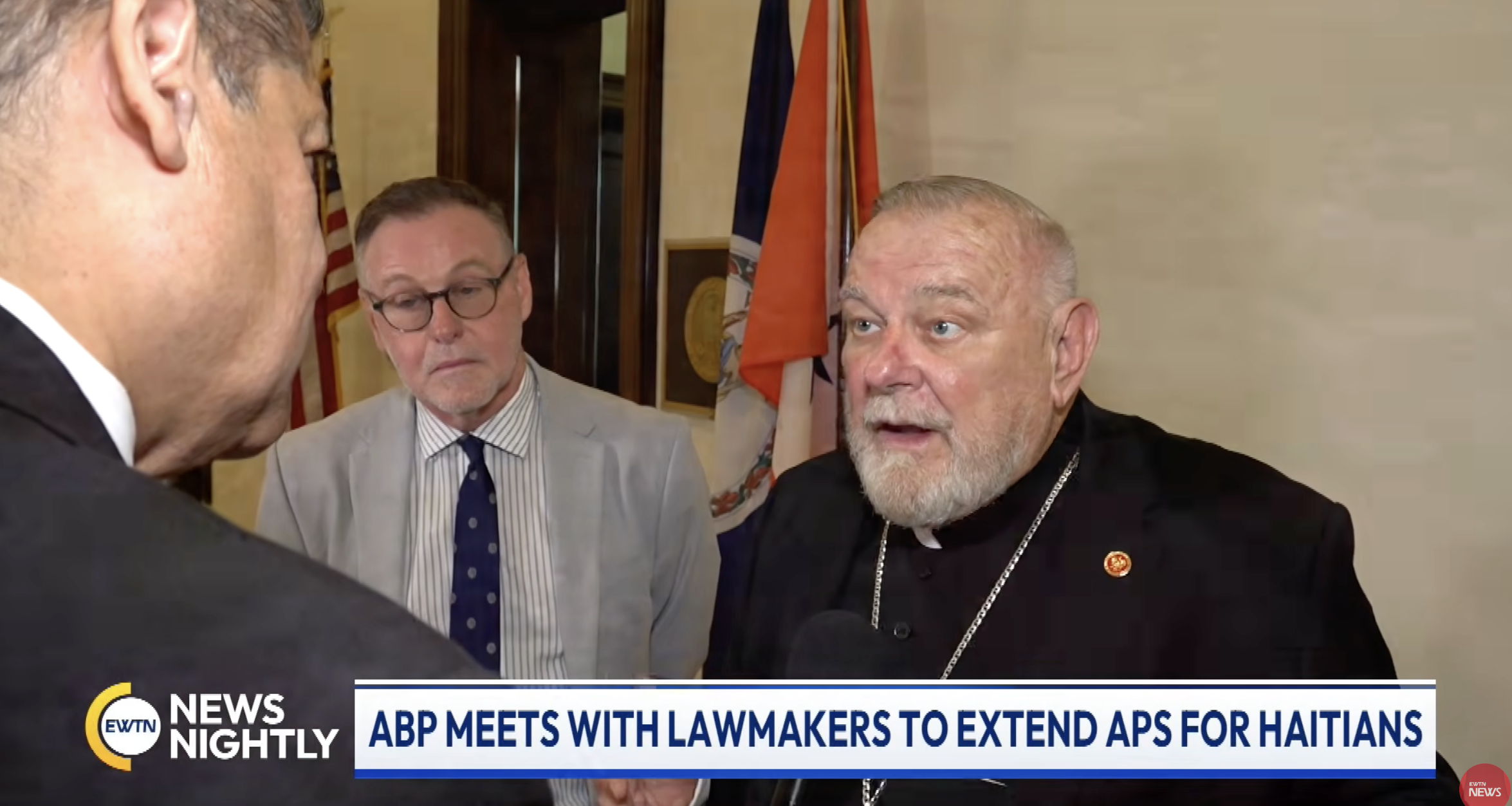
Read More
White House marks 45th anniversary of martyrdom of Blessed Stanley Rother #Catholic The White House issued a presidential message commemorating the 45th anniversary of the martyrdom of Blessed Stanley Rother, continuing the administrationʼs pattern of recognizing prominent Catholic feast days and observances.“Today, Melania and I join with American Catholics and people of faith all across the world in honoring the towering legacy of Father Stanley Rother — an Oklahoma farm boy, the first American-born martyr beatified by the Catholic Church, and a champion of human dignity who heroically laid down his life to bring the light of Jesus Christ to a people plagued by horrific darkness,” President Donald Trump, who is not Catholic, said in the July 28 message.Rother was an Oklahoma native who became a missionary priest in 1968, serving in “the war-torn highlands of Guatemala, then ravaged by conflict,” the message said.“Though thousands of Catholics were forcibly disappeared and viciously murdered during the Guatemalan Civil War, Father Rother nonetheless spent 13 years bringing the Gospel to those devastated by poverty and violence — translating sacred Scripture and helping to build a school, a hospital, and the region’s first Catholic radio station — fearlessly embodying Christ’s commission to ‘make disciples of all nations,’” the message said.In the late 1970s, Guatemalaʼs civil war intensified. Rother was surrounded by extreme poverty and saw parishioners murdered for their faith.Amid the conflict, Rother’s name appeared on a hit list, which prompted him to seek refuge in Oklahoma. Despite the dangers, he insisted on returning to Guatemala, “refusing to abandon his flock in their hour of need.”On July 28, 1981, three men entered Rother’s rectory and fatally shot him. He was 46 years old.Rother was declared blessed by Pope Francis, and in 2017 a beatification Mass was said in Oklahoma City, which houses the Blessed Stanley Rother Shrine.Archbishop Paul Coakley of Oklahoma City said in a homily July 28 at the Rother Shrine that he was surprised “to wake up to an email that contained a special message from the White House. I don’t know if you’ve seen it or heard about it, but the White House acknowledged this day in honoring the 45th anniversary of the death of Father Stanley Rother. I didn’t know we were on their radar screen.”“But what a … tremendous honor it is for the Church, for Oklahoma, for our nation, to have this distinction and this recognition of this ordinary martyr, this parish priest, this missionary martyr: Blessed Stanley Rother,” said Coakley, president of the U.S. Conference of Catholic Bishops (USCCB).A story of religious libertyThe presidential statement highlighted that Rother’s story is a reminder of “America’s rich tradition of religious liberty.”“In his honor, we recommit to remaining vigilant so that our birthright of freedom endures in the face of every trial,” Trump’s statement said. “Above all, we pray that every soul of faith, every lover of freedom, and every seeker of truth will forever remember the name and treasure the story of Father Stanley Rother.”Since his martyrdom, “Rother has stood as a living testament to the power of courage, sacrificial service, and fidelity to God,” the message said. “He has inspired widespread devotion among Catholics.”“And every day, countless priests, pastors, chaplains, and spiritual leaders faithfully look to Father Rother as they strive to carry out his immortal legacy of fortitude, charity, humility, service, generosity, and perseverance.”Marking Catholic observancesTrump has established a pattern of releasing White House statements addressing significant commemorative Catholic days, along with messages marking observances by other faith traditions such as Judaism and Islam.Since Trump began his second term, the White House has released Catholic-focused celebratory statements on the feast of St. Joseph, the birthday of St. Frances Xavier Cabrini, and St. Patrick’s Day, acknowledging the saints’ lives and legacies.It also released a message on the solemnity of the Immaculate Conception, which appeared to be the first time a U.S. president formally recognized the holy day “honoring the faith, humility, and love of Mary, mother of Jesus and one of the greatest figures in the Bible,” the statement said.The president also released a statement on the anniversary of the death of St. John Paul II, calling him “one the fiercest defenders of human dignity to ever live” and encouraging “every American to keep the memory of Pope Saint John Paul II alive for generations to come.”Ahead of the 250th anniversary of the U.S., the president also released a statement regarding the USCCB’s Mass consecrating the nation to the Sacred Heart of Jesus, which the president called “a powerful moment in our national story.”While releasing the formal presidential messages on Catholic matters, Trump has also criticized Pope Leo XIV, calling him “weak on crime” and “terrible for foreign policy” on his social media accounts amid the Iran conflict.The president gained widespread attention in April when he made the comments.Despite the online criticism and falsely suggesting that Pope Leo wants Iran to develop nuclear weapons, the president later told reporters he has “nothing against the pope.”

White House marks 45th anniversary of martyrdom of Blessed Stanley Rother #Catholic The White House issued a presidential message commemorating the 45th anniversary of the martyrdom of Blessed Stanley Rother, continuing the administrationʼs pattern of recognizing prominent Catholic feast days and observances.“Today, Melania and I join with American Catholics and people of faith all across the world in honoring the towering legacy of Father Stanley Rother — an Oklahoma farm boy, the first American-born martyr beatified by the Catholic Church, and a champion of human dignity who heroically laid down his life to bring the light of Jesus Christ to a people plagued by horrific darkness,” President Donald Trump, who is not Catholic, said in the July 28 message.Rother was an Oklahoma native who became a missionary priest in 1968, serving in “the war-torn highlands of Guatemala, then ravaged by conflict,” the message said.“Though thousands of Catholics were forcibly disappeared and viciously murdered during the Guatemalan Civil War, Father Rother nonetheless spent 13 years bringing the Gospel to those devastated by poverty and violence — translating sacred Scripture and helping to build a school, a hospital, and the region’s first Catholic radio station — fearlessly embodying Christ’s commission to ‘make disciples of all nations,’” the message said.In the late 1970s, Guatemalaʼs civil war intensified. Rother was surrounded by extreme poverty and saw parishioners murdered for their faith.Amid the conflict, Rother’s name appeared on a hit list, which prompted him to seek refuge in Oklahoma. Despite the dangers, he insisted on returning to Guatemala, “refusing to abandon his flock in their hour of need.”On July 28, 1981, three men entered Rother’s rectory and fatally shot him. He was 46 years old.Rother was declared blessed by Pope Francis, and in 2017 a beatification Mass was said in Oklahoma City, which houses the Blessed Stanley Rother Shrine.Archbishop Paul Coakley of Oklahoma City said in a homily July 28 at the Rother Shrine that he was surprised “to wake up to an email that contained a special message from the White House. I don’t know if you’ve seen it or heard about it, but the White House acknowledged this day in honoring the 45th anniversary of the death of Father Stanley Rother. I didn’t know we were on their radar screen.”“But what a … tremendous honor it is for the Church, for Oklahoma, for our nation, to have this distinction and this recognition of this ordinary martyr, this parish priest, this missionary martyr: Blessed Stanley Rother,” said Coakley, president of the U.S. Conference of Catholic Bishops (USCCB).A story of religious libertyThe presidential statement highlighted that Rother’s story is a reminder of “America’s rich tradition of religious liberty.”“In his honor, we recommit to remaining vigilant so that our birthright of freedom endures in the face of every trial,” Trump’s statement said. “Above all, we pray that every soul of faith, every lover of freedom, and every seeker of truth will forever remember the name and treasure the story of Father Stanley Rother.”Since his martyrdom, “Rother has stood as a living testament to the power of courage, sacrificial service, and fidelity to God,” the message said. “He has inspired widespread devotion among Catholics.”“And every day, countless priests, pastors, chaplains, and spiritual leaders faithfully look to Father Rother as they strive to carry out his immortal legacy of fortitude, charity, humility, service, generosity, and perseverance.”Marking Catholic observancesTrump has established a pattern of releasing White House statements addressing significant commemorative Catholic days, along with messages marking observances by other faith traditions such as Judaism and Islam.Since Trump began his second term, the White House has released Catholic-focused celebratory statements on the feast of St. Joseph, the birthday of St. Frances Xavier Cabrini, and St. Patrick’s Day, acknowledging the saints’ lives and legacies.It also released a message on the solemnity of the Immaculate Conception, which appeared to be the first time a U.S. president formally recognized the holy day “honoring the faith, humility, and love of Mary, mother of Jesus and one of the greatest figures in the Bible,” the statement said.The president also released a statement on the anniversary of the death of St. John Paul II, calling him “one the fiercest defenders of human dignity to ever live” and encouraging “every American to keep the memory of Pope Saint John Paul II alive for generations to come.”Ahead of the 250th anniversary of the U.S., the president also released a statement regarding the USCCB’s Mass consecrating the nation to the Sacred Heart of Jesus, which the president called “a powerful moment in our national story.”While releasing the formal presidential messages on Catholic matters, Trump has also criticized Pope Leo XIV, calling him “weak on crime” and “terrible for foreign policy” on his social media accounts amid the Iran conflict.The president gained widespread attention in April when he made the comments.Despite the online criticism and falsely suggesting that Pope Leo wants Iran to develop nuclear weapons, the president later told reporters he has “nothing against the pope.”

The White House has issued a string of statements acknowledging prominent Catholic feast days and observances.

Read More
Miami archbishop calls for ‘compassionate’ protections for Haitians ahead of TPS deadline #Catholic Miami Archbishop Thomas Wenski urged “compassionate” immigration protections for Haitians with temporary protected status (TPS) upon expiration of their automatic work‑permit extension.As “widespread violence, political instability, economic collapse, and humanitarian suffering” continue in Haiti, Wenski said July 24 that the Caribbean nation remains unsafe as a place for migrants to return. About 353,000 Haitian nationals hold TPS status in the U.S., according to the Department of Homeland Security (DHS).Miami’s archbishop said local ministries are “preparing for the consequences” of policy changes, including the termination of work authorizations for diocesan employees. Employment authorization documents (EADs) reached a court-extended expiration July 27.TPS is an immigration status granted to eligible foreign nationals from designated countries that are unsafe to return to due to ongoing conflict, environmental disasters, or other extraordinary conditions.The U.S. Supreme Court on June 25 ruled that DHS could end TPS for Haitians and Syrians. El Salvador’s TPS designation is set to expire Sept. 9.The U.S. House of Representatives passed legislation (H.R. 1689) in April that would add three more years of TPS for Haitian nationals. The legislation has stalled in the Senate.Catholic Health Services (CHS), one of the Archdiocese of Miamiʼs largest ministries, which employs a significant number of Haitian workers who hold TPS, “is currently evaluating the effects of the recent federal changes affecting TPS work authorization, Wenski said.“At this time, an estimated 40 to 50 valued employees may be affected, although the final number remains under review as the organization works individually with each employee based on his or her unique circumstances,” he said.Haitian CHS workers “are more than employees — they are members of our Church and our community,” Wenski said. “They care for the sick, comfort the elderly, and serve some of the most vulnerable among us with compassion and dedication.”Ahead of the deadline, Wenski said “our hearts are with our Haitian brothers and sisters who are living with uncertainty, fear, and anxiety about what the future may hold for themselves and their families.”“The Church recognizes the right of nations to secure their borders and to establish just immigration laws. At the same time, our Catholic faith calls us to uphold the dignity of every human person and to accompany those who are vulnerable,” he said. As “Haiti continues to endure profound hardship,” Wenski urged “elected leaders to pursue compassionate and humane solutions that protect family unity and recognize the extraordinary circumstances facing the Haitian people.”“To our Haitian brothers and sisters: You are not alone. The Catholic Church walks with you,” he said.Haitian workers in Ohio face uncertain futureOhio bishops also have called for continued TPS protections for Haitians, especially as Springfield, Ohio, is home to a large Haitian population. The Catholic Conference of Ohio released a June statement urging action and continued TPS.As the Supreme Court decision has left many families worried about losing their jobs, Ohio-based organizations are also preparing to aid those facing loss of TPS.In an interview July 24 with “EWTN News Nightly,” Casey Rollins, executive director of St. Vincent de Paul in Springfield, Ohio, said the organizationʼs team helps immigrants and nonimmigrants “while theyʼre enduring, or while theyʼre navigating … a crisis or a situation.”“That would be, in this case, once they lost their jobs, we will help them take care of their rent and utilities if they now canʼt pay that,” she said.For “over 60 years, weʼve helped Americans with rent and utilities and those kinds of necessities for independent living. Now weʼre doing that with Haitians and other immigrants whoʼve recently lost jobs,” she explained.“We also are helping the families who, many of them, are certain to be deported,” she said.Following the loss of workers in the Ohio community, “weʼre going to be in trouble,” she said. For years, the area needed “more workers here,” and the Haitian community was “taking a lot of these jobs.”

Miami archbishop calls for ‘compassionate’ protections for Haitians ahead of TPS deadline #Catholic Miami Archbishop Thomas Wenski urged “compassionate” immigration protections for Haitians with temporary protected status (TPS) upon expiration of their automatic work‑permit extension.As “widespread violence, political instability, economic collapse, and humanitarian suffering” continue in Haiti, Wenski said July 24 that the Caribbean nation remains unsafe as a place for migrants to return. About 353,000 Haitian nationals hold TPS status in the U.S., according to the Department of Homeland Security (DHS).Miami’s archbishop said local ministries are “preparing for the consequences” of policy changes, including the termination of work authorizations for diocesan employees. Employment authorization documents (EADs) reached a court-extended expiration July 27.TPS is an immigration status granted to eligible foreign nationals from designated countries that are unsafe to return to due to ongoing conflict, environmental disasters, or other extraordinary conditions.The U.S. Supreme Court on June 25 ruled that DHS could end TPS for Haitians and Syrians. El Salvador’s TPS designation is set to expire Sept. 9.The U.S. House of Representatives passed legislation (H.R. 1689) in April that would add three more years of TPS for Haitian nationals. The legislation has stalled in the Senate.Catholic Health Services (CHS), one of the Archdiocese of Miamiʼs largest ministries, which employs a significant number of Haitian workers who hold TPS, “is currently evaluating the effects of the recent federal changes affecting TPS work authorization, Wenski said.“At this time, an estimated 40 to 50 valued employees may be affected, although the final number remains under review as the organization works individually with each employee based on his or her unique circumstances,” he said.Haitian CHS workers “are more than employees — they are members of our Church and our community,” Wenski said. “They care for the sick, comfort the elderly, and serve some of the most vulnerable among us with compassion and dedication.”Ahead of the deadline, Wenski said “our hearts are with our Haitian brothers and sisters who are living with uncertainty, fear, and anxiety about what the future may hold for themselves and their families.”“The Church recognizes the right of nations to secure their borders and to establish just immigration laws. At the same time, our Catholic faith calls us to uphold the dignity of every human person and to accompany those who are vulnerable,” he said. As “Haiti continues to endure profound hardship,” Wenski urged “elected leaders to pursue compassionate and humane solutions that protect family unity and recognize the extraordinary circumstances facing the Haitian people.”“To our Haitian brothers and sisters: You are not alone. The Catholic Church walks with you,” he said.Haitian workers in Ohio face uncertain futureOhio bishops also have called for continued TPS protections for Haitians, especially as Springfield, Ohio, is home to a large Haitian population. The Catholic Conference of Ohio released a June statement urging action and continued TPS.As the Supreme Court decision has left many families worried about losing their jobs, Ohio-based organizations are also preparing to aid those facing loss of TPS.In an interview July 24 with “EWTN News Nightly,” Casey Rollins, executive director of St. Vincent de Paul in Springfield, Ohio, said the organizationʼs team helps immigrants and nonimmigrants “while theyʼre enduring, or while theyʼre navigating … a crisis or a situation.”“That would be, in this case, once they lost their jobs, we will help them take care of their rent and utilities if they now canʼt pay that,” she said.For “over 60 years, weʼve helped Americans with rent and utilities and those kinds of necessities for independent living. Now weʼre doing that with Haitians and other immigrants whoʼve recently lost jobs,” she explained.“We also are helping the families who, many of them, are certain to be deported,” she said.Following the loss of workers in the Ohio community, “weʼre going to be in trouble,” she said. For years, the area needed “more workers here,” and the Haitian community was “taking a lot of these jobs.”

Catholic Health Services, one of the Archdiocese of Miami’s largest ministries, faces losing an estimated 40 to 50 employees, Miami Archbishop Thomas Wenski said.
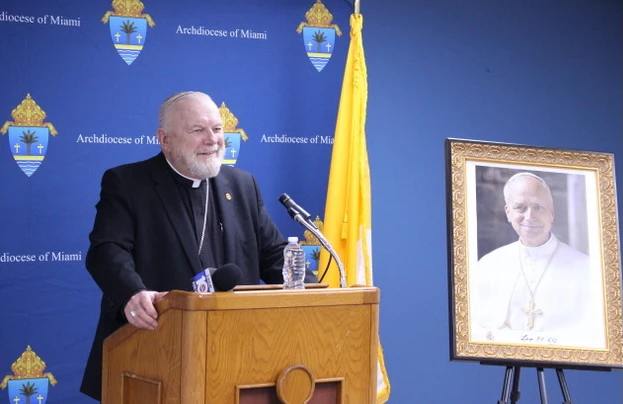
Read More
Catholic professor discusses Pope Leo’s peace efforts after Vatican’s nuclear weapon, AI conference #Catholic A Vatican-hosted summit on nuclear weapons and artificial intelligence (AI) highlighted Pope Leo XIV’s continued focus on peace-building efforts, according to a Catholic professor who participated in the event.Maryann Cusimano Love, chair of the politics department at The Catholic University of America and scholar of international relations and peace-building, discussed the Holy Father’s focus on the subject in an interview with “EWTN News In Depth” anchor Catherine Hadro.She also discussed a new book published by the Vatican on July 21, which compiles Leo’s writings and speeches on peace. The pontiff authored his own forward for the book, calling for the elimination of nuclear weapons globally.Peace-building is “a theme that Pope Leo has been consistent with since the beginning of his papacy, and it really fits with the times that weʼre in right now,” Love said.“Weʼre seeing expansion of war, weʼre seeing the expansion in the number of conflicts, the deadliness of these conflicts, and weʼre also seeing new ways in which new technologies are being used — AI drones, lethal autonomous weapons systems — that are very concerning,” she said.“So heʼs being a voice of really the practical, and a voice of the people, saying: Look, peace is possible. Peace is practical and peace is our calling, as Catholics and people of goodwill. This is something we can do. Weʼve done it before and we can do it again,” she said.Love was one of more than 200 academics who participated in the Vatican-hosted Global Nobel Laureates Assembly on Artificial Intelligence and Nuclear War from July 14–16. The assembly adopted the "Rome Declaration for an Unarmed and Disarming Peace,” which laid out concerns about how technological advancement affects warfare.“The Church has been advocating for the complete elimination of nuclear weapons as long as there have been nuclear weapons, and whatʼs added to this in this last weekʼs activities and the Rome Declaration is the layer of artificial intelligence that increases the urgency with which we need to proceed to disarm nuclear weapons,” Love said.“And it increases the ways in which we need to look at this interaction between AI and our and our military ecosystems,” she said. “So the call is specifically for the responsible use of AI, for there to be a slowing down in the integration of these systems, particularly into military systems, until we can be sure that theyʼre safe for the sharing of information between tech companies and the public about the vulnerabilities of these systems and the problem areas — the blind spots — these systems have.”The summit was inspired by Leo’s encyclical Magnifica Humanitas, which offers guidance on how society should approach AI. The encyclical specifically raises concerns about AI making decisions about life and death in warfare.

Catholic professor discusses Pope Leo’s peace efforts after Vatican’s nuclear weapon, AI conference #Catholic A Vatican-hosted summit on nuclear weapons and artificial intelligence (AI) highlighted Pope Leo XIV’s continued focus on peace-building efforts, according to a Catholic professor who participated in the event.Maryann Cusimano Love, chair of the politics department at The Catholic University of America and scholar of international relations and peace-building, discussed the Holy Father’s focus on the subject in an interview with “EWTN News In Depth” anchor Catherine Hadro.She also discussed a new book published by the Vatican on July 21, which compiles Leo’s writings and speeches on peace. The pontiff authored his own forward for the book, calling for the elimination of nuclear weapons globally.Peace-building is “a theme that Pope Leo has been consistent with since the beginning of his papacy, and it really fits with the times that weʼre in right now,” Love said.“Weʼre seeing expansion of war, weʼre seeing the expansion in the number of conflicts, the deadliness of these conflicts, and weʼre also seeing new ways in which new technologies are being used — AI drones, lethal autonomous weapons systems — that are very concerning,” she said.“So heʼs being a voice of really the practical, and a voice of the people, saying: Look, peace is possible. Peace is practical and peace is our calling, as Catholics and people of goodwill. This is something we can do. Weʼve done it before and we can do it again,” she said.Love was one of more than 200 academics who participated in the Vatican-hosted Global Nobel Laureates Assembly on Artificial Intelligence and Nuclear War from July 14–16. The assembly adopted the "Rome Declaration for an Unarmed and Disarming Peace,” which laid out concerns about how technological advancement affects warfare.“The Church has been advocating for the complete elimination of nuclear weapons as long as there have been nuclear weapons, and whatʼs added to this in this last weekʼs activities and the Rome Declaration is the layer of artificial intelligence that increases the urgency with which we need to proceed to disarm nuclear weapons,” Love said.“And it increases the ways in which we need to look at this interaction between AI and our and our military ecosystems,” she said. “So the call is specifically for the responsible use of AI, for there to be a slowing down in the integration of these systems, particularly into military systems, until we can be sure that theyʼre safe for the sharing of information between tech companies and the public about the vulnerabilities of these systems and the problem areas — the blind spots — these systems have.”The summit was inspired by Leo’s encyclical Magnifica Humanitas, which offers guidance on how society should approach AI. The encyclical specifically raises concerns about AI making decisions about life and death in warfare.

The pope has continued to advocate for peace-building and has warned against nuclear weapons and AI being integrated into the military.
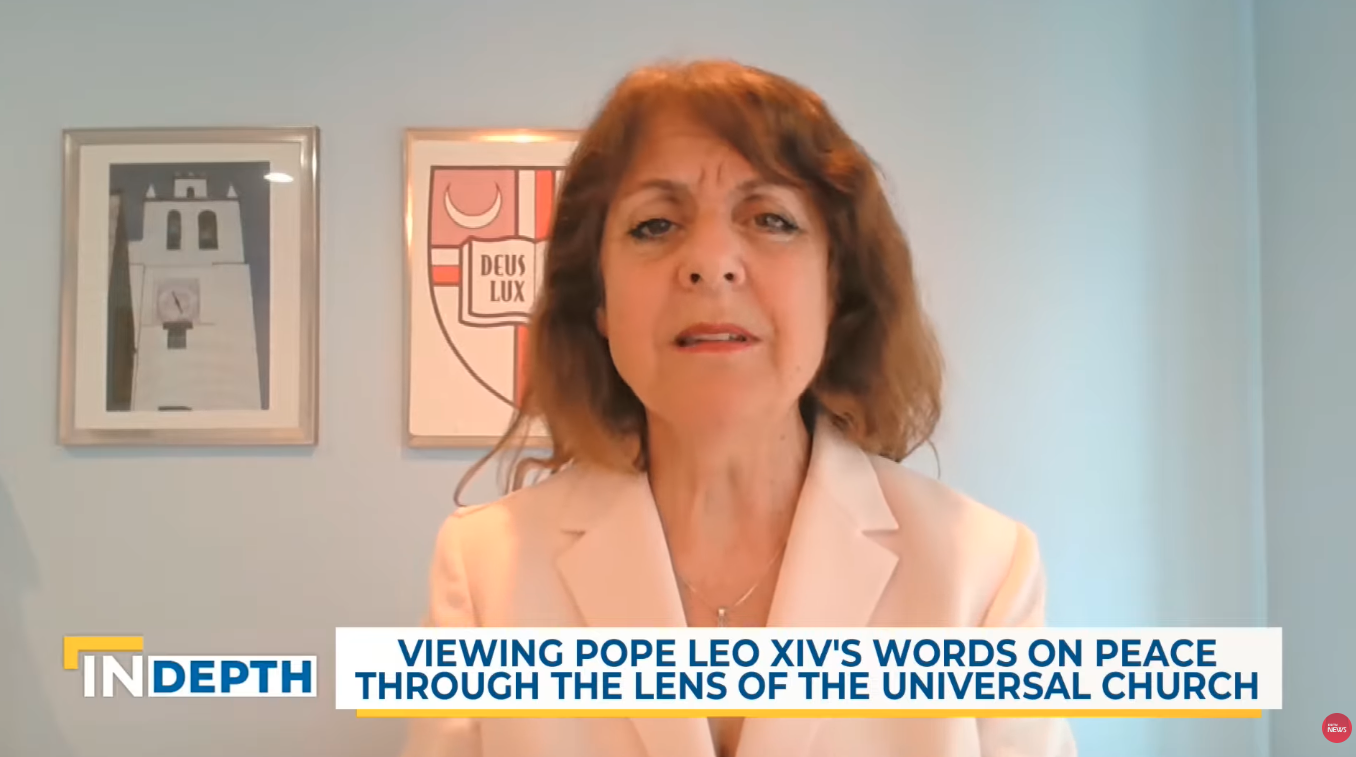

Read More
Ferrán Torres, the Catholic forward who won the World Cup for Spain #Catholic Ferrán Torres is the Catholic forward who secured a 1–0 victory for Spain over Messiʼs Argentina in the 2026 FIFA World Cup final, played on Sunday, July 19, in New Jersey.“The goal is the least important thing; right now, all I want is to grab that trophy and squeeze it as hard as I can, because I believe it represents the dream of the 47 million people we were representing on the pitch today — because I think we deserved it and we gave it our all,” said Ferrán Torres after the final.Torres, who plays for Barcelona in Spain, also said that the goal brought him a sense of relief, given the heavy criticism he had faced during the World Cup. “Thank God, He always gives me the strength to keep going, and in the end — as I always say — God grants things to those who deserve them most,” the forward emphasized.Days before the final, a video was released in which Torres spoke about the importance of God in his life. “I have a cross and an image of the Virgin Mary; ultimately, I think having such strong faith gives me great support — it is something very important to me,” remarked the Spanish forward, who was named the final’s Superior Player of the Match.TweetTorres stands out for his Catholic faith within the Spanish national team, alongside coach Luis de la Fuente — who, at the press conference prior to the semifinal match where they defeated France 2–0, stated that he prays “every day, but not because I am at a World Cup or in order to get a result.”“I give thanks every day — every day I wake up and find myself well, I look at myself and say: ‘Another day I can enjoy life.’ I give thanks for those little things. I pray—because I do pray every day — not to ask for more help,” the Spanish head coach explained at the time.This story was first published by ACI Prensa, the Spanish-language sister service of EWTN News. It has been translated and adapted by EWTN News English.

Ferrán Torres, the Catholic forward who won the World Cup for Spain #Catholic Ferrán Torres is the Catholic forward who secured a 1–0 victory for Spain over Messiʼs Argentina in the 2026 FIFA World Cup final, played on Sunday, July 19, in New Jersey.“The goal is the least important thing; right now, all I want is to grab that trophy and squeeze it as hard as I can, because I believe it represents the dream of the 47 million people we were representing on the pitch today — because I think we deserved it and we gave it our all,” said Ferrán Torres after the final.Torres, who plays for Barcelona in Spain, also said that the goal brought him a sense of relief, given the heavy criticism he had faced during the World Cup. “Thank God, He always gives me the strength to keep going, and in the end — as I always say — God grants things to those who deserve them most,” the forward emphasized.Days before the final, a video was released in which Torres spoke about the importance of God in his life. “I have a cross and an image of the Virgin Mary; ultimately, I think having such strong faith gives me great support — it is something very important to me,” remarked the Spanish forward, who was named the final’s Superior Player of the Match.TweetTorres stands out for his Catholic faith within the Spanish national team, alongside coach Luis de la Fuente — who, at the press conference prior to the semifinal match where they defeated France 2–0, stated that he prays “every day, but not because I am at a World Cup or in order to get a result.”“I give thanks every day — every day I wake up and find myself well, I look at myself and say: ‘Another day I can enjoy life.’ I give thanks for those little things. I pray—because I do pray every day — not to ask for more help,” the Spanish head coach explained at the time.This story was first published by ACI Prensa, the Spanish-language sister service of EWTN News. It has been translated and adapted by EWTN News English.

Torres stands out for his Catholic faith within the Spanish national team, alongside coach Luis de la Fuente.

Read More
Catholic, Orthodox bishops join in dialogue and prayer at Washington, D.C., conference #Catholic Catholic and Eastern Orthodox bishops exchanged dialogue and joined together in prayer at an ecumenical conference in Washington, D.C., this week with a hope that one day the Eastern and Western churches will be reunited.The conference, held at the retreat house for the St. John Paul II National Shrine on July 13–15, was organized by the Orientale Lumen Foundation. Jack Figel, an Eastern Catholic who founded the group, named it after St. John Paul II’s apostolic letter expressing hope for reunification.Speakers included the secretary for the Vatican Dicastery for Promoting Christian Unity, Archbishop Flavio Pace; the primate of the Orthodox Church in America, Metropolitan Tikhon Mollard; Cardinal Seán Patrick OʼMalley; Greek Orthodox Bishop Anthony Vrame; and Romanian Catholic Bishop John Michael Botean.“I grew up with — I lived with — the tension between East and West my whole life,” Figel told EWTN News.A reunification, Figel said, “all depends on the Holy Spirit.” He said: “It is going to be a miracle and it’s going to be on God’s time.”The conference included speeches by both Catholic and Orthodox bishops and joint panels. Prayer services were held in the Eastern form in which bishops from both traditions participated: a moleben to the Holy Spirit on Monday, daily vespers on Tuesday, and the Akathist to the Mother of God on Wednesday.Theological hurdlesRecent popes have had friendly relations with Eastern Orthodox patriarchs, and ongoing study by the Joint International Commission for Theological Dialogue between the Roman Catholic Church and the Orthodox Church is seeking to resolve theological disputes.In 2024, the commission set up two subcommittees to analyze two major points of contention: one for papal infallibility and the other for the Filioque.Papal infallibility refers to Vatican I’s teaching that the pope can infallibly define doctrines. The Filioque — Latin for “and the Son” — refers to the West adding the phrase in the Nicene Creed “the Holy Spirit … who proceeds from the Father ‘and the Son.’” Catholics argue this clarifies the Latin translation of the Creed, which was originally in Greek; but many Orthodox see it as changing the understanding of the Trinity.Vrame told EWTN News these theological issues continue to be a hurdle toward Catholic and Orthodox communion.The No. 1 issueSpeaking from the Orthodox perspective, he said papal infallibility and supremacy is the No. 1 issue. Although Orthodox acknowledge Ecumenical Patriarch Bartholomew as “first among equals” among patriarchs, “our governance structure allows for each national Church to govern itself,” he said.Dialogue with Rome, Vrame said, must address questions of “how do we begin to understand any claims of universal jurisdiction of the papacy” and “how do we understand any form of papal infallibility.” He said the Catholic embrace of synodality could improve dialogue on this issue.He said a major question is what unity would look like and pointed toward Rome’s relationship with Eastern Catholics as a possible example, saying they are “in communion with Rome,” but “Rome allowed them to retain their distinctive rites and practices.” However, he noted historical complications with Rome’s past attempts to Latinize Eastern Catholics and a major question to settle is: “What would unity do?”Mollard also told EWTN News “the whole question of primacy and synodality” remains a major issue, along with “centuries of separation,” which he said “doesn’t help either.”Pace told EWTN News that the subcommittee addressing infallibility has to “prepare a very good draft” on the matter that the full committee made up of Catholic and Orthodox leaders “can discuss and approve.”Steps toward unityAs the hierarchy tries to work out millennium-old theological disputes, Mollard said another step is “trying to get from the theological [dialogue] to the implementation” of a stronger relationship but warned “everyone’s afraid to do anything.”“We do have to practice these things,” he said in his speech. “Let’s work together and see if we can find our unity in Christ … [and] work on the structures that could bring that about more formally.”“Prayer and humility are always good,” Mollard said.He told EWTN News that some steps could be jointly “caring for the poor” or “feeding the hungry,” which is “the most direct way that collaboration can take place” at this time. In his speech, O’Malley called for joint prayer and study sessions, joint pastoral letters and statements, and joint works of mercy.Figel suggested Catholic and Orthodox parishes should “pray once a month for unity for at least 10 or 15 minutes.”Ultimately, Vrame said full unity and communion would be expressed “in the Eucharist” if all issues are resolved.“We don’t share the Eucharist,” he said. “That would be the culminating moment.”Dialogue and the laityMany bishops said dialogue and bonds should take place among laity too, with Botean saying in his speech that ecumenism cannot just be “at the level of academics.”“Without the face-to-face stuff, … we’re going to get nowhere,” he said. “And if our competition is the internet, we have more driving us apart than together.”Botean warned against hostile and uncharitable exchanges, many of which occur on social media, saying: “When we become unloving because of our faith, we’re on the wrong track.”Lizbeth Moncada, a senior at Florida Atlantic University who attended the conference, told EWTN News that she has “a lot of friends who are Eastern Orthodox and Oriental Orthodox” but agreed that online dialogue can often be “polarizing.”She said exchanges online can be “very disheartening” and she has “wanted to stop engaging in these conversations” at times. Yet, she said discussions like what occurred at the conference are “encouraging.”Andrew Likoudis of the ecumenical Likoudis Legacy Foundation, told EWTN News: “I try not to even engage in online discourse because of how toxic it is.” Yet, he said “the discourse here is much healthier” and allows Catholics and Orthodox Christians to “cross theological boundaries and retain the integrity of our own traditions without compromise.”Vrame, commenting on dialogue, said “beating up on somebody else is not very Christian … no matter what you think of their position.” He said people can have “respectful disagreements … without having to beat up on somebody,” saying that’s “no way to show love for your neighbor.”He said it’s good that people are passionate about their faith but posed the question: “Are we passionate in a way that reflects Christ and Christianity?”

Catholic, Orthodox bishops join in dialogue and prayer at Washington, D.C., conference #Catholic Catholic and Eastern Orthodox bishops exchanged dialogue and joined together in prayer at an ecumenical conference in Washington, D.C., this week with a hope that one day the Eastern and Western churches will be reunited.The conference, held at the retreat house for the St. John Paul II National Shrine on July 13–15, was organized by the Orientale Lumen Foundation. Jack Figel, an Eastern Catholic who founded the group, named it after St. John Paul II’s apostolic letter expressing hope for reunification.Speakers included the secretary for the Vatican Dicastery for Promoting Christian Unity, Archbishop Flavio Pace; the primate of the Orthodox Church in America, Metropolitan Tikhon Mollard; Cardinal Seán Patrick OʼMalley; Greek Orthodox Bishop Anthony Vrame; and Romanian Catholic Bishop John Michael Botean.“I grew up with — I lived with — the tension between East and West my whole life,” Figel told EWTN News.A reunification, Figel said, “all depends on the Holy Spirit.” He said: “It is going to be a miracle and it’s going to be on God’s time.”The conference included speeches by both Catholic and Orthodox bishops and joint panels. Prayer services were held in the Eastern form in which bishops from both traditions participated: a moleben to the Holy Spirit on Monday, daily vespers on Tuesday, and the Akathist to the Mother of God on Wednesday.Theological hurdlesRecent popes have had friendly relations with Eastern Orthodox patriarchs, and ongoing study by the Joint International Commission for Theological Dialogue between the Roman Catholic Church and the Orthodox Church is seeking to resolve theological disputes.In 2024, the commission set up two subcommittees to analyze two major points of contention: one for papal infallibility and the other for the Filioque.Papal infallibility refers to Vatican I’s teaching that the pope can infallibly define doctrines. The Filioque — Latin for “and the Son” — refers to the West adding the phrase in the Nicene Creed “the Holy Spirit … who proceeds from the Father ‘and the Son.’” Catholics argue this clarifies the Latin translation of the Creed, which was originally in Greek; but many Orthodox see it as changing the understanding of the Trinity.Vrame told EWTN News these theological issues continue to be a hurdle toward Catholic and Orthodox communion.The No. 1 issueSpeaking from the Orthodox perspective, he said papal infallibility and supremacy is the No. 1 issue. Although Orthodox acknowledge Ecumenical Patriarch Bartholomew as “first among equals” among patriarchs, “our governance structure allows for each national Church to govern itself,” he said.Dialogue with Rome, Vrame said, must address questions of “how do we begin to understand any claims of universal jurisdiction of the papacy” and “how do we understand any form of papal infallibility.” He said the Catholic embrace of synodality could improve dialogue on this issue.He said a major question is what unity would look like and pointed toward Rome’s relationship with Eastern Catholics as a possible example, saying they are “in communion with Rome,” but “Rome allowed them to retain their distinctive rites and practices.” However, he noted historical complications with Rome’s past attempts to Latinize Eastern Catholics and a major question to settle is: “What would unity do?”Mollard also told EWTN News “the whole question of primacy and synodality” remains a major issue, along with “centuries of separation,” which he said “doesn’t help either.”Pace told EWTN News that the subcommittee addressing infallibility has to “prepare a very good draft” on the matter that the full committee made up of Catholic and Orthodox leaders “can discuss and approve.”Steps toward unityAs the hierarchy tries to work out millennium-old theological disputes, Mollard said another step is “trying to get from the theological [dialogue] to the implementation” of a stronger relationship but warned “everyone’s afraid to do anything.”“We do have to practice these things,” he said in his speech. “Let’s work together and see if we can find our unity in Christ … [and] work on the structures that could bring that about more formally.”“Prayer and humility are always good,” Mollard said.He told EWTN News that some steps could be jointly “caring for the poor” or “feeding the hungry,” which is “the most direct way that collaboration can take place” at this time. In his speech, O’Malley called for joint prayer and study sessions, joint pastoral letters and statements, and joint works of mercy.Figel suggested Catholic and Orthodox parishes should “pray once a month for unity for at least 10 or 15 minutes.”Ultimately, Vrame said full unity and communion would be expressed “in the Eucharist” if all issues are resolved.“We don’t share the Eucharist,” he said. “That would be the culminating moment.”Dialogue and the laityMany bishops said dialogue and bonds should take place among laity too, with Botean saying in his speech that ecumenism cannot just be “at the level of academics.”“Without the face-to-face stuff, … we’re going to get nowhere,” he said. “And if our competition is the internet, we have more driving us apart than together.”Botean warned against hostile and uncharitable exchanges, many of which occur on social media, saying: “When we become unloving because of our faith, we’re on the wrong track.”Lizbeth Moncada, a senior at Florida Atlantic University who attended the conference, told EWTN News that she has “a lot of friends who are Eastern Orthodox and Oriental Orthodox” but agreed that online dialogue can often be “polarizing.”She said exchanges online can be “very disheartening” and she has “wanted to stop engaging in these conversations” at times. Yet, she said discussions like what occurred at the conference are “encouraging.”Andrew Likoudis of the ecumenical Likoudis Legacy Foundation, told EWTN News: “I try not to even engage in online discourse because of how toxic it is.” Yet, he said “the discourse here is much healthier” and allows Catholics and Orthodox Christians to “cross theological boundaries and retain the integrity of our own traditions without compromise.”Vrame, commenting on dialogue, said “beating up on somebody else is not very Christian … no matter what you think of their position.” He said people can have “respectful disagreements … without having to beat up on somebody,” saying that’s “no way to show love for your neighbor.”He said it’s good that people are passionate about their faith but posed the question: “Are we passionate in a way that reflects Christ and Christianity?”

Catholic and Orthodox bishops discussed steps toward unity and the importance of cooperation and friendly dialogue.
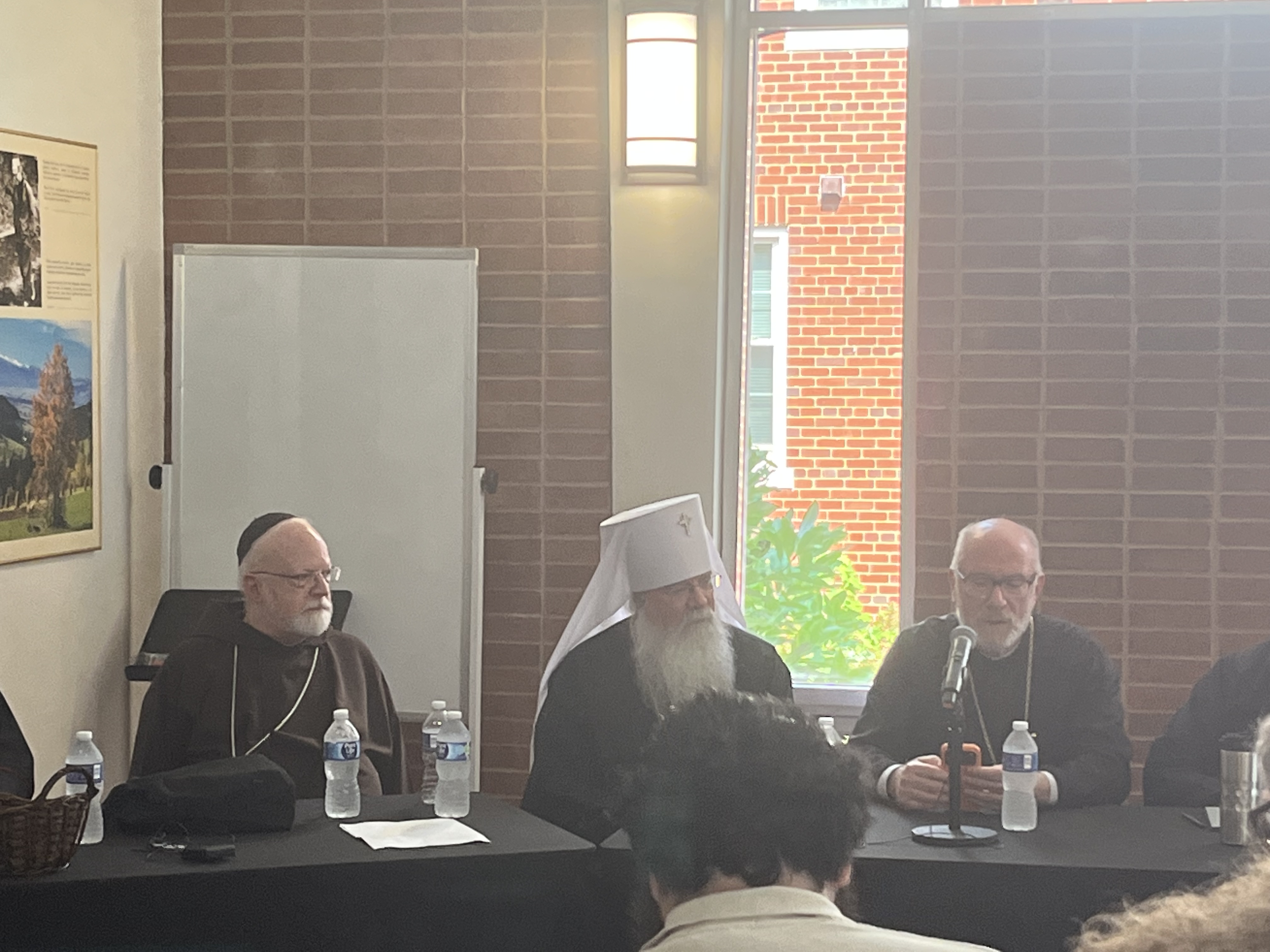
Read More
Cardinal O’Malley at Catholic-Orthodox conference: ‘Come together and pray for unity’ #Catholic WASHINGTON — Cardinal Seán Patrick OʼMalley, retired archbishop of Boston, encouraged Catholic and Eastern Orthodox Christians to pray together for reunification at a joint conference focused on healing the nearly 1,000-year schism between the churches.“Come together and pray for unity,” O’Malley said at the conference, hosted by the Orientale Lumen Foundation at the retreat house for the St. John Paul II National Shrine on July 13–15.Speakers included Roman Catholic, Eastern Catholic, and Eastern Orthodox bishops, and a few dozen laity and clergy focused on ecumenism attended. Along with O’Malley, speakers included Archbishop Flavio Pace — secretary of the Vatican’s Dicastery for Promoting Christian Unity — and Metropolitan Tikhon Mollard, primate of the Orthodox Church in America (OCA).O’Malley encouraged concrete steps to integrate Catholic and Orthodox communities, one of the most important of which was “praying together.” Just prior to his speech, the Catholic and Orthodox clergy — including O’Malley, Pace, and Mollard — prayed daily vespers together in the form used in Eastern churches.The cardinal, speaking to those gathered, said unity will ultimately be achieved as a gift to the faithful granted by Christ and will come about “how he wills [it].” He said he considers joint prayer to be crucial because it is the Holy Spirit who will “illuminate the way” toward East-West communion.‘Work for unity’In his address, O’Malley discussed his concern with the disunity of Christianity, which he said “weakens our ability [as Christians] to proclaim the Gospel with coherence and authority.”He recalled his early work in the 1970s with the Order of Friars Minor Capuchin. The order was deeply involved in missionary work in Papua New Guinea. Although O’Malley himself was not a missionary there, he spoke about conversations with colleagues who were working with people accepting Christianity in large numbers.O’Malley noted that when new converts had learned about the various Christian denominations, many felt “sad and embarrassed.” Although many Christians view the disunity as “normative,” he said, the people of Papua New Guinea correctly recognized it as “scandalous.”“All disciples of Jesus Christ must feel an impulse to work for unity among Christians,” O’Malley said.O’Malley said Catholics should see Orthodoxy as the “greatest possibility of success in this task in fulfilling Christ’s wish so that we all become one so the world may believe.” He noted that the two share “so many saints and devotions” and are more similar to Catholics in theology than any other Christian community.He expressed joy that many Orthodox churches send representatives to meetings held by the Vatican and the U.S. Conference of Catholic Bishops, and that the Catholic Church also sent representatives to the Orthodox Council of Crete in 2016. Yet, he encouraged a stronger bond.O’Malley urged the bodies to “consider the possibility of joint pastoral letters or statements” on issues of mutual agreement like world hunger, euthanasia, and abortion. He said they should establish committees together to organize joint prayer, study sessions, and works of mercy.His idea of unity, he explained, would be “communion without absorption” and said there is a difference between “unity and uniformity.” He said people should look to the Eastern Catholic Churches as a model, saying “they are bridges for reconciliation and laboratories for synodal communion.”Although Rome’s relationship with the Eastern Catholics was not always perfect (O’Malley noted historical attempts at forced Latinization), the cardinal said there is an opportunity to work more closely with Eastern Catholics as part of ecumenical efforts, focused on “greater respect for their uniqueness.”Mollard, speaking from the Orthodox position, echoed O’Malley’s desire for unity and the feeling of pain over continued separation.“It affects the faithful in the parishes and how they live their lives,” the metropolitan said. “And perhaps encourage[s] us all to not just reach out and educate but really inspire in people that faith in Christ and love for the Church can drive … [the path toward] unity.”O’Malley told EWTN News that ecumenism requires “different groups that would be Catholic and Orthodox, working together,” and Church leaders should be “letting people know the progress that has been made in the dialogue.”He said Eastern Orthodox Christians “have the sacraments,” they have apostolic succession, and “the differences are not great.” Although theological disputes remain a division between Catholicism and Orthodoxy, he said he believes the causes of the schism were more political and cultural.“Most Catholics and Orthodox in the pews are not focused on those fine points of theology,” O’Malley said.Ongoing Vatican ecumenical workMany theological disputes, however, are being hashed out at the highest levels of the Catholic and Eastern Orthodox Churches. Some of the biggest include questions of papal supremacy, primacy, and jurisdiction as well as the language of the Nicene Creed and subsequently certain details about the Holy Trinity.Pace, who flew in from Rome, discussed some of the history and recent progress on ecumenism related to these subjects during his speech, noting that the end goal is “full unity” between the East and the West.
 
 Archbishop Flavio Pace, secretary of the Vatican’s Dicastery for Promoting Christian Unity, speaks at the Orientale Lumen Foundation conference at the retreat house for the St. John Paul II National Shrine in Washington, D.C., on July 15, 2026. | Credit: Tyler Arnold/EWTN News

 
 The Joint International Commission for Theological Dialogue between the Roman Catholic Church and the Orthodox Church, formed in 1980, created two subcommittees in 2024. One focuses on infallibility, which is the current priority. The other is about the dispute about the Nicene Creed."We have to prepare a very good draft,” Pace told EWTN News.He said once the subcommittee completes its draft on infallibility, the body will consider a call for a full meeting for approval. He said the subcommittee must “arrive to a good document that the [full committee] can discuss and approve.”The First Vatican Council teaches that the pope speaks infallibly on matters of faith and morals when defining matters of doctrine and invoking his papal authority, binding the declaration on the entire Church.Bishop Anthony Vrame, a Greek Orthodox bishop and director of Holy Cross Orthodox Press, said in a panel discussion that Orthodoxy recognizes the indefectibility of councils: “When the Church gathers together in council, … no error is possible.” Yet, papal infallibility is different, as it is “designated to one person.”Cardinal Kurt Koch, president of the Vatican’s Dicastery for Promoting Christian Unity, offered a prerecorded video message for the conference, stating that he hopes the eventual documents will be received by the Catholic Church and Eastern Orthodox churches.Koch emphasized the importance of clergy informing the laity when there are developments, so the progress is “not to be remained known only by experts.”

Cardinal O’Malley at Catholic-Orthodox conference: ‘Come together and pray for unity’ #Catholic WASHINGTON — Cardinal Seán Patrick OʼMalley, retired archbishop of Boston, encouraged Catholic and Eastern Orthodox Christians to pray together for reunification at a joint conference focused on healing the nearly 1,000-year schism between the churches.“Come together and pray for unity,” O’Malley said at the conference, hosted by the Orientale Lumen Foundation at the retreat house for the St. John Paul II National Shrine on July 13–15.Speakers included Roman Catholic, Eastern Catholic, and Eastern Orthodox bishops, and a few dozen laity and clergy focused on ecumenism attended. Along with O’Malley, speakers included Archbishop Flavio Pace — secretary of the Vatican’s Dicastery for Promoting Christian Unity — and Metropolitan Tikhon Mollard, primate of the Orthodox Church in America (OCA).O’Malley encouraged concrete steps to integrate Catholic and Orthodox communities, one of the most important of which was “praying together.” Just prior to his speech, the Catholic and Orthodox clergy — including O’Malley, Pace, and Mollard — prayed daily vespers together in the form used in Eastern churches.The cardinal, speaking to those gathered, said unity will ultimately be achieved as a gift to the faithful granted by Christ and will come about “how he wills [it].” He said he considers joint prayer to be crucial because it is the Holy Spirit who will “illuminate the way” toward East-West communion.‘Work for unity’In his address, O’Malley discussed his concern with the disunity of Christianity, which he said “weakens our ability [as Christians] to proclaim the Gospel with coherence and authority.”He recalled his early work in the 1970s with the Order of Friars Minor Capuchin. The order was deeply involved in missionary work in Papua New Guinea. Although O’Malley himself was not a missionary there, he spoke about conversations with colleagues who were working with people accepting Christianity in large numbers.O’Malley noted that when new converts had learned about the various Christian denominations, many felt “sad and embarrassed.” Although many Christians view the disunity as “normative,” he said, the people of Papua New Guinea correctly recognized it as “scandalous.”“All disciples of Jesus Christ must feel an impulse to work for unity among Christians,” O’Malley said.O’Malley said Catholics should see Orthodoxy as the “greatest possibility of success in this task in fulfilling Christ’s wish so that we all become one so the world may believe.” He noted that the two share “so many saints and devotions” and are more similar to Catholics in theology than any other Christian community.He expressed joy that many Orthodox churches send representatives to meetings held by the Vatican and the U.S. Conference of Catholic Bishops, and that the Catholic Church also sent representatives to the Orthodox Council of Crete in 2016. Yet, he encouraged a stronger bond.O’Malley urged the bodies to “consider the possibility of joint pastoral letters or statements” on issues of mutual agreement like world hunger, euthanasia, and abortion. He said they should establish committees together to organize joint prayer, study sessions, and works of mercy.His idea of unity, he explained, would be “communion without absorption” and said there is a difference between “unity and uniformity.” He said people should look to the Eastern Catholic Churches as a model, saying “they are bridges for reconciliation and laboratories for synodal communion.”Although Rome’s relationship with the Eastern Catholics was not always perfect (O’Malley noted historical attempts at forced Latinization), the cardinal said there is an opportunity to work more closely with Eastern Catholics as part of ecumenical efforts, focused on “greater respect for their uniqueness.”Mollard, speaking from the Orthodox position, echoed O’Malley’s desire for unity and the feeling of pain over continued separation.“It affects the faithful in the parishes and how they live their lives,” the metropolitan said. “And perhaps encourage[s] us all to not just reach out and educate but really inspire in people that faith in Christ and love for the Church can drive … [the path toward] unity.”O’Malley told EWTN News that ecumenism requires “different groups that would be Catholic and Orthodox, working together,” and Church leaders should be “letting people know the progress that has been made in the dialogue.”He said Eastern Orthodox Christians “have the sacraments,” they have apostolic succession, and “the differences are not great.” Although theological disputes remain a division between Catholicism and Orthodoxy, he said he believes the causes of the schism were more political and cultural.“Most Catholics and Orthodox in the pews are not focused on those fine points of theology,” O’Malley said.Ongoing Vatican ecumenical workMany theological disputes, however, are being hashed out at the highest levels of the Catholic and Eastern Orthodox Churches. Some of the biggest include questions of papal supremacy, primacy, and jurisdiction as well as the language of the Nicene Creed and subsequently certain details about the Holy Trinity.Pace, who flew in from Rome, discussed some of the history and recent progress on ecumenism related to these subjects during his speech, noting that the end goal is “full unity” between the East and the West. Archbishop Flavio Pace, secretary of the Vatican’s Dicastery for Promoting Christian Unity, speaks at the Orientale Lumen Foundation conference at the retreat house for the St. John Paul II National Shrine in Washington, D.C., on July 15, 2026. | Credit: Tyler Arnold/EWTN News The Joint International Commission for Theological Dialogue between the Roman Catholic Church and the Orthodox Church, formed in 1980, created two subcommittees in 2024. One focuses on infallibility, which is the current priority. The other is about the dispute about the Nicene Creed."We have to prepare a very good draft,” Pace told EWTN News.He said once the subcommittee completes its draft on infallibility, the body will consider a call for a full meeting for approval. He said the subcommittee must “arrive to a good document that the [full committee] can discuss and approve.”The First Vatican Council teaches that the pope speaks infallibly on matters of faith and morals when defining matters of doctrine and invoking his papal authority, binding the declaration on the entire Church.Bishop Anthony Vrame, a Greek Orthodox bishop and director of Holy Cross Orthodox Press, said in a panel discussion that Orthodoxy recognizes the indefectibility of councils: “When the Church gathers together in council, … no error is possible.” Yet, papal infallibility is different, as it is “designated to one person.”Cardinal Kurt Koch, president of the Vatican’s Dicastery for Promoting Christian Unity, offered a prerecorded video message for the conference, stating that he hopes the eventual documents will be received by the Catholic Church and Eastern Orthodox churches.Koch emphasized the importance of clergy informing the laity when there are developments, so the progress is “not to be remained known only by experts.”

Cardinal Seán O’Malley discussed ways in which Catholics and Orthodox Christians can build closer bonds. Archbishop Flavio Pace discussed ongoing Vatican efforts to help bring about unity.
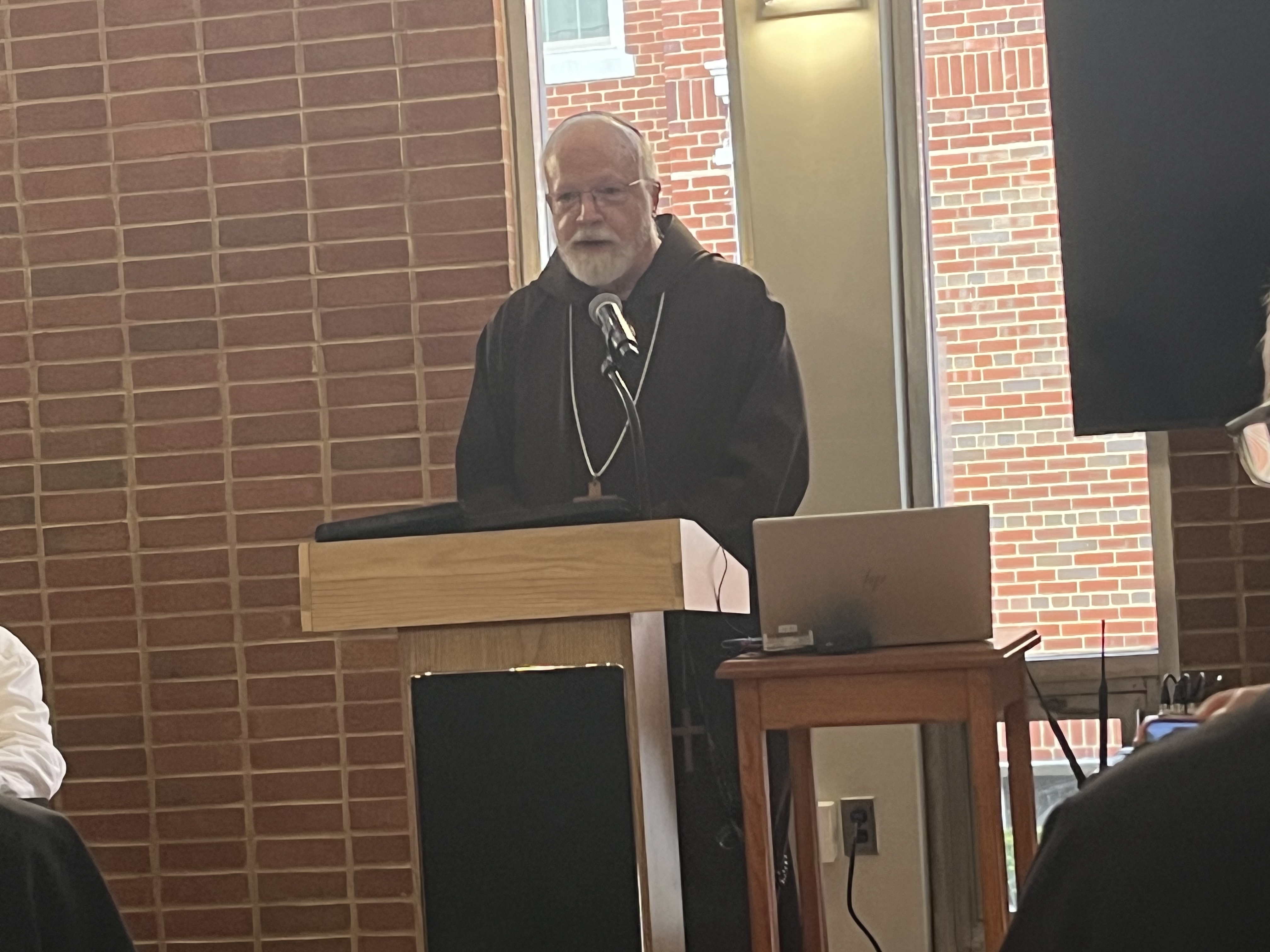
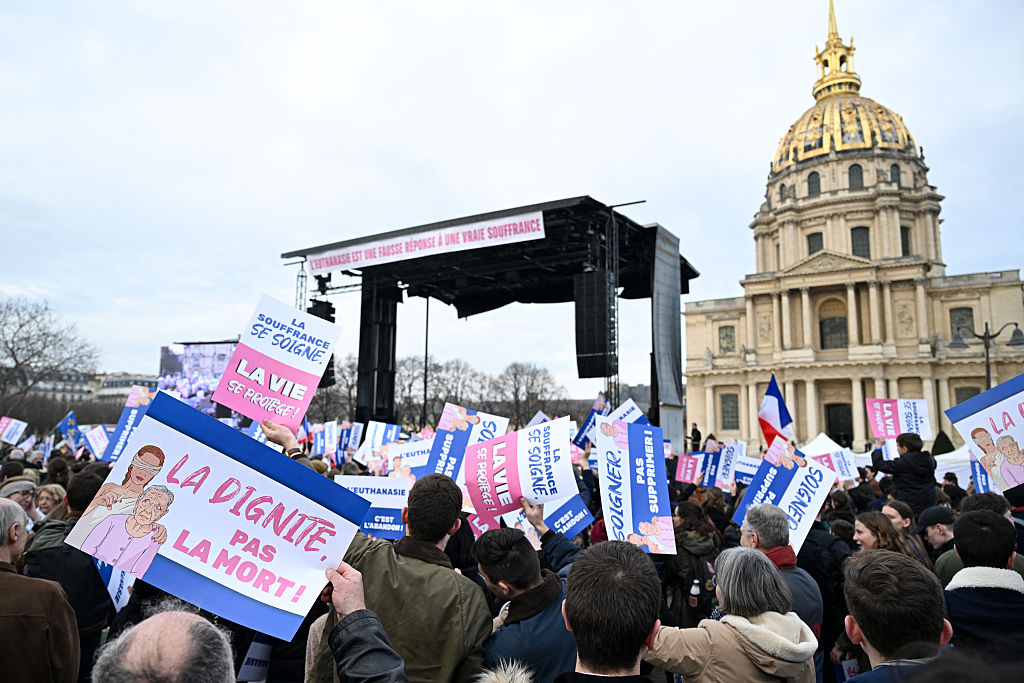
Read More
France legalizes euthanasia after forceful push through Parliament #Catholic The French National Assembly gave final approval on July 15 to a bill legalizing euthanasia and assisted suicide, making France one of the few European countries to legalize the practice along with Belgium, the Netherlands, Luxembourg, and Spain. The 291-241 vote came three years after President Emmanuel Macron, who had made it one of his key campaign promises, first opened the question to national debate.The vote ended an unusual parliamentary stalemate between the National Assembly and the Senate. Members of the National Assembly passed the bill three times over the course of 14 months — most recently on June 30 by a vote of 295 to 232 — and senators rejected it just as many times. On July 7, the Senate passed, by a narrow majority of 169 to 164, with 11 abstentions, a preliminary motion to outright reject the bill rather than debate it, and this motion itself called on the government to end the legislative process. Rather than heeding this call, Prime Minister Sébastien Lecornu invoked Article 45 of the Constitution, which allows the government to give the National Assembly the final say when repeated readings fail to produce an agreement between the two chambers. He then referred the bill back to the National Assembly for a fourth and final vote instead of a fourth reading in the Senate.The July 15 vote, however, did not close the matter. On July 14, Lecornu announced he would refer part of the text to the Constitutional Council, a step Senate President Gérard Larcher had also urged, citing in particular how the billʼs conscience clause would interact with health and social care facilities built around end-of-life accompaniment that exclude assisted dying. The council must rule within a month, or eight days if the government asks for an expedited review, meaning the law cannot be promulgated until that review is complete even though the Assembly has now adopted it.The end-of-life law covers both euthanasia, administered by a doctor or nurse, and assisted suicide, in which the patient self-administers a lethal substance, under five cumulative conditions: A person must be an adult, a stable resident of France, diagnosed with a serious and incurable condition, in an advanced or terminal phase of that condition, and suffering in a way current treatment cannot relieve, while remaining able to express a free and informed decision. Self-administration is supposed to be the default rule, with the law providing for intervention by a healthcare professional only when the patient is physically unable to act.A supporting measure aimed at expanding access to palliative care was adopted with much broader support, passing its first reading in the Senate by a vote of 307 to 17. To date, more than 20% of French departments still lack a palliative care unit, according to figures cited repeatedly by the Bishops’ Conference of France during the debate.The push to legalize assisted dying traces back to September 2022, when the National Consultative Ethics Committee reversed its earlier opposition to assisted dying and endorsed an “ethical” application of the practice. A citizens’ panel Macron had convened spent the following winter weighing the question and backed legalization.The French president unveiled the outline of a bill in March 2024, but the initiative stalled when he dissolved the Assembly in June the same year. Deputy Olivier Falorni, who had filed an earlier and unsuccessful end-of-life bill, revived it in 2025.Critics argue the newly adopted framework is among the most permissive of its kind in the world. Grégor Puppinck, a Catholic lawyer and director general of the European Centre for Law and Justice, has published a point-by-point analysis contending that the entire process rests on the judgment of a single physician, who may meet the patient for the first time on the day of the request and need not be the one already treating them.The two additional professionals that physician must consult are chosen by the same person, are not required to examine the patient in person, and may be consulted by videoconference. Puppinck noted the statute sets no minimum interval between the decision and the act itself beyond a two-day reflection window, relatives have no guaranteed right to be informed beforehand, and they cannot challenge the outcome in court. Doctors who object in conscience must still refer patients to a colleague willing to proceed, and private and religious institutions, including nursing homes, must accommodate mobile euthanasia teams under threat of administrative penalties. Oversight, in Puppinck’s account, comes only after death, based on a report filed by the same clinician who carried it out.The founders of the ethics collective Democracy, Ethics, and Solidarity, Laurent Frémont and Emmanuel Hirsch, wrote in Le Journal du Dimanche that the law’s eligibility criteria — primarily a “serious and incurable condition” causing “unbearable suffering,” are defined vaguely enough that a strict medical interpretation could make more than 1 million people eligible, including patients with chronic illnesses, psychiatric disorders, or advanced age, without requiring a prior written request, a peer review by medical colleagues, or a psychiatric evaluation.A 2025 study by the Fondation pour l’innovation politique estimated the measure could save the state around 1.4 billion euros (.6 billion) a year in health, eldercare, and pension spending, a projection critics have cited as evidence of the pressures vulnerable and elderly patients could face once the law takes effect.The French bishops’ conference called the text a threat to “the most fragile” among French citizens in a statement issued in May 2025 ahead of the Assembly’s first vote on the bill. The archbishop of Paris, Laurent Ulrich, has repeatedly urged lawmakers to reconsider their position, asserting that true solidarity is built through caring for others rather than through death. “More than assistance in dying, our society needs assistance in living,” he has repeatedly stated.In a video appeal to lawmakers released before the vote, Archbishop Vincent Jordy of Tours invoked François Rabelais’ centuries-old warning that “science without conscience is but the ruin of the soul.” What is underway, he said, is “an anthropological shift,” a new way of viewing life and its end that will gradually reshape the country, touching caregivers, families, people with disabilities, and the relationship between generations. He pointed to the Netherlands, where regulators had layered on safeguards for two decades and where health officials confirmed in June that a child under 12 had been euthanized for the first time, under a 2024 expansion of the law to children between the ages of 1 and 12. Making a law, Jordy said, is also opening doors toward things “one had perhaps not imagined” when it was written.

France legalizes euthanasia after forceful push through Parliament #Catholic The French National Assembly gave final approval on July 15 to a bill legalizing euthanasia and assisted suicide, making France one of the few European countries to legalize the practice along with Belgium, the Netherlands, Luxembourg, and Spain. The 291-241 vote came three years after President Emmanuel Macron, who had made it one of his key campaign promises, first opened the question to national debate.The vote ended an unusual parliamentary stalemate between the National Assembly and the Senate. Members of the National Assembly passed the bill three times over the course of 14 months — most recently on June 30 by a vote of 295 to 232 — and senators rejected it just as many times. On July 7, the Senate passed, by a narrow majority of 169 to 164, with 11 abstentions, a preliminary motion to outright reject the bill rather than debate it, and this motion itself called on the government to end the legislative process. Rather than heeding this call, Prime Minister Sébastien Lecornu invoked Article 45 of the Constitution, which allows the government to give the National Assembly the final say when repeated readings fail to produce an agreement between the two chambers. He then referred the bill back to the National Assembly for a fourth and final vote instead of a fourth reading in the Senate.The July 15 vote, however, did not close the matter. On July 14, Lecornu announced he would refer part of the text to the Constitutional Council, a step Senate President Gérard Larcher had also urged, citing in particular how the billʼs conscience clause would interact with health and social care facilities built around end-of-life accompaniment that exclude assisted dying. The council must rule within a month, or eight days if the government asks for an expedited review, meaning the law cannot be promulgated until that review is complete even though the Assembly has now adopted it.The end-of-life law covers both euthanasia, administered by a doctor or nurse, and assisted suicide, in which the patient self-administers a lethal substance, under five cumulative conditions: A person must be an adult, a stable resident of France, diagnosed with a serious and incurable condition, in an advanced or terminal phase of that condition, and suffering in a way current treatment cannot relieve, while remaining able to express a free and informed decision. Self-administration is supposed to be the default rule, with the law providing for intervention by a healthcare professional only when the patient is physically unable to act.A supporting measure aimed at expanding access to palliative care was adopted with much broader support, passing its first reading in the Senate by a vote of 307 to 17. To date, more than 20% of French departments still lack a palliative care unit, according to figures cited repeatedly by the Bishops’ Conference of France during the debate.The push to legalize assisted dying traces back to September 2022, when the National Consultative Ethics Committee reversed its earlier opposition to assisted dying and endorsed an “ethical” application of the practice. A citizens’ panel Macron had convened spent the following winter weighing the question and backed legalization.The French president unveiled the outline of a bill in March 2024, but the initiative stalled when he dissolved the Assembly in June the same year. Deputy Olivier Falorni, who had filed an earlier and unsuccessful end-of-life bill, revived it in 2025.Critics argue the newly adopted framework is among the most permissive of its kind in the world. Grégor Puppinck, a Catholic lawyer and director general of the European Centre for Law and Justice, has published a point-by-point analysis contending that the entire process rests on the judgment of a single physician, who may meet the patient for the first time on the day of the request and need not be the one already treating them.The two additional professionals that physician must consult are chosen by the same person, are not required to examine the patient in person, and may be consulted by videoconference. Puppinck noted the statute sets no minimum interval between the decision and the act itself beyond a two-day reflection window, relatives have no guaranteed right to be informed beforehand, and they cannot challenge the outcome in court. Doctors who object in conscience must still refer patients to a colleague willing to proceed, and private and religious institutions, including nursing homes, must accommodate mobile euthanasia teams under threat of administrative penalties. Oversight, in Puppinck’s account, comes only after death, based on a report filed by the same clinician who carried it out.The founders of the ethics collective Democracy, Ethics, and Solidarity, Laurent Frémont and Emmanuel Hirsch, wrote in Le Journal du Dimanche that the law’s eligibility criteria — primarily a “serious and incurable condition” causing “unbearable suffering,” are defined vaguely enough that a strict medical interpretation could make more than 1 million people eligible, including patients with chronic illnesses, psychiatric disorders, or advanced age, without requiring a prior written request, a peer review by medical colleagues, or a psychiatric evaluation.A 2025 study by the Fondation pour l’innovation politique estimated the measure could save the state around 1.4 billion euros ($1.6 billion) a year in health, eldercare, and pension spending, a projection critics have cited as evidence of the pressures vulnerable and elderly patients could face once the law takes effect.The French bishops’ conference called the text a threat to “the most fragile” among French citizens in a statement issued in May 2025 ahead of the Assembly’s first vote on the bill. The archbishop of Paris, Laurent Ulrich, has repeatedly urged lawmakers to reconsider their position, asserting that true solidarity is built through caring for others rather than through death. “More than assistance in dying, our society needs assistance in living,” he has repeatedly stated.In a video appeal to lawmakers released before the vote, Archbishop Vincent Jordy of Tours invoked François Rabelais’ centuries-old warning that “science without conscience is but the ruin of the soul.” What is underway, he said, is “an anthropological shift,” a new way of viewing life and its end that will gradually reshape the country, touching caregivers, families, people with disabilities, and the relationship between generations. He pointed to the Netherlands, where regulators had layered on safeguards for two decades and where health officials confirmed in June that a child under 12 had been euthanized for the first time, under a 2024 expansion of the law to children between the ages of 1 and 12. Making a law, Jordy said, is also opening doors toward things “one had perhaps not imagined” when it was written.

The vote, ending an unusual parliamentary stalemate between the National Assembly and the Senate, came three years after President Emmanuel Macron first opened the question to national debate.
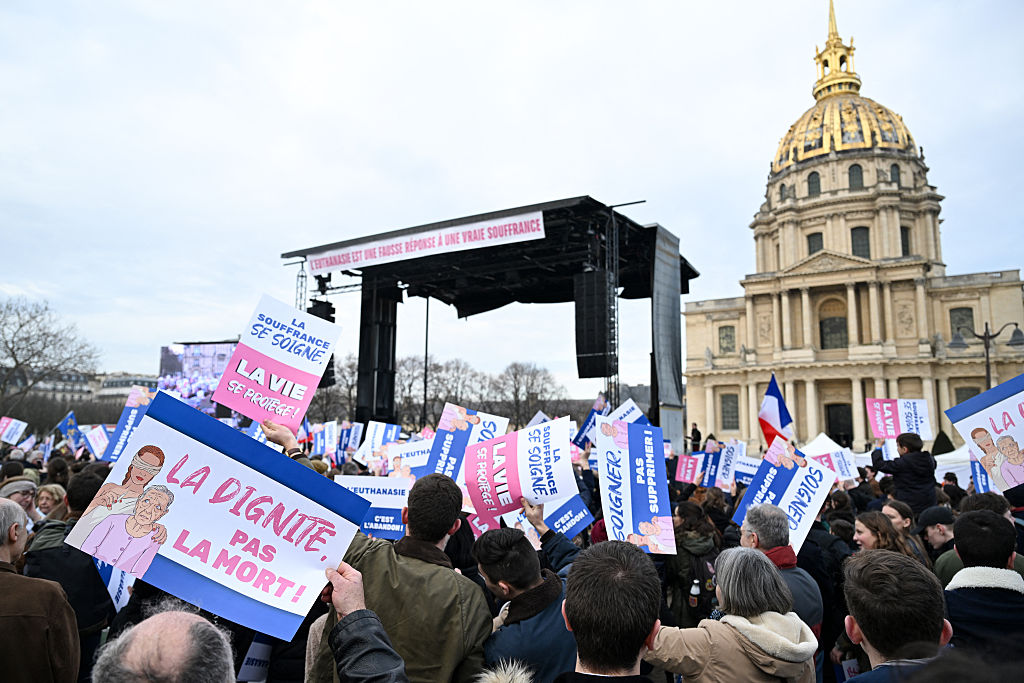
Read More
Irish bishops condemn burning of mosque replica at holiday festivities #Catholic Archbishop Eamon Martin of the Catholic Archdiocese of Armagh and Archbishop John McDowell of the Church of Ireland have condemned the burning of a mosque replica in Northern Ireland during the country’s Eleventh Night bonfires.“The placement of a replica mosque atop a bonfire is grossly offensive and raises tensions so soon after the unrest that destroyed property and severely impacted the lives of individuals and families,” the archbishops said. Bonfires are traditionally lit in loyalist areas of Northern Ireland on the night before July 12 — a holiday referred to as “The Twelfth” — marking the Battle of the Boyne in 1690, which saw the defeat of Catholic King James II. The mosque replica placed on top of a bonfire was reported to depict a person holding a knife and a flag.The incident follows weeks of civil unrest and targeting of migrant communities throughout Northern Ireland after a brutal knife attack in Belfast carried out by a Sudanese national.Little Sisters of the Poor set up field hospital for Venezuela earthquake victimsThe Congregation of the Little Sisters of the Poor of Maiquetía has set up a field hospital following the destruction of San José Hospital during the earthquakes in Venezuela last month.The sisters are continuing their health ministry operations across the street from the damaged hospital, Sister María Yraida Mora Sánchez, vicar general of the Congregation of the Little Sisters of the Poor, told Vatican News. "We are also making regular visits to three emergency shelters, and the situation is extremely difficult. It is especially challenging because Venezuela was already facing a severe economic and humanitarian crisis, as much of the world already knows,” she said. Abuse survivors seek damages from entity tied to Christian Brothers’ asset transfersSurvivors of clergy abuse at the hands of the Congregation of Christian Brothers are seeking to transfer their compensation claims to Edmund Rice Education Australia, a Catholic entity that received over  million worth of property from the Christian Brothers over the course of a decade in symbolic  transfers. The move comes after the Christian Brothers said in court that they could not afford to pay survivors’ claims in full but that they would sell off their remaining 36 properties valued at 7 million to divide among creditors and abuse survivors, according to a report from The Guardian on Friday.Indonesia bishops speak out against killing of American mission pilotCatholic bishops in Papua, Indonesia’s easternmost province, have condemned the murder of an American pilot on July 2 by an armed group.“We strongly condemn this brutal act,” Archbishop Petrus Canisius Mandagi of Merauke said, according to Licas News, noting that the plane that was set on fire by the group was an Associated Mission Aviation (AMA) aircraft owned by five dioceses in Papua. AMA has served Papua for 67 years, delivering humanitarian aid to areas difficult to reach by land. “For decades, we have faced risks from weather and technical problems. However, a criminal act involving the burning of an aircraft and the murder of a pilot is extremely difficult to accept. It is a barbaric and inhumane act,” Bishop Yanuarius Theofilus Matopai of Jayapura in Papua said. Pakistan archbishop declares child abuse a national, moral crisisArchbishop Joseph Arshad of Islamabad-Rawalpindi in Pakistan has designated 2026 the “Year of Children” amid what he described as “deep concern over the growing number of child abuse cases in society.”"The issue of child sexual abuse in Pakistan remains widespread and requires urgent attention,” the archbishop said in an interview with Fides News Agency on July 8. “Crimes against children are among the most shameful and intolerable violations of human dignity. No society can call itself just, peaceful, or civilized as long as its children live under threat, fear, and insecurity. Children are a sacred gift from God and must be protected with the highest level of moral, social, legal and institutional responsibility,” he said, calling for action from the Pakistani government. New Zealand marks near-50% surge in euthanasia deaths in 3 yearsA report has recorded a 48.17% increase in deaths by euthanasia and assisted suicide in New Zealand over the past three years.The Registrar (assisted dying) Annual Report to the Minister of Health June 2026 report found there was a total of 486 cases of euthanasia and assisted suicide in New Zealand from April 1, 2025, to March 31, 2026. In 2023-2024, there were 328 cases nationwide. The New Zealand Catholic Bishops’ Conference has repeatedly spoken out against euthanasia and assisted suicide laws in the country. Bishop of Alexandria, Egypt, celebrates centenary of Latin Vicariate of Port SaidHundreds of pilgrims gathered in Port Said in Egypt to celebrate 100 years after the establishment of the apostolic procurator there, ACI MENA, the Arabic-language sister service of EWTN News, reported Sunday.Bishop Claudio Lurati of the Apostolic Vicariate of Alexandria presided over the Mass celebrating the anniversary at the Regina Mundi Cathedral. Beyond the anniversary itself, the celebration brought together the history of the local Church, the legacy of generations of Christians, and a remarkable example of ecumenical cooperation, with Regina Mundi Cathedral serving both Latin Catholic and Coptic Orthodox communities.Thailand Catholic schools launch program to combat food insecurityIn the wake of catastrophic flooding across southern Thailand, the Catholic Foundation of the Surat Thani Diocese has launched a program to transform schools into food hubs.The “Promoting Nutrition and Sustainable Food Production for Children and the Poor” project is funded by Pope Leo XIV through the apostolic nuncio to Thailand, according to a report from Licas News on Wednesday. The project is designed to ensure that students receive balanced meals every day by enabling schools to become agricultural food production zones. The program will also establish health monitoring systems to track body mass index (BMI) of students suffering from food insecurity.

Irish bishops condemn burning of mosque replica at holiday festivities #Catholic Archbishop Eamon Martin of the Catholic Archdiocese of Armagh and Archbishop John McDowell of the Church of Ireland have condemned the burning of a mosque replica in Northern Ireland during the country’s Eleventh Night bonfires.“The placement of a replica mosque atop a bonfire is grossly offensive and raises tensions so soon after the unrest that destroyed property and severely impacted the lives of individuals and families,” the archbishops said. Bonfires are traditionally lit in loyalist areas of Northern Ireland on the night before July 12 — a holiday referred to as “The Twelfth” — marking the Battle of the Boyne in 1690, which saw the defeat of Catholic King James II. The mosque replica placed on top of a bonfire was reported to depict a person holding a knife and a flag.The incident follows weeks of civil unrest and targeting of migrant communities throughout Northern Ireland after a brutal knife attack in Belfast carried out by a Sudanese national.Little Sisters of the Poor set up field hospital for Venezuela earthquake victimsThe Congregation of the Little Sisters of the Poor of Maiquetía has set up a field hospital following the destruction of San José Hospital during the earthquakes in Venezuela last month.The sisters are continuing their health ministry operations across the street from the damaged hospital, Sister María Yraida Mora Sánchez, vicar general of the Congregation of the Little Sisters of the Poor, told Vatican News. "We are also making regular visits to three emergency shelters, and the situation is extremely difficult. It is especially challenging because Venezuela was already facing a severe economic and humanitarian crisis, as much of the world already knows,” she said. Abuse survivors seek damages from entity tied to Christian Brothers’ asset transfersSurvivors of clergy abuse at the hands of the Congregation of Christian Brothers are seeking to transfer their compensation claims to Edmund Rice Education Australia, a Catholic entity that received over $50 million worth of property from the Christian Brothers over the course of a decade in symbolic $1 transfers. The move comes after the Christian Brothers said in court that they could not afford to pay survivors’ claims in full but that they would sell off their remaining 36 properties valued at $217 million to divide among creditors and abuse survivors, according to a report from The Guardian on Friday.Indonesia bishops speak out against killing of American mission pilotCatholic bishops in Papua, Indonesia’s easternmost province, have condemned the murder of an American pilot on July 2 by an armed group.“We strongly condemn this brutal act,” Archbishop Petrus Canisius Mandagi of Merauke said, according to Licas News, noting that the plane that was set on fire by the group was an Associated Mission Aviation (AMA) aircraft owned by five dioceses in Papua. AMA has served Papua for 67 years, delivering humanitarian aid to areas difficult to reach by land. “For decades, we have faced risks from weather and technical problems. However, a criminal act involving the burning of an aircraft and the murder of a pilot is extremely difficult to accept. It is a barbaric and inhumane act,” Bishop Yanuarius Theofilus Matopai of Jayapura in Papua said. Pakistan archbishop declares child abuse a national, moral crisisArchbishop Joseph Arshad of Islamabad-Rawalpindi in Pakistan has designated 2026 the “Year of Children” amid what he described as “deep concern over the growing number of child abuse cases in society.”"The issue of child sexual abuse in Pakistan remains widespread and requires urgent attention,” the archbishop said in an interview with Fides News Agency on July 8. “Crimes against children are among the most shameful and intolerable violations of human dignity. No society can call itself just, peaceful, or civilized as long as its children live under threat, fear, and insecurity. Children are a sacred gift from God and must be protected with the highest level of moral, social, legal and institutional responsibility,” he said, calling for action from the Pakistani government. New Zealand marks near-50% surge in euthanasia deaths in 3 yearsA report has recorded a 48.17% increase in deaths by euthanasia and assisted suicide in New Zealand over the past three years.The Registrar (assisted dying) Annual Report to the Minister of Health June 2026 report found there was a total of 486 cases of euthanasia and assisted suicide in New Zealand from April 1, 2025, to March 31, 2026. In 2023-2024, there were 328 cases nationwide. The New Zealand Catholic Bishops’ Conference has repeatedly spoken out against euthanasia and assisted suicide laws in the country. Bishop of Alexandria, Egypt, celebrates centenary of Latin Vicariate of Port SaidHundreds of pilgrims gathered in Port Said in Egypt to celebrate 100 years after the establishment of the apostolic procurator there, ACI MENA, the Arabic-language sister service of EWTN News, reported Sunday.Bishop Claudio Lurati of the Apostolic Vicariate of Alexandria presided over the Mass celebrating the anniversary at the Regina Mundi Cathedral. Beyond the anniversary itself, the celebration brought together the history of the local Church, the legacy of generations of Christians, and a remarkable example of ecumenical cooperation, with Regina Mundi Cathedral serving both Latin Catholic and Coptic Orthodox communities.Thailand Catholic schools launch program to combat food insecurityIn the wake of catastrophic flooding across southern Thailand, the Catholic Foundation of the Surat Thani Diocese has launched a program to transform schools into food hubs.The “Promoting Nutrition and Sustainable Food Production for Children and the Poor” project is funded by Pope Leo XIV through the apostolic nuncio to Thailand, according to a report from Licas News on Wednesday. The project is designed to ensure that students receive balanced meals every day by enabling schools to become agricultural food production zones. The program will also establish health monitoring systems to track body mass index (BMI) of students suffering from food insecurity.

Irish bishops condemn anti-Muslim display, religious sisters set up a field hospital for Venezuela earthquake victims, euthanasia in New Zealand surges, and more in this week’s world news roundup.

Read More
Vatican commission seeks to address legal loophole facing women religious suffering abuse #Catholic Consecrated women and women religious who have suffered abuse face a significant legal loophole: Canon law and specialized commissions focus primarily on minors and adults with disabilities, leaving these women outside their scope of protection.In practice, this means that if the victim is an adult who has received formation, it is assumed she can defend herself or that she consented. However, signs of change are beginning to emerge from the Vatican.In addressing this issue, “it cannot simply be a label of ‘vulnerable adult,’” said Claudia Giampietro, an Italian canon lawyer working at the Pontifical Commission for the Protection of Minors (PCPM).“We must understand that there are situations of imbalances of power … and situations involving abuse, and so it is these situations of vulnerability that we need to examine more deeply,” she told EWTN News on July 1.
 
 Claudia Giampietro, an Italian canon lawyer working at the Pontifical Commission for the Protection of Minors (PCPM), during an interview on July 1, 2026. | Credit: EWTN News
 
 One of the functions of the PCPM is to collaborate with the various dicasteries of the Roman Curia, the conferences and unions of religious men and women, and the institutes of consecrated life.This enables them to gain firsthand knowledge of a complex reality: “There are a great many circumstances, situations, and people that can also affect women religious, including older ones, and so it is necessary to understand the contexts in which they work and carry out their ministry, both within their communities and also outside them,” Giampietro said.The situation in Latin AmericaThe Vatican helped break the taboo surrounding abuse against women religious by dedicating an extensive report to it in January 2020, published in Donne, Chiesa, Mondo (Women, Church, World), the monthly women’s supplement to L’Osservatore Romano. Issues covered include abuse of power, sexual abuse, and the difficulties faced by many nuns both within and outside consecrated life.In subsequent years, there has been a proliferation of studies aimed at gauging the scale of a phenomenon that was traditionally hidden. Notable among them is the research published in 2022 in the Spanish-language book “Vulnerability, Abuse, and Care in Womenʼs Religious Life,” edited by Sister María Rosaura González Casas, who at the time was coordinator of the Commission for the Care and Protection of Minors and Vulnerable Persons for the Latin American and Caribbean Confederation of Religious.Based on a survey of 1,417 women religious, the study revealed that 19.8% reported having suffered sexual abuse, and more than half stated they had experienced some form of abuse of power at the hands of superiors, priests, formators, or bishops. Additionally, 14.3% of respondents indicated having been harassed by a priest, 9.7% by laypeople, and 8% by other religious women, figures that highlight the scope and complexity of an issue that remained largely silenced for decades.González Casas, dean of the Institute of Anthropology at the Pontifical Gregorian University, explained that since the study was published four years ago, “greater awareness of what abuse entails has grown at all levels” in the region.
 
 Sister María Rosaura González Casas of the Company of St. Teresa of Jesus is dean of the Institute of Anthropology at the Pontifical Gregorian University. | Credit: Victoria Cardiel/EWTN News
 
 “The sisters are more aware, and bishops and priests are also more alert to it. When we conducted the survey, many women religious did not want to respond, even though it was anonymous. There was fear of speaking out. Now there is greater awareness, although clear codes of conduct are still lacking. Unconscious and internalized machismo persists in society and has permeated religious and priestly life,” she explained in comments to EWTN News.A conference in Rome on abuse preventionIn order to promote dialogue to prevent abuse against women religious, the PCPM will organize the second annual meeting on abuse prevention, focusing on consecrated life. It will be held in Rome on Dec. 9–11, centering on the theme “Communion, Care, and Justice: Mutual Relationships for a Shared Mission.”This is not an academic conference but a synodal “learning lab” geared toward concrete results. Over the course of three days, bishops, representatives from institutes of consecrated life and societies of apostolic life, conferences and unions of major superiors, officials from Roman Curia dicasteries, and experts in abuse prevention will collaborate through roundtables, sessions on canon law, and working groups.“The Pontifical Commission for the Protection of Minors has already taken up this issue, and with their involvement, superiors and women religious will take it more seriously,” said Sister Jacinta Ondeng of the School Sisters of Notre Dame in Kenya, who has been invited to participate in the forum.“Safeguarding must be an essential part of community life,” emphasized the religious sister, director of the Safeguarding Initiative for Catholic Sisters, a project based at Tangaza University in Nairobi that provides training on abuse prevention across various African countries.Many situations are covered up due to a lack of oversightOndeng emphasized the need for effective case follow-up. “It’s important for the relevant Vatican offices to oversee these situations because cases from Africa, and perhaps other parts of the world, are often covered up precisely due to a lack of oversight. If the relevant bodies of the Holy See intervene and evaluate cases when congregations fail to resolve them, that will help.”
 
 Sister Jacinta Ondeng, of the School Sisters of Notre Dame congregation in Kenya, will participate in a Vatican-organized conference on abuse. | Credit: Photo courtesy of Sister Jacinta Ondeng
 
 She also proposes developing clear guidelines for handling abuse cases within consecrated life — similar to those established by Pope Francis in Vos Estis Lux Mundi for allegations of abuse against minors — which require bishops and superiors to take action when faced with complaints or concerning indications.“Once it becomes clear that the Vatican is involved in matters affecting members of consecrated life, there will be changes. Human nature responds to clear rules: When they exist, people tend to act with greater prudence,” she observed.The sister also led a revealing, as-yet-unpublished study in Africa that brought to light harrowing testimonies from consecrated women, such as:“Sisters leave not because they lack a vocation but because of abuse; superiors are abusing their authority.”“Sisters suffer in silence rather than reporting it because they love the Church and fear damaging the reputation of a priest, bishop, or superior.”“I told my superior what was happening, and since the sister in question was her friend, she did nothing.”The study’s results were presented at the Pontifical Gregorian University in Rome during the 2026 International Safeguarding Conference, held June 16–19 under the theme “One Commitment, Many Contexts: Safeguarding Across Cultures.” The study was based on an anonymous online survey conducted between February and March in which more than 140 religious sisters from various African countries participated.Fear of stigma and self-blameThe findings are revealing: 35.5% of congregations lack a formal safeguarding policy; 67.4% of those surveyed identify fear of stigma and self-blame as the main obstacles to reporting abuse; and 60.3% point to the absence of confidential reporting channels.Personal factors such as “shame, guilt, and self-reproach are very prevalent among many women religious who wish to take the step of reporting abuse,” explained Ondeng, who dedicates her ministry to conducting workshops and training on safeguarding in Africa, with a particular focus on Catholic women religious.Her goal is to raise awareness about abuse and its consequences, empower consecrated women to break the culture of silence, and promote safe environments for all. She also emphasized the importance of transparency and accountability as fundamental pillars for the success of safeguarding policies within the Church.The religious also warned of the tendency toward cover-ups that can arise in certain ecclesial contexts.“As numerous studies on abuse and the abuse of authority have shown, the Church hierarchy commands immense respect in many African societies,” she noted. While this is a positive cultural value, it also helps explain why individuals in positions of authority are rarely reported when involved in abusive behavior.This phenomenon is reflected in several of the testimonies gathered during the investigation:“Many sisters do not want to air dirty laundry. They do not wish to publicly expose these problems, in order to protect the institute’s reputation.”“Some fear that if they speak out, they will be expelled from religious life, and they do not want to leave,” Ondeng added.Lack of training in abuse preventionOndeng’s study also reveals that, when faced with situations of injustice or abuse, some women religious choose to leave consecrated life. Abuse can take many forms — sexual, spiritual, physical, emotional, or institutional — and, in certain cases, becomes unbearable.However, the majority of victims remain in their communities, often out of fear of the social stigma or rejection they might suffer if they returned to their families.Others are aware that leaving the convent could entail serious financial difficulties, as they lack employment or the means to support themselves, the religious explained.Of the 141 women religious surveyed, more than 95% stated they had received some form of training on the prevention of sexual abuse. However, in many cases, this preparation proves insufficient.“Most have taken short courses, but we cannot say that this 95% has received comprehensive training in safeguarding. At most, some have participated in one- or two-day sessions. That is very little, and it poses a problem,” the Kenyan religious sister noted in a statement to EWTN News.For this reason, she insists on the need to strengthen safeguarding training as a true ministry within the Church.“Much more preparation is needed for Catholic women religious to have the courage to speak about their experiences in their communities. Currently, training is very limited and must be ramped up to empower consecrated women,” she stated.Added to this challenge is a significant cultural component. “People do not want to make their problems public. It is something deeply rooted in African culture, although it also occurs in European and American contexts,” she stated.For its part, the Dicastery for Institutes of Consecrated Life and Societies of Apostolic Life does not publish aggregate figures on apostolic visitations conducted worldwide, as these are carried out on an occasional rather than a systematic basis.The only large-scale investigation for which detailed data exist was the one conducted in the United States from 2008 to 2014, which involved 341 institutes of consecrated life and about 50,000 religious women.“The entire Church must understand that safeguarding is a Gospel value. It’s not something imposed from the outside. The Gospel calls us to promote the dignity of every person, support those who suffer, and care for those who are hurting,” Ondeng pointed out.This story was first published by ACI Prensa, the Spanish-language sister service of EWTN News. It has been translated and adapted by EWTN News English.

Vatican commission seeks to address legal loophole facing women religious suffering abuse #Catholic Consecrated women and women religious who have suffered abuse face a significant legal loophole: Canon law and specialized commissions focus primarily on minors and adults with disabilities, leaving these women outside their scope of protection.In practice, this means that if the victim is an adult who has received formation, it is assumed she can defend herself or that she consented. However, signs of change are beginning to emerge from the Vatican.In addressing this issue, “it cannot simply be a label of ‘vulnerable adult,’” said Claudia Giampietro, an Italian canon lawyer working at the Pontifical Commission for the Protection of Minors (PCPM).“We must understand that there are situations of imbalances of power … and situations involving abuse, and so it is these situations of vulnerability that we need to examine more deeply,” she told EWTN News on July 1. Claudia Giampietro, an Italian canon lawyer working at the Pontifical Commission for the Protection of Minors (PCPM), during an interview on July 1, 2026. | Credit: EWTN News One of the functions of the PCPM is to collaborate with the various dicasteries of the Roman Curia, the conferences and unions of religious men and women, and the institutes of consecrated life.This enables them to gain firsthand knowledge of a complex reality: “There are a great many circumstances, situations, and people that can also affect women religious, including older ones, and so it is necessary to understand the contexts in which they work and carry out their ministry, both within their communities and also outside them,” Giampietro said.The situation in Latin AmericaThe Vatican helped break the taboo surrounding abuse against women religious by dedicating an extensive report to it in January 2020, published in Donne, Chiesa, Mondo (Women, Church, World), the monthly women’s supplement to L’Osservatore Romano. Issues covered include abuse of power, sexual abuse, and the difficulties faced by many nuns both within and outside consecrated life.In subsequent years, there has been a proliferation of studies aimed at gauging the scale of a phenomenon that was traditionally hidden. Notable among them is the research published in 2022 in the Spanish-language book “Vulnerability, Abuse, and Care in Womenʼs Religious Life,” edited by Sister María Rosaura González Casas, who at the time was coordinator of the Commission for the Care and Protection of Minors and Vulnerable Persons for the Latin American and Caribbean Confederation of Religious.Based on a survey of 1,417 women religious, the study revealed that 19.8% reported having suffered sexual abuse, and more than half stated they had experienced some form of abuse of power at the hands of superiors, priests, formators, or bishops. Additionally, 14.3% of respondents indicated having been harassed by a priest, 9.7% by laypeople, and 8% by other religious women, figures that highlight the scope and complexity of an issue that remained largely silenced for decades.González Casas, dean of the Institute of Anthropology at the Pontifical Gregorian University, explained that since the study was published four years ago, “greater awareness of what abuse entails has grown at all levels” in the region. Sister María Rosaura González Casas of the Company of St. Teresa of Jesus is dean of the Institute of Anthropology at the Pontifical Gregorian University. | Credit: Victoria Cardiel/EWTN News “The sisters are more aware, and bishops and priests are also more alert to it. When we conducted the survey, many women religious did not want to respond, even though it was anonymous. There was fear of speaking out. Now there is greater awareness, although clear codes of conduct are still lacking. Unconscious and internalized machismo persists in society and has permeated religious and priestly life,” she explained in comments to EWTN News.A conference in Rome on abuse preventionIn order to promote dialogue to prevent abuse against women religious, the PCPM will organize the second annual meeting on abuse prevention, focusing on consecrated life. It will be held in Rome on Dec. 9–11, centering on the theme “Communion, Care, and Justice: Mutual Relationships for a Shared Mission.”This is not an academic conference but a synodal “learning lab” geared toward concrete results. Over the course of three days, bishops, representatives from institutes of consecrated life and societies of apostolic life, conferences and unions of major superiors, officials from Roman Curia dicasteries, and experts in abuse prevention will collaborate through roundtables, sessions on canon law, and working groups.“The Pontifical Commission for the Protection of Minors has already taken up this issue, and with their involvement, superiors and women religious will take it more seriously,” said Sister Jacinta Ondeng of the School Sisters of Notre Dame in Kenya, who has been invited to participate in the forum.“Safeguarding must be an essential part of community life,” emphasized the religious sister, director of the Safeguarding Initiative for Catholic Sisters, a project based at Tangaza University in Nairobi that provides training on abuse prevention across various African countries.Many situations are covered up due to a lack of oversightOndeng emphasized the need for effective case follow-up. “It’s important for the relevant Vatican offices to oversee these situations because cases from Africa, and perhaps other parts of the world, are often covered up precisely due to a lack of oversight. If the relevant bodies of the Holy See intervene and evaluate cases when congregations fail to resolve them, that will help.” Sister Jacinta Ondeng, of the School Sisters of Notre Dame congregation in Kenya, will participate in a Vatican-organized conference on abuse. | Credit: Photo courtesy of Sister Jacinta Ondeng She also proposes developing clear guidelines for handling abuse cases within consecrated life — similar to those established by Pope Francis in Vos Estis Lux Mundi for allegations of abuse against minors — which require bishops and superiors to take action when faced with complaints or concerning indications.“Once it becomes clear that the Vatican is involved in matters affecting members of consecrated life, there will be changes. Human nature responds to clear rules: When they exist, people tend to act with greater prudence,” she observed.The sister also led a revealing, as-yet-unpublished study in Africa that brought to light harrowing testimonies from consecrated women, such as:“Sisters leave not because they lack a vocation but because of abuse; superiors are abusing their authority.”“Sisters suffer in silence rather than reporting it because they love the Church and fear damaging the reputation of a priest, bishop, or superior.”“I told my superior what was happening, and since the sister in question was her friend, she did nothing.”The study’s results were presented at the Pontifical Gregorian University in Rome during the 2026 International Safeguarding Conference, held June 16–19 under the theme “One Commitment, Many Contexts: Safeguarding Across Cultures.” The study was based on an anonymous online survey conducted between February and March in which more than 140 religious sisters from various African countries participated.Fear of stigma and self-blameThe findings are revealing: 35.5% of congregations lack a formal safeguarding policy; 67.4% of those surveyed identify fear of stigma and self-blame as the main obstacles to reporting abuse; and 60.3% point to the absence of confidential reporting channels.Personal factors such as “shame, guilt, and self-reproach are very prevalent among many women religious who wish to take the step of reporting abuse,” explained Ondeng, who dedicates her ministry to conducting workshops and training on safeguarding in Africa, with a particular focus on Catholic women religious.Her goal is to raise awareness about abuse and its consequences, empower consecrated women to break the culture of silence, and promote safe environments for all. She also emphasized the importance of transparency and accountability as fundamental pillars for the success of safeguarding policies within the Church.The religious also warned of the tendency toward cover-ups that can arise in certain ecclesial contexts.“As numerous studies on abuse and the abuse of authority have shown, the Church hierarchy commands immense respect in many African societies,” she noted. While this is a positive cultural value, it also helps explain why individuals in positions of authority are rarely reported when involved in abusive behavior.This phenomenon is reflected in several of the testimonies gathered during the investigation:“Many sisters do not want to air dirty laundry. They do not wish to publicly expose these problems, in order to protect the institute’s reputation.”“Some fear that if they speak out, they will be expelled from religious life, and they do not want to leave,” Ondeng added.Lack of training in abuse preventionOndeng’s study also reveals that, when faced with situations of injustice or abuse, some women religious choose to leave consecrated life. Abuse can take many forms — sexual, spiritual, physical, emotional, or institutional — and, in certain cases, becomes unbearable.However, the majority of victims remain in their communities, often out of fear of the social stigma or rejection they might suffer if they returned to their families.Others are aware that leaving the convent could entail serious financial difficulties, as they lack employment or the means to support themselves, the religious explained.Of the 141 women religious surveyed, more than 95% stated they had received some form of training on the prevention of sexual abuse. However, in many cases, this preparation proves insufficient.“Most have taken short courses, but we cannot say that this 95% has received comprehensive training in safeguarding. At most, some have participated in one- or two-day sessions. That is very little, and it poses a problem,” the Kenyan religious sister noted in a statement to EWTN News.For this reason, she insists on the need to strengthen safeguarding training as a true ministry within the Church.“Much more preparation is needed for Catholic women religious to have the courage to speak about their experiences in their communities. Currently, training is very limited and must be ramped up to empower consecrated women,” she stated.Added to this challenge is a significant cultural component. “People do not want to make their problems public. It is something deeply rooted in African culture, although it also occurs in European and American contexts,” she stated.For its part, the Dicastery for Institutes of Consecrated Life and Societies of Apostolic Life does not publish aggregate figures on apostolic visitations conducted worldwide, as these are carried out on an occasional rather than a systematic basis.The only large-scale investigation for which detailed data exist was the one conducted in the United States from 2008 to 2014, which involved 341 institutes of consecrated life and about 50,000 religious women.“The entire Church must understand that safeguarding is a Gospel value. It’s not something imposed from the outside. The Gospel calls us to promote the dignity of every person, support those who suffer, and care for those who are hurting,” Ondeng pointed out.This story was first published by ACI Prensa, the Spanish-language sister service of EWTN News. It has been translated and adapted by EWTN News English.

Efforts to address the abuse crisis in the Church have focused on minors and vulnerable adults, leaving unaddressed the abuse suffered by women religious. Efforts are underway to rectify that.
Read More