![Advocates warn New Jersey law could criminalize prayer outside abortion clinics #Catholic New Jersey Gov. Mikie Sherrill on Aug. 20 signed a bill that criminalizes “interference” with “reproductive” or “gender-affirming” care, a law that opponents say has serious implications for freedom of speech.The law criminalizes inflicting “emotional harm” against those seeking or providing “reproductive health care services.” It also bans filming and sharing videos within 100 feet of an abortion clinic.Under the new law, an officer can “order the immediate dispersal of a gathering that substantially impedes access to or departure from an entrance or driveway to a reproductive or gender-affirming health care facility during the business hours of the facility.”The measure is a type of “bubble” law, which creates zones around abortion clinics where free speech is limited in “buffer zones.”Violations of the law could be punished by up to 18 months’ imprisonment and/or a $10,000 fine.New Jersey Right to Life Executive Director Marie Tasy criticized the law, describing its provisions as “inherently subjective” and the law itself as “a serious danger to free speech.”“Peaceful sidewalk counseling, prayer, holding signs, or simply offering help and alternatives outside a facility can easily be labeled ‘intimidation’ by someone who claims to feel threatened, leaving pro-life advocates open to criminal charges that are difficult to disprove and chilling constitutionally protected expression,” Tasy said.Catholic diocese leads campaign against abortion amendment referendumThe Diocese of Arlington, Virginia, is leading a campaign to oppose an amendment referendum that could create a right to abortion in the state constitution as well as another measure that would remove a same-sex marriage ban in the state.The campaign Catholics Vote No is opposing the ballot measure titled the “Virginia Right to Reproductive Freedom Amendment” as well as the “Virginia Remove Constitutional Same-Sex Marriage Ban Amendment.”Arlington Bishop Michael Burbidge describes the measures as “very serious legal threats to human life and marriage” in a video statement.“If written into Virginia’s Constitution, these unjust amendments would be extraordinarily difficult to reverse,” the campaign website states. The abortion amendment would “effectively” make Virginia “a sanctuary for abortion and commercial abortion businesses,” it states. “Basic health and safety standards that protect women from harm would be eliminated, parents would be pushed out of life-altering decisions involving their family and children, and unregulated abortions would be possible, performed even on healthy babies up to the moment of birth for any reason with no limits,” the campaign says.Live Action says it will keep referring to abortion as ‘killing’The pro-life group Live Action has said it will not stop calling abortion “killing” after a pro-abortion group threatened the organization with legal action.Live Action made the declaration in response to a cease-and-desist letter sent by the abortion-supporting legal group Amplify Legal. The dispute is over claims made by Live Action in multiple articles about abortion cases where the unborn baby had a serious life-threatening diagnosis.“Each of our clients has described the decision to end their wanted pregnancy as the most compassionate choice for their own health, future fertility, and family’s wellbeing,” the letter read, arguing that Live Action News “repeatedly [wrote] about our clients intentionally ‘killing’ their babies.”In its response Live Action said it would not follow the request to “delete years of reporting and commentary on the most contested moral and political question in American public life.”“We are fighting for a culture and legal system that respects every human life and refuses to treat the sick, disabled, or unborn as disposable,” said Live Action Founder and President Lila Rose in a statement. “Legal threats against our First Amendment right to speak will not change that mission.”Catholic dad Mark Houck continues pro-life work after federal legal battleCatholic father Mark Houck is joining CatholicVote’s development team as a gift officer, the group announced this week. Houck and his family are adjusting to life after their home in rural eastern Pennsylvania was raided by 20 armed federal agents in the early hours of Sept. 23, 2022. Houck was arrested in front of his family and interrogated for six hours. The incident led to nearly four years of legal battles, which concluded with the family earning a seven-figure settlement for damages.“I am still very much unpacking spiritually what happened to us — very profound and certainly God is revealing his ultimate plan for us through it all, CatholicVote being the latest direction he has taken us,” Houck told EWTN News. “We are so happy to be with an organization that shares our passion for our faith, the pro-life cause, and, of course, advocacy in the public square.”Houck’s role in the organization "will extend beyond that [of a gift officer],” CatholicVote spokeswoman Laurie Olsen told EWTN News. He will “have a voice in all our pro-life efforts,” she said.Houck, meanwhile, told EWTN News: “We measure success by one soul at a time.”“Save a soul, you save your own soul. It is that one soul that gets me going and up early to head into Philadelphia and serve the common good with sidewalk advocacy,” he said.Federal court strikes down Indiana abortion parental-consent lawThe U.S. Court of Appeals for the 7th Circuit ruled on Aug. 18 against an Indiana law that prevents doctors from providing abortion assistance to minors without parental consent.The 54-page ruling struck down a law that required parental consent to aid or assist a minor in obtaining an abortion. The ruling said that the parental-consent law violated the First Amendment.](http://unitedyam.com/wp-content/uploads/2026/08/advocates-warn-new-jersey-law-could-criminalize-prayer-outside-abortion-clinics-catholic-new-jersey-gov-mikie-sherrill-on-aug-20-signed-a-bill-that-criminalizes-interference-with.jpg "Advocates warn New Jersey law could criminalize prayer outside abortion clinics #Catholic New Jersey Gov. Mikie Sherrill on Aug. 20 signed a bill that criminalizes “interference” with “reproductive” or “gender-affirming” care, a law that opponents say has serious implications for freedom of speech.The law criminalizes inflicting “emotional harm” against those seeking or providing “reproductive health care services.” It also bans filming and sharing videos within 100 feet of an abortion clinic.Under the new law, an officer can “order the immediate dispersal of a gathering that substantially impedes access to or departure from an entrance or driveway to a reproductive or gender-affirming health care facility during the business hours of the facility.”The measure is a type of “bubble” law, which creates zones around abortion clinics where free speech is limited in “buffer zones.”Violations of the law could be punished by up to 18 months’ imprisonment and/or a $10,000 fine.New Jersey Right to Life Executive Director Marie Tasy criticized the law, describing its provisions as “inherently subjective” and the law itself as “a serious danger to free speech.”“Peaceful sidewalk counseling, prayer, holding signs, or simply offering help and alternatives outside a facility can easily be labeled ‘intimidation’ by someone who claims to feel threatened, leaving pro-life advocates open to criminal charges that are difficult to disprove and chilling constitutionally protected expression,” Tasy said.Catholic diocese leads campaign against abortion amendment referendumThe Diocese of Arlington, Virginia, is leading a campaign to oppose an amendment referendum that could create a right to abortion in the state constitution as well as another measure that would remove a same-sex marriage ban in the state.The campaign Catholics Vote No is opposing the ballot measure titled the “Virginia Right to Reproductive Freedom Amendment” as well as the “Virginia Remove Constitutional Same-Sex Marriage Ban Amendment.”Arlington Bishop Michael Burbidge describes the measures as “very serious legal threats to human life and marriage” in a video statement.“If written into Virginia’s Constitution, these unjust amendments would be extraordinarily difficult to reverse,” the campaign website states. The abortion amendment would “effectively” make Virginia “a sanctuary for abortion and commercial abortion businesses,” it states. “Basic health and safety standards that protect women from harm would be eliminated, parents would be pushed out of life-altering decisions involving their family and children, and unregulated abortions would be possible, performed even on healthy babies up to the moment of birth for any reason with no limits,” the campaign says.Live Action says it will keep referring to abortion as ‘killing’The pro-life group Live Action has said it will not stop calling abortion “killing” after a pro-abortion group threatened the organization with legal action.Live Action made the declaration in response to a cease-and-desist letter sent by the abortion-supporting legal group Amplify Legal. The dispute is over claims made by Live Action in multiple articles about abortion cases where the unborn baby had a serious life-threatening diagnosis.“Each of our clients has described the decision to end their wanted pregnancy as the most compassionate choice for their own health, future fertility, and family’s wellbeing,” the letter read, arguing that Live Action News “repeatedly [wrote] about our clients intentionally ‘killing’ their babies.”In its response Live Action said it would not follow the request to “delete years of reporting and commentary on the most contested moral and political question in American public life.”“We are fighting for a culture and legal system that respects every human life and refuses to treat the sick, disabled, or unborn as disposable,” said Live Action Founder and President Lila Rose in a statement. “Legal threats against our First Amendment right to speak will not change that mission.”Catholic dad Mark Houck continues pro-life work after federal legal battleCatholic father Mark Houck is joining CatholicVote’s development team as a gift officer, the group announced this week. Houck and his family are adjusting to life after their home in rural eastern Pennsylvania was raided by 20 armed federal agents in the early hours of Sept. 23, 2022. Houck was arrested in front of his family and interrogated for six hours. The incident led to nearly four years of legal battles, which concluded with the family earning a seven-figure settlement for damages.“I am still very much unpacking spiritually what happened to us — very profound and certainly God is revealing his ultimate plan for us through it all, CatholicVote being the latest direction he has taken us,” Houck told EWTN News. “We are so happy to be with an organization that shares our passion for our faith, the pro-life cause, and, of course, advocacy in the public square.”Houck’s role in the organization \"will extend beyond that [of a gift officer],” CatholicVote spokeswoman Laurie Olsen told EWTN News. He will “have a voice in all our pro-life efforts,” she said.Houck, meanwhile, told EWTN News: “We measure success by one soul at a time.”“Save a soul, you save your own soul. It is that one soul that gets me going and up early to head into Philadelphia and serve the common good with sidewalk advocacy,” he said.Federal court strikes down Indiana abortion parental-consent lawThe U.S. Court of Appeals for the 7th Circuit ruled on Aug. 18 against an Indiana law that prevents doctors from providing abortion assistance to minors without parental consent.The 54-page ruling struck down a law that required parental consent to aid or assist a minor in obtaining an abortion. The ruling said that the parental-consent law violated the First Amendment.")

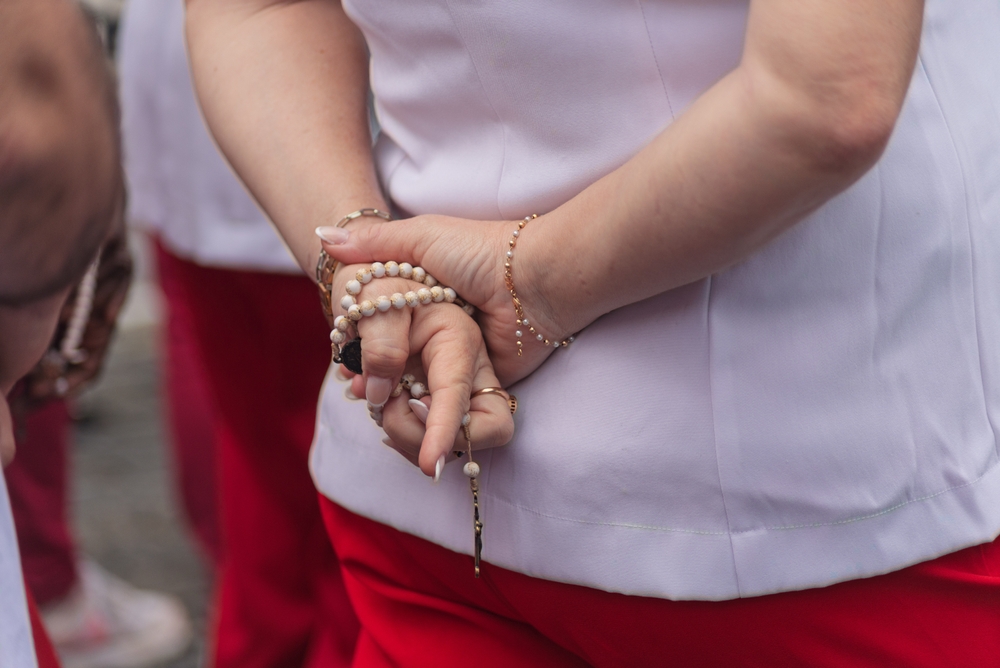
Commissioner appointee Heidi Overton has criticized the U.S. Food and Drug Administration’s chemical abortion policies in the past. She is now poised to be in a position to change them.
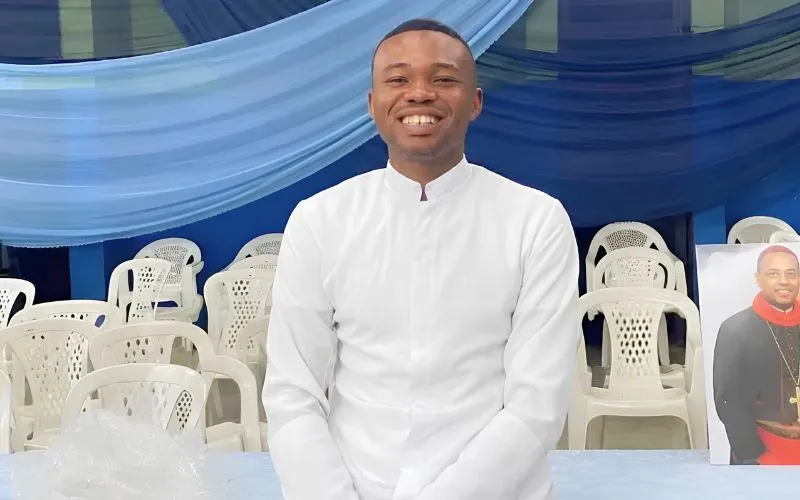
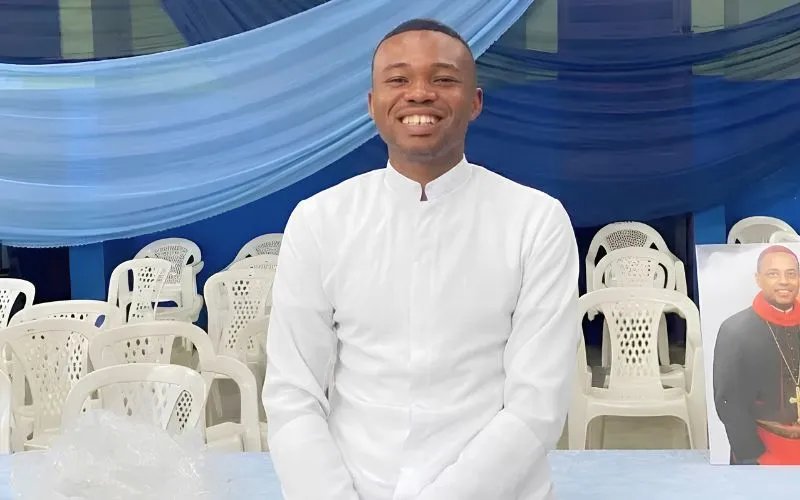
The Diocese of Otukpo gave thanks for the return of the seminarian and those who have provided him care, and called for prayers for other captives.
![‘It’s always the Holy Spirit’: Meet 3 dioceses seeing large numbers of priestly ordinations #Catholic What drives a young man to discern into the priesthood — a supportive family, a vibrant parish, a proactive pastor, an outspoken bishop? Father John Eckert’s response: “Yes.” Eckert, the vocations director for the Diocese of Charlotte, North Carolina, chuckled a little when describing the myriad paths that a young man may take when finding his way to holy orders. But, he said, “it’s always the Holy Spirit at work. It’s always cooperating with the grace of God.” The Charlotte Diocese is among those in the U.S. seeing high numbers of seminarians and priestly ordinations. The diocese in western North Carolina saw a record 10 young men ordained to the priesthood earlier in 2026; that followed six ordinations in 2025 and seven in 2024. “We’re blessed in the Diocese of Charlotte,” Eckert said. “It’s a beautiful moment.” The priest just wrapped up his first full year as vocations director there. He said one of the strengths of the diocese is in its vibrant faith life, which he attributed partly to the “evangelical Bible-belt roots” of the region. “This is Billy Graham territory,” he joked. The diocese itself bears out that witness, he said. “The Church is growing like crazy down here,” he said. “We have wonderful families. We have faithful, hardworking priests. We’ve had five bishops who keep on striving to bear the Gospel message and bring that to every corner of the diocese.”The growing ranks of the priesthood is proof of that high spirit, though Eckert said it can be tricky to tease out just what contributes to years of high ordinations. One of the diocese’s strengths, he said, is its own “in-house college seminary.” “It’s so wonderful that if we have a young man interested in the priesthood, we can actually just bring him to this place and show him where the initial years of formation will take place,” he said. The school offers prospective seminarians a chance to see “a group of men living this out, being very intentional about their prayer life, striving to grow in love of Our Lord.”Charlotte Bishop Michael Martin, OFM Conv, told EWTN News that when seeing such high levels of devotion to the priesthood, “we often have to just marvel at God’s work.” Priests in the diocese, he said, excel at offering candidates to the priesthood “the opportunity to see a healthy, holy, good person that they can see themselves becoming.” Families, meanwhile, have become “far more open” to communicating to their sons that they would be “honored to see [them] consider the priesthood.”“That dynamic has come about because the presbyterate gives a good example,” the bishop said. “It makes families, and parents in particular, more willing to be able to create that environment in their own families.”Both Martin and Eckert said that at a certain point Church leaders simply have to acknowledge the work of the Holy Spirit. “To fully try to understand it is important,” Martin said, “but in some ways it’s best just to appreciate and enjoy it and be grateful for it.”Eckert, meanwhile, cited as an example 1 Corinthians 3:6, in which Paul tells the Church at Corinth about its faith: “I planted, Apollos watered, but God gave the growth.”The priest spoke joyfully about his work in the diocesan vocations office, though he downplayed his own role in bringing men to holy orders. He recounted with a laugh what a speaker told a group of vocations directors at a recent conference: “Gentlemen, get over yourselves. Nobody ever entered seminary because of their vocations director.”Priestly vocation ‘seen as a natural, fulfilling life’Father Garett Burns, the director of vocations promotion in the Diocese of Wichita, Kansas, admitted that the Midwestern diocese is “blessed with a strong culture of vocations.” “For example, this past May six men were ordained to the priesthood,” he said. “We’ve been blessed to generally have a steady number of ordinations each year. There have been 22 priestly ordinations since 2020 and 44 priestly ordinations in the last 10 years. We will begin this academic year with 50 seminarians in formation.”He said that it is “difficult to capture succinctly” why a diocese might have such abundant vocations, describing every Catholic’s vocation as a “mystery of grace.” But he said promoting vocations throughout every aspect of Church life — including in families, schools, and parishes — has borne steady fruit. The diocese has an abundance of Eucharistic adoration, he said, including perpetual adoration. Such chapels present opportunities for young people to spend time in silence before Christ, he said, and “these moments are where vocations grow and flourish.”Priests and bishops in the diocese, meanwhile, are “deeply committed to the Lord.” “When priests love their priesthood and enjoy each other, that is attractive to young men,” he said. A local seminary program has also borne fruit, he said, allowing young men to form a close, core connection with the Church “at home.” The priest said he hesitates to offer advice to other dioceses, admitting that there is “no universal solution” given the unique histories, gifts, and challenges of each diocese. But expanding opportunities for Eucharistic adoration, he said, offers “one viable option that promises to deepen the culture of vocations.”Father Noah Morey, the vocations director in the Diocese of Arlington, Virginia, echoed the assessment of his fellow vocations directors: “It’s not just one thing, it’s everything,” he told EWTN News. The Arlington Diocese saw seven new priests ordained in 2026; it recorded 12 ordinations in 2025. Morey noted that when it comes to ordinations, “it’s not about numbers, it’s about quality.” But he said the Arlington Diocese has a “strong culture of vocations” that has helped produce exemplary priests over the years. The diocese has promoted vocations since its founding in 1974. Its first leader, Bishop Thomas Welsh, “really fostered that culture” in part by bringing a Poor Clares monastery to the diocese. “Our bishops have all taken a hands-on approach of fostering vocations in young men from a young age,” Morey said. Bishops in Arlington regularly attend seminary events and meet personally with aspiring priests, he said. Eucharistic adoration is prolific throughout the diocese, meanwhile; several years ago, Morey said, current Bishop Michael Burbidge asked every pastor in the diocese to institute 40 hours of Eucharistic adoration annually.The diocese also holds St. Andrew dinners several times a year, which allows young men to speak to both the bishop and diocesan priests about their potential discernment. “I tell the young men, it’s a very low-commitment event — you’re not signing your life away!” he said. “You just show up for a free dinner with the bishop.” A yearly “Quo Vadis?” summer camp offers another opportunity for young men to have face-to-face discernment with Church leaders. An active, vibrant priesthood in the diocese also helps foster vocational discernment, he said. “If a young man sees a priest who’s in love with the Lord, that’s really attractive to the priesthood,” he said. And faith-filled and encouraging families are equally to credit for fostering vocations in young men, Morey continued. He offered a baseball analogy to describe the process by which young men find their way to the priesthood. “The families are the starting pitchers,” he said. “The priests are the middle relievers. And the vocations director is the closer.”Globally the Church has continued to see lower vocations; the most recent data shows a continued drop in priests, with significant declines in Europe and the Americas, though Africa and Asia saw notable increases. In the first 15 months of his pontificate Pope Leo XIV has continued to emphasize the importance of vocations. In June 2025 he told vocations ministers at the Vatican that their job consisted of “forming men capable of loving, listening, praying, and serving as a community.”The pope said God “continues to call and remains faithful to his promises.” He urged leaders to help bring about the creation of appropriate conditions “to hear [God’s] voice.”In Charlotte, Bishop Martin said the best response to an increase in vocations is to be both joyful for the gift and determined to help it flourish. “There’s something in God’s design that’s beyond even what I can say,” he said. “I can provide some insights, but at the end of the day, this is the work of the Holy Spirit.” Eckert, meanwhile, said an increase in vocations is a blessing no matter where it develops.“The job that I think we all have is being intentional in our discipleship of Jesus Christ,” he said. “I pray for myself and all my brother vocations directors out there. Whether it happens in Peoria or it happens in Charlotte, it’s good for all of us.”](http://unitedyam.com/wp-content/uploads/2026/08/its-always-the-holy-spirit-meet-3-dioceses-seeing-large-numbers-of-priestly-ordinations-catholic-what-drives-a-young-man-to-discern-into-the-priesthood-a-support.jpg "‘It’s always the Holy Spirit’: Meet 3 dioceses seeing large numbers of priestly ordinations #Catholic What drives a young man to discern into the priesthood — a supportive family, a vibrant parish, a proactive pastor, an outspoken bishop? Father John Eckert’s response: “Yes.” Eckert, the vocations director for the Diocese of Charlotte, North Carolina, chuckled a little when describing the myriad paths that a young man may take when finding his way to holy orders. But, he said, “it’s always the Holy Spirit at work. It’s always cooperating with the grace of God.” The Charlotte Diocese is among those in the U.S. seeing high numbers of seminarians and priestly ordinations. The diocese in western North Carolina saw a record 10 young men ordained to the priesthood earlier in 2026; that followed six ordinations in 2025 and seven in 2024. “We’re blessed in the Diocese of Charlotte,” Eckert said. “It’s a beautiful moment.” The priest just wrapped up his first full year as vocations director there. He said one of the strengths of the diocese is in its vibrant faith life, which he attributed partly to the “evangelical Bible-belt roots” of the region. “This is Billy Graham territory,” he joked. The diocese itself bears out that witness, he said. “The Church is growing like crazy down here,” he said. “We have wonderful families. We have faithful, hardworking priests. We’ve had five bishops who keep on striving to bear the Gospel message and bring that to every corner of the diocese.”The growing ranks of the priesthood is proof of that high spirit, though Eckert said it can be tricky to tease out just what contributes to years of high ordinations. One of the diocese’s strengths, he said, is its own “in-house college seminary.” “It’s so wonderful that if we have a young man interested in the priesthood, we can actually just bring him to this place and show him where the initial years of formation will take place,” he said. The school offers prospective seminarians a chance to see “a group of men living this out, being very intentional about their prayer life, striving to grow in love of Our Lord.”Charlotte Bishop Michael Martin, OFM Conv, told EWTN News that when seeing such high levels of devotion to the priesthood, “we often have to just marvel at God’s work.” Priests in the diocese, he said, excel at offering candidates to the priesthood “the opportunity to see a healthy, holy, good person that they can see themselves becoming.” Families, meanwhile, have become “far more open” to communicating to their sons that they would be “honored to see [them] consider the priesthood.”“That dynamic has come about because the presbyterate gives a good example,” the bishop said. “It makes families, and parents in particular, more willing to be able to create that environment in their own families.”Both Martin and Eckert said that at a certain point Church leaders simply have to acknowledge the work of the Holy Spirit. “To fully try to understand it is important,” Martin said, “but in some ways it’s best just to appreciate and enjoy it and be grateful for it.”Eckert, meanwhile, cited as an example 1 Corinthians 3:6, in which Paul tells the Church at Corinth about its faith: “I planted, Apollos watered, but God gave the growth.”The priest spoke joyfully about his work in the diocesan vocations office, though he downplayed his own role in bringing men to holy orders. He recounted with a laugh what a speaker told a group of vocations directors at a recent conference: “Gentlemen, get over yourselves. Nobody ever entered seminary because of their vocations director.”Priestly vocation ‘seen as a natural, fulfilling life’Father Garett Burns, the director of vocations promotion in the Diocese of Wichita, Kansas, admitted that the Midwestern diocese is “blessed with a strong culture of vocations.” “For example, this past May six men were ordained to the priesthood,” he said. “We’ve been blessed to generally have a steady number of ordinations each year. There have been 22 priestly ordinations since 2020 and 44 priestly ordinations in the last 10 years. We will begin this academic year with 50 seminarians in formation.”He said that it is “difficult to capture succinctly” why a diocese might have such abundant vocations, describing every Catholic’s vocation as a “mystery of grace.” But he said promoting vocations throughout every aspect of Church life — including in families, schools, and parishes — has borne steady fruit. The diocese has an abundance of Eucharistic adoration, he said, including perpetual adoration. Such chapels present opportunities for young people to spend time in silence before Christ, he said, and “these moments are where vocations grow and flourish.”Priests and bishops in the diocese, meanwhile, are “deeply committed to the Lord.” “When priests love their priesthood and enjoy each other, that is attractive to young men,” he said. A local seminary program has also borne fruit, he said, allowing young men to form a close, core connection with the Church “at home.” The priest said he hesitates to offer advice to other dioceses, admitting that there is “no universal solution” given the unique histories, gifts, and challenges of each diocese. But expanding opportunities for Eucharistic adoration, he said, offers “one viable option that promises to deepen the culture of vocations.”Father Noah Morey, the vocations director in the Diocese of Arlington, Virginia, echoed the assessment of his fellow vocations directors: “It’s not just one thing, it’s everything,” he told EWTN News. The Arlington Diocese saw seven new priests ordained in 2026; it recorded 12 ordinations in 2025. Morey noted that when it comes to ordinations, “it’s not about numbers, it’s about quality.” But he said the Arlington Diocese has a “strong culture of vocations” that has helped produce exemplary priests over the years. The diocese has promoted vocations since its founding in 1974. Its first leader, Bishop Thomas Welsh, “really fostered that culture” in part by bringing a Poor Clares monastery to the diocese. “Our bishops have all taken a hands-on approach of fostering vocations in young men from a young age,” Morey said. Bishops in Arlington regularly attend seminary events and meet personally with aspiring priests, he said. Eucharistic adoration is prolific throughout the diocese, meanwhile; several years ago, Morey said, current Bishop Michael Burbidge asked every pastor in the diocese to institute 40 hours of Eucharistic adoration annually.The diocese also holds St. Andrew dinners several times a year, which allows young men to speak to both the bishop and diocesan priests about their potential discernment. “I tell the young men, it’s a very low-commitment event — you’re not signing your life away!” he said. “You just show up for a free dinner with the bishop.” A yearly “Quo Vadis?” summer camp offers another opportunity for young men to have face-to-face discernment with Church leaders. An active, vibrant priesthood in the diocese also helps foster vocational discernment, he said. “If a young man sees a priest who’s in love with the Lord, that’s really attractive to the priesthood,” he said. And faith-filled and encouraging families are equally to credit for fostering vocations in young men, Morey continued. He offered a baseball analogy to describe the process by which young men find their way to the priesthood. “The families are the starting pitchers,” he said. “The priests are the middle relievers. And the vocations director is the closer.”Globally the Church has continued to see lower vocations; the most recent data shows a continued drop in priests, with significant declines in Europe and the Americas, though Africa and Asia saw notable increases. In the first 15 months of his pontificate Pope Leo XIV has continued to emphasize the importance of vocations. In June 2025 he told vocations ministers at the Vatican that their job consisted of “forming men capable of loving, listening, praying, and serving as a community.”The pope said God “continues to call and remains faithful to his promises.” He urged leaders to help bring about the creation of appropriate conditions “to hear [God’s] voice.”In Charlotte, Bishop Martin said the best response to an increase in vocations is to be both joyful for the gift and determined to help it flourish. “There’s something in God’s design that’s beyond even what I can say,” he said. “I can provide some insights, but at the end of the day, this is the work of the Holy Spirit.” Eckert, meanwhile, said an increase in vocations is a blessing no matter where it develops.“The job that I think we all have is being intentional in our discipleship of Jesus Christ,” he said. “I pray for myself and all my brother vocations directors out there. Whether it happens in Peoria or it happens in Charlotte, it’s good for all of us.”")
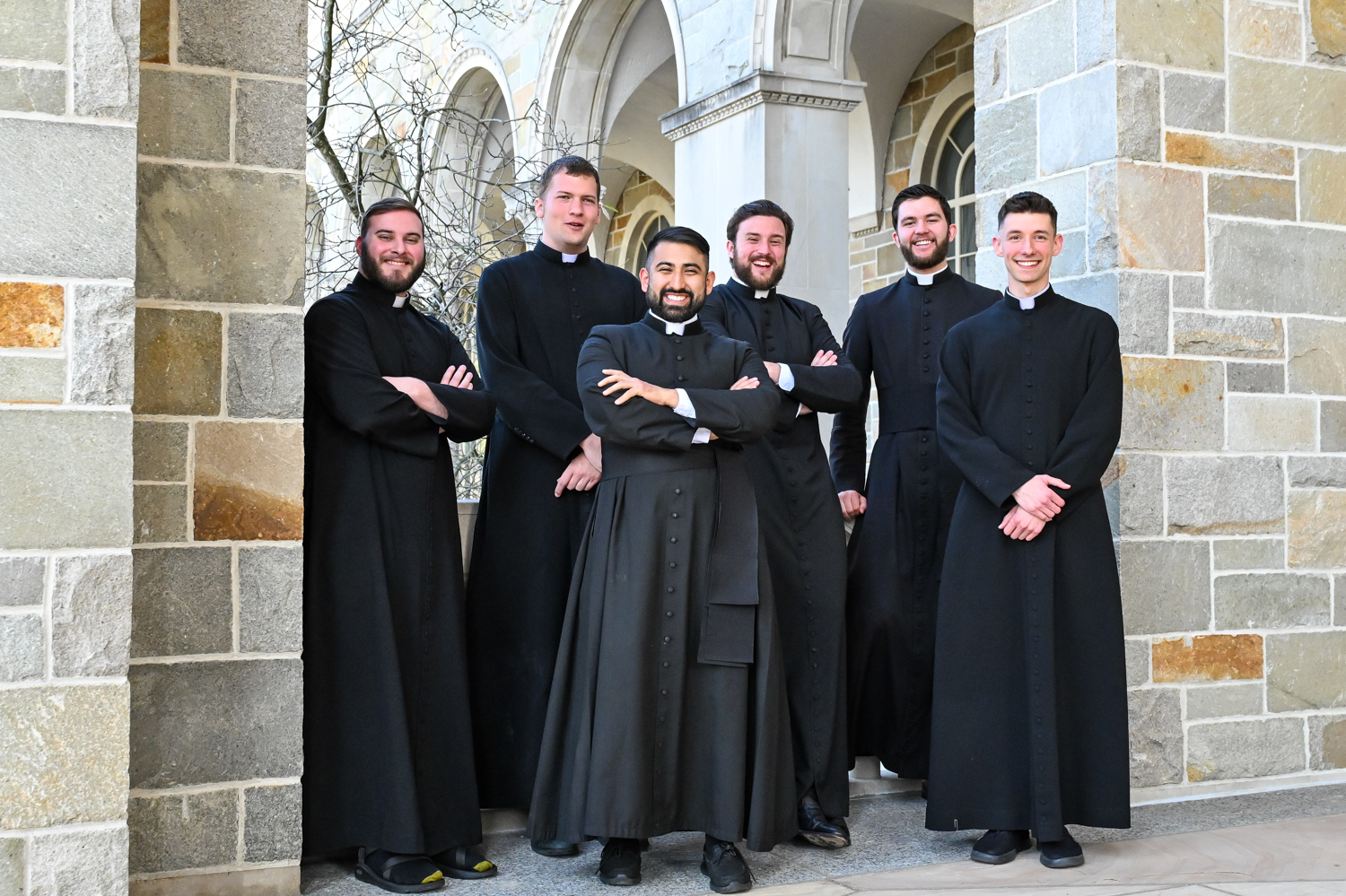
Multiple dioceses throughout the U.S. are bucking national trends and seeing large numbers of men discern into the priesthood.

Several homes were looted and vandalized in a mainly Catholic village after the body of a Muslim man was found nearby, and 19 Indigenous villagers were arrested.


Most of the upgrades will remain at the shrine for the long-term benefit of pilgrims, so any donations are viewed as an investment in Lourdes’ future.

![Study shows society’s religious norms can affect children’s anxiety #Catholic Religious faith in society may do more than provide spiritual comfort and moral guidance; it could also help protect against anxiety disorders, according to a recent study published in Developmental Science.The research published in March explored if there were links between what societies value — such as independence and community — and anxiety disorder rates among children and adolescents over three decades.The study by Leonard Konstantin Kulisch, Ana Lorena Domínguez Rojas, Silvia Schneider, and Babett Voigt analyzed preexisting records and data during the years 1989 to 2022 from the World Value Survey, Global Burden of Disease study, Human Development Report, and Future of Families and Child Wellbeing Study.The research found an emphasis on independence was linked to higher anxiety rates in “WEIRD” (Western, Educated, Industrialized, Rich, Democratic) nations, while a greater emphasis on religious faith and interdependence correlated with less anxiety disorders globally.It also found that the importance of religious faith in socialization, and its link to interdependence, was associated with fewer anxiety disorders across 70 of the countries examined.The study did not compare religious versus nonreligious people or compare specific countries. While the effect sizes were small, it did find that “in countries where emphasis on religious faith in childrearing declined, youth anxiety rose,” Brandon Vaidyanathan, professor of sociology at The Catholic University of America, told EWTN News.Country-based disparitiesIn WEIRD nations, the societies that have norms that are oriented toward independence were associated with more anxiety disorders, but the analyses found no significant association among the non-WEIRD countries.In “developing societies [a] shift toward independence accompanies gains in growth and quality of life that may offset its psychological costs, but in already developed societies, it may only intensify competition and achievement-pressure,” Vaidyanathan explained.“The difference between WEIRD and non-WEIRD societies on the independence finding is quite interesting, and the authors suggest that it is stage-dependent,” Vaidyanathan said.“But religion is universal in providing goods that do not depend on development stage” including “belonging, order, meaning, purpose, routine.”Family versus society predictorsThe study reports that religious socialization may serve as “a protective factor” against anxiety issues in children and adolescents, which “is at the communal level much more than the individual level,” Vaidyanathan said. So much so that the U.S. data suggested the societyʼs religious norms predicted childrenʼs anxiety better than the motherʼs own beliefs.“The religiosity of the surrounding social environment was a stronger predictor of childrenʼs anxiety level than the familyʼs own faith, suggesting the protection comes from the society more than family,” Vaidyanathan said. The global protective factor was not communal values in general but religious faith specifically, which Vaidyanathan called “textbook sociology” of religion.“Since Durkheim, sociologists have shown that integration into [a] shared moral community buffers individuals from anomie” or “normlessness,” he said.“Where the community has clear norms, attachments, obligations, limits … the individual doesnʼt have to shoulder the burden of ordering life themselves —which is where anxiety comes in.”“Thatʼs why the protection is at the group level more than individual or family level, and that is what gets eroded in a secularized society,” he said.Vaidyanathan also pointed to Peter Berger, a sociologist and Protestant theologian who coined the term “plausibility structures,” which are the social, cultural, and institutional environments that make certain values or religious beliefs seem believable and normal to a group of people.Bergerʼs “famous concept of ‘plausibility structures’ helps us understand that a religious framework reduces anxiety, only while the surrounding society keeps it plausible — when the surrounding community keeps talking and living as if it were true.”“When that fails, religion becomes one option among many and even a devout householdʼs commitment to their faith is not enough to shield a child in that society. So this is why community norms [or] religiosity matters much more than family belief,” Vaidyanathan said.](http://unitedyam.com/wp-content/uploads/2026/08/study-shows-societys-religious-norms-can-affect-childrens-anxiety-catholic-religious-faith-in-society-may-do-more-than-provide-spiritual-comfort-and-moral-guidance-it-could-also-he.jpg "Study shows society’s religious norms can affect children’s anxiety #Catholic Religious faith in society may do more than provide spiritual comfort and moral guidance; it could also help protect against anxiety disorders, according to a recent study published in Developmental Science.The research published in March explored if there were links between what societies value — such as independence and community — and anxiety disorder rates among children and adolescents over three decades.The study by Leonard Konstantin Kulisch, Ana Lorena Domínguez Rojas, Silvia Schneider, and Babett Voigt analyzed preexisting records and data during the years 1989 to 2022 from the World Value Survey, Global Burden of Disease study, Human Development Report, and Future of Families and Child Wellbeing Study.The research found an emphasis on independence was linked to higher anxiety rates in “WEIRD” (Western, Educated, Industrialized, Rich, Democratic) nations, while a greater emphasis on religious faith and interdependence correlated with less anxiety disorders globally.It also found that the importance of religious faith in socialization, and its link to interdependence, was associated with fewer anxiety disorders across 70 of the countries examined.The study did not compare religious versus nonreligious people or compare specific countries. While the effect sizes were small, it did find that “in countries where emphasis on religious faith in childrearing declined, youth anxiety rose,” Brandon Vaidyanathan, professor of sociology at The Catholic University of America, told EWTN News.Country-based disparitiesIn WEIRD nations, the societies that have norms that are oriented toward independence were associated with more anxiety disorders, but the analyses found no significant association among the non-WEIRD countries.In “developing societies [a] shift toward independence accompanies gains in growth and quality of life that may offset its psychological costs, but in already developed societies, it may only intensify competition and achievement-pressure,” Vaidyanathan explained.“The difference between WEIRD and non-WEIRD societies on the independence finding is quite interesting, and the authors suggest that it is stage-dependent,” Vaidyanathan said.“But religion is universal in providing goods that do not depend on development stage” including “belonging, order, meaning, purpose, routine.”Family versus society predictorsThe study reports that religious socialization may serve as “a protective factor” against anxiety issues in children and adolescents, which “is at the communal level much more than the individual level,” Vaidyanathan said. So much so that the U.S. data suggested the societyʼs religious norms predicted childrenʼs anxiety better than the motherʼs own beliefs.“The religiosity of the surrounding social environment was a stronger predictor of childrenʼs anxiety level than the familyʼs own faith, suggesting the protection comes from the society more than family,” Vaidyanathan said. The global protective factor was not communal values in general but religious faith specifically, which Vaidyanathan called “textbook sociology” of religion.“Since Durkheim, sociologists have shown that integration into [a] shared moral community buffers individuals from anomie” or “normlessness,” he said.“Where the community has clear norms, attachments, obligations, limits … the individual doesnʼt have to shoulder the burden of ordering life themselves —which is where anxiety comes in.”“Thatʼs why the protection is at the group level more than individual or family level, and that is what gets eroded in a secularized society,” he said.Vaidyanathan also pointed to Peter Berger, a sociologist and Protestant theologian who coined the term “plausibility structures,” which are the social, cultural, and institutional environments that make certain values or religious beliefs seem believable and normal to a group of people.Bergerʼs “famous concept of ‘plausibility structures’ helps us understand that a religious framework reduces anxiety, only while the surrounding society keeps it plausible — when the surrounding community keeps talking and living as if it were true.”“When that fails, religion becomes one option among many and even a devout householdʼs commitment to their faith is not enough to shield a child in that society. So this is why community norms [or] religiosity matters much more than family belief,” Vaidyanathan said.")
The study, which looked at data over three decades, reports that a country’s religious values may serve as “a protective factor” against anxiety issues in children and adolescents.

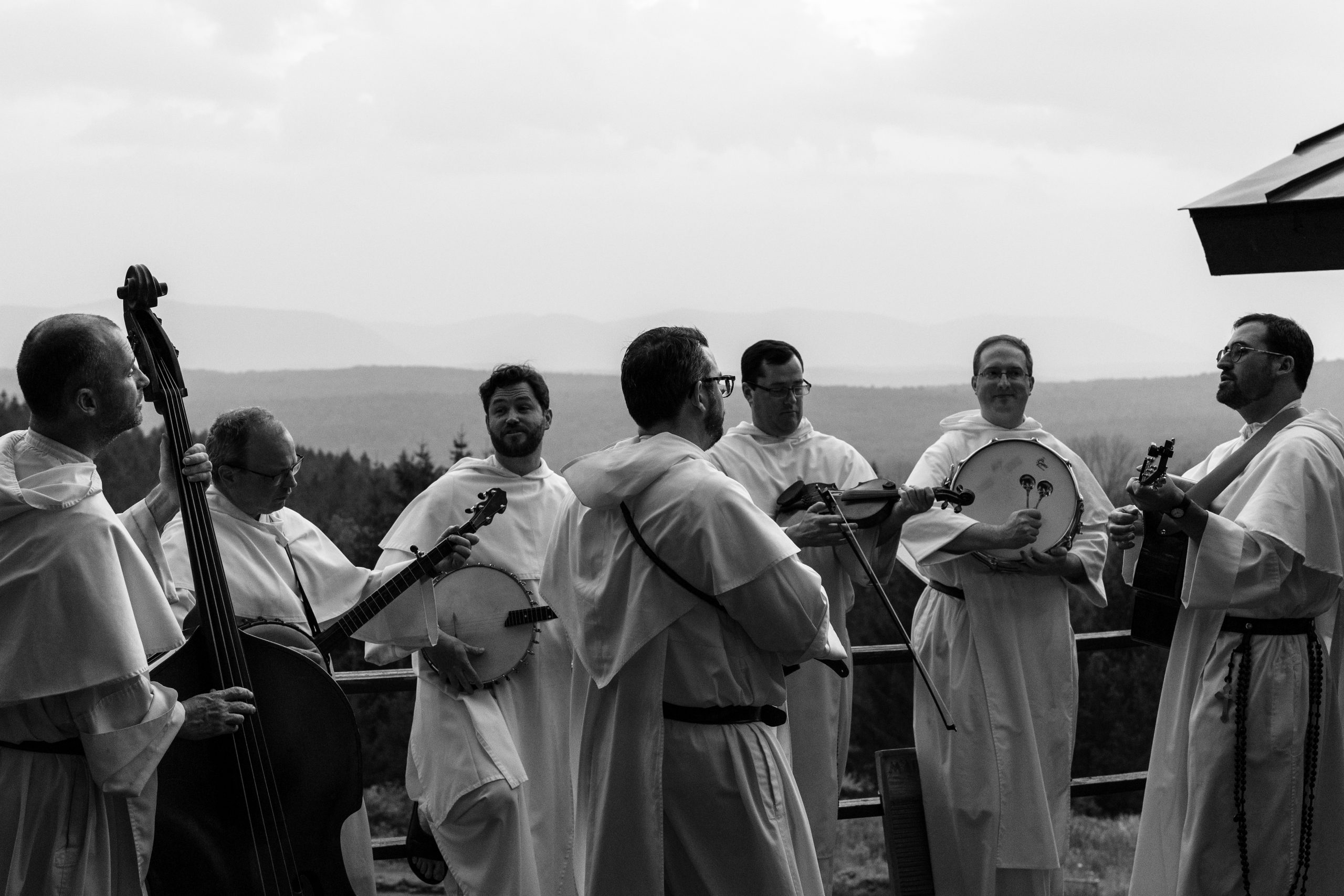
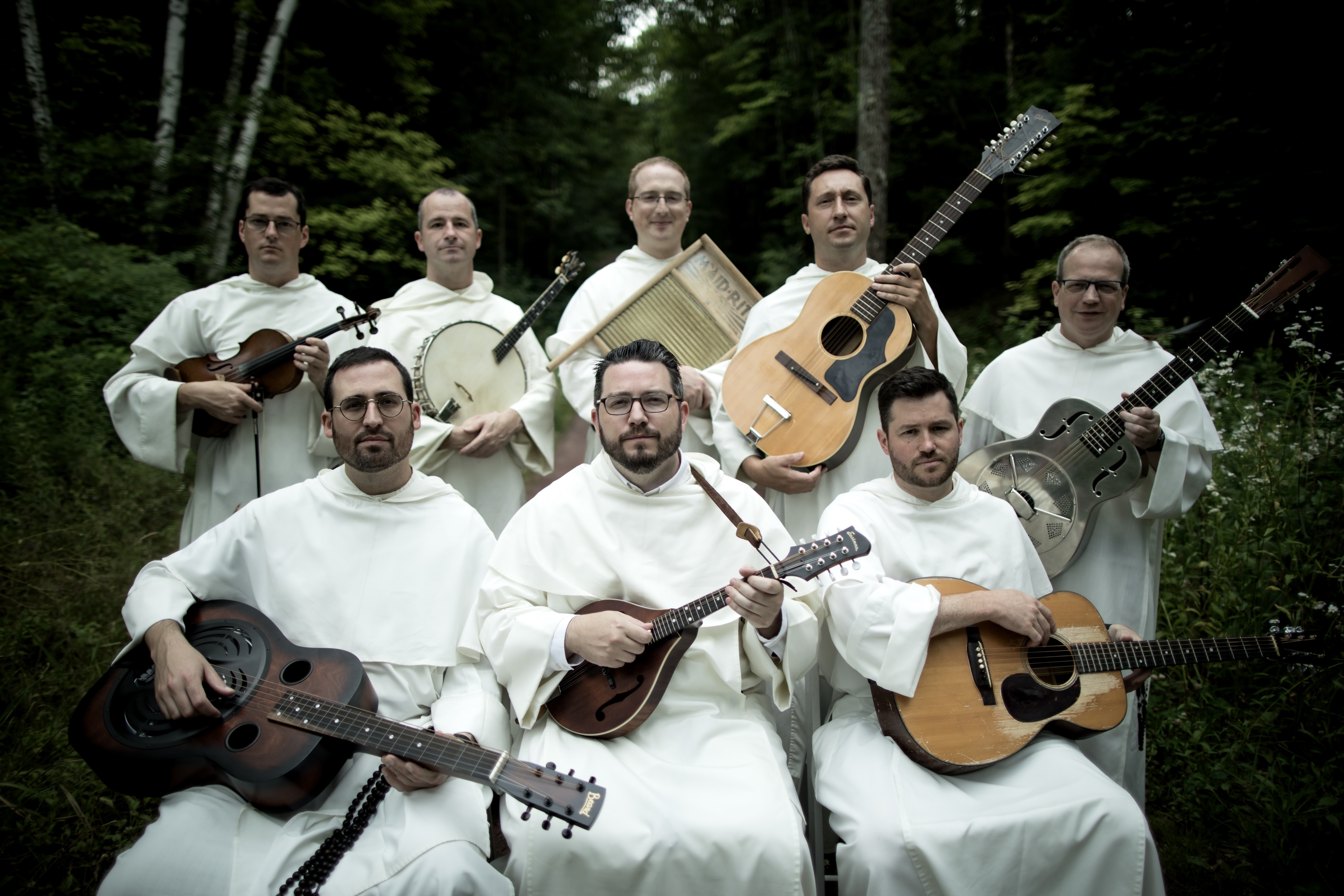
The music group’s latest project was released as a surprise drop just a couple of days into their summer tour.

The Catholic Legal Immigration Network (CLINIC) criticized an executive order targeting birthright citizenship. The U.S. Catholic bishops are reviewing and monitoring the order.
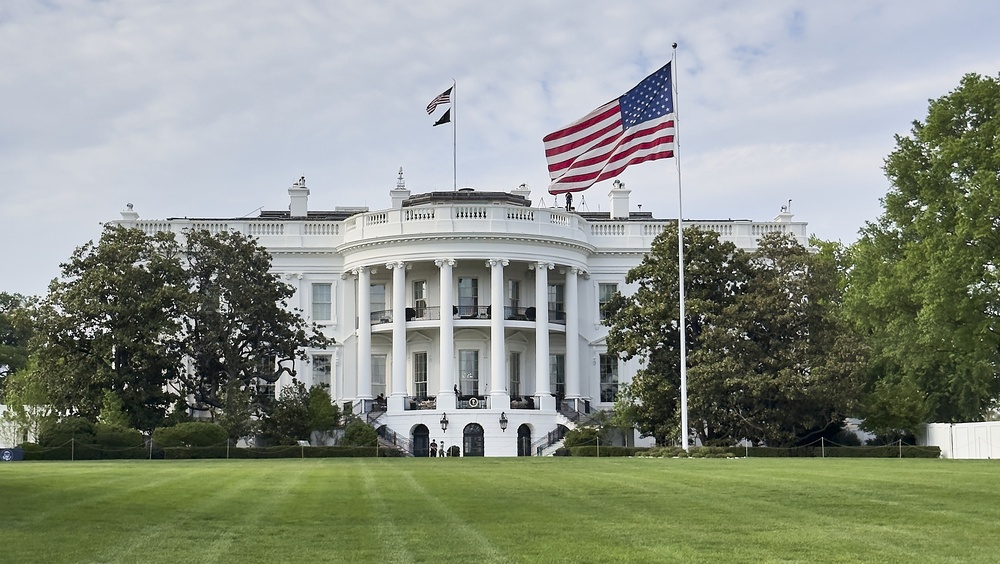
![Federal court hears arguments on Oklahoma’s ban for religious charter schools #Catholic A federal court heard oral arguments on Aug. 5 about whether an Oklahoma law banning religious charter schools violates the First Amendment’s protection of the free exercise of religion.Oklahoma established a charter school system in 1999, which provides public funds for privately run K–12 schools to which parents can send their children instead of a public school operated by a school district. The law only allows “nonsectarian” applicants, which prevents any participation from schools that have a religious identity.In 2023, the Oklahoma Statewide Charter School Board (SCSB) approved an application from a proposed Catholic charter school — St. Isidore of Seville Catholic Virtual School — which led to a legal challenge from Oklahoma Attorney General Gentner Drummond, who opposed religious charter schools.The Oklahoma Supreme Court sided against the school, finding that charter schools are public schools and that public schools must be secular. St. Isidore appealed this to the U.S. Supreme Court, but that resulted in a 4-4 deadlock with no majority opinion because Justice Amy Coney Barrett had a conflict of interest and recused herself.Amid no clear guidance from the federal courts, a Jewish organization — National Ben Gamla Jewish Charter School Foundation — filed an application to set up a charter school, which was denied. The group, represented by lawyers at the Becket Fund, filed a new lawsuit and asked a federal district court to require the SCSB to consider religious applicants.“Oklahoma makes room in its charter program for schools of all shapes and sizes, from those focused on science and fine arts to language immersion and classical education,” Daniel Chen, a Becket attorney representing the Jewish foundation, said in a statement.“The one it refuses to make room for is a faith-based school,” Chen added. “That is religious discrimination, plain and simple, and the state deserves a failing grade for it.”Chen told EWTN News that Becket is asking the federal court to immediately allow National Ben Gamla Jewish Charter School Foundation to set up a charter school, citing U.S. Supreme Court precedent that requires government programs to allow religious institutions the same access as secular institutions.“They’re private actors,” he said. “And because they’re private actors, they cannot be excluded from participating in a public benefits program.”Chen said the federal district court is not bound by the precedent of the Oklahoma Supreme Court because that is a state court, so it could rule in favor of the school. He also said if the case goes to the U.S. Supreme Court, he hopes Barrett can weigh in to break the 4-4 deadlock.“We’re hoping that [for] our case, there wouldn’t have to be any recusals,” he said.School board’s hands are tiedAlthough the charter school board denied the application from the National Ben Gamla Jewish Charter School Foundation, one of its lawyers at First Liberty Institute explained to EWTN News that its hands are tied by the statute and the Oklahoma Supreme Court’s decision.“They’re following that order,” said Hiram Sasser, executive general counsel for First Liberty and the lawyer representing SCSB. “But [they] would be happy if the federal court didn’t [require the school board] to engage in that kind of discrimination.”Sasser said the SCSB does not want to exclude an applicant “simply because it’s religious” and would rather evaluate applicants “just based on the merits.” But he said the order “makes them exclude religious schools just because they’re religious.”“They want to maximize all of the various choices and opportunities for parents,” he added.Sasser said he hopes the question goes to the U.S. Supreme Court again so “we’ll get an answer — a real answer.” He said it would provide more clarity for the school board, which “needs an answer.”John Meiser, director of the Lindsay and Matt Moroun Religious Liberty Clinic at the University of Notre Dame and the lawyer who represented St. Isidore at the Supreme Court, told EWTN News that the question ultimately comes down to whether charter schools are private or public institutions.In Oklahoma, he said charter schools “are called public schools” and that label “introduces a confusion that I don’t think would be present if they chose any other word.”He said Supreme Court precedent is clear that religious institutions must have equal access to government programs available to private institutions, but if a charter school is a “government school,” that “doesn’t apply” because the government “doesn’t and can’t run religious schools.”In spite of the label, Meiser said charter schools in Oklahoma are “formed and designed and run by private groups” and people who work there “are private employees.” He said the structure “looks just like a government contract” and funding from the government “doesn’t turn all those private contractors into the government itself.”“The dispute is really just about, ‘Well is a charter school in some way different?’” he said.Although Meiser said he is not aware of any ongoing Catholic efforts to recreate a charter school, he said that a Supreme Court ruling in favor of the National Ben Gamla Jewish Charter School Foundation’s constitutional arguments for equal access “would presumably apply to all religious operators of schools, and so it would open the door to a Catholic charter school or other religiously based charter school.”Attorney general stands firmDrummond, who remains Oklahoma’s attorney general, is standing firm in opposing the creation of religious charter schools and is fighting against National Ben Gamla Jewish Charter School Foundation’s efforts."This matter was resolved when the state Supreme Courtʼs ruling to prevent taxpayer funded religious charter schools was upheld by the U.S. Supreme Court last year,” Leslie Berger, press secretary for the attorney general’s office, told EWTN News.Drummond has also criticized the charter school board in public statements surrounding this legal battle in March, accusing the SCSB of “playing politics with the taxpayers' money” and alleged it “manipulated the record [about why National Ben Gamla Jewish Charter School Foundation’s application was rejected] to make that lawsuit easier to lose — not win.”"A state agency that deliberately hobbles its own legal position is not doing its job — it is betraying Oklahoma taxpayers,” he said. “I will not allow that.”Drummond has garnered support from the American Civil Liberties Union (ACLU) and the Freedom From Religion Foundation (FFRF) for opposing the creation of religious charter schools.Attorneys for FFRF are representing seven Oklahomans who oppose their tax money being used to support religious charter schools.“The federal court should rule according to constitutional principles,” FFRF Co-President Annie Laurie Gaylor said in a statement. “A religious public charter school has no place in our secular public education system.”It’s unclear when the federal court will issue its ruling, but National Ben Gamla Jewish Charter School Foundation has asked the judge to issue a preliminary injunction against the state so it can begin operating a school while the litigation plays out.](http://unitedyam.com/wp-content/uploads/2026/08/federal-court-hears-arguments-on-oklahomas-ban-for-religious-charter-schools-catholic-a-federal-court-heard-oral-arguments-on-aug-5-about-whether-an-oklahoma-law-banning-religious-charter-s.jpg "Federal court hears arguments on Oklahoma’s ban for religious charter schools #Catholic A federal court heard oral arguments on Aug. 5 about whether an Oklahoma law banning religious charter schools violates the First Amendment’s protection of the free exercise of religion.Oklahoma established a charter school system in 1999, which provides public funds for privately run K–12 schools to which parents can send their children instead of a public school operated by a school district. The law only allows “nonsectarian” applicants, which prevents any participation from schools that have a religious identity.In 2023, the Oklahoma Statewide Charter School Board (SCSB) approved an application from a proposed Catholic charter school — St. Isidore of Seville Catholic Virtual School — which led to a legal challenge from Oklahoma Attorney General Gentner Drummond, who opposed religious charter schools.The Oklahoma Supreme Court sided against the school, finding that charter schools are public schools and that public schools must be secular. St. Isidore appealed this to the U.S. Supreme Court, but that resulted in a 4-4 deadlock with no majority opinion because Justice Amy Coney Barrett had a conflict of interest and recused herself.Amid no clear guidance from the federal courts, a Jewish organization — National Ben Gamla Jewish Charter School Foundation — filed an application to set up a charter school, which was denied. The group, represented by lawyers at the Becket Fund, filed a new lawsuit and asked a federal district court to require the SCSB to consider religious applicants.“Oklahoma makes room in its charter program for schools of all shapes and sizes, from those focused on science and fine arts to language immersion and classical education,” Daniel Chen, a Becket attorney representing the Jewish foundation, said in a statement.“The one it refuses to make room for is a faith-based school,” Chen added. “That is religious discrimination, plain and simple, and the state deserves a failing grade for it.”Chen told EWTN News that Becket is asking the federal court to immediately allow National Ben Gamla Jewish Charter School Foundation to set up a charter school, citing U.S. Supreme Court precedent that requires government programs to allow religious institutions the same access as secular institutions.“They’re private actors,” he said. “And because they’re private actors, they cannot be excluded from participating in a public benefits program.”Chen said the federal district court is not bound by the precedent of the Oklahoma Supreme Court because that is a state court, so it could rule in favor of the school. He also said if the case goes to the U.S. Supreme Court, he hopes Barrett can weigh in to break the 4-4 deadlock.“We’re hoping that [for] our case, there wouldn’t have to be any recusals,” he said.School board’s hands are tiedAlthough the charter school board denied the application from the National Ben Gamla Jewish Charter School Foundation, one of its lawyers at First Liberty Institute explained to EWTN News that its hands are tied by the statute and the Oklahoma Supreme Court’s decision.“They’re following that order,” said Hiram Sasser, executive general counsel for First Liberty and the lawyer representing SCSB. “But [they] would be happy if the federal court didn’t [require the school board] to engage in that kind of discrimination.”Sasser said the SCSB does not want to exclude an applicant “simply because it’s religious” and would rather evaluate applicants “just based on the merits.” But he said the order “makes them exclude religious schools just because they’re religious.”“They want to maximize all of the various choices and opportunities for parents,” he added.Sasser said he hopes the question goes to the U.S. Supreme Court again so “we’ll get an answer — a real answer.” He said it would provide more clarity for the school board, which “needs an answer.”John Meiser, director of the Lindsay and Matt Moroun Religious Liberty Clinic at the University of Notre Dame and the lawyer who represented St. Isidore at the Supreme Court, told EWTN News that the question ultimately comes down to whether charter schools are private or public institutions.In Oklahoma, he said charter schools “are called public schools” and that label “introduces a confusion that I don’t think would be present if they chose any other word.”He said Supreme Court precedent is clear that religious institutions must have equal access to government programs available to private institutions, but if a charter school is a “government school,” that “doesn’t apply” because the government “doesn’t and can’t run religious schools.”In spite of the label, Meiser said charter schools in Oklahoma are “formed and designed and run by private groups” and people who work there “are private employees.” He said the structure “looks just like a government contract” and funding from the government “doesn’t turn all those private contractors into the government itself.”“The dispute is really just about, ‘Well is a charter school in some way different?’” he said.Although Meiser said he is not aware of any ongoing Catholic efforts to recreate a charter school, he said that a Supreme Court ruling in favor of the National Ben Gamla Jewish Charter School Foundation’s constitutional arguments for equal access “would presumably apply to all religious operators of schools, and so it would open the door to a Catholic charter school or other religiously based charter school.”Attorney general stands firmDrummond, who remains Oklahoma’s attorney general, is standing firm in opposing the creation of religious charter schools and is fighting against National Ben Gamla Jewish Charter School Foundation’s efforts.\"This matter was resolved when the state Supreme Courtʼs ruling to prevent taxpayer funded religious charter schools was upheld by the U.S. Supreme Court last year,” Leslie Berger, press secretary for the attorney general’s office, told EWTN News.Drummond has also criticized the charter school board in public statements surrounding this legal battle in March, accusing the SCSB of “playing politics with the taxpayers' money” and alleged it “manipulated the record [about why National Ben Gamla Jewish Charter School Foundation’s application was rejected] to make that lawsuit easier to lose — not win.”\"A state agency that deliberately hobbles its own legal position is not doing its job — it is betraying Oklahoma taxpayers,” he said. “I will not allow that.”Drummond has garnered support from the American Civil Liberties Union (ACLU) and the Freedom From Religion Foundation (FFRF) for opposing the creation of religious charter schools.Attorneys for FFRF are representing seven Oklahomans who oppose their tax money being used to support religious charter schools.“The federal court should rule according to constitutional principles,” FFRF Co-President Annie Laurie Gaylor said in a statement. “A religious public charter school has no place in our secular public education system.”It’s unclear when the federal court will issue its ruling, but National Ben Gamla Jewish Charter School Foundation has asked the judge to issue a preliminary injunction against the state so it can begin operating a school while the litigation plays out.")
Oklahoma’s Statewide Charter School Board wants to approve religious charter schools, but a ruling from the Oklahoma Supreme Court and efforts by the state attorney general prevent it from doing so.

![March for Life president steps down to become ‘full-time mom’ #Catholic March for Life president steps down to focus on familyJennie Bradley Lichter, the president of the March for Life, is stepping down to devote more time to her family as a “full-time mom,” the leader said this week.“I have been humbled and inspired by the stories — so many stories, everywhere I go — of how the March for Life has changed people’s minds and hearts, how for so many Marchers it has sparked a lifetime of action and advocacy on behalf of the unborn, and in some cases, how it has changed the entire trajectory of their lives,” Bradley Lichter wrote in a farewell statement.She and her husband “are raising two tweens and a rising kindergartner, and it has become very clear that my family needs more of my time and my active presence than I’m able to give while leading the March for Life,” she said in the statement “My most important titles of all are not ‘President’ — but ‘wife’ and ‘Mom,’” she said.Bradley Lichter said that her role has been “the highlight of my professional life.”The resignation is effective July 31. The March for Life Board is actively searching for a new president.The annual demonstration draws tens of thousands to the nation’s capital yearly to advocate for the rights of unborn babies.Abortion drug present in municipal water, study findsA study published on July 20 in the Journal of the Alliance for Hippocratic Medicine highlighted the need for “significant additional investigation into the levels of various hormones and [endocrine-disrupting chemicals], including mifepristone, in water sources,” with researchers finding high levels of the abortion drug in municipal water supplies.Mifepristone is used in chemical abortions, as well as in treatment for miscarriages, and works by blocking progesterone, a hormone necessary for pregnancy. The investigation found “significant levels of mifepristone (up to 0.041 μgram/l) in the water of all but one of the nine sampling classes,” the study read. Water samples “were collected from sites upstream and downstream of water treatment facilities, and from municipal tap water,” from multiple American cities.“Because of the plethora of effects of progesterone, this contaminant could affect the physiology of aquatic animals; and human health, including fertility, pregnancy and fetal development,” the researchers said. Justice Department settles with pro-life father after FBI raidThe U.S. Department of Justice reached a seven-figure settlement with pro-life father Paul Vaughn after his home was raided by the FBI in connection with his pro-life work.The settlement affirmed that under the Biden administration, the government’s actions “were an abuse of government power,” according to a July 28 press release by the Thomas More Society, the legal nonprofit that defended Vaughn.Vaughn, a Catholic father of 11, was arrested at gunpoint after the FBI raided his house in connection with his protest at an abortion clinic. He is one of several pro-life advocates prosecuted under the Freedom of Access to Clinic Entrances Act during the Biden administration.“My family has been through a traumatic ordeal that never should have happened. But today brings an end to this portion of the story,” Vaughn said in a statement.“This chapter is finally closed, and our family looks forward with gratitude and hope, as we continue to serve God, advocating for the most vulnerable among us without fear.”Catholic bishops of Massachusetts speak out against late-term abortion billThe Catholic bishops of Massachusetts spoke out this week against a bill that will legalize late-term abortion in the state.“As Catholic bishops we have a moral responsibility to present and uphold Catholic teaching and the sacred God-given dignity of every human life from conception to the natural death,” the bishops said in July 29 statement signed by Bishop William Byrne of Springfield, Archbishop Richard Henning of Boston, Bishop Robert McManus of Worcester, and Bishop Edgar da Cunha of Fall River.The state legislature passed the bill in July, with the Massachusetts Senate voting in favor of it on July 31. The measure, if signed into law, will remove the stateʼs 24-week limit on abortion.“The proposed elimination of any legal restraint on late-term abortion is, in our judgement, a radical measure which is gravely immoral,” the bishops’ statement read. The advocacy group Susan B. Anthony Pro-Life America is also strongly opposing the bill; the group’s president Marjorie Dannenfelser called for nationwide protections for unborn children.“If Gov. [Maura] Healey signs this bill into law, Massachusetts will join 10 states and Washington, D.C. with an all-trimester abortion policy where babies are killed after the point they can survive outside of the womb,” Dannenfelser told EWTN News. “These extreme laws that only 10% of Americans support are enabled by the ‘states-only’ philosophy on abortion,” she said.](http://unitedyam.com/wp-content/uploads/2026/08/march-for-life-president-steps-down-to-become-full-time-mom-catholic-march-for-life-president-steps-down-to-focus-on-familyjennie-bradley-lichter-the-president-of-the-march-for-life-is-stepping.jpg "March for Life president steps down to become ‘full-time mom’ #Catholic March for Life president steps down to focus on familyJennie Bradley Lichter, the president of the March for Life, is stepping down to devote more time to her family as a “full-time mom,” the leader said this week.“I have been humbled and inspired by the stories — so many stories, everywhere I go — of how the March for Life has changed people’s minds and hearts, how for so many Marchers it has sparked a lifetime of action and advocacy on behalf of the unborn, and in some cases, how it has changed the entire trajectory of their lives,” Bradley Lichter wrote in a farewell statement.She and her husband “are raising two tweens and a rising kindergartner, and it has become very clear that my family needs more of my time and my active presence than I’m able to give while leading the March for Life,” she said in the statement “My most important titles of all are not ‘President’ — but ‘wife’ and ‘Mom,’” she said.Bradley Lichter said that her role has been “the highlight of my professional life.”The resignation is effective July 31. The March for Life Board is actively searching for a new president.The annual demonstration draws tens of thousands to the nation’s capital yearly to advocate for the rights of unborn babies.Abortion drug present in municipal water, study findsA study published on July 20 in the Journal of the Alliance for Hippocratic Medicine highlighted the need for “significant additional investigation into the levels of various hormones and [endocrine-disrupting chemicals], including mifepristone, in water sources,” with researchers finding high levels of the abortion drug in municipal water supplies.Mifepristone is used in chemical abortions, as well as in treatment for miscarriages, and works by blocking progesterone, a hormone necessary for pregnancy. The investigation found “significant levels of mifepristone (up to 0.041 μgram/l) in the water of all but one of the nine sampling classes,” the study read. Water samples “were collected from sites upstream and downstream of water treatment facilities, and from municipal tap water,” from multiple American cities.“Because of the plethora of effects of progesterone, this contaminant could affect the physiology of aquatic animals; and human health, including fertility, pregnancy and fetal development,” the researchers said. Justice Department settles with pro-life father after FBI raidThe U.S. Department of Justice reached a seven-figure settlement with pro-life father Paul Vaughn after his home was raided by the FBI in connection with his pro-life work.The settlement affirmed that under the Biden administration, the government’s actions “were an abuse of government power,” according to a July 28 press release by the Thomas More Society, the legal nonprofit that defended Vaughn.Vaughn, a Catholic father of 11, was arrested at gunpoint after the FBI raided his house in connection with his protest at an abortion clinic. He is one of several pro-life advocates prosecuted under the Freedom of Access to Clinic Entrances Act during the Biden administration.“My family has been through a traumatic ordeal that never should have happened. But today brings an end to this portion of the story,” Vaughn said in a statement.“This chapter is finally closed, and our family looks forward with gratitude and hope, as we continue to serve God, advocating for the most vulnerable among us without fear.”Catholic bishops of Massachusetts speak out against late-term abortion billThe Catholic bishops of Massachusetts spoke out this week against a bill that will legalize late-term abortion in the state.“As Catholic bishops we have a moral responsibility to present and uphold Catholic teaching and the sacred God-given dignity of every human life from conception to the natural death,” the bishops said in July 29 statement signed by Bishop William Byrne of Springfield, Archbishop Richard Henning of Boston, Bishop Robert McManus of Worcester, and Bishop Edgar da Cunha of Fall River.The state legislature passed the bill in July, with the Massachusetts Senate voting in favor of it on July 31. The measure, if signed into law, will remove the stateʼs 24-week limit on abortion.“The proposed elimination of any legal restraint on late-term abortion is, in our judgement, a radical measure which is gravely immoral,” the bishops’ statement read. The advocacy group Susan B. Anthony Pro-Life America is also strongly opposing the bill; the group’s president Marjorie Dannenfelser called for nationwide protections for unborn children.“If Gov. [Maura] Healey signs this bill into law, Massachusetts will join 10 states and Washington, D.C. with an all-trimester abortion policy where babies are killed after the point they can survive outside of the womb,” Dannenfelser told EWTN News. “These extreme laws that only 10% of Americans support are enabled by the ‘states-only’ philosophy on abortion,” she said.")
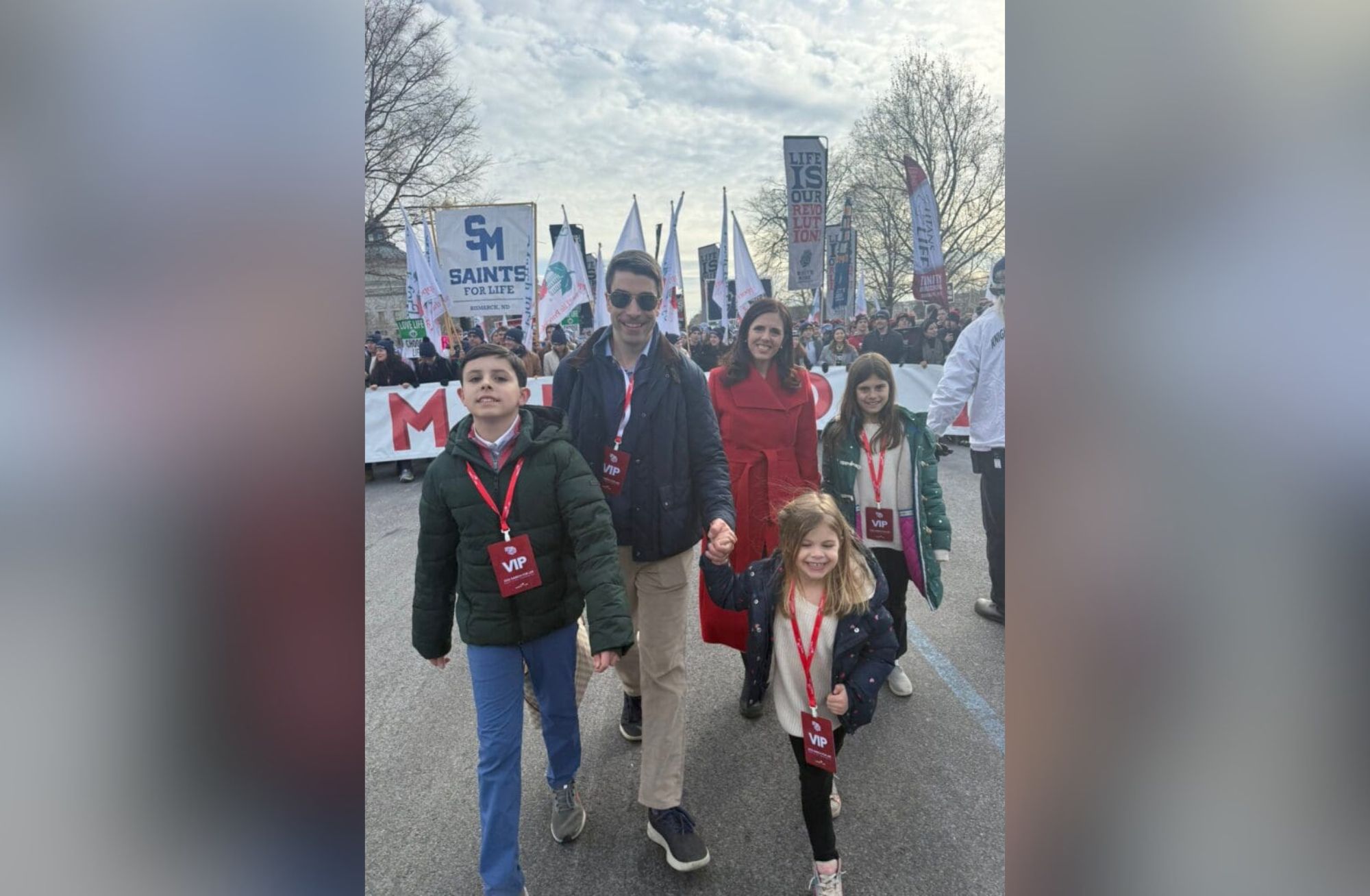
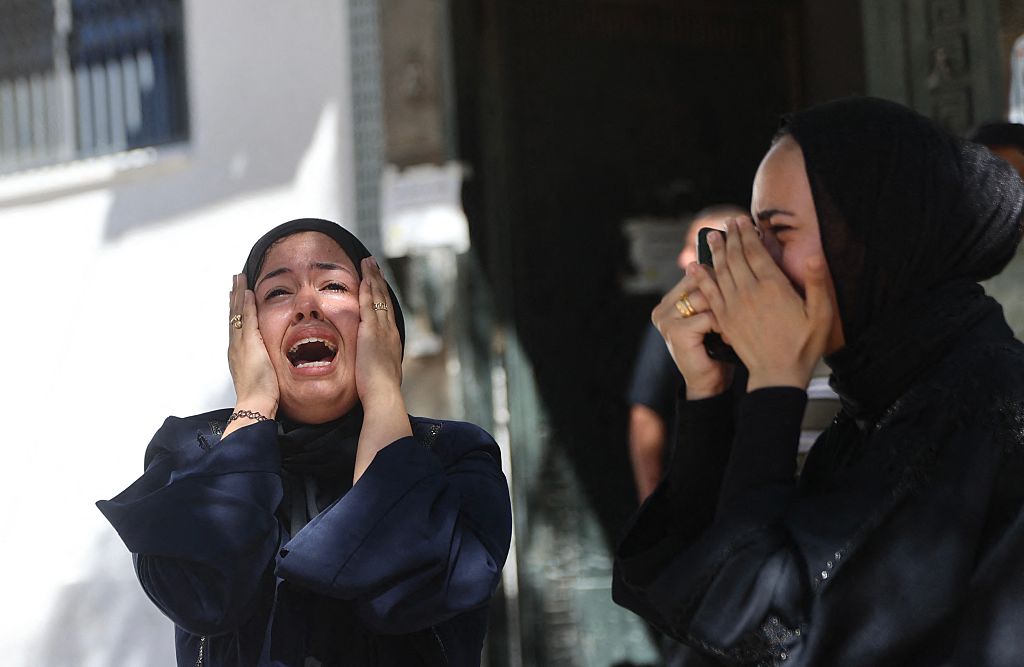
The Catholic Near East Welfare Association (CNEWA) reported emergency response crews were not able to immediately reach the struck building because responders feared a second strike.
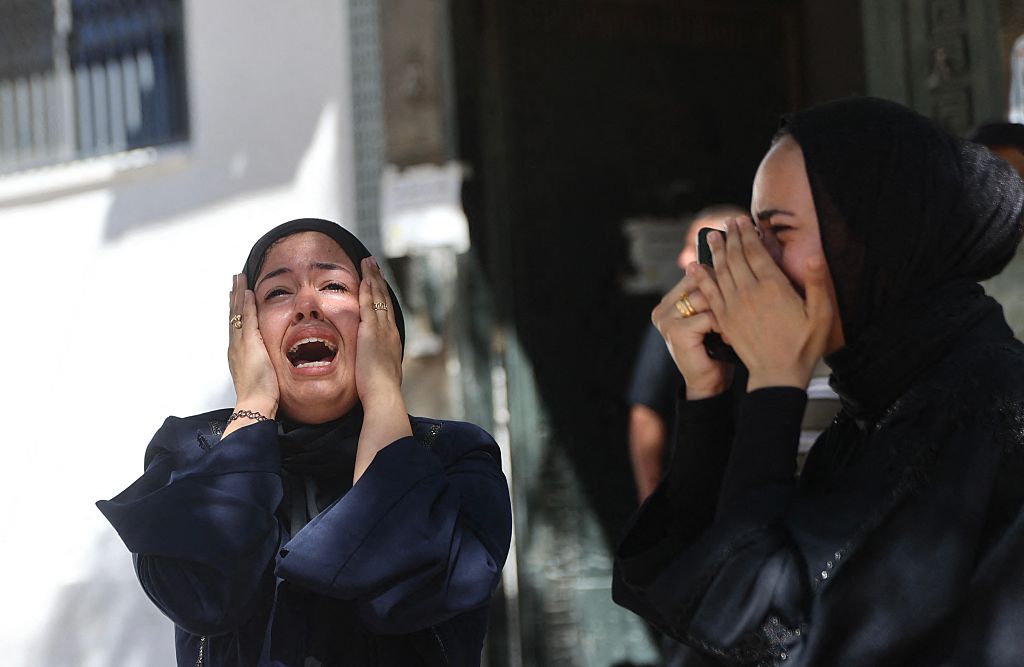
![Abortion count rises as women turn to chemical abortions, per new data #Catholic The U.S. abortion count continues to rise even as travel abortions decrease, a recent study found.The Guttmacher Institute, a data group that openly supports abortion access, documented a decrease in people leaving their own state to get abortions in other states. Instead, abortion seekers turn toward mail-order abortions, which have seen a surge in recent years.The group tracks abortions monthly, following trends “in the post-Dobbs era” since 2023, according to Guttmacher data scientist and study lead Isaac Maddow-Zimet. The data indicated an overall increase in abortions from 2025 to 2026. “In the first three months of 2026, there were 296,130 abortions as compared to 292,590 in the first three months of 2025,” data scholar Michael New told EWTN News. “This is an increase of just over 1%.”New said this fact has gone underreported.“Most media outlets that are reporting on the Guttmacher data have not reported on this, but the number of abortions continues to rise,” said New, who is a senior associate scholar at Charlotte Lozier Institute, a group that studies data relating to the pro-life cause.“These rising abortion numbers are an important reason why pro-lifers are frustrated with the Trump administration’s lack of action on telehealth abortions,” continued New, who also works as a professor at the Busch School of Business at The Catholic University of America.The Trump administration has neglected to enforce various regulations — such as the Comstock Act or in-person prescription requirements — that could be groundbreaking for protecting unborn children from chemical abortions.From 2024 to 2025, travel abortions declined by nearly 8%. Scholars agree that mail-order abortion is the reason for the decline in abortion travel.“Currently, we are seeing a major shift in where and how people access abortion,” Maddow-Zimet said. “While travel remains a critical pathway to care, we have seen a decrease in people leaving their state of residence, likely due to both the growth of telehealth access and fewer options for in-person care in the South and Southeast.”New also cited chemical abortions as the draw away from travel abortions. “The main reason for this decline in out-of-state travel is because of the rising number of telehealth abortions,” New said. “The most recent data from the Society for Family Planning shows that approximately 27% of all abortions are done by telehealth.”In Florida, the study also found a near tripling of abortion travel by Floridians after the state passed a heartbeat law to protect unborn babies; at the same time, fewer people traveled to Florida to obtain abortions due to this law.“The national decline [in travel abortions] might have been even larger had Florida not started enforcing a Heartbeat Act in 2024,” New said. “Because of this strong pro-life law, far fewer women residing in southern states traveled to Florida for abortions.”Texas has also seen a decline in Texans traveling to get abortions. “This trend is seen at the state level,” New continued. “Between 2024 and 2025 the number of Texas women obtaining abortions in other states fell by 19%.”Mail-order abortion is pro-life priorityAdvocates for unborn children highlighted the importance of opposing chemical abortions and protecting unborn children across state lines. Abortion continues to rise with the increase in mail-order abortions.Kelsey Pritchard, Susan B. Anthony Pro-Life America spokeswoman, called for protections of unborn children across state lines.“We need a national minimum standard to ensure children across America have basic human rights and the chance at life, regardless of their zip code,” Pritchard told EWTN News.“Nine states and the District of Columbia still have no gestational limits whatsoever on abortion, allowing abortion up to the moment of birth, with late-term abortion centers purposely located within range of pro-life state borders,” Pritchard said. “This is barbaric and extreme, and it places the United States in the same category as communist countries like China and Vietnam on abortion.”“While stopping the ‘Wild West’ of unregulated abortion by mail is our immediate priority, both issues underscore the urgent need for national action to protect unborn children and their mothers,” Pritchard said. “Abortion travel is down overall, but mail-order abortions are surging and driving the national total up to an estimated 1.1 million abortions per year — more than the day Roe was reversed,” Pritchard said. “Every single month, approximately 15,000 babies in the womb die from mail-order abortion drugs in states with pro-life laws, while women and girls are poisoned and coerced by abusers who obtain these drugs online without so much as an ID check.”Kristi Hamrick, Students for Life spokeswoman, questioned the data, noting that there is no reporting requirement for abortion.“I find it extraordinary that the abortion industry reports so much data that is accepted as gospel, despite the fact that we canʼt verify it,” Hamrick said. “We have no national abortion reporting law, and while this data will be broadly reported, every point of data from pro-life sources is treated as suspect.”Guttmacher collects monthly data from brick-and-mortar facilities and telehealth providers, according to the study methodology.The nature of mail-order abortion pills makes it harder to accurately track the number of the abortions in the U.S. as the pills are highly unregulated and some companies operate outside of the U.S. healthcare system.“The landscape of abortion is shifting, from brick-and-mortar abortion vendor to online pill pushers, so less driving, if that is true, does not mean less abortion,” Hamrick said.For Students for Life, “fighting chemical abortion pills” is a priority.Through pregnancy help centers, maternity homes, and other programs, the pro-life movement continues to encourage women to choose life.“But what is happening in real time is that many are reaching out to women online and in their communities to encourage and support them in choosing life, while we also have to confront a new abortion cartel,” Hamrick said.](http://unitedyam.com/wp-content/uploads/2026/07/abortion-count-rises-as-women-turn-to-chemical-abortions-per-new-data-catholic-the-u-s-abortion-count-continues-to-rise-even-as-travel-abortions-decrease-a-recent-study-found-the-guttmacher-instit-scaled.jpg "Abortion count rises as women turn to chemical abortions, per new data #Catholic The U.S. abortion count continues to rise even as travel abortions decrease, a recent study found.The Guttmacher Institute, a data group that openly supports abortion access, documented a decrease in people leaving their own state to get abortions in other states. Instead, abortion seekers turn toward mail-order abortions, which have seen a surge in recent years.The group tracks abortions monthly, following trends “in the post-Dobbs era” since 2023, according to Guttmacher data scientist and study lead Isaac Maddow-Zimet. The data indicated an overall increase in abortions from 2025 to 2026. “In the first three months of 2026, there were 296,130 abortions as compared to 292,590 in the first three months of 2025,” data scholar Michael New told EWTN News. “This is an increase of just over 1%.”New said this fact has gone underreported.“Most media outlets that are reporting on the Guttmacher data have not reported on this, but the number of abortions continues to rise,” said New, who is a senior associate scholar at Charlotte Lozier Institute, a group that studies data relating to the pro-life cause.“These rising abortion numbers are an important reason why pro-lifers are frustrated with the Trump administration’s lack of action on telehealth abortions,” continued New, who also works as a professor at the Busch School of Business at The Catholic University of America.The Trump administration has neglected to enforce various regulations — such as the Comstock Act or in-person prescription requirements — that could be groundbreaking for protecting unborn children from chemical abortions.From 2024 to 2025, travel abortions declined by nearly 8%. Scholars agree that mail-order abortion is the reason for the decline in abortion travel.“Currently, we are seeing a major shift in where and how people access abortion,” Maddow-Zimet said. “While travel remains a critical pathway to care, we have seen a decrease in people leaving their state of residence, likely due to both the growth of telehealth access and fewer options for in-person care in the South and Southeast.”New also cited chemical abortions as the draw away from travel abortions. “The main reason for this decline in out-of-state travel is because of the rising number of telehealth abortions,” New said. “The most recent data from the Society for Family Planning shows that approximately 27% of all abortions are done by telehealth.”In Florida, the study also found a near tripling of abortion travel by Floridians after the state passed a heartbeat law to protect unborn babies; at the same time, fewer people traveled to Florida to obtain abortions due to this law.“The national decline [in travel abortions] might have been even larger had Florida not started enforcing a Heartbeat Act in 2024,” New said. “Because of this strong pro-life law, far fewer women residing in southern states traveled to Florida for abortions.”Texas has also seen a decline in Texans traveling to get abortions. “This trend is seen at the state level,” New continued. “Between 2024 and 2025 the number of Texas women obtaining abortions in other states fell by 19%.”Mail-order abortion is pro-life priorityAdvocates for unborn children highlighted the importance of opposing chemical abortions and protecting unborn children across state lines. Abortion continues to rise with the increase in mail-order abortions.Kelsey Pritchard, Susan B. Anthony Pro-Life America spokeswoman, called for protections of unborn children across state lines.“We need a national minimum standard to ensure children across America have basic human rights and the chance at life, regardless of their zip code,” Pritchard told EWTN News.“Nine states and the District of Columbia still have no gestational limits whatsoever on abortion, allowing abortion up to the moment of birth, with late-term abortion centers purposely located within range of pro-life state borders,” Pritchard said. “This is barbaric and extreme, and it places the United States in the same category as communist countries like China and Vietnam on abortion.”“While stopping the ‘Wild West’ of unregulated abortion by mail is our immediate priority, both issues underscore the urgent need for national action to protect unborn children and their mothers,” Pritchard said. “Abortion travel is down overall, but mail-order abortions are surging and driving the national total up to an estimated 1.1 million abortions per year — more than the day Roe was reversed,” Pritchard said. “Every single month, approximately 15,000 babies in the womb die from mail-order abortion drugs in states with pro-life laws, while women and girls are poisoned and coerced by abusers who obtain these drugs online without so much as an ID check.”Kristi Hamrick, Students for Life spokeswoman, questioned the data, noting that there is no reporting requirement for abortion.“I find it extraordinary that the abortion industry reports so much data that is accepted as gospel, despite the fact that we canʼt verify it,” Hamrick said. “We have no national abortion reporting law, and while this data will be broadly reported, every point of data from pro-life sources is treated as suspect.”Guttmacher collects monthly data from brick-and-mortar facilities and telehealth providers, according to the study methodology.The nature of mail-order abortion pills makes it harder to accurately track the number of the abortions in the U.S. as the pills are highly unregulated and some companies operate outside of the U.S. healthcare system.“The landscape of abortion is shifting, from brick-and-mortar abortion vendor to online pill pushers, so less driving, if that is true, does not mean less abortion,” Hamrick said.For Students for Life, “fighting chemical abortion pills” is a priority.Through pregnancy help centers, maternity homes, and other programs, the pro-life movement continues to encourage women to choose life.“But what is happening in real time is that many are reaching out to women online and in their communities to encourage and support them in choosing life, while we also have to confront a new abortion cartel,” Hamrick said.")
The abortion count is rising as women rely more on mail-order chemical abortions, according to the most recent data.


“France is leading the way in Europe by becoming the first country to establish a ‘digital age of majority,’” said the country’s minister delegate for digital sovereignty.

![Parishioners in western New York ask Vatican to let them save 160-year-old church #Catholic “[We] will not receive an extension or any second chances.” That’s the urgent message Catholics in western New York are telling the local faithful in their bid to preserve a Civil War-era parish in the small town of Auburn. The Diocese of Rochester is moving to permanently close and potentially sell Holy Family Church due to structural issues that officials say make it unsafe to use as a parish.
Interior details of Holy Family Catholic Church in Auburn, New York. | Credit: Photo courtesy of H.O.P.E.
The diocese shut down the church in June 2024, but parishioners of the parish in Auburn — located about 40 minutes outside of Syracuse — are petitioning the Vatican to keep the church an active holy site rather than allow it to be sold off to potential developers. On its website, Holy Family Organization to Preserve and Endure says the Vatican has requested that the group “demonstrate funding for the purchase, repair, and maintenance of the church.”The organizers say they are working to raise pledges to support the parish but there is a “narrow time window” and numbers “must be provided to the Vatican by mid-late summer 2026.”“If H.O.P.E. fails to demonstrate sufficient evidence to the Vatican by mid-late summer, then Holy Family Church could be sold to a secular buyer and could be destroyed,” the group said.Parish’s roots stretch back to early 1800sThe Auburn-based Roblee Historic Preservation said in a “statement of significance” report that Auburn was the site of the first Catholic Mass in the Western New York region in the early 1800s. The Roblee report was drafted in order to assist the city’s historic review board in potentially awarding a landmark designation to the parish. The New York Historic Preservation Office had previously said the property was eligible for listing on both the state and national historic registers.
Holy Family Church hosts the wedding of Joseph Paul Staehr Sr. and Jean Marie Hayes Staehr on Nov. 29, 1958. | Credit: Photo courtesy of Richard Staehr
The Church of the Holy Family was initially dedicated in 1830 in a chapel previously used by local Methodists. The current building was built in 1861 by local Dutch-born master builder John Vanderbosch.The report described the parish as the “mother church” of Auburn and “an iconic part of its downtown skyline.” On its website, the Catholic preservation group says it hopes to retain the parish for “Catholic religious activity,” including rosary groups and private prayer groups, “occasional worship,” sacred music concerts, sacred art displays, and architecture tours.Karen Odrzywolski, the president of the parish preservation group, said the church is also meant to preserve the memory and legacy of Bishop Patrick Byrne, an apostolic delegate to Korea who was martyred in 1950 during a four-month-long forced march while in the captivity of communist forces in North Korea. Born in Washington, D.C., Byrne spent his formative years in Auburn, living just a few blocks from the parish. His family attended Mass there and he attended the parochial school; he was confirmed at the parish in 1900.
A record from Holy Family Church shows the Sept. 2, 1900, date of Bishop Patrick Byrne’s confirmation. | Credit: Courtesy of H.O.P.E.
Odrzywolski told EWTN News the preservation group formed in July 2024, a month after the parish was officially shuttered by the diocese. “We initially put together a preservation plan, which we shared with our pastor and with the Diocese of Rochester,” she said. “We’ve also shared it with the Vatican.” “We’ve also worked on educating the community as to the significance of the church,” she said. “We’ve had events in honor of Bishop Byrne and of his family, and on the 75th anniversary of his martyrdom we had a prayer vigil.”In addition to the link with Byrne, Odrzywolski said the parish was also once host to another famous Catholic bishop, now-Venerable Archbishop Fulton Sheen. The prelate, at the time the bishop of the Diocese of Rochester, officiated the funeral Mass of Father William Davie at the parish in 1968. The Vatican has requested that the group demonstration its ability to fund the church’s upkeep, she said. “We’re very appreciative of this opportunity. We’re hopeful if we can demonstrate the funding they’ll allow us to proceed with preserving the church.”Thus far, Odrzywolski said, the group isn’t accepting cash donations; instead, it is collecting pledges “so we can demonstrate our ability to fund the maintenance, repair, and preservation of the church.” “We’ve received over 300 pledges,” she continued. “We’re extremely grateful to every single person who has pledged. Many people have pledged as much as they possibly can. Many who pledge in general may be of limited or fixed income.”Odrzywolski said the needed repairs are limited to the exterior facade. The interior, she said, has been well maintained over more than a century and a half. The Vatican, meanwhile, is expecting the group’s proof of viability by August. “We’re trying our best to aim for an Aug. 1 deadline in order to allow enough time to prepare the documents in a timely manner,” she said.“The truth is, we need the entire community to come together,” she said. “The closure of the church impacts the entire community, and we need individuals, families, and businesses to come together.” “It’s about the future of Auburn,” she continued. “but it’s also about honoring Bishop Byrne, and ultimately honoring God.”](http://unitedyam.com/wp-content/uploads/2026/07/parishioners-in-western-new-york-ask-vatican-to-let-them-save-160-year-old-church-catholic-we-will-not-receive-an-extension-or-any-second-chances-thats-the-urgent-messag-scaled.jpg "Parishioners in western New York ask Vatican to let them save 160-year-old church #Catholic “[We] will not receive an extension or any second chances.” That’s the urgent message Catholics in western New York are telling the local faithful in their bid to preserve a Civil War-era parish in the small town of Auburn. The Diocese of Rochester is moving to permanently close and potentially sell Holy Family Church due to structural issues that officials say make it unsafe to use as a parish.
Interior details of Holy Family Catholic Church in Auburn, New York. | Credit: Photo courtesy of H.O.P.E.
The diocese shut down the church in June 2024, but parishioners of the parish in Auburn — located about 40 minutes outside of Syracuse — are petitioning the Vatican to keep the church an active holy site rather than allow it to be sold off to potential developers. On its website, Holy Family Organization to Preserve and Endure says the Vatican has requested that the group “demonstrate funding for the purchase, repair, and maintenance of the church.”The organizers say they are working to raise pledges to support the parish but there is a “narrow time window” and numbers “must be provided to the Vatican by mid-late summer 2026.”“If H.O.P.E. fails to demonstrate sufficient evidence to the Vatican by mid-late summer, then Holy Family Church could be sold to a secular buyer and could be destroyed,” the group said.Parish’s roots stretch back to early 1800sThe Auburn-based Roblee Historic Preservation said in a “statement of significance” report that Auburn was the site of the first Catholic Mass in the Western New York region in the early 1800s. The Roblee report was drafted in order to assist the city’s historic review board in potentially awarding a landmark designation to the parish. The New York Historic Preservation Office had previously said the property was eligible for listing on both the state and national historic registers.
Holy Family Church hosts the wedding of Joseph Paul Staehr Sr. and Jean Marie Hayes Staehr on Nov. 29, 1958. | Credit: Photo courtesy of Richard Staehr
The Church of the Holy Family was initially dedicated in 1830 in a chapel previously used by local Methodists. The current building was built in 1861 by local Dutch-born master builder John Vanderbosch.The report described the parish as the “mother church” of Auburn and “an iconic part of its downtown skyline.” On its website, the Catholic preservation group says it hopes to retain the parish for “Catholic religious activity,” including rosary groups and private prayer groups, “occasional worship,” sacred music concerts, sacred art displays, and architecture tours.Karen Odrzywolski, the president of the parish preservation group, said the church is also meant to preserve the memory and legacy of Bishop Patrick Byrne, an apostolic delegate to Korea who was martyred in 1950 during a four-month-long forced march while in the captivity of communist forces in North Korea. Born in Washington, D.C., Byrne spent his formative years in Auburn, living just a few blocks from the parish. His family attended Mass there and he attended the parochial school; he was confirmed at the parish in 1900.
A record from Holy Family Church shows the Sept. 2, 1900, date of Bishop Patrick Byrne’s confirmation. | Credit: Courtesy of H.O.P.E.
Odrzywolski told EWTN News the preservation group formed in July 2024, a month after the parish was officially shuttered by the diocese. “We initially put together a preservation plan, which we shared with our pastor and with the Diocese of Rochester,” she said. “We’ve also shared it with the Vatican.” “We’ve also worked on educating the community as to the significance of the church,” she said. “We’ve had events in honor of Bishop Byrne and of his family, and on the 75th anniversary of his martyrdom we had a prayer vigil.”In addition to the link with Byrne, Odrzywolski said the parish was also once host to another famous Catholic bishop, now-Venerable Archbishop Fulton Sheen. The prelate, at the time the bishop of the Diocese of Rochester, officiated the funeral Mass of Father William Davie at the parish in 1968. The Vatican has requested that the group demonstration its ability to fund the church’s upkeep, she said. “We’re very appreciative of this opportunity. We’re hopeful if we can demonstrate the funding they’ll allow us to proceed with preserving the church.”Thus far, Odrzywolski said, the group isn’t accepting cash donations; instead, it is collecting pledges “so we can demonstrate our ability to fund the maintenance, repair, and preservation of the church.” “We’ve received over 300 pledges,” she continued. “We’re extremely grateful to every single person who has pledged. Many people have pledged as much as they possibly can. Many who pledge in general may be of limited or fixed income.”Odrzywolski said the needed repairs are limited to the exterior facade. The interior, she said, has been well maintained over more than a century and a half. The Vatican, meanwhile, is expecting the group’s proof of viability by August. “We’re trying our best to aim for an Aug. 1 deadline in order to allow enough time to prepare the documents in a timely manner,” she said.“The truth is, we need the entire community to come together,” she said. “The closure of the church impacts the entire community, and we need individuals, families, and businesses to come together.” “It’s about the future of Auburn,” she continued. “but it’s also about honoring Bishop Byrne, and ultimately honoring God.”")
Holy Family Church in Auburn, New York, is facing a possible sale to developers if local Catholics cannot provide a financial plan to the Holy See.
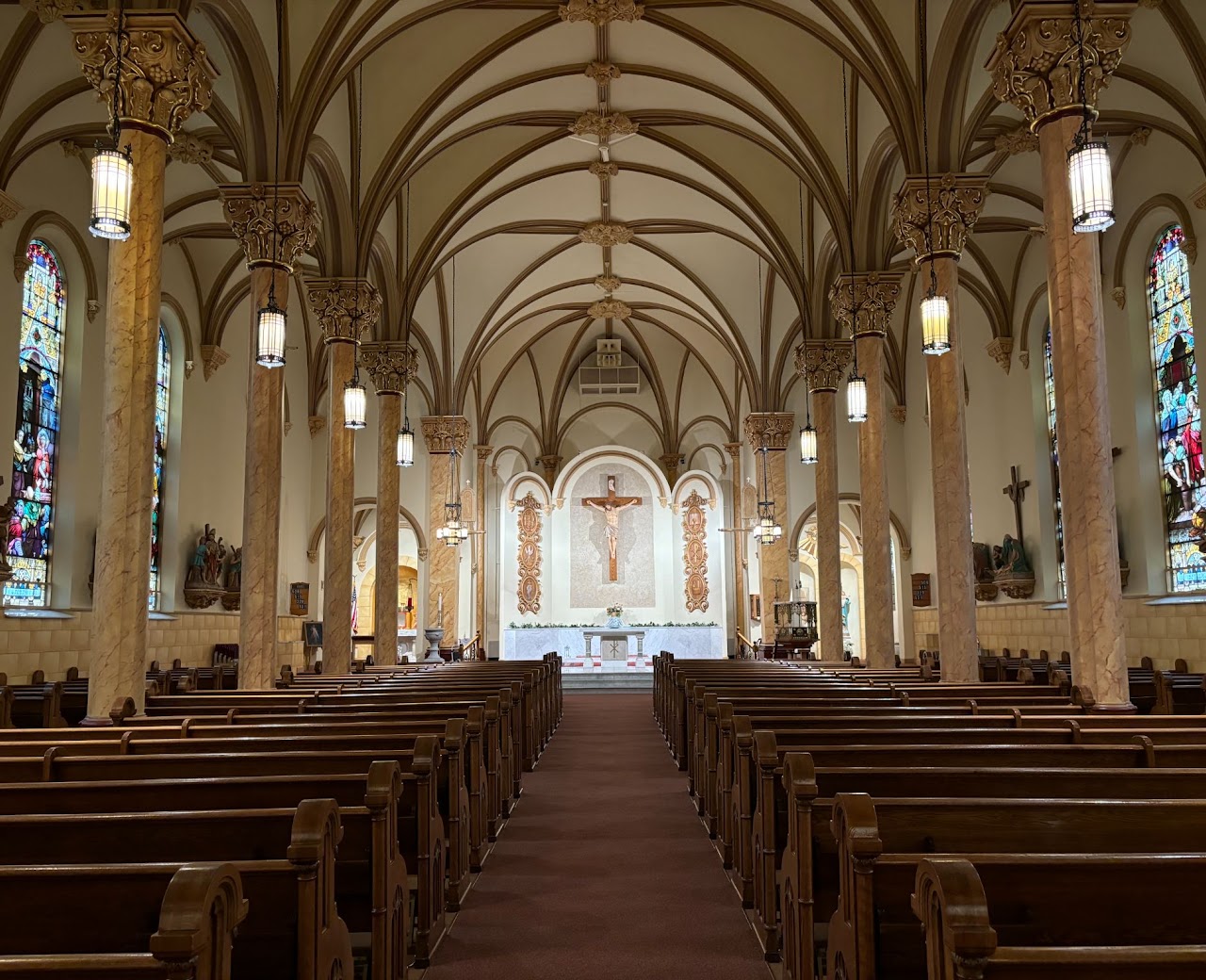
![Catholic, Orthodox bishops join in dialogue and prayer at Washington, D.C., conference #Catholic Catholic and Eastern Orthodox bishops exchanged dialogue and joined together in prayer at an ecumenical conference in Washington, D.C., this week with a hope that one day the Eastern and Western churches will be reunited.The conference, held at the retreat house for the St. John Paul II National Shrine on July 13–15, was organized by the Orientale Lumen Foundation. Jack Figel, an Eastern Catholic who founded the group, named it after St. John Paul II’s apostolic letter expressing hope for reunification.Speakers included the secretary for the Vatican Dicastery for Promoting Christian Unity, Archbishop Flavio Pace; the primate of the Orthodox Church in America, Metropolitan Tikhon Mollard; Cardinal Seán Patrick OʼMalley; Greek Orthodox Bishop Anthony Vrame; and Romanian Catholic Bishop John Michael Botean.“I grew up with — I lived with — the tension between East and West my whole life,” Figel told EWTN News.A reunification, Figel said, “all depends on the Holy Spirit.” He said: “It is going to be a miracle and it’s going to be on God’s time.”The conference included speeches by both Catholic and Orthodox bishops and joint panels. Prayer services were held in the Eastern form in which bishops from both traditions participated: a moleben to the Holy Spirit on Monday, daily vespers on Tuesday, and the Akathist to the Mother of God on Wednesday.Theological hurdlesRecent popes have had friendly relations with Eastern Orthodox patriarchs, and ongoing study by the Joint International Commission for Theological Dialogue between the Roman Catholic Church and the Orthodox Church is seeking to resolve theological disputes.In 2024, the commission set up two subcommittees to analyze two major points of contention: one for papal infallibility and the other for the Filioque.Papal infallibility refers to Vatican I’s teaching that the pope can infallibly define doctrines. The Filioque — Latin for “and the Son” — refers to the West adding the phrase in the Nicene Creed “the Holy Spirit … who proceeds from the Father ‘and the Son.’” Catholics argue this clarifies the Latin translation of the Creed, which was originally in Greek; but many Orthodox see it as changing the understanding of the Trinity.Vrame told EWTN News these theological issues continue to be a hurdle toward Catholic and Orthodox communion.The No. 1 issueSpeaking from the Orthodox perspective, he said papal infallibility and supremacy is the No. 1 issue. Although Orthodox acknowledge Ecumenical Patriarch Bartholomew as “first among equals” among patriarchs, “our governance structure allows for each national Church to govern itself,” he said.Dialogue with Rome, Vrame said, must address questions of “how do we begin to understand any claims of universal jurisdiction of the papacy” and “how do we understand any form of papal infallibility.” He said the Catholic embrace of synodality could improve dialogue on this issue.He said a major question is what unity would look like and pointed toward Rome’s relationship with Eastern Catholics as a possible example, saying they are “in communion with Rome,” but “Rome allowed them to retain their distinctive rites and practices.” However, he noted historical complications with Rome’s past attempts to Latinize Eastern Catholics and a major question to settle is: “What would unity do?”Mollard also told EWTN News “the whole question of primacy and synodality” remains a major issue, along with “centuries of separation,” which he said “doesn’t help either.”Pace told EWTN News that the subcommittee addressing infallibility has to “prepare a very good draft” on the matter that the full committee made up of Catholic and Orthodox leaders “can discuss and approve.”Steps toward unityAs the hierarchy tries to work out millennium-old theological disputes, Mollard said another step is “trying to get from the theological [dialogue] to the implementation” of a stronger relationship but warned “everyone’s afraid to do anything.”“We do have to practice these things,” he said in his speech. “Let’s work together and see if we can find our unity in Christ … [and] work on the structures that could bring that about more formally.”“Prayer and humility are always good,” Mollard said.He told EWTN News that some steps could be jointly “caring for the poor” or “feeding the hungry,” which is “the most direct way that collaboration can take place” at this time. In his speech, O’Malley called for joint prayer and study sessions, joint pastoral letters and statements, and joint works of mercy.Figel suggested Catholic and Orthodox parishes should “pray once a month for unity for at least 10 or 15 minutes.”Ultimately, Vrame said full unity and communion would be expressed “in the Eucharist” if all issues are resolved.“We don’t share the Eucharist,” he said. “That would be the culminating moment.”Dialogue and the laityMany bishops said dialogue and bonds should take place among laity too, with Botean saying in his speech that ecumenism cannot just be “at the level of academics.”“Without the face-to-face stuff, … we’re going to get nowhere,” he said. “And if our competition is the internet, we have more driving us apart than together.”Botean warned against hostile and uncharitable exchanges, many of which occur on social media, saying: “When we become unloving because of our faith, we’re on the wrong track.”Lizbeth Moncada, a senior at Florida Atlantic University who attended the conference, told EWTN News that she has “a lot of friends who are Eastern Orthodox and Oriental Orthodox” but agreed that online dialogue can often be “polarizing.”She said exchanges online can be “very disheartening” and she has “wanted to stop engaging in these conversations” at times. Yet, she said discussions like what occurred at the conference are “encouraging.”Andrew Likoudis of the ecumenical Likoudis Legacy Foundation, told EWTN News: “I try not to even engage in online discourse because of how toxic it is.” Yet, he said “the discourse here is much healthier” and allows Catholics and Orthodox Christians to “cross theological boundaries and retain the integrity of our own traditions without compromise.”Vrame, commenting on dialogue, said “beating up on somebody else is not very Christian … no matter what you think of their position.” He said people can have “respectful disagreements … without having to beat up on somebody,” saying that’s “no way to show love for your neighbor.”He said it’s good that people are passionate about their faith but posed the question: “Are we passionate in a way that reflects Christ and Christianity?”](http://unitedyam.com/wp-content/uploads/2026/07/catholic-orthodox-bishops-join-in-dialogue-and-prayer-at-washington-d-c-conference-catholic-catholic-and-eastern-orthodox-bishops-exchanged-dialogue-and-joined-together-in-prayer-at-an-ecumenical-scaled.jpg "Catholic, Orthodox bishops join in dialogue and prayer at Washington, D.C., conference #Catholic Catholic and Eastern Orthodox bishops exchanged dialogue and joined together in prayer at an ecumenical conference in Washington, D.C., this week with a hope that one day the Eastern and Western churches will be reunited.The conference, held at the retreat house for the St. John Paul II National Shrine on July 13–15, was organized by the Orientale Lumen Foundation. Jack Figel, an Eastern Catholic who founded the group, named it after St. John Paul II’s apostolic letter expressing hope for reunification.Speakers included the secretary for the Vatican Dicastery for Promoting Christian Unity, Archbishop Flavio Pace; the primate of the Orthodox Church in America, Metropolitan Tikhon Mollard; Cardinal Seán Patrick OʼMalley; Greek Orthodox Bishop Anthony Vrame; and Romanian Catholic Bishop John Michael Botean.“I grew up with — I lived with — the tension between East and West my whole life,” Figel told EWTN News.A reunification, Figel said, “all depends on the Holy Spirit.” He said: “It is going to be a miracle and it’s going to be on God’s time.”The conference included speeches by both Catholic and Orthodox bishops and joint panels. Prayer services were held in the Eastern form in which bishops from both traditions participated: a moleben to the Holy Spirit on Monday, daily vespers on Tuesday, and the Akathist to the Mother of God on Wednesday.Theological hurdlesRecent popes have had friendly relations with Eastern Orthodox patriarchs, and ongoing study by the Joint International Commission for Theological Dialogue between the Roman Catholic Church and the Orthodox Church is seeking to resolve theological disputes.In 2024, the commission set up two subcommittees to analyze two major points of contention: one for papal infallibility and the other for the Filioque.Papal infallibility refers to Vatican I’s teaching that the pope can infallibly define doctrines. The Filioque — Latin for “and the Son” — refers to the West adding the phrase in the Nicene Creed “the Holy Spirit … who proceeds from the Father ‘and the Son.’” Catholics argue this clarifies the Latin translation of the Creed, which was originally in Greek; but many Orthodox see it as changing the understanding of the Trinity.Vrame told EWTN News these theological issues continue to be a hurdle toward Catholic and Orthodox communion.The No. 1 issueSpeaking from the Orthodox perspective, he said papal infallibility and supremacy is the No. 1 issue. Although Orthodox acknowledge Ecumenical Patriarch Bartholomew as “first among equals” among patriarchs, “our governance structure allows for each national Church to govern itself,” he said.Dialogue with Rome, Vrame said, must address questions of “how do we begin to understand any claims of universal jurisdiction of the papacy” and “how do we understand any form of papal infallibility.” He said the Catholic embrace of synodality could improve dialogue on this issue.He said a major question is what unity would look like and pointed toward Rome’s relationship with Eastern Catholics as a possible example, saying they are “in communion with Rome,” but “Rome allowed them to retain their distinctive rites and practices.” However, he noted historical complications with Rome’s past attempts to Latinize Eastern Catholics and a major question to settle is: “What would unity do?”Mollard also told EWTN News “the whole question of primacy and synodality” remains a major issue, along with “centuries of separation,” which he said “doesn’t help either.”Pace told EWTN News that the subcommittee addressing infallibility has to “prepare a very good draft” on the matter that the full committee made up of Catholic and Orthodox leaders “can discuss and approve.”Steps toward unityAs the hierarchy tries to work out millennium-old theological disputes, Mollard said another step is “trying to get from the theological [dialogue] to the implementation” of a stronger relationship but warned “everyone’s afraid to do anything.”“We do have to practice these things,” he said in his speech. “Let’s work together and see if we can find our unity in Christ … [and] work on the structures that could bring that about more formally.”“Prayer and humility are always good,” Mollard said.He told EWTN News that some steps could be jointly “caring for the poor” or “feeding the hungry,” which is “the most direct way that collaboration can take place” at this time. In his speech, O’Malley called for joint prayer and study sessions, joint pastoral letters and statements, and joint works of mercy.Figel suggested Catholic and Orthodox parishes should “pray once a month for unity for at least 10 or 15 minutes.”Ultimately, Vrame said full unity and communion would be expressed “in the Eucharist” if all issues are resolved.“We don’t share the Eucharist,” he said. “That would be the culminating moment.”Dialogue and the laityMany bishops said dialogue and bonds should take place among laity too, with Botean saying in his speech that ecumenism cannot just be “at the level of academics.”“Without the face-to-face stuff, … we’re going to get nowhere,” he said. “And if our competition is the internet, we have more driving us apart than together.”Botean warned against hostile and uncharitable exchanges, many of which occur on social media, saying: “When we become unloving because of our faith, we’re on the wrong track.”Lizbeth Moncada, a senior at Florida Atlantic University who attended the conference, told EWTN News that she has “a lot of friends who are Eastern Orthodox and Oriental Orthodox” but agreed that online dialogue can often be “polarizing.”She said exchanges online can be “very disheartening” and she has “wanted to stop engaging in these conversations” at times. Yet, she said discussions like what occurred at the conference are “encouraging.”Andrew Likoudis of the ecumenical Likoudis Legacy Foundation, told EWTN News: “I try not to even engage in online discourse because of how toxic it is.” Yet, he said “the discourse here is much healthier” and allows Catholics and Orthodox Christians to “cross theological boundaries and retain the integrity of our own traditions without compromise.”Vrame, commenting on dialogue, said “beating up on somebody else is not very Christian … no matter what you think of their position.” He said people can have “respectful disagreements … without having to beat up on somebody,” saying that’s “no way to show love for your neighbor.”He said it’s good that people are passionate about their faith but posed the question: “Are we passionate in a way that reflects Christ and Christianity?”")
Catholic and Orthodox bishops discussed steps toward unity and the importance of cooperation and friendly dialogue.
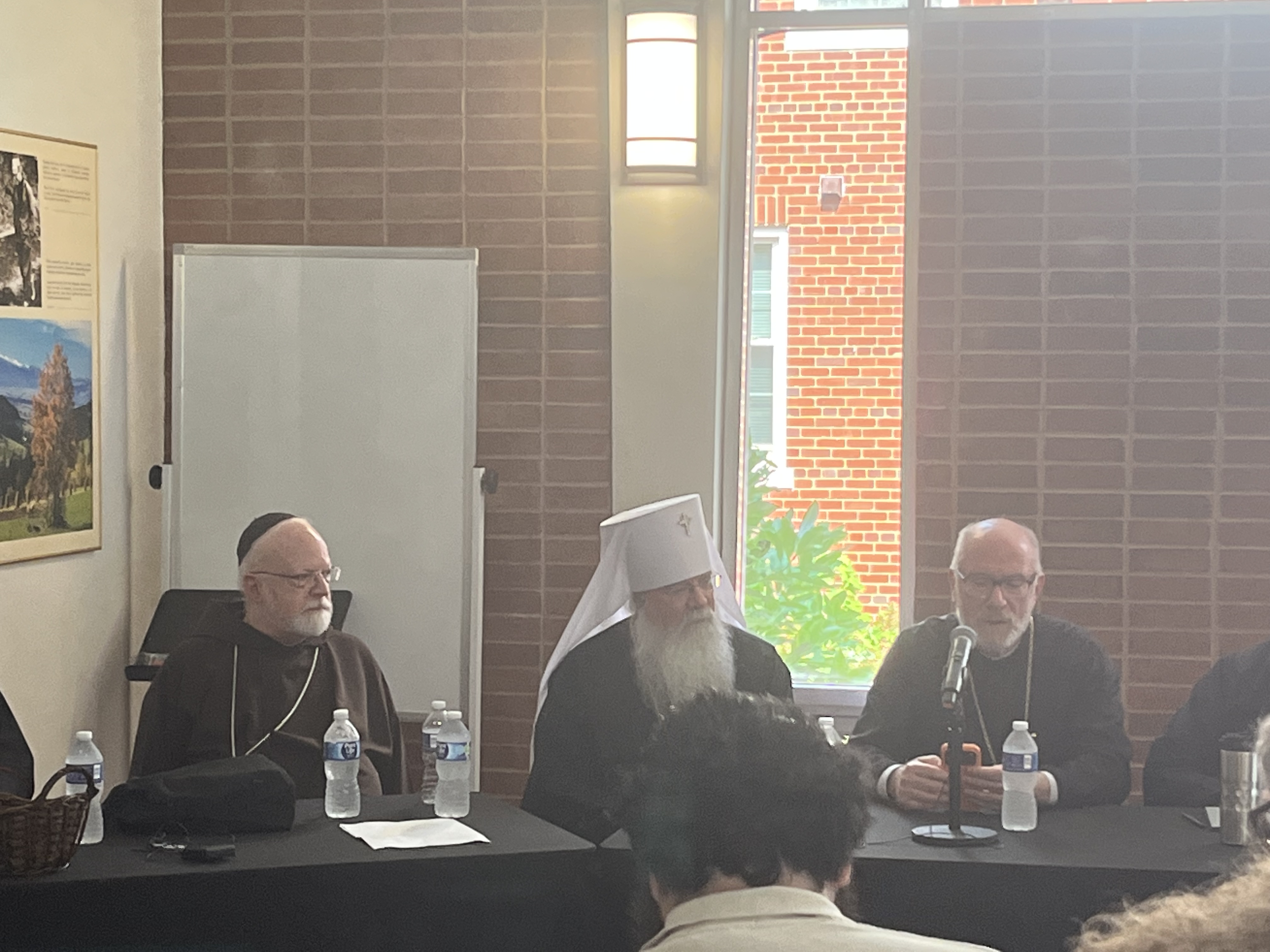

The society filed its appeal with the Dicastery for the Doctrine of the Faith on July 11, arguing that under canon law the move suspends the recent excommunication decree.
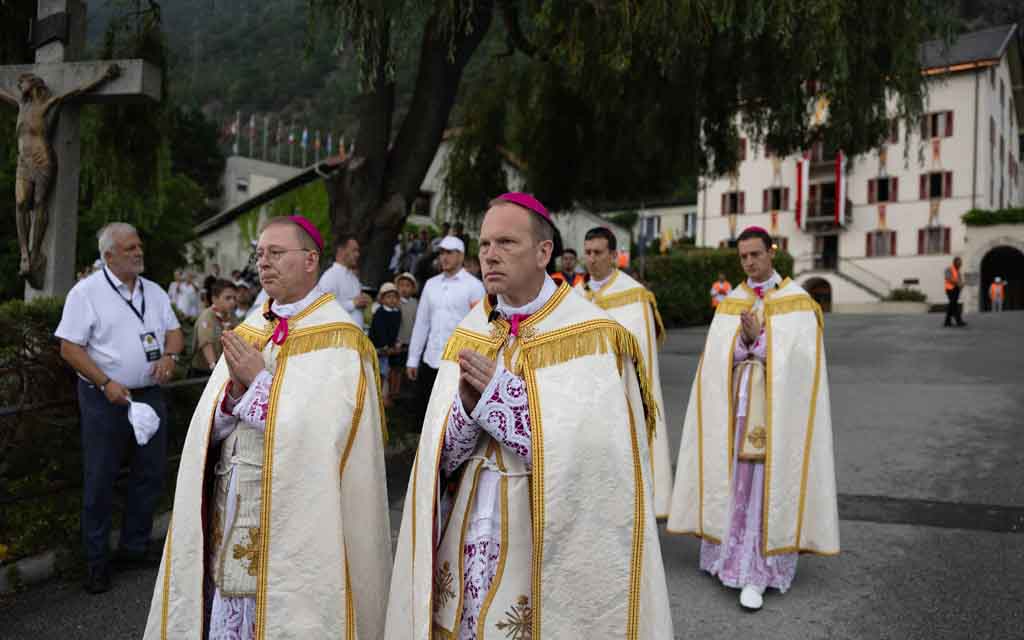

Irish bishops condemn anti-Muslim display, religious sisters set up a field hospital for Venezuela earthquake victims, euthanasia in New Zealand surges, and more in this week’s world news roundup.

![Notre Dame awards religious liberty prize to Becket Fund for Supreme Court wins #Catholic Notre Dame Law School awarded its 2026 Prize for Religious Liberty to the Becket Fund — a nonprofit law firm that has secured 13 Supreme Court victories in the past 15 years defending the First Amendment’s religious liberty protections.“We’re deeply honored to be recognized with the religious liberty prize,” Becket President and CEO Mark Rienzi told EWTN News.“We’re honored to be able to be part of fighting to protect something that is very important for our country and the Church,” said Reinzi, who accepted the award at the July 8 conclusion of Notre Dame’s sixth annual Religious Liberty Summit in Chicago.Becket — established in 1994 to provide cost-free legal counsel to those whose religious liberties were violated — has an undefeated record at the Supreme Court.Its lawyers represented the Little Sisters of the Poor and Hobby Lobby against contraception mandates, defended the rights of Maryland parents to opt their children out of gender-related coursework that conflicted with their religious beliefs, and backed a Catholic foster care agency that only placed children with opposite-sex married couples.G. Marcus Cole, a dean and professor of law at Notre Dame, said during the award ceremony that when the university started giving out the award, “we always imagined that it would go to one person.”“But when we think about the Becket Fund, it is an entire team of lawyers, led by Mark Rienzi, who have made a difference in our world, who have made our lives better,” he said. “And for that reason, we thought it only appropriate to give the award to the Becket Fund as an entity."Ongoing fights for religious libertyThe most recent victory secured by Becket came in Mahmoud v. Taylor, which ensured parents in Montgomery County, Maryland, had a right to opt their children out of coursework that included material related to gender that conflicted with their religious faith.Rienzi told EWTN News that “parents don’t give up the right to [raise] their children when they drop their kids off at the schoolhouse gates.” He added: “Your children don’t belong to the state just because you use a public school.”Becket represented Catholic, Ethiopian Orthodox, and Muslim parents in the lawsuit. Rienzi said religious parents have a right to “operate equally as a full citizen and full member of the public” by utilizing the public school system while maintaining the right to instill religious values in their children.“[This was] the most important case in at least 50 or 100 years in establishing that principle,” he said.Becket also secured the 2020 victory for the Little Sisters of the Poor in which the Supreme Court ruled in favor of federal regulations that exempted the religious sisters from mandatory contraception coverage in insurance plans.The sisters, however, are back in court after the governments of Pennsylvania and New Jersey challenged those exemptions on separate grounds than those on which the court previously ruled. This case is now in an appellate court, which heard oral arguments on July 7. Becket is representing them again and Rienzi is the lead attorney on the case.“It’s outrageous that governments keep volunteering for the beating they get when they keep [going after] the Little Sisters of the Poor,” Rienzi said.He said “the law is really, really clear” that Pennsylvania cannot remove their exemptions from the mandate.Becket is also representing a coalition of Catholic preschools in Colorado that is suing the state because they were excluded from a “universal” tuition program. The U.S. Supreme Court has agreed to hear the case. Notre Dame awarded Becket the prize less than one week after Americans celebrated the 250th anniversary of the signing of the Declaration of Independence, which culminated in the adoption of the U.S. Constitution and the Bill of Rights, which secured religious freedom.“God created everybody equal and equally free and gave them rights,” Rienzi said, adding that religious freedom is “essential to the declaration’s idea of who we are as a country and … [it] is crucial for maintaining it.”“It’s a shame that you still have to fight about it,” Rienzi said. “But on the other hand, it’s worth fighting for.”](http://unitedyam.com/wp-content/uploads/2026/07/notre-dame-awards-religious-liberty-prize-to-becket-fund-for-supreme-court-wins-catholic-notre-dame-law-school-awarded-its-2026-prize-for-religious-liberty-to-the-becket-fund-a-nonprofit-la.jpg "Notre Dame awards religious liberty prize to Becket Fund for Supreme Court wins #Catholic Notre Dame Law School awarded its 2026 Prize for Religious Liberty to the Becket Fund — a nonprofit law firm that has secured 13 Supreme Court victories in the past 15 years defending the First Amendment’s religious liberty protections.“We’re deeply honored to be recognized with the religious liberty prize,” Becket President and CEO Mark Rienzi told EWTN News.“We’re honored to be able to be part of fighting to protect something that is very important for our country and the Church,” said Reinzi, who accepted the award at the July 8 conclusion of Notre Dame’s sixth annual Religious Liberty Summit in Chicago.Becket — established in 1994 to provide cost-free legal counsel to those whose religious liberties were violated — has an undefeated record at the Supreme Court.Its lawyers represented the Little Sisters of the Poor and Hobby Lobby against contraception mandates, defended the rights of Maryland parents to opt their children out of gender-related coursework that conflicted with their religious beliefs, and backed a Catholic foster care agency that only placed children with opposite-sex married couples.G. Marcus Cole, a dean and professor of law at Notre Dame, said during the award ceremony that when the university started giving out the award, “we always imagined that it would go to one person.”“But when we think about the Becket Fund, it is an entire team of lawyers, led by Mark Rienzi, who have made a difference in our world, who have made our lives better,” he said. “And for that reason, we thought it only appropriate to give the award to the Becket Fund as an entity.\"Ongoing fights for religious libertyThe most recent victory secured by Becket came in Mahmoud v. Taylor, which ensured parents in Montgomery County, Maryland, had a right to opt their children out of coursework that included material related to gender that conflicted with their religious faith.Rienzi told EWTN News that “parents don’t give up the right to [raise] their children when they drop their kids off at the schoolhouse gates.” He added: “Your children don’t belong to the state just because you use a public school.”Becket represented Catholic, Ethiopian Orthodox, and Muslim parents in the lawsuit. Rienzi said religious parents have a right to “operate equally as a full citizen and full member of the public” by utilizing the public school system while maintaining the right to instill religious values in their children.“[This was] the most important case in at least 50 or 100 years in establishing that principle,” he said.Becket also secured the 2020 victory for the Little Sisters of the Poor in which the Supreme Court ruled in favor of federal regulations that exempted the religious sisters from mandatory contraception coverage in insurance plans.The sisters, however, are back in court after the governments of Pennsylvania and New Jersey challenged those exemptions on separate grounds than those on which the court previously ruled. This case is now in an appellate court, which heard oral arguments on July 7. Becket is representing them again and Rienzi is the lead attorney on the case.“It’s outrageous that governments keep volunteering for the beating they get when they keep [going after] the Little Sisters of the Poor,” Rienzi said.He said “the law is really, really clear” that Pennsylvania cannot remove their exemptions from the mandate.Becket is also representing a coalition of Catholic preschools in Colorado that is suing the state because they were excluded from a “universal” tuition program. The U.S. Supreme Court has agreed to hear the case. Notre Dame awarded Becket the prize less than one week after Americans celebrated the 250th anniversary of the signing of the Declaration of Independence, which culminated in the adoption of the U.S. Constitution and the Bill of Rights, which secured religious freedom.“God created everybody equal and equally free and gave them rights,” Rienzi said, adding that religious freedom is “essential to the declaration’s idea of who we are as a country and … [it] is crucial for maintaining it.”“It’s a shame that you still have to fight about it,” Rienzi said. “But on the other hand, it’s worth fighting for.”")
Becket President Mark Rienzi said the group is “deeply honored” to be awarded the prize, saying religious liberty “is worth fighting for.”
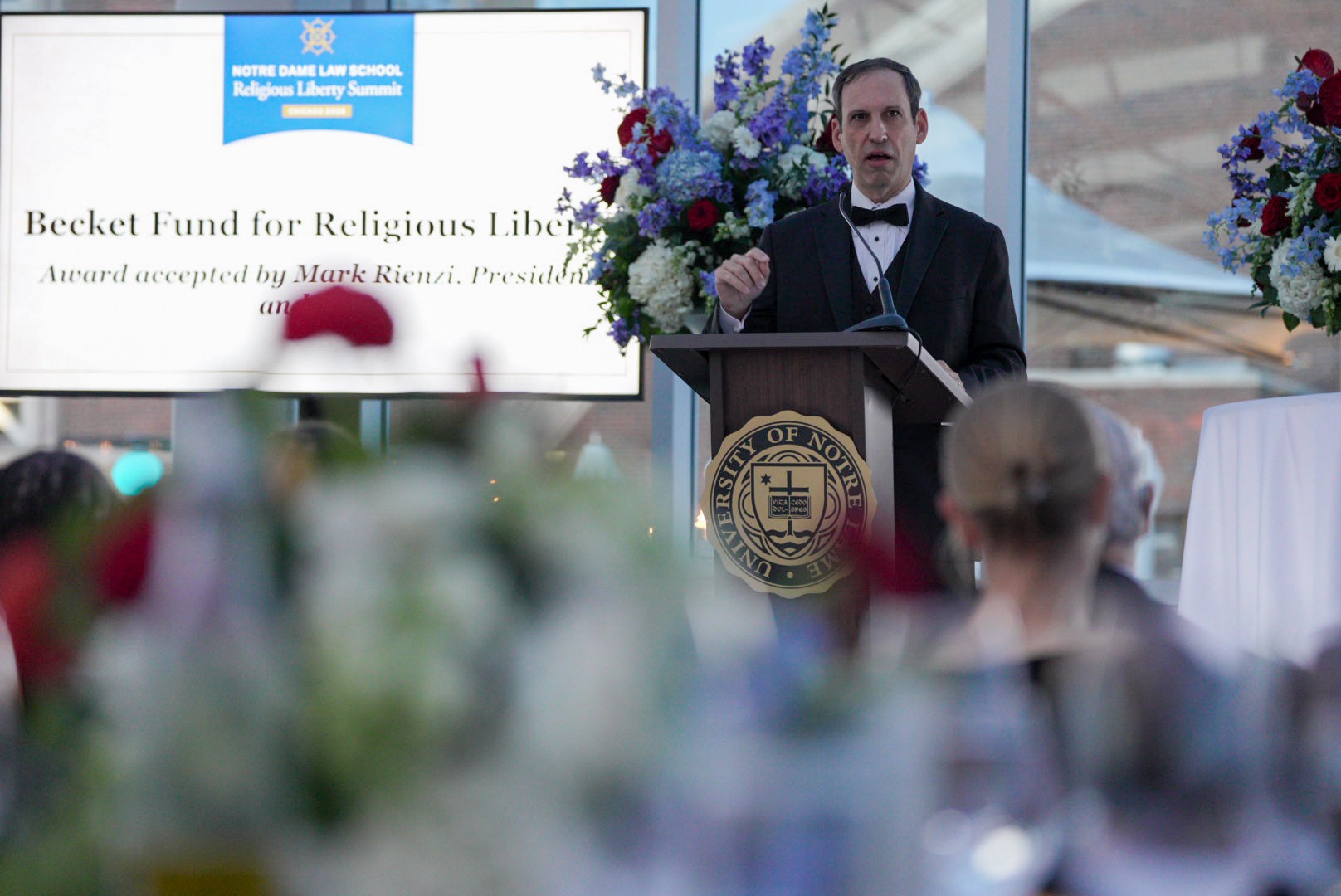

You’re allowed to play with your food when you’re on the International Space Station! To celebrate a delivery of fresh food, NASA astronauts Jack Hathaway (bottom left), Jessica Meir (middle left), and Chris Williams (bottom right), and ESA (European Space Agency) astronaut Sophie Adenot (top right) pose for a group photo.
Read More
| Picture of the day |
|---|

|
|
Euganean Hills are a group of hills of volcanic origin that rise to heights of 300 to 600 m in Veneto, Italy.
|
| Picture of the day |
|---|

|
|
The Capitoline Wolf is a bronze sculpture made by unknown Etruscan sculptors (5th century BC), with the twins Romulus and Remus added in the late 15th century AD, by sculptor Antonio del Pollaiuolo. The sculptural group depicts a scene from the legend of the founding of Rome, occurred on 21 April 753 BC.
|

NASA astronauts Reid Wiseman, commander; left, Christina Koch, mission specialist; CSA (Canadian Space Agency) astronaut Jeremy Hansen, mission specialist; and NASA astronaut Victor Glover, Artemis II pilot, right, pose for a group photo after viewing the Orion spacecraft in the well deck of USS John P. Murtha, Saturday, April 11, 2026, in the Pacific Ocean off the coast of California. The quartet splashed down Friday, April 10 at 5:07 p.m. PDT (8:07p.m. EDT).
Read More
| Picture of the day |
|---|

|
|
View on Val Montanaia (Montanaia Valley), with the Cima Both (2,437 m) on the left and the “Campanile” (2,173 m) in the middle; both are peaks of the Spalti di Toro group, in the Friulian Dolomites Natural Park, Friuli-Venezia Giulia, Italy.
|

NASA astronauts Jonny Kim and Zena Cardman, both Expedition 73 Flight Engineers, pose for a portrait inside the International Space Station’s Unity module during a break in weekend housecleaning and maintenance activities. Kim and Cardman are both part of NASA Astronaut Group 22 selected in June 2017 with 12 other astronauts, including two Canadian Space Agency astronauts, and affectionately nicknamed “The Turtles.”
Read More