Opposition

Border czar says Catholic leaders should ‘support’ safety #Catholic 
 
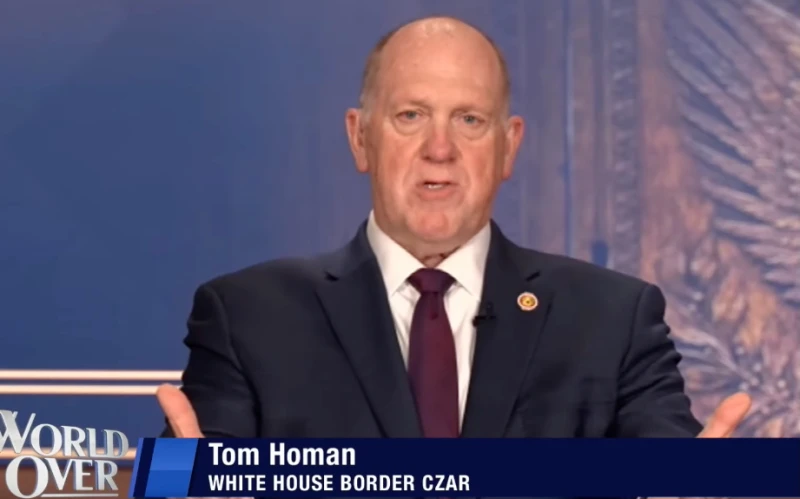
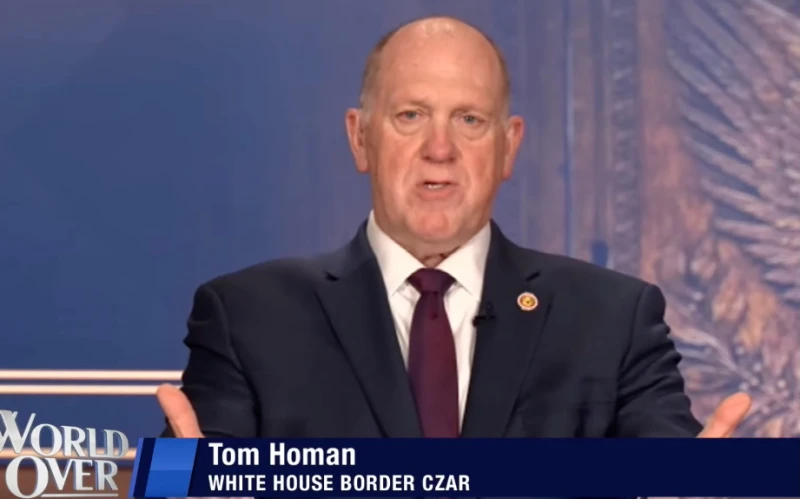
 Trump administration Border Czar Tom Homan interviewed on "The World Over with Raymond Arroyo" on Dec. 11, 2025. / Credit: EWTN News "The World Over with Raymond Arroyo"/Screenshot

Washington, D.C. Newsroom, Dec 12, 2025 / 07:00 am (CNA).
U.S. border czar Tom Homan said “the Catholic Church should support keeping the community safe” through a secure border and immigration enforcement. In an interview on “The World Over with Raymond Arroyo” on Thursday, Homan discussed President Donald Trump’s mass deportation policy and immigration enforcement.   “As President Trump promised on day one, we’re going to enforce immigration law,” Homan said. “That’s what he was voted into office to do, and that’s what we’re doing. We’re going to keep this promise to the American people.”“We’re going to prioritize public safety threats and national security threats,” Homan said. “The majority of people we arrest … have a criminal history. But also, like I’ve said from day one, if you’re in the country illegally, you’re not off the table.”Data on detainees’ criminal history is disputed. A Cato Institute report in November said 5% of people detained by ICE have violent convictions, and 73% had no convictions. Other analyses of deportation data also have shown a lower incidence of people arrested with prior criminal convictions.“Many people who’ve lived for years and years and years, never causing problems, have been deeply affected by what’s going on right now,” Pope Leo XIV said Nov. 4.Since President Trump began his second term, there have been about 600,000 deportations, Homan said. He added: The “results have been outstanding.”Family separationDuring the Biden administration, “just about a half a million children were smuggled into the country, separated from their families, put in the hands of criminal cartels,” Homan said. Homan said the administration has located tens of thousands of children during deportation operations.During the first two years of Trump’s first administration, U.S. authorities separated over 5,000 children from their parents at the U.S.-Mexico border, before ending the practice. In 2021, the Biden administration created a family reunification task force, and a federal judge ruled that border officials cannot use family separation as a deterrence tactic through 2031. Under the second Trump administration, enforcement actions have caused family separations through detentions.Homan told Arroyo: “President Trump promised from day one that we’re going to find these children because the last administration, even though half a million came across, they lost track of 300,000. They couldn’t find them. They weren’t responding to inquiries and their check-ins.”As of Dec. 5 there were 62,456 children “the Trump administration already found,” Homan reported.  “Some of these children were safe and with family. They’re just hiding out because they don’t want to be deported. But many of these children, and one is too many, we found were either in forced labor or forced sexual slavery. Some of these children are in really, really bad conditions,” Homan said.“About half that, 300,000, according to records, have already aged out, which means they’re over 18 already. But … we’re still going to try to locate them … We’re going to do everything we can till the last day of this administration to find these kids. Personally, I’ll do everything I can until I take my last breath on this Earth to find these kids,” Homan said.Carrying out deportations as a CatholicThe United States Conference of Catholic Bishops (USCCB) expressed concern “about the conditions in detention centers and the lack of access to pastoral care.” They wrote: “Human dignity and national security are not in conflict.” When asked how he reconciles bishops’ comments on immigration enforcement with his faith and duties, Homan said he is “willing to sit down with anybody in the Catholic Church and talk about it.”When Catholic leaders “talk about why these laws shouldn’t be enforced … they need to understand, if we don’t enforce laws, what message does that send to the world?” Homan said. He says it sends the message: “Cross the border. It’s illegal, but don’t worry about it.”People need to understand “a border wall saves lives,” Homan said. “I would ask the Catholic leadership, go talk to the hundreds of… moms and dads that have buried their children because their children were killed by someone that wasn’t supposed to be here.”During Biden’s presidency, Homan said “a record number of Americans died from fentanyl because that border was wide open … Hundreds of thousands of Americans died from a drug that came across an open border.”He said a “record number of people from terrorist-related countries” entered the country and said there was “historic increase in sex trafficking of women and children because enforcement was removed from the border.”“Over 4,000 aliens died making that journey, because we sent a message that there’s no consequences here,” Homan said. Response to Catholic leadershipThe USCCB through remarks and messages has called for humane treatment of migrants. In response, Homan said: “We treat everybody with dignity.” Bishops also stated their opposition to “the indiscriminate mass deportation of people.”Homan said: “When you come across the border illegally, not only is it a crime, but you’re cheating the system.”“There are millions of people, millions that are standing in line, taking their test, doing the background investigation, paying their fees to be part of the greatest nation on Earth,” Homan said.“The most humane thing you can do is enforce the law, secure the border, because it saves lives. The Catholic Church should support keeping the community safe again. But I’m saying this, if you’re in the country legally, it’s not OK. Illegal migration is not a victimless crime. I wish Catholic leadership would go with me. Take a border trip with me,” Homan said.“Look at some of the investigations I do. Wear my shoes … You may not agree with me 100% in the end, but you will certainly understand the importance of border security,” Homan said.

Border czar says Catholic leaders should ‘support’ safety #Catholic Trump administration Border Czar Tom Homan interviewed on "The World Over with Raymond Arroyo" on Dec. 11, 2025. / Credit: EWTN News "The World Over with Raymond Arroyo"/Screenshot Washington, D.C. Newsroom, Dec 12, 2025 / 07:00 am (CNA). U.S. border czar Tom Homan said “the Catholic Church should support keeping the community safe” through a secure border and immigration enforcement. In an interview on “The World Over with Raymond Arroyo” on Thursday, Homan discussed President Donald Trump’s mass deportation policy and immigration enforcement.   “As President Trump promised on day one, we’re going to enforce immigration law,” Homan said. “That’s what he was voted into office to do, and that’s what we’re doing. We’re going to keep this promise to the American people.”“We’re going to prioritize public safety threats and national security threats,” Homan said. “The majority of people we arrest … have a criminal history. But also, like I’ve said from day one, if you’re in the country illegally, you’re not off the table.”Data on detainees’ criminal history is disputed. A Cato Institute report in November said 5% of people detained by ICE have violent convictions, and 73% had no convictions. Other analyses of deportation data also have shown a lower incidence of people arrested with prior criminal convictions.“Many people who’ve lived for years and years and years, never causing problems, have been deeply affected by what’s going on right now,” Pope Leo XIV said Nov. 4.Since President Trump began his second term, there have been about 600,000 deportations, Homan said. He added: The “results have been outstanding.”Family separationDuring the Biden administration, “just about a half a million children were smuggled into the country, separated from their families, put in the hands of criminal cartels,” Homan said. Homan said the administration has located tens of thousands of children during deportation operations.During the first two years of Trump’s first administration, U.S. authorities separated over 5,000 children from their parents at the U.S.-Mexico border, before ending the practice. In 2021, the Biden administration created a family reunification task force, and a federal judge ruled that border officials cannot use family separation as a deterrence tactic through 2031. Under the second Trump administration, enforcement actions have caused family separations through detentions.Homan told Arroyo: “President Trump promised from day one that we’re going to find these children because the last administration, even though half a million came across, they lost track of 300,000. They couldn’t find them. They weren’t responding to inquiries and their check-ins.”As of Dec. 5 there were 62,456 children “the Trump administration already found,” Homan reported.  “Some of these children were safe and with family. They’re just hiding out because they don’t want to be deported. But many of these children, and one is too many, we found were either in forced labor or forced sexual slavery. Some of these children are in really, really bad conditions,” Homan said.“About half that, 300,000, according to records, have already aged out, which means they’re over 18 already. But … we’re still going to try to locate them … We’re going to do everything we can till the last day of this administration to find these kids. Personally, I’ll do everything I can until I take my last breath on this Earth to find these kids,” Homan said.Carrying out deportations as a CatholicThe United States Conference of Catholic Bishops (USCCB) expressed concern “about the conditions in detention centers and the lack of access to pastoral care.” They wrote: “Human dignity and national security are not in conflict.” When asked how he reconciles bishops’ comments on immigration enforcement with his faith and duties, Homan said he is “willing to sit down with anybody in the Catholic Church and talk about it.”When Catholic leaders “talk about why these laws shouldn’t be enforced … they need to understand, if we don’t enforce laws, what message does that send to the world?” Homan said. He says it sends the message: “Cross the border. It’s illegal, but don’t worry about it.”People need to understand “a border wall saves lives,” Homan said. “I would ask the Catholic leadership, go talk to the hundreds of… moms and dads that have buried their children because their children were killed by someone that wasn’t supposed to be here.”During Biden’s presidency, Homan said “a record number of Americans died from fentanyl because that border was wide open … Hundreds of thousands of Americans died from a drug that came across an open border.”He said a “record number of people from terrorist-related countries” entered the country and said there was “historic increase in sex trafficking of women and children because enforcement was removed from the border.”“Over 4,000 aliens died making that journey, because we sent a message that there’s no consequences here,” Homan said. Response to Catholic leadershipThe USCCB through remarks and messages has called for humane treatment of migrants. In response, Homan said: “We treat everybody with dignity.” Bishops also stated their opposition to “the indiscriminate mass deportation of people.”Homan said: “When you come across the border illegally, not only is it a crime, but you’re cheating the system.”“There are millions of people, millions that are standing in line, taking their test, doing the background investigation, paying their fees to be part of the greatest nation on Earth,” Homan said.“The most humane thing you can do is enforce the law, secure the border, because it saves lives. The Catholic Church should support keeping the community safe again. But I’m saying this, if you’re in the country legally, it’s not OK. Illegal migration is not a victimless crime. I wish Catholic leadership would go with me. Take a border trip with me,” Homan said.“Look at some of the investigations I do. Wear my shoes … You may not agree with me 100% in the end, but you will certainly understand the importance of border security,” Homan said.


Trump administration Border Czar Tom Homan interviewed on "The World Over with Raymond Arroyo" on Dec. 11, 2025. / Credit: EWTN News "The World Over with Raymond Arroyo"/Screenshot

Washington, D.C. Newsroom, Dec 12, 2025 / 07:00 am (CNA).

U.S. border czar Tom Homan said “the Catholic Church should support keeping the community safe” through a secure border and immigration enforcement. 

In an interview on “The World Over with Raymond Arroyo” on Thursday, Homan discussed President Donald Trump’s mass deportation policy and immigration enforcement.   

“As President Trump promised on day one, we’re going to enforce immigration law,” Homan said. “That’s what he was voted into office to do, and that’s what we’re doing. We’re going to keep this promise to the American people.”

“We’re going to prioritize public safety threats and national security threats,” Homan said. “The majority of people we arrest … have a criminal history. But also, like I’ve said from day one, if you’re in the country illegally, you’re not off the table.”

Data on detainees’ criminal history is disputed. A Cato Institute report in November said 5% of people detained by ICE have violent convictions, and 73% had no convictions. Other analyses of deportation data also have shown a lower incidence of people arrested with prior criminal convictions.

“Many people who’ve lived for years and years and years, never causing problems, have been deeply affected by what’s going on right now,” Pope Leo XIV said Nov. 4.

Since President Trump began his second term, there have been about 600,000 deportations, Homan said. He added: The “results have been outstanding.”

Family separation

During the Biden administration, “just about a half a million children were smuggled into the country, separated from their families, put in the hands of criminal cartels,” Homan said. Homan said the administration has located tens of thousands of children during deportation operations.

During the first two years of Trump’s first administration, U.S. authorities separated over 5,000 children from their parents at the U.S.-Mexico border, before ending the practice. In 2021, the Biden administration created a family reunification task force, and a federal judge ruled that border officials cannot use family separation as a deterrence tactic through 2031. 

Under the second Trump administration, enforcement actions have caused family separations through detentions.

Homan told Arroyo: “President Trump promised from day one that we’re going to find these children because the last administration, even though half a million came across, they lost track of 300,000. They couldn’t find them. They weren’t responding to inquiries and their check-ins.”

As of Dec. 5 there were 62,456 children “the Trump administration already found,” Homan reported.  

“Some of these children were safe and with family. They’re just hiding out because they don’t want to be deported. But many of these children, and one is too many, we found were either in forced labor or forced sexual slavery. Some of these children are in really, really bad conditions,” Homan said.

“About half that, 300,000, according to records, have already aged out, which means they’re over 18 already. But … we’re still going to try to locate them … We’re going to do everything we can till the last day of this administration to find these kids. Personally, I’ll do everything I can until I take my last breath on this Earth to find these kids,” Homan said.

Carrying out deportations as a Catholic

The United States Conference of Catholic Bishops (USCCB) expressed concern “about the conditions in detention centers and the lack of access to pastoral care.” They wrote: “Human dignity and national security are not in conflict.” 

When asked how he reconciles bishops’ comments on immigration enforcement with his faith and duties, Homan said he is “willing to sit down with anybody in the Catholic Church and talk about it.”

When Catholic leaders “talk about why these laws shouldn’t be enforced … they need to understand, if we don’t enforce laws, what message does that send to the world?” Homan said. He says it sends the message: “Cross the border. It’s illegal, but don’t worry about it.”

People need to understand “a border wall saves lives,” Homan said. “I would ask the Catholic leadership, go talk to the hundreds of… moms and dads that have buried their children because their children were killed by someone that wasn’t supposed to be here.”

During Biden’s presidency, Homan said “a record number of Americans died from fentanyl because that border was wide open … Hundreds of thousands of Americans died from a drug that came across an open border.”

He said a “record number of people from terrorist-related countries” entered the country and said there was “historic increase in sex trafficking of women and children because enforcement was removed from the border.”

“Over 4,000 aliens died making that journey, because we sent a message that there’s no consequences here,” Homan said. 

Response to Catholic leadership

The USCCB through remarks and messages has called for humane treatment of migrants. In response, Homan said: “We treat everybody with dignity.” 

Bishops also stated their opposition to “the indiscriminate mass deportation of people.”

Homan said: “When you come across the border illegally, not only is it a crime, but you’re cheating the system.”

“There are millions of people, millions that are standing in line, taking their test, doing the background investigation, paying their fees to be part of the greatest nation on Earth,” Homan said.

“The most humane thing you can do is enforce the law, secure the border, because it saves lives. The Catholic Church should support keeping the community safe again. But I’m saying this, if you’re in the country legally, it’s not OK. Illegal migration is not a victimless crime. I wish Catholic leadership would go with me. Take a border trip with me,” Homan said.

“Look at some of the investigations I do. Wear my shoes … You may not agree with me 100% in the end, but you will certainly understand the importance of border security,” Homan said.

Read More
CNA explains: Why does the Catholic Church prohibit ‘gay marriage’? #Catholic 
 
 null / Credit: Daniel Jedzura/Shutterstock

CNA Staff, Nov 17, 2025 / 06:00 am (CNA).
Slightly over 10 years after it redefined marriage to include same-sex couples, the U.S. Supreme Court on Nov. 10 declined to revisit that controversial decision, upholding at least for now its ruling in Obergefell v. Hodges that made “gay marriage” the law of the land.A decade after that ruling, nearly a million same-sex couples in the U.S. are participating in what the law now defines as marriage. Yet the Catholic Church has continued to affirm the definition of marriage as being exclusively a union between a man and a woman. That has been the prevailing definition of marriage around the world for at least about 5,000 years of human history, though many societies have allowed polygamy, or multiple spouses, in various forms. The same-sex variant of marriage, meanwhile, only became accepted in recent decades. The Church has held since its beginning that marriage is strictly between one man and one woman. The Catechism of the Catholic Church directs that marriage occurs when “a man and a woman establish between themselves a partnership of the whole of life.” It is “by its nature ordered toward the good of the spouses and the procreation and education of offspring.”Church Fathers and theologians from the earliest days of Catholicism have consistently upheld that marriage is meant to be a lifelong, permanent union between one man and one woman, with St. Augustine explicitly naming “offspring” as one of the blessings of marriage, along with “fidelity” and “the sacramental bond.”Gay marriage a ‘misnomer’ by Church teachingJohn Grabowski, a professor of moral theology at The Catholic University of America, told CNA that marriage in the Catholic Church’s teaching is based on “unity, indissolubility, and [is ordered] toward life,” or the begetting of children.“Those criteria can only be met in a union between a man and a woman,” he said. “They cannot be met in a union between two men and two women. ‘Gay marriage’ is thus a misnomer in the Church’s understanding.”The Supreme Court’s redefinition of marriage, Grabowski argued, was an act of “judicial fiat” rather than a recognition of what marriage actually is. He said the high court was functioning more as a “cultural barometer” reflecting an erroneous shift in perception on what marriage is.“It would be similar to if the court passed a rule saying we could call a square a circle,” he said. “It’s just not based on the reality of the natural world.”The Obergefell ruling came after years of LGBT activist efforts to redefine marriage both within individual states and at the federal level. Advocates had argued that there was no meaningful reason to restrict marriage to opposite-sex couples and that to do so constituted discrimination. Many critics have claimed that the Church’s broader teaching on marriage actually left the door open for same-sex couples to marry — for instance, they argued, by allowing opposite-sex couples to marry even if one or both of the spouses are infertile, the Church implicitly divorces biological childbearing from marriage itself. Grabowski acknowledged that the Church does allow infertile couples to get married (and to stay married if infertility occurs at a later date). But he pointed out that the Church does in fact prohibit marriage for those who are impotent, or constitutionally incapable of intercourse. The key point for the Church, he said, is what St. John Paul II called the “spousal meaning of the body.” The late pope argued that men and women “exist in the relationship of the reciprocal gift of self,” ordered to the communion of “one flesh” of which the Bible speaks in Genesis. The Church’s teaching, Grabowski said, “is based on the natural law. It tells us that the way God designed us is for the good of our flourishing, both as individuals and as the good of society.”Though marriage advocates have continued to criticize the Supreme Court’s decision over the past decade, others have at times suggested a pivot away from directly challenging it at the legal level. In 2017, for instance, Winona-Rochester, Minnesota, Bishop Robert Barron affirmed his opposition to gay marriage but questioned “the prudence and wisdom” of attempting to legislatively outlaw it at that time. The bishop suggested instead that “personal witness and education” were better tools for the current political climate.Grabowski acknowledged that one “could say, realistically, the ship has sailed and the political question is dead.”“But that’s a political judgment,” he said. Catholics should not lose sight of the goal to reestablish correct laws on marriage, he argued.“In terms of something to hope for, pray for, and to the degree that we’re able to, work for it — that’s something Catholics should aspire to.”

CNA explains: Why does the Catholic Church prohibit ‘gay marriage’? #Catholic null / Credit: Daniel Jedzura/Shutterstock CNA Staff, Nov 17, 2025 / 06:00 am (CNA). Slightly over 10 years after it redefined marriage to include same-sex couples, the U.S. Supreme Court on Nov. 10 declined to revisit that controversial decision, upholding at least for now its ruling in Obergefell v. Hodges that made “gay marriage” the law of the land.A decade after that ruling, nearly a million same-sex couples in the U.S. are participating in what the law now defines as marriage. Yet the Catholic Church has continued to affirm the definition of marriage as being exclusively a union between a man and a woman. That has been the prevailing definition of marriage around the world for at least about 5,000 years of human history, though many societies have allowed polygamy, or multiple spouses, in various forms. The same-sex variant of marriage, meanwhile, only became accepted in recent decades. The Church has held since its beginning that marriage is strictly between one man and one woman. The Catechism of the Catholic Church directs that marriage occurs when “a man and a woman establish between themselves a partnership of the whole of life.” It is “by its nature ordered toward the good of the spouses and the procreation and education of offspring.”Church Fathers and theologians from the earliest days of Catholicism have consistently upheld that marriage is meant to be a lifelong, permanent union between one man and one woman, with St. Augustine explicitly naming “offspring” as one of the blessings of marriage, along with “fidelity” and “the sacramental bond.”Gay marriage a ‘misnomer’ by Church teachingJohn Grabowski, a professor of moral theology at The Catholic University of America, told CNA that marriage in the Catholic Church’s teaching is based on “unity, indissolubility, and [is ordered] toward life,” or the begetting of children.“Those criteria can only be met in a union between a man and a woman,” he said. “They cannot be met in a union between two men and two women. ‘Gay marriage’ is thus a misnomer in the Church’s understanding.”The Supreme Court’s redefinition of marriage, Grabowski argued, was an act of “judicial fiat” rather than a recognition of what marriage actually is. He said the high court was functioning more as a “cultural barometer” reflecting an erroneous shift in perception on what marriage is.“It would be similar to if the court passed a rule saying we could call a square a circle,” he said. “It’s just not based on the reality of the natural world.”The Obergefell ruling came after years of LGBT activist efforts to redefine marriage both within individual states and at the federal level. Advocates had argued that there was no meaningful reason to restrict marriage to opposite-sex couples and that to do so constituted discrimination. Many critics have claimed that the Church’s broader teaching on marriage actually left the door open for same-sex couples to marry — for instance, they argued, by allowing opposite-sex couples to marry even if one or both of the spouses are infertile, the Church implicitly divorces biological childbearing from marriage itself. Grabowski acknowledged that the Church does allow infertile couples to get married (and to stay married if infertility occurs at a later date). But he pointed out that the Church does in fact prohibit marriage for those who are impotent, or constitutionally incapable of intercourse. The key point for the Church, he said, is what St. John Paul II called the “spousal meaning of the body.” The late pope argued that men and women “exist in the relationship of the reciprocal gift of self,” ordered to the communion of “one flesh” of which the Bible speaks in Genesis. The Church’s teaching, Grabowski said, “is based on the natural law. It tells us that the way God designed us is for the good of our flourishing, both as individuals and as the good of society.”Though marriage advocates have continued to criticize the Supreme Court’s decision over the past decade, others have at times suggested a pivot away from directly challenging it at the legal level. In 2017, for instance, Winona-Rochester, Minnesota, Bishop Robert Barron affirmed his opposition to gay marriage but questioned “the prudence and wisdom” of attempting to legislatively outlaw it at that time. The bishop suggested instead that “personal witness and education” were better tools for the current political climate.Grabowski acknowledged that one “could say, realistically, the ship has sailed and the political question is dead.”“But that’s a political judgment,” he said. Catholics should not lose sight of the goal to reestablish correct laws on marriage, he argued.“In terms of something to hope for, pray for, and to the degree that we’re able to, work for it — that’s something Catholics should aspire to.”


null / Credit: Daniel Jedzura/Shutterstock

CNA Staff, Nov 17, 2025 / 06:00 am (CNA).

Slightly over 10 years after it redefined marriage to include same-sex couples, the U.S. Supreme Court on Nov. 10 declined to revisit that controversial decision, upholding at least for now its ruling in Obergefell v. Hodges that made “gay marriage” the law of the land.

A decade after that ruling, nearly a million same-sex couples in the U.S. are participating in what the law now defines as marriage. Yet the Catholic Church has continued to affirm the definition of marriage as being exclusively a union between a man and a woman. 

That has been the prevailing definition of marriage around the world for at least about 5,000 years of human history, though many societies have allowed polygamy, or multiple spouses, in various forms. The same-sex variant of marriage, meanwhile, only became accepted in recent decades. 

The Church has held since its beginning that marriage is strictly between one man and one woman. The Catechism of the Catholic Church directs that marriage occurs when “a man and a woman establish between themselves a partnership of the whole of life.” It is “by its nature ordered toward the good of the spouses and the procreation and education of offspring.”

Church Fathers and theologians from the earliest days of Catholicism have consistently upheld that marriage is meant to be a lifelong, permanent union between one man and one woman, with St. Augustine explicitly naming “offspring” as one of the blessings of marriage, along with “fidelity” and “the sacramental bond.”

Gay marriage a ‘misnomer’ by Church teaching

John Grabowski, a professor of moral theology at The Catholic University of America, told CNA that marriage in the Catholic Church’s teaching is based on “unity, indissolubility, and [is ordered] toward life,” or the begetting of children.

“Those criteria can only be met in a union between a man and a woman,” he said. “They cannot be met in a union between two men and two women. ‘Gay marriage’ is thus a misnomer in the Church’s understanding.”

The Supreme Court’s redefinition of marriage, Grabowski argued, was an act of “judicial fiat” rather than a recognition of what marriage actually is. He said the high court was functioning more as a “cultural barometer” reflecting an erroneous shift in perception on what marriage is.

“It would be similar to if the court passed a rule saying we could call a square a circle,” he said. “It’s just not based on the reality of the natural world.”

The Obergefell ruling came after years of LGBT activist efforts to redefine marriage both within individual states and at the federal level. Advocates had argued that there was no meaningful reason to restrict marriage to opposite-sex couples and that to do so constituted discrimination. 

Many critics have claimed that the Church’s broader teaching on marriage actually left the door open for same-sex couples to marry — for instance, they argued, by allowing opposite-sex couples to marry even if one or both of the spouses are infertile, the Church implicitly divorces biological childbearing from marriage itself. 

Grabowski acknowledged that the Church does allow infertile couples to get married (and to stay married if infertility occurs at a later date). But he pointed out that the Church does in fact prohibit marriage for those who are impotent, or constitutionally incapable of intercourse. 

The key point for the Church, he said, is what St. John Paul II called the “spousal meaning of the body.” The late pope argued that men and women “exist in the relationship of the reciprocal gift of self,” ordered to the communion of “one flesh” of which the Bible speaks in Genesis. 

The Church’s teaching, Grabowski said, “is based on the natural law. It tells us that the way God designed us is for the good of our flourishing, both as individuals and as the good of society.”

Though marriage advocates have continued to criticize the Supreme Court’s decision over the past decade, others have at times suggested a pivot away from directly challenging it at the legal level. 

In 2017, for instance, Winona-Rochester, Minnesota, Bishop Robert Barron affirmed his opposition to gay marriage but questioned “the prudence and wisdom” of attempting to legislatively outlaw it at that time. The bishop suggested instead that “personal witness and education” were better tools for the current political climate.

Grabowski acknowledged that one “could say, realistically, the ship has sailed and the political question is dead.”

“But that’s a political judgment,” he said. Catholics should not lose sight of the goal to reestablish correct laws on marriage, he argued.

“In terms of something to hope for, pray for, and to the degree that we’re able to, work for it — that’s something Catholics should aspire to.”

Read More
‘You Are Not Alone’ migrant accompaniment initiative announced by U.S. bishops #Catholic 
 
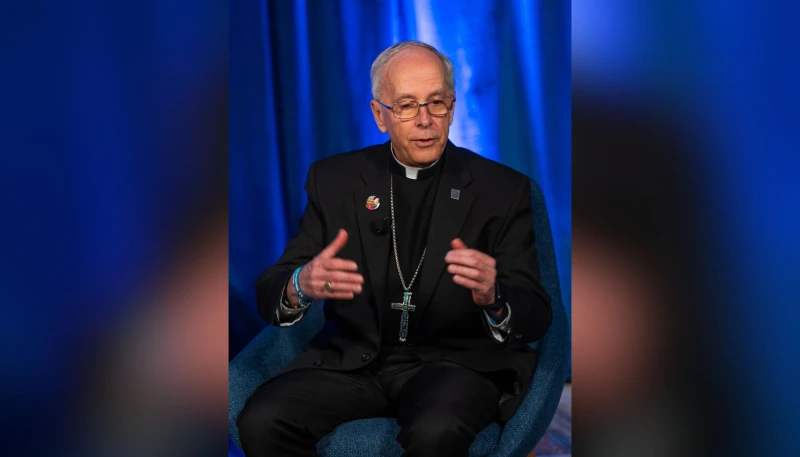
 Bishop Mark Seitz, chairman of the United States Conference of Catholic Bishops’ migration committee, speaks during a press conference on Nov. 11, 2025, at the USCCB’s fall plenary assembly in Baltimore. / Credit: Hakim Shammo/EWTN News

Baltimore, Maryland, Nov 11, 2025 / 17:46 pm (CNA).
The United States Conference of Catholic Bishops (USCCB) is launching an initiative called “You Are Not Alone” to focus on providing accompaniment to migrants who are at risk of being deported.Bishop Mark Seitz, chair of the USCCB Committee on Migration, announced the nationwide initiative during the conference’s Fall Plenary Assembly in Baltimore on Nov. 11.The initiative, which was inspired by similar efforts in Catholic dioceses throughout the country, will focus on four key areas: emergency and family support, accompaniment and pastoral care, communication of Church teaching, and solidarity through prayer and public witness. Seitz said the Catholic Church has been “accompanying newcomers to this land since before our country’s founding.” He said — in addition to spiritual and corporal works of mercy — the Church “cannot abandon our long-standing advocacy for just and meaningful reform to our immigration system.”He said clergy will continue “proclaiming the God-given dignity of every person from the moment of conception through every stage of life until natural death,” which includes the dignity of those who migrated to the United States. The bishop said many dioceses have launched migrant accompaniment initiatives already.For example, the Diocese of San Diego launched its Faithful Accompaniment in Trust & Hope (FAITH) initiative on Aug. 4. The diocese works with interfaith partners to provide spiritual accompaniment to migrants during court proceedings and throughout the court process.Seitz reiterates opposition to ‘mass deportations’In his address to his fellow bishops, Seitz criticized President Donald Trump’s administration for carrying out its “campaign promise of mass deportations,” which he said is “intimidating and dehumanizing the immigrants in our midst regardless of how they came to be there.”He said the accompaniment initiative was launched because Trump’s immigration policy has created “a situation unlike anything we’ve seen previously.” He specifically referenced efforts to revoke Temporary Protected Status designations for migrants in several countries, including Venezuela and Nicaragua, and restrictions on certain visas.“Those who lack legal status are far from the only ones impacted by this approach,” Seitz said.He said most deportees “have no criminal convictions,” and the administration has pressured immigration enforcement “to increase the number of arrests.”“Our immigrant brothers and sisters … are living in a deep state of fear,” Seitz said. “Many are too afraid to work, send their children to school, or avail themselves to the sacraments.”Seitz, earlier in the day, noted that bishops are primarily pastors, and “because we’re pastors … we care about our people, and we care particularly for those who are most vulnerable and those who are most in need.”Pope Leo XIV has encouraged the American bishops to be vocal on the dignity of migrants. In October, the pontiff met with American bishops, including Seitz, and other supporters of migrants. According to one person present, Dylan Corbett, the founding executive director of Hope Border Institute, Leo told the group: “The Church cannot stay silent before injustice. You stand with me, and I stand with you.”

‘You Are Not Alone’ migrant accompaniment initiative announced by U.S. bishops #Catholic Bishop Mark Seitz, chairman of the United States Conference of Catholic Bishops’ migration committee, speaks during a press conference on Nov. 11, 2025, at the USCCB’s fall plenary assembly in Baltimore. / Credit: Hakim Shammo/EWTN News Baltimore, Maryland, Nov 11, 2025 / 17:46 pm (CNA). The United States Conference of Catholic Bishops (USCCB) is launching an initiative called “You Are Not Alone” to focus on providing accompaniment to migrants who are at risk of being deported.Bishop Mark Seitz, chair of the USCCB Committee on Migration, announced the nationwide initiative during the conference’s Fall Plenary Assembly in Baltimore on Nov. 11.The initiative, which was inspired by similar efforts in Catholic dioceses throughout the country, will focus on four key areas: emergency and family support, accompaniment and pastoral care, communication of Church teaching, and solidarity through prayer and public witness. Seitz said the Catholic Church has been “accompanying newcomers to this land since before our country’s founding.” He said — in addition to spiritual and corporal works of mercy — the Church “cannot abandon our long-standing advocacy for just and meaningful reform to our immigration system.”He said clergy will continue “proclaiming the God-given dignity of every person from the moment of conception through every stage of life until natural death,” which includes the dignity of those who migrated to the United States. The bishop said many dioceses have launched migrant accompaniment initiatives already.For example, the Diocese of San Diego launched its Faithful Accompaniment in Trust & Hope (FAITH) initiative on Aug. 4. The diocese works with interfaith partners to provide spiritual accompaniment to migrants during court proceedings and throughout the court process.Seitz reiterates opposition to ‘mass deportations’In his address to his fellow bishops, Seitz criticized President Donald Trump’s administration for carrying out its “campaign promise of mass deportations,” which he said is “intimidating and dehumanizing the immigrants in our midst regardless of how they came to be there.”He said the accompaniment initiative was launched because Trump’s immigration policy has created “a situation unlike anything we’ve seen previously.” He specifically referenced efforts to revoke Temporary Protected Status designations for migrants in several countries, including Venezuela and Nicaragua, and restrictions on certain visas.“Those who lack legal status are far from the only ones impacted by this approach,” Seitz said.He said most deportees “have no criminal convictions,” and the administration has pressured immigration enforcement “to increase the number of arrests.”“Our immigrant brothers and sisters … are living in a deep state of fear,” Seitz said. “Many are too afraid to work, send their children to school, or avail themselves to the sacraments.”Seitz, earlier in the day, noted that bishops are primarily pastors, and “because we’re pastors … we care about our people, and we care particularly for those who are most vulnerable and those who are most in need.”Pope Leo XIV has encouraged the American bishops to be vocal on the dignity of migrants. In October, the pontiff met with American bishops, including Seitz, and other supporters of migrants. According to one person present, Dylan Corbett, the founding executive director of Hope Border Institute, Leo told the group: “The Church cannot stay silent before injustice. You stand with me, and I stand with you.”


Bishop Mark Seitz, chairman of the United States Conference of Catholic Bishops’ migration committee, speaks during a press conference on Nov. 11, 2025, at the USCCB’s fall plenary assembly in Baltimore. / Credit: Hakim Shammo/EWTN News

Baltimore, Maryland, Nov 11, 2025 / 17:46 pm (CNA).

The United States Conference of Catholic Bishops (USCCB) is launching an initiative called “You Are Not Alone” to focus on providing accompaniment to migrants who are at risk of being deported.

Bishop Mark Seitz, chair of the USCCB Committee on Migration, announced the nationwide initiative during the conference’s Fall Plenary Assembly in Baltimore on Nov. 11.

The initiative, which was inspired by similar efforts in Catholic dioceses throughout the country, will focus on four key areas: emergency and family support, accompaniment and pastoral care, communication of Church teaching, and solidarity through prayer and public witness. 

Seitz said the Catholic Church has been “accompanying newcomers to this land since before our country’s founding.” He said — in addition to spiritual and corporal works of mercy — the Church “cannot abandon our long-standing advocacy for just and meaningful reform to our immigration system.”

He said clergy will continue “proclaiming the God-given dignity of every person from the moment of conception through every stage of life until natural death,” which includes the dignity of those who migrated to the United States. 

The bishop said many dioceses have launched migrant accompaniment initiatives already.

For example, the Diocese of San Diego launched its Faithful Accompaniment in Trust & Hope (FAITH) initiative on Aug. 4. The diocese works with interfaith partners to provide spiritual accompaniment to migrants during court proceedings and throughout the court process.

Seitz reiterates opposition to ‘mass deportations’

In his address to his fellow bishops, Seitz criticized President Donald Trump’s administration for carrying out its “campaign promise of mass deportations,” which he said is “intimidating and dehumanizing the immigrants in our midst regardless of how they came to be there.”

He said the accompaniment initiative was launched because Trump’s immigration policy has created “a situation unlike anything we’ve seen previously.” He specifically referenced efforts to revoke Temporary Protected Status designations for migrants in several countries, including Venezuela and Nicaragua, and restrictions on certain visas.

“Those who lack legal status are far from the only ones impacted by this approach,” Seitz said.

He said most deportees “have no criminal convictions,” and the administration has pressured immigration enforcement “to increase the number of arrests.”

“Our immigrant brothers and sisters … are living in a deep state of fear,” Seitz said. “Many are too afraid to work, send their children to school, or avail themselves to the sacraments.”

Seitz, earlier in the day, noted that bishops are primarily pastors, and “because we’re pastors … we care about our people, and we care particularly for those who are most vulnerable and those who are most in need.”

Pope Leo XIV has encouraged the American bishops to be vocal on the dignity of migrants. In October, the pontiff met with American bishops, including Seitz, and other supporters of migrants. 

According to one person present, Dylan Corbett, the founding executive director of Hope Border Institute, Leo told the group: “The Church cannot stay silent before injustice. You stand with me, and I stand with you.”

Read More
Bishop Seitz endorses immigration bill to create legal protections  #Catholic 
 
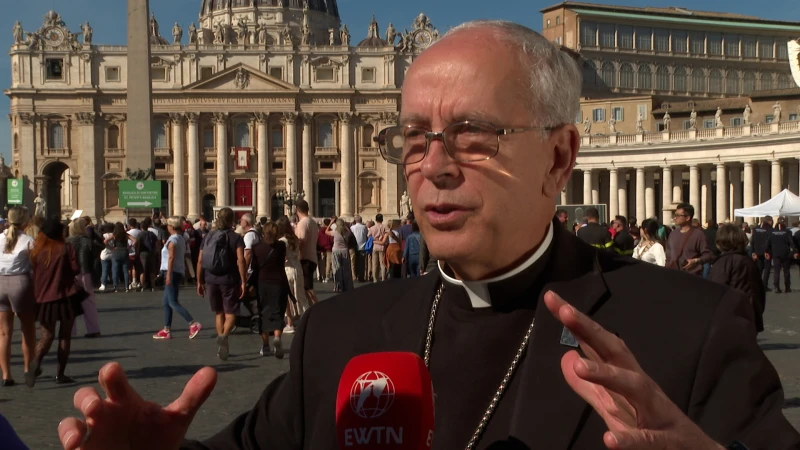
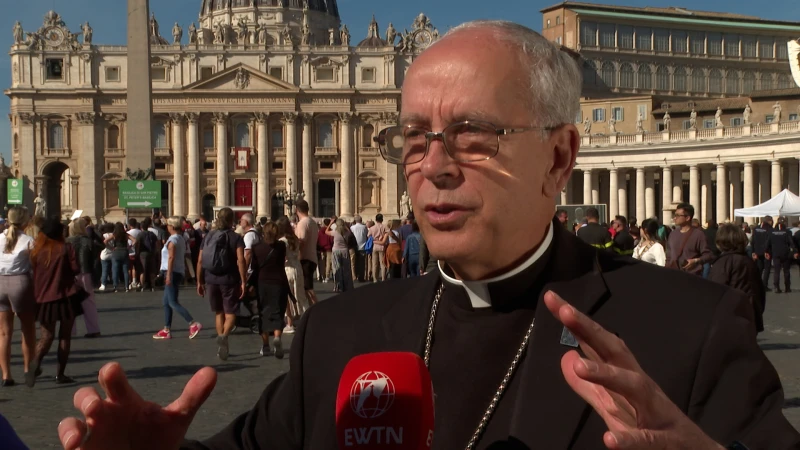
 Bishop Mark Seitz of El Paso, Texas, speaks with EWTN News on Oct. 9, 2025, at the Vatican. / Credit: EWTN News

CNA Staff, Nov 11, 2025 / 11:10 am (CNA).
Legislation that would provide protections for people lacking legal immigration status won endorsement from Bishop Mark J. Seitz of El Paso, Texas, who has served as chair of the U.S. Conference of Catholic Bishops’ Committee on Migration.The bill (HR 4393), which would not lay out a direct path to citizenship, would give people who lack legal status the chance to earn it through labor and financial penalties if they lack a criminal record. It would apply to people who entered the United States before 2021.The measure would authorize funding for border security and create centers for asylum seekers during consideration of their case. It would require asylum cases to be completed within 60 days.Rep. María Elvira Salazar, R-Florida, sponsored the measure, which she named the Dignity Act and first introduced in 2022. Rep. Veronica Escobar, D-Texas, cosponsored the measure, along with 22 other members of Congress. No hearings or other legislative action has been scheduled.Seitz, who is expected to address fellow bishops Nov. 11 about immigration, said in a joint statement with Salazar in August that he is “deeply grateful to Congresswoman Salazar, Congresswoman Escobar, and their colleagues for this sustained commitment to working across the aisle.”Seitz said: “Pope Leo XIV has emphasized the responsibility of all political leaders to promote and protect the good of the community, the common good, particularly by defending the vulnerable and the marginalized. Under our current system, families across our nation are living in fear. Bipartisan proposals such as the Dignity Act are a step toward fulfilling the call made by our Holy Father to offer a better way forward — one that begins and ends with respect for the God-given dignity of every person.”The National Hispanic Christian Leadership Conference, comprising over 42,000 affiliated churches, has endorsed the measure. The U.S. Chamber of Commerce, National Immigration Forum, Business Roundtable, and the Council for Christian Colleges & Universities also are backing the bill.The Federation for American Immigration Reform has voiced opposition to the measure, saying it would forgive illegal entry and allow authorities to waive offenses such as certain controlled substance crimes and prostitution.The group criticized the bill’s proposal to create the Dignity Program to provide a renewable seven-year grant of deferred action, saying it is likely that future legislation would attempt to provide a direct path to citizenship if “Dignity status” was granted.

Bishop Seitz endorses immigration bill to create legal protections  #Catholic Bishop Mark Seitz of El Paso, Texas, speaks with EWTN News on Oct. 9, 2025, at the Vatican. / Credit: EWTN News CNA Staff, Nov 11, 2025 / 11:10 am (CNA). Legislation that would provide protections for people lacking legal immigration status won endorsement from Bishop Mark J. Seitz of El Paso, Texas, who has served as chair of the U.S. Conference of Catholic Bishops’ Committee on Migration.The bill (HR 4393), which would not lay out a direct path to citizenship, would give people who lack legal status the chance to earn it through labor and financial penalties if they lack a criminal record. It would apply to people who entered the United States before 2021.The measure would authorize funding for border security and create centers for asylum seekers during consideration of their case. It would require asylum cases to be completed within 60 days.Rep. María Elvira Salazar, R-Florida, sponsored the measure, which she named the Dignity Act and first introduced in 2022. Rep. Veronica Escobar, D-Texas, cosponsored the measure, along with 22 other members of Congress. No hearings or other legislative action has been scheduled.Seitz, who is expected to address fellow bishops Nov. 11 about immigration, said in a joint statement with Salazar in August that he is “deeply grateful to Congresswoman Salazar, Congresswoman Escobar, and their colleagues for this sustained commitment to working across the aisle.”Seitz said: “Pope Leo XIV has emphasized the responsibility of all political leaders to promote and protect the good of the community, the common good, particularly by defending the vulnerable and the marginalized. Under our current system, families across our nation are living in fear. Bipartisan proposals such as the Dignity Act are a step toward fulfilling the call made by our Holy Father to offer a better way forward — one that begins and ends with respect for the God-given dignity of every person.”The National Hispanic Christian Leadership Conference, comprising over 42,000 affiliated churches, has endorsed the measure. The U.S. Chamber of Commerce, National Immigration Forum, Business Roundtable, and the Council for Christian Colleges & Universities also are backing the bill.The Federation for American Immigration Reform has voiced opposition to the measure, saying it would forgive illegal entry and allow authorities to waive offenses such as certain controlled substance crimes and prostitution.The group criticized the bill’s proposal to create the Dignity Program to provide a renewable seven-year grant of deferred action, saying it is likely that future legislation would attempt to provide a direct path to citizenship if “Dignity status” was granted.


Bishop Mark Seitz of El Paso, Texas, speaks with EWTN News on Oct. 9, 2025, at the Vatican. / Credit: EWTN News

CNA Staff, Nov 11, 2025 / 11:10 am (CNA).

Legislation that would provide protections for people lacking legal immigration status won endorsement from Bishop Mark J. Seitz of El Paso, Texas, who has served as chair of the U.S. Conference of Catholic Bishops’ Committee on Migration.

The bill (HR 4393), which would not lay out a direct path to citizenship, would give people who lack legal status the chance to earn it through labor and financial penalties if they lack a criminal record. It would apply to people who entered the United States before 2021.

The measure would authorize funding for border security and create centers for asylum seekers during consideration of their case. It would require asylum cases to be completed within 60 days.

Rep. María Elvira Salazar, R-Florida, sponsored the measure, which she named the Dignity Act and first introduced in 2022. Rep. Veronica Escobar, D-Texas, cosponsored the measure, along with 22 other members of Congress. No hearings or other legislative action has been scheduled.

Seitz, who is expected to address fellow bishops Nov. 11 about immigration, said in a joint statement with Salazar in August that he is “deeply grateful to Congresswoman Salazar, Congresswoman Escobar, and their colleagues for this sustained commitment to working across the aisle.”

Seitz said: “Pope Leo XIV has emphasized the responsibility of all political leaders to promote and protect the good of the community, the common good, particularly by defending the vulnerable and the marginalized. Under our current system, families across our nation are living in fear. Bipartisan proposals such as the Dignity Act are a step toward fulfilling the call made by our Holy Father to offer a better way forward — one that begins and ends with respect for the God-given dignity of every person.”

The National Hispanic Christian Leadership Conference, comprising over 42,000 affiliated churches, has endorsed the measure. The U.S. Chamber of Commerce, National Immigration Forum, Business Roundtable, and the Council for Christian Colleges & Universities also are backing the bill.

The Federation for American Immigration Reform has voiced opposition to the measure, saying it would forgive illegal entry and allow authorities to waive offenses such as certain controlled substance crimes and prostitution.

The group criticized the bill’s proposal to create the Dignity Program to provide a renewable seven-year grant of deferred action, saying it is likely that future legislation would attempt to provide a direct path to citizenship if “Dignity status” was granted.

Read More
St. Charles Borromeo: Patron saint of stomach ailments, dieting — and obesity? #Catholic 
 
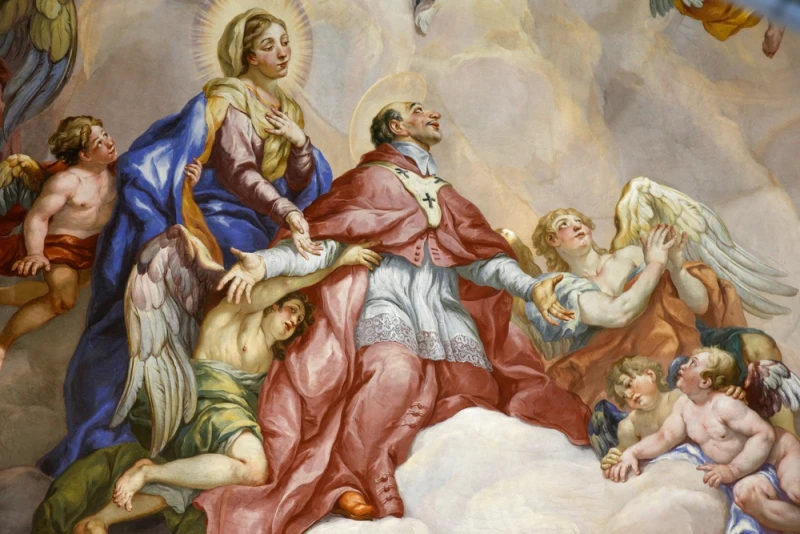
 The Intercession of Charles Borromeo supported by the Virgin Mary dome fresco by Johann Michael Rottmayr in St. Charles’s Church, Austria. / Credit: godongphoto/Shutterstock

CNA Staff, Nov 4, 2025 / 04:00 am (CNA).
St. Charles Borromeo, whose feast day the Catholic Church celebrates Nov. 4, was a cardinal and a prominent teacher of the Catholic faith. He generously donated much of his considerable wealth to charity and sacrificed his own health to help plague victims at a time when many other authorities fled.And, despite what you might have heard, he probably wasn’t obese.Why does that matter? Well, because Charles is popularly invoked as a patron saint of stomach ailments and also of obesity and dieting. These patronages — and whether or not he was himself obese — are not mentioned in hagiographies of St. Charles, so it’s unclear how this particular association began. Charles was known for helping the poor in times of famine and for practicing self-mortification, and he was certainly not known to indulge in food to excess.Whether or not his invocation by dieters is appropriate, what is clear is that St. Charles Borromeo had a massive influence on the Church.Charles was born in 1538 near Milan. He was born wealthy — in fact, he was part of the famously rich and influential Medici family — but sought to use his wealth to benefit the Church rather than himself.Owing in part to his well-connected family, Charles soon assumed staggering responsibilities, serving as a papal diplomat and supervisor of major religious orders.Charles was a central figure in the Council of Trent (1545–1563), which among other things served as the Church’s official answer to the Protestant Reformation. Its twofold mission was to clarify Catholic doctrine against Protestant objections and reform the Church internally against many long-standing problems. As a papal representative, Charles participated in the council’s conclusion in 1563, when he was only 25, and was ordained a priest during the council. He also played a leading role in assembling its comprehensive summary, the Catechism of the Council of Trent.Charles’ uncle, Pope Pius IV, appointed him archbishop of Milan in 1563, and soon after he became a cardinal. He found his diocese in a state of disintegration, after two generations of virtually no local administration or leadership. Charles got straight to work establishing schools, seminaries, and centers for religious life. He constantly directed the work of restoration of ecclesiastical discipline and the education of the young, even down to minute details. He tried as much as possible to live a simple life and give to the poor whenever possible, and he practiced self-mortification.The clergy during this time were in many cases lax and careless, living scandalous lives, such that the people had grown to be equally negligent and sinful. While bishop of Milan, St. Charles oversaw many dramatic and effective reforms of the clergy, the liturgy, and of religious education. He encountered much opposition to those reforms, so much so that a group of disgruntled monks attempted to kill him, but he was miraculously unharmed when an assassin fired a gun straight at him while kneeling in prayer at an altar.He was very active in preaching and ministry and was famous for bringing back many lapsed Catholics to the Church. As a result, today he is honored as the patron saint of catechists and catechumens, people who teach and learn the faith. In fact, he was the founder of the Confraternity of Christian Doctrine, which systematically instructed children in the faith — the forerunner of the modern “Sunday school.”In 1571, the region where Charles was working suffered a severe famine, during which he worked tirelessly to help the starving, supporting at his own expense as many as 3,000 people daily for three months. At the same time, Charles himself suffered various ailments, including a low fever.A few years later, a plague struck Milan. Charles was convinced that the plague was sent as a chastisement for sin and sought to give himself all the more to prayer and to service to his people. He paid personal visits to plague-stricken houses to comfort those suffering, and as a spiritual penance, he walked in procession, barefoot, with a rope around his neck and a relic in his hand.At the end of 1584 Charles suffered a skin infection in one of his legs but still continued to travel to take care of his diocese. He died young at the age of 46 on Nov. 3, 1584, and was canonized 26 years later, in 1610.This story was first published on Nov. 4, 2022, and has been updated.

St. Charles Borromeo: Patron saint of stomach ailments, dieting — and obesity? #Catholic The Intercession of Charles Borromeo supported by the Virgin Mary dome fresco by Johann Michael Rottmayr in St. Charles’s Church, Austria. / Credit: godongphoto/Shutterstock CNA Staff, Nov 4, 2025 / 04:00 am (CNA). St. Charles Borromeo, whose feast day the Catholic Church celebrates Nov. 4, was a cardinal and a prominent teacher of the Catholic faith. He generously donated much of his considerable wealth to charity and sacrificed his own health to help plague victims at a time when many other authorities fled.And, despite what you might have heard, he probably wasn’t obese.Why does that matter? Well, because Charles is popularly invoked as a patron saint of stomach ailments and also of obesity and dieting. These patronages — and whether or not he was himself obese — are not mentioned in hagiographies of St. Charles, so it’s unclear how this particular association began. Charles was known for helping the poor in times of famine and for practicing self-mortification, and he was certainly not known to indulge in food to excess.Whether or not his invocation by dieters is appropriate, what is clear is that St. Charles Borromeo had a massive influence on the Church.Charles was born in 1538 near Milan. He was born wealthy — in fact, he was part of the famously rich and influential Medici family — but sought to use his wealth to benefit the Church rather than himself.Owing in part to his well-connected family, Charles soon assumed staggering responsibilities, serving as a papal diplomat and supervisor of major religious orders.Charles was a central figure in the Council of Trent (1545–1563), which among other things served as the Church’s official answer to the Protestant Reformation. Its twofold mission was to clarify Catholic doctrine against Protestant objections and reform the Church internally against many long-standing problems. As a papal representative, Charles participated in the council’s conclusion in 1563, when he was only 25, and was ordained a priest during the council. He also played a leading role in assembling its comprehensive summary, the Catechism of the Council of Trent.Charles’ uncle, Pope Pius IV, appointed him archbishop of Milan in 1563, and soon after he became a cardinal. He found his diocese in a state of disintegration, after two generations of virtually no local administration or leadership. Charles got straight to work establishing schools, seminaries, and centers for religious life. He constantly directed the work of restoration of ecclesiastical discipline and the education of the young, even down to minute details. He tried as much as possible to live a simple life and give to the poor whenever possible, and he practiced self-mortification.The clergy during this time were in many cases lax and careless, living scandalous lives, such that the people had grown to be equally negligent and sinful. While bishop of Milan, St. Charles oversaw many dramatic and effective reforms of the clergy, the liturgy, and of religious education. He encountered much opposition to those reforms, so much so that a group of disgruntled monks attempted to kill him, but he was miraculously unharmed when an assassin fired a gun straight at him while kneeling in prayer at an altar.He was very active in preaching and ministry and was famous for bringing back many lapsed Catholics to the Church. As a result, today he is honored as the patron saint of catechists and catechumens, people who teach and learn the faith. In fact, he was the founder of the Confraternity of Christian Doctrine, which systematically instructed children in the faith — the forerunner of the modern “Sunday school.”In 1571, the region where Charles was working suffered a severe famine, during which he worked tirelessly to help the starving, supporting at his own expense as many as 3,000 people daily for three months. At the same time, Charles himself suffered various ailments, including a low fever.A few years later, a plague struck Milan. Charles was convinced that the plague was sent as a chastisement for sin and sought to give himself all the more to prayer and to service to his people. He paid personal visits to plague-stricken houses to comfort those suffering, and as a spiritual penance, he walked in procession, barefoot, with a rope around his neck and a relic in his hand.At the end of 1584 Charles suffered a skin infection in one of his legs but still continued to travel to take care of his diocese. He died young at the age of 46 on Nov. 3, 1584, and was canonized 26 years later, in 1610.This story was first published on Nov. 4, 2022, and has been updated.


The Intercession of Charles Borromeo supported by the Virgin Mary dome fresco by Johann Michael Rottmayr in St. Charles’s Church, Austria. / Credit: godongphoto/Shutterstock

CNA Staff, Nov 4, 2025 / 04:00 am (CNA).

St. Charles Borromeo, whose feast day the Catholic Church celebrates Nov. 4, was a cardinal and a prominent teacher of the Catholic faith. He generously donated much of his considerable wealth to charity and sacrificed his own health to help plague victims at a time when many other authorities fled.

And, despite what you might have heard, he probably wasn’t obese.

Why does that matter? Well, because Charles is popularly invoked as a patron saint of stomach ailments and also of obesity and dieting. These patronages — and whether or not he was himself obese — are not mentioned in hagiographies of St. Charles, so it’s unclear how this particular association began. Charles was known for helping the poor in times of famine and for practicing self-mortification, and he was certainly not known to indulge in food to excess.

Whether or not his invocation by dieters is appropriate, what is clear is that St. Charles Borromeo had a massive influence on the Church.

Charles was born in 1538 near Milan. He was born wealthy — in fact, he was part of the famously rich and influential Medici family — but sought to use his wealth to benefit the Church rather than himself.

Owing in part to his well-connected family, Charles soon assumed staggering responsibilities, serving as a papal diplomat and supervisor of major religious orders.

Charles was a central figure in the Council of Trent (1545–1563), which among other things served as the Church’s official answer to the Protestant Reformation. Its twofold mission was to clarify Catholic doctrine against Protestant objections and reform the Church internally against many long-standing problems. As a papal representative, Charles participated in the council’s conclusion in 1563, when he was only 25, and was ordained a priest during the council. He also played a leading role in assembling its comprehensive summary, the Catechism of the Council of Trent.

Charles’ uncle, Pope Pius IV, appointed him archbishop of Milan in 1563, and soon after he became a cardinal. He found his diocese in a state of disintegration, after two generations of virtually no local administration or leadership. Charles got straight to work establishing schools, seminaries, and centers for religious life. He constantly directed the work of restoration of ecclesiastical discipline and the education of the young, even down to minute details. He tried as much as possible to live a simple life and give to the poor whenever possible, and he practiced self-mortification.

The clergy during this time were in many cases lax and careless, living scandalous lives, such that the people had grown to be equally negligent and sinful. While bishop of Milan, St. Charles oversaw many dramatic and effective reforms of the clergy, the liturgy, and of religious education. He encountered much opposition to those reforms, so much so that a group of disgruntled monks attempted to kill him, but he was miraculously unharmed when an assassin fired a gun straight at him while kneeling in prayer at an altar.

He was very active in preaching and ministry and was famous for bringing back many lapsed Catholics to the Church. As a result, today he is honored as the patron saint of catechists and catechumens, people who teach and learn the faith. In fact, he was the founder of the Confraternity of Christian Doctrine, which systematically instructed children in the faith — the forerunner of the modern “Sunday school.”

In 1571, the region where Charles was working suffered a severe famine, during which he worked tirelessly to help the starving, supporting at his own expense as many as 3,000 people daily for three months. At the same time, Charles himself suffered various ailments, including a low fever.

A few years later, a plague struck Milan. Charles was convinced that the plague was sent as a chastisement for sin and sought to give himself all the more to prayer and to service to his people. He paid personal visits to plague-stricken houses to comfort those suffering, and as a spiritual penance, he walked in procession, barefoot, with a rope around his neck and a relic in his hand.

At the end of 1584 Charles suffered a skin infection in one of his legs but still continued to travel to take care of his diocese. He died young at the age of 46 on Nov. 3, 1584, and was canonized 26 years later, in 1610.

This story was first published on Nov. 4, 2022, and has been updated.

Read More