
Opposition

France legalizes euthanasia after forceful push through Parliament #Catholic The French National Assembly gave final approval on July 15 to a bill legalizing euthanasia and assisted suicide, making France one of the few European countries to legalize the practice along with Belgium, the Netherlands, Luxembourg, and Spain. The 291-241 vote came three years after President Emmanuel Macron, who had made it one of his key campaign promises, first opened the question to national debate.The vote ended an unusual parliamentary stalemate between the National Assembly and the Senate. Members of the National Assembly passed the bill three times over the course of 14 months — most recently on June 30 by a vote of 295 to 232 — and senators rejected it just as many times. On July 7, the Senate passed, by a narrow majority of 169 to 164, with 11 abstentions, a preliminary motion to outright reject the bill rather than debate it, and this motion itself called on the government to end the legislative process. Rather than heeding this call, Prime Minister Sébastien Lecornu invoked Article 45 of the Constitution, which allows the government to give the National Assembly the final say when repeated readings fail to produce an agreement between the two chambers. He then referred the bill back to the National Assembly for a fourth and final vote instead of a fourth reading in the Senate.The July 15 vote, however, did not close the matter. On July 14, Lecornu announced he would refer part of the text to the Constitutional Council, a step Senate President Gérard Larcher had also urged, citing in particular how the billʼs conscience clause would interact with health and social care facilities built around end-of-life accompaniment that exclude assisted dying. The council must rule within a month, or eight days if the government asks for an expedited review, meaning the law cannot be promulgated until that review is complete even though the Assembly has now adopted it.The end-of-life law covers both euthanasia, administered by a doctor or nurse, and assisted suicide, in which the patient self-administers a lethal substance, under five cumulative conditions: A person must be an adult, a stable resident of France, diagnosed with a serious and incurable condition, in an advanced or terminal phase of that condition, and suffering in a way current treatment cannot relieve, while remaining able to express a free and informed decision. Self-administration is supposed to be the default rule, with the law providing for intervention by a healthcare professional only when the patient is physically unable to act.A supporting measure aimed at expanding access to palliative care was adopted with much broader support, passing its first reading in the Senate by a vote of 307 to 17. To date, more than 20% of French departments still lack a palliative care unit, according to figures cited repeatedly by the Bishops’ Conference of France during the debate.The push to legalize assisted dying traces back to September 2022, when the National Consultative Ethics Committee reversed its earlier opposition to assisted dying and endorsed an “ethical” application of the practice. A citizens’ panel Macron had convened spent the following winter weighing the question and backed legalization.The French president unveiled the outline of a bill in March 2024, but the initiative stalled when he dissolved the Assembly in June the same year. Deputy Olivier Falorni, who had filed an earlier and unsuccessful end-of-life bill, revived it in 2025.Critics argue the newly adopted framework is among the most permissive of its kind in the world. Grégor Puppinck, a Catholic lawyer and director general of the European Centre for Law and Justice, has published a point-by-point analysis contending that the entire process rests on the judgment of a single physician, who may meet the patient for the first time on the day of the request and need not be the one already treating them.The two additional professionals that physician must consult are chosen by the same person, are not required to examine the patient in person, and may be consulted by videoconference. Puppinck noted the statute sets no minimum interval between the decision and the act itself beyond a two-day reflection window, relatives have no guaranteed right to be informed beforehand, and they cannot challenge the outcome in court. Doctors who object in conscience must still refer patients to a colleague willing to proceed, and private and religious institutions, including nursing homes, must accommodate mobile euthanasia teams under threat of administrative penalties. Oversight, in Puppinck’s account, comes only after death, based on a report filed by the same clinician who carried it out.The founders of the ethics collective Democracy, Ethics, and Solidarity, Laurent Frémont and Emmanuel Hirsch, wrote in Le Journal du Dimanche that the law’s eligibility criteria — primarily a “serious and incurable condition” causing “unbearable suffering,” are defined vaguely enough that a strict medical interpretation could make more than 1 million people eligible, including patients with chronic illnesses, psychiatric disorders, or advanced age, without requiring a prior written request, a peer review by medical colleagues, or a psychiatric evaluation.A 2025 study by the Fondation pour l’innovation politique estimated the measure could save the state around 1.4 billion euros (.6 billion) a year in health, eldercare, and pension spending, a projection critics have cited as evidence of the pressures vulnerable and elderly patients could face once the law takes effect.The French bishops’ conference called the text a threat to “the most fragile” among French citizens in a statement issued in May 2025 ahead of the Assembly’s first vote on the bill. The archbishop of Paris, Laurent Ulrich, has repeatedly urged lawmakers to reconsider their position, asserting that true solidarity is built through caring for others rather than through death. “More than assistance in dying, our society needs assistance in living,” he has repeatedly stated.In a video appeal to lawmakers released before the vote, Archbishop Vincent Jordy of Tours invoked François Rabelais’ centuries-old warning that “science without conscience is but the ruin of the soul.” What is underway, he said, is “an anthropological shift,” a new way of viewing life and its end that will gradually reshape the country, touching caregivers, families, people with disabilities, and the relationship between generations. He pointed to the Netherlands, where regulators had layered on safeguards for two decades and where health officials confirmed in June that a child under 12 had been euthanized for the first time, under a 2024 expansion of the law to children between the ages of 1 and 12. Making a law, Jordy said, is also opening doors toward things “one had perhaps not imagined” when it was written.

France legalizes euthanasia after forceful push through Parliament #Catholic The French National Assembly gave final approval on July 15 to a bill legalizing euthanasia and assisted suicide, making France one of the few European countries to legalize the practice along with Belgium, the Netherlands, Luxembourg, and Spain. The 291-241 vote came three years after President Emmanuel Macron, who had made it one of his key campaign promises, first opened the question to national debate.The vote ended an unusual parliamentary stalemate between the National Assembly and the Senate. Members of the National Assembly passed the bill three times over the course of 14 months — most recently on June 30 by a vote of 295 to 232 — and senators rejected it just as many times. On July 7, the Senate passed, by a narrow majority of 169 to 164, with 11 abstentions, a preliminary motion to outright reject the bill rather than debate it, and this motion itself called on the government to end the legislative process. Rather than heeding this call, Prime Minister Sébastien Lecornu invoked Article 45 of the Constitution, which allows the government to give the National Assembly the final say when repeated readings fail to produce an agreement between the two chambers. He then referred the bill back to the National Assembly for a fourth and final vote instead of a fourth reading in the Senate.The July 15 vote, however, did not close the matter. On July 14, Lecornu announced he would refer part of the text to the Constitutional Council, a step Senate President Gérard Larcher had also urged, citing in particular how the billʼs conscience clause would interact with health and social care facilities built around end-of-life accompaniment that exclude assisted dying. The council must rule within a month, or eight days if the government asks for an expedited review, meaning the law cannot be promulgated until that review is complete even though the Assembly has now adopted it.The end-of-life law covers both euthanasia, administered by a doctor or nurse, and assisted suicide, in which the patient self-administers a lethal substance, under five cumulative conditions: A person must be an adult, a stable resident of France, diagnosed with a serious and incurable condition, in an advanced or terminal phase of that condition, and suffering in a way current treatment cannot relieve, while remaining able to express a free and informed decision. Self-administration is supposed to be the default rule, with the law providing for intervention by a healthcare professional only when the patient is physically unable to act.A supporting measure aimed at expanding access to palliative care was adopted with much broader support, passing its first reading in the Senate by a vote of 307 to 17. To date, more than 20% of French departments still lack a palliative care unit, according to figures cited repeatedly by the Bishops’ Conference of France during the debate.The push to legalize assisted dying traces back to September 2022, when the National Consultative Ethics Committee reversed its earlier opposition to assisted dying and endorsed an “ethical” application of the practice. A citizens’ panel Macron had convened spent the following winter weighing the question and backed legalization.The French president unveiled the outline of a bill in March 2024, but the initiative stalled when he dissolved the Assembly in June the same year. Deputy Olivier Falorni, who had filed an earlier and unsuccessful end-of-life bill, revived it in 2025.Critics argue the newly adopted framework is among the most permissive of its kind in the world. Grégor Puppinck, a Catholic lawyer and director general of the European Centre for Law and Justice, has published a point-by-point analysis contending that the entire process rests on the judgment of a single physician, who may meet the patient for the first time on the day of the request and need not be the one already treating them.The two additional professionals that physician must consult are chosen by the same person, are not required to examine the patient in person, and may be consulted by videoconference. Puppinck noted the statute sets no minimum interval between the decision and the act itself beyond a two-day reflection window, relatives have no guaranteed right to be informed beforehand, and they cannot challenge the outcome in court. Doctors who object in conscience must still refer patients to a colleague willing to proceed, and private and religious institutions, including nursing homes, must accommodate mobile euthanasia teams under threat of administrative penalties. Oversight, in Puppinck’s account, comes only after death, based on a report filed by the same clinician who carried it out.The founders of the ethics collective Democracy, Ethics, and Solidarity, Laurent Frémont and Emmanuel Hirsch, wrote in Le Journal du Dimanche that the law’s eligibility criteria — primarily a “serious and incurable condition” causing “unbearable suffering,” are defined vaguely enough that a strict medical interpretation could make more than 1 million people eligible, including patients with chronic illnesses, psychiatric disorders, or advanced age, without requiring a prior written request, a peer review by medical colleagues, or a psychiatric evaluation.A 2025 study by the Fondation pour l’innovation politique estimated the measure could save the state around 1.4 billion euros ($1.6 billion) a year in health, eldercare, and pension spending, a projection critics have cited as evidence of the pressures vulnerable and elderly patients could face once the law takes effect.The French bishops’ conference called the text a threat to “the most fragile” among French citizens in a statement issued in May 2025 ahead of the Assembly’s first vote on the bill. The archbishop of Paris, Laurent Ulrich, has repeatedly urged lawmakers to reconsider their position, asserting that true solidarity is built through caring for others rather than through death. “More than assistance in dying, our society needs assistance in living,” he has repeatedly stated.In a video appeal to lawmakers released before the vote, Archbishop Vincent Jordy of Tours invoked François Rabelais’ centuries-old warning that “science without conscience is but the ruin of the soul.” What is underway, he said, is “an anthropological shift,” a new way of viewing life and its end that will gradually reshape the country, touching caregivers, families, people with disabilities, and the relationship between generations. He pointed to the Netherlands, where regulators had layered on safeguards for two decades and where health officials confirmed in June that a child under 12 had been euthanized for the first time, under a 2024 expansion of the law to children between the ages of 1 and 12. Making a law, Jordy said, is also opening doors toward things “one had perhaps not imagined” when it was written.

The vote, ending an unusual parliamentary stalemate between the National Assembly and the Senate, came three years after President Emmanuel Macron first opened the question to national debate.

Read More
Society of St. Pius X appeals to Vatican against schism decree #Catholic The Society of St. Pius X (SSPX) has filed an appeal with the Vatican against the decree that declared the traditionalist group in schism with the Catholic Church for consecrating four bishops without papal authorization.According to a statement from the society — whose members are known as Lefebvrists — the appeal was submitted to the Dicastery for the Doctrine of the Faith on July 11, nine days after the group was declared to be in schism.Invoking Canon 1353The SSPX statement, published July 13, says that “through this appeal, the society wishes to exercise the right that the Church recognizes for any person who considers himself harmed by an administrative act to request its rectification, in a spirit of respect toward ecclesiastical authority and of faithful adherence to justice, truth, and the good of the Church.”It adds that the appeal is "the prior requirement before the eventual filing of a hierarchical recourse" and "has the effect of suspending the execution of the decree, in accordance with Canon 1353 of the Code of Canon Law."Canon 1353 states that an appeal or recourse against a judicial sentence or against a decree that imposes or declares any penalty has a suspensive effect.“The Society of St. Pius X places this request in the hands of the competent authorities and entrusts this procedure to the prayers of all the faithful,” the statement concludes.The appeal follows a letter the Lefebvrists addressed to Pope Leo XIV, published July 3, in which they reject the excommunications decreed by the Vatican after the illicit consecration of the four new bishops — measures they called “objectively unjust and invalid.”Origins of the LefebvristsThe group, founded by French Archbishop Marcel Lefebvre in 1970, holds as its purpose the preservation of the traditional liturgy that predates the reforms introduced after the Second Vatican Council, while maintaining its opposition to aspects of conciliar teaching on ecumenism, religious freedom, and collegiality.Lefebvre was excommunicated in 1988 after consecrating four bishops without the permission of St. John Paul II. That sanction was lifted by Benedict XVI in 2009.Two of the bishops Lefebvre consecrated — Alfonso de Galarreta and Bernard Fellay — took part in the recent illicit consecration, which led to their being excommunicated once again.The SSPX disregarded the Catholic Churchʼs warnings not to ordain new bishops, including an appeal from Leo XIV himself, who wrote to the society June 30: “With this spirit, and filled with Christian affection, I plead with you and ask you with all my heart: Please turn back! I ask you with all my heart: Please turn back!”The superior general of the SSPX is the Italian priest Father Davide Pagliarani. According to the societyʼs statistics as of Dec. 1, 2025, it comprises 733 priests of 50 nationalities — not counting the six bishops it now has — with an average age of 47.What is schism under canon law?Canon 751 of the Code of Canon Law states that schism is “the refusal of submission to the Supreme Pontiff or of communion with the members of the Church subject to him.” The penalty for this canonical offense is usually excommunication, as has happened with the SSPX.Several bishops — including those of Panama and San Antonio, Texas — have warned the faithful not to take part in Masses or seek the sacraments from priests of the schismatic group.This story was first published by ACI Prensa, the Spanish-language sister service of EWTN News, and has been translated and adapted by EWTN News English.

Society of St. Pius X appeals to Vatican against schism decree #Catholic The Society of St. Pius X (SSPX) has filed an appeal with the Vatican against the decree that declared the traditionalist group in schism with the Catholic Church for consecrating four bishops without papal authorization.According to a statement from the society — whose members are known as Lefebvrists — the appeal was submitted to the Dicastery for the Doctrine of the Faith on July 11, nine days after the group was declared to be in schism.Invoking Canon 1353The SSPX statement, published July 13, says that “through this appeal, the society wishes to exercise the right that the Church recognizes for any person who considers himself harmed by an administrative act to request its rectification, in a spirit of respect toward ecclesiastical authority and of faithful adherence to justice, truth, and the good of the Church.”It adds that the appeal is "the prior requirement before the eventual filing of a hierarchical recourse" and "has the effect of suspending the execution of the decree, in accordance with Canon 1353 of the Code of Canon Law."Canon 1353 states that an appeal or recourse against a judicial sentence or against a decree that imposes or declares any penalty has a suspensive effect.“The Society of St. Pius X places this request in the hands of the competent authorities and entrusts this procedure to the prayers of all the faithful,” the statement concludes.The appeal follows a letter the Lefebvrists addressed to Pope Leo XIV, published July 3, in which they reject the excommunications decreed by the Vatican after the illicit consecration of the four new bishops — measures they called “objectively unjust and invalid.”Origins of the LefebvristsThe group, founded by French Archbishop Marcel Lefebvre in 1970, holds as its purpose the preservation of the traditional liturgy that predates the reforms introduced after the Second Vatican Council, while maintaining its opposition to aspects of conciliar teaching on ecumenism, religious freedom, and collegiality.Lefebvre was excommunicated in 1988 after consecrating four bishops without the permission of St. John Paul II. That sanction was lifted by Benedict XVI in 2009.Two of the bishops Lefebvre consecrated — Alfonso de Galarreta and Bernard Fellay — took part in the recent illicit consecration, which led to their being excommunicated once again.The SSPX disregarded the Catholic Churchʼs warnings not to ordain new bishops, including an appeal from Leo XIV himself, who wrote to the society June 30: “With this spirit, and filled with Christian affection, I plead with you and ask you with all my heart: Please turn back! I ask you with all my heart: Please turn back!”The superior general of the SSPX is the Italian priest Father Davide Pagliarani. According to the societyʼs statistics as of Dec. 1, 2025, it comprises 733 priests of 50 nationalities — not counting the six bishops it now has — with an average age of 47.What is schism under canon law?Canon 751 of the Code of Canon Law states that schism is “the refusal of submission to the Supreme Pontiff or of communion with the members of the Church subject to him.” The penalty for this canonical offense is usually excommunication, as has happened with the SSPX.Several bishops — including those of Panama and San Antonio, Texas — have warned the faithful not to take part in Masses or seek the sacraments from priests of the schismatic group.This story was first published by ACI Prensa, the Spanish-language sister service of EWTN News, and has been translated and adapted by EWTN News English.

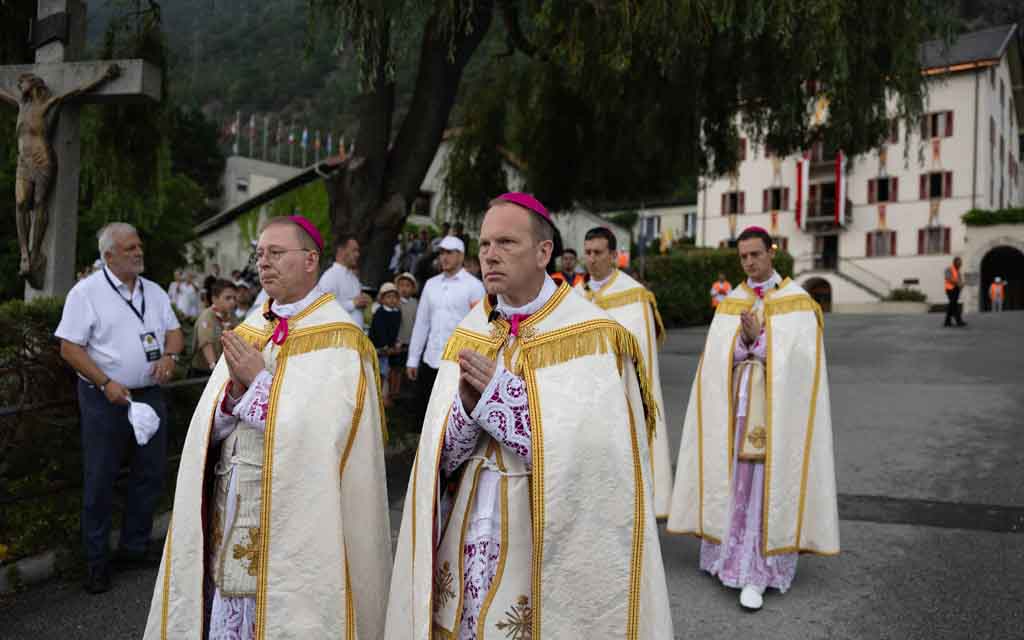
The society filed its appeal with the Dicastery for the Doctrine of the Faith on July 11, arguing that under canon law the move suspends the recent excommunication decree.
Read More
Pro-life leaders remember Sen. Lindsey Graham as longtime champion for unborn children #Catholic WASHINGTON — National pro-life organizations are remembering the late Sen. Lindsey Graham as one of the movement’s most steadfast advocates, praising his decades-long legislative efforts to protect unborn children and pledging to continue the work he championed.Following news of Graham’s death, leaders from Susan B. Anthony Pro-Life America, National Right to Life, and other pro-life groups reflected on the South Carolina Republican’s legacy, highlighting his willingness to pursue federal protections for unborn children even when such efforts faced political opposition.Graham’s sister, Darline Graham Nordone, has been named to hold his Senate seat temporarily to fulfill the remainder of his term.Among those paying tribute was Susan B. Anthony Pro-Life America, which worked closely with Graham on federal abortion legislation.“Lindsey Graham was an unwavering pro-life champion and a friend,” SBA Pro-Life America President Marjorie Dannenfelser said in a statement. “A man of vision and tenacity, he gave wise counsel and advocacy in countless difficult moments fighting for the rights of the unborn child.”“Sen. Graham never retreated from the fight for the unborn,” Kelsey Pritchard, communications director for Susan B. Anthony Pro-Life America, told Veronica Dudo in an interview with “EWTN News Nightly.” “He always would run into battle, even when no one else would.”Pritchard pointed to Graham’s role in efforts to defund Planned Parenthood, his advocacy on abortion pill regulations, and his repeated calls for national protections for unborn children.Legacy of federal pro-life advocacyFollowing the Supreme Court’s 2022 Dobbs v. Jackson Women’s Health Organization decision, Graham became one of the leading congressional voices arguing that the federal government still had a responsibility to protect unborn children, introducing legislation to establish nationwide abortion limits.Pritchard said one of the movement’s top priorities remains ending the policy permitting abortion drugs to be prescribed through telehealth and mailed without an in-person physician visit.She noted that Graham was instrumental in organizing a letter signed by 51 senators urging the administration to rescind the policy.“Lindsey Graham was so influential on that front,” Pritchard said. “We’ll be continuing that work in the days ahead.”In a statement issued following Graham’s death, National Right to Life also honored Graham’s decades of advocacy, calling him “one of the most influential and steadfast champions of unborn children ever to serve in the United States Congress.”“The pro-life movement has lost one of its greatest champions,” National Right to Life President Carol Tobias said. “Throughout his career, Lindsey Graham never wavered in his conviction that every innocent human life has inherent dignity and deserves the protection of the law.”Graham’s office noted his role in passing a law enacted in 2004 that recognizes an unborn child as a separate victim in certain federal crimes. It also pointed to his years of introducing legislation to protect pain-capable unborn children from abortion and his advocacy for federal protections following the 2022 Dobbs decision.South Carolina Citizens for Life Executive Director Holly Gatling called Graham “a great defender” of the right to life, saying “the unborn, their mothers, and the medically vulnerable members of our human family had a great defender in Sen. Graham.”Carrying forward Graham’s legacyFor Pritchard, Graham’s lasting legacy extends beyond legislation.“We hope that they remember that he was such a cheerful warrior, someone with a great sense of humor and someone who never backed down,” she told “EWTN News Nightly.” “He said we should never apologize for standing up for the unborn.”“There will be no replacements for Lindsey Graham, that’s for sure,” she added. “But we hope and pray there will be many people who follow his example and continue the fight for babies and moms.”

Pro-life leaders remember Sen. Lindsey Graham as longtime champion for unborn children #Catholic WASHINGTON — National pro-life organizations are remembering the late Sen. Lindsey Graham as one of the movement’s most steadfast advocates, praising his decades-long legislative efforts to protect unborn children and pledging to continue the work he championed.Following news of Graham’s death, leaders from Susan B. Anthony Pro-Life America, National Right to Life, and other pro-life groups reflected on the South Carolina Republican’s legacy, highlighting his willingness to pursue federal protections for unborn children even when such efforts faced political opposition.Graham’s sister, Darline Graham Nordone, has been named to hold his Senate seat temporarily to fulfill the remainder of his term.Among those paying tribute was Susan B. Anthony Pro-Life America, which worked closely with Graham on federal abortion legislation.“Lindsey Graham was an unwavering pro-life champion and a friend,” SBA Pro-Life America President Marjorie Dannenfelser said in a statement. “A man of vision and tenacity, he gave wise counsel and advocacy in countless difficult moments fighting for the rights of the unborn child.”“Sen. Graham never retreated from the fight for the unborn,” Kelsey Pritchard, communications director for Susan B. Anthony Pro-Life America, told Veronica Dudo in an interview with “EWTN News Nightly.” “He always would run into battle, even when no one else would.”Pritchard pointed to Graham’s role in efforts to defund Planned Parenthood, his advocacy on abortion pill regulations, and his repeated calls for national protections for unborn children.Legacy of federal pro-life advocacyFollowing the Supreme Court’s 2022 Dobbs v. Jackson Women’s Health Organization decision, Graham became one of the leading congressional voices arguing that the federal government still had a responsibility to protect unborn children, introducing legislation to establish nationwide abortion limits.Pritchard said one of the movement’s top priorities remains ending the policy permitting abortion drugs to be prescribed through telehealth and mailed without an in-person physician visit.She noted that Graham was instrumental in organizing a letter signed by 51 senators urging the administration to rescind the policy.“Lindsey Graham was so influential on that front,” Pritchard said. “We’ll be continuing that work in the days ahead.”In a statement issued following Graham’s death, National Right to Life also honored Graham’s decades of advocacy, calling him “one of the most influential and steadfast champions of unborn children ever to serve in the United States Congress.”“The pro-life movement has lost one of its greatest champions,” National Right to Life President Carol Tobias said. “Throughout his career, Lindsey Graham never wavered in his conviction that every innocent human life has inherent dignity and deserves the protection of the law.”Graham’s office noted his role in passing a law enacted in 2004 that recognizes an unborn child as a separate victim in certain federal crimes. It also pointed to his years of introducing legislation to protect pain-capable unborn children from abortion and his advocacy for federal protections following the 2022 Dobbs decision.South Carolina Citizens for Life Executive Director Holly Gatling called Graham “a great defender” of the right to life, saying “the unborn, their mothers, and the medically vulnerable members of our human family had a great defender in Sen. Graham.”Carrying forward Graham’s legacyFor Pritchard, Graham’s lasting legacy extends beyond legislation.“We hope that they remember that he was such a cheerful warrior, someone with a great sense of humor and someone who never backed down,” she told “EWTN News Nightly.” “He said we should never apologize for standing up for the unborn.”“There will be no replacements for Lindsey Graham, that’s for sure,” she added. “But we hope and pray there will be many people who follow his example and continue the fight for babies and moms.”

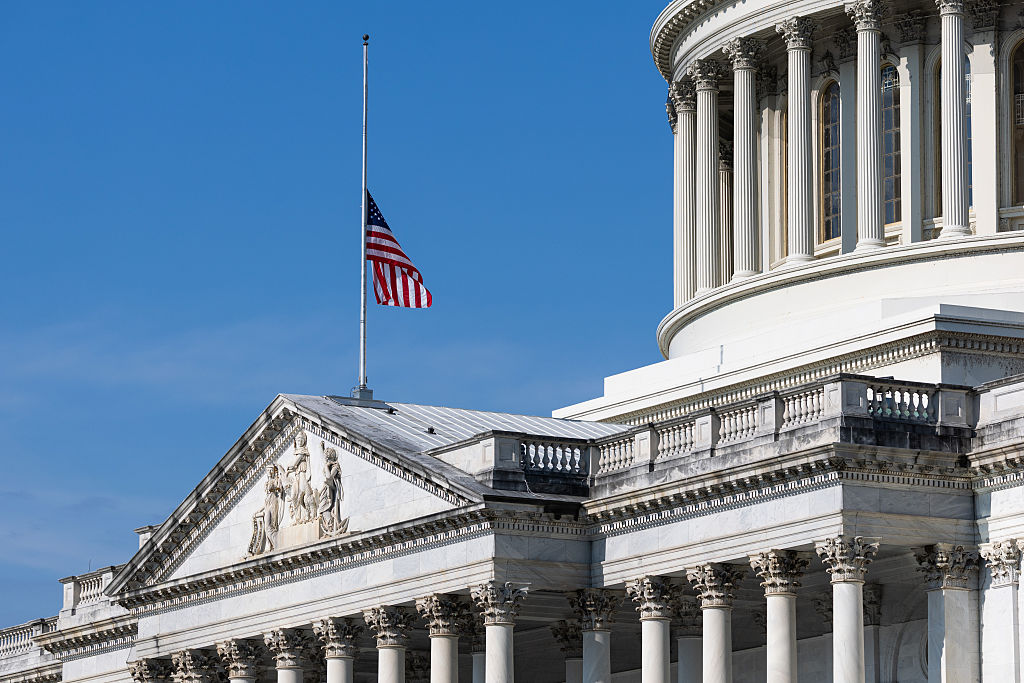
Graham, 71, died on July 11, and pro-life groups pledged to continue legislative efforts he supported.
Read More