Results

Border czar says Catholic leaders should ‘support’ safety #Catholic 
 
 Trump administration Border Czar Tom Homan interviewed on "The World Over with Raymond Arroyo" on Dec. 11, 2025. / Credit: EWTN News "The World Over with Raymond Arroyo"/Screenshot

Washington, D.C. Newsroom, Dec 12, 2025 / 07:00 am (CNA).
U.S. border czar Tom Homan said “the Catholic Church should support keeping the community safe” through a secure border and immigration enforcement. In an interview on “The World Over with Raymond Arroyo” on Thursday, Homan discussed President Donald Trump’s mass deportation policy and immigration enforcement.   “As President Trump promised on day one, we’re going to enforce immigration law,” Homan said. “That’s what he was voted into office to do, and that’s what we’re doing. We’re going to keep this promise to the American people.”“We’re going to prioritize public safety threats and national security threats,” Homan said. “The majority of people we arrest … have a criminal history. But also, like I’ve said from day one, if you’re in the country illegally, you’re not off the table.”Data on detainees’ criminal history is disputed. A Cato Institute report in November said 5% of people detained by ICE have violent convictions, and 73% had no convictions. Other analyses of deportation data also have shown a lower incidence of people arrested with prior criminal convictions.“Many people who’ve lived for years and years and years, never causing problems, have been deeply affected by what’s going on right now,” Pope Leo XIV said Nov. 4.Since President Trump began his second term, there have been about 600,000 deportations, Homan said. He added: The “results have been outstanding.”Family separationDuring the Biden administration, “just about a half a million children were smuggled into the country, separated from their families, put in the hands of criminal cartels,” Homan said. Homan said the administration has located tens of thousands of children during deportation operations.During the first two years of Trump’s first administration, U.S. authorities separated over 5,000 children from their parents at the U.S.-Mexico border, before ending the practice. In 2021, the Biden administration created a family reunification task force, and a federal judge ruled that border officials cannot use family separation as a deterrence tactic through 2031. Under the second Trump administration, enforcement actions have caused family separations through detentions.Homan told Arroyo: “President Trump promised from day one that we’re going to find these children because the last administration, even though half a million came across, they lost track of 300,000. They couldn’t find them. They weren’t responding to inquiries and their check-ins.”As of Dec. 5 there were 62,456 children “the Trump administration already found,” Homan reported.  “Some of these children were safe and with family. They’re just hiding out because they don’t want to be deported. But many of these children, and one is too many, we found were either in forced labor or forced sexual slavery. Some of these children are in really, really bad conditions,” Homan said.“About half that, 300,000, according to records, have already aged out, which means they’re over 18 already. But … we’re still going to try to locate them … We’re going to do everything we can till the last day of this administration to find these kids. Personally, I’ll do everything I can until I take my last breath on this Earth to find these kids,” Homan said.Carrying out deportations as a CatholicThe United States Conference of Catholic Bishops (USCCB) expressed concern “about the conditions in detention centers and the lack of access to pastoral care.” They wrote: “Human dignity and national security are not in conflict.” When asked how he reconciles bishops’ comments on immigration enforcement with his faith and duties, Homan said he is “willing to sit down with anybody in the Catholic Church and talk about it.”When Catholic leaders “talk about why these laws shouldn’t be enforced … they need to understand, if we don’t enforce laws, what message does that send to the world?” Homan said. He says it sends the message: “Cross the border. It’s illegal, but don’t worry about it.”People need to understand “a border wall saves lives,” Homan said. “I would ask the Catholic leadership, go talk to the hundreds of… moms and dads that have buried their children because their children were killed by someone that wasn’t supposed to be here.”During Biden’s presidency, Homan said “a record number of Americans died from fentanyl because that border was wide open … Hundreds of thousands of Americans died from a drug that came across an open border.”He said a “record number of people from terrorist-related countries” entered the country and said there was “historic increase in sex trafficking of women and children because enforcement was removed from the border.”“Over 4,000 aliens died making that journey, because we sent a message that there’s no consequences here,” Homan said. Response to Catholic leadershipThe USCCB through remarks and messages has called for humane treatment of migrants. In response, Homan said: “We treat everybody with dignity.” Bishops also stated their opposition to “the indiscriminate mass deportation of people.”Homan said: “When you come across the border illegally, not only is it a crime, but you’re cheating the system.”“There are millions of people, millions that are standing in line, taking their test, doing the background investigation, paying their fees to be part of the greatest nation on Earth,” Homan said.“The most humane thing you can do is enforce the law, secure the border, because it saves lives. The Catholic Church should support keeping the community safe again. But I’m saying this, if you’re in the country legally, it’s not OK. Illegal migration is not a victimless crime. I wish Catholic leadership would go with me. Take a border trip with me,” Homan said.“Look at some of the investigations I do. Wear my shoes … You may not agree with me 100% in the end, but you will certainly understand the importance of border security,” Homan said.

Border czar says Catholic leaders should ‘support’ safety #Catholic Trump administration Border Czar Tom Homan interviewed on "The World Over with Raymond Arroyo" on Dec. 11, 2025. / Credit: EWTN News "The World Over with Raymond Arroyo"/Screenshot Washington, D.C. Newsroom, Dec 12, 2025 / 07:00 am (CNA). U.S. border czar Tom Homan said “the Catholic Church should support keeping the community safe” through a secure border and immigration enforcement. In an interview on “The World Over with Raymond Arroyo” on Thursday, Homan discussed President Donald Trump’s mass deportation policy and immigration enforcement.   “As President Trump promised on day one, we’re going to enforce immigration law,” Homan said. “That’s what he was voted into office to do, and that’s what we’re doing. We’re going to keep this promise to the American people.”“We’re going to prioritize public safety threats and national security threats,” Homan said. “The majority of people we arrest … have a criminal history. But also, like I’ve said from day one, if you’re in the country illegally, you’re not off the table.”Data on detainees’ criminal history is disputed. A Cato Institute report in November said 5% of people detained by ICE have violent convictions, and 73% had no convictions. Other analyses of deportation data also have shown a lower incidence of people arrested with prior criminal convictions.“Many people who’ve lived for years and years and years, never causing problems, have been deeply affected by what’s going on right now,” Pope Leo XIV said Nov. 4.Since President Trump began his second term, there have been about 600,000 deportations, Homan said. He added: The “results have been outstanding.”Family separationDuring the Biden administration, “just about a half a million children were smuggled into the country, separated from their families, put in the hands of criminal cartels,” Homan said. Homan said the administration has located tens of thousands of children during deportation operations.During the first two years of Trump’s first administration, U.S. authorities separated over 5,000 children from their parents at the U.S.-Mexico border, before ending the practice. In 2021, the Biden administration created a family reunification task force, and a federal judge ruled that border officials cannot use family separation as a deterrence tactic through 2031. Under the second Trump administration, enforcement actions have caused family separations through detentions.Homan told Arroyo: “President Trump promised from day one that we’re going to find these children because the last administration, even though half a million came across, they lost track of 300,000. They couldn’t find them. They weren’t responding to inquiries and their check-ins.”As of Dec. 5 there were 62,456 children “the Trump administration already found,” Homan reported.  “Some of these children were safe and with family. They’re just hiding out because they don’t want to be deported. But many of these children, and one is too many, we found were either in forced labor or forced sexual slavery. Some of these children are in really, really bad conditions,” Homan said.“About half that, 300,000, according to records, have already aged out, which means they’re over 18 already. But … we’re still going to try to locate them … We’re going to do everything we can till the last day of this administration to find these kids. Personally, I’ll do everything I can until I take my last breath on this Earth to find these kids,” Homan said.Carrying out deportations as a CatholicThe United States Conference of Catholic Bishops (USCCB) expressed concern “about the conditions in detention centers and the lack of access to pastoral care.” They wrote: “Human dignity and national security are not in conflict.” When asked how he reconciles bishops’ comments on immigration enforcement with his faith and duties, Homan said he is “willing to sit down with anybody in the Catholic Church and talk about it.”When Catholic leaders “talk about why these laws shouldn’t be enforced … they need to understand, if we don’t enforce laws, what message does that send to the world?” Homan said. He says it sends the message: “Cross the border. It’s illegal, but don’t worry about it.”People need to understand “a border wall saves lives,” Homan said. “I would ask the Catholic leadership, go talk to the hundreds of… moms and dads that have buried their children because their children were killed by someone that wasn’t supposed to be here.”During Biden’s presidency, Homan said “a record number of Americans died from fentanyl because that border was wide open … Hundreds of thousands of Americans died from a drug that came across an open border.”He said a “record number of people from terrorist-related countries” entered the country and said there was “historic increase in sex trafficking of women and children because enforcement was removed from the border.”“Over 4,000 aliens died making that journey, because we sent a message that there’s no consequences here,” Homan said. Response to Catholic leadershipThe USCCB through remarks and messages has called for humane treatment of migrants. In response, Homan said: “We treat everybody with dignity.” Bishops also stated their opposition to “the indiscriminate mass deportation of people.”Homan said: “When you come across the border illegally, not only is it a crime, but you’re cheating the system.”“There are millions of people, millions that are standing in line, taking their test, doing the background investigation, paying their fees to be part of the greatest nation on Earth,” Homan said.“The most humane thing you can do is enforce the law, secure the border, because it saves lives. The Catholic Church should support keeping the community safe again. But I’m saying this, if you’re in the country legally, it’s not OK. Illegal migration is not a victimless crime. I wish Catholic leadership would go with me. Take a border trip with me,” Homan said.“Look at some of the investigations I do. Wear my shoes … You may not agree with me 100% in the end, but you will certainly understand the importance of border security,” Homan said.


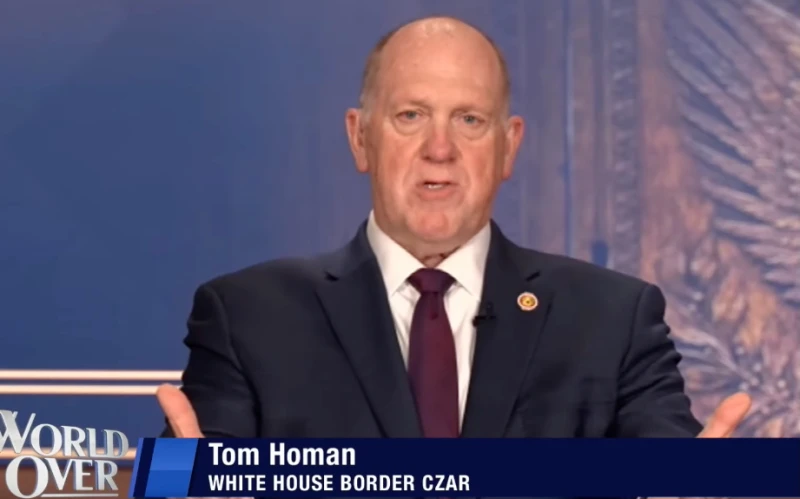
Trump administration Border Czar Tom Homan interviewed on "The World Over with Raymond Arroyo" on Dec. 11, 2025. / Credit: EWTN News "The World Over with Raymond Arroyo"/Screenshot

Washington, D.C. Newsroom, Dec 12, 2025 / 07:00 am (CNA).

U.S. border czar Tom Homan said “the Catholic Church should support keeping the community safe” through a secure border and immigration enforcement. 

In an interview on “The World Over with Raymond Arroyo” on Thursday, Homan discussed President Donald Trump’s mass deportation policy and immigration enforcement.   

“As President Trump promised on day one, we’re going to enforce immigration law,” Homan said. “That’s what he was voted into office to do, and that’s what we’re doing. We’re going to keep this promise to the American people.”

“We’re going to prioritize public safety threats and national security threats,” Homan said. “The majority of people we arrest … have a criminal history. But also, like I’ve said from day one, if you’re in the country illegally, you’re not off the table.”

Data on detainees’ criminal history is disputed. A Cato Institute report in November said 5% of people detained by ICE have violent convictions, and 73% had no convictions. Other analyses of deportation data also have shown a lower incidence of people arrested with prior criminal convictions.

“Many people who’ve lived for years and years and years, never causing problems, have been deeply affected by what’s going on right now,” Pope Leo XIV said Nov. 4.

Since President Trump began his second term, there have been about 600,000 deportations, Homan said. He added: The “results have been outstanding.”

Family separation

During the Biden administration, “just about a half a million children were smuggled into the country, separated from their families, put in the hands of criminal cartels,” Homan said. Homan said the administration has located tens of thousands of children during deportation operations.

During the first two years of Trump’s first administration, U.S. authorities separated over 5,000 children from their parents at the U.S.-Mexico border, before ending the practice. In 2021, the Biden administration created a family reunification task force, and a federal judge ruled that border officials cannot use family separation as a deterrence tactic through 2031. 

Under the second Trump administration, enforcement actions have caused family separations through detentions.

Homan told Arroyo: “President Trump promised from day one that we’re going to find these children because the last administration, even though half a million came across, they lost track of 300,000. They couldn’t find them. They weren’t responding to inquiries and their check-ins.”

As of Dec. 5 there were 62,456 children “the Trump administration already found,” Homan reported.  

“Some of these children were safe and with family. They’re just hiding out because they don’t want to be deported. But many of these children, and one is too many, we found were either in forced labor or forced sexual slavery. Some of these children are in really, really bad conditions,” Homan said.

“About half that, 300,000, according to records, have already aged out, which means they’re over 18 already. But … we’re still going to try to locate them … We’re going to do everything we can till the last day of this administration to find these kids. Personally, I’ll do everything I can until I take my last breath on this Earth to find these kids,” Homan said.

Carrying out deportations as a Catholic

The United States Conference of Catholic Bishops (USCCB) expressed concern “about the conditions in detention centers and the lack of access to pastoral care.” They wrote: “Human dignity and national security are not in conflict.” 

When asked how he reconciles bishops’ comments on immigration enforcement with his faith and duties, Homan said he is “willing to sit down with anybody in the Catholic Church and talk about it.”

When Catholic leaders “talk about why these laws shouldn’t be enforced … they need to understand, if we don’t enforce laws, what message does that send to the world?” Homan said. He says it sends the message: “Cross the border. It’s illegal, but don’t worry about it.”

People need to understand “a border wall saves lives,” Homan said. “I would ask the Catholic leadership, go talk to the hundreds of… moms and dads that have buried their children because their children were killed by someone that wasn’t supposed to be here.”

During Biden’s presidency, Homan said “a record number of Americans died from fentanyl because that border was wide open … Hundreds of thousands of Americans died from a drug that came across an open border.”

He said a “record number of people from terrorist-related countries” entered the country and said there was “historic increase in sex trafficking of women and children because enforcement was removed from the border.”

“Over 4,000 aliens died making that journey, because we sent a message that there’s no consequences here,” Homan said. 

Response to Catholic leadership

The USCCB through remarks and messages has called for humane treatment of migrants. In response, Homan said: “We treat everybody with dignity.” 

Bishops also stated their opposition to “the indiscriminate mass deportation of people.”

Homan said: “When you come across the border illegally, not only is it a crime, but you’re cheating the system.”

“There are millions of people, millions that are standing in line, taking their test, doing the background investigation, paying their fees to be part of the greatest nation on Earth,” Homan said.

“The most humane thing you can do is enforce the law, secure the border, because it saves lives. The Catholic Church should support keeping the community safe again. But I’m saying this, if you’re in the country legally, it’s not OK. Illegal migration is not a victimless crime. I wish Catholic leadership would go with me. Take a border trip with me,” Homan said.

“Look at some of the investigations I do. Wear my shoes … You may not agree with me 100% in the end, but you will certainly understand the importance of border security,” Homan said.

Read More
Notre Dame drops ‘acceptance and support for Catholic mission’ from staff values #Catholic 
 
 The University of Notre Dame. / Credit: Matt B. via Flickr (CC BY-NC-SA 2.0)

Washington, D.C. Newsroom, Nov 16, 2025 / 07:00 am (CNA).
Here’s a roundup of the latest Catholic education news in the United States:Notre Dame drops ‘acceptance and support for Catholic mission’ from staff values The University of Notre Dame has dropped acceptance and support for its Catholic mission from the list of staff values it has held for the past 20 years. The university’s leadership announced new updates to its staff values at its Fall 2025 Staff Town Halls on Oct. 29 and 30, according to a press release. Human Resources President Heather Christophersen said the new values were “an expression of how we seek to advance Notre Dame’s mission as a global, Catholic research university.”Prior to the change, Notre Dame’s staff values were as follows: — Accountability: Takes responsibility and ownership for decisions, actions, and results. Accountable for both how and what is accomplished— Teamwork: Works cooperatively as a member of a team and is committed to the overall team objectives rather than own interests— Integrity: Demonstrates honest and ethical behavior that displays a high moral standard. Widely trusted, respectful, and honorable— Leadership in Excellence: Demonstrates energy and commitment to improving results, takes initiatives often involving calculated risks while considering the common good— Leadership in Mission: Understands, accepts, and supports the Catholic mission of the university and fosters values consistent with that missionThe new and pared down values and their descriptions are: — Community: Treat every person with dignity and respect.— Collaboration: Work together with honesty, kindness, and humility.— Excellence: Pursue the highest standards with a commitment to truth and service.— Innovation: Embrace opportunities with creativity and dedication.According to the Notre Dame Observer, Christophersen said in an email to staff that the former Notre Dame values “had only one value that pointed into mission” and that the decision to remove the “Leadership in Mission” value was motivated by a desire to reframe the school’s Catholic mission as all-encompassing. She said the old values had caused confusion in staff evaluation processes during annual performance reviews and that the school does not monitor religious affiliation for staff in the same way as faculty and students. Notre Dame did not return multiple requests for comment.University of St. Francis and Belleville Diocese announce student admission partnershipThe University of St. Francis (USF) and the Diocese of Belleville, Illinois, have announced a new partnership guaranteeing admission for diocesan high school graduates. Students from Althoff Catholic High School, Mater Dei Catholic High School, and Gibault Catholic High School will have guaranteed admission at the university as well as the opportunity to earn scholarships of up to ,000. “We are so pleased with this partnership and look forward to welcoming students from the Catholic high schools within the Belleville Diocese,” University of St. Francis President Ryan C. Hendrickson said in a press release announcing the partnership. “In addition to the guaranteed admission, USF plans to host workshops and information sessions for diocese-based school counselors, teachers, parents, and prospective students. USF will also offer campus visitation days, facilitating exploration and engagement with the diocese schools,” the release stated.Archdiocese of Hartford to open 2 new Catholic schools amid Mass attendance boom The Archdiocese of Hartford, Connecticut, will open two new Catholic schools next year as Mass attendance and renewed interest in the faith continues to rise. “A lot of the decisions that are being made in the public-school systems are not decisions that a lot of people find easy to hold, and they’re looking for places where they could just find a little bit less politics,” Archbishop Christopher Coyne said, emphasizing the important role of Catholic schools in this environment, according to a local report. Coyne said elsewhere that the new school openings come amid “a great reversal of the downward trends we experienced before and during COVID.”One of the schools, Chesterton Academy of St. Francis of Assisi, will accept ninth and 10th grade students in fall 2026. The other school, the Catholic Academy of Hartford, will accept pre-K through second graders starting in the fall, adding a grade each year until it reaches the eighth grade. The school will operate on an income-based tuition model. St. Anselm College announces reception of  million gift St. Anselm College, a Benedictine liberal arts school in New Hampshire, announced a  million gift, the largest donation in the school’s 136-year history. The gift was from Robert and Beverly Grappone, whose son, Greg, graduated from the college in 2004 and passed away from cancer at the age of 35. “While many colleges and universities are struggling in a challenging higher education environment, St. Anselm is fortunate to have a different story,” the college said in a press release announcing the historic gift. “The college has seen enrollment growth over the last four years, increasing each year since the post-COVID class. This year’s incoming freshmen class set a record with 647 students. The college has a retention rate of 90%.”The gift includes  million designated for the school of business, which will be named the Robert J. Grappone School of Business and Innovation, a  million endowment to the Grappone Humanities Institute, and “multimillion dollar renovations” to the school’s residence halls, support for the athletic complex, an endowment for the school’s nursing program, scholarships, and further campus improvements.

Notre Dame drops ‘acceptance and support for Catholic mission’ from staff values #Catholic The University of Notre Dame. / Credit: Matt B. via Flickr (CC BY-NC-SA 2.0) Washington, D.C. Newsroom, Nov 16, 2025 / 07:00 am (CNA). Here’s a roundup of the latest Catholic education news in the United States:Notre Dame drops ‘acceptance and support for Catholic mission’ from staff values The University of Notre Dame has dropped acceptance and support for its Catholic mission from the list of staff values it has held for the past 20 years. The university’s leadership announced new updates to its staff values at its Fall 2025 Staff Town Halls on Oct. 29 and 30, according to a press release. Human Resources President Heather Christophersen said the new values were “an expression of how we seek to advance Notre Dame’s mission as a global, Catholic research university.”Prior to the change, Notre Dame’s staff values were as follows: — Accountability: Takes responsibility and ownership for decisions, actions, and results. Accountable for both how and what is accomplished— Teamwork: Works cooperatively as a member of a team and is committed to the overall team objectives rather than own interests— Integrity: Demonstrates honest and ethical behavior that displays a high moral standard. Widely trusted, respectful, and honorable— Leadership in Excellence: Demonstrates energy and commitment to improving results, takes initiatives often involving calculated risks while considering the common good— Leadership in Mission: Understands, accepts, and supports the Catholic mission of the university and fosters values consistent with that missionThe new and pared down values and their descriptions are: — Community: Treat every person with dignity and respect.— Collaboration: Work together with honesty, kindness, and humility.— Excellence: Pursue the highest standards with a commitment to truth and service.— Innovation: Embrace opportunities with creativity and dedication.According to the Notre Dame Observer, Christophersen said in an email to staff that the former Notre Dame values “had only one value that pointed into mission” and that the decision to remove the “Leadership in Mission” value was motivated by a desire to reframe the school’s Catholic mission as all-encompassing. She said the old values had caused confusion in staff evaluation processes during annual performance reviews and that the school does not monitor religious affiliation for staff in the same way as faculty and students. Notre Dame did not return multiple requests for comment.University of St. Francis and Belleville Diocese announce student admission partnershipThe University of St. Francis (USF) and the Diocese of Belleville, Illinois, have announced a new partnership guaranteeing admission for diocesan high school graduates. Students from Althoff Catholic High School, Mater Dei Catholic High School, and Gibault Catholic High School will have guaranteed admission at the university as well as the opportunity to earn scholarships of up to $3,000. “We are so pleased with this partnership and look forward to welcoming students from the Catholic high schools within the Belleville Diocese,” University of St. Francis President Ryan C. Hendrickson said in a press release announcing the partnership. “In addition to the guaranteed admission, USF plans to host workshops and information sessions for diocese-based school counselors, teachers, parents, and prospective students. USF will also offer campus visitation days, facilitating exploration and engagement with the diocese schools,” the release stated.Archdiocese of Hartford to open 2 new Catholic schools amid Mass attendance boom The Archdiocese of Hartford, Connecticut, will open two new Catholic schools next year as Mass attendance and renewed interest in the faith continues to rise. “A lot of the decisions that are being made in the public-school systems are not decisions that a lot of people find easy to hold, and they’re looking for places where they could just find a little bit less politics,” Archbishop Christopher Coyne said, emphasizing the important role of Catholic schools in this environment, according to a local report. Coyne said elsewhere that the new school openings come amid “a great reversal of the downward trends we experienced before and during COVID.”One of the schools, Chesterton Academy of St. Francis of Assisi, will accept ninth and 10th grade students in fall 2026. The other school, the Catholic Academy of Hartford, will accept pre-K through second graders starting in the fall, adding a grade each year until it reaches the eighth grade. The school will operate on an income-based tuition model. St. Anselm College announces reception of $40 million gift St. Anselm College, a Benedictine liberal arts school in New Hampshire, announced a $40 million gift, the largest donation in the school’s 136-year history. The gift was from Robert and Beverly Grappone, whose son, Greg, graduated from the college in 2004 and passed away from cancer at the age of 35. “While many colleges and universities are struggling in a challenging higher education environment, St. Anselm is fortunate to have a different story,” the college said in a press release announcing the historic gift. “The college has seen enrollment growth over the last four years, increasing each year since the post-COVID class. This year’s incoming freshmen class set a record with 647 students. The college has a retention rate of 90%.”The gift includes $11 million designated for the school of business, which will be named the Robert J. Grappone School of Business and Innovation, a $5 million endowment to the Grappone Humanities Institute, and “multimillion dollar renovations” to the school’s residence halls, support for the athletic complex, an endowment for the school’s nursing program, scholarships, and further campus improvements.


The University of Notre Dame. / Credit: Matt B. via Flickr (CC BY-NC-SA 2.0)

Washington, D.C. Newsroom, Nov 16, 2025 / 07:00 am (CNA).

Here’s a roundup of the latest Catholic education news in the United States:

Notre Dame drops ‘acceptance and support for Catholic mission’ from staff values 

The University of Notre Dame has dropped acceptance and support for its Catholic mission from the list of staff values it has held for the past 20 years. 

The university’s leadership announced new updates to its staff values at its Fall 2025 Staff Town Halls on Oct. 29 and 30, according to a press release. Human Resources President Heather Christophersen said the new values were “an expression of how we seek to advance Notre Dame’s mission as a global, Catholic research university.”

Prior to the change, Notre Dame’s staff values were as follows: 

— Accountability: Takes responsibility and ownership for decisions, actions, and results. Accountable for both how and what is accomplished

— Teamwork: Works cooperatively as a member of a team and is committed to the overall team objectives rather than own interests

— Integrity: Demonstrates honest and ethical behavior that displays a high moral standard. Widely trusted, respectful, and honorable

— Leadership in Excellence: Demonstrates energy and commitment to improving results, takes initiatives often involving calculated risks while considering the common good

— Leadership in Mission: Understands, accepts, and supports the Catholic mission of the university and fosters values consistent with that mission

The new and pared down values and their descriptions are: 

— Community: Treat every person with dignity and respect.

— Collaboration: Work together with honesty, kindness, and humility.

— Excellence: Pursue the highest standards with a commitment to truth and service.

— Innovation: Embrace opportunities with creativity and dedication.

According to the Notre Dame Observer, Christophersen said in an email to staff that the former Notre Dame values “had only one value that pointed into mission” and that the decision to remove the “Leadership in Mission” value was motivated by a desire to reframe the school’s Catholic mission as all-encompassing. She said the old values had caused confusion in staff evaluation processes during annual performance reviews and that the school does not monitor religious affiliation for staff in the same way as faculty and students. 

Notre Dame did not return multiple requests for comment.

University of St. Francis and Belleville Diocese announce student admission partnership

The University of St. Francis (USF) and the Diocese of Belleville, Illinois, have announced a new partnership guaranteeing admission for diocesan high school graduates. 

Students from Althoff Catholic High School, Mater Dei Catholic High School, and Gibault Catholic High School will have guaranteed admission at the university as well as the opportunity to earn scholarships of up to $3,000. 

“We are so pleased with this partnership and look forward to welcoming students from the Catholic high schools within the Belleville Diocese,” University of St. Francis President Ryan C. Hendrickson said in a press release announcing the partnership. 

“In addition to the guaranteed admission, USF plans to host workshops and information sessions for diocese-based school counselors, teachers, parents, and prospective students. USF will also offer campus visitation days, facilitating exploration and engagement with the diocese schools,” the release stated.

Archdiocese of Hartford to open 2 new Catholic schools amid Mass attendance boom 

The Archdiocese of Hartford, Connecticut, will open two new Catholic schools next year as Mass attendance and renewed interest in the faith continues to rise. 

“A lot of the decisions that are being made in the public-school systems are not decisions that a lot of people find easy to hold, and they’re looking for places where they could just find a little bit less politics,” Archbishop Christopher Coyne said, emphasizing the important role of Catholic schools in this environment, according to a local report. Coyne said elsewhere that the new school openings come amid “a great reversal of the downward trends we experienced before and during COVID.”

One of the schools, Chesterton Academy of St. Francis of Assisi, will accept ninth and 10th grade students in fall 2026. The other school, the Catholic Academy of Hartford, will accept pre-K through second graders starting in the fall, adding a grade each year until it reaches the eighth grade. The school will operate on an income-based tuition model. 

St. Anselm College announces reception of $40 million gift 

St. Anselm College, a Benedictine liberal arts school in New Hampshire, announced a $40 million gift, the largest donation in the school’s 136-year history. 

The gift was from Robert and Beverly Grappone, whose son, Greg, graduated from the college in 2004 and passed away from cancer at the age of 35. “While many colleges and universities are struggling in a challenging higher education environment, St. Anselm is fortunate to have a different story,” the college said in a press release announcing the historic gift. “The college has seen enrollment growth over the last four years, increasing each year since the post-COVID class. This year’s incoming freshmen class set a record with 647 students. The college has a retention rate of 90%.”

The gift includes $11 million designated for the school of business, which will be named the Robert J. Grappone School of Business and Innovation, a $5 million endowment to the Grappone Humanities Institute, and “multimillion dollar renovations” to the school’s residence halls, support for the athletic complex, an endowment for the school’s nursing program, scholarships, and further campus improvements.

Read More
CatholicVote report examines moral implications of immigration enforcement #Catholic 
 
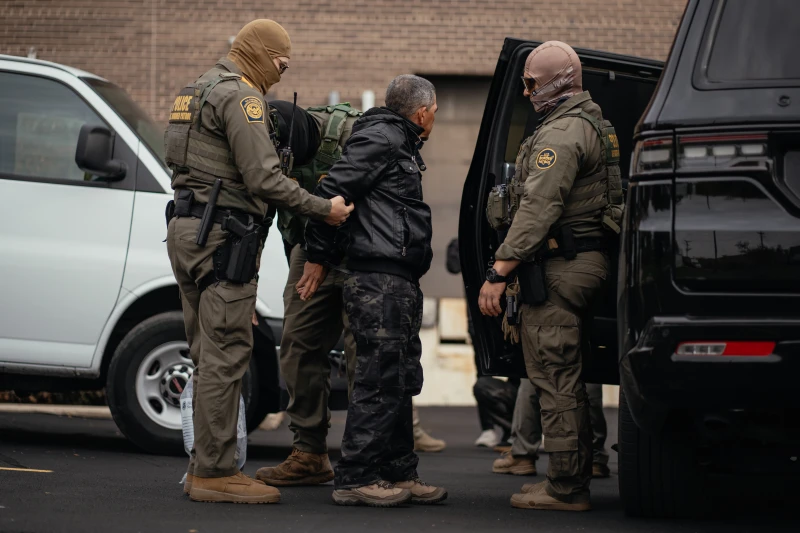
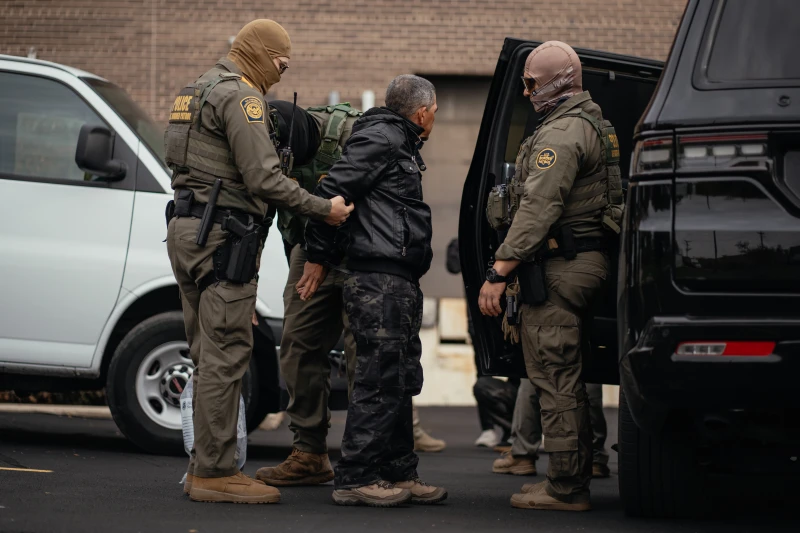
 A person detained is taken to a parking lot on the far north side of the city before being transferred to an Immigration and Customs Enforcement facility in Chicago on Oct. 31, 2025. / Credit: Jamie Kelter Davis/Getty Images

Washington, D.C. Newsroom, Nov 13, 2025 / 18:26 pm (CNA).
The Catholic advocacy organization CatholicVote has released a report examining the Trump administration’s immigration enforcement efforts, concluding Christians must balance charity toward the immigrant with the common good of the receiving state.The report, titled “Immigration Enforcement and the Christian Conscience,” comes on the heels of the special message on immigration released by the U.S. Conference of Catholic Bishops (USCCB) at its fall plenary meeting this past week. “A faithful Catholic approach to immigration begins not with politics but with people. Compassion, hospitality, and solidarity with the poor are not optional virtues,” CatholicVote President and CEO Kelsey Reinhardt said in a press release accompanying the report. “They are at the center of the Gospel,” she added. “Yet, mercy and justice travel together. One without the other distorts both.”The report by author Benjamin Mann labels the Biden administration’s border policies as “reckless” and credits them for resulting in human trafficking, sexual exploitation of immigrants without legal status, and rampant drug cartels. “Catholics who advocate strong but humane immigration enforcement are sometimes accused of disobeying their bishops or the pope, and even violating Church teaching,” the report states. “Properly speaking, there is no such thing as an official ‘Catholic position’ on the practical details of immigration policy.”The report says that “despite what some Church leaders in America have indicated, a faithful Catholic can support strong and humane immigration law enforcement — by means such as physical barriers, detention, and deportation — without violating the teaching of the Church.” The report asserts that Catholic teaching on immigration has been distorted by “an ideological immigration lobby” within the Church that “has sought to present amnesty, minimal law enforcement, and more legal immigration as the only acceptable position for Catholics.” “This is not an act of disobedience or disrespect toward the Church hierarchy but a legitimate difference of opinion according to magisterial teaching,” the report says. “The truth is that faithful Catholics can certainly disagree with the anti-enforcement position — even if some bishops happen to share the policy preferences of these activists. Such disagreement is not a dissent from Church teaching,” the document continues, citing “recent popes” as having said the Catholic Church “has no ‘official position’ on the practical details of issues like immigration policy.” “Rather, our faith teaches a set of broad moral principles about immigration, and their application in public life is a matter of practical judgment for laypersons,” the report said.The CatholicVote document further argues that “it is actually immoral in the eyes of the Church for a country to accept immigrants to the detriment of its own citizens,” citing paragraph 1903 of the Catechism of the Catholic Church, which states: “Authority is exercised legitimately only when it seeks the common good of the group concerned and if it employs morally licit means to attain it. If rulers were to enact unjust laws or take measures contrary to the moral order, such arrangements would not be binding in conscience. In such a case, ‘authority breaks down completely and results in shameful abuse.’”

CatholicVote report examines moral implications of immigration enforcement #Catholic A person detained is taken to a parking lot on the far north side of the city before being transferred to an Immigration and Customs Enforcement facility in Chicago on Oct. 31, 2025. / Credit: Jamie Kelter Davis/Getty Images Washington, D.C. Newsroom, Nov 13, 2025 / 18:26 pm (CNA). The Catholic advocacy organization CatholicVote has released a report examining the Trump administration’s immigration enforcement efforts, concluding Christians must balance charity toward the immigrant with the common good of the receiving state.The report, titled “Immigration Enforcement and the Christian Conscience,” comes on the heels of the special message on immigration released by the U.S. Conference of Catholic Bishops (USCCB) at its fall plenary meeting this past week. “A faithful Catholic approach to immigration begins not with politics but with people. Compassion, hospitality, and solidarity with the poor are not optional virtues,” CatholicVote President and CEO Kelsey Reinhardt said in a press release accompanying the report. “They are at the center of the Gospel,” she added. “Yet, mercy and justice travel together. One without the other distorts both.”The report by author Benjamin Mann labels the Biden administration’s border policies as “reckless” and credits them for resulting in human trafficking, sexual exploitation of immigrants without legal status, and rampant drug cartels. “Catholics who advocate strong but humane immigration enforcement are sometimes accused of disobeying their bishops or the pope, and even violating Church teaching,” the report states. “Properly speaking, there is no such thing as an official ‘Catholic position’ on the practical details of immigration policy.”The report says that “despite what some Church leaders in America have indicated, a faithful Catholic can support strong and humane immigration law enforcement — by means such as physical barriers, detention, and deportation — without violating the teaching of the Church.” The report asserts that Catholic teaching on immigration has been distorted by “an ideological immigration lobby” within the Church that “has sought to present amnesty, minimal law enforcement, and more legal immigration as the only acceptable position for Catholics.” “This is not an act of disobedience or disrespect toward the Church hierarchy but a legitimate difference of opinion according to magisterial teaching,” the report says. “The truth is that faithful Catholics can certainly disagree with the anti-enforcement position — even if some bishops happen to share the policy preferences of these activists. Such disagreement is not a dissent from Church teaching,” the document continues, citing “recent popes” as having said the Catholic Church “has no ‘official position’ on the practical details of issues like immigration policy.” “Rather, our faith teaches a set of broad moral principles about immigration, and their application in public life is a matter of practical judgment for laypersons,” the report said.The CatholicVote document further argues that “it is actually immoral in the eyes of the Church for a country to accept immigrants to the detriment of its own citizens,” citing paragraph 1903 of the Catechism of the Catholic Church, which states: “Authority is exercised legitimately only when it seeks the common good of the group concerned and if it employs morally licit means to attain it. If rulers were to enact unjust laws or take measures contrary to the moral order, such arrangements would not be binding in conscience. In such a case, ‘authority breaks down completely and results in shameful abuse.’”


A person detained is taken to a parking lot on the far north side of the city before being transferred to an Immigration and Customs Enforcement facility in Chicago on Oct. 31, 2025. / Credit: Jamie Kelter Davis/Getty Images

Washington, D.C. Newsroom, Nov 13, 2025 / 18:26 pm (CNA).

The Catholic advocacy organization CatholicVote has released a report examining the Trump administration’s immigration enforcement efforts, concluding Christians must balance charity toward the immigrant with the common good of the receiving state.

The report, titled “Immigration Enforcement and the Christian Conscience,” comes on the heels of the special message on immigration released by the U.S. Conference of Catholic Bishops (USCCB) at its fall plenary meeting this past week. 

“A faithful Catholic approach to immigration begins not with politics but with people. Compassion, hospitality, and solidarity with the poor are not optional virtues,” CatholicVote President and CEO Kelsey Reinhardt said in a press release accompanying the report.

“They are at the center of the Gospel,” she added. “Yet, mercy and justice travel together. One without the other distorts both.”

The report by author Benjamin Mann labels the Biden administration’s border policies as “reckless” and credits them for resulting in human trafficking, sexual exploitation of immigrants without legal status, and rampant drug cartels. 

“Catholics who advocate strong but humane immigration enforcement are sometimes accused of disobeying their bishops or the pope, and even violating Church teaching,” the report states. “Properly speaking, there is no such thing as an official ‘Catholic position’ on the practical details of immigration policy.”

The report says that “despite what some Church leaders in America have indicated, a faithful Catholic can support strong and humane immigration law enforcement — by means such as physical barriers, detention, and deportation — without violating the teaching of the Church.” 

The report asserts that Catholic teaching on immigration has been distorted by “an ideological immigration lobby” within the Church that “has sought to present amnesty, minimal law enforcement, and more legal immigration as the only acceptable position for Catholics.” 

“This is not an act of disobedience or disrespect toward the Church hierarchy but a legitimate difference of opinion according to magisterial teaching,” the report says. 

“The truth is that faithful Catholics can certainly disagree with the anti-enforcement position — even if some bishops happen to share the policy preferences of these activists. Such disagreement is not a dissent from Church teaching,” the document continues, citing “recent popes” as having said the Catholic Church “has no ‘official position’ on the practical details of issues like immigration policy.” 

“Rather, our faith teaches a set of broad moral principles about immigration, and their application in public life is a matter of practical judgment for laypersons,” the report said.

The CatholicVote document further argues that “it is actually immoral in the eyes of the Church for a country to accept immigrants to the detriment of its own citizens,” citing paragraph 1903 of the Catechism of the Catholic Church, which states: “Authority is exercised legitimately only when it seeks the common good of the group concerned and if it employs morally licit means to attain it. If rulers were to enact unjust laws or take measures contrary to the moral order, such arrangements would not be binding in conscience. In such a case, ‘authority breaks down completely and results in shameful abuse.’”

Read More
‘This is our faith in action:’ Catholic groups expand food aid amid SNAP cuts #Catholic 
 
 Volunteers prepare and distribute food to families coming through the drive-through distribution site at the Catholic Charities Diocese of Galveston-Houston Guadalupe Center, a food pantry near central Houston. / Credit: Photo courtesy of Catholic Charities of the Archdiocese of Galveston-Houston

CNA Staff, Nov 7, 2025 / 17:40 pm (CNA).
As federal food benefits have been frozen during the government shutdown, Catholic dioceses and charities around the country are holding emergency food drives and launching fundraising efforts.Supplemental Nutrition Assistance Program (SNAP) benefits will resume once the government passes a bill to fund the federal government — but, more than a month into the shutdown, there is no set end date in sight.  Two federal district judges at the end of October moved to compel the Trump administration to pay for SNAP benefits, but because Congress has not yet authorized funding for federal government operations, the Trump administration asked an appeals court on Friday to block the orders and continue with partial SNAP payments.The pause in SNAP benefits is estimated to affect about 42 million Americans.In St. Louis, food pantries saw an influx of people in need. In response, parishes across the archdiocese are holding emergency food drives for the first two weekends of November. Nearly 300,000 people in the area could “lose access to vital food benefits,” Archbishop Mitchell Rozanski said in a letter to pastors, whom he asked to “respond with love and generosity to this urgent need.” “We are called to be people of faith and action,” Rozanski said. “And so, I ask the good people of our archdiocese to come together to help our neighbors who are in danger of going without their ‘daily food.’”The archdiocese is working with the local Catholic Charities and the Society of St. Vincent de Paul to ensure that food pantries are full. Julie Komanetsky, a spokesperson for the Society of St. Vincent de Paul in St. Louis, said the food drives are “bringing great results for our food pantries.” “This is our faith in action,” she told CNA. “Like the story of the good Samaritan who sees the victim and cares for him, Catholics see that people need to be fed and they are responding. They are answering God’s call to be good Samaritans rather than indifferent bystanders!”   So far, the parish food drives have been “very successful and will help keep our pantries stocked and able to support the need,” Komanetsky said.“Our hope for this effort is to keep all within the boundaries of our archdiocese from going hungry during this difficult time in our country,” she continued. “This is our united Catholic effort to let all people know that we see them, we hear their needs, and we will help.”“Pope Leo tells us: Faith cannot be separated from love for the poor,” she continued. “This effort is a testament of our faith and our love.” St. Louis is not the only archdiocese finding creative solutions to the SNAP crisis. In Connecticut, Hartford Archbishop Christopher Coyne has released 0,000 of emergency funding to food banks. Coyne said the funding is being contributed “in the spirit of Jesus’ command to serve our brothers and sisters in need.”“The Catholic Church provides relief and hope for God’s children,” Coyne said in a statement. “It’s what we have done for over 2,000 years and what we continue to do today.”Volunteers load food into a car at a drive-through distribution site in Houston. Credit: Photo courtesy of Catholic Charities of the Archdiocese of Galveston-HoustonThe Archdiocese of Galveston-Houston Catholic Charities is seeing a similar rise in need. Across its three food pantries Catholic Charities is extending hours and increasing distribution. “Many families across our service area are struggling, worried about missing paychecks or not being able to put food on the table,” Cynthia Nunes Colbert, who heads the Catholic Charities of the Archdiocese of Galveston-Houston, told CNA. The group is also offering emergency rental assistance to federal workers and is reaching out to the wider community for support by encouraging food drives, volunteering, and donations, Catholic Charities told CNA. “Whether it’s through financial donations, food drives, or volunteering, together we can provide hope and stability during these uncertain times,” Colbert said.As part of a nationwide effort, Catholic Charities USA launched a fundraising effort in light of the funding cuts. The funds raised will go directly toward buying and sending food to Catholic Charities groups across the country to support ministries such as food pantries and soup kitchens. For families who rely on food assistance programs, this a “catastrophic moment” said CCUSA President and CEO Kerry Alys Robinson. The government shutdown “has created incredibly serious, real-life consequences for millions of people, from furloughed federal workers to those living in poverty who will now struggle even more to provide for their families,” Robinson said in a recent statement.

‘This is our faith in action:’ Catholic groups expand food aid amid SNAP cuts #Catholic Volunteers prepare and distribute food to families coming through the drive-through distribution site at the Catholic Charities Diocese of Galveston-Houston Guadalupe Center, a food pantry near central Houston. / Credit: Photo courtesy of Catholic Charities of the Archdiocese of Galveston-Houston CNA Staff, Nov 7, 2025 / 17:40 pm (CNA). As federal food benefits have been frozen during the government shutdown, Catholic dioceses and charities around the country are holding emergency food drives and launching fundraising efforts.Supplemental Nutrition Assistance Program (SNAP) benefits will resume once the government passes a bill to fund the federal government — but, more than a month into the shutdown, there is no set end date in sight.  Two federal district judges at the end of October moved to compel the Trump administration to pay for SNAP benefits, but because Congress has not yet authorized funding for federal government operations, the Trump administration asked an appeals court on Friday to block the orders and continue with partial SNAP payments.The pause in SNAP benefits is estimated to affect about 42 million Americans.In St. Louis, food pantries saw an influx of people in need. In response, parishes across the archdiocese are holding emergency food drives for the first two weekends of November. Nearly 300,000 people in the area could “lose access to vital food benefits,” Archbishop Mitchell Rozanski said in a letter to pastors, whom he asked to “respond with love and generosity to this urgent need.” “We are called to be people of faith and action,” Rozanski said. “And so, I ask the good people of our archdiocese to come together to help our neighbors who are in danger of going without their ‘daily food.’”The archdiocese is working with the local Catholic Charities and the Society of St. Vincent de Paul to ensure that food pantries are full. Julie Komanetsky, a spokesperson for the Society of St. Vincent de Paul in St. Louis, said the food drives are “bringing great results for our food pantries.” “This is our faith in action,” she told CNA. “Like the story of the good Samaritan who sees the victim and cares for him, Catholics see that people need to be fed and they are responding. They are answering God’s call to be good Samaritans rather than indifferent bystanders!”   So far, the parish food drives have been “very successful and will help keep our pantries stocked and able to support the need,” Komanetsky said.“Our hope for this effort is to keep all within the boundaries of our archdiocese from going hungry during this difficult time in our country,” she continued. “This is our united Catholic effort to let all people know that we see them, we hear their needs, and we will help.”“Pope Leo tells us: Faith cannot be separated from love for the poor,” she continued. “This effort is a testament of our faith and our love.” St. Louis is not the only archdiocese finding creative solutions to the SNAP crisis. In Connecticut, Hartford Archbishop Christopher Coyne has released $500,000 of emergency funding to food banks. Coyne said the funding is being contributed “in the spirit of Jesus’ command to serve our brothers and sisters in need.”“The Catholic Church provides relief and hope for God’s children,” Coyne said in a statement. “It’s what we have done for over 2,000 years and what we continue to do today.”Volunteers load food into a car at a drive-through distribution site in Houston. Credit: Photo courtesy of Catholic Charities of the Archdiocese of Galveston-HoustonThe Archdiocese of Galveston-Houston Catholic Charities is seeing a similar rise in need. Across its three food pantries Catholic Charities is extending hours and increasing distribution. “Many families across our service area are struggling, worried about missing paychecks or not being able to put food on the table,” Cynthia Nunes Colbert, who heads the Catholic Charities of the Archdiocese of Galveston-Houston, told CNA. The group is also offering emergency rental assistance to federal workers and is reaching out to the wider community for support by encouraging food drives, volunteering, and donations, Catholic Charities told CNA. “Whether it’s through financial donations, food drives, or volunteering, together we can provide hope and stability during these uncertain times,” Colbert said.As part of a nationwide effort, Catholic Charities USA launched a fundraising effort in light of the funding cuts. The funds raised will go directly toward buying and sending food to Catholic Charities groups across the country to support ministries such as food pantries and soup kitchens. For families who rely on food assistance programs, this a “catastrophic moment” said CCUSA President and CEO Kerry Alys Robinson. The government shutdown “has created incredibly serious, real-life consequences for millions of people, from furloughed federal workers to those living in poverty who will now struggle even more to provide for their families,” Robinson said in a recent statement.


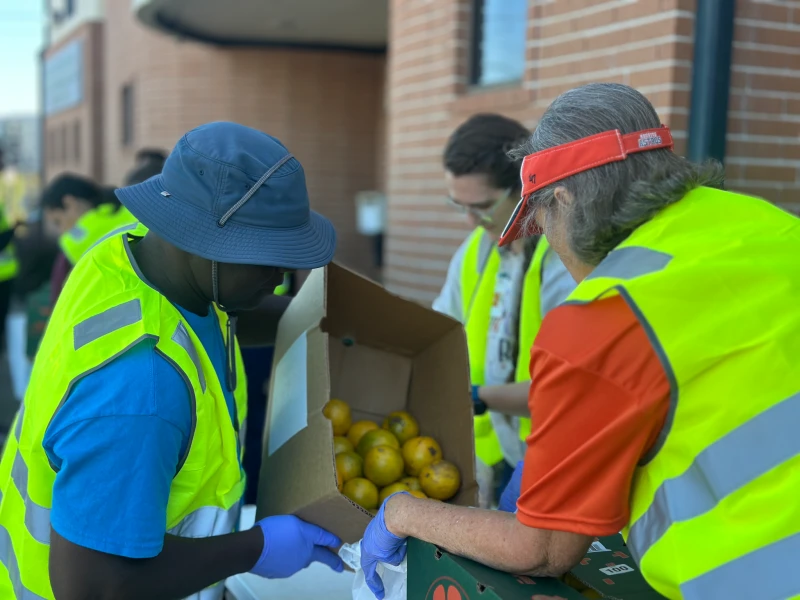
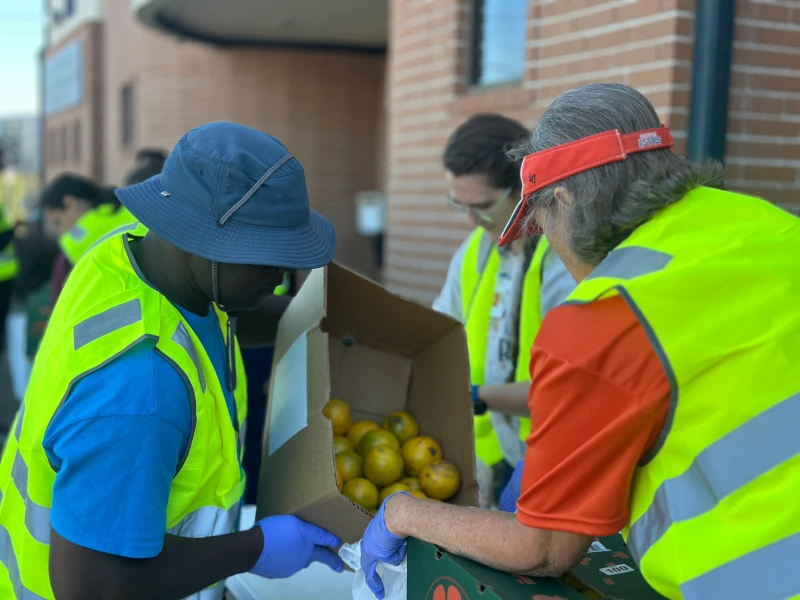
Volunteers prepare and distribute food to families coming through the drive-through distribution site at the Catholic Charities Diocese of Galveston-Houston Guadalupe Center, a food pantry near central Houston. / Credit: Photo courtesy of Catholic Charities of the Archdiocese of Galveston-Houston

CNA Staff, Nov 7, 2025 / 17:40 pm (CNA).

As federal food benefits have been frozen during the government shutdown, Catholic dioceses and charities around the country are holding emergency food drives and launching fundraising efforts.

Supplemental Nutrition Assistance Program (SNAP) benefits will resume once the government passes a bill to fund the federal government — but, more than a month into the shutdown, there is no set end date in sight.  

Two federal district judges at the end of October moved to compel the Trump administration to pay for SNAP benefits, but because Congress has not yet authorized funding for federal government operations, the Trump administration asked an appeals court on Friday to block the orders and continue with partial SNAP payments.

The pause in SNAP benefits is estimated to affect about 42 million Americans.

In St. Louis, food pantries saw an influx of people in need. In response, parishes across the archdiocese are holding emergency food drives for the first two weekends of November. 

Nearly 300,000 people in the area could “lose access to vital food benefits,” Archbishop Mitchell Rozanski said in a letter to pastors, whom he asked to “respond with love and generosity to this urgent need.” 

“We are called to be people of faith and action,” Rozanski said. “And so, I ask the good people of our archdiocese to come together to help our neighbors who are in danger of going without their ‘daily food.’”

The archdiocese is working with the local Catholic Charities and the Society of St. Vincent de Paul to ensure that food pantries are full. 

Julie Komanetsky, a spokesperson for the Society of St. Vincent de Paul in St. Louis, said the food drives are “bringing great results for our food pantries.” 

“This is our faith in action,” she told CNA. “Like the story of the good Samaritan who sees the victim and cares for him, Catholics see that people need to be fed and they are responding. They are answering God’s call to be good Samaritans rather than indifferent bystanders!”   

So far, the parish food drives have been “very successful and will help keep our pantries stocked and able to support the need,” Komanetsky said.

“Our hope for this effort is to keep all within the boundaries of our archdiocese from going hungry during this difficult time in our country,” she continued. “This is our united Catholic effort to let all people know that we see them, we hear their needs, and we will help.”

“Pope Leo tells us: Faith cannot be separated from love for the poor,” she continued. “This effort is a testament of our faith and our love.” 

St. Louis is not the only archdiocese finding creative solutions to the SNAP crisis. In Connecticut, Hartford Archbishop Christopher Coyne has released $500,000 of emergency funding to food banks. 

Coyne said the funding is being contributed “in the spirit of Jesus’ command to serve our brothers and sisters in need.”

“The Catholic Church provides relief and hope for God’s children,” Coyne said in a statement. “It’s what we have done for over 2,000 years and what we continue to do today.”

Volunteers load food into a car at a drive-through distribution site in Houston. Credit: Photo courtesy of Catholic Charities of the Archdiocese of Galveston-Houston

The Archdiocese of Galveston-Houston Catholic Charities is seeing a similar rise in need. Across its three food pantries Catholic Charities is extending hours and increasing distribution. 

“Many families across our service area are struggling, worried about missing paychecks or not being able to put food on the table,” Cynthia Nunes Colbert, who heads the Catholic Charities of the Archdiocese of Galveston-Houston, told CNA. 

The group is also offering emergency rental assistance to federal workers and is reaching out to the wider community for support by encouraging food drives, volunteering, and donations, Catholic Charities told CNA. 

“Whether it’s through financial donations, food drives, or volunteering, together we can provide hope and stability during these uncertain times,” Colbert said.

As part of a nationwide effort, Catholic Charities USA launched a fundraising effort in light of the funding cuts. The funds raised will go directly toward buying and sending food to Catholic Charities groups across the country to support ministries such as food pantries and soup kitchens. 

For families who rely on food assistance programs, this a “catastrophic moment” said CCUSA President and CEO Kerry Alys Robinson. 

The government shutdown “has created incredibly serious, real-life consequences for millions of people, from furloughed federal workers to those living in poverty who will now struggle even more to provide for their families,” Robinson said in a recent statement.

Read More
Sex abuse victims in New Orleans Archdiocese approve 0 million settlement #Catholic 
 
 The St. Louis Cathedral and Jackson Square are seen at sunset near the French Quarter in downtown New Orleans on April 10, 2010. / Credit: Graythen/Getty Images

CNA Staff, Oct 31, 2025 / 10:30 am (CNA).
The Archdiocese of New Orleans secured nearly unanimous approval for a 0 million bankruptcy settlement on Thursday, paving the way for payouts to over 650 victims after five years of contentious litigation in the nation’s second-oldest Catholic archdiocese.The vote, which closed at midnight on Oct. 30, saw 99.63% of creditors — including hundreds of abuse survivors — endorse the plan in the U.S. Bankruptcy Court of the Eastern District of Louisiana, according to The Guardian.Only the bondholder class, owed  million, opposed it, voting against the plan by a vote of 59 to 14, according to court documents. In 2017, bondholders lent the Church  million to help refinance parish debt and have been repaid only 25% of the outstanding balance. They have alleged fraud against the Church after it withheld promised interest payments. Legal experts say their “no” vote will not derail confirmation of the settlement, however. “Your honor, there is overwhelming support for this plan,” archdiocese attorney Mark Mintz said in court on Thursday. The plan required that two-thirds of voters approve it.Final tallies of the votes will be filed next week, and a hearing before Judge Meredith Grabill is set for mid-November, potentially ending the archdiocese’s Chapter 11 case filed in May 2020 amid a flood of abuse claims.In a statement to CNA, the archdiocese said: “Today we have the voting results of our proposed settlement and reorganization plan, which has been overwhelmingly approved by survivors and other creditors. We are grateful to the survivors who have voted in favor of moving forward with this plan and continue to pray that both the monetary settlement and the nonmonetary provisions provide each of them some path towards their healing and reconciliation.”Archbishop Gregory Aymond originally told the Vatican in a letter that he thought he could settle abuse claims for around  million. The archdiocese has spent close to  million so far on legal fees alone.The settlement going to abuse victims breaks down to 0 million in immediate cash from the archdiocese and affiliates,  million in promissory notes,  million from insurers, and up to  million more from property sales, including the Christopher Homes facilities, a property that has provided affordable housing and assisted living to low-income and senior citizens in the Gulf Coast area for the last 50 years.Payout amounts to individual claimants will be determined by a point system negotiated by a committee of victims and administered by a trustee and an independent claims administrator appointed by the court. The point system is based on the type and nature of the alleged abuse. Additional points can be awarded for factors like participation in criminal prosecutions, pre-bankruptcy lawsuits, or leadership in victim efforts, while points may be reduced if the claimant was over 18 and consented to the contact. The impact of the alleged abuse on the victim’s behavior, academic achievement, mental health, faith, and family relationships can also adjust the score.Abuse victim Richard Coon cast his vote on Monday. “I voted ‘yes’ to get Aymond out of town. I just think he’s been a horrible leader,” Coon said.In September, Pope Leo XIV named Bishop James Checchio as coadjutor archbishop of New Orleans. Checchio has been working alongside Aymond and will replace him when he retires, which Aymond has said he plans to do when the bankruptcy case is resolved.The 0 million deal is significantly higher than the initial 0 million proposal in May, which drew fire from attorneys like Richard Trahant, who criticized it for being “lowball.”The initial settlement was “dead on arrival,” according to Trahant, who, along with other attorneys, urged his clients in May to hold out for a better offer, saying they deserved closer to 0 million, a figure similar to the 3 million paid out to about 600 claimants by the Diocese of Rockville Centre in New York in 2024. “There is no amount of money that could ever make these survivors whole,” Trahant said in a statement Thursday.In the Diocese of Rockville Centre bankruptcy settlement, attorneys reportedly collected about 30% of the 3 million, or approximately .9 million. Similarly, the Los Angeles Archdiocese’s 0 million settlement in 2007 saw attorneys receiving an estimated 5-7.8 million, or 25%-33% of the payout.The bankruptcy stemmed from explosive revelations in 2018, when the Archdiocese of New Orleans listed over 50 credibly accused priests. In 2021, the Louisiana Legislature eliminated the statute of limitations for civil actions related to the sexual abuse of minors. The new law allows victims to pursue civil damages indefinitely for abuse occurring on or after June 14, 1992, or where the victim was a minor as of June 14, 2021, with a three-year filing window (which ended June 14, 2024) for older cases. The Diocese of Lafayette, along with the Archdiocese of New Orleans, the Diocese of Baton Rouge, the Diocese of Houma-Thibodaux, Catholic Charities, the Diocese of Lake Charles, and several other entities challenged the law’s constitutionality, arguing it violated due process, but the Louisiana Supreme Court upheld it in June 2024 in a 4-3 decision.Critics argued the retroactive nature of the law risks unfairness to defendants unable to defend against decades-old abuse claims due to lost evidence and highlighted the potentially devastating financial impact.

Sex abuse victims in New Orleans Archdiocese approve $230 million settlement #Catholic The St. Louis Cathedral and Jackson Square are seen at sunset near the French Quarter in downtown New Orleans on April 10, 2010. / Credit: Graythen/Getty Images CNA Staff, Oct 31, 2025 / 10:30 am (CNA). The Archdiocese of New Orleans secured nearly unanimous approval for a $230 million bankruptcy settlement on Thursday, paving the way for payouts to over 650 victims after five years of contentious litigation in the nation’s second-oldest Catholic archdiocese.The vote, which closed at midnight on Oct. 30, saw 99.63% of creditors — including hundreds of abuse survivors — endorse the plan in the U.S. Bankruptcy Court of the Eastern District of Louisiana, according to The Guardian.Only the bondholder class, owed $30 million, opposed it, voting against the plan by a vote of 59 to 14, according to court documents. In 2017, bondholders lent the Church $40 million to help refinance parish debt and have been repaid only 25% of the outstanding balance. They have alleged fraud against the Church after it withheld promised interest payments. Legal experts say their “no” vote will not derail confirmation of the settlement, however. “Your honor, there is overwhelming support for this plan,” archdiocese attorney Mark Mintz said in court on Thursday. The plan required that two-thirds of voters approve it.Final tallies of the votes will be filed next week, and a hearing before Judge Meredith Grabill is set for mid-November, potentially ending the archdiocese’s Chapter 11 case filed in May 2020 amid a flood of abuse claims.In a statement to CNA, the archdiocese said: “Today we have the voting results of our proposed settlement and reorganization plan, which has been overwhelmingly approved by survivors and other creditors. We are grateful to the survivors who have voted in favor of moving forward with this plan and continue to pray that both the monetary settlement and the nonmonetary provisions provide each of them some path towards their healing and reconciliation.”Archbishop Gregory Aymond originally told the Vatican in a letter that he thought he could settle abuse claims for around $7 million. The archdiocese has spent close to $50 million so far on legal fees alone.The settlement going to abuse victims breaks down to $130 million in immediate cash from the archdiocese and affiliates, $20 million in promissory notes, $30 million from insurers, and up to $50 million more from property sales, including the Christopher Homes facilities, a property that has provided affordable housing and assisted living to low-income and senior citizens in the Gulf Coast area for the last 50 years.Payout amounts to individual claimants will be determined by a point system negotiated by a committee of victims and administered by a trustee and an independent claims administrator appointed by the court. The point system is based on the type and nature of the alleged abuse. Additional points can be awarded for factors like participation in criminal prosecutions, pre-bankruptcy lawsuits, or leadership in victim efforts, while points may be reduced if the claimant was over 18 and consented to the contact. The impact of the alleged abuse on the victim’s behavior, academic achievement, mental health, faith, and family relationships can also adjust the score.Abuse victim Richard Coon cast his vote on Monday. “I voted ‘yes’ to get Aymond out of town. I just think he’s been a horrible leader,” Coon said.In September, Pope Leo XIV named Bishop James Checchio as coadjutor archbishop of New Orleans. Checchio has been working alongside Aymond and will replace him when he retires, which Aymond has said he plans to do when the bankruptcy case is resolved.The $230 million deal is significantly higher than the initial $180 million proposal in May, which drew fire from attorneys like Richard Trahant, who criticized it for being “lowball.”The initial settlement was “dead on arrival,” according to Trahant, who, along with other attorneys, urged his clients in May to hold out for a better offer, saying they deserved closer to $300 million, a figure similar to the $323 million paid out to about 600 claimants by the Diocese of Rockville Centre in New York in 2024. “There is no amount of money that could ever make these survivors whole,” Trahant said in a statement Thursday.In the Diocese of Rockville Centre bankruptcy settlement, attorneys reportedly collected about 30% of the $323 million, or approximately $96.9 million. Similarly, the Los Angeles Archdiocese’s $660 million settlement in 2007 saw attorneys receiving an estimated $165-$217.8 million, or 25%-33% of the payout.The bankruptcy stemmed from explosive revelations in 2018, when the Archdiocese of New Orleans listed over 50 credibly accused priests. In 2021, the Louisiana Legislature eliminated the statute of limitations for civil actions related to the sexual abuse of minors. The new law allows victims to pursue civil damages indefinitely for abuse occurring on or after June 14, 1992, or where the victim was a minor as of June 14, 2021, with a three-year filing window (which ended June 14, 2024) for older cases. The Diocese of Lafayette, along with the Archdiocese of New Orleans, the Diocese of Baton Rouge, the Diocese of Houma-Thibodaux, Catholic Charities, the Diocese of Lake Charles, and several other entities challenged the law’s constitutionality, arguing it violated due process, but the Louisiana Supreme Court upheld it in June 2024 in a 4-3 decision.Critics argued the retroactive nature of the law risks unfairness to defendants unable to defend against decades-old abuse claims due to lost evidence and highlighted the potentially devastating financial impact.


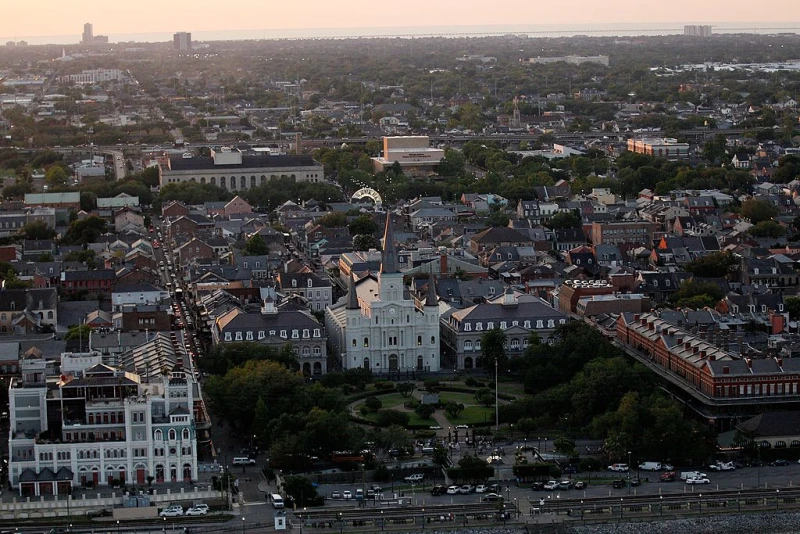
The St. Louis Cathedral and Jackson Square are seen at sunset near the French Quarter in downtown New Orleans on April 10, 2010. / Credit: Graythen/Getty Images

CNA Staff, Oct 31, 2025 / 10:30 am (CNA).

The Archdiocese of New Orleans secured nearly unanimous approval for a $230 million bankruptcy settlement on Thursday, paving the way for payouts to over 650 victims after five years of contentious litigation in the nation’s second-oldest Catholic archdiocese.

The vote, which closed at midnight on Oct. 30, saw 99.63% of creditors — including hundreds of abuse survivors — endorse the plan in the U.S. Bankruptcy Court of the Eastern District of Louisiana, according to The Guardian.

Only the bondholder class, owed $30 million, opposed it, voting against the plan by a vote of 59 to 14, according to court documents. In 2017, bondholders lent the Church $40 million to help refinance parish debt and have been repaid only 25% of the outstanding balance. They have alleged fraud against the Church after it withheld promised interest payments. Legal experts say their “no” vote will not derail confirmation of the settlement, however. 

“Your honor, there is overwhelming support for this plan,” archdiocese attorney Mark Mintz said in court on Thursday. The plan required that two-thirds of voters approve it.

Final tallies of the votes will be filed next week, and a hearing before Judge Meredith Grabill is set for mid-November, potentially ending the archdiocese’s Chapter 11 case filed in May 2020 amid a flood of abuse claims.

In a statement to CNA, the archdiocese said: “Today we have the voting results of our proposed settlement and reorganization plan, which has been overwhelmingly approved by survivors and other creditors. We are grateful to the survivors who have voted in favor of moving forward with this plan and continue to pray that both the monetary settlement and the nonmonetary provisions provide each of them some path towards their healing and reconciliation.”

Archbishop Gregory Aymond originally told the Vatican in a letter that he thought he could settle abuse claims for around $7 million. The archdiocese has spent close to $50 million so far on legal fees alone.

The settlement going to abuse victims breaks down to $130 million in immediate cash from the archdiocese and affiliates, $20 million in promissory notes, $30 million from insurers, and up to $50 million more from property sales, including the Christopher Homes facilities, a property that has provided affordable housing and assisted living to low-income and senior citizens in the Gulf Coast area for the last 50 years.

Payout amounts to individual claimants will be determined by a point system negotiated by a committee of victims and administered by a trustee and an independent claims administrator appointed by the court. 

The point system is based on the type and nature of the alleged abuse. Additional points can be awarded for factors like participation in criminal prosecutions, pre-bankruptcy lawsuits, or leadership in victim efforts, while points may be reduced if the claimant was over 18 and consented to the contact. The impact of the alleged abuse on the victim’s behavior, academic achievement, mental health, faith, and family relationships can also adjust the score.

Abuse victim Richard Coon cast his vote on Monday. “I voted ‘yes’ to get Aymond out of town. I just think he’s been a horrible leader,” Coon said.

In September, Pope Leo XIV named Bishop James Checchio as coadjutor archbishop of New Orleans. Checchio has been working alongside Aymond and will replace him when he retires, which Aymond has said he plans to do when the bankruptcy case is resolved.

The $230 million deal is significantly higher than the initial $180 million proposal in May, which drew fire from attorneys like Richard Trahant, who criticized it for being “lowball.”

The initial settlement was “dead on arrival,” according to Trahant, who, along with other attorneys, urged his clients in May to hold out for a better offer, saying they deserved closer to $300 million, a figure similar to the $323 million paid out to about 600 claimants by the Diocese of Rockville Centre in New York in 2024. 

“There is no amount of money that could ever make these survivors whole,” Trahant said in a statement Thursday.

In the Diocese of Rockville Centre bankruptcy settlement, attorneys reportedly collected about 30% of the $323 million, or approximately $96.9 million. Similarly, the Los Angeles Archdiocese’s $660 million settlement in 2007 saw attorneys receiving an estimated $165-$217.8 million, or 25%-33% of the payout.

The bankruptcy stemmed from explosive revelations in 2018, when the Archdiocese of New Orleans listed over 50 credibly accused priests. In 2021, the Louisiana Legislature eliminated the statute of limitations for civil actions related to the sexual abuse of minors. 

The new law allows victims to pursue civil damages indefinitely for abuse occurring on or after June 14, 1992, or where the victim was a minor as of June 14, 2021, with a three-year filing window (which ended June 14, 2024) for older cases.

The Diocese of Lafayette, along with the Archdiocese of New Orleans, the Diocese of Baton Rouge, the Diocese of Houma-Thibodaux, Catholic Charities, the Diocese of Lake Charles, and several other entities challenged the law’s constitutionality, arguing it violated due process, but the Louisiana Supreme Court upheld it in June 2024 in a 4-3 decision.

Critics argued the retroactive nature of the law risks unfairness to defendants unable to defend against decades-old abuse claims due to lost evidence and highlighted the potentially devastating financial impact.

Read More