Revelation

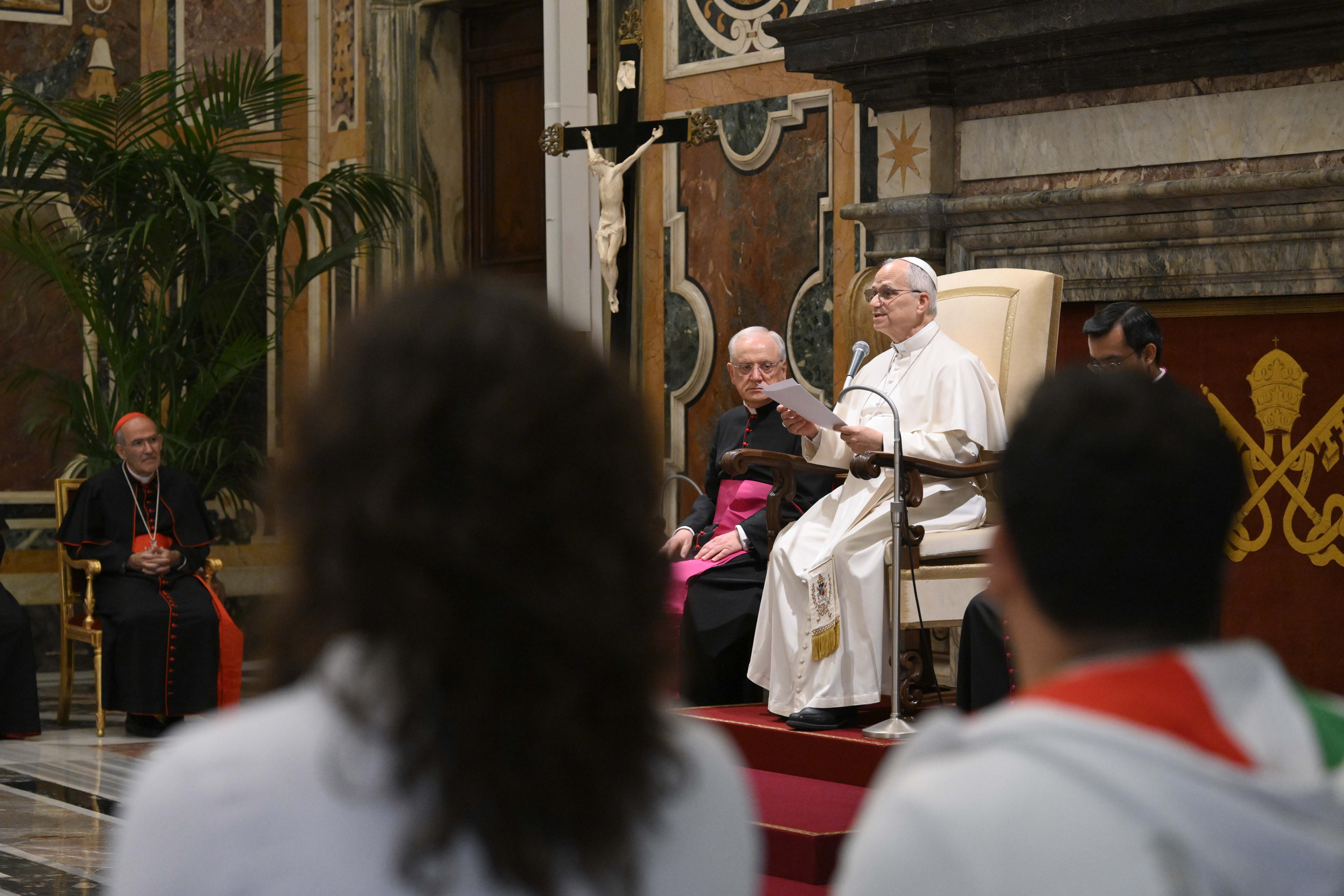
Pope Leo XIV: Sport must be a ‘space for encounter’ #Catholic VATICAN CITY — Pope Leo XIV on Thursday praised athletes from the Milan-Cortina 2026 Olympic and Paralympic Games, saying sport “can and must truly become a space for encounter” in a world marked by “polarization, rivalry, and conflicts that escalate into devastating wars.”Speaking in the Clementine Hall at the Vatican on April 9, the Holy Father welcomed the athletes “with joy” shortly after the conclusion of the Winter Games and thanked them for their witness.“Thank you for what you have shown,” the pope said. “Truly, sport, when lived authentically, is not merely a performance: It is a form of language, a narrative made up of gestures, of effort, of anticipation, of falls, and of new beginnings.”Leo XIV said the games revealed not only athletic achievement but also “stories of sacrifice, of discipline, of tenacity.”“In particular, in Paralympic competitions we have seen how a limitation can become a source of revelation: not something that holds a person back but something that can be transformed, even transfigured into newfound qualities,” he said. “You athletes have become life stories that inspire a great number of people.”The pope also emphasized the communal dimension of athletic success, saying: “No one wins alone.”“Your team spirit reminds us that no one wins alone, because behind every victory there are many people involved — from family to teams — as well as many days of training, pressure, and solitude,” he said.Quoting Psalm 18, he added: “It is often precisely in these moments that God reveals himself, as the psalmist sings: ‘Thou didst give a wide place for my steps under me, and my feet did not slip.’”Leo XIV said sport helps mature the human person by fostering discipline, humility, and right relationships.“Sport contributes to the maturing of our character, requires a steadfast spirituality, and is a fruitful form of education,” he said. “By training the mind, along with the limbs, sport is authentic when it remains humane — that is, when it remains faithful to its first vocation: to be a school of life and talent.”“A school in which one learns that true success is measured by the quality of relationships: not by the amount of prizes but by mutual respect, by shared joy in the game,” he continued.Referring to his Feb. 6 apostolic letter “Life in Abundance,” written for the occasion of the Olympics and Paralympics, the pope said the Gospel’s vision of abundant life points to harmony between the physical and interior dimensions of the person.Turning to the present global situation, Leo XIV said the athletes’ witness carries special importance.“At the present time, so marked by polarization, rivalry, and conflicts that escalate into devastating wars, your commitment takes on an even greater value: Sport can and must truly become a space for encounter!” he said. “Not a show of strength but an exercise in relationship.”Recalling the value of the Olympic truce, he thanked the athletes for making visible “this possibility of peace as a prophecy that is by no means rhetorical: breaking the logic of violence to promote that of encounter.”The pope also warned against distortions in sport, including doping, commercialism, and the reduction of athletes to mere spectacle.“We are well aware that sport also brings with it certain temptations: that of performance at any cost, which can lead to doping; that of profit, which transforms the game into a market and the athlete into a star; that of spectacle, which reduces the athlete to an image or a number,” he said. “Against these excesses, your witness is essential.”Leo XIV concluded by thanking the athletes for showing “an honest and beautiful way of inhabiting the world” and urged them to keep the human person at the center of sport in all its forms.Following the audience, several of the athletes spoke to journalists about their experience of the audience and competing in the Winter Games, including speed skater Francesca Lollobrigida, who won two gold medals at Milan-Cortina this year.
 
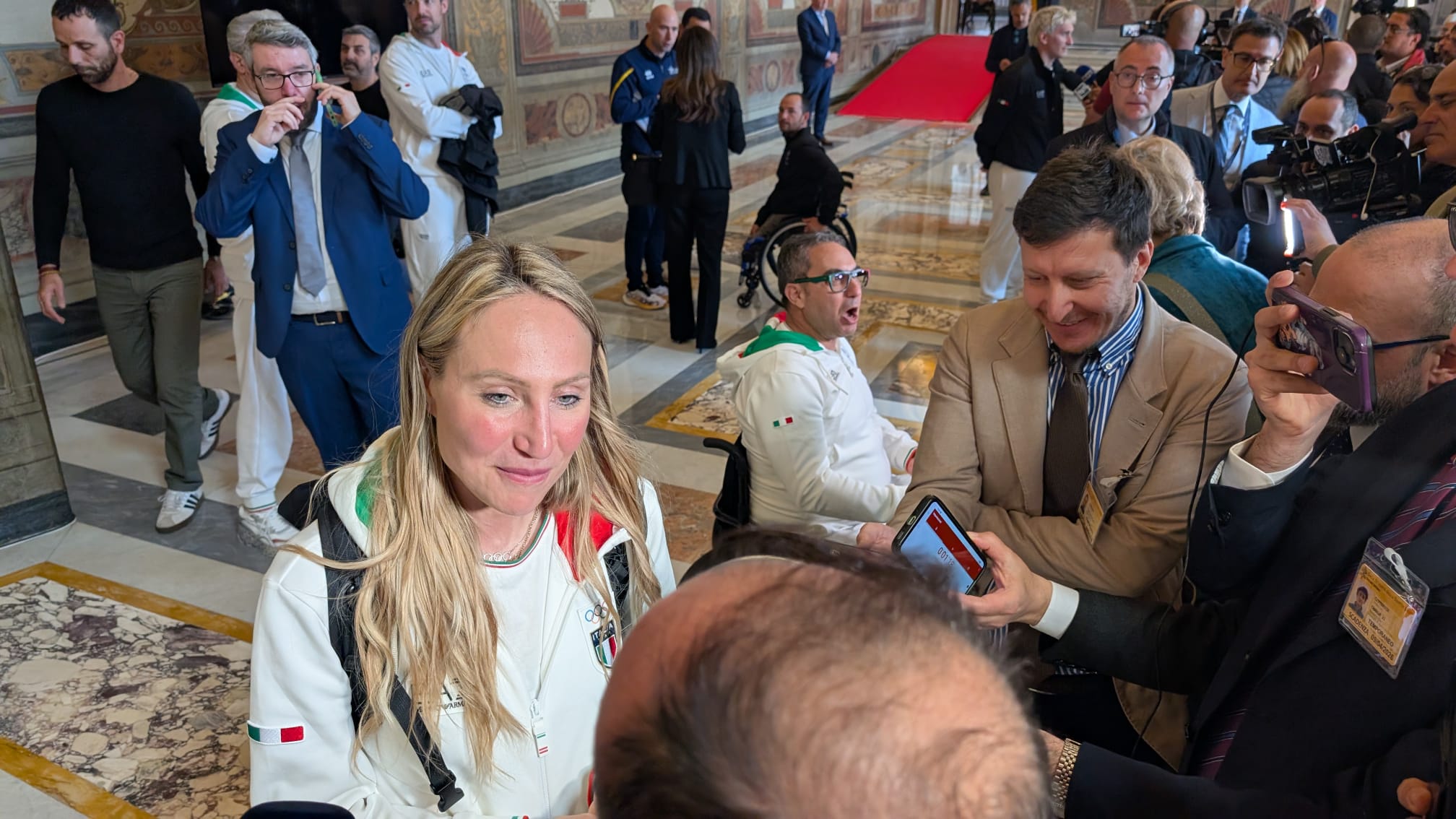
 Francesca Lollobrigida responds to journalists after a papal audience at the Apostolic Palace in Vatican City on April 9, 2026. | Credit: Ishmael Adibuah/EWTN News
 
 “My goal was just to show that in my sport; I was able to combine, you know, being a mother and a top athlete,“ Lollobrigida told EWTN News. ”Iʼm just doing this for the other women, you know, that maybe at some points during their career they want to stop to focus on the family and then to come back.”Nikko Landeros, an American-born Catholic who lost both his legs in 2007, represented Italy in ice hockey at the latest Paralympic games. He described to EWTN News the role of Catholicism in his athletic journey.“At home, I started pretty much Catholic. You know, I went to Catholic school in the U.S. Weʼve been going to church now… not as much as I should, but, you know, I still pray every day, and Iʼm thankful to be here. You know, if it werenʼt for God, I wouldnʼt be alive. So, you know, Iʼm super thankful,” Landeros said.This story was first published by ACI Stampa, the Italian-language sister service of EWTN News. It has been translated and adapted by EWTN News English.

Pope Leo XIV: Sport must be a ‘space for encounter’ #Catholic VATICAN CITY — Pope Leo XIV on Thursday praised athletes from the Milan-Cortina 2026 Olympic and Paralympic Games, saying sport “can and must truly become a space for encounter” in a world marked by “polarization, rivalry, and conflicts that escalate into devastating wars.”Speaking in the Clementine Hall at the Vatican on April 9, the Holy Father welcomed the athletes “with joy” shortly after the conclusion of the Winter Games and thanked them for their witness.“Thank you for what you have shown,” the pope said. “Truly, sport, when lived authentically, is not merely a performance: It is a form of language, a narrative made up of gestures, of effort, of anticipation, of falls, and of new beginnings.”Leo XIV said the games revealed not only athletic achievement but also “stories of sacrifice, of discipline, of tenacity.”“In particular, in Paralympic competitions we have seen how a limitation can become a source of revelation: not something that holds a person back but something that can be transformed, even transfigured into newfound qualities,” he said. “You athletes have become life stories that inspire a great number of people.”The pope also emphasized the communal dimension of athletic success, saying: “No one wins alone.”“Your team spirit reminds us that no one wins alone, because behind every victory there are many people involved — from family to teams — as well as many days of training, pressure, and solitude,” he said.Quoting Psalm 18, he added: “It is often precisely in these moments that God reveals himself, as the psalmist sings: ‘Thou didst give a wide place for my steps under me, and my feet did not slip.’”Leo XIV said sport helps mature the human person by fostering discipline, humility, and right relationships.“Sport contributes to the maturing of our character, requires a steadfast spirituality, and is a fruitful form of education,” he said. “By training the mind, along with the limbs, sport is authentic when it remains humane — that is, when it remains faithful to its first vocation: to be a school of life and talent.”“A school in which one learns that true success is measured by the quality of relationships: not by the amount of prizes but by mutual respect, by shared joy in the game,” he continued.Referring to his Feb. 6 apostolic letter “Life in Abundance,” written for the occasion of the Olympics and Paralympics, the pope said the Gospel’s vision of abundant life points to harmony between the physical and interior dimensions of the person.Turning to the present global situation, Leo XIV said the athletes’ witness carries special importance.“At the present time, so marked by polarization, rivalry, and conflicts that escalate into devastating wars, your commitment takes on an even greater value: Sport can and must truly become a space for encounter!” he said. “Not a show of strength but an exercise in relationship.”Recalling the value of the Olympic truce, he thanked the athletes for making visible “this possibility of peace as a prophecy that is by no means rhetorical: breaking the logic of violence to promote that of encounter.”The pope also warned against distortions in sport, including doping, commercialism, and the reduction of athletes to mere spectacle.“We are well aware that sport also brings with it certain temptations: that of performance at any cost, which can lead to doping; that of profit, which transforms the game into a market and the athlete into a star; that of spectacle, which reduces the athlete to an image or a number,” he said. “Against these excesses, your witness is essential.”Leo XIV concluded by thanking the athletes for showing “an honest and beautiful way of inhabiting the world” and urged them to keep the human person at the center of sport in all its forms.Following the audience, several of the athletes spoke to journalists about their experience of the audience and competing in the Winter Games, including speed skater Francesca Lollobrigida, who won two gold medals at Milan-Cortina this year. Francesca Lollobrigida responds to journalists after a papal audience at the Apostolic Palace in Vatican City on April 9, 2026. | Credit: Ishmael Adibuah/EWTN News “My goal was just to show that in my sport; I was able to combine, you know, being a mother and a top athlete,“ Lollobrigida told EWTN News. ”Iʼm just doing this for the other women, you know, that maybe at some points during their career they want to stop to focus on the family and then to come back.”Nikko Landeros, an American-born Catholic who lost both his legs in 2007, represented Italy in ice hockey at the latest Paralympic games. He described to EWTN News the role of Catholicism in his athletic journey.“At home, I started pretty much Catholic. You know, I went to Catholic school in the U.S. Weʼve been going to church now… not as much as I should, but, you know, I still pray every day, and Iʼm thankful to be here. You know, if it werenʼt for God, I wouldnʼt be alive. So, you know, Iʼm super thankful,” Landeros said.This story was first published by ACI Stampa, the Italian-language sister service of EWTN News. It has been translated and adapted by EWTN News English.

The pontiff addressed athletes from the Milan-Cortina 2026 Olympic and Paralympic Games.

Read More
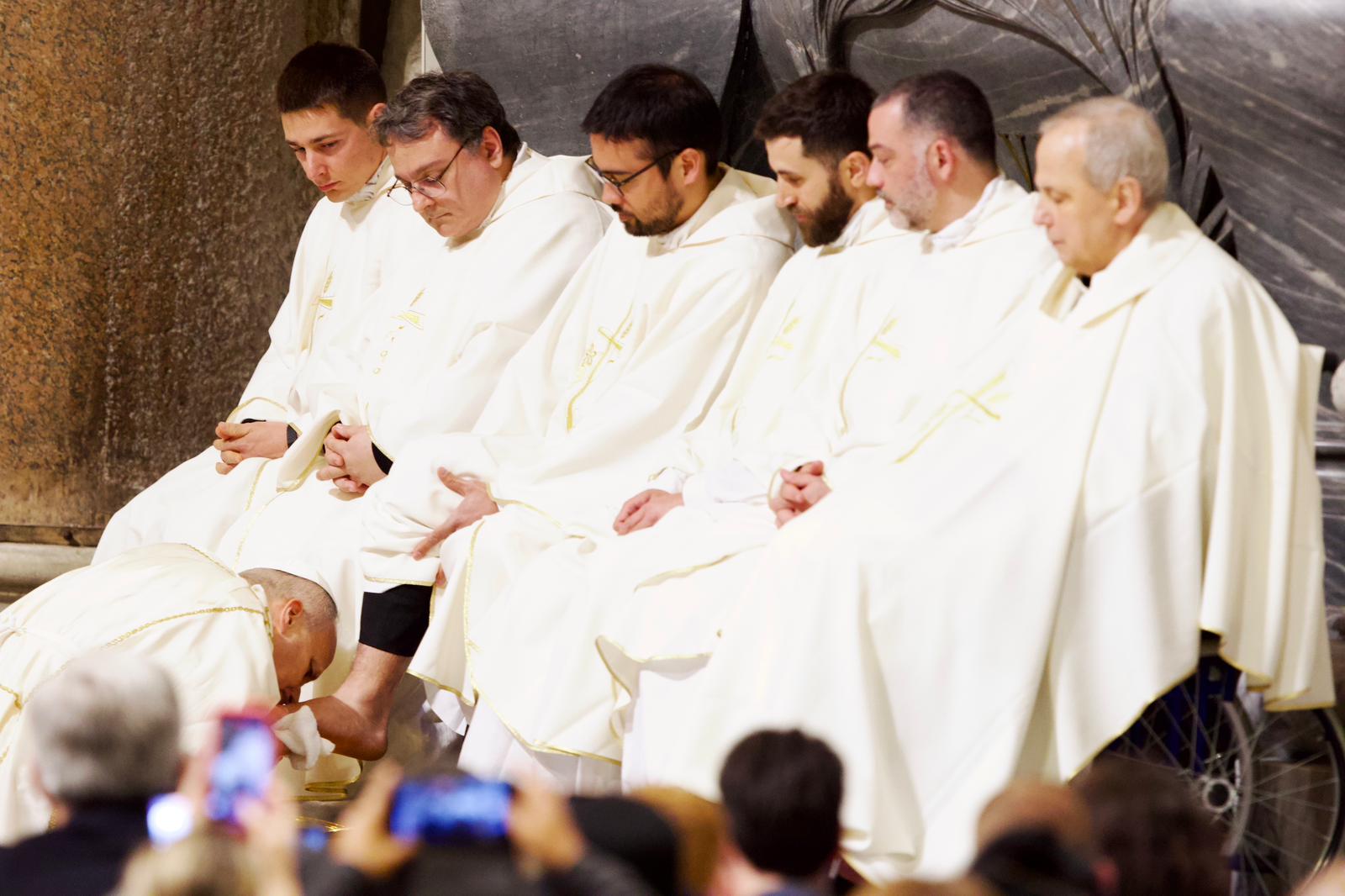
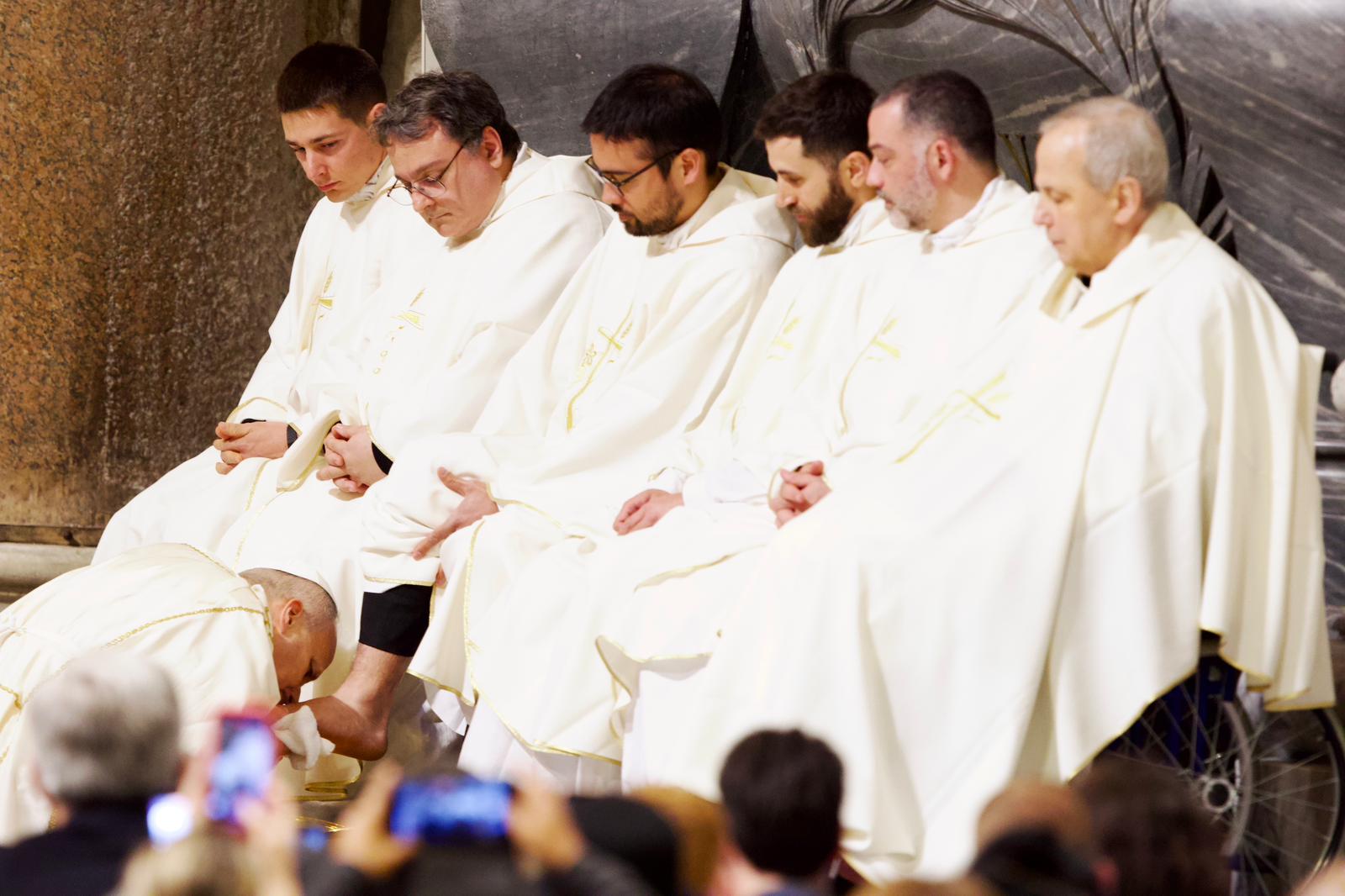
Pope Leo XIV: ‘Kneel down as brothers and sisters alongside the oppressed’ #Catholic Pope Leo XIV on Holy Thursday returned the Mass of the Lord’s Supper to the Basilica of St. John Lateran, reviving a papal practice last observed there in 2012 under Benedict XVI.Departing from Pope Francis’ custom of celebrating the liturgy in prisons or migrant centers, Leo celebrated the rite in the cathedral of Rome and washed the feet of 12 priests of the Diocese of Rome.In his homily, the pope framed the liturgy as the solemn entrance into the Easter Triduum and said Christ’s love, shown in both the Eucharist and the washing of the feet, reveals the justice of God in a world wounded by evil.“This evening’s solemn liturgy marks our entry into the holy Triduum of the Lord’s passion, death, and resurrection,” Leo said. “We cross this threshold not as mere spectators, nor out of habit, but as those personally invited by Jesus himself as guests at the Supper in which bread and wine become for us the sacrament of salvation.”“His love becomes both gesture and nourishment for all, revealing the justice of God,” the pope said. “In this world, and particularly in those places where evil abounds, Jesus loves definitively — forever, and with his whole being.”Reflecting on the washing of the feet, Leo said the gesture is not simply a moral lesson but a revelation of God’s own way of loving.“What the Lord shows us — taking the water, the basin, and the towel — is far more than a moral example,” he said. “He entrusts to us his very way of life. The washing of the feet is a gesture that encapsulates the revelation of God.”The pope also cited Benedict XVI, recalling that Christians must repeatedly learn that God’s greatness is unlike worldly greatness. “We too must ‘learn repeatedly that God’s greatness is different from our idea of greatness… because we systematically desire a God of success and not of the Passion,’” Leo said.He warned that human beings are tempted to seek a God who grants success, victory, or usefulness like wealth and power rather than recognizing the divine power revealed in humble service.“Yet we fail to perceive that God does indeed serve us through the gratuitous and humble gesture of washing feet,” Leo said. “This is the true omnipotence of God.”The pope said Jesus’ action purifies both humanity’s false image of God and its false image of man.“For we tend to consider ourselves powerful when we dominate, victorious when we destroy our equals, great when we are feared,” he said. “In contrast, as true God and true man, Christ offers us the example of self-giving, service, and love.”Leo stressed that Christ gave this example not in a moment of acclaim but “on the night he was betrayed, in the darkness of incomprehension and violence.”“In this way, it becomes clear that the Lord’s love precedes our own goodness or purity; he loves us first, and in that love, he forgives and restores us,” the pope said.Quoting St. John’s Gospel, Leo urged Christians to live out mutual service in imitation of Christ: “He does not ask us to repay him but to share his gift among ourselves: ‘You also ought to wash one another’s feet.’”The pope also referred to Pope Francis’ 2013 Holy Thursday homily, noting that Christian service cannot be reduced to abstraction or empty obligation but must spring from charity.Allowing oneself to be served by the Lord, Leo said, is a precondition for serving others. “By washing our bodies, Jesus purifies our souls,” he said. “In him, God has given us an example — not of how to dominate, but of how to liberate; not of how to destroy life, but of how to give it.”In one of the homily’s strongest appeals, the pope turned to the suffering of those crushed by violence and oppression.“As humanity is brought to its knees by so many acts of brutality, let us too kneel down as brothers and sisters alongside the oppressed,” he said.Leo said the liturgy of Holy Thursday draws together the institution of the Eucharist and holy orders, revealing “the perfect self-gift of Jesus, the High Priest and living, eternal Eucharist.”Addressing priests directly, he said: “Beloved brothers in the priesthood, we are called to serve the people of God with our whole lives.”He concluded by inviting Catholics to spend time in Eucharistic adoration and to ask for the grace to imitate Christ’s love.“Holy Thursday is therefore a day of fervent gratitude and authentic fraternity,” the pope said. “May this evening’s Eucharistic adoration, in every parish and community, be a time to contemplate Jesus’ gesture, kneeling as he did, and to ask for the strength to imitate his service with the same love.”This story was first published by ACI Stampa, the Italian-language sister service of EWTN News. It has been translated and adapted by EWTN News English.

Pope Leo XIV: ‘Kneel down as brothers and sisters alongside the oppressed’ #Catholic Pope Leo XIV on Holy Thursday returned the Mass of the Lord’s Supper to the Basilica of St. John Lateran, reviving a papal practice last observed there in 2012 under Benedict XVI.Departing from Pope Francis’ custom of celebrating the liturgy in prisons or migrant centers, Leo celebrated the rite in the cathedral of Rome and washed the feet of 12 priests of the Diocese of Rome.In his homily, the pope framed the liturgy as the solemn entrance into the Easter Triduum and said Christ’s love, shown in both the Eucharist and the washing of the feet, reveals the justice of God in a world wounded by evil.“This evening’s solemn liturgy marks our entry into the holy Triduum of the Lord’s passion, death, and resurrection,” Leo said. “We cross this threshold not as mere spectators, nor out of habit, but as those personally invited by Jesus himself as guests at the Supper in which bread and wine become for us the sacrament of salvation.”“His love becomes both gesture and nourishment for all, revealing the justice of God,” the pope said. “In this world, and particularly in those places where evil abounds, Jesus loves definitively — forever, and with his whole being.”Reflecting on the washing of the feet, Leo said the gesture is not simply a moral lesson but a revelation of God’s own way of loving.“What the Lord shows us — taking the water, the basin, and the towel — is far more than a moral example,” he said. “He entrusts to us his very way of life. The washing of the feet is a gesture that encapsulates the revelation of God.”The pope also cited Benedict XVI, recalling that Christians must repeatedly learn that God’s greatness is unlike worldly greatness. “We too must ‘learn repeatedly that God’s greatness is different from our idea of greatness… because we systematically desire a God of success and not of the Passion,’” Leo said.He warned that human beings are tempted to seek a God who grants success, victory, or usefulness like wealth and power rather than recognizing the divine power revealed in humble service.“Yet we fail to perceive that God does indeed serve us through the gratuitous and humble gesture of washing feet,” Leo said. “This is the true omnipotence of God.”The pope said Jesus’ action purifies both humanity’s false image of God and its false image of man.“For we tend to consider ourselves powerful when we dominate, victorious when we destroy our equals, great when we are feared,” he said. “In contrast, as true God and true man, Christ offers us the example of self-giving, service, and love.”Leo stressed that Christ gave this example not in a moment of acclaim but “on the night he was betrayed, in the darkness of incomprehension and violence.”“In this way, it becomes clear that the Lord’s love precedes our own goodness or purity; he loves us first, and in that love, he forgives and restores us,” the pope said.Quoting St. John’s Gospel, Leo urged Christians to live out mutual service in imitation of Christ: “He does not ask us to repay him but to share his gift among ourselves: ‘You also ought to wash one another’s feet.’”The pope also referred to Pope Francis’ 2013 Holy Thursday homily, noting that Christian service cannot be reduced to abstraction or empty obligation but must spring from charity.Allowing oneself to be served by the Lord, Leo said, is a precondition for serving others. “By washing our bodies, Jesus purifies our souls,” he said. “In him, God has given us an example — not of how to dominate, but of how to liberate; not of how to destroy life, but of how to give it.”In one of the homily’s strongest appeals, the pope turned to the suffering of those crushed by violence and oppression.“As humanity is brought to its knees by so many acts of brutality, let us too kneel down as brothers and sisters alongside the oppressed,” he said.Leo said the liturgy of Holy Thursday draws together the institution of the Eucharist and holy orders, revealing “the perfect self-gift of Jesus, the High Priest and living, eternal Eucharist.”Addressing priests directly, he said: “Beloved brothers in the priesthood, we are called to serve the people of God with our whole lives.”He concluded by inviting Catholics to spend time in Eucharistic adoration and to ask for the grace to imitate Christ’s love.“Holy Thursday is therefore a day of fervent gratitude and authentic fraternity,” the pope said. “May this evening’s Eucharistic adoration, in every parish and community, be a time to contemplate Jesus’ gesture, kneeling as he did, and to ask for the strength to imitate his service with the same love.”This story was first published by ACI Stampa, the Italian-language sister service of EWTN News. It has been translated and adapted by EWTN News English.

On Holy Thursday, the pontiff urged Catholics to imitate Christ’s service in a world marked by brutality.
Read More
Then I Saw Another Mighty Angel Coming Down from Heaven

Then I saw another mighty angel coming down from heaven. He was robed in a cloud, with a rainbow above his head; his face was like the sun, and his legs were like fiery pillars. He was holding a little scroll, which lay open in his hand. He planted his right foot on the sea and his left foot on the land, and he gave a loud shout like the roar of a lion. When he shouted, the voices of the seven thunders spoke. And when the seven thunders spoke, I was about to write; but I heard a voice from heaven say, “Seal up what the seven thunders have said and do not write it down.”

Read More

I looked, and there before me was a Pale Horse! – Revelation 6:8

I looked, and there before me was a pale horse! Its rider was named Death, a figure cloaked in shadow, exuding an aura of foreboding. The horse, an eerie shade of pale, almost translucent, seemed to embody the essence of mortality itself. Its eyes, dark and hollow, bore into the souls of those who dared to meet its gaze. Death’s skeletal hands clutched the reins with a grip that spoke of inevitability and finality. As the horse moved forward, the very air seemed to chill, the ground beneath its hooves blackening as though scorched by an unseen fire.

Read More