![At friendship meeting in Italy, Pope Leo calls for fraternity: ‘Love is the law of life’ #Catholic Pope Leo XIV arrived in the Italian city of Rimini on Aug. 22 to visit the 47th Meeting for Friendship Among the Peoples, telling about 60,000 attendees that “love is the force that can transform the world.”Upon arrival after a brief visit to the country of San Marino, Leo addressed a spontaneous greeting to the people gathered in the auditorium, expressing his joy and pointing out that “the loudest applause should be for Jesus Christ.”
Pope Leo XIV greets attendees at the 47th Meeting for Friendship Among the Peoples in Rimini, Italy, Aug. 22, 2026. | Credit: Vatican Media
“Our hearts, so big and capable of loving, should never be closed. Letʼs find the way together to build a world of peace and love,” he said.In his speech to the gathering, Pope Leo recounted the teachings of his immediate predecessors on social friendship, fraternity and union, highlighting the value of Riminiʼs meeting to achieve these ideals. The annual event is hosted by the international organization Communion and Liberation. He assured the assembly that “in recognizing our dignity as children of God, we come into contact with what originally unites human beings, beyond all diversity, separation or conflict.”“We can identify with each other, listen to each other and establish friendship, between individuals and, therefore, also between peoples. Before borders, definitions and institutions, there are always people,” he added.Reflecting on the pastoral constitution Gaudium et spes of the Second Vatican Council, Pope Leo did not hesitate to affirm that “it is a time of responsibility” among men and that it is love that is the foundation of a fraternal society.“Following Jesus Christ after the tragedies and the new beginnings of the twentieth century implies, in fact, a clear awareness: Evil is not fought with evil. As in heaven, as on earth, love is the law of life, the method of redemption of the crucified Messiah,” he said.“Faced with the false realism that rearms minds, words and nations, the current Catholic culture must counteract the realism of mercy, which maintains that enemies cannot exist and that everyone, even adversaries, are brothers to whom they look into the eyes and receive with sincerity,” he added.Addressing especially young people, Leo told them that they “are a sign that the future is a promise, not a threat” and witnesses of a love that “continues to inspire hope.”“Love moves, drives, awakens from lethargy, inspires new vocations and calls us to take risks. Get involved! Open up to true universality, expanding your ties beyond any too close affiliation,” he said."In every corner of the world, especially in the margins and among those who suffer, you will find those willing to build the civilization of love. Do not allow anyone to belittle this word, which is the very name of God: 'God is love,'" said the Holy Father.“In love, there is never coercion or indoctrination; there is never seduction, deception or manipulation. Love resides only in freedom, in sincere exchange, in generous self-giving.”Finally, he invited young people to remain devoted to Christ to testify, without boasting, in the midst of todayʼs world."May the Holy Spirit instruct us in the practice of communion. That gives us pleasure for [the Holy Spirit], appreciation for him and hope in him. May he continue to guide us, dear brothers and sisters, with that love 'that moves the sun and the other stars'," he concluded.This story was originally published by ACI Prensa, EWTN News’ Spanish-language news partner. It has been translated and adapted by EWTN News English.](http://unitedyam.com/wp-content/uploads/2026/08/at-friendship-meeting-in-italy-pope-leo-calls-for-fraternity-love-is-the-law-of-life-catholic-pope-leo-xiv-arrived-in-the-italian-city-of-rimini-on-aug-22-to-visit-the-47th-scaled.jpg "At friendship meeting in Italy, Pope Leo calls for fraternity: ‘Love is the law of life’ #Catholic Pope Leo XIV arrived in the Italian city of Rimini on Aug. 22 to visit the 47th Meeting for Friendship Among the Peoples, telling about 60,000 attendees that “love is the force that can transform the world.”Upon arrival after a brief visit to the country of San Marino, Leo addressed a spontaneous greeting to the people gathered in the auditorium, expressing his joy and pointing out that “the loudest applause should be for Jesus Christ.”
Pope Leo XIV greets attendees at the 47th Meeting for Friendship Among the Peoples in Rimini, Italy, Aug. 22, 2026. | Credit: Vatican Media
“Our hearts, so big and capable of loving, should never be closed. Letʼs find the way together to build a world of peace and love,” he said.In his speech to the gathering, Pope Leo recounted the teachings of his immediate predecessors on social friendship, fraternity and union, highlighting the value of Riminiʼs meeting to achieve these ideals. The annual event is hosted by the international organization Communion and Liberation. He assured the assembly that “in recognizing our dignity as children of God, we come into contact with what originally unites human beings, beyond all diversity, separation or conflict.”“We can identify with each other, listen to each other and establish friendship, between individuals and, therefore, also between peoples. Before borders, definitions and institutions, there are always people,” he added.Reflecting on the pastoral constitution Gaudium et spes of the Second Vatican Council, Pope Leo did not hesitate to affirm that “it is a time of responsibility” among men and that it is love that is the foundation of a fraternal society.“Following Jesus Christ after the tragedies and the new beginnings of the twentieth century implies, in fact, a clear awareness: Evil is not fought with evil. As in heaven, as on earth, love is the law of life, the method of redemption of the crucified Messiah,” he said.“Faced with the false realism that rearms minds, words and nations, the current Catholic culture must counteract the realism of mercy, which maintains that enemies cannot exist and that everyone, even adversaries, are brothers to whom they look into the eyes and receive with sincerity,” he added.Addressing especially young people, Leo told them that they “are a sign that the future is a promise, not a threat” and witnesses of a love that “continues to inspire hope.”“Love moves, drives, awakens from lethargy, inspires new vocations and calls us to take risks. Get involved! Open up to true universality, expanding your ties beyond any too close affiliation,” he said.\"In every corner of the world, especially in the margins and among those who suffer, you will find those willing to build the civilization of love. Do not allow anyone to belittle this word, which is the very name of God: 'God is love,'\" said the Holy Father.“In love, there is never coercion or indoctrination; there is never seduction, deception or manipulation. Love resides only in freedom, in sincere exchange, in generous self-giving.”Finally, he invited young people to remain devoted to Christ to testify, without boasting, in the midst of todayʼs world.\"May the Holy Spirit instruct us in the practice of communion. That gives us pleasure for [the Holy Spirit], appreciation for him and hope in him. May he continue to guide us, dear brothers and sisters, with that love 'that moves the sun and the other stars',\" he concluded.This story was originally published by ACI Prensa, EWTN News’ Spanish-language news partner. It has been translated and adapted by EWTN News English.")

“Our heart, so big and capable of loving, should never be closed. Let’s find the way together to build a world of peace and love,” the pope said to a crowd of thousands.
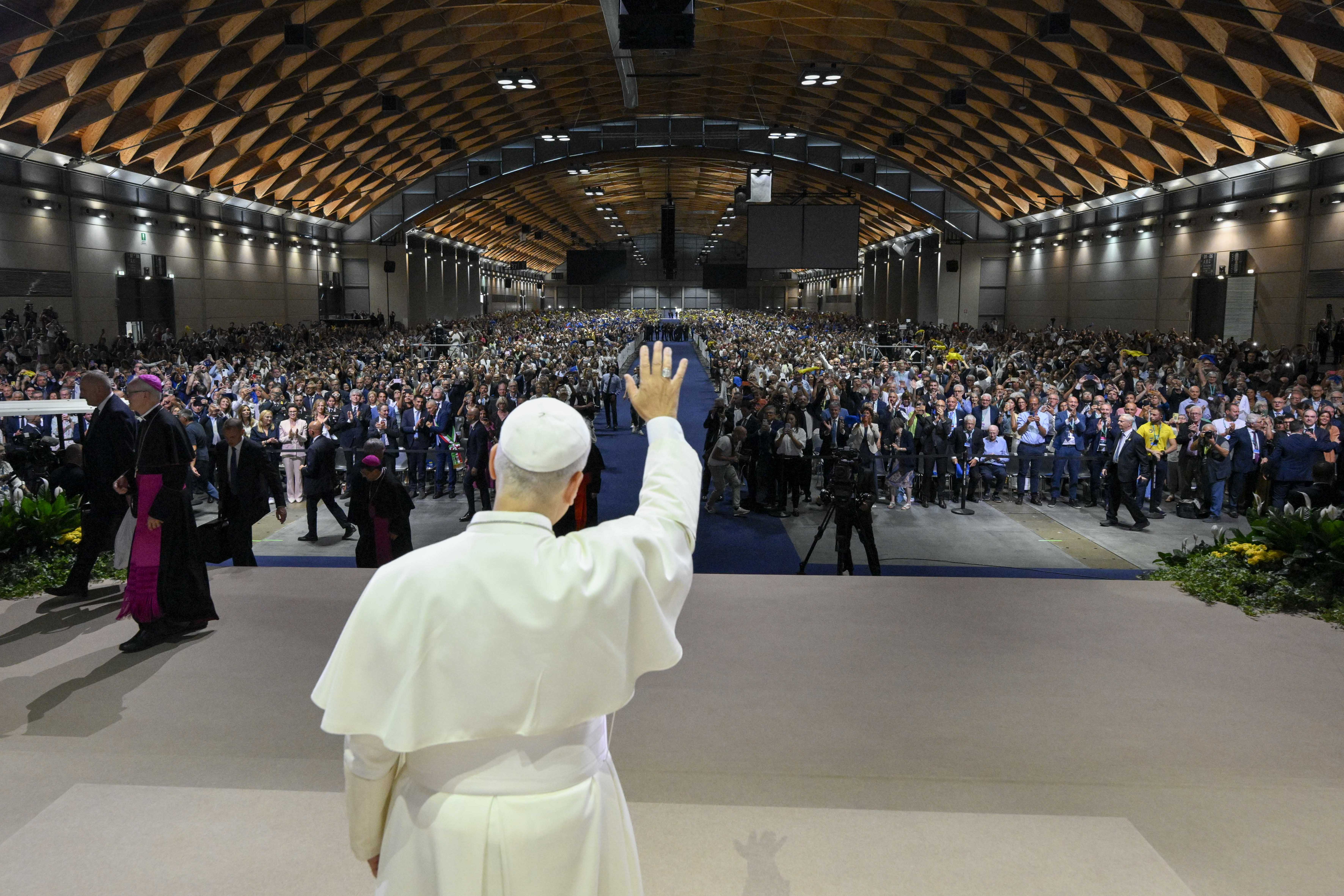
“Our heart, so big and capable of loving, should never be closed. Let’s find the way together to build a world of peace and love,” the pope said to a crowd of thousands.
A Catholic Charities affiliate sued Democratic Gov. Gretchen Whitmer and other state officials after the governor signed into law a ban on “conversion therapy.”
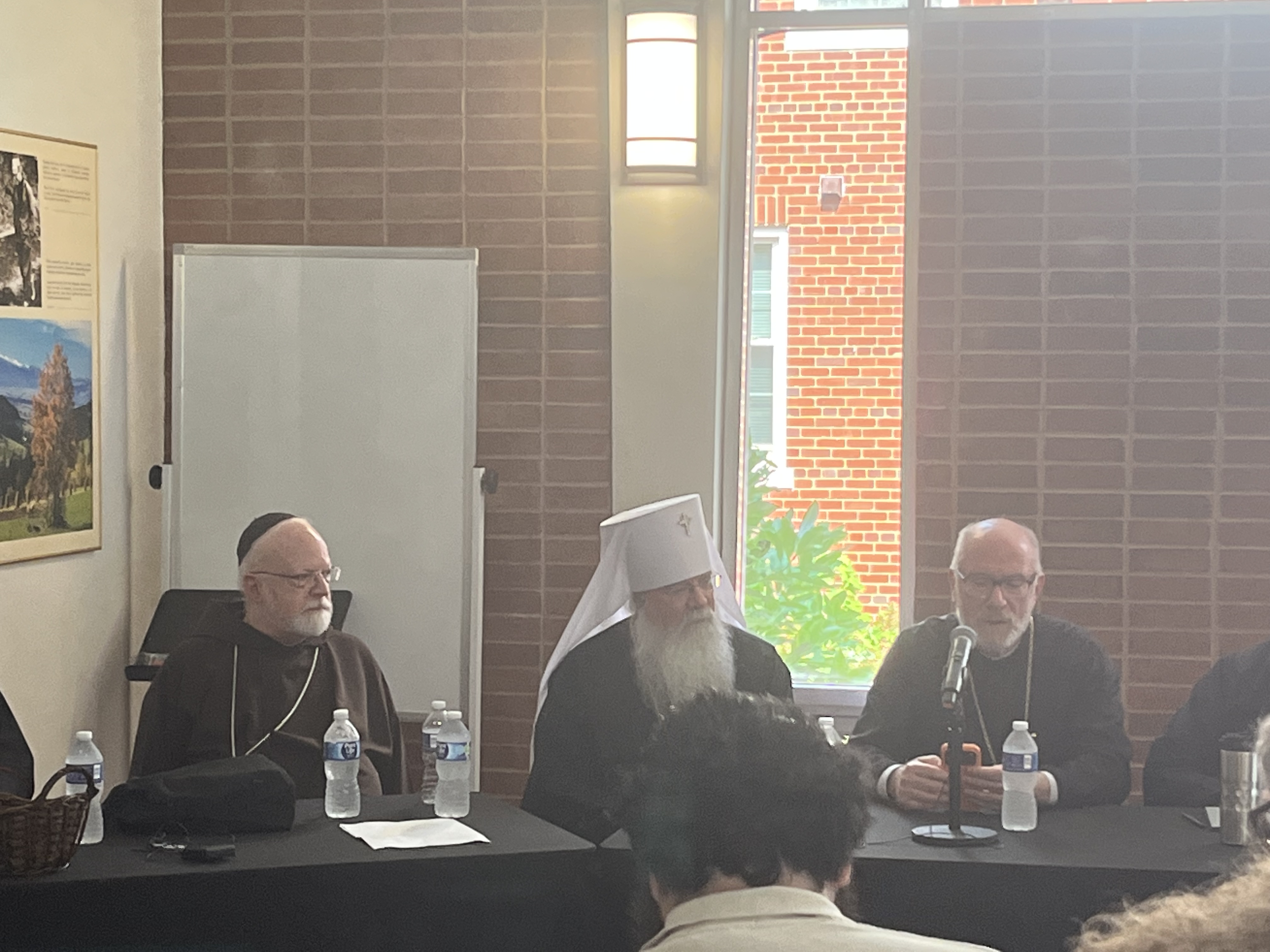
![Catholic, Orthodox bishops join in dialogue and prayer at Washington, D.C., conference #Catholic Catholic and Eastern Orthodox bishops exchanged dialogue and joined together in prayer at an ecumenical conference in Washington, D.C., this week with a hope that one day the Eastern and Western churches will be reunited.The conference, held at the retreat house for the St. John Paul II National Shrine on July 13–15, was organized by the Orientale Lumen Foundation. Jack Figel, an Eastern Catholic who founded the group, named it after St. John Paul II’s apostolic letter expressing hope for reunification.Speakers included the secretary for the Vatican Dicastery for Promoting Christian Unity, Archbishop Flavio Pace; the primate of the Orthodox Church in America, Metropolitan Tikhon Mollard; Cardinal Seán Patrick OʼMalley; Greek Orthodox Bishop Anthony Vrame; and Romanian Catholic Bishop John Michael Botean.“I grew up with — I lived with — the tension between East and West my whole life,” Figel told EWTN News.A reunification, Figel said, “all depends on the Holy Spirit.” He said: “It is going to be a miracle and it’s going to be on God’s time.”The conference included speeches by both Catholic and Orthodox bishops and joint panels. Prayer services were held in the Eastern form in which bishops from both traditions participated: a moleben to the Holy Spirit on Monday, daily vespers on Tuesday, and the Akathist to the Mother of God on Wednesday.Theological hurdlesRecent popes have had friendly relations with Eastern Orthodox patriarchs, and ongoing study by the Joint International Commission for Theological Dialogue between the Roman Catholic Church and the Orthodox Church is seeking to resolve theological disputes.In 2024, the commission set up two subcommittees to analyze two major points of contention: one for papal infallibility and the other for the Filioque.Papal infallibility refers to Vatican I’s teaching that the pope can infallibly define doctrines. The Filioque — Latin for “and the Son” — refers to the West adding the phrase in the Nicene Creed “the Holy Spirit … who proceeds from the Father ‘and the Son.’” Catholics argue this clarifies the Latin translation of the Creed, which was originally in Greek; but many Orthodox see it as changing the understanding of the Trinity.Vrame told EWTN News these theological issues continue to be a hurdle toward Catholic and Orthodox communion.The No. 1 issueSpeaking from the Orthodox perspective, he said papal infallibility and supremacy is the No. 1 issue. Although Orthodox acknowledge Ecumenical Patriarch Bartholomew as “first among equals” among patriarchs, “our governance structure allows for each national Church to govern itself,” he said.Dialogue with Rome, Vrame said, must address questions of “how do we begin to understand any claims of universal jurisdiction of the papacy” and “how do we understand any form of papal infallibility.” He said the Catholic embrace of synodality could improve dialogue on this issue.He said a major question is what unity would look like and pointed toward Rome’s relationship with Eastern Catholics as a possible example, saying they are “in communion with Rome,” but “Rome allowed them to retain their distinctive rites and practices.” However, he noted historical complications with Rome’s past attempts to Latinize Eastern Catholics and a major question to settle is: “What would unity do?”Mollard also told EWTN News “the whole question of primacy and synodality” remains a major issue, along with “centuries of separation,” which he said “doesn’t help either.”Pace told EWTN News that the subcommittee addressing infallibility has to “prepare a very good draft” on the matter that the full committee made up of Catholic and Orthodox leaders “can discuss and approve.”Steps toward unityAs the hierarchy tries to work out millennium-old theological disputes, Mollard said another step is “trying to get from the theological [dialogue] to the implementation” of a stronger relationship but warned “everyone’s afraid to do anything.”“We do have to practice these things,” he said in his speech. “Let’s work together and see if we can find our unity in Christ … [and] work on the structures that could bring that about more formally.”“Prayer and humility are always good,” Mollard said.He told EWTN News that some steps could be jointly “caring for the poor” or “feeding the hungry,” which is “the most direct way that collaboration can take place” at this time. In his speech, O’Malley called for joint prayer and study sessions, joint pastoral letters and statements, and joint works of mercy.Figel suggested Catholic and Orthodox parishes should “pray once a month for unity for at least 10 or 15 minutes.”Ultimately, Vrame said full unity and communion would be expressed “in the Eucharist” if all issues are resolved.“We don’t share the Eucharist,” he said. “That would be the culminating moment.”Dialogue and the laityMany bishops said dialogue and bonds should take place among laity too, with Botean saying in his speech that ecumenism cannot just be “at the level of academics.”“Without the face-to-face stuff, … we’re going to get nowhere,” he said. “And if our competition is the internet, we have more driving us apart than together.”Botean warned against hostile and uncharitable exchanges, many of which occur on social media, saying: “When we become unloving because of our faith, we’re on the wrong track.”Lizbeth Moncada, a senior at Florida Atlantic University who attended the conference, told EWTN News that she has “a lot of friends who are Eastern Orthodox and Oriental Orthodox” but agreed that online dialogue can often be “polarizing.”She said exchanges online can be “very disheartening” and she has “wanted to stop engaging in these conversations” at times. Yet, she said discussions like what occurred at the conference are “encouraging.”Andrew Likoudis of the ecumenical Likoudis Legacy Foundation, told EWTN News: “I try not to even engage in online discourse because of how toxic it is.” Yet, he said “the discourse here is much healthier” and allows Catholics and Orthodox Christians to “cross theological boundaries and retain the integrity of our own traditions without compromise.”Vrame, commenting on dialogue, said “beating up on somebody else is not very Christian … no matter what you think of their position.” He said people can have “respectful disagreements … without having to beat up on somebody,” saying that’s “no way to show love for your neighbor.”He said it’s good that people are passionate about their faith but posed the question: “Are we passionate in a way that reflects Christ and Christianity?”](http://unitedyam.com/wp-content/uploads/2026/07/catholic-orthodox-bishops-join-in-dialogue-and-prayer-at-washington-d-c-conference-catholic-catholic-and-eastern-orthodox-bishops-exchanged-dialogue-and-joined-together-in-prayer-at-an-ecumenical-scaled.jpg "Catholic, Orthodox bishops join in dialogue and prayer at Washington, D.C., conference #Catholic Catholic and Eastern Orthodox bishops exchanged dialogue and joined together in prayer at an ecumenical conference in Washington, D.C., this week with a hope that one day the Eastern and Western churches will be reunited.The conference, held at the retreat house for the St. John Paul II National Shrine on July 13–15, was organized by the Orientale Lumen Foundation. Jack Figel, an Eastern Catholic who founded the group, named it after St. John Paul II’s apostolic letter expressing hope for reunification.Speakers included the secretary for the Vatican Dicastery for Promoting Christian Unity, Archbishop Flavio Pace; the primate of the Orthodox Church in America, Metropolitan Tikhon Mollard; Cardinal Seán Patrick OʼMalley; Greek Orthodox Bishop Anthony Vrame; and Romanian Catholic Bishop John Michael Botean.“I grew up with — I lived with — the tension between East and West my whole life,” Figel told EWTN News.A reunification, Figel said, “all depends on the Holy Spirit.” He said: “It is going to be a miracle and it’s going to be on God’s time.”The conference included speeches by both Catholic and Orthodox bishops and joint panels. Prayer services were held in the Eastern form in which bishops from both traditions participated: a moleben to the Holy Spirit on Monday, daily vespers on Tuesday, and the Akathist to the Mother of God on Wednesday.Theological hurdlesRecent popes have had friendly relations with Eastern Orthodox patriarchs, and ongoing study by the Joint International Commission for Theological Dialogue between the Roman Catholic Church and the Orthodox Church is seeking to resolve theological disputes.In 2024, the commission set up two subcommittees to analyze two major points of contention: one for papal infallibility and the other for the Filioque.Papal infallibility refers to Vatican I’s teaching that the pope can infallibly define doctrines. The Filioque — Latin for “and the Son” — refers to the West adding the phrase in the Nicene Creed “the Holy Spirit … who proceeds from the Father ‘and the Son.’” Catholics argue this clarifies the Latin translation of the Creed, which was originally in Greek; but many Orthodox see it as changing the understanding of the Trinity.Vrame told EWTN News these theological issues continue to be a hurdle toward Catholic and Orthodox communion.The No. 1 issueSpeaking from the Orthodox perspective, he said papal infallibility and supremacy is the No. 1 issue. Although Orthodox acknowledge Ecumenical Patriarch Bartholomew as “first among equals” among patriarchs, “our governance structure allows for each national Church to govern itself,” he said.Dialogue with Rome, Vrame said, must address questions of “how do we begin to understand any claims of universal jurisdiction of the papacy” and “how do we understand any form of papal infallibility.” He said the Catholic embrace of synodality could improve dialogue on this issue.He said a major question is what unity would look like and pointed toward Rome’s relationship with Eastern Catholics as a possible example, saying they are “in communion with Rome,” but “Rome allowed them to retain their distinctive rites and practices.” However, he noted historical complications with Rome’s past attempts to Latinize Eastern Catholics and a major question to settle is: “What would unity do?”Mollard also told EWTN News “the whole question of primacy and synodality” remains a major issue, along with “centuries of separation,” which he said “doesn’t help either.”Pace told EWTN News that the subcommittee addressing infallibility has to “prepare a very good draft” on the matter that the full committee made up of Catholic and Orthodox leaders “can discuss and approve.”Steps toward unityAs the hierarchy tries to work out millennium-old theological disputes, Mollard said another step is “trying to get from the theological [dialogue] to the implementation” of a stronger relationship but warned “everyone’s afraid to do anything.”“We do have to practice these things,” he said in his speech. “Let’s work together and see if we can find our unity in Christ … [and] work on the structures that could bring that about more formally.”“Prayer and humility are always good,” Mollard said.He told EWTN News that some steps could be jointly “caring for the poor” or “feeding the hungry,” which is “the most direct way that collaboration can take place” at this time. In his speech, O’Malley called for joint prayer and study sessions, joint pastoral letters and statements, and joint works of mercy.Figel suggested Catholic and Orthodox parishes should “pray once a month for unity for at least 10 or 15 minutes.”Ultimately, Vrame said full unity and communion would be expressed “in the Eucharist” if all issues are resolved.“We don’t share the Eucharist,” he said. “That would be the culminating moment.”Dialogue and the laityMany bishops said dialogue and bonds should take place among laity too, with Botean saying in his speech that ecumenism cannot just be “at the level of academics.”“Without the face-to-face stuff, … we’re going to get nowhere,” he said. “And if our competition is the internet, we have more driving us apart than together.”Botean warned against hostile and uncharitable exchanges, many of which occur on social media, saying: “When we become unloving because of our faith, we’re on the wrong track.”Lizbeth Moncada, a senior at Florida Atlantic University who attended the conference, told EWTN News that she has “a lot of friends who are Eastern Orthodox and Oriental Orthodox” but agreed that online dialogue can often be “polarizing.”She said exchanges online can be “very disheartening” and she has “wanted to stop engaging in these conversations” at times. Yet, she said discussions like what occurred at the conference are “encouraging.”Andrew Likoudis of the ecumenical Likoudis Legacy Foundation, told EWTN News: “I try not to even engage in online discourse because of how toxic it is.” Yet, he said “the discourse here is much healthier” and allows Catholics and Orthodox Christians to “cross theological boundaries and retain the integrity of our own traditions without compromise.”Vrame, commenting on dialogue, said “beating up on somebody else is not very Christian … no matter what you think of their position.” He said people can have “respectful disagreements … without having to beat up on somebody,” saying that’s “no way to show love for your neighbor.”He said it’s good that people are passionate about their faith but posed the question: “Are we passionate in a way that reflects Christ and Christianity?”")
Catholic and Orthodox bishops discussed steps toward unity and the importance of cooperation and friendly dialogue.
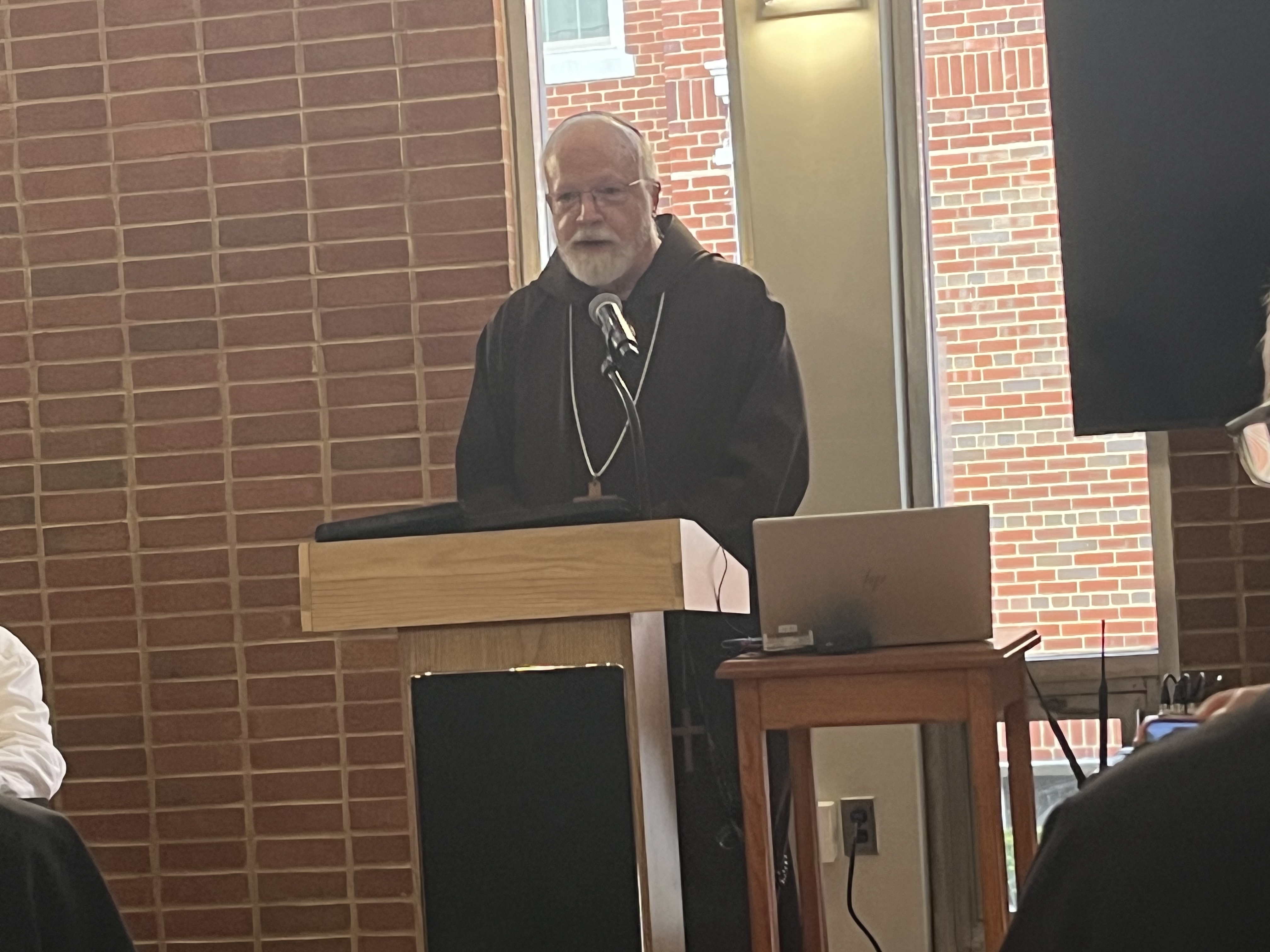
![Cardinal O’Malley at Catholic-Orthodox conference: ‘Come together and pray for unity’ #Catholic WASHINGTON — Cardinal Seán Patrick OʼMalley, retired archbishop of Boston, encouraged Catholic and Eastern Orthodox Christians to pray together for reunification at a joint conference focused on healing the nearly 1,000-year schism between the churches.“Come together and pray for unity,” O’Malley said at the conference, hosted by the Orientale Lumen Foundation at the retreat house for the St. John Paul II National Shrine on July 13–15.Speakers included Roman Catholic, Eastern Catholic, and Eastern Orthodox bishops, and a few dozen laity and clergy focused on ecumenism attended. Along with O’Malley, speakers included Archbishop Flavio Pace — secretary of the Vatican’s Dicastery for Promoting Christian Unity — and Metropolitan Tikhon Mollard, primate of the Orthodox Church in America (OCA).O’Malley encouraged concrete steps to integrate Catholic and Orthodox communities, one of the most important of which was “praying together.” Just prior to his speech, the Catholic and Orthodox clergy — including O’Malley, Pace, and Mollard — prayed daily vespers together in the form used in Eastern churches.The cardinal, speaking to those gathered, said unity will ultimately be achieved as a gift to the faithful granted by Christ and will come about “how he wills [it].” He said he considers joint prayer to be crucial because it is the Holy Spirit who will “illuminate the way” toward East-West communion.‘Work for unity’In his address, O’Malley discussed his concern with the disunity of Christianity, which he said “weakens our ability [as Christians] to proclaim the Gospel with coherence and authority.”He recalled his early work in the 1970s with the Order of Friars Minor Capuchin. The order was deeply involved in missionary work in Papua New Guinea. Although O’Malley himself was not a missionary there, he spoke about conversations with colleagues who were working with people accepting Christianity in large numbers.O’Malley noted that when new converts had learned about the various Christian denominations, many felt “sad and embarrassed.” Although many Christians view the disunity as “normative,” he said, the people of Papua New Guinea correctly recognized it as “scandalous.”“All disciples of Jesus Christ must feel an impulse to work for unity among Christians,” O’Malley said.O’Malley said Catholics should see Orthodoxy as the “greatest possibility of success in this task in fulfilling Christ’s wish so that we all become one so the world may believe.” He noted that the two share “so many saints and devotions” and are more similar to Catholics in theology than any other Christian community.He expressed joy that many Orthodox churches send representatives to meetings held by the Vatican and the U.S. Conference of Catholic Bishops, and that the Catholic Church also sent representatives to the Orthodox Council of Crete in 2016. Yet, he encouraged a stronger bond.O’Malley urged the bodies to “consider the possibility of joint pastoral letters or statements” on issues of mutual agreement like world hunger, euthanasia, and abortion. He said they should establish committees together to organize joint prayer, study sessions, and works of mercy.His idea of unity, he explained, would be “communion without absorption” and said there is a difference between “unity and uniformity.” He said people should look to the Eastern Catholic Churches as a model, saying “they are bridges for reconciliation and laboratories for synodal communion.”Although Rome’s relationship with the Eastern Catholics was not always perfect (O’Malley noted historical attempts at forced Latinization), the cardinal said there is an opportunity to work more closely with Eastern Catholics as part of ecumenical efforts, focused on “greater respect for their uniqueness.”Mollard, speaking from the Orthodox position, echoed O’Malley’s desire for unity and the feeling of pain over continued separation.“It affects the faithful in the parishes and how they live their lives,” the metropolitan said. “And perhaps encourage[s] us all to not just reach out and educate but really inspire in people that faith in Christ and love for the Church can drive … [the path toward] unity.”O’Malley told EWTN News that ecumenism requires “different groups that would be Catholic and Orthodox, working together,” and Church leaders should be “letting people know the progress that has been made in the dialogue.”He said Eastern Orthodox Christians “have the sacraments,” they have apostolic succession, and “the differences are not great.” Although theological disputes remain a division between Catholicism and Orthodoxy, he said he believes the causes of the schism were more political and cultural.“Most Catholics and Orthodox in the pews are not focused on those fine points of theology,” O’Malley said.Ongoing Vatican ecumenical workMany theological disputes, however, are being hashed out at the highest levels of the Catholic and Eastern Orthodox Churches. Some of the biggest include questions of papal supremacy, primacy, and jurisdiction as well as the language of the Nicene Creed and subsequently certain details about the Holy Trinity.Pace, who flew in from Rome, discussed some of the history and recent progress on ecumenism related to these subjects during his speech, noting that the end goal is “full unity” between the East and the West.
Archbishop Flavio Pace, secretary of the Vatican’s Dicastery for Promoting Christian Unity, speaks at the Orientale Lumen Foundation conference at the retreat house for the St. John Paul II National Shrine in Washington, D.C., on July 15, 2026. | Credit: Tyler Arnold/EWTN News
The Joint International Commission for Theological Dialogue between the Roman Catholic Church and the Orthodox Church, formed in 1980, created two subcommittees in 2024. One focuses on infallibility, which is the current priority. The other is about the dispute about the Nicene Creed."We have to prepare a very good draft,” Pace told EWTN News.He said once the subcommittee completes its draft on infallibility, the body will consider a call for a full meeting for approval. He said the subcommittee must “arrive to a good document that the [full committee] can discuss and approve.”The First Vatican Council teaches that the pope speaks infallibly on matters of faith and morals when defining matters of doctrine and invoking his papal authority, binding the declaration on the entire Church.Bishop Anthony Vrame, a Greek Orthodox bishop and director of Holy Cross Orthodox Press, said in a panel discussion that Orthodoxy recognizes the indefectibility of councils: “When the Church gathers together in council, … no error is possible.” Yet, papal infallibility is different, as it is “designated to one person.”Cardinal Kurt Koch, president of the Vatican’s Dicastery for Promoting Christian Unity, offered a prerecorded video message for the conference, stating that he hopes the eventual documents will be received by the Catholic Church and Eastern Orthodox churches.Koch emphasized the importance of clergy informing the laity when there are developments, so the progress is “not to be remained known only by experts.”](http://unitedyam.com/wp-content/uploads/2026/07/cardinal-omalley-at-catholic-orthodox-conference-come-together-and-pray-for-unity-catholic-washington-cardinal-sean-patrick-ocabcmalley-retired-archbishop-of-scaled.jpg "Cardinal O’Malley at Catholic-Orthodox conference: ‘Come together and pray for unity’ #Catholic WASHINGTON — Cardinal Seán Patrick OʼMalley, retired archbishop of Boston, encouraged Catholic and Eastern Orthodox Christians to pray together for reunification at a joint conference focused on healing the nearly 1,000-year schism between the churches.“Come together and pray for unity,” O’Malley said at the conference, hosted by the Orientale Lumen Foundation at the retreat house for the St. John Paul II National Shrine on July 13–15.Speakers included Roman Catholic, Eastern Catholic, and Eastern Orthodox bishops, and a few dozen laity and clergy focused on ecumenism attended. Along with O’Malley, speakers included Archbishop Flavio Pace — secretary of the Vatican’s Dicastery for Promoting Christian Unity — and Metropolitan Tikhon Mollard, primate of the Orthodox Church in America (OCA).O’Malley encouraged concrete steps to integrate Catholic and Orthodox communities, one of the most important of which was “praying together.” Just prior to his speech, the Catholic and Orthodox clergy — including O’Malley, Pace, and Mollard — prayed daily vespers together in the form used in Eastern churches.The cardinal, speaking to those gathered, said unity will ultimately be achieved as a gift to the faithful granted by Christ and will come about “how he wills [it].” He said he considers joint prayer to be crucial because it is the Holy Spirit who will “illuminate the way” toward East-West communion.‘Work for unity’In his address, O’Malley discussed his concern with the disunity of Christianity, which he said “weakens our ability [as Christians] to proclaim the Gospel with coherence and authority.”He recalled his early work in the 1970s with the Order of Friars Minor Capuchin. The order was deeply involved in missionary work in Papua New Guinea. Although O’Malley himself was not a missionary there, he spoke about conversations with colleagues who were working with people accepting Christianity in large numbers.O’Malley noted that when new converts had learned about the various Christian denominations, many felt “sad and embarrassed.” Although many Christians view the disunity as “normative,” he said, the people of Papua New Guinea correctly recognized it as “scandalous.”“All disciples of Jesus Christ must feel an impulse to work for unity among Christians,” O’Malley said.O’Malley said Catholics should see Orthodoxy as the “greatest possibility of success in this task in fulfilling Christ’s wish so that we all become one so the world may believe.” He noted that the two share “so many saints and devotions” and are more similar to Catholics in theology than any other Christian community.He expressed joy that many Orthodox churches send representatives to meetings held by the Vatican and the U.S. Conference of Catholic Bishops, and that the Catholic Church also sent representatives to the Orthodox Council of Crete in 2016. Yet, he encouraged a stronger bond.O’Malley urged the bodies to “consider the possibility of joint pastoral letters or statements” on issues of mutual agreement like world hunger, euthanasia, and abortion. He said they should establish committees together to organize joint prayer, study sessions, and works of mercy.His idea of unity, he explained, would be “communion without absorption” and said there is a difference between “unity and uniformity.” He said people should look to the Eastern Catholic Churches as a model, saying “they are bridges for reconciliation and laboratories for synodal communion.”Although Rome’s relationship with the Eastern Catholics was not always perfect (O’Malley noted historical attempts at forced Latinization), the cardinal said there is an opportunity to work more closely with Eastern Catholics as part of ecumenical efforts, focused on “greater respect for their uniqueness.”Mollard, speaking from the Orthodox position, echoed O’Malley’s desire for unity and the feeling of pain over continued separation.“It affects the faithful in the parishes and how they live their lives,” the metropolitan said. “And perhaps encourage[s] us all to not just reach out and educate but really inspire in people that faith in Christ and love for the Church can drive … [the path toward] unity.”O’Malley told EWTN News that ecumenism requires “different groups that would be Catholic and Orthodox, working together,” and Church leaders should be “letting people know the progress that has been made in the dialogue.”He said Eastern Orthodox Christians “have the sacraments,” they have apostolic succession, and “the differences are not great.” Although theological disputes remain a division between Catholicism and Orthodoxy, he said he believes the causes of the schism were more political and cultural.“Most Catholics and Orthodox in the pews are not focused on those fine points of theology,” O’Malley said.Ongoing Vatican ecumenical workMany theological disputes, however, are being hashed out at the highest levels of the Catholic and Eastern Orthodox Churches. Some of the biggest include questions of papal supremacy, primacy, and jurisdiction as well as the language of the Nicene Creed and subsequently certain details about the Holy Trinity.Pace, who flew in from Rome, discussed some of the history and recent progress on ecumenism related to these subjects during his speech, noting that the end goal is “full unity” between the East and the West.
Archbishop Flavio Pace, secretary of the Vatican’s Dicastery for Promoting Christian Unity, speaks at the Orientale Lumen Foundation conference at the retreat house for the St. John Paul II National Shrine in Washington, D.C., on July 15, 2026. | Credit: Tyler Arnold/EWTN News
The Joint International Commission for Theological Dialogue between the Roman Catholic Church and the Orthodox Church, formed in 1980, created two subcommittees in 2024. One focuses on infallibility, which is the current priority. The other is about the dispute about the Nicene Creed.\"We have to prepare a very good draft,” Pace told EWTN News.He said once the subcommittee completes its draft on infallibility, the body will consider a call for a full meeting for approval. He said the subcommittee must “arrive to a good document that the [full committee] can discuss and approve.”The First Vatican Council teaches that the pope speaks infallibly on matters of faith and morals when defining matters of doctrine and invoking his papal authority, binding the declaration on the entire Church.Bishop Anthony Vrame, a Greek Orthodox bishop and director of Holy Cross Orthodox Press, said in a panel discussion that Orthodoxy recognizes the indefectibility of councils: “When the Church gathers together in council, … no error is possible.” Yet, papal infallibility is different, as it is “designated to one person.”Cardinal Kurt Koch, president of the Vatican’s Dicastery for Promoting Christian Unity, offered a prerecorded video message for the conference, stating that he hopes the eventual documents will be received by the Catholic Church and Eastern Orthodox churches.Koch emphasized the importance of clergy informing the laity when there are developments, so the progress is “not to be remained known only by experts.”")
Cardinal Seán O’Malley discussed ways in which Catholics and Orthodox Christians can build closer bonds. Archbishop Flavio Pace discussed ongoing Vatican efforts to help bring about unity.
![Advocates warn New Jersey law could criminalize prayer outside abortion clinics #Catholic New Jersey Gov. Mikie Sherrill on Aug. 20 signed a bill that criminalizes “interference” with “reproductive” or “gender-affirming” care, a law that opponents say has serious implications for freedom of speech.The law criminalizes inflicting “emotional harm” against those seeking or providing “reproductive health care services.” It also bans filming and sharing videos within 100 feet of an abortion clinic.Under the new law, an officer can “order the immediate dispersal of a gathering that substantially impedes access to or departure from an entrance or driveway to a reproductive or gender-affirming health care facility during the business hours of the facility.”The measure is a type of “bubble” law, which creates zones around abortion clinics where free speech is limited in “buffer zones.”Violations of the law could be punished by up to 18 months’ imprisonment and/or a $10,000 fine.New Jersey Right to Life Executive Director Marie Tasy criticized the law, describing its provisions as “inherently subjective” and the law itself as “a serious danger to free speech.”“Peaceful sidewalk counseling, prayer, holding signs, or simply offering help and alternatives outside a facility can easily be labeled ‘intimidation’ by someone who claims to feel threatened, leaving pro-life advocates open to criminal charges that are difficult to disprove and chilling constitutionally protected expression,” Tasy said.Catholic diocese leads campaign against abortion amendment referendumThe Diocese of Arlington, Virginia, is leading a campaign to oppose an amendment referendum that could create a right to abortion in the state constitution as well as another measure that would remove a same-sex marriage ban in the state.The campaign Catholics Vote No is opposing the ballot measure titled the “Virginia Right to Reproductive Freedom Amendment” as well as the “Virginia Remove Constitutional Same-Sex Marriage Ban Amendment.”Arlington Bishop Michael Burbidge describes the measures as “very serious legal threats to human life and marriage” in a video statement.“If written into Virginia’s Constitution, these unjust amendments would be extraordinarily difficult to reverse,” the campaign website states. The abortion amendment would “effectively” make Virginia “a sanctuary for abortion and commercial abortion businesses,” it states. “Basic health and safety standards that protect women from harm would be eliminated, parents would be pushed out of life-altering decisions involving their family and children, and unregulated abortions would be possible, performed even on healthy babies up to the moment of birth for any reason with no limits,” the campaign says.Live Action says it will keep referring to abortion as ‘killing’The pro-life group Live Action has said it will not stop calling abortion “killing” after a pro-abortion group threatened the organization with legal action.Live Action made the declaration in response to a cease-and-desist letter sent by the abortion-supporting legal group Amplify Legal. The dispute is over claims made by Live Action in multiple articles about abortion cases where the unborn baby had a serious life-threatening diagnosis.“Each of our clients has described the decision to end their wanted pregnancy as the most compassionate choice for their own health, future fertility, and family’s wellbeing,” the letter read, arguing that Live Action News “repeatedly [wrote] about our clients intentionally ‘killing’ their babies.”In its response Live Action said it would not follow the request to “delete years of reporting and commentary on the most contested moral and political question in American public life.”“We are fighting for a culture and legal system that respects every human life and refuses to treat the sick, disabled, or unborn as disposable,” said Live Action Founder and President Lila Rose in a statement. “Legal threats against our First Amendment right to speak will not change that mission.”Catholic dad Mark Houck continues pro-life work after federal legal battleCatholic father Mark Houck is joining CatholicVote’s development team as a gift officer, the group announced this week. Houck and his family are adjusting to life after their home in rural eastern Pennsylvania was raided by 20 armed federal agents in the early hours of Sept. 23, 2022. Houck was arrested in front of his family and interrogated for six hours. The incident led to nearly four years of legal battles, which concluded with the family earning a seven-figure settlement for damages.“I am still very much unpacking spiritually what happened to us — very profound and certainly God is revealing his ultimate plan for us through it all, CatholicVote being the latest direction he has taken us,” Houck told EWTN News. “We are so happy to be with an organization that shares our passion for our faith, the pro-life cause, and, of course, advocacy in the public square.”Houck’s role in the organization "will extend beyond that [of a gift officer],” CatholicVote spokeswoman Laurie Olsen told EWTN News. He will “have a voice in all our pro-life efforts,” she said.Houck, meanwhile, told EWTN News: “We measure success by one soul at a time.”“Save a soul, you save your own soul. It is that one soul that gets me going and up early to head into Philadelphia and serve the common good with sidewalk advocacy,” he said.Federal court strikes down Indiana abortion parental-consent lawThe U.S. Court of Appeals for the 7th Circuit ruled on Aug. 18 against an Indiana law that prevents doctors from providing abortion assistance to minors without parental consent.The 54-page ruling struck down a law that required parental consent to aid or assist a minor in obtaining an abortion. The ruling said that the parental-consent law violated the First Amendment.](http://unitedyam.com/wp-content/uploads/2026/08/advocates-warn-new-jersey-law-could-criminalize-prayer-outside-abortion-clinics-catholic-new-jersey-gov-mikie-sherrill-on-aug-20-signed-a-bill-that-criminalizes-interference-with.jpg "Advocates warn New Jersey law could criminalize prayer outside abortion clinics #Catholic New Jersey Gov. Mikie Sherrill on Aug. 20 signed a bill that criminalizes “interference” with “reproductive” or “gender-affirming” care, a law that opponents say has serious implications for freedom of speech.The law criminalizes inflicting “emotional harm” against those seeking or providing “reproductive health care services.” It also bans filming and sharing videos within 100 feet of an abortion clinic.Under the new law, an officer can “order the immediate dispersal of a gathering that substantially impedes access to or departure from an entrance or driveway to a reproductive or gender-affirming health care facility during the business hours of the facility.”The measure is a type of “bubble” law, which creates zones around abortion clinics where free speech is limited in “buffer zones.”Violations of the law could be punished by up to 18 months’ imprisonment and/or a $10,000 fine.New Jersey Right to Life Executive Director Marie Tasy criticized the law, describing its provisions as “inherently subjective” and the law itself as “a serious danger to free speech.”“Peaceful sidewalk counseling, prayer, holding signs, or simply offering help and alternatives outside a facility can easily be labeled ‘intimidation’ by someone who claims to feel threatened, leaving pro-life advocates open to criminal charges that are difficult to disprove and chilling constitutionally protected expression,” Tasy said.Catholic diocese leads campaign against abortion amendment referendumThe Diocese of Arlington, Virginia, is leading a campaign to oppose an amendment referendum that could create a right to abortion in the state constitution as well as another measure that would remove a same-sex marriage ban in the state.The campaign Catholics Vote No is opposing the ballot measure titled the “Virginia Right to Reproductive Freedom Amendment” as well as the “Virginia Remove Constitutional Same-Sex Marriage Ban Amendment.”Arlington Bishop Michael Burbidge describes the measures as “very serious legal threats to human life and marriage” in a video statement.“If written into Virginia’s Constitution, these unjust amendments would be extraordinarily difficult to reverse,” the campaign website states. The abortion amendment would “effectively” make Virginia “a sanctuary for abortion and commercial abortion businesses,” it states. “Basic health and safety standards that protect women from harm would be eliminated, parents would be pushed out of life-altering decisions involving their family and children, and unregulated abortions would be possible, performed even on healthy babies up to the moment of birth for any reason with no limits,” the campaign says.Live Action says it will keep referring to abortion as ‘killing’The pro-life group Live Action has said it will not stop calling abortion “killing” after a pro-abortion group threatened the organization with legal action.Live Action made the declaration in response to a cease-and-desist letter sent by the abortion-supporting legal group Amplify Legal. The dispute is over claims made by Live Action in multiple articles about abortion cases where the unborn baby had a serious life-threatening diagnosis.“Each of our clients has described the decision to end their wanted pregnancy as the most compassionate choice for their own health, future fertility, and family’s wellbeing,” the letter read, arguing that Live Action News “repeatedly [wrote] about our clients intentionally ‘killing’ their babies.”In its response Live Action said it would not follow the request to “delete years of reporting and commentary on the most contested moral and political question in American public life.”“We are fighting for a culture and legal system that respects every human life and refuses to treat the sick, disabled, or unborn as disposable,” said Live Action Founder and President Lila Rose in a statement. “Legal threats against our First Amendment right to speak will not change that mission.”Catholic dad Mark Houck continues pro-life work after federal legal battleCatholic father Mark Houck is joining CatholicVote’s development team as a gift officer, the group announced this week. Houck and his family are adjusting to life after their home in rural eastern Pennsylvania was raided by 20 armed federal agents in the early hours of Sept. 23, 2022. Houck was arrested in front of his family and interrogated for six hours. The incident led to nearly four years of legal battles, which concluded with the family earning a seven-figure settlement for damages.“I am still very much unpacking spiritually what happened to us — very profound and certainly God is revealing his ultimate plan for us through it all, CatholicVote being the latest direction he has taken us,” Houck told EWTN News. “We are so happy to be with an organization that shares our passion for our faith, the pro-life cause, and, of course, advocacy in the public square.”Houck’s role in the organization \"will extend beyond that [of a gift officer],” CatholicVote spokeswoman Laurie Olsen told EWTN News. He will “have a voice in all our pro-life efforts,” she said.Houck, meanwhile, told EWTN News: “We measure success by one soul at a time.”“Save a soul, you save your own soul. It is that one soul that gets me going and up early to head into Philadelphia and serve the common good with sidewalk advocacy,” he said.Federal court strikes down Indiana abortion parental-consent lawThe U.S. Court of Appeals for the 7th Circuit ruled on Aug. 18 against an Indiana law that prevents doctors from providing abortion assistance to minors without parental consent.The 54-page ruling struck down a law that required parental consent to aid or assist a minor in obtaining an abortion. The ruling said that the parental-consent law violated the First Amendment.")