success

After stillbirth loss, mother of 7 returns to school to help others heal #Catholic After experiencing an unimaginable loss, Kelly Helsel felt called to begin a new chapter. Following 17 years as a stay-at-home mother, she returned to school to pursue her dream of becoming a counselor — hoping to offer others the same compassionate support and Catholic guidance that helped bring healing to her own life.In 2023 Helsel’s daughter, Mary Catherine, was stillborn. The experience and grief was ultimately “a huge catalyst to me going back to school,” Helsel told EWTN News.“I think death has an interesting way of snapping your priorities in line,” she said. “And through the death of our daughter, I understood that tomorrow was not promised. And I had been holding this dream very closely for 17 years, just trusting,” she said.“Much of my healing process after the stillbirth of our daughter was helped along by solid Catholic counseling,” she said. “So I just felt a whisper at first, and then I felt like, ‘I can turn around and be this for someone else in need.’ And so I did.”Path back to schoolA native of Arizona, Helsel met her now-husband, Doug, in high school. She then attended Northern Arizona University to receive a bachelorʼs degree in psychology with the hopes of becoming a counselor, but motherhood ultimately became her first priority.“My firstborn … was born during finals week of my bachelorʼs degree,” Helsel said. “I actually had a positive pregnancy test the day before I was scheduled to take the GRE [Graduate Record Examination].”“I just knew that motherhood was the priority and that Godʼs timing would take care of things. So I stayed at home,” she said.Helsel decided to put her plans of working as a counselor on the side and focus on her growing family. She and her husband had seven children over the next 17 years, but after the loss of their sixth child she felt called to switch her plans and return to school. “We just started taking one step in front of the other,” she said. Helsel started by applying to the University of Mary’s master’s program for counseling about six months after her daughter’s passing but was thrown an unexpected “curveball” during the process.“On the feast of the Annunciation, I got in. But then I also had a positive pregnancy test with my daughter, Isabel, on the very same day.”“I remember standing in the bathroom with my husband with my phone in one hand with an acceptance letter, and on the counter was a positive pregnancy test with our seventh baby.”Motherhood provided ‘the skills to be a fantastic student’Despite navigating grief, welcoming a new baby, and continuing to care for the rest of her family, Helsel not only decided to return to school but also opted for a five-semester accelerated program.She graduated on April 25 with a 4.0 GPA and her whole family by her side. It was all possible not in spite of her 17 years as a stay-at-home mom but because of the experience.
 
 Kelly Helsel, her husband Doug Helsel, and their children at her graduation a the University of Mary on April 25, 2026. | Credit: Photo courtesy of Kelly Helsel
 
 “I actually think that motherhood, 17 years of motherhood, gave me the skills to be a fantastic student,” she said. “I learned time management. I learned prioritization. I learned how to ask for help. I learned all kinds of things in the trenches of motherhood that gave me the opportunity to really thrive at UMary.” “I guess the loss of my daughter really showed me that like all things are ‘figure-out-able,’” she said. “When youʼve gone through something like that, it makes you unafraid to do really big things.”“I knew that I could just cannonball into the deep end and we could do this. And my husband was an amazing support throughout the program. But, Isabel was the curveball of all curveballs,” she said.“She was born during Christmas break and I just jumped back in in January. I didnʼt take any time off,” she said. "I would be in a rocking chair breastfeeding her, and my laptop is sitting next to me and Iʼm listening to a lecture.”“I became a pro at using the dictation tool on Microsoft Word” so “I could hold my baby and dictate a paper,” she said. “It was just a really wild time. I learned to be extremely flexible and gentle with myself ... But I just knew God was like, ‘go, go right now.’”“It was super bumpy at some points,“ she said. ”But I chose the University of Mary because I feel like [University of Mary president] Monsignor [James] Shea and the university really put their money where their mouth is in terms of supporting nontraditional students — especially mothers.”“All of my professors were extremely accommodating with extensions if I needed one. A few professors gave me early finals because Isabel was born right at the end of that first semester,” she said. “So the University of Mary was really crucial to my success because everyone was behind me.” Helsel noted that her professors, especially counseling professor Olivia Wedel, and other facility members and students were champions in cheering her “all the way to the finish line.”Waddell “would always remind me that ‘Iʼm surrounded by support,’” Helsel said. “When youʼre super tired and youʼre on your fourth Crock-Pot meal of the week and you donʼt have anymore bandwidth left, I just thought, ‘I am surrounded by support.’”“Jesus is real and his promises are too,” Helsel said. “I just remember really having to trust the Lord in a new way and also having to be very open to my dream not looking exactly like I wanted.”“So yes, I went back to school and I got a masterʼs degree, but it looked absolutely nothing like I thought it was going to, but it was also better, just like he had promised me.”“Your dreams matter to him,“ she said. ”Trust him, and especially Our Lady, with your dreams. Because he wants both. He wants your motherhood and your dreams.”Catholic counseling offers ‘the keys to real human flourishing’Officially a licensed counselor, Helsel is ready to jump in headfirst to help others in need by utilizing the guidance offered by the Catholic Church.“I believe very deeply that the Catholic Church has the keys to real human flourishing,” she said. “So I knew I wanted to become a mental health professional with those guardrails in place, because I benefited so much from Catholic counseling.”“I want to turn back around and help the next woman or couple or … anyone in line that needs to hear the good news, coupled with solid mental health formation. Like St. Thomas Aquinas says, ‘faith and reason.’ We need both.”With her “perinatal mental health training,” Helsel hopes to primarily work in the womenʼs health category “to support other women, pregnant women, postpartum women,” she said. “And obviously I have a love for people who may have lost a child in a particular way.”Helsel is interested in helping those discerning vocations, as her oldest son plans to apply to the priesthood. She is also hoping to support the vocation of marriage as it is “under a particular attack at this time.”To accomplish all of this, Helsel has already started her own private practice called Concordia Counseling.“I chose Concordia because Mary Catherine had a congenital heart condition,” she said. “Concordia means heart to heart or to bring two hearts into harmony. I wanted to honor my baby in heaven and Our Lord with my work. And so I started Concordia Counseling.”“Iʼm just getting it started. I have a caseload of about 10 clients, but Iʼm hoping to accept more,“ Helsel said. ”I know that the work I want to do most of all involves not just mental health but the teachings of the Catholic Church.”“I just think the framework needs to be formed properly, and that is the Catholic understanding of the whole person. And from there we can jump off anywhere,” she said.

After stillbirth loss, mother of 7 returns to school to help others heal #Catholic After experiencing an unimaginable loss, Kelly Helsel felt called to begin a new chapter. Following 17 years as a stay-at-home mother, she returned to school to pursue her dream of becoming a counselor — hoping to offer others the same compassionate support and Catholic guidance that helped bring healing to her own life.In 2023 Helsel’s daughter, Mary Catherine, was stillborn. The experience and grief was ultimately “a huge catalyst to me going back to school,” Helsel told EWTN News.“I think death has an interesting way of snapping your priorities in line,” she said. “And through the death of our daughter, I understood that tomorrow was not promised. And I had been holding this dream very closely for 17 years, just trusting,” she said.“Much of my healing process after the stillbirth of our daughter was helped along by solid Catholic counseling,” she said. “So I just felt a whisper at first, and then I felt like, ‘I can turn around and be this for someone else in need.’ And so I did.”Path back to schoolA native of Arizona, Helsel met her now-husband, Doug, in high school. She then attended Northern Arizona University to receive a bachelorʼs degree in psychology with the hopes of becoming a counselor, but motherhood ultimately became her first priority.“My firstborn … was born during finals week of my bachelorʼs degree,” Helsel said. “I actually had a positive pregnancy test the day before I was scheduled to take the GRE [Graduate Record Examination].”“I just knew that motherhood was the priority and that Godʼs timing would take care of things. So I stayed at home,” she said.Helsel decided to put her plans of working as a counselor on the side and focus on her growing family. She and her husband had seven children over the next 17 years, but after the loss of their sixth child she felt called to switch her plans and return to school. “We just started taking one step in front of the other,” she said. Helsel started by applying to the University of Mary’s master’s program for counseling about six months after her daughter’s passing but was thrown an unexpected “curveball” during the process.“On the feast of the Annunciation, I got in. But then I also had a positive pregnancy test with my daughter, Isabel, on the very same day.”“I remember standing in the bathroom with my husband with my phone in one hand with an acceptance letter, and on the counter was a positive pregnancy test with our seventh baby.”Motherhood provided ‘the skills to be a fantastic student’Despite navigating grief, welcoming a new baby, and continuing to care for the rest of her family, Helsel not only decided to return to school but also opted for a five-semester accelerated program.She graduated on April 25 with a 4.0 GPA and her whole family by her side. It was all possible not in spite of her 17 years as a stay-at-home mom but because of the experience. Kelly Helsel, her husband Doug Helsel, and their children at her graduation a the University of Mary on April 25, 2026. | Credit: Photo courtesy of Kelly Helsel “I actually think that motherhood, 17 years of motherhood, gave me the skills to be a fantastic student,” she said. “I learned time management. I learned prioritization. I learned how to ask for help. I learned all kinds of things in the trenches of motherhood that gave me the opportunity to really thrive at UMary.” “I guess the loss of my daughter really showed me that like all things are ‘figure-out-able,’” she said. “When youʼve gone through something like that, it makes you unafraid to do really big things.”“I knew that I could just cannonball into the deep end and we could do this. And my husband was an amazing support throughout the program. But, Isabel was the curveball of all curveballs,” she said.“She was born during Christmas break and I just jumped back in in January. I didnʼt take any time off,” she said. "I would be in a rocking chair breastfeeding her, and my laptop is sitting next to me and Iʼm listening to a lecture.”“I became a pro at using the dictation tool on Microsoft Word” so “I could hold my baby and dictate a paper,” she said. “It was just a really wild time. I learned to be extremely flexible and gentle with myself … But I just knew God was like, ‘go, go right now.’”“It was super bumpy at some points,“ she said. ”But I chose the University of Mary because I feel like [University of Mary president] Monsignor [James] Shea and the university really put their money where their mouth is in terms of supporting nontraditional students — especially mothers.”“All of my professors were extremely accommodating with extensions if I needed one. A few professors gave me early finals because Isabel was born right at the end of that first semester,” she said. “So the University of Mary was really crucial to my success because everyone was behind me.” Helsel noted that her professors, especially counseling professor Olivia Wedel, and other facility members and students were champions in cheering her “all the way to the finish line.”Waddell “would always remind me that ‘Iʼm surrounded by support,’” Helsel said. “When youʼre super tired and youʼre on your fourth Crock-Pot meal of the week and you donʼt have anymore bandwidth left, I just thought, ‘I am surrounded by support.’”“Jesus is real and his promises are too,” Helsel said. “I just remember really having to trust the Lord in a new way and also having to be very open to my dream not looking exactly like I wanted.”“So yes, I went back to school and I got a masterʼs degree, but it looked absolutely nothing like I thought it was going to, but it was also better, just like he had promised me.”“Your dreams matter to him,“ she said. ”Trust him, and especially Our Lady, with your dreams. Because he wants both. He wants your motherhood and your dreams.”Catholic counseling offers ‘the keys to real human flourishing’Officially a licensed counselor, Helsel is ready to jump in headfirst to help others in need by utilizing the guidance offered by the Catholic Church.“I believe very deeply that the Catholic Church has the keys to real human flourishing,” she said. “So I knew I wanted to become a mental health professional with those guardrails in place, because I benefited so much from Catholic counseling.”“I want to turn back around and help the next woman or couple or … anyone in line that needs to hear the good news, coupled with solid mental health formation. Like St. Thomas Aquinas says, ‘faith and reason.’ We need both.”With her “perinatal mental health training,” Helsel hopes to primarily work in the womenʼs health category “to support other women, pregnant women, postpartum women,” she said. “And obviously I have a love for people who may have lost a child in a particular way.”Helsel is interested in helping those discerning vocations, as her oldest son plans to apply to the priesthood. She is also hoping to support the vocation of marriage as it is “under a particular attack at this time.”To accomplish all of this, Helsel has already started her own private practice called Concordia Counseling.“I chose Concordia because Mary Catherine had a congenital heart condition,” she said. “Concordia means heart to heart or to bring two hearts into harmony. I wanted to honor my baby in heaven and Our Lord with my work. And so I started Concordia Counseling.”“Iʼm just getting it started. I have a caseload of about 10 clients, but Iʼm hoping to accept more,“ Helsel said. ”I know that the work I want to do most of all involves not just mental health but the teachings of the Catholic Church.”“I just think the framework needs to be formed properly, and that is the Catholic understanding of the whole person. And from there we can jump off anywhere,” she said.

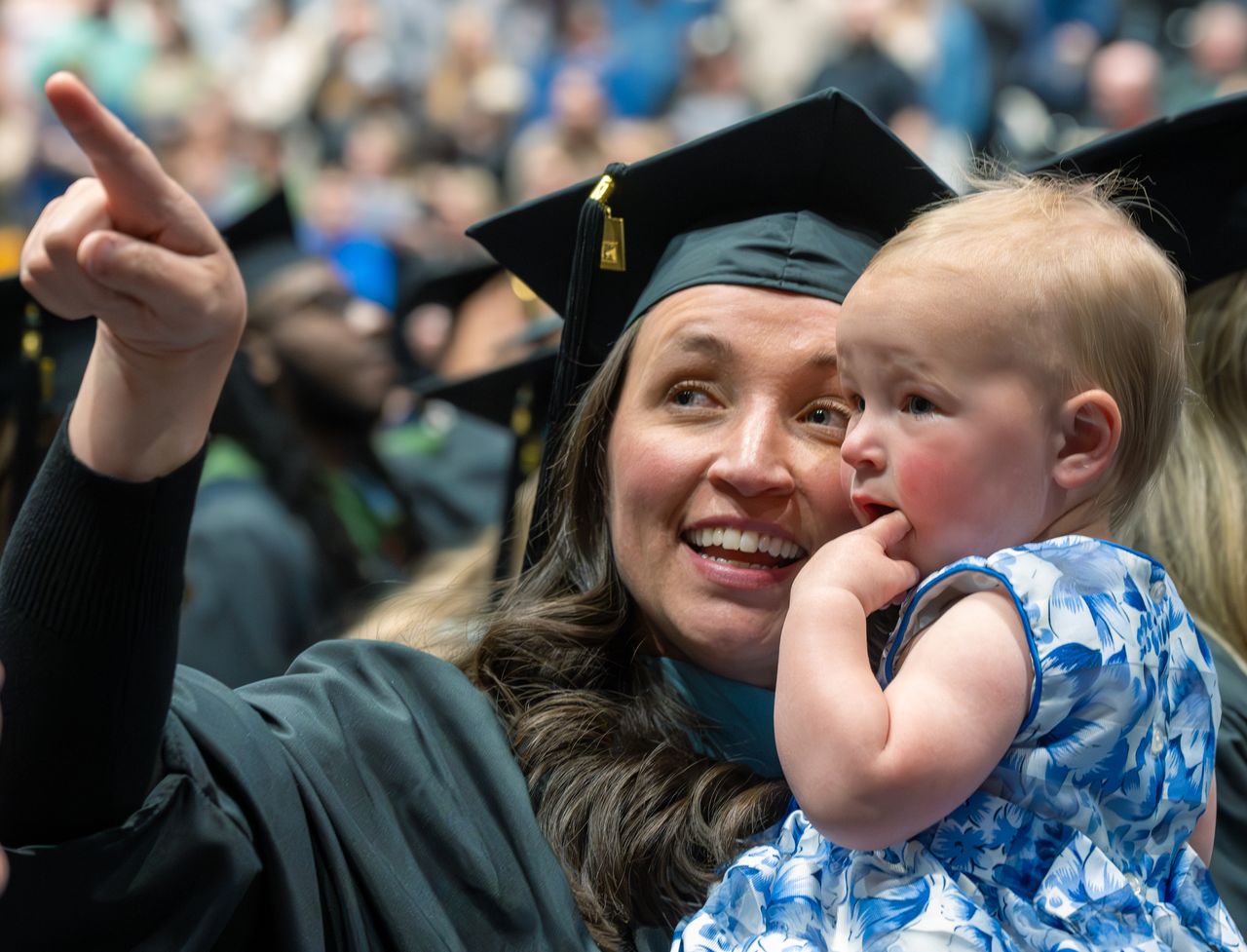
After navigating loss and grief, Kelly Helsel is officially now a licensed counselor thanks to the guidance given to her by the Catholic Church and her desire to use her experience to help others.
Read More
New York City street renamed for religious sister’s decades of service #Catholic A New York City street acquired a new name this past weekend honoring a Catholic sister’s decades of dedication to the East Harlem community.On Saturday, April 25, more than 100 people gathered to celebrate the newly named street — Sister Susanne Lachapelle Way — named for the life and legacy of Lachapelle and her contributions as a registered nurse, advocate, and Little Sister of the Assumption (LSA).“With a heart rooted in justice, she dedicated herself to serving the vulnerable through home visits, healthcare, and tireless advocacy, both locally and globally,” Rosario Jimenez, director for LSA Family in Mission, told EWTN News.The event and street naming flowed from Lachapelleʼs work with Little Sisters of the Assumption Family Health Service, a community-based nonprofit based in East Harlem. Founded by the Little Sisters, the organization offers numerous programs to help vulnerable families and children meet their basic needs.
 
 Crowd celebrates the unveiling of the Sister Susanne Lachapelle Way street sign in East Harlem, New York, on April 25, 2026. | Credit: Photo courtesy of Alysa Jette and Grace Ayres-Doyle
 
 The group has been in the city for almost 70 years and Lachapelle “really helped to set the trajectory for the organization,” Ray Lopez, chief program officer of LSA Family Health Service, told EWTN News.She was “a foundational visionary staff person and a leader who really, to this day, has a very profound impact on many of us who are on the staff and worked shoulder to shoulder with her, learning from her,” he said.“Since her passing, weʼve all … redoubled our efforts to find a way to keep LSAʼs original mission and vision going in this current environment,” Lopez said. “We really wanted to find ways to keep her name out there and the legacy going.”The street is on the southeast corner of East 115th Street and First Avenue. "Itʼs almost the exact midpoint of where Sister Susanne Lachapelle lived in the Little Sisters of the Assumption brownstone and where the LSA Family Health Service … center is located,” Lopez said.“She walked there every day for at least two decades,” he said. “We thought it was the appropriate place.”Sister Susanne and the Little Sisters: ‘Unsung heroes’Lachapelle entered the LSA order in 1962 and took the religious name Sister Susanne Mary of the Sacred Heart. She made her final vows in 1971.
 
 Sister Susanne Lachapelle. | Credit: Photo courtesy of LSA Family in Mission
 
 In her 60 years of religious life, she served in numerous areas and worked with many ministries. But for 45 years she made the community of East Harlem her home, helping to spearhead the LSA Family Health Service’s programs.As a nurse, Lachapelle conducted home visits, which “was a foundational program of LSA Family Health Service,” Lopez said. “All of the programs grew out of those interactions, those early interactions of nurses going into the homes to treat the sick and poor and really seeing conditions firsthand, sitting with families at their kitchen table, hearing their stories.”“Sister Susanne and the rest of the leadership created other programs to really provide wraparound services for families,” he said. "The Little Sisters set up a food pantry and a thrift store just to make sure that people had the very basics.”“From there, the services were about connecting people with public benefits, providing support around education, education enrichment, education navigation. A lot of … programs focused on maternal child health and early childhood development.”Along with her support for health and families, Lachapelle also had a passion for protecting the environment through her commitment to Pope Francis' Laudato Si', a call to protect our common home.
 
 Sister Susanne Lachapelle. | Credit: Photo courtesy of LSA Family in Mission
 
 Lachapelle decided to initiate “an environmental health component to the work that the Little Sisters were doing,” Lynn Tiede, a volunteer for LSA Health Service who worked with Lachapelle, told EWTN News.“She worked with the families and saw problems like asthma and other debilitating health things, she realized that … itʼs mold, itʼs the air quality, itʼs these other things that are really at the root of these health problems.”“Everybody was just so inspired … to see her traipsing into rough, rough buildings and just without any hesitation,” Tiede said. “If you went into a home and people were dealing with asthma, you … send in the environmental health team and then they try to work to get the building management to actually address those things.”With the success of her work, she even collaborated with the human rights group and nongovernmental organization Vivat International, where she helped bring voices and environmental issues to the United Nations, but she always remained “very, very humble,” Tiede said.Due to her humility “there were a few people who were against [the street-naming] when we proposed it, because they thought she would hate it — because she was so humble,” Tiede said.
 
 Sister Susanne Lachapelle Way in East Harlem, New York. | Credit: Photo courtesy of LSA Family in Mission
 
 Ultimately they chose to honor Lachapelle and the Little Sisters because they are “unsung heroes — these quiet heroes,” Tiede said.The process to get the street renamed began in 2024 and it was found to be an easier process than expected, as the city council was eager to acknowledge Lachapelle and the Little Sisters.Sister Susanne’s lasting impactAt the street naming celebration organizers “were expecting around 80 participants, but I think it was maybe 150 or a little bit more,” Jimenez said. “There were community members, families that she served, youth that she served, … volunteers, and of course, our board members and benefactors.”It honored her “simplicity and the way that she used to be a leader,” which was “was grounded in integrity, purpose, love,” Jimenez said. “Having a street named after her will honor all of that.”Reflecting on the event, Lopez said: “[It] feels like a dream because so many people came that worked with her in the past.”Despite having to move the event inside to avoid the cold and rain, the crowd of people stayed to celebrate. It “was crowded with people, and our center lobby was filled completely,” Lopez said. “It was just a very festive atmosphere.”He added: “It was really moving to have so many people there from so long ago that still feel it in their hearts, [how] the work here in East Harlem impacted their careers, impacted their lives, and that itʼs still a very significant thing for them,” he said.

New York City street renamed for religious sister’s decades of service #Catholic A New York City street acquired a new name this past weekend honoring a Catholic sister’s decades of dedication to the East Harlem community.On Saturday, April 25, more than 100 people gathered to celebrate the newly named street — Sister Susanne Lachapelle Way — named for the life and legacy of Lachapelle and her contributions as a registered nurse, advocate, and Little Sister of the Assumption (LSA).“With a heart rooted in justice, she dedicated herself to serving the vulnerable through home visits, healthcare, and tireless advocacy, both locally and globally,” Rosario Jimenez, director for LSA Family in Mission, told EWTN News.The event and street naming flowed from Lachapelleʼs work with Little Sisters of the Assumption Family Health Service, a community-based nonprofit based in East Harlem. Founded by the Little Sisters, the organization offers numerous programs to help vulnerable families and children meet their basic needs. Crowd celebrates the unveiling of the Sister Susanne Lachapelle Way street sign in East Harlem, New York, on April 25, 2026. | Credit: Photo courtesy of Alysa Jette and Grace Ayres-Doyle The group has been in the city for almost 70 years and Lachapelle “really helped to set the trajectory for the organization,” Ray Lopez, chief program officer of LSA Family Health Service, told EWTN News.She was “a foundational visionary staff person and a leader who really, to this day, has a very profound impact on many of us who are on the staff and worked shoulder to shoulder with her, learning from her,” he said.“Since her passing, weʼve all … redoubled our efforts to find a way to keep LSAʼs original mission and vision going in this current environment,” Lopez said. “We really wanted to find ways to keep her name out there and the legacy going.”The street is on the southeast corner of East 115th Street and First Avenue. "Itʼs almost the exact midpoint of where Sister Susanne Lachapelle lived in the Little Sisters of the Assumption brownstone and where the LSA Family Health Service … center is located,” Lopez said.“She walked there every day for at least two decades,” he said. “We thought it was the appropriate place.”Sister Susanne and the Little Sisters: ‘Unsung heroes’Lachapelle entered the LSA order in 1962 and took the religious name Sister Susanne Mary of the Sacred Heart. She made her final vows in 1971. Sister Susanne Lachapelle. | Credit: Photo courtesy of LSA Family in Mission In her 60 years of religious life, she served in numerous areas and worked with many ministries. But for 45 years she made the community of East Harlem her home, helping to spearhead the LSA Family Health Service’s programs.As a nurse, Lachapelle conducted home visits, which “was a foundational program of LSA Family Health Service,” Lopez said. “All of the programs grew out of those interactions, those early interactions of nurses going into the homes to treat the sick and poor and really seeing conditions firsthand, sitting with families at their kitchen table, hearing their stories.”“Sister Susanne and the rest of the leadership created other programs to really provide wraparound services for families,” he said. "The Little Sisters set up a food pantry and a thrift store just to make sure that people had the very basics.”“From there, the services were about connecting people with public benefits, providing support around education, education enrichment, education navigation. A lot of … programs focused on maternal child health and early childhood development.”Along with her support for health and families, Lachapelle also had a passion for protecting the environment through her commitment to Pope Francis' Laudato Si', a call to protect our common home. Sister Susanne Lachapelle. | Credit: Photo courtesy of LSA Family in Mission Lachapelle decided to initiate “an environmental health component to the work that the Little Sisters were doing,” Lynn Tiede, a volunteer for LSA Health Service who worked with Lachapelle, told EWTN News.“She worked with the families and saw problems like asthma and other debilitating health things, she realized that … itʼs mold, itʼs the air quality, itʼs these other things that are really at the root of these health problems.”“Everybody was just so inspired … to see her traipsing into rough, rough buildings and just without any hesitation,” Tiede said. “If you went into a home and people were dealing with asthma, you … send in the environmental health team and then they try to work to get the building management to actually address those things.”With the success of her work, she even collaborated with the human rights group and nongovernmental organization Vivat International, where she helped bring voices and environmental issues to the United Nations, but she always remained “very, very humble,” Tiede said.Due to her humility “there were a few people who were against [the street-naming] when we proposed it, because they thought she would hate it — because she was so humble,” Tiede said. Sister Susanne Lachapelle Way in East Harlem, New York. | Credit: Photo courtesy of LSA Family in Mission Ultimately they chose to honor Lachapelle and the Little Sisters because they are “unsung heroes — these quiet heroes,” Tiede said.The process to get the street renamed began in 2024 and it was found to be an easier process than expected, as the city council was eager to acknowledge Lachapelle and the Little Sisters.Sister Susanne’s lasting impactAt the street naming celebration organizers “were expecting around 80 participants, but I think it was maybe 150 or a little bit more,” Jimenez said. “There were community members, families that she served, youth that she served, … volunteers, and of course, our board members and benefactors.”It honored her “simplicity and the way that she used to be a leader,” which was “was grounded in integrity, purpose, love,” Jimenez said. “Having a street named after her will honor all of that.”Reflecting on the event, Lopez said: “[It] feels like a dream because so many people came that worked with her in the past.”Despite having to move the event inside to avoid the cold and rain, the crowd of people stayed to celebrate. It “was crowded with people, and our center lobby was filled completely,” Lopez said. “It was just a very festive atmosphere.”He added: “It was really moving to have so many people there from so long ago that still feel it in their hearts, [how] the work here in East Harlem impacted their careers, impacted their lives, and that itʼs still a very significant thing for them,” he said.

For 45 years, Sister Susanne Lachapelle made the community of East Harlem her home, helping to spearhead the LSA Family Health Service’s programs to help the most vulnerable.

Read More
Hotline operator named Catholic Charities USA 2026 volunteer of the year #Catholic Catholic Charities USA (CCUSA) has named Julie Abbott its 2026 volunteer of the year for her work as “a good and faithful servant.”Abbott has spent more than 15 years and nearly 5,000 hours answering the Relief & Hope emergency services hotline and accompanying callers, many of whom are at their lowest and most vulnerable points.The Catholic Charities Maine hotline provides immediate support for individuals and families experiencing crises. Abbott helps with a number of challenges related to finances, mental health, job loss, car repairs, housing, hunger, or any other situation callers may find themselves in.“When my years of home schooling my children ended, I searched for places where I could feel useful and talk freely about Jesus,” Abbot said in a press release. “I often came home feeling depressed about the need around me and how little I was able to help.”“Callers thank me for just being willing to listen and empathize. I really feel good after those calls. And I appreciate working with people who put their faith into action every day at work," she said."Catholic Charities is such a nice, friendly, godly place to work. I don’t feel I do enough to have earned this award. I am flabbergasted to have received it,” she said.The award also acknowledges Abbott’s work in developing a large database of resources covering Maine’s 16 counties. Due to its success, the state’s 2-1-1 operators, who provide residents with local health and human services information, have even been known to call her for guidance on how to refer their own callers to the appropriate services.“Julie Abbott’s service to Catholic Charities Maine shows that sometimes, the quietest contributions can make the greatest impact,” said Kerry Alys Robinson, CCUSA president and CEO.“Julie’s gift of presence and attention allow struggling neighbors to retain their dignity even in their most distressing and vulnerable moments. She is truly a good and faithful servant to those in need,” Robinson said.The award has been given annually since 1998 and is bestowed on an individual “who embodies the mission of CCUSA to provide critical services to those in need, advocate for justice in social structures, and call the entire Church and other people of goodwill to do the same,” according to CCUSA.More than 200,000 people volunteer at Catholic Charities agencies around the country each year, and agencies nominate their most deserving volunteers for the honor. Abbott was also a 2021 Volunteer of the Year finalist for her work.Abbott will receive the award at CCUSA’s 2026 annual gathering in Richmond, Virginia, later this year.

Hotline operator named Catholic Charities USA 2026 volunteer of the year #Catholic Catholic Charities USA (CCUSA) has named Julie Abbott its 2026 volunteer of the year for her work as “a good and faithful servant.”Abbott has spent more than 15 years and nearly 5,000 hours answering the Relief & Hope emergency services hotline and accompanying callers, many of whom are at their lowest and most vulnerable points.The Catholic Charities Maine hotline provides immediate support for individuals and families experiencing crises. Abbott helps with a number of challenges related to finances, mental health, job loss, car repairs, housing, hunger, or any other situation callers may find themselves in.“When my years of home schooling my children ended, I searched for places where I could feel useful and talk freely about Jesus,” Abbot said in a press release. “I often came home feeling depressed about the need around me and how little I was able to help.”“Callers thank me for just being willing to listen and empathize. I really feel good after those calls. And I appreciate working with people who put their faith into action every day at work," she said."Catholic Charities is such a nice, friendly, godly place to work. I don’t feel I do enough to have earned this award. I am flabbergasted to have received it,” she said.The award also acknowledges Abbott’s work in developing a large database of resources covering Maine’s 16 counties. Due to its success, the state’s 2-1-1 operators, who provide residents with local health and human services information, have even been known to call her for guidance on how to refer their own callers to the appropriate services.“Julie Abbott’s service to Catholic Charities Maine shows that sometimes, the quietest contributions can make the greatest impact,” said Kerry Alys Robinson, CCUSA president and CEO.“Julie’s gift of presence and attention allow struggling neighbors to retain their dignity even in their most distressing and vulnerable moments. She is truly a good and faithful servant to those in need,” Robinson said.The award has been given annually since 1998 and is bestowed on an individual “who embodies the mission of CCUSA to provide critical services to those in need, advocate for justice in social structures, and call the entire Church and other people of goodwill to do the same,” according to CCUSA.More than 200,000 people volunteer at Catholic Charities agencies around the country each year, and agencies nominate their most deserving volunteers for the honor. Abbott was also a 2021 Volunteer of the Year finalist for her work.Abbott will receive the award at CCUSA’s 2026 annual gathering in Richmond, Virginia, later this year.

“Callers thank me for just being willing to listen and empathize. I really feel good after those calls,” Julie Abbott said.

Read More
Pope Leo XIV: Universities must seek truth and form the whole person #Catholic MALABO, Equatorial Guinea — Pope Leo XIV on Tuesday said the inauguration of a new university campus in Equatorial Guinea is “an act of trust in human beings,” praising investment in the education of young people during the final stop of his Africa trip.Speaking at the opening of the Pope Leo XIV University Campus in Basupú, part of the National University of Equatorial Guinea (UNGE), the pontiff said the new institution represents more than new buildings.“This inauguration is an act of trust in human beings, an affirmation of the fact that it is worth the effort to continue wagering on the formation of new generations and on the task, so demanding and yet so noble, of seeking the truth and putting knowledge at the service of the common good,” Leo said.The new campus, in the northern part of Bioko Island, is the country’s largest academic facility. The government chose to dedicate it to the pope in conjunction with his visit. Founded in 1995, the National University of Equatorial Guinea was established to help form national leaders and align academic and professional training with the country’s development needs.Leo was welcomed by Rector Filiberto Ntutumu Nguema Nchama and the archbishop of Malabo, Archbishop Juan Nsue Edjang May. A bust of the pope was unveiled before he met with students and professors gathered in the square outside the main entrance.Students appealed to the pope for encouragement in becoming “a generation characterized by discipline, respect, responsibility, and commitment to the common good,” one aimed not only at personal success but also at contributing to the development of Equatorial Guinea.Faculty members, for their part, pledged themselves to academic excellence, innovation, and the integral formation of students. University officials also stressed that science and technology are powerful tools whose value depends on how they are used and that Christian moral tradition offers essential guidance in that task.In his address, Leo turned to an image deeply resonant in Equatorial Guinea: the ceiba, the country’s national tree.“For the people of Equatorial Guinea, the ceiba, the national tree, has a great symbolic meaning,” he said. “A tree puts forth deep roots and ascends slowly with patience and strength to the heights, embodying in itself a fruitfulness that does not exist for itself.”The pope said the tree offers “a parable of that which a university is called to be”: an institution rooted in serious study, living memory, and the persevering search for truth.Leo then drew on biblical imagery to reflect on the relationship between faith, reason, and knowledge. Referring to the tree of the knowledge of good and evil in Genesis, he said the biblical account is not a rejection of human intelligence.“It should be emphasized that this story is not about a condemnation of knowledge as such, as if faith was afraid of intelligence or looked with suspicion upon the desire for knowledge,” he said.Instead, he warned against knowledge detached from truth and goodness and reduced to self-interest or domination.“The problem, therefore, does not rest with knowledge but in its deviation towards an intelligence that no longer seeks to correspond to reality but rather to twist it for its own purposes,” he said.Leo said Christian tradition points to another tree — the cross — as the redemption, not the negation, of human intelligence.“Christian tradition contemplates another tree, that of the cross, not as a denial of human intelligence but as a sign of its redemption,” he said.“At the cross, human beings are invited to allow their desire for knowledge to be healed: to rediscover that truth is not fabricated, not manipulated nor possessed like a trophy but welcomed, sought with humility, and served with responsibility.”For that reason, he said, Christ is not an escape from intellectual effort.“From a Christian perspective, Christ does not appear as a religious escape in the face of intellectual endeavors, as if faith began where reason ended,” Leo said. “On the contrary, in him the profound harmony between truth, reason, and freedom are manifested.”The pope said the Church’s concern in education is that young people be formed integrally, “rather than giving the mere appearance of success.”He added that the university should be judged less by its size or number of graduates than by the quality of the people it forms for society.“Here on this campus, the ceiba of Equatorial Guinea is called to bear fruits of progress rooted in solidarity and of a knowledge that ennobles and develops the human being in an integral way,” he said. “It is called to offer the fruits of intelligence and uprightness, of competence and wisdom, of excellence and service.”“If generations of men and women are profoundly shaped in this place by truth and are capable of transforming their own existence into a gift for others, then the ceiba will remain an eloquent symbol rooted in the best things of this land, elevated by wisdom and abounding in fruits that pay tribute to Equatorial Guinea and enrich the entire human family.”Before the university event, the pope also made a brief visit to St. Elizabeth of Hungary Cathedral in Malabo, built in 1897.This story was first published by ACI Stampa, the Italian-language sister service of EWTN News. It has been translated and adapted by EWTN News English.

Pope Leo XIV: Universities must seek truth and form the whole person #Catholic MALABO, Equatorial Guinea — Pope Leo XIV on Tuesday said the inauguration of a new university campus in Equatorial Guinea is “an act of trust in human beings,” praising investment in the education of young people during the final stop of his Africa trip.Speaking at the opening of the Pope Leo XIV University Campus in Basupú, part of the National University of Equatorial Guinea (UNGE), the pontiff said the new institution represents more than new buildings.“This inauguration is an act of trust in human beings, an affirmation of the fact that it is worth the effort to continue wagering on the formation of new generations and on the task, so demanding and yet so noble, of seeking the truth and putting knowledge at the service of the common good,” Leo said.The new campus, in the northern part of Bioko Island, is the country’s largest academic facility. The government chose to dedicate it to the pope in conjunction with his visit. Founded in 1995, the National University of Equatorial Guinea was established to help form national leaders and align academic and professional training with the country’s development needs.Leo was welcomed by Rector Filiberto Ntutumu Nguema Nchama and the archbishop of Malabo, Archbishop Juan Nsue Edjang May. A bust of the pope was unveiled before he met with students and professors gathered in the square outside the main entrance.Students appealed to the pope for encouragement in becoming “a generation characterized by discipline, respect, responsibility, and commitment to the common good,” one aimed not only at personal success but also at contributing to the development of Equatorial Guinea.Faculty members, for their part, pledged themselves to academic excellence, innovation, and the integral formation of students. University officials also stressed that science and technology are powerful tools whose value depends on how they are used and that Christian moral tradition offers essential guidance in that task.In his address, Leo turned to an image deeply resonant in Equatorial Guinea: the ceiba, the country’s national tree.“For the people of Equatorial Guinea, the ceiba, the national tree, has a great symbolic meaning,” he said. “A tree puts forth deep roots and ascends slowly with patience and strength to the heights, embodying in itself a fruitfulness that does not exist for itself.”The pope said the tree offers “a parable of that which a university is called to be”: an institution rooted in serious study, living memory, and the persevering search for truth.Leo then drew on biblical imagery to reflect on the relationship between faith, reason, and knowledge. Referring to the tree of the knowledge of good and evil in Genesis, he said the biblical account is not a rejection of human intelligence.“It should be emphasized that this story is not about a condemnation of knowledge as such, as if faith was afraid of intelligence or looked with suspicion upon the desire for knowledge,” he said.Instead, he warned against knowledge detached from truth and goodness and reduced to self-interest or domination.“The problem, therefore, does not rest with knowledge but in its deviation towards an intelligence that no longer seeks to correspond to reality but rather to twist it for its own purposes,” he said.Leo said Christian tradition points to another tree — the cross — as the redemption, not the negation, of human intelligence.“Christian tradition contemplates another tree, that of the cross, not as a denial of human intelligence but as a sign of its redemption,” he said.“At the cross, human beings are invited to allow their desire for knowledge to be healed: to rediscover that truth is not fabricated, not manipulated nor possessed like a trophy but welcomed, sought with humility, and served with responsibility.”For that reason, he said, Christ is not an escape from intellectual effort.“From a Christian perspective, Christ does not appear as a religious escape in the face of intellectual endeavors, as if faith began where reason ended,” Leo said. “On the contrary, in him the profound harmony between truth, reason, and freedom are manifested.”The pope said the Church’s concern in education is that young people be formed integrally, “rather than giving the mere appearance of success.”He added that the university should be judged less by its size or number of graduates than by the quality of the people it forms for society.“Here on this campus, the ceiba of Equatorial Guinea is called to bear fruits of progress rooted in solidarity and of a knowledge that ennobles and develops the human being in an integral way,” he said. “It is called to offer the fruits of intelligence and uprightness, of competence and wisdom, of excellence and service.”“If generations of men and women are profoundly shaped in this place by truth and are capable of transforming their own existence into a gift for others, then the ceiba will remain an eloquent symbol rooted in the best things of this land, elevated by wisdom and abounding in fruits that pay tribute to Equatorial Guinea and enrich the entire human family.”Before the university event, the pope also made a brief visit to St. Elizabeth of Hungary Cathedral in Malabo, built in 1897.This story was first published by ACI Stampa, the Italian-language sister service of EWTN News. It has been translated and adapted by EWTN News English.

At the inauguration of a new campus named in his honor in Equatorial Guinea, the pope urged the education of young people in truth, responsibility, and service to the common good.

Read More
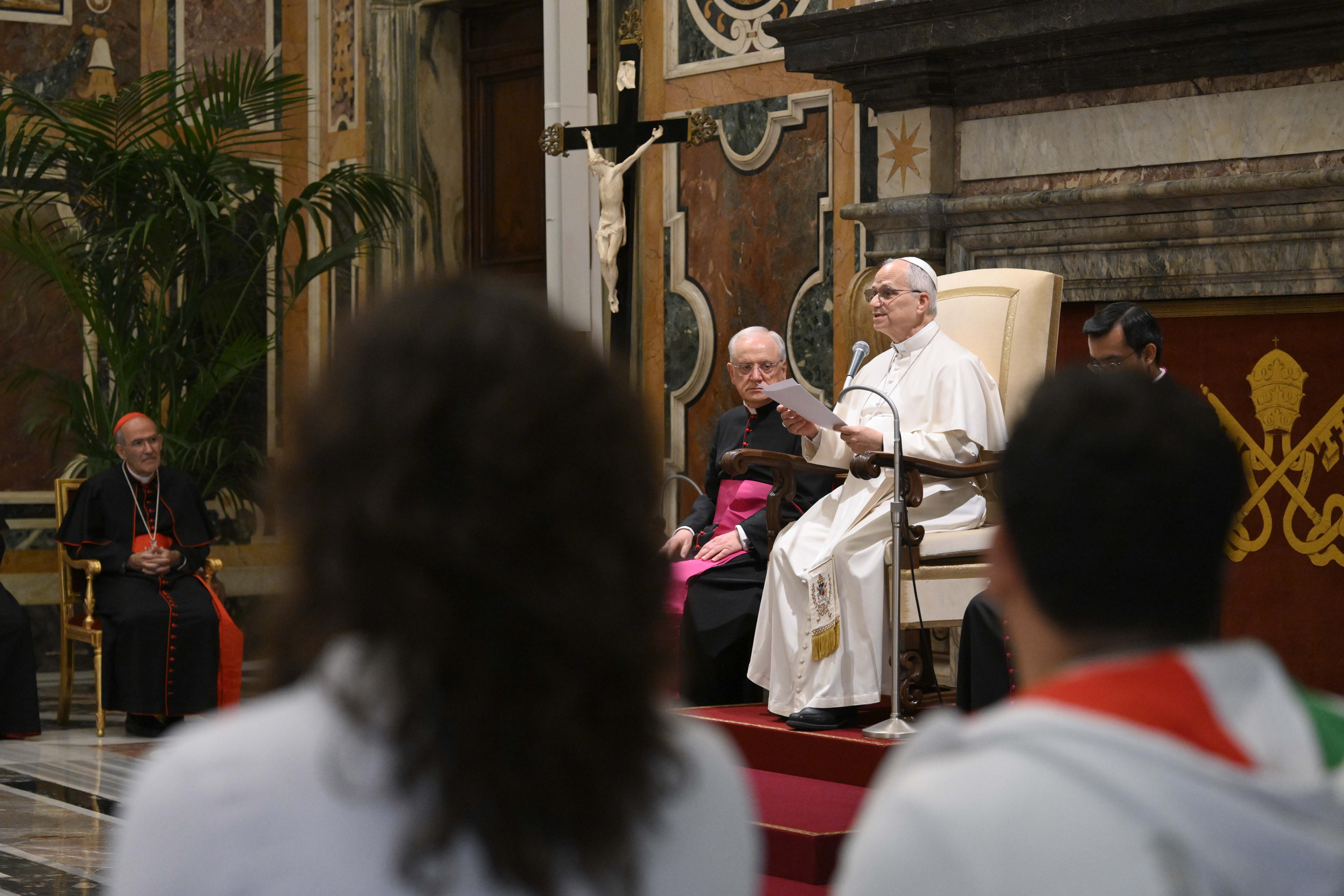
Pope Leo XIV: Sport must be a ‘space for encounter’ #Catholic VATICAN CITY — Pope Leo XIV on Thursday praised athletes from the Milan-Cortina 2026 Olympic and Paralympic Games, saying sport “can and must truly become a space for encounter” in a world marked by “polarization, rivalry, and conflicts that escalate into devastating wars.”Speaking in the Clementine Hall at the Vatican on April 9, the Holy Father welcomed the athletes “with joy” shortly after the conclusion of the Winter Games and thanked them for their witness.“Thank you for what you have shown,” the pope said. “Truly, sport, when lived authentically, is not merely a performance: It is a form of language, a narrative made up of gestures, of effort, of anticipation, of falls, and of new beginnings.”Leo XIV said the games revealed not only athletic achievement but also “stories of sacrifice, of discipline, of tenacity.”“In particular, in Paralympic competitions we have seen how a limitation can become a source of revelation: not something that holds a person back but something that can be transformed, even transfigured into newfound qualities,” he said. “You athletes have become life stories that inspire a great number of people.”The pope also emphasized the communal dimension of athletic success, saying: “No one wins alone.”“Your team spirit reminds us that no one wins alone, because behind every victory there are many people involved — from family to teams — as well as many days of training, pressure, and solitude,” he said.Quoting Psalm 18, he added: “It is often precisely in these moments that God reveals himself, as the psalmist sings: ‘Thou didst give a wide place for my steps under me, and my feet did not slip.’”Leo XIV said sport helps mature the human person by fostering discipline, humility, and right relationships.“Sport contributes to the maturing of our character, requires a steadfast spirituality, and is a fruitful form of education,” he said. “By training the mind, along with the limbs, sport is authentic when it remains humane — that is, when it remains faithful to its first vocation: to be a school of life and talent.”“A school in which one learns that true success is measured by the quality of relationships: not by the amount of prizes but by mutual respect, by shared joy in the game,” he continued.Referring to his Feb. 6 apostolic letter “Life in Abundance,” written for the occasion of the Olympics and Paralympics, the pope said the Gospel’s vision of abundant life points to harmony between the physical and interior dimensions of the person.Turning to the present global situation, Leo XIV said the athletes’ witness carries special importance.“At the present time, so marked by polarization, rivalry, and conflicts that escalate into devastating wars, your commitment takes on an even greater value: Sport can and must truly become a space for encounter!” he said. “Not a show of strength but an exercise in relationship.”Recalling the value of the Olympic truce, he thanked the athletes for making visible “this possibility of peace as a prophecy that is by no means rhetorical: breaking the logic of violence to promote that of encounter.”The pope also warned against distortions in sport, including doping, commercialism, and the reduction of athletes to mere spectacle.“We are well aware that sport also brings with it certain temptations: that of performance at any cost, which can lead to doping; that of profit, which transforms the game into a market and the athlete into a star; that of spectacle, which reduces the athlete to an image or a number,” he said. “Against these excesses, your witness is essential.”Leo XIV concluded by thanking the athletes for showing “an honest and beautiful way of inhabiting the world” and urged them to keep the human person at the center of sport in all its forms.Following the audience, several of the athletes spoke to journalists about their experience of the audience and competing in the Winter Games, including speed skater Francesca Lollobrigida, who won two gold medals at Milan-Cortina this year.
 
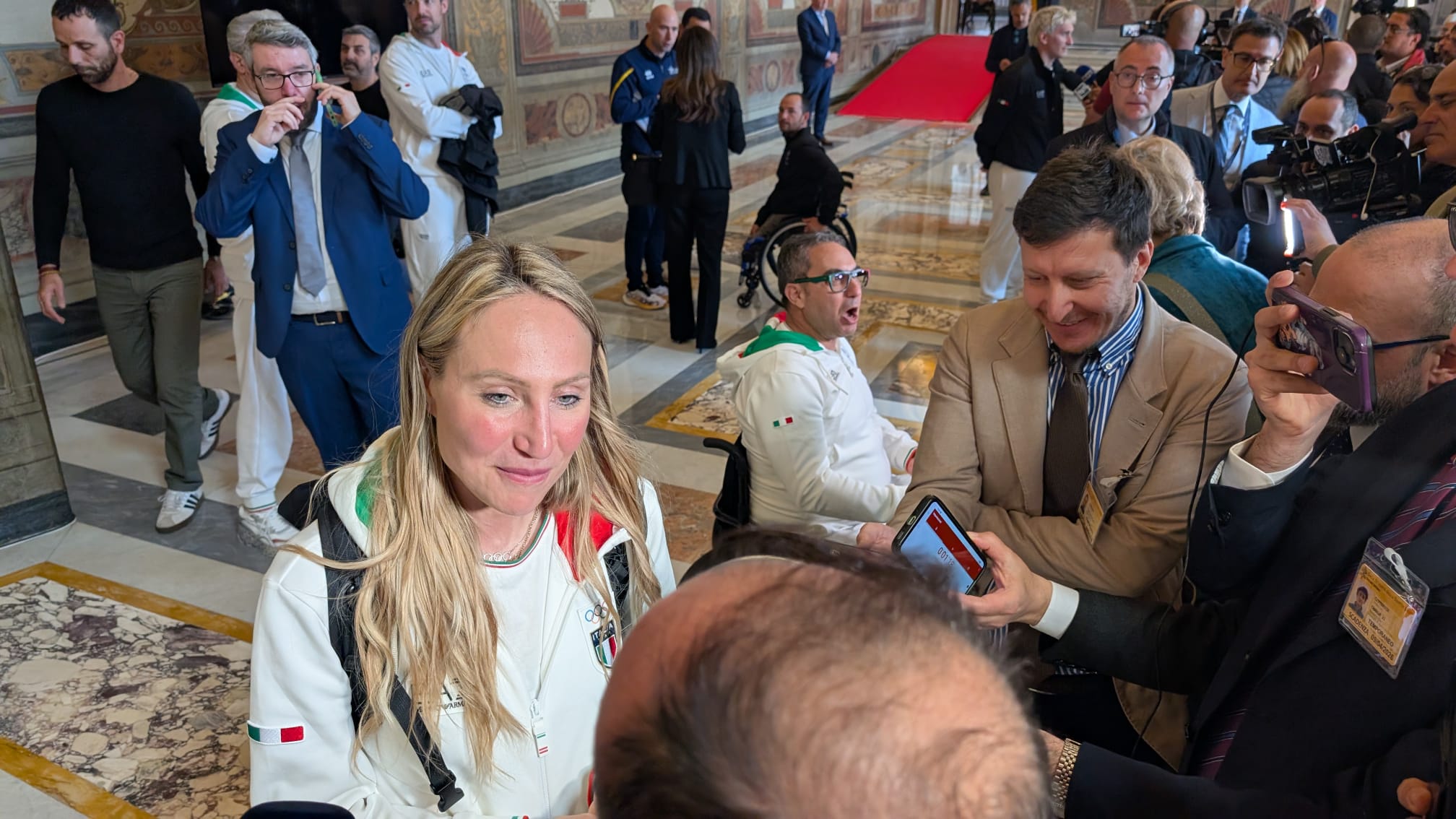
 Francesca Lollobrigida responds to journalists after a papal audience at the Apostolic Palace in Vatican City on April 9, 2026. | Credit: Ishmael Adibuah/EWTN News
 
 “My goal was just to show that in my sport; I was able to combine, you know, being a mother and a top athlete,“ Lollobrigida told EWTN News. ”Iʼm just doing this for the other women, you know, that maybe at some points during their career they want to stop to focus on the family and then to come back.”Nikko Landeros, an American-born Catholic who lost both his legs in 2007, represented Italy in ice hockey at the latest Paralympic games. He described to EWTN News the role of Catholicism in his athletic journey.“At home, I started pretty much Catholic. You know, I went to Catholic school in the U.S. Weʼve been going to church now… not as much as I should, but, you know, I still pray every day, and Iʼm thankful to be here. You know, if it werenʼt for God, I wouldnʼt be alive. So, you know, Iʼm super thankful,” Landeros said.This story was first published by ACI Stampa, the Italian-language sister service of EWTN News. It has been translated and adapted by EWTN News English.

Pope Leo XIV: Sport must be a ‘space for encounter’ #Catholic VATICAN CITY — Pope Leo XIV on Thursday praised athletes from the Milan-Cortina 2026 Olympic and Paralympic Games, saying sport “can and must truly become a space for encounter” in a world marked by “polarization, rivalry, and conflicts that escalate into devastating wars.”Speaking in the Clementine Hall at the Vatican on April 9, the Holy Father welcomed the athletes “with joy” shortly after the conclusion of the Winter Games and thanked them for their witness.“Thank you for what you have shown,” the pope said. “Truly, sport, when lived authentically, is not merely a performance: It is a form of language, a narrative made up of gestures, of effort, of anticipation, of falls, and of new beginnings.”Leo XIV said the games revealed not only athletic achievement but also “stories of sacrifice, of discipline, of tenacity.”“In particular, in Paralympic competitions we have seen how a limitation can become a source of revelation: not something that holds a person back but something that can be transformed, even transfigured into newfound qualities,” he said. “You athletes have become life stories that inspire a great number of people.”The pope also emphasized the communal dimension of athletic success, saying: “No one wins alone.”“Your team spirit reminds us that no one wins alone, because behind every victory there are many people involved — from family to teams — as well as many days of training, pressure, and solitude,” he said.Quoting Psalm 18, he added: “It is often precisely in these moments that God reveals himself, as the psalmist sings: ‘Thou didst give a wide place for my steps under me, and my feet did not slip.’”Leo XIV said sport helps mature the human person by fostering discipline, humility, and right relationships.“Sport contributes to the maturing of our character, requires a steadfast spirituality, and is a fruitful form of education,” he said. “By training the mind, along with the limbs, sport is authentic when it remains humane — that is, when it remains faithful to its first vocation: to be a school of life and talent.”“A school in which one learns that true success is measured by the quality of relationships: not by the amount of prizes but by mutual respect, by shared joy in the game,” he continued.Referring to his Feb. 6 apostolic letter “Life in Abundance,” written for the occasion of the Olympics and Paralympics, the pope said the Gospel’s vision of abundant life points to harmony between the physical and interior dimensions of the person.Turning to the present global situation, Leo XIV said the athletes’ witness carries special importance.“At the present time, so marked by polarization, rivalry, and conflicts that escalate into devastating wars, your commitment takes on an even greater value: Sport can and must truly become a space for encounter!” he said. “Not a show of strength but an exercise in relationship.”Recalling the value of the Olympic truce, he thanked the athletes for making visible “this possibility of peace as a prophecy that is by no means rhetorical: breaking the logic of violence to promote that of encounter.”The pope also warned against distortions in sport, including doping, commercialism, and the reduction of athletes to mere spectacle.“We are well aware that sport also brings with it certain temptations: that of performance at any cost, which can lead to doping; that of profit, which transforms the game into a market and the athlete into a star; that of spectacle, which reduces the athlete to an image or a number,” he said. “Against these excesses, your witness is essential.”Leo XIV concluded by thanking the athletes for showing “an honest and beautiful way of inhabiting the world” and urged them to keep the human person at the center of sport in all its forms.Following the audience, several of the athletes spoke to journalists about their experience of the audience and competing in the Winter Games, including speed skater Francesca Lollobrigida, who won two gold medals at Milan-Cortina this year. Francesca Lollobrigida responds to journalists after a papal audience at the Apostolic Palace in Vatican City on April 9, 2026. | Credit: Ishmael Adibuah/EWTN News “My goal was just to show that in my sport; I was able to combine, you know, being a mother and a top athlete,“ Lollobrigida told EWTN News. ”Iʼm just doing this for the other women, you know, that maybe at some points during their career they want to stop to focus on the family and then to come back.”Nikko Landeros, an American-born Catholic who lost both his legs in 2007, represented Italy in ice hockey at the latest Paralympic games. He described to EWTN News the role of Catholicism in his athletic journey.“At home, I started pretty much Catholic. You know, I went to Catholic school in the U.S. Weʼve been going to church now… not as much as I should, but, you know, I still pray every day, and Iʼm thankful to be here. You know, if it werenʼt for God, I wouldnʼt be alive. So, you know, Iʼm super thankful,” Landeros said.This story was first published by ACI Stampa, the Italian-language sister service of EWTN News. It has been translated and adapted by EWTN News English.

The pontiff addressed athletes from the Milan-Cortina 2026 Olympic and Paralympic Games.

Read More