The following form of evening prayers is taken from “The Key of Heaven, a Manual of Prayer for the Use of the Faithful”, Imprimatur P. Fenton, Vicar General, Westminster.

In the Name of the + Father,
and of the Son,
and of the Holy Ghost.

Amen.

O my God,
I believe that Thou art here present;
and that Thou observest all my actions,
all my thoughts,
and the most secret motions of my heart.
I adore Thee,
and I love Thee with my whole heart.
I return …

Read More
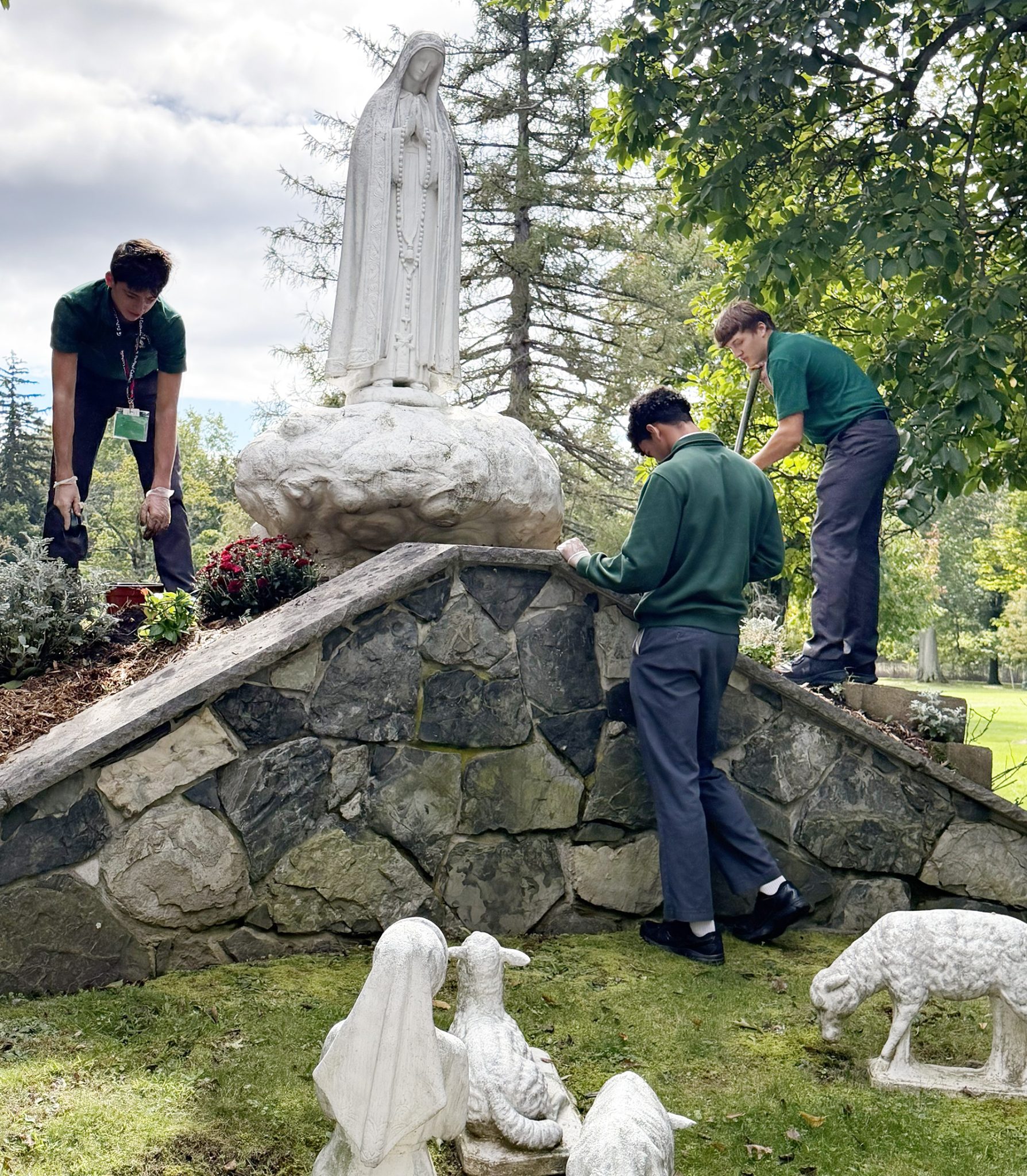
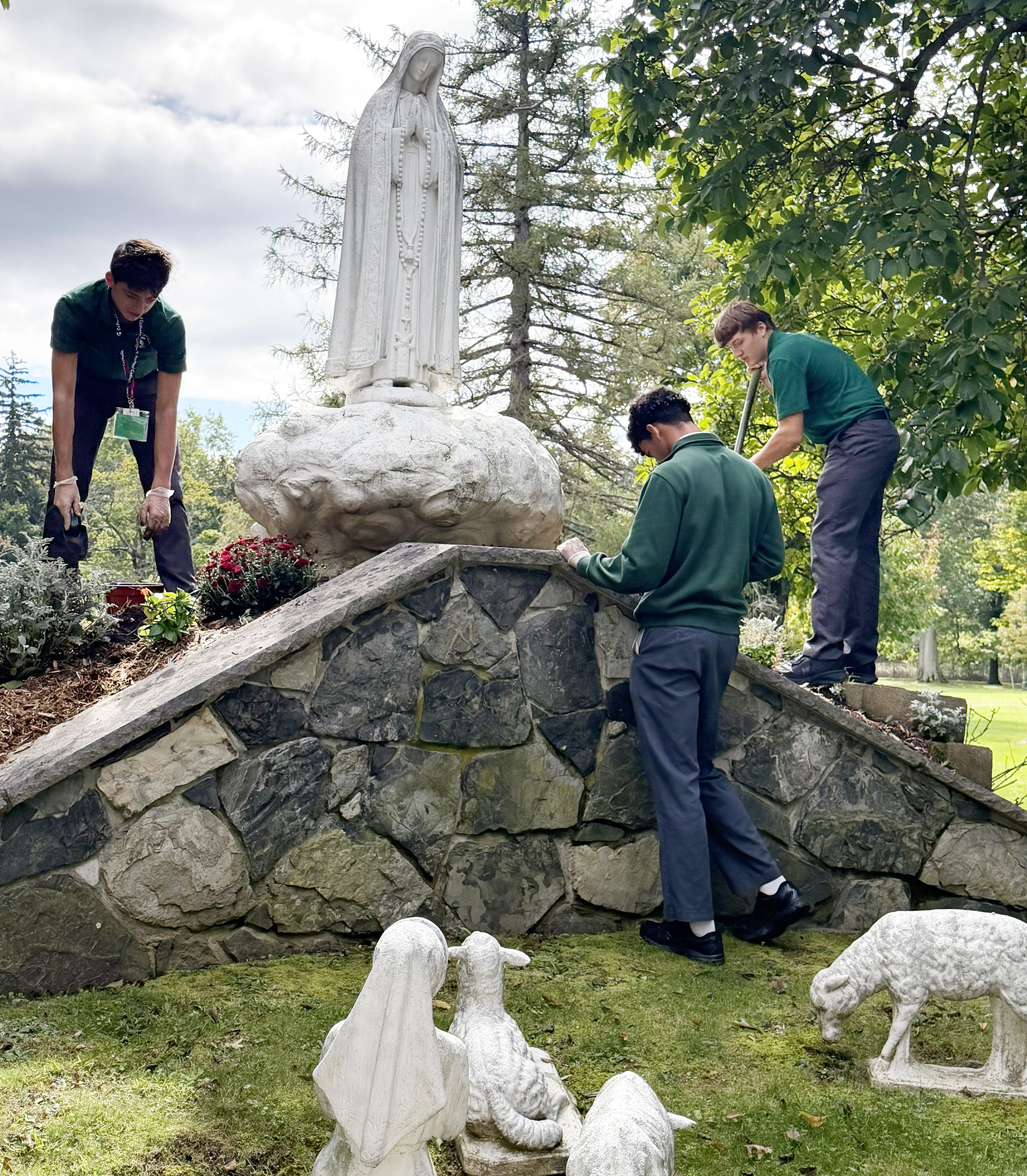
Morris Township conference reminds youth to be ‘Anchored in Hope’ #Catholic - Teenagers from around the Paterson Diocese in New Jersey gathered at St. Elizabeth University in the Convent Station neighborhood of Morris Township, N.J., for the annual Diocesan Youth Conference on Nov. 2. The theme of the event was “Anchored in Hope,” inspired by the Universal Church’s Year of Hope 2025.
Youth grades 8 to 12 attended the conference, which also included music, games, activities, and praise and worship featuring AOH (Array of Hope) Music and witness talks by Alanis Vega, AOH content coordinator, and Josh Rosa, one of the founders of Agnus Dei ministry, an author, and a Catholic speaker.

Click here to subscribe to our weekly newsletter.

The conference also hosted an exhibition of Eucharistic miracles with a first-class relic of St. Carlo Acutis, who was canonized as the first millennial saint by Pope Leo XIV in Rome on Sept. 7.
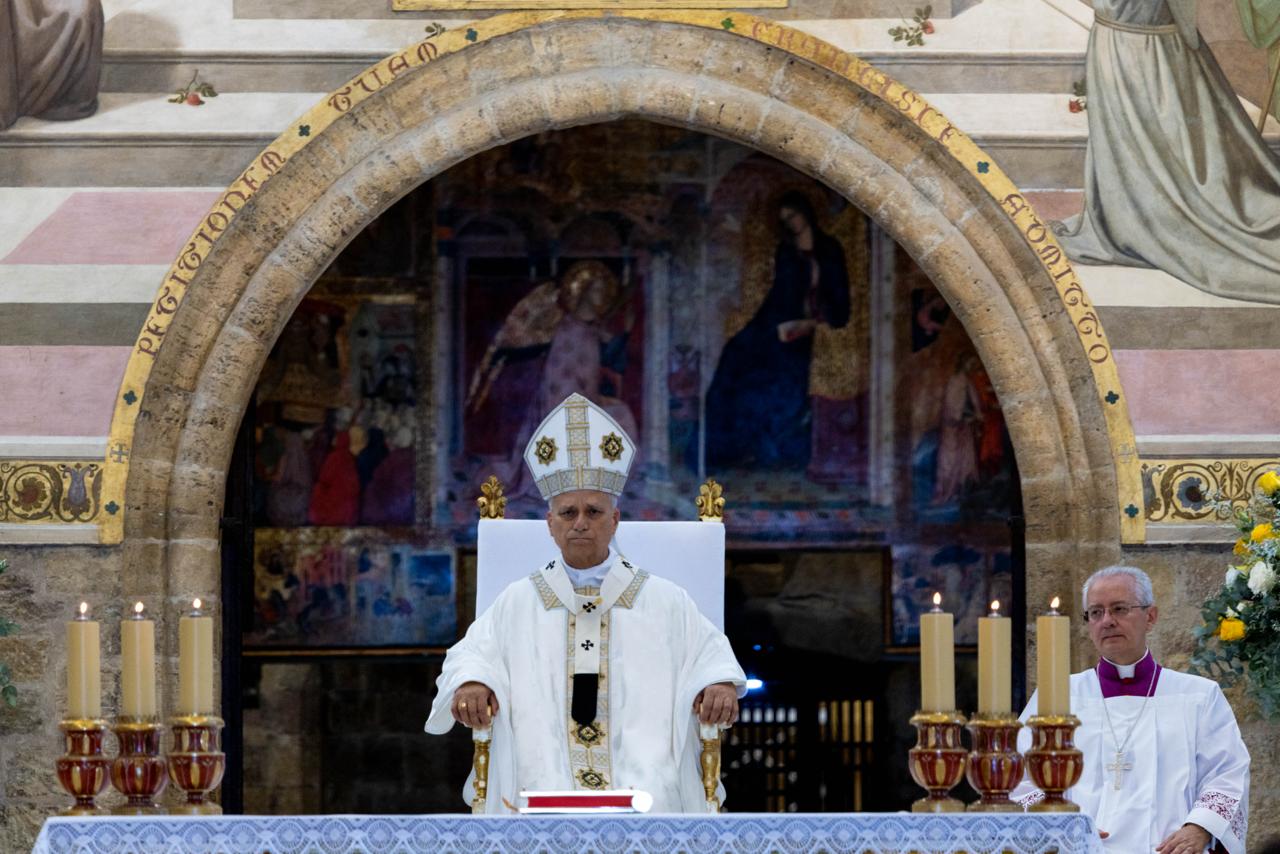
Bishop Kevin J. Sweeney celebrated a Mass for the conference participants, which was concelebrated with other priests.
The diocesan Office of Youth Ministry sponsored the conference, which Array of Hope produced.
BEACON PHOTOS | JOE GIGLI
 [See image gallery at beaconnj.org]  

Morris Township conference reminds youth to be ‘Anchored in Hope’ #Catholic –

Teenagers from around the Paterson Diocese in New Jersey gathered at St. Elizabeth University in the Convent Station neighborhood of Morris Township, N.J., for the annual Diocesan Youth Conference on Nov. 2. The theme of the event was “Anchored in Hope,” inspired by the Universal Church’s Year of Hope 2025.

Youth grades 8 to 12 attended the conference, which also included music, games, activities, and praise and worship featuring AOH (Array of Hope) Music and witness talks by Alanis Vega, AOH content coordinator, and Josh Rosa, one of the founders of Agnus Dei ministry, an author, and a Catholic speaker.


Click here to subscribe to our weekly newsletter.

The conference also hosted an exhibition of Eucharistic miracles with a first-class relic of St. Carlo Acutis, who was canonized as the first millennial saint by Pope Leo XIV in Rome on Sept. 7.

Bishop Kevin J. Sweeney celebrated a Mass for the conference participants, which was concelebrated with other priests.

The diocesan Office of Youth Ministry sponsored the conference, which Array of Hope produced.

BEACON PHOTOS | JOE GIGLI

Teenagers from around the Paterson Diocese in New Jersey gathered at St. Elizabeth University in the Convent Station neighborhood of Morris Township, N.J., for the annual Diocesan Youth Conference on Nov. 2. The theme of the event was “Anchored in Hope,” inspired by the Universal Church’s Year of Hope 2025. Youth grades 8 to 12 attended the conference, which also included music, games, activities, and praise and worship featuring AOH (Array of Hope) Music and witness talks by Alanis Vega, AOH content coordinator, and Josh Rosa, one of the founders of Agnus Dei ministry, an author, and a Catholic speaker.

Read More
Amid clown protesters, Boston men’s march for life remains ‘prayerful’ #Catholic 
 
 Police protect marchers at the fourth annual National Men’s March to Abolish Abortion and Rally for Personhood in Boston on Nov. 1, 2025. / Credit: Brother Anthony Marie MICM

CNA Staff, Nov 8, 2025 / 09:00 am (CNA).
Here is a roundup of recent pro-life and abortion-related news:Amid clown protesters, Boston men’s march for life remains ‘prayerful’Hundreds gathered in Boston last Saturday for a men’s march for life, which drew a rambunctious crowd of protesters dressed as clowns and inflatable dinosaurs. The fourth annual National Men’s March to Abolish Abortion and Rally for Personhood began at Boston Planned Parenthood and concluded about three miles away at Boston Common.While counterprotesters — some dressed as clowns or wearing inflatable dinosaur costumes — played instruments and yelled on the sidelines, marchers carried on in a “prayerful and well-composed” manner, said march co-founder and president Jim Havens, who called the event “outstanding.” At the rallying point at Boston Common, an estimated 50 Antifa members also showed up. Another counterprotester wore a pony costume and carried a megaphone. Though the event sees protesters every year, Havens told CNA that the marchers have a good relationship with local law enforcement, so the event is “safe and secure.” “In our current culture of death, when we publicly stand for the least among us and for the abolition of the ongoing daily mass murder of our littlest brothers and sisters, protesters are to be expected,” Havens said. “We strive to incorporate the protesters into those for whom we pray as we march.” A marching band from the American Society for the Defense of Tradition, Family, and Property also participated to counterbalance the noise of the counterprotesters. The march invites men “to step forward to protect the women and children,” Havens explained. The idea that abortion is not a men’s issue is “nonsense,” Havens said. “As men, we have a moral responsibility to protect and defend vulnerable women and children, and it’s time we all get off the sidelines and do so,” Havens said. Speakers included Sister Deirdre Byrne, pro-life activist Will Goodman, and Bishop Joseph Strickland, among others.“As we marched, there was a sense among the men that we were simply being true to who we are as men,” Havens said.“Now active in the urgent fight for abolition, these men will not be going back to the sidelines,” he said. “Instead, they are now asking, ‘What more can I do?’”South Carolina man arrested for threatening pro-lifers with grenade A group was gathered outside a South Carolina church on a Sunday morning to protest board members’ involvement with abortion funds when a man threatened them with a grenade. Video footage shows Richard Lovelace, 79, holding up a grenade, saying: “I have a grenade for y’all, a gift for you protesters.”  After Lovelace was arrested, police found that the grenade was hollowed out.Lovelace, a member of St. Anne Episcopal Church, is a retired lawyer whose wife is on the church’s board and is a judge in South Carolina. The Survivors of the Abortion Holocaust group was protesting the board’s involvement with the Palmetto State Abortion Fund, a group that partners with Planned Parenthood to bring illegal abortion pills into the state and helps women travel out of state for abortions.Police charged Lovelace with four counts of having a hoax device and threatening to use it. On Monday, he was released from the J. Reuben Long Detention Center on a ,000 bond. Nebraska governor signs order barring abortion providers from state fundingNebraska Gov. Jim Pillen on Nov. 6  issued an executive order preventing abortion providers from receiving taxpayer funding in Nebraska. While the federal law and some state laws prevent taxpayer funding from going directly to abortion, state governments often subsidize providers for other services, therefore indirectly funding abortion. In Nebraska in 2025, more than 0,000 went to abortion providers, according to the governor’s office. President Donald Trump’s One Big Beautiful Bill Act recently prohibited federal funds from going toward abortion providers for one year. Pillen said he is “proud that we can take this bold step in halting funding to abortion providers that receive Medicaid funding.” “Nebraskans have made clear they support a culture of love and life in our state — one that provides protections for the unborn,” he said in a press release. Attorney General Mike Hilgers said the issue has “been in the background for a long time for a lot of people.”“In fact, the desire of Nebraska taxpayers to not have their funds be used for abortions has been in state statutes for some time,” Hilgers noted.Thousands gather for Michigan March for LifeThousands gathered for the March for Life in Lansing, Michigan, on Thursday, Nov. 6.March for Life president Jennie Bradley Lichter, who spoke at the event, called the march a chance to “send a vital message to our legislators who have the power to support women, children, and families.” “The women of Michigan deserve better than the tragedy of abortion, and we want them to know we are here for them, no matter what they are facing,” Lichter said in a statement shared with CNA.Bishop Earl Boyea of Lansing as well as Knights of Columbus State Deputy Barry Borsenik spoke at the event. Michigan state lawmakers including state Rep. Ann Bollin, state Sen. John Damoose, and state Rep. Jennifer Wortz also spoke at the event. President of Right to Life Michigan Amber Roseboom said the pro-life movement in Michigan stands with women facing unplanned pregnancies. “While a woman in Michigan can have an abortion at any point in her pregnancy for any reason, no woman should ever be made to feel that abortion is the best or only option,” she said in a statement shared with CNA.  “Pro-lifers from across our state have a powerful message for women facing unplanned pregnancies: You are not alone! We stand with you. We stand for you,” Roseboom said.

Amid clown protesters, Boston men’s march for life remains ‘prayerful’ #Catholic Police protect marchers at the fourth annual National Men’s March to Abolish Abortion and Rally for Personhood in Boston on Nov. 1, 2025. / Credit: Brother Anthony Marie MICM CNA Staff, Nov 8, 2025 / 09:00 am (CNA). Here is a roundup of recent pro-life and abortion-related news:Amid clown protesters, Boston men’s march for life remains ‘prayerful’Hundreds gathered in Boston last Saturday for a men’s march for life, which drew a rambunctious crowd of protesters dressed as clowns and inflatable dinosaurs. The fourth annual National Men’s March to Abolish Abortion and Rally for Personhood began at Boston Planned Parenthood and concluded about three miles away at Boston Common.While counterprotesters — some dressed as clowns or wearing inflatable dinosaur costumes — played instruments and yelled on the sidelines, marchers carried on in a “prayerful and well-composed” manner, said march co-founder and president Jim Havens, who called the event “outstanding.” At the rallying point at Boston Common, an estimated 50 Antifa members also showed up. Another counterprotester wore a pony costume and carried a megaphone. Though the event sees protesters every year, Havens told CNA that the marchers have a good relationship with local law enforcement, so the event is “safe and secure.” “In our current culture of death, when we publicly stand for the least among us and for the abolition of the ongoing daily mass murder of our littlest brothers and sisters, protesters are to be expected,” Havens said. “We strive to incorporate the protesters into those for whom we pray as we march.” A marching band from the American Society for the Defense of Tradition, Family, and Property also participated to counterbalance the noise of the counterprotesters. The march invites men “to step forward to protect the women and children,” Havens explained. The idea that abortion is not a men’s issue is “nonsense,” Havens said. “As men, we have a moral responsibility to protect and defend vulnerable women and children, and it’s time we all get off the sidelines and do so,” Havens said. Speakers included Sister Deirdre Byrne, pro-life activist Will Goodman, and Bishop Joseph Strickland, among others.“As we marched, there was a sense among the men that we were simply being true to who we are as men,” Havens said.“Now active in the urgent fight for abolition, these men will not be going back to the sidelines,” he said. “Instead, they are now asking, ‘What more can I do?’”South Carolina man arrested for threatening pro-lifers with grenade A group was gathered outside a South Carolina church on a Sunday morning to protest board members’ involvement with abortion funds when a man threatened them with a grenade. Video footage shows Richard Lovelace, 79, holding up a grenade, saying: “I have a grenade for y’all, a gift for you protesters.”  After Lovelace was arrested, police found that the grenade was hollowed out.Lovelace, a member of St. Anne Episcopal Church, is a retired lawyer whose wife is on the church’s board and is a judge in South Carolina. The Survivors of the Abortion Holocaust group was protesting the board’s involvement with the Palmetto State Abortion Fund, a group that partners with Planned Parenthood to bring illegal abortion pills into the state and helps women travel out of state for abortions.Police charged Lovelace with four counts of having a hoax device and threatening to use it. On Monday, he was released from the J. Reuben Long Detention Center on a $60,000 bond. Nebraska governor signs order barring abortion providers from state fundingNebraska Gov. Jim Pillen on Nov. 6  issued an executive order preventing abortion providers from receiving taxpayer funding in Nebraska. While the federal law and some state laws prevent taxpayer funding from going directly to abortion, state governments often subsidize providers for other services, therefore indirectly funding abortion. In Nebraska in 2025, more than $300,000 went to abortion providers, according to the governor’s office. President Donald Trump’s One Big Beautiful Bill Act recently prohibited federal funds from going toward abortion providers for one year. Pillen said he is “proud that we can take this bold step in halting funding to abortion providers that receive Medicaid funding.” “Nebraskans have made clear they support a culture of love and life in our state — one that provides protections for the unborn,” he said in a press release. Attorney General Mike Hilgers said the issue has “been in the background for a long time for a lot of people.”“In fact, the desire of Nebraska taxpayers to not have their funds be used for abortions has been in state statutes for some time,” Hilgers noted.Thousands gather for Michigan March for LifeThousands gathered for the March for Life in Lansing, Michigan, on Thursday, Nov. 6.March for Life president Jennie Bradley Lichter, who spoke at the event, called the march a chance to “send a vital message to our legislators who have the power to support women, children, and families.” “The women of Michigan deserve better than the tragedy of abortion, and we want them to know we are here for them, no matter what they are facing,” Lichter said in a statement shared with CNA.Bishop Earl Boyea of Lansing as well as Knights of Columbus State Deputy Barry Borsenik spoke at the event. Michigan state lawmakers including state Rep. Ann Bollin, state Sen. John Damoose, and state Rep. Jennifer Wortz also spoke at the event. President of Right to Life Michigan Amber Roseboom said the pro-life movement in Michigan stands with women facing unplanned pregnancies. “While a woman in Michigan can have an abortion at any point in her pregnancy for any reason, no woman should ever be made to feel that abortion is the best or only option,” she said in a statement shared with CNA.  “Pro-lifers from across our state have a powerful message for women facing unplanned pregnancies: You are not alone! We stand with you. We stand for you,” Roseboom said.


Police protect marchers at the fourth annual National Men’s March to Abolish Abortion and Rally for Personhood in Boston on Nov. 1, 2025. / Credit: Brother Anthony Marie MICM

CNA Staff, Nov 8, 2025 / 09:00 am (CNA).

Here is a roundup of recent pro-life and abortion-related news:

Amid clown protesters, Boston men’s march for life remains ‘prayerful’

Hundreds gathered in Boston last Saturday for a men’s march for life, which drew a rambunctious crowd of protesters dressed as clowns and inflatable dinosaurs. 

The fourth annual National Men’s March to Abolish Abortion and Rally for Personhood began at Boston Planned Parenthood and concluded about three miles away at Boston Common.

While counterprotesters — some dressed as clowns or wearing inflatable dinosaur costumes — played instruments and yelled on the sidelines, marchers carried on in a “prayerful and well-composed” manner, said march co-founder and president Jim Havens, who called the event “outstanding.” 

At the rallying point at Boston Common, an estimated 50 Antifa members also showed up. Another counterprotester wore a pony costume and carried a megaphone. 

Though the event sees protesters every year, Havens told CNA that the marchers have a good relationship with local law enforcement, so the event is “safe and secure.” 

“In our current culture of death, when we publicly stand for the least among us and for the abolition of the ongoing daily mass murder of our littlest brothers and sisters, protesters are to be expected,” Havens said. “We strive to incorporate the protesters into those for whom we pray as we march.” 

A marching band from the American Society for the Defense of Tradition, Family, and Property also participated to counterbalance the noise of the counterprotesters. 

The march invites men “to step forward to protect the women and children,” Havens explained. 

The idea that abortion is not a men’s issue is “nonsense,” Havens said. 

“As men, we have a moral responsibility to protect and defend vulnerable women and children, and it’s time we all get off the sidelines and do so,” Havens said. 

Speakers included Sister Deirdre Byrne, pro-life activist Will Goodman, and Bishop Joseph Strickland, among others.

“As we marched, there was a sense among the men that we were simply being true to who we are as men,” Havens said.

“Now active in the urgent fight for abolition, these men will not be going back to the sidelines,” he said. “Instead, they are now asking, ‘What more can I do?’”

South Carolina man arrested for threatening pro-lifers with grenade 

A group was gathered outside a South Carolina church on a Sunday morning to protest board members’ involvement with abortion funds when a man threatened them with a grenade. 

Video footage shows Richard Lovelace, 79, holding up a grenade, saying: “I have a grenade for y’all, a gift for you protesters.”  

After Lovelace was arrested, police found that the grenade was hollowed out.

Lovelace, a member of St. Anne Episcopal Church, is a retired lawyer whose wife is on the church’s board and is a judge in South Carolina. 

The Survivors of the Abortion Holocaust group was protesting the board’s involvement with the Palmetto State Abortion Fund, a group that partners with Planned Parenthood to bring illegal abortion pills into the state and helps women travel out of state for abortions.

Police charged Lovelace with four counts of having a hoax device and threatening to use it. On Monday, he was released from the J. Reuben Long Detention Center on a $60,000 bond. 

Nebraska governor signs order barring abortion providers from state funding

Nebraska Gov. Jim Pillen on Nov. 6  issued an executive order preventing abortion providers from receiving taxpayer funding in Nebraska. 

While the federal law and some state laws prevent taxpayer funding from going directly to abortion, state governments often subsidize providers for other services, therefore indirectly funding abortion. 

In Nebraska in 2025, more than $300,000 went to abortion providers, according to the governor’s office. President Donald Trump’s One Big Beautiful Bill Act recently prohibited federal funds from going toward abortion providers for one year. 

Pillen said he is “proud that we can take this bold step in halting funding to abortion providers that receive Medicaid funding.” 

“Nebraskans have made clear they support a culture of love and life in our state — one that provides protections for the unborn,” he said in a press release. 

Attorney General Mike Hilgers said the issue has “been in the background for a long time for a lot of people.”

“In fact, the desire of Nebraska taxpayers to not have their funds be used for abortions has been in state statutes for some time,” Hilgers noted.

Thousands gather for Michigan March for Life

Thousands gathered for the March for Life in Lansing, Michigan, on Thursday, Nov. 6.

March for Life president Jennie Bradley Lichter, who spoke at the event, called the march a chance to “send a vital message to our legislators who have the power to support women, children, and families.” 

“The women of Michigan deserve better than the tragedy of abortion, and we want them to know we are here for them, no matter what they are facing,” Lichter said in a statement shared with CNA.

Bishop Earl Boyea of Lansing as well as Knights of Columbus State Deputy Barry Borsenik spoke at the event. Michigan state lawmakers including state Rep. Ann Bollin, state Sen. John Damoose, and state Rep. Jennifer Wortz also spoke at the event. 

President of Right to Life Michigan Amber Roseboom said the pro-life movement in Michigan stands with women facing unplanned pregnancies. 

“While a woman in Michigan can have an abortion at any point in her pregnancy for any reason, no woman should ever be made to feel that abortion is the best or only option,” she said in a statement shared with CNA.  

“Pro-lifers from across our state have a powerful message for women facing unplanned pregnancies: You are not alone! We stand with you. We stand for you,” Roseboom said.

Read More
Florida announces $350 million false advertising lawsuit against Planned Parenthood - #Catholic - 
 
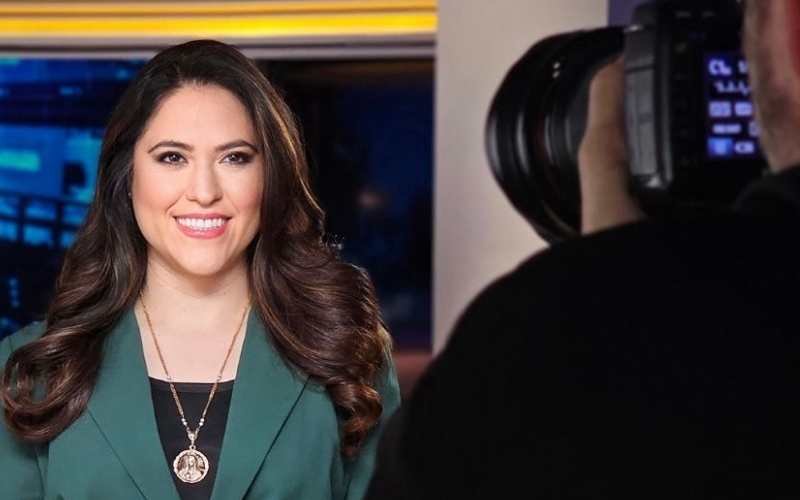
 Florida Attorney General James Uthmeier speaks with EWTN News’ Catherine Hadro on “EWTN News Nightly” on Nov. 7, 2025.  / Credit: “EWTN News Nightly”/Screenshot

CNA Staff, Nov 8, 2025 / 08:00 am (CNA).
Florida is suing Planned Parenthood for up to $350 million for allegedly falsely advertising abortion pills as “safer than Tylenol,” a claim debunked in a study this year.The 37-page lawsuit claims that Planned Parenthood has falsely advertised the abortion pill as “safer than Tylenol” despite evidence that shows a high rate of hospitalizations for women who take the drug mifepristone to induce abortions.Florida Attorney General James Uthmeier said Planned Parenthood has been “wrongfully deceiving women.”“We want to hold people accountable for hurting our women, for hurting our children, and these lawsuits are seeking to do it,” he told EWTN News’ Catherine Hadro, host of “EWTN News In Depth.” “They have been wrongfully deceiving women out there, advertising that these new chemical abortion pills are safer than Tylenol and pain medications you’d get over the shelf,” Uthmeier said. “Our evidence suggests that is entirely false.”“One in 25 women that take these chemical pills end up in the hospital, and we’ve seen dozens of deaths resulting,” Uthmeier continued. At least 36 women have died due to mifepristone-related complications since 2000, averaging more than one each year, according to the lawsuit. “We’re continuing to learn more, but the reality is there are dangers and harms with these dangerous chemical abortion pills that we’re only going to see more of going forward,” Uthmeier said.Uthmeier shared his concerns about pill trafficking, a growing problem for pro-life states. Current federal regulations allow providers to prescribe abortion drugs through telehealth and send them by mail. Abortion providers in states with lax abortion laws will ship pills into pro-life states without an in-person doctor’s visit.“The nature of these pills is it’s easier for them to get mailed into states like Florida, where we have a heartbeat bill, and they can violate that law,” Uthmeier said. “They also are more easily [put] into the hands of kids as a result of these new practices.” In recent months, several women who have been poisoned or coerced into taking the pill have sued abortion providers, who shipped the pills to their unborn children’s fathers. But pro-abortion states like New York and California have shield laws designed to protect abortion providers from the legal ramifications. California even allows anonymous prescription of the abortion pill.Uthmeier said Planned Parenthood has “turned to the chemical abortion pills because they’re so profitable.”“They have a 500% profit margin on the sale of these dangerous products,” he said. “By telling women that these drugs are safe, they’re able to sell more product, and they’ve had billions in revenues in recent years.”Uthmeier is asking the judge to fine Planned Parenthood $10,000 for each chemical abortion that Florida’s Planned Parenthood has provided since it began saying mifepristone was safer than Tylenol. Under the Florida Deceptive and Unfair Trade Practices Act, there is a $10,000 penalty for each act of deception. Uthmeier called it a “slam-dunk case.”“The evidence shows hospitalizations at significantly higher rates than going to the hospital for taking Tylenol,” he said. “They’re lying to the public. They need to be held accountable.” Uthmeier, who is a practicing Catholic, also joined a lawsuit earlier this year challenging the Food and Drug Administration’s decision to ease restrictions on mifepristone. “I’d like to say everybody on both sides of the aisle supports women and women’s safety,” Uthmeier said. “And wherever you stand on abortion, the reality is these drugs are sending women to the hospital. That can’t happen. So that’s why this fight is so important.”

Florida announces $350 million false advertising lawsuit against Planned Parenthood – #Catholic – Florida Attorney General James Uthmeier speaks with EWTN News’ Catherine Hadro on “EWTN News Nightly” on Nov. 7, 2025.  / Credit: “EWTN News Nightly”/Screenshot CNA Staff, Nov 8, 2025 / 08:00 am (CNA). Florida is suing Planned Parenthood for up to $350 million for allegedly falsely advertising abortion pills as “safer than Tylenol,” a claim debunked in a study this year.The 37-page lawsuit claims that Planned Parenthood has falsely advertised the abortion pill as “safer than Tylenol” despite evidence that shows a high rate of hospitalizations for women who take the drug mifepristone to induce abortions.Florida Attorney General James Uthmeier said Planned Parenthood has been “wrongfully deceiving women.”“We want to hold people accountable for hurting our women, for hurting our children, and these lawsuits are seeking to do it,” he told EWTN News’ Catherine Hadro, host of “EWTN News In Depth.” “They have been wrongfully deceiving women out there, advertising that these new chemical abortion pills are safer than Tylenol and pain medications you’d get over the shelf,” Uthmeier said. “Our evidence suggests that is entirely false.”“One in 25 women that take these chemical pills end up in the hospital, and we’ve seen dozens of deaths resulting,” Uthmeier continued. At least 36 women have died due to mifepristone-related complications since 2000, averaging more than one each year, according to the lawsuit. “We’re continuing to learn more, but the reality is there are dangers and harms with these dangerous chemical abortion pills that we’re only going to see more of going forward,” Uthmeier said.Uthmeier shared his concerns about pill trafficking, a growing problem for pro-life states. Current federal regulations allow providers to prescribe abortion drugs through telehealth and send them by mail. Abortion providers in states with lax abortion laws will ship pills into pro-life states without an in-person doctor’s visit.“The nature of these pills is it’s easier for them to get mailed into states like Florida, where we have a heartbeat bill, and they can violate that law,” Uthmeier said. “They also are more easily [put] into the hands of kids as a result of these new practices.” In recent months, several women who have been poisoned or coerced into taking the pill have sued abortion providers, who shipped the pills to their unborn children’s fathers. But pro-abortion states like New York and California have shield laws designed to protect abortion providers from the legal ramifications. California even allows anonymous prescription of the abortion pill.Uthmeier said Planned Parenthood has “turned to the chemical abortion pills because they’re so profitable.”“They have a 500% profit margin on the sale of these dangerous products,” he said. “By telling women that these drugs are safe, they’re able to sell more product, and they’ve had billions in revenues in recent years.”Uthmeier is asking the judge to fine Planned Parenthood $10,000 for each chemical abortion that Florida’s Planned Parenthood has provided since it began saying mifepristone was safer than Tylenol. Under the Florida Deceptive and Unfair Trade Practices Act, there is a $10,000 penalty for each act of deception. Uthmeier called it a “slam-dunk case.”“The evidence shows hospitalizations at significantly higher rates than going to the hospital for taking Tylenol,” he said. “They’re lying to the public. They need to be held accountable.” Uthmeier, who is a practicing Catholic, also joined a lawsuit earlier this year challenging the Food and Drug Administration’s decision to ease restrictions on mifepristone. “I’d like to say everybody on both sides of the aisle supports women and women’s safety,” Uthmeier said. “And wherever you stand on abortion, the reality is these drugs are sending women to the hospital. That can’t happen. So that’s why this fight is so important.”


Florida Attorney General James Uthmeier speaks with EWTN News’ Catherine Hadro on “EWTN News Nightly” on Nov. 7, 2025.  / Credit: “EWTN News Nightly”/Screenshot

CNA Staff, Nov 8, 2025 / 08:00 am (CNA).

Florida is suing Planned Parenthood for up to $350 million for allegedly falsely advertising abortion pills as “safer than Tylenol,” a claim debunked in a study this year.

The 37-page lawsuit claims that Planned Parenthood has falsely advertised the abortion pill as “safer than Tylenol” despite evidence that shows a high rate of hospitalizations for women who take the drug mifepristone to induce abortions.

Florida Attorney General James Uthmeier said Planned Parenthood has been “wrongfully deceiving women.”

“We want to hold people accountable for hurting our women, for hurting our children, and these lawsuits are seeking to do it,” he told EWTN News’ Catherine Hadro, host of “EWTN News In Depth.” 

“They have been wrongfully deceiving women out there, advertising that these new chemical abortion pills are safer than Tylenol and pain medications you’d get over the shelf,” Uthmeier said. “Our evidence suggests that is entirely false.”

“One in 25 women that take these chemical pills end up in the hospital, and we’ve seen dozens of deaths resulting,” Uthmeier continued. 

At least 36 women have died due to mifepristone-related complications since 2000, averaging more than one each year, according to the lawsuit. 

“We’re continuing to learn more, but the reality is there are dangers and harms with these dangerous chemical abortion pills that we’re only going to see more of going forward,” Uthmeier said.

Uthmeier shared his concerns about pill trafficking, a growing problem for pro-life states. Current federal regulations allow providers to prescribe abortion drugs through telehealth and send them by mail. Abortion providers in states with lax abortion laws will ship pills into pro-life states without an in-person doctor’s visit.

“The nature of these pills is it’s easier for them to get mailed into states like Florida, where we have a heartbeat bill, and they can violate that law,” Uthmeier said. “They also are more easily [put] into the hands of kids as a result of these new practices.” 

In recent months, several women who have been poisoned or coerced into taking the pill have sued abortion providers, who shipped the pills to their unborn children’s fathers. But pro-abortion states like New York and California have shield laws designed to protect abortion providers from the legal ramifications. California even allows anonymous prescription of the abortion pill.

Uthmeier said Planned Parenthood has “turned to the chemical abortion pills because they’re so profitable.”

“They have a 500% profit margin on the sale of these dangerous products,” he said. “By telling women that these drugs are safe, they’re able to sell more product, and they’ve had billions in revenues in recent years.”

Uthmeier is asking the judge to fine Planned Parenthood $10,000 for each chemical abortion that Florida’s Planned Parenthood has provided since it began saying mifepristone was safer than Tylenol. Under the Florida Deceptive and Unfair Trade Practices Act, there is a $10,000 penalty for each act of deception. 

Uthmeier called it a “slam-dunk case.”

“The evidence shows hospitalizations at significantly higher rates than going to the hospital for taking Tylenol,” he said. “They’re lying to the public. They need to be held accountable.” 

Uthmeier, who is a practicing Catholic, also joined a lawsuit earlier this year challenging the Food and Drug Administration’s decision to ease restrictions on mifepristone. 

“I’d like to say everybody on both sides of the aisle supports women and women’s safety,” Uthmeier said. “And wherever you stand on abortion, the reality is these drugs are sending women to the hospital. That can’t happen. So that’s why this fight is so important.”

Read More
Rockstar Announces ‘GTA 6’ Is Now Available And Oh No There’s The Trumpet Of God And The World Is Ending! #BabylonBee – NEW YORK, NY — In a reversal of yesterday’s announcement, Rockstar Games revealed that the hotly anticipated Grand Theft Auto VI is, in fact, available now. Rockstar President and co-founder Sam Houser confirmed that the game was finally completed and ready for digital download immediately — unfortunately, the trumpet of God has sounded and everyone is now out of time.

NEW YORK, NY — In a reversal of yesterday’s announcement, Rockstar Games revealed that the hotly anticipated Grand Theft Auto VI is, in fact, available now. Rockstar President and co-founder Sam Houser confirmed that the game was finally completed and ready for digital download immediately — unfortunately, the trumpet of God has sounded and everyone is now out of time.

Read More
Carmelite sister makes solemn profession at Morristown monastery #Catholic - Carmelite Sister Mariyam Shahar of the Savior made her final profession of vows at the Monastery of the Most Blessed Virgin Mary of Mount Carmel in Morristown, N.J. on Nov. 3 before Bishop Kevin J. Sweeney.
Before the prioress and her community, Sister Shahar promised to live a life of obedience, chastity, and poverty in the spirit of Carmel. Her family from her native Guam, including her parents, as well as friends and the faithful, attended the profession.

Click here to subscribe to our weekly newsletter.

Father Gabriel Camacho, Father Daren Santa Tomas, Father Preston Perez, Father Stephen Toth, and Father Drazen Hosi, priests of the Newark Archdiocese in New Jersey, concelebrated the Mass with Bishop Sweeney.
The Discalced Carmelites are a cloistered order with a daily schedule of eight hours of prayer, manual labor, some recreation, and contemplation. The sisters adhere to strict silence so their prayers may be more continuous.
BEACON PHOTOS | JOE GIGLI
 [See image gallery at beaconnj.org]  

Carmelite sister makes solemn profession at Morristown monastery #Catholic –

Carmelite Sister Mariyam Shahar of the Savior made her final profession of vows at the Monastery of the Most Blessed Virgin Mary of Mount Carmel in Morristown, N.J. on Nov. 3 before Bishop Kevin J. Sweeney.

Before the prioress and her community, Sister Shahar promised to live a life of obedience, chastity, and poverty in the spirit of Carmel. Her family from her native Guam, including her parents, as well as friends and the faithful, attended the profession.


Click here to subscribe to our weekly newsletter.

Father Gabriel Camacho, Father Daren Santa Tomas, Father Preston Perez, Father Stephen Toth, and Father Drazen Hosi, priests of the Newark Archdiocese in New Jersey, concelebrated the Mass with Bishop Sweeney.

The Discalced Carmelites are a cloistered order with a daily schedule of eight hours of prayer, manual labor, some recreation, and contemplation. The sisters adhere to strict silence so their prayers may be more continuous.

BEACON PHOTOS | JOE GIGLI

Carmelite Sister Mariyam Shahar of the Savior made her final profession of vows at the Monastery of the Most Blessed Virgin Mary of Mount Carmel in Morristown, N.J. on Nov. 3 before Bishop Kevin J. Sweeney. Before the prioress and her community, Sister Shahar promised to live a life of obedience, chastity, and poverty in the spirit of Carmel. Her family from her native Guam, including her parents, as well as friends and the faithful, attended the profession. Click here to subscribe to our weekly newsletter. Father Gabriel Camacho, Father Daren Santa Tomas, Father Preston Perez, Father Stephen Toth, and

Read More
The Gospel of Qaraqosh: 13th-century Syriac manuscript preserved in Vatican Library – #Catholic – 
 
 The Gospel of Baghdeda manuscript. / Credit: Vatican Apostolic Library

ACI MENA, Nov 8, 2025 / 07:00 am (CNA).
In the Vatican Apostolic Library rests one of its most treasured possessions: the “Gospel of Qaraqosh,” a richly illuminated Syriac manuscript dating back to the 13th century. Catalogued as “Vat. Syr. 559,” it was penned in A.D. 1220 by monk Mubarak ibn Dawud al-Bartelli of the Monastery of Mar Mattai near Mosul.Written in Estrangelo Syriac script, the manuscript gathers passages from the four Gospels used in the Syriac liturgical year and is adorned with vivid miniatures depicting scenes from Christ’s life and miracles.According to Father Behnam Soni, an expert on Syriac Church Fathers, the manuscript endured multiple thefts throughout history but was repeatedly reclaimed by the faithful of Qaraqosh, who finally offered it to the Church of al-Tahira. In 1937, Bishop Georges Dallal presented the precious volume to Pope Pius XI, who entrusted it to the Vatican Library for preservation and study.Measuring roughly 44 by 33.5 centimeters (17.32×13.19 inches) and bound in black leather with a gilded cross, the “Gospel of Qaraqosh” stands as a masterpiece of medieval Christian art and devotion.The Gospel of Baghdeda manuscript. Credit: Vatican Apostolic LibraryQaraqosh — also known as Baghdeda and Hamdaniyah — is a historic Christian town in northern Iraq located near Mosul in the Nineveh Plains. It is home to one of the largest Christian communities in the country, mainly belonging to the Syriac Catholic Church. The town has deep religious and cultural roots dating back centuries and is known for its churches, heritage, and resilience, especially after suffering destruction during the ISIS occupation and later rebuilding efforts.This story was first published by ACI MENA, CNA’s Arabic-language news partner, and has been translated for and adapted by CNA.

The Gospel of Qaraqosh: 13th-century Syriac manuscript preserved in Vatican Library – #Catholic – The Gospel of Baghdeda manuscript. / Credit: Vatican Apostolic Library ACI MENA, Nov 8, 2025 / 07:00 am (CNA). In the Vatican Apostolic Library rests one of its most treasured possessions: the “Gospel of Qaraqosh,” a richly illuminated Syriac manuscript dating back to the 13th century. Catalogued as “Vat. Syr. 559,” it was penned in A.D. 1220 by monk Mubarak ibn Dawud al-Bartelli of the Monastery of Mar Mattai near Mosul.Written in Estrangelo Syriac script, the manuscript gathers passages from the four Gospels used in the Syriac liturgical year and is adorned with vivid miniatures depicting scenes from Christ’s life and miracles.According to Father Behnam Soni, an expert on Syriac Church Fathers, the manuscript endured multiple thefts throughout history but was repeatedly reclaimed by the faithful of Qaraqosh, who finally offered it to the Church of al-Tahira. In 1937, Bishop Georges Dallal presented the precious volume to Pope Pius XI, who entrusted it to the Vatican Library for preservation and study.Measuring roughly 44 by 33.5 centimeters (17.32×13.19 inches) and bound in black leather with a gilded cross, the “Gospel of Qaraqosh” stands as a masterpiece of medieval Christian art and devotion.The Gospel of Baghdeda manuscript. Credit: Vatican Apostolic LibraryQaraqosh — also known as Baghdeda and Hamdaniyah — is a historic Christian town in northern Iraq located near Mosul in the Nineveh Plains. It is home to one of the largest Christian communities in the country, mainly belonging to the Syriac Catholic Church. The town has deep religious and cultural roots dating back centuries and is known for its churches, heritage, and resilience, especially after suffering destruction during the ISIS occupation and later rebuilding efforts.This story was first published by ACI MENA, CNA’s Arabic-language news partner, and has been translated for and adapted by CNA.


The Gospel of Baghdeda manuscript. / Credit: Vatican Apostolic Library

ACI MENA, Nov 8, 2025 / 07:00 am (CNA).

In the Vatican Apostolic Library rests one of its most treasured possessions: the “Gospel of Qaraqosh,” a richly illuminated Syriac manuscript dating back to the 13th century. Catalogued as “Vat. Syr. 559,” it was penned in A.D. 1220 by monk Mubarak ibn Dawud al-Bartelli of the Monastery of Mar Mattai near Mosul.

Written in Estrangelo Syriac script, the manuscript gathers passages from the four Gospels used in the Syriac liturgical year and is adorned with vivid miniatures depicting scenes from Christ’s life and miracles.

According to Father Behnam Soni, an expert on Syriac Church Fathers, the manuscript endured multiple thefts throughout history but was repeatedly reclaimed by the faithful of Qaraqosh, who finally offered it to the Church of al-Tahira. In 1937, Bishop Georges Dallal presented the precious volume to Pope Pius XI, who entrusted it to the Vatican Library for preservation and study.

Measuring roughly 44 by 33.5 centimeters (17.32×13.19 inches) and bound in black leather with a gilded cross, the “Gospel of Qaraqosh” stands as a masterpiece of medieval Christian art and devotion.

The Gospel of Baghdeda manuscript. Credit: Vatican Apostolic Library

Qaraqosh — also known as Baghdeda and Hamdaniyah — is a historic Christian town in northern Iraq located near Mosul in the Nineveh Plains. It is home to one of the largest Christian communities in the country, mainly belonging to the Syriac Catholic Church. The town has deep religious and cultural roots dating back centuries and is known for its churches, heritage, and resilience, especially after suffering destruction during the ISIS occupation and later rebuilding efforts.

This story was first published by ACI MENA, CNA’s Arabic-language news partner, and has been translated for and adapted by CNA.

Read More
Cardinal Orlando Quevedo: Mindanao’s ‘Man of Peace’ and his lifelong mission of unity – #Catholic – 
 
 Cardinal Orlando Beltran Quevedo blesses Catholics after celebrating a Mass in Cotabato on Oct. 11, 2024. / Credit: Photo courtesy of Santosh Digal

Manila, Philippines, Nov 8, 2025 / 06:00 am (CNA).
Cardinal Orlando Beltran Quevedo, OMI, archbishop emeritus of Cotabato, has spent a lifetime building bridges of understanding across the complex cultural and religious landscape of Mindanao, the Philippines’ second-largest island. Widely known as the region’s “Man of Peace,” Quevedo’s ministry has been defined by dialogue, compassion, and his belief that peace begins in the heart.According to the Philippine Statistics Authority, as of July 1, 2024, the Bangsamoro Autonomous Region in Muslim Mindanao (BARMM) is home to 5.69 million Filipinos, the majority of whom are Muslim. The region is located on Mindanao, the Philippines’ second-largest island, with a total population of approximately 26 million. While BARMM has a Muslim majority, the Philippines as a whole — with a population of 112.7 million — remains a Christian-majority nation.Winner of peace award for inspiring hopeIn recognition of his decadeslong work for reconciliation among Christians, Muslims, and Lumad Indigenous communities, the Philippine government honored Quevedo, the first cardinal from Mindanao and a member of the Oblates of Mary Immaculate, with the “Gawad Kapayapaan” (Peace Award) in September — a distinction given to individuals and institutions whose efforts advance peace and social cohesion.The Office of the Presidential Adviser on Peace, Reconciliation, and Unity (OPAPRU) described Quevedo’s mission as one “for healing divisions and inspiring hope.” Officials cited his ability to unite faith leaders and ordinary citizens alike in a shared pursuit of understanding.OPAPRU also honored Maria Veronica P. Tabara, a former revolutionary turned peace advocate, and the provincial government of Basilan with the Peace Award.Presidential peace adviser secretary Carlito G. Galvez Jr. with Cardinal Orlando Beltran Quevedo at the peace awards ceremony on Sept. 30, 2025. Credit: Supplied by the Office of the Presidential Adviser on Peace, ReconciliationNow in its fourth year, the award recognizes leaders and institutions whose dedication to fostering mutual understanding, interfaith dialogue, and solidarity is bringing the nation closer to its vision of justice and lasting peace while inspiring all Filipinos to participate in this peace journey.“Quevedo’s decades of service to the Church and communities in Mindanao show us that peace is built not only through institutions but through compassion, unity, and faith in humanity,” OPAPRU said.Accepting the award, Quevedo said: “Peace is born in the heart. Let us continue building bridges — not only between communities but between hearts — for only together can we truly walk the path of peace.”He dedicated the award to Muslims, Christians, and Lumads “who have labored quietly for peace.”A life shaped by service and dialogueBorn March 11, 1939, in Laoag City, Ilocos Norte province, in the northern Philippines, Quevedo was ordained a priest in 1964 and became bishop of the Diocese of Kidapawan in 1982. After leading the Archdiocese of Nueva Segovia, he was later appointed archbishop of Cotabato, witnessing firsthand the deep fractures of Mindanao — long affected by armed conflict, historical grievances, and economic inequality.Additionally, he was president of the Catholic Bishops’ Conference of the Philippines from 1999 to 2003 and head of the Federation of Asian Bishops’ Conferences from 2005 to 2011. Quevedo was made a cardinal in 2014.Quevedo has devoted his ministry over the years to bridging divides. In 1996, he participated in the Bishops-Ulama Conference, a forum that brought together Catholic bishops, Protestant pastors, and Muslim ulama for dialogue and cooperation. The initiative remains a cornerstone of interfaith peacebuilding in the Philippines.“Peace is born in the heart,” Quevedo often says. “It grows when we build bridges — not only between communities but between hearts.”Peace and fellowship as witness to faithEven after retiring in 2018, the cardinal remains a moral voice for peace in the BARMM, serving on its Council of Leaders. His advocacy now centers on addressing the root causes of conflict — inequality, exclusion, and mistrust — through education, inclusive governance, and people-to-people encounters.He insists that peacebuilding cannot rely solely on institutions. “It is through compassion, unity, and respect for human dignity,” he has said, “that true peace takes root.”Quevedo has spent years working among communities and building bridges where violence once tore them apart.Cardinal Orlando Beltran Quevedo, OMI. Credit: missio Aachen, CC BY 3.0, via Wikimedia CommonsOne of his goals is to bring religious leaders together in a place where they can discuss and plan ways to promote peace. He also wants to make it easier for them to talk to government agencies and other groups involved in reconciliation, with the right policies in place.He believes in “the effects of ripples” — and that small steps always lead to significant changes. He says that a simple act of peace and openness can change the world in the most dangerous and dark places.Quevedo urges people to respect differences in language, culture, and religion. His work aims to end violence and respect human dignity by linking community involvement to democratic values. He urges everyone to reach out to people with compassion and respect. In Mindanao, his approach has been to include children, youth, women, elders, religious leaders, government officials, and the public in promoting peace.His dedication has resulted in tangible outcomes: Educational institutes, civil society groups, and public institutions have endorsed his initiatives for peace and fellowship.Today, interfaith dialogue efforts are a sign of hope in the Philippines, thanks to people like Quevedo and many others. It indicates that peace isn’t just the lack of conflict; it’s also the presence of compassion and friendship.Quevedo says that when people of different faiths walk together with open hearts and hope, healing starts and peace becomes not just possible but real. Such efforts, according to Quevedo, would enrich people’s life expressions and experiences across religions, and all would have a role to play as peace catalysts.For many, Quevedo’s legacy lies not just in his ecclesial titles — bishop, archbishop, cardinal — but in his enduring witness to faith in action. His influence extends to educators, faith leaders, and grassroots advocates who continue his mission of dialogue and understanding.

Cardinal Orlando Quevedo: Mindanao’s ‘Man of Peace’ and his lifelong mission of unity – #Catholic – Cardinal Orlando Beltran Quevedo blesses Catholics after celebrating a Mass in Cotabato on Oct. 11, 2024. / Credit: Photo courtesy of Santosh Digal Manila, Philippines, Nov 8, 2025 / 06:00 am (CNA). Cardinal Orlando Beltran Quevedo, OMI, archbishop emeritus of Cotabato, has spent a lifetime building bridges of understanding across the complex cultural and religious landscape of Mindanao, the Philippines’ second-largest island. Widely known as the region’s “Man of Peace,” Quevedo’s ministry has been defined by dialogue, compassion, and his belief that peace begins in the heart.According to the Philippine Statistics Authority, as of July 1, 2024, the Bangsamoro Autonomous Region in Muslim Mindanao (BARMM) is home to 5.69 million Filipinos, the majority of whom are Muslim. The region is located on Mindanao, the Philippines’ second-largest island, with a total population of approximately 26 million. While BARMM has a Muslim majority, the Philippines as a whole — with a population of 112.7 million — remains a Christian-majority nation.Winner of peace award for inspiring hopeIn recognition of his decadeslong work for reconciliation among Christians, Muslims, and Lumad Indigenous communities, the Philippine government honored Quevedo, the first cardinal from Mindanao and a member of the Oblates of Mary Immaculate, with the “Gawad Kapayapaan” (Peace Award) in September — a distinction given to individuals and institutions whose efforts advance peace and social cohesion.The Office of the Presidential Adviser on Peace, Reconciliation, and Unity (OPAPRU) described Quevedo’s mission as one “for healing divisions and inspiring hope.” Officials cited his ability to unite faith leaders and ordinary citizens alike in a shared pursuit of understanding.OPAPRU also honored Maria Veronica P. Tabara, a former revolutionary turned peace advocate, and the provincial government of Basilan with the Peace Award.Presidential peace adviser secretary Carlito G. Galvez Jr. with Cardinal Orlando Beltran Quevedo at the peace awards ceremony on Sept. 30, 2025. Credit: Supplied by the Office of the Presidential Adviser on Peace, ReconciliationNow in its fourth year, the award recognizes leaders and institutions whose dedication to fostering mutual understanding, interfaith dialogue, and solidarity is bringing the nation closer to its vision of justice and lasting peace while inspiring all Filipinos to participate in this peace journey.“Quevedo’s decades of service to the Church and communities in Mindanao show us that peace is built not only through institutions but through compassion, unity, and faith in humanity,” OPAPRU said.Accepting the award, Quevedo said: “Peace is born in the heart. Let us continue building bridges — not only between communities but between hearts — for only together can we truly walk the path of peace.”He dedicated the award to Muslims, Christians, and Lumads “who have labored quietly for peace.”A life shaped by service and dialogueBorn March 11, 1939, in Laoag City, Ilocos Norte province, in the northern Philippines, Quevedo was ordained a priest in 1964 and became bishop of the Diocese of Kidapawan in 1982. After leading the Archdiocese of Nueva Segovia, he was later appointed archbishop of Cotabato, witnessing firsthand the deep fractures of Mindanao — long affected by armed conflict, historical grievances, and economic inequality.Additionally, he was president of the Catholic Bishops’ Conference of the Philippines from 1999 to 2003 and head of the Federation of Asian Bishops’ Conferences from 2005 to 2011. Quevedo was made a cardinal in 2014.Quevedo has devoted his ministry over the years to bridging divides. In 1996, he participated in the Bishops-Ulama Conference, a forum that brought together Catholic bishops, Protestant pastors, and Muslim ulama for dialogue and cooperation. The initiative remains a cornerstone of interfaith peacebuilding in the Philippines.“Peace is born in the heart,” Quevedo often says. “It grows when we build bridges — not only between communities but between hearts.”Peace and fellowship as witness to faithEven after retiring in 2018, the cardinal remains a moral voice for peace in the BARMM, serving on its Council of Leaders. His advocacy now centers on addressing the root causes of conflict — inequality, exclusion, and mistrust — through education, inclusive governance, and people-to-people encounters.He insists that peacebuilding cannot rely solely on institutions. “It is through compassion, unity, and respect for human dignity,” he has said, “that true peace takes root.”Quevedo has spent years working among communities and building bridges where violence once tore them apart.Cardinal Orlando Beltran Quevedo, OMI. Credit: missio Aachen, CC BY 3.0, via Wikimedia CommonsOne of his goals is to bring religious leaders together in a place where they can discuss and plan ways to promote peace. He also wants to make it easier for them to talk to government agencies and other groups involved in reconciliation, with the right policies in place.He believes in “the effects of ripples” — and that small steps always lead to significant changes. He says that a simple act of peace and openness can change the world in the most dangerous and dark places.Quevedo urges people to respect differences in language, culture, and religion. His work aims to end violence and respect human dignity by linking community involvement to democratic values. He urges everyone to reach out to people with compassion and respect. In Mindanao, his approach has been to include children, youth, women, elders, religious leaders, government officials, and the public in promoting peace.His dedication has resulted in tangible outcomes: Educational institutes, civil society groups, and public institutions have endorsed his initiatives for peace and fellowship.Today, interfaith dialogue efforts are a sign of hope in the Philippines, thanks to people like Quevedo and many others. It indicates that peace isn’t just the lack of conflict; it’s also the presence of compassion and friendship.Quevedo says that when people of different faiths walk together with open hearts and hope, healing starts and peace becomes not just possible but real. Such efforts, according to Quevedo, would enrich people’s life expressions and experiences across religions, and all would have a role to play as peace catalysts.For many, Quevedo’s legacy lies not just in his ecclesial titles — bishop, archbishop, cardinal — but in his enduring witness to faith in action. His influence extends to educators, faith leaders, and grassroots advocates who continue his mission of dialogue and understanding.


Cardinal Orlando Beltran Quevedo blesses Catholics after celebrating a Mass in Cotabato on Oct. 11, 2024. / Credit: Photo courtesy of Santosh Digal

Manila, Philippines, Nov 8, 2025 / 06:00 am (CNA).

Cardinal Orlando Beltran Quevedo, OMI, archbishop emeritus of Cotabato, has spent a lifetime building bridges of understanding across the complex cultural and religious landscape of Mindanao, the Philippines’ second-largest island. 

Widely known as the region’s “Man of Peace,” Quevedo’s ministry has been defined by dialogue, compassion, and his belief that peace begins in the heart.

According to the Philippine Statistics Authority, as of July 1, 2024, the Bangsamoro Autonomous Region in Muslim Mindanao (BARMM) is home to 5.69 million Filipinos, the majority of whom are Muslim. 

The region is located on Mindanao, the Philippines’ second-largest island, with a total population of approximately 26 million. While BARMM has a Muslim majority, the Philippines as a whole — with a population of 112.7 million — remains a Christian-majority nation.

Winner of peace award for inspiring hope

In recognition of his decadeslong work for reconciliation among Christians, Muslims, and Lumad Indigenous communities, the Philippine government honored Quevedo, the first cardinal from Mindanao and a member of the Oblates of Mary Immaculate, with the “Gawad Kapayapaan” (Peace Award) in September — a distinction given to individuals and institutions whose efforts advance peace and social cohesion.

The Office of the Presidential Adviser on Peace, Reconciliation, and Unity (OPAPRU) described Quevedo’s mission as one “for healing divisions and inspiring hope.” Officials cited his ability to unite faith leaders and ordinary citizens alike in a shared pursuit of understanding.

OPAPRU also honored Maria Veronica P. Tabara, a former revolutionary turned peace advocate, and the provincial government of Basilan with the Peace Award.

Presidential peace adviser secretary Carlito G. Galvez Jr. with Cardinal Orlando Beltran Quevedo at the peace awards ceremony on Sept. 30, 2025. Credit: Supplied by the Office of the Presidential Adviser on Peace, Reconciliation

Now in its fourth year, the award recognizes leaders and institutions whose dedication to fostering mutual understanding, interfaith dialogue, and solidarity is bringing the nation closer to its vision of justice and lasting peace while inspiring all Filipinos to participate in this peace journey.

“Quevedo’s decades of service to the Church and communities in Mindanao show us that peace is built not only through institutions but through compassion, unity, and faith in humanity,” OPAPRU said.

Accepting the award, Quevedo said: “Peace is born in the heart. Let us continue building bridges — not only between communities but between hearts — for only together can we truly walk the path of peace.”

He dedicated the award to Muslims, Christians, and Lumads “who have labored quietly for peace.”

A life shaped by service and dialogue

Born March 11, 1939, in Laoag City, Ilocos Norte province, in the northern Philippines, Quevedo was ordained a priest in 1964 and became bishop of the Diocese of Kidapawan in 1982. After leading the Archdiocese of Nueva Segovia, he was later appointed archbishop of Cotabato, witnessing firsthand the deep fractures of Mindanao — long affected by armed conflict, historical grievances, and economic inequality.

Additionally, he was president of the Catholic Bishops’ Conference of the Philippines from 1999 to 2003 and head of the Federation of Asian Bishops’ Conferences from 2005 to 2011. Quevedo was made a cardinal in 2014.

Quevedo has devoted his ministry over the years to bridging divides. In 1996, he participated in the Bishops-Ulama Conference, a forum that brought together Catholic bishops, Protestant pastors, and Muslim ulama for dialogue and cooperation. The initiative remains a cornerstone of interfaith peacebuilding in the Philippines.

“Peace is born in the heart,” Quevedo often says. “It grows when we build bridges — not only between communities but between hearts.”

Peace and fellowship as witness to faith

Even after retiring in 2018, the cardinal remains a moral voice for peace in the BARMM, serving on its Council of Leaders. His advocacy now centers on addressing the root causes of conflict — inequality, exclusion, and mistrust — through education, inclusive governance, and people-to-people encounters.

He insists that peacebuilding cannot rely solely on institutions. “It is through compassion, unity, and respect for human dignity,” he has said, “that true peace takes root.”

Quevedo has spent years working among communities and building bridges where violence once tore them apart.

Cardinal Orlando Beltran Quevedo, OMI. Credit: missio Aachen, CC BY 3.0, via Wikimedia Commons

One of his goals is to bring religious leaders together in a place where they can discuss and plan ways to promote peace. He also wants to make it easier for them to talk to government agencies and other groups involved in reconciliation, with the right policies in place.

He believes in “the effects of ripples” — and that small steps always lead to significant changes. He says that a simple act of peace and openness can change the world in the most dangerous and dark places.

Quevedo urges people to respect differences in language, culture, and religion. His work aims to end violence and respect human dignity by linking community involvement to democratic values. He urges everyone to reach out to people with compassion and respect. In Mindanao, his approach has been to include children, youth, women, elders, religious leaders, government officials, and the public in promoting peace.

His dedication has resulted in tangible outcomes: Educational institutes, civil society groups, and public institutions have endorsed his initiatives for peace and fellowship.

Today, interfaith dialogue efforts are a sign of hope in the Philippines, thanks to people like Quevedo and many others. It indicates that peace isn’t just the lack of conflict; it’s also the presence of compassion and friendship.

Quevedo says that when people of different faiths walk together with open hearts and hope, healing starts and peace becomes not just possible but real. Such efforts, according to Quevedo, would enrich people’s life expressions and experiences across religions, and all would have a role to play as peace catalysts.

For many, Quevedo’s legacy lies not just in his ecclesial titles — bishop, archbishop, cardinal — but in his enduring witness to faith in action. His influence extends to educators, faith leaders, and grassroots advocates who continue his mission of dialogue and understanding.

Read More

Looking for a sky event this week? Check out our full Sky This Week column.  November 7: Open cluster M103 shines in the Queen Eighth-magnitude dwarf planet 1 Ceres is passing close to a background star tonight, just 6’ southwest of a slightly fainter 9th-magnitude sun. Both are about ¼° north of an easy-to-spot pair of starsContinue reading “The Sky Today on Saturday, November 8: Ceres make an appulse”

The post The Sky Today on Saturday, November 8: Ceres make an appulse appeared first on Astronomy Magazine.

Read More

Lord,
With your bright and open heart forgive me for showing darkness to the light.
Putting my back, to what is right was wrong and i have sinned against you.
Forgive me O merciful one because i have relished my wrong and i am sorry for what i have done.
Lord i am ready to contiue following in your footsteps.
Take my from the dark.
Hear me now O lord.
Amen

Read More
DHS blasts order for improvements to migrant facility, says it houses ‘worst of the worst’ #Catholic 
 
 Auxiliary Bishop Jose María García-Maldonado attempts to visit detainees at the Broadview, Illinois, immigration facility and was not admitted Nov. 1, 2025. / Credit: Bryan Sebastian, courtesy of Coalition for Spiritual and Public Leadership

Washington, D.C., Nov 7, 2025 / 18:40 pm (CNA).
The Trump administration this week denounced a Chicago-based federal judge’s ruling that mandated cleanliness and hygiene standards as well as adequate legal representation at a U.S. Immigration and Customs Enforcement (ICE) facility in Illinois.Government lawyers said Nov. 7 they are in compliance or are in the midst of complying with the judge’s conditions. The detainees’ attorneys, however, say they “are doubtful” the government is “actually in compliance” with some of the conditions, “including as to facility cleaning, the provision of food and water, and the provision of prescription medication.” The detainees’ attorneys asked the court to conduct an inspection with an expert and have the government provide immediate proof of compliance.Administration officials said an “activist judge” issued the temporary restraining order and based it on hoaxes, while religious and civil-rights advocates pressed for detainees’ access to the Eucharist. Access to CommunionA group of 19 spiritual leaders including six priests renewed a request to offer pastoral care and Communion at the Broadview facility in a Nov. 6 letter to ICE and asked to discuss “procedures by which our small delegation of religious ministers can be granted access.” The delegation bringing Communion was denied access Nov. 1.Scene from Nov. 1, 2025, Mass outside the Broadview facility near Chicago where immigration advocates allege federal authorities inhumanely treat detainees. Credit: Bryan Sebastian, courtesy of Coalition for Spiritual and Public LeadershipThe judge’s temporary restraining order followed an Oct. 30 lawsuit in which detainees claimed they were placed in unsanitary conditions, provided inadequate food and water, and unconstitutionally deprived of access to legal representation and spiritual care. The Department of Homeland Security (DHS) said ICE’s Broadview facility houses “criminal illegal aliens” whom it described as “some of the worst of the worst.”“Some of the worst of the worst including pedophiles, gang members, and rapists have been processed through the facility in recent weeks,” Tricia McLaughlin, assistant Homeland Security secretary for public affairs, said in a Nov. 5 statement.The list included Jose Manuel Escobar-Cardona, described by DHS as “a criminal illegal alien” from Honduras who was convicted of multiple charges of lewd or lascivious acts with a minor, assault, driving under the influence of liquor, making a false report, illegal reentry, and making a false report.Also named by DHS was Alfonso Batalla-Garcia, “a criminal illegal alien from Mexico, convicted of sex assault, kidnapping an adult to sexually assault, and homicide.”Other detainees named by DHS included migrants who were said to have been convicted of drug trafficking, kidnapping, first-degree murder, and weapons trafficking. Publicly reported individuals detained by ICE in November also included a day care worker at the Rayito De Sol center, a Chicago preschool where the woman was removed in front of children.Pope Leo XIV on Nov. 4 said: “Many people who’ve lived for years and years and years, never causing problems, have been deeply affected by what’s going on right now.” Leo invited authorities to allow pastoral workers to attend to the needs of detainees.He reminded that “Jesus says very clearly … at the end of the world, we’re going to be asked … how did you receive the foreigner? Did you receive him and welcome him or not? And I think that there’s a deep reflection that needs to be made in terms of what’s happening.”A detainee testified he spent six days at the Broadview ICE facility before Judge Robert Gettleman ordered bedding, three meals a day, free water, hygiene products, papers translated into Spanish, a clock in each hold room, and free phone service for detainees to talk to counsel. Gettleman also ordered DHS to list all detainees on the Locator Online Detainee Locator System of ICE.DHS says facilities such as Broadview are designed to serve only as short-term holding centers, typically for about 12 hours, where individuals are briefly held for processing before being moved to longer-term detention facilities.“Despite hoaxes spread by criminal illegal aliens, the complicit media, and now an activist judge, the ICE Broadview facility does not have subpar conditions,” McLaughlin said. She said detainees receive three meals a day, access to water, and proper medical care.Neither McLaughlin’s statement nor the judge’s order addressed the lawsuit’s claims that Broadview detainees have been unconstitutionally denied access to faith leaders and clergy.McLaughlin wrote on X that “religious organizations have ALWAYS been welcome to provide services to detainees in ICE detention facilities. Religious leaders may request access to facilities through proper channels and have those requests approved.”McLaughlin also responded to questions from CNA, saying dangerous conditions — including belligerent actions and “attacks,” such as the use of tear gas, by protesters — and Broadview’s status as a short-term “field office” have prevented ICE from accommodating requests by religious organizations seeking access to detainees there.“ICE staff has repeatedly informed religious organizations that, due to Broadview’s status as a field office and the ongoing threat to civilians, detainees, and officers, they are not able to accommodate these requests at this time,” McLaughlin told CNA. “Even before the attacks on the Broadview facility, it was not within standard operating procedure for religious services to be provided in a field office, as detainees are continuously brought in, processed, and transferred out.”Chicago faith leaders wrote to ICE Nov. 7: “We understand that in past years ministers were granted access to the Broadview ICE facility for pastoral purposes. We also note public statements by DHS acknowledging detainees’ rights to chaplaincy and religious resources, while noting that requests for entry may require advance approval.”‘Careful review’Bishop Robert E. Barron of the Diocese of Winona-Rochester, Minnesota, who serves on the Department of Justice’s Religious Liberty Commission, said on X that senior officials in the U.S. government “assured” him that detainees in immigration custody will have access to Catholic sacraments and that the situation is “under careful review.”The Catholic Legal Immigration Network (CLINIC) said in a email Nov. 7: “CLINIC is disturbed by these instances in which the human and constitutional right to religious practice is being restricted. We hope the administration follows up on its ‘careful review’ by rectifying this and taking further action.”Pope Leo’s recent exhortation Dilexi Te says: “The Church, like a mother, accompanies those who are walking. Where the world sees threats, she sees children; where walls are built, she builds bridges. She knows that her proclamation of the Gospel is credible only when it is translated into gestures of closeness and welcome. And she knows that in every rejected migrant, it is Christ himself who knocks at the door of the community.”

DHS blasts order for improvements to migrant facility, says it houses ‘worst of the worst’ #Catholic Auxiliary Bishop Jose María García-Maldonado attempts to visit detainees at the Broadview, Illinois, immigration facility and was not admitted Nov. 1, 2025. / Credit: Bryan Sebastian, courtesy of Coalition for Spiritual and Public Leadership Washington, D.C., Nov 7, 2025 / 18:40 pm (CNA). The Trump administration this week denounced a Chicago-based federal judge’s ruling that mandated cleanliness and hygiene standards as well as adequate legal representation at a U.S. Immigration and Customs Enforcement (ICE) facility in Illinois.Government lawyers said Nov. 7 they are in compliance or are in the midst of complying with the judge’s conditions. The detainees’ attorneys, however, say they “are doubtful” the government is “actually in compliance” with some of the conditions, “including as to facility cleaning, the provision of food and water, and the provision of prescription medication.” The detainees’ attorneys asked the court to conduct an inspection with an expert and have the government provide immediate proof of compliance.Administration officials said an “activist judge” issued the temporary restraining order and based it on hoaxes, while religious and civil-rights advocates pressed for detainees’ access to the Eucharist. Access to CommunionA group of 19 spiritual leaders including six priests renewed a request to offer pastoral care and Communion at the Broadview facility in a Nov. 6 letter to ICE and asked to discuss “procedures by which our small delegation of religious ministers can be granted access.” The delegation bringing Communion was denied access Nov. 1.Scene from Nov. 1, 2025, Mass outside the Broadview facility near Chicago where immigration advocates allege federal authorities inhumanely treat detainees. Credit: Bryan Sebastian, courtesy of Coalition for Spiritual and Public LeadershipThe judge’s temporary restraining order followed an Oct. 30 lawsuit in which detainees claimed they were placed in unsanitary conditions, provided inadequate food and water, and unconstitutionally deprived of access to legal representation and spiritual care. The Department of Homeland Security (DHS) said ICE’s Broadview facility houses “criminal illegal aliens” whom it described as “some of the worst of the worst.”“Some of the worst of the worst including pedophiles, gang members, and rapists have been processed through the facility in recent weeks,” Tricia McLaughlin, assistant Homeland Security secretary for public affairs, said in a Nov. 5 statement.The list included Jose Manuel Escobar-Cardona, described by DHS as “a criminal illegal alien” from Honduras who was convicted of multiple charges of lewd or lascivious acts with a minor, assault, driving under the influence of liquor, making a false report, illegal reentry, and making a false report.Also named by DHS was Alfonso Batalla-Garcia, “a criminal illegal alien from Mexico, convicted of sex assault, kidnapping an adult to sexually assault, and homicide.”Other detainees named by DHS included migrants who were said to have been convicted of drug trafficking, kidnapping, first-degree murder, and weapons trafficking. Publicly reported individuals detained by ICE in November also included a day care worker at the Rayito De Sol center, a Chicago preschool where the woman was removed in front of children.Pope Leo XIV on Nov. 4 said: “Many people who’ve lived for years and years and years, never causing problems, have been deeply affected by what’s going on right now.” Leo invited authorities to allow pastoral workers to attend to the needs of detainees.He reminded that “Jesus says very clearly … at the end of the world, we’re going to be asked … how did you receive the foreigner? Did you receive him and welcome him or not? And I think that there’s a deep reflection that needs to be made in terms of what’s happening.”A detainee testified he spent six days at the Broadview ICE facility before Judge Robert Gettleman ordered bedding, three meals a day, free water, hygiene products, papers translated into Spanish, a clock in each hold room, and free phone service for detainees to talk to counsel. Gettleman also ordered DHS to list all detainees on the Locator Online Detainee Locator System of ICE.DHS says facilities such as Broadview are designed to serve only as short-term holding centers, typically for about 12 hours, where individuals are briefly held for processing before being moved to longer-term detention facilities.“Despite hoaxes spread by criminal illegal aliens, the complicit media, and now an activist judge, the ICE Broadview facility does not have subpar conditions,” McLaughlin said. She said detainees receive three meals a day, access to water, and proper medical care.Neither McLaughlin’s statement nor the judge’s order addressed the lawsuit’s claims that Broadview detainees have been unconstitutionally denied access to faith leaders and clergy.McLaughlin wrote on X that “religious organizations have ALWAYS been welcome to provide services to detainees in ICE detention facilities. Religious leaders may request access to facilities through proper channels and have those requests approved.”McLaughlin also responded to questions from CNA, saying dangerous conditions — including belligerent actions and “attacks,” such as the use of tear gas, by protesters — and Broadview’s status as a short-term “field office” have prevented ICE from accommodating requests by religious organizations seeking access to detainees there.“ICE staff has repeatedly informed religious organizations that, due to Broadview’s status as a field office and the ongoing threat to civilians, detainees, and officers, they are not able to accommodate these requests at this time,” McLaughlin told CNA. “Even before the attacks on the Broadview facility, it was not within standard operating procedure for religious services to be provided in a field office, as detainees are continuously brought in, processed, and transferred out.”Chicago faith leaders wrote to ICE Nov. 7: “We understand that in past years ministers were granted access to the Broadview ICE facility for pastoral purposes. We also note public statements by DHS acknowledging detainees’ rights to chaplaincy and religious resources, while noting that requests for entry may require advance approval.”‘Careful review’Bishop Robert E. Barron of the Diocese of Winona-Rochester, Minnesota, who serves on the Department of Justice’s Religious Liberty Commission, said on X that senior officials in the U.S. government “assured” him that detainees in immigration custody will have access to Catholic sacraments and that the situation is “under careful review.”The Catholic Legal Immigration Network (CLINIC) said in a email Nov. 7: “CLINIC is disturbed by these instances in which the human and constitutional right to religious practice is being restricted. We hope the administration follows up on its ‘careful review’ by rectifying this and taking further action.”Pope Leo’s recent exhortation Dilexi Te says: “The Church, like a mother, accompanies those who are walking. Where the world sees threats, she sees children; where walls are built, she builds bridges. She knows that her proclamation of the Gospel is credible only when it is translated into gestures of closeness and welcome. And she knows that in every rejected migrant, it is Christ himself who knocks at the door of the community.”


Auxiliary Bishop Jose María García-Maldonado attempts to visit detainees at the Broadview, Illinois, immigration facility and was not admitted Nov. 1, 2025. / Credit: Bryan Sebastian, courtesy of Coalition for Spiritual and Public Leadership

Washington, D.C., Nov 7, 2025 / 18:40 pm (CNA).

The Trump administration this week denounced a Chicago-based federal judge’s ruling that mandated cleanliness and hygiene standards as well as adequate legal representation at a U.S. Immigration and Customs Enforcement (ICE) facility in Illinois.

Government lawyers said Nov. 7 they are in compliance or are in the midst of complying with the judge’s conditions. The detainees’ attorneys, however, say they “are doubtful” the government is “actually in compliance” with some of the conditions, “including as to facility cleaning, the provision of food and water, and the provision of prescription medication.” 

The detainees’ attorneys asked the court to conduct an inspection with an expert and have the government provide immediate proof of compliance.

Administration officials said an “activist judge” issued the temporary restraining order and based it on hoaxes, while religious and civil-rights advocates pressed for detainees’ access to the Eucharist. 

Access to Communion

A group of 19 spiritual leaders including six priests renewed a request to offer pastoral care and Communion at the Broadview facility in a Nov. 6 letter to ICE and asked to discuss “procedures by which our small delegation of religious ministers can be granted access.” The delegation bringing Communion was denied access Nov. 1.

Scene from Nov. 1, 2025, Mass outside the Broadview facility near Chicago where immigration advocates allege federal authorities inhumanely treat detainees. Credit: Bryan Sebastian, courtesy of Coalition for Spiritual and Public Leadership

The judge’s temporary restraining order followed an Oct. 30 lawsuit in which detainees claimed they were placed in unsanitary conditions, provided inadequate food and water, and unconstitutionally deprived of access to legal representation and spiritual care. The Department of Homeland Security (DHS) said ICE’s Broadview facility houses “criminal illegal aliens” whom it described as “some of the worst of the worst.”

“Some of the worst of the worst including pedophiles, gang members, and rapists have been processed through the facility in recent weeks,” Tricia McLaughlin, assistant Homeland Security secretary for public affairs, said in a Nov. 5 statement.

The list included Jose Manuel Escobar-Cardona, described by DHS as “a criminal illegal alien” from Honduras who was convicted of multiple charges of lewd or lascivious acts with a minor, assault, driving under the influence of liquor, making a false report, illegal reentry, and making a false report.

Also named by DHS was Alfonso Batalla-Garcia, “a criminal illegal alien from Mexico, convicted of sex assault, kidnapping an adult to sexually assault, and homicide.”

Other detainees named by DHS included migrants who were said to have been convicted of drug trafficking, kidnapping, first-degree murder, and weapons trafficking. 

Publicly reported individuals detained by ICE in November also included a day care worker at the Rayito De Sol center, a Chicago preschool where the woman was removed in front of children.

Pope Leo XIV on Nov. 4 said: “Many people who’ve lived for years and years and years, never causing problems, have been deeply affected by what’s going on right now.” Leo invited authorities to allow pastoral workers to attend to the needs of detainees.

He reminded that “Jesus says very clearly … at the end of the world, we’re going to be asked … how did you receive the foreigner? Did you receive him and welcome him or not? And I think that there’s a deep reflection that needs to be made in terms of what’s happening.”

A detainee testified he spent six days at the Broadview ICE facility before Judge Robert Gettleman ordered bedding, three meals a day, free water, hygiene products, papers translated into Spanish, a clock in each hold room, and free phone service for detainees to talk to counsel. Gettleman also ordered DHS to list all detainees on the Locator Online Detainee Locator System of ICE.

DHS says facilities such as Broadview are designed to serve only as short-term holding centers, typically for about 12 hours, where individuals are briefly held for processing before being moved to longer-term detention facilities.

“Despite hoaxes spread by criminal illegal aliens, the complicit media, and now an activist judge, the ICE Broadview facility does not have subpar conditions,” McLaughlin said. She said detainees receive three meals a day, access to water, and proper medical care.

Neither McLaughlin’s statement nor the judge’s order addressed the lawsuit’s claims that Broadview detainees have been unconstitutionally denied access to faith leaders and clergy.

McLaughlin wrote on X that “religious organizations have ALWAYS been welcome to provide services to detainees in ICE detention facilities. Religious leaders may request access to facilities through proper channels and have those requests approved.”

McLaughlin also responded to questions from CNA, saying dangerous conditions — including belligerent actions and “attacks,” such as the use of tear gas, by protesters — and Broadview’s status as a short-term “field office” have prevented ICE from accommodating requests by religious organizations seeking access to detainees there.

“ICE staff has repeatedly informed religious organizations that, due to Broadview’s status as a field office and the ongoing threat to civilians, detainees, and officers, they are not able to accommodate these requests at this time,” McLaughlin told CNA. “Even before the attacks on the Broadview facility, it was not within standard operating procedure for religious services to be provided in a field office, as detainees are continuously brought in, processed, and transferred out.”

Chicago faith leaders wrote to ICE Nov. 7: “We understand that in past years ministers were granted access to the Broadview ICE facility for pastoral purposes. We also note public statements by DHS acknowledging detainees’ rights to chaplaincy and religious resources, while noting that requests for entry may require advance approval.”

‘Careful review’

Bishop Robert E. Barron of the Diocese of Winona-Rochester, Minnesota, who serves on the Department of Justice’s Religious Liberty Commission, said on X that senior officials in the U.S. government “assured” him that detainees in immigration custody will have access to Catholic sacraments and that the situation is “under careful review.”

The Catholic Legal Immigration Network (CLINIC) said in a email Nov. 7: “CLINIC is disturbed by these instances in which the human and constitutional right to religious practice is being restricted. We hope the administration follows up on its ‘careful review’ by rectifying this and taking further action.”

Pope Leo’s recent exhortation Dilexi Te says: “The Church, like a mother, accompanies those who are walking. Where the world sees threats, she sees children; where walls are built, she builds bridges. She knows that her proclamation of the Gospel is credible only when it is translated into gestures of closeness and welcome. And she knows that in every rejected migrant, it is Christ himself who knocks at the door of the community.”

Read More

Gospel and Word of the Day – 08 November 2025 – A reading from the Letter of St. Paul to the Romans 16:3-9, 16, 22-27 Brothers and sisters: Greet Prisca and Aquila, my co-workers in Christ Jesus, who risked their necks for my life, to whom not only I am grateful but also all the churches of the Gentiles; greet also the Church at their house. Greet my beloved Epaenetus, who was the firstfruits in Asia for Christ. Greet Mary, who has worked hard for you. Greet Andronicus and Junia, my relatives and my fellow prisoners; they are prominent among the Apostles and they were in Christ before me. Greet Ampliatus, my beloved in the Lord. Greet Urbanus, our co-worker in Christ, and my beloved Stachys. Greet one another with a holy kiss. All the churches of Christ greet you. I, Tertius, the writer of this letter, greet you in the Lord. Gaius, who is host to me and to the whole Church, greets you. Erastus, the city treasurer, and our brother Quartus greet you. Now to him who can strengthen you, according to my Gospel and the proclamation of Jesus Christ, according to the revelation of the mystery kept secret for long ages but now manifested through the prophetic writings and, according to the command of the eternal God, made known to all nations to bring about the obedience of faith, to the only wise God, through Jesus Christ be glory forever and ever. Amen.From the Gospel according to Luke 16:9-15 Jesus said to his disciples: “I tell you, make friends for yourselves with dishonest wealth, so that when it fails, you will be welcomed into eternal dwellings. The person who is trustworthy in very small matters is also trustworthy in great ones; and the person who is dishonest in very small matters is also dishonest in great ones. If, therefore, you are not trustworthy with dishonest wealth, who will trust you with true wealth? If you are not trustworthy with what belongs to another, who will give you what is yours? No servant can serve two masters. He will either hate one and love the other, or be devoted to one and despise the other. You cannot serve God and mammon.” The Pharisees, who loved money, heard all these things and sneered at him. And he said to them, “You justify yourselves in the sight of others, but God knows your hearts; for what is of human esteem is an abomination in the sight of God.”Wealth can propel one to build walls, create division and discrimination. Jesus, on the contrary, encourages his disciples to reverse course: “Make friends for yourselves by means of mammon”. It is an invitation to know how to change goods and wealth into relationships, because people are worth more than things, and count more than the wealth they possess. Indeed, in life, it is not those who have many riches who bear fruit, but those who create and keep alive many bonds, many relationships, many friendships through a variety of “mammon”, that is, the different gifts that God has given them. But Jesus also points to the ultimate aim of his exhortation: “Make friends for yourselves by means of mammon so that they may receive you into the eternal habitations”. If we are able to transform wealth into tools of fraternity and solidarity, not only will God be there to welcome us into heaven, but also those with whom we have shared, properly stewarded what the Lord has placed in our hands. (Pope Francis, Angelus, 22 September 2019)

A reading from the Letter of St. Paul to the Romans
16:3-9, 16, 22-27

Brothers and sisters:
Greet Prisca and Aquila, my co-workers in Christ Jesus,
who risked their necks for my life,
to whom not only I am grateful but also all the churches of the Gentiles;
greet also the Church at their house.
Greet my beloved Epaenetus,
who was the firstfruits in Asia for Christ.
Greet Mary, who has worked hard for you.
Greet Andronicus and Junia,
my relatives and my fellow prisoners;
they are prominent among the Apostles
and they were in Christ before me.
Greet Ampliatus, my beloved in the Lord.
Greet Urbanus, our co-worker in Christ,
and my beloved Stachys.
Greet one another with a holy kiss.
All the churches of Christ greet you.

I, Tertius, the writer of this letter, greet you in the Lord.
Gaius, who is host to me and to the whole Church, greets you.
Erastus, the city treasurer,
and our brother Quartus greet you.

Now to him who can strengthen you,
according to my Gospel and the proclamation of Jesus Christ,
according to the revelation of the mystery kept secret for long ages
but now manifested through the prophetic writings and,
according to the command of the eternal God,
made known to all nations to bring about the obedience of faith,
to the only wise God, through Jesus Christ
be glory forever and ever. Amen.

From the Gospel according to Luke
16:9-15

Jesus said to his disciples:
“I tell you, make friends for yourselves with dishonest wealth,
so that when it fails, you will be welcomed into eternal dwellings.
The person who is trustworthy in very small matters
is also trustworthy in great ones;
and the person who is dishonest in very small matters
is also dishonest in great ones.
If, therefore, you are not trustworthy with dishonest wealth,
who will trust you with true wealth?
If you are not trustworthy with what belongs to another,
who will give you what is yours?
No servant can serve two masters.
He will either hate one and love the other,
or be devoted to one and despise the other.
You cannot serve God and mammon.”

The Pharisees, who loved money,
heard all these things and sneered at him.
And he said to them,
“You justify yourselves in the sight of others,
but God knows your hearts;
for what is of human esteem is an abomination in the sight of God.”

Wealth can propel one to build walls, create division and discrimination. Jesus, on the contrary, encourages his disciples to reverse course: “Make friends for yourselves by means of mammon”. It is an invitation to know how to change goods and wealth into relationships, because people are worth more than things, and count more than the wealth they possess. Indeed, in life, it is not those who have many riches who bear fruit, but those who create and keep alive many bonds, many relationships, many friendships through a variety of “mammon”, that is, the different gifts that God has given them. But Jesus also points to the ultimate aim of his exhortation: “Make friends for yourselves by means of mammon so that they may receive you into the eternal habitations”. If we are able to transform wealth into tools of fraternity and solidarity, not only will God be there to welcome us into heaven, but also those with whom we have shared, properly stewarded what the Lord has placed in our hands. (Pope Francis, Angelus, 22 September 2019)

Read More
In Madison, hearts break for late Jets great, Delbarton coach #Catholic - Nick Mangold loved being in the thick of the action. There he was having fun presiding over the spring fundraiser for St. Vincent Martyr School in Madison, N.J., while wearing a tuxedo T-shirt under a jacket and a backwards cap.
“Nick made sure everybody had a good time and was patient as people came up and wanted to take pictures with him,” Msgr. George Hundt, former pastor of St. Vincent’s Parish, said Mangold, who was a retired center for the Jets — and a local celebrity.
On Nov. 4, family, friends, and members of the Jets and Delbarton School in Morristown, N.J., gathered for a Mass of Christian Burial in St. Vincent’s Church to honor the faith, kindness, generosity, and work ethic of Nicholas Allan Mangold, who unexpectedly died on Oct. 25. He died of complications from liver disease. He was 41.
Still in shock, mourners attending the liturgy remembered Mangold as a larger-than-life figure — a big man with a big heart — who loved above all his faith, family, and football — in that order. Since retiring from the NFL in 2018, he poured his passion into his family: his wife, Jennifer, and their four children. He was an active parent at St. Vincent’s School and a volunteer at St. Vincent’s Parish and in Madison, where he lived. Mangold had been the offensive line coach for Delbarton’s varsity football since last year.

Click here to subscribe to our weekly newsletter.

“Nick understood that the blessings he was given weren’t meant to serve himself [but] to share with his family, friends, and every community,” Msgr. Hundt, now pastor of St. Gerard Majella and Our Lady of Pompei parishes, both in Paterson, said in remarks at the end of the Mass. “That’s why we can be assured today that as Nick steps into heaven, he’s hearing those words we all want to hear one day: ‘Well done, good and faithful servant. Come into the place that I have prepared for you.'”
Msgr. Hundt joined Father Owen Moran, current pastor of St. Vincent’s; Benedictine Father Michael Tidd, headmaster of Delbarton; and Father Jose Zuniga, St. Vincent’s parochial vicar, in celebrating the funeral Mass. Father Moran delivered the homily. Members of the Jets and Delbarton communities participated in the liturgy. Also that morning, the rest of the Delbarton community remembered Mangold at its annual Mass with Bishop Kevin J. Sweeney.
Demonstrating leadership and grit, Mangold had 11 well-respected seasons with the Jets, earning seven Pro Bowl selections and a spot in the Jets’ Ring of Honor. The Ohio native is now a candidate for the Pro Football Hall of Fame’s Class of 2026. Earlier, Mangold helped the Ohio State Buckeyes clinch a National Championship in 2002.
Far from the NFL, Mangold and his wife were raising their four children — Matthew, Eloise, Thomas, and Charlotte — in the Catholic faith and making memories with them. They attended weekly Mass. The children attended Catholic school. Mangold coached some of their sports and cheered them from the sidelines. They also took trips around the world, including to Disney.
Mangold also supported causes such as the Madison PBA and the Special Olympics.
“Forty-one is too young [to die], but when we present our lives to God, at the end of our lives, however old we will be, it’s not a matter of how old we are. What did we do? What difference did we make? How did we love? How did we forgive, if necessary? How did we bring others to God? How did we reflect God’s love by our lives? Nick ticked all those boxes — and more,” Father Moran said. “Today, Nick invites all of us to live our faith well. He put God first, used his gifts, and enjoyed the ride.”
St. Vincent’s School honored Mangold on social media. The community recited the Luminous Mysteries of the rosary in tribute.
“We asked that the same light of Christ that shone during these mysteries also surround Nick and his family. Nick will never be forgotten. His kindness, generosity, and light will remain in our hearts always,” St. Vincent’s posted on social media.
The standing-room-only attendance at Mangold’s funeral “reflected how many people Nick touched,” said Alan Faneca, a retired NFL guard who played with Mangold on the Jets from 2008-09. He delivered a reflection at the end of Mass.
“It’s the way Nick made people feel. You felt seen, cared for, and valued because of his genuine heart. He’d make your day better with a joke or smile,” Faneca said.
Delbarton varsity football honored Mangold on Nov. 1 during its first game since his death. On their helmets, players wore #74, his Jets number, and passed out hats with #74 and green ribbons. Mangold made his mark by bringing his extensive NFL experience and mentorship skills to the high school level.
Head Coach Brian Bowers told NJ.com about the difficulty of keeping the players focused in the wake of Mangold’s death.
“Our kids have done a great job really supporting one another. It’s difficult for teenagers to go through any loss, let alone the loss of someone they love so much like Coach Mangold,” Bowers said.
When he came to Delbarton, Mangold was humble despite his NFL successes. He was “like a sponge,” soaking up knowledge and wanting to learn more about high school coaching. His son, Matthew, plays freshman football, said Tony Negrin, Delbarton’s athletic director.
“Nick was professional but also passionate and competitive,” Negrin said. “He was the first in to work and the last to leave. He was larger than life, but the players treated him like any other coach. Nick wanted to be part of the community.”

In Madison, hearts break for late Jets great, Delbarton coach #Catholic – Nick Mangold loved being in the thick of the action. There he was having fun presiding over the spring fundraiser for St. Vincent Martyr School in Madison, N.J., while wearing a tuxedo T-shirt under a jacket and a backwards cap. “Nick made sure everybody had a good time and was patient as people came up and wanted to take pictures with him,” Msgr. George Hundt, former pastor of St. Vincent’s Parish, said Mangold, who was a retired center for the Jets — and a local celebrity. On Nov. 4, family, friends, and members of the Jets and Delbarton School in Morristown, N.J., gathered for a Mass of Christian Burial in St. Vincent’s Church to honor the faith, kindness, generosity, and work ethic of Nicholas Allan Mangold, who unexpectedly died on Oct. 25. He died of complications from liver disease. He was 41. Still in shock, mourners attending the liturgy remembered Mangold as a larger-than-life figure — a big man with a big heart — who loved above all his faith, family, and football — in that order. Since retiring from the NFL in 2018, he poured his passion into his family: his wife, Jennifer, and their four children. He was an active parent at St. Vincent’s School and a volunteer at St. Vincent’s Parish and in Madison, where he lived. Mangold had been the offensive line coach for Delbarton’s varsity football since last year. Click here to subscribe to our weekly newsletter. “Nick understood that the blessings he was given weren’t meant to serve himself [but] to share with his family, friends, and every community,” Msgr. Hundt, now pastor of St. Gerard Majella and Our Lady of Pompei parishes, both in Paterson, said in remarks at the end of the Mass. “That’s why we can be assured today that as Nick steps into heaven, he’s hearing those words we all want to hear one day: ‘Well done, good and faithful servant. Come into the place that I have prepared for you.’” Msgr. Hundt joined Father Owen Moran, current pastor of St. Vincent’s; Benedictine Father Michael Tidd, headmaster of Delbarton; and Father Jose Zuniga, St. Vincent’s parochial vicar, in celebrating the funeral Mass. Father Moran delivered the homily. Members of the Jets and Delbarton communities participated in the liturgy. Also that morning, the rest of the Delbarton community remembered Mangold at its annual Mass with Bishop Kevin J. Sweeney. Demonstrating leadership and grit, Mangold had 11 well-respected seasons with the Jets, earning seven Pro Bowl selections and a spot in the Jets’ Ring of Honor. The Ohio native is now a candidate for the Pro Football Hall of Fame’s Class of 2026. Earlier, Mangold helped the Ohio State Buckeyes clinch a National Championship in 2002. Far from the NFL, Mangold and his wife were raising their four children — Matthew, Eloise, Thomas, and Charlotte — in the Catholic faith and making memories with them. They attended weekly Mass. The children attended Catholic school. Mangold coached some of their sports and cheered them from the sidelines. They also took trips around the world, including to Disney. Mangold also supported causes such as the Madison PBA and the Special Olympics. “Forty-one is too young [to die], but when we present our lives to God, at the end of our lives, however old we will be, it’s not a matter of how old we are. What did we do? What difference did we make? How did we love? How did we forgive, if necessary? How did we bring others to God? How did we reflect God’s love by our lives? Nick ticked all those boxes — and more,” Father Moran said. “Today, Nick invites all of us to live our faith well. He put God first, used his gifts, and enjoyed the ride.” St. Vincent’s School honored Mangold on social media. The community recited the Luminous Mysteries of the rosary in tribute. “We asked that the same light of Christ that shone during these mysteries also surround Nick and his family. Nick will never be forgotten. His kindness, generosity, and light will remain in our hearts always,” St. Vincent’s posted on social media. The standing-room-only attendance at Mangold’s funeral “reflected how many people Nick touched,” said Alan Faneca, a retired NFL guard who played with Mangold on the Jets from 2008-09. He delivered a reflection at the end of Mass. “It’s the way Nick made people feel. You felt seen, cared for, and valued because of his genuine heart. He’d make your day better with a joke or smile,” Faneca said. Delbarton varsity football honored Mangold on Nov. 1 during its first game since his death. On their helmets, players wore #74, his Jets number, and passed out hats with #74 and green ribbons. Mangold made his mark by bringing his extensive NFL experience and mentorship skills to the high school level. Head Coach Brian Bowers told NJ.com about the difficulty of keeping the players focused in the wake of Mangold’s death. “Our kids have done a great job really supporting one another. It’s difficult for teenagers to go through any loss, let alone the loss of someone they love so much like Coach Mangold,” Bowers said. When he came to Delbarton, Mangold was humble despite his NFL successes. He was “like a sponge,” soaking up knowledge and wanting to learn more about high school coaching. His son, Matthew, plays freshman football, said Tony Negrin, Delbarton’s athletic director. “Nick was professional but also passionate and competitive,” Negrin said. “He was the first in to work and the last to leave. He was larger than life, but the players treated him like any other coach. Nick wanted to be part of the community.”

In Madison, hearts break for late Jets great, Delbarton coach #Catholic –

Nick Mangold loved being in the thick of the action. There he was having fun presiding over the spring fundraiser for St. Vincent Martyr School in Madison, N.J., while wearing a tuxedo T-shirt under a jacket and a backwards cap.

“Nick made sure everybody had a good time and was patient as people came up and wanted to take pictures with him,” Msgr. George Hundt, former pastor of St. Vincent’s Parish, said Mangold, who was a retired center for the Jets — and a local celebrity.

On Nov. 4, family, friends, and members of the Jets and Delbarton School in Morristown, N.J., gathered for a Mass of Christian Burial in St. Vincent’s Church to honor the faith, kindness, generosity, and work ethic of Nicholas Allan Mangold, who unexpectedly died on Oct. 25. He died of complications from liver disease. He was 41.

Still in shock, mourners attending the liturgy remembered Mangold as a larger-than-life figure — a big man with a big heart — who loved above all his faith, family, and football — in that order. Since retiring from the NFL in 2018, he poured his passion into his family: his wife, Jennifer, and their four children. He was an active parent at St. Vincent’s School and a volunteer at St. Vincent’s Parish and in Madison, where he lived. Mangold had been the offensive line coach for Delbarton’s varsity football since last year.


Click here to subscribe to our weekly newsletter.

“Nick understood that the blessings he was given weren’t meant to serve himself [but] to share with his family, friends, and every community,” Msgr. Hundt, now pastor of St. Gerard Majella and Our Lady of Pompei parishes, both in Paterson, said in remarks at the end of the Mass. “That’s why we can be assured today that as Nick steps into heaven, he’s hearing those words we all want to hear one day: ‘Well done, good and faithful servant. Come into the place that I have prepared for you.’”

Msgr. Hundt joined Father Owen Moran, current pastor of St. Vincent’s; Benedictine Father Michael Tidd, headmaster of Delbarton; and Father Jose Zuniga, St. Vincent’s parochial vicar, in celebrating the funeral Mass. Father Moran delivered the homily. Members of the Jets and Delbarton communities participated in the liturgy. Also that morning, the rest of the Delbarton community remembered Mangold at its annual Mass with Bishop Kevin J. Sweeney.

Demonstrating leadership and grit, Mangold had 11 well-respected seasons with the Jets, earning seven Pro Bowl selections and a spot in the Jets’ Ring of Honor. The Ohio native is now a candidate for the Pro Football Hall of Fame’s Class of 2026. Earlier, Mangold helped the Ohio State Buckeyes clinch a National Championship in 2002.

Far from the NFL, Mangold and his wife were raising their four children — Matthew, Eloise, Thomas, and Charlotte — in the Catholic faith and making memories with them. They attended weekly Mass. The children attended Catholic school. Mangold coached some of their sports and cheered them from the sidelines. They also took trips around the world, including to Disney.

Mangold also supported causes such as the Madison PBA and the Special Olympics.

“Forty-one is too young [to die], but when we present our lives to God, at the end of our lives, however old we will be, it’s not a matter of how old we are. What did we do? What difference did we make? How did we love? How did we forgive, if necessary? How did we bring others to God? How did we reflect God’s love by our lives? Nick ticked all those boxes — and more,” Father Moran said. “Today, Nick invites all of us to live our faith well. He put God first, used his gifts, and enjoyed the ride.”

St. Vincent’s School honored Mangold on social media. The community recited the Luminous Mysteries of the rosary in tribute.

“We asked that the same light of Christ that shone during these mysteries also surround Nick and his family. Nick will never be forgotten. His kindness, generosity, and light will remain in our hearts always,” St. Vincent’s posted on social media.

The standing-room-only attendance at Mangold’s funeral “reflected how many people Nick touched,” said Alan Faneca, a retired NFL guard who played with Mangold on the Jets from 2008-09. He delivered a reflection at the end of Mass.

“It’s the way Nick made people feel. You felt seen, cared for, and valued because of his genuine heart. He’d make your day better with a joke or smile,” Faneca said.

Delbarton varsity football honored Mangold on Nov. 1 during its first game since his death. On their helmets, players wore #74, his Jets number, and passed out hats with #74 and green ribbons. Mangold made his mark by bringing his extensive NFL experience and mentorship skills to the high school level.

Head Coach Brian Bowers told NJ.com about the difficulty of keeping the players focused in the wake of Mangold’s death.

“Our kids have done a great job really supporting one another. It’s difficult for teenagers to go through any loss, let alone the loss of someone they love so much like Coach Mangold,” Bowers said.

When he came to Delbarton, Mangold was humble despite his NFL successes. He was “like a sponge,” soaking up knowledge and wanting to learn more about high school coaching. His son, Matthew, plays freshman football, said Tony Negrin, Delbarton’s athletic director.

“Nick was professional but also passionate and competitive,” Negrin said. “He was the first in to work and the last to leave. He was larger than life, but the players treated him like any other coach. Nick wanted to be part of the community.”

Nick Mangold loved being in the thick of the action. There he was having fun presiding over the spring fundraiser for St. Vincent Martyr School in Madison, N.J., while wearing a tuxedo T-shirt under a jacket and a backwards cap. “Nick made sure everybody had a good time and was patient as people came up and wanted to take pictures with him,” Msgr. George Hundt, former pastor of St. Vincent’s Parish, said Mangold, who was a retired center for the Jets — and a local celebrity. On Nov. 4, family, friends, and members of the Jets and Delbarton School in

Read More
Religious sisters announce historic land return to Wisconsin Native American tribe #Catholic 
 
 LaCrosse, Wisconsin. / Credit: JTTucker/Shutterstock

CNA Staff, Nov 7, 2025 / 06:00 am (CNA).
A Wisconsin religious community says it has completed the first known instance of a Catholic group returning land to a Native American tribe, hailing it as a move made in the “spirit of relationship and healing.”The Franciscan Sisters of Perpetual Adoration announced the transfer in an Oct. 31 news release on its website. The community is located in La Crosse, Wisconsin, near the state’s border with Minnesota.The sisters had purchased the land from the Lac du Flambeau Band of the Lake Superior Chippewa tribe in 1966 and used the property for its Marywood Franciscan Spirituality Center.The sisters said they sold the property to the tribe for $30,000, the exact amount for which they paid for the land six decades ago. The modern sale price represented “just over 1% of [the land’s] current market value,” the sisters said.The bargain sale represents “the first known return of Catholic-owned land to a tribal nation as an act of repair for colonization and residential boarding schools,” the sisters said.“Today, the tribe’s reservation represents only a fraction of [its] traditional territories,” the news release said. “Rebuilding and protecting tribal land bases is vital to sustaining sovereignty — it restores the ability for self-determination, cultural preservation, and community development.” “A strong land base supports essential services, creates employment opportunities, and provides a foundation for long-term economic and social resilience,” the sisters said. Tribal President John Johnson hailed the sale as “an example of what true healing and partnership can look like.” “We are proud to welcome Marywood home, to ensure it continues to serve future generations of the Lac du Flambeau people,” Johnson said. The sisters said the retreat center was “facing challenges to its viability,” leading the community to “discern a future for the land” in line with its institutional priorities. In their press release, the sisters said they have also been in “a process of reckoning” with the history of St. Mary’s Catholic Indian Boarding School. The sisters administered the school in Odanah, Wisconsin, from 1883 to 1969.Critics in recent years have claimed that such boarding schools participated in the erasure of Native American culture. Others have alleged that significant clergy sex abuse took place at such institutions.The sisters on Oct. 31 said such schools were guilty of “separating children from their families, suppressing Native identity, and paving the way for the large-scale seizure of Native homelands.”“It was painful to address our complicity, but we knew it had to be done,” former community president Sister Eileen McKenzie said in the press release.Diocese of Superior Bishop James Powers, meanwhile, praised the transfer, describing it as “a tangible act of justice and reconciliation that flows directly from the heart of our Catholic faith.”The Franciscan Sisters of Perpetual Adoration traces its roots to a group of Bavarian immigrants who traveled to Milwaukee in 1849 “intent upon founding a religious community to spread the Gospel among German immigrants.”The community has run hospitals and schools in Wisconsin and has also sponsored medical clinics and mission schools abroad.

Religious sisters announce historic land return to Wisconsin Native American tribe #Catholic LaCrosse, Wisconsin. / Credit: JTTucker/Shutterstock CNA Staff, Nov 7, 2025 / 06:00 am (CNA). A Wisconsin religious community says it has completed the first known instance of a Catholic group returning land to a Native American tribe, hailing it as a move made in the “spirit of relationship and healing.”The Franciscan Sisters of Perpetual Adoration announced the transfer in an Oct. 31 news release on its website. The community is located in La Crosse, Wisconsin, near the state’s border with Minnesota.The sisters had purchased the land from the Lac du Flambeau Band of the Lake Superior Chippewa tribe in 1966 and used the property for its Marywood Franciscan Spirituality Center.The sisters said they sold the property to the tribe for $30,000, the exact amount for which they paid for the land six decades ago. The modern sale price represented “just over 1% of [the land’s] current market value,” the sisters said.The bargain sale represents “the first known return of Catholic-owned land to a tribal nation as an act of repair for colonization and residential boarding schools,” the sisters said.“Today, the tribe’s reservation represents only a fraction of [its] traditional territories,” the news release said. “Rebuilding and protecting tribal land bases is vital to sustaining sovereignty — it restores the ability for self-determination, cultural preservation, and community development.” “A strong land base supports essential services, creates employment opportunities, and provides a foundation for long-term economic and social resilience,” the sisters said. Tribal President John Johnson hailed the sale as “an example of what true healing and partnership can look like.” “We are proud to welcome Marywood home, to ensure it continues to serve future generations of the Lac du Flambeau people,” Johnson said. The sisters said the retreat center was “facing challenges to its viability,” leading the community to “discern a future for the land” in line with its institutional priorities. In their press release, the sisters said they have also been in “a process of reckoning” with the history of St. Mary’s Catholic Indian Boarding School. The sisters administered the school in Odanah, Wisconsin, from 1883 to 1969.Critics in recent years have claimed that such boarding schools participated in the erasure of Native American culture. Others have alleged that significant clergy sex abuse took place at such institutions.The sisters on Oct. 31 said such schools were guilty of “separating children from their families, suppressing Native identity, and paving the way for the large-scale seizure of Native homelands.”“It was painful to address our complicity, but we knew it had to be done,” former community president Sister Eileen McKenzie said in the press release.Diocese of Superior Bishop James Powers, meanwhile, praised the transfer, describing it as “a tangible act of justice and reconciliation that flows directly from the heart of our Catholic faith.”The Franciscan Sisters of Perpetual Adoration traces its roots to a group of Bavarian immigrants who traveled to Milwaukee in 1849 “intent upon founding a religious community to spread the Gospel among German immigrants.”The community has run hospitals and schools in Wisconsin and has also sponsored medical clinics and mission schools abroad.


LaCrosse, Wisconsin. / Credit: JTTucker/Shutterstock

CNA Staff, Nov 7, 2025 / 06:00 am (CNA).

A Wisconsin religious community says it has completed the first known instance of a Catholic group returning land to a Native American tribe, hailing it as a move made in the “spirit of relationship and healing.”

The Franciscan Sisters of Perpetual Adoration announced the transfer in an Oct. 31 news release on its website. The community is located in La Crosse, Wisconsin, near the state’s border with Minnesota.

The sisters had purchased the land from the Lac du Flambeau Band of the Lake Superior Chippewa tribe in 1966 and used the property for its Marywood Franciscan Spirituality Center.

The sisters said they sold the property to the tribe for $30,000, the exact amount for which they paid for the land six decades ago. The modern sale price represented “just over 1% of [the land’s] current market value,” the sisters said.

The bargain sale represents “the first known return of Catholic-owned land to a tribal nation as an act of repair for colonization and residential boarding schools,” the sisters said.

“Today, the tribe’s reservation represents only a fraction of [its] traditional territories,” the news release said. “Rebuilding and protecting tribal land bases is vital to sustaining sovereignty — it restores the ability for self-determination, cultural preservation, and community development.” 

“A strong land base supports essential services, creates employment opportunities, and provides a foundation for long-term economic and social resilience,” the sisters said. 

Tribal President John Johnson hailed the sale as “an example of what true healing and partnership can look like.” 

“We are proud to welcome Marywood home, to ensure it continues to serve future generations of the Lac du Flambeau people,” Johnson said. 

The sisters said the retreat center was “facing challenges to its viability,” leading the community to “discern a future for the land” in line with its institutional priorities. 

In their press release, the sisters said they have also been in “a process of reckoning” with the history of St. Mary’s Catholic Indian Boarding School. The sisters administered the school in Odanah, Wisconsin, from 1883 to 1969.

Critics in recent years have claimed that such boarding schools participated in the erasure of Native American culture. Others have alleged that significant clergy sex abuse took place at such institutions.

The sisters on Oct. 31 said such schools were guilty of “separating children from their families, suppressing Native identity, and paving the way for the large-scale seizure of Native homelands.”

“It was painful to address our complicity, but we knew it had to be done,” former community president Sister Eileen McKenzie said in the press release.

Diocese of Superior Bishop James Powers, meanwhile, praised the transfer, describing it as “a tangible act of justice and reconciliation that flows directly from the heart of our Catholic faith.”

The Franciscan Sisters of Perpetual Adoration traces its roots to a group of Bavarian immigrants who traveled to Milwaukee in 1849 “intent upon founding a religious community to spread the Gospel among German immigrants.”

The community has run hospitals and schools in Wisconsin and has also sponsored medical clinics and mission schools abroad.

Read More

Looking for a sky event this week? Check out our full Sky This Week column.  November 6: Titan treks across Saturn Let’s look to Cassiopeia tonight to observe the open cluster M103. Shining at magnitude 7.4, you can find this group near magnitude 2.7 Delta Cas. Simply center this star in binoculars or a small telescope, thenContinue reading “The Sky Today on Friday, November 7: Open cluster M103 shines in the Queen”

The post The Sky Today on Friday, November 7: Open cluster M103 shines in the Queen appeared first on Astronomy Magazine.

Read More

Jesus my Lord,
let me strengthen my courage
by taking on the courage
of all those people who have been “centurions” for me.
Many have faced disasters
and hard times with great constancy.
The upper hand of evil never turned them against you.
They kept going.
Let me be like them, Lord.
No matter what the cross,
let me never stop declaring you
to be “truly the Son of God,
the source of my hope,
the reason why I will never quit on life.

Read More
Pope Leo XIV receives European Christian leaders after signing of new Ecumenical Charter - #Catholic - 
 
 Archbishop Gintaras Grušas and Greek Orthodox Archbishop Nikitas Loulias present the signed updated Ecumenical Charter to Pope Leo XIV on Nov. 6, 2025. / Credit: Vatican Media

ACI Prensa Staff, Nov 6, 2025 / 18:29 pm (CNA).
Pope Leo XIV received in a Nov. 6 audience the members of the Council of European Bishops’ Conferences (CCEE, by its Spanish acronym), the Ecumenical Council of Churches (CEC), and the representatives of the Christian Churches of Europe, who met in Rome to sign the updated “Charta Œcumenica.”Signed in 2001 by the presidents of the Conference of European Churches (CEC) and the CCEE, the Ecumenical Charter has been the cornerstone of European ecumenical cooperation for more than two decades. The revised version seeks to address contemporary challenges and reflect the changing realities of European society and Christianity.The revision process, initiated in 2022, was led by a joint working group of the CEC and the CCEE. To this end, input from churches and ecumenical organizations throughout Europe was considered for the purpose of ensuring that the updated text responds to current ecumenical needs.The updated version was signed on Nov. 5 by Archbishop Gintaras Grušas of Vilnius, Lithuania, the president of the CCEE, and by Greek Orthodox Archbishop Nikitas Loulias of Thyateira and Great Britain.Challenges on the ecumenical journeyDuring the meeting at the Apostolic Palace, the Holy Father emphasized that “the challenges Christians face on the ecumenical journey are constantly evolving,” and for this reason, it has been necessary to reexamine the situation in Europe.Loulias, president of the CEC, explained to ACI Prensa, CNA’s Spanish-language news partner, after the audience with the Holy Father that “the world has changed” and that the realities of 25 years ago are not the same as those of today.“Now there is the problem of migration, and how to treat migrants and the laws related to it. Also, how to confront nationalism, populism, ideas based on prejudice and hate, and what we, as Christians, preach: peace,” he emphasized.The pope also noted in his address the importance of “constant and careful” discernment while lamenting that many Christian communities in Europe “feel increasingly like a minority.”In this context, he recalled that new peoples are arriving in Europe that must be welcomed and listened to, promoting dialogue, harmony, and fraternity, particularly “amid the clamor of violence and war, whose echoes resound throughout the continent.”“In all these situations,” the pope continued, “the grace, mercy, and peace of the Lord are truly vital, because only divine help will show us the most convincing way to proclaim Christ in these changing contexts.”The pontiff referred to the ecumenical document as a “testimony to the willingness of the Churches of Europe to look at our history with the eyes of Christ” and noted that “the synodal path is ecumenical, just as the ecumenical path is synodal.”In this regard, he emphasized that the new Ecumenical Charter “highlights the common path undertaken by Christians of different traditions in Europe, capable of listening to one another and discerning together in order to proclaim the Gospel more effectively.”Sharing a common visionFurthermore, Pope Leo highlighted that one of the most remarkable achievements of the review process has been “the ability to share a common vision on contemporary challenges and to establish priorities for the future of the continent while maintaining a firm conviction in the enduring relevance of the Gospel.”In this regard, Loulias commented to ACI Prensa on the progress made on the path of ecumenism, emphasizing that “a hundred years ago, we didn’t even speak to each other.”Although he acknowledged that challenges and problems still exist, especially due to language differences, he noted that this update “has allowed us to come together, cooperate, work together, respect one another, exchange thoughts and ideas, and recognize the values ​​we share.”At the end of his address, the Holy Father also expressed his desire to proclaim to all the peoples of Europe that “Jesus Christ is our hope, because he is both the path we must follow and the ultimate destination of our spiritual pilgrimage.”Loulias referred to Pope Leo XIV as “a very humble, very thoughtful, and very kind man. We discussed various topics, and of course, I asked him to pray for peace during our private conversation.”“As an Orthodox Christian and as a representative of the Ecumenical Patriarchate, I am proud to have been part of this process. Now the pope is preparing to travel to Istanbul to meet with the ecumenical patriarch [Bartholomew I]; these are significant signs of what is happening,” he said.This story was first published by ACI Prensa, CNA’s Spanish-language news partner. It has been translated and adapted by CNA.

Pope Leo XIV receives European Christian leaders after signing of new Ecumenical Charter – #Catholic – Archbishop Gintaras Grušas and Greek Orthodox Archbishop Nikitas Loulias present the signed updated Ecumenical Charter to Pope Leo XIV on Nov. 6, 2025. / Credit: Vatican Media ACI Prensa Staff, Nov 6, 2025 / 18:29 pm (CNA). Pope Leo XIV received in a Nov. 6 audience the members of the Council of European Bishops’ Conferences (CCEE, by its Spanish acronym), the Ecumenical Council of Churches (CEC), and the representatives of the Christian Churches of Europe, who met in Rome to sign the updated “Charta Œcumenica.”Signed in 2001 by the presidents of the Conference of European Churches (CEC) and the CCEE, the Ecumenical Charter has been the cornerstone of European ecumenical cooperation for more than two decades. The revised version seeks to address contemporary challenges and reflect the changing realities of European society and Christianity.The revision process, initiated in 2022, was led by a joint working group of the CEC and the CCEE. To this end, input from churches and ecumenical organizations throughout Europe was considered for the purpose of ensuring that the updated text responds to current ecumenical needs.The updated version was signed on Nov. 5 by Archbishop Gintaras Grušas of Vilnius, Lithuania, the president of the CCEE, and by Greek Orthodox Archbishop Nikitas Loulias of Thyateira and Great Britain.Challenges on the ecumenical journeyDuring the meeting at the Apostolic Palace, the Holy Father emphasized that “the challenges Christians face on the ecumenical journey are constantly evolving,” and for this reason, it has been necessary to reexamine the situation in Europe.Loulias, president of the CEC, explained to ACI Prensa, CNA’s Spanish-language news partner, after the audience with the Holy Father that “the world has changed” and that the realities of 25 years ago are not the same as those of today.“Now there is the problem of migration, and how to treat migrants and the laws related to it. Also, how to confront nationalism, populism, ideas based on prejudice and hate, and what we, as Christians, preach: peace,” he emphasized.The pope also noted in his address the importance of “constant and careful” discernment while lamenting that many Christian communities in Europe “feel increasingly like a minority.”In this context, he recalled that new peoples are arriving in Europe that must be welcomed and listened to, promoting dialogue, harmony, and fraternity, particularly “amid the clamor of violence and war, whose echoes resound throughout the continent.”“In all these situations,” the pope continued, “the grace, mercy, and peace of the Lord are truly vital, because only divine help will show us the most convincing way to proclaim Christ in these changing contexts.”The pontiff referred to the ecumenical document as a “testimony to the willingness of the Churches of Europe to look at our history with the eyes of Christ” and noted that “the synodal path is ecumenical, just as the ecumenical path is synodal.”In this regard, he emphasized that the new Ecumenical Charter “highlights the common path undertaken by Christians of different traditions in Europe, capable of listening to one another and discerning together in order to proclaim the Gospel more effectively.”Sharing a common visionFurthermore, Pope Leo highlighted that one of the most remarkable achievements of the review process has been “the ability to share a common vision on contemporary challenges and to establish priorities for the future of the continent while maintaining a firm conviction in the enduring relevance of the Gospel.”In this regard, Loulias commented to ACI Prensa on the progress made on the path of ecumenism, emphasizing that “a hundred years ago, we didn’t even speak to each other.”Although he acknowledged that challenges and problems still exist, especially due to language differences, he noted that this update “has allowed us to come together, cooperate, work together, respect one another, exchange thoughts and ideas, and recognize the values ​​we share.”At the end of his address, the Holy Father also expressed his desire to proclaim to all the peoples of Europe that “Jesus Christ is our hope, because he is both the path we must follow and the ultimate destination of our spiritual pilgrimage.”Loulias referred to Pope Leo XIV as “a very humble, very thoughtful, and very kind man. We discussed various topics, and of course, I asked him to pray for peace during our private conversation.”“As an Orthodox Christian and as a representative of the Ecumenical Patriarchate, I am proud to have been part of this process. Now the pope is preparing to travel to Istanbul to meet with the ecumenical patriarch [Bartholomew I]; these are significant signs of what is happening,” he said.This story was first published by ACI Prensa, CNA’s Spanish-language news partner. It has been translated and adapted by CNA.


Archbishop Gintaras Grušas and Greek Orthodox Archbishop Nikitas Loulias present the signed updated Ecumenical Charter to Pope Leo XIV on Nov. 6, 2025. / Credit: Vatican Media

ACI Prensa Staff, Nov 6, 2025 / 18:29 pm (CNA).

Pope Leo XIV received in a Nov. 6 audience the members of the Council of European Bishops’ Conferences (CCEE, by its Spanish acronym), the Ecumenical Council of Churches (CEC), and the representatives of the Christian Churches of Europe, who met in Rome to sign the updated “Charta Œcumenica.”

Signed in 2001 by the presidents of the Conference of European Churches (CEC) and the CCEE, the Ecumenical Charter has been the cornerstone of European ecumenical cooperation for more than two decades. The revised version seeks to address contemporary challenges and reflect the changing realities of European society and Christianity.

The revision process, initiated in 2022, was led by a joint working group of the CEC and the CCEE. To this end, input from churches and ecumenical organizations throughout Europe was considered for the purpose of ensuring that the updated text responds to current ecumenical needs.

The updated version was signed on Nov. 5 by Archbishop Gintaras Grušas of Vilnius, Lithuania, the president of the CCEE, and by Greek Orthodox Archbishop Nikitas Loulias of Thyateira and Great Britain.

Challenges on the ecumenical journey

During the meeting at the Apostolic Palace, the Holy Father emphasized that “the challenges Christians face on the ecumenical journey are constantly evolving,” and for this reason, it has been necessary to reexamine the situation in Europe.

Loulias, president of the CEC, explained to ACI Prensa, CNA’s Spanish-language news partner, after the audience with the Holy Father that “the world has changed” and that the realities of 25 years ago are not the same as those of today.

“Now there is the problem of migration, and how to treat migrants and the laws related to it. Also, how to confront nationalism, populism, ideas based on prejudice and hate, and what we, as Christians, preach: peace,” he emphasized.

The pope also noted in his address the importance of “constant and careful” discernment while lamenting that many Christian communities in Europe “feel increasingly like a minority.”

In this context, he recalled that new peoples are arriving in Europe that must be welcomed and listened to, promoting dialogue, harmony, and fraternity, particularly “amid the clamor of violence and war, whose echoes resound throughout the continent.”

“In all these situations,” the pope continued, “the grace, mercy, and peace of the Lord are truly vital, because only divine help will show us the most convincing way to proclaim Christ in these changing contexts.”

The pontiff referred to the ecumenical document as a “testimony to the willingness of the Churches of Europe to look at our history with the eyes of Christ” and noted that “the synodal path is ecumenical, just as the ecumenical path is synodal.”

In this regard, he emphasized that the new Ecumenical Charter “highlights the common path undertaken by Christians of different traditions in Europe, capable of listening to one another and discerning together in order to proclaim the Gospel more effectively.”

Sharing a common vision

Furthermore, Pope Leo highlighted that one of the most remarkable achievements of the review process has been “the ability to share a common vision on contemporary challenges and to establish priorities for the future of the continent while maintaining a firm conviction in the enduring relevance of the Gospel.”

In this regard, Loulias commented to ACI Prensa on the progress made on the path of ecumenism, emphasizing that “a hundred years ago, we didn’t even speak to each other.”

Although he acknowledged that challenges and problems still exist, especially due to language differences, he noted that this update “has allowed us to come together, cooperate, work together, respect one another, exchange thoughts and ideas, and recognize the values ​​we share.”

At the end of his address, the Holy Father also expressed his desire to proclaim to all the peoples of Europe that “Jesus Christ is our hope, because he is both the path we must follow and the ultimate destination of our spiritual pilgrimage.”

Loulias referred to Pope Leo XIV as “a very humble, very thoughtful, and very kind man. We discussed various topics, and of course, I asked him to pray for peace during our private conversation.”

“As an Orthodox Christian and as a representative of the Ecumenical Patriarchate, I am proud to have been part of this process. Now the pope is preparing to travel to Istanbul to meet with the ecumenical patriarch [Bartholomew I]; these are significant signs of what is happening,” he said.

This story was first published by ACI Prensa, CNA’s Spanish-language news partner. It has been translated and adapted by CNA.

Read More

Gospel and Word of the Day – 07 November 2025 – A reading from the Letter of St. Paul to the Romans 15:14-21 I myself am convinced about you, my brothers and sisters, that you yourselves are full of goodness, filled with all knowledge, and able to admonish one another. But I have written to you rather boldly in some respects to remind you, because of the grace given me by God to be a minister of Christ Jesus to the Gentiles in performing the priestly service of the Gospel of God, so that the offering up of the Gentiles may be acceptable, sanctified by the Holy Spirit. In Christ Jesus, then, I have reason to boast in what pertains to God. For I will not dare to speak of anything except what Christ has accomplished through me to lead the Gentiles to obedience by word and deed, by the power of signs and wonders, by the power of the Spirit of God, so that from Jerusalem all the way around to Illyricum I have finished preaching the Gospel of Christ. Thus I aspire to proclaim the Gospel not where Christ has already been named, so that I do not build on another’s foundation, but as it is written: Those who have never been told of him shall see, and those who have never heard of him shall understand.From the Gospel according to Luke 16:1-8 Jesus said to his disciples, “A rich man had a steward who was reported to him for squandering his property. He summoned him and said, ‘What is this I hear about you? Prepare a full account of your stewardship, because you can no longer be my steward.’ The steward said to himself, ‘What shall I do, now that my master is taking the position of steward away from me? I am not strong enough to dig and I am ashamed to beg. I know what I shall do so that, when I am removed from the stewardship, they may welcome me into their homes.’ He called in his master’s debtors one by one. To the first he said, ‘How much do you owe my master?’ He replied, ‘One hundred measures of olive oil.’ He said to him, ‘Here is your promissory note. Sit down and quickly write one for fifty.’ Then to another he said, ‘And you, how much do you owe?’ He replied, ‘One hundred measures of wheat.’ He said to him, ‘Here is your promissory note; write one for eighty.’ And the master commended that dishonest steward for acting prudently. For the children of this world are more prudent in dealing with their own generation than the children of light.”Brothers and sisters, this Gospel passage makes the question of the dishonest steward dismissed by his master, resonate in us: “What shall I do now?” (cf. v. 3). In facing our shortcomings and our failures, Jesus assures us that we are always in time to put right with good the harm done. Those who have caused tears, make someone happy; those who have wrongfully taken, give to those who are in need. By doing so, we will be commended by the Lord “because we have acted with prudence”, that is, with the wisdom of those who recognize themselves as children of God and challenge themselves for the Kingdom of Heaven. May the Blessed Virgin help us to be prudent by assuring ourselves not worldly success but eternal life, so that at the moment of the final judgement, the needy people whom we have helped can testify that in them we saw and served the Lord. (Pope Francis, Angelus, 22 September 2019)

A reading from the Letter of St. Paul to the Romans
15:14-21

I myself am convinced about you, my brothers and sisters,
that you yourselves are full of goodness,
filled with all knowledge, and able to admonish one another.
But I have written to you rather boldly in some respects to remind you,
because of the grace given me by God
to be a minister of Christ Jesus to the Gentiles
in performing the priestly service of the Gospel of God,
so that the offering up of the Gentiles may be acceptable,
sanctified by the Holy Spirit.
In Christ Jesus, then, I have reason to boast in what pertains to God.
For I will not dare to speak of anything
except what Christ has accomplished through me
to lead the Gentiles to obedience by word and deed,
by the power of signs and wonders,
by the power of the Spirit of God,
so that from Jerusalem all the way around to Illyricum
I have finished preaching the Gospel of Christ.
Thus I aspire to proclaim the Gospel
not where Christ has already been named,
so that I do not build on another’s foundation,
but as it is written:

Those who have never been told of him shall see,
and those who have never heard of him shall understand.

From the Gospel according to Luke
16:1-8

Jesus said to his disciples, “A rich man had a steward
who was reported to him for squandering his property.
He summoned him and said,
‘What is this I hear about you?
Prepare a full account of your stewardship,
because you can no longer be my steward.’
The steward said to himself, ‘What shall I do,
now that my master is taking the position of steward away from me?
I am not strong enough to dig and I am ashamed to beg.
I know what I shall do so that,
when I am removed from the stewardship,
they may welcome me into their homes.’
He called in his master’s debtors one by one.
To the first he said, ‘How much do you owe my master?’
He replied, ‘One hundred measures of olive oil.’
He said to him, ‘Here is your promissory note.
Sit down and quickly write one for fifty.’
Then to another he said, ‘And you, how much do you owe?’
He replied, ‘One hundred measures of wheat.’
He said to him, ‘Here is your promissory note;
write one for eighty.’
And the master commended that dishonest steward for acting prudently.
For the children of this world
are more prudent in dealing with their own generation
than the children of light.”

Brothers and sisters, this Gospel passage makes the question of the dishonest steward dismissed by his master, resonate in us: “What shall I do now?” (cf. v. 3). In facing our shortcomings and our failures, Jesus assures us that we are always in time to put right with good the harm done. Those who have caused tears, make someone happy; those who have wrongfully taken, give to those who are in need. By doing so, we will be commended by the Lord “because we have acted with prudence”, that is, with the wisdom of those who recognize themselves as children of God and challenge themselves for the Kingdom of Heaven. May the Blessed Virgin help us to be prudent by assuring ourselves not worldly success but eternal life, so that at the moment of the final judgement, the needy people whom we have helped can testify that in them we saw and served the Lord. (Pope Francis, Angelus, 22 September 2019)

Read More
Vatican confirms French bishop’s resignation linked to inappropriate conduct toward women - #Catholic - 
 
 Then-Bishop of Verdun Jean-Paul Gusching speaks on the phone before the closing speech on the last day of the Conference des Eveques de France (French Bishops’ Conference), in Lourdes, southwestern France, on Nov. 8, 2022. / Credit: CHARLY TRIBALLEAU/AFP via Getty Images

EWTN News, Nov 6, 2025 / 16:02 pm (CNA).
The Vatican has clarified that the resignation of Bishop Jean-Paul Gusching, former head of the Diocese of Verdun in eastern France, was prompted by reports of inappropriate relationships with women rather than solely by health concerns as initially stated at the end of September.In a statement issued on Nov. 4, the apostolic nunciature in France said it had received “information concerning relationships toward women by Bishop Jean-Paul Gusching, then bishop of Verdun,” which was forwarded to the Dicastery for Bishops in Rome.According to the communiqué, despite the bishop’s “persistent denials” and the “fragmentary and contradictory” nature of the reports, he had pledged to the dicastery “to avoid in the future any behavior toward women that could be interpreted as contrary to his priestly commitments.”However, “given the persistence of the situation,” Pope Leo XIV solicited and accepted his resignation, which took effect  Sept. 27. The nunciature clarified that the “health reasons publicly invoked by the prelate are only one element among others” that led to the Holy Father’s decision to accept the resignation.As a precautionary measure, the Vatican has imposed on Gusching “a retired life in a place located outside both his diocese of origin, Amiens, and that of Verdun” and instructed him “to refrain from any liturgical celebrations and public pastoral activities.”A preliminary canonical investigation has been opened, entrusted to Pontoise Emeritus Bishop Stanislas Lalanne, assisted by Archbishop Philippe Ballot, the metropolitan of Metz and apostolic administrator of Verdun.The nunciature also confirmed that a report has been submitted to the civil authorities. In a message to the clergy and faithful of Verdun, Ballot expressed “his closeness and support to all those who will be legitimately hurt by this information,” emphasizing the Church’s duty to act transparently.“Doing the work of truth is necessary in order to maintain the habitual trust between the faithful of Christ and those who have received the mission to be their pastors,” he wrote.Gusching, 70, had announced his resignation in late September, citing “a concerning situation requiring appropriate medical care.” At that time, no reference was made to disciplinary measures.The apostolic nunciature’s statement confirms that the resignation was in fact requested by the Holy See following ongoing concerns about the bishop’s conduct.“Faithful to the received tradition, the Church recalls that priests — and therefore bishops first of all — are called to live in conformity with the commitments made at the time of their ordination,” Ballot wrote in his pastoral letter, issued from Lourdes where the French bishops are currently gathered for their autumn plenary assembly.The case comes at a delicate time for the French episcopate, which has committed to addressing issues of clergy accountability with greater transparency, particularly since the publication of the 2021 report on sexual abuse within the Catholic Church.The Church in France, long criticized for handling these issues discreetly, created the world-first National Canonical Criminal Court (TPCN) in 2022 to deal with canonical offenses.Speaking to the regional newspaper L’Est Républicain, Gusching admitted having had a relationship for seven years, from around 2015 to 2022, which he described as consensual and with “a woman of age.”Claiming that he is “not proud of it” and has made amends to the Holy See in this regard, he nonetheless denounced Rome’s handling of the affair as “disgusting” and claimed that “they want [his] head,” speaking of “jealousy” toward him in this case.The canonical inquiry remains ongoing, and Church authorities have declined further comment “to preserve the serenity of the judicial process and in respect of the presumption of innocence,” the nunciature said.

Vatican confirms French bishop’s resignation linked to inappropriate conduct toward women – #Catholic – Then-Bishop of Verdun Jean-Paul Gusching speaks on the phone before the closing speech on the last day of the Conference des Eveques de France (French Bishops’ Conference), in Lourdes, southwestern France, on Nov. 8, 2022. / Credit: CHARLY TRIBALLEAU/AFP via Getty Images EWTN News, Nov 6, 2025 / 16:02 pm (CNA). The Vatican has clarified that the resignation of Bishop Jean-Paul Gusching, former head of the Diocese of Verdun in eastern France, was prompted by reports of inappropriate relationships with women rather than solely by health concerns as initially stated at the end of September.In a statement issued on Nov. 4, the apostolic nunciature in France said it had received “information concerning relationships toward women by Bishop Jean-Paul Gusching, then bishop of Verdun,” which was forwarded to the Dicastery for Bishops in Rome.According to the communiqué, despite the bishop’s “persistent denials” and the “fragmentary and contradictory” nature of the reports, he had pledged to the dicastery “to avoid in the future any behavior toward women that could be interpreted as contrary to his priestly commitments.”However, “given the persistence of the situation,” Pope Leo XIV solicited and accepted his resignation, which took effect  Sept. 27. The nunciature clarified that the “health reasons publicly invoked by the prelate are only one element among others” that led to the Holy Father’s decision to accept the resignation.As a precautionary measure, the Vatican has imposed on Gusching “a retired life in a place located outside both his diocese of origin, Amiens, and that of Verdun” and instructed him “to refrain from any liturgical celebrations and public pastoral activities.”A preliminary canonical investigation has been opened, entrusted to Pontoise Emeritus Bishop Stanislas Lalanne, assisted by Archbishop Philippe Ballot, the metropolitan of Metz and apostolic administrator of Verdun.The nunciature also confirmed that a report has been submitted to the civil authorities. In a message to the clergy and faithful of Verdun, Ballot expressed “his closeness and support to all those who will be legitimately hurt by this information,” emphasizing the Church’s duty to act transparently.“Doing the work of truth is necessary in order to maintain the habitual trust between the faithful of Christ and those who have received the mission to be their pastors,” he wrote.Gusching, 70, had announced his resignation in late September, citing “a concerning situation requiring appropriate medical care.” At that time, no reference was made to disciplinary measures.The apostolic nunciature’s statement confirms that the resignation was in fact requested by the Holy See following ongoing concerns about the bishop’s conduct.“Faithful to the received tradition, the Church recalls that priests — and therefore bishops first of all — are called to live in conformity with the commitments made at the time of their ordination,” Ballot wrote in his pastoral letter, issued from Lourdes where the French bishops are currently gathered for their autumn plenary assembly.The case comes at a delicate time for the French episcopate, which has committed to addressing issues of clergy accountability with greater transparency, particularly since the publication of the 2021 report on sexual abuse within the Catholic Church.The Church in France, long criticized for handling these issues discreetly, created the world-first National Canonical Criminal Court (TPCN) in 2022 to deal with canonical offenses.Speaking to the regional newspaper L’Est Républicain, Gusching admitted having had a relationship for seven years, from around 2015 to 2022, which he described as consensual and with “a woman of age.”Claiming that he is “not proud of it” and has made amends to the Holy See in this regard, he nonetheless denounced Rome’s handling of the affair as “disgusting” and claimed that “they want [his] head,” speaking of “jealousy” toward him in this case.The canonical inquiry remains ongoing, and Church authorities have declined further comment “to preserve the serenity of the judicial process and in respect of the presumption of innocence,” the nunciature said.


Then-Bishop of Verdun Jean-Paul Gusching speaks on the phone before the closing speech on the last day of the Conference des Eveques de France (French Bishops’ Conference), in Lourdes, southwestern France, on Nov. 8, 2022. / Credit: CHARLY TRIBALLEAU/AFP via Getty Images

EWTN News, Nov 6, 2025 / 16:02 pm (CNA).

The Vatican has clarified that the resignation of Bishop Jean-Paul Gusching, former head of the Diocese of Verdun in eastern France, was prompted by reports of inappropriate relationships with women rather than solely by health concerns as initially stated at the end of September.

In a statement issued on Nov. 4, the apostolic nunciature in France said it had received “information concerning relationships toward women by Bishop Jean-Paul Gusching, then bishop of Verdun,” which was forwarded to the Dicastery for Bishops in Rome.

According to the communiqué, despite the bishop’s “persistent denials” and the “fragmentary and contradictory” nature of the reports, he had pledged to the dicastery “to avoid in the future any behavior toward women that could be interpreted as contrary to his priestly commitments.”

However, “given the persistence of the situation,” Pope Leo XIV solicited and accepted his resignation, which took effect  Sept. 27. The nunciature clarified that the “health reasons publicly invoked by the prelate are only one element among others” that led to the Holy Father’s decision to accept the resignation.

As a precautionary measure, the Vatican has imposed on Gusching “a retired life in a place located outside both his diocese of origin, Amiens, and that of Verdun” and instructed him “to refrain from any liturgical celebrations and public pastoral activities.”

A preliminary canonical investigation has been opened, entrusted to Pontoise Emeritus Bishop Stanislas Lalanne, assisted by Archbishop Philippe Ballot, the metropolitan of Metz and apostolic administrator of Verdun.

The nunciature also confirmed that a report has been submitted to the civil authorities. 

In a message to the clergy and faithful of Verdun, Ballot expressed “his closeness and support to all those who will be legitimately hurt by this information,” emphasizing the Church’s duty to act transparently.

“Doing the work of truth is necessary in order to maintain the habitual trust between the faithful of Christ and those who have received the mission to be their pastors,” he wrote.

Gusching, 70, had announced his resignation in late September, citing “a concerning situation requiring appropriate medical care.” At that time, no reference was made to disciplinary measures.

The apostolic nunciature’s statement confirms that the resignation was in fact requested by the Holy See following ongoing concerns about the bishop’s conduct.

“Faithful to the received tradition, the Church recalls that priests — and therefore bishops first of all — are called to live in conformity with the commitments made at the time of their ordination,” Ballot wrote in his pastoral letter, issued from Lourdes where the French bishops are currently gathered for their autumn plenary assembly.

The case comes at a delicate time for the French episcopate, which has committed to addressing issues of clergy accountability with greater transparency, particularly since the publication of the 2021 report on sexual abuse within the Catholic Church.

The Church in France, long criticized for handling these issues discreetly, created the world-first National Canonical Criminal Court (TPCN) in 2022 to deal with canonical offenses.

Speaking to the regional newspaper L’Est Républicain, Gusching admitted having had a relationship for seven years, from around 2015 to 2022, which he described as consensual and with “a woman of age.”

Claiming that he is “not proud of it” and has made amends to the Holy See in this regard, he nonetheless denounced Rome’s handling of the affair as “disgusting” and claimed that “they want [his] head,” speaking of “jealousy” toward him in this case.

The canonical inquiry remains ongoing, and Church authorities have declined further comment “to preserve the serenity of the judicial process and in respect of the presumption of innocence,” the nunciature said.

Read More
Watch: Meet Father Joseph DeMarzo, one of the Paterson Diocese’s newest priests #Catholic – Father Joseph DeMarzo, parochial vicar of St. Andrew the Apostle Church in Clifton, discusses his vocation and ministry as a newly ordained priest.

As we mark National Vocation Awareness Week, we pray for all our priests and for all the men and women discerning vocations. Earlier this week, we also featured Father Brendon Harfmann, parochial vicar of St. Anthony of Padua Church in Hawthorne. Learn more about priesthood vocations to the Paterson Diocese at www.patersonvocations.org.

Click here to subscribe to our weekly newsletter.

Watch: Meet Father Joseph DeMarzo, one of the Paterson Diocese’s newest priests #Catholic –

Father Joseph DeMarzo, parochial vicar of St. Andrew the Apostle Church in Clifton, discusses his vocation and ministry as a newly ordained priest.

YouTube player

As we mark National Vocation Awareness Week, we pray for all our priests and for all the men and women discerning vocations. Earlier this week, we also featured Father Brendon Harfmann, parochial vicar of St. Anthony of Padua Church in Hawthorne. Learn more about priesthood vocations to the Paterson Diocese at www.patersonvocations.org.


Click here to subscribe to our weekly newsletter.

Father Joseph DeMarzo, parochial vicar of St. Andrew the Apostle Church in Clifton, discusses his vocation and ministry as a newly ordained priest. As we mark National Vocation Awareness Week, we pray for all our priests and for all the men and women discerning vocations. Earlier this week, we also featured Father Brendon Harfmann, parochial vicar of St. Anthony of Padua Church in Hawthorne. Learn more about priesthood vocations to the Paterson Diocese at www.patersonvocations.org. Click here to subscribe to our weekly newsletter.

Read More
Texas bishops issue statement expressing solidarity with immigrants ahead of court order - #Catholic - 
 
 A DACA protest sign is waved outside of the White House on Sept. 5, 2017. / Credit: Rena Schild/Shutterstock

CNA Staff, Nov 6, 2025 / 14:45 pm (CNA).
The Texas Catholic Conference of Bishops expressed its solidarity this week with immigrants in the Deferred Action for Childhood Arrivals (DACA) program in Texas ahead of the implementation of a federal court order that will impact the immigrants’ legal status.In a statement released Nov. 4, the Texas bishops called the looming implementation of the court ruling in the case Texas v. United States “unprecedented and disruptive.” The bishops said the ruling’s implementation will target “law-abiding people,” many of whom are “some of the most upstanding individuals” in “our communities.”In the Texas v. United States case, Texas sued the federal government, claiming that DACA was illegally created without statutory authority, as it was created through executive action rather than legislation passed by Congress.In January, the 5th Circuit Court of Appeals largely upheld the U.S. district court’s declaration that DACA is unlawful but narrowed the scope to Texas, separating deportation protections from work authorization. This means, in theory, that DACA’s core shield against removal could remain available nationwide for current recipients and new applicants, while work permits might be preserved for most — except in Texas. On Sept. 29, the U.S. Department of Justice proposed how the appellate court’s order should be implemented. According to the U.S. Conference of Catholic Bishops (USCCB), implementation of the district court’s order is expected at some point after Nov. 24. In their statement, the Texas bishops blamed political “unwillingness” to address immigration reform over the years for the “terribly broken immigration system” that has led to the current situation, which is “fomenting fear [and] severing relationships.”“The present distress in our country regarding immigration is the result of decades of unwillingness on all sides to enact reasonable and meaningful immigration reform,” the bishops wrote, “reform which respects both national security needs and the human right of each person to work and raise a family in peace.”“We will continue to work with people of goodwill to encourage compassionate outreach to those in dire predicaments and a humane reform of our terribly broken immigration system,” the bishops wrote.The Texas bishops noted that they “are pastors of ICE agents and DACA recipients” and said the 5th Circuit’s ruling will “only exacerbate fear and distrust, pit community members against one another, and cause significant economic disruption for many communities.”The U.S. Conference of Catholic Bishops’ (USCCB) Department of Migration and Refugee Services also called attention to the ongoing federal court developments expected to affect the program’s beneficiaries in Texas in an advisory at the end of October.“Anyone eligible for DACA should consider the consequences of moving to or from Texas,” the USCCB update states, pointing out that relocation could trigger revocation of employment authorization with just 15 days’ notice.For Texas’ approximately 90,000 DACA recipients — the second-largest population after California’s 145,000 — the implications could be stark, according to the U.S. and Texas bishops. Andrew Arthur, a former immigration judge and a fellow at the Center for Immigration Studies, told CNA in October that the key takeaway from the USCCB’s update is a “warning” to DACA recipients “who live in Texas.”Under the looming order, if it is implemented according to the U.S. government’s proposals, DACA recipients who live in Texas could receive “forbearance from removal” (deferred deportation) but lose “lawful presence” status, disqualifying them from work permits and benefits such as in-state tuition or driver’s licenses. Launched in 2012 through executive action by President Barack Obama, DACA offers work authorization and temporary protection from deportation to undocumented immigrants brought to the U.S. as minors. The first Trump administration tried to end the program but was blocked from doing so in 2020 by the U.S. Supreme Court. While President Donald Trump has indicated a willingness to work with Democrats on the status of DACA beneficiaries, the program continues to be subject to litigation, with the latest developments centering on the Texas v. United States case.To be eligible for DACA, applicants must have arrived before age 16, resided continuously since June 15, 2007, and been under the age of 31 as of June 15, 2012. There are approximately 530,000 DACA participants nationwide according to KFF, formerly known as the Kaiser Family Foundation. KFF estimates that up to 1.1 million individuals meet DACA eligibility criteria.“We want to say unequivocably to all our immigrant sisters and brothers, and in a particular way to those who arrived as children: We have heard your cries. We are with you in these difficult days,” the Texas bishops wrote.

Texas bishops issue statement expressing solidarity with immigrants ahead of court order – #Catholic – A DACA protest sign is waved outside of the White House on Sept. 5, 2017. / Credit: Rena Schild/Shutterstock CNA Staff, Nov 6, 2025 / 14:45 pm (CNA). The Texas Catholic Conference of Bishops expressed its solidarity this week with immigrants in the Deferred Action for Childhood Arrivals (DACA) program in Texas ahead of the implementation of a federal court order that will impact the immigrants’ legal status.In a statement released Nov. 4, the Texas bishops called the looming implementation of the court ruling in the case Texas v. United States “unprecedented and disruptive.” The bishops said the ruling’s implementation will target “law-abiding people,” many of whom are “some of the most upstanding individuals” in “our communities.”In the Texas v. United States case, Texas sued the federal government, claiming that DACA was illegally created without statutory authority, as it was created through executive action rather than legislation passed by Congress.In January, the 5th Circuit Court of Appeals largely upheld the U.S. district court’s declaration that DACA is unlawful but narrowed the scope to Texas, separating deportation protections from work authorization. This means, in theory, that DACA’s core shield against removal could remain available nationwide for current recipients and new applicants, while work permits might be preserved for most — except in Texas. On Sept. 29, the U.S. Department of Justice proposed how the appellate court’s order should be implemented. According to the U.S. Conference of Catholic Bishops (USCCB), implementation of the district court’s order is expected at some point after Nov. 24. In their statement, the Texas bishops blamed political “unwillingness” to address immigration reform over the years for the “terribly broken immigration system” that has led to the current situation, which is “fomenting fear [and] severing relationships.”“The present distress in our country regarding immigration is the result of decades of unwillingness on all sides to enact reasonable and meaningful immigration reform,” the bishops wrote, “reform which respects both national security needs and the human right of each person to work and raise a family in peace.”“We will continue to work with people of goodwill to encourage compassionate outreach to those in dire predicaments and a humane reform of our terribly broken immigration system,” the bishops wrote.The Texas bishops noted that they “are pastors of ICE agents and DACA recipients” and said the 5th Circuit’s ruling will “only exacerbate fear and distrust, pit community members against one another, and cause significant economic disruption for many communities.”The U.S. Conference of Catholic Bishops’ (USCCB) Department of Migration and Refugee Services also called attention to the ongoing federal court developments expected to affect the program’s beneficiaries in Texas in an advisory at the end of October.“Anyone eligible for DACA should consider the consequences of moving to or from Texas,” the USCCB update states, pointing out that relocation could trigger revocation of employment authorization with just 15 days’ notice.For Texas’ approximately 90,000 DACA recipients — the second-largest population after California’s 145,000 — the implications could be stark, according to the U.S. and Texas bishops. Andrew Arthur, a former immigration judge and a fellow at the Center for Immigration Studies, told CNA in October that the key takeaway from the USCCB’s update is a “warning” to DACA recipients “who live in Texas.”Under the looming order, if it is implemented according to the U.S. government’s proposals, DACA recipients who live in Texas could receive “forbearance from removal” (deferred deportation) but lose “lawful presence” status, disqualifying them from work permits and benefits such as in-state tuition or driver’s licenses. Launched in 2012 through executive action by President Barack Obama, DACA offers work authorization and temporary protection from deportation to undocumented immigrants brought to the U.S. as minors. The first Trump administration tried to end the program but was blocked from doing so in 2020 by the U.S. Supreme Court. While President Donald Trump has indicated a willingness to work with Democrats on the status of DACA beneficiaries, the program continues to be subject to litigation, with the latest developments centering on the Texas v. United States case.To be eligible for DACA, applicants must have arrived before age 16, resided continuously since June 15, 2007, and been under the age of 31 as of June 15, 2012. There are approximately 530,000 DACA participants nationwide according to KFF, formerly known as the Kaiser Family Foundation. KFF estimates that up to 1.1 million individuals meet DACA eligibility criteria.“We want to say unequivocably to all our immigrant sisters and brothers, and in a particular way to those who arrived as children: We have heard your cries. We are with you in these difficult days,” the Texas bishops wrote.


A DACA protest sign is waved outside of the White House on Sept. 5, 2017. / Credit: Rena Schild/Shutterstock

CNA Staff, Nov 6, 2025 / 14:45 pm (CNA).

The Texas Catholic Conference of Bishops expressed its solidarity this week with immigrants in the Deferred Action for Childhood Arrivals (DACA) program in Texas ahead of the implementation of a federal court order that will impact the immigrants’ legal status.

In a statement released Nov. 4, the Texas bishops called the looming implementation of the court ruling in the case Texas v. United States “unprecedented and disruptive.” The bishops said the ruling’s implementation will target “law-abiding people,” many of whom are “some of the most upstanding individuals” in “our communities.”

In the Texas v. United States case, Texas sued the federal government, claiming that DACA was illegally created without statutory authority, as it was created through executive action rather than legislation passed by Congress.

In January, the 5th Circuit Court of Appeals largely upheld the U.S. district court’s declaration that DACA is unlawful but narrowed the scope to Texas, separating deportation protections from work authorization. This means, in theory, that DACA’s core shield against removal could remain available nationwide for current recipients and new applicants, while work permits might be preserved for most — except in Texas. 

On Sept. 29, the U.S. Department of Justice proposed how the appellate court’s order should be implemented. According to the U.S. Conference of Catholic Bishops (USCCB), implementation of the district court’s order is expected at some point after Nov. 24. 

In their statement, the Texas bishops blamed political “unwillingness” to address immigration reform over the years for the “terribly broken immigration system” that has led to the current situation, which is “fomenting fear [and] severing relationships.”

“The present distress in our country regarding immigration is the result of decades of unwillingness on all sides to enact reasonable and meaningful immigration reform,” the bishops wrote, “reform which respects both national security needs and the human right of each person to work and raise a family in peace.”

“We will continue to work with people of goodwill to encourage compassionate outreach to those in dire predicaments and a humane reform of our terribly broken immigration system,” the bishops wrote.

The Texas bishops noted that they “are pastors of ICE agents and DACA recipients” and said the 5th Circuit’s ruling will “only exacerbate fear and distrust, pit community members against one another, and cause significant economic disruption for many communities.”

The U.S. Conference of Catholic Bishops’ (USCCB) Department of Migration and Refugee Services also called attention to the ongoing federal court developments expected to affect the program’s beneficiaries in Texas in an advisory at the end of October.

“Anyone eligible for DACA should consider the consequences of moving to or from Texas,” the USCCB update states, pointing out that relocation could trigger revocation of employment authorization with just 15 days’ notice.

For Texas’ approximately 90,000 DACA recipients — the second-largest population after California’s 145,000 — the implications could be stark, according to the U.S. and Texas bishops. 

Andrew Arthur, a former immigration judge and a fellow at the Center for Immigration Studies, told CNA in October that the key takeaway from the USCCB’s update is a “warning” to DACA recipients “who live in Texas.”

Under the looming order, if it is implemented according to the U.S. government’s proposals, DACA recipients who live in Texas could receive “forbearance from removal” (deferred deportation) but lose “lawful presence” status, disqualifying them from work permits and benefits such as in-state tuition or driver’s licenses. 

Launched in 2012 through executive action by President Barack Obama, DACA offers work authorization and temporary protection from deportation to undocumented immigrants brought to the U.S. as minors. 

The first Trump administration tried to end the program but was blocked from doing so in 2020 by the U.S. Supreme Court. While President Donald Trump has indicated a willingness to work with Democrats on the status of DACA beneficiaries, the program continues to be subject to litigation, with the latest developments centering on the Texas v. United States case.

To be eligible for DACA, applicants must have arrived before age 16, resided continuously since June 15, 2007, and been under the age of 31 as of June 15, 2012. There are approximately 530,000 DACA participants nationwide according to KFF, formerly known as the Kaiser Family Foundation. KFF estimates that up to 1.1 million individuals meet DACA eligibility criteria.

“We want to say unequivocably to all our immigrant sisters and brothers, and in a particular way to those who arrived as children: We have heard your cries. We are with you in these difficult days,” the Texas bishops wrote.

Read More
Catholics mobilize in Caribbean following Category 5 hurricane  #Catholic 
 
 Residents help move food supplies at a community center before distribution to the Whitehouse community in Westmoreland, Jamaica, one of the areas most severely affected by the passage of Hurricane Melissa, on Nov. 2, 2025. / Credit: Ricardo Makyn/AFP via Getty Images

Washington, D.C. Newsroom, Nov 6, 2025 / 14:15 pm (CNA).
Catholic leaders and agencies have mobilized to help communities left devastated after Hurricane Melissa hit Jamaica.The Category 5 hurricane swept through the Caribbean with sustained winds of 185 miles per hour and claimed up to 50 lives after making landfall on Oct. 28. Jamaica suffered the largest impact, but neighboring nations also experienced immense effects including flash flooding and landslides.In Jamaica, practically no buildings along the country’s southern coast remain intact. Areas have experienced structural failures, immense roof damage, floods, power outages, and communication disruptions. Families have a long road to recovery after many lost loved ones, property, possessions, and livelihoods.To help communities suffering from Hurricane Melissa’s aftermath, Catholic agencies are on the ground supporting relief efforts and fundraising across the globe to provide aid. Providing aid Dominican friars with St. Martin’s Missions, an initiative that supports communities in Jamaica and Grenada, are working to help communities most affected. Father Bede Mullens, OP, one of the friars working in Jamaica, told CNA they are based in Kingston, “which mercifully was left largely unscathed by the hurricane.”“Nonetheless, some of our poorer parishioners in August Town, an impoverished neighborhood, did lose roofs, walls, and in one case pretty much the whole house,” Mullens said. With the help of donations from across the globe, St. Martin’s will purchase and provide materials for repairs and food.Mullens explained that “after recent panic-buying, some food items are hard to come by, and food prices on the whole are set to go up in the coming months, as the part of the island hardest hit is a major agricultural area.”This Friday, Nov. 7, the friars will distribute 300 meals to students at the University of the West Indies in Mona, Jamaica, and to several less-well-off parishioners. Mullens said: “We are trying to arrange sponsorship from local benefactors for students in need to receive support for food and personal hygiene items.”Across the island the friars have been able to contact some parishes near Montego Bay, which suffered great damage. “One of the churches is currently operating as a shelter with just half a roof,” Mullens said.The friars have also coordinated provisions of basic building materials and essentials including water and baby food that will be transported to Sacred Heart Church near Montego Bay and St. Agnes Church in Chester Castle.When the roads reopen and the friars are able to make contact with more parishes in other areas, they plan to also assist their rebuilding efforts and support the local community needs.“There is, of course, a massive need for material assistance, but for us it is very important that St. Martin’s bears witness to our worldwide solidarity in the body of Christ,” Mullens said. “We belong to a Church that is at once truly Catholic and truly one, at once global and personal.”Franciscan Friars Charities (FFC), the charitable arm of the Province of Our Lady of Guadalupe, activated the Franciscan Relief Fund to help the people in western Jamaica recover from extensive damage.“The friars in Negril have quickly mobilized to assess the community’s needs after the storm,” FFC said in a statement. “Each day they ground their hearts in faith through morning prayer and daily Mass before heading out into the community to provide vital services.”The friars are serving warm meals daily at St. Anthony Kitchen, a soup kitchen in Negril. They anticipate a significant increase in the number of people coming to the kitchen, expecting approximately 400 to 500 people a day.The friars are cleaning the Revival Health Clinic, which provides basic medical care, and are looking into creating a mobile clinic to visit remote areas. They are also visiting parishioners, many of whom have lost their homes, and providing them with immediate relief including water and food.“Communicating with our friars in Negril has been difficult because there’s no electricity and the cellular services are down,” said Brother Jim Bok, OFM. “There’s just unbelievable destruction. It’s going to take years to recover. A tremendous amount of outside support will be needed to help deal with it.”Organizations respond with action Hospital Sisters Mission Outreach, an Illinois-based organization that partners with organizations, hospitals, and clinics around the world, is working directly with Food for the Poor and other organizations transporting and distributing aid.After learning there was an urgent need for diapers, Mission Outreach’s warehouse team mobilized to send out 4,000 it had available. It also shipped out a 40-foot container to Jamaica filled with requested medical supplies and equipment.A number of Catholic relief organizations including Cross Catholic Outreach (CCO) and Catholic Relief Services (CRS) are fundraising to send food, medicines, and housing supplies to ministry partners in Jamaica, the Dominican Republic, Haiti, and Cuba.CCO said it is “sending shipments of recovery supplies to the Compassionate Franciscan Sisters of the Poor and will airlift medical supplies into Montego Bay when conditions are safe enough to do so.” It is also working to help the Diocese of Mandeville to rebuild St. Theresa Kindergarten, which was destroyed in the storm.CRS is working to help on the ground with “a team of 100 staff in Haiti and local partners in Jamaica and the region,” the organization reported. “CRS and the Catholic Church are committed to walking with families through every phase of recovery — from immediate relief to long-term rebuilding. ”The U.S. State Department’s Bureau of Western Hemisphere Affairs will coordinate with the Catholic Church to distribute  million in humanitarian assistance. The funds will go directly to helping those impacted in eastern Cuba by the devastation of Hurricane Melissa.

Catholics mobilize in Caribbean following Category 5 hurricane  #Catholic Residents help move food supplies at a community center before distribution to the Whitehouse community in Westmoreland, Jamaica, one of the areas most severely affected by the passage of Hurricane Melissa, on Nov. 2, 2025. / Credit: Ricardo Makyn/AFP via Getty Images Washington, D.C. Newsroom, Nov 6, 2025 / 14:15 pm (CNA). Catholic leaders and agencies have mobilized to help communities left devastated after Hurricane Melissa hit Jamaica.The Category 5 hurricane swept through the Caribbean with sustained winds of 185 miles per hour and claimed up to 50 lives after making landfall on Oct. 28. Jamaica suffered the largest impact, but neighboring nations also experienced immense effects including flash flooding and landslides.In Jamaica, practically no buildings along the country’s southern coast remain intact. Areas have experienced structural failures, immense roof damage, floods, power outages, and communication disruptions. Families have a long road to recovery after many lost loved ones, property, possessions, and livelihoods.To help communities suffering from Hurricane Melissa’s aftermath, Catholic agencies are on the ground supporting relief efforts and fundraising across the globe to provide aid. Providing aid Dominican friars with St. Martin’s Missions, an initiative that supports communities in Jamaica and Grenada, are working to help communities most affected. Father Bede Mullens, OP, one of the friars working in Jamaica, told CNA they are based in Kingston, “which mercifully was left largely unscathed by the hurricane.”“Nonetheless, some of our poorer parishioners in August Town, an impoverished neighborhood, did lose roofs, walls, and in one case pretty much the whole house,” Mullens said. With the help of donations from across the globe, St. Martin’s will purchase and provide materials for repairs and food.Mullens explained that “after recent panic-buying, some food items are hard to come by, and food prices on the whole are set to go up in the coming months, as the part of the island hardest hit is a major agricultural area.”This Friday, Nov. 7, the friars will distribute 300 meals to students at the University of the West Indies in Mona, Jamaica, and to several less-well-off parishioners. Mullens said: “We are trying to arrange sponsorship from local benefactors for students in need to receive support for food and personal hygiene items.”Across the island the friars have been able to contact some parishes near Montego Bay, which suffered great damage. “One of the churches is currently operating as a shelter with just half a roof,” Mullens said.The friars have also coordinated provisions of basic building materials and essentials including water and baby food that will be transported to Sacred Heart Church near Montego Bay and St. Agnes Church in Chester Castle.When the roads reopen and the friars are able to make contact with more parishes in other areas, they plan to also assist their rebuilding efforts and support the local community needs.“There is, of course, a massive need for material assistance, but for us it is very important that St. Martin’s bears witness to our worldwide solidarity in the body of Christ,” Mullens said. “We belong to a Church that is at once truly Catholic and truly one, at once global and personal.”Franciscan Friars Charities (FFC), the charitable arm of the Province of Our Lady of Guadalupe, activated the Franciscan Relief Fund to help the people in western Jamaica recover from extensive damage.“The friars in Negril have quickly mobilized to assess the community’s needs after the storm,” FFC said in a statement. “Each day they ground their hearts in faith through morning prayer and daily Mass before heading out into the community to provide vital services.”The friars are serving warm meals daily at St. Anthony Kitchen, a soup kitchen in Negril. They anticipate a significant increase in the number of people coming to the kitchen, expecting approximately 400 to 500 people a day.The friars are cleaning the Revival Health Clinic, which provides basic medical care, and are looking into creating a mobile clinic to visit remote areas. They are also visiting parishioners, many of whom have lost their homes, and providing them with immediate relief including water and food.“Communicating with our friars in Negril has been difficult because there’s no electricity and the cellular services are down,” said Brother Jim Bok, OFM. “There’s just unbelievable destruction. It’s going to take years to recover. A tremendous amount of outside support will be needed to help deal with it.”Organizations respond with action Hospital Sisters Mission Outreach, an Illinois-based organization that partners with organizations, hospitals, and clinics around the world, is working directly with Food for the Poor and other organizations transporting and distributing aid.After learning there was an urgent need for diapers, Mission Outreach’s warehouse team mobilized to send out 4,000 it had available. It also shipped out a 40-foot container to Jamaica filled with requested medical supplies and equipment.A number of Catholic relief organizations including Cross Catholic Outreach (CCO) and Catholic Relief Services (CRS) are fundraising to send food, medicines, and housing supplies to ministry partners in Jamaica, the Dominican Republic, Haiti, and Cuba.CCO said it is “sending shipments of recovery supplies to the Compassionate Franciscan Sisters of the Poor and will airlift medical supplies into Montego Bay when conditions are safe enough to do so.” It is also working to help the Diocese of Mandeville to rebuild St. Theresa Kindergarten, which was destroyed in the storm.CRS is working to help on the ground with “a team of 100 staff in Haiti and local partners in Jamaica and the region,” the organization reported. “CRS and the Catholic Church are committed to walking with families through every phase of recovery — from immediate relief to long-term rebuilding. ”The U.S. State Department’s Bureau of Western Hemisphere Affairs will coordinate with the Catholic Church to distribute $3 million in humanitarian assistance. The funds will go directly to helping those impacted in eastern Cuba by the devastation of Hurricane Melissa.


Residents help move food supplies at a community center before distribution to the Whitehouse community in Westmoreland, Jamaica, one of the areas most severely affected by the passage of Hurricane Melissa, on Nov. 2, 2025. / Credit: Ricardo Makyn/AFP via Getty Images

Washington, D.C. Newsroom, Nov 6, 2025 / 14:15 pm (CNA).

Catholic leaders and agencies have mobilized to help communities left devastated after Hurricane Melissa hit Jamaica.

The Category 5 hurricane swept through the Caribbean with sustained winds of 185 miles per hour and claimed up to 50 lives after making landfall on Oct. 28. Jamaica suffered the largest impact, but neighboring nations also experienced immense effects including flash flooding and landslides.

In Jamaica, practically no buildings along the country’s southern coast remain intact. Areas have experienced structural failures, immense roof damage, floods, power outages, and communication disruptions. Families have a long road to recovery after many lost loved ones, property, possessions, and livelihoods.

To help communities suffering from Hurricane Melissa’s aftermath, Catholic agencies are on the ground supporting relief efforts and fundraising across the globe to provide aid. 

Providing aid 

Dominican friars with St. Martin’s Missions, an initiative that supports communities in Jamaica and Grenada, are working to help communities most affected. Father Bede Mullens, OP, one of the friars working in Jamaica, told CNA they are based in Kingston, “which mercifully was left largely unscathed by the hurricane.”

“Nonetheless, some of our poorer parishioners in August Town, an impoverished neighborhood, did lose roofs, walls, and in one case pretty much the whole house,” Mullens said. With the help of donations from across the globe, St. Martin’s will purchase and provide materials for repairs and food.

Mullens explained that “after recent panic-buying, some food items are hard to come by, and food prices on the whole are set to go up in the coming months, as the part of the island hardest hit is a major agricultural area.”

This Friday, Nov. 7, the friars will distribute 300 meals to students at the University of the West Indies in Mona, Jamaica, and to several less-well-off parishioners. Mullens said: “We are trying to arrange sponsorship from local benefactors for students in need to receive support for food and personal hygiene items.”

Across the island the friars have been able to contact some parishes near Montego Bay, which suffered great damage. “One of the churches is currently operating as a shelter with just half a roof,” Mullens said.

The friars have also coordinated provisions of basic building materials and essentials including water and baby food that will be transported to Sacred Heart Church near Montego Bay and St. Agnes Church in Chester Castle.

When the roads reopen and the friars are able to make contact with more parishes in other areas, they plan to also assist their rebuilding efforts and support the local community needs.

“There is, of course, a massive need for material assistance, but for us it is very important that St. Martin’s bears witness to our worldwide solidarity in the body of Christ,” Mullens said. “We belong to a Church that is at once truly Catholic and truly one, at once global and personal.”

Franciscan Friars Charities (FFC), the charitable arm of the Province of Our Lady of Guadalupe, activated the Franciscan Relief Fund to help the people in western Jamaica recover from extensive damage.

“The friars in Negril have quickly mobilized to assess the community’s needs after the storm,” FFC said in a statement. “Each day they ground their hearts in faith through morning prayer and daily Mass before heading out into the community to provide vital services.”

The friars are serving warm meals daily at St. Anthony Kitchen, a soup kitchen in Negril. They anticipate a significant increase in the number of people coming to the kitchen, expecting approximately 400 to 500 people a day.

The friars are cleaning the Revival Health Clinic, which provides basic medical care, and are looking into creating a mobile clinic to visit remote areas. They are also visiting parishioners, many of whom have lost their homes, and providing them with immediate relief including water and food.

“Communicating with our friars in Negril has been difficult because there’s no electricity and the cellular services are down,” said Brother Jim Bok, OFM. “There’s just unbelievable destruction. It’s going to take years to recover. A tremendous amount of outside support will be needed to help deal with it.”

Organizations respond with action 

Hospital Sisters Mission Outreach, an Illinois-based organization that partners with organizations, hospitals, and clinics around the world, is working directly with Food for the Poor and other organizations transporting and distributing aid.

After learning there was an urgent need for diapers, Mission Outreach’s warehouse team mobilized to send out 4,000 it had available. It also shipped out a 40-foot container to Jamaica filled with requested medical supplies and equipment.

A number of Catholic relief organizations including Cross Catholic Outreach (CCO) and Catholic Relief Services (CRS) are fundraising to send food, medicines, and housing supplies to ministry partners in Jamaica, the Dominican Republic, Haiti, and Cuba.

CCO said it is “sending shipments of recovery supplies to the Compassionate Franciscan Sisters of the Poor and will airlift medical supplies into Montego Bay when conditions are safe enough to do so.” It is also working to help the Diocese of Mandeville to rebuild St. Theresa Kindergarten, which was destroyed in the storm.

CRS is working to help on the ground with “a team of 100 staff in Haiti and local partners in Jamaica and the region,” the organization reported. “CRS and the Catholic Church are committed to walking with families through every phase of recovery — from immediate relief to long-term rebuilding. ”

The U.S. State Department’s Bureau of Western Hemisphere Affairs will coordinate with the Catholic Church to distribute $3 million in humanitarian assistance. The funds will go directly to helping those impacted in eastern Cuba by the devastation of Hurricane Melissa.

Read More
The effects of mass deportations on the labor market in America #Catholic – For the past 40 years, undocumented immigration has been fueled by a lack of legal avenues for immigrant workers to fill critical jobs in the economy and a failure by Congress to reform the system to create more of those avenues.
A recent study by the Center for Migration Studies (CMS) outlined the role of undocumented workers in high-growth occupations and industries across the U.S.
At the same time, other studies have found that historic drops in immigration, both undocumented and legal, have changed the labor market for the worse.
Meanwhile, another study found that granting legal status to undocumented workers could increase wages for American-born workers. The belief that the deportation of undocumented workers will create opportunities for legal immigrants and U.S.-born workers seems not to be substantiated by this study.
The CMS report concludes the following: “Occupations relying on undocumented workers, both those requiring college degrees and those without degree requirements, are likely to face serious challenges replacing the undocumented workers with native born Americans despite politicians proposing this solution to labor shortages caused by mass deportations.”

Click here to subscribe to our weekly newsletter.

Contrary to popular belief, undocumented workers are well integrated into the labor market, working side by side with U.S. citizens and other legal immigrants. Certainly, not all the work they do is shunned by U.S. workers, but, in effect, these undocumented workers compete for the same jobs with other foreign workers, and usually not American-born. This is primarily due to language and educational requirements. Seldom do these workers displace others in the labor market, as they are typically filling open positions due to a lack of available workers.
In which industries do the undocumented work? More than 20% of the undocumented work in construction; 12% in food services; 11% in manufacturing and administrative support; 10% in waste management; and 8% in retail.
An issue that is not given sufficient attention is the fact of our demographic decline as a nation. Immigration has kept us at an almost even pace with replacement. Without more immigration, however, we will not keep pace with the goal of replacing our population with new births and new immigrants.
Studies conducted on those legalized under the 1986 Immigration Reform and Control Act (IRCA) showed that the newly legalized individuals had a positive effect on the wages of other immigrants and U.S. workers. Their legal status and various industries gave all workers more bargaining power within those same industries.
Two months ago, Peggy Noonan, a staunch Republican commentator and anti-illegal immigration supporter, penned an op-ed in The Wall Street Journal. She ended the piece by saying the following: “The border appears to be closed; hyper vigilance is no longer in order. … Stop picking on them. Cease and desist. Get the bad guys, not the good guys.”
Ms. Noonan has been purported to have been the writer of President Reagan’s “Shining City upon a Hill” speech, which gave America credibility as a beacon of hope for the world. It is not too late to light the lamp again, legalize immigrant workers, and avoid the cost and moral depravity of mass deportations.
Bishop Nicholas DiMarzio, who served as the seventh bishop of the Diocese of Brooklyn, is continuing his research on undocumented migration in the United States.
 

The effects of mass deportations on the labor market in America #Catholic – For the past 40 years, undocumented immigration has been fueled by a lack of legal avenues for immigrant workers to fill critical jobs in the economy and a failure by Congress to reform the system to create more of those avenues. A recent study by the Center for Migration Studies (CMS) outlined the role of undocumented workers in high-growth occupations and industries across the U.S. At the same time, other studies have found that historic drops in immigration, both undocumented and legal, have changed the labor market for the worse. Meanwhile, another study found that granting legal status to undocumented workers could increase wages for American-born workers. The belief that the deportation of undocumented workers will create opportunities for legal immigrants and U.S.-born workers seems not to be substantiated by this study. The CMS report concludes the following: “Occupations relying on undocumented workers, both those requiring college degrees and those without degree requirements, are likely to face serious challenges replacing the undocumented workers with native born Americans despite politicians proposing this solution to labor shortages caused by mass deportations.” Click here to subscribe to our weekly newsletter. Contrary to popular belief, undocumented workers are well integrated into the labor market, working side by side with U.S. citizens and other legal immigrants. Certainly, not all the work they do is shunned by U.S. workers, but, in effect, these undocumented workers compete for the same jobs with other foreign workers, and usually not American-born. This is primarily due to language and educational requirements. Seldom do these workers displace others in the labor market, as they are typically filling open positions due to a lack of available workers. In which industries do the undocumented work? More than 20% of the undocumented work in construction; 12% in food services; 11% in manufacturing and administrative support; 10% in waste management; and 8% in retail. An issue that is not given sufficient attention is the fact of our demographic decline as a nation. Immigration has kept us at an almost even pace with replacement. Without more immigration, however, we will not keep pace with the goal of replacing our population with new births and new immigrants. Studies conducted on those legalized under the 1986 Immigration Reform and Control Act (IRCA) showed that the newly legalized individuals had a positive effect on the wages of other immigrants and U.S. workers. Their legal status and various industries gave all workers more bargaining power within those same industries. Two months ago, Peggy Noonan, a staunch Republican commentator and anti-illegal immigration supporter, penned an op-ed in The Wall Street Journal. She ended the piece by saying the following: “The border appears to be closed; hyper vigilance is no longer in order. … Stop picking on them. Cease and desist. Get the bad guys, not the good guys.” Ms. Noonan has been purported to have been the writer of President Reagan’s “Shining City upon a Hill” speech, which gave America credibility as a beacon of hope for the world. It is not too late to light the lamp again, legalize immigrant workers, and avoid the cost and moral depravity of mass deportations. Bishop Nicholas DiMarzio, who served as the seventh bishop of the Diocese of Brooklyn, is continuing his research on undocumented migration in the United States.  

The effects of mass deportations on the labor market in America #Catholic –

For the past 40 years, undocumented immigration has been fueled by a lack of legal avenues for immigrant workers to fill critical jobs in the economy and a failure by Congress to reform the system to create more of those avenues.

A recent study by the Center for Migration Studies (CMS) outlined the role of undocumented workers in high-growth occupations and industries across the U.S.

At the same time, other studies have found that historic drops in immigration, both undocumented and legal, have changed the labor market for the worse.

Meanwhile, another study found that granting legal status to undocumented workers could increase wages for American-born workers. The belief that the deportation of undocumented workers will create opportunities for legal immigrants and U.S.-born workers seems not to be substantiated by this study.

The CMS report concludes the following: “Occupations relying on undocumented workers, both those requiring college degrees and those without degree requirements, are likely to face serious challenges replacing the undocumented workers with native born Americans despite politicians proposing this solution to labor shortages caused by mass deportations.”


Click here to subscribe to our weekly newsletter.

Contrary to popular belief, undocumented workers are well integrated into the labor market, working side by side with U.S. citizens and other legal immigrants. Certainly, not all the work they do is shunned by U.S. workers, but, in effect, these undocumented workers compete for the same jobs with other foreign workers, and usually not American-born. This is primarily due to language and educational requirements. Seldom do these workers displace others in the labor market, as they are typically filling open positions due to a lack of available workers.

In which industries do the undocumented work? More than 20% of the undocumented work in construction; 12% in food services; 11% in manufacturing and administrative support; 10% in waste management; and 8% in retail.

An issue that is not given sufficient attention is the fact of our demographic decline as a nation. Immigration has kept us at an almost even pace with replacement. Without more immigration, however, we will not keep pace with the goal of replacing our population with new births and new immigrants.

Studies conducted on those legalized under the 1986 Immigration Reform and Control Act (IRCA) showed that the newly legalized individuals had a positive effect on the wages of other immigrants and U.S. workers. Their legal status and various industries gave all workers more bargaining power within those same industries.

Two months ago, Peggy Noonan, a staunch Republican commentator and anti-illegal immigration supporter, penned an op-ed in The Wall Street Journal. She ended the piece by saying the following: “The border appears to be closed; hyper vigilance is no longer in order. … Stop picking on them. Cease and desist. Get the bad guys, not the good guys.”

Ms. Noonan has been purported to have been the writer of President Reagan’s “Shining City upon a Hill” speech, which gave America credibility as a beacon of hope for the world. It is not too late to light the lamp again, legalize immigrant workers, and avoid the cost and moral depravity of mass deportations.

Bishop Nicholas DiMarzio, who served as the seventh bishop of the Diocese of Brooklyn, is continuing his research on undocumented migration in the United States.


For the past 40 years, undocumented immigration has been fueled by a lack of legal avenues for immigrant workers to fill critical jobs in the economy and a failure by Congress to reform the system to create more of those avenues. A recent study by the Center for Migration Studies (CMS) outlined the role of undocumented workers in high-growth occupations and industries across the U.S. At the same time, other studies have found that historic drops in immigration, both undocumented and legal, have changed the labor market for the worse. Meanwhile, another study found that granting legal status to undocumented

Read More
Upcoming collection to support more than 21,000 retired religious and priests #Catholic 
 
 null / Credit: Ivonne Wierink/Shutterstock

ACI Prensa Staff, Nov 6, 2025 / 08:00 am (CNA).
Catholics in the United States will have an opportunity to support more than 21,000 retired priests and men and women religious from various orders during the weekend of Dec. 13–14 with the annual collection for the Retirement Fund for Religious.According to a statement from the U.S. Conference of Catholic Bishops (USCCB), this collection, organized by the National Religious Retirement Office (NRRO), “helps provide critical financial assistance to eligible religious institutes caring for their retired members.”For decades, consecrated men and women in the U.S. have served in multiple ministries — schools, hospitals, parishes, and social service organizations — often with little or no compensation. Today their communities face a serious imbalance between the rising costs of elder care and limited resources.In 2024, religious over the age of 70 outnumbered the young by nearly 3 to 1, and only 4% of communities reporting to the NRRO indicated they had sufficient funds for retirement.Since its creation in 1988, the fund has been “a lifeline for our aging religious leaders, but the need remains urgent,” the USCCB pointed out. Last year, the fund raised .1 million, while the annual cost of care exceeded  billion.The average annual cost per person is ,600, and specialized care costs ,000. In contrast, the average Social Security benefit for a religious leader is just ,090, less than half the average benefit for a layperson.In light of this reality, NRRO Director John Knutsen noted that “for decades, the faithful service of these religious has touched countless lives, including my own.”“Through your generosity, we can help ensure they are cared for with the dignity they so rightly deserve, while also living out the values ​​of compassion and solidarity that unite us as disciples of Jesus,” he urged.Knutsen also emphasized the gratitude owed to religious communities for their members: “Supporting our aging religious is a profound opportunity to show gratitude for their lifetime of service, and we hear all throughout the year how deeply thankful they are for that support.”Since 1988, the fundraising campaign has distributed more than  billion to religious institutions across the U.S., sustaining daily care for the elderly, building up retirement funds, and funding educational programs on geriatric care and long-term planning.The USCCB noted that “every gift makes a difference, providing retired religious with the care and dignity they deserve.”This story was first published by ACI Prensa, CNA’s Spanish-language news partner. It has been translated and adapted by CNA.

Upcoming collection to support more than 21,000 retired religious and priests #Catholic null / Credit: Ivonne Wierink/Shutterstock ACI Prensa Staff, Nov 6, 2025 / 08:00 am (CNA). Catholics in the United States will have an opportunity to support more than 21,000 retired priests and men and women religious from various orders during the weekend of Dec. 13–14 with the annual collection for the Retirement Fund for Religious.According to a statement from the U.S. Conference of Catholic Bishops (USCCB), this collection, organized by the National Religious Retirement Office (NRRO), “helps provide critical financial assistance to eligible religious institutes caring for their retired members.”For decades, consecrated men and women in the U.S. have served in multiple ministries — schools, hospitals, parishes, and social service organizations — often with little or no compensation. Today their communities face a serious imbalance between the rising costs of elder care and limited resources.In 2024, religious over the age of 70 outnumbered the young by nearly 3 to 1, and only 4% of communities reporting to the NRRO indicated they had sufficient funds for retirement.Since its creation in 1988, the fund has been “a lifeline for our aging religious leaders, but the need remains urgent,” the USCCB pointed out. Last year, the fund raised $28.1 million, while the annual cost of care exceeded $1 billion.The average annual cost per person is $56,600, and specialized care costs $96,000. In contrast, the average Social Security benefit for a religious leader is just $9,090, less than half the average benefit for a layperson.In light of this reality, NRRO Director John Knutsen noted that “for decades, the faithful service of these religious has touched countless lives, including my own.”“Through your generosity, we can help ensure they are cared for with the dignity they so rightly deserve, while also living out the values ​​of compassion and solidarity that unite us as disciples of Jesus,” he urged.Knutsen also emphasized the gratitude owed to religious communities for their members: “Supporting our aging religious is a profound opportunity to show gratitude for their lifetime of service, and we hear all throughout the year how deeply thankful they are for that support.”Since 1988, the fundraising campaign has distributed more than $1 billion to religious institutions across the U.S., sustaining daily care for the elderly, building up retirement funds, and funding educational programs on geriatric care and long-term planning.The USCCB noted that “every gift makes a difference, providing retired religious with the care and dignity they deserve.”This story was first published by ACI Prensa, CNA’s Spanish-language news partner. It has been translated and adapted by CNA.


null / Credit: Ivonne Wierink/Shutterstock

ACI Prensa Staff, Nov 6, 2025 / 08:00 am (CNA).

Catholics in the United States will have an opportunity to support more than 21,000 retired priests and men and women religious from various orders during the weekend of Dec. 13–14 with the annual collection for the Retirement Fund for Religious.

According to a statement from the U.S. Conference of Catholic Bishops (USCCB), this collection, organized by the National Religious Retirement Office (NRRO), “helps provide critical financial assistance to eligible religious institutes caring for their retired members.”

For decades, consecrated men and women in the U.S. have served in multiple ministries — schools, hospitals, parishes, and social service organizations — often with little or no compensation. Today their communities face a serious imbalance between the rising costs of elder care and limited resources.

In 2024, religious over the age of 70 outnumbered the young by nearly 3 to 1, and only 4% of communities reporting to the NRRO indicated they had sufficient funds for retirement.

Since its creation in 1988, the fund has been “a lifeline for our aging religious leaders, but the need remains urgent,” the USCCB pointed out. Last year, the fund raised $28.1 million, while the annual cost of care exceeded $1 billion.

The average annual cost per person is $56,600, and specialized care costs $96,000. In contrast, the average Social Security benefit for a religious leader is just $9,090, less than half the average benefit for a layperson.

In light of this reality, NRRO Director John Knutsen noted that “for decades, the faithful service of these religious has touched countless lives, including my own.”

“Through your generosity, we can help ensure they are cared for with the dignity they so rightly deserve, while also living out the values ​​of compassion and solidarity that unite us as disciples of Jesus,” he urged.

Knutsen also emphasized the gratitude owed to religious communities for their members: “Supporting our aging religious is a profound opportunity to show gratitude for their lifetime of service, and we hear all throughout the year how deeply thankful they are for that support.”

Since 1988, the fundraising campaign has distributed more than $1 billion to religious institutions across the U.S., sustaining daily care for the elderly, building up retirement funds, and funding educational programs on geriatric care and long-term planning.

The USCCB noted that “every gift makes a difference, providing retired religious with the care and dignity they deserve.”

This story was first published by ACI Prensa, CNA’s Spanish-language news partner. It has been translated and adapted by CNA.

Read More
It’s official! New pastor installed at Chatham parish #Catholic - St. Patrick Parish in Chatham, N.J., gathered with great joy on Nov. 1 as Bishop Kevin J. Sweeney installed Father Peter Steven Glabik as the faith community’s new pastor. The bishop appointed Father Glabik as pastor, effective Sept. 1.
Father Glabik previously was pastor of St. Clare Parish in Clifton, N.J. He is currently the vice chair of the Presbyteral Council and vice chair of the College of Consultors for the Paterson Diocese in New Jersey.
Bishop Sweeney celebrated the Mass, which was concelebrated by several priests, including Father Robert Mitchell, a retired diocesan priest, former pastor of St. Patrick’s, and current temporary administrator of St. Rose of Lima Parish in East Hanover, N.J.

Click here to subscribe to our weekly newsletter.

On Oct. 31, 2007, Bishop Emeritus Arthur J. Serratelli ordained Father Glabik to the diocesan priesthood. Born on Feb. 27, 1976, in Brooklyn, N.Y., Father Glabik first studied with the Vincentians, Congregation of the Mission, from 1998 to 2003, and professed first vows, but then discovered his call to the diocesan priesthood.
Father Glabik earned a bachelor’s degree in religion at Niagara University, Niagara Falls, N.Y., and a master’s degree in theology at the Seminary of the Immaculate Conception, Huntington, N.Y. He completed priestly studies at Immaculate Conception Seminary, South Orange, N.Y.
As a priest of the diocese, Father Glabik served his first assignment as a part-time parochial vicar of St. Cecilia Parish and Sacred Heart parishes, both in Rockaway, N.J., while also serving as part-time campus minister at Morris Catholic High School in Denville, N.J. In 2009, he became a full-time parochial vicar of St. Cecilia’s and Sacred Heart.
The following year, Father Glabik was named the temporary priest-secretary to Bishop Serratelli and the diocesan vice chancellor and master of ceremonies. He began pursuing postgraduate studies at the former Ss. Cyril & Methodius Seminary in Orchard Lake, Mich., in 2011.
In 2012, Father Glabik was appointed administrator of St. Catherine of Bologna Parish in Ringwood, N.J., and later that year became pastor. He was named pastor of St. Clare’s in 2015.
In the diocese, Father Glabik also served as dean of northern Passaic, vocations director for recruitment, a member of the Clergy Personnel Board, and Clifton dean.
On social media, St. Patrick School posted, “May God bless Father Peter as he guides our parish and school with wisdom and grace.”
BEACON PHOTOS | JOE GIGLI
 [See image gallery at beaconnj.org]  

It’s official! New pastor installed at Chatham parish #Catholic – St. Patrick Parish in Chatham, N.J., gathered with great joy on Nov. 1 as Bishop Kevin J. Sweeney installed Father Peter Steven Glabik as the faith community’s new pastor. The bishop appointed Father Glabik as pastor, effective Sept. 1. Father Glabik previously was pastor of St. Clare Parish in Clifton, N.J. He is currently the vice chair of the Presbyteral Council and vice chair of the College of Consultors for the Paterson Diocese in New Jersey. Bishop Sweeney celebrated the Mass, which was concelebrated by several priests, including Father Robert Mitchell, a retired diocesan priest, former pastor of St. Patrick’s, and current temporary administrator of St. Rose of Lima Parish in East Hanover, N.J. Click here to subscribe to our weekly newsletter. On Oct. 31, 2007, Bishop Emeritus Arthur J. Serratelli ordained Father Glabik to the diocesan priesthood. Born on Feb. 27, 1976, in Brooklyn, N.Y., Father Glabik first studied with the Vincentians, Congregation of the Mission, from 1998 to 2003, and professed first vows, but then discovered his call to the diocesan priesthood. Father Glabik earned a bachelor’s degree in religion at Niagara University, Niagara Falls, N.Y., and a master’s degree in theology at the Seminary of the Immaculate Conception, Huntington, N.Y. He completed priestly studies at Immaculate Conception Seminary, South Orange, N.Y. As a priest of the diocese, Father Glabik served his first assignment as a part-time parochial vicar of St. Cecilia Parish and Sacred Heart parishes, both in Rockaway, N.J., while also serving as part-time campus minister at Morris Catholic High School in Denville, N.J. In 2009, he became a full-time parochial vicar of St. Cecilia’s and Sacred Heart. The following year, Father Glabik was named the temporary priest-secretary to Bishop Serratelli and the diocesan vice chancellor and master of ceremonies. He began pursuing postgraduate studies at the former Ss. Cyril & Methodius Seminary in Orchard Lake, Mich., in 2011. In 2012, Father Glabik was appointed administrator of St. Catherine of Bologna Parish in Ringwood, N.J., and later that year became pastor. He was named pastor of St. Clare’s in 2015. In the diocese, Father Glabik also served as dean of northern Passaic, vocations director for recruitment, a member of the Clergy Personnel Board, and Clifton dean. On social media, St. Patrick School posted, “May God bless Father Peter as he guides our parish and school with wisdom and grace.” BEACON PHOTOS | JOE GIGLI [See image gallery at beaconnj.org]  

It’s official! New pastor installed at Chatham parish #Catholic –

St. Patrick Parish in Chatham, N.J., gathered with great joy on Nov. 1 as Bishop Kevin J. Sweeney installed Father Peter Steven Glabik as the faith community’s new pastor. The bishop appointed Father Glabik as pastor, effective Sept. 1.

Father Glabik previously was pastor of St. Clare Parish in Clifton, N.J. He is currently the vice chair of the Presbyteral Council and vice chair of the College of Consultors for the Paterson Diocese in New Jersey.

Bishop Sweeney celebrated the Mass, which was concelebrated by several priests, including Father Robert Mitchell, a retired diocesan priest, former pastor of St. Patrick’s, and current temporary administrator of St. Rose of Lima Parish in East Hanover, N.J.


Click here to subscribe to our weekly newsletter.

On Oct. 31, 2007, Bishop Emeritus Arthur J. Serratelli ordained Father Glabik to the diocesan priesthood. Born on Feb. 27, 1976, in Brooklyn, N.Y., Father Glabik first studied with the Vincentians, Congregation of the Mission, from 1998 to 2003, and professed first vows, but then discovered his call to the diocesan priesthood.

Father Glabik earned a bachelor’s degree in religion at Niagara University, Niagara Falls, N.Y., and a master’s degree in theology at the Seminary of the Immaculate Conception, Huntington, N.Y. He completed priestly studies at Immaculate Conception Seminary, South Orange, N.Y.

As a priest of the diocese, Father Glabik served his first assignment as a part-time parochial vicar of St. Cecilia Parish and Sacred Heart parishes, both in Rockaway, N.J., while also serving as part-time campus minister at Morris Catholic High School in Denville, N.J. In 2009, he became a full-time parochial vicar of St. Cecilia’s and Sacred Heart.

The following year, Father Glabik was named the temporary priest-secretary to Bishop Serratelli and the diocesan vice chancellor and master of ceremonies. He began pursuing postgraduate studies at the former Ss. Cyril & Methodius Seminary in Orchard Lake, Mich., in 2011.

In 2012, Father Glabik was appointed administrator of St. Catherine of Bologna Parish in Ringwood, N.J., and later that year became pastor. He was named pastor of St. Clare’s in 2015.

In the diocese, Father Glabik also served as dean of northern Passaic, vocations director for recruitment, a member of the Clergy Personnel Board, and Clifton dean.

On social media, St. Patrick School posted, “May God bless Father Peter as he guides our parish and school with wisdom and grace.”

BEACON PHOTOS | JOE GIGLI

St. Patrick Parish in Chatham, N.J., gathered with great joy on Nov. 1 as Bishop Kevin J. Sweeney installed Father Peter Steven Glabik as the faith community’s new pastor. The bishop appointed Father Glabik as pastor, effective Sept. 1. Father Glabik previously was pastor of St. Clare Parish in Clifton, N.J. He is currently the vice chair of the Presbyteral Council and vice chair of the College of Consultors for the Paterson Diocese in New Jersey. Bishop Sweeney celebrated the Mass, which was concelebrated by several priests, including Father Robert Mitchell, a retired diocesan priest, former pastor of St. Patrick’s,

Read More
Fact check: Do parental notification laws for abortion harm minors? – #Catholic – 
 
 null / Credit: Photographee.eu/Shutterstock

CNA Staff, Nov 6, 2025 / 07:00 am (CNA).
Claim: Laws requiring minors to notify their parents if they are getting an abortion “threaten young people’s health and safety and undermine their human rights,” claims a report by the Human Rights Watch.CNA finds: CNA finds a strong pro-abortion bias in the report. Experts say parental notification laws help protect girls from predators and put girls in a better situation by ensuring family support. Breakdown: Parental notification laws vary across states, but most require the abortion provider to notify a parent before the abortion takes place, unless it’s a medical emergency or the minor obtains a court order.For instance, in Colorado, a written notice must be delivered to the parent’s home by someone from the abortion clinic, a sheriff, a clergy member, or other person. The law contains a built-in exemption if the minor is in an abusive home.Colorado, Delaware, Georgia, Iowa, Montana, and New Hampshire all have notification laws with judicial bypass options. States such as Florida, Illinois, Michigan, and Minnesota have parental consent laws, which require the parent to approve the abortion before it takes place.Women seeking abortion face a variety of challenges, often including coercion or pressure from others in their lives. Several studies have found that women have a higher likelihood of mental health struggles after an abortion.The U.S. Catholic bishops require every diocese to have mental health and counseling resources for women who have had abortions in an initiative known as Project Rachel. In the Archdiocese of Denver, Rachel’s Vineyard Colorado operates healing programs, support, and care for women who have gone through abortions. Lori Frank, executive director of Rachel’s Vineyard Colorado, told CNA that abortion is “an emotional, moral, and spiritual trauma.”“Many women feel shame, guilt, and regret after experiencing abortion, and they often do not have mental health support,” Frank said. Rachel’s Vineyard Colorado sees women who struggle with post-abortive problems including depression, grief, emotional numbness, anxiety, panic attacks, nightmares, eating disorders, drug and alcohol abuse, and other challenges including spiritual and relationship difficulties.  Frank noted that abortion can be especially harmful to minors, especially because “youth generally have fewer resources to draw upon with unexpected pregnancy.” “As a society, we need to provide real loving support to women of all ages when they are pregnant and help them understand the real risks of abortion as well as the support they need overall in their lives during this time,” she said. “Using abortion as a quick fix is not the solution.” Several experts expressed concerns for girls who may be in abusive or dangerous situations, such as an abuser using abortion to cover his crimes. Dr. Ingrid Skop, a spokesperson for the Charlotte Lozier Institute and an OB-GYN, told CNA that notification laws protect minors from a variety of concerns, including “abortion coercion or pressure from an abuser.”“Sadly, the damage from coercive abortions goes beyond the brutality of the abortion itself,” Skop said, citing a study documenting mental health impacts on women who are pressured to abort. “Parents must be aware if their daughters are in abusive relationships or engaged in risky sexual behavior so they can intervene to prevent negative, long-term consequences on their health and well-being,” Skop said.“Parents, who know their daughters best, are critical to help and support them in the midst of such a substantial, life-changing decision,” Skop said. Christina Francis, who heads the American Association of Pro-Life Obstetricians and Gynecologists, emphasized the importance of safeguards around abortion. Francis told CNA that “removing regulations on chemical abortion pills” makes them more “easily accessible to abusers.” “Eliminating parental involvement only deepens that risk,” she added. “Parental notification laws protect minors, not threaten them,” Francis said. “Involving parents in critical decisions involving their children’s health ensures truly informed consent and excellent care.”Michael New, senior associate scholar at Charlotte Lozier Institute and assistant professor of practice at The Catholic University of America, also noted that these laws can help prevent abuse. “Parental involvement laws may prevent child predators from sexually abusing minor girls — since many child predators use abortion to cover up their sexual misconduct,” New told CNA. In addition, the report by Human Rights Watch “has a strong pro-abortion bias,” New said. According to New, the report “ignores a substantial body of academic research which shows that pro-life parental involvement laws improve health outcomes.”In addition, “the report relies largely on anecdotal evidence from health care providers, attorneys, people working for abortion funds, and public health researchers,” New said.What about dysfunctional families? Parental notification laws provide an option for a judicial bypass, meaning that minors, if they seek it, can be exempt from the requirement. In addition, some states provide explicit exemptions for minors in abusive homes or allow another adult to be notified instead of a parent if the minor wishes. Father Tadeusz Pacholczyk, neuroscientist and senior ethicist at the National Catholic Bioethics Center, said that “underage mothers should not be expected to navigate, by themselves, serious matters of their health and the health of others who depend on them, like their unborn child.” “They need support and assistance in what is a very fear-filled moment when they discover they have become pregnant,” Pacholczyk told CNA. Pacholczyk noted that underage girls who are pregnant may face difficult situations at home. In some cases, the mother of the daughter “will encourage her daughter to get an abortion,” while in other cases “she may believe she cannot tell her mom about her unexpected pregnancy without facing severe consequences” and “might fear being kicked out of the house” or damaging family relationships.But Pacholczyk noted that eliminating parental notification only increases dysfunctionality in a home and distances underage girls from their much-needed support systems.“It is also important to note that in many instances, the fears of the young girl may not be rooted in reality, and she may be surprised to learn how her parents are actually more open than she imagines to her new situation,” he said.Pacholczyk recommended that parental notification be done “in a roundabout manner” through counselors or pregnancy resource centers so as to connect the girl and her family with resources such as adoption services, support, and even temporary living quarters if needed.“The clinic’s staff have a vested financial interest in seeing the abortion take place and really should not act as mediators between the underage girl and her family,” he said.“Parental involvement and support … should be the default position we seek to promote as a caring and civilized society,” Pacholczyk said.The verdict: Parental notification laws protect girls from abuse and enable parents to support their daughters in a difficult time in their lives, as the decision they make could go on to affect their mental health and well-being in the future.

Fact check: Do parental notification laws for abortion harm minors? – #Catholic – null / Credit: Photographee.eu/Shutterstock CNA Staff, Nov 6, 2025 / 07:00 am (CNA). Claim: Laws requiring minors to notify their parents if they are getting an abortion “threaten young people’s health and safety and undermine their human rights,” claims a report by the Human Rights Watch.CNA finds: CNA finds a strong pro-abortion bias in the report. Experts say parental notification laws help protect girls from predators and put girls in a better situation by ensuring family support. Breakdown: Parental notification laws vary across states, but most require the abortion provider to notify a parent before the abortion takes place, unless it’s a medical emergency or the minor obtains a court order.For instance, in Colorado, a written notice must be delivered to the parent’s home by someone from the abortion clinic, a sheriff, a clergy member, or other person. The law contains a built-in exemption if the minor is in an abusive home.Colorado, Delaware, Georgia, Iowa, Montana, and New Hampshire all have notification laws with judicial bypass options. States such as Florida, Illinois, Michigan, and Minnesota have parental consent laws, which require the parent to approve the abortion before it takes place.Women seeking abortion face a variety of challenges, often including coercion or pressure from others in their lives. Several studies have found that women have a higher likelihood of mental health struggles after an abortion.The U.S. Catholic bishops require every diocese to have mental health and counseling resources for women who have had abortions in an initiative known as Project Rachel. In the Archdiocese of Denver, Rachel’s Vineyard Colorado operates healing programs, support, and care for women who have gone through abortions. Lori Frank, executive director of Rachel’s Vineyard Colorado, told CNA that abortion is “an emotional, moral, and spiritual trauma.”“Many women feel shame, guilt, and regret after experiencing abortion, and they often do not have mental health support,” Frank said. Rachel’s Vineyard Colorado sees women who struggle with post-abortive problems including depression, grief, emotional numbness, anxiety, panic attacks, nightmares, eating disorders, drug and alcohol abuse, and other challenges including spiritual and relationship difficulties.  Frank noted that abortion can be especially harmful to minors, especially because “youth generally have fewer resources to draw upon with unexpected pregnancy.” “As a society, we need to provide real loving support to women of all ages when they are pregnant and help them understand the real risks of abortion as well as the support they need overall in their lives during this time,” she said. “Using abortion as a quick fix is not the solution.” Several experts expressed concerns for girls who may be in abusive or dangerous situations, such as an abuser using abortion to cover his crimes. Dr. Ingrid Skop, a spokesperson for the Charlotte Lozier Institute and an OB-GYN, told CNA that notification laws protect minors from a variety of concerns, including “abortion coercion or pressure from an abuser.”“Sadly, the damage from coercive abortions goes beyond the brutality of the abortion itself,” Skop said, citing a study documenting mental health impacts on women who are pressured to abort. “Parents must be aware if their daughters are in abusive relationships or engaged in risky sexual behavior so they can intervene to prevent negative, long-term consequences on their health and well-being,” Skop said.“Parents, who know their daughters best, are critical to help and support them in the midst of such a substantial, life-changing decision,” Skop said. Christina Francis, who heads the American Association of Pro-Life Obstetricians and Gynecologists, emphasized the importance of safeguards around abortion. Francis told CNA that “removing regulations on chemical abortion pills” makes them more “easily accessible to abusers.” “Eliminating parental involvement only deepens that risk,” she added. “Parental notification laws protect minors, not threaten them,” Francis said. “Involving parents in critical decisions involving their children’s health ensures truly informed consent and excellent care.”Michael New, senior associate scholar at Charlotte Lozier Institute and assistant professor of practice at The Catholic University of America, also noted that these laws can help prevent abuse. “Parental involvement laws may prevent child predators from sexually abusing minor girls — since many child predators use abortion to cover up their sexual misconduct,” New told CNA. In addition, the report by Human Rights Watch “has a strong pro-abortion bias,” New said. According to New, the report “ignores a substantial body of academic research which shows that pro-life parental involvement laws improve health outcomes.”In addition, “the report relies largely on anecdotal evidence from health care providers, attorneys, people working for abortion funds, and public health researchers,” New said.What about dysfunctional families? Parental notification laws provide an option for a judicial bypass, meaning that minors, if they seek it, can be exempt from the requirement. In addition, some states provide explicit exemptions for minors in abusive homes or allow another adult to be notified instead of a parent if the minor wishes. Father Tadeusz Pacholczyk, neuroscientist and senior ethicist at the National Catholic Bioethics Center, said that “underage mothers should not be expected to navigate, by themselves, serious matters of their health and the health of others who depend on them, like their unborn child.” “They need support and assistance in what is a very fear-filled moment when they discover they have become pregnant,” Pacholczyk told CNA. Pacholczyk noted that underage girls who are pregnant may face difficult situations at home. In some cases, the mother of the daughter “will encourage her daughter to get an abortion,” while in other cases “she may believe she cannot tell her mom about her unexpected pregnancy without facing severe consequences” and “might fear being kicked out of the house” or damaging family relationships.But Pacholczyk noted that eliminating parental notification only increases dysfunctionality in a home and distances underage girls from their much-needed support systems.“It is also important to note that in many instances, the fears of the young girl may not be rooted in reality, and she may be surprised to learn how her parents are actually more open than she imagines to her new situation,” he said.Pacholczyk recommended that parental notification be done “in a roundabout manner” through counselors or pregnancy resource centers so as to connect the girl and her family with resources such as adoption services, support, and even temporary living quarters if needed.“The clinic’s staff have a vested financial interest in seeing the abortion take place and really should not act as mediators between the underage girl and her family,” he said.“Parental involvement and support … should be the default position we seek to promote as a caring and civilized society,” Pacholczyk said.The verdict: Parental notification laws protect girls from abuse and enable parents to support their daughters in a difficult time in their lives, as the decision they make could go on to affect their mental health and well-being in the future.


null / Credit: Photographee.eu/Shutterstock

CNA Staff, Nov 6, 2025 / 07:00 am (CNA).

Claim: Laws requiring minors to notify their parents if they are getting an abortion “threaten young people’s health and safety and undermine their human rights,” claims a report by the Human Rights Watch.

CNA finds: CNA finds a strong pro-abortion bias in the report. Experts say parental notification laws help protect girls from predators and put girls in a better situation by ensuring family support. 

Breakdown: Parental notification laws vary across states, but most require the abortion provider to notify a parent before the abortion takes place, unless it’s a medical emergency or the minor obtains a court order.

For instance, in Colorado, a written notice must be delivered to the parent’s home by someone from the abortion clinic, a sheriff, a clergy member, or other person. The law contains a built-in exemption if the minor is in an abusive home.

Colorado, Delaware, Georgia, Iowa, Montana, and New Hampshire all have notification laws with judicial bypass options. States such as Florida, Illinois, Michigan, and Minnesota have parental consent laws, which require the parent to approve the abortion before it takes place.

Women seeking abortion face a variety of challenges, often including coercion or pressure from others in their lives. Several studies have found that women have a higher likelihood of mental health struggles after an abortion.

The U.S. Catholic bishops require every diocese to have mental health and counseling resources for women who have had abortions in an initiative known as Project Rachel. 

In the Archdiocese of Denver, Rachel’s Vineyard Colorado operates healing programs, support, and care for women who have gone through abortions. 

Lori Frank, executive director of Rachel’s Vineyard Colorado, told CNA that abortion is “an emotional, moral, and spiritual trauma.”

“Many women feel shame, guilt, and regret after experiencing abortion, and they often do not have mental health support,” Frank said. 

Rachel’s Vineyard Colorado sees women who struggle with post-abortive problems including depression, grief, emotional numbness, anxiety, panic attacks, nightmares, eating disorders, drug and alcohol abuse, and other challenges including spiritual and relationship difficulties.  

Frank noted that abortion can be especially harmful to minors, especially because “youth generally have fewer resources to draw upon with unexpected pregnancy.” 

“As a society, we need to provide real loving support to women of all ages when they are pregnant and help them understand the real risks of abortion as well as the support they need overall in their lives during this time,” she said. “Using abortion as a quick fix is not the solution.” 

Several experts expressed concerns for girls who may be in abusive or dangerous situations, such as an abuser using abortion to cover his crimes. 

Dr. Ingrid Skop, a spokesperson for the Charlotte Lozier Institute and an OB-GYN, told CNA that notification laws protect minors from a variety of concerns, including “abortion coercion or pressure from an abuser.”

“Sadly, the damage from coercive abortions goes beyond the brutality of the abortion itself,” Skop said, citing a study documenting mental health impacts on women who are pressured to abort. 

“Parents must be aware if their daughters are in abusive relationships or engaged in risky sexual behavior so they can intervene to prevent negative, long-term consequences on their health and well-being,” Skop said.

“Parents, who know their daughters best, are critical to help and support them in the midst of such a substantial, life-changing decision,” Skop said. 

Christina Francis, who heads the American Association of Pro-Life Obstetricians and Gynecologists, emphasized the importance of safeguards around abortion. 

Francis told CNA that “removing regulations on chemical abortion pills” makes them more “easily accessible to abusers.” 

“Eliminating parental involvement only deepens that risk,” she added. 

“Parental notification laws protect minors, not threaten them,” Francis said. “Involving parents in critical decisions involving their children’s health ensures truly informed consent and excellent care.”

Michael New, senior associate scholar at Charlotte Lozier Institute and assistant professor of practice at The Catholic University of America, also noted that these laws can help prevent abuse. 

“Parental involvement laws may prevent child predators from sexually abusing minor girls — since many child predators use abortion to cover up their sexual misconduct,” New told CNA. 

In addition, the report by Human Rights Watch “has a strong pro-abortion bias,” New said. 

According to New, the report “ignores a substantial body of academic research which shows that pro-life parental involvement laws improve health outcomes.”

In addition, “the report relies largely on anecdotal evidence from health care providers, attorneys, people working for abortion funds, and public health researchers,” New said.

What about dysfunctional families? 

Parental notification laws provide an option for a judicial bypass, meaning that minors, if they seek it, can be exempt from the requirement. 

In addition, some states provide explicit exemptions for minors in abusive homes or allow another adult to be notified instead of a parent if the minor wishes. 

Father Tadeusz Pacholczyk, neuroscientist and senior ethicist at the National Catholic Bioethics Center, said that “underage mothers should not be expected to navigate, by themselves, serious matters of their health and the health of others who depend on them, like their unborn child.” 

“They need support and assistance in what is a very fear-filled moment when they discover they have become pregnant,” Pacholczyk told CNA. 

Pacholczyk noted that underage girls who are pregnant may face difficult situations at home. 

In some cases, the mother of the daughter “will encourage her daughter to get an abortion,” while in other cases “she may believe she cannot tell her mom about her unexpected pregnancy without facing severe consequences” and “might fear being kicked out of the house” or damaging family relationships.

But Pacholczyk noted that eliminating parental notification only increases dysfunctionality in a home and distances underage girls from their much-needed support systems.

“It is also important to note that in many instances, the fears of the young girl may not be rooted in reality, and she may be surprised to learn how her parents are actually more open than she imagines to her new situation,” he said.

Pacholczyk recommended that parental notification be done “in a roundabout manner” through counselors or pregnancy resource centers so as to connect the girl and her family with resources such as adoption services, support, and even temporary living quarters if needed.

“The clinic’s staff have a vested financial interest in seeing the abortion take place and really should not act as mediators between the underage girl and her family,” he said.

“Parental involvement and support … should be the default position we seek to promote as a caring and civilized society,” Pacholczyk said.

The verdict: Parental notification laws protect girls from abuse and enable parents to support their daughters in a difficult time in their lives, as the decision they make could go on to affect their mental health and well-being in the future.

Read More
Diocese of Peoria breaks ground on center honoring Archbishop Fulton J. Sheen – #Catholic – 
 
 The Spalding Institute in the Diocese of Peoria, Illinois, is being transformed into “The Fulton J. Sheen Experience,” an expansion of the Sheen museum, which has been open since 2008.  / Credit: “EWTN News Nightly”/Screenshot

CNA Staff, Nov 6, 2025 / 06:00 am (CNA).
The Diocese of Peoria in Illinois on Oct. 19 broke ground for a cultural center honoring Archbishop Fulton J. Sheen. The Spalding Institute is being transformed into “The Fulton J. Sheen Experience,” an expansion of the Sheen museum, which has been open since 2008. The new center has an estimated construction cost of  million to  million, all of which is being raised from private donations. Visitors will be able to see interactive exhibits, artifacts, and large archives of television and radio work from the archbishop’s life. “We are thrilled to transform the historic diocesan high school building into this new facility,” Bishop Louis Tylka of Peoria said in a press release. “We believe this project will draw even more visitors to the city to grow in their knowledge and love of the man who is arguably Peoria’s greatest son and through his witness draw closer to Jesus Christ.”Currently, the Sheen museum draws roughly 4,000 visitors a year. The new center is predicted to increase tourism with roughly 11,000 to 15,000 visitors a year.“Archbishop Fulton Sheen was not only a son of Peoria but a voice for the Church that touched millions across the world,” Tylka said. “With the Fulton J. Sheen Experience, we are creating a place where visitors can encounter his faith, vision, and enduring witness. This center will inspire future generations to live boldly for Christ, just as he did.”Monsignor Jason Gray, executive director of the Fulton Sheen Foundation, told “EWTN News Nightly” in an interview that the event was a “great day for the development of the Sheen cause.”The cause for the beatification of Sheen was paused in 2019 due to concerns raised about his tenure as bishop of Rochester, New York (1966–1969), especially in light of the New York state attorney general investigation into diocesan handling of abuse cases. After careful research and a presentation to the then-Congregation for the Causes of Saints, it was deemed Sheen handled them correctly.“For a long time, we’ve been working on the cause itself and trying to bring that forward, but today was about making sure that we can perpetuate the cause,” Gray said. “We want to keep the legacy of Fulton Sheen alive. It’s so important that we welcome people who want to come and express their devotion to Sheen.”He explained that people from all over the world come to visit the museum, and they’re running out of space to be able to accommodate all those who wish to visit. Due to this issue, Gray said he believes that “it’s important that we provide a larger facility to really allow people to get to know Sheen better and through Sheen to encounter Jesus Christ.”Dolores Sheen, a niece of Sheen, was also in attendance at the groundbreaking ceremony. She called the event “very exciting.”“I’m behind them expanding because there’s so much that still needs to come out and be in that museum. And of course, the fact that it was the place where he walked. I think that’s very important,” she added. Dolores Sheen is married to Sheen’s nephew John and spent time with the beloved archbishop on several occasions. She recalled spending Sheen’s 80th birthday with him and the numerous times they spent time together as a family. “I’d call him and I’d say, ‘Bishop, what do you want to do?’ He’d always say, ‘I want to be with family. I want to be with family,’” she recalled. “So we’d gather the family together, that was in Peoria, the cousins, and we would just have a wonderful, wonderful day.”“I feel honored that I can share some of these things in regard to him, that he was just very real. He was just a very down-to-earth person.”As for her hopes for the new center, Dolores said she hopes visitors see that “the bishop was very much in love with Christ and Mary.”Gray added that he hopes visitors appreciate Sheen’s “personal insight into Jesus Christ and the way in which he would pray and be united with him in prayer. We want people to discover that and what a precious gift that is to the Church.”

Diocese of Peoria breaks ground on center honoring Archbishop Fulton J. Sheen – #Catholic – The Spalding Institute in the Diocese of Peoria, Illinois, is being transformed into “The Fulton J. Sheen Experience,” an expansion of the Sheen museum, which has been open since 2008.  / Credit: “EWTN News Nightly”/Screenshot CNA Staff, Nov 6, 2025 / 06:00 am (CNA). The Diocese of Peoria in Illinois on Oct. 19 broke ground for a cultural center honoring Archbishop Fulton J. Sheen. The Spalding Institute is being transformed into “The Fulton J. Sheen Experience,” an expansion of the Sheen museum, which has been open since 2008. The new center has an estimated construction cost of $9 million to $11 million, all of which is being raised from private donations. Visitors will be able to see interactive exhibits, artifacts, and large archives of television and radio work from the archbishop’s life. “We are thrilled to transform the historic diocesan high school building into this new facility,” Bishop Louis Tylka of Peoria said in a press release. “We believe this project will draw even more visitors to the city to grow in their knowledge and love of the man who is arguably Peoria’s greatest son and through his witness draw closer to Jesus Christ.”Currently, the Sheen museum draws roughly 4,000 visitors a year. The new center is predicted to increase tourism with roughly 11,000 to 15,000 visitors a year.“Archbishop Fulton Sheen was not only a son of Peoria but a voice for the Church that touched millions across the world,” Tylka said. “With the Fulton J. Sheen Experience, we are creating a place where visitors can encounter his faith, vision, and enduring witness. This center will inspire future generations to live boldly for Christ, just as he did.”Monsignor Jason Gray, executive director of the Fulton Sheen Foundation, told “EWTN News Nightly” in an interview that the event was a “great day for the development of the Sheen cause.”The cause for the beatification of Sheen was paused in 2019 due to concerns raised about his tenure as bishop of Rochester, New York (1966–1969), especially in light of the New York state attorney general investigation into diocesan handling of abuse cases. After careful research and a presentation to the then-Congregation for the Causes of Saints, it was deemed Sheen handled them correctly.“For a long time, we’ve been working on the cause itself and trying to bring that forward, but today was about making sure that we can perpetuate the cause,” Gray said. “We want to keep the legacy of Fulton Sheen alive. It’s so important that we welcome people who want to come and express their devotion to Sheen.”He explained that people from all over the world come to visit the museum, and they’re running out of space to be able to accommodate all those who wish to visit. Due to this issue, Gray said he believes that “it’s important that we provide a larger facility to really allow people to get to know Sheen better and through Sheen to encounter Jesus Christ.”Dolores Sheen, a niece of Sheen, was also in attendance at the groundbreaking ceremony. She called the event “very exciting.”“I’m behind them expanding because there’s so much that still needs to come out and be in that museum. And of course, the fact that it was the place where he walked. I think that’s very important,” she added. Dolores Sheen is married to Sheen’s nephew John and spent time with the beloved archbishop on several occasions. She recalled spending Sheen’s 80th birthday with him and the numerous times they spent time together as a family. “I’d call him and I’d say, ‘Bishop, what do you want to do?’ He’d always say, ‘I want to be with family. I want to be with family,’” she recalled. “So we’d gather the family together, that was in Peoria, the cousins, and we would just have a wonderful, wonderful day.”“I feel honored that I can share some of these things in regard to him, that he was just very real. He was just a very down-to-earth person.”As for her hopes for the new center, Dolores said she hopes visitors see that “the bishop was very much in love with Christ and Mary.”Gray added that he hopes visitors appreciate Sheen’s “personal insight into Jesus Christ and the way in which he would pray and be united with him in prayer. We want people to discover that and what a precious gift that is to the Church.”


The Spalding Institute in the Diocese of Peoria, Illinois, is being transformed into “The Fulton J. Sheen Experience,” an expansion of the Sheen museum, which has been open since 2008.  / Credit: “EWTN News Nightly”/Screenshot

CNA Staff, Nov 6, 2025 / 06:00 am (CNA).

The Diocese of Peoria in Illinois on Oct. 19 broke ground for a cultural center honoring Archbishop Fulton J. Sheen. The Spalding Institute is being transformed into “The Fulton J. Sheen Experience,” an expansion of the Sheen museum, which has been open since 2008. 

The new center has an estimated construction cost of $9 million to $11 million, all of which is being raised from private donations. Visitors will be able to see interactive exhibits, artifacts, and large archives of television and radio work from the archbishop’s life. 

“We are thrilled to transform the historic diocesan high school building into this new facility,” Bishop Louis Tylka of Peoria said in a press release. “We believe this project will draw even more visitors to the city to grow in their knowledge and love of the man who is arguably Peoria’s greatest son and through his witness draw closer to Jesus Christ.”

Currently, the Sheen museum draws roughly 4,000 visitors a year. The new center is predicted to increase tourism with roughly 11,000 to 15,000 visitors a year.

“Archbishop Fulton Sheen was not only a son of Peoria but a voice for the Church that touched millions across the world,” Tylka said. “With the Fulton J. Sheen Experience, we are creating a place where visitors can encounter his faith, vision, and enduring witness. This center will inspire future generations to live boldly for Christ, just as he did.”

Monsignor Jason Gray, executive director of the Fulton Sheen Foundation, told “EWTN News Nightly” in an interview that the event was a “great day for the development of the Sheen cause.”

The cause for the beatification of Sheen was paused in 2019 due to concerns raised about his tenure as bishop of Rochester, New York (1966–1969), especially in light of the New York state attorney general investigation into diocesan handling of abuse cases. After careful research and a presentation to the then-Congregation for the Causes of Saints, it was deemed Sheen handled them correctly.

“For a long time, we’ve been working on the cause itself and trying to bring that forward, but today was about making sure that we can perpetuate the cause,” Gray said. “We want to keep the legacy of Fulton Sheen alive. It’s so important that we welcome people who want to come and express their devotion to Sheen.”

He explained that people from all over the world come to visit the museum, and they’re running out of space to be able to accommodate all those who wish to visit. 

Due to this issue, Gray said he believes that “it’s important that we provide a larger facility to really allow people to get to know Sheen better and through Sheen to encounter Jesus Christ.”

Dolores Sheen, a niece of Sheen, was also in attendance at the groundbreaking ceremony. She called the event “very exciting.”

“I’m behind them expanding because there’s so much that still needs to come out and be in that museum. And of course, the fact that it was the place where he walked. I think that’s very important,” she added. 

Dolores Sheen is married to Sheen’s nephew John and spent time with the beloved archbishop on several occasions. She recalled spending Sheen’s 80th birthday with him and the numerous times they spent time together as a family. 

“I’d call him and I’d say, ‘Bishop, what do you want to do?’ He’d always say, ‘I want to be with family. I want to be with family,’” she recalled. “So we’d gather the family together, that was in Peoria, the cousins, and we would just have a wonderful, wonderful day.”

“I feel honored that I can share some of these things in regard to him, that he was just very real. He was just a very down-to-earth person.”

As for her hopes for the new center, Dolores said she hopes visitors see that “the bishop was very much in love with Christ and Mary.”

Gray added that he hopes visitors appreciate Sheen’s “personal insight into Jesus Christ and the way in which he would pray and be united with him in prayer. We want people to discover that and what a precious gift that is to the Church.”

Read More

Looking for a sky event this week? Check out our full Sky This Week column.  November 5: November’s Full Beaver Super Moon The Moon crosses into Taurus shortly after 5:30 A.M. EST this morning, November 6. After both have set for those in the contiguous U.S., the Moon will make its way across several stars in theContinue reading “The Sky Today on Thursday, November 6: Titan treks across Saturn”

The post The Sky Today on Thursday, November 6: Titan treks across Saturn appeared first on Astronomy Magazine.

Read More
Transportation Secretary Duffy Announces FAA Will Reduce Flight Capacity Starting Friday Because of the Schumer Shutdown Impacting 4,000+ Flights Nationwide – 
At a press conference on Wednesday, Transportation Secretary Sean Duffy announced new airspace restrictions because of the ongoing Schumer shutdown to help “reduce risks in national airspace.” Reuters reports that the shutdown” has forced 13,000 air traffic controllers and 50,000 Transportation Security Administration officers to work without pay and snarled tens of thousands of flights.” Duffy shared some of the restrictions that will go into effect.
The post Transportation Secretary Duffy Announces FAA Will Reduce Flight Capacity Starting Friday Because of the Schumer Shutdown Impacting 4,000+ Flights Nationwide appeared first on The Gateway Pundit.

Man in a suit speaking at a podium with the Department of Transportation logo, flanked by an American flag, during a press event.

Man in a suit speaking at a podium with the Department of Transportation logo, flanked by an American flag, during a press event.

At a press conference on Wednesday, Transportation Secretary Sean Duffy announced new airspace restrictions because of the ongoing Schumer shutdown to help “reduce risks in national airspace.” Reuters reports that the shutdown” has forced 13,000 air traffic controllers and 50,000 Transportation Security Administration officers to work without pay and snarled tens of thousands of flights.” Duffy shared some of the restrictions that will go into effect.

The post Transportation Secretary Duffy Announces FAA Will Reduce Flight Capacity Starting Friday Because of the Schumer Shutdown Impacting 4,000+ Flights Nationwide appeared first on The Gateway Pundit.

Read More

Almighty and Eternal God,
You are the everlasting health of those who believe in You.
Hear us for Your sick servant (N…)
for whom we implore the aid of Your tender mercy,
that being restored to bodily health,
he (she) may give thanks to You in Your Church.
Through Christ our Lord.

Read More
Judge orders halt to alleged ‘inhumane’ conditions for Illinois detainees – #Catholic – 
 
 A Catholic delegation attempts to bring Communion to detainees at the Broadview, Illinois, immigration facility and was not admitted Nov. 1, 2025. / Credit: Bryan Sebastian, courtesy of Coalition for Spiritual and Public Leadership

Washington, D.C. Newsroom, Nov 5, 2025 / 18:58 pm (CNA).
A Chicago-based federal judge on Wednesday ordered the Trump administration to maintain strict cleanliness and hygiene requirements for migrants detained at an Illinois facility.The court also ordered the administration to provide detainees with access to legal representation.The temporary restraining order entered Nov. 5 by Judge Robert W. Gettleman, who was appointed to the U.S. District Court for the Northern District of Illinois in 1994 by President Bill Clinton, did not address the plaintiff’s concerns about a lack of religious accommodations, including the ability to receive holy Communion.Gettleman’s order Nov. 5 directed the administration to provide adequate food, water, and hygiene practices to detainees along with prescribed medications.“Plaintiffs and members of the putative class have suffered, and are likely to suffer, irreparable harm absent the temporary relief granted,” said the order, which will be in effect until a Nov. 19 status hearing.Gettleman required detainees to be provided with soap, towels, toilet paper, oral hygiene products (including toothbrushes and toothpaste), and menstrual products.The order said: “Defendants shall provide each detainee with at least three full meals per day that meet the U.S. recommended dietary allowance … Defendants shall provide each detainee with a bottle of potable water with each meal and bottled water upon request free of charge.”It specified that papers provided to detainees “should include an accompanying Spanish translation.”‘Squalid living environment’The judge’s order followed an hourslong hearing on Nov. 4 featuring argument between lawyers for detainees and Trump administration attorneys, and testimony from former detainees at the U.S. Immigration and Customs Broadview facility located at 1930 Beach St.On Oct. 30, the American Civil Liberties Union of Illinois, together with the MacArthur Justice Center — a self-described nonprofit civil rights law firm based in Chicago — filed a civil suit (Moreno Gonzalez v. Noem) in federal court alleging detainees at the U.S. Immigration and Customs Enforcement’s Broadview facility faced overcrowded, “inhumane” conditions, insufficient nutrition, inadequate medical care, lack of privacy, and a squalid living environment.“The food provided to detainees is insufficient and lacks nutrition,” according to the complaint filed last week by lawyers for several detainees. “At most, detainees receive two to three small, cold sandwiches per day.”The detainee’s lawyers say in their lawsuit: “The physical conditions are filthy, with poor sanitation, clogged toilets, and blood, human fluids, and insects in the sinks and the floor.” The complaint says overcrowding, “unhygienic conditions, lack of medical care, and deprivation of adequate food” has turned the Broadview ICE facility into “a breeding ground for illness to spread.”“The toilets are filthy and often get clogged, resulting in urine and dirty water on the floor where detainees are forced to sleep,” according to the detainees’ attorneys in their complaint.The lawyers argued the ICE Broadview facility was designed to serve only as a short-term (roughly 12 hours) “holding facility” where people are briefly held for processing before being moved to a longer-term detention facility. But in the wake of the Trump administration’s crackdown on illegal immigration in the Chicago area, the federal government, including the Department of Homeland Security and ICE, “are now warehousing people at Broadview for days on end,” the detainees’ attorneys said. “The consequences have been dire, and wholly predictable,” including a lack of adequate access to legal representation.“Everyone, no matter their legal status, has the right to access counsel and to not be subject to horrific and inhumane conditions,” said Alexa Van Brunt, director of the MacArthur Justice Center’s Illinois office and lead counsel on the suit, in an Oct. 31 statement.  The complaint also alleges the detainees have been unconstitutionally denied access not only to their attorneys but also to faith leaders and members of clergy, “who have provided religious services at Broadview for years but are now denied the ability to provide pastoral care under defendants’ command.”“For many years, faith leaders and members of the clergy … provided pastoral care to individuals detained inside Broadview,” the detainees’ lawyers told the court.“Now, no one is allowed inside Broadview. Faith leaders seeking to provide religious services are blocked from providing Communion and spiritual support to detainees, even from outside.”Catholic leaders in Chicago sought to bring holy Communion to Broadview detainees Nov. 1. Auxiliary Bishop Jose María García-Maldonado and others were not admitted despite requesting access weeks in advance and attempting to follow U.S. Department of Homeland Security’s guidelines.Auxiliary Bishop Jose María García-Maldonado and spiritual leaders attempt to bring Communion to detainees at the Broadview, Illinois, facility and were not admitted Nov. 1, 2025. Credit: Bryan Sebastian, courtesy of Coalition for Spiritual and Public LeadershipPope Leo XIV on Tuesday said the spiritual rights of migrants in detention must be considered by government authorities. “I would certainly invite the authorities to allow pastoral workers to attend to the needs of those people,” the pontiff said. “Many times, they’ve been separated from their families for a good amount of time. No one knows what’s happening, but their own spiritual needs should be attended to.”On Oct. 1, Pope Leo said being “in agreement with the inhuman treatment of immigrants in the United States, I don’t know if that’s pro-life.”The Homeland Security Department’s Assistant Secretary for Public Affairs Tricia McLaughlin responded to the detainees’ lawsuit and told CNA that the Broadview facility was a “field office,”  not a “detention facility.”She added: “Illegal aliens are only briefly held there for processing before being transferred to a detention facility. Religious organizations are more than welcome to provide services to detainees in ICE detention facilities.”McLaughlin said the Broadview facility had recently been the target of numerous attacks and vandalism by anti-Trump administration protesters that presented many public safety dangers, including assaults on law enforcement officers, throwing tear gas cans, slashing tires, firearms possession, and blocking the entrance of the building.“ICE staff has repeatedly informed religious organizations that due to Broadview’s status as a field office and the ongoing threat to civilians, detainees, and officers … they are not able to accommodate these requests at this time,” she told CNA, adding: “Even before the attacks on the Broadview facility, it was not within standard operating procedure for religious services to be provided in a field office, as detainees are continuously brought in, processed, and transferred out.”McLaughlin wrote on the X that “religious organizations have ALWAYS been welcome to provide services to detainees in ICE detention facilities. Religious leaders may request access to facilities through proper channels and have those requests approved.”Tyler Arnold contributed to this story.

Judge orders halt to alleged ‘inhumane’ conditions for Illinois detainees – #Catholic – A Catholic delegation attempts to bring Communion to detainees at the Broadview, Illinois, immigration facility and was not admitted Nov. 1, 2025. / Credit: Bryan Sebastian, courtesy of Coalition for Spiritual and Public Leadership Washington, D.C. Newsroom, Nov 5, 2025 / 18:58 pm (CNA). A Chicago-based federal judge on Wednesday ordered the Trump administration to maintain strict cleanliness and hygiene requirements for migrants detained at an Illinois facility.The court also ordered the administration to provide detainees with access to legal representation.The temporary restraining order entered Nov. 5 by Judge Robert W. Gettleman, who was appointed to the U.S. District Court for the Northern District of Illinois in 1994 by President Bill Clinton, did not address the plaintiff’s concerns about a lack of religious accommodations, including the ability to receive holy Communion.Gettleman’s order Nov. 5 directed the administration to provide adequate food, water, and hygiene practices to detainees along with prescribed medications.“Plaintiffs and members of the putative class have suffered, and are likely to suffer, irreparable harm absent the temporary relief granted,” said the order, which will be in effect until a Nov. 19 status hearing.Gettleman required detainees to be provided with soap, towels, toilet paper, oral hygiene products (including toothbrushes and toothpaste), and menstrual products.The order said: “Defendants shall provide each detainee with at least three full meals per day that meet the U.S. recommended dietary allowance … Defendants shall provide each detainee with a bottle of potable water with each meal and bottled water upon request free of charge.”It specified that papers provided to detainees “should include an accompanying Spanish translation.”‘Squalid living environment’The judge’s order followed an hourslong hearing on Nov. 4 featuring argument between lawyers for detainees and Trump administration attorneys, and testimony from former detainees at the U.S. Immigration and Customs Broadview facility located at 1930 Beach St.On Oct. 30, the American Civil Liberties Union of Illinois, together with the MacArthur Justice Center — a self-described nonprofit civil rights law firm based in Chicago — filed a civil suit (Moreno Gonzalez v. Noem) in federal court alleging detainees at the U.S. Immigration and Customs Enforcement’s Broadview facility faced overcrowded, “inhumane” conditions, insufficient nutrition, inadequate medical care, lack of privacy, and a squalid living environment.“The food provided to detainees is insufficient and lacks nutrition,” according to the complaint filed last week by lawyers for several detainees. “At most, detainees receive two to three small, cold sandwiches per day.”The detainee’s lawyers say in their lawsuit: “The physical conditions are filthy, with poor sanitation, clogged toilets, and blood, human fluids, and insects in the sinks and the floor.” The complaint says overcrowding, “unhygienic conditions, lack of medical care, and deprivation of adequate food” has turned the Broadview ICE facility into “a breeding ground for illness to spread.”“The toilets are filthy and often get clogged, resulting in urine and dirty water on the floor where detainees are forced to sleep,” according to the detainees’ attorneys in their complaint.The lawyers argued the ICE Broadview facility was designed to serve only as a short-term (roughly 12 hours) “holding facility” where people are briefly held for processing before being moved to a longer-term detention facility. But in the wake of the Trump administration’s crackdown on illegal immigration in the Chicago area, the federal government, including the Department of Homeland Security and ICE, “are now warehousing people at Broadview for days on end,” the detainees’ attorneys said. “The consequences have been dire, and wholly predictable,” including a lack of adequate access to legal representation.“Everyone, no matter their legal status, has the right to access counsel and to not be subject to horrific and inhumane conditions,” said Alexa Van Brunt, director of the MacArthur Justice Center’s Illinois office and lead counsel on the suit, in an Oct. 31 statement.  The complaint also alleges the detainees have been unconstitutionally denied access not only to their attorneys but also to faith leaders and members of clergy, “who have provided religious services at Broadview for years but are now denied the ability to provide pastoral care under defendants’ command.”“For many years, faith leaders and members of the clergy … provided pastoral care to individuals detained inside Broadview,” the detainees’ lawyers told the court.“Now, no one is allowed inside Broadview. Faith leaders seeking to provide religious services are blocked from providing Communion and spiritual support to detainees, even from outside.”Catholic leaders in Chicago sought to bring holy Communion to Broadview detainees Nov. 1. Auxiliary Bishop Jose María García-Maldonado and others were not admitted despite requesting access weeks in advance and attempting to follow U.S. Department of Homeland Security’s guidelines.Auxiliary Bishop Jose María García-Maldonado and spiritual leaders attempt to bring Communion to detainees at the Broadview, Illinois, facility and were not admitted Nov. 1, 2025. Credit: Bryan Sebastian, courtesy of Coalition for Spiritual and Public LeadershipPope Leo XIV on Tuesday said the spiritual rights of migrants in detention must be considered by government authorities. “I would certainly invite the authorities to allow pastoral workers to attend to the needs of those people,” the pontiff said. “Many times, they’ve been separated from their families for a good amount of time. No one knows what’s happening, but their own spiritual needs should be attended to.”On Oct. 1, Pope Leo said being “in agreement with the inhuman treatment of immigrants in the United States, I don’t know if that’s pro-life.”The Homeland Security Department’s Assistant Secretary for Public Affairs Tricia McLaughlin responded to the detainees’ lawsuit and told CNA that the Broadview facility was a “field office,”  not a “detention facility.”She added: “Illegal aliens are only briefly held there for processing before being transferred to a detention facility. Religious organizations are more than welcome to provide services to detainees in ICE detention facilities.”McLaughlin said the Broadview facility had recently been the target of numerous attacks and vandalism by anti-Trump administration protesters that presented many public safety dangers, including assaults on law enforcement officers, throwing tear gas cans, slashing tires, firearms possession, and blocking the entrance of the building.“ICE staff has repeatedly informed religious organizations that due to Broadview’s status as a field office and the ongoing threat to civilians, detainees, and officers … they are not able to accommodate these requests at this time,” she told CNA, adding: “Even before the attacks on the Broadview facility, it was not within standard operating procedure for religious services to be provided in a field office, as detainees are continuously brought in, processed, and transferred out.”McLaughlin wrote on the X that “religious organizations have ALWAYS been welcome to provide services to detainees in ICE detention facilities. Religious leaders may request access to facilities through proper channels and have those requests approved.”Tyler Arnold contributed to this story.


A Catholic delegation attempts to bring Communion to detainees at the Broadview, Illinois, immigration facility and was not admitted Nov. 1, 2025. / Credit: Bryan Sebastian, courtesy of Coalition for Spiritual and Public Leadership

Washington, D.C. Newsroom, Nov 5, 2025 / 18:58 pm (CNA).

A Chicago-based federal judge on Wednesday ordered the Trump administration to maintain strict cleanliness and hygiene requirements for migrants detained at an Illinois facility.

The court also ordered the administration to provide detainees with access to legal representation.

The temporary restraining order entered Nov. 5 by Judge Robert W. Gettleman, who was appointed to the U.S. District Court for the Northern District of Illinois in 1994 by President Bill Clinton, did not address the plaintiff’s concerns about a lack of religious accommodations, including the ability to receive holy Communion.

Gettleman’s order Nov. 5 directed the administration to provide adequate food, water, and hygiene practices to detainees along with prescribed medications.

“Plaintiffs and members of the putative class have suffered, and are likely to suffer, irreparable harm absent the temporary relief granted,” said the order, which will be in effect until a Nov. 19 status hearing.

Gettleman required detainees to be provided with soap, towels, toilet paper, oral hygiene products (including toothbrushes and toothpaste), and menstrual products.

The order said: “Defendants shall provide each detainee with at least three full meals per day that meet the U.S. recommended dietary allowance … Defendants shall provide each detainee with a bottle of potable water with each meal and bottled water upon request free of charge.”

It specified that papers provided to detainees “should include an accompanying Spanish translation.”

‘Squalid living environment’

The judge’s order followed an hourslong hearing on Nov. 4 featuring argument between lawyers for detainees and Trump administration attorneys, and testimony from former detainees at the U.S. Immigration and Customs Broadview facility located at 1930 Beach St.

On Oct. 30, the American Civil Liberties Union of Illinois, together with the MacArthur Justice Center — a self-described nonprofit civil rights law firm based in Chicago — filed a civil suit (Moreno Gonzalez v. Noem) in federal court alleging detainees at the U.S. Immigration and Customs Enforcement’s Broadview facility faced overcrowded, “inhumane” conditions, insufficient nutrition, inadequate medical care, lack of privacy, and a squalid living environment.

“The food provided to detainees is insufficient and lacks nutrition,” according to the complaint filed last week by lawyers for several detainees. “At most, detainees receive two to three small, cold sandwiches per day.”

The detainee’s lawyers say in their lawsuit: “The physical conditions are filthy, with poor sanitation, clogged toilets, and blood, human fluids, and insects in the sinks and the floor.” The complaint says overcrowding, “unhygienic conditions, lack of medical care, and deprivation of adequate food” has turned the Broadview ICE facility into “a breeding ground for illness to spread.”

“The toilets are filthy and often get clogged, resulting in urine and dirty water on the floor where detainees are forced to sleep,” according to the detainees’ attorneys in their complaint.

The lawyers argued the ICE Broadview facility was designed to serve only as a short-term (roughly 12 hours) “holding facility” where people are briefly held for processing before being moved to a longer-term detention facility. But in the wake of the Trump administration’s crackdown on illegal immigration in the Chicago area, the federal government, including the Department of Homeland Security and ICE, “are now warehousing people at Broadview for days on end,” the detainees’ attorneys said. “The consequences have been dire, and wholly predictable,” including a lack of adequate access to legal representation.

“Everyone, no matter their legal status, has the right to access counsel and to not be subject to horrific and inhumane conditions,” said Alexa Van Brunt, director of the MacArthur Justice Center’s Illinois office and lead counsel on the suit, in an Oct. 31 statement.  

The complaint also alleges the detainees have been unconstitutionally denied access not only to their attorneys but also to faith leaders and members of clergy, “who have provided religious services at Broadview for years but are now denied the ability to provide pastoral care under defendants’ command.”

“For many years, faith leaders and members of the clergy … provided pastoral care to individuals detained inside Broadview,” the detainees’ lawyers told the court.

“Now, no one is allowed inside Broadview. Faith leaders seeking to provide religious services are blocked from providing Communion and spiritual support to detainees, even from outside.”

Catholic leaders in Chicago sought to bring holy Communion to Broadview detainees Nov. 1. Auxiliary Bishop Jose María García-Maldonado and others were not admitted despite requesting access weeks in advance and attempting to follow U.S. Department of Homeland Security’s guidelines.

Auxiliary Bishop Jose María García-Maldonado and spiritual leaders attempt to bring Communion to detainees at the Broadview, Illinois, facility and were not admitted Nov. 1, 2025. Credit: Bryan Sebastian, courtesy of Coalition for Spiritual and Public Leadership

Pope Leo XIV on Tuesday said the spiritual rights of migrants in detention must be considered by government authorities. “I would certainly invite the authorities to allow pastoral workers to attend to the needs of those people,” the pontiff said. “Many times, they’ve been separated from their families for a good amount of time. No one knows what’s happening, but their own spiritual needs should be attended to.”

On Oct. 1, Pope Leo said being “in agreement with the inhuman treatment of immigrants in the United States, I don’t know if that’s pro-life.”

The Homeland Security Department’s Assistant Secretary for Public Affairs Tricia McLaughlin responded to the detainees’ lawsuit and told CNA that the Broadview facility was a “field office,”  not a “detention facility.”

She added: “Illegal aliens are only briefly held there for processing before being transferred to a detention facility. Religious organizations are more than welcome to provide services to detainees in ICE detention facilities.”

McLaughlin said the Broadview facility had recently been the target of numerous attacks and vandalism by anti-Trump administration protesters that presented many public safety dangers, including assaults on law enforcement officers, throwing tear gas cans, slashing tires, firearms possession, and blocking the entrance of the building.

“ICE staff has repeatedly informed religious organizations that due to Broadview’s status as a field office and the ongoing threat to civilians, detainees, and officers … they are not able to accommodate these requests at this time,” she told CNA, adding: “Even before the attacks on the Broadview facility, it was not within standard operating procedure for religious services to be provided in a field office, as detainees are continuously brought in, processed, and transferred out.”

McLaughlin wrote on the X that “religious organizations have ALWAYS been welcome to provide services to detainees in ICE detention facilities. Religious leaders may request access to facilities through proper channels and have those requests approved.”

Tyler Arnold contributed to this story.

Read More

Gospel and Word of the Day – 06 November 2025 – A reading from the Letter of St. Paul to the Romans 14:7-12 Brothers and sisters: None of us lives for oneself, and no one dies for oneself. For if we live, we live for the Lord, and if we die, we die for the Lord; so then, whether we live or die, we are the Lord’s. For this is why Christ died and came to life, that he might be Lord of both the dead and the living. Why then do you judge your brother or sister? Or you, why do you look down on your brother or sister? For we shall all stand before the judgment seat of God; for it is written: As I live, says the Lord, every knee shall bend before me, and every tongue shall give praise to God. So then each of us shall give an account of himself to God.From the Gospel according to Luke 15:1-10 The tax collectors and sinners were all drawing near to listen to Jesus, but the Pharisees and scribes began to complain, saying, "This man welcomes sinners and eats with them." So Jesus addressed this parable to them. "What man among you having a hundred sheep and losing one of them would not leave the ninety-nine in the desert and go after the lost one until he finds it? And when he does find it, he sets it on his shoulders with great joy and, upon his arrival home, he calls together his friends and neighbors and says to them, ‘Rejoice with me because I have found my lost sheep.’ I tell you, in just the same way there will be more joy in heaven over one sinner who repents than over ninety-nine righteous people who have no need of repentance. "Or what woman having ten coins and losing one would not light a lamp and sweep the house, searching carefully until she finds it? And when she does find it, she calls together her friends and neighbors and says to them, ‘Rejoice with me because I have found the coin that I lost.’ In just the same way, I tell you, there will be rejoicing among the angels of God over one sinner who repents."“This man receives sinners and eats with them” (v. 2). In reality, this statement turns out to be a marvelous announcement. Jesus welcomes sinners and eats with them. It is what happens to us at every Mass, in every Church: Jesus is happy to welcome us to his table where he offers himself for us. It is a statement that we could inscribe on Church doors: “Here Jesus welcomes sinners and invites them to his table”. (…) The first parable says: “What man of you, having a hundred sheep, if he has lost one of them, does not leave the ninety-nine in the wilderness, and go after the one which is lost, until he finds it?” (v. 4). What man of you? Not a person with good sense: he does the math and sacrifices the one to keep the ninety-nine. Whereas God does not give up. He cherishes precisely you who still do not know the beauty of his love; you who have not yet welcomed Jesus into the centre of your life; you who are unable to overcome your sin; you who, perhaps due to the bad things that have happened in your life, do not believe in love. In the second parable, you are that small coin that the Lord does not accept losing, and he searches relentlessly. He wants to tell you that you are precious in his eyes, that you are unique. No one can replace you in God’s heart. You have a place; you are you, and no one can replace you; nor me, no one can replace me in God’s heart. (Pope Francis, Angelus, 15 September 2019)

A reading from the Letter of St. Paul to the Romans
14:7-12

Brothers and sisters:
None of us lives for oneself, and no one dies for oneself.
For if we live, we live for the Lord,
and if we die, we die for the Lord;
so then, whether we live or die, we are the Lord’s.
For this is why Christ died and came to life,
that he might be Lord of both the dead and the living.
Why then do you judge your brother or sister?
Or you, why do you look down on your brother or sister?
For we shall all stand before the judgment seat of God;
for it is written:

As I live, says the Lord, every knee shall bend before me,
and every tongue shall give praise to God.

So then each of us shall give an account of himself to God.

From the Gospel according to Luke
15:1-10

The tax collectors and sinners were all drawing near to listen to Jesus,
but the Pharisees and scribes began to complain, saying,
"This man welcomes sinners and eats with them."
So Jesus addressed this parable to them.
"What man among you having a hundred sheep and losing one of them
would not leave the ninety-nine in the desert
and go after the lost one until he finds it?
And when he does find it,
he sets it on his shoulders with great joy
and, upon his arrival home,
he calls together his friends and neighbors and says to them,
‘Rejoice with me because I have found my lost sheep.’
I tell you, in just the same way
there will be more joy in heaven over one sinner who repents
than over ninety-nine righteous people
who have no need of repentance.

"Or what woman having ten coins and losing one
would not light a lamp and sweep the house,
searching carefully until she finds it?
And when she does find it,
she calls together her friends and neighbors
and says to them,
‘Rejoice with me because I have found the coin that I lost.’
In just the same way, I tell you,
there will be rejoicing among the angels of God
over one sinner who repents."

“This man receives sinners and eats with them” (v. 2). In reality, this statement turns out to be a marvelous announcement. Jesus welcomes sinners and eats with them. It is what happens to us at every Mass, in every Church: Jesus is happy to welcome us to his table where he offers himself for us. It is a statement that we could inscribe on Church doors: “Here Jesus welcomes sinners and invites them to his table”. (…) The first parable says: “What man of you, having a hundred sheep, if he has lost one of them, does not leave the ninety-nine in the wilderness, and go after the one which is lost, until he finds it?” (v. 4). What man of you? Not a person with good sense: he does the math and sacrifices the one to keep the ninety-nine. Whereas God does not give up. He cherishes precisely you who still do not know the beauty of his love; you who have not yet welcomed Jesus into the centre of your life; you who are unable to overcome your sin; you who, perhaps due to the bad things that have happened in your life, do not believe in love. In the second parable, you are that small coin that the Lord does not accept losing, and he searches relentlessly. He wants to tell you that you are precious in his eyes, that you are unique. No one can replace you in God’s heart. You have a place; you are you, and no one can replace you; nor me, no one can replace me in God’s heart. (Pope Francis, Angelus, 15 September 2019)

Read More