Bishops conclude Vatican family meeting as Pope Leo XIV recovers in hospital #Catholic – 
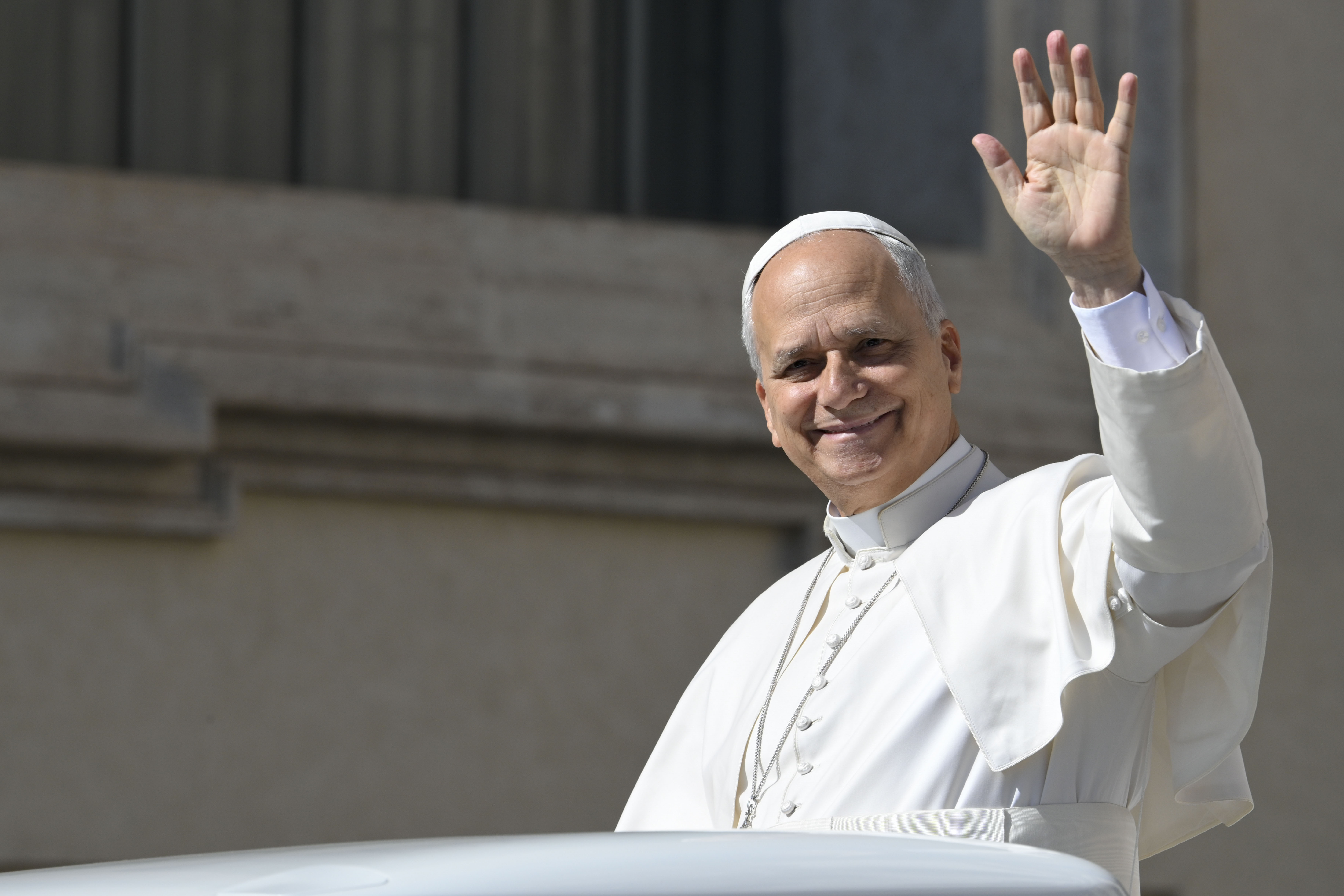
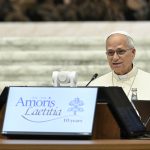
VATICAN CITY (OSV News) — The Vatican meeting of the world’s bishops’ conference presidents and the heads of Eastern Catholic churches marking the 10th anniversary of “Amoris Laetitia” concluded on the evening of Oct. 14 with prayers for Pope Leo XIV’s recovery from lung cancer surgery.
Jesuit Father Giacomo Costa, a consultant to the General Secretariat of the Synod who helped to organize the meeting, said Oct. 14 that “accompaniment” was one of the key words in the week’s discussions of marriage and family.
Reflecting on the significance of the experience at the event’s final press conference, Archbishop Charles Scicluna, the archbishop of Malta, said that he is bringing with him from this meeting “a renewed commitment to put the family at the center of the Church’s pastoral mission.”
“‘Amoris Laetitia’ 10 years ago stimulated, provoked, an invitation for pastoral conversion, an attitude of listening to families, before judging, and also discerning situations with … open hearts, seeking the will of God, but also facilitating the meeting with God’s mercy,” Archbishop Scicluna said.
In the closing session of the Vatican family summit, participants listened to a presentation of the meeting’s synthesis report. Due to the personal request of Pope Leo prior to his surgery, the meeting’s final synthesis report will not be made public until the pope has had time to personally review it. Father Costa said that the pope requested to postpone the meeting’s final report, noting that Pope Leo “wanted to listen to it and be able to offer his own word on it himself.”
“I will read the fruits of your work and discussions, and offer my reflections in due course,” Pope Leo wrote in a brief message to the participants signed on the day of his surgery.
“I encourage you to begin to share with your Episcopal Conferences and Dioceses what you have lived and received, and to continue proclaiming the Gospel with families, drawing on the richness of ‘Amoris Laetitia,’” the pope said.
The bishops, patriarchs, families and experts taking part in the meeting on marriage and family in Paul VI Hall met for more than 42 hours of discussions over the course of Oct. 7 to 14 on topics ranging from cohabitation of young couples to influencers on social media portraying “traditional” families, often referred to as “trad wife” culture.
The topic of annulments, as well as Communion for the divorced and remarried, also came up on Oct. 12, the day that participants devoted to discussing how best to accompany and support families in the difficulties of life, which was overshadowed by Pope Leo’s shocking announcement the day prior that he would be undergoing surgery.
Addressing participants that morning, U.S. theologian Julie Hanlon Rubio said, “In preparing for this intervention, I heard heartbreaking stories. One person told me of his elderly mother suffering from dementia who, when offered Eucharist at Mass, shouted, ‘No!,’ and covered her mouth, because one thing she remembered was that, because her husband of 50 years had been previously married, she was not worthy to receive the Body of Christ,” according to remarks posted on the meeting’s website.
“The Church can offer a challenging vision of marriage as intimate partnership oriented to love and justice that does not require perfection,” she added. “Whether they are single or married, with or without children; whether they are divorced, widowed, or remarried, we can meet them at the door with open arms, tell them that theirs is a challenging and necessary vocation, and assure them they are not alone.”
Earlier in the weeklong meeting, delegates reflected on the delicate first years of married life, a point Pope Francis emphasized in his post-synodal apostolic exhortation “Amoris Laetitia.”
In his address on Oct. 10, Cardinal José Cobo Cano of Madrid warned that the Church should “consider whether we prepared couples more for a wedding ceremony than for married life.”
“The issue is not merely a matter of reviewing contents. It is a question of whether our pastoral care is organized primarily around the planned wedding ceremony or around the human, faith-based and vocation journeys we are called to accompany,” he said.
He also emphasized the need for pastors to be present at significant moments in the first years of marriage “without necessarily turning this accompaniment into a continuous program of meetings.”
“The sacrament has been celebrated, but now the spouses must learn to build and put roots in their married life. They must build a ‘we’ without erasing the ‘I’ and the ‘you,’” Cardinal Cobo said.
Following the intense work during the first days of the meeting, Oct. 11 was scheduled as a recess. However, Pope Leo’s surgery announcement during his Sunday Angelus address shifted the pre-programmed schedule and shocked the participants.
Reconvening on Oct. 12, while under the weight of Pope Leo’s impending surgery, the bishops and patriarchs reflected on the challenges faced by families in difficult situations.
“Amoris Laetitia invited us to give priority to listening, to avoid judging too quickly, and to allow ourselves to be surprised by the action of God’s grace in people’s lives,” Cardinal Kevin Farrell, prefect of the Dicastery for Laity, Family, and Life, said in the day’s opening address.
Filipino Cardinal Pablo Virgilio David of Kalookan described ministering to families affected by extreme hardships, noting that the “fragility of many families is not produced only by personal choices.”
“Family life can also be wounded by poverty, migration, violence, addiction, imprisonment, injustice and precarious work. These realities can severely limit people’s freedom and their capacity even to approximate the Christian ideal of family life,” Cardinal David said in a video presentation.
Reflecting on the declining numbers of baptisms and marriages, Hanlon highlighted Pope Francis’ call for a pastoral accompaniment that “is ever ready to understand, forgive, accompany, hope, and, above all, integrate.”
“In an era when influencers on social media show off their seemingly perfect ‘traditional’ families complete with homemade bread and chickens, Francis’ integration of weakness is crucial,” Hanlon said.
In the afternoon, before continuing with reports on group discussions, Cardinal Farrell and Cardinal Mario Grech, the secretary general of the Synod of Bishops, released a statement confirming that, because of Pope Leo’s surgery, the synthesis report would not be made public; instead, they would present the report and relevant texts to him after his convalescence.
“We will then proceed according to his instructions,” the cardinals said.
On the meeting’s final day of plenary sessions and group work, Oct. 13, the assembly sent a message to Pope Leo ahead of his surgery in the afternoon, expressing their closeness, affection and prayers for his health.
“We are grateful to you for having wanted this Meeting and for encouraging us to listen to families and to the journeys of our Churches. As we continue our work, we feel your closeness and carry with us your concern for families throughout the world,” the message read.
The day’s discussions focused on Christian families and their significance in the Church’s mission. In his address, Tanzanian Cardinal Protase Rugambwa of Tabora highlighted the need for couples and families to take “on a more active role in the formation of seminarians, deacons, and other pastoral workers.”
“The involvement of families as active subjects of pastoral action is supported very much by the concrete experiences they have gained as faithful and committed Christians, which can be utilized not only in their struggle to support the growth of the Church’s mission but also in shaping the formation of those who are called to accompany them,” Cardinal Rugambwa said.
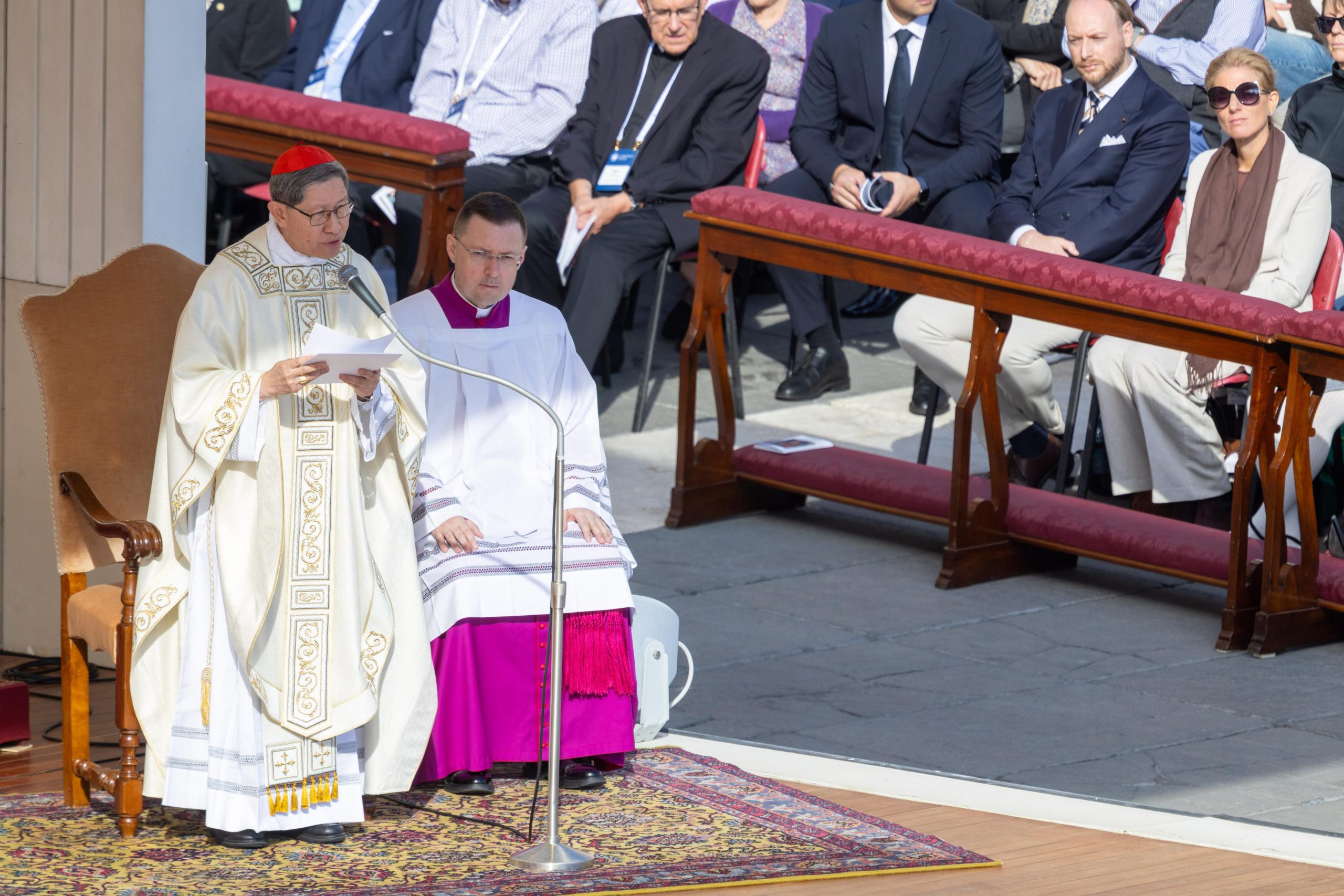
Pope Leo had been an active participant in the Vatican meeting up until he was admitted to the hospital. During the meeting’s closing Mass the morning following the pope’s surgery, Cardinal Luis Antonio Tagle read aloud a homily that had been prepared by the pope prior to the operation.
Cameroonian Archbishop Andrew Nkea of Bamenda, one of the bishops participating in the meeting, told OSV News that despite the pope’s absence on the meeting’s final days, those present in the assembly “were not discouraged, but we were very, very strongly united with him in prayer.”
“Every morning before we started the meeting, we prayed for his health and for his quick recovery,” he said. “It really didn’t affect the meeting in the sense that it didn’t kill our spirits, because we have hope in God and trust in his healing power. But at the same time, we missed him in the meeting.”
“We thank God that it was an early discovery,” Archbishop Nkea said. “So, we are hoping that he will recover very fast, and he will get back to his duties because the whole world is waiting for him to get well.”
Courtney Mares is Vatican editor for OSV News. Follow her on X @catholicourtney. Junno Arocho Esteves is an international correspondent for OSV News. Follow him on X @jae_journalist. Paulina Guzik, international editor for OSV News, contributed to this report.
– VATICAN CITY (OSV News) — The Vatican meeting of the world’s bishops’ conference presidents and the heads of Eastern Catholic churches marking the 10th anniversary of “Amoris Laetitia” concluded on the evening of Oct. 14 with prayers for Pope Leo XIV’s recovery from lung cancer surgery. Jesuit Father Giacomo Costa, a consultant to the General Secretariat of the Synod who helped to organize the meeting, said Oct. 14 that “accompaniment” was one of the key words in the week’s discussions of marriage and family. Reflecting on the significance of the experience at the event’s final press conference, Archbishop Charles Scicluna,
Read More
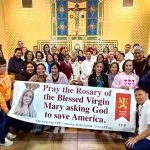
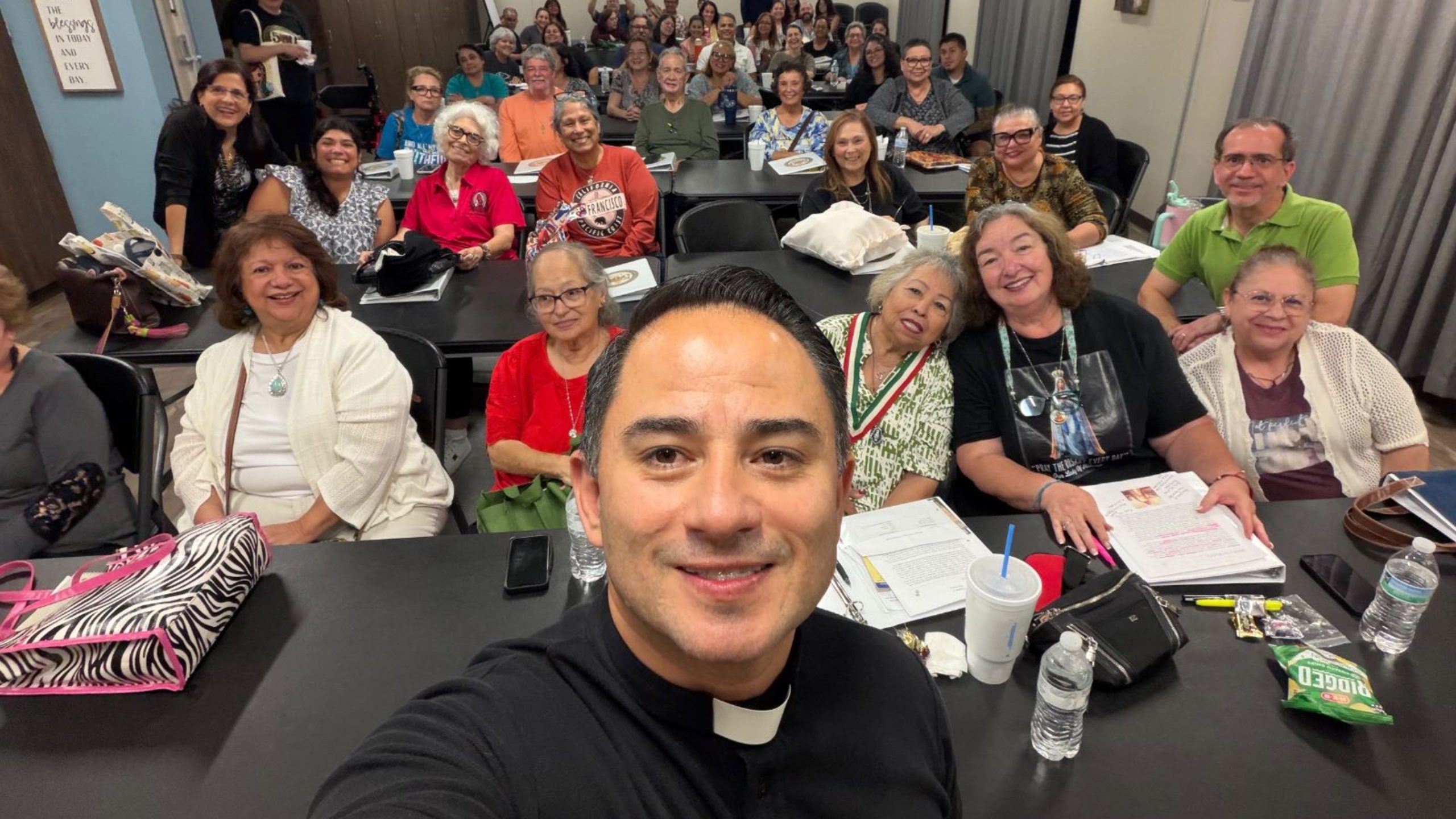
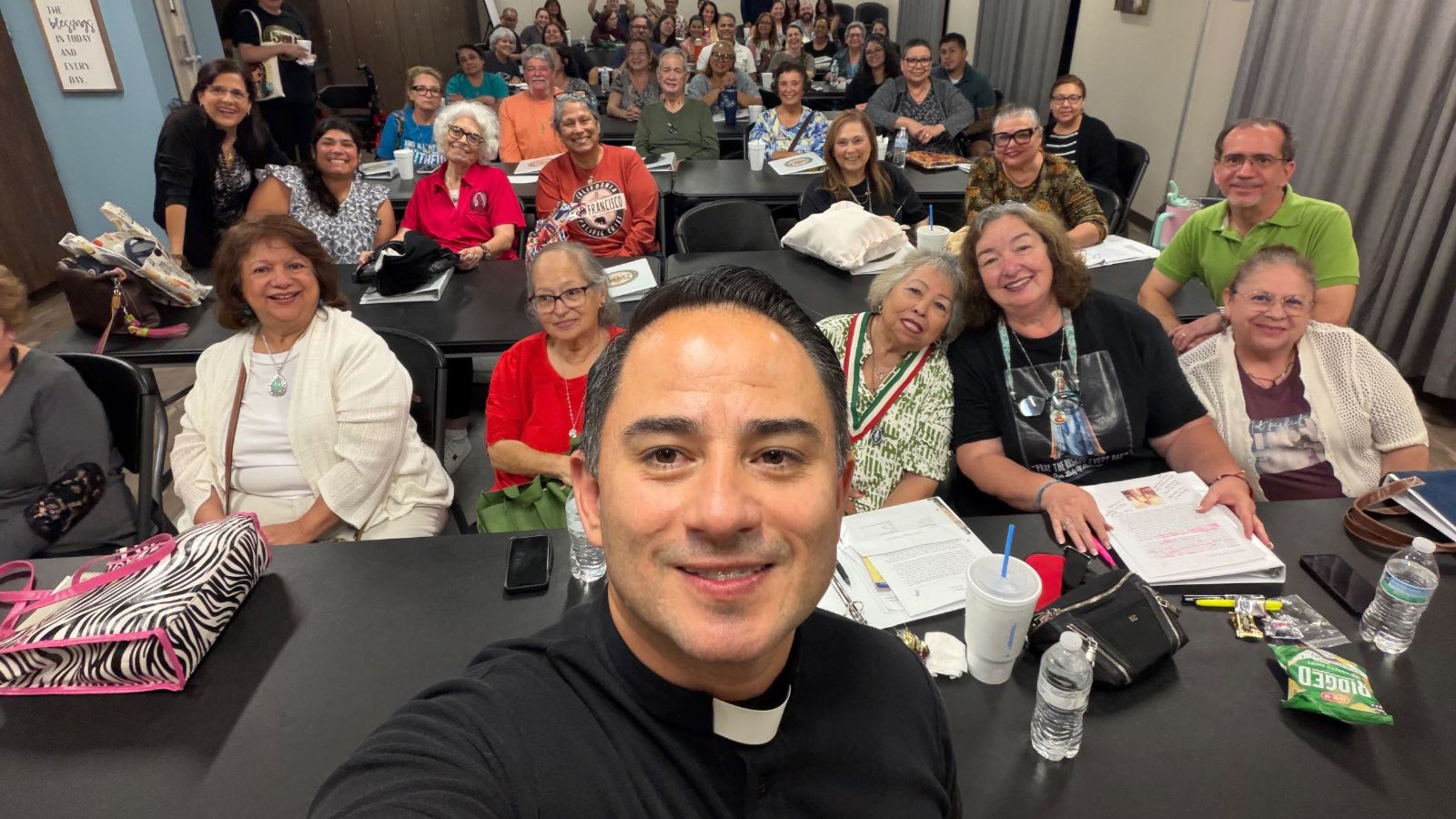
![Pequannock prayer deepens faith with evening of worship, prayer #Catholic – On Oct. 8, Bishop Kevin J. Sweeney joined about 120 parishioners of Our Lady of Good Council (OLGC) in the Pompton Plains neighborhood of Pequannock, N.J., for an evening of worship and prayer. The bishop celebrated a Mass in the church, followed by an outdoor rosary procession around the parking lot.
The event was organized by the parish’s Rosary Altar Society, which Father Darwin Lastra, pastor of OLGC, founded several years ago. Jennifer Nardone, president of the society, coordinated the event with a team of members.
The Rosary Altar Society invites someone to speak for its monthly meetings and for the annual Mass and rosary event in October. Bishop Sweeney also participated last year.
For the Mass, Bishop Sweeney was the main celebrant and homilist. Father Lastra concelebrated the liturgy, assisted by Deacon Marc Marin of OLGC. The bishop spoke about aspects of the Blessed Virgin Mary’s life and encouraged the congregants to pray the rosary. He made some remarks in Spanish for the parish’s growing Hispanic community.
After Mass, parish men carried a statue of Our Lady of Fatima from the church and around the parking lot to five stations, where participants stopped to pray each of the five mysteries of the rosary.
BEACON PHOTOS | JOE GIGLI
[See image gallery at beaconnj.org]
Click here to subscribe to our weekly newsletter.](https://unitedyam.com/wp-content/uploads/2026/10/pequannock-prayer-deepens-faith-with-evening-of-worship-prayer-catholic-on-oct-8-bishop-kevin-j-sweeney-joined-about-120-parishioners-of-our-lady-of-good-council-olgc-in-the-pompton-plains-ne.jpg "Pequannock prayer deepens faith with evening of worship, prayer #Catholic – On Oct. 8, Bishop Kevin J. Sweeney joined about 120 parishioners of Our Lady of Good Council (OLGC) in the Pompton Plains neighborhood of Pequannock, N.J., for an evening of worship and prayer. The bishop celebrated a Mass in the church, followed by an outdoor rosary procession around the parking lot.
The event was organized by the parish’s Rosary Altar Society, which Father Darwin Lastra, pastor of OLGC, founded several years ago. Jennifer Nardone, president of the society, coordinated the event with a team of members.
The Rosary Altar Society invites someone to speak for its monthly meetings and for the annual Mass and rosary event in October. Bishop Sweeney also participated last year.
For the Mass, Bishop Sweeney was the main celebrant and homilist. Father Lastra concelebrated the liturgy, assisted by Deacon Marc Marin of OLGC. The bishop spoke about aspects of the Blessed Virgin Mary’s life and encouraged the congregants to pray the rosary. He made some remarks in Spanish for the parish’s growing Hispanic community.
After Mass, parish men carried a statue of Our Lady of Fatima from the church and around the parking lot to five stations, where participants stopped to pray each of the five mysteries of the rosary.
BEACON PHOTOS | JOE GIGLI
[See image gallery at beaconnj.org]
Click here to subscribe to our weekly newsletter.")







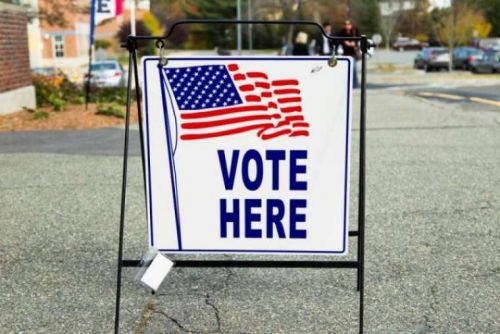
![Bishops urge prayer as they continue abortion referendum fights in 4 states – #Catholic – Catholic bishops across four states are asking for prayers as they continue to rally the faithful ahead of ballot initiative votes that would reshape abortion policies in their states. “Tell your readership how important it is to be praying for the dioceses that are facing this, what I would describe as a very diabolical initiative,” Las Vegas Archbishop George Leo Thomas told EWTN News.On Nov. 3, the public in three states will vote on referendums to establish a “right” to abortion: Nevada, Virginia, and Idaho. In Missouri, people will vote on a pro-life referendum that would repeal the state’s constitutional right to abortion. Bishops in each state have advocated against abortion for months. In many cases, this includes statements on the referendums, flyers, and prayer cards at parishes, and asking priests to teach congregations about the sanctity of life. In some cases, it extends to calls for fasting and efforts to register voters and get them to the polls.American bishops do not endorse political candidates. Yet, bishops have advocated for or against specific ballot initiatives when Church teachings, such as the sanctity of life, are implicated.Nevada bishops wage ‘uphill battle’The bishops in Nevada are waging what Thomas called “an uphill battle” to defeat a referendum to establish “a fundamental right to abortion” in the state constitution.In Nevada, amendments need a majority vote via referendum in two consecutive elections. In the last statewide election in 2024, the referendum won support from 64% of voters. Another majority this year would complete the process.Thomas said he and Diocese of Reno Bishop Daniel Mueggenborg have worked closely to align their messaging and strategy to defeat the amendment. This includes printed material offered to parishes, created by the Nevada Catholic Conference, and a planned full-page advertisement for newspapers in Las Vegas and Reno.Both bishops wrote pastoral letters labeling the referendum dangerous. Thomas instructed priests in his archdiocese to read it aloud at Mass for Respect Life Sunday on Oct. 4.“Unborn children have no voice and cannot defend themselves,” he wrote in the letter, available in both English and Spanish. “As Catholics, our faith requires us to protect the inherent dignity of every human life and to speak for those who cannot speak for themselves.”Thomas said every priest is obligated to “very clearly and lucidly teach Catholic social and moral teaching in his community,” noting each life is created in the image of God “from conception until natural death.”Although the referendum allows the state to restrict abortion access after fetal viability, which is the point at which a child can survive outside the womb, the proposal’s definition says this is determined by the “treating health care practitioner," who is often the abortion doctor. It states abortion access extends through the ninth month of pregnancy if needed to “protect the life or health” of the mother, but the measure does not separately define “health.”Current Nevada law prohibits abortion 26 weeks after the woman’s last menstrual period. The archbishop said the referendum extends abortion rights through “potentially the ninth month of pregnancy,” though courts have not ruled on that interpretation.The referendum would extend abortion access to “all individuals,” which Thomas argued would eliminate parental notification laws for minors who seek abortion. The referendum permits abortion by “a qualified health care practitioner” and does not specify a “physician.”“It’s another very serious and damaging expansion of an already liberal law,” the archbishop said.Virginia bishops push voter registrationThe two dioceses in Virginia — Arlington and Richmond — are battling a similar referendum to enshrine “a fundamental right to reproductive freedom,” which includes “abortion care,” in their state constitution, which would be adopted with a majority vote.Bishop Michael Burbidge of Arlington and Bishop Barry Knestout of Richmond penned a letter instructing Catholics of their “sacred duty to form our consciences prayerfully and correctly, and to vote NO” on the abortion referendum and a separate referendum that would enshrine same-sex marriage in the constitution, which was read aloud at parishes throughout the commonwealth.Burbidge called Catholics to pray and fast ahead of the vote, and his diocese is operating the Catholics Vote No campaign and encouraging the diocesan faithful to sign on to a pledge to vote no on both referendums.Amy McInerny, director of Respect Life at the Diocese of Arlington’s Office of Marriage, Family, and Respect Life, told EWTN News: “Some demons are only driven out by prayer and fasting,” citing Christ’s words in Matthew 17.The dioceses, working through the Virginia Catholic Conference, published prayer cards for “protection from the extreme abortion amendment” and “an end to the grave evil of abortion” for parishes. They provided parishes with flyers about the referendum and abortion laws in the state, along with a flyer containing voter registration information.“These two ballot questions are moral issues,” McInerny said.Some parishes are actively registering Catholics to vote and holding voter registration drives. McInerny said there’s a strong effort to “turn out the vote,” and the Arlington Diocese encourages parishes to “check in with their homebound and those who are in nursing homes” and college students “who might need help to get absentee ballots.”The referendum would allow some abortion restrictions in the third trimester, but not if abortion is necessary to protect “the life or physical or mental health.” It does not define this standard, leaving it to the discretion of the physician, who is often the abortion doctor. The legal right to abortion is extended to “every individual” and not just adults.McInerny said the language essentially allows abortion “even for healthy babies, up until birth,” though courts have not ruled on that interpretation, and “will include minor girls,” which jeopardizes parental consent laws. She said it would create “a safe space for groomers and predators and traffickers who want to prey on our girls.”Virginia law allows abortion access through the 26th week of pregnancy.Idaho’s ‘most important issue’ until NovemberDiocese of Boise Bishop Peter Christensen is actively engaging with parish priests to ensure pro-life messaging is heard regularly at Mass throughout his diocese, which covers the entire state, ahead of its vote on an abortion referendum.Unlike Virginia and Nevada, the referendum in Idaho would change state law rather than amend the constitution. It would supersede the current state law, which prohibits most abortion access, and create a right to “reproductive freedom,” which includes “abortion.”“This is the most important issue for all of us until November,” Christian Welp, director of diocesan projects, told EWTN News.Welp said the diocese provided a package to every priest offering guidelines on pro-life messaging in homilies and prayer intentions ahead of the vote. It includes prayer cards, which priests are asked to read at every daily and Sunday Mass. The bishop also wrote a letter, which was read aloud at Mass throughout the diocese.“By coming together as a family in prayer, raising awareness, and taking meaningful action, we can make a powerful difference in responding to this anti-life, anti-family initiative by advocating for the protection of the most vulnerable members of our society,” Christensen wrote.The referendum would allow lawmakers to restrict abortion at the point of fetal viability, which is determined by the physician, who is often the abortion doctor, but cannot restrict late-term abortion if there is a medical emergency. It would also extend abortion rights to “every person,” not just adults.Welp said the referendum “allows for abortion up to viability, but then redefines viability,” saying the language could allow abortions “well into the seventh or eighth month of pregnancy.” He said the extension of this right to every person would include minors and effectively “does away with parental consent.”“Even if youʼre pro-choice, this goes too far,” Welp said. “This is too extreme.”Missouri seeks to reverse trendMissouri is the only state in which voters will be presented with a pro-life referendum, which would repeal the state’s constitutional right to abortion that was adopted via referendum in 2024 with support from 51.6% of voters.“It has been a major focus of all four dioceses and of all four bishops,” Kathleen Lavery, communications director of the Missouri Catholic Conference — which represents the state’s dioceses — told EWTN News.Lavery said the dioceses are working toward “trying to pass [the] amendment.” The referendum itself would not ban abortions or set a week-based limit but rather allow lawmakers to pass laws to restrict it in most cases. It would only prevent laws that ban abortion in cases of incest or rape within the first 12 weeks of pregnancy or in medical emergencies at any point in pregnancy.The conference provided printed material, signs, and palm cards for parishes, and a webpage to “help people educate themselves about the amendment,” she said. Speakers from diocesan Respect Life offices are speaking at the end of Mass and visiting Catholic events, such as Knights of Columbus gatherings.All four bishops unified on the message early, putting out a joint statement that the dignity of the human person is “threatened by the pro-abortion amendment passed in 2024.” They called for Catholics “and all people of good will” to join in prayer and fasting for the referendum’s success.“We have put together information for our priests as well to help them educate the faithful,” Lavery said.She noted there are “get out the vote” efforts at the parish level and said: “This amendment’s really going to come down to which side can activate its base and get people to the polls.”“I’m very cautiously optimistic,” Lavery said. “I think we have a very good chance of winning this.”](https://unitedyam.com/wp-content/uploads/2026/10/bishops-urge-prayer-as-they-continue-abortion-referendum-fights-in-4-states-catholic-catholic-bishops-across-four-states-are-asking-for-prayers-as-they-continue-to-rally-the-faithful-ahead-of-bal.jpg "Bishops urge prayer as they continue abortion referendum fights in 4 states – #Catholic – Catholic bishops across four states are asking for prayers as they continue to rally the faithful ahead of ballot initiative votes that would reshape abortion policies in their states. “Tell your readership how important it is to be praying for the dioceses that are facing this, what I would describe as a very diabolical initiative,” Las Vegas Archbishop George Leo Thomas told EWTN News.On Nov. 3, the public in three states will vote on referendums to establish a “right” to abortion: Nevada, Virginia, and Idaho. In Missouri, people will vote on a pro-life referendum that would repeal the state’s constitutional right to abortion. Bishops in each state have advocated against abortion for months. In many cases, this includes statements on the referendums, flyers, and prayer cards at parishes, and asking priests to teach congregations about the sanctity of life. In some cases, it extends to calls for fasting and efforts to register voters and get them to the polls.American bishops do not endorse political candidates. Yet, bishops have advocated for or against specific ballot initiatives when Church teachings, such as the sanctity of life, are implicated.Nevada bishops wage ‘uphill battle’The bishops in Nevada are waging what Thomas called “an uphill battle” to defeat a referendum to establish “a fundamental right to abortion” in the state constitution.In Nevada, amendments need a majority vote via referendum in two consecutive elections. In the last statewide election in 2024, the referendum won support from 64% of voters. Another majority this year would complete the process.Thomas said he and Diocese of Reno Bishop Daniel Mueggenborg have worked closely to align their messaging and strategy to defeat the amendment. This includes printed material offered to parishes, created by the Nevada Catholic Conference, and a planned full-page advertisement for newspapers in Las Vegas and Reno.Both bishops wrote pastoral letters labeling the referendum dangerous. Thomas instructed priests in his archdiocese to read it aloud at Mass for Respect Life Sunday on Oct. 4.“Unborn children have no voice and cannot defend themselves,” he wrote in the letter, available in both English and Spanish. “As Catholics, our faith requires us to protect the inherent dignity of every human life and to speak for those who cannot speak for themselves.”Thomas said every priest is obligated to “very clearly and lucidly teach Catholic social and moral teaching in his community,” noting each life is created in the image of God “from conception until natural death.”Although the referendum allows the state to restrict abortion access after fetal viability, which is the point at which a child can survive outside the womb, the proposal’s definition says this is determined by the “treating health care practitioner,\" who is often the abortion doctor. It states abortion access extends through the ninth month of pregnancy if needed to “protect the life or health” of the mother, but the measure does not separately define “health.”Current Nevada law prohibits abortion 26 weeks after the woman’s last menstrual period. The archbishop said the referendum extends abortion rights through “potentially the ninth month of pregnancy,” though courts have not ruled on that interpretation.The referendum would extend abortion access to “all individuals,” which Thomas argued would eliminate parental notification laws for minors who seek abortion. The referendum permits abortion by “a qualified health care practitioner” and does not specify a “physician.”“It’s another very serious and damaging expansion of an already liberal law,” the archbishop said.Virginia bishops push voter registrationThe two dioceses in Virginia — Arlington and Richmond — are battling a similar referendum to enshrine “a fundamental right to reproductive freedom,” which includes “abortion care,” in their state constitution, which would be adopted with a majority vote.Bishop Michael Burbidge of Arlington and Bishop Barry Knestout of Richmond penned a letter instructing Catholics of their “sacred duty to form our consciences prayerfully and correctly, and to vote NO” on the abortion referendum and a separate referendum that would enshrine same-sex marriage in the constitution, which was read aloud at parishes throughout the commonwealth.Burbidge called Catholics to pray and fast ahead of the vote, and his diocese is operating the Catholics Vote No campaign and encouraging the diocesan faithful to sign on to a pledge to vote no on both referendums.Amy McInerny, director of Respect Life at the Diocese of Arlington’s Office of Marriage, Family, and Respect Life, told EWTN News: “Some demons are only driven out by prayer and fasting,” citing Christ’s words in Matthew 17.The dioceses, working through the Virginia Catholic Conference, published prayer cards for “protection from the extreme abortion amendment” and “an end to the grave evil of abortion” for parishes. They provided parishes with flyers about the referendum and abortion laws in the state, along with a flyer containing voter registration information.“These two ballot questions are moral issues,” McInerny said.Some parishes are actively registering Catholics to vote and holding voter registration drives. McInerny said there’s a strong effort to “turn out the vote,” and the Arlington Diocese encourages parishes to “check in with their homebound and those who are in nursing homes” and college students “who might need help to get absentee ballots.”The referendum would allow some abortion restrictions in the third trimester, but not if abortion is necessary to protect “the life or physical or mental health.” It does not define this standard, leaving it to the discretion of the physician, who is often the abortion doctor. The legal right to abortion is extended to “every individual” and not just adults.McInerny said the language essentially allows abortion “even for healthy babies, up until birth,” though courts have not ruled on that interpretation, and “will include minor girls,” which jeopardizes parental consent laws. She said it would create “a safe space for groomers and predators and traffickers who want to prey on our girls.”Virginia law allows abortion access through the 26th week of pregnancy.Idaho’s ‘most important issue’ until NovemberDiocese of Boise Bishop Peter Christensen is actively engaging with parish priests to ensure pro-life messaging is heard regularly at Mass throughout his diocese, which covers the entire state, ahead of its vote on an abortion referendum.Unlike Virginia and Nevada, the referendum in Idaho would change state law rather than amend the constitution. It would supersede the current state law, which prohibits most abortion access, and create a right to “reproductive freedom,” which includes “abortion.”“This is the most important issue for all of us until November,” Christian Welp, director of diocesan projects, told EWTN News.Welp said the diocese provided a package to every priest offering guidelines on pro-life messaging in homilies and prayer intentions ahead of the vote. It includes prayer cards, which priests are asked to read at every daily and Sunday Mass. The bishop also wrote a letter, which was read aloud at Mass throughout the diocese.“By coming together as a family in prayer, raising awareness, and taking meaningful action, we can make a powerful difference in responding to this anti-life, anti-family initiative by advocating for the protection of the most vulnerable members of our society,” Christensen wrote.The referendum would allow lawmakers to restrict abortion at the point of fetal viability, which is determined by the physician, who is often the abortion doctor, but cannot restrict late-term abortion if there is a medical emergency. It would also extend abortion rights to “every person,” not just adults.Welp said the referendum “allows for abortion up to viability, but then redefines viability,” saying the language could allow abortions “well into the seventh or eighth month of pregnancy.” He said the extension of this right to every person would include minors and effectively “does away with parental consent.”“Even if youʼre pro-choice, this goes too far,” Welp said. “This is too extreme.”Missouri seeks to reverse trendMissouri is the only state in which voters will be presented with a pro-life referendum, which would repeal the state’s constitutional right to abortion that was adopted via referendum in 2024 with support from 51.6% of voters.“It has been a major focus of all four dioceses and of all four bishops,” Kathleen Lavery, communications director of the Missouri Catholic Conference — which represents the state’s dioceses — told EWTN News.Lavery said the dioceses are working toward “trying to pass [the] amendment.” The referendum itself would not ban abortions or set a week-based limit but rather allow lawmakers to pass laws to restrict it in most cases. It would only prevent laws that ban abortion in cases of incest or rape within the first 12 weeks of pregnancy or in medical emergencies at any point in pregnancy.The conference provided printed material, signs, and palm cards for parishes, and a webpage to “help people educate themselves about the amendment,” she said. Speakers from diocesan Respect Life offices are speaking at the end of Mass and visiting Catholic events, such as Knights of Columbus gatherings.All four bishops unified on the message early, putting out a joint statement that the dignity of the human person is “threatened by the pro-abortion amendment passed in 2024.” They called for Catholics “and all people of good will” to join in prayer and fasting for the referendum’s success.“We have put together information for our priests as well to help them educate the faithful,” Lavery said.She noted there are “get out the vote” efforts at the parish level and said: “This amendment’s really going to come down to which side can activate its base and get people to the polls.”“I’m very cautiously optimistic,” Lavery said. “I think we have a very good chance of winning this.”")



_01.jpg)
:max_bytes(150000):strip_icc():format(jpeg)/TAL-lead-image-WINSTONSALEMNC0126-d61a0fa20ff04629b1ca03f1ab1903bd.jpg)
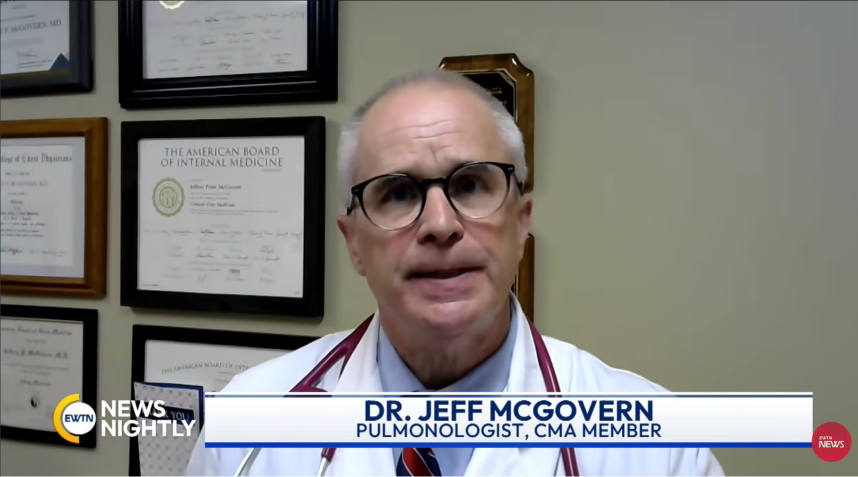
![Catholic lung cancer specialists weigh in on Pope Leo XIV’s diagnosis #Catholic Representatives of the American Lung Association and the Catholic Medical Association (CMA) discussed possible underlying causes of Pope Leo XIVʼs lung cancer and potential treatment options.Dr. Jeff McGovern, a pulmonologist, and Dr. Juanita Mora, spokesperson for the American Lung Association, appeared on “EWTN News Nightly” on Oct. 14 to discuss the Holy Father’s health following surgery. The Oct. 13 surgery involved the removal of the lower lobe of his right lung and confirmed a diagnosis of lung adenocarcinoma.“It is the most common cause of lung cancer in smokers and nonsmokers,” said McGovern, a CMA member. He said “treatments can be varying depending on the size,” and can involve chemotherapy, immunotherapy, or radiation in addition to the surgical removal of the lower part of the lung.The type of ongoing treatment the pope receives will depend on the results of a pathology test, which will reveal the stage of the cancer and whether it is contained or has spread to other areas, McGovern said.The pathology test “usually takes a couple of days,” or sometimes even longer, he said, but noted that because the patient is the Holy Father, “I would expect the pathology would be available a lot sooner than usual.”“In the best of all possible worlds, if it is contained, then going forward, as far as treatment, itʼs a CT scan every six months and then after about two or three years, a year thereafter. And that would be the treatment, and that would be the ideal setting for the Holy Father,” he said.Mora, a Catholic who is also from Chicago, Pope Leo’s hometown, said if the Holy Father’s pathology report reveals that the cancer has not spread, the survival rate is 80% to 90%. A spread would determine “whether he will get chemotherapy, radiotherapy or whether he will need actual immunotherapy thatʼs geared exactly to the biomarkers of the tumor that turn positive.” Mora said the Holy Father is “someone who is active,” playing tennis and staying in shape. “He’s a 71-year-old healthy, strong man. This is what Pope Leo has going for him,” she said. “We know that heʼs going to be at higher risk for some viral respiratory infections,” she said. “So, it is important for him to get his Covid-19 vaccine, his flu vaccine, and his RSV vaccine for those that are eligible.”In terms of travel, Mora said his doctors may determine he needs anticoagulation, or blood thinners, “so that heʼs at less risk of developing any clots, especially with the long flight that he has, [as well as] all the respiratory virus infections.”By the numbers: Impact of lung cancer“One person is diagnosed with lung cancer every 2.5 minutes,” Mora said. “In the United States, we lose 238,000 people a year due to lung cancer. And itʼs the No. 1 cause of mortality from cancer in both men and women in the United States.”In addition to smoking, Mora highlighted several other causes of lung cancer, including radon gas, “a colorless, odorless gas that can seep in through cracks in our ground, in our home, or through cracks in walls,” ozone pollution, and particle contamination.](https://unitedyam.com/wp-content/uploads/2026/10/catholic-lung-cancer-specialists-weigh-in-on-pope-leo-xivs-diagnosis-catholic-representatives-of-the-american-lung-association-and-the-catholic-medical-association-cma-discussed-possible-u.png "Catholic lung cancer specialists weigh in on Pope Leo XIV’s diagnosis #Catholic Representatives of the American Lung Association and the Catholic Medical Association (CMA) discussed possible underlying causes of Pope Leo XIVʼs lung cancer and potential treatment options.Dr. Jeff McGovern, a pulmonologist, and Dr. Juanita Mora, spokesperson for the American Lung Association, appeared on “EWTN News Nightly” on Oct. 14 to discuss the Holy Father’s health following surgery. The Oct. 13 surgery involved the removal of the lower lobe of his right lung and confirmed a diagnosis of lung adenocarcinoma.“It is the most common cause of lung cancer in smokers and nonsmokers,” said McGovern, a CMA member. He said “treatments can be varying depending on the size,” and can involve chemotherapy, immunotherapy, or radiation in addition to the surgical removal of the lower part of the lung.The type of ongoing treatment the pope receives will depend on the results of a pathology test, which will reveal the stage of the cancer and whether it is contained or has spread to other areas, McGovern said.The pathology test “usually takes a couple of days,” or sometimes even longer, he said, but noted that because the patient is the Holy Father, “I would expect the pathology would be available a lot sooner than usual.”“In the best of all possible worlds, if it is contained, then going forward, as far as treatment, itʼs a CT scan every six months and then after about two or three years, a year thereafter. And that would be the treatment, and that would be the ideal setting for the Holy Father,” he said.Mora, a Catholic who is also from Chicago, Pope Leo’s hometown, said if the Holy Father’s pathology report reveals that the cancer has not spread, the survival rate is 80% to 90%. A spread would determine “whether he will get chemotherapy, radiotherapy or whether he will need actual immunotherapy thatʼs geared exactly to the biomarkers of the tumor that turn positive.” Mora said the Holy Father is “someone who is active,” playing tennis and staying in shape. “He’s a 71-year-old healthy, strong man. This is what Pope Leo has going for him,” she said. “We know that heʼs going to be at higher risk for some viral respiratory infections,” she said. “So, it is important for him to get his Covid-19 vaccine, his flu vaccine, and his RSV vaccine for those that are eligible.”In terms of travel, Mora said his doctors may determine he needs anticoagulation, or blood thinners, “so that heʼs at less risk of developing any clots, especially with the long flight that he has, [as well as] all the respiratory virus infections.”By the numbers: Impact of lung cancer“One person is diagnosed with lung cancer every 2.5 minutes,” Mora said. “In the United States, we lose 238,000 people a year due to lung cancer. And itʼs the No. 1 cause of mortality from cancer in both men and women in the United States.”In addition to smoking, Mora highlighted several other causes of lung cancer, including radon gas, “a colorless, odorless gas that can seep in through cracks in our ground, in our home, or through cracks in walls,” ozone pollution, and particle contamination.")
![Wanaque parish honors patron on Feast of St. Francis #Catholic – Bishop Kevin J. Sweeney visited St. Francis of Assisi in the Haskell neighborhood of Wanaque, N.J., on Oct. 4 to celebrate the parish’s popular patron saint on his feast day, with a well-attended Mass. The bishop also confirmed 11 people — 10 youths and an adult —during his visit.
St. Francis is known for his ministry to the poor and underprivileged, his care for nature and animals, his promotion of peace, and his founding of the Franciscan order, one of the largest in the Church.
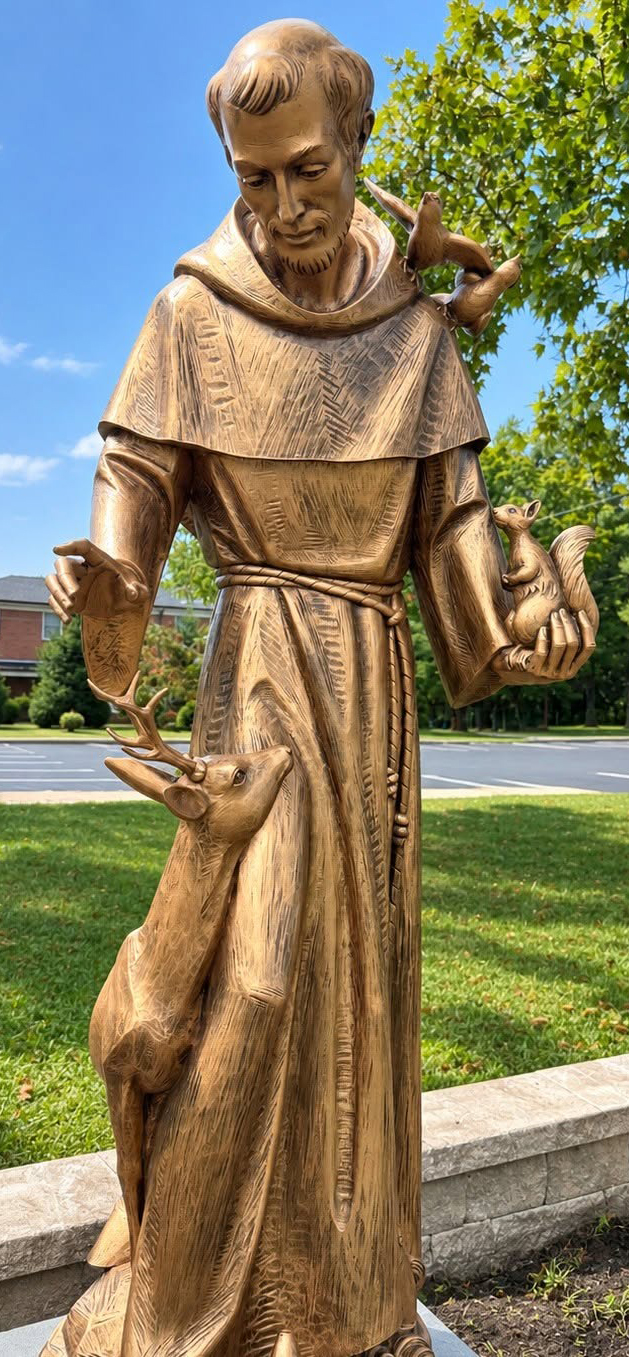
Father Greg Golba, St. Francis’ pastor, concelebrated the Mass with Bishop Sweeney, serving as main celebrant and homilist. In honor of the Feast of St. Francis, the parish offered refreshments after the weekend Masses. Outside the church stands a new statue, crafted by artisans in Italy and flown to the United States, made possible by a parishioner’s donation.
“It was wonderful to welcome Bishop Sweeney for the Feast of St. Francis. He spoke about how St. Francis is dedicated to others, nature, to God, to the poor, to the Church, and bestowed the Gifts of the Holy Spirit upon our confirmandi,” Father Golba said.
Bishop Sweeney visited St. Francis on Aug. 29, at 11 a.m. to commemorate the 800th anniversary of St. Francis’ Transitus (his passing from earthly life to eternal life with God). It was part of the Paterson Diocese, N.J., celebrations for the 800th anniversary, the Jubilee Year of St. Francis, which the universal Church is commemorating.
For the anniversary year, faithful are invited to draw inspiration from St. Francis of Assisi and gain a plenary indulgence by making prayerful pilgrimages to any of five designated St. Francis-related parishes in the diocese, N.J., until Jan. 10, 2027. A plenary indulgence is remission of temporal punishment that may remain after sacramental confession.
On April 29, Bishop Kevin J. Sweeney issued a decree designating the five parishes in the diocese where pilgrims can avail themselves of a plenary indulgence.
These parishes are St. Francis of Assisi in the Haskell neighborhood of Wanaque, N.J.; St. Mary’s Parish in Pompton Lakes, N.J.; St. Anthony of Padua Parish in Butler, N.J.; St. Clare Parish in Clifton, N.J., and St. John Kanty Parish in the Athenia neighborhood of Clifton. Each designated parish in the diocese is connected to St. Francis.
To gain the plenary indulgence, pilgrims must show detachment from sin, receive the Eucharist, go to confession, pray for the Holy Father’s intentions, and recite the Lord’s Prayer and the Creed. Those unable to travel due to illness or caregiving responsibilities may obtain the indulgence by offering their suffering to God.
Click here for a list of Masses and confessions at pilgrimage sites in the Diocese of Paterson for the Year of St. Francis.
In a recent bulletin reflection, Father Golba wrote that St. Francis “remains one of the most beloved saints in the history of Christianity.”
“St. Francis shows us that holiness does not require us to become famous or powerful. Holiness begins
when we allow Christ to transform our hearts, Francis became great not because he sought greatness, but because he became small before God and available to others,” Father Golba wrote.
BEACON PHOTOS | JOE GIGLI
[See image gallery at beaconnj.org]
Click here to subscribe to our weekly newsletter.](https://unitedyam.com/wp-content/uploads/2026/10/wanaque-parish-honors-patron-on-feast-of-st-francis-catholic-bishop-kevin-j-sweeney-visited-st-francis-of-assisi-in-the-haskell-neighborhood-of-wanaque-n-j-on-oct-4-to-celebrate-the-parish.jpg "Wanaque parish honors patron on Feast of St. Francis #Catholic – Bishop Kevin J. Sweeney visited St. Francis of Assisi in the Haskell neighborhood of Wanaque, N.J., on Oct. 4 to celebrate the parish’s popular patron saint on his feast day, with a well-attended Mass. The bishop also confirmed 11 people — 10 youths and an adult —during his visit.
St. Francis is known for his ministry to the poor and underprivileged, his care for nature and animals, his promotion of peace, and his founding of the Franciscan order, one of the largest in the Church.
Father Greg Golba, St. Francis’ pastor, concelebrated the Mass with Bishop Sweeney, serving as main celebrant and homilist. In honor of the Feast of St. Francis, the parish offered refreshments after the weekend Masses. Outside the church stands a new statue, crafted by artisans in Italy and flown to the United States, made possible by a parishioner’s donation.
“It was wonderful to welcome Bishop Sweeney for the Feast of St. Francis. He spoke about how St. Francis is dedicated to others, nature, to God, to the poor, to the Church, and bestowed the Gifts of the Holy Spirit upon our confirmandi,” Father Golba said.
Bishop Sweeney visited St. Francis on Aug. 29, at 11 a.m. to commemorate the 800th anniversary of St. Francis’ Transitus (his passing from earthly life to eternal life with God). It was part of the Paterson Diocese, N.J., celebrations for the 800th anniversary, the Jubilee Year of St. Francis, which the universal Church is commemorating.
For the anniversary year, faithful are invited to draw inspiration from St. Francis of Assisi and gain a plenary indulgence by making prayerful pilgrimages to any of five designated St. Francis-related parishes in the diocese, N.J., until Jan. 10, 2027. A plenary indulgence is remission of temporal punishment that may remain after sacramental confession.
On April 29, Bishop Kevin J. Sweeney issued a decree designating the five parishes in the diocese where pilgrims can avail themselves of a plenary indulgence.
These parishes are St. Francis of Assisi in the Haskell neighborhood of Wanaque, N.J.; St. Mary’s Parish in Pompton Lakes, N.J.; St. Anthony of Padua Parish in Butler, N.J.; St. Clare Parish in Clifton, N.J., and St. John Kanty Parish in the Athenia neighborhood of Clifton. Each designated parish in the diocese is connected to St. Francis.
To gain the plenary indulgence, pilgrims must show detachment from sin, receive the Eucharist, go to confession, pray for the Holy Father’s intentions, and recite the Lord’s Prayer and the Creed. Those unable to travel due to illness or caregiving responsibilities may obtain the indulgence by offering their suffering to God.
Click here for a list of Masses and confessions at pilgrimage sites in the Diocese of Paterson for the Year of St. Francis.
In a recent bulletin reflection, Father Golba wrote that St. Francis “remains one of the most beloved saints in the history of Christianity.”
“St. Francis shows us that holiness does not require us to become famous or powerful. Holiness begins
when we allow Christ to transform our hearts, Francis became great not because he sought greatness, but because he became small before God and available to others,” Father Golba wrote.
BEACON PHOTOS | JOE GIGLI
[See image gallery at beaconnj.org]
Click here to subscribe to our weekly newsletter.")

![Children with disabilities reveal ‘beautiful diversity’ #Catholic – In 1983, Cubby LaHood was pregnant with her first child and wanted to work from home. She decided to offer daycare for children with disabilities because that’s what she had experience doing. Cubby and her husband Dan came to name their ministry St. Joseph’s House and raised their own kids there, including Joe, who now runs St. Joseph’s House with his wife Natalie.
During a “Christopher Closeup” interview, Joe explained, “When you’re a child growing up in this environment, you adapt to what is around you…I was given so many gifts from the kids, in terms of being able to understand how we are all created in the image and likeness of God, no matter what we look like, what we sound like, if we can walk, if we can’t walk, how we eat, if we’re fed through a tube, or if we’re able to use our hands. Just being able to experience the beautiful diversity of the human person was such a gift to me as a child. And now that Natalie and I’s children get to experience that as well, it’s just incredible.”
Natalie didn’t get to know Joe until 10 years ago, but she had already developed her own passion for helping vulnerable human beings through volunteer work in the U.S. and Thailand. She said, “That instilled in me the importance of being able to be a compassionate presence for anyone in the world. The deepest desire of the human heart is to know that we’re not alone, that we’re loved by God and those around us, and to know that we have someone to accompany us.”
Click here to subscribe to our weekly newsletter.
When Natalie met Joe, he was the first person whose values and experiences reflected her own, so they immediately connected. Joe recalled, “We were engaged, and my mom had just died at age 58 after a years-long battle with ovarian and breast cancer. We knew how important this work was to all the families we serve, but we also knew that there were going to be many more families in the years to come and…they can live very isolated lives. We decided that we wanted to [run St. Joseph’s House] for our family, for their families, and to make it part of our greater community, which we have tried to do here in Hyattsville, Maryland.”
The “kids” at St. Joseph’s House range in age from five to 21, and the community they have found there is making a profound difference. Natalie said, “Many are with us, and with each other, for years of their childhood and adolescence. To see a nonverbal autistic child walk into our home and light up with a smile and know…where their friends are…where they know they’re known and loved and…they can come and be themselves, is beautiful to be a part of.”
Joe hopes that through their efforts at St. Joseph’s House—and through interviews like this—society will be more embracing of families dealing with disabilities. He concluded, “[Don’t] be afraid, if you see someone with a disability at the playground or at school, to treat them like a normal child and befriend them, or talk to their parents because it can be very isolating. I feel like that’s our mission at St. Joseph’s House: to help get kids and families out in the world so there can be encounters and real relationships made. We hope that’s what we do in our community, and we hope that that can happen in other communities as well.”
Tony Rossi is director of communications for The Christophers. For free copies of the Christopher News Note We Belong To Each Other, write: The Christophers, 264 West 40th St., Room 603, New York, N.Y. 10018; or e-mail: mail@christophers.org](https://unitedyam.com/wp-content/uploads/2026/10/children-with-disabilities-reveal-beautiful-diversity-catholic-in-1983-cubby-lahood-was-pregnant-with-her-first-child-and-wanted-to-work-from-home-she-decided-to-offer-daycare-f.webp "Children with disabilities reveal ‘beautiful diversity’ #Catholic – In 1983, Cubby LaHood was pregnant with her first child and wanted to work from home. She decided to offer daycare for children with disabilities because that’s what she had experience doing. Cubby and her husband Dan came to name their ministry St. Joseph’s House and raised their own kids there, including Joe, who now runs St. Joseph’s House with his wife Natalie.
During a “Christopher Closeup” interview, Joe explained, “When you’re a child growing up in this environment, you adapt to what is around you…I was given so many gifts from the kids, in terms of being able to understand how we are all created in the image and likeness of God, no matter what we look like, what we sound like, if we can walk, if we can’t walk, how we eat, if we’re fed through a tube, or if we’re able to use our hands. Just being able to experience the beautiful diversity of the human person was such a gift to me as a child. And now that Natalie and I’s children get to experience that as well, it’s just incredible.”
Natalie didn’t get to know Joe until 10 years ago, but she had already developed her own passion for helping vulnerable human beings through volunteer work in the U.S. and Thailand. She said, “That instilled in me the importance of being able to be a compassionate presence for anyone in the world. The deepest desire of the human heart is to know that we’re not alone, that we’re loved by God and those around us, and to know that we have someone to accompany us.”
Click here to subscribe to our weekly newsletter.
When Natalie met Joe, he was the first person whose values and experiences reflected her own, so they immediately connected. Joe recalled, “We were engaged, and my mom had just died at age 58 after a years-long battle with ovarian and breast cancer. We knew how important this work was to all the families we serve, but we also knew that there were going to be many more families in the years to come and…they can live very isolated lives. We decided that we wanted to [run St. Joseph’s House] for our family, for their families, and to make it part of our greater community, which we have tried to do here in Hyattsville, Maryland.”
The “kids” at St. Joseph’s House range in age from five to 21, and the community they have found there is making a profound difference. Natalie said, “Many are with us, and with each other, for years of their childhood and adolescence. To see a nonverbal autistic child walk into our home and light up with a smile and know…where their friends are…where they know they’re known and loved and…they can come and be themselves, is beautiful to be a part of.”
Joe hopes that through their efforts at St. Joseph’s House—and through interviews like this—society will be more embracing of families dealing with disabilities. He concluded, “[Don’t] be afraid, if you see someone with a disability at the playground or at school, to treat them like a normal child and befriend them, or talk to their parents because it can be very isolating. I feel like that’s our mission at St. Joseph’s House: to help get kids and families out in the world so there can be encounters and real relationships made. We hope that’s what we do in our community, and we hope that that can happen in other communities as well.”
Tony Rossi is director of communications for The Christophers. For free copies of the Christopher News Note We Belong To Each Other, write: The Christophers, 264 West 40th St., Room 603, New York, N.Y. 10018; or e-mail: mail@christophers.org")

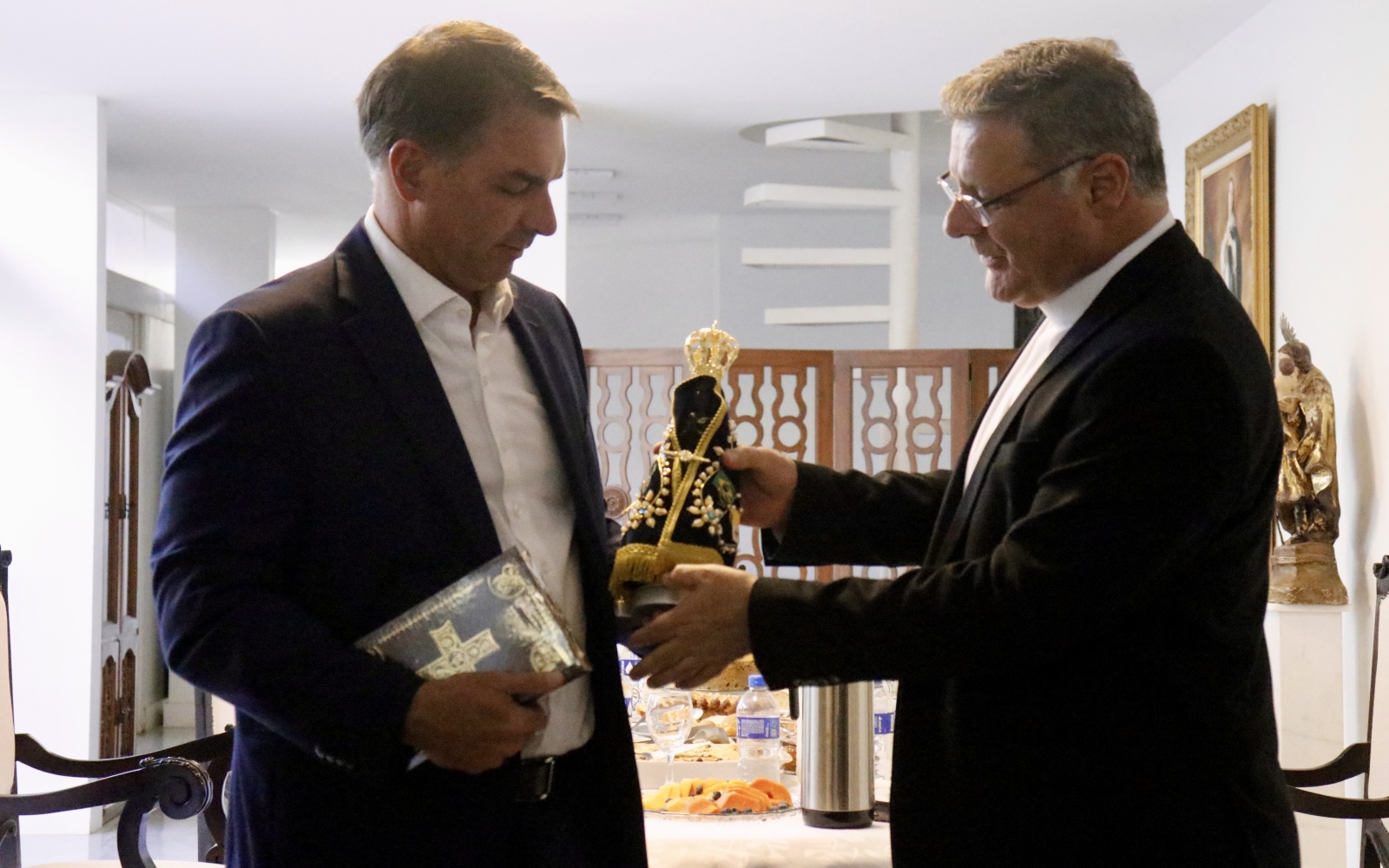
![Brazil archbishop receives presidential candidate Flávio Bolsonaro in ‘institutional visit’ – #Catholic – The archbishop of the Brazil’s capital, Brasilia, Cardinal Paulo Cezar Costa, received on Oct. 8 Sen. Flávio Bolsonaro, candidate for president, and his running mate, Congressman Alfredo Gaspar, both of the Liberal Party, for what the archdiocese described as an “institutional visit.”According to the Archdiocese of Brasília, “the meeting took place in an atmosphere of cordiality and dialogue, providing an opportunity to reflect on issues of interest to the Church and Brazilian society.”The archdiocese also reported on its social media that among the topics discussed were “freedom of religion and conscience, respect for the legitimate secularism of the state, the protection of human life and the family, the promotion of social justice, the fight against poverty and inequality; in addition to the importance of collaboration between public authorities and religious institutions in initiatives aimed at the common good.”During the visit, the cardinal gave Bolsonaro, who is Protestant, a copy of a Bible and a small statue of Our Lady of Aparecida, the patroness of Brazil. “The senator was presented with a copy of the Jerusalem Bible and a replica of the image of Our Lady of Aparecida. Both gifts are among the items customarily presented to officials on certain occasions or during institutional visits, as part of [archdiocesan] protocol,” the Archdiocese of Brasília’s communications department told ACI Digital, the Portuguese-language sister service of EWTN News.This story was first published by ACI Digital, the Portuguese-language sister service of EWTN News. It has been translated and adapted by EWTN News English.](https://unitedyam.com/wp-content/uploads/2026/10/brazil-archbishop-receives-presidential-candidate-flavio-bolsonaro-in-institutional-visit-catholic-the-archbishop-of-the-brazils-capital-brasilia-cardinal-paulo-cezar.jpg "Brazil archbishop receives presidential candidate Flávio Bolsonaro in ‘institutional visit’ – #Catholic – The archbishop of the Brazil’s capital, Brasilia, Cardinal Paulo Cezar Costa, received on Oct. 8 Sen. Flávio Bolsonaro, candidate for president, and his running mate, Congressman Alfredo Gaspar, both of the Liberal Party, for what the archdiocese described as an “institutional visit.”According to the Archdiocese of Brasília, “the meeting took place in an atmosphere of cordiality and dialogue, providing an opportunity to reflect on issues of interest to the Church and Brazilian society.”The archdiocese also reported on its social media that among the topics discussed were “freedom of religion and conscience, respect for the legitimate secularism of the state, the protection of human life and the family, the promotion of social justice, the fight against poverty and inequality; in addition to the importance of collaboration between public authorities and religious institutions in initiatives aimed at the common good.”During the visit, the cardinal gave Bolsonaro, who is Protestant, a copy of a Bible and a small statue of Our Lady of Aparecida, the patroness of Brazil. “The senator was presented with a copy of the Jerusalem Bible and a replica of the image of Our Lady of Aparecida. Both gifts are among the items customarily presented to officials on certain occasions or during institutional visits, as part of [archdiocesan] protocol,” the Archdiocese of Brasília’s communications department told ACI Digital, the Portuguese-language sister service of EWTN News.This story was first published by ACI Digital, the Portuguese-language sister service of EWTN News. It has been translated and adapted by EWTN News English.")
![Advocates speak for voiceless at N.J. March for Life #Catholic – From around the Paterson Diocese and throughout New Jersey, thousands of pro-life advocates traveled to Trenton to be a voice for the voiceless in the womb and the most vulnerable at the annual N.J. March for Life on Oct. 8.
Bishop Kevin J. Sweeney participated in the daylong event, which began with a Mass for Life in the Cathedral of St. Mary of the Assumption in Trenton. After the Mass, a rally took place in front of the N.J. Statehouse Annex, followed by a march through downtown Trenton.
At the Mass, several bishops, including Bishop Sweeney, concelebrated. Bishop David M. O’Connell of the Trenton Diocese was the main celebrant, with Bishop Pedro Bismarck Chau of the Newark Archdiocese as the homilist. The Mass drew a standing-room-only crowd, with overflow from the congregation participating in the church basement.
In his homily, Bishop Chau said, “God created us in his image and likeness. We have been wonderfully made. Do not forget that. And this morning, we gather from around the state of New Jersey, and we embarked on a pilgrimage to celebrate life.”
A large presence at the Mass and March was young people from Catholic high schools from across the state. Many Knights of Columbus councils also participated in the daylong event.
At the Rally, many pro-life advocates serving in communities around the state spoke. Jean Marie Davis, executive director of Branches Family Resource Center, was the keynote speaker. With the theme, “Life is a gift,” this year’s March hoped to reach out to those experiencing crisis pregnancies and support mothers.
Bishop Sweeney gave the closing prayer at the Rally and said, “Giving thanks to God for the gift of life, this gift of this beautiful day. For our parents who said yes to the gift of life, for any mom and dad who are struggling with a crisis pregnancy at this moment. For our elected officials, for our great country of the United States, that we would live up to our founding principles that life is sacred and life, liberty, and the pursuit of happiness are given to us by God.”
PHOTOS | CECILE PAGLIARULO, SUBMITTED
[See image gallery at beaconnj.org]
Click here to subscribe to our weekly newsletter.](https://unitedyam.com/wp-content/uploads/2026/10/advocates-speak-for-voiceless-at-n-j-march-for-life-catholic-from-around-the-paterson-diocese-and-throughout-new-jersey-thousands-of-pro-life-advocates-traveled-to-trenton-to-be-a-voice-for-the-v.jpg "Advocates speak for voiceless at N.J. March for Life #Catholic – From around the Paterson Diocese and throughout New Jersey, thousands of pro-life advocates traveled to Trenton to be a voice for the voiceless in the womb and the most vulnerable at the annual N.J. March for Life on Oct. 8.
Bishop Kevin J. Sweeney participated in the daylong event, which began with a Mass for Life in the Cathedral of St. Mary of the Assumption in Trenton. After the Mass, a rally took place in front of the N.J. Statehouse Annex, followed by a march through downtown Trenton.
At the Mass, several bishops, including Bishop Sweeney, concelebrated. Bishop David M. O’Connell of the Trenton Diocese was the main celebrant, with Bishop Pedro Bismarck Chau of the Newark Archdiocese as the homilist. The Mass drew a standing-room-only crowd, with overflow from the congregation participating in the church basement.
In his homily, Bishop Chau said, “God created us in his image and likeness. We have been wonderfully made. Do not forget that. And this morning, we gather from around the state of New Jersey, and we embarked on a pilgrimage to celebrate life.”
A large presence at the Mass and March was young people from Catholic high schools from across the state. Many Knights of Columbus councils also participated in the daylong event.
At the Rally, many pro-life advocates serving in communities around the state spoke. Jean Marie Davis, executive director of Branches Family Resource Center, was the keynote speaker. With the theme, “Life is a gift,” this year’s March hoped to reach out to those experiencing crisis pregnancies and support mothers.
Bishop Sweeney gave the closing prayer at the Rally and said, “Giving thanks to God for the gift of life, this gift of this beautiful day. For our parents who said yes to the gift of life, for any mom and dad who are struggling with a crisis pregnancy at this moment. For our elected officials, for our great country of the United States, that we would live up to our founding principles that life is sacred and life, liberty, and the pursuit of happiness are given to us by God.”
PHOTOS | CECILE PAGLIARULO, SUBMITTED
[See image gallery at beaconnj.org]
Click here to subscribe to our weekly newsletter.")

:max_bytes(150000):strip_icc():format(jpeg)/TAL-lead-image-HWY395CA0626-a4338209c3724109b92330d95488c27d.jpg)
_-_Ceiling.jpg)
:max_bytes(150000):strip_icc():format(jpeg)/Edinburgh-castle-scotland-HAUNTED0917-GettyImages-159801233-5f8db5fc651249aa9fbd350e56f471d5.jpg)


![New White House press secretary describes ‘miracle’ when her mother chose adoption over abortion #Catholic Newly appointed White House press secretary and pro-life advocate Katie Zacharia, whose appointment President Donald Trump announced Oct. 9, has shared that her biological mother chose life over abortion in the final moments before a scheduled procedure, calling it a “miracle.”Last year Zacharia, now herself a mother of four and an attorney, described in an interview with “We The People with Gates Garcia” how the precise circumstances of her birth became the foundation of her pro-life convictions.She told Garcia that she was “approximately 20, 30 minutes away from being aborted” when her mother, Ruth, changed her mind.Ruth, whom Zacharia described as having a “tough background of sexual abuse,” was about to head to her abortion appointment when the biological father called, pushing the abortion. Ruth was about to walk out the door to head to the clinic when the phone rang again. Ruth walked back to the phone to answer it, and the Christian counselor who’d called urged her to “consider an open adoption rather than an abortion, so you have an opportunity to know who this child could be and give this child an opportunity to live.”The counselor told her she did not understand “how painful” abortion would be for her, because along with “the loss of [her] baby,” there would be “ensuing psychological, physical … trauma.”Zacharia said her mother decided not to go through with the abortion “to the anger and dismay of her family,” which allowed Zacharia to be adopted as a newborn. She later met her biological mother at age 18, who told her the story. She said that “seconds of a phone call … saved my life,” calling her story “a miracle” that explains why the issue is “so near and dear” to her.Zacharia, who while in law school at Pepperdine University served as president of the university’s Christian Legal Society chapter, has also served on the board of advisers for the White Rose Resistance, a group founded by Seth Gruber that advocates for legal protection for the unborn.Zacharia has been a frequent commentator on Fox News, Newsmax, and other outlets. She also previously worked as general counsel for Fix California, a conservative nonprofit.In February, she became deputy assistant secretary for public affairs at the Department of Homeland Security under then-Secretary Kristi Noem. She resigned after roughly a month, citing the strain on her family of commuting between California, her home, and Washington, D.C. In June, she joined Trump Media & Technology Group/Truth Social as a senior communications adviser.Zacharia succeeds Karoline Leavitt, who in an interview with Sean Hannity last month explained that she left the position to spend more time with her growing family. Trump said Zacharia would begin her new role on Oct. 12 and hold an introductory news conference on Wednesday, Oct. 14, at 9:30 a.m. ET in the White House press briefing room.](https://unitedyam.com/wp-content/uploads/2026/10/new-white-house-press-secretary-describes-miracle-when-her-mother-chose-adoption-over-abortion-catholic-newly-appointed-white-house-press-secretary-and-pro-life-advocate-katie-zacha.jpg "New White House press secretary describes ‘miracle’ when her mother chose adoption over abortion #Catholic Newly appointed White House press secretary and pro-life advocate Katie Zacharia, whose appointment President Donald Trump announced Oct. 9, has shared that her biological mother chose life over abortion in the final moments before a scheduled procedure, calling it a “miracle.”Last year Zacharia, now herself a mother of four and an attorney, described in an interview with “We The People with Gates Garcia” how the precise circumstances of her birth became the foundation of her pro-life convictions.She told Garcia that she was “approximately 20, 30 minutes away from being aborted” when her mother, Ruth, changed her mind.Ruth, whom Zacharia described as having a “tough background of sexual abuse,” was about to head to her abortion appointment when the biological father called, pushing the abortion. Ruth was about to walk out the door to head to the clinic when the phone rang again. Ruth walked back to the phone to answer it, and the Christian counselor who’d called urged her to “consider an open adoption rather than an abortion, so you have an opportunity to know who this child could be and give this child an opportunity to live.”The counselor told her she did not understand “how painful” abortion would be for her, because along with “the loss of [her] baby,” there would be “ensuing psychological, physical … trauma.”Zacharia said her mother decided not to go through with the abortion “to the anger and dismay of her family,” which allowed Zacharia to be adopted as a newborn. She later met her biological mother at age 18, who told her the story. She said that “seconds of a phone call … saved my life,” calling her story “a miracle” that explains why the issue is “so near and dear” to her.Zacharia, who while in law school at Pepperdine University served as president of the university’s Christian Legal Society chapter, has also served on the board of advisers for the White Rose Resistance, a group founded by Seth Gruber that advocates for legal protection for the unborn.Zacharia has been a frequent commentator on Fox News, Newsmax, and other outlets. She also previously worked as general counsel for Fix California, a conservative nonprofit.In February, she became deputy assistant secretary for public affairs at the Department of Homeland Security under then-Secretary Kristi Noem. She resigned after roughly a month, citing the strain on her family of commuting between California, her home, and Washington, D.C. In June, she joined Trump Media & Technology Group/Truth Social as a senior communications adviser.Zacharia succeeds Karoline Leavitt, who in an interview with Sean Hannity last month explained that she left the position to spend more time with her growing family. Trump said Zacharia would begin her new role on Oct. 12 and hold an introductory news conference on Wednesday, Oct. 14, at 9:30 a.m. ET in the White House press briefing room.")
![Morris Township academy celebrates life of Blessed Miriam Teresa #Catholic – On the morning of Oct. 6, the Academy of St. Elizabeth in the Convent Station neighborhood of Morris Township, N.J., welcomed Bishop Kevin J. Sweeney, who celebrated the academy’s annual Bishop’s Mass, commemorating the 12th anniversary of the beatification of Blessed Miriam Teresa Demjanovich.
Blessed Demjanovich was a prayerful woman and gifted writer who had an enormous impact before her untimely death at age 26. She was a member of the Sisters of Charity of Convent Station, the religious community that founded and continues to operate the Academy of St. Elizabeth.
During Mass, Bishop Sweeney spoke about the importance of servant leadership, reflected not only in the life of Blessed Miriam Teresa, but also in the lives of the academy’s newly commissioned extraordinary ministers of Holy Communion. He blessed our six newest extraordinary Eucharistic ministers and challenged them to live as servant leaders, both within the Church and beyond.
Father Krzysztof Tyszko, parochial vicar of Assumption Parish in Morristown, served as master of ceremonies for the Mass, which included participation from members of the academy community.
“The Academy warmly thanks Bishop Sweeney for his kind, pastoral care for our Academy community and looks forward to his next visit to Convent Station,” the Academy of St. Elizabeth posted on social media.
BEACON PHOTOS | JOE GIGLI
[See image gallery at beaconnj.org]
Click here to subscribe to our weekly newsletter.](https://unitedyam.com/wp-content/uploads/2026/10/morris-township-academy-celebrates-life-of-blessed-miriam-teresa-catholic-on-the-morning-of-oct-6-the-academy-of-st-elizabeth-in-the-convent-station-neighborhood-of-morris-township-n-j-welcom.jpg "Morris Township academy celebrates life of Blessed Miriam Teresa #Catholic – On the morning of Oct. 6, the Academy of St. Elizabeth in the Convent Station neighborhood of Morris Township, N.J., welcomed Bishop Kevin J. Sweeney, who celebrated the academy’s annual Bishop’s Mass, commemorating the 12th anniversary of the beatification of Blessed Miriam Teresa Demjanovich.
Blessed Demjanovich was a prayerful woman and gifted writer who had an enormous impact before her untimely death at age 26. She was a member of the Sisters of Charity of Convent Station, the religious community that founded and continues to operate the Academy of St. Elizabeth.
During Mass, Bishop Sweeney spoke about the importance of servant leadership, reflected not only in the life of Blessed Miriam Teresa, but also in the lives of the academy’s newly commissioned extraordinary ministers of Holy Communion. He blessed our six newest extraordinary Eucharistic ministers and challenged them to live as servant leaders, both within the Church and beyond.
Father Krzysztof Tyszko, parochial vicar of Assumption Parish in Morristown, served as master of ceremonies for the Mass, which included participation from members of the academy community.
“The Academy warmly thanks Bishop Sweeney for his kind, pastoral care for our Academy community and looks forward to his next visit to Convent Station,” the Academy of St. Elizabeth posted on social media.
BEACON PHOTOS | JOE GIGLI
[See image gallery at beaconnj.org]
Click here to subscribe to our weekly newsletter.")
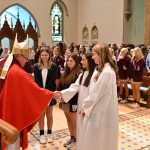
![St. Carlo Acutis’ doctors recall his last days in the hospital – #Catholic – Fifteen-year-old Carlo Acutis died within a week of being diagnosed with acute promyelocytic leukemia, offering his suffering for the pope and for the Church. Following his beatification on Oct. 10, 2020, his doctors and hospital chaplain recalled their memories of his final days.Father Sandro Villa was the hospital chaplain of St. Gerald Hospital outside of Milan, Italy, who gave Carlo the anointing of the sick and holy Communion on Oct. 10, 2006, the day before Carlo went into a coma due to a brain hemorrhage caused by the M3 subtype of acute myeloid leukemia.Villa shared at an event in Assisi, Italy, on Oct. 13, 2020, that he was touched by Carlo’s “composure and devotion” in receiving the sacraments in the hospital room.“In a small room, at the end of the corridor, I found myself in front of a boy. His pale but serene face surprised me — unthinkable in a seriously ill person, especially an adolescent,” he said.“I was also amazed by the composure and devotion with which, albeit with difficulty, he received the two sacraments. He seemed to have been waiting for them and felt the need for them.”Before his cancer diagnosis, Carlo had a great devotion to the Eucharist. From a young age, he expressed a special love for God, even though his Catholic parents had stopped attending Mass.As he grew older, he started going to daily Mass, often dragging his family members along with him. He made Holy Hours before or after Mass and went to confession weekly.With his aptitude for computer programming, Carlo built websites to inform others about Eucharistic miracles and Marian apparitions around the world. On his site, he told people: “The more often we receive the Eucharist, the more we will become like Jesus, so that on this earth we will have a foretaste of heaven.”For Villa, this administration of the sacraments would be his only encounter with Carlo, but he said the look of serenity on Carlo’s face was something that stayed with him.“After a few years … I learned that he was declared ‘venerable.’ I was amazed that the Lord had allowed me to meet him, if only for a few moments,” he said.Villa continued: “I decided to learn about his life. I discovered that he was in love with the real presence of Jesus in the Eucharist, and I therefore began to better understand some of his words.”Dr. Andrea Biondi and Dr. Mòmcilo Jankovic, who treated Carlo in the pediatric clinic of St. Gerald Hospital, recorded their memories together in a paper that was read aloud at the event.They said: “Carlo was like a meteor with a quick passage through our ward; leukemia took him away before we could get to know him even a little. However, his sweet eyes remain engrained [in our memories]. His gaze was full of attention … of courage, of love, of strong empathy.”“His faith in God, which he had wanted and still wanted to pass on to others, to his neighbor, shone through him … His gentle eyes … taught us a lot: life, whether short or long must be lived intensely for oneself, but also and above all for others.”Carlo’s heart stopped beating on Oct. 12 — a date that is now celebrated as a local feast in the Diocese of Assisi and Archdiocese of Milan. His parents had desired to donate his organs, but they were too compromised by leukemia to be donated.Today St. Carlo’s heart is a relic and is contained in a reliquary in Assisi that is inscribed with his words: “The Eucharist is my highway to heaven.” He was canonized on Sept. 7, 2025, by Pope Leo XIV in St. Peter’s Square at the Vatican.This story was first published on Oct. 16, 2020, and has been updated.](https://unitedyam.com/wp-content/uploads/2026/10/st-carlo-acutis-doctors-recall-his-last-days-in-the-hospital-catholic-fifteen-year-old-carlo-acutis-died-within-a-week-of-being-diagnosed-with-acute-promyelocytic-leukemia-offering-his.png "St. Carlo Acutis’ doctors recall his last days in the hospital – #Catholic – Fifteen-year-old Carlo Acutis died within a week of being diagnosed with acute promyelocytic leukemia, offering his suffering for the pope and for the Church. Following his beatification on Oct. 10, 2020, his doctors and hospital chaplain recalled their memories of his final days.Father Sandro Villa was the hospital chaplain of St. Gerald Hospital outside of Milan, Italy, who gave Carlo the anointing of the sick and holy Communion on Oct. 10, 2006, the day before Carlo went into a coma due to a brain hemorrhage caused by the M3 subtype of acute myeloid leukemia.Villa shared at an event in Assisi, Italy, on Oct. 13, 2020, that he was touched by Carlo’s “composure and devotion” in receiving the sacraments in the hospital room.“In a small room, at the end of the corridor, I found myself in front of a boy. His pale but serene face surprised me — unthinkable in a seriously ill person, especially an adolescent,” he said.“I was also amazed by the composure and devotion with which, albeit with difficulty, he received the two sacraments. He seemed to have been waiting for them and felt the need for them.”Before his cancer diagnosis, Carlo had a great devotion to the Eucharist. From a young age, he expressed a special love for God, even though his Catholic parents had stopped attending Mass.As he grew older, he started going to daily Mass, often dragging his family members along with him. He made Holy Hours before or after Mass and went to confession weekly.With his aptitude for computer programming, Carlo built websites to inform others about Eucharistic miracles and Marian apparitions around the world. On his site, he told people: “The more often we receive the Eucharist, the more we will become like Jesus, so that on this earth we will have a foretaste of heaven.”For Villa, this administration of the sacraments would be his only encounter with Carlo, but he said the look of serenity on Carlo’s face was something that stayed with him.“After a few years … I learned that he was declared ‘venerable.’ I was amazed that the Lord had allowed me to meet him, if only for a few moments,” he said.Villa continued: “I decided to learn about his life. I discovered that he was in love with the real presence of Jesus in the Eucharist, and I therefore began to better understand some of his words.”Dr. Andrea Biondi and Dr. Mòmcilo Jankovic, who treated Carlo in the pediatric clinic of St. Gerald Hospital, recorded their memories together in a paper that was read aloud at the event.They said: “Carlo was like a meteor with a quick passage through our ward; leukemia took him away before we could get to know him even a little. However, his sweet eyes remain engrained [in our memories]. His gaze was full of attention … of courage, of love, of strong empathy.”“His faith in God, which he had wanted and still wanted to pass on to others, to his neighbor, shone through him … His gentle eyes … taught us a lot: life, whether short or long must be lived intensely for oneself, but also and above all for others.”Carlo’s heart stopped beating on Oct. 12 — a date that is now celebrated as a local feast in the Diocese of Assisi and Archdiocese of Milan. His parents had desired to donate his organs, but they were too compromised by leukemia to be donated.Today St. Carlo’s heart is a relic and is contained in a reliquary in Assisi that is inscribed with his words: “The Eucharist is my highway to heaven.” He was canonized on Sept. 7, 2025, by Pope Leo XIV in St. Peter’s Square at the Vatican.This story was first published on Oct. 16, 2020, and has been updated.")