
Day: December 17, 2025

Pentagon chief announces reforms to U.S. military’s Chaplain Corps  - #Catholic - 
 
 U.S. Secretary of War Pete Hegseth (at right) is shown here during a meeting with U.S. Secretary of State Marco Rubio (at left) and then National Security Advisor Mike Waltz (at center). / Credit: The White House, Public domain, via Wikimedia Commons

CNA Staff, Dec 17, 2025 / 20:05 pm (CNA).
U.S. Secretary of War Pete Hegseth announced that he has issued a directive aimed at reforming the military’s Chaplain Corps, beginning with the elimination of the U.S. Army's current Spiritual Fitness Guide.In a video post, Hegseth described a “real problem” facing the nation’s military forces: “the weakening of our Chaplain corps” that has “been going on for far too long.”“In an atmosphere of political correctness and secular humanism, chaplains have been minimized, viewed by many as therapists. instead of ministers,” he said. “Faith and virtue were traded for self help and self care.”Hegseth said that “chaplains are intended to be the spiritual and moral backbone of our nation's forces,” recalling that at the outset of the American Revolution, General George Washington, in one of his first acts as commander of the Continental Army, established the Chaplain Corps because he saw the need for “the blessing and protection of heaven…especially in times of public distress and danger.”“For about 200 years, the Chaplain Corps continued its role as the spiritual leader of our service members. serving our men and women in times of hardship, and ministering to their souls,” he said.In what he described as an “ongoing war on warriors” in recent years, Hegseth said the role of chaplains “has been degraded.”He cited the current Army Spiritual Fitness Guide, which he says mentions God only once and has “zero” references to virtue, relying instead “on New Age notions, saying that the soldier’s spirit consists of consciousness, creativity, and connection.”According to the guide, Hegseth said, about “82% of the military are religious, yet, ironically, [the guide] alienates our war fighters of faith by pushing secular humanism. In short, it's unacceptable and unserious. So we're tossing it.”“Our chaplains are chaplains, not emotional support officers,” he said.According to Hegseth, the reforms will be “a top down cultural shift, putting spiritual well-being on the same footing as mental and physical health.”He said initial reforms will result in the removal of training materials that “have no place in the War Department” as well as the streamlining of religious affiliation coding practices, with more changes in the coming weeks and months.“We're going to restore the esteemed position of chaplains as moral anchors for our fighting force,” said Hegseth. Quoting the 1956 army chaplain's manual, Hegseth said: “‘The chaplain is the pastor and the shepherd of the souls entrusted to his care.’”“This is a high and sacred calling,” he continued, “but this only works if our shepherds are actually given the freedom to boldly guide and care for their flock.”

Pentagon chief announces reforms to U.S. military’s Chaplain Corps  – #Catholic – U.S. Secretary of War Pete Hegseth (at right) is shown here during a meeting with U.S. Secretary of State Marco Rubio (at left) and then National Security Advisor Mike Waltz (at center). / Credit: The White House, Public domain, via Wikimedia Commons CNA Staff, Dec 17, 2025 / 20:05 pm (CNA). U.S. Secretary of War Pete Hegseth announced that he has issued a directive aimed at reforming the military’s Chaplain Corps, beginning with the elimination of the U.S. Army’s current Spiritual Fitness Guide.In a video post, Hegseth described a “real problem” facing the nation’s military forces: “the weakening of our Chaplain corps” that has “been going on for far too long.”“In an atmosphere of political correctness and secular humanism, chaplains have been minimized, viewed by many as therapists. instead of ministers,” he said. “Faith and virtue were traded for self help and self care.”Hegseth said that “chaplains are intended to be the spiritual and moral backbone of our nation’s forces,” recalling that at the outset of the American Revolution, General George Washington, in one of his first acts as commander of the Continental Army, established the Chaplain Corps because he saw the need for “the blessing and protection of heaven…especially in times of public distress and danger.”“For about 200 years, the Chaplain Corps continued its role as the spiritual leader of our service members. serving our men and women in times of hardship, and ministering to their souls,” he said.In what he described as an “ongoing war on warriors” in recent years, Hegseth said the role of chaplains “has been degraded.”He cited the current Army Spiritual Fitness Guide, which he says mentions God only once and has “zero” references to virtue, relying instead “on New Age notions, saying that the soldier’s spirit consists of consciousness, creativity, and connection.”According to the guide, Hegseth said, about “82% of the military are religious, yet, ironically, [the guide] alienates our war fighters of faith by pushing secular humanism. In short, it’s unacceptable and unserious. So we’re tossing it.”“Our chaplains are chaplains, not emotional support officers,” he said.According to Hegseth, the reforms will be “a top down cultural shift, putting spiritual well-being on the same footing as mental and physical health.”He said initial reforms will result in the removal of training materials that “have no place in the War Department” as well as the streamlining of religious affiliation coding practices, with more changes in the coming weeks and months.“We’re going to restore the esteemed position of chaplains as moral anchors for our fighting force,” said Hegseth. Quoting the 1956 army chaplain’s manual, Hegseth said: “‘The chaplain is the pastor and the shepherd of the souls entrusted to his care.’”“This is a high and sacred calling,” he continued, “but this only works if our shepherds are actually given the freedom to boldly guide and care for their flock.”


U.S. Secretary of War Pete Hegseth (at right) is shown here during a meeting with U.S. Secretary of State Marco Rubio (at left) and then National Security Advisor Mike Waltz (at center). / Credit: The White House, Public domain, via Wikimedia Commons

CNA Staff, Dec 17, 2025 / 20:05 pm (CNA).

U.S. Secretary of War Pete Hegseth announced that he has issued a directive aimed at reforming the military’s Chaplain Corps, beginning with the elimination of the U.S. Army’s current Spiritual Fitness Guide.

In a video post, Hegseth described a “real problem” facing the nation’s military forces: “the weakening of our Chaplain corps” that has “been going on for far too long.”

“In an atmosphere of political correctness and secular humanism, chaplains have been minimized, viewed by many as therapists. instead of ministers,” he said. “Faith and virtue were traded for self help and self care.”

Hegseth said that “chaplains are intended to be the spiritual and moral backbone of our nation’s forces,” recalling that at the outset of the American Revolution, General George Washington, in one of his first acts as commander of the Continental Army, established the Chaplain Corps because he saw the need for “the blessing and protection of heaven…especially in times of public distress and danger.”

“For about 200 years, the Chaplain Corps continued its role as the spiritual leader of our service members. serving our men and women in times of hardship, and ministering to their souls,” he said.

In what he described as an “ongoing war on warriors” in recent years, Hegseth said the role of chaplains “has been degraded.”

He cited the current Army Spiritual Fitness Guide, which he says mentions God only once and has “zero” references to virtue, relying instead “on New Age notions, saying that the soldier’s spirit consists of consciousness, creativity, and connection.”

According to the guide, Hegseth said, about “82% of the military are religious, yet, ironically, [the guide] alienates our war fighters of faith by pushing secular humanism. In short, it’s unacceptable and unserious. So we’re tossing it.”

“Our chaplains are chaplains, not emotional support officers,” he said.

According to Hegseth, the reforms will be “a top down cultural shift, putting spiritual well-being on the same footing as mental and physical health.”

He said initial reforms will result in the removal of training materials that “have no place in the War Department” as well as the streamlining of religious affiliation coding practices, with more changes in the coming weeks and months.

“We’re going to restore the esteemed position of chaplains as moral anchors for our fighting force,” said Hegseth. Quoting the 1956 army chaplain’s manual, Hegseth said: “‘The chaplain is the pastor and the shepherd of the souls entrusted to his care.’”

“This is a high and sacred calling,” he continued, “but this only works if our shepherds are actually given the freedom to boldly guide and care for their flock.”

Read More

Father, all-powerful God, your eternal Word took flesh on our earth when the Virgin Mary placed her life at the service of your plan. Lift our minds in watchful hope to heart the voice which announces his glory and open our minds to receive the Spirit who prepares us for his coming. We ask this through Christ our Lord. Amen.

Read More
Massive Stars Make Their Mark in Hubble Image – This NASA/ESA Hubble Space Telescope image features the blue dwarf galaxy Markarian 178 (Mrk 178) against a backdrop of distant galaxies in all shapes and sizes. Some of these distant galaxies even shine through the diffuse edges of Mrk 178.

This NASA/ESA Hubble Space Telescope image features the blue dwarf galaxy Markarian 178 (Mrk 178) against a backdrop of distant galaxies in all shapes and sizes. Some of these distant galaxies even shine through the diffuse edges of Mrk 178.

Read More
Gospel and Word of the Day – 18 December 2025 – A reading from the Book of Jeremiah 23:5-8 Behold, the days are coming, says the LORD, when I will raise up a righteous shoot to David; As king he shall reign and govern wisely, he shall do what is just and right in the land. In his days Judah shall be saved, Israel shall dwell in security. This is the name they give him: “The LORD our justice.” Therefore, the days will come, says the LORD, when they shall no longer say, “As the LORD lives, who brought the children of Israel out of the land of Egypt”; but rather, "As the LORD lives, who brought the descendants of the house of Israel up from the land of the north”– and from all the lands to which I banished them; they shall again live on their own land.From the Gospel according to Matthew 1:18-25 This is how the birth of Jesus Christ came about. When his mother Mary was betrothed to Joseph, but before they lived together, she was found with child through the Holy Spirit. Joseph her husband, since he was a righteous man, yet unwilling to expose her to shame, decided to divorce her quietly. Such was his intention when, behold, the angel of the Lord appeared to him in a dream and said, “Joseph, son of David, do not be afraid to take Mary your wife into your home. For it is through the Holy Spirit that this child has been conceived in her. She will bear a son and you are to name him Jesus, because he will save his people from their sins.” All this took place to fulfill what the Lord had said through the prophet: Behold, the virgin shall be with child and bear a son, and they shall name him Emmanuel, which means “God is with us.” When Joseph awoke, he did as the angel of the Lord had commanded him and took his wife into his home. He had no relations with her until she bore a son, and he named him Jesus.The Evangelist highlights that alone, Joseph cannot explain to himself the event which he sees taking place before his eyes, namely, Mary’s pregnancy. Just then, in that moment of doubt, even anguish, God approaches him — him too — through his messenger and [Joseph] is enlightened about the nature of this maternity: “the child conceived in her is of the Holy Spirit” (cf. v. 20). Thus, in facing this extraordinary event, which surely gave rise to many questions in his heart, he trusts totally in God who has drawn near to him, and after his invitation, does not repudiate his betrothed, but takes her to him and takes Mary to wife. In accepting Mary, Joseph knowingly and lovingly receives Him who has been conceived in her through the wondrous work of God, for whom nothing is impossible. Joseph, a just and humble man (cf. v. 19), teaches us to always trust in God, who draws near to us: when God approaches us, we must entrust ourselves to him. Joseph teaches us to allow ourselves to be guided by Him with willing obedience. (Pope Francis, Angelus, 18 December 2016)

A reading from the Book of Jeremiah
23:5-8

Behold, the days are coming, says the LORD,
when I will raise up a righteous shoot to David;
As king he shall reign and govern wisely,
he shall do what is just and right in the land.
In his days Judah shall be saved,
Israel shall dwell in security.
This is the name they give him:
“The LORD our justice.”

Therefore, the days will come, says the LORD,
when they shall no longer say, “As the LORD lives,
who brought the children of Israel out of the land of Egypt”;
but rather, "As the LORD lives,
who brought the descendants of the house of Israel
up from the land of the north”–
and from all the lands to which I banished them;
they shall again live on their own land.

From the Gospel according to Matthew
1:18-25

This is how the birth of Jesus Christ came about.
When his mother Mary was betrothed to Joseph,
but before they lived together,
she was found with child through the Holy Spirit.
Joseph her husband, since he was a righteous man,
yet unwilling to expose her to shame,
decided to divorce her quietly.
Such was his intention when, behold,
the angel of the Lord appeared to him in a dream and said,
“Joseph, son of David,
do not be afraid to take Mary your wife into your home.
For it is through the Holy Spirit
that this child has been conceived in her.
She will bear a son and you are to name him Jesus,
because he will save his people from their sins.”
All this took place to fulfill
what the Lord had said through the prophet:

Behold, the virgin shall be with child and bear a son,
and they shall name him Emmanuel,

which means “God is with us.”
When Joseph awoke,
he did as the angel of the Lord had commanded him
and took his wife into his home.
He had no relations with her until she bore a son,
and he named him Jesus.

The Evangelist highlights that alone, Joseph cannot explain to himself the event which he sees taking place before his eyes, namely, Mary’s pregnancy. Just then, in that moment of doubt, even anguish, God approaches him — him too — through his messenger and [Joseph] is enlightened about the nature of this maternity: “the child conceived in her is of the Holy Spirit” (cf. v. 20). Thus, in facing this extraordinary event, which surely gave rise to many questions in his heart, he trusts totally in God who has drawn near to him, and after his invitation, does not repudiate his betrothed, but takes her to him and takes Mary to wife. In accepting Mary, Joseph knowingly and lovingly receives Him who has been conceived in her through the wondrous work of God, for whom nothing is impossible. Joseph, a just and humble man (cf. v. 19), teaches us to always trust in God, who draws near to us: when God approaches us, we must entrust ourselves to him. Joseph teaches us to allow ourselves to be guided by Him with willing obedience. (Pope Francis, Angelus, 18 December 2016)

Read More
First painting in Rome of Our Lady of Guadalupe preserved in fourth-century church – #Catholic – 
 
 This image is preserved in the Church of San Vital, built in 386, in Rome. / Credit: Victoria Cardiel/EWTN News

Rome Newsroom, Dec 17, 2025 / 17:30 pm (CNA).
The Church of St. Vitale, built in 386, is the oldest Christian church still standing in the center of Rome. It is the “only place of worship from the fourth century that has remained intact throughout the centuries,” emphasized its parish priest, Father Elio Lops.This early Christian church, discreet and given little attention on typical tourist routes, safeguards an artistic and devotional treasure that is practically unknown: the first image of Our Lady of Guadalupe painted in the Italian capital.“It has never been given the importance it deserves,” Lops told ACI Prensa, CNA’s Spanish-language news partner, referring to a representation of the Virgin Mary that immediately brings to mind the image imprinted on St. Juan Diego’s tilma in 1531.The similarities are striking. “There is no doubt about its identity,” the parish priest pointed out.Although the position of the hands shows a slight variation and the rays that usually surround the figure are missing, “the gaze is the same,” he explained. The painting also retains “the same belt that symbolizes Our Lady’s maternity and the large crescent moon beneath her feet,” Lops noted, citing the essential iconographic elements of the Guadalupe narrative.The image was painted “around the year 1550” by the Jesuit Giovanni Battista Fiammeri, an artist active in Rome who, on the occasion of the Jubilee of 1600, decorated the entire church of St. Vitale.A compelling hypothesis about the painting’s originAlthough there are no documents that conclusively certify it, the parish priest supports a compelling hypothesis: The Jesuit Fiammeri painted the picture based on a sketch of the miracle made by Spanish missionaries upon their return to Rome, after learning about the events that occurred on Tepeyac Hill two decades earlier.One detail reinforces this interpretation. At the bottom of the painting, “below the Virgin, there is a small caravel depicting the ship on which they traveled to Mexico,” the priest explained. This is an unusual element in later iconography of Our Lady of Guadalupe, but it was commonly used in the context of the first contacts between the New World and the Holy See.Whatever the precise origin of the model used by Fiammeri, it is certain that this image predates by several decades the other representations of the Virgin of Guadalupe preserved in Rome, which date from the mid-17th century, almost a hundred years after the apparitions, the 500th anniversary of which will be celebrated in 2031.This fact confers on the painting in St. Vitale a singular value as a testament to the early European reception of a devotion that, over time, would become one of the pillars of the Americas’ religious identity.This story was first published by ACI Prensa, CNA’s Spanish-language news partner. It has been translated and adapted by CNA.

First painting in Rome of Our Lady of Guadalupe preserved in fourth-century church – #Catholic – This image is preserved in the Church of San Vital, built in 386, in Rome. / Credit: Victoria Cardiel/EWTN News Rome Newsroom, Dec 17, 2025 / 17:30 pm (CNA). The Church of St. Vitale, built in 386, is the oldest Christian church still standing in the center of Rome. It is the “only place of worship from the fourth century that has remained intact throughout the centuries,” emphasized its parish priest, Father Elio Lops.This early Christian church, discreet and given little attention on typical tourist routes, safeguards an artistic and devotional treasure that is practically unknown: the first image of Our Lady of Guadalupe painted in the Italian capital.“It has never been given the importance it deserves,” Lops told ACI Prensa, CNA’s Spanish-language news partner, referring to a representation of the Virgin Mary that immediately brings to mind the image imprinted on St. Juan Diego’s tilma in 1531.The similarities are striking. “There is no doubt about its identity,” the parish priest pointed out.Although the position of the hands shows a slight variation and the rays that usually surround the figure are missing, “the gaze is the same,” he explained. The painting also retains “the same belt that symbolizes Our Lady’s maternity and the large crescent moon beneath her feet,” Lops noted, citing the essential iconographic elements of the Guadalupe narrative.The image was painted “around the year 1550” by the Jesuit Giovanni Battista Fiammeri, an artist active in Rome who, on the occasion of the Jubilee of 1600, decorated the entire church of St. Vitale.A compelling hypothesis about the painting’s originAlthough there are no documents that conclusively certify it, the parish priest supports a compelling hypothesis: The Jesuit Fiammeri painted the picture based on a sketch of the miracle made by Spanish missionaries upon their return to Rome, after learning about the events that occurred on Tepeyac Hill two decades earlier.One detail reinforces this interpretation. At the bottom of the painting, “below the Virgin, there is a small caravel depicting the ship on which they traveled to Mexico,” the priest explained. This is an unusual element in later iconography of Our Lady of Guadalupe, but it was commonly used in the context of the first contacts between the New World and the Holy See.Whatever the precise origin of the model used by Fiammeri, it is certain that this image predates by several decades the other representations of the Virgin of Guadalupe preserved in Rome, which date from the mid-17th century, almost a hundred years after the apparitions, the 500th anniversary of which will be celebrated in 2031.This fact confers on the painting in St. Vitale a singular value as a testament to the early European reception of a devotion that, over time, would become one of the pillars of the Americas’ religious identity.This story was first published by ACI Prensa, CNA’s Spanish-language news partner. It has been translated and adapted by CNA.


This image is preserved in the Church of San Vital, built in 386, in Rome. / Credit: Victoria Cardiel/EWTN News

Rome Newsroom, Dec 17, 2025 / 17:30 pm (CNA).

The Church of St. Vitale, built in 386, is the oldest Christian church still standing in the center of Rome. It is the “only place of worship from the fourth century that has remained intact throughout the centuries,” emphasized its parish priest, Father Elio Lops.

This early Christian church, discreet and given little attention on typical tourist routes, safeguards an artistic and devotional treasure that is practically unknown: the first image of Our Lady of Guadalupe painted in the Italian capital.

“It has never been given the importance it deserves,” Lops told ACI Prensa, CNA’s Spanish-language news partner, referring to a representation of the Virgin Mary that immediately brings to mind the image imprinted on St. Juan Diego’s tilma in 1531.

The similarities are striking. “There is no doubt about its identity,” the parish priest pointed out.

Although the position of the hands shows a slight variation and the rays that usually surround the figure are missing, “the gaze is the same,” he explained. The painting also retains “the same belt that symbolizes Our Lady’s maternity and the large crescent moon beneath her feet,” Lops noted, citing the essential iconographic elements of the Guadalupe narrative.

The image was painted “around the year 1550” by the Jesuit Giovanni Battista Fiammeri, an artist active in Rome who, on the occasion of the Jubilee of 1600, decorated the entire church of St. Vitale.

A compelling hypothesis about the painting’s origin

Although there are no documents that conclusively certify it, the parish priest supports a compelling hypothesis: The Jesuit Fiammeri painted the picture based on a sketch of the miracle made by Spanish missionaries upon their return to Rome, after learning about the events that occurred on Tepeyac Hill two decades earlier.

One detail reinforces this interpretation. At the bottom of the painting, “below the Virgin, there is a small caravel depicting the ship on which they traveled to Mexico,” the priest explained. This is an unusual element in later iconography of Our Lady of Guadalupe, but it was commonly used in the context of the first contacts between the New World and the Holy See.

Whatever the precise origin of the model used by Fiammeri, it is certain that this image predates by several decades the other representations of the Virgin of Guadalupe preserved in Rome, which date from the mid-17th century, almost a hundred years after the apparitions, the 500th anniversary of which will be celebrated in 2031.

This fact confers on the painting in St. Vitale a singular value as a testament to the early European reception of a devotion that, over time, would become one of the pillars of the Americas’ religious identity.

This story was first published by ACI Prensa, CNA’s Spanish-language news partner. It has been translated and adapted by CNA.

Read More

On Dec. 17, the U.S. Senate voted to confirm the nomination of billionaire entrepreneur and private astronaut Jared Isaacman to be the 15th administrator of NASA. The 67-30 vote concludes a lengthy period of leadership uncertainty for the space agency. An unusually turbulent path preceded the final vote. Before his inauguration, President Donald Trump tappedContinue reading “Senate confirms Isaacman as NASA administrator”

The post Senate confirms Isaacman as NASA administrator appeared first on Astronomy Magazine.

Read More
Catholic bishops speak out as New York governor pledges to sign into law assisted suicide – #Catholic – 
 
 Disabilities advocates in Buffalo, New York, during a candlelight vigil in opposition to assisted suicide. / Credit: New York Alliance Against Assisted Suicide

CNA Staff, Dec 17, 2025 / 17:00 pm (CNA).
New York Gov. Kathy Hochul will sign into law an assisted suicide bill that Catholic leaders have ardently opposed, making New York the 13th state to allow the practice. Hochul, who called it an “incredibly difficult decision,” said she will sign the bill after lawmakers add some “guardrails.” The bill allows doctors to give terminally ill patients drugs to end their lives. Hochul’s additions to the law include requiring a waiting period, a recorded oral request for death, and a health evaluation. The law will go into effect six months after signing.    Cardinal Timothy Dolan of New York and other New York bishops have been outspoken against the legislation, issuing several statements opposing it. In a brief meeting with Hochul over the summer, Dolan urged her not to sign the measure. Earlier this month, Illinois Gov. JB Pritzker signed into law similar assisted suicide legislation. Other jurisdictions that permit assisted suicide include: California, Colorado, Delaware, Hawaii, Maine, New Jersey, New Mexico, Oregon, Vermont, Washington, and the District of Columbia.Hochul, who is a Catholic University of America alumna, said in a Dec. 17 statement that the bill will enable people “to suffer less — to shorten not their lives, but their deaths.”“New York has long been a beacon of freedom, and now it is time we extend that freedom to terminally ill New Yorkers who want the right to die comfortably and on their own terms,” Hochul said. “My mother died of ALS, and I am all too familiar with the pain of seeing someone you love suffer and being powerless to stop it,” she continued. In a joint statement, Dolan and the bishops of New York state said they were “extraordinarily troubled” by Hochul’s announcement. The bishops say the law endangers the vulnerable, calling assisted suicide “a grave moral evil” that “is in direct conflict with Catholic teaching on the sacredness and dignity of all human life.” “This new law signals our government’s abandonment of its most vulnerable citizens, telling people who are sick or disabled that suicide in their case is not only acceptable but is encouraged by our elected leaders,” the Dec. 17 statement said. The Patients’ Rights Action Fund, a nonpartisan group that opposes assisted suicide on the grounds that it is inherentaly discriminatory, said that “safeguards” in bills like the one Hochul said she would sign “are falling short” where they exist.“The amendments added that try to address the serious dangers that come with legalizing assisted suicide do nothing to protect people who deserve care and support from the state and their medical teams,” Matt Vallière, who heads the group, said in a Dec. 17 statement shared with CNA. Citing the tragic case of Eileen Mihich, a woman struggling with mental illness who died under the assisted suicide law in Washington state, Vallière said that “it is impossible to prevent abuse of the law in which people not on the verge of dying can utilize assisted suicide.”“There is no true accountability to protect patients from potential harm, abuse, or coercion,” Vallière continued.The New York bishops also raised concerns about mental health, saying the law “will seriously undermine” anti-suicide and mental health care efforts made by Hochul. “How can any society have credibility to tell young people or people with depression that suicide is never the answer, while at the same time telling elderly and sick people that it is a compassionate choice to be celebrated?” the bishops stated. The bishops urged the state to instead invest in palliative care, which is medicine focused on relieving suffering and improving quality of life for people with serious illnesses. “We call on Catholics and all New Yorkers to reject physician-assisted suicide for themselves, their loved ones, and those in their care,” the bishops said. “And we pray that our state turns away from its promotion of a culture of death and invest instead in life-affirming, compassionate hospice and palliative care, which is seriously underutilized.”Vallière also called for better access to palliative care. “Gov. Hochul’s statements undermine the importance of hospice and palliative care, which provides the compassionate end-of-life experience for which so many are advocating but is drastically underutilized in New York,” Vallière said. “We need more access to this care, not a fast track to death in the absence of it.”

Catholic bishops speak out as New York governor pledges to sign into law assisted suicide – #Catholic – Disabilities advocates in Buffalo, New York, during a candlelight vigil in opposition to assisted suicide. / Credit: New York Alliance Against Assisted Suicide CNA Staff, Dec 17, 2025 / 17:00 pm (CNA). New York Gov. Kathy Hochul will sign into law an assisted suicide bill that Catholic leaders have ardently opposed, making New York the 13th state to allow the practice. Hochul, who called it an “incredibly difficult decision,” said she will sign the bill after lawmakers add some “guardrails.” The bill allows doctors to give terminally ill patients drugs to end their lives. Hochul’s additions to the law include requiring a waiting period, a recorded oral request for death, and a health evaluation. The law will go into effect six months after signing.    Cardinal Timothy Dolan of New York and other New York bishops have been outspoken against the legislation, issuing several statements opposing it. In a brief meeting with Hochul over the summer, Dolan urged her not to sign the measure. Earlier this month, Illinois Gov. JB Pritzker signed into law similar assisted suicide legislation. Other jurisdictions that permit assisted suicide include: California, Colorado, Delaware, Hawaii, Maine, New Jersey, New Mexico, Oregon, Vermont, Washington, and the District of Columbia.Hochul, who is a Catholic University of America alumna, said in a Dec. 17 statement that the bill will enable people “to suffer less — to shorten not their lives, but their deaths.”“New York has long been a beacon of freedom, and now it is time we extend that freedom to terminally ill New Yorkers who want the right to die comfortably and on their own terms,” Hochul said. “My mother died of ALS, and I am all too familiar with the pain of seeing someone you love suffer and being powerless to stop it,” she continued. In a joint statement, Dolan and the bishops of New York state said they were “extraordinarily troubled” by Hochul’s announcement. The bishops say the law endangers the vulnerable, calling assisted suicide “a grave moral evil” that “is in direct conflict with Catholic teaching on the sacredness and dignity of all human life.” “This new law signals our government’s abandonment of its most vulnerable citizens, telling people who are sick or disabled that suicide in their case is not only acceptable but is encouraged by our elected leaders,” the Dec. 17 statement said. The Patients’ Rights Action Fund, a nonpartisan group that opposes assisted suicide on the grounds that it is inherentaly discriminatory, said that “safeguards” in bills like the one Hochul said she would sign “are falling short” where they exist.“The amendments added that try to address the serious dangers that come with legalizing assisted suicide do nothing to protect people who deserve care and support from the state and their medical teams,” Matt Vallière, who heads the group, said in a Dec. 17 statement shared with CNA. Citing the tragic case of Eileen Mihich, a woman struggling with mental illness who died under the assisted suicide law in Washington state, Vallière said that “it is impossible to prevent abuse of the law in which people not on the verge of dying can utilize assisted suicide.”“There is no true accountability to protect patients from potential harm, abuse, or coercion,” Vallière continued.The New York bishops also raised concerns about mental health, saying the law “will seriously undermine” anti-suicide and mental health care efforts made by Hochul. “How can any society have credibility to tell young people or people with depression that suicide is never the answer, while at the same time telling elderly and sick people that it is a compassionate choice to be celebrated?” the bishops stated. The bishops urged the state to instead invest in palliative care, which is medicine focused on relieving suffering and improving quality of life for people with serious illnesses. “We call on Catholics and all New Yorkers to reject physician-assisted suicide for themselves, their loved ones, and those in their care,” the bishops said. “And we pray that our state turns away from its promotion of a culture of death and invest instead in life-affirming, compassionate hospice and palliative care, which is seriously underutilized.”Vallière also called for better access to palliative care. “Gov. Hochul’s statements undermine the importance of hospice and palliative care, which provides the compassionate end-of-life experience for which so many are advocating but is drastically underutilized in New York,” Vallière said. “We need more access to this care, not a fast track to death in the absence of it.”


Disabilities advocates in Buffalo, New York, during a candlelight vigil in opposition to assisted suicide. / Credit: New York Alliance Against Assisted Suicide

CNA Staff, Dec 17, 2025 / 17:00 pm (CNA).

New York Gov. Kathy Hochul will sign into law an assisted suicide bill that Catholic leaders have ardently opposed, making New York the 13th state to allow the practice. 

Hochul, who called it an “incredibly difficult decision,” said she will sign the bill after lawmakers add some “guardrails.” The bill allows doctors to give terminally ill patients drugs to end their lives. Hochul’s additions to the law include requiring a waiting period, a recorded oral request for death, and a health evaluation. The law will go into effect six months after signing.    

Cardinal Timothy Dolan of New York and other New York bishops have been outspoken against the legislation, issuing several statements opposing it. In a brief meeting with Hochul over the summer, Dolan urged her not to sign the measure. 

Earlier this month, Illinois Gov. JB Pritzker signed into law similar assisted suicide legislation. Other jurisdictions that permit assisted suicide include: California, Colorado, Delaware, Hawaii, Maine, New Jersey, New Mexico, Oregon, Vermont, Washington, and the District of Columbia.

Hochul, who is a Catholic University of America alumna, said in a Dec. 17 statement that the bill will enable people “to suffer less — to shorten not their lives, but their deaths.”

“New York has long been a beacon of freedom, and now it is time we extend that freedom to terminally ill New Yorkers who want the right to die comfortably and on their own terms,” Hochul said. 

“My mother died of ALS, and I am all too familiar with the pain of seeing someone you love suffer and being powerless to stop it,” she continued. 

In a joint statement, Dolan and the bishops of New York state said they were “extraordinarily troubled” by Hochul’s announcement. 

The bishops say the law endangers the vulnerable, calling assisted suicide “a grave moral evil” that “is in direct conflict with Catholic teaching on the sacredness and dignity of all human life.” 

“This new law signals our government’s abandonment of its most vulnerable citizens, telling people who are sick or disabled that suicide in their case is not only acceptable but is encouraged by our elected leaders,” the Dec. 17 statement said. 

The Patients’ Rights Action Fund, a nonpartisan group that opposes assisted suicide on the grounds that it is inherentaly discriminatory, said that “safeguards” in bills like the one Hochul said she would sign “are falling short” where they exist.

“The amendments added that try to address the serious dangers that come with legalizing assisted suicide do nothing to protect people who deserve care and support from the state and their medical teams,” Matt Vallière, who heads the group, said in a Dec. 17 statement shared with CNA. 

Citing the tragic case of Eileen Mihich, a woman struggling with mental illness who died under the assisted suicide law in Washington state, Vallière said that “it is impossible to prevent abuse of the law in which people not on the verge of dying can utilize assisted suicide.”

“There is no true accountability to protect patients from potential harm, abuse, or coercion,” Vallière continued.

The New York bishops also raised concerns about mental health, saying the law “will seriously undermine” anti-suicide and mental health care efforts made by Hochul. 

“How can any society have credibility to tell young people or people with depression that suicide is never the answer, while at the same time telling elderly and sick people that it is a compassionate choice to be celebrated?” the bishops stated. 

The bishops urged the state to instead invest in palliative care, which is medicine focused on relieving suffering and improving quality of life for people with serious illnesses. 

“We call on Catholics and all New Yorkers to reject physician-assisted suicide for themselves, their loved ones, and those in their care,” the bishops said. “And we pray that our state turns away from its promotion of a culture of death and invest instead in life-affirming, compassionate hospice and palliative care, which is seriously underutilized.”

Vallière also called for better access to palliative care. 

“Gov. Hochul’s statements undermine the importance of hospice and palliative care, which provides the compassionate end-of-life experience for which so many are advocating but is drastically underutilized in New York,” Vallière said. “We need more access to this care, not a fast track to death in the absence of it.”

Read More
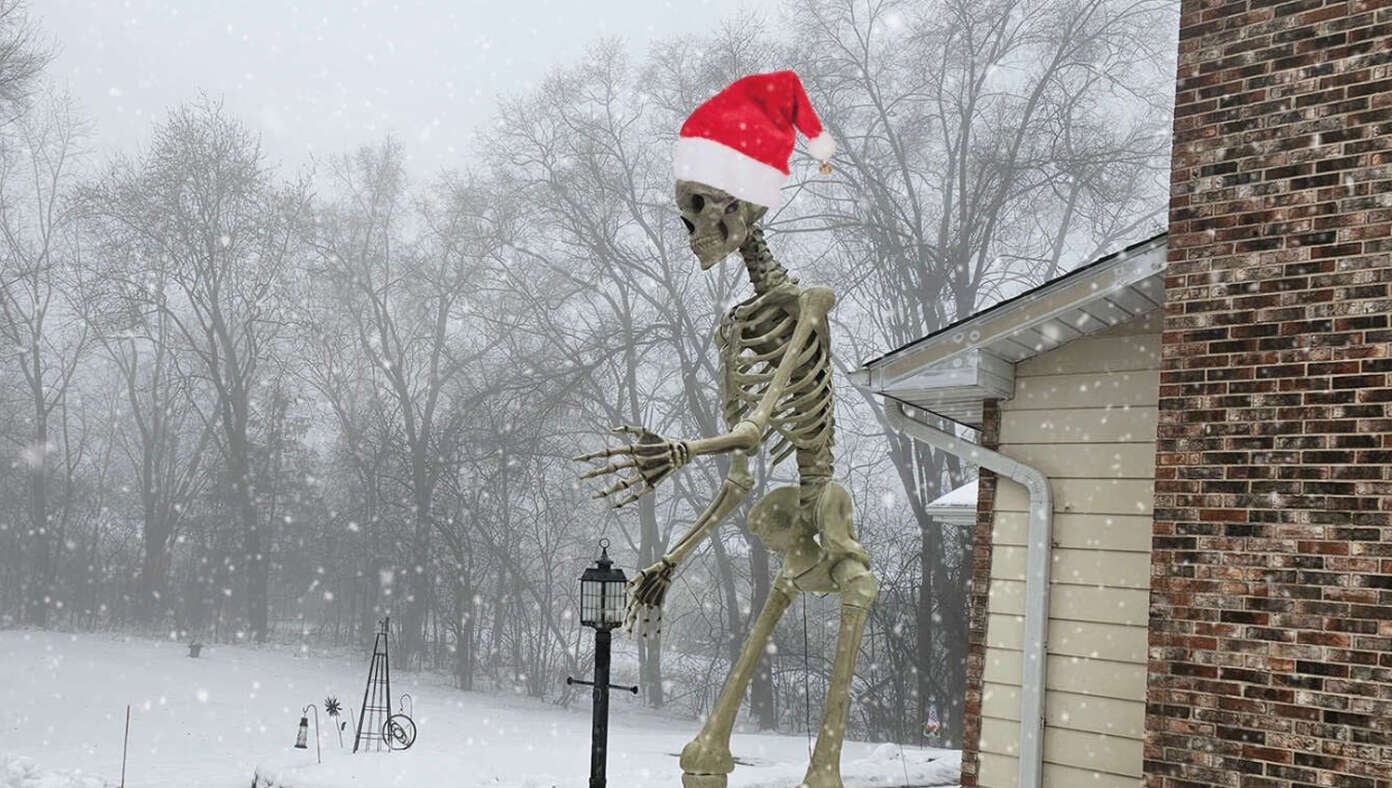
Santa Hat Added To Halloween Decoration #BabylonBee – DAYTON, OH — A giant skeleton Halloween decoration received an updated look this week as its owners climbed a ladder and placed a Santa hat on its head, thus brilliantly transforming it into a Christmas decoration.

DAYTON, OH — A giant skeleton Halloween decoration received an updated look this week as its owners climbed a ladder and placed a Santa hat on its head, thus brilliantly transforming it into a Christmas decoration.

Read More
Catholic leaders back pregnancy centers, doctors in federal suit over abortion referrals #Catholic 
 
 Illinois state capitol in Springfield. / Credit: Paul Brady Photography/Shutterstock

CNA Staff, Dec 17, 2025 / 12:34 pm (CNA).
Catholic leaders in Illinois are backing a coalition of pro-life pregnancy centers and doctors suing the state government over a law that requires them to refer women to abortion providers even if they object to the procedure on religious grounds. The lawsuit, National Institute of Family and Life Advocates v. Treto, challenges a 2016 Illinois rule that requires health care providers who refuse to perform abortions to nevertheless tout the “benefits” of the procedure and refer women to abortion clinics. In April the U.S. District Court for the Northern District of Illinois partly blocked the law, ruling that it violates freedom of speech in forcing providers to relay the alleged benefits of abortion. The court, however, held that the abortion referral requirement is legal. The case is currently at appeal from both sides in the 7th U.S. Circuit Court of Appeals. On Dec. 16, the Catholic Conference of Illinois and the Illinois Catholic Health Association joined several Orthodox advocates in an amicus brief urging the court to offer the “highest level of protection” to the religious speech of the pro-life plaintiffs. “Providing the highest level of First Amendment protection to religious institutions gives them the predictability they need to pursue their religious missions,” the filing said, arguing that forcing health care providers to refer abortions “could lead people to believe that such conduct is morally acceptable.”First Amendment jurisprudence, the filing argues, leaves “no doubt that the abortion-referral requirement burdens core religious speech without proper justification.”Chicago archbishop Cardinal Blase Cupich said in a press statement that “every life deserves protection and care, no matter how fragile or dependent.” “The Church in Illinois is standing up for that eternal truth against Illinois’ effort to deny it,” the prelate said. Springfield Bishop Thomas Paprocki similarly argued that Catholics “must be free to live according to the 2,000-year-old teachings of our faith without government intrusion.” “Illinois’ mandate threatens that freedom by forcing Catholic ministries and health care professionals to promote a practice we believe is gravely wrong,” he said. “We pray the court will put a swift stop to it.”The amicus brief was filed by the religious liberty law group Becket. Lawyers for the pro-life plaintiffs have argued that the abortion referral requirement violates the U.S. Supreme Court’s 2016 ruling in National Institute of Family and Life Advocates v. Becerra, which was brought by the same organization at the head of the Illinois dispute. The Supreme Court held in that decision that a similar California rule appeared to violate the First Amendment by “requiring [pro-life providers] to inform women how they can obtain state-subsidized abortions.”

Catholic leaders back pregnancy centers, doctors in federal suit over abortion referrals #Catholic Illinois state capitol in Springfield. / Credit: Paul Brady Photography/Shutterstock CNA Staff, Dec 17, 2025 / 12:34 pm (CNA). Catholic leaders in Illinois are backing a coalition of pro-life pregnancy centers and doctors suing the state government over a law that requires them to refer women to abortion providers even if they object to the procedure on religious grounds. The lawsuit, National Institute of Family and Life Advocates v. Treto, challenges a 2016 Illinois rule that requires health care providers who refuse to perform abortions to nevertheless tout the “benefits” of the procedure and refer women to abortion clinics. In April the U.S. District Court for the Northern District of Illinois partly blocked the law, ruling that it violates freedom of speech in forcing providers to relay the alleged benefits of abortion. The court, however, held that the abortion referral requirement is legal. The case is currently at appeal from both sides in the 7th U.S. Circuit Court of Appeals. On Dec. 16, the Catholic Conference of Illinois and the Illinois Catholic Health Association joined several Orthodox advocates in an amicus brief urging the court to offer the “highest level of protection” to the religious speech of the pro-life plaintiffs. “Providing the highest level of First Amendment protection to religious institutions gives them the predictability they need to pursue their religious missions,” the filing said, arguing that forcing health care providers to refer abortions “could lead people to believe that such conduct is morally acceptable.”First Amendment jurisprudence, the filing argues, leaves “no doubt that the abortion-referral requirement burdens core religious speech without proper justification.”Chicago archbishop Cardinal Blase Cupich said in a press statement that “every life deserves protection and care, no matter how fragile or dependent.” “The Church in Illinois is standing up for that eternal truth against Illinois’ effort to deny it,” the prelate said. Springfield Bishop Thomas Paprocki similarly argued that Catholics “must be free to live according to the 2,000-year-old teachings of our faith without government intrusion.” “Illinois’ mandate threatens that freedom by forcing Catholic ministries and health care professionals to promote a practice we believe is gravely wrong,” he said. “We pray the court will put a swift stop to it.”The amicus brief was filed by the religious liberty law group Becket. Lawyers for the pro-life plaintiffs have argued that the abortion referral requirement violates the U.S. Supreme Court’s 2016 ruling in National Institute of Family and Life Advocates v. Becerra, which was brought by the same organization at the head of the Illinois dispute. The Supreme Court held in that decision that a similar California rule appeared to violate the First Amendment by “requiring [pro-life providers] to inform women how they can obtain state-subsidized abortions.”


Illinois state capitol in Springfield. / Credit: Paul Brady Photography/Shutterstock

CNA Staff, Dec 17, 2025 / 12:34 pm (CNA).

Catholic leaders in Illinois are backing a coalition of pro-life pregnancy centers and doctors suing the state government over a law that requires them to refer women to abortion providers even if they object to the procedure on religious grounds. 

The lawsuit, National Institute of Family and Life Advocates v. Treto, challenges a 2016 Illinois rule that requires health care providers who refuse to perform abortions to nevertheless tout the “benefits” of the procedure and refer women to abortion clinics. 

In April the U.S. District Court for the Northern District of Illinois partly blocked the law, ruling that it violates freedom of speech in forcing providers to relay the alleged benefits of abortion. The court, however, held that the abortion referral requirement is legal. 

The case is currently at appeal from both sides in the 7th U.S. Circuit Court of Appeals. On Dec. 16, the Catholic Conference of Illinois and the Illinois Catholic Health Association joined several Orthodox advocates in an amicus brief urging the court to offer the “highest level of protection” to the religious speech of the pro-life plaintiffs. 

“Providing the highest level of First Amendment protection to religious institutions gives them the predictability they need to pursue their religious missions,” the filing said, arguing that forcing health care providers to refer abortions “could lead people to believe that such conduct is morally acceptable.”

First Amendment jurisprudence, the filing argues, leaves “no doubt that the abortion-referral requirement burdens core religious speech without proper justification.”

Chicago archbishop Cardinal Blase Cupich said in a press statement that “every life deserves protection and care, no matter how fragile or dependent.” 

“The Church in Illinois is standing up for that eternal truth against Illinois’ effort to deny it,” the prelate said. 

Springfield Bishop Thomas Paprocki similarly argued that Catholics “must be free to live according to the 2,000-year-old teachings of our faith without government intrusion.” 

“Illinois’ mandate threatens that freedom by forcing Catholic ministries and health care professionals to promote a practice we believe is gravely wrong,” he said. “We pray the court will put a swift stop to it.”

The amicus brief was filed by the religious liberty law group Becket. 

Lawyers for the pro-life plaintiffs have argued that the abortion referral requirement violates the U.S. Supreme Court’s 2016 ruling in National Institute of Family and Life Advocates v. Becerra, which was brought by the same organization at the head of the Illinois dispute. 

The Supreme Court held in that decision that a similar California rule appeared to violate the First Amendment by “requiring [pro-life providers] to inform women how they can obtain state-subsidized abortions.”

Read More
Retired priests ring in holidays at Parsippany luncheon #Catholic - The Ministry for Retired Priests of the Paterson Diocese in New Jersey held a Christmas luncheon for retired priests on Dec. 9 at St. Ann Parish in Parsippany, N.J. Bishop Kevin J. Sweeney, several active priests, and a few lay diocesan staff also participated. Joining the retired priests were several diocesan officials, including Father Michael Parisi, vicar general and pastor of St. Catherine of Siena Parish in Mountain Lakes, N.J.; Msgr. John Hart, director of priest personnel and pastor of Assumption Parish in Morristown, N.J.; Father Nico Quintos, minister to retired priests and St. Ann’s pastor; and Father Richard Bay, a retired priest and minister to senior priests.

Click here to subscribe to our weekly newsletter.

BEACON PHOTOS | JOE GIGLI
 [See image gallery at beaconnj.org]  

Retired priests ring in holidays at Parsippany luncheon #Catholic –

The Ministry for Retired Priests of the Paterson Diocese in New Jersey held a Christmas luncheon for retired priests on Dec. 9 at St. Ann Parish in Parsippany, N.J. Bishop Kevin J. Sweeney, several active priests, and a few lay diocesan staff also participated. Joining the retired priests were several diocesan officials, including Father Michael Parisi, vicar general and pastor of St. Catherine of Siena Parish in Mountain Lakes, N.J.; Msgr. John Hart, director of priest personnel and pastor of Assumption Parish in Morristown, N.J.; Father Nico Quintos, minister to retired priests and St. Ann’s pastor; and Father Richard Bay, a retired priest and minister to senior priests.


Click here to subscribe to our weekly newsletter.

BEACON PHOTOS | JOE GIGLI

The Ministry for Retired Priests of the Paterson Diocese in New Jersey held a Christmas luncheon for retired priests on Dec. 9 at St. Ann Parish in Parsippany, N.J. Bishop Kevin J. Sweeney, several active priests, and a few lay diocesan staff also participated. Joining the retired priests were several diocesan officials, including Father Michael Parisi, vicar general and pastor of St. Catherine of Siena Parish in Mountain Lakes, N.J.; Msgr. John Hart, director of priest personnel and pastor of Assumption Parish in Morristown, N.J.; Father Nico Quintos, minister to retired priests and St. Ann’s pastor; and Father Richard Bay,

Read More
Faithful on Jubilee pilgrimage to Italy reunite with bishop #Catholic - Many of the faithful who joined Bishop Kevin J. Sweeney on the diocesan pilgrimage this fall to Assisi and Rome in Italy for the Universal Church’s Jubilee Year of Hope attended a reunion Mass that the bishop celebrated on Dec. 9 at the Church of Christ the King in the New Vernon neighborhood of Harding Township.

Click here to subscribe to our weekly newsletter.

Father Brian Sullivan, Christ the King’s pastor, and Father John Calabro, chaplain and theology teacher at Pope John XXIII Regional High School in Sparta, N.J., concelebrated the Mass with Bishop Sweeney. A reception occurred afterwards.
Bishop Sweeney led the diocesan Jubilee pilgrimage to Italy, which took place from Sept. 26 to Oct. 4.
BEACON PHOTOS | MATTHEW GIGLI
 [See image gallery at beaconnj.org]  

Faithful on Jubilee pilgrimage to Italy reunite with bishop #Catholic –

Many of the faithful who joined Bishop Kevin J. Sweeney on the diocesan pilgrimage this fall to Assisi and Rome in Italy for the Universal Church’s Jubilee Year of Hope attended a reunion Mass that the bishop celebrated on Dec. 9 at the Church of Christ the King in the New Vernon neighborhood of Harding Township.


Click here to subscribe to our weekly newsletter.

Father Brian Sullivan, Christ the King’s pastor, and Father John Calabro, chaplain and theology teacher at Pope John XXIII Regional High School in Sparta, N.J., concelebrated the Mass with Bishop Sweeney. A reception occurred afterwards.

Bishop Sweeney led the diocesan Jubilee pilgrimage to Italy, which took place from Sept. 26 to Oct. 4.

BEACON PHOTOS | MATTHEW GIGLI

Many of the faithful who joined Bishop Kevin J. Sweeney on the diocesan pilgrimage this fall to Assisi and Rome in Italy for the Universal Church’s Jubilee Year of Hope attended a reunion Mass that the bishop celebrated on Dec. 9 at the Church of Christ the King in the New Vernon neighborhood of Harding Township. Click here to subscribe to our weekly newsletter. Father Brian Sullivan, Christ the King’s pastor, and Father John Calabro, chaplain and theology teacher at Pope John XXIII Regional High School in Sparta, N.J., concelebrated the Mass with Bishop Sweeney. A reception occurred afterwards. Bishop

Read More
Clifton parish celebrates Immaculate Conception with Bishop Sweeney #Catholic - On Dec. 8, St. Paul Parish in Clifton, N.J., welcomed Bishop Kevin J. Sweeney, who celebrated a Mass for the Solemnity of the Immaculate Conception of the Blessed Mary. During his visit, the bishop also blessed and inaugurated St. Paul’s charismatic prayer group. Father Leonardo Jaramillo, the parish pastor, concelebrated the Mass with Bishop Sweeney.

Click here to subscribe to our weekly newsletter.

BEACON PHOTOS | JOE GIGLI
 [See image gallery at beaconnj.org]  

Clifton parish celebrates Immaculate Conception with Bishop Sweeney #Catholic –

On Dec. 8, St. Paul Parish in Clifton, N.J., welcomed Bishop Kevin J. Sweeney, who celebrated a Mass for the Solemnity of the Immaculate Conception of the Blessed Mary. During his visit, the bishop also blessed and inaugurated St. Paul’s charismatic prayer group. Father Leonardo Jaramillo, the parish pastor, concelebrated the Mass with Bishop Sweeney.


Click here to subscribe to our weekly newsletter.

BEACON PHOTOS | JOE GIGLI

On Dec. 8, St. Paul Parish in Clifton, N.J., welcomed Bishop Kevin J. Sweeney, who celebrated a Mass for the Solemnity of the Immaculate Conception of the Blessed Mary. During his visit, the bishop also blessed and inaugurated St. Paul’s charismatic prayer group. Father Leonardo Jaramillo, the parish pastor, concelebrated the Mass with Bishop Sweeney. Click here to subscribe to our weekly newsletter. BEACON PHOTOS | JOE GIGLI  

Read More
Centering Prayer in Denville draws people closer to God #Catholic - For Patrice McKenzie, a lector and extraordinary minister of the Eucharist at St. Mary’s Parish in Denville, N.J., it became, in her words, “a force in my life.”
McKenzie, leader of St. Mary’s Centering Prayer Groups, said the practice of Centering Prayer “gives space between me and the chaos. That was what I finally understood about what is so important to me — that I just can receive things more spaciously than I could before.”
McKenzie said, “There was another group that was starting that was ecumenical that was going to do Centering Prayer for Advent. And I was a long-time meditator. I meditated for 40 years before I found Centering Prayer, so I thought, ‘I will give it a try.’”
She did so and was so moved that, when the group was going to stop after Advent, McKenzie became its convener and still attends its meetings.
A few months later, McKenzie told Father Martin Glynn, St. Mary’s pastor, how much it was changing her life. He suggested bringing it to their parish, where it has found a home since September 2021.

Click here to subscribe to our weekly newsletter.

Centering Prayer was founded in the early 1970s by three Trappist monks at St. Joseph’s Abbey in Spencer, Mass., in response to the Second Vatican Council’s request to revive early contemplative teachings and present them in contemporary form. Centering Prayer is based on Jesus’s wisdom continuation in the Sermon on the Mount that says, “When you pray, go to your inner room, close the door and pray to your Father in secret. And your Father, who sees in secret, will repay you.” (Mt 6:6).
The Centering Prayer Groups at St. Mary’s have a three-step process: a check-in, a 10- to 15-minute instruction and reflective reading, and a 20-minute practice of silent Centering Prayer, concluding with the recitation of The Lord’s Prayer and departure.
Father Glynn said of Centering Prayer, “One of the things that really stands out to me, and especially today, is the old expression that says, ‘Silence is golden.’ And silence is really missing in our society today. People are so busy with everything, and there is always noise in the background. And I think that prayer just demands quiet. It takes people a while to get into it, but when they do, I think they really appreciate just being quiet in God’s presence.”
At St. Mary’s, the Centering Prayer Groups meet on Thursday at 11 a.m. in person in the parish Trustee Room and at 7 p.m. in person as well as on Zoom.
Joe Immitt, a St. Mary’s extraordinary minister of the Eucharist, usually joins the Thursday morning group.
“Centering Prayer is different. I think of it as moving towards his Godliness, but at the same time receiving his reach — his hand out to me — as I learn who he really is,” Immitt said. “I have never felt closer to God than when I am in a Centering Prayer group. The feeling just grows, and you just kind of want to continue more and more to get as close [to God] as you possibly can.”
 

Centering Prayer in Denville draws people closer to God #Catholic – For Patrice McKenzie, a lector and extraordinary minister of the Eucharist at St. Mary’s Parish in Denville, N.J., it became, in her words, “a force in my life.” McKenzie, leader of St. Mary’s Centering Prayer Groups, said the practice of Centering Prayer “gives space between me and the chaos. That was what I finally understood about what is so important to me — that I just can receive things more spaciously than I could before.” McKenzie said, “There was another group that was starting that was ecumenical that was going to do Centering Prayer for Advent. And I was a long-time meditator. I meditated for 40 years before I found Centering Prayer, so I thought, ‘I will give it a try.’” She did so and was so moved that, when the group was going to stop after Advent, McKenzie became its convener and still attends its meetings. A few months later, McKenzie told Father Martin Glynn, St. Mary’s pastor, how much it was changing her life. He suggested bringing it to their parish, where it has found a home since September 2021. Click here to subscribe to our weekly newsletter. Centering Prayer was founded in the early 1970s by three Trappist monks at St. Joseph’s Abbey in Spencer, Mass., in response to the Second Vatican Council’s request to revive early contemplative teachings and present them in contemporary form. Centering Prayer is based on Jesus’s wisdom continuation in the Sermon on the Mount that says, “When you pray, go to your inner room, close the door and pray to your Father in secret. And your Father, who sees in secret, will repay you.” (Mt 6:6). The Centering Prayer Groups at St. Mary’s have a three-step process: a check-in, a 10- to 15-minute instruction and reflective reading, and a 20-minute practice of silent Centering Prayer, concluding with the recitation of The Lord’s Prayer and departure. Father Glynn said of Centering Prayer, “One of the things that really stands out to me, and especially today, is the old expression that says, ‘Silence is golden.’ And silence is really missing in our society today. People are so busy with everything, and there is always noise in the background. And I think that prayer just demands quiet. It takes people a while to get into it, but when they do, I think they really appreciate just being quiet in God’s presence.” At St. Mary’s, the Centering Prayer Groups meet on Thursday at 11 a.m. in person in the parish Trustee Room and at 7 p.m. in person as well as on Zoom. Joe Immitt, a St. Mary’s extraordinary minister of the Eucharist, usually joins the Thursday morning group. “Centering Prayer is different. I think of it as moving towards his Godliness, but at the same time receiving his reach — his hand out to me — as I learn who he really is,” Immitt said. “I have never felt closer to God than when I am in a Centering Prayer group. The feeling just grows, and you just kind of want to continue more and more to get as close [to God] as you possibly can.”  

Centering Prayer in Denville draws people closer to God #Catholic –

For Patrice McKenzie, a lector and extraordinary minister of the Eucharist at St. Mary’s Parish in Denville, N.J., it became, in her words, “a force in my life.”
McKenzie, leader of St. Mary’s Centering Prayer Groups, said the practice of Centering Prayer “gives space between me and the chaos. That was what I finally understood about what is so important to me — that I just can receive things more spaciously than I could before.”

McKenzie said, “There was another group that was starting that was ecumenical that was going to do Centering Prayer for Advent. And I was a long-time meditator. I meditated for 40 years before I found Centering Prayer, so I thought, ‘I will give it a try.’”

She did so and was so moved that, when the group was going to stop after Advent, McKenzie became its convener and still attends its meetings.
A few months later, McKenzie told Father Martin Glynn, St. Mary’s pastor, how much it was changing her life. He suggested bringing it to their parish, where it has found a home since September 2021.


Click here to subscribe to our weekly newsletter.

Centering Prayer was founded in the early 1970s by three Trappist monks at St. Joseph’s Abbey in Spencer, Mass., in response to the Second Vatican Council’s request to revive early contemplative teachings and present them in contemporary form. Centering Prayer is based on Jesus’s wisdom continuation in the Sermon on the Mount that says, “When you pray, go to your inner room, close the door and pray to your Father in secret. And your Father, who sees in secret, will repay you.” (Mt 6:6).

The Centering Prayer Groups at St. Mary’s have a three-step process: a check-in, a 10- to 15-minute instruction and reflective reading, and a 20-minute practice of silent Centering Prayer, concluding with the recitation of The Lord’s Prayer and departure.

Father Glynn said of Centering Prayer, “One of the things that really stands out to me, and especially today, is the old expression that says, ‘Silence is golden.’ And silence is really missing in our society today. People are so busy with everything, and there is always noise in the background. And I think that prayer just demands quiet. It takes people a while to get into it, but when they do, I think they really appreciate just being quiet in God’s presence.”

At St. Mary’s, the Centering Prayer Groups meet on Thursday at 11 a.m. in person in the parish Trustee Room and at 7 p.m. in person as well as on Zoom.

Joe Immitt, a St. Mary’s extraordinary minister of the Eucharist, usually joins the Thursday morning group.

“Centering Prayer is different. I think of it as moving towards his Godliness, but at the same time receiving his reach — his hand out to me — as I learn who he really is,” Immitt said. “I have never felt closer to God than when I am in a Centering Prayer group. The feeling just grows, and you just kind of want to continue more and more to get as close [to God] as you possibly can.”


For Patrice McKenzie, a lector and extraordinary minister of the Eucharist at St. Mary’s Parish in Denville, N.J., it became, in her words, “a force in my life.” McKenzie, leader of St. Mary’s Centering Prayer Groups, said the practice of Centering Prayer “gives space between me and the chaos. That was what I finally understood about what is so important to me — that I just can receive things more spaciously than I could before.” McKenzie said, “There was another group that was starting that was ecumenical that was going to do Centering Prayer for Advent. And I was a

Read More
Diocese sends love in packages to Alaska missionary priest #Catholic - In late November, a Christmas care package arrived for Father Kamil Kiszka, a missionary priest serving two years in a remote region of southwest Alaska — just in time to warm his heart for the holidays.
Much to Father Kiszka’s delight, the 45-pound parcel felt like a warm hug from the faithful of his home, the Paterson Diocese in New Jersey. The package traveled roughly 3,300 miles to the brutal winter chill of the Yukon-Kuskokwim Delta, where the priest ministers to small, remote Eskimo villages near the coast.
The Christmas care package for Father Kiszka was assembled and mailed by St. Virgil Parish in Morris Plains, N.J., in the Paterson Diocese, in an effort led by Father Lukasz Wnuk, the parish’s administrator. It included a Christmas card and holiday treats, including ones from his native Poland. The package also contained items on Father Kiszka’s Wish List, such as dried fruits and nuts, rosaries, prayer cards, religious medals, and books to help children prepare for First Holy Communion. Fifty St. Virgil’s confirmation students and their families conducted an early November supply drive.

Click here to subscribe to our weekly newsletter.

In a way, it has been Christmas once a month for Father Kiszka, who has been receiving care packages from diocesan parishes, schools, and agencies — mainly involving youth — for him and his flock since July. Salesian Sister Theresa Lee, diocesan chancellor and delegate for religious, launched the mission drive with John Cammarata, director of Youth Ministry for the diocese and St. Peter the Apostle Parish in Parsippany, N.J.
“I appreciate all the items that benefit me, but more importantly, my people,” Father Kiszka, who started his full-time missionary work in Alaska last year and expected to return to Paterson next July. “I thank Bishop Kevin J. Sweeney, Sister Theresa, John, and the people of the diocese for supporting my ministry — difficult but fulfilling evangelization work in remote areas of Alaska.”
In addition, the Chancery Office, with Bishop Sweeney and other parishes, schools, and religious communities of the diocese, is offering Masses and prayers at Father Kiszka’s request. He asks for God’s providence, Gifts of the Holy Spirit, and good health, as well as “mental, emotional, and spiritual support.” All Saints Academy in Parsippany, N.J., and the Franciscans at St. Mary’s Parish in Pompton Lakes, N.J., are among these participants.
St. Michael Parish in Netcong, N.J., Our Lady of the Lake Parish in Sparta, N.J., and the Department for Persons with Disabilities, a part of diocesan Catholic Charities, have also participated in the mission drive so far.
For St. Virgil’s, helping Father Kiszka is personal. Father Kiszka stayed at the Morris County parish with Father Wnuk, a friend and fellow member of the 2018 ordination class, when he was back in the diocese for three weeks.
“We wanted to help support him practically with food, snacks, and special treats that are hard for him to find, especially at Christmas time,” Father Wnuk said. “It was also important to us to find small ways to help be part of his mission. It was eye-opening for people to learn what reality is like for Catholics living in Alaska. While we can drive easily to at least five Catholic churches in our area, they can go weeks or even months without seeing a priest. So, we included things that allow the faith to stay with them,” Father Wnuk said.
Father Kiszka’s work takes courage because he ministers in a challenging environment, visiting remote villages of 200 to 750 people, often far apart. He travels by snowmobile, boat, and four-wheel vehicle, sometimes in sub-zero temperatures. He often lacks access to running water, showers, restrooms, phone service, the Internet, transportation, or food supplies.
To reach the remote village of Mertarvik, Father Kiszka takes three planes and sleeps on the floor in the local school to celebrate Mass for parishioners the next day. He said he enjoys hearing confessions in Yugtun, the native language of the Yupik Indigenous or Aboriginal people, and singing the “Our Father” in Yugtun during Mass. Father Kiszka plans to celebrate Christmas Eve and Christmas Day in Kotlik and then fly to Mertarvik.
“I love it. I am very excited to be here and to practice my missionary vocation,” Father Kiszka said in a Feb. 12 story about him on BeaconNJ.org. “It is a bit of an intense lifestyle. The people here live very simply and in a primitive way. But it is an incredible experience to see a different dimension of the Catholic Church and to learn different ways of pastoral ministry in the priesthood.”
 [See image gallery at beaconnj.org]

Diocese sends love in packages to Alaska missionary priest #Catholic – In late November, a Christmas care package arrived for Father Kamil Kiszka, a missionary priest serving two years in a remote region of southwest Alaska — just in time to warm his heart for the holidays. Much to Father Kiszka’s delight, the 45-pound parcel felt like a warm hug from the faithful of his home, the Paterson Diocese in New Jersey. The package traveled roughly 3,300 miles to the brutal winter chill of the Yukon-Kuskokwim Delta, where the priest ministers to small, remote Eskimo villages near the coast. The Christmas care package for Father Kiszka was assembled and mailed by St. Virgil Parish in Morris Plains, N.J., in the Paterson Diocese, in an effort led by Father Lukasz Wnuk, the parish’s administrator. It included a Christmas card and holiday treats, including ones from his native Poland. The package also contained items on Father Kiszka’s Wish List, such as dried fruits and nuts, rosaries, prayer cards, religious medals, and books to help children prepare for First Holy Communion. Fifty St. Virgil’s confirmation students and their families conducted an early November supply drive. Click here to subscribe to our weekly newsletter. In a way, it has been Christmas once a month for Father Kiszka, who has been receiving care packages from diocesan parishes, schools, and agencies — mainly involving youth — for him and his flock since July. Salesian Sister Theresa Lee, diocesan chancellor and delegate for religious, launched the mission drive with John Cammarata, director of Youth Ministry for the diocese and St. Peter the Apostle Parish in Parsippany, N.J. “I appreciate all the items that benefit me, but more importantly, my people,” Father Kiszka, who started his full-time missionary work in Alaska last year and expected to return to Paterson next July. “I thank Bishop Kevin J. Sweeney, Sister Theresa, John, and the people of the diocese for supporting my ministry — difficult but fulfilling evangelization work in remote areas of Alaska.” In addition, the Chancery Office, with Bishop Sweeney and other parishes, schools, and religious communities of the diocese, is offering Masses and prayers at Father Kiszka’s request. He asks for God’s providence, Gifts of the Holy Spirit, and good health, as well as “mental, emotional, and spiritual support.” All Saints Academy in Parsippany, N.J., and the Franciscans at St. Mary’s Parish in Pompton Lakes, N.J., are among these participants. St. Michael Parish in Netcong, N.J., Our Lady of the Lake Parish in Sparta, N.J., and the Department for Persons with Disabilities, a part of diocesan Catholic Charities, have also participated in the mission drive so far. For St. Virgil’s, helping Father Kiszka is personal. Father Kiszka stayed at the Morris County parish with Father Wnuk, a friend and fellow member of the 2018 ordination class, when he was back in the diocese for three weeks. “We wanted to help support him practically with food, snacks, and special treats that are hard for him to find, especially at Christmas time,” Father Wnuk said. “It was also important to us to find small ways to help be part of his mission. It was eye-opening for people to learn what reality is like for Catholics living in Alaska. While we can drive easily to at least five Catholic churches in our area, they can go weeks or even months without seeing a priest. So, we included things that allow the faith to stay with them,” Father Wnuk said. Father Kiszka’s work takes courage because he ministers in a challenging environment, visiting remote villages of 200 to 750 people, often far apart. He travels by snowmobile, boat, and four-wheel vehicle, sometimes in sub-zero temperatures. He often lacks access to running water, showers, restrooms, phone service, the Internet, transportation, or food supplies. To reach the remote village of Mertarvik, Father Kiszka takes three planes and sleeps on the floor in the local school to celebrate Mass for parishioners the next day. He said he enjoys hearing confessions in Yugtun, the native language of the Yupik Indigenous or Aboriginal people, and singing the “Our Father” in Yugtun during Mass. Father Kiszka plans to celebrate Christmas Eve and Christmas Day in Kotlik and then fly to Mertarvik. “I love it. I am very excited to be here and to practice my missionary vocation,” Father Kiszka said in a Feb. 12 story about him on BeaconNJ.org. “It is a bit of an intense lifestyle. The people here live very simply and in a primitive way. But it is an incredible experience to see a different dimension of the Catholic Church and to learn different ways of pastoral ministry in the priesthood.” [See image gallery at beaconnj.org]

Diocese sends love in packages to Alaska missionary priest #Catholic –

In late November, a Christmas care package arrived for Father Kamil Kiszka, a missionary priest serving two years in a remote region of southwest Alaska — just in time to warm his heart for the holidays.

Much to Father Kiszka’s delight, the 45-pound parcel felt like a warm hug from the faithful of his home, the Paterson Diocese in New Jersey. The package traveled roughly 3,300 miles to the brutal winter chill of the Yukon-Kuskokwim Delta, where the priest ministers to small, remote Eskimo villages near the coast.

The Christmas care package for Father Kiszka was assembled and mailed by St. Virgil Parish in Morris Plains, N.J., in the Paterson Diocese, in an effort led by Father Lukasz Wnuk, the parish’s administrator. It included a Christmas card and holiday treats, including ones from his native Poland. The package also contained items on Father Kiszka’s Wish List, such as dried fruits and nuts, rosaries, prayer cards, religious medals, and books to help children prepare for First Holy Communion. Fifty St. Virgil’s confirmation students and their families conducted an early November supply drive.


Click here to subscribe to our weekly newsletter.

In a way, it has been Christmas once a month for Father Kiszka, who has been receiving care packages from diocesan parishes, schools, and agencies — mainly involving youth — for him and his flock since July. Salesian Sister Theresa Lee, diocesan chancellor and delegate for religious, launched the mission drive with John Cammarata, director of Youth Ministry for the diocese and St. Peter the Apostle Parish in Parsippany, N.J.

“I appreciate all the items that benefit me, but more importantly, my people,” Father Kiszka, who started his full-time missionary work in Alaska last year and expected to return to Paterson next July. “I thank Bishop Kevin J. Sweeney, Sister Theresa, John, and the people of the diocese for supporting my ministry — difficult but fulfilling evangelization work in remote areas of Alaska.”

In addition, the Chancery Office, with Bishop Sweeney and other parishes, schools, and religious communities of the diocese, is offering Masses and prayers at Father Kiszka’s request. He asks for God’s providence, Gifts of the Holy Spirit, and good health, as well as “mental, emotional, and spiritual support.” All Saints Academy in Parsippany, N.J., and the Franciscans at St. Mary’s Parish in Pompton Lakes, N.J., are among these participants.

St. Michael Parish in Netcong, N.J., Our Lady of the Lake Parish in Sparta, N.J., and the Department for Persons with Disabilities, a part of diocesan Catholic Charities, have also participated in the mission drive so far.

For St. Virgil’s, helping Father Kiszka is personal. Father Kiszka stayed at the Morris County parish with Father Wnuk, a friend and fellow member of the 2018 ordination class, when he was back in the diocese for three weeks.

“We wanted to help support him practically with food, snacks, and special treats that are hard for him to find, especially at Christmas time,” Father Wnuk said. “It was also important to us to find small ways to help be part of his mission. It was eye-opening for people to learn what reality is like for Catholics living in Alaska. While we can drive easily to at least five Catholic churches in our area, they can go weeks or even months without seeing a priest. So, we included things that allow the faith to stay with them,” Father Wnuk said.

Father Kiszka’s work takes courage because he ministers in a challenging environment, visiting remote villages of 200 to 750 people, often far apart. He travels by snowmobile, boat, and four-wheel vehicle, sometimes in sub-zero temperatures. He often lacks access to running water, showers, restrooms, phone service, the Internet, transportation, or food supplies.

To reach the remote village of Mertarvik, Father Kiszka takes three planes and sleeps on the floor in the local school to celebrate Mass for parishioners the next day. He said he enjoys hearing confessions in Yugtun, the native language of the Yupik Indigenous or Aboriginal people, and singing the “Our Father” in Yugtun during Mass. Father Kiszka plans to celebrate Christmas Eve and Christmas Day in Kotlik and then fly to Mertarvik.

“I love it. I am very excited to be here and to practice my missionary vocation,” Father Kiszka said in a Feb. 12 story about him on BeaconNJ.org. “It is a bit of an intense lifestyle. The people here live very simply and in a primitive way. But it is an incredible experience to see a different dimension of the Catholic Church and to learn different ways of pastoral ministry in the priesthood.”

[See image gallery at beaconnj.org] – In late November, a Christmas care package arrived for Father Kamil Kiszka, a missionary priest serving two years in a remote region of southwest Alaska — just in time to warm his heart for the holidays. Much to Father Kiszka’s delight, the 45-pound parcel felt like a warm hug from the faithful of his home, the Paterson Diocese in New Jersey. The package traveled roughly 3,300 miles to the brutal winter chill of the Yukon-Kuskokwim Delta, where the priest ministers to small, remote Eskimo villages near the coast. The Christmas care package for Father Kiszka was assembled and mailed by

Read More
Pope Leo XIV appoints Bishop Ramón Bejarano to lead Monterey Diocese #Catholic 
 
 San Diego Auxiliary Bishop Ramón Bejarano celebrates Mass at St. Augustine’s School on Dec. 5, 2021, to honor Our Lady of Guadalupe. / Credit: John Gastaldo/Catholic Diocese of San Diego

Vatican City, Dec 17, 2025 / 10:18 am (CNA).
Pope Leo XIV has appointed Bishop Ramón Bejarano, currently auxiliary bishop of San Diego, as the next bishop of Monterey in California. The appointment was publicized on Dec. 17 by the Holy See Press Office at the Vatican and by Cardinal Christophe Pierre, apostolic nuncio to the United States.Bejarano succeeds Bishop Daniel E. Garcia, who led Monterey before being appointed bishop of Austin, Texas, on July 2 and installed there on Sept. 18.Bejarano was born July 17, 1969, in Laredo, Texas, and completed ecclesiastical studies at the diocesan seminary in Tijuana, Mexico, and at Mount Angel Seminary in Oregon, the Vatican said. He was ordained a priest for the Diocese of Stockton on Aug. 15, 1998.Named titular bishop of Carpi and auxiliary bishop of San Diego on Feb. 27, 2020, he received episcopal consecration on July 14, 2020.The Diocese of Monterey is comprised of 21,916 square miles in California and has a total population of 1,042,464, of which 368,150 are Catholic, according to the U.S. Conference of Catholic Bishops.

San Diego Auxiliary Bishop Ramón Bejarano celebrates Mass at St. Augustine’s School on Dec. 5, 2021, to honor Our Lady of Guadalupe. / Credit: John Gastaldo/Catholic Diocese of San Diego

Vatican City, Dec 17, 2025 / 10:18 am (CNA).

Pope Leo XIV has appointed Bishop Ramón Bejarano, currently auxiliary bishop of San Diego, as the next bishop of Monterey in California. The appointment was publicized on Dec. 17 by the Holy See Press Office at the Vatican and by Cardinal Christophe Pierre, apostolic nuncio to the United States.

Bejarano succeeds Bishop Daniel E. Garcia, who led Monterey before being appointed bishop of Austin, Texas, on July 2 and installed there on Sept. 18.

Bejarano was born July 17, 1969, in Laredo, Texas, and completed ecclesiastical studies at the diocesan seminary in Tijuana, Mexico, and at Mount Angel Seminary in Oregon, the Vatican said. He was ordained a priest for the Diocese of Stockton on Aug. 15, 1998.

Named titular bishop of Carpi and auxiliary bishop of San Diego on Feb. 27, 2020, he received episcopal consecration on July 14, 2020.

The Diocese of Monterey is comprised of 21,916 square miles in California and has a total population of 1,042,464, of which 368,150 are Catholic, according to the U.S. Conference of Catholic Bishops.

Read More
At abortion facilities across the nation, carolers bring tidings of life #Catholic 
 
 Carolers outside Planned Parenthood in Aurora, Illinois, on Dec. 13, 2025. / Credit: John Jansen/Courtesy of the Pro-Life Action League

CNA Staff, Dec 17, 2025 / 08:00 am (CNA).
When a pregnant woman at an abortion facility heard distant carolers singing “Silent Night,” she got up and left.The mother, back in 2003, decided to keep her baby after a pro-life group’s first Christmas caroling event outside a Chicago abortion clinic struck her heart.“The memories of Christmases past stirred in her and she decided she couldn’t go through with the abortion and kept her child,” said Matthew Yonke, a spokesman for the Pro-Life Action League, the group that coordinates these events. She would be the first of many women who chose life after hearing carols. Now, the tradition extends across the nation — and babies continue to be saved. As Christmas Day approaches, nearly 100 caroling groups across the U.S. are gathering at various abortion facilities to sing. Through the nationwide “Peace in the Womb” caroling effort, the group hopes “to bring the Christmas message of peace and joy to the darkness of abortion clinics,” according to a press release shared with CNA. It’s a “simple call for an end to the violence of abortion,” according to Yonke.“At the time of Christmas, the whole world tries to put aside differences and pursue peace, so we’re asking folks to make a connection to the womb, which should be a place of peace, but which is turned into a place of violent unrest in every abortion,” Yonke continued.A caroler holds artwork of Mary, who is pregnant with Jesus, at a caroling event outside a Cedar Rivers abortion facility in Renton, Washington, on Dec. 14, 2025. Credit: Photo courtesy of Richard BraySaving lives The carolers had already packed up after singing their final song outside an abortion site when a couple approached the remaining pro-lifers in Downers Grove, Illinois, on Dec. 13. The couple, Yonke said, “told the sidewalk counselors still there that they had decided to keep their baby after hearing our carols.” “Stories like this go all the way back to the first year,” Yonke said. “We’re thrilled when God can use these beloved songs that touch the hearts of even non-Christians to do his work in the world.”This was one of two rescue stories so far this December that the league heard about, according to Yonke. “Please don’t kill your baby at Christmas,” one caroler called out to a young woman in the back seat of a car that was driving into an abortion clinic.Carolers outside of Planned Parenthood in Madison, Wisconsin, on Dec. 13, 2025. Credit: Cecile Gregory/Courtesy of the Pro-Life Action LeagueIt was a Saturday in Milwaukee, and a group of carolers had gathered to sing outside the abortion clinic on St. Paul Avenue. The car drove into the abortion center parking lot. But minutes later, the car turned around with the young woman still in the back seat — she never even entered the abortion clinic.  Salvation came through an unplanned pregnancyPro-Life Action League invites local pro-lifers to work with them to organize their own caroling groups. On Sunday, Dec. 14, one such caroling group sang outside an abortion facility in Renton, Washington. “This was a fantastic event and I think every Catholic church should do this in their community,” said local pro-life activist Richard Bray, who organized the caroling with the Respect Life Ministry at a local Catholic parish, St. Stephen the Martyr.While every event organized with the league has a “Peace in the Womb” banner, Renton’s organizer would have something special — a handmade manger.  An 88-year-old parishioner at St. Stephen’s built an empty manger that the carolers brought to the event, according to Bray. Manger made by an 88-year-old parishioner of St. Stephen’s in Renton, Washington. Carolers brought the empty manger to the caroling event on Dec. 14, 2025, as a sign of what an abortion does and the empty space it leaves. Credit: Photo courtesy of Richard BrayThe empty manger not only symbolizes that Christ is coming at Christmas — but it also represents how a crib is empty after an abortion, according to Bray.“It’s particularly sad to think of someone getting an abortion during the Christmas season,” Bray told CNA. “So we gather to sing carols and remind abortion-bound mothers and our community that the salvation of the world came through an unplanned pregnancy.”

At abortion facilities across the nation, carolers bring tidings of life #Catholic Carolers outside Planned Parenthood in Aurora, Illinois, on Dec. 13, 2025. / Credit: John Jansen/Courtesy of the Pro-Life Action League CNA Staff, Dec 17, 2025 / 08:00 am (CNA). When a pregnant woman at an abortion facility heard distant carolers singing “Silent Night,” she got up and left.The mother, back in 2003, decided to keep her baby after a pro-life group’s first Christmas caroling event outside a Chicago abortion clinic struck her heart.“The memories of Christmases past stirred in her and she decided she couldn’t go through with the abortion and kept her child,” said Matthew Yonke, a spokesman for the Pro-Life Action League, the group that coordinates these events. She would be the first of many women who chose life after hearing carols. Now, the tradition extends across the nation — and babies continue to be saved. As Christmas Day approaches, nearly 100 caroling groups across the U.S. are gathering at various abortion facilities to sing. Through the nationwide “Peace in the Womb” caroling effort, the group hopes “to bring the Christmas message of peace and joy to the darkness of abortion clinics,” according to a press release shared with CNA. It’s a “simple call for an end to the violence of abortion,” according to Yonke.“At the time of Christmas, the whole world tries to put aside differences and pursue peace, so we’re asking folks to make a connection to the womb, which should be a place of peace, but which is turned into a place of violent unrest in every abortion,” Yonke continued.A caroler holds artwork of Mary, who is pregnant with Jesus, at a caroling event outside a Cedar Rivers abortion facility in Renton, Washington, on Dec. 14, 2025. Credit: Photo courtesy of Richard BraySaving lives The carolers had already packed up after singing their final song outside an abortion site when a couple approached the remaining pro-lifers in Downers Grove, Illinois, on Dec. 13. The couple, Yonke said, “told the sidewalk counselors still there that they had decided to keep their baby after hearing our carols.” “Stories like this go all the way back to the first year,” Yonke said. “We’re thrilled when God can use these beloved songs that touch the hearts of even non-Christians to do his work in the world.”This was one of two rescue stories so far this December that the league heard about, according to Yonke. “Please don’t kill your baby at Christmas,” one caroler called out to a young woman in the back seat of a car that was driving into an abortion clinic.Carolers outside of Planned Parenthood in Madison, Wisconsin, on Dec. 13, 2025. Credit: Cecile Gregory/Courtesy of the Pro-Life Action LeagueIt was a Saturday in Milwaukee, and a group of carolers had gathered to sing outside the abortion clinic on St. Paul Avenue. The car drove into the abortion center parking lot. But minutes later, the car turned around with the young woman still in the back seat — she never even entered the abortion clinic.  Salvation came through an unplanned pregnancyPro-Life Action League invites local pro-lifers to work with them to organize their own caroling groups. On Sunday, Dec. 14, one such caroling group sang outside an abortion facility in Renton, Washington. “This was a fantastic event and I think every Catholic church should do this in their community,” said local pro-life activist Richard Bray, who organized the caroling with the Respect Life Ministry at a local Catholic parish, St. Stephen the Martyr.While every event organized with the league has a “Peace in the Womb” banner, Renton’s organizer would have something special — a handmade manger.  An 88-year-old parishioner at St. Stephen’s built an empty manger that the carolers brought to the event, according to Bray. Manger made by an 88-year-old parishioner of St. Stephen’s in Renton, Washington. Carolers brought the empty manger to the caroling event on Dec. 14, 2025, as a sign of what an abortion does and the empty space it leaves. Credit: Photo courtesy of Richard BrayThe empty manger not only symbolizes that Christ is coming at Christmas — but it also represents how a crib is empty after an abortion, according to Bray.“It’s particularly sad to think of someone getting an abortion during the Christmas season,” Bray told CNA. “So we gather to sing carols and remind abortion-bound mothers and our community that the salvation of the world came through an unplanned pregnancy.”


Carolers outside Planned Parenthood in Aurora, Illinois, on Dec. 13, 2025. / Credit: John Jansen/Courtesy of the Pro-Life Action League

CNA Staff, Dec 17, 2025 / 08:00 am (CNA).

When a pregnant woman at an abortion facility heard distant carolers singing “Silent Night,” she got up and left.

The mother, back in 2003, decided to keep her baby after a pro-life group’s first Christmas caroling event outside a Chicago abortion clinic struck her heart.

“The memories of Christmases past stirred in her and she decided she couldn’t go through with the abortion and kept her child,” said Matthew Yonke, a spokesman for the Pro-Life Action League, the group that coordinates these events. 

She would be the first of many women who chose life after hearing carols. Now, the tradition extends across the nation — and babies continue to be saved. 

As Christmas Day approaches, nearly 100 caroling groups across the U.S. are gathering at various abortion facilities to sing. 

Through the nationwide “Peace in the Womb” caroling effort, the group hopes “to bring the Christmas message of peace and joy to the darkness of abortion clinics,” according to a press release shared with CNA. 

It’s a “simple call for an end to the violence of abortion,” according to Yonke.

“At the time of Christmas, the whole world tries to put aside differences and pursue peace, so we’re asking folks to make a connection to the womb, which should be a place of peace, but which is turned into a place of violent unrest in every abortion,” Yonke continued.

A caroler holds artwork of Mary, who is pregnant with Jesus, at a caroling event outside a Cedar Rivers abortion facility in Renton, Washington, on Dec. 14, 2025. Credit: Photo courtesy of Richard Bray

Saving lives 

The carolers had already packed up after singing their final song outside an abortion site when a couple approached the remaining pro-lifers in Downers Grove, Illinois, on Dec. 13. 

The couple, Yonke said, “told the sidewalk counselors still there that they had decided to keep their baby after hearing our carols.” 

“Stories like this go all the way back to the first year,” Yonke said. “We’re thrilled when God can use these beloved songs that touch the hearts of even non-Christians to do his work in the world.”

This was one of two rescue stories so far this December that the league heard about, according to Yonke. 

“Please don’t kill your baby at Christmas,” one caroler called out to a young woman in the back seat of a car that was driving into an abortion clinic.

Carolers outside of Planned Parenthood in Madison, Wisconsin, on Dec. 13, 2025. Credit: Cecile Gregory/Courtesy of the Pro-Life Action League

It was a Saturday in Milwaukee, and a group of carolers had gathered to sing outside the abortion clinic on St. Paul Avenue. 

The car drove into the abortion center parking lot. But minutes later, the car turned around with the young woman still in the back seat — she never even entered the abortion clinic.  

Salvation came through an unplanned pregnancy

Pro-Life Action League invites local pro-lifers to work with them to organize their own caroling groups. 

On Sunday, Dec. 14, one such caroling group sang outside an abortion facility in Renton, Washington. 

“This was a fantastic event and I think every Catholic church should do this in their community,” said local pro-life activist Richard Bray, who organized the caroling with the Respect Life Ministry at a local Catholic parish, St. Stephen the Martyr.

While every event organized with the league has a “Peace in the Womb” banner, Renton’s organizer would have something special — a handmade manger.  

An 88-year-old parishioner at St. Stephen’s built an empty manger that the carolers brought to the event, according to Bray. 

Manger made by an 88-year-old parishioner of St. Stephen’s in Renton, Washington. Carolers brought the empty manger to the caroling event on Dec. 14, 2025, as a sign of what an abortion does and the empty space it leaves. Credit: Photo courtesy of Richard Bray

The empty manger not only symbolizes that Christ is coming at Christmas — but it also represents how a crib is empty after an abortion, according to Bray.

“It’s particularly sad to think of someone getting an abortion during the Christmas season,” Bray told CNA. “So we gather to sing carols and remind abortion-bound mothers and our community that the salvation of the world came through an unplanned pregnancy.”

Read More