20s

University of Dallas panel explores American exceptionalism through a Catholic lens #Catholic In a standing-room-only event, college students lined the walls of a large room at the University of Dallas to hear three Catholic academics and an apologist  reflect on what makes America exceptional in a celebration marking the 250th anniversary of the founding of the United States.Liam Ritter, a junior and the founder of the university’s Young Americans for Freedom chapter, which hosted the discussion, told EWTN News that the March 4 panel of speakers served as the capstone of three days of celebrations at the university.The panel was comprised of University President Jonathan Sanford; Trent Horn, staff apologist with Catholic Answers; Burt Folsom, distinguished fellow at Hillsdale College and economic historian; and Susan Hanssen, associate professor of history at the University of Dallas.‘We have a population of people who know what is at stake’In response to Ritter’s question, “Why [is it] that our political regime has been so stable for so long,” Hanssen recalled America’s first immigrants. “I think the first thing that makes America exceptional, and its political regime exceptional, is the fact that America was first populated by people who fled the rise of the modern nation state and totalitarianism … and so we have a population of people who know what is at stake in political liberty," she said.“Theyʼve seen what happened to their ancestors,” she continued. “They remember the stories. And America has been blessed in its political constitution with the regime of liberty, which has made possible the flourishing of subsidiary communities and societies.”Hanssen said we should not take for granted today that we still “have a free people." “We need to listen to our latest immigrants … those who have fled Venezuela, those who have fled Iran, like my uncle, a Persian Jew, who refuses to call himself Iranian because he associates modern Iran with the regime of the Ayatollah.”‘Get married, have children, raise them well’Sanford said that though we are a nation of immigrants, “there won’t be enough to pull in to make up for” the continuing demographic decline.“Get married, have children, raise them well,” he said to chuckles from a receptive audience, which was mostly composed of college students.He encouraged the students not to focus on “one big step,” but rather, to take smaller steps: “Get up early. Pray. Exercise. Go through the day in an ordered fashion, give Caesar what is Caesarʼs, and God what is God’s.”“Do the little things thousands and thousands of times,” he said.“In order to exercise liberty properly,” he continued, one has to ask, "How should I live my life?” and then rely on the institutions that “help you do that.”He called the family the “foundational institution” of America. “Recover the family,” he said.In addition, “we need to see those institutions that mediate the virtues — schools, universities — that embrace fully the idea of what [the virtues] are.”Horn also encouraged students to focus on family relationships, telling them “get off the phones and the internet. They’re killing all of us. They’re rewiring our brains.”
 
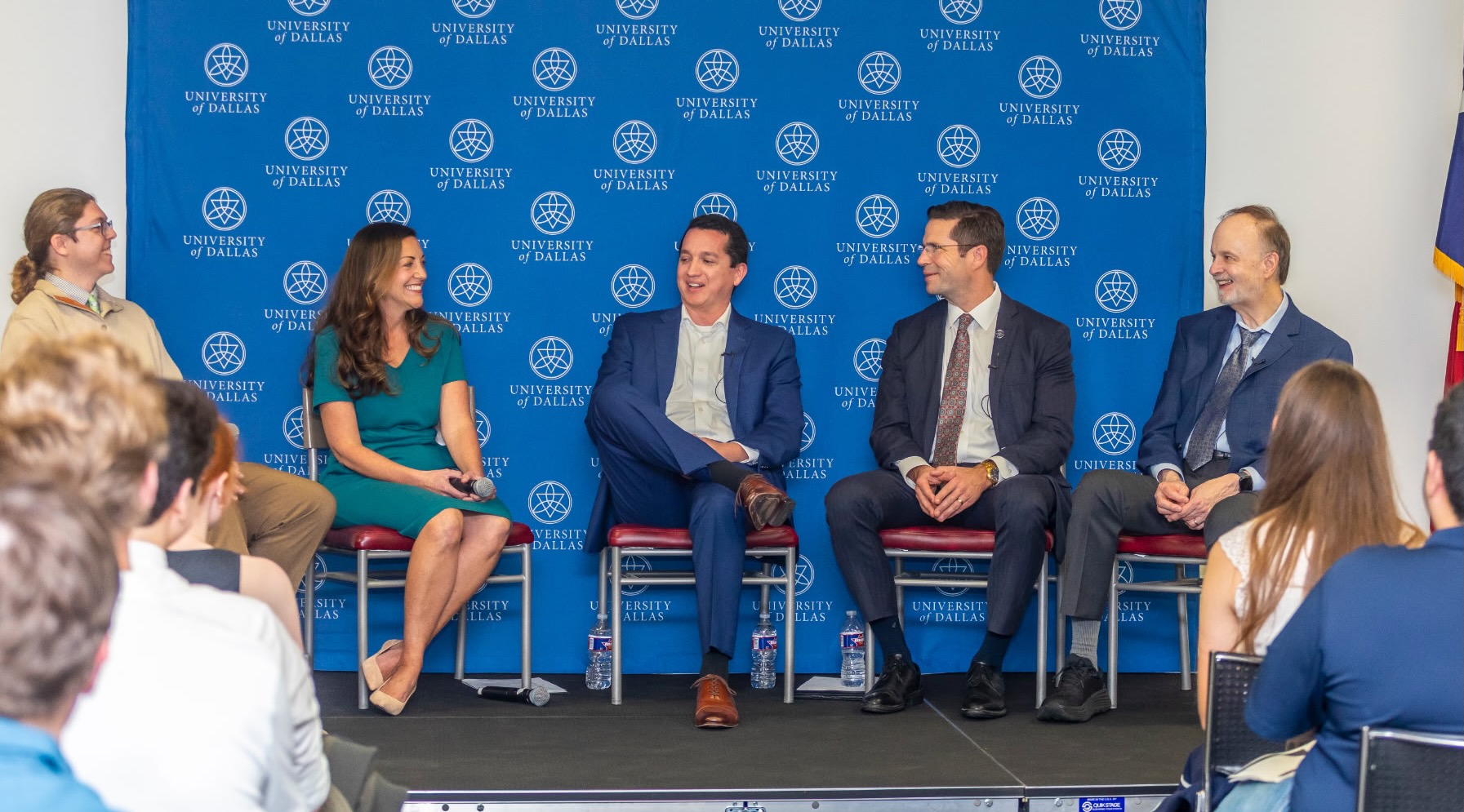
 Trent Horn (left), an apologist at Catholic Answers, and University of Dallas President Jonathan Sanford participate in a panel on American exceptionalism at the University of Dallas on March 4, 2026. | Credit: Courtesy of University of Dallas Young Americans for Freedom Chapter
 
 Of people currently in their 20s in America, "one in three will never have children,” he lamented, implying too much technology use is partly to blame.The Catholic Answers apologist pointed out, however, that though the Second Industrial Revolution “broke the family” by encouraging workers to move away from their homes and families to pursue careers, the internet “post-Covid,” in the age of “Zoom and telecommuting … might be good” because many people no longer have to choose between a job and staying near their extended families.“Maybe tech can help build up family networks,” he said.‘The greatest outpouring of economic development’ in historyRitter told EWTN news that he chose speakers who could address “the wonderful things the U.S. has contributed” to the world because “a lot of young people don’t have appropriate gratitude for the country.”Ritter asked Folsom, a historian who focuses on economics and industrial affairs, about what the professor believes the U.S. has contributed to world economics and world innovations.Folsom said that the generation after the Civil War, from 1865 to 1905, was responsible for “the greatest outpouring of economic development … in world history” and “gave us the rise of an America that became a world power” by World War I.He listed inventions that facilitated the rapid development of industry and infrastructure in the country during the Second Industrial Revolution, including the typewriter, the telephone, adding machines, the light bulb, electricity, factory-produced cars, and recording devices for music and movies, among other innovations.Through the Declaration of Independence and the U.S. Constitution, “the founders gave us the freedom” to develop these technologies, he said. “We had amazing infrastructure that allowed people to produce, and not have government get in their way.”The professor said the post-Civil War period could be eclipsed in the present day “because with artificial intelligence, this generation may yet be able to come up with more.”‘A responsibility for this political regime of freedom’At the conclusion of the panel discussion, Hanssen called the feeling in the room “electric, it’s teeming with patriotism. This isn’t a normal college campus.”Referring to Sanford’s earlier admonition to ”get married and have kids,” she said: “I agree, be fruitful and multiply … Preach the Gospel, and baptize in the name of Jesus, but also, go into politics!” she exclaimed.She encouraged the students to develop “the ability to love something so much that you would die for it: God, family, country.”“Recognize what is at stake. We have a responsibility for this political regime of freedom, to the immigrants who come here … to our children… to preserve the rule of law.”She concluded to loud applause: “So family; yes! Faith; yes, but to the barricades, ladies and gentlemen!"

University of Dallas panel explores American exceptionalism through a Catholic lens #Catholic In a standing-room-only event, college students lined the walls of a large room at the University of Dallas to hear three Catholic academics and an apologist  reflect on what makes America exceptional in a celebration marking the 250th anniversary of the founding of the United States.Liam Ritter, a junior and the founder of the university’s Young Americans for Freedom chapter, which hosted the discussion, told EWTN News that the March 4 panel of speakers served as the capstone of three days of celebrations at the university.The panel was comprised of University President Jonathan Sanford; Trent Horn, staff apologist with Catholic Answers; Burt Folsom, distinguished fellow at Hillsdale College and economic historian; and Susan Hanssen, associate professor of history at the University of Dallas.‘We have a population of people who know what is at stake’In response to Ritter’s question, “Why [is it] that our political regime has been so stable for so long,” Hanssen recalled America’s first immigrants. “I think the first thing that makes America exceptional, and its political regime exceptional, is the fact that America was first populated by people who fled the rise of the modern nation state and totalitarianism … and so we have a population of people who know what is at stake in political liberty," she said.“Theyʼve seen what happened to their ancestors,” she continued. “They remember the stories. And America has been blessed in its political constitution with the regime of liberty, which has made possible the flourishing of subsidiary communities and societies.”Hanssen said we should not take for granted today that we still “have a free people." “We need to listen to our latest immigrants … those who have fled Venezuela, those who have fled Iran, like my uncle, a Persian Jew, who refuses to call himself Iranian because he associates modern Iran with the regime of the Ayatollah.”‘Get married, have children, raise them well’Sanford said that though we are a nation of immigrants, “there won’t be enough to pull in to make up for” the continuing demographic decline.“Get married, have children, raise them well,” he said to chuckles from a receptive audience, which was mostly composed of college students.He encouraged the students not to focus on “one big step,” but rather, to take smaller steps: “Get up early. Pray. Exercise. Go through the day in an ordered fashion, give Caesar what is Caesarʼs, and God what is God’s.”“Do the little things thousands and thousands of times,” he said.“In order to exercise liberty properly,” he continued, one has to ask, "How should I live my life?” and then rely on the institutions that “help you do that.”He called the family the “foundational institution” of America. “Recover the family,” he said.In addition, “we need to see those institutions that mediate the virtues — schools, universities — that embrace fully the idea of what [the virtues] are.”Horn also encouraged students to focus on family relationships, telling them “get off the phones and the internet. They’re killing all of us. They’re rewiring our brains.” Trent Horn (left), an apologist at Catholic Answers, and University of Dallas President Jonathan Sanford participate in a panel on American exceptionalism at the University of Dallas on March 4, 2026. | Credit: Courtesy of University of Dallas Young Americans for Freedom Chapter Of people currently in their 20s in America, "one in three will never have children,” he lamented, implying too much technology use is partly to blame.The Catholic Answers apologist pointed out, however, that though the Second Industrial Revolution “broke the family” by encouraging workers to move away from their homes and families to pursue careers, the internet “post-Covid,” in the age of “Zoom and telecommuting … might be good” because many people no longer have to choose between a job and staying near their extended families.“Maybe tech can help build up family networks,” he said.‘The greatest outpouring of economic development’ in historyRitter told EWTN news that he chose speakers who could address “the wonderful things the U.S. has contributed” to the world because “a lot of young people don’t have appropriate gratitude for the country.”Ritter asked Folsom, a historian who focuses on economics and industrial affairs, about what the professor believes the U.S. has contributed to world economics and world innovations.Folsom said that the generation after the Civil War, from 1865 to 1905, was responsible for “the greatest outpouring of economic development … in world history” and “gave us the rise of an America that became a world power” by World War I.He listed inventions that facilitated the rapid development of industry and infrastructure in the country during the Second Industrial Revolution, including the typewriter, the telephone, adding machines, the light bulb, electricity, factory-produced cars, and recording devices for music and movies, among other innovations.Through the Declaration of Independence and the U.S. Constitution, “the founders gave us the freedom” to develop these technologies, he said. “We had amazing infrastructure that allowed people to produce, and not have government get in their way.”The professor said the post-Civil War period could be eclipsed in the present day “because with artificial intelligence, this generation may yet be able to come up with more.”‘A responsibility for this political regime of freedom’At the conclusion of the panel discussion, Hanssen called the feeling in the room “electric, it’s teeming with patriotism. This isn’t a normal college campus.”Referring to Sanford’s earlier admonition to ”get married and have kids,” she said: “I agree, be fruitful and multiply … Preach the Gospel, and baptize in the name of Jesus, but also, go into politics!” she exclaimed.She encouraged the students to develop “the ability to love something so much that you would die for it: God, family, country.”“Recognize what is at stake. We have a responsibility for this political regime of freedom, to the immigrants who come here … to our children… to preserve the rule of law.”She concluded to loud applause: “So family; yes! Faith; yes, but to the barricades, ladies and gentlemen!"

The speakers encouraged the college students to get married, have children, stay off the internet (unless it enables them to telework and stay near their extended families), and be political.
Read More
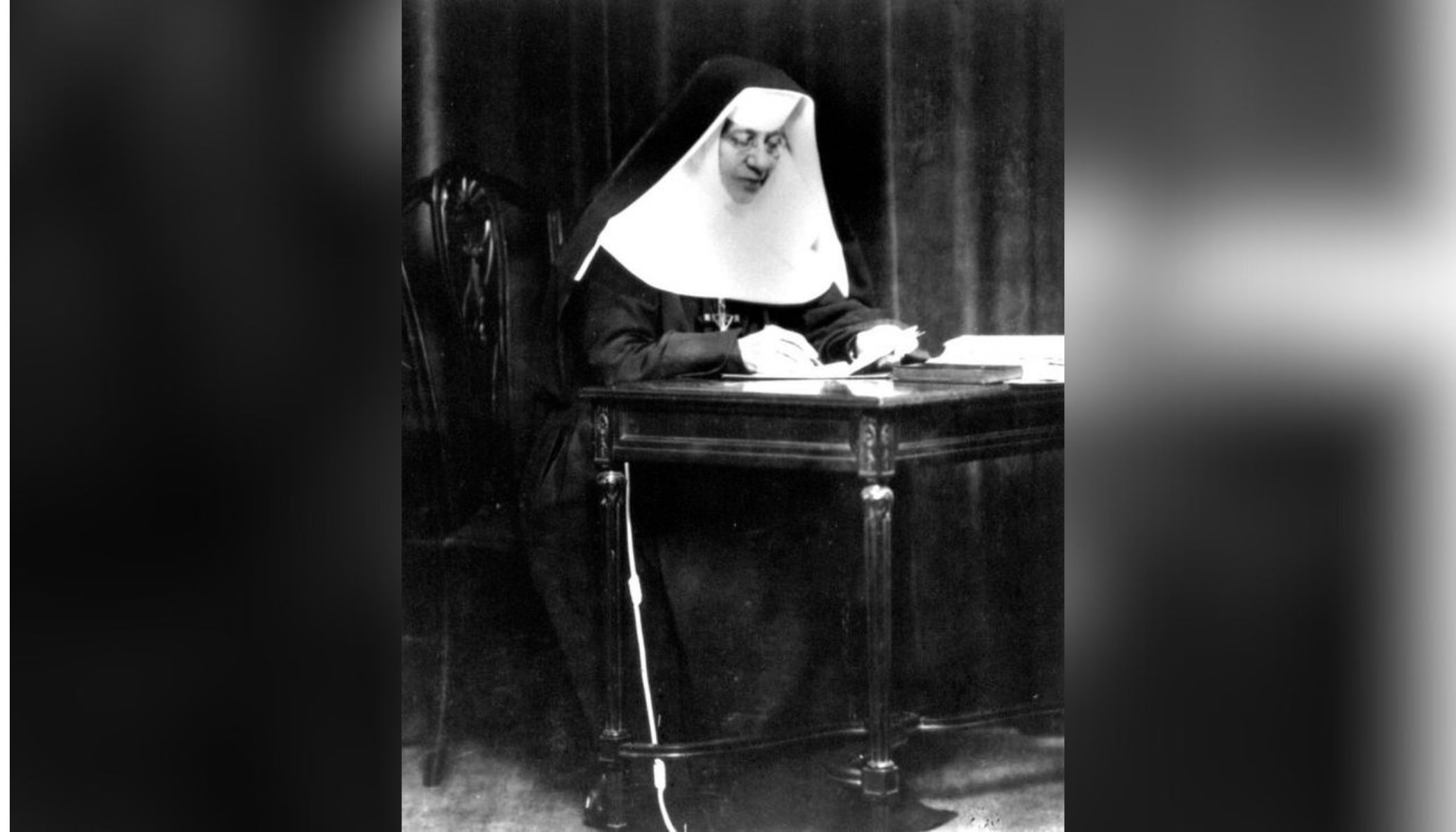
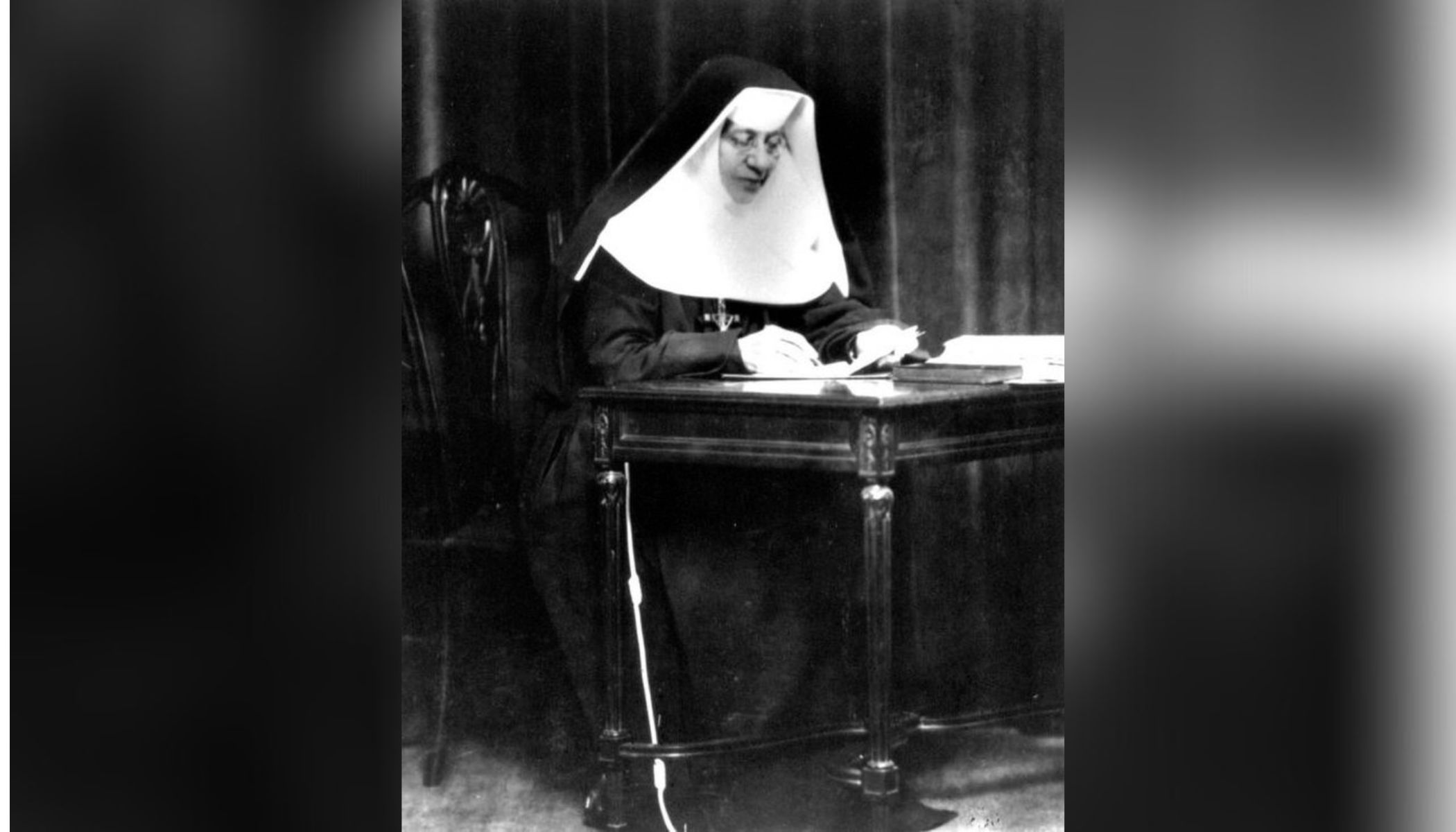
From heiress to saint: The radical life of St. Katharine Drexel #Catholic St. Katharine Drexel was born in 1858 to a wealthy family in Philadelphia. Five weeks after her birth, her mother died. She and her two sisters were reared by their father, Frank, a successful international banker, and stepmother, Emma — whom Katharine always considered her mother. Both were devout Catholics and loving parents. The family was generous with the poor — three times a week they opened their lavish home to those in need, offering them food, clothing, medicine, and other necessities.From the earliest ages, the Drexel children were taught to pursue personal holiness through daily Mass, meditation, the rosary, and other devotions as well as by acts of penance and sacrifice. Katharine kept notes on her efforts to grow in virtue. In 1878, she wrote: “I am resolved during this year to try to overcome impatience and give attention to lessons. I, Katie, put these resolutions at the feet of Jesus, Mary, and Joseph hoping that they will find acceptance there. May Jesus, Mary, and Joseph help me to bear much fruit in the year 1878.”When she was in her 20s, Katharine lost both of her parents and inherited a portion of the family’s vast wealth. At this time, she became aware of the plight of the Native Americans, many of whom suffered from dire poverty and a lack of education. She would devote the remainder of her life to assisting them.In two private audiences with Pope Leo XIII, she begged him to send more missionaries to the Native Americans. During one of these meetings, the Holy Father suggested to an astonished Katharine that she herself become such a missionary.Although Katharine enjoyed an opulent lifestyle, she became disillusioned with the things of the world. She wrote a longtime friend, Bishop James O’Connor, of her desire to enter religious life.“Like the little girl who wept when she found that her doll was stuffed with sawdust and her drum was hollow, I, too, have made a horrifying discovery and my discovery, like hers, is true. I have ripped both the doll and the drum open and the fact lies plainly and in all its glaring reality before me: All, all, all (there is no exception) is passing away and will pass away,” she wrote.The bishop thought Katharine could do more for the Church in her position in society and worried she might have difficulty in renouncing her wealth. She responded: “The question alone important, the solution of which depends upon how I have spent my life, is the state of my soul at the moment of death. Infinite misery or infinite happiness! There is no half and half, either one or the other.”The bishop eventually relented and advised her to found a community to work among Native Americans and African Americans, declaring: “God has put in your heart a great love for the Indian and the Negroes.” In 1891, joined by 13 others, she founded the Sisters of the Blessed Sacrament.Mother Drexel went to work opening mission churches and boarding schools for Black and Native American children throughout the U.S.At times, prejudice and racism hindered her work. She would often buy buildings to create schools through third parties — otherwise, when sellers learned Mother Drexel was buying them to educate Black or Native children, they wouldn’t sell to her.Once, when members of the Nashville, Tennessee, city council wondered if Blacks were capable of higher education, she responded: “I cannot share these views with regard to the education of the race. I feel that if among our colored people we find individuals gifted with capabilities, with those sterling qualities which constitute character, our holy mother the Church who fosters and develops the intellect only that it may give God more glory and be of benefit to others, should also concede to the Negro the privilege of higher education.”In 1915, Katharine founded a teachers’ college in Louisiana, which would eventually become Xavier University of New Orleans and one of the first American colleges to admit Black students.Throughout her life, Mother Drexel’s chief motivation in addition to her missionary outreach was to help more souls know and love Jesus in the Blessed Sacrament. She believed devotion to the Blessed Sacrament was key to the success to her community’s missionary work.She died in 1955 at the age of 96 and was canonized by Pope John Paul II in 2000. Her community’s motherhouse for decades was located in Bensalem, Pennsylvania, a Philadelphia suburb, which included a shrine — elements of which included Mother Drexel’s remains and a museum dedicated to her memory. However, due to a lack of vocations, the motherhouse closed and the property sold at the end of 2017. The St. Katharine Drexel Shrine is now part of the Cathedral Basilica of Sts. Peter and Paul in Philadelphia.St. Katharine Drexel is honored in the Church on March 3.This story was first published by the National Catholic Register, a sister news service of EWTN News, on March 3, 2021, and has been updated and adapted by EWTN News.

From heiress to saint: The radical life of St. Katharine Drexel #Catholic St. Katharine Drexel was born in 1858 to a wealthy family in Philadelphia. Five weeks after her birth, her mother died. She and her two sisters were reared by their father, Frank, a successful international banker, and stepmother, Emma — whom Katharine always considered her mother. Both were devout Catholics and loving parents. The family was generous with the poor — three times a week they opened their lavish home to those in need, offering them food, clothing, medicine, and other necessities.From the earliest ages, the Drexel children were taught to pursue personal holiness through daily Mass, meditation, the rosary, and other devotions as well as by acts of penance and sacrifice. Katharine kept notes on her efforts to grow in virtue. In 1878, she wrote: “I am resolved during this year to try to overcome impatience and give attention to lessons. I, Katie, put these resolutions at the feet of Jesus, Mary, and Joseph hoping that they will find acceptance there. May Jesus, Mary, and Joseph help me to bear much fruit in the year 1878.”When she was in her 20s, Katharine lost both of her parents and inherited a portion of the family’s vast wealth. At this time, she became aware of the plight of the Native Americans, many of whom suffered from dire poverty and a lack of education. She would devote the remainder of her life to assisting them.In two private audiences with Pope Leo XIII, she begged him to send more missionaries to the Native Americans. During one of these meetings, the Holy Father suggested to an astonished Katharine that she herself become such a missionary.Although Katharine enjoyed an opulent lifestyle, she became disillusioned with the things of the world. She wrote a longtime friend, Bishop James O’Connor, of her desire to enter religious life.“Like the little girl who wept when she found that her doll was stuffed with sawdust and her drum was hollow, I, too, have made a horrifying discovery and my discovery, like hers, is true. I have ripped both the doll and the drum open and the fact lies plainly and in all its glaring reality before me: All, all, all (there is no exception) is passing away and will pass away,” she wrote.The bishop thought Katharine could do more for the Church in her position in society and worried she might have difficulty in renouncing her wealth. She responded: “The question alone important, the solution of which depends upon how I have spent my life, is the state of my soul at the moment of death. Infinite misery or infinite happiness! There is no half and half, either one or the other.”The bishop eventually relented and advised her to found a community to work among Native Americans and African Americans, declaring: “God has put in your heart a great love for the Indian and the Negroes.” In 1891, joined by 13 others, she founded the Sisters of the Blessed Sacrament.Mother Drexel went to work opening mission churches and boarding schools for Black and Native American children throughout the U.S.At times, prejudice and racism hindered her work. She would often buy buildings to create schools through third parties — otherwise, when sellers learned Mother Drexel was buying them to educate Black or Native children, they wouldn’t sell to her.Once, when members of the Nashville, Tennessee, city council wondered if Blacks were capable of higher education, she responded: “I cannot share these views with regard to the education of the race. I feel that if among our colored people we find individuals gifted with capabilities, with those sterling qualities which constitute character, our holy mother the Church who fosters and develops the intellect only that it may give God more glory and be of benefit to others, should also concede to the Negro the privilege of higher education.”In 1915, Katharine founded a teachers’ college in Louisiana, which would eventually become Xavier University of New Orleans and one of the first American colleges to admit Black students.Throughout her life, Mother Drexel’s chief motivation in addition to her missionary outreach was to help more souls know and love Jesus in the Blessed Sacrament. She believed devotion to the Blessed Sacrament was key to the success to her community’s missionary work.She died in 1955 at the age of 96 and was canonized by Pope John Paul II in 2000. Her community’s motherhouse for decades was located in Bensalem, Pennsylvania, a Philadelphia suburb, which included a shrine — elements of which included Mother Drexel’s remains and a museum dedicated to her memory. However, due to a lack of vocations, the motherhouse closed and the property sold at the end of 2017. The St. Katharine Drexel Shrine is now part of the Cathedral Basilica of Sts. Peter and Paul in Philadelphia.St. Katharine Drexel is honored in the Church on March 3.This story was first published by the National Catholic Register, a sister news service of EWTN News, on March 3, 2021, and has been updated and adapted by EWTN News.

Throughout her life, St. Katharine Drexel’s chief motivation was to help more people know and love Jesus in the Blessed Sacrament.
Read More