artistic

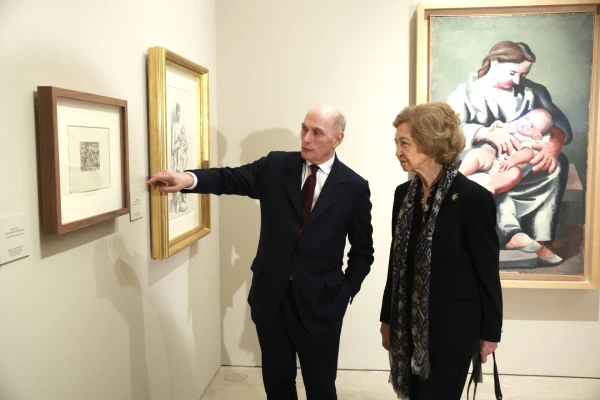
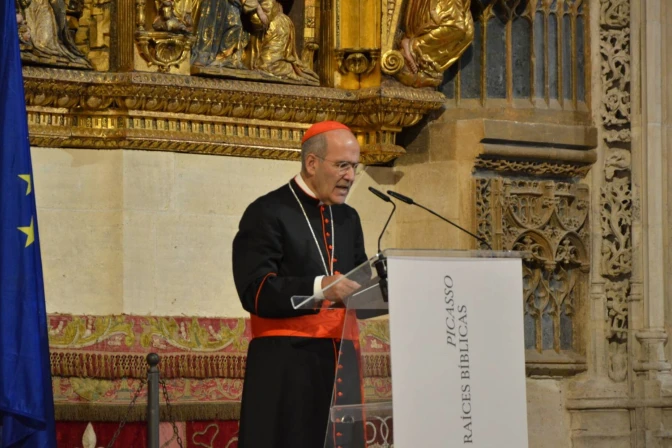
‘Biblical Roots’: Picasso’s spiritual ‘sensibilities’ on display at Burgos Cathedral #Catholic The Burgos Cathedral in Spain is hosting an exhibition of 44 works by Pablo Picasso titled “Biblical Roots,” which explores the biblical essence and Christian origins present in the Spanish painter’s work.Among those attending the March 2 opening of the exhibit were Cardinal José Tolentino de Mendonça, prefect of the Dicastery for Culture and Education, Queen Sofía, and Bernard Ruiz-Picasso, the artist’s grandson and president of the Bernard Ruiz-Picasso Foundation for Art (FABA, by its Spanish acronym).The cardinal emphasized during the opening that half a century after the artist’s death, “one of the least examined dimensions of Pablo Picasso is his radical exploration of transcendence,” according to a statement from the Archdiocese of Burgos. The cardinal also remarked that though the artist declared he had no faith, “he never abandoned the symbolic foundation of biblical and Christian tradition,” which constitutes “a generative tension throughout his work.”
 
 Queen Sofía at the exhibition in Burgos Cathedral. | Credit: Archdiocese of Burgos
 
 He said the Bible was for Picasso a “profound structure” of his sensibility, “an inner interpretive key forged in the sensory experience of the liturgy and the sacred Catholic imagery of his childhood.”He emphasized that in many of Picasso’s works, “the body of Christ becomes an archetype of human suffering,” particularly visible in the painting “Guernica,” “where the rhetoric of sacred iconography emerges as a language of pain.”For the cardinal, this exhibition also constitutes “an exemplary act of cultural dialogue: The cathedral and Picasso are not viewed as separate entities, but rather they challenge and illuminate each other by addressing the ultimate questions about meaning, suffering, and fraternity.”On behalf of Pope Leo XIV, he encouraged continued promotion of an authentic dialogue between Christianity and contemporary culture, “convinced that the artistic experience demands taking a broad view capable of recognizing the spiritual depth that dwells even in those who do not profess to be believers.” The opening of the exhibition — organized by the Archdiocese of Burgos, the Metropolitan Chapter, the FABA Foundation, and the Burgos Consulate of the Sea Foundation — was also attended by the vicar general of the archdiocese, Father Carlos Izquierdo Yusta, and Archbishop Emeritus Fidel Herráez Vegas, as well as other local officials.For Archbishop Mario Iceta of Burgos, the exhibition “constitutes a new milestone in the cathedral’s historical dialogue with culture.”He also recalled that the Burgos Cathedral, since the laying of its foundation stone by King St. Ferdinand (1199–1252), “has integrated all artistic styles throughout the centuries like a living organism,” and that today it also seeks to open itself up to contemporary culture through the work Picasso, a “leading and highly influential” artist.The artist’s grandson emphasized that the exhibition also has a profound meaning for the Ruiz-Picasso family, since “the artist visited the church ‘incognito’ in 1936, accompanied by his wife and son,” in what would be his last visit to Spain.This story was first published by ACI Prensa, the Spanish-language sister service of EWTN News. It has been translated and adapted by EWTN News English.

‘Biblical Roots’: Picasso’s spiritual ‘sensibilities’ on display at Burgos Cathedral #Catholic The Burgos Cathedral in Spain is hosting an exhibition of 44 works by Pablo Picasso titled “Biblical Roots,” which explores the biblical essence and Christian origins present in the Spanish painter’s work.Among those attending the March 2 opening of the exhibit were Cardinal José Tolentino de Mendonça, prefect of the Dicastery for Culture and Education, Queen Sofía, and Bernard Ruiz-Picasso, the artist’s grandson and president of the Bernard Ruiz-Picasso Foundation for Art (FABA, by its Spanish acronym).The cardinal emphasized during the opening that half a century after the artist’s death, “one of the least examined dimensions of Pablo Picasso is his radical exploration of transcendence,” according to a statement from the Archdiocese of Burgos. The cardinal also remarked that though the artist declared he had no faith, “he never abandoned the symbolic foundation of biblical and Christian tradition,” which constitutes “a generative tension throughout his work.” Queen Sofía at the exhibition in Burgos Cathedral. | Credit: Archdiocese of Burgos He said the Bible was for Picasso a “profound structure” of his sensibility, “an inner interpretive key forged in the sensory experience of the liturgy and the sacred Catholic imagery of his childhood.”He emphasized that in many of Picasso’s works, “the body of Christ becomes an archetype of human suffering,” particularly visible in the painting “Guernica,” “where the rhetoric of sacred iconography emerges as a language of pain.”For the cardinal, this exhibition also constitutes “an exemplary act of cultural dialogue: The cathedral and Picasso are not viewed as separate entities, but rather they challenge and illuminate each other by addressing the ultimate questions about meaning, suffering, and fraternity.”On behalf of Pope Leo XIV, he encouraged continued promotion of an authentic dialogue between Christianity and contemporary culture, “convinced that the artistic experience demands taking a broad view capable of recognizing the spiritual depth that dwells even in those who do not profess to be believers.” The opening of the exhibition — organized by the Archdiocese of Burgos, the Metropolitan Chapter, the FABA Foundation, and the Burgos Consulate of the Sea Foundation — was also attended by the vicar general of the archdiocese, Father Carlos Izquierdo Yusta, and Archbishop Emeritus Fidel Herráez Vegas, as well as other local officials.For Archbishop Mario Iceta of Burgos, the exhibition “constitutes a new milestone in the cathedral’s historical dialogue with culture.”He also recalled that the Burgos Cathedral, since the laying of its foundation stone by King St. Ferdinand (1199–1252), “has integrated all artistic styles throughout the centuries like a living organism,” and that today it also seeks to open itself up to contemporary culture through the work Picasso, a “leading and highly influential” artist.The artist’s grandson emphasized that the exhibition also has a profound meaning for the Ruiz-Picasso family, since “the artist visited the church ‘incognito’ in 1936, accompanied by his wife and son,” in what would be his last visit to Spain.This story was first published by ACI Prensa, the Spanish-language sister service of EWTN News. It has been translated and adapted by EWTN News English.

While Pablo Picasso was a professed atheist, a new exhibit in Spain highlights the spiritual sensibilities of his art.
Read More
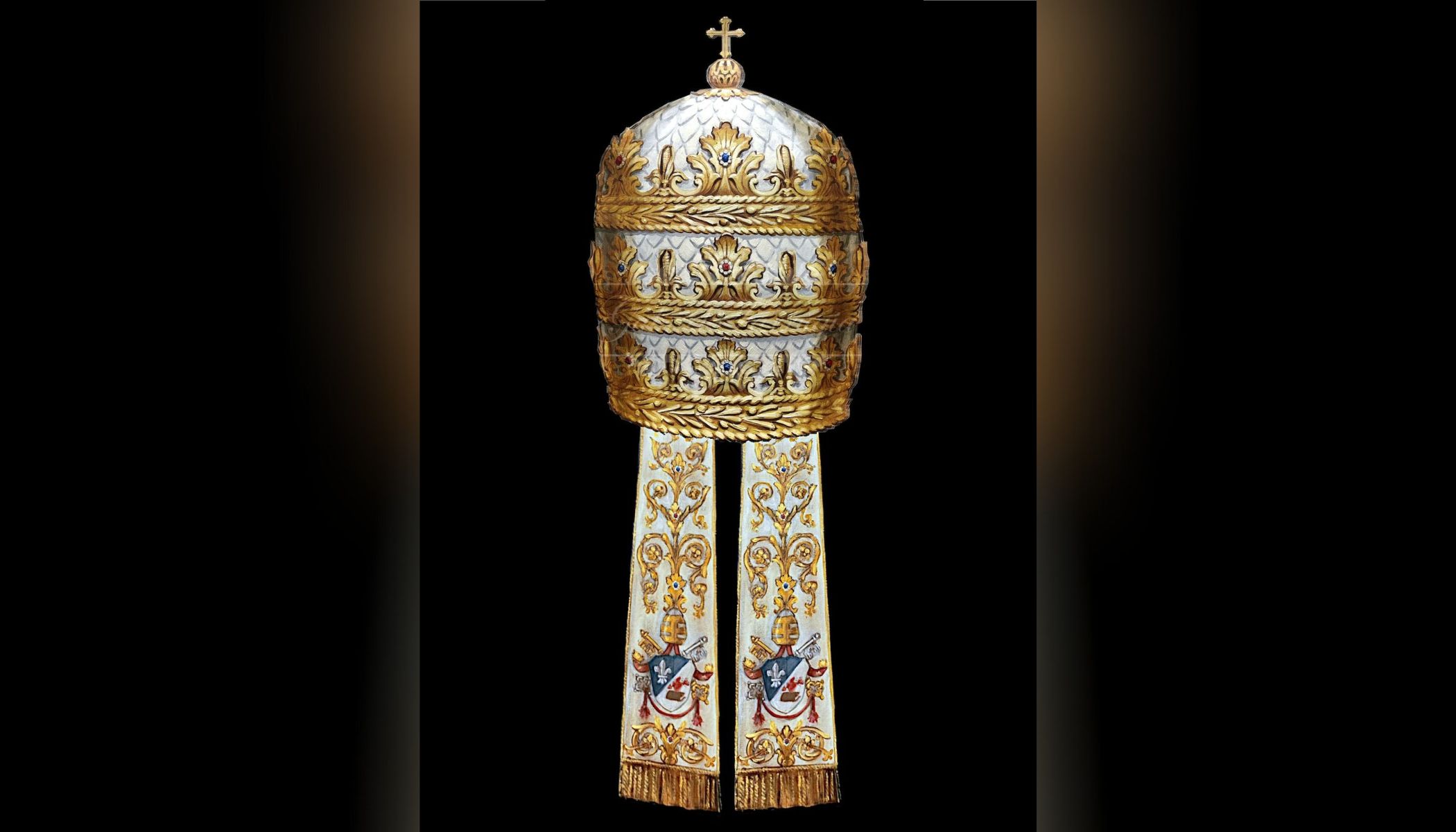
American Catholics launch crowdfunding effort to gift Pope Leo XIV papal tiara #Catholic A newly established nonprofit launched a crowdfunding effort to construct a papal tiara that will contain Catholic and American symbolism, with the plan to offer it to Pope Leo XIV as a gift from American Catholics for the first pontiff from the United States.“Historically, the majority of papal tiaras are gifts, usually from the home diocese of the pope or from religious [communities] they may be affiliated with,” Isaac Smith, a convert to Catholicism and the founder of Amici Vaticani, told EWTN News.Smith said he was motivated to launch the project to provide Leo with a papal tiara based on the desire for “us, as Americans, to continue that tradition.” He said the first American pope is “such a historical milestone” for Catholicism in the United States.The history of papal crowns dates back to at least the eighth century with the word “tiara” first used in the 12th century. A second crown was added to the tiara in the 13th century to symbolize that the pope holds authority in both spiritual and temporal matters.A three-crown tiara first appeared in the 14th century. One interpretation of the three crowns is that they represent the threefold office of Christ: priest, prophet, and king. Another suggests it represents the militant, the suffering, and the triumphant Church.The proposed tiara commissioned by Amici Vaticani maintains the 14th-century tradition of three crowns. The tiara will be constructed with sterling silver and the crowns will be gold-plated.Because the gift is meant to honor Leo’s American heritage, the tiara will have red, white, and blue stones, which represent the colors of the American flag. It will incorporate other American symbols: oak leaves, representing the national tree; and corn stalks, representing the national crop.Some of the symbols included in the tiara have dual meanings relevant to both the papacy and the United States. It will incorporate roses, which is a symbol of the Virgin Mary and the national flower; and it will incorporate olives, which is a symbol of the pontiff’s commitment to peace and appears on the Great Seal of the United States.A buttony cross will sit atop the crown as a symbol of American Catholicism. The cross is used in the coat of arms for the Archdiocese of Baltimore, the country’s first Catholic diocese, and is featured on the flag of Maryland, which is the location of the first English Catholic colonies.The design, Smith explained, is meant to be “elegant and traditional” to honor the office of the papacy but is also meant to “incorporate distinctively American elements” to honor the pope’s American heritage.
 
 Maltese jeweler Gabriel Farrugia works on a project. | Credit: Photo courtesy of Gabriel Farrugia
 
 Smith said he hopes to fund the project through small donations from the American Catholic faithful so the pontiff can see “this was a group effort” and a gift from Catholics in his home country. This project, he said, provides “a tangible way for people to connect with the successor of Peter.”He also said he plans to compile the names of every person who donates more than $20 into a book, which would be presented to the Holy Father along with the crown and would say on the cover: “Holy Father, please pray for these people.”Smith said his intention is that the tiara can “hopefully [be] put on display in a place of honor” after it is constructed “and presented to the pope when he visits.” When Leo met Vice President JD Vance, the pontiff said he would travel to the United States at some point, although the Holy Father does not have any specific publicly announced plans to visit as of yet.The tiara will be constructed by a Maltese jeweler and artist named Gabriel Farrugia, who has a background in creating religious art, including an Our Lady of Fátima crown, which was used in a coronation ceremony in Guardamangia, Malta. He has also been commissioned by Catholic churches for artistic projects.“Making sacred art is a type of thanksgiving to the One who created us,” Farrugia told EWTN News.“For the God that created us and gave us life, I think we should give him something,” he said, adding that sacred art provides “something that will be left there for ages” and something for “people to admire, to enjoy, and to reflect [upon].”The construction of the crown has not yet begun, as Amici Vaticani is still in the early stages of the crowdfunding effort.Amici Vaticani was launched in 2025 for the purpose of constructing the tiara. According to its website, the nonprofit also seeks to build up “the awakening of a Catholic spirit in the United States.”“Our country, once defined by its Protestant heritage, is now witnessing a boon of conversions,” the website notes. “Men and women rediscovering the depth, beauty, and authority of the Catholic faith.”

American Catholics launch crowdfunding effort to gift Pope Leo XIV papal tiara #Catholic A newly established nonprofit launched a crowdfunding effort to construct a papal tiara that will contain Catholic and American symbolism, with the plan to offer it to Pope Leo XIV as a gift from American Catholics for the first pontiff from the United States.“Historically, the majority of papal tiaras are gifts, usually from the home diocese of the pope or from religious [communities] they may be affiliated with,” Isaac Smith, a convert to Catholicism and the founder of Amici Vaticani, told EWTN News.Smith said he was motivated to launch the project to provide Leo with a papal tiara based on the desire for “us, as Americans, to continue that tradition.” He said the first American pope is “such a historical milestone” for Catholicism in the United States.The history of papal crowns dates back to at least the eighth century with the word “tiara” first used in the 12th century. A second crown was added to the tiara in the 13th century to symbolize that the pope holds authority in both spiritual and temporal matters.A three-crown tiara first appeared in the 14th century. One interpretation of the three crowns is that they represent the threefold office of Christ: priest, prophet, and king. Another suggests it represents the militant, the suffering, and the triumphant Church.The proposed tiara commissioned by Amici Vaticani maintains the 14th-century tradition of three crowns. The tiara will be constructed with sterling silver and the crowns will be gold-plated.Because the gift is meant to honor Leo’s American heritage, the tiara will have red, white, and blue stones, which represent the colors of the American flag. It will incorporate other American symbols: oak leaves, representing the national tree; and corn stalks, representing the national crop.Some of the symbols included in the tiara have dual meanings relevant to both the papacy and the United States. It will incorporate roses, which is a symbol of the Virgin Mary and the national flower; and it will incorporate olives, which is a symbol of the pontiff’s commitment to peace and appears on the Great Seal of the United States.A buttony cross will sit atop the crown as a symbol of American Catholicism. The cross is used in the coat of arms for the Archdiocese of Baltimore, the country’s first Catholic diocese, and is featured on the flag of Maryland, which is the location of the first English Catholic colonies.The design, Smith explained, is meant to be “elegant and traditional” to honor the office of the papacy but is also meant to “incorporate distinctively American elements” to honor the pope’s American heritage. Maltese jeweler Gabriel Farrugia works on a project. | Credit: Photo courtesy of Gabriel Farrugia Smith said he hopes to fund the project through small donations from the American Catholic faithful so the pontiff can see “this was a group effort” and a gift from Catholics in his home country. This project, he said, provides “a tangible way for people to connect with the successor of Peter.”He also said he plans to compile the names of every person who donates more than $20 into a book, which would be presented to the Holy Father along with the crown and would say on the cover: “Holy Father, please pray for these people.”Smith said his intention is that the tiara can “hopefully [be] put on display in a place of honor” after it is constructed “and presented to the pope when he visits.” When Leo met Vice President JD Vance, the pontiff said he would travel to the United States at some point, although the Holy Father does not have any specific publicly announced plans to visit as of yet.The tiara will be constructed by a Maltese jeweler and artist named Gabriel Farrugia, who has a background in creating religious art, including an Our Lady of Fátima crown, which was used in a coronation ceremony in Guardamangia, Malta. He has also been commissioned by Catholic churches for artistic projects.“Making sacred art is a type of thanksgiving to the One who created us,” Farrugia told EWTN News.“For the God that created us and gave us life, I think we should give him something,” he said, adding that sacred art provides “something that will be left there for ages” and something for “people to admire, to enjoy, and to reflect [upon].”The construction of the crown has not yet begun, as Amici Vaticani is still in the early stages of the crowdfunding effort.Amici Vaticani was launched in 2025 for the purpose of constructing the tiara. According to its website, the nonprofit also seeks to build up “the awakening of a Catholic spirit in the United States.”“Our country, once defined by its Protestant heritage, is now witnessing a boon of conversions,” the website notes. “Men and women rediscovering the depth, beauty, and authority of the Catholic faith.”

A nonprofit hopes to generate enough small donations to construct a papal tiara for Pope Leo XIV as a gift from American Catholics.

Read More
Curiosity Sends Holiday Postcard from Mars – NASA’s Curiosity Mars rover used its black-and-white navigation cameras to capture panoramas at two times of day on Nov. 18, 2025, spanning periods that occurred on both the 4,722nd and 4,723rd Martian days, or sols, of the mission. The panoramas were captured at 4:15 p.m. on Sol 4,722 and 8:20 a.m. on Sol 4,723 (both at local Mars time), then merged together. Color was later added for an artistic interpretation of the scene with blue representing the morning panorama and yellow representing the afternoon one.

NASA’s Curiosity Mars rover used its black-and-white navigation cameras to capture panoramas at two times of day on Nov. 18, 2025, spanning periods that occurred on both the 4,722nd and 4,723rd Martian days, or sols, of the mission. The panoramas were captured at 4:15 p.m. on Sol 4,722 and 8:20 a.m. on Sol 4,723 (both at local Mars time), then merged together. Color was later added for an artistic interpretation of the scene with blue representing the morning panorama and yellow representing the afternoon one.

Read More
Picture of the day


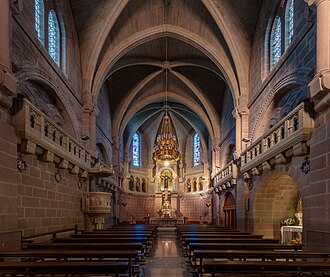
Basilica, Xavier, Navarre, Spain. The basilica belongs to the ensemble of the Castle of Xavier, built in the 10th century, although the basilica was not built until end of the 19th and beginning of the 20th century. Of eclectic style, the interior has a unique neogothic nave built with grey stone and white marble. The stained glass is a work of painter Marcelino Santamaría from Burgos. The main altar is an artistic decorative work, carved in stone inlaid with mosaics, bronzes and enamels by the Biais house in Paris. The tabernacle is located on a high relief that represents San Francisco baptizing and preaching.
 #ImageOfTheDay
Picture of the day
Basilica, Xavier, Navarre, Spain. The basilica belongs to the ensemble of the Castle of Xavier, built in the 10th century, although the basilica was not built until end of the 19th and beginning of the 20th century. Of eclectic style, the interior has a unique neogothic nave built with grey stone and white marble. The stained glass is a work of painter Marcelino Santamaría from Burgos. The main altar is an artistic decorative work, carved in stone inlaid with mosaics, bronzes and enamels by the Biais house in Paris. The tabernacle is located on a high relief that represents San Francisco baptizing and preaching.
Read More