attitude

Ireland sees modest revival in faith, especially among youth and young adults #Catholic An increase in spirituality and religious practice among young adults in Ireland aged 18 to 30 and confirmation that Ireland is in the “middle range” of religious countries in Europe are among the trends identified in a new report published by the Irish Catholic bishops titled “Turning the Tide.”Archbishop Eamon Martin of Armagh, primate of all Ireland, told EWTN News: “There has been a lot of talk recently about the so-called quiet revival in religious practice in recent years. The [report] looks at some of the research studies that have been carried out north and south of the island of Ireland into religious practice, religious awareness and spirituality, and interest in religion, and asks a question by comparing this with European social studies: Is there actually any uptake [in] religious practice and awareness and interest in Ireland?”Drawing on research from the European Social Survey, the Iona Institute’s two recent surveys conducted by Amárach Research, and a variety of relevant academic studies, the report seeks to provide an integrated, relevant, and current look at religious practice in Ireland.“The report very interestingly points to some type of uptick, as they call it, particularly among young people around the ages of 16 to 30 and the fact that they are taking a new interest in religion and in spirituality.”Encouraged by the positive trends emerging across different studies, Martin sounded a note of caution, highlighting the challenges that these findings pose for the Catholic Church in Ireland.“I don’t think we should get ourselves too enthusiastic thinking this is a complete reversal of the very obvious decline and religious practice over the last 10 or 20 years,” he said. “However, it is saying something on the turning tide.”The archbishop pointed to the implications for the Irish Church: “It’s asking us to reflect on this phenomenon in the light of research, and for instance what does this mean for us as Church, as parishes, as dioceses? How are we responding to this growing body of young people who want to know more more about God, about church, and about religion?”The report, co-authored by Stephen Bullivant, professor of theology and the sociology of religion at St. Mary’s University, Twickenham, and Emily Nelson, a doctoral student of sociology at Queen’s University Belfast, examined the overall religious profile of the island of Ireland, including areas of convergence and divergence between Northern Ireland and the Republic of Ireland.The authors drew together research studies on patterns in belief, practice, and religious identification between generations, with particular attention to differences within young adult cohorts. The work also provided insight on  dimensions of religiosity, religious transmission, and attitudes toward Church teaching and institutions among both men and women.Ireland remains among the more religious countries in Europe, on measures of religious affiliation, religious service attendance, and frequency of prayer. Among western European countries, it is one of few outliers with a relatively high level of overall religiosity. It also ranks toward the higher end of (especially western) European countries on measures of weekly Mass attendance and daily prayer.While key measures of Irish religiosity have declined significantly since the European Social Survey began in 2002-2003, the most recent round in 2023-2024 shows a strong uptick in religious affiliation and religious practice.This effect is most strongly evident among those aged 16–29 years, across both Catholics and Protestants.Northern Ireland is both the most religious region of the United Kingdom, by a large margin, and the most religious part of the island of Ireland, in terms of both affiliation and religious practice.Although women in the Republic of Ireland are equally as likely as men to be religious, they continue to play an influential role in transmitting faith, even as they express higher levels of moral dissent and institutional dissatisfaction. The report revealed that 74% of Irish Catholic women were found to believe that the Church did not treat them with “a lot of respect.”According to the report, 51% of Irish adults — and 27% of Irish young adults —pray at least once a week, and 31% say they attend Mass at least once a week, placing them fourth overall, alongside Italy (32%) but well behind Poland (49%) and Slovakia (46%).There is a significant drop-off among young adults, whose reported religious practice is roughly half that of older adults. Irish 16- to 29-year-olds rank sixth overall compared with other countries, at 17%, though that is at least double the rates of the same age group in Switzerland, Germany, and Belgium, at 5%, and in Austria with less than 1%.The Irish report also pointed to a 2023 Barna study that found in certain respects, Irish teens are more religious than their global peers. Just over 3 in 5 (62%) Irish teens identify as Christian with nearly a third identify as atheist, agnostic, or of no faith.On average, 18- to 24-year-olds in the Republic of Ireland aren’t particularly positive about both Christianity and the Catholic Church in Ireland, but they are more positive than those in the 25–34 age range, and fewer have a negative attitude toward priests and nuns.In 2023, EWTN News’ Colm Flynn traveled to Ireland with the question “Is Ireland still Catholic?” He explored the various reasons for the decline of the faith in Ireland and the challenges the Church faces there today. In the three years since, and after many emails and messages pointing to signs of a “quiet revival” of faith in Ireland, Flynn recently returned to the country to explore those signs of renewal. In his report, he refers to the “Turning the Tide” report:

Ireland sees modest revival in faith, especially among youth and young adults #Catholic An increase in spirituality and religious practice among young adults in Ireland aged 18 to 30 and confirmation that Ireland is in the “middle range” of religious countries in Europe are among the trends identified in a new report published by the Irish Catholic bishops titled “Turning the Tide.”Archbishop Eamon Martin of Armagh, primate of all Ireland, told EWTN News: “There has been a lot of talk recently about the so-called quiet revival in religious practice in recent years. The [report] looks at some of the research studies that have been carried out north and south of the island of Ireland into religious practice, religious awareness and spirituality, and interest in religion, and asks a question by comparing this with European social studies: Is there actually any uptake [in] religious practice and awareness and interest in Ireland?”Drawing on research from the European Social Survey, the Iona Institute’s two recent surveys conducted by Amárach Research, and a variety of relevant academic studies, the report seeks to provide an integrated, relevant, and current look at religious practice in Ireland.“The report very interestingly points to some type of uptick, as they call it, particularly among young people around the ages of 16 to 30 and the fact that they are taking a new interest in religion and in spirituality.”Encouraged by the positive trends emerging across different studies, Martin sounded a note of caution, highlighting the challenges that these findings pose for the Catholic Church in Ireland.“I don’t think we should get ourselves too enthusiastic thinking this is a complete reversal of the very obvious decline and religious practice over the last 10 or 20 years,” he said. “However, it is saying something on the turning tide.”The archbishop pointed to the implications for the Irish Church: “It’s asking us to reflect on this phenomenon in the light of research, and for instance what does this mean for us as Church, as parishes, as dioceses? How are we responding to this growing body of young people who want to know more more about God, about church, and about religion?”The report, co-authored by Stephen Bullivant, professor of theology and the sociology of religion at St. Mary’s University, Twickenham, and Emily Nelson, a doctoral student of sociology at Queen’s University Belfast, examined the overall religious profile of the island of Ireland, including areas of convergence and divergence between Northern Ireland and the Republic of Ireland.The authors drew together research studies on patterns in belief, practice, and religious identification between generations, with particular attention to differences within young adult cohorts. The work also provided insight on  dimensions of religiosity, religious transmission, and attitudes toward Church teaching and institutions among both men and women.Ireland remains among the more religious countries in Europe, on measures of religious affiliation, religious service attendance, and frequency of prayer. Among western European countries, it is one of few outliers with a relatively high level of overall religiosity. It also ranks toward the higher end of (especially western) European countries on measures of weekly Mass attendance and daily prayer.While key measures of Irish religiosity have declined significantly since the European Social Survey began in 2002-2003, the most recent round in 2023-2024 shows a strong uptick in religious affiliation and religious practice.This effect is most strongly evident among those aged 16–29 years, across both Catholics and Protestants.Northern Ireland is both the most religious region of the United Kingdom, by a large margin, and the most religious part of the island of Ireland, in terms of both affiliation and religious practice.Although women in the Republic of Ireland are equally as likely as men to be religious, they continue to play an influential role in transmitting faith, even as they express higher levels of moral dissent and institutional dissatisfaction. The report revealed that 74% of Irish Catholic women were found to believe that the Church did not treat them with “a lot of respect.”According to the report, 51% of Irish adults — and 27% of Irish young adults —pray at least once a week, and 31% say they attend Mass at least once a week, placing them fourth overall, alongside Italy (32%) but well behind Poland (49%) and Slovakia (46%).There is a significant drop-off among young adults, whose reported religious practice is roughly half that of older adults. Irish 16- to 29-year-olds rank sixth overall compared with other countries, at 17%, though that is at least double the rates of the same age group in Switzerland, Germany, and Belgium, at 5%, and in Austria with less than 1%.The Irish report also pointed to a 2023 Barna study that found in certain respects, Irish teens are more religious than their global peers. Just over 3 in 5 (62%) Irish teens identify as Christian with nearly a third identify as atheist, agnostic, or of no faith.On average, 18- to 24-year-olds in the Republic of Ireland aren’t particularly positive about both Christianity and the Catholic Church in Ireland, but they are more positive than those in the 25–34 age range, and fewer have a negative attitude toward priests and nuns.In 2023, EWTN News’ Colm Flynn traveled to Ireland with the question “Is Ireland still Catholic?” He explored the various reasons for the decline of the faith in Ireland and the challenges the Church faces there today. In the three years since, and after many emails and messages pointing to signs of a “quiet revival” of faith in Ireland, Flynn recently returned to the country to explore those signs of renewal. In his report, he refers to the “Turning the Tide” report:

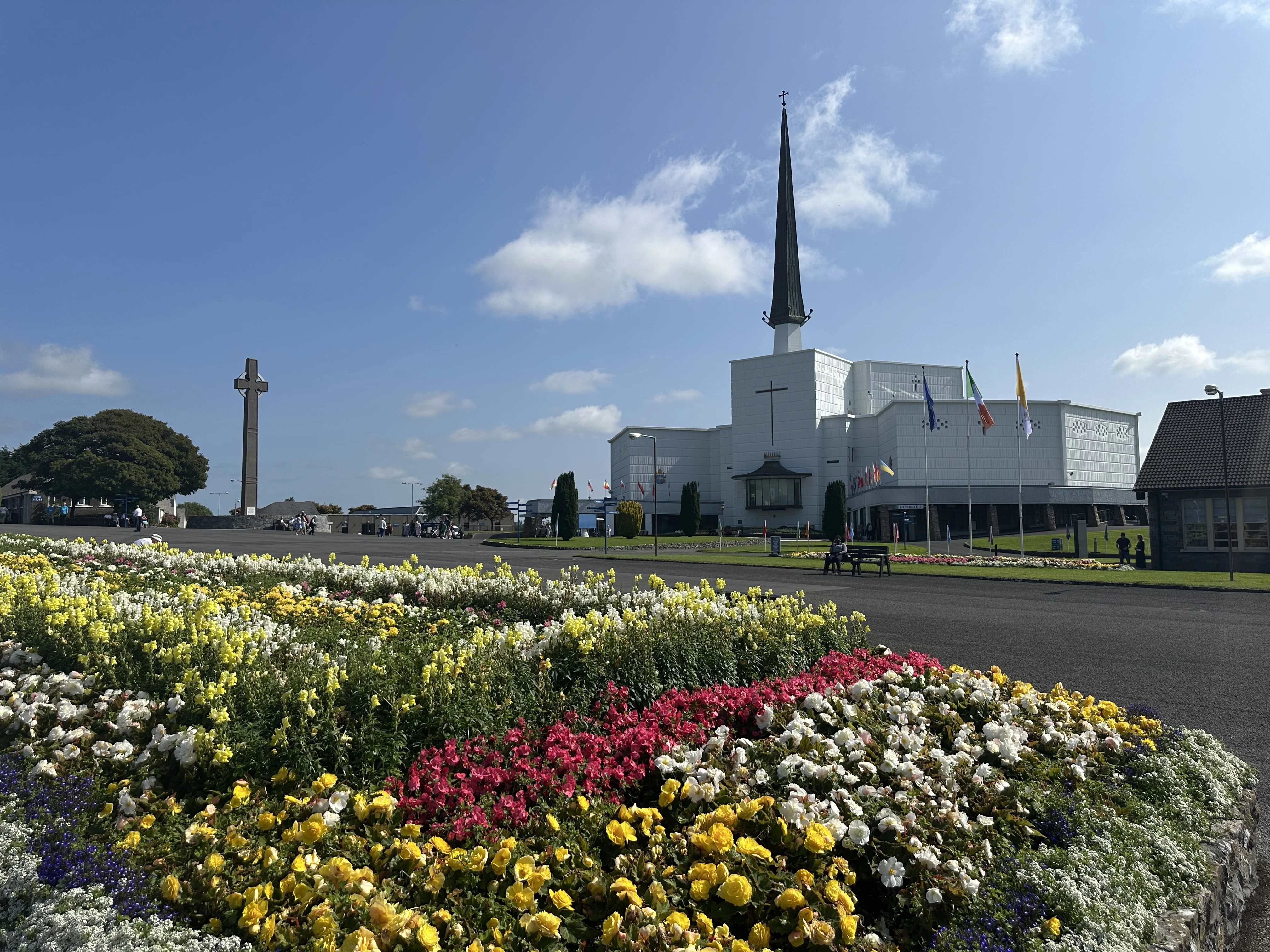
A new report examining surveys and research on the practice of the Catholic faith in Ireland shows an uptick in religious practice and spirituality among younger people.
Read More
Holy See calls on UN to eradicate surrogacy ‘in all its forms’ #Catholic The Holy See has reaffirmed its position against surrogacy in a statement to the United Nations, urging the complete eradication of the practice and calling for the protection of women and children from exploitation.Archbishop Gabriele Caccia, apostolic nuncio and permanent observer of the Holy See to the U.N., highlighted the urgency and sensitivity of the issue, lamenting that “technology and practice have run laps around the law and ethics.”Although he acknowledged that many view surrogacy “as a compassionate solution for those wishing to be parents,” he urged the adoption of measures that respect the dignity and rights of women and children.Women choose it due to financial needCaccia lamented that because of financial need, many women agree to carry a child in their womb and subsequently hand the child over to others for money. This situation could be remedied through the development of “social protection, education, and economic opportunities,” he said.The statement asked whether the surrogacy industry could survive if poverty were eradicated. It warned that the demand for this practice “already exceeds the supply” and that many women who do not wish to participate may find themselves pressured or even coerced into doing so by family members.The text also addressed the rights of children, who are reduced to an item to be ordered “within an industrial and dehumanized logic.” The statement from the Holy See also denounced the commodification of babies and the fact that many are considered “a defective product” when they have a disability.This attitude “runs contrary to a just society in which children can grow and flourish. Children, in fact, possess rights and interests that must be respected, beginning with “a moral right to be created in an act of love,” as well as the right “to know their parents and to be cared for by them,” according to the statement.Although the Holy See acknowledged the “very real and understandable desire to have children,” it maintained that these issues cannot simply be resolved through the regulation of surrogacy. The Permanent Mission of the Holy See to the U.N. commended the decision of the Hague Conference on Private International Law not to proceed with the drafting of a convention on legal parentage in cases of surrogacy.Caccia also recalled the words of Pope Leo XIV, who affirmed that, by transforming gestation into a negotiable service, one “violates the dignity both of the child, who is reduced to a ‘product,’ and of the mother, exploiting her body and the generative process, and distorting the original relational calling of the family.”The Holy See urged that new steps be taken “toward ending this practice in all its forms and at all levels,” with the aim of protecting women and children “from exploitation and violence.”This story was first published by ACI Prensa, the Spanish-language sister service of EWTN News. It has been translated and adapted by EWTN News English.

Holy See calls on UN to eradicate surrogacy ‘in all its forms’ #Catholic The Holy See has reaffirmed its position against surrogacy in a statement to the United Nations, urging the complete eradication of the practice and calling for the protection of women and children from exploitation.Archbishop Gabriele Caccia, apostolic nuncio and permanent observer of the Holy See to the U.N., highlighted the urgency and sensitivity of the issue, lamenting that “technology and practice have run laps around the law and ethics.”Although he acknowledged that many view surrogacy “as a compassionate solution for those wishing to be parents,” he urged the adoption of measures that respect the dignity and rights of women and children.Women choose it due to financial needCaccia lamented that because of financial need, many women agree to carry a child in their womb and subsequently hand the child over to others for money. This situation could be remedied through the development of “social protection, education, and economic opportunities,” he said.The statement asked whether the surrogacy industry could survive if poverty were eradicated. It warned that the demand for this practice “already exceeds the supply” and that many women who do not wish to participate may find themselves pressured or even coerced into doing so by family members.The text also addressed the rights of children, who are reduced to an item to be ordered “within an industrial and dehumanized logic.” The statement from the Holy See also denounced the commodification of babies and the fact that many are considered “a defective product” when they have a disability.This attitude “runs contrary to a just society in which children can grow and flourish. Children, in fact, possess rights and interests that must be respected, beginning with “a moral right to be created in an act of love,” as well as the right “to know their parents and to be cared for by them,” according to the statement.Although the Holy See acknowledged the “very real and understandable desire to have children,” it maintained that these issues cannot simply be resolved through the regulation of surrogacy. The Permanent Mission of the Holy See to the U.N. commended the decision of the Hague Conference on Private International Law not to proceed with the drafting of a convention on legal parentage in cases of surrogacy.Caccia also recalled the words of Pope Leo XIV, who affirmed that, by transforming gestation into a negotiable service, one “violates the dignity both of the child, who is reduced to a ‘product,’ and of the mother, exploiting her body and the generative process, and distorting the original relational calling of the family.”The Holy See urged that new steps be taken “toward ending this practice in all its forms and at all levels,” with the aim of protecting women and children “from exploitation and violence.”This story was first published by ACI Prensa, the Spanish-language sister service of EWTN News. It has been translated and adapted by EWTN News English.

Archbishop Gabriele Caccia, the Holy See’s permanent observer to the United Nations, laid out the economic reasons surrogacy exists, the harm it does, and why it is wrong.

Read More
U.S., Hungarian thought leaders share ethical concerns over mass migration #Catholic “The Crisis of Migration for Families and Nations” was the subject of a Feb. 4 symposium that brought together American and Hungarian thought leaders who share concerns about the phenomenon of mass migration and its impact on the common good of their respective nations. The event coincided with the release of a new paper titled “Migration and Ethics: The Axioms of a Christian Migration Policy” by the Budapest-based Axioma Center, a Christian think tank. 
 
 The Catholic University of America’s Chad Pecknold (left) endorses the Hungarian think tank’s approach to Christian migration policy. | Credit: Ken Oliver-Méndez/EWTN News
 
 The paper, which was endorsed by Chad Pecknold, associate professor of systematic theology at The Catholic University of America, notes that “the Christian perspective on immigration has historically emphasized compassion and solidarity with refugees, along with a welcoming attitude towards foreigners.”However, the paper continues, the Christian perspective on immigration “also calls for a prudent balance between these values and the legitimate responsibility of rulers to protect their people.” In this context, the paper explains, “national security, cultural and moral traditions, the rule of law, public order, and social cohesion are all essential components of what constitutes the common good.” In the face of illegal immigration, the authors assert that “mass deportations may be a legitimate response to mass migration.”At the event, Samuel Samson, a senior adviser at the U.S. State Department’s Bureau of Democracy, Human Rights, and Labor, said he does not see large-scale migration as a “moral necessity” but rather the opposite.“It is actually fundamentally disordered and impacts the well-being and the common good of society,” he said. Samson said the Trump administration has sought to “shift the general narrative” about migration to bring this awareness to the fore.In the United States, more than 14% of the population was born outside the country. In the European Union (EU), nearly 10% of the population was born in a country that is not an EU member.
 
 The panel was moderated by the America First Policy Institute’s Kristen Ziccarelli (left) and included the participation of Center for Immigration Studies Executive Director Mark Krikorian (right). | Credit: Ken Oliver-Méndez/EWTN News
 
 For his part, Heritage Foundation Vice President for Economic and Domestic Policy Roger Severino contended that the United States is not essentially a “nation of immigrants” but “a country of pioneers who took on immigrants who bought into the ethos of the United States.”Addressing the issue of the assimilation of immigrants, Severino, who is Catholic and the son of Colombian immigrants, lamented that the “salad bowl” (as opposed to “melting pot”) concept of immigration encourages “separate independent cultures that, in practice, don’t even end up talking to each other.”Severino also faulted the largesse and abuses of the modern welfare state for not serving the interests of either the nation or immigrants.In his remarks, Pecknold reflected on the corrosion of the understanding of the family and the understanding of the nation. “A nation comes from a commonwealth of families that bring life,” he said.Pecknold said the wealth of nations is not simply the GDP but rather, in Christian terms, has been “providentially given” by God and said the erosion of borders, heritage, language, customs, and religion is an “attempt to deconstruct the very belief of God as the providential provider” of families and nations.Pecknold also contended that mass migration has negative impacts on family for both the immigrants and the native-born population.For migrants, he said “it almost inevitably breaks up the family,” with some leaving their home country and others staying behind or sometimes trying to enter illegally. He said it also hurts the American family by filling the workforce with cheap labor, saying: “You actually are taking jobs away from … young Americans who deserve those jobs.”Pecknold encouraged Christians to take into account the faith’s long tradition on the subject of immigration, citing St. Thomas Aquinas as a prime example. In the Summa Theologiae, Aquinas speaks about the need for assimilation and that danger could otherwise arise if someone who does “not yet having the common good firmly at heart” is given full citizenship.“Christians have to take some of these principles and think outside of the bounds of liberalism,” he said.USCCB approachThe United States Conference of Catholic Bishops (USCCB) has recently raised concerns on immigration that markedly differ from those presented at the Hungarian embassy symposium, particularly when it comes to the Trump administration’s mass deportation program.In November 2025, the bishops voted 216-5 to issue a special message rejecting “the indiscriminate mass deportation of people.” It noted that Scripture commands Christians to care for vulnerable people, including “the stranger,” and said Catholic teaching instructs nations “to recognize the fundamental dignity of all persons, including immigrants.”The Catechism of the Catholic Church instructs prosperous nations “to the extent they are able, to welcome the foreigner.” It also instructs immigrants “to respect with gratitude the material and spiritual heritage of the country that receives them, to obey its laws and to assist in carrying civic burdens.”According to the catechism, political authorities can regulate immigration “for the sake of the common good for which they are responsible.”

U.S., Hungarian thought leaders share ethical concerns over mass migration #Catholic “The Crisis of Migration for Families and Nations” was the subject of a Feb. 4 symposium that brought together American and Hungarian thought leaders who share concerns about the phenomenon of mass migration and its impact on the common good of their respective nations. The event coincided with the release of a new paper titled “Migration and Ethics: The Axioms of a Christian Migration Policy” by the Budapest-based Axioma Center, a Christian think tank. The Catholic University of America’s Chad Pecknold (left) endorses the Hungarian think tank’s approach to Christian migration policy. | Credit: Ken Oliver-Méndez/EWTN News The paper, which was endorsed by Chad Pecknold, associate professor of systematic theology at The Catholic University of America, notes that “the Christian perspective on immigration has historically emphasized compassion and solidarity with refugees, along with a welcoming attitude towards foreigners.”However, the paper continues, the Christian perspective on immigration “also calls for a prudent balance between these values and the legitimate responsibility of rulers to protect their people.” In this context, the paper explains, “national security, cultural and moral traditions, the rule of law, public order, and social cohesion are all essential components of what constitutes the common good.” In the face of illegal immigration, the authors assert that “mass deportations may be a legitimate response to mass migration.”At the event, Samuel Samson, a senior adviser at the U.S. State Department’s Bureau of Democracy, Human Rights, and Labor, said he does not see large-scale migration as a “moral necessity” but rather the opposite.“It is actually fundamentally disordered and impacts the well-being and the common good of society,” he said. Samson said the Trump administration has sought to “shift the general narrative” about migration to bring this awareness to the fore.In the United States, more than 14% of the population was born outside the country. In the European Union (EU), nearly 10% of the population was born in a country that is not an EU member. The panel was moderated by the America First Policy Institute’s Kristen Ziccarelli (left) and included the participation of Center for Immigration Studies Executive Director Mark Krikorian (right). | Credit: Ken Oliver-Méndez/EWTN News For his part, Heritage Foundation Vice President for Economic and Domestic Policy Roger Severino contended that the United States is not essentially a “nation of immigrants” but “a country of pioneers who took on immigrants who bought into the ethos of the United States.”Addressing the issue of the assimilation of immigrants, Severino, who is Catholic and the son of Colombian immigrants, lamented that the “salad bowl” (as opposed to “melting pot”) concept of immigration encourages “separate independent cultures that, in practice, don’t even end up talking to each other.”Severino also faulted the largesse and abuses of the modern welfare state for not serving the interests of either the nation or immigrants.In his remarks, Pecknold reflected on the corrosion of the understanding of the family and the understanding of the nation. “A nation comes from a commonwealth of families that bring life,” he said.Pecknold said the wealth of nations is not simply the GDP but rather, in Christian terms, has been “providentially given” by God and said the erosion of borders, heritage, language, customs, and religion is an “attempt to deconstruct the very belief of God as the providential provider” of families and nations.Pecknold also contended that mass migration has negative impacts on family for both the immigrants and the native-born population.For migrants, he said “it almost inevitably breaks up the family,” with some leaving their home country and others staying behind or sometimes trying to enter illegally. He said it also hurts the American family by filling the workforce with cheap labor, saying: “You actually are taking jobs away from … young Americans who deserve those jobs.”Pecknold encouraged Christians to take into account the faith’s long tradition on the subject of immigration, citing St. Thomas Aquinas as a prime example. In the Summa Theologiae, Aquinas speaks about the need for assimilation and that danger could otherwise arise if someone who does “not yet having the common good firmly at heart” is given full citizenship.“Christians have to take some of these principles and think outside of the bounds of liberalism,” he said.USCCB approachThe United States Conference of Catholic Bishops (USCCB) has recently raised concerns on immigration that markedly differ from those presented at the Hungarian embassy symposium, particularly when it comes to the Trump administration’s mass deportation program.In November 2025, the bishops voted 216-5 to issue a special message rejecting “the indiscriminate mass deportation of people.” It noted that Scripture commands Christians to care for vulnerable people, including “the stranger,” and said Catholic teaching instructs nations “to recognize the fundamental dignity of all persons, including immigrants.”The Catechism of the Catholic Church instructs prosperous nations “to the extent they are able, to welcome the foreigner.” It also instructs immigrants “to respect with gratitude the material and spiritual heritage of the country that receives them, to obey its laws and to assist in carrying civic burdens.”According to the catechism, political authorities can regulate immigration “for the sake of the common good for which they are responsible.”

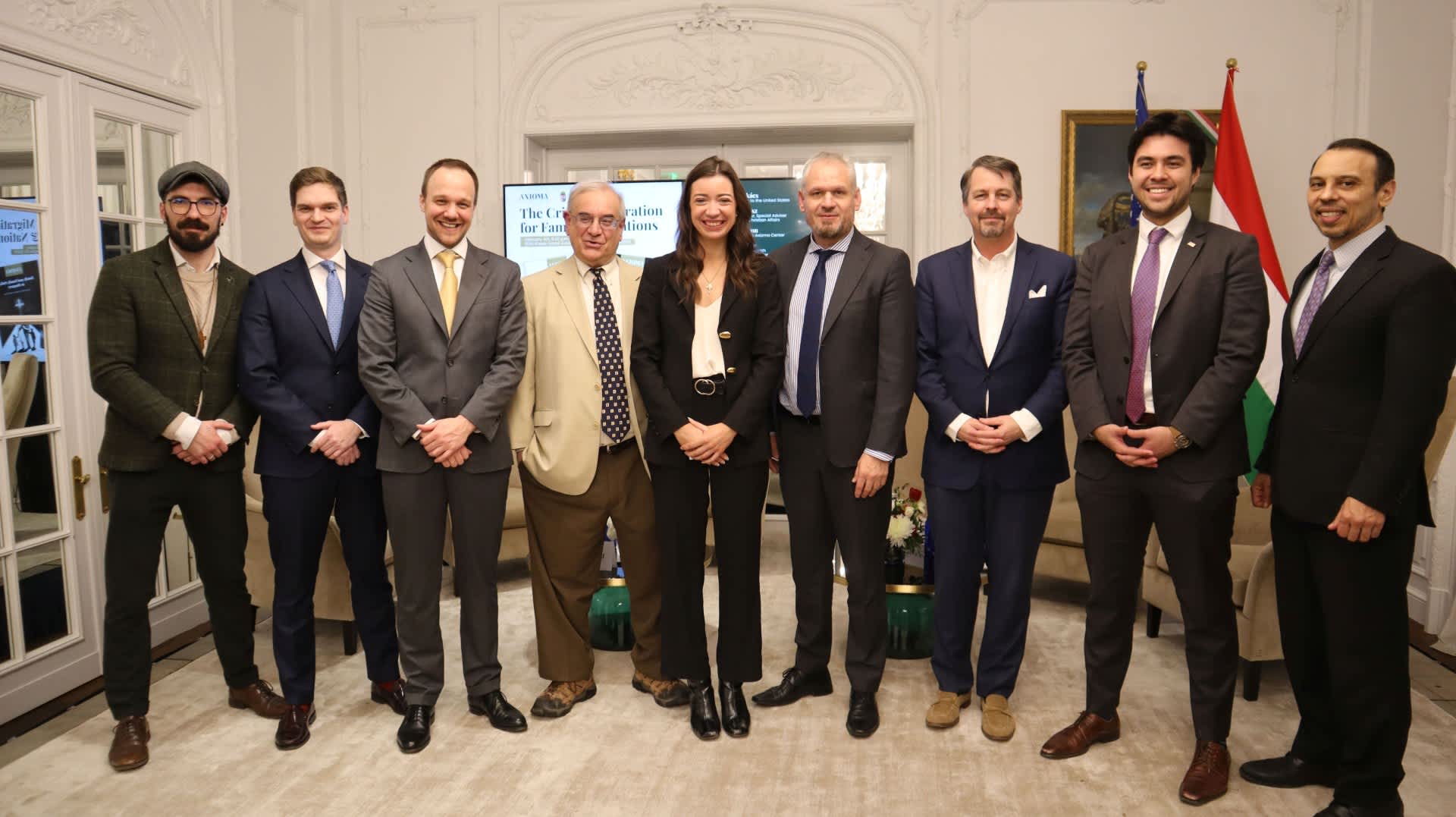
A Hungarian think tank’s new paper “Migration and Ethics: The Axioms of a Christian Migration Policy” prompts a meeting of the minds.
Read More