awesome

‘God wants to cover us in robes of grace,’ Catholic fashion writer says #Catholic According to Catholic author Mary Harper, the way we dress can be a way to express faith, human dignity, and personal identity.Harper, author of “The Liturgical Style Guide,” in which she explores how faith should influence how we dress, noted that the Bible shows the symbolic importance of clothing: “It’s actually pretty amazing how, throughout both the Old Testament and the New … clothing is mentioned over 100 times... The majority of times, it’s meant to be a sign of God’s mercy and providence.”This symbolism appears from the very beginning of the Bible, she said in a recent interview posted by the Archdiocese of Miami.
 
 Mary Harper, author of “The Liturgical Style Guide,” explores how faith can influence even everyday dress. | Credit: Archdiocese of Miami
 
 After original sin, Adam and Eve tried to cover themselves by sewing together fig leaves, which Harper called “flimsy.”“What does God do? He literally slaughters an animal, the first sacrifice in Scripture. He covers them in leather garments because he wants them to have something that’s worthy, something that’s good, something that’s actually going to protect them and be lasting,” she explained.According to Harper, this biblical image helps us understand human dignity. “God wants to cover us in robes of grace,” she said, also recalling the parable of the prodigal son, when the father “puts a robe on him and a ring on him, as a reminder of his goodness and his dignity and his identity.”That’s why even something as ordinary as getting dressed every day can have a spiritual dimension. “Even through something that we do every day — getting dressed for the day — the Lord is speaking his providence over you. He desires to lavish you in grace. Even getting dressed in the morning is a way to remember putting on Christ, putting on your baptismal garment again, remembering who you are and who you’re called to be in Christ,” she pointed out.Harper grew up Catholic in New Orleans. She earned her master’s and bachelor’s degrees in theology from Ave Maria University and is the founder of LiturgicalStyle.com, a project dedicated to reflecting on the theological significance of clothing based on the Bible, the stories of the saints, and the liturgical calendar.She also writes for litanynyc.com a Catholic made-to-measure clothing company that seeks to apply the Church’s social teaching in its production process.Clothing as a form of Christian witness“Whether I intend it or not, my clothing is going to communicate something. You wear a school uniform, it tells you what school you go to; priests put on vestments that tell you about the liturgical season. Well, there’s great power in that,” she said.From that perspective, she added, clothing can become a form of Christian witness. “I have the capacity to communicate the Gospel through my very garments, through intentionality, creativity, and beauty.”The author also cautioned that the Christian view of modesty avoids two extremes: absolute individualism and fear of the body.“One extreme is, I can wear whatever I want, I don’t care what anyone else thinks about it. At the same time, we don’t want to get to the point of, ‘I don’t know how to dress myself well, and I’m so scared of doing the wrong thing … [and] nothing can show because my body is bad,’” she explained.“The Church has never said that,” Harper added, noting that Christian teaching on the goodness of the human body is developed in depth in St. John Paul II’s theology of the body.More than strict rules, she argued, the key lies in discerning: “What is it that I want to communicate through what I’m wearing?” Harper also explained that modesty involves considering the context and the activity.“It is my responsibility to wear something that makes sense for the activity at hand, for the environment that I’m in, and that allows me to be fully present. That’s a service to everyone around me and to myself,” she stated, citing as an example the impracticality of wearing flip flops to hike in the Rocky Mountains.Drawing inspiration from the saintsHarper also proposed a creative idea for living out one’s faith in everyday life: finding inspiration in the saints when choosing what to wear.This does not mean, she clarified, that we imitate them literally. “I’m not telling you to go around wearing a Carmelite habit,” she joked.Rather, she suggested small symbolic gestures: “If you have Western boots, you can say you’re wearing them in honor of St. Teresa of the Andes,” who loved horseback riding. Or “when you wear jeans, you can think of her, because she just loved to be this great adventurer and going into the mountains” and “I’m going to ask her to pray for me."Creativity and freedom in the Christian lifeFor Harper, the relationship between faith and clothing should not become a source of scrupulosity or pressure.“Sometimes we can get so caught up saying, ‘If I’m a ‘real Catholic,’ then I’m going to dress in this particular way.’ I think it’s really easy to get kind of scrupulous when it comes to clothing,” she reflected.Instead, she recommended bringing the matter to prayer and discernment with trusted individuals. “If you have any concern about, ‘Am I dressing in a way that is good?’, talk to someone who knows your heart,” she advised.Finally, Harper encouraged living out Christian creativity in these everyday details as well: “The Holy Spirit is creative."“When you get dressed for the day, if you just say, ‘Come, Holy Spirit,’ he’s going to show up. It’s going to be awesome and joyful, and it’ll be more fun.”This story was first published by ACI Prensa, the Spanish-language sister service of EWTN News. It has been translated and adapted by EWTN News English.

‘God wants to cover us in robes of grace,’ Catholic fashion writer says #Catholic According to Catholic author Mary Harper, the way we dress can be a way to express faith, human dignity, and personal identity.Harper, author of “The Liturgical Style Guide,” in which she explores how faith should influence how we dress, noted that the Bible shows the symbolic importance of clothing: “It’s actually pretty amazing how, throughout both the Old Testament and the New … clothing is mentioned over 100 times… The majority of times, it’s meant to be a sign of God’s mercy and providence.”This symbolism appears from the very beginning of the Bible, she said in a recent interview posted by the Archdiocese of Miami. Mary Harper, author of “The Liturgical Style Guide,” explores how faith can influence even everyday dress. | Credit: Archdiocese of Miami After original sin, Adam and Eve tried to cover themselves by sewing together fig leaves, which Harper called “flimsy.”“What does God do? He literally slaughters an animal, the first sacrifice in Scripture. He covers them in leather garments because he wants them to have something that’s worthy, something that’s good, something that’s actually going to protect them and be lasting,” she explained.According to Harper, this biblical image helps us understand human dignity. “God wants to cover us in robes of grace,” she said, also recalling the parable of the prodigal son, when the father “puts a robe on him and a ring on him, as a reminder of his goodness and his dignity and his identity.”That’s why even something as ordinary as getting dressed every day can have a spiritual dimension. “Even through something that we do every day — getting dressed for the day — the Lord is speaking his providence over you. He desires to lavish you in grace. Even getting dressed in the morning is a way to remember putting on Christ, putting on your baptismal garment again, remembering who you are and who you’re called to be in Christ,” she pointed out.Harper grew up Catholic in New Orleans. She earned her master’s and bachelor’s degrees in theology from Ave Maria University and is the founder of LiturgicalStyle.com, a project dedicated to reflecting on the theological significance of clothing based on the Bible, the stories of the saints, and the liturgical calendar.She also writes for litanynyc.com a Catholic made-to-measure clothing company that seeks to apply the Church’s social teaching in its production process.Clothing as a form of Christian witness“Whether I intend it or not, my clothing is going to communicate something. You wear a school uniform, it tells you what school you go to; priests put on vestments that tell you about the liturgical season. Well, there’s great power in that,” she said.From that perspective, she added, clothing can become a form of Christian witness. “I have the capacity to communicate the Gospel through my very garments, through intentionality, creativity, and beauty.”The author also cautioned that the Christian view of modesty avoids two extremes: absolute individualism and fear of the body.“One extreme is, I can wear whatever I want, I don’t care what anyone else thinks about it. At the same time, we don’t want to get to the point of, ‘I don’t know how to dress myself well, and I’m so scared of doing the wrong thing … [and] nothing can show because my body is bad,’” she explained.“The Church has never said that,” Harper added, noting that Christian teaching on the goodness of the human body is developed in depth in St. John Paul II’s theology of the body.More than strict rules, she argued, the key lies in discerning: “What is it that I want to communicate through what I’m wearing?” Harper also explained that modesty involves considering the context and the activity.“It is my responsibility to wear something that makes sense for the activity at hand, for the environment that I’m in, and that allows me to be fully present. That’s a service to everyone around me and to myself,” she stated, citing as an example the impracticality of wearing flip flops to hike in the Rocky Mountains.Drawing inspiration from the saintsHarper also proposed a creative idea for living out one’s faith in everyday life: finding inspiration in the saints when choosing what to wear.This does not mean, she clarified, that we imitate them literally. “I’m not telling you to go around wearing a Carmelite habit,” she joked.Rather, she suggested small symbolic gestures: “If you have Western boots, you can say you’re wearing them in honor of St. Teresa of the Andes,” who loved horseback riding. Or “when you wear jeans, you can think of her, because she just loved to be this great adventurer and going into the mountains” and “I’m going to ask her to pray for me."Creativity and freedom in the Christian lifeFor Harper, the relationship between faith and clothing should not become a source of scrupulosity or pressure.“Sometimes we can get so caught up saying, ‘If I’m a ‘real Catholic,’ then I’m going to dress in this particular way.’ I think it’s really easy to get kind of scrupulous when it comes to clothing,” she reflected.Instead, she recommended bringing the matter to prayer and discernment with trusted individuals. “If you have any concern about, ‘Am I dressing in a way that is good?’, talk to someone who knows your heart,” she advised.Finally, Harper encouraged living out Christian creativity in these everyday details as well: “The Holy Spirit is creative."“When you get dressed for the day, if you just say, ‘Come, Holy Spirit,’ he’s going to show up. It’s going to be awesome and joyful, and it’ll be more fun.”This story was first published by ACI Prensa, the Spanish-language sister service of EWTN News. It has been translated and adapted by EWTN News English.

Mary Harper explains the positive dimension of choosing what to wear and what it can express, urging Catholics to invite the Holy Spirit into their fashion choices.

Read More
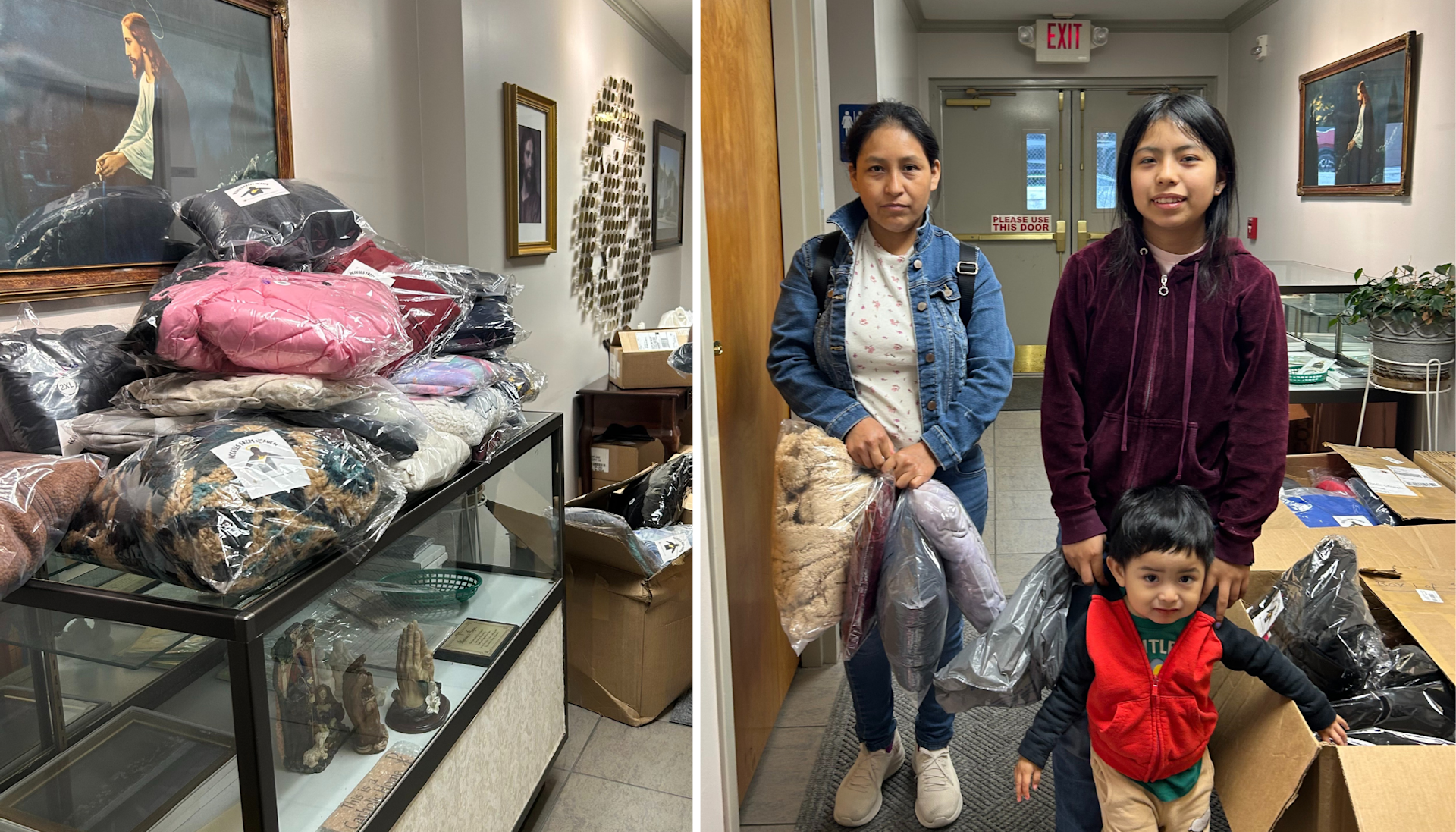
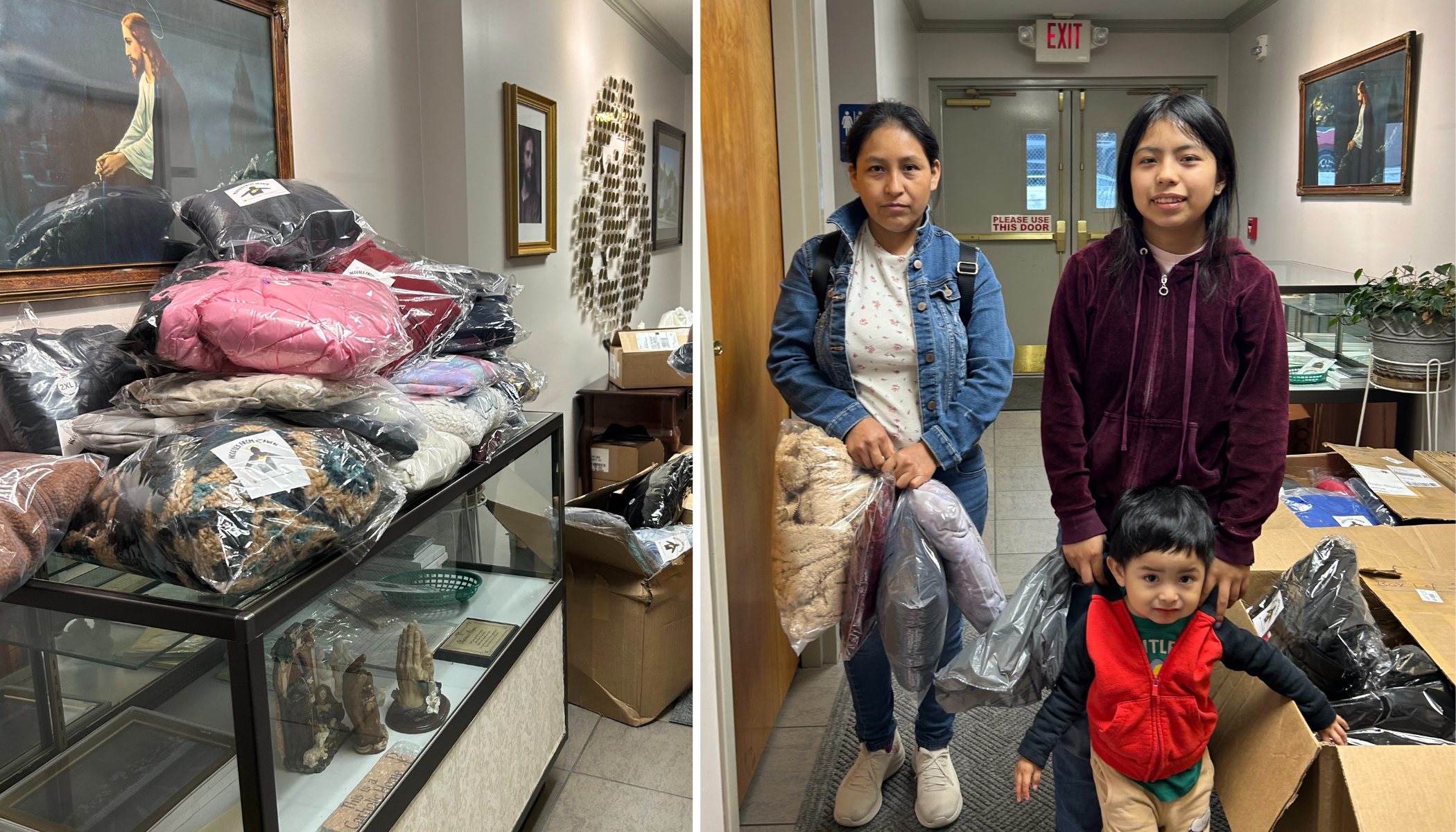
‘Hoodies from Heaven’ brings warmth to children in need #Catholic After retiring in 2021, Patrick McBee began subbing as an aide at local schools in Morgan County, West Virginia. He quickly realized that many children did not have the appropriate clothes to keep them warm during the winter months. Unable to wear their coats during the school day due to security reasons, McBee had an idea to help underprivileged children stay warm — hoodies.A member of the Knights of Columbus for over 20 years, McBee turned to his council for help bringing his idea to fruition. The council at St. Vincent de Paul Catholic Church — the only Catholic Church in Morgan Country — loved the idea and began the Hoodies from Heaven initiative, which solicits donations of new or gently used hoodies to give to children in need at local schools.Since its launch in 2024, Hoodies from Heaven has donated over 300 hoodies to children in six local schools. Each hoodie that is given to a child in need comes with a note that says “God loves you.”McBee told EWTN News that he knew something needed to be done after speaking with the school board and found out that over 1,000 families in Morgan County “identify as needy … and that’s not even counting the ones that do not go to DHHR — Department of Health and Human Resources.”McBee’s wife, Judy, added that “there wasn’t anything specific to help the school-aged children. There’s lots of support for unwed mothers or single mothers with babies and things, but there wasn’t anything for elementary, middle, and high school kids.”She added that part of the Knights’ mission is to “take care of children, widows, and orphans,” and “we knew that the babies were being taken care of. We saw that there were older children suffering and wanted to help them out and let them know that they’re not forgotten about by God.”The married couple explained that the hoodies are handed out by teachers and bus drivers “because they’re the first line of defense. … They distribute them to the kids that they see need them,” Judy said.Despite serving primarily in their local area, Hoodies from Heaven has helped others outside of their county. In September 2025, southwestern West Virginia experienced severe flooding, with many neighborhoods severely damaged or wiped out. The McBees sent over 60 hoodies and some sweatpants that were donated to the Catholic church in the area to be handed out to families in need.The McBees agreed that they would love to “plant the seeds in other Knights of Columbus councils — to do this is so easy,” Judy said.“The people, they just come forth with their generosity … I would say very rarely has a weekend passed that Patrick and I don’t go to Mass and come home with a bag or two of hoodies. It’s awesome how people just step up, but we think that if this word could get out to others, then they could start their own little programs and just specifically to help the older kids who get neglected sometimes.”Patrick shared a story he was told about a little boy who received one of the hoodies. When the boy received it, he asked if he had to give it back. When the teacher told him no and that it was for him to keep, he was “elated.”“When I heard that, that broke my heart,” Judy added.Judy shared that growing up in an affluent town in New Jersey, she “was very fortunate growing up and never wanted for anything as a kid. And I come here, here I am retired, and I see what I see and it just absolutely breaks my heart, but these children here are special.”“They’re very appreciative. They’re not spoiled. They’re not entitled. They know that they don’t come from an entitled background. They’re very humble. The kids here are just extraordinary, just absolutely extraordinary.”As for their hope for Hoodies from Heaven, Judy said: “If we could just make just a couple of kids happy and warm, feel that they’re that valued, and then the little note that goes with them telling them that God loves them too. We hope that that brings a message to them that plants a seed that as they grow older that they’ll know to rely on God, because God provides everything we need.”

‘Hoodies from Heaven’ brings warmth to children in need #Catholic After retiring in 2021, Patrick McBee began subbing as an aide at local schools in Morgan County, West Virginia. He quickly realized that many children did not have the appropriate clothes to keep them warm during the winter months. Unable to wear their coats during the school day due to security reasons, McBee had an idea to help underprivileged children stay warm — hoodies.A member of the Knights of Columbus for over 20 years, McBee turned to his council for help bringing his idea to fruition. The council at St. Vincent de Paul Catholic Church — the only Catholic Church in Morgan Country — loved the idea and began the Hoodies from Heaven initiative, which solicits donations of new or gently used hoodies to give to children in need at local schools.Since its launch in 2024, Hoodies from Heaven has donated over 300 hoodies to children in six local schools. Each hoodie that is given to a child in need comes with a note that says “God loves you.”McBee told EWTN News that he knew something needed to be done after speaking with the school board and found out that over 1,000 families in Morgan County “identify as needy … and that’s not even counting the ones that do not go to DHHR — Department of Health and Human Resources.”McBee’s wife, Judy, added that “there wasn’t anything specific to help the school-aged children. There’s lots of support for unwed mothers or single mothers with babies and things, but there wasn’t anything for elementary, middle, and high school kids.”She added that part of the Knights’ mission is to “take care of children, widows, and orphans,” and “we knew that the babies were being taken care of. We saw that there were older children suffering and wanted to help them out and let them know that they’re not forgotten about by God.”The married couple explained that the hoodies are handed out by teachers and bus drivers “because they’re the first line of defense. … They distribute them to the kids that they see need them,” Judy said.Despite serving primarily in their local area, Hoodies from Heaven has helped others outside of their county. In September 2025, southwestern West Virginia experienced severe flooding, with many neighborhoods severely damaged or wiped out. The McBees sent over 60 hoodies and some sweatpants that were donated to the Catholic church in the area to be handed out to families in need.The McBees agreed that they would love to “plant the seeds in other Knights of Columbus councils — to do this is so easy,” Judy said.“The people, they just come forth with their generosity … I would say very rarely has a weekend passed that Patrick and I don’t go to Mass and come home with a bag or two of hoodies. It’s awesome how people just step up, but we think that if this word could get out to others, then they could start their own little programs and just specifically to help the older kids who get neglected sometimes.”Patrick shared a story he was told about a little boy who received one of the hoodies. When the boy received it, he asked if he had to give it back. When the teacher told him no and that it was for him to keep, he was “elated.”“When I heard that, that broke my heart,” Judy added.Judy shared that growing up in an affluent town in New Jersey, she “was very fortunate growing up and never wanted for anything as a kid. And I come here, here I am retired, and I see what I see and it just absolutely breaks my heart, but these children here are special.”“They’re very appreciative. They’re not spoiled. They’re not entitled. They know that they don’t come from an entitled background. They’re very humble. The kids here are just extraordinary, just absolutely extraordinary.”As for their hope for Hoodies from Heaven, Judy said: “If we could just make just a couple of kids happy and warm, feel that they’re that valued, and then the little note that goes with them telling them that God loves them too. We hope that that brings a message to them that plants a seed that as they grow older that they’ll know to rely on God, because God provides everything we need.”

Amid the freezing temperatures hitting many parts of the U.S., one Knights of Columbus council is providing warmth to children in need through an initiative called “Hoodies from Heaven.”
Read More