bears

More bishops call for Notre Dame to drop appointment of pro-abortion professor #Catholic Nearly half a dozen more bishops have joined the growing backlash against the University of Notre Dame over its controversial appointment of an outspoken abortion advocate to lead a university department.Fort Wayne-South Bend, Indiana, Bishop Kevin Rhoades on Feb. 11 issued a statement criticizing the university for appointing global affairs Professor Susan Ostermann as director of the school’s Liu Institute for Asia and Asian Studies.Three of Rhoades’ fellow bishops quickly backed the prelate’s remarks, voicing support on social media and calling on the university to drop Ostermann’s nomination. On Feb. 12, five more bishops commended Rhoades for his statement and expressed hope that the historic Catholic university would rescind the appointment. Gallup, New Mexico, Bishop James Wall praised Rhoades for his stance, with the western U.S. prelate offering a quote attributed to Pope Leo XIV: “We cannot build a just society if we discard the weakest, whether the child in the womb or the old man in his fragility, for both are gifts from God.”TweetSan Francisco Archbishop Salvatore Cordileone also thanked Rhoades for “speaking up.” “Holy Mary, Mother of God and Our Lady, pray for the university that bears your name,” Cordileone said. TweetGreen Bay, Wisconsin, Bishop David Ricken, meanwhile, wrote: “I fully affirm and stand in solidarity with my brother bishop [Rhoades].” He said Rhoades spoke “with clarity, courage, and fidelity to the Church’s mission.”“[L]et us turn with confidence to our Blessed Mother. Our Lady, pray for us! You are our loving Mother — we love you and entrust this to your Immaculate Heart,” Ricken wrote.TweetMadison, Wisconsin, Bishop Donald Hying described Rhoades’ statement as “a profound reflection on human dignity and the culture of life.”Tweet“We pray that all of our educational institutions support Catholic teaching, especially regarding human life,” he said. Lincoln, Nebraska, Bishop James Conley said he “stand[s] in support of Bishop Rhoades” while sharing his concern over the appointment. “Catholic institutions must faithfully reflect the truth of the dignity of every human life in both their mission and their leadership,” he said. TweetThe University of Notre Dame has continued to stand by its appointment of Ostermann, whose post is scheduled to take effect July 1. Rhoades on Feb. 11 said there is “still time [for the university] to make things right.”Ostermann, meanwhile, told the National Catholic Register in January that her role at the school “is to support the diverse research of our scholars and students, not to advance a personal political agenda.”The professor said she “respect[s] Notre Dame’s institutional position on the sanctity of life at every stage” and described herself as “inspired by the university’s focus on integral human development, which calls us to promote the dignity and flourishing of every person.”

More bishops call for Notre Dame to drop appointment of pro-abortion professor #Catholic Nearly half a dozen more bishops have joined the growing backlash against the University of Notre Dame over its controversial appointment of an outspoken abortion advocate to lead a university department.Fort Wayne-South Bend, Indiana, Bishop Kevin Rhoades on Feb. 11 issued a statement criticizing the university for appointing global affairs Professor Susan Ostermann as director of the school’s Liu Institute for Asia and Asian Studies.Three of Rhoades’ fellow bishops quickly backed the prelate’s remarks, voicing support on social media and calling on the university to drop Ostermann’s nomination. On Feb. 12, five more bishops commended Rhoades for his statement and expressed hope that the historic Catholic university would rescind the appointment. Gallup, New Mexico, Bishop James Wall praised Rhoades for his stance, with the western U.S. prelate offering a quote attributed to Pope Leo XIV: “We cannot build a just society if we discard the weakest, whether the child in the womb or the old man in his fragility, for both are gifts from God.”TweetSan Francisco Archbishop Salvatore Cordileone also thanked Rhoades for “speaking up.” “Holy Mary, Mother of God and Our Lady, pray for the university that bears your name,” Cordileone said. TweetGreen Bay, Wisconsin, Bishop David Ricken, meanwhile, wrote: “I fully affirm and stand in solidarity with my brother bishop [Rhoades].” He said Rhoades spoke “with clarity, courage, and fidelity to the Church’s mission.”“[L]et us turn with confidence to our Blessed Mother. Our Lady, pray for us! You are our loving Mother — we love you and entrust this to your Immaculate Heart,” Ricken wrote.TweetMadison, Wisconsin, Bishop Donald Hying described Rhoades’ statement as “a profound reflection on human dignity and the culture of life.”Tweet“We pray that all of our educational institutions support Catholic teaching, especially regarding human life,” he said. Lincoln, Nebraska, Bishop James Conley said he “stand[s] in support of Bishop Rhoades” while sharing his concern over the appointment. “Catholic institutions must faithfully reflect the truth of the dignity of every human life in both their mission and their leadership,” he said. TweetThe University of Notre Dame has continued to stand by its appointment of Ostermann, whose post is scheduled to take effect July 1. Rhoades on Feb. 11 said there is “still time [for the university] to make things right.”Ostermann, meanwhile, told the National Catholic Register in January that her role at the school “is to support the diverse research of our scholars and students, not to advance a personal political agenda.”The professor said she “respect[s] Notre Dame’s institutional position on the sanctity of life at every stage” and described herself as “inspired by the university’s focus on integral human development, which calls us to promote the dignity and flourishing of every person.”

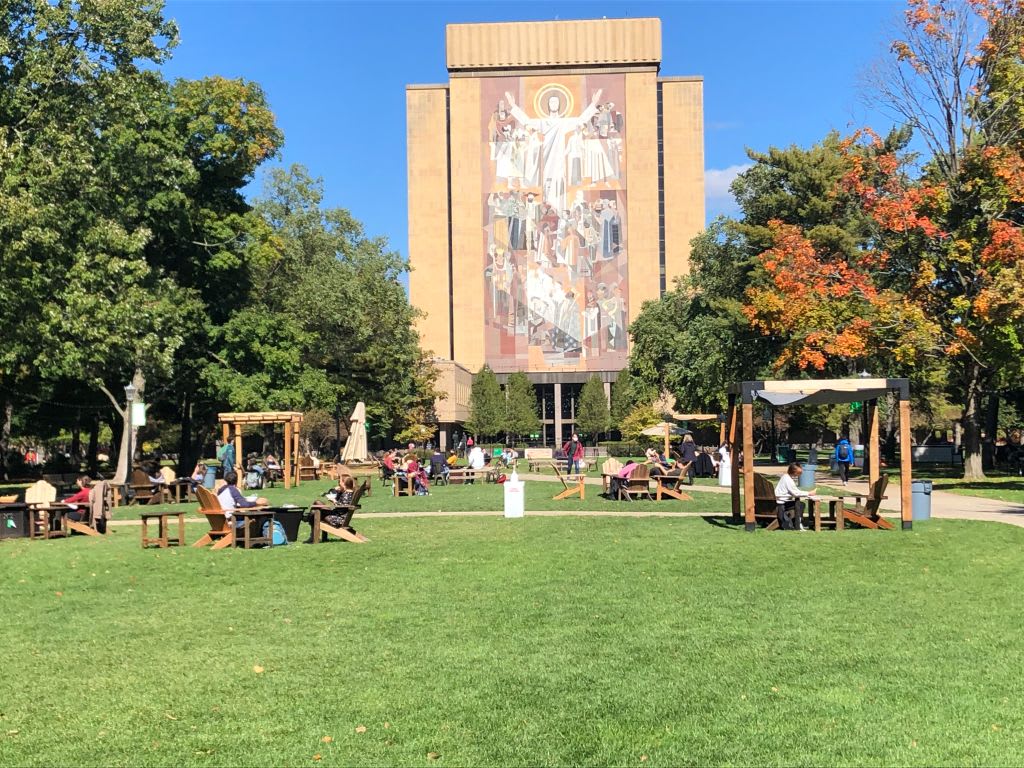
The university has endured sustained backlash for nominating the outspoken abortion advocate to lead an academic department.
Read More
Replica of Manila’s famed ‘Black Nazarene’ arrives in Los Angeles Archdiocese #Catholic The centuries-old devotion to Nuestro Padre Jesús Nazareno of Quiapo, Manila, in the Philippines has formally reached the U.S. West Coast as an official replica of the revered image was turned over to the Archdiocese of Los Angeles and entrusted to Holy Family Parish in Artesia and the archdiocese’s Filipino ministry.The replica, gifted by the Minor Basilica and National Shrine of Jesús Nazareno in Manila, will be enthroned at Holy Family Parish and serve as a pilgrim image, visiting parishes across the archdiocese’s five pastoral regions as part of a broader evangelization initiative.
 
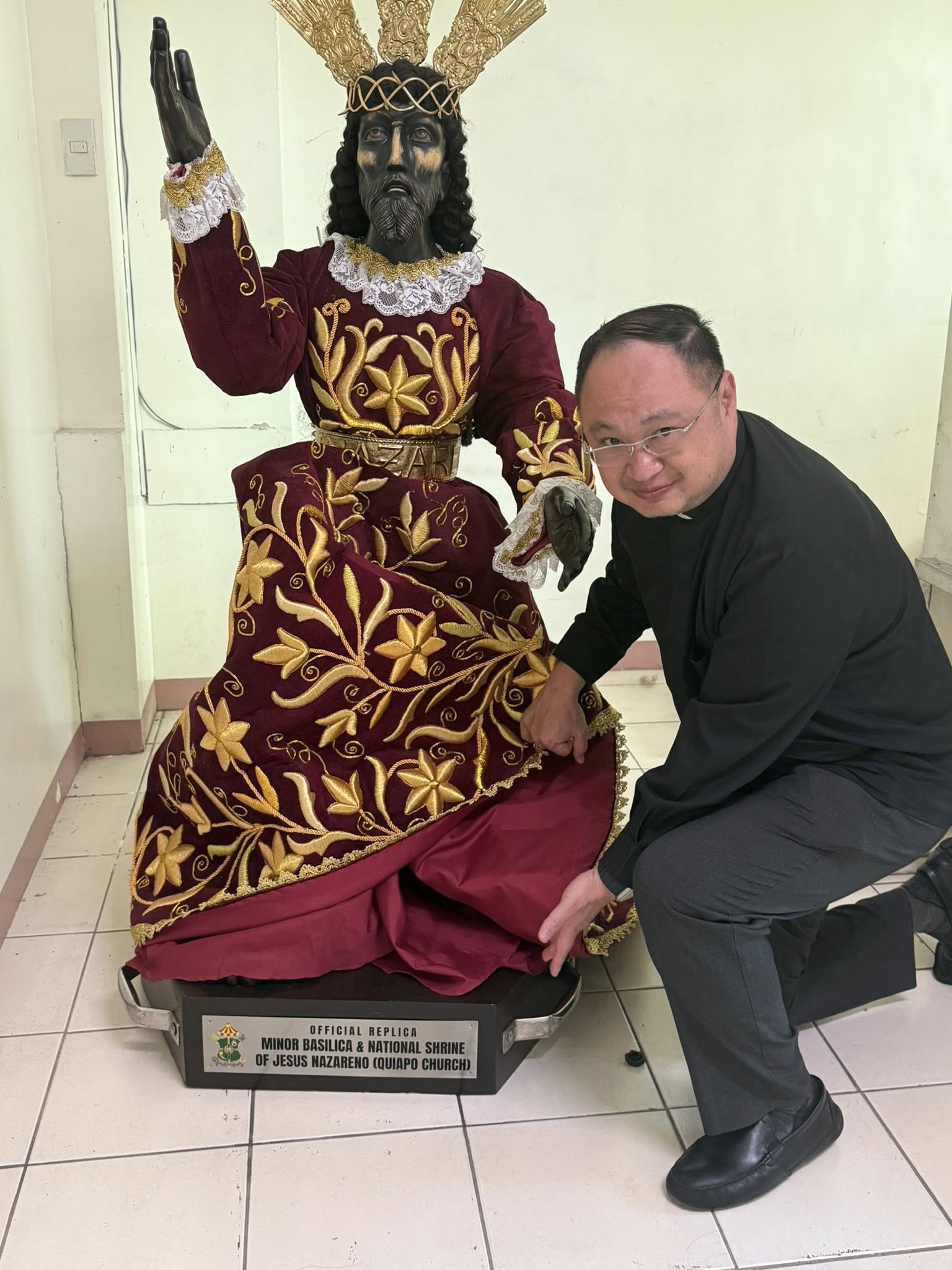
 Father John Cordero displays the official replica of the Jesús Nazareno from Manila’s Quiapo Church in 2025. | Credit: Holy Family Catholic Church Artesia
 
 The arrival of the image marks the fruit of an evangelization effort spearheaded by then-rector of Quiapo Church, now Bishop Rufino Sescon of Balanga, Bataan. According to Father John Cordero of the Marian Missionaries of the Holy Cross, pastor of Holy Family Parish, the development unfolded providentially.“The real starting point of this development was the evangelization initiative of the National Shrine of Jesús Nazareno in Manila, spearheaded by then-rector and now bishop of Balanga, Rufino ‘Jun’ Sescon,” Cordero told EWTN News.The replica was initially offered to the Archdiocese of Los Angeles through Father Rodel Balagtas, priest liaison to the Filipino Ministry. Although another parish had first expressed willingness to host the image, no final arrangements had been made.Months later, Sescon personally contacted Cordero — a former graduate school classmate — to reestablish communication between Quiapo Church and a receiving parish. What seemed at first a closed matter reopened, and Cordero discerned that the parish could accommodate the image by converting a religious goods store in the vestibule into a shrine.“I noticed something that had slipped my attention: We have space,” Cordero said. After consultation with Filipino Ministry leaders, including its president and parishioner Noel Motus, the parish agreed to receive the image. “It is a gift from the national shrine, and our parish was merely chosen to be the caretakers.”Formal reception and MassSescon will celebrate the Mass marking the official arrival and reception of the replica in Los Angeles on Feb. 14. Later this year, the image will also be brought to the annual Religious Education Congress, further expanding its exposure to thousands of catechists and ministry leaders.Bishop Oscar Solis of Salt Lake City — the first Filipino-born bishop to lead a diocese in the United States — is also scheduled to celebrate a Mass in connection with the image’s visit.While there was no prior organized clamor among parishioners for a Nazareno image, Cordero said the parishioners’ response after learning that their parish will be the home of the replica has been one of “sheer joy,” with Filipino and Hispanic faithful alike rallying around the new shrine.“As a pastor explaining this new devotion to my multicultural parish, I would like to point to our mutual interconnectedness with this image,” he said. “This is primarily an image of Jesus, the focal point of our Christian unity.”Historical connectionsThe original image of the Jesús Nazareno, which arrived in Manila from Mexico in 1606, bears deep historical ties to both the Philippines and the Americas. California itself was once part of Mexico, and devotion to Jesús Nazareno has long-standing roots throughout Latin America.“The image, touched by hundreds of millions of pilgrims throughout its four centuries of devotional history, connects us with the everyday faith stories of all who identify with the suffering of Our Lord,” Cordero said.In a gesture underscoring that spiritual continuity, “like the Galileans who were content with touching the tassels of the cloak of Jesus for their healing,” Cordero requested Father Jade Licuanan, the current Quiapo Basilica rector, to have the replica be touched to the original image in Quiapo before being shipped to the United States. Cordero described this as an “intimate act of blessing and sending.”Mass devotion in ManilaThe devotion to the image once known as the “Black Nazarene” is among the largest Catholic expressions of popular piety in the world. Each January, millions of barefoot devotees join the Traslación procession in Manila, accompanying the dark wooden image of Christ carrying the cross through the streets of Quiapo.
 
 Manila’s feast of the Black Nazarene draws 9.6 million devotees
 
 Cordero, who recently visited the basilica, described the scale of devotion as “mind-boggling,” noting that even hourly Masses draw thousands of worshippers.Now, he believes, the image comes to Los Angeles at a providential moment.“Amid a sociopolitical climate marked by fear and division, this symbol of our connection in the Lord and with one another, embodied in this rustic image of Jesus carrying the cross, offers us consolation and mission,” he said.Citing the U.S. bishops’ pastoral letter “A Treasured Presence,” which describes Filipino Catholics as a vital but often unseen minority in the United States, Cordero said the Nazareno highlights the “prophetic resiliency and joy” they bring to the Church.“The Jesús Nazareno reassures us that we are not alone in bearing our crosses,” he said. “In this strange new world, our Catholic faith has been our familiar refuge of connection, support, and strength.”Revitalizing faithBalagtas said he hopes the popular Filipino icon that has a rich tradition in Latin America will help revitalize the faith of the people of the largest and most ethnically diverse archdiocese in the United States, thanks to the vibrant devotion of Filipino Catholics. 
 
 Father John Cordero, MMHC, signs the “Memorandum of Agreement” formalizing Holy Family Parish’s reception of the official replica of the Jesús Nazareno on behalf of the Filipino Ministry of the Archdiocese of Los Angeles, as Father Jade Licuanan, rector of the Basilica and National Shrine of Jesús Nazareno in Manila, looks on in 2025. | Credit: Holy Family Catholic Church Artesia
 
 “The people who are filling the pews of the churches in the Archdiocese of Los Angeles, as in other dioceses, are Filipino Catholics.”From Quiapo, Manila’s narrow streets, where millions gather each year for the Traslación, to the sprawling parishes of Southern California, the cross-bearing Christ now stands in a new land — inviting the faithful not only to venerate but also to follow him.

Replica of Manila’s famed ‘Black Nazarene’ arrives in Los Angeles Archdiocese #Catholic The centuries-old devotion to Nuestro Padre Jesús Nazareno of Quiapo, Manila, in the Philippines has formally reached the U.S. West Coast as an official replica of the revered image was turned over to the Archdiocese of Los Angeles and entrusted to Holy Family Parish in Artesia and the archdiocese’s Filipino ministry.The replica, gifted by the Minor Basilica and National Shrine of Jesús Nazareno in Manila, will be enthroned at Holy Family Parish and serve as a pilgrim image, visiting parishes across the archdiocese’s five pastoral regions as part of a broader evangelization initiative. Father John Cordero displays the official replica of the Jesús Nazareno from Manila’s Quiapo Church in 2025. | Credit: Holy Family Catholic Church Artesia The arrival of the image marks the fruit of an evangelization effort spearheaded by then-rector of Quiapo Church, now Bishop Rufino Sescon of Balanga, Bataan. According to Father John Cordero of the Marian Missionaries of the Holy Cross, pastor of Holy Family Parish, the development unfolded providentially.“The real starting point of this development was the evangelization initiative of the National Shrine of Jesús Nazareno in Manila, spearheaded by then-rector and now bishop of Balanga, Rufino ‘Jun’ Sescon,” Cordero told EWTN News.The replica was initially offered to the Archdiocese of Los Angeles through Father Rodel Balagtas, priest liaison to the Filipino Ministry. Although another parish had first expressed willingness to host the image, no final arrangements had been made.Months later, Sescon personally contacted Cordero — a former graduate school classmate — to reestablish communication between Quiapo Church and a receiving parish. What seemed at first a closed matter reopened, and Cordero discerned that the parish could accommodate the image by converting a religious goods store in the vestibule into a shrine.“I noticed something that had slipped my attention: We have space,” Cordero said. After consultation with Filipino Ministry leaders, including its president and parishioner Noel Motus, the parish agreed to receive the image. “It is a gift from the national shrine, and our parish was merely chosen to be the caretakers.”Formal reception and MassSescon will celebrate the Mass marking the official arrival and reception of the replica in Los Angeles on Feb. 14. Later this year, the image will also be brought to the annual Religious Education Congress, further expanding its exposure to thousands of catechists and ministry leaders.Bishop Oscar Solis of Salt Lake City — the first Filipino-born bishop to lead a diocese in the United States — is also scheduled to celebrate a Mass in connection with the image’s visit.While there was no prior organized clamor among parishioners for a Nazareno image, Cordero said the parishioners’ response after learning that their parish will be the home of the replica has been one of “sheer joy,” with Filipino and Hispanic faithful alike rallying around the new shrine.“As a pastor explaining this new devotion to my multicultural parish, I would like to point to our mutual interconnectedness with this image,” he said. “This is primarily an image of Jesus, the focal point of our Christian unity.”Historical connectionsThe original image of the Jesús Nazareno, which arrived in Manila from Mexico in 1606, bears deep historical ties to both the Philippines and the Americas. California itself was once part of Mexico, and devotion to Jesús Nazareno has long-standing roots throughout Latin America.“The image, touched by hundreds of millions of pilgrims throughout its four centuries of devotional history, connects us with the everyday faith stories of all who identify with the suffering of Our Lord,” Cordero said.In a gesture underscoring that spiritual continuity, “like the Galileans who were content with touching the tassels of the cloak of Jesus for their healing,” Cordero requested Father Jade Licuanan, the current Quiapo Basilica rector, to have the replica be touched to the original image in Quiapo before being shipped to the United States. Cordero described this as an “intimate act of blessing and sending.”Mass devotion in ManilaThe devotion to the image once known as the “Black Nazarene” is among the largest Catholic expressions of popular piety in the world. Each January, millions of barefoot devotees join the Traslación procession in Manila, accompanying the dark wooden image of Christ carrying the cross through the streets of Quiapo. Manila’s feast of the Black Nazarene draws 9.6 million devotees Cordero, who recently visited the basilica, described the scale of devotion as “mind-boggling,” noting that even hourly Masses draw thousands of worshippers.Now, he believes, the image comes to Los Angeles at a providential moment.“Amid a sociopolitical climate marked by fear and division, this symbol of our connection in the Lord and with one another, embodied in this rustic image of Jesus carrying the cross, offers us consolation and mission,” he said.Citing the U.S. bishops’ pastoral letter “A Treasured Presence,” which describes Filipino Catholics as a vital but often unseen minority in the United States, Cordero said the Nazareno highlights the “prophetic resiliency and joy” they bring to the Church.“The Jesús Nazareno reassures us that we are not alone in bearing our crosses,” he said. “In this strange new world, our Catholic faith has been our familiar refuge of connection, support, and strength.”Revitalizing faithBalagtas said he hopes the popular Filipino icon that has a rich tradition in Latin America will help revitalize the faith of the people of the largest and most ethnically diverse archdiocese in the United States, thanks to the vibrant devotion of Filipino Catholics. Father John Cordero, MMHC, signs the “Memorandum of Agreement” formalizing Holy Family Parish’s reception of the official replica of the Jesús Nazareno on behalf of the Filipino Ministry of the Archdiocese of Los Angeles, as Father Jade Licuanan, rector of the Basilica and National Shrine of Jesús Nazareno in Manila, looks on in 2025. | Credit: Holy Family Catholic Church Artesia “The people who are filling the pews of the churches in the Archdiocese of Los Angeles, as in other dioceses, are Filipino Catholics.”From Quiapo, Manila’s narrow streets, where millions gather each year for the Traslación, to the sprawling parishes of Southern California, the cross-bearing Christ now stands in a new land — inviting the faithful not only to venerate but also to follow him.

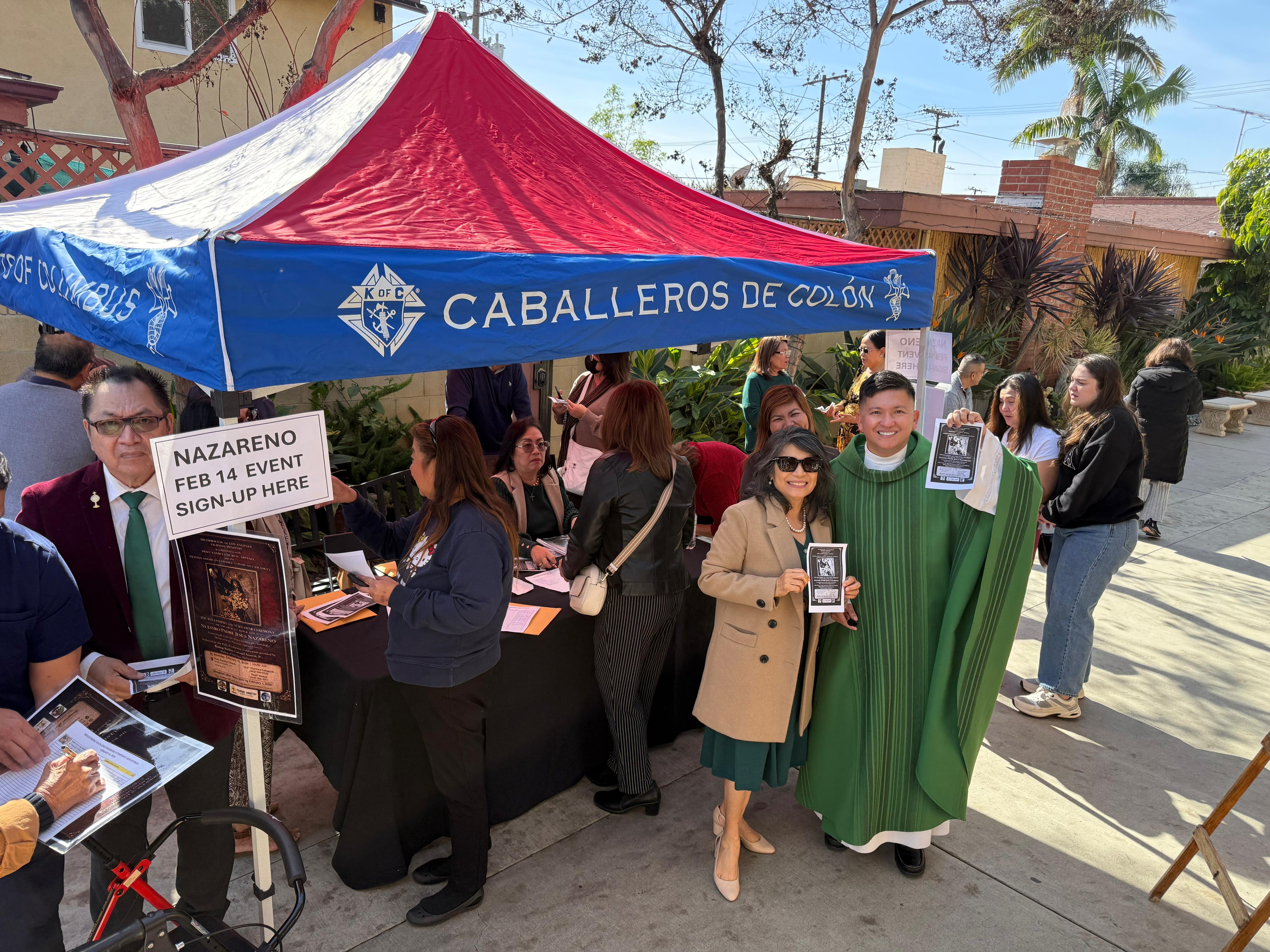
An official replica of Manila’s centuries-old Jesús Nazareno image has been entrusted to Holy Family Parish in Artesia, California, bringing one of the world’s largest Catholic devotions to the U.S.
Read More