Declaration of Independence

University of Dallas panel explores American exceptionalism through a Catholic lens #Catholic In a standing-room-only event, college students lined the walls of a large room at the University of Dallas to hear three Catholic academics and an apologist  reflect on what makes America exceptional in a celebration marking the 250th anniversary of the founding of the United States.Liam Ritter, a junior and the founder of the university’s Young Americans for Freedom chapter, which hosted the discussion, told EWTN News that the March 4 panel of speakers served as the capstone of three days of celebrations at the university.The panel was comprised of University President Jonathan Sanford; Trent Horn, staff apologist with Catholic Answers; Burt Folsom, distinguished fellow at Hillsdale College and economic historian; and Susan Hanssen, associate professor of history at the University of Dallas.‘We have a population of people who know what is at stake’In response to Ritter’s question, “Why [is it] that our political regime has been so stable for so long,” Hanssen recalled America’s first immigrants. “I think the first thing that makes America exceptional, and its political regime exceptional, is the fact that America was first populated by people who fled the rise of the modern nation state and totalitarianism … and so we have a population of people who know what is at stake in political liberty," she said.“Theyʼve seen what happened to their ancestors,” she continued. “They remember the stories. And America has been blessed in its political constitution with the regime of liberty, which has made possible the flourishing of subsidiary communities and societies.”Hanssen said we should not take for granted today that we still “have a free people." “We need to listen to our latest immigrants … those who have fled Venezuela, those who have fled Iran, like my uncle, a Persian Jew, who refuses to call himself Iranian because he associates modern Iran with the regime of the Ayatollah.”‘Get married, have children, raise them well’Sanford said that though we are a nation of immigrants, “there won’t be enough to pull in to make up for” the continuing demographic decline.“Get married, have children, raise them well,” he said to chuckles from a receptive audience, which was mostly composed of college students.He encouraged the students not to focus on “one big step,” but rather, to take smaller steps: “Get up early. Pray. Exercise. Go through the day in an ordered fashion, give Caesar what is Caesarʼs, and God what is God’s.”“Do the little things thousands and thousands of times,” he said.“In order to exercise liberty properly,” he continued, one has to ask, "How should I live my life?” and then rely on the institutions that “help you do that.”He called the family the “foundational institution” of America. “Recover the family,” he said.In addition, “we need to see those institutions that mediate the virtues — schools, universities — that embrace fully the idea of what [the virtues] are.”Horn also encouraged students to focus on family relationships, telling them “get off the phones and the internet. They’re killing all of us. They’re rewiring our brains.”
 
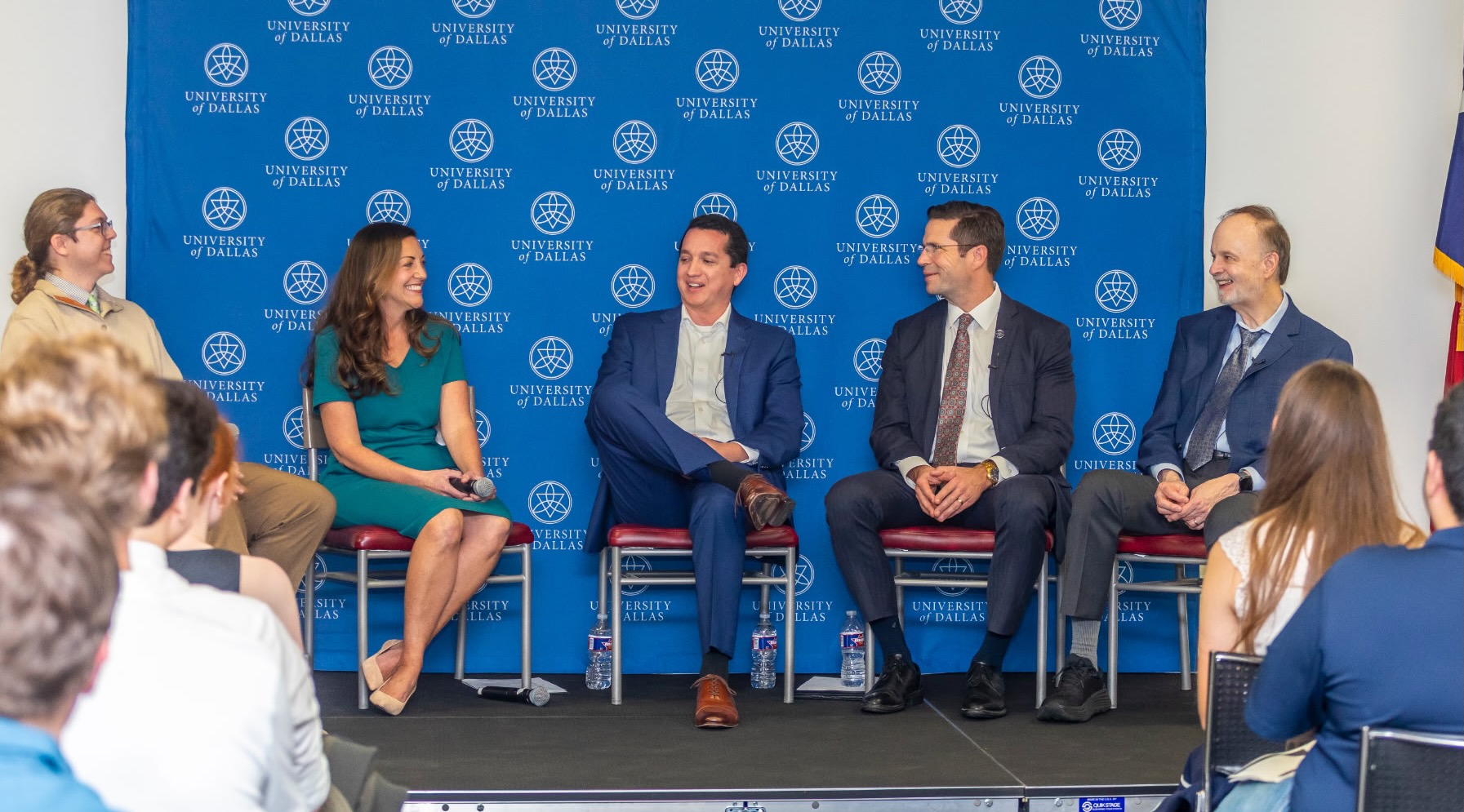
 Trent Horn (left), an apologist at Catholic Answers, and University of Dallas President Jonathan Sanford participate in a panel on American exceptionalism at the University of Dallas on March 4, 2026. | Credit: Courtesy of University of Dallas Young Americans for Freedom Chapter
 
 Of people currently in their 20s in America, "one in three will never have children,” he lamented, implying too much technology use is partly to blame.The Catholic Answers apologist pointed out, however, that though the Second Industrial Revolution “broke the family” by encouraging workers to move away from their homes and families to pursue careers, the internet “post-Covid,” in the age of “Zoom and telecommuting … might be good” because many people no longer have to choose between a job and staying near their extended families.“Maybe tech can help build up family networks,” he said.‘The greatest outpouring of economic development’ in historyRitter told EWTN news that he chose speakers who could address “the wonderful things the U.S. has contributed” to the world because “a lot of young people don’t have appropriate gratitude for the country.”Ritter asked Folsom, a historian who focuses on economics and industrial affairs, about what the professor believes the U.S. has contributed to world economics and world innovations.Folsom said that the generation after the Civil War, from 1865 to 1905, was responsible for “the greatest outpouring of economic development … in world history” and “gave us the rise of an America that became a world power” by World War I.He listed inventions that facilitated the rapid development of industry and infrastructure in the country during the Second Industrial Revolution, including the typewriter, the telephone, adding machines, the light bulb, electricity, factory-produced cars, and recording devices for music and movies, among other innovations.Through the Declaration of Independence and the U.S. Constitution, “the founders gave us the freedom” to develop these technologies, he said. “We had amazing infrastructure that allowed people to produce, and not have government get in their way.”The professor said the post-Civil War period could be eclipsed in the present day “because with artificial intelligence, this generation may yet be able to come up with more.”‘A responsibility for this political regime of freedom’At the conclusion of the panel discussion, Hanssen called the feeling in the room “electric, it’s teeming with patriotism. This isn’t a normal college campus.”Referring to Sanford’s earlier admonition to ”get married and have kids,” she said: “I agree, be fruitful and multiply … Preach the Gospel, and baptize in the name of Jesus, but also, go into politics!” she exclaimed.She encouraged the students to develop “the ability to love something so much that you would die for it: God, family, country.”“Recognize what is at stake. We have a responsibility for this political regime of freedom, to the immigrants who come here … to our children… to preserve the rule of law.”She concluded to loud applause: “So family; yes! Faith; yes, but to the barricades, ladies and gentlemen!"

University of Dallas panel explores American exceptionalism through a Catholic lens #Catholic In a standing-room-only event, college students lined the walls of a large room at the University of Dallas to hear three Catholic academics and an apologist  reflect on what makes America exceptional in a celebration marking the 250th anniversary of the founding of the United States.Liam Ritter, a junior and the founder of the university’s Young Americans for Freedom chapter, which hosted the discussion, told EWTN News that the March 4 panel of speakers served as the capstone of three days of celebrations at the university.The panel was comprised of University President Jonathan Sanford; Trent Horn, staff apologist with Catholic Answers; Burt Folsom, distinguished fellow at Hillsdale College and economic historian; and Susan Hanssen, associate professor of history at the University of Dallas.‘We have a population of people who know what is at stake’In response to Ritter’s question, “Why [is it] that our political regime has been so stable for so long,” Hanssen recalled America’s first immigrants. “I think the first thing that makes America exceptional, and its political regime exceptional, is the fact that America was first populated by people who fled the rise of the modern nation state and totalitarianism … and so we have a population of people who know what is at stake in political liberty," she said.“Theyʼve seen what happened to their ancestors,” she continued. “They remember the stories. And America has been blessed in its political constitution with the regime of liberty, which has made possible the flourishing of subsidiary communities and societies.”Hanssen said we should not take for granted today that we still “have a free people." “We need to listen to our latest immigrants … those who have fled Venezuela, those who have fled Iran, like my uncle, a Persian Jew, who refuses to call himself Iranian because he associates modern Iran with the regime of the Ayatollah.”‘Get married, have children, raise them well’Sanford said that though we are a nation of immigrants, “there won’t be enough to pull in to make up for” the continuing demographic decline.“Get married, have children, raise them well,” he said to chuckles from a receptive audience, which was mostly composed of college students.He encouraged the students not to focus on “one big step,” but rather, to take smaller steps: “Get up early. Pray. Exercise. Go through the day in an ordered fashion, give Caesar what is Caesarʼs, and God what is God’s.”“Do the little things thousands and thousands of times,” he said.“In order to exercise liberty properly,” he continued, one has to ask, "How should I live my life?” and then rely on the institutions that “help you do that.”He called the family the “foundational institution” of America. “Recover the family,” he said.In addition, “we need to see those institutions that mediate the virtues — schools, universities — that embrace fully the idea of what [the virtues] are.”Horn also encouraged students to focus on family relationships, telling them “get off the phones and the internet. They’re killing all of us. They’re rewiring our brains.” Trent Horn (left), an apologist at Catholic Answers, and University of Dallas President Jonathan Sanford participate in a panel on American exceptionalism at the University of Dallas on March 4, 2026. | Credit: Courtesy of University of Dallas Young Americans for Freedom Chapter Of people currently in their 20s in America, "one in three will never have children,” he lamented, implying too much technology use is partly to blame.The Catholic Answers apologist pointed out, however, that though the Second Industrial Revolution “broke the family” by encouraging workers to move away from their homes and families to pursue careers, the internet “post-Covid,” in the age of “Zoom and telecommuting … might be good” because many people no longer have to choose between a job and staying near their extended families.“Maybe tech can help build up family networks,” he said.‘The greatest outpouring of economic development’ in historyRitter told EWTN news that he chose speakers who could address “the wonderful things the U.S. has contributed” to the world because “a lot of young people don’t have appropriate gratitude for the country.”Ritter asked Folsom, a historian who focuses on economics and industrial affairs, about what the professor believes the U.S. has contributed to world economics and world innovations.Folsom said that the generation after the Civil War, from 1865 to 1905, was responsible for “the greatest outpouring of economic development … in world history” and “gave us the rise of an America that became a world power” by World War I.He listed inventions that facilitated the rapid development of industry and infrastructure in the country during the Second Industrial Revolution, including the typewriter, the telephone, adding machines, the light bulb, electricity, factory-produced cars, and recording devices for music and movies, among other innovations.Through the Declaration of Independence and the U.S. Constitution, “the founders gave us the freedom” to develop these technologies, he said. “We had amazing infrastructure that allowed people to produce, and not have government get in their way.”The professor said the post-Civil War period could be eclipsed in the present day “because with artificial intelligence, this generation may yet be able to come up with more.”‘A responsibility for this political regime of freedom’At the conclusion of the panel discussion, Hanssen called the feeling in the room “electric, it’s teeming with patriotism. This isn’t a normal college campus.”Referring to Sanford’s earlier admonition to ”get married and have kids,” she said: “I agree, be fruitful and multiply … Preach the Gospel, and baptize in the name of Jesus, but also, go into politics!” she exclaimed.She encouraged the students to develop “the ability to love something so much that you would die for it: God, family, country.”“Recognize what is at stake. We have a responsibility for this political regime of freedom, to the immigrants who come here … to our children… to preserve the rule of law.”She concluded to loud applause: “So family; yes! Faith; yes, but to the barricades, ladies and gentlemen!"

The speakers encouraged the college students to get married, have children, stay off the internet (unless it enables them to telework and stay near their extended families), and be political.
Read More
Archbishop Lori issues pastoral letter on political life in honor of 250th anniversary of the U.S. #Catholic Archbishop William Lori of Baltimore urged Catholics to foster a political culture grounded in Christ by prioritizing human dignity and genuine encounter amid partisan divisions.“In Charity and Truth: Toward a Renewed Political Culture,” released in anticipation of the 250th anniversary of the Declaration of Independence, is among the nine pastoral letters and reflections Lori has written as archbishop of Baltimore. The Feb. 9 letter explored how the anniversary can be “a moment of grace” and one of “responsibility.”The U.S. can both take pride in its achievements and “the vibrancy of our Catholic faith” while also recognizing “the fractures, wounds, and crises that mark both our national life and, sadly, even at times our ecclesial life,” Lori wrote.“As our nation approaches the 250th anniversary of the signing of the Declaration of Independence, we find ourselves invited into a moment of profound reflection and renewal,” Lori said. “Anniversaries are not merely occasions for nostalgia or celebration. Authentic remembrance always orients us toward renewal; it calls us to consider not only who we have been and who we are becoming — but, by God’s grace, who we are called to be.”The letter draws on teachings from the popes, the Second Vatican Council, the Constitution, and the lives of the saints.Addressing political discourse from a Catholic viewThe letter highlighted the U.S. political atmosphere, noting that “political discourse has become more vitriolic than usual.” Lori called for synodal listening, civic virtue, and patriotic charity — as exemplified by Blessed Michael McGivney — to renew public life with truth, responsibility, and hope.McGivney, founder of the Knights of Columbus, served immigrant families and addressed their economic insecurity and exclusion. Lori said genuine charity, unity, fraternity, and patriotic love should guide how Catholics engage with migrants and support their dignity and inclusion.
 
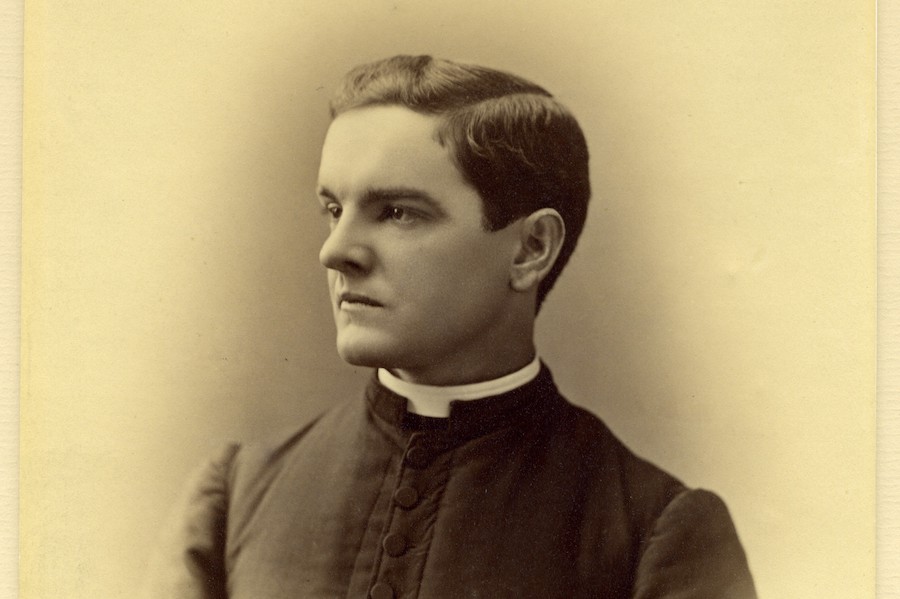
 Father Michael McGivney. | Credit: John Tierney/Father McGivney Guild
 
 Lori said ideological and cultural polarization “has produced an epidemic of loneliness and isolation — an aching sense of being unmoored, misunderstood, or unheard.”Lori wrote: “Synodality is, at its heart, a commitment to listening with humility, speaking with honesty, and discerning with the Holy Spirit — all while walking together, not apart.”“Such unity does not mean uniformity, nor does it eliminate disagreement,” Lori said. “Rather, it reflects a deeper truth. Our communion in Christ precedes our differences.”Synodality “does not dissolve disagreement. It expects it, because diverse people will inevitably see the world from different angles,” Lori said. The letter detailed what “synodality in politics looks like,” including a renewed willingness to listen, a refusal to demonize, a commitment to discernment, and a shared journey.Our world also needs “a new kind of politics — one that begins not with power but with the truth of the human person revealed in Jesus Christ,” Lori said. “Christ, in his incarnation, affirms the goodness of the human body and the meaning of human history.”According to Lori, this new type of politics includes resisting the idolatry of ideology. It must also honor the inherent dignity of every human life from conception to natural death, protect the vulnerable and the marginalized, engage in dialogue rather than accusation, and place the common good above partisan loyalty.A “mature Catholic political presence will” always defend human life in all its stages, advocate for the poor and the vulnerable, insist on racial and social justice, promote peace and reject violence, and uphold religious freedom for all, Lori said.In order to build a better political culture, “we must learn once more how to encounter, by stepping outside our ideological comfort zones, seeking out conversations with those on the margins or those with differing points of view, healing the wounds that divide us, committing ourselves to forgiveness,” Lori said.Virtue in public lifeLori called on U.S. citizens to employ the cardinal virtues in public life to create a “healthy political engagement.”People can use prudence by “evaluating policies not by slogans or emotional appeal but by their actual impact on human dignity,” Lori said. The virtue “helps us to see clearly, to judge wisely, and to act firmly.”Justice “is foundational to political life,” Lori said. “It is the virtue that moves us to honor the dignity of every human person and to recognize that each person has rights that must be protected and responsibilities that must be fulfilled.”Fortitude “strengthens us to pursue what is right despite fear, intimidation, or difficulty,” Lori said. “It empowers each of us to resist the pressure to conform to divisive rhetoric, to endure criticism when standing for truth, and to advocate for the vulnerable even when it is politically inconvenient.”Lastly, temperance “moderates our impulses and helps us resist the allure of excess,” Lori said. “In political culture, temperance is perhaps the virtue most needed today. Temperance invites us to slow down, to choose words carefully, to avoid rash judgments, and to discipline the desire to ‘win’ at the expense of relationship, truth, or the common good.”RenewalLori called for renewal ahead of the 250th anniversary of the U.S. He invited all Catholics and all people of goodwill to commit themselves to a renewed political culture and to answer the call of hope.The letter concluded by detailing “a path forward” on how to renew political culture, including: renewing prayer for the nation, practicing civil dialogue, rejecting hatred and violence, serving the common good, forming consciences, and encountering those different from oneself.“In the midst of political upheaval, the Church does not withdraw from public life, nor does she align herself with any partisan identity,” Lori said. “She remains what she has always been: a sacrament of unity, a beacon of hope, and a teacher of truth.”“Her mission is not to win elections but to form saints. Not to secure power but to proclaim the Gospel. Not to mirror the divisions of society but to heal them,” Lori said.“Our nation needs Catholics who embody this mission — women and men whose lives witness to the dignity of every human person, whose love bridges divides, whose courage resists hatred, and whose faith insists that despair does not have the final word. The civic landscape may look dark at times, but the Church has lived through darker times and emerged stronger, purified, and more faithful. So, too, can our nation,” he said.

Archbishop Lori issues pastoral letter on political life in honor of 250th anniversary of the U.S. #Catholic Archbishop William Lori of Baltimore urged Catholics to foster a political culture grounded in Christ by prioritizing human dignity and genuine encounter amid partisan divisions.“In Charity and Truth: Toward a Renewed Political Culture,” released in anticipation of the 250th anniversary of the Declaration of Independence, is among the nine pastoral letters and reflections Lori has written as archbishop of Baltimore. The Feb. 9 letter explored how the anniversary can be “a moment of grace” and one of “responsibility.”The U.S. can both take pride in its achievements and “the vibrancy of our Catholic faith” while also recognizing “the fractures, wounds, and crises that mark both our national life and, sadly, even at times our ecclesial life,” Lori wrote.“As our nation approaches the 250th anniversary of the signing of the Declaration of Independence, we find ourselves invited into a moment of profound reflection and renewal,” Lori said. “Anniversaries are not merely occasions for nostalgia or celebration. Authentic remembrance always orients us toward renewal; it calls us to consider not only who we have been and who we are becoming — but, by God’s grace, who we are called to be.”The letter draws on teachings from the popes, the Second Vatican Council, the Constitution, and the lives of the saints.Addressing political discourse from a Catholic viewThe letter highlighted the U.S. political atmosphere, noting that “political discourse has become more vitriolic than usual.” Lori called for synodal listening, civic virtue, and patriotic charity — as exemplified by Blessed Michael McGivney — to renew public life with truth, responsibility, and hope.McGivney, founder of the Knights of Columbus, served immigrant families and addressed their economic insecurity and exclusion. Lori said genuine charity, unity, fraternity, and patriotic love should guide how Catholics engage with migrants and support their dignity and inclusion. Father Michael McGivney. | Credit: John Tierney/Father McGivney Guild Lori said ideological and cultural polarization “has produced an epidemic of loneliness and isolation — an aching sense of being unmoored, misunderstood, or unheard.”Lori wrote: “Synodality is, at its heart, a commitment to listening with humility, speaking with honesty, and discerning with the Holy Spirit — all while walking together, not apart.”“Such unity does not mean uniformity, nor does it eliminate disagreement,” Lori said. “Rather, it reflects a deeper truth. Our communion in Christ precedes our differences.”Synodality “does not dissolve disagreement. It expects it, because diverse people will inevitably see the world from different angles,” Lori said. The letter detailed what “synodality in politics looks like,” including a renewed willingness to listen, a refusal to demonize, a commitment to discernment, and a shared journey.Our world also needs “a new kind of politics — one that begins not with power but with the truth of the human person revealed in Jesus Christ,” Lori said. “Christ, in his incarnation, affirms the goodness of the human body and the meaning of human history.”According to Lori, this new type of politics includes resisting the idolatry of ideology. It must also honor the inherent dignity of every human life from conception to natural death, protect the vulnerable and the marginalized, engage in dialogue rather than accusation, and place the common good above partisan loyalty.A “mature Catholic political presence will” always defend human life in all its stages, advocate for the poor and the vulnerable, insist on racial and social justice, promote peace and reject violence, and uphold religious freedom for all, Lori said.In order to build a better political culture, “we must learn once more how to encounter, by stepping outside our ideological comfort zones, seeking out conversations with those on the margins or those with differing points of view, healing the wounds that divide us, committing ourselves to forgiveness,” Lori said.Virtue in public lifeLori called on U.S. citizens to employ the cardinal virtues in public life to create a “healthy political engagement.”People can use prudence by “evaluating policies not by slogans or emotional appeal but by their actual impact on human dignity,” Lori said. The virtue “helps us to see clearly, to judge wisely, and to act firmly.”Justice “is foundational to political life,” Lori said. “It is the virtue that moves us to honor the dignity of every human person and to recognize that each person has rights that must be protected and responsibilities that must be fulfilled.”Fortitude “strengthens us to pursue what is right despite fear, intimidation, or difficulty,” Lori said. “It empowers each of us to resist the pressure to conform to divisive rhetoric, to endure criticism when standing for truth, and to advocate for the vulnerable even when it is politically inconvenient.”Lastly, temperance “moderates our impulses and helps us resist the allure of excess,” Lori said. “In political culture, temperance is perhaps the virtue most needed today. Temperance invites us to slow down, to choose words carefully, to avoid rash judgments, and to discipline the desire to ‘win’ at the expense of relationship, truth, or the common good.”RenewalLori called for renewal ahead of the 250th anniversary of the U.S. He invited all Catholics and all people of goodwill to commit themselves to a renewed political culture and to answer the call of hope.The letter concluded by detailing “a path forward” on how to renew political culture, including: renewing prayer for the nation, practicing civil dialogue, rejecting hatred and violence, serving the common good, forming consciences, and encountering those different from oneself.“In the midst of political upheaval, the Church does not withdraw from public life, nor does she align herself with any partisan identity,” Lori said. “She remains what she has always been: a sacrament of unity, a beacon of hope, and a teacher of truth.”“Her mission is not to win elections but to form saints. Not to secure power but to proclaim the Gospel. Not to mirror the divisions of society but to heal them,” Lori said.“Our nation needs Catholics who embody this mission — women and men whose lives witness to the dignity of every human person, whose love bridges divides, whose courage resists hatred, and whose faith insists that despair does not have the final word. The civic landscape may look dark at times, but the Church has lived through darker times and emerged stronger, purified, and more faithful. So, too, can our nation,” he said.

Archbishop William Lori urged Catholics to approach public life with synodal listening and civic virtue, drawing on Blessed Michael McGivney’s example of serving immigrant families.

Read More