Diego

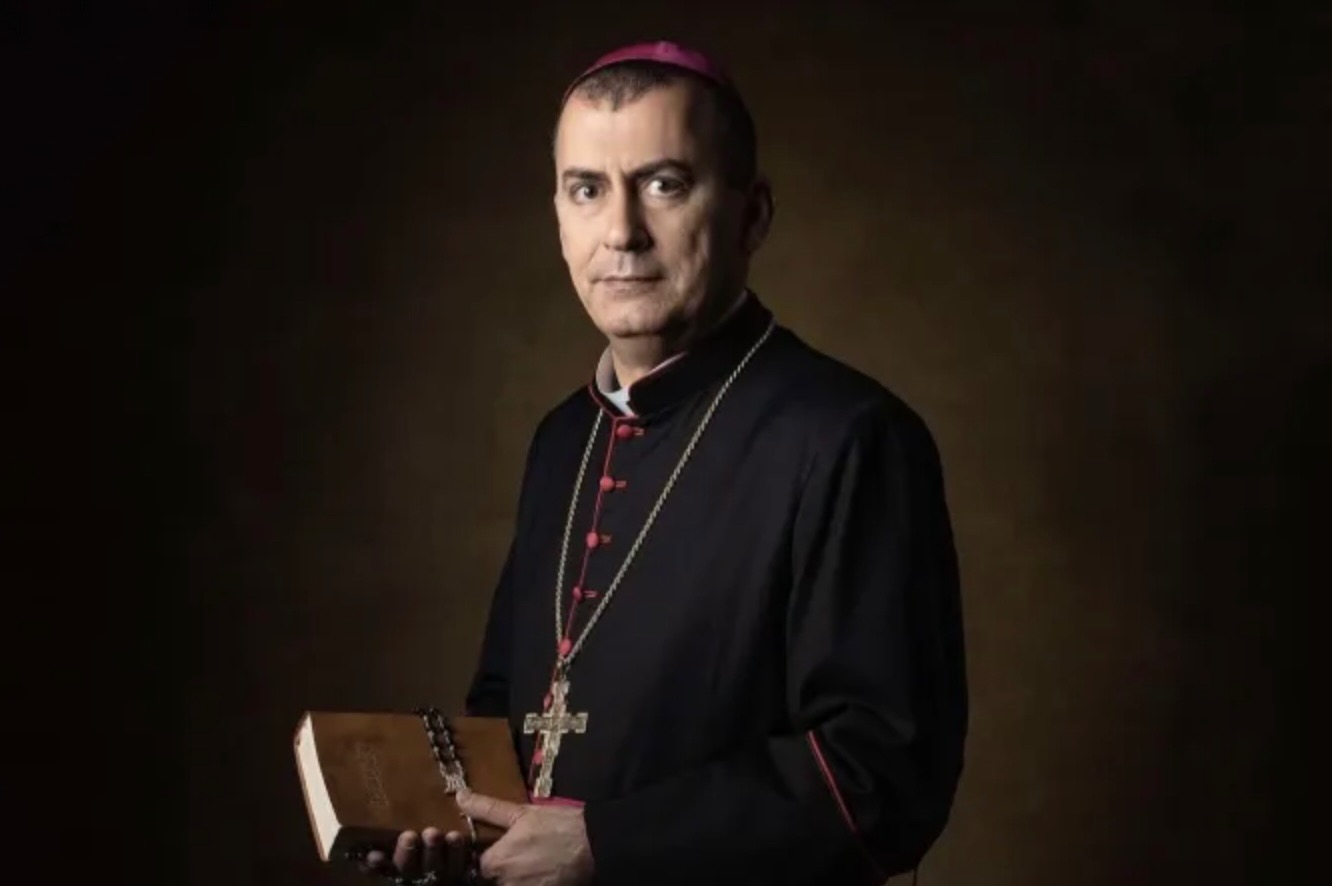
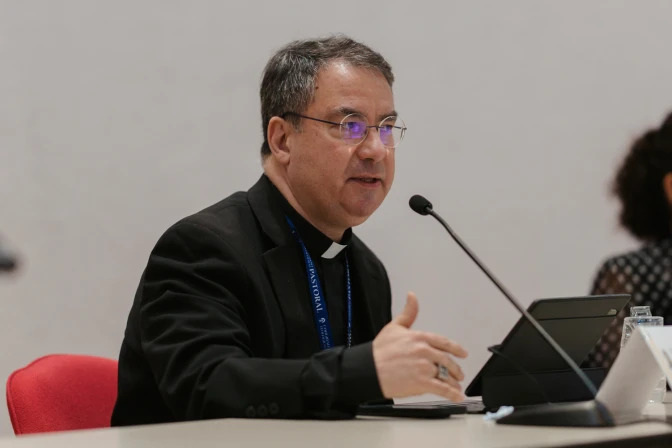
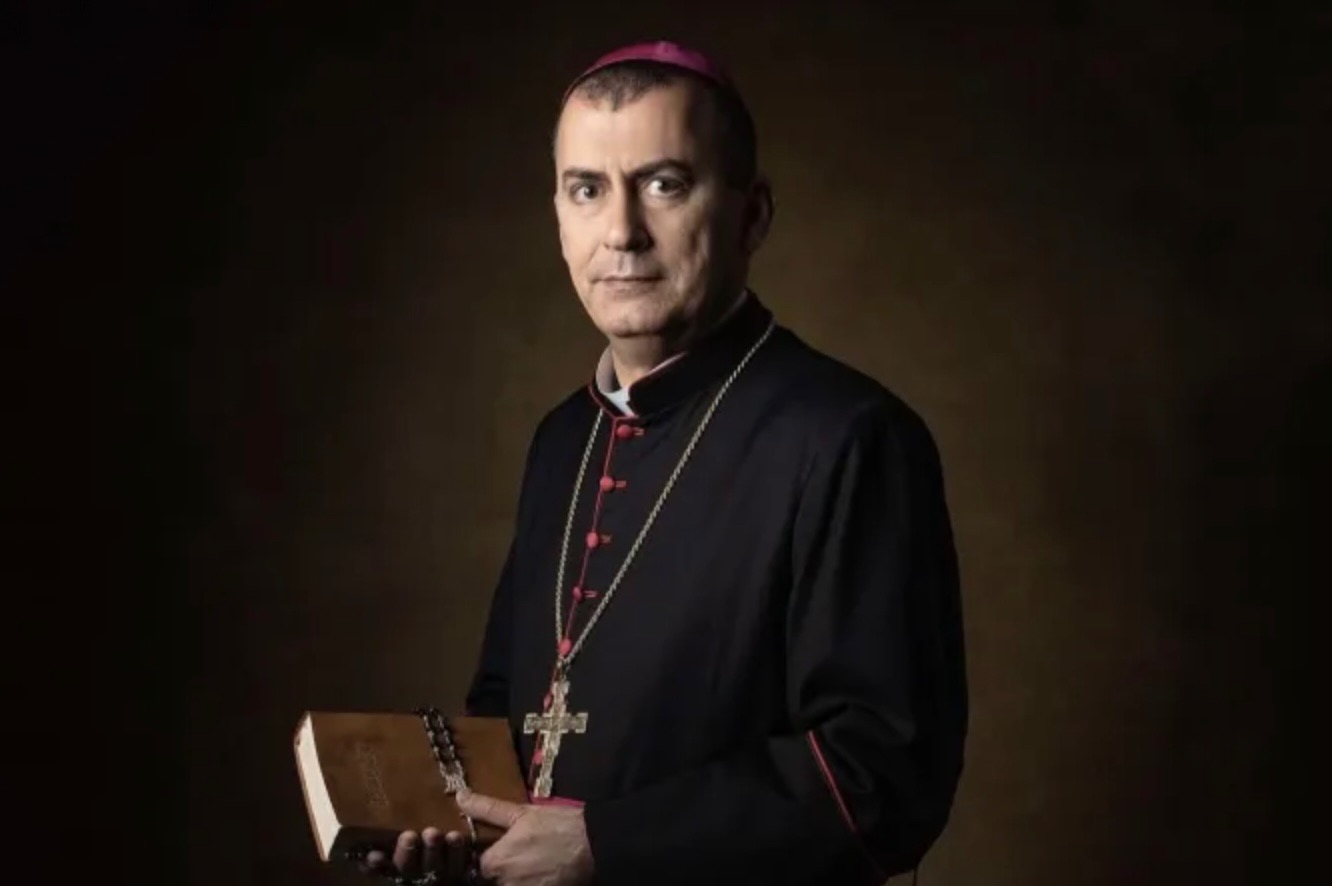
Bishop explains how Our Lady of Guadalupe can reach postmodern Silicon Valley #Catholic In a world marked by secularization and cultural fragmentation, Our Lady of Guadalupe remains a privileged path for proclaiming the Gospel, said Bishop Óscar Cantú of San Jose, California, as he shared how a recent event dedicated to the Virgin Mary illuminates the mission of the Church in the heart of Silicon Valley.During the recent “Theological and Pastoral Congress on the Guadalupe Event,” held in Mexico, the prelate described his diocese as a former valley of fruit orchards now transformed into the heart of global technology, home to world-class companies such as Google, Apple, Hewlett-Packard, and Nvidia.There, Cantú explained, people from India, China, Latin America, Africa, and many other countries live together, bringing with them their religions or their religious “indifference.”He spoke of “a strong secularization” there, calling it a “society that proudly proclaims itself postmodern, without need for God or religion.” He added that many “no longer have the time or space for religion” and that they “prefer modern practices” such as yoga or meditation, which they call mindfulness, which is “meditation without transcendence.”The bishop wants the pastoral and spiritual preparation for the 50th anniversary of the Diocese of San José in 2031 to be marked by Our Lady of Guadalupe, who he hopes will serve as a point of reference and model.Using Our Lady of Guadalupe’s methodology in Silicon ValleyThe bishop posed a direct challenge to priests, deacons, religious, and laity of his diocese: “How can we apply the methodology of Our Lady of Guadalupe, which she used 500 years ago in Mexico, now, in Silicon Valley, in a postmodern world?”He said the Spanish friars “did not have much success in evangelizing” because they arrived with the conquistadors, who used aggression and force. “But Our Lady had a great success that the friars could not have imagined. Millions of hearts were touched and transformed in a short time.”Cantú enumerated the key elements of this Guadalupan pedagogy, beginning with beauty and maternal tenderness of her words to Juan Diego: “‘My dearest Juan Diego, the littlest of my sons.’ Whose heart made of stone like we have in our Silicon Valley wouldn’t melt with those words?” he asked. He also emphasized how Mary “spoke to him in his language, not in Spanish. She used the symbolism of the Indigenous people, a codex that bore witness to what she recounted, which bore witness to what Juan Diego later told the other Indigenous people.” He recalled the Christological way the Virgin introduced herself, identifying herself as “the Mother of the God by whom we live,” and how she thus introduced “the beauty of truth” in contrast to the old logic of human sacrifice.Another element that Cantú emphasized is the role of the laity and, in particular, the poor. He highlighted that the Virgin involves Juan Diego in the mission of the Church when she tells him: “It is necessary that you go to the bishop.” He commented that “participation brings dignity and is an expression of dignity,” and that aspects of synodality are already evident in Guadalupe: participation and a voice within the ecclesial community.The bishop noted that Juan Diego’s participation does not create a separate structure, because “we shouldn’t create a parallel Church but rather everything should be under the authority, the structure that the Son of the Virgin left us, which is a hierarchical Church, with respect for the magisterium, but the magisterium, in turn, with the participation and listening of everyone, everyone, everyone.” For this reason, he defined it as “a hierarchical and synodal Church.”Among the elements the prelate highlighted is the concept of the sacred little house as a Church of mercy, a house where wounded humanity is welcomed: a “little house of love and compassion.”Our Lady of Guadalupe resonates with migrant communitiesCantú explained that in his diocese, faith has remained alive thanks to refugees and immigrants: Hispanics, Filipinos, Vietnamese, Indians, and Africans, many of them with histories of having to leave their native lands and discrimination.The Virgin of Guadalupe becomes a bridge of identity and solace there, not only for Mexicans, he noted. To illustrate this, he recounted an experience in a trilingual parish (Vietnamese, Filipino, and Hispanic) during a Mass in honor of Our Lady of Guadalupe.The bishop arrived prepared to celebrate Mass in Spanish with the Hispanic community, but discovered that about half of those present were Vietnamese, so he decided to preach by including his own story as the son of Mexican immigrants in Texas.“In Texas, many times Americans didn’t see me purely as American because my parents were born in another country, and at home they spoke Spanish; and when I went to visit my cousins ​​in Monterrey, they also didn’t see me as Mexican, so, well, I felt like a bit of an outsider.”As he shared this experience of not belonging, Cantú observed the faces of the Vietnamese faithful: “I saw in their faces that they understood, as refugees who left their country 30 or 40 years ago, that perhaps they never had the opportunity to learn the language well, to fully understand American politics or culture, that for the rest of their lives they felt like guests. And it was, I believe, at that moment that they identified with Juan Diego, whom the Virgin received in her little house.”This story was first published by ACI Prensa, the Spanish-language sister service of EWTN News. It has been translated and adapted by EWTN News English.

Bishop explains how Our Lady of Guadalupe can reach postmodern Silicon Valley #Catholic In a world marked by secularization and cultural fragmentation, Our Lady of Guadalupe remains a privileged path for proclaiming the Gospel, said Bishop Óscar Cantú of San Jose, California, as he shared how a recent event dedicated to the Virgin Mary illuminates the mission of the Church in the heart of Silicon Valley.During the recent “Theological and Pastoral Congress on the Guadalupe Event,” held in Mexico, the prelate described his diocese as a former valley of fruit orchards now transformed into the heart of global technology, home to world-class companies such as Google, Apple, Hewlett-Packard, and Nvidia.There, Cantú explained, people from India, China, Latin America, Africa, and many other countries live together, bringing with them their religions or their religious “indifference.”He spoke of “a strong secularization” there, calling it a “society that proudly proclaims itself postmodern, without need for God or religion.” He added that many “no longer have the time or space for religion” and that they “prefer modern practices” such as yoga or meditation, which they call mindfulness, which is “meditation without transcendence.”The bishop wants the pastoral and spiritual preparation for the 50th anniversary of the Diocese of San José in 2031 to be marked by Our Lady of Guadalupe, who he hopes will serve as a point of reference and model.Using Our Lady of Guadalupe’s methodology in Silicon ValleyThe bishop posed a direct challenge to priests, deacons, religious, and laity of his diocese: “How can we apply the methodology of Our Lady of Guadalupe, which she used 500 years ago in Mexico, now, in Silicon Valley, in a postmodern world?”He said the Spanish friars “did not have much success in evangelizing” because they arrived with the conquistadors, who used aggression and force. “But Our Lady had a great success that the friars could not have imagined. Millions of hearts were touched and transformed in a short time.”Cantú enumerated the key elements of this Guadalupan pedagogy, beginning with beauty and maternal tenderness of her words to Juan Diego: “‘My dearest Juan Diego, the littlest of my sons.’ Whose heart made of stone like we have in our Silicon Valley wouldn’t melt with those words?” he asked. He also emphasized how Mary “spoke to him in his language, not in Spanish. She used the symbolism of the Indigenous people, a codex that bore witness to what she recounted, which bore witness to what Juan Diego later told the other Indigenous people.” He recalled the Christological way the Virgin introduced herself, identifying herself as “the Mother of the God by whom we live,” and how she thus introduced “the beauty of truth” in contrast to the old logic of human sacrifice.Another element that Cantú emphasized is the role of the laity and, in particular, the poor. He highlighted that the Virgin involves Juan Diego in the mission of the Church when she tells him: “It is necessary that you go to the bishop.” He commented that “participation brings dignity and is an expression of dignity,” and that aspects of synodality are already evident in Guadalupe: participation and a voice within the ecclesial community.The bishop noted that Juan Diego’s participation does not create a separate structure, because “we shouldn’t create a parallel Church but rather everything should be under the authority, the structure that the Son of the Virgin left us, which is a hierarchical Church, with respect for the magisterium, but the magisterium, in turn, with the participation and listening of everyone, everyone, everyone.” For this reason, he defined it as “a hierarchical and synodal Church.”Among the elements the prelate highlighted is the concept of the sacred little house as a Church of mercy, a house where wounded humanity is welcomed: a “little house of love and compassion.”Our Lady of Guadalupe resonates with migrant communitiesCantú explained that in his diocese, faith has remained alive thanks to refugees and immigrants: Hispanics, Filipinos, Vietnamese, Indians, and Africans, many of them with histories of having to leave their native lands and discrimination.The Virgin of Guadalupe becomes a bridge of identity and solace there, not only for Mexicans, he noted. To illustrate this, he recounted an experience in a trilingual parish (Vietnamese, Filipino, and Hispanic) during a Mass in honor of Our Lady of Guadalupe.The bishop arrived prepared to celebrate Mass in Spanish with the Hispanic community, but discovered that about half of those present were Vietnamese, so he decided to preach by including his own story as the son of Mexican immigrants in Texas.“In Texas, many times Americans didn’t see me purely as American because my parents were born in another country, and at home they spoke Spanish; and when I went to visit my cousins ​​in Monterrey, they also didn’t see me as Mexican, so, well, I felt like a bit of an outsider.”As he shared this experience of not belonging, Cantú observed the faces of the Vietnamese faithful: “I saw in their faces that they understood, as refugees who left their country 30 or 40 years ago, that perhaps they never had the opportunity to learn the language well, to fully understand American politics or culture, that for the rest of their lives they felt like guests. And it was, I believe, at that moment that they identified with Juan Diego, whom the Virgin received in her little house.”This story was first published by ACI Prensa, the Spanish-language sister service of EWTN News. It has been translated and adapted by EWTN News English.

Bishop Óscar Cantú of San Jose, California, explains how the highly secularized society there can receive the message and imagery of Our Lady of Guadalupe in a way that is meaningful to them.

Read More
Catholic colleges among best and worst for pro-life support, report finds #Catholic Some Catholic colleges ranked among the best for pro-life support for women, while others were among the worst for their ties to abortion clinics, a recent report found.In an audit of more than 700 Christian colleges and universities, the Christian Schools Project found that 1 in 7 Christian colleges referred students to Planned Parenthood for health care or future jobs, among other pro-abortion “infractions.”The report by Demetree, a branch of Students for Life of America (SFLA), called the Catholic connection to the abortion industry “shocking.”“Most shockingly, a portion of Catholic schools have forsaken their Christian values,” the report read, citing the Catechism of the Catholic Church’s teaching on abortion.One in 10 Catholic colleges had ties to abortion clinics, and about 25% of all the infractions were by Catholic universities.“Despite this, Catholic schools also had 24 ‘A+’ schools: the most of any denomination,” the report continued.The lowest grade an institution could receive was an “F” and the highest an “A+.”Among the Catholic schools receiving an “F” was Villanova University in Pennsylvania — Pope Leo’s alma mater, where he was known for his involvement in the pro-life club in his days at the university.Other Catholic schools that received a “F” included Boston College in Massachusetts; Carroll College in Montana; Loyola Marymount University in California; Sacred Heart University in Connecticut; Santa Clara University in California; Seattle University in Washington; St. Catherine University in Minnesota; University of Detroit Mercy in Michigan; and University of San Diego in California. Catholic colleges that received a “D” grade included Mount Saint Mary’s University in California; Saint Louis University in Missouri; and St. John Fisher University in New York.Paradoxically, Catholic colleges were also among the best schools for pro-life values and made up more than half of the top 10 best schools in the report.These schools don’t just avoid ties to Planned Parenthood but provide pregnancy support for student mothers in need.
 
 Benedictine College students hold pro-life signs at the 2026 March for Life in Washington, D.C. | Credit: Isabella Wilcox/Benedictine College
 
 The schools that leadAt the center of campus at Benedictine College in Atchison, Kansas, sits a statue of an angel holding a child.Installed in 2017, the Memorial to the Unborn is one of the “unique” aspects of pro-life culture on Benedictine’s campus, according to spokesman Steve Johnson.Each year, busloads of students travel to Washington, D.C., for the March for Life. But before they leave, they place roses before the memorial.
 
 Before Benedictine College students head off to the March for Life in Washington, D.C., they place roses on the campus memorial for unborn children. | Credit: Isabella Wilcox/Benedictine College
 
 The student-led pro-life group, Ravens Respect Life, is a “major player” for the culture on campus, according to Johnson. The club helps fundraise for the local pro-life pregnancy resource center, while the campus ministry service team organizes volunteering. The pro-life culture is woven into classes as well, according to Johnson.“We have a pro-life School of Nursing and our graduates take that position out into the world and the hospitals and clinics at which they work,” he said.The school is also looking to further expand its pro-life medical education.
 
 Every year, busloads of students from Benedictine College in Atchison, Kansas, head to the March for Life in Washington, D.C. | Credit: Isabella Wilcox/Benedictine College
 
 “We are in the process of opening a proposed School of Osteopathic medicine,” Johnson said. “This new school will be the most pro-life medical school in the country and will focus on treating the whole person as a human being and not just treating the ailment.”At the University of Mary in North Dakota, a young woman carrying a toddler crossed the stage at graduation, shaking hands with the president, Monsignor James Shea, who gave the beloved baby Lucia a kiss on the cheek.Katie O’Meara (Chihoski) is one of several students who have received the support they need to complete their education as part of the university’s recently-launched maternity home program, the St. Teresa of Calcutta Community for Mothers, at the University of Mary.
 
 Student mom Katie O’Meara (Chihoski) walks the stage with her toddler, Lucia, by her side at commencement in 2024. Father Dominic Bouck, chaplain at the university, is pictured at left. | Credit: Mike McCleary/University of Mary
 
 Per a Jan. 27 announcement, the university has plans for a new residence hall following record enrollment, including a dedicated wing of the future hall for the maternity home.At UMary, motherhood doesn’t have to compete with education.“This St. Teresa of Calcutta Community for Mothers is a concrete expression of the University of Mary’s commitment to building a culture of life,” Vice President for Student Development Reed Ruggles told EWTN News. “It ensures that motherhood and higher education are not competing paths but complementary vocations.”As for the March for Life, “we treat it like a pilgrimage,” said Ed Konieczka, assistant director of University Ministry at the college.The university sends hundreds of students each year and even provides scholarships to help with the cost.Father Dominic Bouck, the University of Mary chaplain and director of University Ministry, told EWTN News that it comes down to formation.“The University of Mary forms its students for the whole of their lives so that they can learn to live well, then take this formation into their communities after graduation,” Bouck said. “We form them to be servant leaders so that they can go out and serve generously to all who need aid. We teach them the sanctity of human life through the Benedictine value of respect for persons and teach them to form community wherever they are at.”“As a Christian, Catholic, and Benedictine institution, the sanctity of human life is core to our beliefs, and we are not afraid to show that in our mission,” he continued.Belmont Abbey College, which also ranked in the top 10, has its own maternity home, MiraVia, as previously reported by EWTN News.
 
 University of Mary students hold a banner at the March for Life in Washington, D.C., on Jan. 23, 2026. | Credit: University of Mary student photographer Regina Turner
 
 Why Christian Schools Project?Though schools like Benedictine, University of Mary, and others stand out for their pro-life work, the report found that many colleges fall short of their Christian values. Project leaders call on readers to reach out to colleges and encourage them to live out these values.“It’s simple: Either stop promoting abortion or stop claiming to be Christian,” said SFLA spokeswoman Mary Mobley.Over the years of doing Christian Schools Project, researchers have seen growth. Since 2024, “56 infractions have been remedied” thanks to the project, according to organizers.“For some schools, they may be unaware of their ties to abortion,” Mobley told EWTN News. “This report offers a chance for them to cut those ties — and to reaffirm their support for life by promoting pro-life resources.”But the project is about more than just cutting ties with abortion providers. 
 
 University of Mary student moms involved with the St. Teresa of Calcutta Community for Mothers, University of Mary’s program for moms. | Credit: Photo courtesy of University of Mary
 
 “Being pro-life doesn’t just mean being anti-abortion; it means coming alongside women and supporting them, providing them with the resources they need to choose life,” Mobley said.“Humans are made in the image of God, and because of that, they have inherent value and worth — and their lives cannot be disposed of for the convenience of others,” Mobley continued.“It’s vital that Christian schools come alongside pregnant and parenting women, showing them that they are valued, loved, and supported — offering them the resources they need to choose life,” Mobley said.
 
 University of Mary students attend the 2026 March for Life in Washington, D.C. | Credit: University of Mary student photographer Regina Turner

Catholic colleges among best and worst for pro-life support, report finds #Catholic Some Catholic colleges ranked among the best for pro-life support for women, while others were among the worst for their ties to abortion clinics, a recent report found.In an audit of more than 700 Christian colleges and universities, the Christian Schools Project found that 1 in 7 Christian colleges referred students to Planned Parenthood for health care or future jobs, among other pro-abortion “infractions.”The report by Demetree, a branch of Students for Life of America (SFLA), called the Catholic connection to the abortion industry “shocking.”“Most shockingly, a portion of Catholic schools have forsaken their Christian values,” the report read, citing the Catechism of the Catholic Church’s teaching on abortion.One in 10 Catholic colleges had ties to abortion clinics, and about 25% of all the infractions were by Catholic universities.“Despite this, Catholic schools also had 24 ‘A+’ schools: the most of any denomination,” the report continued.The lowest grade an institution could receive was an “F” and the highest an “A+.”Among the Catholic schools receiving an “F” was Villanova University in Pennsylvania — Pope Leo’s alma mater, where he was known for his involvement in the pro-life club in his days at the university.Other Catholic schools that received a “F” included Boston College in Massachusetts; Carroll College in Montana; Loyola Marymount University in California; Sacred Heart University in Connecticut; Santa Clara University in California; Seattle University in Washington; St. Catherine University in Minnesota; University of Detroit Mercy in Michigan; and University of San Diego in California. Catholic colleges that received a “D” grade included Mount Saint Mary’s University in California; Saint Louis University in Missouri; and St. John Fisher University in New York.Paradoxically, Catholic colleges were also among the best schools for pro-life values and made up more than half of the top 10 best schools in the report.These schools don’t just avoid ties to Planned Parenthood but provide pregnancy support for student mothers in need. Benedictine College students hold pro-life signs at the 2026 March for Life in Washington, D.C. | Credit: Isabella Wilcox/Benedictine College The schools that leadAt the center of campus at Benedictine College in Atchison, Kansas, sits a statue of an angel holding a child.Installed in 2017, the Memorial to the Unborn is one of the “unique” aspects of pro-life culture on Benedictine’s campus, according to spokesman Steve Johnson.Each year, busloads of students travel to Washington, D.C., for the March for Life. But before they leave, they place roses before the memorial. Before Benedictine College students head off to the March for Life in Washington, D.C., they place roses on the campus memorial for unborn children. | Credit: Isabella Wilcox/Benedictine College The student-led pro-life group, Ravens Respect Life, is a “major player” for the culture on campus, according to Johnson. The club helps fundraise for the local pro-life pregnancy resource center, while the campus ministry service team organizes volunteering. The pro-life culture is woven into classes as well, according to Johnson.“We have a pro-life School of Nursing and our graduates take that position out into the world and the hospitals and clinics at which they work,” he said.The school is also looking to further expand its pro-life medical education. Every year, busloads of students from Benedictine College in Atchison, Kansas, head to the March for Life in Washington, D.C. | Credit: Isabella Wilcox/Benedictine College “We are in the process of opening a proposed School of Osteopathic medicine,” Johnson said. “This new school will be the most pro-life medical school in the country and will focus on treating the whole person as a human being and not just treating the ailment.”At the University of Mary in North Dakota, a young woman carrying a toddler crossed the stage at graduation, shaking hands with the president, Monsignor James Shea, who gave the beloved baby Lucia a kiss on the cheek.Katie O’Meara (Chihoski) is one of several students who have received the support they need to complete their education as part of the university’s recently-launched maternity home program, the St. Teresa of Calcutta Community for Mothers, at the University of Mary. Student mom Katie O’Meara (Chihoski) walks the stage with her toddler, Lucia, by her side at commencement in 2024. Father Dominic Bouck, chaplain at the university, is pictured at left. | Credit: Mike McCleary/University of Mary Per a Jan. 27 announcement, the university has plans for a new residence hall following record enrollment, including a dedicated wing of the future hall for the maternity home.At UMary, motherhood doesn’t have to compete with education.“This St. Teresa of Calcutta Community for Mothers is a concrete expression of the University of Mary’s commitment to building a culture of life,” Vice President for Student Development Reed Ruggles told EWTN News. “It ensures that motherhood and higher education are not competing paths but complementary vocations.”As for the March for Life, “we treat it like a pilgrimage,” said Ed Konieczka, assistant director of University Ministry at the college.The university sends hundreds of students each year and even provides scholarships to help with the cost.Father Dominic Bouck, the University of Mary chaplain and director of University Ministry, told EWTN News that it comes down to formation.“The University of Mary forms its students for the whole of their lives so that they can learn to live well, then take this formation into their communities after graduation,” Bouck said. “We form them to be servant leaders so that they can go out and serve generously to all who need aid. We teach them the sanctity of human life through the Benedictine value of respect for persons and teach them to form community wherever they are at.”“As a Christian, Catholic, and Benedictine institution, the sanctity of human life is core to our beliefs, and we are not afraid to show that in our mission,” he continued.Belmont Abbey College, which also ranked in the top 10, has its own maternity home, MiraVia, as previously reported by EWTN News. University of Mary students hold a banner at the March for Life in Washington, D.C., on Jan. 23, 2026. | Credit: University of Mary student photographer Regina Turner Why Christian Schools Project?Though schools like Benedictine, University of Mary, and others stand out for their pro-life work, the report found that many colleges fall short of their Christian values. Project leaders call on readers to reach out to colleges and encourage them to live out these values.“It’s simple: Either stop promoting abortion or stop claiming to be Christian,” said SFLA spokeswoman Mary Mobley.Over the years of doing Christian Schools Project, researchers have seen growth. Since 2024, “56 infractions have been remedied” thanks to the project, according to organizers.“For some schools, they may be unaware of their ties to abortion,” Mobley told EWTN News. “This report offers a chance for them to cut those ties — and to reaffirm their support for life by promoting pro-life resources.”But the project is about more than just cutting ties with abortion providers. University of Mary student moms involved with the St. Teresa of Calcutta Community for Mothers, University of Mary’s program for moms. | Credit: Photo courtesy of University of Mary “Being pro-life doesn’t just mean being anti-abortion; it means coming alongside women and supporting them, providing them with the resources they need to choose life,” Mobley said.“Humans are made in the image of God, and because of that, they have inherent value and worth — and their lives cannot be disposed of for the convenience of others,” Mobley continued.“It’s vital that Christian schools come alongside pregnant and parenting women, showing them that they are valued, loved, and supported — offering them the resources they need to choose life,” Mobley said. University of Mary students attend the 2026 March for Life in Washington, D.C. | Credit: University of Mary student photographer Regina Turner

Some Catholic colleges ranked among the best for pro-life support for women, while others were among the worst for their ties to abortion clinics, according to a new report.

Read More
NASA’s SpaceX Crew-10 Splashes Down in Pacific Ocean

Roscosmos cosmonaut Kirill Peskov, left, NASA astronauts Nichole Ayers and Anne McClain, and JAXA (Japan Aerospace Exploration Agency) astronaut Takuya Onishi are seen inside the SpaceX Dragon Endurance spacecraft aboard the SpaceX recovery ship SHANNON shortly after having landed in the Pacific Ocean off the coast of San Diego, Calif., Saturday, Aug. 9, 2025. McClain, Ayers, Onishi, and Peskov returned after 147 days in space as part of Expedition 73 aboard the International Space Station.

Read More