Embassy

Maryland high school seniors arrive home safely after being stuck in Middle East during hostilities #Catholic A group of high schoolers from a Maryland boys' school found themselves in the crosshairs of international conflict in the Middle East this week, turning what was meant to be a brief layover in Abu Dhabi into a multi-day ordeal amid escalating hostilities between Iran, Israel, and the United States.The group — 18 seniors and two faculty members from the Heights School in Potomac, Maryland, just outside of Washington, D.C. — had departed on the afternoon of Feb. 27 for a cultural exchange trip to Thailand.The voyage was part of the school’s yearly Crescite Trips, where students in grades 9-12 participate during the first week of March in local seminars as well as domestic and international trips intended for the students’ growth.The group was scheduled for a two-hour layover in the United Arab Emirates after their 12-hour flight when regional airspace slammed shut following U.S.-Israeli strikes on Iran and Iranʼs retaliatory missile barrages.Initially, all flights were cancelled, but soon the airport was closed and had to be evacuated. According to Aidan Korn, a student on the trip, the group was seated at the gate for their next flight when they learned it had been suspended because “the war had begun.”“It was scary at first. We were sitting by a giant window at the gate and all of our phones started going off at the same time. I saw texts from friends in the U.S. asking if I was alive,” he said. “We saw military men running with guns through the airport.”Korn said the two faculty chaperones, Justin Myers and Dan Sushinsky, told them to get away from the windows and seek shelter in the airport bathroom. They learned later that a drone was intercepted above the airport, and the debris killed one person and injured several others.Myers and Sushinksy, both seasoned teachers as well as college counselors at the Heights, immediately called headmaster Alvaro de Vicente, who told EWTN News he called “everyone I know to help” the boys.De Vicente said the teachers and boys registered through the state department website for U.S. citizens stuck in the Middle East.The teachers “did an incredible job keeping the boys calm, safe, and engaged,” said de Vicente. He described the men as “real pros in handling a situation no teacher can prepare for.”“This is not what we do. We donʼt prepare for this!” he said.Bryson Begg, another senior on the trip, agreed, telling EWTN News that the teachers were "incredible. Their number-one priority was our safety. They cared for us so much.”Begg described a “confidence” that Myers and Sushinksy emanated that they would all get home safely. “We had this sense that they’ve got it.”The teachers instructed the boys to be cautious and not to post anything on social media that could compromise their security, Korn said.Myers told EWTN News the situation felt chaotic at first, as thousands of people with canceled flights tried to find hotels using airline-provided vouchers. Initially, the group was split up and assigned to different hotels, which they deemed unacceptable, so he and Sushinsky decided to stay the night in the airport, hoping a flight would open up while they waited.The airport was then closed and everyone was ordered to evacuate. After several hours, with the help of several airport employees, Myers said they were able to find a hotel for all 20 of them. When they boarded the bus, again amidst the chaos of thousands of evacuating travelers, the driver asked Myers where the hotel was, and they figured out the directions there together.Myers said either he or Sushinsky was on the phone almost constantly with the State Department, parents, de Vicente, Heights alumni who lived in the area, and  the U.S. embassy. Myers, who has taught at the Heights for over 30 years and has led many trips, told EWTN News it was “an unusually good group” of boys. "All of our top students were on this trip. They were very brave.”“They were probably not as scared as they should have been! And now that they’re home safe, they’re saying it was the best trip ever!” he laughed.Once at the hotel, he and Sushinsky held group meetings at set times each day, where they ate together, played games, prayed the rosary, and told funny stories. The leaders also made themselves available at set times each day to talk with any boys who wanted to.Begg said the teachers made sure the boys kept their bags packed and ready to go at all times in case they had to rush to the airport to catch an available flight out.Korn told EWTN News the hotel’s doors were initially zip tied shut, but as the days went on, they were occasionally allowed to venture outside briefly. On one of these occasions, Begg said he was praying the rosary when warning sirens went off, and the hotel staff urgently called him back inside.“Most of the time it felt perfectly safe,” Myers said. “We saw some drones a couple of times; saw them intercepted, mostly at night. We’d watch the news and they’d make it worse than it is. They kept showing the same building being hit.”“It was not like what was being shown on TV. People in the city were going about their daily lives.”Nevertheless, the boys spent most of their time indoors eating (“The hotel had really nice food,” said Korn), working out at the gym, watching movies in the presidential suite, where two of the students were staying, and even playing hide and seek throughout the hotel.Thanks to a Heights alumnus who lives there, the group (with all the parents’ permission) was able to go to the beach one day, and on a desert excursion to an oasis, where they rode camels, according to Begg.‘An overwhelming feeling of comfort’By 4:30 a.m. on Feb. 28, Karen Korn, Aidan’s mother, told EWTN News she was awakened by the dozens of notifications on her phone from the boys as well as other parents.“I’m so humbled by and grateful to the amount of people that reached out to us, who were praying,” she said. “I truly believe that was what got us through. It’s unbelievable how many people were praying.”“We had people praying 24 hours a day; priests at every church around us that had holy hours and said Masses for them … even outside of this area.”She described “an overwhelming feeling of comfort” knowing how many prayers were being said for the young men. While praying on Sunday, she said she saw an image of Jesus wrapping his arms around the boys, keeping them safe.‘Men fully alive’Begg, who has attended the Heights since 3rd grade, credited de Vicente for working “tirelessly to help us.”“He is the pinnacle of what a Heights man is. ‘Men fully alive’ is our motto, and he’s the epitome of that. He’s strong in his beliefs, and cared for us so much. He waited in the airport for hours before we arrived. It was incredibly heartwarming to see that.”“He was right at the front of the group of parents at the airport with a big smile on his face, welcoming us home. We all shook his hand.”De Vicente said he was “thankful to the United Arab Emirates government” for hosting the boys, providing them the hotel and transportation. He also said he was "thankful to our government for being able to get them out.”The boys left on a charter flight — one arranged by the U.S. State Department filled with other American families — and returned safely to Dulles Airport on the afternoon of Thursday, March 5.
 
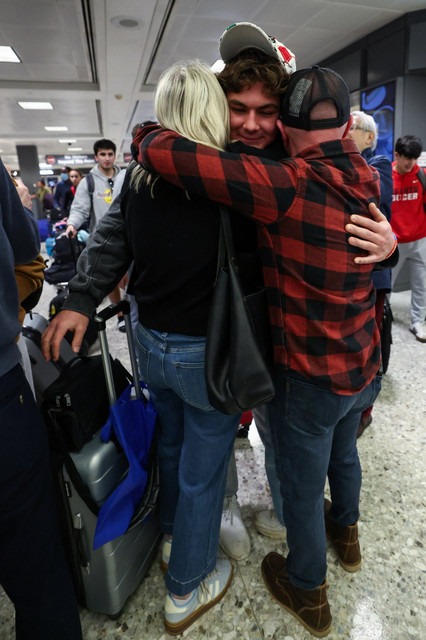
 Aidan Korn hugs his parents, Karen and Jason Korn, at Dulles Airport in Virginia upon his safe return, Thursday, March 5, 2026 | Credit: Courtesy of the Korn family
 
 The Heights School, an independent day school for grades 3-12, teaches boys “with a Christian spirit and in accord with the teachings of the Catholic Church” and the Personal Prelature of Opus Dei “provides chaplains for the school and oversees its program of classes in Catholic doctrine,” according to its website.Over the years, the school has drawn politically conservative families, including the sons of prominent politicians such as former senator and presidential candidate Rick Santorum as well as Maggie Gallagher, president of the National Organization for Marriage, among others.

Maryland high school seniors arrive home safely after being stuck in Middle East during hostilities #Catholic A group of high schoolers from a Maryland boys' school found themselves in the crosshairs of international conflict in the Middle East this week, turning what was meant to be a brief layover in Abu Dhabi into a multi-day ordeal amid escalating hostilities between Iran, Israel, and the United States.The group — 18 seniors and two faculty members from the Heights School in Potomac, Maryland, just outside of Washington, D.C. — had departed on the afternoon of Feb. 27 for a cultural exchange trip to Thailand.The voyage was part of the school’s yearly Crescite Trips, where students in grades 9-12 participate during the first week of March in local seminars as well as domestic and international trips intended for the students’ growth.The group was scheduled for a two-hour layover in the United Arab Emirates after their 12-hour flight when regional airspace slammed shut following U.S.-Israeli strikes on Iran and Iranʼs retaliatory missile barrages.Initially, all flights were cancelled, but soon the airport was closed and had to be evacuated. According to Aidan Korn, a student on the trip, the group was seated at the gate for their next flight when they learned it had been suspended because “the war had begun.”“It was scary at first. We were sitting by a giant window at the gate and all of our phones started going off at the same time. I saw texts from friends in the U.S. asking if I was alive,” he said. “We saw military men running with guns through the airport.”Korn said the two faculty chaperones, Justin Myers and Dan Sushinsky, told them to get away from the windows and seek shelter in the airport bathroom. They learned later that a drone was intercepted above the airport, and the debris killed one person and injured several others.Myers and Sushinksy, both seasoned teachers as well as college counselors at the Heights, immediately called headmaster Alvaro de Vicente, who told EWTN News he called “everyone I know to help” the boys.De Vicente said the teachers and boys registered through the state department website for U.S. citizens stuck in the Middle East.The teachers “did an incredible job keeping the boys calm, safe, and engaged,” said de Vicente. He described the men as “real pros in handling a situation no teacher can prepare for.”“This is not what we do. We donʼt prepare for this!” he said.Bryson Begg, another senior on the trip, agreed, telling EWTN News that the teachers were "incredible. Their number-one priority was our safety. They cared for us so much.”Begg described a “confidence” that Myers and Sushinksy emanated that they would all get home safely. “We had this sense that they’ve got it.”The teachers instructed the boys to be cautious and not to post anything on social media that could compromise their security, Korn said.Myers told EWTN News the situation felt chaotic at first, as thousands of people with canceled flights tried to find hotels using airline-provided vouchers. Initially, the group was split up and assigned to different hotels, which they deemed unacceptable, so he and Sushinsky decided to stay the night in the airport, hoping a flight would open up while they waited.The airport was then closed and everyone was ordered to evacuate. After several hours, with the help of several airport employees, Myers said they were able to find a hotel for all 20 of them. When they boarded the bus, again amidst the chaos of thousands of evacuating travelers, the driver asked Myers where the hotel was, and they figured out the directions there together.Myers said either he or Sushinsky was on the phone almost constantly with the State Department, parents, de Vicente, Heights alumni who lived in the area, and  the U.S. embassy. Myers, who has taught at the Heights for over 30 years and has led many trips, told EWTN News it was “an unusually good group” of boys. "All of our top students were on this trip. They were very brave.”“They were probably not as scared as they should have been! And now that they’re home safe, they’re saying it was the best trip ever!” he laughed.Once at the hotel, he and Sushinsky held group meetings at set times each day, where they ate together, played games, prayed the rosary, and told funny stories. The leaders also made themselves available at set times each day to talk with any boys who wanted to.Begg said the teachers made sure the boys kept their bags packed and ready to go at all times in case they had to rush to the airport to catch an available flight out.Korn told EWTN News the hotel’s doors were initially zip tied shut, but as the days went on, they were occasionally allowed to venture outside briefly. On one of these occasions, Begg said he was praying the rosary when warning sirens went off, and the hotel staff urgently called him back inside.“Most of the time it felt perfectly safe,” Myers said. “We saw some drones a couple of times; saw them intercepted, mostly at night. We’d watch the news and they’d make it worse than it is. They kept showing the same building being hit.”“It was not like what was being shown on TV. People in the city were going about their daily lives.”Nevertheless, the boys spent most of their time indoors eating (“The hotel had really nice food,” said Korn), working out at the gym, watching movies in the presidential suite, where two of the students were staying, and even playing hide and seek throughout the hotel.Thanks to a Heights alumnus who lives there, the group (with all the parents’ permission) was able to go to the beach one day, and on a desert excursion to an oasis, where they rode camels, according to Begg.‘An overwhelming feeling of comfort’By 4:30 a.m. on Feb. 28, Karen Korn, Aidan’s mother, told EWTN News she was awakened by the dozens of notifications on her phone from the boys as well as other parents.“I’m so humbled by and grateful to the amount of people that reached out to us, who were praying,” she said. “I truly believe that was what got us through. It’s unbelievable how many people were praying.”“We had people praying 24 hours a day; priests at every church around us that had holy hours and said Masses for them … even outside of this area.”She described “an overwhelming feeling of comfort” knowing how many prayers were being said for the young men. While praying on Sunday, she said she saw an image of Jesus wrapping his arms around the boys, keeping them safe.‘Men fully alive’Begg, who has attended the Heights since 3rd grade, credited de Vicente for working “tirelessly to help us.”“He is the pinnacle of what a Heights man is. ‘Men fully alive’ is our motto, and he’s the epitome of that. He’s strong in his beliefs, and cared for us so much. He waited in the airport for hours before we arrived. It was incredibly heartwarming to see that.”“He was right at the front of the group of parents at the airport with a big smile on his face, welcoming us home. We all shook his hand.”De Vicente said he was “thankful to the United Arab Emirates government” for hosting the boys, providing them the hotel and transportation. He also said he was "thankful to our government for being able to get them out.”The boys left on a charter flight — one arranged by the U.S. State Department filled with other American families — and returned safely to Dulles Airport on the afternoon of Thursday, March 5. Aidan Korn hugs his parents, Karen and Jason Korn, at Dulles Airport in Virginia upon his safe return, Thursday, March 5, 2026 | Credit: Courtesy of the Korn family The Heights School, an independent day school for grades 3-12, teaches boys “with a Christian spirit and in accord with the teachings of the Catholic Church” and the Personal Prelature of Opus Dei “provides chaplains for the school and oversees its program of classes in Catholic doctrine,” according to its website.Over the years, the school has drawn politically conservative families, including the sons of prominent politicians such as former senator and presidential candidate Rick Santorum as well as Maggie Gallagher, president of the National Organization for Marriage, among others.

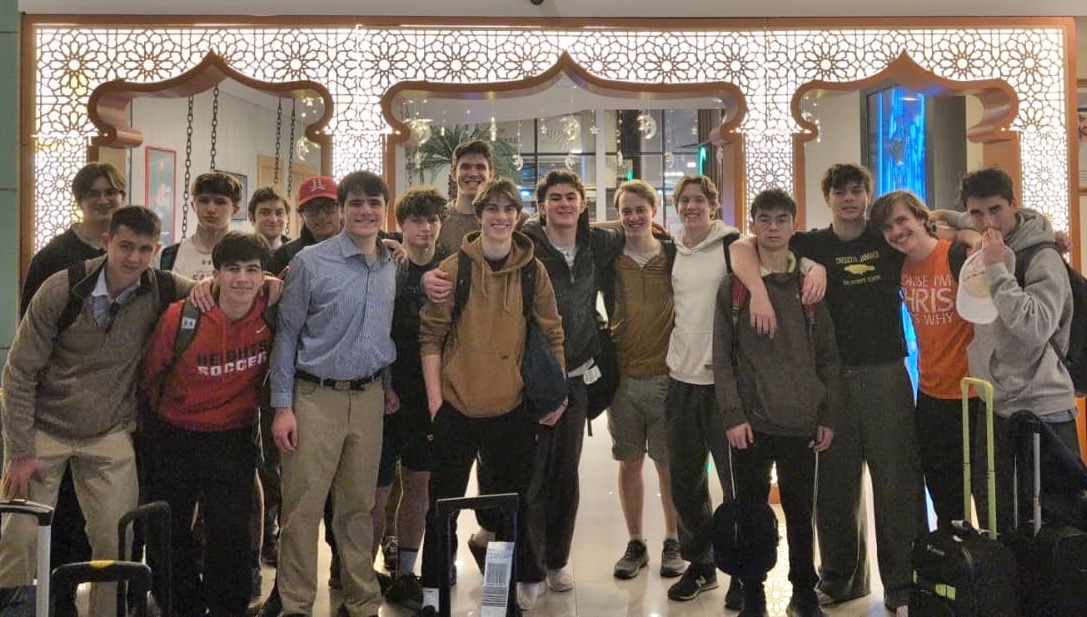
A group of high school seniors and their teacher chaperones spoke with EWTN News about being stuck in the Middle East during the beginning of hostilities there last week.
Read More
U.S., Hungarian thought leaders share ethical concerns over mass migration #Catholic “The Crisis of Migration for Families and Nations” was the subject of a Feb. 4 symposium that brought together American and Hungarian thought leaders who share concerns about the phenomenon of mass migration and its impact on the common good of their respective nations. The event coincided with the release of a new paper titled “Migration and Ethics: The Axioms of a Christian Migration Policy” by the Budapest-based Axioma Center, a Christian think tank. 
 
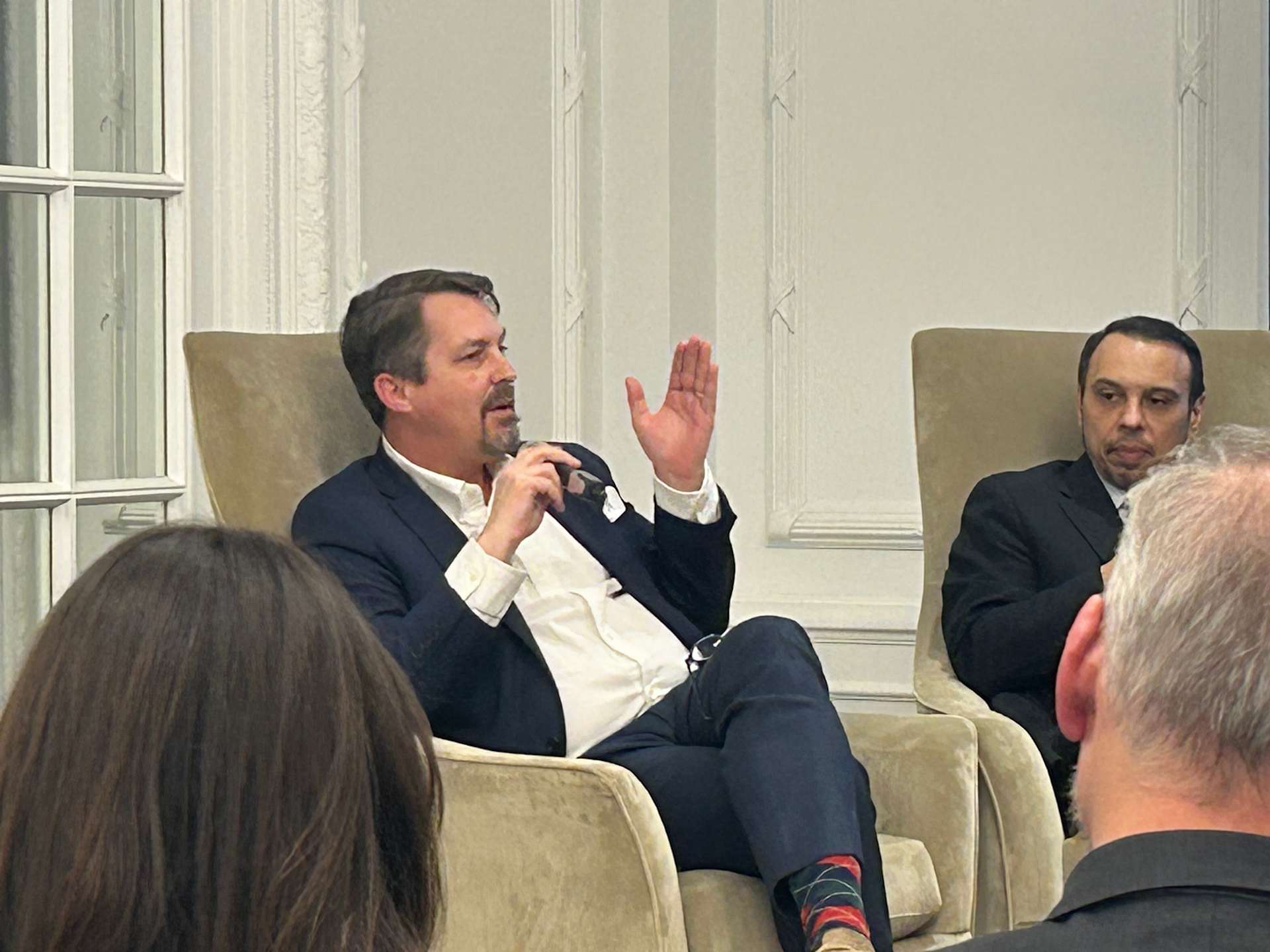
 The Catholic University of America’s Chad Pecknold (left) endorses the Hungarian think tank’s approach to Christian migration policy. | Credit: Ken Oliver-Méndez/EWTN News
 
 The paper, which was endorsed by Chad Pecknold, associate professor of systematic theology at The Catholic University of America, notes that “the Christian perspective on immigration has historically emphasized compassion and solidarity with refugees, along with a welcoming attitude towards foreigners.”However, the paper continues, the Christian perspective on immigration “also calls for a prudent balance between these values and the legitimate responsibility of rulers to protect their people.” In this context, the paper explains, “national security, cultural and moral traditions, the rule of law, public order, and social cohesion are all essential components of what constitutes the common good.” In the face of illegal immigration, the authors assert that “mass deportations may be a legitimate response to mass migration.”At the event, Samuel Samson, a senior adviser at the U.S. State Department’s Bureau of Democracy, Human Rights, and Labor, said he does not see large-scale migration as a “moral necessity” but rather the opposite.“It is actually fundamentally disordered and impacts the well-being and the common good of society,” he said. Samson said the Trump administration has sought to “shift the general narrative” about migration to bring this awareness to the fore.In the United States, more than 14% of the population was born outside the country. In the European Union (EU), nearly 10% of the population was born in a country that is not an EU member.
 
 The panel was moderated by the America First Policy Institute’s Kristen Ziccarelli (left) and included the participation of Center for Immigration Studies Executive Director Mark Krikorian (right). | Credit: Ken Oliver-Méndez/EWTN News
 
 For his part, Heritage Foundation Vice President for Economic and Domestic Policy Roger Severino contended that the United States is not essentially a “nation of immigrants” but “a country of pioneers who took on immigrants who bought into the ethos of the United States.”Addressing the issue of the assimilation of immigrants, Severino, who is Catholic and the son of Colombian immigrants, lamented that the “salad bowl” (as opposed to “melting pot”) concept of immigration encourages “separate independent cultures that, in practice, don’t even end up talking to each other.”Severino also faulted the largesse and abuses of the modern welfare state for not serving the interests of either the nation or immigrants.In his remarks, Pecknold reflected on the corrosion of the understanding of the family and the understanding of the nation. “A nation comes from a commonwealth of families that bring life,” he said.Pecknold said the wealth of nations is not simply the GDP but rather, in Christian terms, has been “providentially given” by God and said the erosion of borders, heritage, language, customs, and religion is an “attempt to deconstruct the very belief of God as the providential provider” of families and nations.Pecknold also contended that mass migration has negative impacts on family for both the immigrants and the native-born population.For migrants, he said “it almost inevitably breaks up the family,” with some leaving their home country and others staying behind or sometimes trying to enter illegally. He said it also hurts the American family by filling the workforce with cheap labor, saying: “You actually are taking jobs away from … young Americans who deserve those jobs.”Pecknold encouraged Christians to take into account the faith’s long tradition on the subject of immigration, citing St. Thomas Aquinas as a prime example. In the Summa Theologiae, Aquinas speaks about the need for assimilation and that danger could otherwise arise if someone who does “not yet having the common good firmly at heart” is given full citizenship.“Christians have to take some of these principles and think outside of the bounds of liberalism,” he said.USCCB approachThe United States Conference of Catholic Bishops (USCCB) has recently raised concerns on immigration that markedly differ from those presented at the Hungarian embassy symposium, particularly when it comes to the Trump administration’s mass deportation program.In November 2025, the bishops voted 216-5 to issue a special message rejecting “the indiscriminate mass deportation of people.” It noted that Scripture commands Christians to care for vulnerable people, including “the stranger,” and said Catholic teaching instructs nations “to recognize the fundamental dignity of all persons, including immigrants.”The Catechism of the Catholic Church instructs prosperous nations “to the extent they are able, to welcome the foreigner.” It also instructs immigrants “to respect with gratitude the material and spiritual heritage of the country that receives them, to obey its laws and to assist in carrying civic burdens.”According to the catechism, political authorities can regulate immigration “for the sake of the common good for which they are responsible.”

U.S., Hungarian thought leaders share ethical concerns over mass migration #Catholic “The Crisis of Migration for Families and Nations” was the subject of a Feb. 4 symposium that brought together American and Hungarian thought leaders who share concerns about the phenomenon of mass migration and its impact on the common good of their respective nations. The event coincided with the release of a new paper titled “Migration and Ethics: The Axioms of a Christian Migration Policy” by the Budapest-based Axioma Center, a Christian think tank. The Catholic University of America’s Chad Pecknold (left) endorses the Hungarian think tank’s approach to Christian migration policy. | Credit: Ken Oliver-Méndez/EWTN News The paper, which was endorsed by Chad Pecknold, associate professor of systematic theology at The Catholic University of America, notes that “the Christian perspective on immigration has historically emphasized compassion and solidarity with refugees, along with a welcoming attitude towards foreigners.”However, the paper continues, the Christian perspective on immigration “also calls for a prudent balance between these values and the legitimate responsibility of rulers to protect their people.” In this context, the paper explains, “national security, cultural and moral traditions, the rule of law, public order, and social cohesion are all essential components of what constitutes the common good.” In the face of illegal immigration, the authors assert that “mass deportations may be a legitimate response to mass migration.”At the event, Samuel Samson, a senior adviser at the U.S. State Department’s Bureau of Democracy, Human Rights, and Labor, said he does not see large-scale migration as a “moral necessity” but rather the opposite.“It is actually fundamentally disordered and impacts the well-being and the common good of society,” he said. Samson said the Trump administration has sought to “shift the general narrative” about migration to bring this awareness to the fore.In the United States, more than 14% of the population was born outside the country. In the European Union (EU), nearly 10% of the population was born in a country that is not an EU member. The panel was moderated by the America First Policy Institute’s Kristen Ziccarelli (left) and included the participation of Center for Immigration Studies Executive Director Mark Krikorian (right). | Credit: Ken Oliver-Méndez/EWTN News For his part, Heritage Foundation Vice President for Economic and Domestic Policy Roger Severino contended that the United States is not essentially a “nation of immigrants” but “a country of pioneers who took on immigrants who bought into the ethos of the United States.”Addressing the issue of the assimilation of immigrants, Severino, who is Catholic and the son of Colombian immigrants, lamented that the “salad bowl” (as opposed to “melting pot”) concept of immigration encourages “separate independent cultures that, in practice, don’t even end up talking to each other.”Severino also faulted the largesse and abuses of the modern welfare state for not serving the interests of either the nation or immigrants.In his remarks, Pecknold reflected on the corrosion of the understanding of the family and the understanding of the nation. “A nation comes from a commonwealth of families that bring life,” he said.Pecknold said the wealth of nations is not simply the GDP but rather, in Christian terms, has been “providentially given” by God and said the erosion of borders, heritage, language, customs, and religion is an “attempt to deconstruct the very belief of God as the providential provider” of families and nations.Pecknold also contended that mass migration has negative impacts on family for both the immigrants and the native-born population.For migrants, he said “it almost inevitably breaks up the family,” with some leaving their home country and others staying behind or sometimes trying to enter illegally. He said it also hurts the American family by filling the workforce with cheap labor, saying: “You actually are taking jobs away from … young Americans who deserve those jobs.”Pecknold encouraged Christians to take into account the faith’s long tradition on the subject of immigration, citing St. Thomas Aquinas as a prime example. In the Summa Theologiae, Aquinas speaks about the need for assimilation and that danger could otherwise arise if someone who does “not yet having the common good firmly at heart” is given full citizenship.“Christians have to take some of these principles and think outside of the bounds of liberalism,” he said.USCCB approachThe United States Conference of Catholic Bishops (USCCB) has recently raised concerns on immigration that markedly differ from those presented at the Hungarian embassy symposium, particularly when it comes to the Trump administration’s mass deportation program.In November 2025, the bishops voted 216-5 to issue a special message rejecting “the indiscriminate mass deportation of people.” It noted that Scripture commands Christians to care for vulnerable people, including “the stranger,” and said Catholic teaching instructs nations “to recognize the fundamental dignity of all persons, including immigrants.”The Catechism of the Catholic Church instructs prosperous nations “to the extent they are able, to welcome the foreigner.” It also instructs immigrants “to respect with gratitude the material and spiritual heritage of the country that receives them, to obey its laws and to assist in carrying civic burdens.”According to the catechism, political authorities can regulate immigration “for the sake of the common good for which they are responsible.”

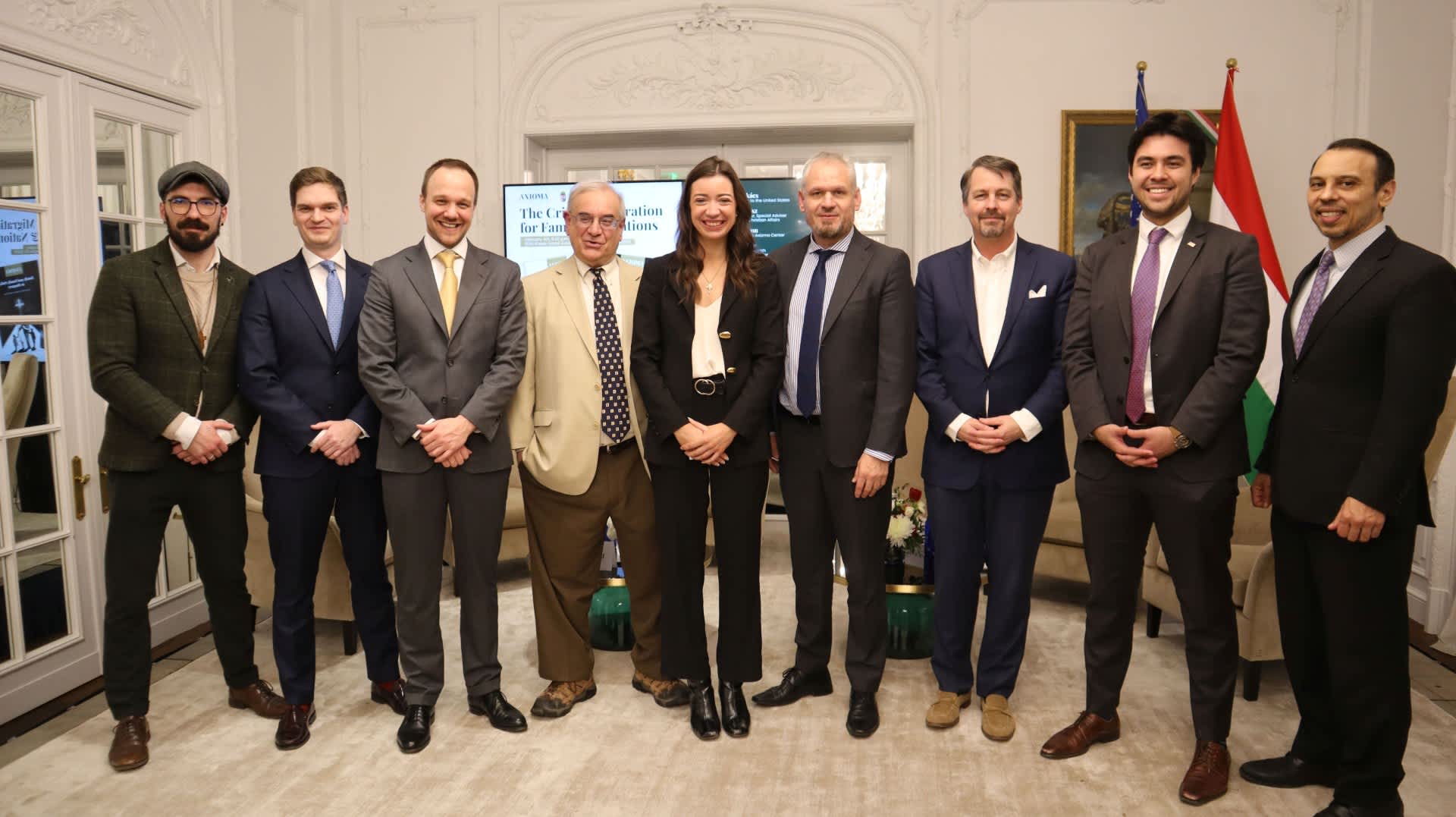
A Hungarian think tank’s new paper “Migration and Ethics: The Axioms of a Christian Migration Policy” prompts a meeting of the minds.
Read More