First Year

Pro-life movement has mixed reaction after Trump’s first year of second term #Catholic 
 
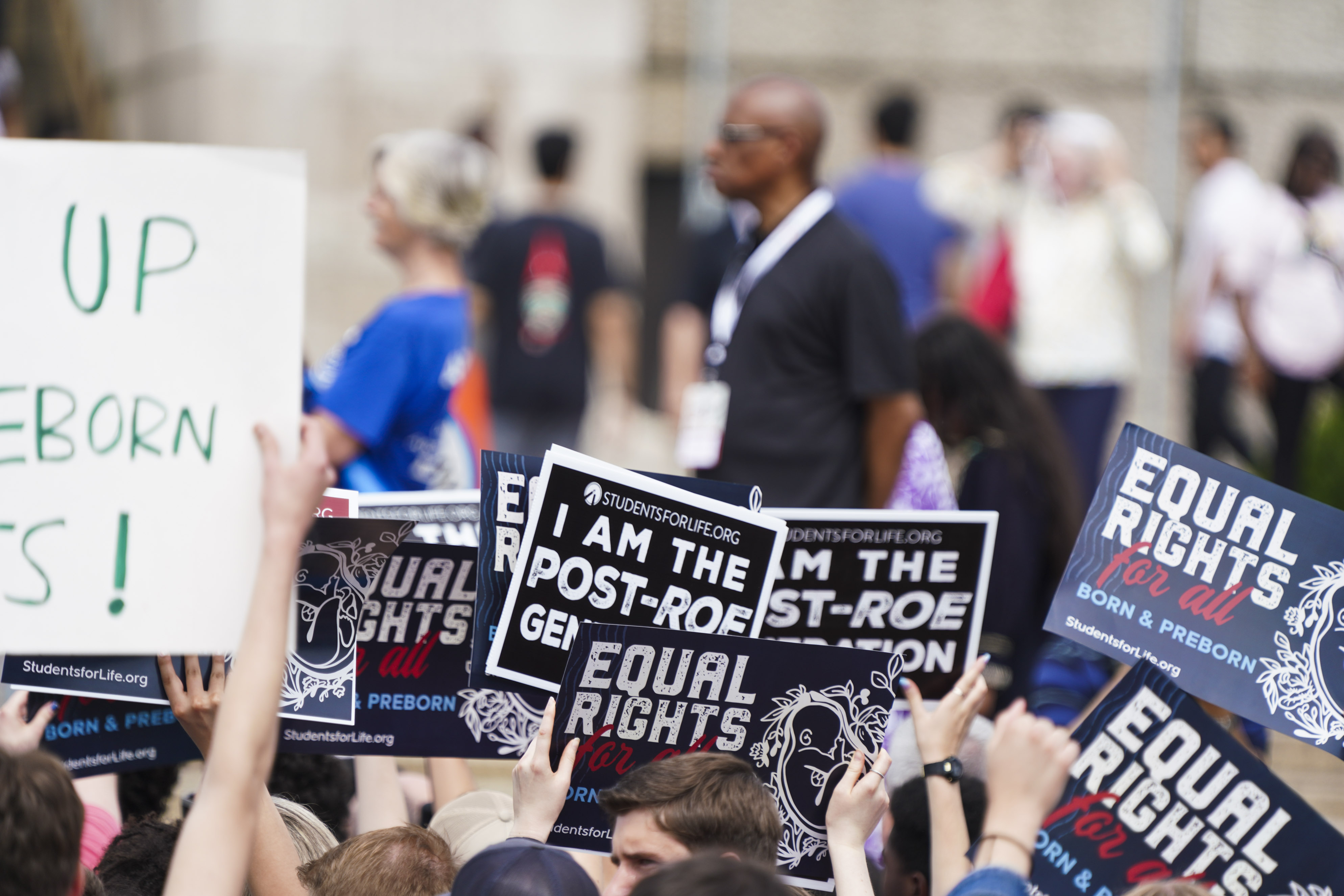
 Participants in a pro-life rally hold signs in front of the Lincoln Memorial in Washington, D.C., on June 24, 2023, at a rally marking the first anniversary of the Supreme Court's Dobbs decision that overturned Roe v. Wade. | Credit: Joseph Portolano/EWTN News

Jan 20, 2026 / 14:37 pm (CNA).
Members of the pro-life movement have mixed thoughts on the first year of President Donald Trump’s second term, noting many wins early into his presidency but a number of shortfalls as time has gone by.Some wins include defunding Planned Parenthood, walking back some of President Joe Biden’s initiatives, and removing foreign aid funding for organizations that promote abortion. However, a lack of action on chemical abortions and weakened rhetoric surrounding taxpayer-funded abortions are causing concern.A notable pro-life win was included in the tax overhaul bill signed by Trump in July, which cut off all Medicaid reimbursements for organizations that provide a large number of abortions, such as Planned Parenthood.Amid funding cuts, nearly 70 Planned Parenthood affiliates shut down. The administration also initially cut off Title X family planning grants from the abortion giant, but those have resumed.The president pardoned pro-life protesters convicted of violating the Freedom of Access to Clinic Entrances (FACE) Act and blocked foreign aid from supporting organizations that promote abortion. He rescinded several policies from the Biden administration, including one that paid Pentagon workers to travel for abortions. He also established strong conscience protections for pro-life doctors.“Right out the gate, we saw some progress on the pro-life issue,” Kelsey Pritchard, a spokesperson for Susan B. Anthony Pro-Life America (SBA), told EWTN.Yet, she cautioned: “We have also not seen progress in the one area that matters the most — and that’s on abortion drugs.”Health Secretary Robert F. Kennedy Jr. launched a study into the safety of the abortion pill mifepristone in September 2025, but so far no action has been taken to curtail the drug. Rather, the Food and Drug Administration (FDA) went in the opposite direction, approving a generic version of mifepristone later that same month.Pritchard said that move was “the opposite of what they should have done,” and referred to the generic mifepristone as “a new kill pill to increase the number of abortions that are done in this country.”She said Kennedy’s promised study has “absolutely been moving too slow” and added that there is no confirmation it even began or is taking place. SBA called for FDA Commissioner Marty Makary to be fired following allegations he was “slow-walking the report for political reasons,” she said.Trump has said abortion should be regulated by the states, but Pritchard warned “those [pro-life] laws can’t be in effect at all, really, when mail-order abortion happens with the abortion drugs.”“They’re allowing [California Gov.] Gavin Newsom and [New York Gov.] Kathy Hochul and their blue state friends to completely nullify the pro-life laws in states like Texas and Florida,” she said.Joseph Meaney, a senior ethicist at the National Catholic Bioethics Center, similarly said “the delay in the promised review of the rushed process in which mifepristone was approved as an abortion drug by the FDA has frustrated pro-lifers.”“When the FDA approved a second generic version of mifepristone, … it highlighted the lack of progress in fighting the leading means of doing abortions in the [United States],” he said.Trump also began to waver on taxpayer-funded abortions early in 2026, asking Republicans to be “flexible” on the Hyde Amendment amid negotiations on extending health care subsidies for the Affordable Care Act. Trump later unveiled “The Great Healthcare Plan” and said the White House intends to negotiate with Congress to ensure pro-life protections.Pritchard called taxpayer-funded abortion “a very basic red line” and said it’s “concerning to see Republicans back away from something so basic.”She warned Republicans to not take pro-life voters for granted in the upcoming midterms, saying “you’ll lose the elections and we won’t have the majority of Congress” without pro-life voters.“You must remain the pro-life party or you will lose the midterms if you decide to bow to the pro-death Democrat agenda,” Pritchard said.Meaney said there is “a widespread feeling that the second Trump administration has seemed to deprioritize issues important to the pro-life community,” adding he has “seen calls for pro-life groups to ‘flex their muscles’ and show that they cannot be taken for granted.”However, he said the shortfalls “should not obscure the fact that the Trump administration has rolled back the Biden-era pro-abortion measures internationally and domestically.”“It even achieved a temporary defunding of Planned Parenthood domestically in legislation,” he said. “The federal government no longer funds research on fetal tissues and defends the conscience rights of health care professionals and others robustly.”Trump also signed an executive order that directed departments and agencies to boost access to and reduce the cost of in vitro fertilization (IVF). The Catholic Church opposes IVF, which results in the destruction of human embryos, ending human lives.

Pro-life movement has mixed reaction after Trump’s first year of second term #Catholic Participants in a pro-life rally hold signs in front of the Lincoln Memorial in Washington, D.C., on June 24, 2023, at a rally marking the first anniversary of the Supreme Court's Dobbs decision that overturned Roe v. Wade. | Credit: Joseph Portolano/EWTN News Jan 20, 2026 / 14:37 pm (CNA). Members of the pro-life movement have mixed thoughts on the first year of President Donald Trump’s second term, noting many wins early into his presidency but a number of shortfalls as time has gone by.Some wins include defunding Planned Parenthood, walking back some of President Joe Biden’s initiatives, and removing foreign aid funding for organizations that promote abortion. However, a lack of action on chemical abortions and weakened rhetoric surrounding taxpayer-funded abortions are causing concern.A notable pro-life win was included in the tax overhaul bill signed by Trump in July, which cut off all Medicaid reimbursements for organizations that provide a large number of abortions, such as Planned Parenthood.Amid funding cuts, nearly 70 Planned Parenthood affiliates shut down. The administration also initially cut off Title X family planning grants from the abortion giant, but those have resumed.The president pardoned pro-life protesters convicted of violating the Freedom of Access to Clinic Entrances (FACE) Act and blocked foreign aid from supporting organizations that promote abortion. He rescinded several policies from the Biden administration, including one that paid Pentagon workers to travel for abortions. He also established strong conscience protections for pro-life doctors.“Right out the gate, we saw some progress on the pro-life issue,” Kelsey Pritchard, a spokesperson for Susan B. Anthony Pro-Life America (SBA), told EWTN.Yet, she cautioned: “We have also not seen progress in the one area that matters the most — and that’s on abortion drugs.”Health Secretary Robert F. Kennedy Jr. launched a study into the safety of the abortion pill mifepristone in September 2025, but so far no action has been taken to curtail the drug. Rather, the Food and Drug Administration (FDA) went in the opposite direction, approving a generic version of mifepristone later that same month.Pritchard said that move was “the opposite of what they should have done,” and referred to the generic mifepristone as “a new kill pill to increase the number of abortions that are done in this country.”She said Kennedy’s promised study has “absolutely been moving too slow” and added that there is no confirmation it even began or is taking place. SBA called for FDA Commissioner Marty Makary to be fired following allegations he was “slow-walking the report for political reasons,” she said.Trump has said abortion should be regulated by the states, but Pritchard warned “those [pro-life] laws can’t be in effect at all, really, when mail-order abortion happens with the abortion drugs.”“They’re allowing [California Gov.] Gavin Newsom and [New York Gov.] Kathy Hochul and their blue state friends to completely nullify the pro-life laws in states like Texas and Florida,” she said.Joseph Meaney, a senior ethicist at the National Catholic Bioethics Center, similarly said “the delay in the promised review of the rushed process in which mifepristone was approved as an abortion drug by the FDA has frustrated pro-lifers.”“When the FDA approved a second generic version of mifepristone, … it highlighted the lack of progress in fighting the leading means of doing abortions in the [United States],” he said.Trump also began to waver on taxpayer-funded abortions early in 2026, asking Republicans to be “flexible” on the Hyde Amendment amid negotiations on extending health care subsidies for the Affordable Care Act. Trump later unveiled “The Great Healthcare Plan” and said the White House intends to negotiate with Congress to ensure pro-life protections.Pritchard called taxpayer-funded abortion “a very basic red line” and said it’s “concerning to see Republicans back away from something so basic.”She warned Republicans to not take pro-life voters for granted in the upcoming midterms, saying “you’ll lose the elections and we won’t have the majority of Congress” without pro-life voters.“You must remain the pro-life party or you will lose the midterms if you decide to bow to the pro-death Democrat agenda,” Pritchard said.Meaney said there is “a widespread feeling that the second Trump administration has seemed to deprioritize issues important to the pro-life community,” adding he has “seen calls for pro-life groups to ‘flex their muscles’ and show that they cannot be taken for granted.”However, he said the shortfalls “should not obscure the fact that the Trump administration has rolled back the Biden-era pro-abortion measures internationally and domestically.”“It even achieved a temporary defunding of Planned Parenthood domestically in legislation,” he said. “The federal government no longer funds research on fetal tissues and defends the conscience rights of health care professionals and others robustly.”Trump also signed an executive order that directed departments and agencies to boost access to and reduce the cost of in vitro fertilization (IVF). The Catholic Church opposes IVF, which results in the destruction of human embryos, ending human lives.


Participants in a pro-life rally hold signs in front of the Lincoln Memorial in Washington, D.C., on June 24, 2023, at a rally marking the first anniversary of the Supreme Court's Dobbs decision that overturned Roe v. Wade. | Credit: Joseph Portolano/EWTN News

Jan 20, 2026 / 14:37 pm (CNA).

Members of the pro-life movement have mixed thoughts on the first year of President Donald Trump’s second term, noting many wins early into his presidency but a number of shortfalls as time has gone by.

Some wins include defunding Planned Parenthood, walking back some of President Joe Biden’s initiatives, and removing foreign aid funding for organizations that promote abortion. However, a lack of action on chemical abortions and weakened rhetoric surrounding taxpayer-funded abortions are causing concern.

A notable pro-life win was included in the tax overhaul bill signed by Trump in July, which cut off all Medicaid reimbursements for organizations that provide a large number of abortions, such as Planned Parenthood.

Amid funding cuts, nearly 70 Planned Parenthood affiliates shut down. The administration also initially cut off Title X family planning grants from the abortion giant, but those have resumed.

The president pardoned pro-life protesters convicted of violating the Freedom of Access to Clinic Entrances (FACE) Act and blocked foreign aid from supporting organizations that promote abortion. He rescinded several policies from the Biden administration, including one that paid Pentagon workers to travel for abortions. He also established strong conscience protections for pro-life doctors.

“Right out the gate, we saw some progress on the pro-life issue,” Kelsey Pritchard, a spokesperson for Susan B. Anthony Pro-Life America (SBA), told EWTN.

Yet, she cautioned: “We have also not seen progress in the one area that matters the most — and that’s on abortion drugs.”

Health Secretary Robert F. Kennedy Jr. launched a study into the safety of the abortion pill mifepristone in September 2025, but so far no action has been taken to curtail the drug. Rather, the Food and Drug Administration (FDA) went in the opposite direction, approving a generic version of mifepristone later that same month.

Pritchard said that move was “the opposite of what they should have done,” and referred to the generic mifepristone as “a new kill pill to increase the number of abortions that are done in this country.”

She said Kennedy’s promised study has “absolutely been moving too slow” and added that there is no confirmation it even began or is taking place. SBA called for FDA Commissioner Marty Makary to be fired following allegations he was “slow-walking the report for political reasons,” she said.

Trump has said abortion should be regulated by the states, but Pritchard warned “those [pro-life] laws can’t be in effect at all, really, when mail-order abortion happens with the abortion drugs.”

“They’re allowing [California Gov.] Gavin Newsom and [New York Gov.] Kathy Hochul and their blue state friends to completely nullify the pro-life laws in states like Texas and Florida,” she said.

Joseph Meaney, a senior ethicist at the National Catholic Bioethics Center, similarly said “the delay in the promised review of the rushed process in which mifepristone was approved as an abortion drug by the FDA has frustrated pro-lifers.”

“When the FDA approved a second generic version of mifepristone, … it highlighted the lack of progress in fighting the leading means of doing abortions in the [United States],” he said.

Trump also began to waver on taxpayer-funded abortions early in 2026, asking Republicans to be “flexible” on the Hyde Amendment amid negotiations on extending health care subsidies for the Affordable Care Act. Trump later unveiled “The Great Healthcare Plan” and said the White House intends to negotiate with Congress to ensure pro-life protections.

Pritchard called taxpayer-funded abortion “a very basic red line” and said it’s “concerning to see Republicans back away from something so basic.”

She warned Republicans to not take pro-life voters for granted in the upcoming midterms, saying “you’ll lose the elections and we won’t have the majority of Congress” without pro-life voters.

“You must remain the pro-life party or you will lose the midterms if you decide to bow to the pro-death Democrat agenda,” Pritchard said.

Meaney said there is “a widespread feeling that the second Trump administration has seemed to deprioritize issues important to the pro-life community,” adding he has “seen calls for pro-life groups to ‘flex their muscles’ and show that they cannot be taken for granted.”

However, he said the shortfalls “should not obscure the fact that the Trump administration has rolled back the Biden-era pro-abortion measures internationally and domestically.”

“It even achieved a temporary defunding of Planned Parenthood domestically in legislation,” he said. “The federal government no longer funds research on fetal tissues and defends the conscience rights of health care professionals and others robustly.”

Trump also signed an executive order that directed departments and agencies to boost access to and reduce the cost of in vitro fertilization (IVF). The Catholic Church opposes IVF, which results in the destruction of human embryos, ending human lives.

Read More
Catholics express mixed views on first year of Trump’s second term #Catholic 
 
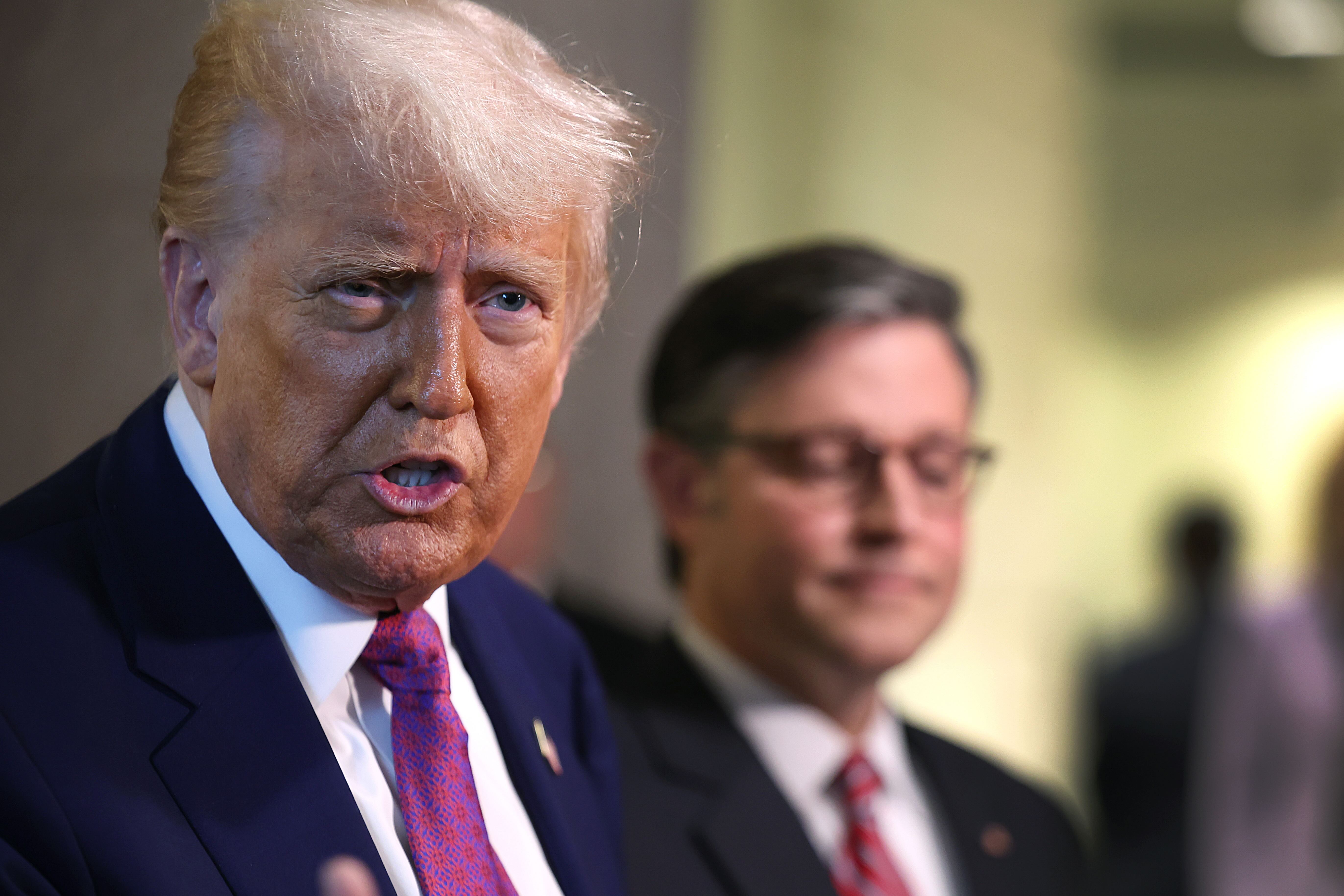
 With Speaker of the House Mike Johnson by his side, President Donald Trump speaks to the press following a House Republican meeting at the U.S. Capitol on May 20, 2025, in Washington, D.C. | Credit: Tasos Katopodis/Getty Images

Jan 20, 2026 / 12:21 pm (CNA).
Catholics are offering mixed reactions to the first year of President Donald Trump’s second term, which included domestic policy actions that align with U.S. bishops on gender-related issues, and also tensions over immigration, expansion of the death penalty, and reduced funding for organizations that provide food and basic support to people in need.Trump secured his electoral victory in 2024 with the help of Catholics, who supported him by a double-digit margin, according to exit polls. A Pew Research Center report found that nearly a quarter of Trump’s voters in 2024 were Catholic.Throughout his first year, Trump — who calls himself a nondenominational Christian — has invoked Christianity and created a White House Faith Office. He created a Religious Liberty Commission by executive order in May 2025 and became the first president to issue a proclamation honoring the Catholic feast of the Immaculate Conception in December.Last year, the president also launched the “America Prays” initiative, which encouraged people to dedicate one hour of prayer for the United States and its people in preparation for the 250th anniversary of the Declaration of Independence on July 4, 2026.Immigration, poverty, and NGOsJohn White, professor of politics at The Catholic University of America, said the first year of Trump’s second term “challenged Catholics on many levels.”“The brutality of ICE has caused the U.S. Conference of Catholic Bishops to issue an extraordinary statement at the prompting of Pope Leo XIV,” White said, referring to the Immigration and Customs Enforcement agency. The U.S. Conference of Catholic Bishops (USCCB) issued a special message in November opposing indiscriminate mass deportations, calling for humane treatment, urging meaningful reform, and affirming the compatibility of national security with human dignity.The Trump administration, with JD Vance, the second Catholic vice president in U.S. history, cut billions of dollars in funding to nongovernmental organizations (NGOs), which financially damaged several Catholic nonprofits that had received funding. Trump also signed into law historic cuts to the Supplemental Nutrition Assistance Program.“The cuts to NGO funding, SNAP, and Medicaid benefits, alongside the huge increases in health care costs, have hurt the poor and middle class at home and around the world,” he said. “Instead of being the good Samaritan, Trump has challenged our Catholic values and narrowed our vision of who we are and what we believe. JD Vance’s interpretation of ‘Ordo Amoris’ of a hierarchy to those whom we love rather than a universal love is a case in point and has been repudiated by Pope Francis and Pope Leo XIV,” he said.The cuts aligned federal policy with the administration’s agenda, which included strict immigration enforcement, mass deportations of immigrants who are in the country illegally, and less foreign aid support.Catholic Charities USA was previously receiving more than $100 million annually for migrant services, and the Trump administration cut off those funds. In response, the organization scaled back its services.Since Trump took office, the administration said it has deported more than 600,000 people.Karen Sullivan, director of advocacy for the Catholic Legal Immigration Network (CLINIC), which provides legal services to migrants, said she is “very concerned about the way that immigration enforcement has been carried out,” adding her organization is “very concerned that human dignity of all persons [needs to] be respected.”Sullivan said the administration is “enabling their officers to use excessive force as they are taking people into custody” and “denying access to oversight at their detention centers.” She also expressed concern about the administration increasing fees for asylum applications and giving agents more leeway to conduct immigration enforcement at sensitive locations, such as churches, schools, and hospitals.She said the large number of deportations and the increase in expedited removals has “been a strain” on organizations that seek to provide legal help to migrants.CLINIC receives inquiries from people who are facing deportation and also those who fear they may be deported. She said: “The worry and the fear among those people [who may face deportation] makes them seek out assistance and advice even more often.”“The pace of the changes that have been happening in the past year have been very difficult to manage,” she said. “We are having to respond very quickly to changes."Executive actions on genderSusan Hanssen, a history professor at the University of Dallas (a Catholic institution), viewed the first year of Trump’s second term in mostly successful terms.“As Catholics we know that the law educates, and during Trump’s first year in office we witnessed an actual shift in public opinion on the LGBT/transgender ideology due to his asserting the scientific and natural common sense that there are only male and female,” Hanssen said.Trump took executive action to prohibit what he called the “chemical and surgical mutilation” of children, such as hormone therapy and surgical transition. He signed a policy restricting participation of transgender athletes in women’s sports. He legally recognized only two genders, determined by biology: male and female.“His strong executive action on this essential point — domestically in making the executive branch remove its trans-affirming language, the executive department of education stop subverting parental rights over their children, and women’s rights in sports, and (importantly) putting an end to USAID’s [U.S. Agency for International Development] pushing this gender agenda on the countries who need our economic assistance,” she said.“This has led to a genuine public shift, with fewer independent corporations choosing to enforce June as LGBT Pride month on their customer base, fewer DEI programs pushing the gender agenda on hiring, and a shift (especially among young men) towards disapproval of gender transitioning children and even towards disapproval of the legalization of so-called same sex ‘marriage,’” she added. “We will need to see how these executive branch victories will affect judicial and legislative action moving forward.”Father Tadeusz Pacholczyk, senior ethicist at the National Catholic Bioethics Center, had a similar view of some of the social changes.“The current administration has focused significant energy on the important task of ‘putting folks on notice,’ so it’s hard to deny, for example, that the misguided medico-pharmaceutical industry that has profited handsomely from exploiting vulnerable youth and other gender dysphoric individuals can no longer miss the loud indicators that these practices will not be able to continue unabated,” he said.Death penaltyTrump signaled a renewed and more aggressive federal capital-punishment policy in 2025, in opposition to the Catechism of the Catholic Church, which teaches that the death penalty is “inadmissible.”Trump signed an executive order on his first day in office directing the Justice Department to actively pursue the federal death penalty for serious crimes. He also directed federal prosecutors to seek death sentences in Washington, D.C., homicide cases. His administration lifted a moratorium on executions, reversing a pause in federal executions and following President Joe Biden’s commutations of federal death sentences.Archbishop Timothy P. Broglio, then-president of the USCCB, in a Jan. 22, 2025, statement called Trump’s support for expanding the federal death penalty “deeply troubling.” Newly elected USCCB president Archbishop Paul Coakley likewise called for the abolition of the death penalty.

Catholics express mixed views on first year of Trump’s second term #Catholic With Speaker of the House Mike Johnson by his side, President Donald Trump speaks to the press following a House Republican meeting at the U.S. Capitol on May 20, 2025, in Washington, D.C. | Credit: Tasos Katopodis/Getty Images Jan 20, 2026 / 12:21 pm (CNA). Catholics are offering mixed reactions to the first year of President Donald Trump’s second term, which included domestic policy actions that align with U.S. bishops on gender-related issues, and also tensions over immigration, expansion of the death penalty, and reduced funding for organizations that provide food and basic support to people in need.Trump secured his electoral victory in 2024 with the help of Catholics, who supported him by a double-digit margin, according to exit polls. A Pew Research Center report found that nearly a quarter of Trump’s voters in 2024 were Catholic.Throughout his first year, Trump — who calls himself a nondenominational Christian — has invoked Christianity and created a White House Faith Office. He created a Religious Liberty Commission by executive order in May 2025 and became the first president to issue a proclamation honoring the Catholic feast of the Immaculate Conception in December.Last year, the president also launched the “America Prays” initiative, which encouraged people to dedicate one hour of prayer for the United States and its people in preparation for the 250th anniversary of the Declaration of Independence on July 4, 2026.Immigration, poverty, and NGOsJohn White, professor of politics at The Catholic University of America, said the first year of Trump’s second term “challenged Catholics on many levels.”“The brutality of ICE has caused the U.S. Conference of Catholic Bishops to issue an extraordinary statement at the prompting of Pope Leo XIV,” White said, referring to the Immigration and Customs Enforcement agency. The U.S. Conference of Catholic Bishops (USCCB) issued a special message in November opposing indiscriminate mass deportations, calling for humane treatment, urging meaningful reform, and affirming the compatibility of national security with human dignity.The Trump administration, with JD Vance, the second Catholic vice president in U.S. history, cut billions of dollars in funding to nongovernmental organizations (NGOs), which financially damaged several Catholic nonprofits that had received funding. Trump also signed into law historic cuts to the Supplemental Nutrition Assistance Program.“The cuts to NGO funding, SNAP, and Medicaid benefits, alongside the huge increases in health care costs, have hurt the poor and middle class at home and around the world,” he said. “Instead of being the good Samaritan, Trump has challenged our Catholic values and narrowed our vision of who we are and what we believe. JD Vance’s interpretation of ‘Ordo Amoris’ of a hierarchy to those whom we love rather than a universal love is a case in point and has been repudiated by Pope Francis and Pope Leo XIV,” he said.The cuts aligned federal policy with the administration’s agenda, which included strict immigration enforcement, mass deportations of immigrants who are in the country illegally, and less foreign aid support.Catholic Charities USA was previously receiving more than $100 million annually for migrant services, and the Trump administration cut off those funds. In response, the organization scaled back its services.Since Trump took office, the administration said it has deported more than 600,000 people.Karen Sullivan, director of advocacy for the Catholic Legal Immigration Network (CLINIC), which provides legal services to migrants, said she is “very concerned about the way that immigration enforcement has been carried out,” adding her organization is “very concerned that human dignity of all persons [needs to] be respected.”Sullivan said the administration is “enabling their officers to use excessive force as they are taking people into custody” and “denying access to oversight at their detention centers.” She also expressed concern about the administration increasing fees for asylum applications and giving agents more leeway to conduct immigration enforcement at sensitive locations, such as churches, schools, and hospitals.She said the large number of deportations and the increase in expedited removals has “been a strain” on organizations that seek to provide legal help to migrants.CLINIC receives inquiries from people who are facing deportation and also those who fear they may be deported. She said: “The worry and the fear among those people [who may face deportation] makes them seek out assistance and advice even more often.”“The pace of the changes that have been happening in the past year have been very difficult to manage,” she said. “We are having to respond very quickly to changes."Executive actions on genderSusan Hanssen, a history professor at the University of Dallas (a Catholic institution), viewed the first year of Trump’s second term in mostly successful terms.“As Catholics we know that the law educates, and during Trump’s first year in office we witnessed an actual shift in public opinion on the LGBT/transgender ideology due to his asserting the scientific and natural common sense that there are only male and female,” Hanssen said.Trump took executive action to prohibit what he called the “chemical and surgical mutilation” of children, such as hormone therapy and surgical transition. He signed a policy restricting participation of transgender athletes in women’s sports. He legally recognized only two genders, determined by biology: male and female.“His strong executive action on this essential point — domestically in making the executive branch remove its trans-affirming language, the executive department of education stop subverting parental rights over their children, and women’s rights in sports, and (importantly) putting an end to USAID’s [U.S. Agency for International Development] pushing this gender agenda on the countries who need our economic assistance,” she said.“This has led to a genuine public shift, with fewer independent corporations choosing to enforce June as LGBT Pride month on their customer base, fewer DEI programs pushing the gender agenda on hiring, and a shift (especially among young men) towards disapproval of gender transitioning children and even towards disapproval of the legalization of so-called same sex ‘marriage,’” she added. “We will need to see how these executive branch victories will affect judicial and legislative action moving forward.”Father Tadeusz Pacholczyk, senior ethicist at the National Catholic Bioethics Center, had a similar view of some of the social changes.“The current administration has focused significant energy on the important task of ‘putting folks on notice,’ so it’s hard to deny, for example, that the misguided medico-pharmaceutical industry that has profited handsomely from exploiting vulnerable youth and other gender dysphoric individuals can no longer miss the loud indicators that these practices will not be able to continue unabated,” he said.Death penaltyTrump signaled a renewed and more aggressive federal capital-punishment policy in 2025, in opposition to the Catechism of the Catholic Church, which teaches that the death penalty is “inadmissible.”Trump signed an executive order on his first day in office directing the Justice Department to actively pursue the federal death penalty for serious crimes. He also directed federal prosecutors to seek death sentences in Washington, D.C., homicide cases. His administration lifted a moratorium on executions, reversing a pause in federal executions and following President Joe Biden’s commutations of federal death sentences.Archbishop Timothy P. Broglio, then-president of the USCCB, in a Jan. 22, 2025, statement called Trump’s support for expanding the federal death penalty “deeply troubling.” Newly elected USCCB president Archbishop Paul Coakley likewise called for the abolition of the death penalty.


With Speaker of the House Mike Johnson by his side, President Donald Trump speaks to the press following a House Republican meeting at the U.S. Capitol on May 20, 2025, in Washington, D.C. | Credit: Tasos Katopodis/Getty Images

Jan 20, 2026 / 12:21 pm (CNA).

Catholics are offering mixed reactions to the first year of President Donald Trump’s second term, which included domestic policy actions that align with U.S. bishops on gender-related issues, and also tensions over immigration, expansion of the death penalty, and reduced funding for organizations that provide food and basic support to people in need.

Trump secured his electoral victory in 2024 with the help of Catholics, who supported him by a double-digit margin, according to exit polls. A Pew Research Center report found that nearly a quarter of Trump’s voters in 2024 were Catholic.

Throughout his first year, Trump — who calls himself a nondenominational Christian — has invoked Christianity and created a White House Faith Office. He created a Religious Liberty Commission by executive order in May 2025 and became the first president to issue a proclamation honoring the Catholic feast of the Immaculate Conception in December.

Last year, the president also launched the “America Prays” initiative, which encouraged people to dedicate one hour of prayer for the United States and its people in preparation for the 250th anniversary of the Declaration of Independence on July 4, 2026.

Immigration, poverty, and NGOs

John White, professor of politics at The Catholic University of America, said the first year of Trump’s second term “challenged Catholics on many levels.”

“The brutality of ICE has caused the U.S. Conference of Catholic Bishops to issue an extraordinary statement at the prompting of Pope Leo XIV,” White said, referring to the Immigration and Customs Enforcement agency. The U.S. Conference of Catholic Bishops (USCCB) issued a special message in November opposing indiscriminate mass deportations, calling for humane treatment, urging meaningful reform, and affirming the compatibility of national security with human dignity.

The Trump administration, with JD Vance, the second Catholic vice president in U.S. history, cut billions of dollars in funding to nongovernmental organizations (NGOs), which financially damaged several Catholic nonprofits that had received funding. Trump also signed into law historic cuts to the Supplemental Nutrition Assistance Program.

“The cuts to NGO funding, SNAP, and Medicaid benefits, alongside the huge increases in health care costs, have hurt the poor and middle class at home and around the world,” he said. “Instead of being the good Samaritan, Trump has challenged our Catholic values and narrowed our vision of who we are and what we believe. JD Vance’s interpretation of ‘Ordo Amoris’ of a hierarchy to those whom we love rather than a universal love is a case in point and has been repudiated by Pope Francis and Pope Leo XIV,” he said.

The cuts aligned federal policy with the administration’s agenda, which included strict immigration enforcement, mass deportations of immigrants who are in the country illegally, and less foreign aid support.

Catholic Charities USA was previously receiving more than $100 million annually for migrant services, and the Trump administration cut off those funds. In response, the organization scaled back its services.

Since Trump took office, the administration said it has deported more than 600,000 people.

Karen Sullivan, director of advocacy for the Catholic Legal Immigration Network (CLINIC), which provides legal services to migrants, said she is “very concerned about the way that immigration enforcement has been carried out,” adding her organization is “very concerned that human dignity of all persons [needs to] be respected.”

Sullivan said the administration is “enabling their officers to use excessive force as they are taking people into custody” and “denying access to oversight at their detention centers.” She also expressed concern about the administration increasing fees for asylum applications and giving agents more leeway to conduct immigration enforcement at sensitive locations, such as churches, schools, and hospitals.

She said the large number of deportations and the increase in expedited removals has “been a strain” on organizations that seek to provide legal help to migrants.

CLINIC receives inquiries from people who are facing deportation and also those who fear they may be deported. She said: “The worry and the fear among those people [who may face deportation] makes them seek out assistance and advice even more often.”

“The pace of the changes that have been happening in the past year have been very difficult to manage,” she said. “We are having to respond very quickly to changes."

Executive actions on gender

Susan Hanssen, a history professor at the University of Dallas (a Catholic institution), viewed the first year of Trump’s second term in mostly successful terms.

“As Catholics we know that the law educates, and during Trump’s first year in office we witnessed an actual shift in public opinion on the LGBT/transgender ideology due to his asserting the scientific and natural common sense that there are only male and female,” Hanssen said.

Trump took executive action to prohibit what he called the “chemical and surgical mutilation” of children, such as hormone therapy and surgical transition. He signed a policy restricting participation of transgender athletes in women’s sports. He legally recognized only two genders, determined by biology: male and female.

“His strong executive action on this essential point — domestically in making the executive branch remove its trans-affirming language, the executive department of education stop subverting parental rights over their children, and women’s rights in sports, and (importantly) putting an end to USAID’s [U.S. Agency for International Development] pushing this gender agenda on the countries who need our economic assistance,” she said.

“This has led to a genuine public shift, with fewer independent corporations choosing to enforce June as LGBT Pride month on their customer base, fewer DEI programs pushing the gender agenda on hiring, and a shift (especially among young men) towards disapproval of gender transitioning children and even towards disapproval of the legalization of so-called same sex ‘marriage,’” she added. “We will need to see how these executive branch victories will affect judicial and legislative action moving forward.”

Father Tadeusz Pacholczyk, senior ethicist at the National Catholic Bioethics Center, had a similar view of some of the social changes.

“The current administration has focused significant energy on the important task of ‘putting folks on notice,’ so it’s hard to deny, for example, that the misguided medico-pharmaceutical industry that has profited handsomely from exploiting vulnerable youth and other gender dysphoric individuals can no longer miss the loud indicators that these practices will not be able to continue unabated,” he said.

Death penalty

Trump signaled a renewed and more aggressive federal capital-punishment policy in 2025, in opposition to the Catechism of the Catholic Church, which teaches that the death penalty is “inadmissible.”

Trump signed an executive order on his first day in office directing the Justice Department to actively pursue the federal death penalty for serious crimes. He also directed federal prosecutors to seek death sentences in Washington, D.C., homicide cases. His administration lifted a moratorium on executions, reversing a pause in federal executions and following President Joe Biden’s commutations of federal death sentences.

Archbishop Timothy P. Broglio, then-president of the USCCB, in a Jan. 22, 2025, statement called Trump’s support for expanding the federal death penalty “deeply troubling.” Newly elected USCCB president Archbishop Paul Coakley likewise called for the abolition of the death penalty.

Read More
‘Adopt a Bishop’ initiative invites faithful to pray for Church leaders #Catholic 
 
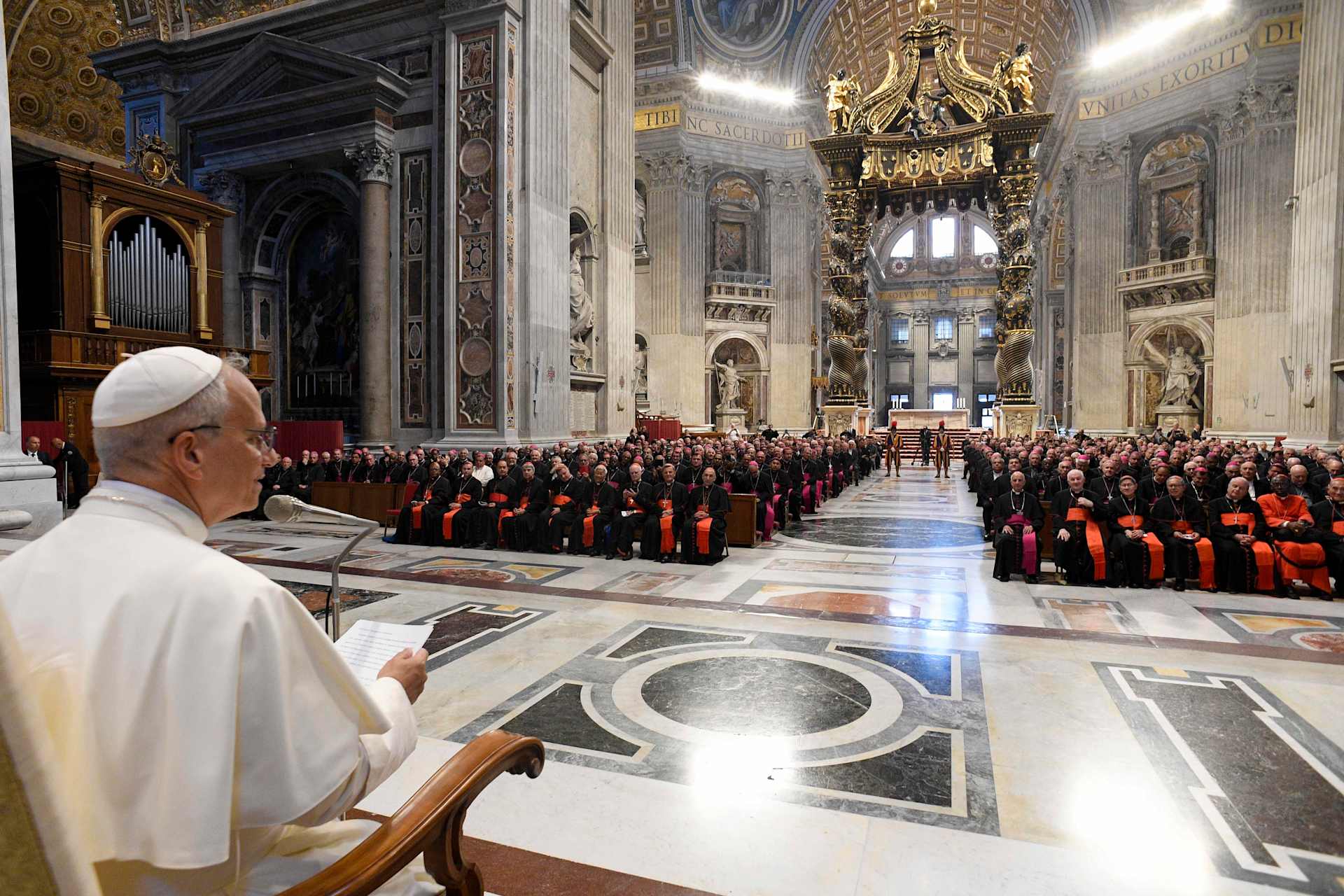
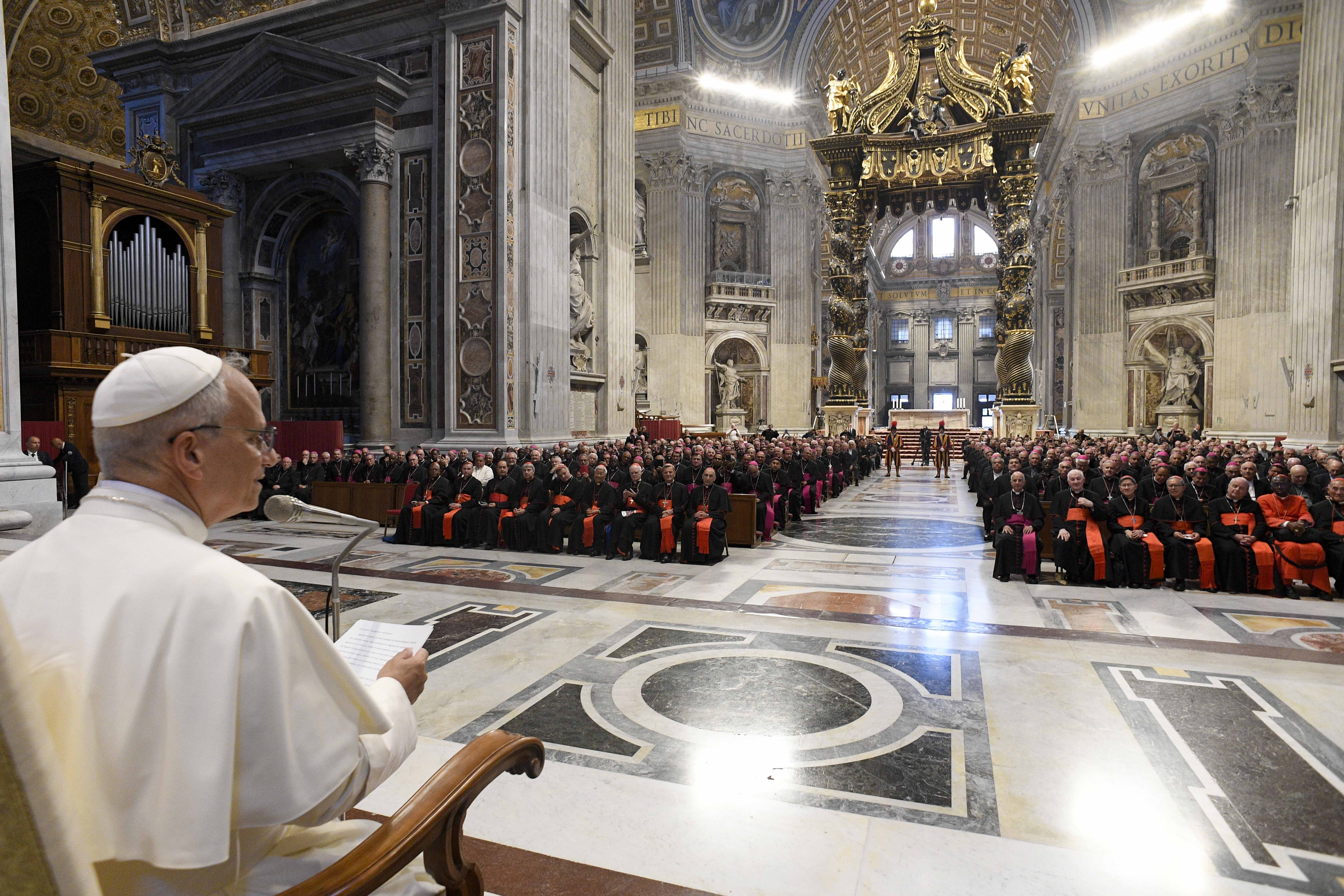
 Pope Leo XIV speaks to bishops gathered for the Jubilee of Bishops on June 25, 2025, in St. Peter’s Basilica at the Vatican. | Credit: Vatican Media

Jan 11, 2026 / 06:00 am (CNA).
Soon after the election of Pope Leo XIV, Cardinal Luis Antonio Tagle shared in a press conference that moments before then-Cardinal Robert Prevost was chosen to be pontiff, Tagle noticed the emotion by the soon-to-be-pope as it was becoming more clear he would be elected, so he reached into his pocket and offered Prevost a piece of candy.It was this simple moment that inspired Lauren Winter, founder of the Catholic company Brick House in the City, to start the Adopt a Bishop initiative.“It really reminded me that these are all human beings who made the choice one day to accept a very serious ‘yes,’” Winter told CNA in an interview.The Adopt a Bishop initiative, which has been launched in collaboration with The Dorothea Project, invites the faithful to adopt a bishop for the year and pray for that bishop throughout the year.“I think our bishops carry an enormous and often invisible spiritual weight,” she said. “They carry a responsibility that most of us never see — it’s pastoral and spiritual and it’s deeply personal and they’re holding entire dioceses in their prayer. And I think that kind of weight requires spiritual support.”This is the first year of the initiative and over 1,000 people have already signed up to adopt a bishop in prayer. When an individual signs up on the website that person is randomly assigned a bishop from anywhere in the world.Winter explained that she decided to use a random generator in order to “remove preference.”“I didn’t want anyone to choose a bishop that they already knew and admired and I wanted to leave that room for the Holy Spirit,” she said. “And it may be a bishop you are already familiar with. It may be a bishop that is someone that you have disagreed with. But the call to prayer is still there and I think receiving a bishop instead of choosing one, that felt more like a posture of reception, which I feel like it’s more aligned with how grace works in the Church — just leaving the room there for the Spirit to work.”The Catholic business owner highlighted the importance spiritual adoption plays in the Church in that it reminds us that “we are also being prayed for, it strengthens the bonds within the Church, and then I feel like it helps us to live more intentionally as one body of Christ.”Winter said she hopes that through this initiative “people feel more connected to their bishop, to the Church, to the quiet work of prayer, and how a small faithful commitment can really shape our faith.”“I imagine many people when they meet a bishop, they ask the good bishop to pray for them and I think it’s really beautiful that we can return that — the reciprocity of prayer. I think they need our prayers too.”

‘Adopt a Bishop’ initiative invites faithful to pray for Church leaders #Catholic Pope Leo XIV speaks to bishops gathered for the Jubilee of Bishops on June 25, 2025, in St. Peter’s Basilica at the Vatican. | Credit: Vatican Media Jan 11, 2026 / 06:00 am (CNA). Soon after the election of Pope Leo XIV, Cardinal Luis Antonio Tagle shared in a press conference that moments before then-Cardinal Robert Prevost was chosen to be pontiff, Tagle noticed the emotion by the soon-to-be-pope as it was becoming more clear he would be elected, so he reached into his pocket and offered Prevost a piece of candy.It was this simple moment that inspired Lauren Winter, founder of the Catholic company Brick House in the City, to start the Adopt a Bishop initiative.“It really reminded me that these are all human beings who made the choice one day to accept a very serious ‘yes,’” Winter told CNA in an interview.The Adopt a Bishop initiative, which has been launched in collaboration with The Dorothea Project, invites the faithful to adopt a bishop for the year and pray for that bishop throughout the year.“I think our bishops carry an enormous and often invisible spiritual weight,” she said. “They carry a responsibility that most of us never see — it’s pastoral and spiritual and it’s deeply personal and they’re holding entire dioceses in their prayer. And I think that kind of weight requires spiritual support.”This is the first year of the initiative and over 1,000 people have already signed up to adopt a bishop in prayer. When an individual signs up on the website that person is randomly assigned a bishop from anywhere in the world.Winter explained that she decided to use a random generator in order to “remove preference.”“I didn’t want anyone to choose a bishop that they already knew and admired and I wanted to leave that room for the Holy Spirit,” she said. “And it may be a bishop you are already familiar with. It may be a bishop that is someone that you have disagreed with. But the call to prayer is still there and I think receiving a bishop instead of choosing one, that felt more like a posture of reception, which I feel like it’s more aligned with how grace works in the Church — just leaving the room there for the Spirit to work.”The Catholic business owner highlighted the importance spiritual adoption plays in the Church in that it reminds us that “we are also being prayed for, it strengthens the bonds within the Church, and then I feel like it helps us to live more intentionally as one body of Christ.”Winter said she hopes that through this initiative “people feel more connected to their bishop, to the Church, to the quiet work of prayer, and how a small faithful commitment can really shape our faith.”“I imagine many people when they meet a bishop, they ask the good bishop to pray for them and I think it’s really beautiful that we can return that — the reciprocity of prayer. I think they need our prayers too.”


Pope Leo XIV speaks to bishops gathered for the Jubilee of Bishops on June 25, 2025, in St. Peter’s Basilica at the Vatican. | Credit: Vatican Media

Jan 11, 2026 / 06:00 am (CNA).

Soon after the election of Pope Leo XIV, Cardinal Luis Antonio Tagle shared in a press conference that moments before then-Cardinal Robert Prevost was chosen to be pontiff, Tagle noticed the emotion by the soon-to-be-pope as it was becoming more clear he would be elected, so he reached into his pocket and offered Prevost a piece of candy.

It was this simple moment that inspired Lauren Winter, founder of the Catholic company Brick House in the City, to start the Adopt a Bishop initiative.

“It really reminded me that these are all human beings who made the choice one day to accept a very serious ‘yes,’” Winter told CNA in an interview.

The Adopt a Bishop initiative, which has been launched in collaboration with The Dorothea Project, invites the faithful to adopt a bishop for the year and pray for that bishop throughout the year.

“I think our bishops carry an enormous and often invisible spiritual weight,” she said. “They carry a responsibility that most of us never see — it’s pastoral and spiritual and it’s deeply personal and they’re holding entire dioceses in their prayer. And I think that kind of weight requires spiritual support.”

This is the first year of the initiative and over 1,000 people have already signed up to adopt a bishop in prayer. When an individual signs up on the website that person is randomly assigned a bishop from anywhere in the world.

Winter explained that she decided to use a random generator in order to “remove preference.”

“I didn’t want anyone to choose a bishop that they already knew and admired and I wanted to leave that room for the Holy Spirit,” she said. “And it may be a bishop you are already familiar with. It may be a bishop that is someone that you have disagreed with. But the call to prayer is still there and I think receiving a bishop instead of choosing one, that felt more like a posture of reception, which I feel like it’s more aligned with how grace works in the Church — just leaving the room there for the Spirit to work.”

The Catholic business owner highlighted the importance spiritual adoption plays in the Church in that it reminds us that “we are also being prayed for, it strengthens the bonds within the Church, and then I feel like it helps us to live more intentionally as one body of Christ.”

Winter said she hopes that through this initiative “people feel more connected to their bishop, to the Church, to the quiet work of prayer, and how a small faithful commitment can really shape our faith.”

“I imagine many people when they meet a bishop, they ask the good bishop to pray for them and I think it’s really beautiful that we can return that — the reciprocity of prayer. I think they need our prayers too.”

Read More
At abortion facilities across the nation, carolers bring tidings of life #Catholic 
 
 Carolers outside Planned Parenthood in Aurora, Illinois, on Dec. 13, 2025. / Credit: John Jansen/Courtesy of the Pro-Life Action League

CNA Staff, Dec 17, 2025 / 08:00 am (CNA).
When a pregnant woman at an abortion facility heard distant carolers singing “Silent Night,” she got up and left.The mother, back in 2003, decided to keep her baby after a pro-life group’s first Christmas caroling event outside a Chicago abortion clinic struck her heart.“The memories of Christmases past stirred in her and she decided she couldn’t go through with the abortion and kept her child,” said Matthew Yonke, a spokesman for the Pro-Life Action League, the group that coordinates these events. She would be the first of many women who chose life after hearing carols. Now, the tradition extends across the nation — and babies continue to be saved. As Christmas Day approaches, nearly 100 caroling groups across the U.S. are gathering at various abortion facilities to sing. Through the nationwide “Peace in the Womb” caroling effort, the group hopes “to bring the Christmas message of peace and joy to the darkness of abortion clinics,” according to a press release shared with CNA. It’s a “simple call for an end to the violence of abortion,” according to Yonke.“At the time of Christmas, the whole world tries to put aside differences and pursue peace, so we’re asking folks to make a connection to the womb, which should be a place of peace, but which is turned into a place of violent unrest in every abortion,” Yonke continued.A caroler holds artwork of Mary, who is pregnant with Jesus, at a caroling event outside a Cedar Rivers abortion facility in Renton, Washington, on Dec. 14, 2025. Credit: Photo courtesy of Richard BraySaving lives The carolers had already packed up after singing their final song outside an abortion site when a couple approached the remaining pro-lifers in Downers Grove, Illinois, on Dec. 13. The couple, Yonke said, “told the sidewalk counselors still there that they had decided to keep their baby after hearing our carols.” “Stories like this go all the way back to the first year,” Yonke said. “We’re thrilled when God can use these beloved songs that touch the hearts of even non-Christians to do his work in the world.”This was one of two rescue stories so far this December that the league heard about, according to Yonke. “Please don’t kill your baby at Christmas,” one caroler called out to a young woman in the back seat of a car that was driving into an abortion clinic.Carolers outside of Planned Parenthood in Madison, Wisconsin, on Dec. 13, 2025. Credit: Cecile Gregory/Courtesy of the Pro-Life Action LeagueIt was a Saturday in Milwaukee, and a group of carolers had gathered to sing outside the abortion clinic on St. Paul Avenue. The car drove into the abortion center parking lot. But minutes later, the car turned around with the young woman still in the back seat — she never even entered the abortion clinic.  Salvation came through an unplanned pregnancyPro-Life Action League invites local pro-lifers to work with them to organize their own caroling groups. On Sunday, Dec. 14, one such caroling group sang outside an abortion facility in Renton, Washington. “This was a fantastic event and I think every Catholic church should do this in their community,” said local pro-life activist Richard Bray, who organized the caroling with the Respect Life Ministry at a local Catholic parish, St. Stephen the Martyr.While every event organized with the league has a “Peace in the Womb” banner, Renton’s organizer would have something special — a handmade manger.  An 88-year-old parishioner at St. Stephen’s built an empty manger that the carolers brought to the event, according to Bray. Manger made by an 88-year-old parishioner of St. Stephen’s in Renton, Washington. Carolers brought the empty manger to the caroling event on Dec. 14, 2025, as a sign of what an abortion does and the empty space it leaves. Credit: Photo courtesy of Richard BrayThe empty manger not only symbolizes that Christ is coming at Christmas — but it also represents how a crib is empty after an abortion, according to Bray.“It’s particularly sad to think of someone getting an abortion during the Christmas season,” Bray told CNA. “So we gather to sing carols and remind abortion-bound mothers and our community that the salvation of the world came through an unplanned pregnancy.”

At abortion facilities across the nation, carolers bring tidings of life #Catholic Carolers outside Planned Parenthood in Aurora, Illinois, on Dec. 13, 2025. / Credit: John Jansen/Courtesy of the Pro-Life Action League CNA Staff, Dec 17, 2025 / 08:00 am (CNA). When a pregnant woman at an abortion facility heard distant carolers singing “Silent Night,” she got up and left.The mother, back in 2003, decided to keep her baby after a pro-life group’s first Christmas caroling event outside a Chicago abortion clinic struck her heart.“The memories of Christmases past stirred in her and she decided she couldn’t go through with the abortion and kept her child,” said Matthew Yonke, a spokesman for the Pro-Life Action League, the group that coordinates these events. She would be the first of many women who chose life after hearing carols. Now, the tradition extends across the nation — and babies continue to be saved. As Christmas Day approaches, nearly 100 caroling groups across the U.S. are gathering at various abortion facilities to sing. Through the nationwide “Peace in the Womb” caroling effort, the group hopes “to bring the Christmas message of peace and joy to the darkness of abortion clinics,” according to a press release shared with CNA. It’s a “simple call for an end to the violence of abortion,” according to Yonke.“At the time of Christmas, the whole world tries to put aside differences and pursue peace, so we’re asking folks to make a connection to the womb, which should be a place of peace, but which is turned into a place of violent unrest in every abortion,” Yonke continued.A caroler holds artwork of Mary, who is pregnant with Jesus, at a caroling event outside a Cedar Rivers abortion facility in Renton, Washington, on Dec. 14, 2025. Credit: Photo courtesy of Richard BraySaving lives The carolers had already packed up after singing their final song outside an abortion site when a couple approached the remaining pro-lifers in Downers Grove, Illinois, on Dec. 13. The couple, Yonke said, “told the sidewalk counselors still there that they had decided to keep their baby after hearing our carols.” “Stories like this go all the way back to the first year,” Yonke said. “We’re thrilled when God can use these beloved songs that touch the hearts of even non-Christians to do his work in the world.”This was one of two rescue stories so far this December that the league heard about, according to Yonke. “Please don’t kill your baby at Christmas,” one caroler called out to a young woman in the back seat of a car that was driving into an abortion clinic.Carolers outside of Planned Parenthood in Madison, Wisconsin, on Dec. 13, 2025. Credit: Cecile Gregory/Courtesy of the Pro-Life Action LeagueIt was a Saturday in Milwaukee, and a group of carolers had gathered to sing outside the abortion clinic on St. Paul Avenue. The car drove into the abortion center parking lot. But minutes later, the car turned around with the young woman still in the back seat — she never even entered the abortion clinic.  Salvation came through an unplanned pregnancyPro-Life Action League invites local pro-lifers to work with them to organize their own caroling groups. On Sunday, Dec. 14, one such caroling group sang outside an abortion facility in Renton, Washington. “This was a fantastic event and I think every Catholic church should do this in their community,” said local pro-life activist Richard Bray, who organized the caroling with the Respect Life Ministry at a local Catholic parish, St. Stephen the Martyr.While every event organized with the league has a “Peace in the Womb” banner, Renton’s organizer would have something special — a handmade manger.  An 88-year-old parishioner at St. Stephen’s built an empty manger that the carolers brought to the event, according to Bray. Manger made by an 88-year-old parishioner of St. Stephen’s in Renton, Washington. Carolers brought the empty manger to the caroling event on Dec. 14, 2025, as a sign of what an abortion does and the empty space it leaves. Credit: Photo courtesy of Richard BrayThe empty manger not only symbolizes that Christ is coming at Christmas — but it also represents how a crib is empty after an abortion, according to Bray.“It’s particularly sad to think of someone getting an abortion during the Christmas season,” Bray told CNA. “So we gather to sing carols and remind abortion-bound mothers and our community that the salvation of the world came through an unplanned pregnancy.”


Carolers outside Planned Parenthood in Aurora, Illinois, on Dec. 13, 2025. / Credit: John Jansen/Courtesy of the Pro-Life Action League

CNA Staff, Dec 17, 2025 / 08:00 am (CNA).

When a pregnant woman at an abortion facility heard distant carolers singing “Silent Night,” she got up and left.

The mother, back in 2003, decided to keep her baby after a pro-life group’s first Christmas caroling event outside a Chicago abortion clinic struck her heart.

“The memories of Christmases past stirred in her and she decided she couldn’t go through with the abortion and kept her child,” said Matthew Yonke, a spokesman for the Pro-Life Action League, the group that coordinates these events. 

She would be the first of many women who chose life after hearing carols. Now, the tradition extends across the nation — and babies continue to be saved. 

As Christmas Day approaches, nearly 100 caroling groups across the U.S. are gathering at various abortion facilities to sing. 

Through the nationwide “Peace in the Womb” caroling effort, the group hopes “to bring the Christmas message of peace and joy to the darkness of abortion clinics,” according to a press release shared with CNA. 

It’s a “simple call for an end to the violence of abortion,” according to Yonke.

“At the time of Christmas, the whole world tries to put aside differences and pursue peace, so we’re asking folks to make a connection to the womb, which should be a place of peace, but which is turned into a place of violent unrest in every abortion,” Yonke continued.

A caroler holds artwork of Mary, who is pregnant with Jesus, at a caroling event outside a Cedar Rivers abortion facility in Renton, Washington, on Dec. 14, 2025. Credit: Photo courtesy of Richard Bray

Saving lives 

The carolers had already packed up after singing their final song outside an abortion site when a couple approached the remaining pro-lifers in Downers Grove, Illinois, on Dec. 13. 

The couple, Yonke said, “told the sidewalk counselors still there that they had decided to keep their baby after hearing our carols.” 

“Stories like this go all the way back to the first year,” Yonke said. “We’re thrilled when God can use these beloved songs that touch the hearts of even non-Christians to do his work in the world.”

This was one of two rescue stories so far this December that the league heard about, according to Yonke. 

“Please don’t kill your baby at Christmas,” one caroler called out to a young woman in the back seat of a car that was driving into an abortion clinic.

Carolers outside of Planned Parenthood in Madison, Wisconsin, on Dec. 13, 2025. Credit: Cecile Gregory/Courtesy of the Pro-Life Action League

It was a Saturday in Milwaukee, and a group of carolers had gathered to sing outside the abortion clinic on St. Paul Avenue. 

The car drove into the abortion center parking lot. But minutes later, the car turned around with the young woman still in the back seat — she never even entered the abortion clinic.  

Salvation came through an unplanned pregnancy

Pro-Life Action League invites local pro-lifers to work with them to organize their own caroling groups. 

On Sunday, Dec. 14, one such caroling group sang outside an abortion facility in Renton, Washington. 

“This was a fantastic event and I think every Catholic church should do this in their community,” said local pro-life activist Richard Bray, who organized the caroling with the Respect Life Ministry at a local Catholic parish, St. Stephen the Martyr.

While every event organized with the league has a “Peace in the Womb” banner, Renton’s organizer would have something special — a handmade manger.  

An 88-year-old parishioner at St. Stephen’s built an empty manger that the carolers brought to the event, according to Bray. 

Manger made by an 88-year-old parishioner of St. Stephen’s in Renton, Washington. Carolers brought the empty manger to the caroling event on Dec. 14, 2025, as a sign of what an abortion does and the empty space it leaves. Credit: Photo courtesy of Richard Bray

The empty manger not only symbolizes that Christ is coming at Christmas — but it also represents how a crib is empty after an abortion, according to Bray.

“It’s particularly sad to think of someone getting an abortion during the Christmas season,” Bray told CNA. “So we gather to sing carols and remind abortion-bound mothers and our community that the salvation of the world came through an unplanned pregnancy.”

Read More