Fish

Where does the ‘Feast of the 7 Fishes’ Christmas Eve tradition come from? #Catholic 
 
 A variety of fish dishes served on Christmas Eve. / Credit: Francesca Pollio Fenton/CNA

CNA Staff, Dec 24, 2025 / 04:00 am (CNA).
There are numerous Christmas Eve traditions families around the world take part in, whether it’s watching a certain movie together, baking cookies for Santa, opening one present before going to bed, or eating a specific meal for dinner. The Feast of the Seven Fishes — in Italian “La Vigilia,” which means “The Eve” — is one of these Christmas Eve traditions.So, where does this tradition come from?This feast stems from the southern part of Italy and spans generations. Before 1861, Italy was made up of different regions. Each had its own government, however, and the southern regions were the poorest. This remained true before and after the unification of the country. The new unified government allocated many of its resources to northern Italy, which caused poverty and organized crime in the south. The area, however, though poor, was plentiful in fish since it was so close to the ocean. The Feast of the Seven Fishes tradition is also tied to the Catholic Church’s practice of not eating meat during certain times of the year — for example, on Fridays during Lent and on the eve of some holidays. The number seven is also symbolic in that it is repeated more than 700 times in the Bible, and in Catholicism there are seven sacraments, seven days of creation, and seven deadly sins. Although it is not an actual feast day on the Catholic liturgical calendar, it is definitely a feast in terms of the amount of food on the table!A traditional pasta dish served on Christmas Eve for the Feast of the Seven Fishes. Credit: Francesca Pollio Fenton/CNAPut all these things together and that is how the Feast of the Seven Fishes began in the 1900s. Additionally, many Italians who fled the country due to poverty and immigrated to the United States brought this tradition with them, so the feast continued among many Italian Americans.So what is eaten during this seven-course meal?While there is no specific menu, there are some guidelines that are followed. The first being, of course, having seven different fish dishes. These dishes can include any type of seafood including shellfish. Based on the fish you plan to prepare, you can then determine the different courses that typically include appetizers, a soup, pasta, a side salad, and the main entrees.Many families may also include a palette cleanser, or a small fruit dish, before bringing out the highly-anticipated desserts!Some dishes include “insalata di mare” (“ocean salad”), which typically has shrimp and mussels; “insalata di polipo” (“salad with octopus”); “capestante,” which are clam shells filled with salmon, shrimp, and bechamel sauce; “linguine con frutti di mare,” which is a pasta with several different kinds of fish; and other dishes that include fried fish, eel, crab, and lobster.”Struffoli,” a traditional Neapolitan dessert eaten on Christmas Eve. Credit: Francesca Pollio Fenton/CNAAnd we can’t forget dessert! “Struffoli” are little balls of fried dough covered in honey and sprinkles and are considered a Neapolitan dessert. Others include “mostaccioli” and “roccocò,” which are types of cookies, and “pandoro” and “panettone” are sweet breads.This is just a glimpse into the variety of dishes southern Italian families will spend hours preparing ahead of Christmas Eve dinner. Each family has its own fish dishes and ways of cooking them; however, one thing is for sure: You can expect to be filled to the brim with delicious food before heading off to bed.This story was first published Dec. 23, 2022, and has been updated.

Where does the ‘Feast of the 7 Fishes’ Christmas Eve tradition come from? #Catholic A variety of fish dishes served on Christmas Eve. / Credit: Francesca Pollio Fenton/CNA CNA Staff, Dec 24, 2025 / 04:00 am (CNA). There are numerous Christmas Eve traditions families around the world take part in, whether it’s watching a certain movie together, baking cookies for Santa, opening one present before going to bed, or eating a specific meal for dinner. The Feast of the Seven Fishes — in Italian “La Vigilia,” which means “The Eve” — is one of these Christmas Eve traditions.So, where does this tradition come from?This feast stems from the southern part of Italy and spans generations. Before 1861, Italy was made up of different regions. Each had its own government, however, and the southern regions were the poorest. This remained true before and after the unification of the country. The new unified government allocated many of its resources to northern Italy, which caused poverty and organized crime in the south. The area, however, though poor, was plentiful in fish since it was so close to the ocean. The Feast of the Seven Fishes tradition is also tied to the Catholic Church’s practice of not eating meat during certain times of the year — for example, on Fridays during Lent and on the eve of some holidays. The number seven is also symbolic in that it is repeated more than 700 times in the Bible, and in Catholicism there are seven sacraments, seven days of creation, and seven deadly sins. Although it is not an actual feast day on the Catholic liturgical calendar, it is definitely a feast in terms of the amount of food on the table!A traditional pasta dish served on Christmas Eve for the Feast of the Seven Fishes. Credit: Francesca Pollio Fenton/CNAPut all these things together and that is how the Feast of the Seven Fishes began in the 1900s. Additionally, many Italians who fled the country due to poverty and immigrated to the United States brought this tradition with them, so the feast continued among many Italian Americans.So what is eaten during this seven-course meal?While there is no specific menu, there are some guidelines that are followed. The first being, of course, having seven different fish dishes. These dishes can include any type of seafood including shellfish. Based on the fish you plan to prepare, you can then determine the different courses that typically include appetizers, a soup, pasta, a side salad, and the main entrees.Many families may also include a palette cleanser, or a small fruit dish, before bringing out the highly-anticipated desserts!Some dishes include “insalata di mare” (“ocean salad”), which typically has shrimp and mussels; “insalata di polipo” (“salad with octopus”); “capestante,” which are clam shells filled with salmon, shrimp, and bechamel sauce; “linguine con frutti di mare,” which is a pasta with several different kinds of fish; and other dishes that include fried fish, eel, crab, and lobster.”Struffoli,” a traditional Neapolitan dessert eaten on Christmas Eve. Credit: Francesca Pollio Fenton/CNAAnd we can’t forget dessert! “Struffoli” are little balls of fried dough covered in honey and sprinkles and are considered a Neapolitan dessert. Others include “mostaccioli” and “roccocò,” which are types of cookies, and “pandoro” and “panettone” are sweet breads.This is just a glimpse into the variety of dishes southern Italian families will spend hours preparing ahead of Christmas Eve dinner. Each family has its own fish dishes and ways of cooking them; however, one thing is for sure: You can expect to be filled to the brim with delicious food before heading off to bed.This story was first published Dec. 23, 2022, and has been updated.


A variety of fish dishes served on Christmas Eve. / Credit: Francesca Pollio Fenton/CNA

CNA Staff, Dec 24, 2025 / 04:00 am (CNA).

There are numerous Christmas Eve traditions families around the world take part in, whether it’s watching a certain movie together, baking cookies for Santa, opening one present before going to bed, or eating a specific meal for dinner. The Feast of the Seven Fishes — in Italian “La Vigilia,” which means “The Eve” — is one of these Christmas Eve traditions.

So, where does this tradition come from?

This feast stems from the southern part of Italy and spans generations. Before 1861, Italy was made up of different regions. Each had its own government, however, and the southern regions were the poorest. This remained true before and after the unification of the country. The new unified government allocated many of its resources to northern Italy, which caused poverty and organized crime in the south. The area, however, though poor, was plentiful in fish since it was so close to the ocean.

The Feast of the Seven Fishes tradition is also tied to the Catholic Church’s practice of not eating meat during certain times of the year — for example, on Fridays during Lent and on the eve of some holidays.

The number seven is also symbolic in that it is repeated more than 700 times in the Bible, and in Catholicism there are seven sacraments, seven days of creation, and seven deadly sins.

Although it is not an actual feast day on the Catholic liturgical calendar, it is definitely a feast in terms of the amount of food on the table!

A traditional pasta dish served on Christmas Eve for the Feast of the Seven Fishes. Credit: Francesca Pollio Fenton/CNA

Put all these things together and that is how the Feast of the Seven Fishes began in the 1900s.

Additionally, many Italians who fled the country due to poverty and immigrated to the United States brought this tradition with them, so the feast continued among many Italian Americans.

So what is eaten during this seven-course meal?

While there is no specific menu, there are some guidelines that are followed. The first being, of course, having seven different fish dishes. These dishes can include any type of seafood including shellfish. Based on the fish you plan to prepare, you can then determine the different courses that typically include appetizers, a soup, pasta, a side salad, and the main entrees.

Many families may also include a palette cleanser, or a small fruit dish, before bringing out the highly-anticipated desserts!

Some dishes include “insalata di mare” (“ocean salad”), which typically has shrimp and mussels; “insalata di polipo” (“salad with octopus”); “capestante,” which are clam shells filled with salmon, shrimp, and bechamel sauce; “linguine con frutti di mare,” which is a pasta with several different kinds of fish; and other dishes that include fried fish, eel, crab, and lobster.

"Struffoli," a traditional Neapolitan dessert eaten on Christmas Eve. Credit: Francesca Pollio Fenton/CNA
“Struffoli,” a traditional Neapolitan dessert eaten on Christmas Eve. Credit: Francesca Pollio Fenton/CNA

And we can’t forget dessert! “Struffoli” are little balls of fried dough covered in honey and sprinkles and are considered a Neapolitan dessert. Others include “mostaccioli” and “roccocò,” which are types of cookies, and “pandoro” and “panettone” are sweet breads.

This is just a glimpse into the variety of dishes southern Italian families will spend hours preparing ahead of Christmas Eve dinner. Each family has its own fish dishes and ways of cooking them; however, one thing is for sure: You can expect to be filled to the brim with delicious food before heading off to bed.

This story was first published Dec. 23, 2022, and has been updated.

Read More
Picture of the day


Feskekôrka (meaning “fish church”) is a historic building in Gothenburg, Sweden that formerly housed an indoor fish market. Its name is based on the building’s resemblance to a neo-Gothic church.
 #ImageOfTheDay
Picture of the day
Feskekôrka (meaning “fish church”) is a historic building in Gothenburg, Sweden that formerly housed an indoor fish market. Its name is based on the building’s resemblance to a neo-Gothic church.
Read More
Picture of the day


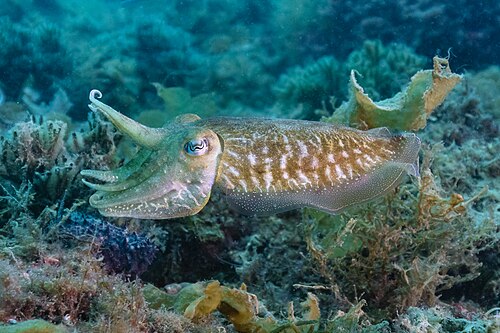
Common cuttlefish (Sepia officinalis), Arrábida National Park, Portugal. The common cuttlefish is one of the largest and best-known cuttlefish species. They are a migratory species that spend the summer and spring inshore for spawning and then move to depths of 100 to 200m during autumn and winter. They only have a lifespan of 1–2 years and have many predators including sharks, dolphins, seals, fish, and cephalopods which includes other cuttlefish. During the day, most cuttlefish can be found buried below the substrate and fairly inactive. At night however, they are actively searching for prey and can ambush them from under the substrate. Cuttlefish are carnivorous and eat a variety of organisms including crustaceans (crabs and shrimp), small fish, molluscs (clams and snails), and sometimes other cuttlefish.
 #ImageOfTheDay
Picture of the day
Common cuttlefish (Sepia officinalis), Arrábida National Park, Portugal. The common cuttlefish is one of the largest and best-known cuttlefish species. They are a migratory species that spend the summer and spring inshore for spawning and then move to depths of 100 to 200m during autumn and winter. They only have a lifespan of 1–2 years and have many predators including sharks, dolphins, seals, fish, and cephalopods which includes other cuttlefish. During the day, most cuttlefish can be found buried below the substrate and fairly inactive. At night however, they are actively searching for prey and can ambush them from under the substrate. Cuttlefish are carnivorous and eat a variety of organisms including crustaceans (crabs and shrimp), small fish, molluscs (clams and snails), and sometimes other cuttlefish.
Read More
Picture of the day


Tompot blenny (Parablennius gattorugine), Arrábida National Park, Portugal. Note: no FP of this species. It can be found in shallow, coastal waters off western Europe and northern Africa and in the Mediterranean. The tompot blenny is a relatively large blenny that can grow up to 30 centimetres (12 in) in length. There is a single branched tentacle over each of its eyes. It’s very territorial and its territory is centred around a crevice in the rocky reef which the fish uses for shelter. It occurs in shallow seas at depths of 3–32 metres (9.8–105.0 ft) and is crepuscular, being active mainly at dawn and at dusk. It has sharp, comb-like teeth which it uses to scrape food from the substrate. It feeds on sea anemones and other invertebrates such as prawns and other crustaceans.
 #ImageOfTheDay
Picture of the day
Tompot blenny (Parablennius gattorugine), Arrábida National Park, Portugal. Note: no FP of this species. It can be found in shallow, coastal waters off western Europe and northern Africa and in the Mediterranean. The tompot blenny is a relatively large blenny that can grow up to 30 centimetres (12 in) in length. There is a single branched tentacle over each of its eyes. It’s very territorial and its territory is centred around a crevice in the rocky reef which the fish uses for shelter. It occurs in shallow seas at depths of 3–32 metres (9.8–105.0 ft) and is crepuscular, being active mainly at dawn and at dusk. It has sharp, comb-like teeth which it uses to scrape food from the substrate. It feeds on sea anemones and other invertebrates such as prawns and other crustaceans.
Read More
Get My Good Side

An inquisitive sandhill crane approaches the photographer near the Vehicle Assembly Building at NASA’s Kennedy Space Center in Florida on March 24, 2021. Kennedy shares space with the Merritt Island National Wildlife refuge, which is home to more than 1,000 species of plants, 117 species of fish, 68 amphibians and reptiles, 330 birds, and 31 different mammals. The refuge provides a favorable environment for sandhill cranes as it contains shallow freshwater habitats for nesting, along with a variety of vegetation and prey to feed on.

Read More