grandchildren

Michael Reagan, Catholic son of U.S. President Ronald Reagan, dies at 80 #Catholic 
 
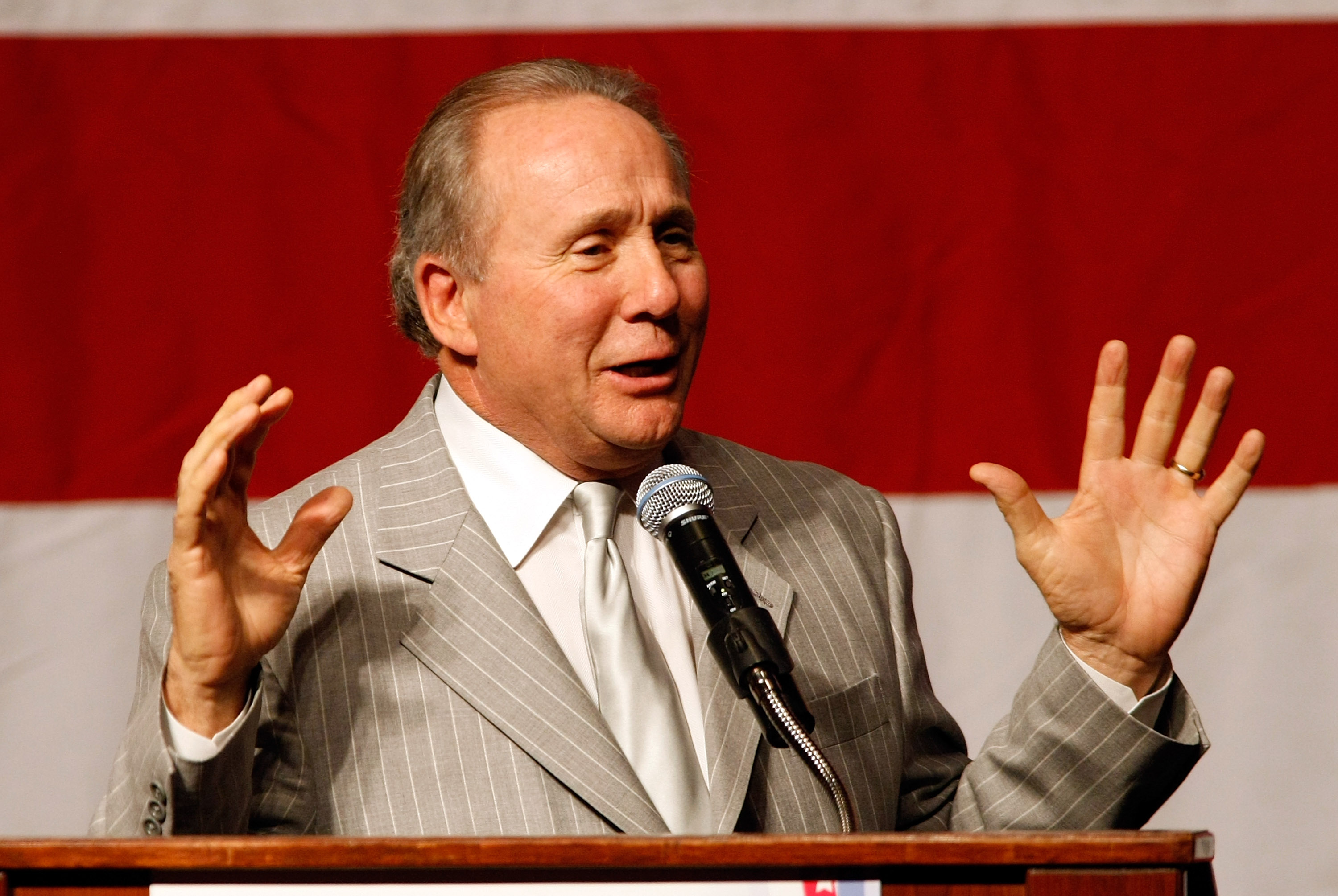
 Republican strategist Michael Reagan speaks at a get-out-the-vote rally for U.S. Republican Senate candidate Sharron Angle featuring U.S. Sen. John McCain at the Orleans, Friday, Oct. 29, 2010, in Las Vegas. | Credit: Ethan Miller/Getty Images

Jan 7, 2026 / 10:07 am (CNA).
Michael Reagan, the adopted son of former U.S. President Ronald Reagan and a longtime conservative activist who spoke publicly about his Catholic faith, died on Jan. 4 at 80 years old.Reagan’s family announced his death on Jan. 6 via Young America’s Foundation, which operates out of the “Reagan Ranch” near Santa Barbara, California. The announcement said Reagan died in Los Angeles “surrounded by his entire family.”“Michael was and will always remain a beloved husband, father, and grandpa,” the statement said, with the family expressing grief over “the loss of a man who meant so much to all who knew and loved him.”He is survived by his wife, Colleen, his son Cameron and his daughter Ashley. Born March 18, 1945, Reagan was adopted by Ronald Reagan and his then-wife Jane Wyman shortly thereafter. He was known throughout the 2000s as the host of “The Michael Reagan Show,” a nationwide radio program. Reagan was a Catholic through Wyman, a legendary movie star who herself was a third order Dominican. In a 2024 interview with EWTN News’ ChurchPOP, he pointed out that “a lot of people don’t know” of Wyman’s Catholic background. Joking when comparing his father’s Protestant beliefs with his mother’s Catholic faith, Reagan said: “When you get [to heaven], if you see my dad, look three floors above him [to see my mother].”Reagan told ChurchPOP Editor Jacqueline Burkepile that a large part of his family is Catholic. “My whole family is [Catholic],” he said. “My wife, Colleen, converted to Catholicism a few years ago. My son Cameron, his wife, Susanna, my daughter Ashley [are all Catholic].” His grandchildren have been baptized in the Church as well, he said.“So we got everybody on the planet,” he joked. In a Jan. 6 reflection, Reagan Ranch Director Andrew Coffin said Reagan “worked alongside Young America’s Foundation to share his father’s legacy and ideas with new generations.”In a separate statement, Young America’s Foundation President Scott Walker said that Reagan “was such a wonderful inspiration to so many of us.” Walker said that though Reagan had been optimistic about overcoming his recent health challenges, “unfortunately for all of us, the Good Lord decided to call him home sooner.” “That said, he and I also discussed his faith and devotion to Jesus,” Walker said. “That should give us all comfort during this difficult time as he is with the Lord.”

Michael Reagan, Catholic son of U.S. President Ronald Reagan, dies at 80 #Catholic Republican strategist Michael Reagan speaks at a get-out-the-vote rally for U.S. Republican Senate candidate Sharron Angle featuring U.S. Sen. John McCain at the Orleans, Friday, Oct. 29, 2010, in Las Vegas. | Credit: Ethan Miller/Getty Images Jan 7, 2026 / 10:07 am (CNA). Michael Reagan, the adopted son of former U.S. President Ronald Reagan and a longtime conservative activist who spoke publicly about his Catholic faith, died on Jan. 4 at 80 years old.Reagan’s family announced his death on Jan. 6 via Young America’s Foundation, which operates out of the “Reagan Ranch” near Santa Barbara, California. The announcement said Reagan died in Los Angeles “surrounded by his entire family.”“Michael was and will always remain a beloved husband, father, and grandpa,” the statement said, with the family expressing grief over “the loss of a man who meant so much to all who knew and loved him.”He is survived by his wife, Colleen, his son Cameron and his daughter Ashley. Born March 18, 1945, Reagan was adopted by Ronald Reagan and his then-wife Jane Wyman shortly thereafter. He was known throughout the 2000s as the host of “The Michael Reagan Show,” a nationwide radio program. Reagan was a Catholic through Wyman, a legendary movie star who herself was a third order Dominican. In a 2024 interview with EWTN News’ ChurchPOP, he pointed out that “a lot of people don’t know” of Wyman’s Catholic background. Joking when comparing his father’s Protestant beliefs with his mother’s Catholic faith, Reagan said: “When you get [to heaven], if you see my dad, look three floors above him [to see my mother].”Reagan told ChurchPOP Editor Jacqueline Burkepile that a large part of his family is Catholic. “My whole family is [Catholic],” he said. “My wife, Colleen, converted to Catholicism a few years ago. My son Cameron, his wife, Susanna, my daughter Ashley [are all Catholic].” His grandchildren have been baptized in the Church as well, he said.“So we got everybody on the planet,” he joked. In a Jan. 6 reflection, Reagan Ranch Director Andrew Coffin said Reagan “worked alongside Young America’s Foundation to share his father’s legacy and ideas with new generations.”In a separate statement, Young America’s Foundation President Scott Walker said that Reagan “was such a wonderful inspiration to so many of us.” Walker said that though Reagan had been optimistic about overcoming his recent health challenges, “unfortunately for all of us, the Good Lord decided to call him home sooner.” “That said, he and I also discussed his faith and devotion to Jesus,” Walker said. “That should give us all comfort during this difficult time as he is with the Lord.”


Republican strategist Michael Reagan speaks at a get-out-the-vote rally for U.S. Republican Senate candidate Sharron Angle featuring U.S. Sen. John McCain at the Orleans, Friday, Oct. 29, 2010, in Las Vegas. | Credit: Ethan Miller/Getty Images

Jan 7, 2026 / 10:07 am (CNA).

Michael Reagan, the adopted son of former U.S. President Ronald Reagan and a longtime conservative activist who spoke publicly about his Catholic faith, died on Jan. 4 at 80 years old.

Reagan’s family announced his death on Jan. 6 via Young America’s Foundation, which operates out of the “Reagan Ranch” near Santa Barbara, California. The announcement said Reagan died in Los Angeles “surrounded by his entire family.”

“Michael was and will always remain a beloved husband, father, and grandpa,” the statement said, with the family expressing grief over “the loss of a man who meant so much to all who knew and loved him.”

He is survived by his wife, Colleen, his son Cameron and his daughter Ashley.

Born March 18, 1945, Reagan was adopted by Ronald Reagan and his then-wife Jane Wyman shortly thereafter. He was known throughout the 2000s as the host of “The Michael Reagan Show,” a nationwide radio program.

Reagan was a Catholic through Wyman, a legendary movie star who herself was a third order Dominican. In a 2024 interview with EWTN NewsChurchPOP, he pointed out that “a lot of people don’t know” of Wyman’s Catholic background.

Joking when comparing his father’s Protestant beliefs with his mother’s Catholic faith, Reagan said: “When you get [to heaven], if you see my dad, look three floors above him [to see my mother].”

Reagan told ChurchPOP Editor Jacqueline Burkepile that a large part of his family is Catholic.

“My whole family is [Catholic],” he said. “My wife, Colleen, converted to Catholicism a few years ago. My son Cameron, his wife, Susanna, my daughter Ashley [are all Catholic].” His grandchildren have been baptized in the Church as well, he said.

“So we got everybody on the planet,” he joked.

In a Jan. 6 reflection, Reagan Ranch Director Andrew Coffin said Reagan “worked alongside Young America’s Foundation to share his father’s legacy and ideas with new generations.”

In a separate statement, Young America’s Foundation President Scott Walker said that Reagan “was such a wonderful inspiration to so many of us.”

Walker said that though Reagan had been optimistic about overcoming his recent health challenges, “unfortunately for all of us, the Good Lord decided to call him home sooner.”

“That said, he and I also discussed his faith and devotion to Jesus,” Walker said. “That should give us all comfort during this difficult time as he is with the Lord.”

Read More
Bishop of Columbus grants Mass dispensation to immigrants who fear deportation #Catholic 
 
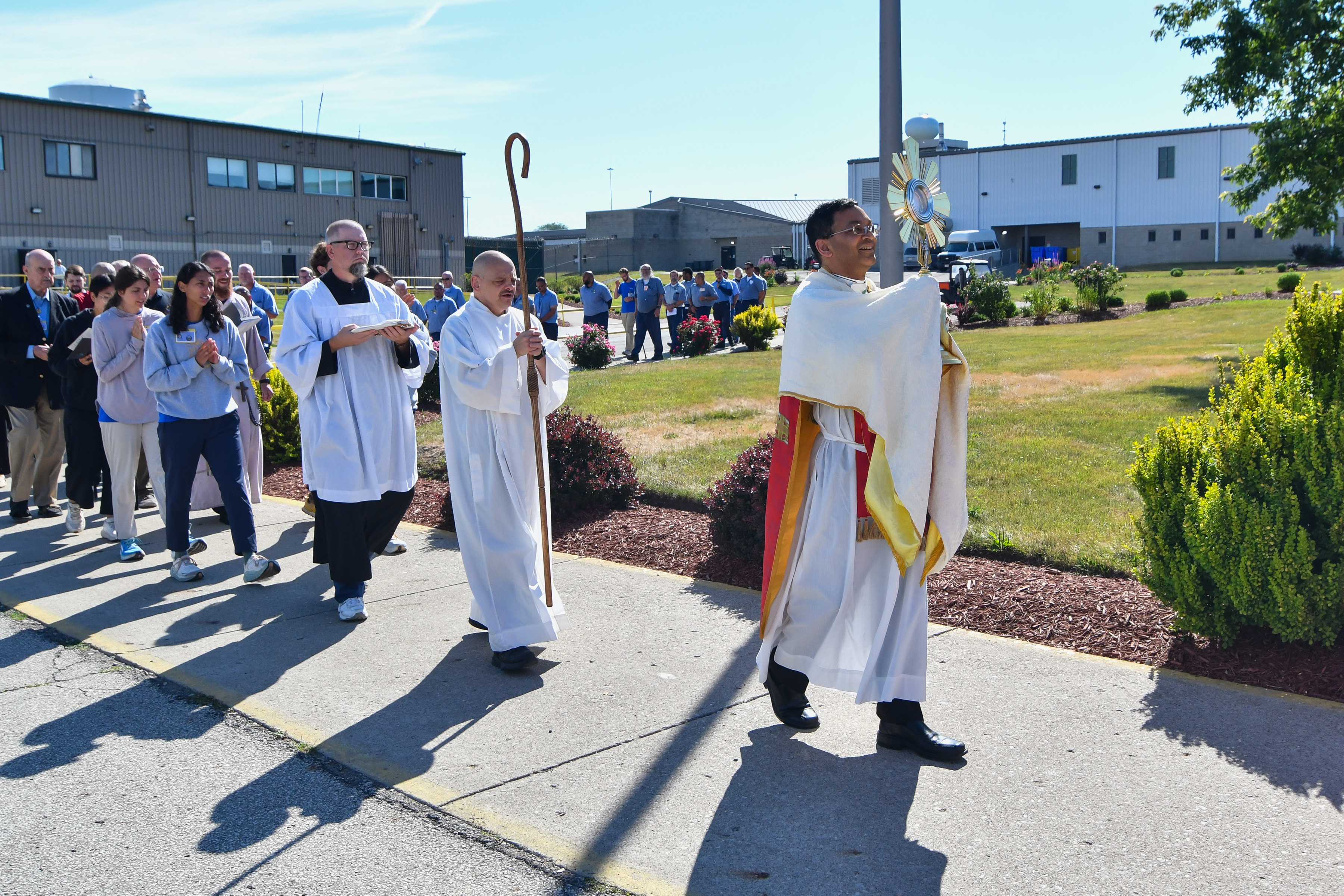
 Bishop Earl Fernandes of Columbus, Ohio, carries the Blessed Sacrament during a procession at Pickaway Correctional Institution on June 28, 2024, at one of the stops on the Seton Route of the National Eucharistic Pilgrimage. Credit: Catholic Times/Ken Snow

Dec 29, 2025 / 14:18 pm (CNA).
The bishop of the Diocese of Columbus, Ohio, has granted a dispensation from Mass for parishioners who fear deportation by immigration enforcement officers, who have increased activity in the area since mid-December.Bishop Earl Fernandes announced in a letter and video last week that those who fear immigration enforcement action are free from the obligation to attend Sunday Mass until Jan. 11, 2026. The bishop said the dispensation was precipitated by increased immigration enforcement activity in Ohio stemming from Operation Buckeye, a U.S. Immigration and Customs Enforcement (ICE) initiative launched Dec. 16 that is allegedly targeting “the worst of the worst criminal illegal aliens in Columbus and throughout Ohio.”Fernandes told EWTN News on Monday that after he began receiving messages from pastors throughout his diocese informing him that Hispanic parishioners were afraid to attend Mass due to the increased enforcement by ICE officers, he asked diocesan personnel in the Office of Catholic Social Doctrine and the Hispanic ministry office to help him get a clearer picture of “what is happening on the ground.”“They told me there were ICE trucks in front of parishes; even in front of schools,” Fernandes said. “All of a sudden, there were half or fewer attendees at the Posadas [traditional pre-Christmas] celebrations.”He said he decided to issue the dispensation “even though I did not want to” because “people need Mass and the sacraments more than ever” and he wanted families to be together without fear for Christmas.During a Mass he celebrated on Saturday, Dec. 20, Fernandes told EWTN News the pastor of the church remained at the front door and saw an ICE truck nearby. Because of this, the Posada [traditional pre-Christmas] procession was moved from outdoors to a hallway inside the building because “the people were too afraid to go outside.”The procession took place inside the building. “We had a meal, there was a piñata and some celebrations,” Fernandes said. “But it was clear there were a lot of people who weren’t there.”The bishop said he began receiving calls from pastors more than two hours from Columbus who were reporting ICE’s presence.Sharp drops in Mass attendance“The atmosphere of fear was keeping people away,” he said. One pastor reported that only one-third of his congregation attended weekend Mass. Another said only one-quarter were present, Fernandes said.Of the increased enforcement against immigrants, Fernandes reflected: “It’s easy to say immigrants should have come to our country legally. But what if your parents came here illegally and you are a U.S. citizen? … What if one spouse is documented and the other is not. What’s in the best interest of their children and society at large?”Of the Mexican population in Columbus, Fernandes said that “many are the grandchildren of the Cristeros,” resistors to the Mexican government’s attempts in the 1920s to suppress Catholicism in the country.He said a large group of Hispanics came to the midnight Mass on Christmas at the cathedral because they did not think ICE would be there. “I think they felt safe at the cathedral.”Fernandes said the Diocese of Columbus also has large numbers of Catholic African migrants who have “tons of children” and make up “young communities full of life and full of faith.”Fernandes said he talked to the pastor of a multiethnic parish made up of Nigerians, Filipinos, and others, and “they’re afraid too.”He is concerned for the Haitian community as well, whose temporary protected status (TPS) is set to expire on Feb. 3, 2026.He said the Mass dispensation expires on Jan. 11, the end of the Christmas season, at which time he will reevaluate the situation.

Bishop of Columbus grants Mass dispensation to immigrants who fear deportation #Catholic Bishop Earl Fernandes of Columbus, Ohio, carries the Blessed Sacrament during a procession at Pickaway Correctional Institution on June 28, 2024, at one of the stops on the Seton Route of the National Eucharistic Pilgrimage. Credit: Catholic Times/Ken Snow Dec 29, 2025 / 14:18 pm (CNA). The bishop of the Diocese of Columbus, Ohio, has granted a dispensation from Mass for parishioners who fear deportation by immigration enforcement officers, who have increased activity in the area since mid-December.Bishop Earl Fernandes announced in a letter and video last week that those who fear immigration enforcement action are free from the obligation to attend Sunday Mass until Jan. 11, 2026. The bishop said the dispensation was precipitated by increased immigration enforcement activity in Ohio stemming from Operation Buckeye, a U.S. Immigration and Customs Enforcement (ICE) initiative launched Dec. 16 that is allegedly targeting “the worst of the worst criminal illegal aliens in Columbus and throughout Ohio.”Fernandes told EWTN News on Monday that after he began receiving messages from pastors throughout his diocese informing him that Hispanic parishioners were afraid to attend Mass due to the increased enforcement by ICE officers, he asked diocesan personnel in the Office of Catholic Social Doctrine and the Hispanic ministry office to help him get a clearer picture of “what is happening on the ground.”“They told me there were ICE trucks in front of parishes; even in front of schools,” Fernandes said. “All of a sudden, there were half or fewer attendees at the Posadas [traditional pre-Christmas] celebrations.”He said he decided to issue the dispensation “even though I did not want to” because “people need Mass and the sacraments more than ever” and he wanted families to be together without fear for Christmas.During a Mass he celebrated on Saturday, Dec. 20, Fernandes told EWTN News the pastor of the church remained at the front door and saw an ICE truck nearby. Because of this, the Posada [traditional pre-Christmas] procession was moved from outdoors to a hallway inside the building because “the people were too afraid to go outside.”The procession took place inside the building. “We had a meal, there was a piñata and some celebrations,” Fernandes said. “But it was clear there were a lot of people who weren’t there.”The bishop said he began receiving calls from pastors more than two hours from Columbus who were reporting ICE’s presence.Sharp drops in Mass attendance“The atmosphere of fear was keeping people away,” he said. One pastor reported that only one-third of his congregation attended weekend Mass. Another said only one-quarter were present, Fernandes said.Of the increased enforcement against immigrants, Fernandes reflected: “It’s easy to say immigrants should have come to our country legally. But what if your parents came here illegally and you are a U.S. citizen? … What if one spouse is documented and the other is not. What’s in the best interest of their children and society at large?”Of the Mexican population in Columbus, Fernandes said that “many are the grandchildren of the Cristeros,” resistors to the Mexican government’s attempts in the 1920s to suppress Catholicism in the country.He said a large group of Hispanics came to the midnight Mass on Christmas at the cathedral because they did not think ICE would be there. “I think they felt safe at the cathedral.”Fernandes said the Diocese of Columbus also has large numbers of Catholic African migrants who have “tons of children” and make up “young communities full of life and full of faith.”Fernandes said he talked to the pastor of a multiethnic parish made up of Nigerians, Filipinos, and others, and “they’re afraid too.”He is concerned for the Haitian community as well, whose temporary protected status (TPS) is set to expire on Feb. 3, 2026.He said the Mass dispensation expires on Jan. 11, the end of the Christmas season, at which time he will reevaluate the situation.


Bishop Earl Fernandes of Columbus, Ohio, carries the Blessed Sacrament during a procession at Pickaway Correctional Institution on June 28, 2024, at one of the stops on the Seton Route of the National Eucharistic Pilgrimage. Credit: Catholic Times/Ken Snow

Dec 29, 2025 / 14:18 pm (CNA).

The bishop of the Diocese of Columbus, Ohio, has granted a dispensation from Mass for parishioners who fear deportation by immigration enforcement officers, who have increased activity in the area since mid-December.

Bishop Earl Fernandes announced in a letter and video last week that those who fear immigration enforcement action are free from the obligation to attend Sunday Mass until Jan. 11, 2026. The bishop said the dispensation was precipitated by increased immigration enforcement activity in Ohio stemming from Operation Buckeye, a U.S. Immigration and Customs Enforcement (ICE) initiative launched Dec. 16 that is allegedly targeting “the worst of the worst criminal illegal aliens in Columbus and throughout Ohio.”

Fernandes told EWTN News on Monday that after he began receiving messages from pastors throughout his diocese informing him that Hispanic parishioners were afraid to attend Mass due to the increased enforcement by ICE officers, he asked diocesan personnel in the Office of Catholic Social Doctrine and the Hispanic ministry office to help him get a clearer picture of “what is happening on the ground.”

“They told me there were ICE trucks in front of parishes; even in front of schools,” Fernandes said. “All of a sudden, there were half or fewer attendees at the Posadas [traditional pre-Christmas] celebrations.”

He said he decided to issue the dispensation “even though I did not want to” because “people need Mass and the sacraments more than ever” and he wanted families to be together without fear for Christmas.

During a Mass he celebrated on Saturday, Dec. 20, Fernandes told EWTN News the pastor of the church remained at the front door and saw an ICE truck nearby. Because of this, the Posada [traditional pre-Christmas] procession was moved from outdoors to a hallway inside the building because “the people were too afraid to go outside.”

The procession took place inside the building. “We had a meal, there was a piñata and some celebrations,” Fernandes said. “But it was clear there were a lot of people who weren’t there.”

The bishop said he began receiving calls from pastors more than two hours from Columbus who were reporting ICE’s presence.

Sharp drops in Mass attendance

“The atmosphere of fear was keeping people away,” he said. One pastor reported that only one-third of his congregation attended weekend Mass. Another said only one-quarter were present, Fernandes said.

Of the increased enforcement against immigrants, Fernandes reflected: “It’s easy to say immigrants should have come to our country legally. But what if your parents came here illegally and you are a U.S. citizen? … What if one spouse is documented and the other is not. What’s in the best interest of their children and society at large?”

Of the Mexican population in Columbus, Fernandes said that “many are the grandchildren of the Cristeros,” resistors to the Mexican government’s attempts in the 1920s to suppress Catholicism in the country.

He said a large group of Hispanics came to the midnight Mass on Christmas at the cathedral because they did not think ICE would be there. “I think they felt safe at the cathedral.”

Fernandes said the Diocese of Columbus also has large numbers of Catholic African migrants who have “tons of children” and make up “young communities full of life and full of faith.”

Fernandes said he talked to the pastor of a multiethnic parish made up of Nigerians, Filipinos, and others, and “they’re afraid too.”

He is concerned for the Haitian community as well, whose temporary protected status (TPS) is set to expire on Feb. 3, 2026.

He said the Mass dispensation expires on Jan. 11, the end of the Christmas season, at which time he will reevaluate the situation.

Read More