Hotel

Maryland high school seniors arrive home safely after being stuck in Middle East during hostilities #Catholic A group of high schoolers from a Maryland boys' school found themselves in the crosshairs of international conflict in the Middle East this week, turning what was meant to be a brief layover in Abu Dhabi into a multi-day ordeal amid escalating hostilities between Iran, Israel, and the United States.The group — 18 seniors and two faculty members from the Heights School in Potomac, Maryland, just outside of Washington, D.C. — had departed on the afternoon of Feb. 27 for a cultural exchange trip to Thailand.The voyage was part of the school’s yearly Crescite Trips, where students in grades 9-12 participate during the first week of March in local seminars as well as domestic and international trips intended for the students’ growth.The group was scheduled for a two-hour layover in the United Arab Emirates after their 12-hour flight when regional airspace slammed shut following U.S.-Israeli strikes on Iran and Iranʼs retaliatory missile barrages.Initially, all flights were cancelled, but soon the airport was closed and had to be evacuated. According to Aidan Korn, a student on the trip, the group was seated at the gate for their next flight when they learned it had been suspended because “the war had begun.”“It was scary at first. We were sitting by a giant window at the gate and all of our phones started going off at the same time. I saw texts from friends in the U.S. asking if I was alive,” he said. “We saw military men running with guns through the airport.”Korn said the two faculty chaperones, Justin Myers and Dan Sushinsky, told them to get away from the windows and seek shelter in the airport bathroom. They learned later that a drone was intercepted above the airport, and the debris killed one person and injured several others.Myers and Sushinksy, both seasoned teachers as well as college counselors at the Heights, immediately called headmaster Alvaro de Vicente, who told EWTN News he called “everyone I know to help” the boys.De Vicente said the teachers and boys registered through the state department website for U.S. citizens stuck in the Middle East.The teachers “did an incredible job keeping the boys calm, safe, and engaged,” said de Vicente. He described the men as “real pros in handling a situation no teacher can prepare for.”“This is not what we do. We donʼt prepare for this!” he said.Bryson Begg, another senior on the trip, agreed, telling EWTN News that the teachers were "incredible. Their number-one priority was our safety. They cared for us so much.”Begg described a “confidence” that Myers and Sushinksy emanated that they would all get home safely. “We had this sense that they’ve got it.”The teachers instructed the boys to be cautious and not to post anything on social media that could compromise their security, Korn said.Myers told EWTN News the situation felt chaotic at first, as thousands of people with canceled flights tried to find hotels using airline-provided vouchers. Initially, the group was split up and assigned to different hotels, which they deemed unacceptable, so he and Sushinsky decided to stay the night in the airport, hoping a flight would open up while they waited.The airport was then closed and everyone was ordered to evacuate. After several hours, with the help of several airport employees, Myers said they were able to find a hotel for all 20 of them. When they boarded the bus, again amidst the chaos of thousands of evacuating travelers, the driver asked Myers where the hotel was, and they figured out the directions there together.Myers said either he or Sushinsky was on the phone almost constantly with the State Department, parents, de Vicente, Heights alumni who lived in the area, and  the U.S. embassy. Myers, who has taught at the Heights for over 30 years and has led many trips, told EWTN News it was “an unusually good group” of boys. "All of our top students were on this trip. They were very brave.”“They were probably not as scared as they should have been! And now that they’re home safe, they’re saying it was the best trip ever!” he laughed.Once at the hotel, he and Sushinsky held group meetings at set times each day, where they ate together, played games, prayed the rosary, and told funny stories. The leaders also made themselves available at set times each day to talk with any boys who wanted to.Begg said the teachers made sure the boys kept their bags packed and ready to go at all times in case they had to rush to the airport to catch an available flight out.Korn told EWTN News the hotel’s doors were initially zip tied shut, but as the days went on, they were occasionally allowed to venture outside briefly. On one of these occasions, Begg said he was praying the rosary when warning sirens went off, and the hotel staff urgently called him back inside.“Most of the time it felt perfectly safe,” Myers said. “We saw some drones a couple of times; saw them intercepted, mostly at night. We’d watch the news and they’d make it worse than it is. They kept showing the same building being hit.”“It was not like what was being shown on TV. People in the city were going about their daily lives.”Nevertheless, the boys spent most of their time indoors eating (“The hotel had really nice food,” said Korn), working out at the gym, watching movies in the presidential suite, where two of the students were staying, and even playing hide and seek throughout the hotel.Thanks to a Heights alumnus who lives there, the group (with all the parents’ permission) was able to go to the beach one day, and on a desert excursion to an oasis, where they rode camels, according to Begg.‘An overwhelming feeling of comfort’By 4:30 a.m. on Feb. 28, Karen Korn, Aidan’s mother, told EWTN News she was awakened by the dozens of notifications on her phone from the boys as well as other parents.“I’m so humbled by and grateful to the amount of people that reached out to us, who were praying,” she said. “I truly believe that was what got us through. It’s unbelievable how many people were praying.”“We had people praying 24 hours a day; priests at every church around us that had holy hours and said Masses for them … even outside of this area.”She described “an overwhelming feeling of comfort” knowing how many prayers were being said for the young men. While praying on Sunday, she said she saw an image of Jesus wrapping his arms around the boys, keeping them safe.‘Men fully alive’Begg, who has attended the Heights since 3rd grade, credited de Vicente for working “tirelessly to help us.”“He is the pinnacle of what a Heights man is. ‘Men fully alive’ is our motto, and he’s the epitome of that. He’s strong in his beliefs, and cared for us so much. He waited in the airport for hours before we arrived. It was incredibly heartwarming to see that.”“He was right at the front of the group of parents at the airport with a big smile on his face, welcoming us home. We all shook his hand.”De Vicente said he was “thankful to the United Arab Emirates government” for hosting the boys, providing them the hotel and transportation. He also said he was "thankful to our government for being able to get them out.”The boys left on a charter flight — one arranged by the U.S. State Department filled with other American families — and returned safely to Dulles Airport on the afternoon of Thursday, March 5.
 
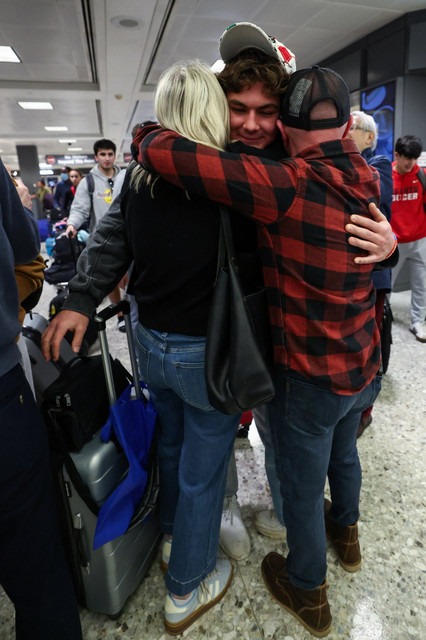
 Aidan Korn hugs his parents, Karen and Jason Korn, at Dulles Airport in Virginia upon his safe return, Thursday, March 5, 2026 | Credit: Courtesy of the Korn family
 
 The Heights School, an independent day school for grades 3-12, teaches boys “with a Christian spirit and in accord with the teachings of the Catholic Church” and the Personal Prelature of Opus Dei “provides chaplains for the school and oversees its program of classes in Catholic doctrine,” according to its website.Over the years, the school has drawn politically conservative families, including the sons of prominent politicians such as former senator and presidential candidate Rick Santorum as well as Maggie Gallagher, president of the National Organization for Marriage, among others.

Maryland high school seniors arrive home safely after being stuck in Middle East during hostilities #Catholic A group of high schoolers from a Maryland boys' school found themselves in the crosshairs of international conflict in the Middle East this week, turning what was meant to be a brief layover in Abu Dhabi into a multi-day ordeal amid escalating hostilities between Iran, Israel, and the United States.The group — 18 seniors and two faculty members from the Heights School in Potomac, Maryland, just outside of Washington, D.C. — had departed on the afternoon of Feb. 27 for a cultural exchange trip to Thailand.The voyage was part of the school’s yearly Crescite Trips, where students in grades 9-12 participate during the first week of March in local seminars as well as domestic and international trips intended for the students’ growth.The group was scheduled for a two-hour layover in the United Arab Emirates after their 12-hour flight when regional airspace slammed shut following U.S.-Israeli strikes on Iran and Iranʼs retaliatory missile barrages.Initially, all flights were cancelled, but soon the airport was closed and had to be evacuated. According to Aidan Korn, a student on the trip, the group was seated at the gate for their next flight when they learned it had been suspended because “the war had begun.”“It was scary at first. We were sitting by a giant window at the gate and all of our phones started going off at the same time. I saw texts from friends in the U.S. asking if I was alive,” he said. “We saw military men running with guns through the airport.”Korn said the two faculty chaperones, Justin Myers and Dan Sushinsky, told them to get away from the windows and seek shelter in the airport bathroom. They learned later that a drone was intercepted above the airport, and the debris killed one person and injured several others.Myers and Sushinksy, both seasoned teachers as well as college counselors at the Heights, immediately called headmaster Alvaro de Vicente, who told EWTN News he called “everyone I know to help” the boys.De Vicente said the teachers and boys registered through the state department website for U.S. citizens stuck in the Middle East.The teachers “did an incredible job keeping the boys calm, safe, and engaged,” said de Vicente. He described the men as “real pros in handling a situation no teacher can prepare for.”“This is not what we do. We donʼt prepare for this!” he said.Bryson Begg, another senior on the trip, agreed, telling EWTN News that the teachers were "incredible. Their number-one priority was our safety. They cared for us so much.”Begg described a “confidence” that Myers and Sushinksy emanated that they would all get home safely. “We had this sense that they’ve got it.”The teachers instructed the boys to be cautious and not to post anything on social media that could compromise their security, Korn said.Myers told EWTN News the situation felt chaotic at first, as thousands of people with canceled flights tried to find hotels using airline-provided vouchers. Initially, the group was split up and assigned to different hotels, which they deemed unacceptable, so he and Sushinsky decided to stay the night in the airport, hoping a flight would open up while they waited.The airport was then closed and everyone was ordered to evacuate. After several hours, with the help of several airport employees, Myers said they were able to find a hotel for all 20 of them. When they boarded the bus, again amidst the chaos of thousands of evacuating travelers, the driver asked Myers where the hotel was, and they figured out the directions there together.Myers said either he or Sushinsky was on the phone almost constantly with the State Department, parents, de Vicente, Heights alumni who lived in the area, and  the U.S. embassy. Myers, who has taught at the Heights for over 30 years and has led many trips, told EWTN News it was “an unusually good group” of boys. "All of our top students were on this trip. They were very brave.”“They were probably not as scared as they should have been! And now that they’re home safe, they’re saying it was the best trip ever!” he laughed.Once at the hotel, he and Sushinsky held group meetings at set times each day, where they ate together, played games, prayed the rosary, and told funny stories. The leaders also made themselves available at set times each day to talk with any boys who wanted to.Begg said the teachers made sure the boys kept their bags packed and ready to go at all times in case they had to rush to the airport to catch an available flight out.Korn told EWTN News the hotel’s doors were initially zip tied shut, but as the days went on, they were occasionally allowed to venture outside briefly. On one of these occasions, Begg said he was praying the rosary when warning sirens went off, and the hotel staff urgently called him back inside.“Most of the time it felt perfectly safe,” Myers said. “We saw some drones a couple of times; saw them intercepted, mostly at night. We’d watch the news and they’d make it worse than it is. They kept showing the same building being hit.”“It was not like what was being shown on TV. People in the city were going about their daily lives.”Nevertheless, the boys spent most of their time indoors eating (“The hotel had really nice food,” said Korn), working out at the gym, watching movies in the presidential suite, where two of the students were staying, and even playing hide and seek throughout the hotel.Thanks to a Heights alumnus who lives there, the group (with all the parents’ permission) was able to go to the beach one day, and on a desert excursion to an oasis, where they rode camels, according to Begg.‘An overwhelming feeling of comfort’By 4:30 a.m. on Feb. 28, Karen Korn, Aidan’s mother, told EWTN News she was awakened by the dozens of notifications on her phone from the boys as well as other parents.“I’m so humbled by and grateful to the amount of people that reached out to us, who were praying,” she said. “I truly believe that was what got us through. It’s unbelievable how many people were praying.”“We had people praying 24 hours a day; priests at every church around us that had holy hours and said Masses for them … even outside of this area.”She described “an overwhelming feeling of comfort” knowing how many prayers were being said for the young men. While praying on Sunday, she said she saw an image of Jesus wrapping his arms around the boys, keeping them safe.‘Men fully alive’Begg, who has attended the Heights since 3rd grade, credited de Vicente for working “tirelessly to help us.”“He is the pinnacle of what a Heights man is. ‘Men fully alive’ is our motto, and he’s the epitome of that. He’s strong in his beliefs, and cared for us so much. He waited in the airport for hours before we arrived. It was incredibly heartwarming to see that.”“He was right at the front of the group of parents at the airport with a big smile on his face, welcoming us home. We all shook his hand.”De Vicente said he was “thankful to the United Arab Emirates government” for hosting the boys, providing them the hotel and transportation. He also said he was "thankful to our government for being able to get them out.”The boys left on a charter flight — one arranged by the U.S. State Department filled with other American families — and returned safely to Dulles Airport on the afternoon of Thursday, March 5. Aidan Korn hugs his parents, Karen and Jason Korn, at Dulles Airport in Virginia upon his safe return, Thursday, March 5, 2026 | Credit: Courtesy of the Korn family The Heights School, an independent day school for grades 3-12, teaches boys “with a Christian spirit and in accord with the teachings of the Catholic Church” and the Personal Prelature of Opus Dei “provides chaplains for the school and oversees its program of classes in Catholic doctrine,” according to its website.Over the years, the school has drawn politically conservative families, including the sons of prominent politicians such as former senator and presidential candidate Rick Santorum as well as Maggie Gallagher, president of the National Organization for Marriage, among others.

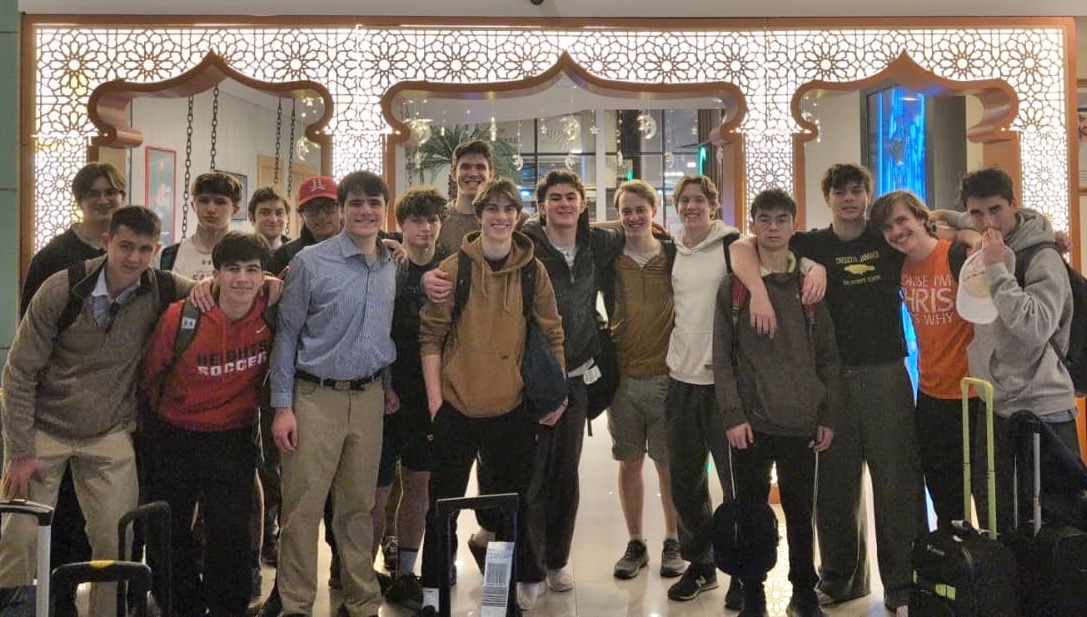
A group of high school seniors and their teacher chaperones spoke with EWTN News about being stuck in the Middle East during the beginning of hostilities there last week.
Read More
‘My trust was in God’: Priest recounts flight from Holy Land amid Iranian conflict #Catholic A Jesuit priest says he has a “much larger perspective” of the crisis of war after fleeing the Holy Land at the outset of U.S. and Israeli aggressions against Iran.Father Anthony Wieck, SJ, told EWTN News he was leading a pilgrimage of about 20 Catholics in the Holy Land when the war began on Feb. 28.“We had just spent a week in Galilee and prayed our way through the holy sites of Jesus’ teaching and miracles,” Wieck said, describing the region as “a lovely land [God] created for himself to enjoy on this earth.”The group arrived in Jerusalem on Feb. 26, he said, and the next day word began to spread of the need to evacuate from the region. Several pilgrims were able to leave immediately, Wieck said, while others who attempted to leave the next day were unable to get a flight out and eventually had to return to the pilgrim group.Ben Gurion International Airport “is not a safe place to be because there are military installations near the airport,” he said. “Iranian missiles were being sent that way, and our people ... were taken into the bomb shelter five stories down below the airport.”Wieck said that even as the conflict broke out, his group still toured holy sites, including the Church of the Pater Noster, where tradition holds that Christ taught the disciples to pray the Our Father. “We were instructed by our guide to continue the tour and to simply seek cover whenever the sirens went off,” he said, pointing out that “those living in Jerusalem are so used to warning sirens there that they have much less fear than we do. They’re observant but not fearful. And we were trusting them.”The priest was offering a chanted Mass at the Dominus Flevit Church while explosions sounded in the distance as Israel’s Iron Dome intercepted Iranian missiles.“It was scary, yes,” Wieck said. “But I continued the Mass with trust, and after Communion (before the final prayer) asked all pilgrims to pray for a couple minutes regarding where the Lord was in all of this situation.”
 
 Father Anthony Wieck, SJ, says Mass at the Dominus Flevit Church in Jerusalem on Saturday, Feb. 28, 2026. | Credit: Father Anthony Wieck, SJ
 
 After Mass, a group of pilgrims from Kansas joined them in the church amid sirens and explosions in the surrounding region. “It struck me as supremely important that we not make decisions based on fear but on faith,” he said.The priest’s group took a truncated walking tour of Jerusalem, he said, which “became eerily quiet that evening.”The tour company ordered them to evacuate the following morning.  Departing for Jordan, the group found itself stuck amid a crush of evacuations in the area. “A typical two-hour trip to Amman, Jordan, took us seven hours,” Wieck said. And while the group initially “felt much safer being outside of Jerusalem,” they eventually felt “locked in” at their hotel, particularly amid mass flight cancellations. 
 
 Missile contrails are seen over the Holy Land region on Sunday, March 1, 2026. | Credit: Father Anthony Wieck, SJ
 
 Jordanians in the area kept assuring the Americans that the country’s King Abdullah II would protect them. “Not feeling the same allegiance to their king, my trust was in God,” the priest said.The U.S. Department of State provided military evacuations to Americans in the area. “Little by little, our pilgrims found an occasional flight that [shuttled] them out of the war zone,” Wieck said. The priest and one other pilgrim, a religious from Phoenix, were the last from their group to remain in Jordan before they took a flight with Royal Jordanian Airlines on March 4. Wieck said the pilot took “great efforts to circumvent Israeli airspace.” The air carrier “was bold enough to keep to their travel plans despite the threats,” Wieck said, describing the airline as “my new favorite.” ‘Truly a Catholic experience’Wieck told EWTN News that he “would not say that I was stellar in my response to what God was doing here.” “I wanted to pray much but felt so much stress and trauma around me that it was truly difficult,” he said. “I was exhausted.”Yet during the frightening evacuation, he said, “hundreds of people” back home were lifting up the pilgrims with prayers and sacrifices. “They knew our plight was becoming a bit more grave,” he said.Back home in the U.S., Wieck, who lives in Louisiana, said he was still reflecting on what happened but said the harrowing ordeal gave him “a much larger perspective to have experienced profoundly how much we need the help of our brothers and sisters in times of crisis.”“It was truly a Catholic experience,” he said.“Though as humans we usually don’t carry our crosses in times of crisis all that well, our brothers and sisters in the faith can see us through. That was my experience,” he said.“How wonderful it is to be Catholic!” he added.

‘My trust was in God’: Priest recounts flight from Holy Land amid Iranian conflict #Catholic A Jesuit priest says he has a “much larger perspective” of the crisis of war after fleeing the Holy Land at the outset of U.S. and Israeli aggressions against Iran.Father Anthony Wieck, SJ, told EWTN News he was leading a pilgrimage of about 20 Catholics in the Holy Land when the war began on Feb. 28.“We had just spent a week in Galilee and prayed our way through the holy sites of Jesus’ teaching and miracles,” Wieck said, describing the region as “a lovely land [God] created for himself to enjoy on this earth.”The group arrived in Jerusalem on Feb. 26, he said, and the next day word began to spread of the need to evacuate from the region. Several pilgrims were able to leave immediately, Wieck said, while others who attempted to leave the next day were unable to get a flight out and eventually had to return to the pilgrim group.Ben Gurion International Airport “is not a safe place to be because there are military installations near the airport,” he said. “Iranian missiles were being sent that way, and our people … were taken into the bomb shelter five stories down below the airport.”Wieck said that even as the conflict broke out, his group still toured holy sites, including the Church of the Pater Noster, where tradition holds that Christ taught the disciples to pray the Our Father. “We were instructed by our guide to continue the tour and to simply seek cover whenever the sirens went off,” he said, pointing out that “those living in Jerusalem are so used to warning sirens there that they have much less fear than we do. They’re observant but not fearful. And we were trusting them.”The priest was offering a chanted Mass at the Dominus Flevit Church while explosions sounded in the distance as Israel’s Iron Dome intercepted Iranian missiles.“It was scary, yes,” Wieck said. “But I continued the Mass with trust, and after Communion (before the final prayer) asked all pilgrims to pray for a couple minutes regarding where the Lord was in all of this situation.” Father Anthony Wieck, SJ, says Mass at the Dominus Flevit Church in Jerusalem on Saturday, Feb. 28, 2026. | Credit: Father Anthony Wieck, SJ After Mass, a group of pilgrims from Kansas joined them in the church amid sirens and explosions in the surrounding region. “It struck me as supremely important that we not make decisions based on fear but on faith,” he said.The priest’s group took a truncated walking tour of Jerusalem, he said, which “became eerily quiet that evening.”The tour company ordered them to evacuate the following morning.  Departing for Jordan, the group found itself stuck amid a crush of evacuations in the area. “A typical two-hour trip to Amman, Jordan, took us seven hours,” Wieck said. And while the group initially “felt much safer being outside of Jerusalem,” they eventually felt “locked in” at their hotel, particularly amid mass flight cancellations. Missile contrails are seen over the Holy Land region on Sunday, March 1, 2026. | Credit: Father Anthony Wieck, SJ Jordanians in the area kept assuring the Americans that the country’s King Abdullah II would protect them. “Not feeling the same allegiance to their king, my trust was in God,” the priest said.The U.S. Department of State provided military evacuations to Americans in the area. “Little by little, our pilgrims found an occasional flight that [shuttled] them out of the war zone,” Wieck said. The priest and one other pilgrim, a religious from Phoenix, were the last from their group to remain in Jordan before they took a flight with Royal Jordanian Airlines on March 4. Wieck said the pilot took “great efforts to circumvent Israeli airspace.” The air carrier “was bold enough to keep to their travel plans despite the threats,” Wieck said, describing the airline as “my new favorite.” ‘Truly a Catholic experience’Wieck told EWTN News that he “would not say that I was stellar in my response to what God was doing here.” “I wanted to pray much but felt so much stress and trauma around me that it was truly difficult,” he said. “I was exhausted.”Yet during the frightening evacuation, he said, “hundreds of people” back home were lifting up the pilgrims with prayers and sacrifices. “They knew our plight was becoming a bit more grave,” he said.Back home in the U.S., Wieck, who lives in Louisiana, said he was still reflecting on what happened but said the harrowing ordeal gave him “a much larger perspective to have experienced profoundly how much we need the help of our brothers and sisters in times of crisis.”“It was truly a Catholic experience,” he said.“Though as humans we usually don’t carry our crosses in times of crisis all that well, our brothers and sisters in the faith can see us through. That was my experience,” he said.“How wonderful it is to be Catholic!” he added.

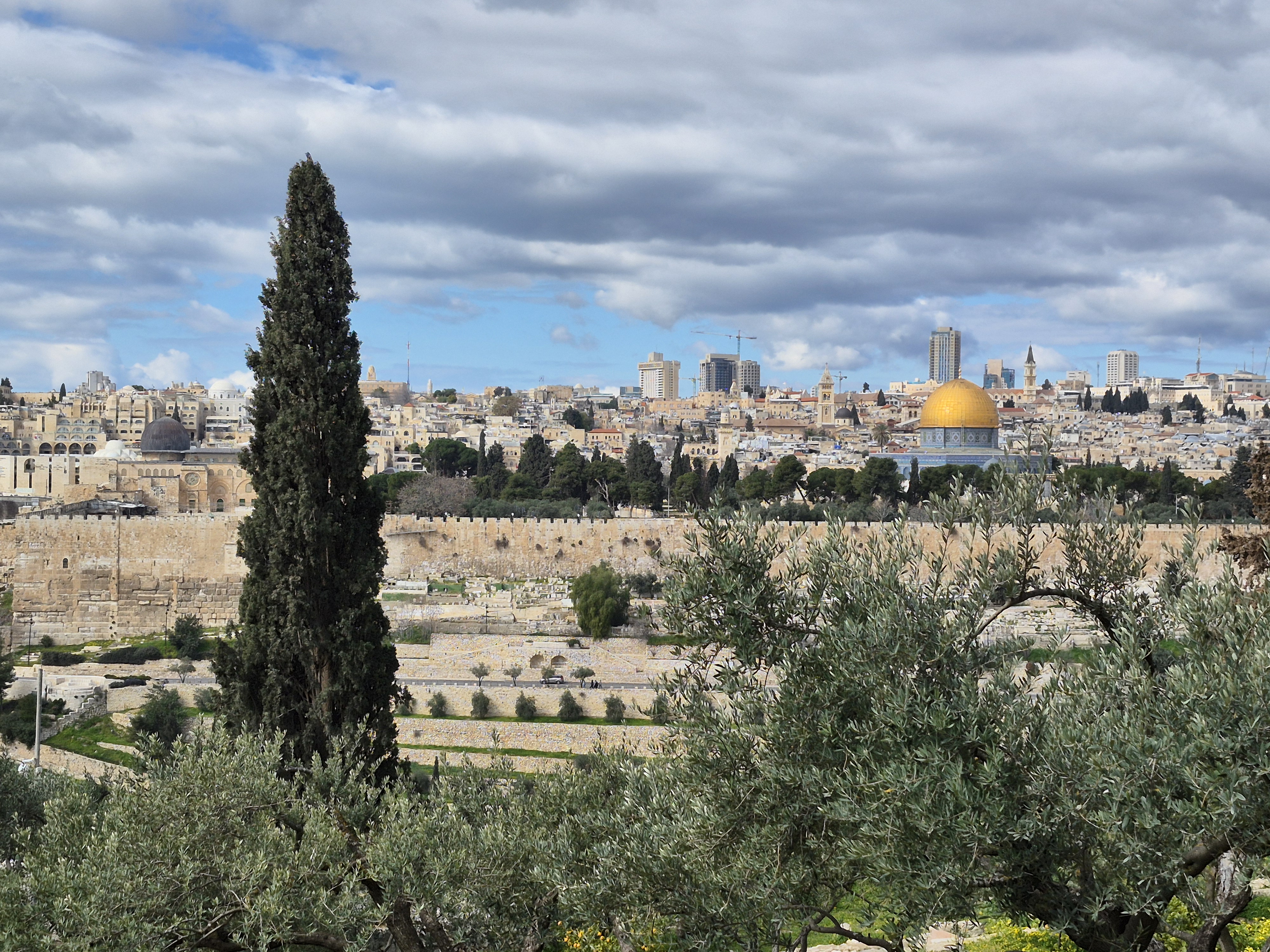
Father Anthony Wieck, SJ, was leading a group of pilgrims in Jerusalem when the U.S. and Israel began launching strikes against Iran.
Read More
Servant of God Sister Thea Bowman’s voice needed ‘more than ever’ #Catholic African American Servant of God Sister Thea Bowman’s ability to bridge divides shines as a witness needed today, according to those who knew her, and her cause for canonization may create a pathway for other African Americans on their ways to sainthood.More than three decades after her death, Bowman should be remembered for “her charism, gifts, prophetic voice, charismatic personality, and real strong commitment to the Church — truly being Catholic,” Bishop Joseph Kopacz of the Diocese of Jackson, Mississippi, told EWTN News.Bowman, the granddaughter of a slave, challenged the Church in the 20th century to confront its history of racial exclusion and to embrace Black Catholics through her work as a scholar, teacher, and speaker.The Diocese of Jackson officially closed its proceedings regarding her potential sainthood on Feb. 9 after Kopacz opened her cause in November 2018. The records are now being sent to the Dicastery for the Causes of Saints at the Vatican.“People around the world will be very excited and will celebrate what we hope will be the occasion of her canonization. And that’s because people, Catholic and non-Catholics alike, are drawn to her story,” Veryl Miles, law professor and leader of the Sister Thea Bowman Committee at The Catholic University of America, told EWTN News.Sister Thea’s life and legacyBowman was born Dec. 29, 1937, in Yazoo City, Mississippi, and was given the name Bertha Elizabeth Bowman. While her family was Methodist, Bowman was called to the Catholic faith at a young age.“At 9 years old, she told her parents she wanted to be Catholic. The sisters who were teaching at the school, the parish where she was, had such an impact on her. Then six years later, she joined their religious community,” Kopacz said.She joined the Franciscan Sisters of Perpetual Adoration at age 15 and enrolled in Viterbo University, which was run by the Franciscan sisters. Three years into formation, she took the religious name Thea, which means “of God” and is a version of her father’s name, Theon.“She was so focused on serving the Lord as a religious, and in this community, because they loved her as a young child,” Kopaz said. Bowman knew: “This is who I know. This is who I love. This is where I want to be.”She was the first and only African American woman in her religious community, often facing racism both within and beyond the Church, leading her to become an advocate for the dignity of Black people, their culture, and Black Catholic spirituality.Bowman went on to study at The Catholic University of America, earning a doctorate in English in 1972. Bowman helped found the National Black Sisters’ Conference and taught the university’s first Black literature course.Bowman, who taught for many years, was “a master teacher,” Franciscan Sister of Perpetual Adoration Charlene Smith, a close friend of Bowman’s and co-author of her biography “Thea’s Song,” told EWTN News.Smith and Bowman met in 1954 in La Crosse, Wisconsin, at St. Rose Convent. “She was just like me. We both wanted to be Franciscans, we both wanted to teach, and we both wanted to major in English in college, and we did all three of those things,” Smith said.After having moved away for graduate school, Bowman returned to La Crosse to teach in the English Department at Viterbo University. Smith also returned to serve as the school’s dean of students.“When I got back to La Crosse, they told me that I should beware of Sister Thea Bowman because she was ‘the most powerful woman on campus.’ They didn’t know that we were really good friends,” Smith said.“Being the dean, I was able to go to any classroom. I would go to Thea’s classrooms, and she would always come bounding in with a song, and she would get everybody into a really good mood,” Smith said.Bowman would also teach at parishes about Black liturgy and music. Eventually she starting to speak at a national level, becoming the first African American woman to address the U.S. bishops’ conference.She often used music to help evangelize and bridge interracial divides, and became a major contributor to the development of “Lead Me, Guide Me,” the Black Catholic hymnal published in 1987.Smith reflected on Bowman’s “marvelous” and “magnetic” personality. “We were invited to a dinner at a hotel, and she was going to give a speech. We got there early, so we went to sit down in the lobby … a pianist from Argentina was playing songs from ‘Porgy and Bess,’ and Thea got up and started singing ‘Summertime.’”“She got a standing ovation and an encore,” Smith said. “I think one of the greatest gifts, graces, in my life was my friendship with her. She was very kind to me, and she was very kind to all the people that she met.”At age 54, on March 30, 1990, Bowman died of breast cancer. She was buried at Elmwood Cemetery in Memphis, Tennessee, alongside her parents.Impact of Bowman’s causeBowman’s journey toward sainthood could have an especially effective impact today with the present division in the nation, as she would preach how we are “all human beings, and we should love everybody,” Smith said.“She was not interested in the melting pot at all,” Smith said. “She was more interested in a salad bowl because she said: ‘In a salad, people keep their identity, whereas in a melting pot, they’re all mushed together.’”Bowman “welcomed all in the universal body of Christ” Kopacz said. “She said the Church needs to truly be actively universal, and embrace different cultures and all the gifts that people bring.”“So today, more than ever, that voice is needed in our society as we can get more divisive,” Kopacz said. “I just think it’s perfect for our time and our Church.”“Her message is so universal,” Miles said. Especially “understanding the relationship between faith and identity among its members.”“She really understood and articulated so beautifully that we are people of faith and we are people of identities. The Church is a global church. There’s so many different people who are part of this Church  — people of different races, different ethnicities, and nationalities.”‘An impetus’ for other African Americans on their way to sainthoodCurrently, there are no canonized African American saints, but the Church honors Black saints from other nations, including St. Josephine Bakhita, St. Martin de Porres, St. Monica of Hippo, and St. Augustine of Hippo, among others.Bowman is among seven African American Catholics with active canonization causes — dubbed the “Saintly Seven.” The group also includes Venerable Pierre Toussaint, Venerable Mother Mary Lange, Venerable Mother Henriette Delille, Venerable Father Augustus Tolton, Servant of God Julia Greeley, and Servant of God Friar Martin de Porres Maria Ward.Even before her potential canonization, Bowman will “draw attention” to the group, Kopacz said. If she becomes venerable, which the bishop expects she will, he believes Bowman “will be an impetus” for the causes of other African Americans to move forward. “She’s going to be an important part, and she’ll move the other causes along,” he said.Since people “can relate” to Bowman’s story as it “is so contemporary and so special,” Miles said she also hopes the other stories of the seven Catholics “will become highlighted” by her cause.“People will be more interested in finding out about the other African Americans who are in the process of canonization, because their stories are very special and very unique, too,” Miles said.

Servant of God Sister Thea Bowman’s voice needed ‘more than ever’ #Catholic African American Servant of God Sister Thea Bowman’s ability to bridge divides shines as a witness needed today, according to those who knew her, and her cause for canonization may create a pathway for other African Americans on their ways to sainthood.More than three decades after her death, Bowman should be remembered for “her charism, gifts, prophetic voice, charismatic personality, and real strong commitment to the Church — truly being Catholic,” Bishop Joseph Kopacz of the Diocese of Jackson, Mississippi, told EWTN News.Bowman, the granddaughter of a slave, challenged the Church in the 20th century to confront its history of racial exclusion and to embrace Black Catholics through her work as a scholar, teacher, and speaker.The Diocese of Jackson officially closed its proceedings regarding her potential sainthood on Feb. 9 after Kopacz opened her cause in November 2018. The records are now being sent to the Dicastery for the Causes of Saints at the Vatican.“People around the world will be very excited and will celebrate what we hope will be the occasion of her canonization. And that’s because people, Catholic and non-Catholics alike, are drawn to her story,” Veryl Miles, law professor and leader of the Sister Thea Bowman Committee at The Catholic University of America, told EWTN News.Sister Thea’s life and legacyBowman was born Dec. 29, 1937, in Yazoo City, Mississippi, and was given the name Bertha Elizabeth Bowman. While her family was Methodist, Bowman was called to the Catholic faith at a young age.“At 9 years old, she told her parents she wanted to be Catholic. The sisters who were teaching at the school, the parish where she was, had such an impact on her. Then six years later, she joined their religious community,” Kopacz said.She joined the Franciscan Sisters of Perpetual Adoration at age 15 and enrolled in Viterbo University, which was run by the Franciscan sisters. Three years into formation, she took the religious name Thea, which means “of God” and is a version of her father’s name, Theon.“She was so focused on serving the Lord as a religious, and in this community, because they loved her as a young child,” Kopaz said. Bowman knew: “This is who I know. This is who I love. This is where I want to be.”She was the first and only African American woman in her religious community, often facing racism both within and beyond the Church, leading her to become an advocate for the dignity of Black people, their culture, and Black Catholic spirituality.Bowman went on to study at The Catholic University of America, earning a doctorate in English in 1972. Bowman helped found the National Black Sisters’ Conference and taught the university’s first Black literature course.Bowman, who taught for many years, was “a master teacher,” Franciscan Sister of Perpetual Adoration Charlene Smith, a close friend of Bowman’s and co-author of her biography “Thea’s Song,” told EWTN News.Smith and Bowman met in 1954 in La Crosse, Wisconsin, at St. Rose Convent. “She was just like me. We both wanted to be Franciscans, we both wanted to teach, and we both wanted to major in English in college, and we did all three of those things,” Smith said.After having moved away for graduate school, Bowman returned to La Crosse to teach in the English Department at Viterbo University. Smith also returned to serve as the school’s dean of students.“When I got back to La Crosse, they told me that I should beware of Sister Thea Bowman because she was ‘the most powerful woman on campus.’ They didn’t know that we were really good friends,” Smith said.“Being the dean, I was able to go to any classroom. I would go to Thea’s classrooms, and she would always come bounding in with a song, and she would get everybody into a really good mood,” Smith said.Bowman would also teach at parishes about Black liturgy and music. Eventually she starting to speak at a national level, becoming the first African American woman to address the U.S. bishops’ conference.She often used music to help evangelize and bridge interracial divides, and became a major contributor to the development of “Lead Me, Guide Me,” the Black Catholic hymnal published in 1987.Smith reflected on Bowman’s “marvelous” and “magnetic” personality. “We were invited to a dinner at a hotel, and she was going to give a speech. We got there early, so we went to sit down in the lobby … a pianist from Argentina was playing songs from ‘Porgy and Bess,’ and Thea got up and started singing ‘Summertime.’”“She got a standing ovation and an encore,” Smith said. “I think one of the greatest gifts, graces, in my life was my friendship with her. She was very kind to me, and she was very kind to all the people that she met.”At age 54, on March 30, 1990, Bowman died of breast cancer. She was buried at Elmwood Cemetery in Memphis, Tennessee, alongside her parents.Impact of Bowman’s causeBowman’s journey toward sainthood could have an especially effective impact today with the present division in the nation, as she would preach how we are “all human beings, and we should love everybody,” Smith said.“She was not interested in the melting pot at all,” Smith said. “She was more interested in a salad bowl because she said: ‘In a salad, people keep their identity, whereas in a melting pot, they’re all mushed together.’”Bowman “welcomed all in the universal body of Christ” Kopacz said. “She said the Church needs to truly be actively universal, and embrace different cultures and all the gifts that people bring.”“So today, more than ever, that voice is needed in our society as we can get more divisive,” Kopacz said. “I just think it’s perfect for our time and our Church.”“Her message is so universal,” Miles said. Especially “understanding the relationship between faith and identity among its members.”“She really understood and articulated so beautifully that we are people of faith and we are people of identities. The Church is a global church. There’s so many different people who are part of this Church  — people of different races, different ethnicities, and nationalities.”‘An impetus’ for other African Americans on their way to sainthoodCurrently, there are no canonized African American saints, but the Church honors Black saints from other nations, including St. Josephine Bakhita, St. Martin de Porres, St. Monica of Hippo, and St. Augustine of Hippo, among others.Bowman is among seven African American Catholics with active canonization causes — dubbed the “Saintly Seven.” The group also includes Venerable Pierre Toussaint, Venerable Mother Mary Lange, Venerable Mother Henriette Delille, Venerable Father Augustus Tolton, Servant of God Julia Greeley, and Servant of God Friar Martin de Porres Maria Ward.Even before her potential canonization, Bowman will “draw attention” to the group, Kopacz said. If she becomes venerable, which the bishop expects she will, he believes Bowman “will be an impetus” for the causes of other African Americans to move forward. “She’s going to be an important part, and she’ll move the other causes along,” he said.Since people “can relate” to Bowman’s story as it “is so contemporary and so special,” Miles said she also hopes the other stories of the seven Catholics “will become highlighted” by her cause.“People will be more interested in finding out about the other African Americans who are in the process of canonization, because their stories are very special and very unique, too,” Miles said.

Bowman’s ability to see the dignity of each individual, and embrace all gifts and cultures, is an essential message for Catholics and non-Catholics alike.

Read More