idolatry

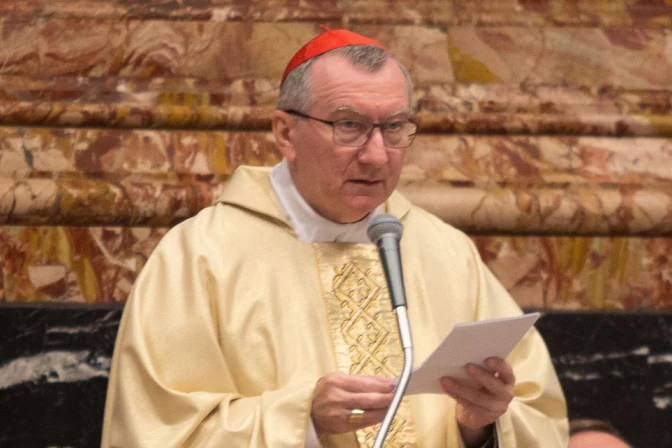
Vatican urges Catholics not to leave Pope Leo XIV alone in opposing war #Catholic VATICAN CITY — Vatican Secretary of State Cardinal Pietro Parolin warned that the “logic of the strongest” risks prevailing on the international stage and called on Christians to become “voices of peace” who do not leave Pope Leo XIV standing alone in his opposition to war.In an interview with Dialoghi, a cultural magazine linked to Italian Catholic Action, Parolin said the voice of the pope is “prophetic” but risks becoming “a voice crying in the wilderness if it is not supported and helped concretely.”His remarks also offer a key to understanding the peace prayer vigil Leo XIV has called for April 11 in St. Peter’s Basilica.Parolin recalled the 2003 Iraq war, when St. John Paul II pleaded for the conflict to be avoided but “was left alone.” He therefore stressed the need to support the current pontiff’s appeal for a peace that is “unarmed and disarming” and to reject “the false propaganda of rearmament.”“There is a need for more voices of peace, more voices against the madness of the rush toward rearmament, more voices raised in favor of our poorest brothers and sisters, more voices and more proposals — I am thinking, for example, of the world of Catholic universities — for new economic models inspired by justice and care for the weakest instead of the idolatry of money,” Parolin said.The cardinal described an alarming international climate in which military action appears to impose itself too easily.“I am struck by how much determination — I was about to say ease — with which the military option is presented as decisive, almost inevitable,” he said.According to the Vatican secretary of state, this trend has left diplomacy practically “mute,” unable to activate alternative tools, while awareness of the tragedy of war and the value of shared rules is being lost.Parolin said the root of the problem is a “multi-polarism inspired by the primacy of power,” in which states place greater trust in force than in international law. That, he said, has produced “double standards,” visible in the differing reactions to attacks on civilians in Ukraine and the destruction in Gaza.“Many governments,” Parolin said, “have expressed indignation over attacks against Ukrainian civilians by Russian missiles and drones, imposing sanctions on the aggressors.”“I do not think the same has happened with the tragedy of the destruction of Gaza,” he added.For the cardinal, this is a case of “double standards” tied to the “primacy of power” — the dominance of one’s own country over others — with international law invoked “only when convenient” and ignored in many other cases.“It seems there has been a lack of awareness of the value of peace, awareness of the tragic reality of war, awareness of the importance of shared rules and of respecting them,” he said.Parolin also lamented the weakening of the global diplomatic architecture and said it is “utopian” to think peace can be guaranteed “by weapons and by balances imposed by the strongest rather than by international agreements.”“We cannot surrender to the logic of the strongest,” the cardinal insisted, because that logic “bends international law to its own interests” and weakens multilateral institutions.In that context, he also expressed regret that Europe has been unable to speak with one voice. He said it is necessary “to rekindle in peoples the sense of European belonging and, in leadership, the awareness of the need for common actions without ever failing the principles that are at the foundation of the European Union itself.”Regarding the United Nations, Parolin said the Holy See “continues to believe in its importance,” considering international organizations essential for restraining the logic of the strongest. At the same time, he acknowledged that the use of the veto has limited the U.N.’s ability to act.“We cannot move from the force of law to the law of force,” he warned.Parolin also highlighted the role believers can play, including defending life and human dignity, protecting religious freedom, promoting reforms to the economic and financial system in line with the Church’s social doctrine, and caring for creation.Finally, the cardinal addressed the cultural impact of new technologies, saying hyper-connectivity and the spread of fake news help fuel fear and build new walls.“As Christians, we must oppose this drift with our daily lives,” he concluded.This story was first published by ACI Prensa, the Spanish-language sister service of EWTN News. It has been translated and adapted by EWTN News English.

Vatican urges Catholics not to leave Pope Leo XIV alone in opposing war #Catholic VATICAN CITY — Vatican Secretary of State Cardinal Pietro Parolin warned that the “logic of the strongest” risks prevailing on the international stage and called on Christians to become “voices of peace” who do not leave Pope Leo XIV standing alone in his opposition to war.In an interview with Dialoghi, a cultural magazine linked to Italian Catholic Action, Parolin said the voice of the pope is “prophetic” but risks becoming “a voice crying in the wilderness if it is not supported and helped concretely.”His remarks also offer a key to understanding the peace prayer vigil Leo XIV has called for April 11 in St. Peter’s Basilica.Parolin recalled the 2003 Iraq war, when St. John Paul II pleaded for the conflict to be avoided but “was left alone.” He therefore stressed the need to support the current pontiff’s appeal for a peace that is “unarmed and disarming” and to reject “the false propaganda of rearmament.”“There is a need for more voices of peace, more voices against the madness of the rush toward rearmament, more voices raised in favor of our poorest brothers and sisters, more voices and more proposals — I am thinking, for example, of the world of Catholic universities — for new economic models inspired by justice and care for the weakest instead of the idolatry of money,” Parolin said.The cardinal described an alarming international climate in which military action appears to impose itself too easily.“I am struck by how much determination — I was about to say ease — with which the military option is presented as decisive, almost inevitable,” he said.According to the Vatican secretary of state, this trend has left diplomacy practically “mute,” unable to activate alternative tools, while awareness of the tragedy of war and the value of shared rules is being lost.Parolin said the root of the problem is a “multi-polarism inspired by the primacy of power,” in which states place greater trust in force than in international law. That, he said, has produced “double standards,” visible in the differing reactions to attacks on civilians in Ukraine and the destruction in Gaza.“Many governments,” Parolin said, “have expressed indignation over attacks against Ukrainian civilians by Russian missiles and drones, imposing sanctions on the aggressors.”“I do not think the same has happened with the tragedy of the destruction of Gaza,” he added.For the cardinal, this is a case of “double standards” tied to the “primacy of power” — the dominance of one’s own country over others — with international law invoked “only when convenient” and ignored in many other cases.“It seems there has been a lack of awareness of the value of peace, awareness of the tragic reality of war, awareness of the importance of shared rules and of respecting them,” he said.Parolin also lamented the weakening of the global diplomatic architecture and said it is “utopian” to think peace can be guaranteed “by weapons and by balances imposed by the strongest rather than by international agreements.”“We cannot surrender to the logic of the strongest,” the cardinal insisted, because that logic “bends international law to its own interests” and weakens multilateral institutions.In that context, he also expressed regret that Europe has been unable to speak with one voice. He said it is necessary “to rekindle in peoples the sense of European belonging and, in leadership, the awareness of the need for common actions without ever failing the principles that are at the foundation of the European Union itself.”Regarding the United Nations, Parolin said the Holy See “continues to believe in its importance,” considering international organizations essential for restraining the logic of the strongest. At the same time, he acknowledged that the use of the veto has limited the U.N.’s ability to act.“We cannot move from the force of law to the law of force,” he warned.Parolin also highlighted the role believers can play, including defending life and human dignity, protecting religious freedom, promoting reforms to the economic and financial system in line with the Church’s social doctrine, and caring for creation.Finally, the cardinal addressed the cultural impact of new technologies, saying hyper-connectivity and the spread of fake news help fuel fear and build new walls.“As Christians, we must oppose this drift with our daily lives,” he concluded.This story was first published by ACI Prensa, the Spanish-language sister service of EWTN News. It has been translated and adapted by EWTN News English.

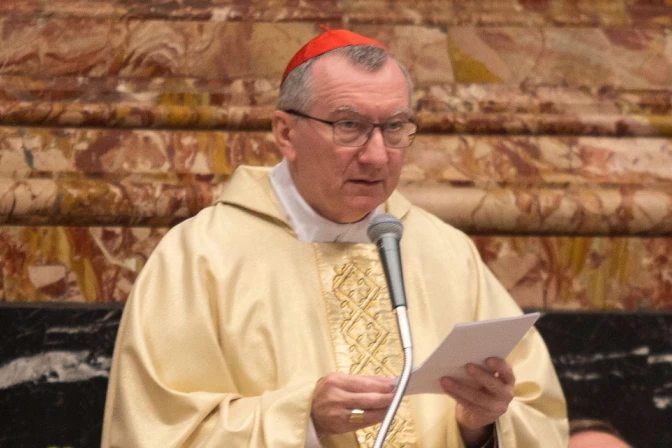
The Vatican Secretary of State said the pope’s appeals for peace need concrete support.

Read More
Pope Leo XIV at Monaco stadium Mass: Wars are ‘the result of the idolatry of power and money’ #Catholic Pope Leo XIV on March 28 condemned all military conflicts, which he argued are the result of the “idolatry of power and money” and which “bloody” Godʼs gift of grace to men.Godʼs grace “illuminates our present, because the wars that bloody it are the result of the idolatry of power and money,” said Leo in the homily he delivered during the Mass at the Louis II Stadium in Monaco.Four months after his first apostolic trip to Turkey and Lebanon, the pontiff ended his lightning visit to the Principality of Monaco with the Mass in the stadium dedicated to Prince Louis II, who reigned between 1922 and 1949.The stadium has a capacity for more than 18,000 spectators, which makes it a prominent place for sporting and entertainment events, in addition to being an ideal place for the papal Mass.Upon his arrival, Leo toured the venue in a golf cart, from which he greeted and blessed the cheering faithful who were waiting for him while waving flags of the Vatican City and of Monaco.The logic of power versus innocenceIn his homily, the pope highlighted the biblical account in which the members of the Sanhedrin decide to kill Jesus. From this passage, he explained that the face of God is revealed alongside those who, moved by power interests, are willing to eliminate the innocent.As he pointed out, Caiphas' verdict is born from a political calculation based on fear: “Forgetting Godʼs promise to his people, they want to kill the innocent, because behind their fear is the attachment to power.”“Isnʼt that what happens today?” the pope asked. “Even today, how many calculations are made in the world to kill innocent people; how many false reasons are used to get them out of the way!”Not getting used to warThe pontiff called for the purification of the “idolatry” that feeds wars and turns men into slaves of other men, while urging the faithful to not get used to violence.“Every truncated life is a wound to the body of Christ. Letʼs not get used to the rumble of weapons or the images of war!” he exclaimed.In this sense, he stressed that peace cannot be reduced to a balance of power: “It is not a mere balance of forces, but the work of purified hearts, of those who see in the other a brother to take care of, not an enemy to bring down.”Mercy, response to evilFaced with the persistence of evil, the pope recalled that Godʼs justice acts as a source of hope and renewal: “The Lord frees from pain by infusing hope, he converts the hardness of the heart by transforming power into service, precisely while manifesting the true name of his omnipotence: mercy.”In this way, he assured that it is “mercy that saves the world” because it takes charge of all human existence, “in each of its weaknesses, from the moment it is conceived in the womb until it ages,” he added.A message on the eve of EasterThe popeʼs visit to Monaco, just eight hours long, was made at the invitation of Albert II of Monaco. It took place on the eve of Holy Week, a context to which the pope referred during his homily. “The Lord changes the history of the world by calling us from idolatry to true faith, from death to life,” he said.In this context, he also evoked the prophet Jeremiah: “In the face of the numerous injustices that destroy the peoples and the war that plagues the nations, the voice of the prophet Jeremiah is constantly raised: I will change their mourning into joy, I will make them happy and I will console them with their affliction” (Jer 31,13).The joy that is born of charityFinally, the pontiff called the faithful to be witnesses of hope, making “many happy with their faith” and sharing a joy that is not acquired as a prize, but is born of charity.“The source of this joy is the love of God: love for the nascent and fragile life, which must always be welcomed and cared for; love for young and old life, which must be encouraged in the trials of each stage; love for healthy and sick life, sometimes alone, always in need of being accompanied with care,” he concluded.At the end of the celebration, the Archbishop of Monaco, Monsignor Dominique-Marie David, thanked Pope Leo XIV for his visit, emphasizing that God is “the source of all good” and that the pontiff, as the successor of Peter, has come to remind the local Church of this.In this sense, he stressed that the pope has encouraged the faithful to face “fearlessly” the current challenges, aware that they have “a treasure capable of sustaining hope, ours and that of the world.”On the eve of Holy Week, David said that the popeʼs visit has served to “confirm the faith of his brothers,” reinforcing the commitment of the Christian community.Pope Leo XIV gave the Archdiocese of Monaco a contemporary sculpture by St. Francis of Assisi. The work represents the Italian saint, one of the most beloved figures of the Christian tradition and universally recognized as a messenger of peace, fraternity and reconciliation.Francis in the sculpture appears dressed in the simple Franciscan habit, a symbol of evangelical poverty and inner freedom, girded by the characteristic cord with three knots.In the sculpture the saint holds a white dove in his left hand, while the right hand opens in a gesture of welcome and donation.This story was first published by ACI Prensa, the Spanish-language sister service of EWTN News. It has been translated and adapted by EWTN News English.

Pope Leo XIV at Monaco stadium Mass: Wars are ‘the result of the idolatry of power and money’ #Catholic Pope Leo XIV on March 28 condemned all military conflicts, which he argued are the result of the “idolatry of power and money” and which “bloody” Godʼs gift of grace to men.Godʼs grace “illuminates our present, because the wars that bloody it are the result of the idolatry of power and money,” said Leo in the homily he delivered during the Mass at the Louis II Stadium in Monaco.Four months after his first apostolic trip to Turkey and Lebanon, the pontiff ended his lightning visit to the Principality of Monaco with the Mass in the stadium dedicated to Prince Louis II, who reigned between 1922 and 1949.The stadium has a capacity for more than 18,000 spectators, which makes it a prominent place for sporting and entertainment events, in addition to being an ideal place for the papal Mass.Upon his arrival, Leo toured the venue in a golf cart, from which he greeted and blessed the cheering faithful who were waiting for him while waving flags of the Vatican City and of Monaco.The logic of power versus innocenceIn his homily, the pope highlighted the biblical account in which the members of the Sanhedrin decide to kill Jesus. From this passage, he explained that the face of God is revealed alongside those who, moved by power interests, are willing to eliminate the innocent.As he pointed out, Caiphas' verdict is born from a political calculation based on fear: “Forgetting Godʼs promise to his people, they want to kill the innocent, because behind their fear is the attachment to power.”“Isnʼt that what happens today?” the pope asked. “Even today, how many calculations are made in the world to kill innocent people; how many false reasons are used to get them out of the way!”Not getting used to warThe pontiff called for the purification of the “idolatry” that feeds wars and turns men into slaves of other men, while urging the faithful to not get used to violence.“Every truncated life is a wound to the body of Christ. Letʼs not get used to the rumble of weapons or the images of war!” he exclaimed.In this sense, he stressed that peace cannot be reduced to a balance of power: “It is not a mere balance of forces, but the work of purified hearts, of those who see in the other a brother to take care of, not an enemy to bring down.”Mercy, response to evilFaced with the persistence of evil, the pope recalled that Godʼs justice acts as a source of hope and renewal: “The Lord frees from pain by infusing hope, he converts the hardness of the heart by transforming power into service, precisely while manifesting the true name of his omnipotence: mercy.”In this way, he assured that it is “mercy that saves the world” because it takes charge of all human existence, “in each of its weaknesses, from the moment it is conceived in the womb until it ages,” he added.A message on the eve of EasterThe popeʼs visit to Monaco, just eight hours long, was made at the invitation of Albert II of Monaco. It took place on the eve of Holy Week, a context to which the pope referred during his homily. “The Lord changes the history of the world by calling us from idolatry to true faith, from death to life,” he said.In this context, he also evoked the prophet Jeremiah: “In the face of the numerous injustices that destroy the peoples and the war that plagues the nations, the voice of the prophet Jeremiah is constantly raised: I will change their mourning into joy, I will make them happy and I will console them with their affliction” (Jer 31,13).The joy that is born of charityFinally, the pontiff called the faithful to be witnesses of hope, making “many happy with their faith” and sharing a joy that is not acquired as a prize, but is born of charity.“The source of this joy is the love of God: love for the nascent and fragile life, which must always be welcomed and cared for; love for young and old life, which must be encouraged in the trials of each stage; love for healthy and sick life, sometimes alone, always in need of being accompanied with care,” he concluded.At the end of the celebration, the Archbishop of Monaco, Monsignor Dominique-Marie David, thanked Pope Leo XIV for his visit, emphasizing that God is “the source of all good” and that the pontiff, as the successor of Peter, has come to remind the local Church of this.In this sense, he stressed that the pope has encouraged the faithful to face “fearlessly” the current challenges, aware that they have “a treasure capable of sustaining hope, ours and that of the world.”On the eve of Holy Week, David said that the popeʼs visit has served to “confirm the faith of his brothers,” reinforcing the commitment of the Christian community.Pope Leo XIV gave the Archdiocese of Monaco a contemporary sculpture by St. Francis of Assisi. The work represents the Italian saint, one of the most beloved figures of the Christian tradition and universally recognized as a messenger of peace, fraternity and reconciliation.Francis in the sculpture appears dressed in the simple Franciscan habit, a symbol of evangelical poverty and inner freedom, girded by the characteristic cord with three knots.In the sculpture the saint holds a white dove in his left hand, while the right hand opens in a gesture of welcome and donation.This story was first published by ACI Prensa, the Spanish-language sister service of EWTN News. It has been translated and adapted by EWTN News English.

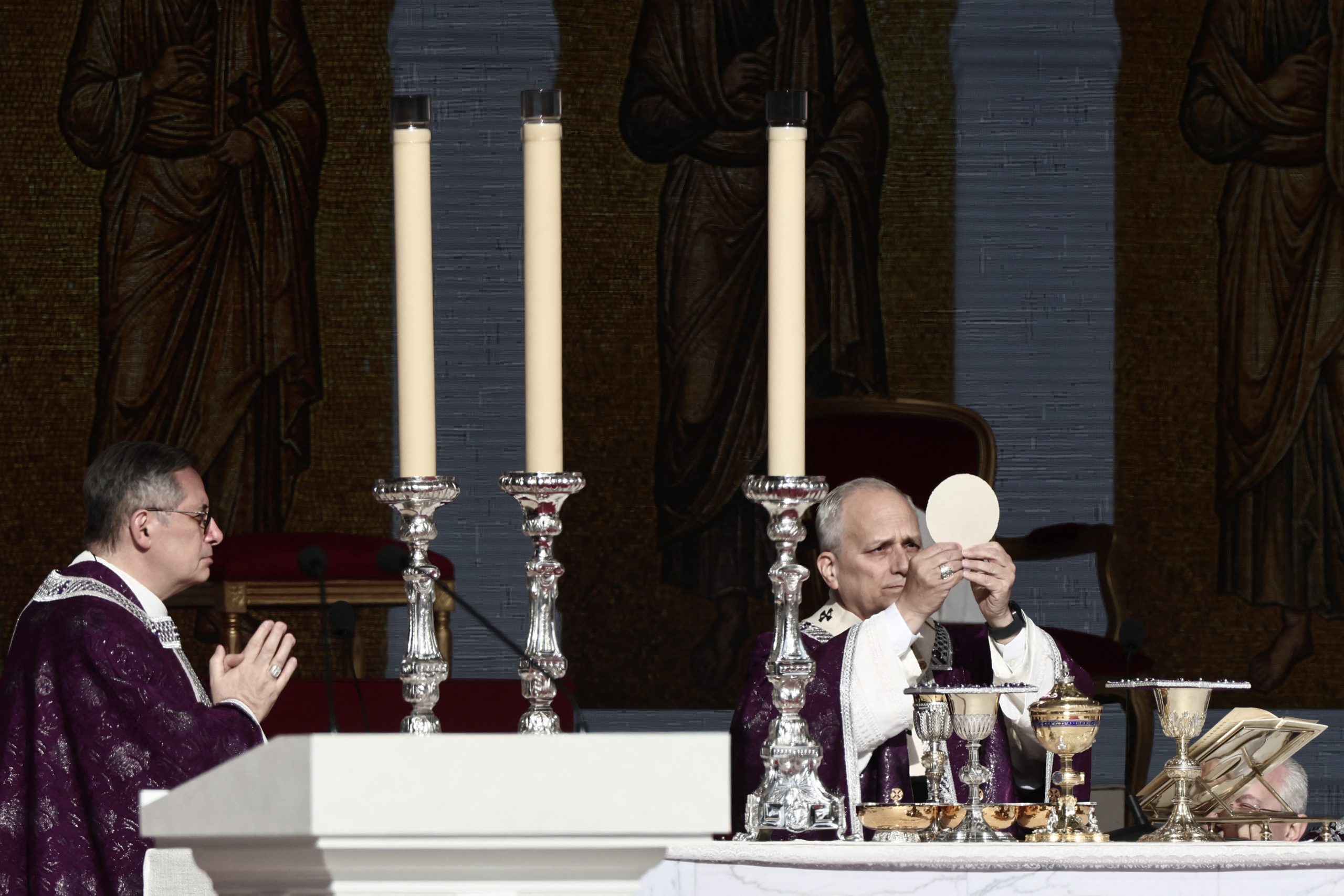
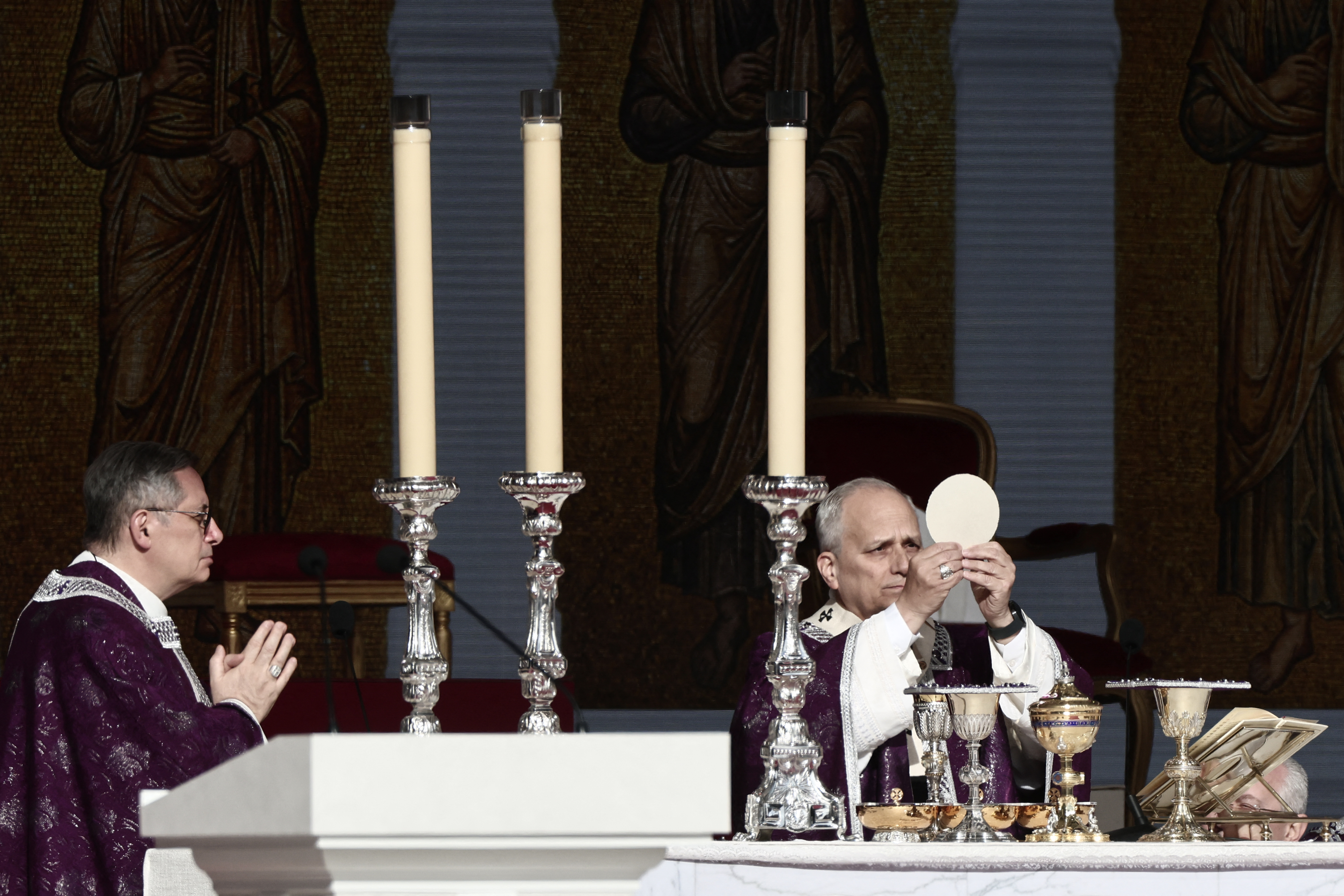
The Holy Father during his homily at Monaco’s Louis II Stadium urged the faithful to “not get used to the rumble of weapons or the images of war.”
Read More
Archbishop Lori issues pastoral letter on political life in honor of 250th anniversary of the U.S. #Catholic Archbishop William Lori of Baltimore urged Catholics to foster a political culture grounded in Christ by prioritizing human dignity and genuine encounter amid partisan divisions.“In Charity and Truth: Toward a Renewed Political Culture,” released in anticipation of the 250th anniversary of the Declaration of Independence, is among the nine pastoral letters and reflections Lori has written as archbishop of Baltimore. The Feb. 9 letter explored how the anniversary can be “a moment of grace” and one of “responsibility.”The U.S. can both take pride in its achievements and “the vibrancy of our Catholic faith” while also recognizing “the fractures, wounds, and crises that mark both our national life and, sadly, even at times our ecclesial life,” Lori wrote.“As our nation approaches the 250th anniversary of the signing of the Declaration of Independence, we find ourselves invited into a moment of profound reflection and renewal,” Lori said. “Anniversaries are not merely occasions for nostalgia or celebration. Authentic remembrance always orients us toward renewal; it calls us to consider not only who we have been and who we are becoming — but, by God’s grace, who we are called to be.”The letter draws on teachings from the popes, the Second Vatican Council, the Constitution, and the lives of the saints.Addressing political discourse from a Catholic viewThe letter highlighted the U.S. political atmosphere, noting that “political discourse has become more vitriolic than usual.” Lori called for synodal listening, civic virtue, and patriotic charity — as exemplified by Blessed Michael McGivney — to renew public life with truth, responsibility, and hope.McGivney, founder of the Knights of Columbus, served immigrant families and addressed their economic insecurity and exclusion. Lori said genuine charity, unity, fraternity, and patriotic love should guide how Catholics engage with migrants and support their dignity and inclusion.
 
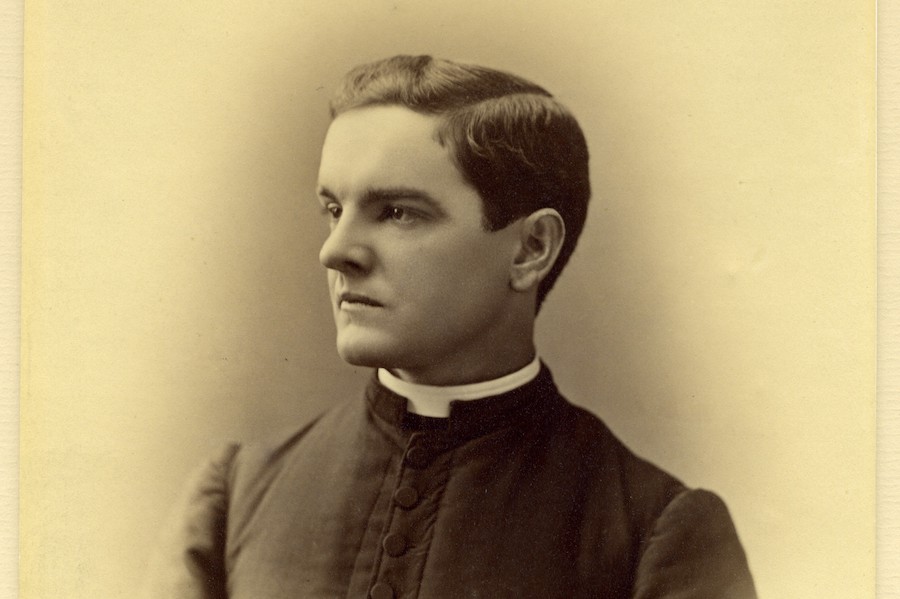
 Father Michael McGivney. | Credit: John Tierney/Father McGivney Guild
 
 Lori said ideological and cultural polarization “has produced an epidemic of loneliness and isolation — an aching sense of being unmoored, misunderstood, or unheard.”Lori wrote: “Synodality is, at its heart, a commitment to listening with humility, speaking with honesty, and discerning with the Holy Spirit — all while walking together, not apart.”“Such unity does not mean uniformity, nor does it eliminate disagreement,” Lori said. “Rather, it reflects a deeper truth. Our communion in Christ precedes our differences.”Synodality “does not dissolve disagreement. It expects it, because diverse people will inevitably see the world from different angles,” Lori said. The letter detailed what “synodality in politics looks like,” including a renewed willingness to listen, a refusal to demonize, a commitment to discernment, and a shared journey.Our world also needs “a new kind of politics — one that begins not with power but with the truth of the human person revealed in Jesus Christ,” Lori said. “Christ, in his incarnation, affirms the goodness of the human body and the meaning of human history.”According to Lori, this new type of politics includes resisting the idolatry of ideology. It must also honor the inherent dignity of every human life from conception to natural death, protect the vulnerable and the marginalized, engage in dialogue rather than accusation, and place the common good above partisan loyalty.A “mature Catholic political presence will” always defend human life in all its stages, advocate for the poor and the vulnerable, insist on racial and social justice, promote peace and reject violence, and uphold religious freedom for all, Lori said.In order to build a better political culture, “we must learn once more how to encounter, by stepping outside our ideological comfort zones, seeking out conversations with those on the margins or those with differing points of view, healing the wounds that divide us, committing ourselves to forgiveness,” Lori said.Virtue in public lifeLori called on U.S. citizens to employ the cardinal virtues in public life to create a “healthy political engagement.”People can use prudence by “evaluating policies not by slogans or emotional appeal but by their actual impact on human dignity,” Lori said. The virtue “helps us to see clearly, to judge wisely, and to act firmly.”Justice “is foundational to political life,” Lori said. “It is the virtue that moves us to honor the dignity of every human person and to recognize that each person has rights that must be protected and responsibilities that must be fulfilled.”Fortitude “strengthens us to pursue what is right despite fear, intimidation, or difficulty,” Lori said. “It empowers each of us to resist the pressure to conform to divisive rhetoric, to endure criticism when standing for truth, and to advocate for the vulnerable even when it is politically inconvenient.”Lastly, temperance “moderates our impulses and helps us resist the allure of excess,” Lori said. “In political culture, temperance is perhaps the virtue most needed today. Temperance invites us to slow down, to choose words carefully, to avoid rash judgments, and to discipline the desire to ‘win’ at the expense of relationship, truth, or the common good.”RenewalLori called for renewal ahead of the 250th anniversary of the U.S. He invited all Catholics and all people of goodwill to commit themselves to a renewed political culture and to answer the call of hope.The letter concluded by detailing “a path forward” on how to renew political culture, including: renewing prayer for the nation, practicing civil dialogue, rejecting hatred and violence, serving the common good, forming consciences, and encountering those different from oneself.“In the midst of political upheaval, the Church does not withdraw from public life, nor does she align herself with any partisan identity,” Lori said. “She remains what she has always been: a sacrament of unity, a beacon of hope, and a teacher of truth.”“Her mission is not to win elections but to form saints. Not to secure power but to proclaim the Gospel. Not to mirror the divisions of society but to heal them,” Lori said.“Our nation needs Catholics who embody this mission — women and men whose lives witness to the dignity of every human person, whose love bridges divides, whose courage resists hatred, and whose faith insists that despair does not have the final word. The civic landscape may look dark at times, but the Church has lived through darker times and emerged stronger, purified, and more faithful. So, too, can our nation,” he said.

Archbishop Lori issues pastoral letter on political life in honor of 250th anniversary of the U.S. #Catholic Archbishop William Lori of Baltimore urged Catholics to foster a political culture grounded in Christ by prioritizing human dignity and genuine encounter amid partisan divisions.“In Charity and Truth: Toward a Renewed Political Culture,” released in anticipation of the 250th anniversary of the Declaration of Independence, is among the nine pastoral letters and reflections Lori has written as archbishop of Baltimore. The Feb. 9 letter explored how the anniversary can be “a moment of grace” and one of “responsibility.”The U.S. can both take pride in its achievements and “the vibrancy of our Catholic faith” while also recognizing “the fractures, wounds, and crises that mark both our national life and, sadly, even at times our ecclesial life,” Lori wrote.“As our nation approaches the 250th anniversary of the signing of the Declaration of Independence, we find ourselves invited into a moment of profound reflection and renewal,” Lori said. “Anniversaries are not merely occasions for nostalgia or celebration. Authentic remembrance always orients us toward renewal; it calls us to consider not only who we have been and who we are becoming — but, by God’s grace, who we are called to be.”The letter draws on teachings from the popes, the Second Vatican Council, the Constitution, and the lives of the saints.Addressing political discourse from a Catholic viewThe letter highlighted the U.S. political atmosphere, noting that “political discourse has become more vitriolic than usual.” Lori called for synodal listening, civic virtue, and patriotic charity — as exemplified by Blessed Michael McGivney — to renew public life with truth, responsibility, and hope.McGivney, founder of the Knights of Columbus, served immigrant families and addressed their economic insecurity and exclusion. Lori said genuine charity, unity, fraternity, and patriotic love should guide how Catholics engage with migrants and support their dignity and inclusion. Father Michael McGivney. | Credit: John Tierney/Father McGivney Guild Lori said ideological and cultural polarization “has produced an epidemic of loneliness and isolation — an aching sense of being unmoored, misunderstood, or unheard.”Lori wrote: “Synodality is, at its heart, a commitment to listening with humility, speaking with honesty, and discerning with the Holy Spirit — all while walking together, not apart.”“Such unity does not mean uniformity, nor does it eliminate disagreement,” Lori said. “Rather, it reflects a deeper truth. Our communion in Christ precedes our differences.”Synodality “does not dissolve disagreement. It expects it, because diverse people will inevitably see the world from different angles,” Lori said. The letter detailed what “synodality in politics looks like,” including a renewed willingness to listen, a refusal to demonize, a commitment to discernment, and a shared journey.Our world also needs “a new kind of politics — one that begins not with power but with the truth of the human person revealed in Jesus Christ,” Lori said. “Christ, in his incarnation, affirms the goodness of the human body and the meaning of human history.”According to Lori, this new type of politics includes resisting the idolatry of ideology. It must also honor the inherent dignity of every human life from conception to natural death, protect the vulnerable and the marginalized, engage in dialogue rather than accusation, and place the common good above partisan loyalty.A “mature Catholic political presence will” always defend human life in all its stages, advocate for the poor and the vulnerable, insist on racial and social justice, promote peace and reject violence, and uphold religious freedom for all, Lori said.In order to build a better political culture, “we must learn once more how to encounter, by stepping outside our ideological comfort zones, seeking out conversations with those on the margins or those with differing points of view, healing the wounds that divide us, committing ourselves to forgiveness,” Lori said.Virtue in public lifeLori called on U.S. citizens to employ the cardinal virtues in public life to create a “healthy political engagement.”People can use prudence by “evaluating policies not by slogans or emotional appeal but by their actual impact on human dignity,” Lori said. The virtue “helps us to see clearly, to judge wisely, and to act firmly.”Justice “is foundational to political life,” Lori said. “It is the virtue that moves us to honor the dignity of every human person and to recognize that each person has rights that must be protected and responsibilities that must be fulfilled.”Fortitude “strengthens us to pursue what is right despite fear, intimidation, or difficulty,” Lori said. “It empowers each of us to resist the pressure to conform to divisive rhetoric, to endure criticism when standing for truth, and to advocate for the vulnerable even when it is politically inconvenient.”Lastly, temperance “moderates our impulses and helps us resist the allure of excess,” Lori said. “In political culture, temperance is perhaps the virtue most needed today. Temperance invites us to slow down, to choose words carefully, to avoid rash judgments, and to discipline the desire to ‘win’ at the expense of relationship, truth, or the common good.”RenewalLori called for renewal ahead of the 250th anniversary of the U.S. He invited all Catholics and all people of goodwill to commit themselves to a renewed political culture and to answer the call of hope.The letter concluded by detailing “a path forward” on how to renew political culture, including: renewing prayer for the nation, practicing civil dialogue, rejecting hatred and violence, serving the common good, forming consciences, and encountering those different from oneself.“In the midst of political upheaval, the Church does not withdraw from public life, nor does she align herself with any partisan identity,” Lori said. “She remains what she has always been: a sacrament of unity, a beacon of hope, and a teacher of truth.”“Her mission is not to win elections but to form saints. Not to secure power but to proclaim the Gospel. Not to mirror the divisions of society but to heal them,” Lori said.“Our nation needs Catholics who embody this mission — women and men whose lives witness to the dignity of every human person, whose love bridges divides, whose courage resists hatred, and whose faith insists that despair does not have the final word. The civic landscape may look dark at times, but the Church has lived through darker times and emerged stronger, purified, and more faithful. So, too, can our nation,” he said.

Archbishop William Lori urged Catholics to approach public life with synodal listening and civic virtue, drawing on Blessed Michael McGivney’s example of serving immigrant families.

Read More
Galatians 5:19-21 – The acts of the flesh are obvious: sexual immorality, impurity and debauchery; idolatry and witchcraft; hatred, discord, jealousy, fits of rage, selfish ambition, dissensions, factions and envy; drunkenness, orgies, and the like…

The acts of the flesh are obvious: sexual immorality, impurity and debauchery; idolatry and witchcraft; hatred, discord, jealousy, fits of rage, selfish ambition, dissensions, factions and envy; drunkenness, orgies, and the like. I warn you, as I did before, that those who live like this will not inherit the kingdom of God.
– Galatians 5:19-21

Read More