indifference

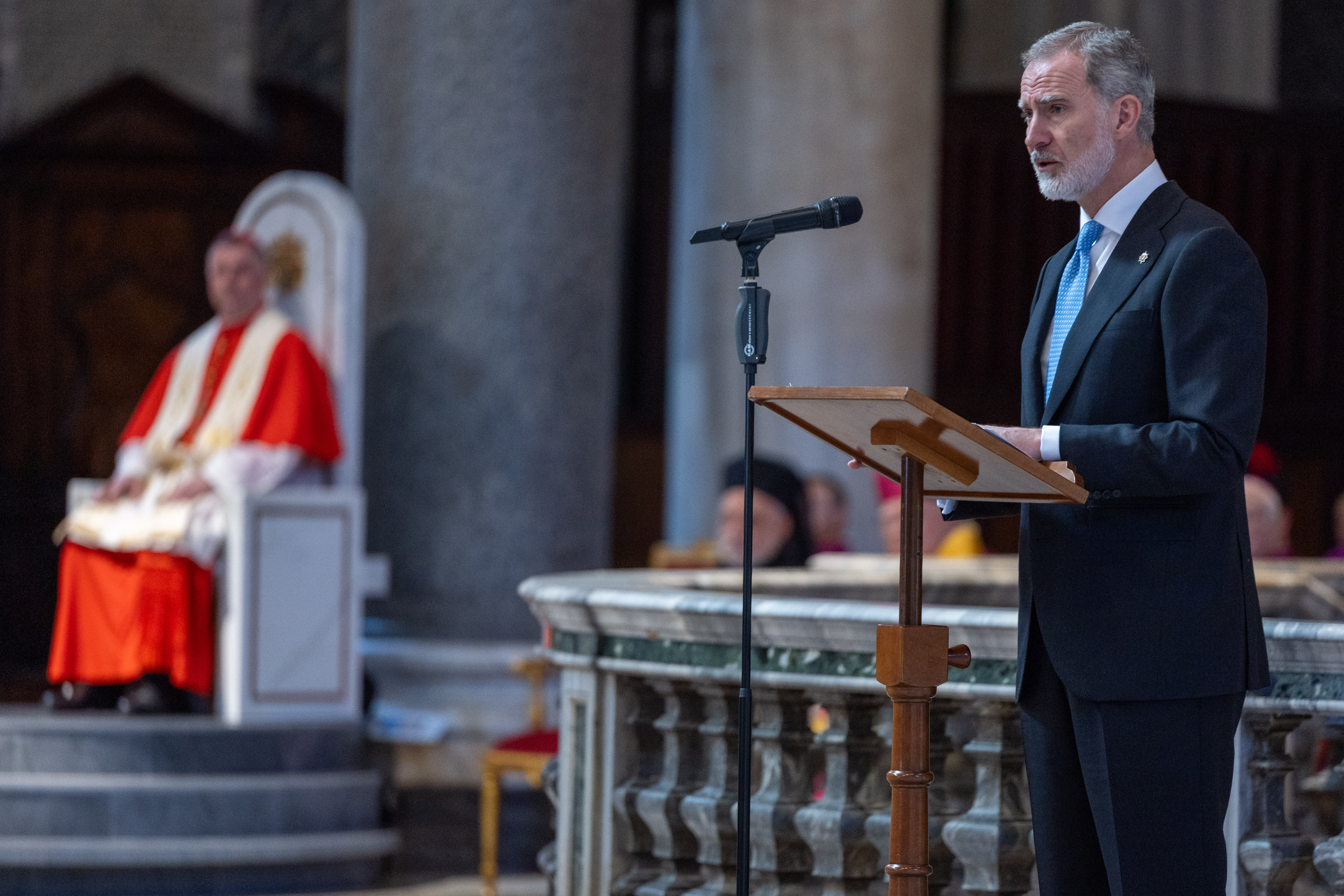
King Felipe VI of Spain installed as protocanon of the Basilica of St. Mary Major #Catholic VATICAN CITY — King Felipe VI of Spain on Friday was installed as protocanon of the Basilica of St. Mary Major in a solemn ceremony that underscores the historic link of the Spanish monarchy with the oldest Marian church in the West.“Protocanon” is an honorary title reserved exclusively for the Spanish head of state, recognizing the monarch as a collaborator of the pope without bestowing executive functions or decision-making power. The investiture March 20 renewed a relationship that dates back centuries and that last took place with Juan Carlos I of Spain in 1977.The king arrived at the Marian basilica, one of four papal basilicas in Rome, after a 50-minute audience with Pope Leo XIV at the Apostolic Palace in the Vatican. The meeting served as a prelude to the pontiff’s upcoming apostolic journey to Spain, scheduled for June 6–12.Upon their arrival at the basilica, the king and his wife, Queen Letizia, were received at the Bronze Gate by the Spanish canon of the chapter, Monsignor José Jaime Brosel, and the archpriest of the basilica, Cardinal Rolandas Makrickas.The king and queen viewed a statue of Philip IV of Spain, ancestor of the current monarch, a work designed by Gian Lorenzo Bernini and one of the pieces of evidence that show the centuries-old historical and spiritual relationship between Spain and the oldest Marian temple in the West.During the ceremony, Makrickas stressed that “authentic tradition is not stagnation but the living transmission of a gift that transcends time” and recalled that the basilica is entrusted with prayer for Spain and its head of state.Parts of the bull Hispaniarum Fidelitas were also read at the ceremony. Pope Pius XII signed the important document, which renewed and confirmed the historic ties of devotion and protection between the Spanish nation and the Basilica of St. Mary Major, in Rome on Aug. 5, 1953.In a short speech, King Felipe VI reaffirmed his commitment to the historic Roman basilica and appealed for “clarity of deed and word, of heart and conscience” in the current context. He also invited people to overcome selfishness and indifference in order to become “a small beacon of concord, generosity, and dedication to the common good.”Spain’s connection to the Basilica of St. Mary MajorFew know that the Basilica of St. Mary Major has close ties to the Spanish crown. Proof of this lies in the statue of Philip IV — an ancestor of the current king — which stands in the atrium.The work was inaugurated in 1692 during the tenure of the Spanish ambassador, the Duke of Medinaceli.The duke “was one of the main benefactors of St. Mary Major,” Brosel, a canon of the basilica and rector of the Spanish National Church of Santiago and Monserrat in Rome, told EWTN News ahead of the March 20 event.“In fact, it was in 1647 that Pope Innocent X formally established the Spanish Charitable Foundation in this basilica. Furthermore, the pope established an annual income in exchange for certain privileges for the Spanish monarchy,” Brosel explained.From that moment onward, the kings of Spain have held the title of “honorary protocanon.” This was a gesture of support for the pope during the Counter-Reformation but also a guarantee to safeguard the influence of the Spanish monarchy within the Holy See.The last time a Spanish head of state took possession as protocanon of the basilica was the father of the current king, Juan Carlos I, on Feb. 10, 1977.Brosel emphasized that Spain’s bond with the basilica “is born from the heart of Spain and its deep Marian devotion, where Spaniards feel St. Mary Major is their home.”
 
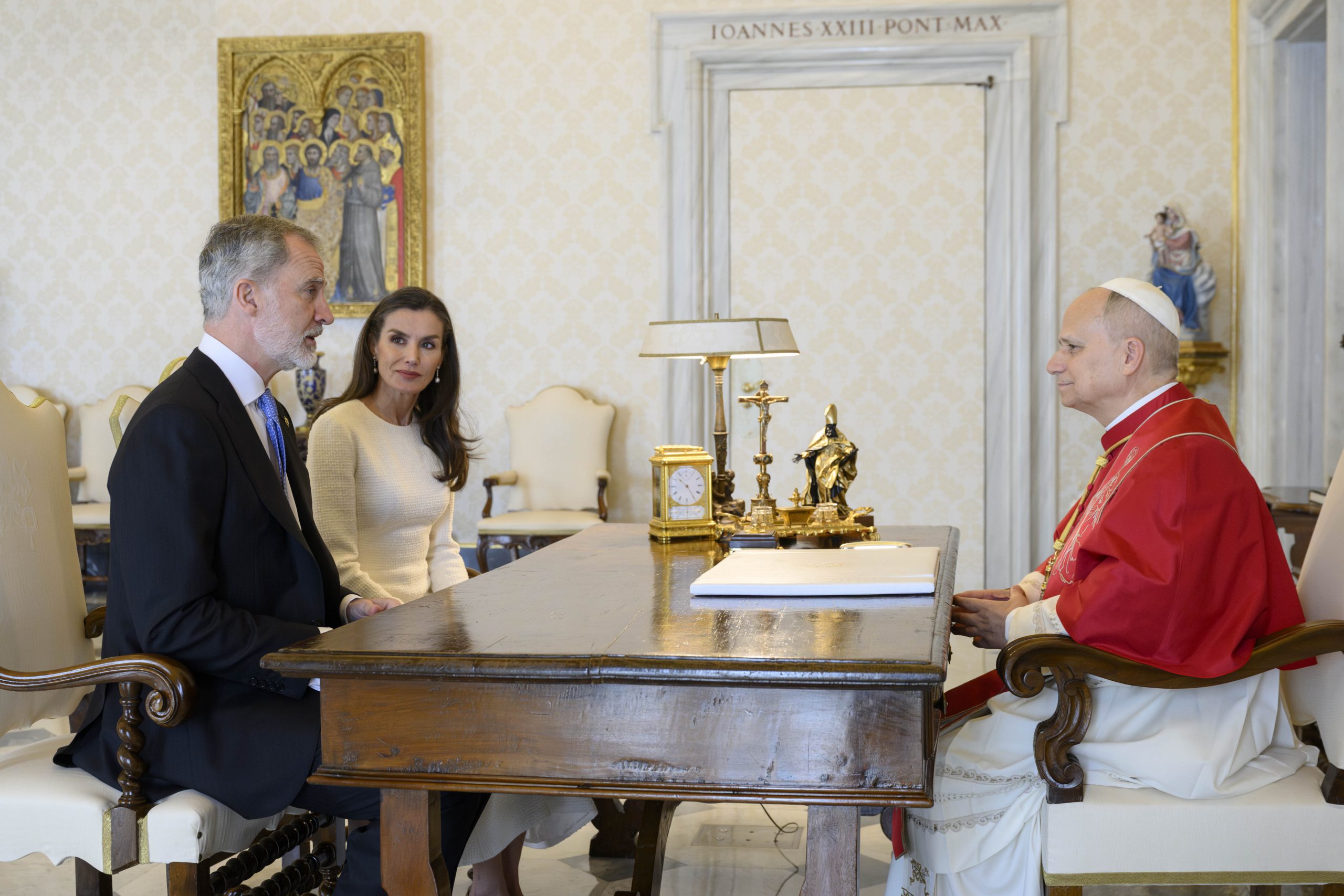
 King Felipe VI and Queen Letizia of Spain meet Pope Leo XIV at the Vatican on March 20, 2026. | Credit: Vatican Media
 
 Papal audienceThe investiture ceremony for the king took place following a visit to the Vatican and private audience with Pope Leo XIV.Leo’s upcoming trip to Spain — which is expected to include stops in Madrid, Barcelona, and the Canary Islands — will be the first papal journey to Spain in 15 years.Benedict XVI was the last pope to visit the country, traveling to Madrid for World Youth Day in 2011. At that time, Felipe VI was still a prince and the king was his father, Juan Carlos I.Queen Letizia at Friday’s papal audience wore white, a privilege reserved for Catholic queens, although without a mantilla or hair comb.The private conversation and exchange of gifts with Pope Leo was followed by talks with Cardinal Pietro Parolin and Archbishop Paul Gallagher in the Secretariat of State.This story was first published as three articles by ACI Prensa, the Spanish-language sister agency of EWTN News. It was translated and adapted by EWTN News English.

King Felipe VI of Spain installed as protocanon of the Basilica of St. Mary Major #Catholic VATICAN CITY — King Felipe VI of Spain on Friday was installed as protocanon of the Basilica of St. Mary Major in a solemn ceremony that underscores the historic link of the Spanish monarchy with the oldest Marian church in the West.“Protocanon” is an honorary title reserved exclusively for the Spanish head of state, recognizing the monarch as a collaborator of the pope without bestowing executive functions or decision-making power. The investiture March 20 renewed a relationship that dates back centuries and that last took place with Juan Carlos I of Spain in 1977.The king arrived at the Marian basilica, one of four papal basilicas in Rome, after a 50-minute audience with Pope Leo XIV at the Apostolic Palace in the Vatican. The meeting served as a prelude to the pontiff’s upcoming apostolic journey to Spain, scheduled for June 6–12.Upon their arrival at the basilica, the king and his wife, Queen Letizia, were received at the Bronze Gate by the Spanish canon of the chapter, Monsignor José Jaime Brosel, and the archpriest of the basilica, Cardinal Rolandas Makrickas.The king and queen viewed a statue of Philip IV of Spain, ancestor of the current monarch, a work designed by Gian Lorenzo Bernini and one of the pieces of evidence that show the centuries-old historical and spiritual relationship between Spain and the oldest Marian temple in the West.During the ceremony, Makrickas stressed that “authentic tradition is not stagnation but the living transmission of a gift that transcends time” and recalled that the basilica is entrusted with prayer for Spain and its head of state.Parts of the bull Hispaniarum Fidelitas were also read at the ceremony. Pope Pius XII signed the important document, which renewed and confirmed the historic ties of devotion and protection between the Spanish nation and the Basilica of St. Mary Major, in Rome on Aug. 5, 1953.In a short speech, King Felipe VI reaffirmed his commitment to the historic Roman basilica and appealed for “clarity of deed and word, of heart and conscience” in the current context. He also invited people to overcome selfishness and indifference in order to become “a small beacon of concord, generosity, and dedication to the common good.”Spain’s connection to the Basilica of St. Mary MajorFew know that the Basilica of St. Mary Major has close ties to the Spanish crown. Proof of this lies in the statue of Philip IV — an ancestor of the current king — which stands in the atrium.The work was inaugurated in 1692 during the tenure of the Spanish ambassador, the Duke of Medinaceli.The duke “was one of the main benefactors of St. Mary Major,” Brosel, a canon of the basilica and rector of the Spanish National Church of Santiago and Monserrat in Rome, told EWTN News ahead of the March 20 event.“In fact, it was in 1647 that Pope Innocent X formally established the Spanish Charitable Foundation in this basilica. Furthermore, the pope established an annual income in exchange for certain privileges for the Spanish monarchy,” Brosel explained.From that moment onward, the kings of Spain have held the title of “honorary protocanon.” This was a gesture of support for the pope during the Counter-Reformation but also a guarantee to safeguard the influence of the Spanish monarchy within the Holy See.The last time a Spanish head of state took possession as protocanon of the basilica was the father of the current king, Juan Carlos I, on Feb. 10, 1977.Brosel emphasized that Spain’s bond with the basilica “is born from the heart of Spain and its deep Marian devotion, where Spaniards feel St. Mary Major is their home.” King Felipe VI and Queen Letizia of Spain meet Pope Leo XIV at the Vatican on March 20, 2026. | Credit: Vatican Media Papal audienceThe investiture ceremony for the king took place following a visit to the Vatican and private audience with Pope Leo XIV.Leo’s upcoming trip to Spain — which is expected to include stops in Madrid, Barcelona, and the Canary Islands — will be the first papal journey to Spain in 15 years.Benedict XVI was the last pope to visit the country, traveling to Madrid for World Youth Day in 2011. At that time, Felipe VI was still a prince and the king was his father, Juan Carlos I.Queen Letizia at Friday’s papal audience wore white, a privilege reserved for Catholic queens, although without a mantilla or hair comb.The private conversation and exchange of gifts with Pope Leo was followed by talks with Cardinal Pietro Parolin and Archbishop Paul Gallagher in the Secretariat of State.This story was first published as three articles by ACI Prensa, the Spanish-language sister agency of EWTN News. It was translated and adapted by EWTN News English.

“Protocanon” is an honorary title reserved exclusively for the Spanish head of state, recognizing the monarch as a collaborator of the pope.
Read More
This is Pope Leo XIV’s prayer intention for the month of March #Catholic Pope Leo XIV’s prayer intention for the month of March is for disarmament and peace.In a video released on X, the Holy Father posed a question to the faithful: “Would you imagine what a world without wars would be like? A world without the terror of approaching explosions? Without rocket alarms shattering the silence of the night?”“Please join me in prayer this month for disarmament and peace,” he said.In the full video shared on the Pope’s Worldwide Prayer Network website, Pope Leo recites an original prayer written specifically for this month’s prayer intention.Here is the pope’s full prayer:Lord of Life,you shaped every human being in your image and likeness.We believe you created us for communion, not for war,for fraternity, not for destruction.You who greeted your disciples saying, “Peace be with you,”grant us the gift of your peaceand the strength to make it a reality in history.Today we lift up our prayer for peace in the world,asking that nations renounce weaponsand choose the path of dialogue and diplomacy.Disarm our hearts of hatred, resentment, and indifference,so we may become instruments of reconciliation.Help us understand that true securitydoes not come from control fueled by fear,but from trust, justice, and solidarity among peoples.Lord, enlighten the leaders of the nations,so they may have the courage to abandon projects of death,halt the arms race,and place the lives of the most vulnerable at the center.May the nuclear threat never again dictate the future of humanity.Holy Spirit,make us faithful and creative builders of daily peace:in our hearts, our families,our communities, and our cities.May every kind word, every gesture of reconciliation,and every choice for dialogue be seeds of a new world.Amen.“Pray with the Pope” is accessible on the Pope’s Worldwide Prayer Network website and its digital platforms.

This is Pope Leo XIV’s prayer intention for the month of March #Catholic Pope Leo XIV’s prayer intention for the month of March is for disarmament and peace.In a video released on X, the Holy Father posed a question to the faithful: “Would you imagine what a world without wars would be like? A world without the terror of approaching explosions? Without rocket alarms shattering the silence of the night?”“Please join me in prayer this month for disarmament and peace,” he said.In the full video shared on the Pope’s Worldwide Prayer Network website, Pope Leo recites an original prayer written specifically for this month’s prayer intention.Here is the pope’s full prayer:Lord of Life,you shaped every human being in your image and likeness.We believe you created us for communion, not for war,for fraternity, not for destruction.You who greeted your disciples saying, “Peace be with you,”grant us the gift of your peaceand the strength to make it a reality in history.Today we lift up our prayer for peace in the world,asking that nations renounce weaponsand choose the path of dialogue and diplomacy.Disarm our hearts of hatred, resentment, and indifference,so we may become instruments of reconciliation.Help us understand that true securitydoes not come from control fueled by fear,but from trust, justice, and solidarity among peoples.Lord, enlighten the leaders of the nations,so they may have the courage to abandon projects of death,halt the arms race,and place the lives of the most vulnerable at the center.May the nuclear threat never again dictate the future of humanity.Holy Spirit,make us faithful and creative builders of daily peace:in our hearts, our families,our communities, and our cities.May every kind word, every gesture of reconciliation,and every choice for dialogue be seeds of a new world.Amen.“Pray with the Pope” is accessible on the Pope’s Worldwide Prayer Network website and its digital platforms.

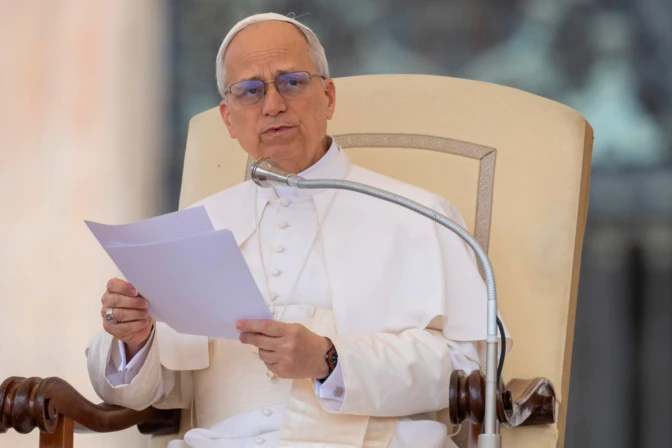
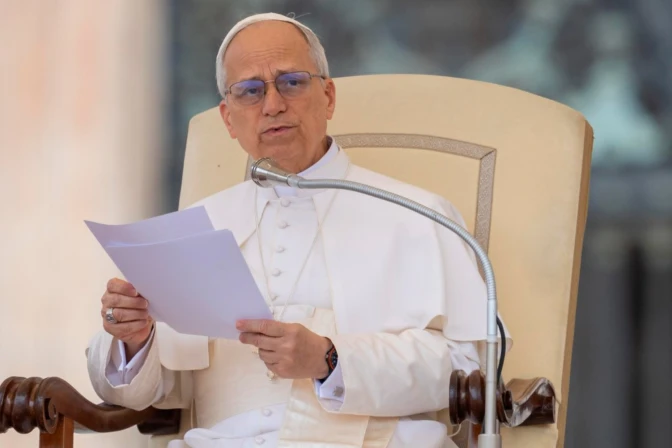
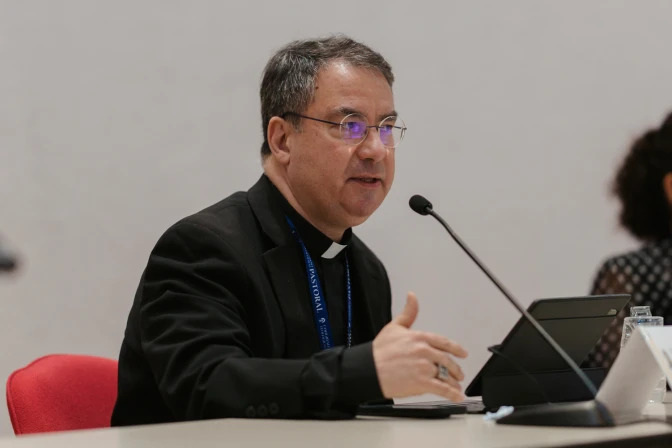
In a video released on X, the Holy Father posed a question to the faithful: “Would you imagine what a world without wars would be like? A world without the terror of approaching explosions?”
Read More
Bishop explains how Our Lady of Guadalupe can reach postmodern Silicon Valley #Catholic In a world marked by secularization and cultural fragmentation, Our Lady of Guadalupe remains a privileged path for proclaiming the Gospel, said Bishop Óscar Cantú of San Jose, California, as he shared how a recent event dedicated to the Virgin Mary illuminates the mission of the Church in the heart of Silicon Valley.During the recent “Theological and Pastoral Congress on the Guadalupe Event,” held in Mexico, the prelate described his diocese as a former valley of fruit orchards now transformed into the heart of global technology, home to world-class companies such as Google, Apple, Hewlett-Packard, and Nvidia.There, Cantú explained, people from India, China, Latin America, Africa, and many other countries live together, bringing with them their religions or their religious “indifference.”He spoke of “a strong secularization” there, calling it a “society that proudly proclaims itself postmodern, without need for God or religion.” He added that many “no longer have the time or space for religion” and that they “prefer modern practices” such as yoga or meditation, which they call mindfulness, which is “meditation without transcendence.”The bishop wants the pastoral and spiritual preparation for the 50th anniversary of the Diocese of San José in 2031 to be marked by Our Lady of Guadalupe, who he hopes will serve as a point of reference and model.Using Our Lady of Guadalupe’s methodology in Silicon ValleyThe bishop posed a direct challenge to priests, deacons, religious, and laity of his diocese: “How can we apply the methodology of Our Lady of Guadalupe, which she used 500 years ago in Mexico, now, in Silicon Valley, in a postmodern world?”He said the Spanish friars “did not have much success in evangelizing” because they arrived with the conquistadors, who used aggression and force. “But Our Lady had a great success that the friars could not have imagined. Millions of hearts were touched and transformed in a short time.”Cantú enumerated the key elements of this Guadalupan pedagogy, beginning with beauty and maternal tenderness of her words to Juan Diego: “‘My dearest Juan Diego, the littlest of my sons.’ Whose heart made of stone like we have in our Silicon Valley wouldn’t melt with those words?” he asked. He also emphasized how Mary “spoke to him in his language, not in Spanish. She used the symbolism of the Indigenous people, a codex that bore witness to what she recounted, which bore witness to what Juan Diego later told the other Indigenous people.” He recalled the Christological way the Virgin introduced herself, identifying herself as “the Mother of the God by whom we live,” and how she thus introduced “the beauty of truth” in contrast to the old logic of human sacrifice.Another element that Cantú emphasized is the role of the laity and, in particular, the poor. He highlighted that the Virgin involves Juan Diego in the mission of the Church when she tells him: “It is necessary that you go to the bishop.” He commented that “participation brings dignity and is an expression of dignity,” and that aspects of synodality are already evident in Guadalupe: participation and a voice within the ecclesial community.The bishop noted that Juan Diego’s participation does not create a separate structure, because “we shouldn’t create a parallel Church but rather everything should be under the authority, the structure that the Son of the Virgin left us, which is a hierarchical Church, with respect for the magisterium, but the magisterium, in turn, with the participation and listening of everyone, everyone, everyone.” For this reason, he defined it as “a hierarchical and synodal Church.”Among the elements the prelate highlighted is the concept of the sacred little house as a Church of mercy, a house where wounded humanity is welcomed: a “little house of love and compassion.”Our Lady of Guadalupe resonates with migrant communitiesCantú explained that in his diocese, faith has remained alive thanks to refugees and immigrants: Hispanics, Filipinos, Vietnamese, Indians, and Africans, many of them with histories of having to leave their native lands and discrimination.The Virgin of Guadalupe becomes a bridge of identity and solace there, not only for Mexicans, he noted. To illustrate this, he recounted an experience in a trilingual parish (Vietnamese, Filipino, and Hispanic) during a Mass in honor of Our Lady of Guadalupe.The bishop arrived prepared to celebrate Mass in Spanish with the Hispanic community, but discovered that about half of those present were Vietnamese, so he decided to preach by including his own story as the son of Mexican immigrants in Texas.“In Texas, many times Americans didn’t see me purely as American because my parents were born in another country, and at home they spoke Spanish; and when I went to visit my cousins ​​in Monterrey, they also didn’t see me as Mexican, so, well, I felt like a bit of an outsider.”As he shared this experience of not belonging, Cantú observed the faces of the Vietnamese faithful: “I saw in their faces that they understood, as refugees who left their country 30 or 40 years ago, that perhaps they never had the opportunity to learn the language well, to fully understand American politics or culture, that for the rest of their lives they felt like guests. And it was, I believe, at that moment that they identified with Juan Diego, whom the Virgin received in her little house.”This story was first published by ACI Prensa, the Spanish-language sister service of EWTN News. It has been translated and adapted by EWTN News English.

Bishop explains how Our Lady of Guadalupe can reach postmodern Silicon Valley #Catholic In a world marked by secularization and cultural fragmentation, Our Lady of Guadalupe remains a privileged path for proclaiming the Gospel, said Bishop Óscar Cantú of San Jose, California, as he shared how a recent event dedicated to the Virgin Mary illuminates the mission of the Church in the heart of Silicon Valley.During the recent “Theological and Pastoral Congress on the Guadalupe Event,” held in Mexico, the prelate described his diocese as a former valley of fruit orchards now transformed into the heart of global technology, home to world-class companies such as Google, Apple, Hewlett-Packard, and Nvidia.There, Cantú explained, people from India, China, Latin America, Africa, and many other countries live together, bringing with them their religions or their religious “indifference.”He spoke of “a strong secularization” there, calling it a “society that proudly proclaims itself postmodern, without need for God or religion.” He added that many “no longer have the time or space for religion” and that they “prefer modern practices” such as yoga or meditation, which they call mindfulness, which is “meditation without transcendence.”The bishop wants the pastoral and spiritual preparation for the 50th anniversary of the Diocese of San José in 2031 to be marked by Our Lady of Guadalupe, who he hopes will serve as a point of reference and model.Using Our Lady of Guadalupe’s methodology in Silicon ValleyThe bishop posed a direct challenge to priests, deacons, religious, and laity of his diocese: “How can we apply the methodology of Our Lady of Guadalupe, which she used 500 years ago in Mexico, now, in Silicon Valley, in a postmodern world?”He said the Spanish friars “did not have much success in evangelizing” because they arrived with the conquistadors, who used aggression and force. “But Our Lady had a great success that the friars could not have imagined. Millions of hearts were touched and transformed in a short time.”Cantú enumerated the key elements of this Guadalupan pedagogy, beginning with beauty and maternal tenderness of her words to Juan Diego: “‘My dearest Juan Diego, the littlest of my sons.’ Whose heart made of stone like we have in our Silicon Valley wouldn’t melt with those words?” he asked. He also emphasized how Mary “spoke to him in his language, not in Spanish. She used the symbolism of the Indigenous people, a codex that bore witness to what she recounted, which bore witness to what Juan Diego later told the other Indigenous people.” He recalled the Christological way the Virgin introduced herself, identifying herself as “the Mother of the God by whom we live,” and how she thus introduced “the beauty of truth” in contrast to the old logic of human sacrifice.Another element that Cantú emphasized is the role of the laity and, in particular, the poor. He highlighted that the Virgin involves Juan Diego in the mission of the Church when she tells him: “It is necessary that you go to the bishop.” He commented that “participation brings dignity and is an expression of dignity,” and that aspects of synodality are already evident in Guadalupe: participation and a voice within the ecclesial community.The bishop noted that Juan Diego’s participation does not create a separate structure, because “we shouldn’t create a parallel Church but rather everything should be under the authority, the structure that the Son of the Virgin left us, which is a hierarchical Church, with respect for the magisterium, but the magisterium, in turn, with the participation and listening of everyone, everyone, everyone.” For this reason, he defined it as “a hierarchical and synodal Church.”Among the elements the prelate highlighted is the concept of the sacred little house as a Church of mercy, a house where wounded humanity is welcomed: a “little house of love and compassion.”Our Lady of Guadalupe resonates with migrant communitiesCantú explained that in his diocese, faith has remained alive thanks to refugees and immigrants: Hispanics, Filipinos, Vietnamese, Indians, and Africans, many of them with histories of having to leave their native lands and discrimination.The Virgin of Guadalupe becomes a bridge of identity and solace there, not only for Mexicans, he noted. To illustrate this, he recounted an experience in a trilingual parish (Vietnamese, Filipino, and Hispanic) during a Mass in honor of Our Lady of Guadalupe.The bishop arrived prepared to celebrate Mass in Spanish with the Hispanic community, but discovered that about half of those present were Vietnamese, so he decided to preach by including his own story as the son of Mexican immigrants in Texas.“In Texas, many times Americans didn’t see me purely as American because my parents were born in another country, and at home they spoke Spanish; and when I went to visit my cousins ​​in Monterrey, they also didn’t see me as Mexican, so, well, I felt like a bit of an outsider.”As he shared this experience of not belonging, Cantú observed the faces of the Vietnamese faithful: “I saw in their faces that they understood, as refugees who left their country 30 or 40 years ago, that perhaps they never had the opportunity to learn the language well, to fully understand American politics or culture, that for the rest of their lives they felt like guests. And it was, I believe, at that moment that they identified with Juan Diego, whom the Virgin received in her little house.”This story was first published by ACI Prensa, the Spanish-language sister service of EWTN News. It has been translated and adapted by EWTN News English.

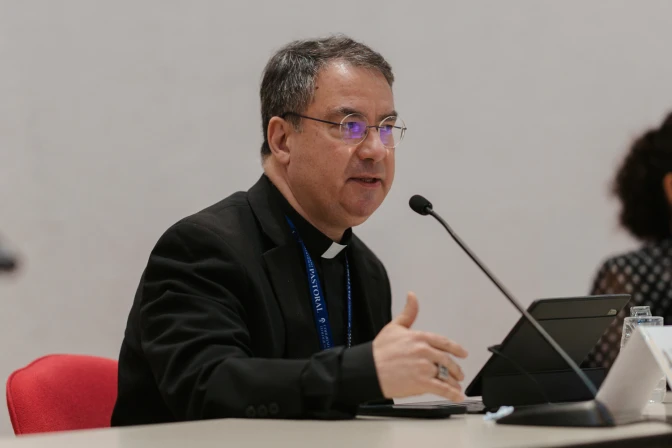
Bishop Óscar Cantú of San Jose, California, explains how the highly secularized society there can receive the message and imagery of Our Lady of Guadalupe in a way that is meaningful to them.
Read More
43 Catholic Democrats pledge migrant solidarity, invoke Leo XIV, Francis #Catholic More than 40 Catholic Democrats in the House of Representatives signed onto a statement of principles regarding immigration, which urged “solidarity” with migrants and cited Catholic social teaching and the visions of Pope Francis and Pope Leo XIV to back up their positions.The statement comes as the U.S. Conference of Catholic Bishops (USCCB) continues to speak out against indiscriminate mass deportations. Lawmakers are also negotiating an end to a partial government shutdown, which was spurred by debates about funding and potential reforms for immigration enforcement.“We feel called in solidarity to stand with immigrants — especially those who are poor, marginalized, or fleeing hardship — and to ensure they are treated with dignity, justice, and compassion,” the statement said.“As Catholics and elected officials, we believe that addressing long-standing inequities and expanding meaningful opportunities for immigrants is an essential part of our responsibility to community and to those most in need,” the lawmakers said.The statement was led by Rep. Rosa L. DeLauro, D-Connecticut, and signed by former House Speaker Nancy Pelosi, D-California, and 41 other Catholic Democrats. No Republicans signed onto the statement.The Catholic Democrats said their position is rooted in three principles of Catholic social teaching on immigration: that people have a right to migrate to sustain their lives and the lives of their families, that nations have a right to regulate borders, and that all enforcement must be consistent with justice and mercy.In their statement, they said Jesus Christ “identifies with the migrant” when he says in Matthew 25:35: “I was … a stranger and you welcomed me.” They also cited Pope Leo XIV’s encyclical Dilexi Te, commenting on migration, in which he said the Church knows that “in every rejected migrant, it is Christ himself who knocks at the door of the community.”They quoted Pope Francis’ 2019 message for the World Day of Migrants and Refugees, in which the former pontiff said the Church’s response to immigration can be summed up in four verbs: “welcome, protect, promote, and integrate.”The statement recognizes that regulations on immigration are legitimate, citing the Catechism of the Catholic Church, which teaches that “political authorities, for the sake of the common good for which they are responsible, may make the exercise of the right to immigrate subject to various juridical conditions.”“Catholic social teaching approaches migration with realism: It affirms the right of persons to seek safety and opportunity while recognizing the legitimate authority of nations to regulate their borders,” they said. “Sound immigration policy is ordered, humane, and sustainable, balancing solidarity with prudence in service of human dignity and the common good.”The Catholic Democrats said, however, that border enforcement “is never a license for cruelty, indifference, or dehumanization” but instead “must be governed by justice and mercy.” They accused Immigrations and Customs Enforcement (ICE) and Customs and Border Protection (CBP) of having “failed this moral standard.”“Their actions have separated families, removed law-abiding individuals from our communities, and, tragically, contributed to the deaths of detained migrants and citizens like Renee Good and Alex Pretti,” the statement read.The Catholic Democrats, in their statement, said their position on immigration is “guided by a living Catholic tradition that affirms the dignity of every human life.” Despite the USCCB having called “the threat of abortion” its “preeminent priority” in the 2024 election, the Democratic Party supports abortion access, identifying abortion as an essential component of health care.Negotiating ICE, CBP reformsThe signatories called on Congress to “bear the Church’s teachings in mind” when considering reforms to ICE and CBP, which are being negotiated.On Feb. 14, the government entered into a partial shutdown when Congress did not reach an agreement on funding for the Department of Homeland Security (DHS), which operates both ICE and CBP.Many Democrats are proposing reforms that would restrict immigration enforcement as a condition of approving funds. Some have gone further, calling for the abolition of ICE altogether.Catholic administration officials have rejected the Democrats’ characterization that immigration enforcement has violated the human dignity of migrants.In December 2025, border czar Tom Homan told EWTN News that “we treat everybody with dignity.” He said “the most humane thing you can do is enforce the law, secure the border, because it saves lives” and asserted that the administration targets criminals and cited its work to combat fentanyl and sex trafficking.Nathaniel Madden, principal deputy assistant secretary for communications at DHS, told EWTN News in November 2025 that detainees “are going to be treated like a person, and your dignity is going to be respected.” He said dignity and immigration enforcement are compatible and “we have to take into account that laws were broken.”In January, U.S. citizens Pretti and Good were both shot and killed by federal immigration officers in separate incidents in Minneapolis.In November 2025, the USCCB issued a special message that opposed “the indiscriminate mass deportation of people” and called for an end to “dehumanizing rhetoric and violence, whether directed at immigrants or at law enforcement.” The message was approved by a vote of 216-5.

43 Catholic Democrats pledge migrant solidarity, invoke Leo XIV, Francis #Catholic More than 40 Catholic Democrats in the House of Representatives signed onto a statement of principles regarding immigration, which urged “solidarity” with migrants and cited Catholic social teaching and the visions of Pope Francis and Pope Leo XIV to back up their positions.The statement comes as the U.S. Conference of Catholic Bishops (USCCB) continues to speak out against indiscriminate mass deportations. Lawmakers are also negotiating an end to a partial government shutdown, which was spurred by debates about funding and potential reforms for immigration enforcement.“We feel called in solidarity to stand with immigrants — especially those who are poor, marginalized, or fleeing hardship — and to ensure they are treated with dignity, justice, and compassion,” the statement said.“As Catholics and elected officials, we believe that addressing long-standing inequities and expanding meaningful opportunities for immigrants is an essential part of our responsibility to community and to those most in need,” the lawmakers said.The statement was led by Rep. Rosa L. DeLauro, D-Connecticut, and signed by former House Speaker Nancy Pelosi, D-California, and 41 other Catholic Democrats. No Republicans signed onto the statement.The Catholic Democrats said their position is rooted in three principles of Catholic social teaching on immigration: that people have a right to migrate to sustain their lives and the lives of their families, that nations have a right to regulate borders, and that all enforcement must be consistent with justice and mercy.In their statement, they said Jesus Christ “identifies with the migrant” when he says in Matthew 25:35: “I was … a stranger and you welcomed me.” They also cited Pope Leo XIV’s encyclical Dilexi Te, commenting on migration, in which he said the Church knows that “in every rejected migrant, it is Christ himself who knocks at the door of the community.”They quoted Pope Francis’ 2019 message for the World Day of Migrants and Refugees, in which the former pontiff said the Church’s response to immigration can be summed up in four verbs: “welcome, protect, promote, and integrate.”The statement recognizes that regulations on immigration are legitimate, citing the Catechism of the Catholic Church, which teaches that “political authorities, for the sake of the common good for which they are responsible, may make the exercise of the right to immigrate subject to various juridical conditions.”“Catholic social teaching approaches migration with realism: It affirms the right of persons to seek safety and opportunity while recognizing the legitimate authority of nations to regulate their borders,” they said. “Sound immigration policy is ordered, humane, and sustainable, balancing solidarity with prudence in service of human dignity and the common good.”The Catholic Democrats said, however, that border enforcement “is never a license for cruelty, indifference, or dehumanization” but instead “must be governed by justice and mercy.” They accused Immigrations and Customs Enforcement (ICE) and Customs and Border Protection (CBP) of having “failed this moral standard.”“Their actions have separated families, removed law-abiding individuals from our communities, and, tragically, contributed to the deaths of detained migrants and citizens like Renee Good and Alex Pretti,” the statement read.The Catholic Democrats, in their statement, said their position on immigration is “guided by a living Catholic tradition that affirms the dignity of every human life.” Despite the USCCB having called “the threat of abortion” its “preeminent priority” in the 2024 election, the Democratic Party supports abortion access, identifying abortion as an essential component of health care.Negotiating ICE, CBP reformsThe signatories called on Congress to “bear the Church’s teachings in mind” when considering reforms to ICE and CBP, which are being negotiated.On Feb. 14, the government entered into a partial shutdown when Congress did not reach an agreement on funding for the Department of Homeland Security (DHS), which operates both ICE and CBP.Many Democrats are proposing reforms that would restrict immigration enforcement as a condition of approving funds. Some have gone further, calling for the abolition of ICE altogether.Catholic administration officials have rejected the Democrats’ characterization that immigration enforcement has violated the human dignity of migrants.In December 2025, border czar Tom Homan told EWTN News that “we treat everybody with dignity.” He said “the most humane thing you can do is enforce the law, secure the border, because it saves lives” and asserted that the administration targets criminals and cited its work to combat fentanyl and sex trafficking.Nathaniel Madden, principal deputy assistant secretary for communications at DHS, told EWTN News in November 2025 that detainees “are going to be treated like a person, and your dignity is going to be respected.” He said dignity and immigration enforcement are compatible and “we have to take into account that laws were broken.”In January, U.S. citizens Pretti and Good were both shot and killed by federal immigration officers in separate incidents in Minneapolis.In November 2025, the USCCB issued a special message that opposed “the indiscriminate mass deportation of people” and called for an end to “dehumanizing rhetoric and violence, whether directed at immigrants or at law enforcement.” The message was approved by a vote of 216-5.

Catholic U.S. House Democrats cited Church teaching in defense of the dignity of migrants as Trump administration officials defend immigration enforcement.

Read More