meditation

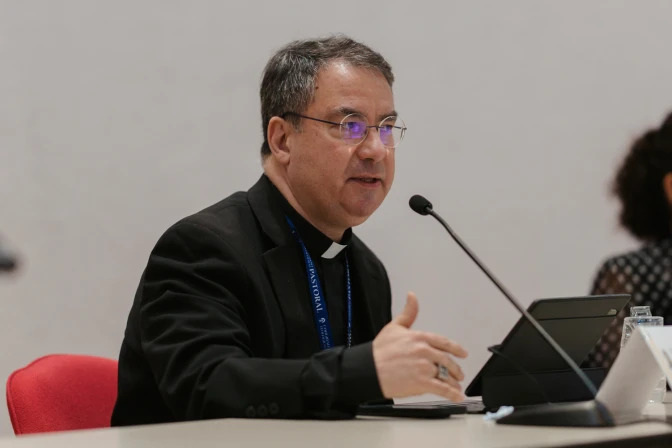
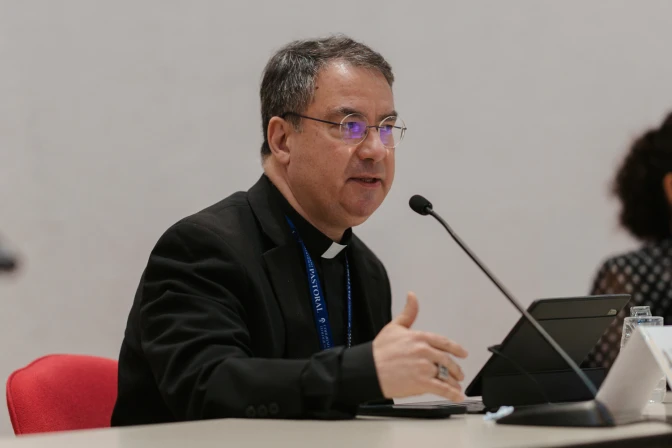
Bishop explains how Our Lady of Guadalupe can reach postmodern Silicon Valley #Catholic In a world marked by secularization and cultural fragmentation, Our Lady of Guadalupe remains a privileged path for proclaiming the Gospel, said Bishop Óscar Cantú of San Jose, California, as he shared how a recent event dedicated to the Virgin Mary illuminates the mission of the Church in the heart of Silicon Valley.During the recent “Theological and Pastoral Congress on the Guadalupe Event,” held in Mexico, the prelate described his diocese as a former valley of fruit orchards now transformed into the heart of global technology, home to world-class companies such as Google, Apple, Hewlett-Packard, and Nvidia.There, Cantú explained, people from India, China, Latin America, Africa, and many other countries live together, bringing with them their religions or their religious “indifference.”He spoke of “a strong secularization” there, calling it a “society that proudly proclaims itself postmodern, without need for God or religion.” He added that many “no longer have the time or space for religion” and that they “prefer modern practices” such as yoga or meditation, which they call mindfulness, which is “meditation without transcendence.”The bishop wants the pastoral and spiritual preparation for the 50th anniversary of the Diocese of San José in 2031 to be marked by Our Lady of Guadalupe, who he hopes will serve as a point of reference and model.Using Our Lady of Guadalupe’s methodology in Silicon ValleyThe bishop posed a direct challenge to priests, deacons, religious, and laity of his diocese: “How can we apply the methodology of Our Lady of Guadalupe, which she used 500 years ago in Mexico, now, in Silicon Valley, in a postmodern world?”He said the Spanish friars “did not have much success in evangelizing” because they arrived with the conquistadors, who used aggression and force. “But Our Lady had a great success that the friars could not have imagined. Millions of hearts were touched and transformed in a short time.”Cantú enumerated the key elements of this Guadalupan pedagogy, beginning with beauty and maternal tenderness of her words to Juan Diego: “‘My dearest Juan Diego, the littlest of my sons.’ Whose heart made of stone like we have in our Silicon Valley wouldn’t melt with those words?” he asked. He also emphasized how Mary “spoke to him in his language, not in Spanish. She used the symbolism of the Indigenous people, a codex that bore witness to what she recounted, which bore witness to what Juan Diego later told the other Indigenous people.” He recalled the Christological way the Virgin introduced herself, identifying herself as “the Mother of the God by whom we live,” and how she thus introduced “the beauty of truth” in contrast to the old logic of human sacrifice.Another element that Cantú emphasized is the role of the laity and, in particular, the poor. He highlighted that the Virgin involves Juan Diego in the mission of the Church when she tells him: “It is necessary that you go to the bishop.” He commented that “participation brings dignity and is an expression of dignity,” and that aspects of synodality are already evident in Guadalupe: participation and a voice within the ecclesial community.The bishop noted that Juan Diego’s participation does not create a separate structure, because “we shouldn’t create a parallel Church but rather everything should be under the authority, the structure that the Son of the Virgin left us, which is a hierarchical Church, with respect for the magisterium, but the magisterium, in turn, with the participation and listening of everyone, everyone, everyone.” For this reason, he defined it as “a hierarchical and synodal Church.”Among the elements the prelate highlighted is the concept of the sacred little house as a Church of mercy, a house where wounded humanity is welcomed: a “little house of love and compassion.”Our Lady of Guadalupe resonates with migrant communitiesCantú explained that in his diocese, faith has remained alive thanks to refugees and immigrants: Hispanics, Filipinos, Vietnamese, Indians, and Africans, many of them with histories of having to leave their native lands and discrimination.The Virgin of Guadalupe becomes a bridge of identity and solace there, not only for Mexicans, he noted. To illustrate this, he recounted an experience in a trilingual parish (Vietnamese, Filipino, and Hispanic) during a Mass in honor of Our Lady of Guadalupe.The bishop arrived prepared to celebrate Mass in Spanish with the Hispanic community, but discovered that about half of those present were Vietnamese, so he decided to preach by including his own story as the son of Mexican immigrants in Texas.“In Texas, many times Americans didn’t see me purely as American because my parents were born in another country, and at home they spoke Spanish; and when I went to visit my cousins ​​in Monterrey, they also didn’t see me as Mexican, so, well, I felt like a bit of an outsider.”As he shared this experience of not belonging, Cantú observed the faces of the Vietnamese faithful: “I saw in their faces that they understood, as refugees who left their country 30 or 40 years ago, that perhaps they never had the opportunity to learn the language well, to fully understand American politics or culture, that for the rest of their lives they felt like guests. And it was, I believe, at that moment that they identified with Juan Diego, whom the Virgin received in her little house.”This story was first published by ACI Prensa, the Spanish-language sister service of EWTN News. It has been translated and adapted by EWTN News English.

Bishop explains how Our Lady of Guadalupe can reach postmodern Silicon Valley #Catholic In a world marked by secularization and cultural fragmentation, Our Lady of Guadalupe remains a privileged path for proclaiming the Gospel, said Bishop Óscar Cantú of San Jose, California, as he shared how a recent event dedicated to the Virgin Mary illuminates the mission of the Church in the heart of Silicon Valley.During the recent “Theological and Pastoral Congress on the Guadalupe Event,” held in Mexico, the prelate described his diocese as a former valley of fruit orchards now transformed into the heart of global technology, home to world-class companies such as Google, Apple, Hewlett-Packard, and Nvidia.There, Cantú explained, people from India, China, Latin America, Africa, and many other countries live together, bringing with them their religions or their religious “indifference.”He spoke of “a strong secularization” there, calling it a “society that proudly proclaims itself postmodern, without need for God or religion.” He added that many “no longer have the time or space for religion” and that they “prefer modern practices” such as yoga or meditation, which they call mindfulness, which is “meditation without transcendence.”The bishop wants the pastoral and spiritual preparation for the 50th anniversary of the Diocese of San José in 2031 to be marked by Our Lady of Guadalupe, who he hopes will serve as a point of reference and model.Using Our Lady of Guadalupe’s methodology in Silicon ValleyThe bishop posed a direct challenge to priests, deacons, religious, and laity of his diocese: “How can we apply the methodology of Our Lady of Guadalupe, which she used 500 years ago in Mexico, now, in Silicon Valley, in a postmodern world?”He said the Spanish friars “did not have much success in evangelizing” because they arrived with the conquistadors, who used aggression and force. “But Our Lady had a great success that the friars could not have imagined. Millions of hearts were touched and transformed in a short time.”Cantú enumerated the key elements of this Guadalupan pedagogy, beginning with beauty and maternal tenderness of her words to Juan Diego: “‘My dearest Juan Diego, the littlest of my sons.’ Whose heart made of stone like we have in our Silicon Valley wouldn’t melt with those words?” he asked. He also emphasized how Mary “spoke to him in his language, not in Spanish. She used the symbolism of the Indigenous people, a codex that bore witness to what she recounted, which bore witness to what Juan Diego later told the other Indigenous people.” He recalled the Christological way the Virgin introduced herself, identifying herself as “the Mother of the God by whom we live,” and how she thus introduced “the beauty of truth” in contrast to the old logic of human sacrifice.Another element that Cantú emphasized is the role of the laity and, in particular, the poor. He highlighted that the Virgin involves Juan Diego in the mission of the Church when she tells him: “It is necessary that you go to the bishop.” He commented that “participation brings dignity and is an expression of dignity,” and that aspects of synodality are already evident in Guadalupe: participation and a voice within the ecclesial community.The bishop noted that Juan Diego’s participation does not create a separate structure, because “we shouldn’t create a parallel Church but rather everything should be under the authority, the structure that the Son of the Virgin left us, which is a hierarchical Church, with respect for the magisterium, but the magisterium, in turn, with the participation and listening of everyone, everyone, everyone.” For this reason, he defined it as “a hierarchical and synodal Church.”Among the elements the prelate highlighted is the concept of the sacred little house as a Church of mercy, a house where wounded humanity is welcomed: a “little house of love and compassion.”Our Lady of Guadalupe resonates with migrant communitiesCantú explained that in his diocese, faith has remained alive thanks to refugees and immigrants: Hispanics, Filipinos, Vietnamese, Indians, and Africans, many of them with histories of having to leave their native lands and discrimination.The Virgin of Guadalupe becomes a bridge of identity and solace there, not only for Mexicans, he noted. To illustrate this, he recounted an experience in a trilingual parish (Vietnamese, Filipino, and Hispanic) during a Mass in honor of Our Lady of Guadalupe.The bishop arrived prepared to celebrate Mass in Spanish with the Hispanic community, but discovered that about half of those present were Vietnamese, so he decided to preach by including his own story as the son of Mexican immigrants in Texas.“In Texas, many times Americans didn’t see me purely as American because my parents were born in another country, and at home they spoke Spanish; and when I went to visit my cousins ​​in Monterrey, they also didn’t see me as Mexican, so, well, I felt like a bit of an outsider.”As he shared this experience of not belonging, Cantú observed the faces of the Vietnamese faithful: “I saw in their faces that they understood, as refugees who left their country 30 or 40 years ago, that perhaps they never had the opportunity to learn the language well, to fully understand American politics or culture, that for the rest of their lives they felt like guests. And it was, I believe, at that moment that they identified with Juan Diego, whom the Virgin received in her little house.”This story was first published by ACI Prensa, the Spanish-language sister service of EWTN News. It has been translated and adapted by EWTN News English.

Bishop Óscar Cantú of San Jose, California, explains how the highly secularized society there can receive the message and imagery of Our Lady of Guadalupe in a way that is meaningful to them.
Read More
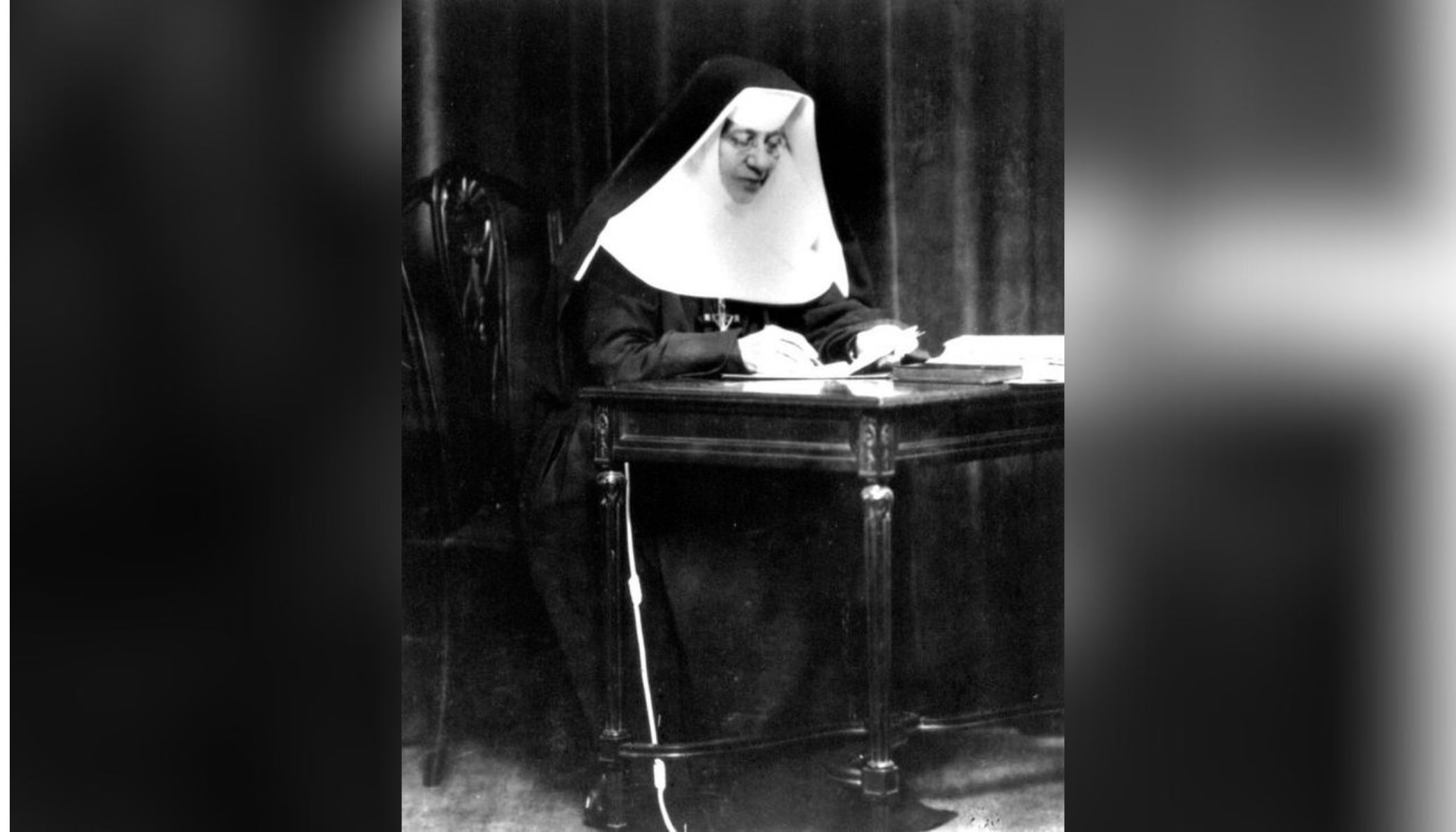
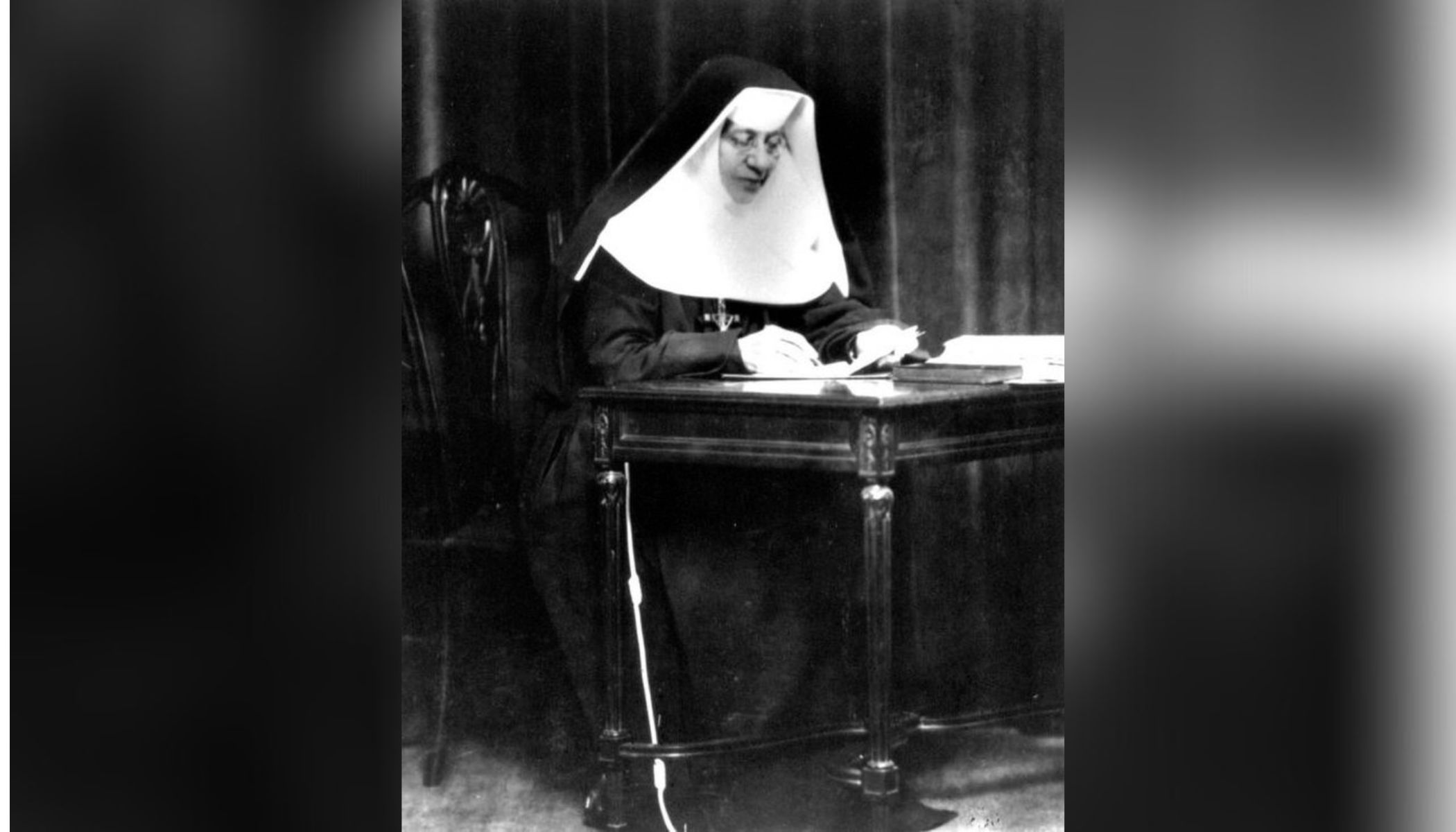
From heiress to saint: The radical life of St. Katharine Drexel #Catholic St. Katharine Drexel was born in 1858 to a wealthy family in Philadelphia. Five weeks after her birth, her mother died. She and her two sisters were reared by their father, Frank, a successful international banker, and stepmother, Emma — whom Katharine always considered her mother. Both were devout Catholics and loving parents. The family was generous with the poor — three times a week they opened their lavish home to those in need, offering them food, clothing, medicine, and other necessities.From the earliest ages, the Drexel children were taught to pursue personal holiness through daily Mass, meditation, the rosary, and other devotions as well as by acts of penance and sacrifice. Katharine kept notes on her efforts to grow in virtue. In 1878, she wrote: “I am resolved during this year to try to overcome impatience and give attention to lessons. I, Katie, put these resolutions at the feet of Jesus, Mary, and Joseph hoping that they will find acceptance there. May Jesus, Mary, and Joseph help me to bear much fruit in the year 1878.”When she was in her 20s, Katharine lost both of her parents and inherited a portion of the family’s vast wealth. At this time, she became aware of the plight of the Native Americans, many of whom suffered from dire poverty and a lack of education. She would devote the remainder of her life to assisting them.In two private audiences with Pope Leo XIII, she begged him to send more missionaries to the Native Americans. During one of these meetings, the Holy Father suggested to an astonished Katharine that she herself become such a missionary.Although Katharine enjoyed an opulent lifestyle, she became disillusioned with the things of the world. She wrote a longtime friend, Bishop James O’Connor, of her desire to enter religious life.“Like the little girl who wept when she found that her doll was stuffed with sawdust and her drum was hollow, I, too, have made a horrifying discovery and my discovery, like hers, is true. I have ripped both the doll and the drum open and the fact lies plainly and in all its glaring reality before me: All, all, all (there is no exception) is passing away and will pass away,” she wrote.The bishop thought Katharine could do more for the Church in her position in society and worried she might have difficulty in renouncing her wealth. She responded: “The question alone important, the solution of which depends upon how I have spent my life, is the state of my soul at the moment of death. Infinite misery or infinite happiness! There is no half and half, either one or the other.”The bishop eventually relented and advised her to found a community to work among Native Americans and African Americans, declaring: “God has put in your heart a great love for the Indian and the Negroes.” In 1891, joined by 13 others, she founded the Sisters of the Blessed Sacrament.Mother Drexel went to work opening mission churches and boarding schools for Black and Native American children throughout the U.S.At times, prejudice and racism hindered her work. She would often buy buildings to create schools through third parties — otherwise, when sellers learned Mother Drexel was buying them to educate Black or Native children, they wouldn’t sell to her.Once, when members of the Nashville, Tennessee, city council wondered if Blacks were capable of higher education, she responded: “I cannot share these views with regard to the education of the race. I feel that if among our colored people we find individuals gifted with capabilities, with those sterling qualities which constitute character, our holy mother the Church who fosters and develops the intellect only that it may give God more glory and be of benefit to others, should also concede to the Negro the privilege of higher education.”In 1915, Katharine founded a teachers’ college in Louisiana, which would eventually become Xavier University of New Orleans and one of the first American colleges to admit Black students.Throughout her life, Mother Drexel’s chief motivation in addition to her missionary outreach was to help more souls know and love Jesus in the Blessed Sacrament. She believed devotion to the Blessed Sacrament was key to the success to her community’s missionary work.She died in 1955 at the age of 96 and was canonized by Pope John Paul II in 2000. Her community’s motherhouse for decades was located in Bensalem, Pennsylvania, a Philadelphia suburb, which included a shrine — elements of which included Mother Drexel’s remains and a museum dedicated to her memory. However, due to a lack of vocations, the motherhouse closed and the property sold at the end of 2017. The St. Katharine Drexel Shrine is now part of the Cathedral Basilica of Sts. Peter and Paul in Philadelphia.St. Katharine Drexel is honored in the Church on March 3.This story was first published by the National Catholic Register, a sister news service of EWTN News, on March 3, 2021, and has been updated and adapted by EWTN News.

From heiress to saint: The radical life of St. Katharine Drexel #Catholic St. Katharine Drexel was born in 1858 to a wealthy family in Philadelphia. Five weeks after her birth, her mother died. She and her two sisters were reared by their father, Frank, a successful international banker, and stepmother, Emma — whom Katharine always considered her mother. Both were devout Catholics and loving parents. The family was generous with the poor — three times a week they opened their lavish home to those in need, offering them food, clothing, medicine, and other necessities.From the earliest ages, the Drexel children were taught to pursue personal holiness through daily Mass, meditation, the rosary, and other devotions as well as by acts of penance and sacrifice. Katharine kept notes on her efforts to grow in virtue. In 1878, she wrote: “I am resolved during this year to try to overcome impatience and give attention to lessons. I, Katie, put these resolutions at the feet of Jesus, Mary, and Joseph hoping that they will find acceptance there. May Jesus, Mary, and Joseph help me to bear much fruit in the year 1878.”When she was in her 20s, Katharine lost both of her parents and inherited a portion of the family’s vast wealth. At this time, she became aware of the plight of the Native Americans, many of whom suffered from dire poverty and a lack of education. She would devote the remainder of her life to assisting them.In two private audiences with Pope Leo XIII, she begged him to send more missionaries to the Native Americans. During one of these meetings, the Holy Father suggested to an astonished Katharine that she herself become such a missionary.Although Katharine enjoyed an opulent lifestyle, she became disillusioned with the things of the world. She wrote a longtime friend, Bishop James O’Connor, of her desire to enter religious life.“Like the little girl who wept when she found that her doll was stuffed with sawdust and her drum was hollow, I, too, have made a horrifying discovery and my discovery, like hers, is true. I have ripped both the doll and the drum open and the fact lies plainly and in all its glaring reality before me: All, all, all (there is no exception) is passing away and will pass away,” she wrote.The bishop thought Katharine could do more for the Church in her position in society and worried she might have difficulty in renouncing her wealth. She responded: “The question alone important, the solution of which depends upon how I have spent my life, is the state of my soul at the moment of death. Infinite misery or infinite happiness! There is no half and half, either one or the other.”The bishop eventually relented and advised her to found a community to work among Native Americans and African Americans, declaring: “God has put in your heart a great love for the Indian and the Negroes.” In 1891, joined by 13 others, she founded the Sisters of the Blessed Sacrament.Mother Drexel went to work opening mission churches and boarding schools for Black and Native American children throughout the U.S.At times, prejudice and racism hindered her work. She would often buy buildings to create schools through third parties — otherwise, when sellers learned Mother Drexel was buying them to educate Black or Native children, they wouldn’t sell to her.Once, when members of the Nashville, Tennessee, city council wondered if Blacks were capable of higher education, she responded: “I cannot share these views with regard to the education of the race. I feel that if among our colored people we find individuals gifted with capabilities, with those sterling qualities which constitute character, our holy mother the Church who fosters and develops the intellect only that it may give God more glory and be of benefit to others, should also concede to the Negro the privilege of higher education.”In 1915, Katharine founded a teachers’ college in Louisiana, which would eventually become Xavier University of New Orleans and one of the first American colleges to admit Black students.Throughout her life, Mother Drexel’s chief motivation in addition to her missionary outreach was to help more souls know and love Jesus in the Blessed Sacrament. She believed devotion to the Blessed Sacrament was key to the success to her community’s missionary work.She died in 1955 at the age of 96 and was canonized by Pope John Paul II in 2000. Her community’s motherhouse for decades was located in Bensalem, Pennsylvania, a Philadelphia suburb, which included a shrine — elements of which included Mother Drexel’s remains and a museum dedicated to her memory. However, due to a lack of vocations, the motherhouse closed and the property sold at the end of 2017. The St. Katharine Drexel Shrine is now part of the Cathedral Basilica of Sts. Peter and Paul in Philadelphia.St. Katharine Drexel is honored in the Church on March 3.This story was first published by the National Catholic Register, a sister news service of EWTN News, on March 3, 2021, and has been updated and adapted by EWTN News.

Throughout her life, St. Katharine Drexel’s chief motivation was to help more people know and love Jesus in the Blessed Sacrament.
Read More