Minnesota

Bishop Barron critiques New York Mayor Mamdani’s embrace of ‘collectivism’ #Catholic 
 
 Democratic Mayor-Elect Zohran Mamdani speaks to members of the media during a press conference after voting on Nov. 4, 2025. | Credit: Alexi J. Rosenfeld/Getty Images

Jan 5, 2026 / 17:32 pm (CNA).
Bishop Robert Barron, founder of the Word on Fire ministry, criticized New York City Mayor Zohran Mamdani for promising constituents “the warmth of collectivism” in his Jan. 1 inaugural address.Mamdani, who defeated two candidates with nearly 51% of the vote in the November election, won on a democratic socialist platform. His plans include free buses, city-owned grocery stores, no-cost child care, raising the minimum wage to  per hour, and freezing the rent for people in rent-stabilized apartments.“We will replace the frigidity of rugged individualism with the warmth of collectivism,” Mamdani said in his inaugural address.“If our campaign demonstrated that the people of New York yearn for solidarity, then let this government foster it,” he said. “Because no matter what you eat, what language you speak, how you pray, or where you come from — the words that most define us are the two we all share: New Yorkers.”Barron, bishop of the Diocese of Winona-Rochester, Minnesota, said in a post on X that this line “took my breath away.”“Collectivism in its various forms is responsible for the deaths of at least 100 million people in the last century,” Barron said.“Socialist and communist forms of government around the world today — Venezuela, Cuba, North Korea, etc. — are disastrous,” he added. “Catholic social teaching has consistently condemned socialism and has embraced the market economy, which people like Mayor Mamdani caricature as ‘rugged individualism.’ In fact, it is the economic system that is based upon the rights, freedom, and dignity of the human person.”“For God’s sake, spare me the ‘warmth of collectivism,’” Barron concluded.Catholic teaching on socialismBoth socialism and communism have been condemned by many popes, first by Pope Pius IX in his 1849 encyclical Nostis et Nobiscum, just one year after Karl Marx published “ The Communist Manifesto.”The foundation of Catholic social teaching rests on Pope Leo XIII’s 1891 encyclical Rerum Novarum.In the encyclical, Leo denounced socialism and communism, and also condemned poor labor conditions for the working class and employers “who use human beings as mere instruments for moneymaking.”“Each needs the other: Capital cannot do without labor, nor labor without capital,” the 19th century pontiff wrote. “Mutual agreement results in the beauty of good order, while perpetual conflict necessarily produces confusion and savage barbarity.”Pope Pius XI, in his 1931 encyclical Quadragesimo Anno, wrote of the importance of private property, that man must be able to “fully cultivate and develop all his faculties unto the praise and glory of his Creator; and that by faithfully fulfilling the duties of his craft or other calling he may obtain for himself temporal and at the same time eternal happiness.”Socialism, he said, is “wholly ignoring and indifferent to this sublime end of both man and society, affirms that human association has been instituted for the sake of material advantage alone.”“Religious socialism, Christian socialism, are contradictory terms; no one can be at the same time a good Catholic and a true socialist,” Pius XI wrote.Pope Benedict XVI differentiated socialism and democratic socialism. In 2006, he wrote: “In many respects, democratic socialism was and is close to Catholic social doctrine and has in any case made a remarkable contribution to the formation of a social consciousness.”Though, in his 2005 encyclical Deus Caritas Est, Benedict XVI wrote that government should not control everything but that society needs a state that, “in accordance with the principle of subsidiarity, generously acknowledges and supports initiatives arising from the different social forces and combines spontaneity with closeness to those in need.”Pope Francis has criticized Marxist ideology but also “radical individualism,” which he said in his 2020 encyclical Fratelli Tutti “makes us believe that everything consists in giving free rein to our own ambitions, as if by pursuing ever greater ambitions and creating safety nets we would somehow be serving the common good.”In 2024, Francis encouraged cooperation and dialogue between Marxists and Christians. The Catechism of the Catholic Church teaches: “The Church has rejected the totalitarian and atheistic ideologies associated in modem times with ‘communism’ or ‘socialism.’ She has likewise refused to accept, in the practice of ‘capitalism,’ individualism and the absolute primacy of the law of the marketplace over human labor.”

Bishop Barron critiques New York Mayor Mamdani’s embrace of ‘collectivism’ #Catholic Democratic Mayor-Elect Zohran Mamdani speaks to members of the media during a press conference after voting on Nov. 4, 2025. | Credit: Alexi J. Rosenfeld/Getty Images Jan 5, 2026 / 17:32 pm (CNA). Bishop Robert Barron, founder of the Word on Fire ministry, criticized New York City Mayor Zohran Mamdani for promising constituents “the warmth of collectivism” in his Jan. 1 inaugural address.Mamdani, who defeated two candidates with nearly 51% of the vote in the November election, won on a democratic socialist platform. His plans include free buses, city-owned grocery stores, no-cost child care, raising the minimum wage to $30 per hour, and freezing the rent for people in rent-stabilized apartments.“We will replace the frigidity of rugged individualism with the warmth of collectivism,” Mamdani said in his inaugural address.“If our campaign demonstrated that the people of New York yearn for solidarity, then let this government foster it,” he said. “Because no matter what you eat, what language you speak, how you pray, or where you come from — the words that most define us are the two we all share: New Yorkers.”Barron, bishop of the Diocese of Winona-Rochester, Minnesota, said in a post on X that this line “took my breath away.”“Collectivism in its various forms is responsible for the deaths of at least 100 million people in the last century,” Barron said.“Socialist and communist forms of government around the world today — Venezuela, Cuba, North Korea, etc. — are disastrous,” he added. “Catholic social teaching has consistently condemned socialism and has embraced the market economy, which people like Mayor Mamdani caricature as ‘rugged individualism.’ In fact, it is the economic system that is based upon the rights, freedom, and dignity of the human person.”“For God’s sake, spare me the ‘warmth of collectivism,’” Barron concluded.Catholic teaching on socialismBoth socialism and communism have been condemned by many popes, first by Pope Pius IX in his 1849 encyclical Nostis et Nobiscum, just one year after Karl Marx published “ The Communist Manifesto.”The foundation of Catholic social teaching rests on Pope Leo XIII’s 1891 encyclical Rerum Novarum.In the encyclical, Leo denounced socialism and communism, and also condemned poor labor conditions for the working class and employers “who use human beings as mere instruments for moneymaking.”“Each needs the other: Capital cannot do without labor, nor labor without capital,” the 19th century pontiff wrote. “Mutual agreement results in the beauty of good order, while perpetual conflict necessarily produces confusion and savage barbarity.”Pope Pius XI, in his 1931 encyclical Quadragesimo Anno, wrote of the importance of private property, that man must be able to “fully cultivate and develop all his faculties unto the praise and glory of his Creator; and that by faithfully fulfilling the duties of his craft or other calling he may obtain for himself temporal and at the same time eternal happiness.”Socialism, he said, is “wholly ignoring and indifferent to this sublime end of both man and society, affirms that human association has been instituted for the sake of material advantage alone.”“Religious socialism, Christian socialism, are contradictory terms; no one can be at the same time a good Catholic and a true socialist,” Pius XI wrote.Pope Benedict XVI differentiated socialism and democratic socialism. In 2006, he wrote: “In many respects, democratic socialism was and is close to Catholic social doctrine and has in any case made a remarkable contribution to the formation of a social consciousness.”Though, in his 2005 encyclical Deus Caritas Est, Benedict XVI wrote that government should not control everything but that society needs a state that, “in accordance with the principle of subsidiarity, generously acknowledges and supports initiatives arising from the different social forces and combines spontaneity with closeness to those in need.”Pope Francis has criticized Marxist ideology but also “radical individualism,” which he said in his 2020 encyclical Fratelli Tutti “makes us believe that everything consists in giving free rein to our own ambitions, as if by pursuing ever greater ambitions and creating safety nets we would somehow be serving the common good.”In 2024, Francis encouraged cooperation and dialogue between Marxists and Christians. The Catechism of the Catholic Church teaches: “The Church has rejected the totalitarian and atheistic ideologies associated in modem times with ‘communism’ or ‘socialism.’ She has likewise refused to accept, in the practice of ‘capitalism,’ individualism and the absolute primacy of the law of the marketplace over human labor.”


Democratic Mayor-Elect Zohran Mamdani speaks to members of the media during a press conference after voting on Nov. 4, 2025. | Credit: Alexi J. Rosenfeld/Getty Images

Jan 5, 2026 / 17:32 pm (CNA).

Bishop Robert Barron, founder of the Word on Fire ministry, criticized New York City Mayor Zohran Mamdani for promising constituents “the warmth of collectivism” in his Jan. 1 inaugural address.

Mamdani, who defeated two candidates with nearly 51% of the vote in the November election, won on a democratic socialist platform. His plans include free buses, city-owned grocery stores, no-cost child care, raising the minimum wage to $30 per hour, and freezing the rent for people in rent-stabilized apartments.

“We will replace the frigidity of rugged individualism with the warmth of collectivism,” Mamdani said in his inaugural address.

“If our campaign demonstrated that the people of New York yearn for solidarity, then let this government foster it,” he said. “Because no matter what you eat, what language you speak, how you pray, or where you come from — the words that most define us are the two we all share: New Yorkers.”

Barron, bishop of the Diocese of Winona-Rochester, Minnesota, said in a post on X that this line “took my breath away.”

“Collectivism in its various forms is responsible for the deaths of at least 100 million people in the last century,” Barron said.

“Socialist and communist forms of government around the world today — Venezuela, Cuba, North Korea, etc. — are disastrous,” he added. “Catholic social teaching has consistently condemned socialism and has embraced the market economy, which people like Mayor Mamdani caricature as ‘rugged individualism.’ In fact, it is the economic system that is based upon the rights, freedom, and dignity of the human person.”

“For God’s sake, spare me the ‘warmth of collectivism,’” Barron concluded.

Catholic teaching on socialism

Both socialism and communism have been condemned by many popes, first by Pope Pius IX in his 1849 encyclical Nostis et Nobiscum, just one year after Karl Marx published “ The Communist Manifesto.”

The foundation of Catholic social teaching rests on Pope Leo XIII’s 1891 encyclical Rerum Novarum.

In the encyclical, Leo denounced socialism and communism, and also condemned poor labor conditions for the working class and employers “who use human beings as mere instruments for moneymaking.”

“Each needs the other: Capital cannot do without labor, nor labor without capital,” the 19th century pontiff wrote. “Mutual agreement results in the beauty of good order, while perpetual conflict necessarily produces confusion and savage barbarity.”

Pope Pius XI, in his 1931 encyclical Quadragesimo Anno, wrote of the importance of private property, that man must be able to “fully cultivate and develop all his faculties unto the praise and glory of his Creator; and that by faithfully fulfilling the duties of his craft or other calling he may obtain for himself temporal and at the same time eternal happiness.”

Socialism, he said, is “wholly ignoring and indifferent to this sublime end of both man and society, affirms that human association has been instituted for the sake of material advantage alone.”

“Religious socialism, Christian socialism, are contradictory terms; no one can be at the same time a good Catholic and a true socialist,” Pius XI wrote.

Pope Benedict XVI differentiated socialism and democratic socialism. In 2006, he wrote: “In many respects, democratic socialism was and is close to Catholic social doctrine and has in any case made a remarkable contribution to the formation of a social consciousness.”

Though, in his 2005 encyclical Deus Caritas Est, Benedict XVI wrote that government should not control everything but that society needs a state that, “in accordance with the principle of subsidiarity, generously acknowledges and supports initiatives arising from the different social forces and combines spontaneity with closeness to those in need.”

Pope Francis has criticized Marxist ideology but also “radical individualism,” which he said in his 2020 encyclical Fratelli Tutti “makes us believe that everything consists in giving free rein to our own ambitions, as if by pursuing ever greater ambitions and creating safety nets we would somehow be serving the common good.”

In 2024, Francis encouraged cooperation and dialogue between Marxists and Christians.

The Catechism of the Catholic Church teaches: “The Church has rejected the totalitarian and atheistic ideologies associated in modem times with ‘communism’ or ‘socialism.’ She has likewise refused to accept, in the practice of ‘capitalism,’ individualism and the absolute primacy of the law of the marketplace over human labor.”

Read More
In interview with Bishop Barron, Justice Barrett opens up about her faith  #Catholic 
 
 Judge Amy Coney Barrett. – Rachel Malehorn/wikimedia CC BY SA 3.0

Washington, D.C. Newsroom, Dec 26, 2025 / 10:00 am (CNA).
U.S. Supreme Court Justice Amy Coney Barrett says her Catholic faith “grounds her” and gives her “perspective.”During an interview with Bishop Robert Barron of Winona-Rochester, Minnesota, Barrett tackled a number of topics including free speech, the reversal of Roe v. Wade, and her law career. The U.S. Supreme Court justice also opened up about her Catholic faith, including how she prays and her relationship with the saints.A ‘love for the saints’When asked which spiritual figures have influenced her, Barrett shared about her relationships with the saints, specifically her love for St. Catherine of Siena and St. Thérèse of Lisieux.“My favorite was Thérèse of Lisieux. We have a daughter named Thérèse,” Barrett said. “I was captivated when I was young by how young she was when she just completely gave her life over to the Lord.”“Her Little Way is so accessible to so many,” she said. “I minored in French and I studied in France. It was actually Lisieux, where I was … that’s where I decided to go that summer. So I spent a lot of time in the gardens of the Martin home. I think those examples of faith were important to me.”“One thing that we’ve tried to do with our children is really cultivate in them a love for the saints, because I do think they are great examples that can inspire our love of the faith.”Barrett said she has “prayed in different ways at different phases” of her life. As a law professor, she often prayed a “ lectio divina.” Now as a judge, she said she tends “to do more reading reflections” and will “read the daily ‘ Magnificat.’”A “personal struggle in these last couple of years has been an ability to quiet my mind so that I can pray in a very deep and focused way,” she said. Listening to reflections “helps me, if my mind is wandering, to be able to focus on reading something and the task at hand.”The Constitution and the common goodDespite her faith, Barrett also discussed how it is not what can influence her decisions as a judge. “The Constitution distributes authority in a particular way,” she said. “The authority that I have is circumscribed.”“I believe in natural law, and I certainly believe in the common good,” Barrett said. “I think legislators have the duty to pursue the common good within the confines of the Constitution and respect for religious freedom.”“You have to imagine, ‘What if I didn’t like the composition of the court I was in front of, the court that was making these decisions, and they view the common good quite differently than I do?’ That’s the reason why we have a document like the Constitution, because it’s a point of consensus and common ground.”“And if we start veering away from that and reading into it our own individual ideas of the common good, it’s going to go nowhere good fast.”Roe v. WadeBarrett said both people who agreed with the Dobbs decision and those who did not “may well assume” she cast her vote based on her “faith” and “personal views about abortion.”“But especially given the framework with which I view the Constitution, there are plenty of people who support abortion rights but who recognize that Roe was ill-reasoned and inconsistent with the Constitution itself,” she said.Barrett further discussed “the trouble with Roe.”“There’s nothing in the Constitution … that speaks to abortion, that speaks to medical procedures,” she said. “The best defense of Roe, the commonly thought defense of Roe, was that it was grounded in the word ‘liberty’ and the due process clause, that we protect life, liberty, and property and it can’t be taken away without due process of law.”The “word ‘liberty’ can’t be an open vessel or an empty vessel in which judges can just read into it whatever rights they want, because otherwise, we lose the democracy in our democratic society,” Barrett said.The problem with Roe “is that it was a free-floating, free-wheeling decision that read into the Constitution.”The reason why it’s difficult to amend the Constitution is because “it reflects a super-majority consensus,” she said. “The rights that are protected in the Constitution, as well as the structural guarantees that are made in that Constitution, are not of my making. They are ones that Americans have agreed to.”“Roe told Americans what they should agree to rather than what they have already agreed to in the Constitution.”Free speech and freedom of religion“I think the First Amendment protects, guarantees, forces us to respect one another and to respect disagreement,” Barrett said. “There’s a tolerance of different faiths, a tolerance of different ideas … we can see what would happen if you didn’t have the guarantee to hold that in place.”“Think about what’s happening with respect to free speech rights in the U.K.,” Barrett said. “Contrary opinions or opinions that are not in the mainstream are not being tolerated, and they’re even being criminalized. Because of the First Amendment, that can’t happen here.”If the United States were to have “an established religion, then it would be very difficult to simultaneously guarantee freedom of religion because there would be one voice with which the government was speaking,” Barrett explained.An established religion would “sacrifice the religious liberty,” she said. “But by the same token, the religious liberty, it would become self-defeating if the logical end to it was to force everyone to see things your way.”DiscernmentAt the end of the conversation, Barron asked Barrett what advice she would give young Catholics who want to be involved in public life, law, or the government.“Discern first,” Barrett said. Ask: “What are you called to do?”“If you do feel like this is a vocation and something you’re called to do, I think it can never be the most important thing,” Barrett said. “I think being grounded in your faith and who you are and being right in the Lord, so that you’re not tossed like a ship everywhere because there are enormous pressures.”Faith “grounds me as a person,” Barrett said. “Not because my faith informs the substance of the decisions that I make, it emphatically does not, but I think it grounds me as a person. It’s who I am as a person.”“So it’s what enables me to keep my job in public life in perspective and remain the person who I am and continue to try to be the person I hope to be despite the pressures of public life,” she said.

In interview with Bishop Barron, Justice Barrett opens up about her faith  #Catholic Judge Amy Coney Barrett. – Rachel Malehorn/wikimedia CC BY SA 3.0 Washington, D.C. Newsroom, Dec 26, 2025 / 10:00 am (CNA). U.S. Supreme Court Justice Amy Coney Barrett says her Catholic faith “grounds her” and gives her “perspective.”During an interview with Bishop Robert Barron of Winona-Rochester, Minnesota, Barrett tackled a number of topics including free speech, the reversal of Roe v. Wade, and her law career. The U.S. Supreme Court justice also opened up about her Catholic faith, including how she prays and her relationship with the saints.A ‘love for the saints’When asked which spiritual figures have influenced her, Barrett shared about her relationships with the saints, specifically her love for St. Catherine of Siena and St. Thérèse of Lisieux.“My favorite was Thérèse of Lisieux. We have a daughter named Thérèse,” Barrett said. “I was captivated when I was young by how young she was when she just completely gave her life over to the Lord.”“Her Little Way is so accessible to so many,” she said. “I minored in French and I studied in France. It was actually Lisieux, where I was … that’s where I decided to go that summer. So I spent a lot of time in the gardens of the Martin home. I think those examples of faith were important to me.”“One thing that we’ve tried to do with our children is really cultivate in them a love for the saints, because I do think they are great examples that can inspire our love of the faith.”Barrett said she has “prayed in different ways at different phases” of her life. As a law professor, she often prayed a “ lectio divina.” Now as a judge, she said she tends “to do more reading reflections” and will “read the daily ‘ Magnificat.’”A “personal struggle in these last couple of years has been an ability to quiet my mind so that I can pray in a very deep and focused way,” she said. Listening to reflections “helps me, if my mind is wandering, to be able to focus on reading something and the task at hand.”The Constitution and the common goodDespite her faith, Barrett also discussed how it is not what can influence her decisions as a judge. “The Constitution distributes authority in a particular way,” she said. “The authority that I have is circumscribed.”“I believe in natural law, and I certainly believe in the common good,” Barrett said. “I think legislators have the duty to pursue the common good within the confines of the Constitution and respect for religious freedom.”“You have to imagine, ‘What if I didn’t like the composition of the court I was in front of, the court that was making these decisions, and they view the common good quite differently than I do?’ That’s the reason why we have a document like the Constitution, because it’s a point of consensus and common ground.”“And if we start veering away from that and reading into it our own individual ideas of the common good, it’s going to go nowhere good fast.”Roe v. WadeBarrett said both people who agreed with the Dobbs decision and those who did not “may well assume” she cast her vote based on her “faith” and “personal views about abortion.”“But especially given the framework with which I view the Constitution, there are plenty of people who support abortion rights but who recognize that Roe was ill-reasoned and inconsistent with the Constitution itself,” she said.Barrett further discussed “the trouble with Roe.”“There’s nothing in the Constitution … that speaks to abortion, that speaks to medical procedures,” she said. “The best defense of Roe, the commonly thought defense of Roe, was that it was grounded in the word ‘liberty’ and the due process clause, that we protect life, liberty, and property and it can’t be taken away without due process of law.”The “word ‘liberty’ can’t be an open vessel or an empty vessel in which judges can just read into it whatever rights they want, because otherwise, we lose the democracy in our democratic society,” Barrett said.The problem with Roe “is that it was a free-floating, free-wheeling decision that read into the Constitution.”The reason why it’s difficult to amend the Constitution is because “it reflects a super-majority consensus,” she said. “The rights that are protected in the Constitution, as well as the structural guarantees that are made in that Constitution, are not of my making. They are ones that Americans have agreed to.”“Roe told Americans what they should agree to rather than what they have already agreed to in the Constitution.”Free speech and freedom of religion“I think the First Amendment protects, guarantees, forces us to respect one another and to respect disagreement,” Barrett said. “There’s a tolerance of different faiths, a tolerance of different ideas … we can see what would happen if you didn’t have the guarantee to hold that in place.”“Think about what’s happening with respect to free speech rights in the U.K.,” Barrett said. “Contrary opinions or opinions that are not in the mainstream are not being tolerated, and they’re even being criminalized. Because of the First Amendment, that can’t happen here.”If the United States were to have “an established religion, then it would be very difficult to simultaneously guarantee freedom of religion because there would be one voice with which the government was speaking,” Barrett explained.An established religion would “sacrifice the religious liberty,” she said. “But by the same token, the religious liberty, it would become self-defeating if the logical end to it was to force everyone to see things your way.”DiscernmentAt the end of the conversation, Barron asked Barrett what advice she would give young Catholics who want to be involved in public life, law, or the government.“Discern first,” Barrett said. Ask: “What are you called to do?”“If you do feel like this is a vocation and something you’re called to do, I think it can never be the most important thing,” Barrett said. “I think being grounded in your faith and who you are and being right in the Lord, so that you’re not tossed like a ship everywhere because there are enormous pressures.”Faith “grounds me as a person,” Barrett said. “Not because my faith informs the substance of the decisions that I make, it emphatically does not, but I think it grounds me as a person. It’s who I am as a person.”“So it’s what enables me to keep my job in public life in perspective and remain the person who I am and continue to try to be the person I hope to be despite the pressures of public life,” she said.


Judge Amy Coney Barrett. – Rachel Malehorn/wikimedia CC BY SA 3.0

Washington, D.C. Newsroom, Dec 26, 2025 / 10:00 am (CNA).

U.S. Supreme Court Justice Amy Coney Barrett says her Catholic faith “grounds her” and gives her “perspective.”

During an interview with Bishop Robert Barron of Winona-Rochester, Minnesota, Barrett tackled a number of topics including free speech, the reversal of Roe v. Wade, and her law career. The U.S. Supreme Court justice also opened up about her Catholic faith, including how she prays and her relationship with the saints.

A ‘love for the saints’

When asked which spiritual figures have influenced her, Barrett shared about her relationships with the saints, specifically her love for St. Catherine of Siena and St. Thérèse of Lisieux.

“My favorite was Thérèse of Lisieux. We have a daughter named Thérèse,” Barrett said. “I was captivated when I was young by how young she was when she just completely gave her life over to the Lord.”

“Her Little Way is so accessible to so many,” she said. “I minored in French and I studied in France. It was actually Lisieux, where I was … that’s where I decided to go that summer. So I spent a lot of time in the gardens of the Martin home. I think those examples of faith were important to me.”

“One thing that we’ve tried to do with our children is really cultivate in them a love for the saints, because I do think they are great examples that can inspire our love of the faith.”

Barrett said she has “prayed in different ways at different phases” of her life. As a law professor, she often prayed a “ lectio divina.” Now as a judge, she said she tends “to do more reading reflections” and will “read the daily ‘ Magnificat.’”

A “personal struggle in these last couple of years has been an ability to quiet my mind so that I can pray in a very deep and focused way,” she said. Listening to reflections “helps me, if my mind is wandering, to be able to focus on reading something and the task at hand.”

The Constitution and the common good

Despite her faith, Barrett also discussed how it is not what can influence her decisions as a judge. “The Constitution distributes authority in a particular way,” she said. “The authority that I have is circumscribed.”

“I believe in natural law, and I certainly believe in the common good,” Barrett said. “I think legislators have the duty to pursue the common good within the confines of the Constitution and respect for religious freedom.”

“You have to imagine, ‘What if I didn’t like the composition of the court I was in front of, the court that was making these decisions, and they view the common good quite differently than I do?’ That’s the reason why we have a document like the Constitution, because it’s a point of consensus and common ground.”

“And if we start veering away from that and reading into it our own individual ideas of the common good, it’s going to go nowhere good fast.”

Roe v. Wade

Barrett said both people who agreed with the Dobbs decision and those who did not “may well assume” she cast her vote based on her “faith” and “personal views about abortion.”

“But especially given the framework with which I view the Constitution, there are plenty of people who support abortion rights but who recognize that Roe was ill-reasoned and inconsistent with the Constitution itself,” she said.

Barrett further discussed “the trouble with Roe.”

“There’s nothing in the Constitution … that speaks to abortion, that speaks to medical procedures,” she said. “The best defense of Roe, the commonly thought defense of Roe, was that it was grounded in the word ‘liberty’ and the due process clause, that we protect life, liberty, and property and it can’t be taken away without due process of law.”

The “word ‘liberty’ can’t be an open vessel or an empty vessel in which judges can just read into it whatever rights they want, because otherwise, we lose the democracy in our democratic society,” Barrett said.

The problem with Roe “is that it was a free-floating, free-wheeling decision that read into the Constitution.”

The reason why it’s difficult to amend the Constitution is because “it reflects a super-majority consensus,” she said. “The rights that are protected in the Constitution, as well as the structural guarantees that are made in that Constitution, are not of my making. They are ones that Americans have agreed to.”

“Roe told Americans what they should agree to rather than what they have already agreed to in the Constitution.”

Free speech and freedom of religion

“I think the First Amendment protects, guarantees, forces us to respect one another and to respect disagreement,” Barrett said. “There’s a tolerance of different faiths, a tolerance of different ideas … we can see what would happen if you didn’t have the guarantee to hold that in place.”

“Think about what’s happening with respect to free speech rights in the U.K.,” Barrett said. “Contrary opinions or opinions that are not in the mainstream are not being tolerated, and they’re even being criminalized. Because of the First Amendment, that can’t happen here.”

If the United States were to have “an established religion, then it would be very difficult to simultaneously guarantee freedom of religion because there would be one voice with which the government was speaking,” Barrett explained.

An established religion would “sacrifice the religious liberty,” she said. “But by the same token, the religious liberty, it would become self-defeating if the logical end to it was to force everyone to see things your way.”

Discernment

At the end of the conversation, Barron asked Barrett what advice she would give young Catholics who want to be involved in public life, law, or the government.

“Discern first,” Barrett said. Ask: “What are you called to do?”

“If you do feel like this is a vocation and something you’re called to do, I think it can never be the most important thing,” Barrett said. “I think being grounded in your faith and who you are and being right in the Lord, so that you’re not tossed like a ship everywhere because there are enormous pressures.”

Faith “grounds me as a person,” Barrett said. “Not because my faith informs the substance of the decisions that I make, it emphatically does not, but I think it grounds me as a person. It’s who I am as a person.”

“So it’s what enables me to keep my job in public life in perspective and remain the person who I am and continue to try to be the person I hope to be despite the pressures of public life,” she said.

Read More
New Carmelite monastery to open in Fort Worth Diocese following scandal #Catholic 
 
 The skyline of Fort Worth, Texas. / Credit: 21 Aerials/Shutterstock

CNA Staff, Dec 12, 2025 / 09:41 am (CNA).
Bishop Michael Olson of the Diocese of Fort Worth, Texas, has announced the opening of a new order of Discalced Carmelite nuns after an older one in the diocese lost its canonical status last year. Olson announced the news of the opening in a letter on Dec. 2 in which he said the Vatican’s Dicastery for Institutes of Consecrated Life and Societies of Apostolic Life gave permission for the new monastery.The prelate described it as “a moment of extraordinary grace for our local Church.”In an interview with CNA, Olson said there has been “a need in our diocese for prayers, for reparation of sin … and through adoration and contemplation and meditation, to pray for all of those intentions — that is the vocation of the new Carmel.”Olson said that about six months ago he requested that a new order of nuns come to reside in the diocese from the Christ the King Association of Discalced Carmelite Monasteries in the U.S.A.After making a formal request for permission from the Holy See in October, he received word in November that the Holy See approved the establishment of the new monastery. The nuns are coming from the Carmel in Lake Elmo, Minnesota. The bishop emphasized that the Carmel “is an autonomous body even though I have supervisory rights.”He said the land was “donated generously by the faithful in the diocese” after he acted as an intermediary between the sisters and parishioners.Asked when he believes the monastery, located in a rural part of northern Cooke County about 80 miles north of Dallas, will be completed, he replied: “That’s in God’s time.” He said the sisters will not have a website “because it’s a distraction from their religious life. Social media can have adverse effects on a religious vocation, as we have seen.” Olson told CNA he is “very grateful to the Holy See for this permission, but also to the religious sisters, the nuns who have given of themselves to Christ. It’s a very unique vocation.” The bishop is encouraging people to be generous with the sisters as they establish their new home in the Fort Worth Diocese: “They’re in full communion with the Church, are rightly ordered in their Carmelite vocation.”A new page for the Carmelites after scandalIn 2023, a public scandal erupted after Olson began an investigation of an alleged relationship of a sexual nature between the former prioress of the Discalced Carmelite nuns of Arlington, Rev. Mother Teresa Agnes Gerlach, and a priest outside the diocese. Gerlach denied the allegation and accused Olson of overstepping his authority while seeking to obtain the nuns’ property located in the Dallas-Fort Worth metroplex. Olson has denied both claims. The scandal played out in the press through actions taken by the Vatican, lawsuits in civil courts, and through public statements on both sides. Last December, the Vatican issued a decree of suppression of the Arlington Carmelite monastery.Olson announced the suppression just over a year ago, on Dec. 2, 2024, emphasizing at the time that the women at the monastery “are neither nuns nor Carmelites despite their continued and public self-identification to the contrary.”He added that the Holy See “suppressed the monastery, so it exists no longer, despite any public self-identification made to the contrary by the former nuns who continue to occupy the premises.”In August of that year, the nuns posted on their website that they had joined the Society of St. Pius X, a group that is in an “irregular” canonical situation within the Church.‘May their vocation bring forth many graces’In his most recent letter announcing the new monastery, Olson said it “will be a place where the beauty of contemplative life radiates outward into the world. Through prayer, silence, work, and sacrifice, the Discalced Carmelite nuns will accompany the faithful and intercede for the needs of our communities.” “I ask all the faithful of the diocese to join me in prayer for these nuns as they begin this new chapter in their vocation,” the bishop said. “May their vocation bring forth many graces including priestly and religious vocations, holy and happy marriages, and faithful discipleship,” he added.

New Carmelite monastery to open in Fort Worth Diocese following scandal #Catholic The skyline of Fort Worth, Texas. / Credit: 21 Aerials/Shutterstock CNA Staff, Dec 12, 2025 / 09:41 am (CNA). Bishop Michael Olson of the Diocese of Fort Worth, Texas, has announced the opening of a new order of Discalced Carmelite nuns after an older one in the diocese lost its canonical status last year. Olson announced the news of the opening in a letter on Dec. 2 in which he said the Vatican’s Dicastery for Institutes of Consecrated Life and Societies of Apostolic Life gave permission for the new monastery.The prelate described it as “a moment of extraordinary grace for our local Church.”In an interview with CNA, Olson said there has been “a need in our diocese for prayers, for reparation of sin … and through adoration and contemplation and meditation, to pray for all of those intentions — that is the vocation of the new Carmel.”Olson said that about six months ago he requested that a new order of nuns come to reside in the diocese from the Christ the King Association of Discalced Carmelite Monasteries in the U.S.A.After making a formal request for permission from the Holy See in October, he received word in November that the Holy See approved the establishment of the new monastery. The nuns are coming from the Carmel in Lake Elmo, Minnesota. The bishop emphasized that the Carmel “is an autonomous body even though I have supervisory rights.”He said the land was “donated generously by the faithful in the diocese” after he acted as an intermediary between the sisters and parishioners.Asked when he believes the monastery, located in a rural part of northern Cooke County about 80 miles north of Dallas, will be completed, he replied: “That’s in God’s time.” He said the sisters will not have a website “because it’s a distraction from their religious life. Social media can have adverse effects on a religious vocation, as we have seen.” Olson told CNA he is “very grateful to the Holy See for this permission, but also to the religious sisters, the nuns who have given of themselves to Christ. It’s a very unique vocation.” The bishop is encouraging people to be generous with the sisters as they establish their new home in the Fort Worth Diocese: “They’re in full communion with the Church, are rightly ordered in their Carmelite vocation.”A new page for the Carmelites after scandalIn 2023, a public scandal erupted after Olson began an investigation of an alleged relationship of a sexual nature between the former prioress of the Discalced Carmelite nuns of Arlington, Rev. Mother Teresa Agnes Gerlach, and a priest outside the diocese. Gerlach denied the allegation and accused Olson of overstepping his authority while seeking to obtain the nuns’ property located in the Dallas-Fort Worth metroplex. Olson has denied both claims. The scandal played out in the press through actions taken by the Vatican, lawsuits in civil courts, and through public statements on both sides. Last December, the Vatican issued a decree of suppression of the Arlington Carmelite monastery.Olson announced the suppression just over a year ago, on Dec. 2, 2024, emphasizing at the time that the women at the monastery “are neither nuns nor Carmelites despite their continued and public self-identification to the contrary.”He added that the Holy See “suppressed the monastery, so it exists no longer, despite any public self-identification made to the contrary by the former nuns who continue to occupy the premises.”In August of that year, the nuns posted on their website that they had joined the Society of St. Pius X, a group that is in an “irregular” canonical situation within the Church.‘May their vocation bring forth many graces’In his most recent letter announcing the new monastery, Olson said it “will be a place where the beauty of contemplative life radiates outward into the world. Through prayer, silence, work, and sacrifice, the Discalced Carmelite nuns will accompany the faithful and intercede for the needs of our communities.” “I ask all the faithful of the diocese to join me in prayer for these nuns as they begin this new chapter in their vocation,” the bishop said. “May their vocation bring forth many graces including priestly and religious vocations, holy and happy marriages, and faithful discipleship,” he added.


The skyline of Fort Worth, Texas. / Credit: 21 Aerials/Shutterstock

CNA Staff, Dec 12, 2025 / 09:41 am (CNA).

Bishop Michael Olson of the Diocese of Fort Worth, Texas, has announced the opening of a new order of Discalced Carmelite nuns after an older one in the diocese lost its canonical status last year. 

Olson announced the news of the opening in a letter on Dec. 2 in which he said the Vatican’s Dicastery for Institutes of Consecrated Life and Societies of Apostolic Life gave permission for the new monastery.

The prelate described it as “a moment of extraordinary grace for our local Church.”

In an interview with CNA, Olson said there has been “a need in our diocese for prayers, for reparation of sin … and through adoration and contemplation and meditation, to pray for all of those intentions — that is the vocation of the new Carmel.”

Olson said that about six months ago he requested that a new order of nuns come to reside in the diocese from the Christ the King Association of Discalced Carmelite Monasteries in the U.S.A.

After making a formal request for permission from the Holy See in October, he received word in November that the Holy See approved the establishment of the new monastery. 

The nuns are coming from the Carmel in Lake Elmo, Minnesota. 

The bishop emphasized that the Carmel “is an autonomous body even though I have supervisory rights.”

He said the land was “donated generously by the faithful in the diocese” after he acted as an intermediary between the sisters and parishioners.

Asked when he believes the monastery, located in a rural part of northern Cooke County about 80 miles north of Dallas, will be completed, he replied: “That’s in God’s time.” 

He said the sisters will not have a website “because it’s a distraction from their religious life. Social media can have adverse effects on a religious vocation, as we have seen.” 

Olson told CNA he is “very grateful to the Holy See for this permission, but also to the religious sisters, the nuns who have given of themselves to Christ. It’s a very unique vocation.” 

The bishop is encouraging people to be generous with the sisters as they establish their new home in the Fort Worth Diocese: “They’re in full communion with the Church, are rightly ordered in their Carmelite vocation.”

A new page for the Carmelites after scandal

In 2023, a public scandal erupted after Olson began an investigation of an alleged relationship of a sexual nature between the former prioress of the Discalced Carmelite nuns of Arlington, Rev. Mother Teresa Agnes Gerlach, and a priest outside the diocese. 

Gerlach denied the allegation and accused Olson of overstepping his authority while seeking to obtain the nuns’ property located in the Dallas-Fort Worth metroplex. Olson has denied both claims. 

The scandal played out in the press through actions taken by the Vatican, lawsuits in civil courts, and through public statements on both sides. 

Last December, the Vatican issued a decree of suppression of the Arlington Carmelite monastery.

Olson announced the suppression just over a year ago, on Dec. 2, 2024, emphasizing at the time that the women at the monastery “are neither nuns nor Carmelites despite their continued and public self-identification to the contrary.”

He added that the Holy See “suppressed the monastery, so it exists no longer, despite any public self-identification made to the contrary by the former nuns who continue to occupy the premises.”

In August of that year, the nuns posted on their website that they had joined the Society of St. Pius X, a group that is in an “irregular” canonical situation within the Church.

‘May their vocation bring forth many graces’

In his most recent letter announcing the new monastery, Olson said it “will be a place where the beauty of contemplative life radiates outward into the world. Through prayer, silence, work, and sacrifice, the Discalced Carmelite nuns will accompany the faithful and intercede for the needs of our communities.” 

“I ask all the faithful of the diocese to join me in prayer for these nuns as they begin this new chapter in their vocation,” the bishop said. 

“May their vocation bring forth many graces including priestly and religious vocations, holy and happy marriages, and faithful discipleship,” he added.

Read More
Bishop Patrick Neary of Saint Cloud to chair Catholic Relief Services board #Catholic 
 
 Bishop Patrick Neary of the Diocese of Saint Cloud, Minnesota. / Credit: Photo courtesy of the Diocese of Saint Cloud

Washington, D.C. Newsroom, Dec 2, 2025 / 12:03 pm (CNA).
Bishop Patrick Neary of Saint Cloud, Minnesota, has been appointed as the chair of Catholic Relief Services’ (CRS) board. Neary was appointed by Archbishop Paul Coakley, the U.S. Conference of Catholic Bishops’ (USCCB) president. Neary succeeds Archbishop Nelson Pérez of Philadelphia. Neary assumes responsibilities for the role immediately, and the term runs until November 2028. “It is a profound honor to serve as chairman of the Catholic Relief Services board,” Neary said, according to a press release. “My years in Africa and in parish ministry have shown me the face of Christ in the poor and the vulnerable, and I carry those encounters with me into this role.”Neary praised CRS for embodying the Church’s mission of compassionate accompaniment of those in need and lauded his predecessor, Pérez, for “his commitment to advocating for the dignity of the poor and amplifying the voices of the vulnerable.”“I hope to lead with a heart of mercy, listening and working alongside our partners to uphold the dignity of every person,” Neary said. “Together, we will continue to bring the light of Christ to communities around the world, especially those most in need.”Neary has served as bishop of Saint Cloud since he was appointed by Pope Francis in December 2022. He served in Kenya and Uganda for eight years before returning to the U.S., then served as rector of Holy Redeemer Parish in Portland, Oregon. “We are delighted for Bishop Neary to join as CRS chairman of the board of directors,” said Sean Callahan, president and CEO of CRS. “We are certain that he will bring strong leadership and help CRS continue our mission of lifesaving work and advocacy for our sisters and brothers around the world.”Neary was ordained a priest in 1991 at the University of Notre Dame, where he was also rector for many years. According to its website, CRS serves 225 million people across 122 countries annually and has 1,735 partners around the world. 

Bishop Patrick Neary of Saint Cloud to chair Catholic Relief Services board #Catholic Bishop Patrick Neary of the Diocese of Saint Cloud, Minnesota. / Credit: Photo courtesy of the Diocese of Saint Cloud Washington, D.C. Newsroom, Dec 2, 2025 / 12:03 pm (CNA). Bishop Patrick Neary of Saint Cloud, Minnesota, has been appointed as the chair of Catholic Relief Services’ (CRS) board. Neary was appointed by Archbishop Paul Coakley, the U.S. Conference of Catholic Bishops’ (USCCB) president. Neary succeeds Archbishop Nelson Pérez of Philadelphia. Neary assumes responsibilities for the role immediately, and the term runs until November 2028. “It is a profound honor to serve as chairman of the Catholic Relief Services board,” Neary said, according to a press release. “My years in Africa and in parish ministry have shown me the face of Christ in the poor and the vulnerable, and I carry those encounters with me into this role.”Neary praised CRS for embodying the Church’s mission of compassionate accompaniment of those in need and lauded his predecessor, Pérez, for “his commitment to advocating for the dignity of the poor and amplifying the voices of the vulnerable.”“I hope to lead with a heart of mercy, listening and working alongside our partners to uphold the dignity of every person,” Neary said. “Together, we will continue to bring the light of Christ to communities around the world, especially those most in need.”Neary has served as bishop of Saint Cloud since he was appointed by Pope Francis in December 2022. He served in Kenya and Uganda for eight years before returning to the U.S., then served as rector of Holy Redeemer Parish in Portland, Oregon. “We are delighted for Bishop Neary to join as CRS chairman of the board of directors,” said Sean Callahan, president and CEO of CRS. “We are certain that he will bring strong leadership and help CRS continue our mission of lifesaving work and advocacy for our sisters and brothers around the world.”Neary was ordained a priest in 1991 at the University of Notre Dame, where he was also rector for many years. According to its website, CRS serves 225 million people across 122 countries annually and has 1,735 partners around the world. 


Bishop Patrick Neary of the Diocese of Saint Cloud, Minnesota. / Credit: Photo courtesy of the Diocese of Saint Cloud

Washington, D.C. Newsroom, Dec 2, 2025 / 12:03 pm (CNA).

Bishop Patrick Neary of Saint Cloud, Minnesota, has been appointed as the chair of Catholic Relief Services’ (CRS) board. 

Neary was appointed by Archbishop Paul Coakley, the U.S. Conference of Catholic Bishops’ (USCCB) president. Neary succeeds Archbishop Nelson Pérez of Philadelphia. 

Neary assumes responsibilities for the role immediately, and the term runs until November 2028. 

“It is a profound honor to serve as chairman of the Catholic Relief Services board,” Neary said, according to a press release. “My years in Africa and in parish ministry have shown me the face of Christ in the poor and the vulnerable, and I carry those encounters with me into this role.”

Neary praised CRS for embodying the Church’s mission of compassionate accompaniment of those in need and lauded his predecessor, Pérez, for “his commitment to advocating for the dignity of the poor and amplifying the voices of the vulnerable.”

“I hope to lead with a heart of mercy, listening and working alongside our partners to uphold the dignity of every person,” Neary said. “Together, we will continue to bring the light of Christ to communities around the world, especially those most in need.”

Neary has served as bishop of Saint Cloud since he was appointed by Pope Francis in December 2022. He served in Kenya and Uganda for eight years before returning to the U.S., then served as rector of Holy Redeemer Parish in Portland, Oregon. 

“We are delighted for Bishop Neary to join as CRS chairman of the board of directors,” said Sean Callahan, president and CEO of CRS. “We are certain that he will bring strong leadership and help CRS continue our mission of lifesaving work and advocacy for our sisters and brothers around the world.”

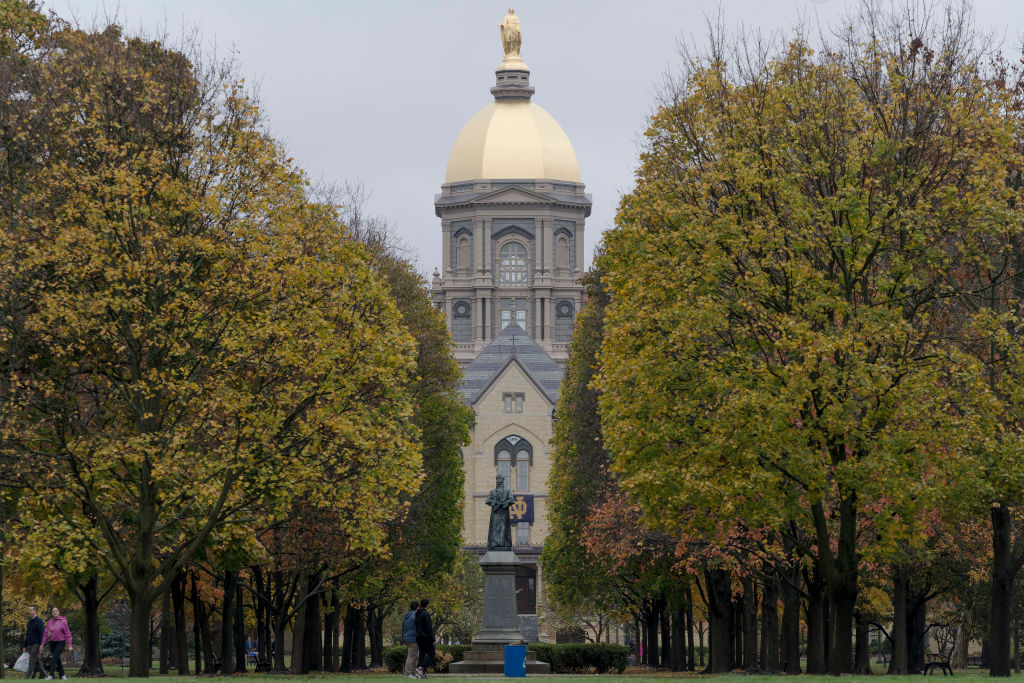
Neary was ordained a priest in 1991 at the University of Notre Dame, where he was also rector for many years. 

According to its website, CRS serves 225 million people across 122 countries annually and has 1,735 partners around the world. 

Read More