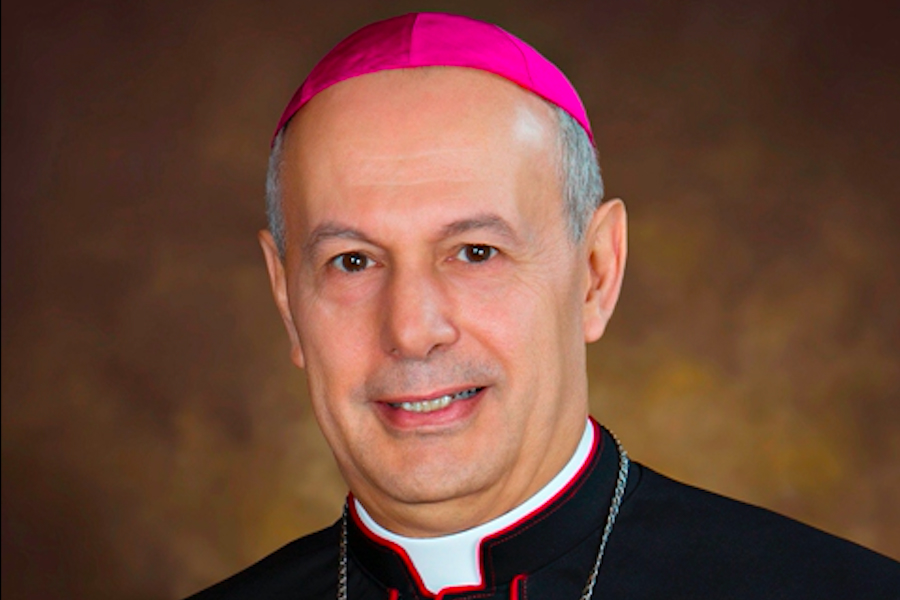
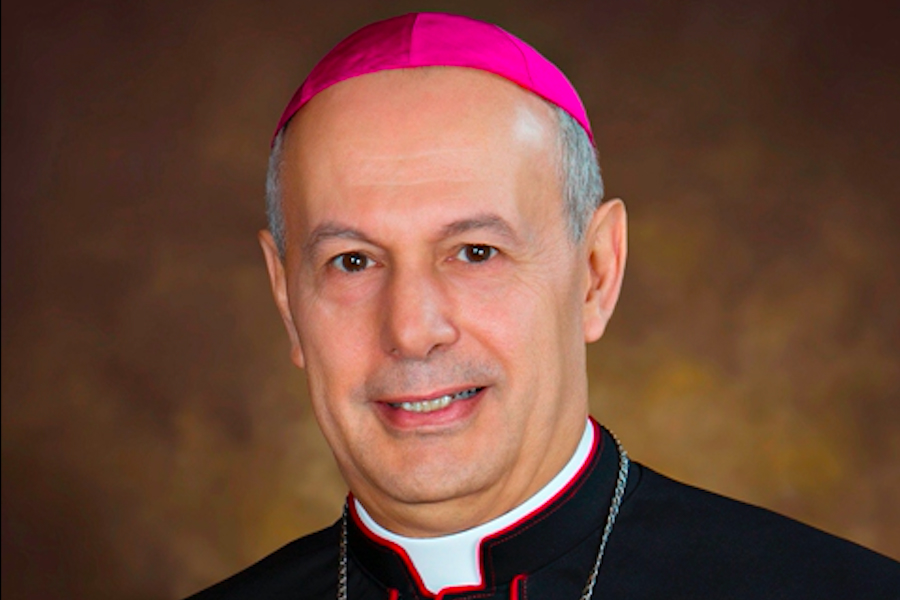
Read More At a time of conflict, Pope Leo sends a bridge-builder to the United States #Catholic Archbishop Gabriele Caccia, the recently appointed apostolic nuncio to the United States, takes up his new role at a time of heightened tension between the Vatican and the White House over issues including immigration to the U.S. and war in the Middle East.Former collaborators say Caccia’s personal qualities and wide diplomatic experience — including in Lebanon and the Philippines — make him well suited for this crucial assignment.The 68-year-old diplomat recently served as the permanent observer of the Holy See Mission to the United Nations in New York after Pope Francis appointed him there in 2019. His new job is important as a liaison between the Vatican and the U.S., where recent federal policies have faced growing resistance from Church leaders.Pope Leo’s new man on a high-stakes missionA veteran diplomat, Caccia will serve as Pope Leo XIV’s chief representative to the Trump administration. Like his predecessor, Cardinal Christophe Pierre, he assumes office amid ongoing tension between the administration and the Church, especially on immigration enforcement and foreign policy.In a public statement in November 2025, U.S. bishops strongly opposed the administration’s treatment of migrants during mass deportations. Pope Leo expressed support for the statement and denounced the treatment of migrants as “extremely disrespectful, and with instances of violence.”The U.S. bishops have also voiced concern over recent foreign policy moves, including interventions in the Middle East. In January of this year, three U.S. cardinals — Blase Cupich, Joseph Tobin, and Robert McElroy — jointly condemned the administration’s foreign policy in a public statement. In recent addresses, Pope Leo has also called for a ceasefire in the Middle East, deploring on March 15 a “widespread climate of hatred and fear.”Monsignor Roger Landry, who served at the Holy See Mission from 2015 to 2022 and now heads the Pontifical Mission Societies, expressed confidence in the nuncio’s ability to communicate the Holy See’s concerns effectively to the U.S. government while supporting the bishops.“He will represent Pope Leo very well to the U.S. government and the U.S. Church, be a great listener and effective relayer of what’s happening in the United States to Pope Leo, and be a steady source of counsel and support to U.S. bishops,” he told EWTN News.Dálida Morales, who interned at the mission and now works at the Ministry of Industry and Commerce in the Dominican Republic, conveyed hope for the archbishop’s potential to build international dialogue.“He is genuinely a bridge-builder for peace. At a time when dialogue, moral clarity, and principled leadership are urgently needed in the United States, his appointment there is both timely and hopeful,” she said.A diplomat forged in complex geopoliticsHaving worked in the diplomatic service of the Holy See since 1991, Caccia previously served in challenging posts before his appointment to the U.N. He served as apostolic nuncio to Lebanon and the Philippines, two countries with sensitive political climates.His service in Lebanon occurred during the outbreak of the Syrian Civil War in 2011. There, he helped coordinate the Church’s humanitarian response to support over 1.5 million Syrian refugees in Lebanon. His service also included helping maintain peace in a country constitutionally divided among Maronite Christians, Muslims, and Druze.He served in the Philippines at the height of President Rodrigo Duterte’s highly aggressive and controversial anti-narcotics campaign, which resulted in thousands of extrajudicial killings. As the nuncio, he helped to support the bishops, who were vocal critics against the government, while maintaining the country’s diplomatic relations with the Holy See.During his time at the U.N., he promoted the Vatican’s diplomatic stance. Father Mark Knestout, who served with Caccia as a former attaché for the Holy See Mission, noted the importance of his diplomatic experience in his new role.“He was in Lebanon for eight years, which is a complex situation because you have multiple denominations of Catholics there, alongside the situation with Muslims,” he told EWTN News. “So I see him being personable and striving to get to know everyone in the United States as best he can.”An inclusive leader and sports loverFormer staff of Caccia also shared with EWTN News some personal anecdotes from their time serving with him in New York. Vitória Volpato, a former intern at the mission who serves at the Prefecture of São Paulo in Brazil, noted with gratitude the archbishop’s insights on leadership.“He said something that stayed with me: ‘I do not choose the people I work with, but I work with the people I have.’ That made me reflect on what a good leader must be, something the archbishop clearly is,” she said.Ashley Campbell, who interned at the mission and now works at the Religious Freedom Institute, reflected on his love of sports. “I remember once walking with him back to the Holy See Mission building from the U.N., and we talked about how we both grew up playing sports and how amazing it would be if Vatican City could send athletes to the Olympics.”Fidelity to the Holy FatherOne trait consistently praised by those who have worked with the archbishop is his fidelity to the Holy Father. Knestout described the archbishop as a “true Churchman who wants to represent the desires and the intentions of the Holy Father.”Morales added: “Every Wednesday, he would ask us about the Holy Father’s general audience. In this way, he reminded us that one of the most meaningful ways to remain united to the Church is by listening to the voice of the pope. It is a habit I continue to keep today thanks to him.” unitedyam March 17, 2026 Archbishop Gabriele Caccia, the new papal envoy to Washington, has been shaped by a diplomatic career in geopolitical hot spots. Read More
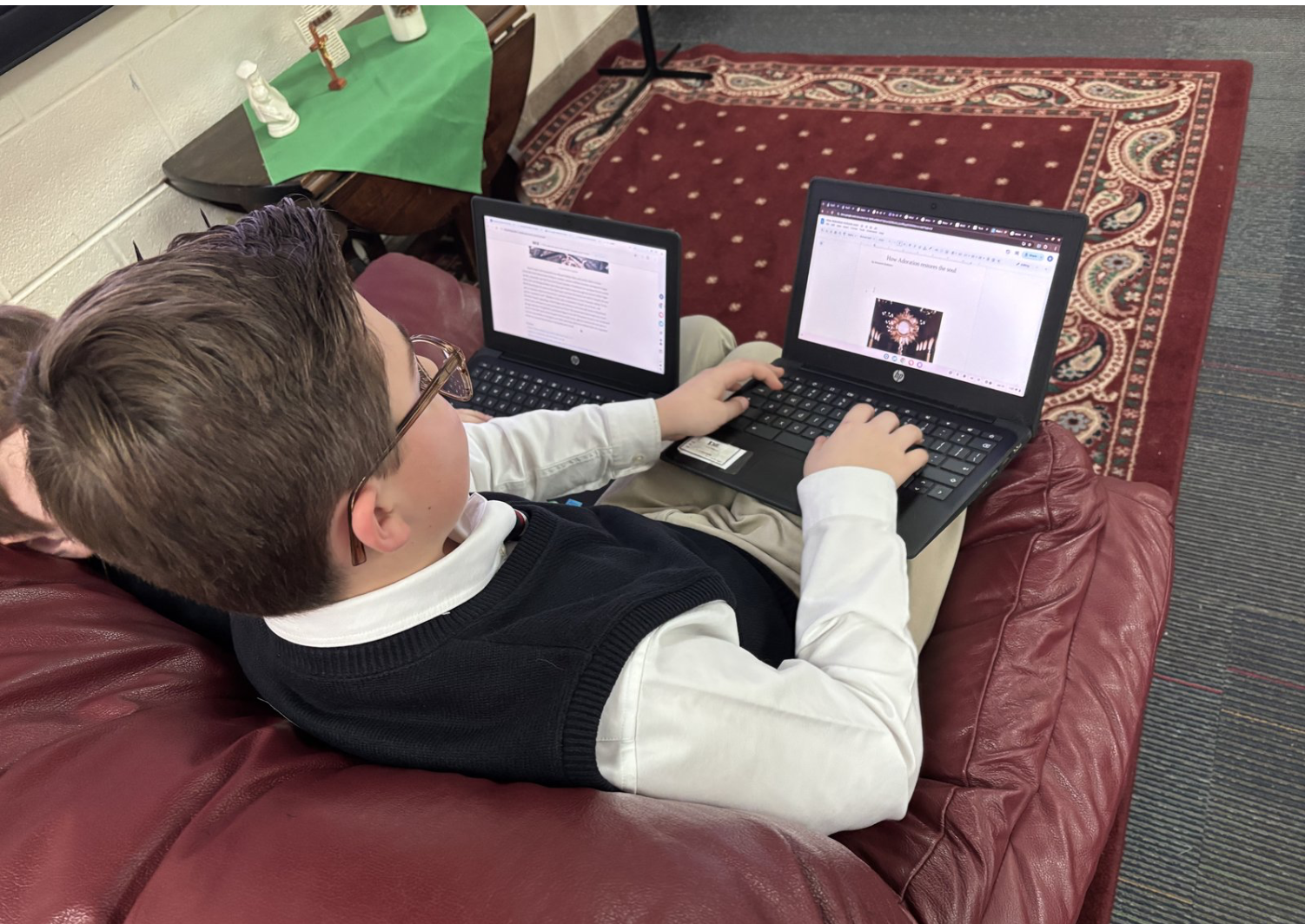
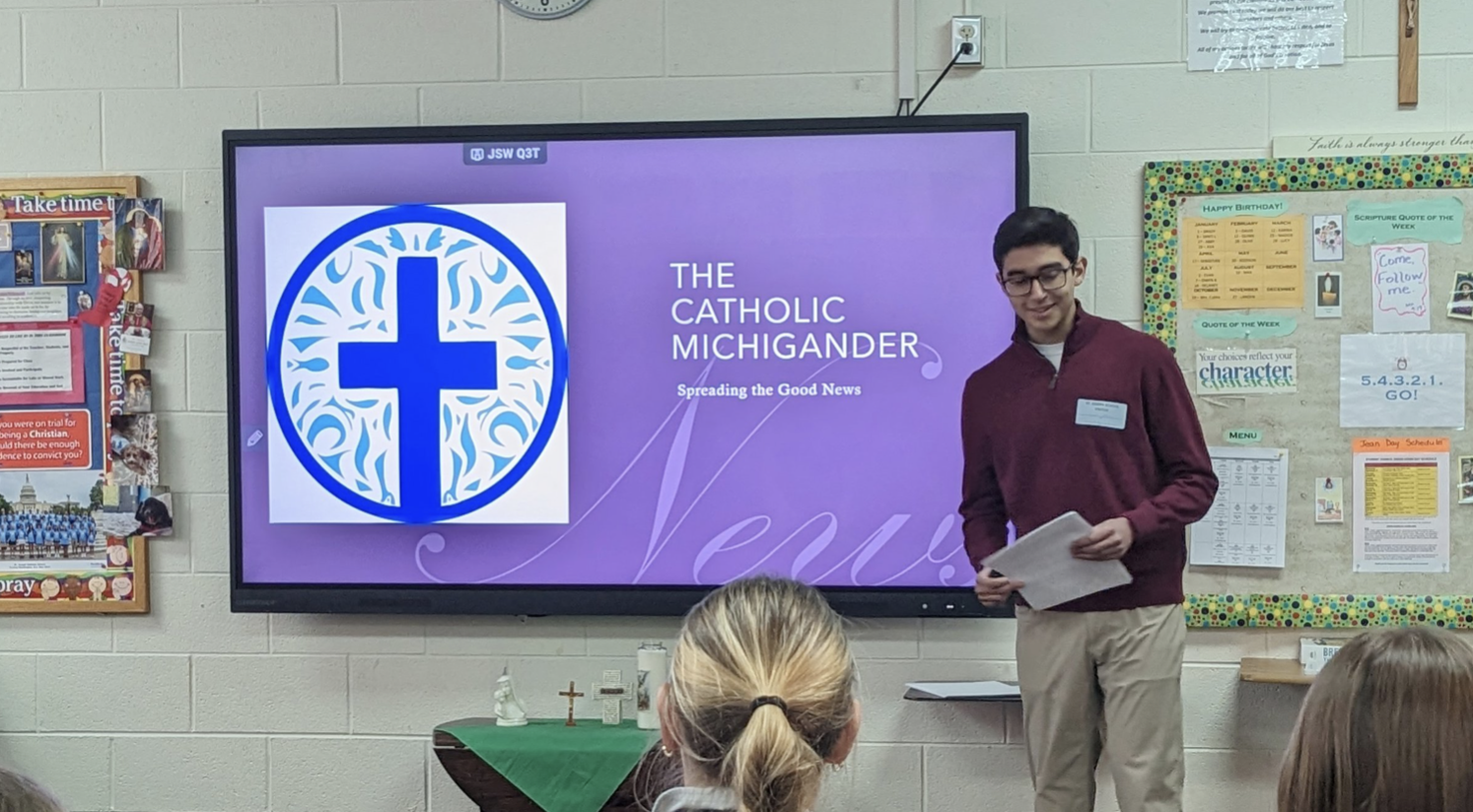
Read More Michigan teen starts Catholic online newspaper for other teens #Catholic Luis Nava, a high school freshman at the International Academy in Michigan, takes to heart that he wants to be ready to answer any questions from his peers but also to better understand his Catholic faith. He began an online newspaper called The Catholic Michigander, where he tackles some of those questions and more.Nava is a parishioner at St. Joseph Parish in Lake Orion, Michigan, and spent his first few years attending school there. He recently spoke to students at the Catholic school about a project he started to help spread the Catholic faith among teens and to help young people understand what the faith is all about.“A lot of the times, if I’m facing questions from classmates that don’t have the same beliefs as me, I want to know exactly what I believe and exactly why I believe it,” Nava said.Learning about his faith became more of a quest after Nava attended a pro-life conference in 2024 at his parish. While he was there, Nava picked up a quote from William Wilberforce that he says inspired him to fulfill what he believes is his calling: “Let it not be said that I was silent when they needed me,” he said. The saying is posted above his desk. “I see it every day.”Nava, who plans to study neuroscience, said he has always been passionate about writing and hoped to start a newspaper one day. After the conference, he felt the prompting of the Holy Spirit guiding him, and he got to work on a website.“It all came from a project that I had when I was in middle school,” he said. “I was on the newspaper for my middle school in sixth grade, and then in seventh grade I took over as the editor.”Nava takes ideas for content for the newspaper from his daily experiences and conversations with classmates. He also invites others to write with him.The newspaper contains a wide variety of articles on different topics, from infertility and natural family planning to life issues and the real presence of Christ in the Eucharist. Nava said he writes “if a particular issue sparks my interest.” Father Jim Kean advises Nava on Catholic theology to ensure that all of the content adheres to Catholic teaching.“There was a report that a huge amount of Catholics don’t know that Christ is really present in the Eucharist, so I thought topics like those would be good to address,” Nava said.Each month, Nava writes and edits the copy and posts it to the website, featuring not only his writing but also that of some of his peers. A middle school student at St. Joseph School in Lake Orion, Michigan, reviews an article in Luis Nava’s online newspaper, The Catholic Michigander. | Credit: Photo courtesy of Luis Nava/Detroit Catholic “A couple of them are parishioners here at St. Joseph Parish, but they were public school students,” said Doris Fornasiero, principal at St. Joseph School. “I think that’s also a remarkable piece, that he’s reaching and pulling in students from all over the public school, private school, but students who are passionate about their faith.”Nava doesn’t just write about his faith, but he brings it to life, said Lindy Cubba, a middle school religion teacher at St. Joseph.“As teachers and educators, listening to him, it was remarkable because he had captured this passion for faith and yet this way to inspire and nurture beliefs that people already have and bring them into the open,” Cubba said.In addition to his work with the newspaper, Nava is also active in the youth group and as an athlete, where he encourages others to live their lives of faith. Recently he spoke to St. Joseph students about his project.“He’s just an incredibly positive, strong influence in the right way,” Fornasiero said. “He inspired the kids and encouraged them to speak out, that they didn’t have to keep their beliefs and their feelings about their faith to themselves. He was giving them a safe place to voice their beliefs.”Nava said he is grateful to the Holy Spirit, as well as mentors such as Fornasiero and Cubba, and said he wants to encourage other students to be courageous enough to do what they dream.“Well, I try to be a model to imitate, but I mean it’s a work in progress,” he said.“Like with everything, we’re all called to be saints, so I’m trying to walk down that road, as I’m sure everybody is,” Nava said. “I hope this can inspire other people to maybe take action and realize they can do anything. Hopefully, we can get all of the youth of today to really grow in their love for God.”Nava believes his newspaper project and his interest in neuroscience are related.“It’s really perfect, because neuroscience and religion and spirituality go hand in hand so well together,” Nava said. “We need God at the center of our lives if we want to have good mental health. I thought that would integrate very well with the writing and with religion.”With three more years of high school ahead of him, Nava said he hopes he can continue the newspaper for several more years.“I’m not sure how it’s going to evolve,” he said, “but I hope that we can continue to put out articles that teenagers can see and be inspired by.”This story was first published by the Detroit Catholic and is reprinted here with permission. unitedyam March 14, 2026 Luis Nava, a high school freshman in Lake Orion, Michigan, felt inspired to help peers find their voice and live their Catholic faith. Read More
Read More Meta blocks AI chatbot from discussing abortion with minors #Catholic Meta blocks AI chatbot from discussing abortion with minorsMeta won’t allow its AI chatbot to discuss abortion with minors, according to a report from the progressive outlet Mother Jones.Citing internal Meta documents, Mother Jones reported that Meta’s chatbot policy guidelines for interactions with minors prevent the chatbot from advising them on “content that provides advice or opinion" about "sexual health” or offering information helping them obtain an abortion.According to the report, a Meta spokesperson disputed claims of bias, saying that “any claims of enforcement based on group affiliation or advocacy are baseless” and that the company allows "posts and ads promoting health care services like abortion, as well as discussion and debate around them, as long as they follow our policies. We also give people the opportunity to appeal decisions if they think we’ve got it wrong.”When asked about the leaked documents, a company spokesperson told EWTN News: "Our AIs are trained to engage in age-appropriate discussions with teens, and to connect them with expert resources and support when appropriate." "They provide factual information on sexual health but refrain from offering advice or opinions. We continuously review and improve our protections so that teens have access to helpful information with default safeguards in place.”The Meta spokesperson also responded to advertisement censorship claims.“Every organization and individual on our platforms is subject to the same set of rules, and any claims of enforcement based on group affiliation or advocacy are baseless," the spokesperson said. United Kingdom assisted suicide bill falters as local measures advanceA national assisted suicide bill is failing to pass in the United Kingdom this week, even as local measures advance.According to a statement by the advocacy group Right to Life UK, on Feb. 26 the national bill was “widely pronounced as dead by commentators after it was revealed that it will 'almost certainly' run out of time”In Wales, the regional parliament voted on Feb. 24 in favor of the National Health Service to oversee assisted suicide if the Terminally Ill Adults Bill passes in the House of Lords.Archbishop Mark O'Toole of Cardiff-Menevia called the vote “a sad day for Wales’s most vulnerable" in a Feb. 25 statement.The island of Jersey similarly passed a law to legalize assisted suicide in a 32-to-16 vote on Feb. 26 by members of the States Assembly. The measure applies to “mentally competent” adults with terminal illnesses and who have been residents of Jersey for 12 months. Before the bill can become law, it will need royal assent.Ohio Appeals Court upholds ban on aborted baby burial requirementOhio judges on Wednesday upheld a ban on a law requiring abortion clinics to dispose of the remains of babies via burial or cremation.The appellate court in Cincinnati upheld a lower court ruling permanently blocking the law.Ohio in 2023 passed a constitutional amendment enshrining a right to abortion.Executive Director of Ohio Right to Life Carrie Snyder condemned the decision.“It’s unfortunate, but not a surprise, that the First District Court of Appeals sided with the abortion industry to stop Ohio’s fetal remains law from taking effect. Sadly, clinics will continue treating these precious little ones like garbage to be disposed of as cheaply as possible,” Snyder said in a Feb. 26 statement. “This really underscores that abortion is not health care, and that clinics are going to do everything within their power to boost their profit margin.”A Planned Parenthood spokeswoman, meanwhile, celebrated the decision, claiming the burial law was "cruel" and "nothing more than an opportunity to shame and stigmatize" women who get abortions.Texas attorney general sues mail-in abortion company for alleged illegal shipmentsTexas Attorney General Ken Paxton sued mail-in abortion company Aid Access along with California abortionist Remy Coeytaux and abortionist and founder of Aid Access Rebecca Gomperts for allegedly illegally shipping abortion drugs to Texas.Aid Access’s website advertises its shipping to all states including Texas, according to Paxton’s press release.“These unlawful shipments have had real and devastating consequences for Texas families,” the press release read. “In 2025, a Nueces County man allegedly used abortion-inducing drugs obtained from an out-of-state provider to secretly poison his girlfriend, resulting in the death of their unborn child.”“Every unborn child is a life worth protecting,” Paxton said, adding that he will “relentlessly enforce our state’s pro-life laws against Aid Access and other radicals like it.” unitedyam February 28, 2026 A roundup of recent pro-life and abortion-related news. Read More