![Students pray for Notre Dame’s Catholic identity after dispute over pro-abortion professor #Catholic Students at the University of Notre Dame gathered on Feb. 27 for a candlelit prayer service to offer thanksgiving for the university’s Catholic identity.The event was originally planned as a protest in response to the university’s appointment of abortion advocate Professor Susan Ostermann as the head of the Liu Institute for Asia and Asian Studies. After Ostermann withdrew from the position earlier this week, the student organizers turned the event into a prayer vigil offered “in thanksgiving and support for Notre Dame’s Catholic mission.”A group of about 150 students, community members, faculty and priests from the Congregation of Holy Cross met on the south quad of campus, where they were greeted by students Luke Woodyard and Gabe Ortner, the event’s organizers. After a blessing of candles, those present processed to the Grotto of Our Lady of Lourdes, where they prayed the Rosary.
Students gather to pray the Rosary at the Grotto of Our Lady of Lourdes at the University of Notre Dame, Friday, Feb. 27, 2026 | Credit: Notre Dame Right to Life
The event was co-sponsored by the major Catholic clubs on campus: Right to Life, Militia Immaculata, Children of Mary, the Knights of Columbus, and Students for Child-Oriented Policy.According to Woodyard, while a protest would have drawn a greater number of attendees, organizers agreed that changing the event to a prayer vigil would be a more appropriate response to the news of Ostermann’s withdrawal.“The big reason we changed the protest to a prayer vigil was because we won, we got Ostermann to not be appointed. And even though this was a victory in a battle, not the [larger] war, we can celebrate this victory now," Woodyard said.“If we came here with a bunch of protests, it would make us seem like we weren't grateful for the university listening to us," he added. "And we really are. We praise [President] Father [Robert] Dowd for any impact that he had on Ostermann withdrawing, and we pray for the future of Notre Dame.”Ostermann, whose appointment was announced in January, has publicly supported abortion on multiple occasions, calling it “freedom-enhancing” and “consistent with integral human development that emphasizes social justice and human dignity."She has also argued that the pro-life movement has its roots in “white supremacy and racism” and has described pregnancy resource centers “anti-abortion propaganda sites."Since the appointment was announced in January, the university has faced backlash from Catholics across the country, including students, alumni, faculty, and more than a dozen bishops. The university continued to defend Ostermann’s promotion amid the criticism, citing her expertise in Asian studies and her past research. When Ostermann withdrew from the position on Feb. 26, students were surprised at the unexpected reversal but grateful for the desired outcome.Maria Madigan, a sophomore who serves as the head of service for Notre Dame Right to Life, told EWTN News that the grateful and loving spirit of the prayer service was the same spirit in which the protest had been planned.“[The planned protest] was never filled with hate or any [kind of] malicious intent. …We love Notre Dame because of her Catholic mission and her identity," she said. "We wanted to protest the Ostermann appointment because we felt it that went against our mission. And then when Ostermann withdrew, the focus shifted, because… we want to think about having a positive vision going forward for Notre Dame.”Regarding Ostermann’s withdrawal, Woodyard said: “We don't know what happened behind the scenes — hopefully that will come out in the coming weeks — but what we do know is that she did withdraw, and so we're thankful for that, and that's why we're here, but at some point, we have to make sure this doesn't happen again.”Organizer Gabe Ortner emphasized that although the planned protest was turned into a prayer vigil, the defense of Notre Dame’s Catholic mission is far from over.“We have to recognize the work that Father Dowd has done in leading this university. He's clearly been working tirelessly on this with Bishop Rhoades, and I admire the direction that he seems to be taking Notre Dame in, and that gives me a lot of hope," Ortner said. "However, at the same time, there also seem to be particular members of the administration who do not entirely share the Catholic vision of Notre Dame," he said.“Ultimately, Notre Dame should be united in its Catholic identity among all of the members of administration, with no exception.”If the protest had gone forward, speakers would have included Anna Kelley, president of the school's Right to Life group; Lucy Spence, editor-in-chief of the Irish Rover student newspaper; and Theo Austin, vice president of Students for Child-Oriented Policy.Students have expressed concern that the appointment shows a willingness of university administration — particularly on the part of Provost John McGreevy, who approved the appointment — to deviate from the university’s Catholic mission.Max McNiff, a student who attended the prayer vigil, shared his hopes that the controversy that precipitated Ostermann’s withdrawal would send a clear signal to the university.“I think this sets a sets a good precedent for stuff like this in the future. I think that the administration is going to be very cautious, and hopefully nothing like this will happen again.”“I think this also sets a precedent that researchers who are considered maybe ‘elite’ by secular academic standards, but who very manifestly publicly contradict Catholic doctrine [on matters] such as abortion, should not expect to come into leadership positions at Notre Dame," he said. Ultimately, however, students expressed their gratitude at the reversal of Ostermann’s appointment, calling it a “victory” in the battle for Notre Dame’s Catholic identity.“Having the opportunity to gather together and to thank God for his faithfulness, and the faithfulness of the university, is really beautiful, and I think you can see it in the passion of the students," Madigan said. "Everyone here knew it wasn’t a protest anymore, but they were still coming.”“We're all here because we care and we love this university and we want to uphold its Catholic mission and its pro-life mission as much as possible," she said. "And at the end of the day, whether one person showed up, or whether 200 people showed up, this was a prayer service, and it was to God, and the words that were said here were to him." "And that's what I really want the focus of this whole event to be on, praise and thanksgiving to the Lord for his faithfulness and to Our Lady for protecting her university.”](https://unitedyam.com/wp-content/uploads/2026/02/students-pray-for-notre-dames-catholic-identity-after-dispute-over-pro-abortion-professor-catholic-students-at-the-university-of-notre-dame-gathered-on-feb-27-for-a-candlelit-prayer-service.jpg)
The event was originally planned as a protest in response to the university’s appointment of abortion advocate Professor Susan Ostermann as the head of the Liu Institute for Asia and Asian Studies.
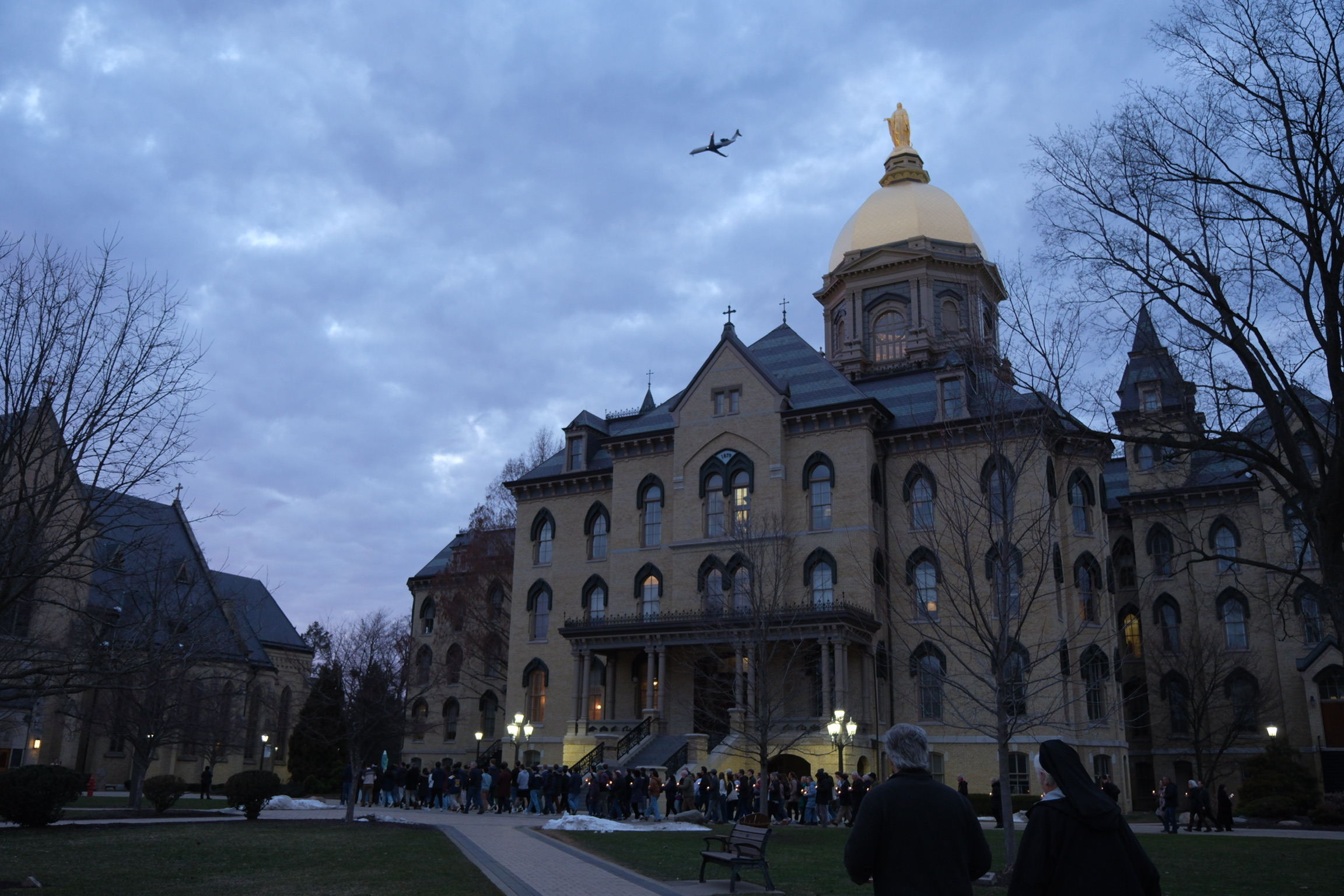
![Students pray for Notre Dame’s Catholic identity after dispute over pro-abortion professor #Catholic Students at the University of Notre Dame gathered on Feb. 27 for a candlelit prayer service to offer thanksgiving for the university’s Catholic identity.The event was originally planned as a protest in response to the university’s appointment of abortion advocate Professor Susan Ostermann as the head of the Liu Institute for Asia and Asian Studies. After Ostermann withdrew from the position earlier this week, the student organizers turned the event into a prayer vigil offered “in thanksgiving and support for Notre Dame’s Catholic mission.”A group of about 150 students, community members, faculty and priests from the Congregation of Holy Cross met on the south quad of campus, where they were greeted by students Luke Woodyard and Gabe Ortner, the event’s organizers. After a blessing of candles, those present processed to the Grotto of Our Lady of Lourdes, where they prayed the Rosary.
Students gather to pray the Rosary at the Grotto of Our Lady of Lourdes at the University of Notre Dame, Friday, Feb. 27, 2026 | Credit: Notre Dame Right to Life
The event was co-sponsored by the major Catholic clubs on campus: Right to Life, Militia Immaculata, Children of Mary, the Knights of Columbus, and Students for Child-Oriented Policy.According to Woodyard, while a protest would have drawn a greater number of attendees, organizers agreed that changing the event to a prayer vigil would be a more appropriate response to the news of Ostermann’s withdrawal.“The big reason we changed the protest to a prayer vigil was because we won, we got Ostermann to not be appointed. And even though this was a victory in a battle, not the [larger] war, we can celebrate this victory now," Woodyard said.“If we came here with a bunch of protests, it would make us seem like we weren't grateful for the university listening to us," he added. "And we really are. We praise [President] Father [Robert] Dowd for any impact that he had on Ostermann withdrawing, and we pray for the future of Notre Dame.”Ostermann, whose appointment was announced in January, has publicly supported abortion on multiple occasions, calling it “freedom-enhancing” and “consistent with integral human development that emphasizes social justice and human dignity."She has also argued that the pro-life movement has its roots in “white supremacy and racism” and has described pregnancy resource centers “anti-abortion propaganda sites."Since the appointment was announced in January, the university has faced backlash from Catholics across the country, including students, alumni, faculty, and more than a dozen bishops. The university continued to defend Ostermann’s promotion amid the criticism, citing her expertise in Asian studies and her past research. When Ostermann withdrew from the position on Feb. 26, students were surprised at the unexpected reversal but grateful for the desired outcome.Maria Madigan, a sophomore who serves as the head of service for Notre Dame Right to Life, told EWTN News that the grateful and loving spirit of the prayer service was the same spirit in which the protest had been planned.“[The planned protest] was never filled with hate or any [kind of] malicious intent. …We love Notre Dame because of her Catholic mission and her identity," she said. "We wanted to protest the Ostermann appointment because we felt it that went against our mission. And then when Ostermann withdrew, the focus shifted, because… we want to think about having a positive vision going forward for Notre Dame.”Regarding Ostermann’s withdrawal, Woodyard said: “We don't know what happened behind the scenes — hopefully that will come out in the coming weeks — but what we do know is that she did withdraw, and so we're thankful for that, and that's why we're here, but at some point, we have to make sure this doesn't happen again.”Organizer Gabe Ortner emphasized that although the planned protest was turned into a prayer vigil, the defense of Notre Dame’s Catholic mission is far from over.“We have to recognize the work that Father Dowd has done in leading this university. He's clearly been working tirelessly on this with Bishop Rhoades, and I admire the direction that he seems to be taking Notre Dame in, and that gives me a lot of hope," Ortner said. "However, at the same time, there also seem to be particular members of the administration who do not entirely share the Catholic vision of Notre Dame," he said.“Ultimately, Notre Dame should be united in its Catholic identity among all of the members of administration, with no exception.”If the protest had gone forward, speakers would have included Anna Kelley, president of the school's Right to Life group; Lucy Spence, editor-in-chief of the Irish Rover student newspaper; and Theo Austin, vice president of Students for Child-Oriented Policy.Students have expressed concern that the appointment shows a willingness of university administration — particularly on the part of Provost John McGreevy, who approved the appointment — to deviate from the university’s Catholic mission.Max McNiff, a student who attended the prayer vigil, shared his hopes that the controversy that precipitated Ostermann’s withdrawal would send a clear signal to the university.“I think this sets a sets a good precedent for stuff like this in the future. I think that the administration is going to be very cautious, and hopefully nothing like this will happen again.”“I think this also sets a precedent that researchers who are considered maybe ‘elite’ by secular academic standards, but who very manifestly publicly contradict Catholic doctrine [on matters] such as abortion, should not expect to come into leadership positions at Notre Dame," he said. Ultimately, however, students expressed their gratitude at the reversal of Ostermann’s appointment, calling it a “victory” in the battle for Notre Dame’s Catholic identity.“Having the opportunity to gather together and to thank God for his faithfulness, and the faithfulness of the university, is really beautiful, and I think you can see it in the passion of the students," Madigan said. "Everyone here knew it wasn’t a protest anymore, but they were still coming.”“We're all here because we care and we love this university and we want to uphold its Catholic mission and its pro-life mission as much as possible," she said. "And at the end of the day, whether one person showed up, or whether 200 people showed up, this was a prayer service, and it was to God, and the words that were said here were to him." "And that's what I really want the focus of this whole event to be on, praise and thanksgiving to the Lord for his faithfulness and to Our Lady for protecting her university.”](https://unitedyam.com/wp-content/uploads/2026/02/students-pray-for-notre-dames-catholic-identity-after-dispute-over-pro-abortion-professor-catholic-students-at-the-university-of-notre-dame-gathered-on-feb-27-for-a-candlelit-prayer-service.jpg)
The event was originally planned as a protest in response to the university’s appointment of abortion advocate Professor Susan Ostermann as the head of the Liu Institute for Asia and Asian Studies.

![Head of U.S. bishops joins call for Notre Dame to drop appointment of pro-abortion professor #Catholic U.S. Conference of Catholic Bishops President Archbishop Paul Coakley is urging the University of Notre Dame to drop the leadership appointment of an outspoken pro-abortion professor, joining nearly a dozen bishops in calling on the historic Catholic university to back away from the controversial decision. The controversy at Notre Dame exploded this week after Fort Wayne-South Bend, Indiana, Bishop Kevin Rhoades on Feb. 11 expressed “dismay” and “strong opposition” to the school's appointment of Professor Susan Ostermann as director of the school’s Liu Institute for Asia and Asian Studies.Ostermann has in the past spoken out strongly in favor of abortion and sharply criticized the pro-life movement, at times suggesting that its roots are in "white supremacy" and misogyny. Rhoades said Ostermann's beliefs, coupled with her leadership promotion at the Catholic school, were “causing scandal to the faithful of our diocese and beyond.”Multiple U.S. bishops from around the country backed Rhoades's call throughout the week, with Coakley himself speaking out about the controversy on Feb. 13. "I fully support Bishop Kevin Rhoades in his challenge to Notre Dame to rectify its poor judgement in hiring a professor who openly stands against Catholic teaching when it comes to the sanctity of life, in this case protection of the unborn," Coakley said in a statement on X. TweetThe statement was shared hundreds of times on X, including by Cardinal Joseph Zen Ze-kiun, the bishop emeritus of Hong Kong. Though criticism against Notre Dame's decision has come from top Catholic leadership in the U.S. throughout the week, the school has indicated that it will be standing by its plan to have Ostermann lead the institute. Notre Dame told EWTN News on Feb. 13 that Ostermann is "a highly regarded political scientist and legal scholar" who is "well prepared" to serve in the role. At the same time the university stressed its “unwavering” commitment “to upholding the inherent dignity of the human person and the sanctity of life at every stage.” Ostermann herself has told media that she “respect[s] Notre Dame’s institutional position on the sanctity of life at every stage." She has described herself as "fully committed to maintaining an environment of academic freedom where a plurality of voices can flourish." Head of U.S. bishops joins call for Notre Dame to drop appointment of pro-abortion professor #Catholic U.S. Conference of Catholic Bishops President Archbishop Paul Coakley is urging the University of Notre Dame to drop the leadership appointment of an outspoken pro-abortion professor, joining nearly a dozen bishops in calling on the historic Catholic university to back away from the controversial decision. The controversy at Notre Dame exploded this week after Fort Wayne-South Bend, Indiana, Bishop Kevin Rhoades on Feb. 11 expressed “dismay” and “strong opposition” to the school's appointment of Professor Susan Ostermann as director of the school’s Liu Institute for Asia and Asian Studies.Ostermann has in the past spoken out strongly in favor of abortion and sharply criticized the pro-life movement, at times suggesting that its roots are in "white supremacy" and misogyny. Rhoades said Ostermann's beliefs, coupled with her leadership promotion at the Catholic school, were “causing scandal to the faithful of our diocese and beyond.”Multiple U.S. bishops from around the country backed Rhoades's call throughout the week, with Coakley himself speaking out about the controversy on Feb. 13. "I fully support Bishop Kevin Rhoades in his challenge to Notre Dame to rectify its poor judgement in hiring a professor who openly stands against Catholic teaching when it comes to the sanctity of life, in this case protection of the unborn," Coakley said in a statement on X. TweetThe statement was shared hundreds of times on X, including by Cardinal Joseph Zen Ze-kiun, the bishop emeritus of Hong Kong. Though criticism against Notre Dame's decision has come from top Catholic leadership in the U.S. throughout the week, the school has indicated that it will be standing by its plan to have Ostermann lead the institute. Notre Dame told EWTN News on Feb. 13 that Ostermann is "a highly regarded political scientist and legal scholar" who is "well prepared" to serve in the role. At the same time the university stressed its “unwavering” commitment “to upholding the inherent dignity of the human person and the sanctity of life at every stage.” Ostermann herself has told media that she “respect[s] Notre Dame’s institutional position on the sanctity of life at every stage." She has described herself as "fully committed to maintaining an environment of academic freedom where a plurality of voices can flourish."](https://unitedyam.com/wp-content/uploads/2026/02/head-of-u-s-bishops-joins-call-for-notre-dame-to-drop-appointment-of-pro-abortion-professor-catholic-u-s-conference-of-catholic-bishops-president-archbishop-paul-coakley-is-urging-the-university-of.jpg)
The school has indicated it will stick by its decision for Professor Susan Ostermann to lead a university institute.

![U.S. clergy celebrate Masses in detention centers, urging humane treatment #Catholic U.S. Catholic clergy are bringing the sacraments to the nation’s immigrant detention centers, celebrating Masses and urging humane treatment for those held inside. As part of this effort, pastoral visits are aimed at ensuring detainees can access the Eucharist and receive spiritual support.In California, Bishop Joseph Brennan of the Diocese of Fresno is set to celebrate Mass on Feb. 15 at the California City Detention Facility, the state’s largest ICE center. While the diocese regularly provides sacraments in prisons and detention sites, this will be Brennan’s first Mass inside an ICE facility.In Oregon, Archbishop Alexander Sample of Portland issued a Feb. 12 statement stressing the Church’s duty to safeguard detainees’ access to the sacraments and voicing concern about large‑scale deportations. “I just feel very strongly about this, that there has to be a better solution to solving the immigration problems we have in the United States,” he said.In December 2025, seven bishops celebrated Mass at the Adelanto ICE Processing Center in California.Chandler Marquez, director of public affairs and innovation at the Fresno Diocese, told EWTN News that there are “people who are in the facility [who] want the sacrament — they want the spiritual accompaniment,” which they are not able to access as frequently while in detention.Los Angeles Auxiliary Bishop Brian Nunes and Father Kris Sorenson, pastor of Our Lady of Lourdes in California City, will join for the Mass.With President Donald Trump’s mass deportation efforts still ongoing, Marquez said “the current climate has certainly motivated” Brennan’s decision to celebrate Mass at the facility. He said the bishop has been “vocal about the promotion of human dignity” for migrants.In January 2025, Brennan issued an open letter on “immigration challenges,” in which he said “it seemed as if we took a step back as a society, and the old days of immigration sweeps were upon us once again” when he saw the uptick of immigration enforcement within his diocese.“Our people are being asked to produce proof of citizenship, and it seems as if the request is based on how they look and how they speak,” he said at the time. “That is not, by way of example, going after hardened criminals or drug dealers which, I hope, none of us would take exception to. It is going after people who, rightly or wrongly, were allowed to cross a border and who are now being subjected to tactics that are causing much fear and anxiety among my people. It is an insult to human dignity, and it is simply wrong.”
Bishop Joseph V. Brennan of Fresno, California. | Credit: Screenshot of Diocese of Fresno YouTube video
Marquez noted the diocese has the largest detention facility and the “largest amount of prisons and detention centers” in the state, which is why the ministry at prisons and detention centers is “a very, very big part of our diocese.”“Our chaplains have a great relationship with the prisons and detention centers within our dioceses,” he said, adding that the diocese has not run into problems gaining access to the facilities to provide religious services.The Department of Homeland Security (DHS), which operates ICE, said it encourages clergy to request accommodations for religious services at long-term ICE detention centers.Catholic clergy ran into obstacles several times last year when trying to administer sacraments at an ICE field office in Broadview, Illinois, where detainees are processed. A federal judge said Feb. 12 that DHS must provide accommodations to ensure Catholic clergy could provide ashes and Communion for detainees on Ash Wednesday, Feb. 18.](https://unitedyam.com/wp-content/uploads/2026/02/u-s-clergy-celebrate-masses-in-detention-centers-urging-humane-treatment-catholic-u-s-catholic-clergy-are-bringing-the-sacraments-to-the-nations-immigrant-detention-centers-celebrating-m.jpg)
Archbishop Alexander Sample issued a statement stressing the Church’s duty to safeguard detainees’ access to the sacraments.


In spite of opposition from Catholic bishops and patient advocate groups, Gov. Kathy Hochul signed into law physician-assisted suicide in New York.

![U.S. bishops say multimillion-dollar Eucharistic revival bore spiritual fruit #Catholic
Scene from the 2024 National Eucharistic Congress in Indianapolis. | Credit: “EWTN News in Depth”/Screenshot
Jan 17, 2026 / 09:00 am (CNA).
Catholic clergy and lay people reported a stronger devotion to the Eucharist after the National Eucharistic Revival.This week, the United States Conference of Catholic Bishops (USCCB) released the report for the National Eucharistic Revival Impact Study. Done in collaboration with the National Eucharistic Congress corporation and Vinea Research, the study surveyed nearly 2,500 lay Catholics, clergy, and Church staff during the summer and fall of 2025.The online survey asked questions about revival promotion, participation, and impact one year after the initial National Eucharistic Pilgrimage and Congress. The price tag of the Eucharistic congress was more than $10 million, organizers said.“Never in my tenure of working for the Church have I seen such deep impact,” said Jason Shanks, president of the National Eucharistic Congress, in a press release. “The fruits of the National Eucharistic Revival are real, lasting, and will continue to shape the life of the American Church for years to come.”The revival, sponsored by the USCCB, launched in June 2022 with the mission to “renew the Church by enkindling a living relationship with the Lord Jesus Christ in the holy Eucharist.”The three-year initiative, which concluded in 2025, included the 10th National Eucharistic Congress and the National Eucharistic Pilgrimage in 2024 and 2025.In a Jan. 16 interview on “EWTN News In Depth,” Bishop Andrew Cozzens, chair of the National Eucharistic Congress, said he was “extremely heartened” by the results of the study.“I had a sense that the revival had a big impact on people and especially on our Church,” he said. “But it was great to see that confirmed by the data and to see some of the actual statistics.”Impact on clergy membersOf 249 clergy members of priests and deacons surveyed, 49% reported feeling “more encouraged’ since the revival began. Specifically, 38% said they feel “somewhat more encouraged” and 11% said they feel “significantly more encouraged.”Nearly half, 48%, said they feel “more comfortable encouraging others to share their faith.”The research found the revival “refocused clergy on the Eucharist,” with the majority reporting changes to their pastoral approach since 2021. The report found that 70% of clergy reported a stronger “focus on the Eucharist in teaching [and] ministry,” and 69% said they have a stronger “emphasis on evangelization and outreach.”Clergy also reported personal advancements with their relationship with the Eucharist. More than half (51%) said their “time spent in personal adoration” is stronger now than it was in 2021. “I was so grateful when I saw that priests found it encouraging. They were encouraged by this opportunity to focus on the Eucharist,” Cozzens said. “I know so much more preaching and encouragement about Eucharistic devotion happened in our parishes during this time.”“If our priests are encouraged and they’re drawing closer to Jesus in the Eucharist, that’s going to help our people so much, and it’s going to help our Church so much,” he said.Impact on lay CatholicsAmong 1,758 of the lay Catholics surveyed, 874 were labeled as “national participants” who attended the National Eucharistic Pilgrimage, National Eucharistic Congress, or both. “We wanted Catholics to come together and to experience more deeply a profound love for Jesus in the Eucharist, and then from that, to be sent out on mission,” Cozzens said. The study “showed that anyone who attended one of our National Eucharistic Pilgrimages or National Eucharistic Congress said they were 50% more likely to do outreach, to share their faith, to do some act of service.”“I think the thing that most stood out to me is that we accomplished our goal,” he said. “Our goal was really to bring about a missionary conversion of Catholics.”Another 425 of lay Catholics were “local participants” who took part in local processions, small groups, and revival-specific Holy Hours. Most (83%) of the laypeople surveyed who participated at the national or local level said their “overall level of faith” is stronger now than it was in 2021.The other 459 laypeople surveyed were “nonparticipating contacts” who did not participate in any revival activities. Most came from the USCCB’s newsletter distribution list and they were aware of the revival but not involved. Even though they did not directly participate, 79% reported their “overall level of faith” was stronger following the revival.When asked to compare their faith practices with those in 2021, lay Catholics overwhelmingly reported praying more, attending adoration more frequently, and going to confession more often.The research took a deeper look at how lay Catholics’ faith evolved, examining the changes in the level of “importance” of faith-related activities over the last three years. The greatest growth in importance was observed in volunteering and spending time in Eucharistic adoration.In 2021, 57% of lay national participants reported “spending quiet time in Eucharistic adoration” was “very important” or “extremely important” to them. Following the revival, the number had jumped to 76%. There was also an increase for local participants with a rise from 65% to 82%. Among those who did not directly participate, there was the largest increase from 49% to 69%.Continuing to spread the ‘fire’The bishops have confirmed that the country’s second National Eucharistic Congress of the 21st century will take place in 2029.“As we continue to strengthen the core of our faith and those people who are committed, and they begin to draw closer to Jesus from Eucharist, what the study showed is that they get on fire, and then they start to spread that fire,” he said.“It’s the way Jesus worked himself. Jesus certainly did preach to crowds, but most of the time he spent with his 12 apostles and with those people who were with him. Because if he could convert and strengthen them, then they could go out and convert the world,” he said.“I think that’s really the goal of the whole Eucharistic movement that we have now is strengthening those people so that they can become the witnesses that we’re called to be,” he said.](https://unitedyam.com/wp-content/uploads/2026/01/u-s-bishops-say-multimillion-dollar-eucharistic-revival-bore-spiritual-fruit-catholic-scene-from-the-2024-national-eucharistic-congress-in-indianapolis-credit-ewtn-news-in-depth.jpg)

Jan 17, 2026 / 09:00 am (CNA).
Catholic clergy and lay people reported a stronger devotion to the Eucharist after the National Eucharistic Revival.
This week, the United States Conference of Catholic Bishops (USCCB) released the report for the National Eucharistic Revival Impact Study. Done in collaboration with the National Eucharistic Congress corporation and Vinea Research, the study surveyed nearly 2,500 lay Catholics, clergy, and Church staff during the summer and fall of 2025.
The online survey asked questions about revival promotion, participation, and impact one year after the initial National Eucharistic Pilgrimage and Congress. The price tag of the Eucharistic congress was more than $10 million, organizers said.
“Never in my tenure of working for the Church have I seen such deep impact,” said Jason Shanks, president of the National Eucharistic Congress, in a press release. “The fruits of the National Eucharistic Revival are real, lasting, and will continue to shape the life of the American Church for years to come.”
The revival, sponsored by the USCCB, launched in June 2022 with the mission to “renew the Church by enkindling a living relationship with the Lord Jesus Christ in the holy Eucharist.”
The three-year initiative, which concluded in 2025, included the 10th National Eucharistic Congress and the National Eucharistic Pilgrimage in 2024 and 2025.
In a Jan. 16 interview on “EWTN News In Depth,” Bishop Andrew Cozzens, chair of the National Eucharistic Congress, said he was “extremely heartened” by the results of the study.
“I had a sense that the revival had a big impact on people and especially on our Church,” he said. “But it was great to see that confirmed by the data and to see some of the actual statistics.”
Of 249 clergy members of priests and deacons surveyed, 49% reported feeling “more encouraged’ since the revival began. Specifically, 38% said they feel “somewhat more encouraged” and 11% said they feel “significantly more encouraged.”
Nearly half, 48%, said they feel “more comfortable encouraging others to share their faith.”
The research found the revival “refocused clergy on the Eucharist,” with the majority reporting changes to their pastoral approach since 2021. The report found that 70% of clergy reported a stronger “focus on the Eucharist in teaching [and] ministry,” and 69% said they have a stronger “emphasis on evangelization and outreach.”
Clergy also reported personal advancements with their relationship with the Eucharist. More than half (51%) said their “time spent in personal adoration” is stronger now than it was in 2021.
“I was so grateful when I saw that priests found it encouraging. They were encouraged by this opportunity to focus on the Eucharist,” Cozzens said. “I know so much more preaching and encouragement about Eucharistic devotion happened in our parishes during this time.”
“If our priests are encouraged and they’re drawing closer to Jesus in the Eucharist, that’s going to help our people so much, and it’s going to help our Church so much,” he said.
Among 1,758 of the lay Catholics surveyed, 874 were labeled as “national participants” who attended the National Eucharistic Pilgrimage, National Eucharistic Congress, or both.
“We wanted Catholics to come together and to experience more deeply a profound love for Jesus in the Eucharist, and then from that, to be sent out on mission,” Cozzens said. The study “showed that anyone who attended one of our National Eucharistic Pilgrimages or National Eucharistic Congress said they were 50% more likely to do outreach, to share their faith, to do some act of service.”
“I think the thing that most stood out to me is that we accomplished our goal,” he said. “Our goal was really to bring about a missionary conversion of Catholics.”
Another 425 of lay Catholics were “local participants” who took part in local processions, small groups, and revival-specific Holy Hours. Most (83%) of the laypeople surveyed who participated at the national or local level said their “overall level of faith” is stronger now than it was in 2021.
The other 459 laypeople surveyed were “nonparticipating contacts” who did not participate in any revival activities. Most came from the USCCB’s newsletter distribution list and they were aware of the revival but not involved. Even though they did not directly participate, 79% reported their “overall level of faith” was stronger following the revival.
When asked to compare their faith practices with those in 2021, lay Catholics overwhelmingly reported praying more, attending adoration more frequently, and going to confession more often.
The research took a deeper look at how lay Catholics’ faith evolved, examining the changes in the level of “importance” of faith-related activities over the last three years. The greatest growth in importance was observed in volunteering and spending time in Eucharistic adoration.
In 2021, 57% of lay national participants reported “spending quiet time in Eucharistic adoration” was “very important” or “extremely important” to them. Following the revival, the number had jumped to 76%. There was also an increase for local participants with a rise from 65% to 82%. Among those who did not directly participate, there was the largest increase from 49% to 69%.
The bishops have confirmed that the country’s second National Eucharistic Congress of the 21st century will take place in 2029.
“As we continue to strengthen the core of our faith and those people who are committed, and they begin to draw closer to Jesus from Eucharist, what the study showed is that they get on fire, and then they start to spread that fire,” he said.
“It’s the way Jesus worked himself. Jesus certainly did preach to crowds, but most of the time he spent with his 12 apostles and with those people who were with him. Because if he could convert and strengthen them, then they could go out and convert the world,” he said.
“I think that’s really the goal of the whole Eucharistic movement that we have now is strengthening those people so that they can become the witnesses that we’re called to be,” he said.
Read More