Protests

‘They want to evict us’: Why Indigenous Catholics fight forest project in Bangladesh #Catholic MADHUPUR, Bangladesh — Indigenous Catholic and tribal leaders in central Bangladesh are warning the government that a stronger protest movement will follow if it does not withdraw a contested forest development project before the end of the Muslim fasting month of Ramadan this week.The Garo and Koch Indigenous peoples say a government plan to dig an artificial lake and build an eco-park in the Madhupur forest — about 94 miles north of the capital, Dhaka — is a pretext for evicting them from ancestral lands they have occupied for generations.“What the government is doing in the name of development is not development. It is a clear plan to evict the Garo and Koch Indigenous from this forest area,” said Toni Chiran, a Catholic from Corpus Christi Church in Jalchatra and president of the Bangladesh Indigenous Youth Forum.
 
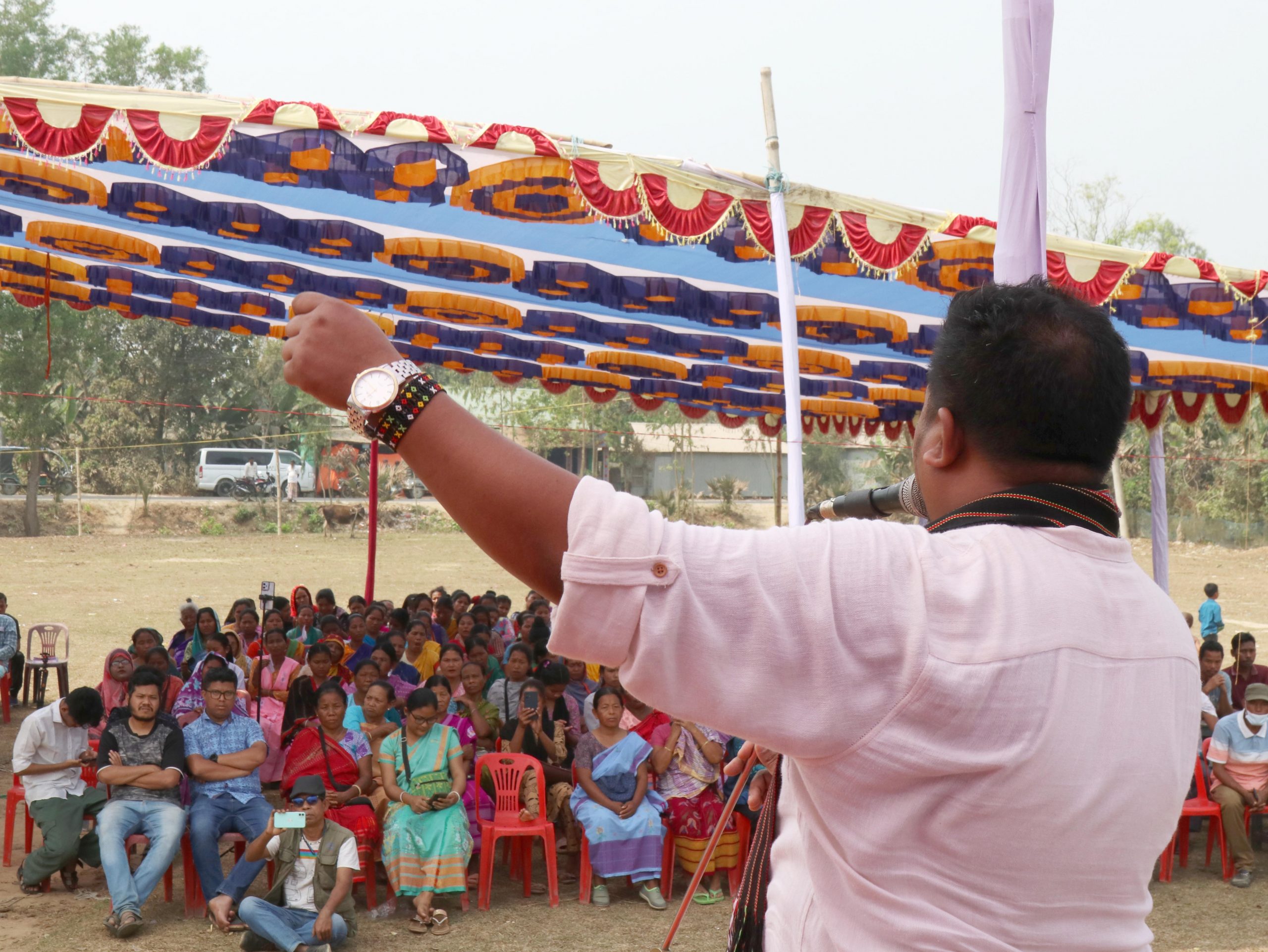
 A speaker addresses Indigenous Garo people at a protest rally in Madhupur, Bangladesh, on March 6, 2026. | Credit: Stephan Uttom Rozario
 
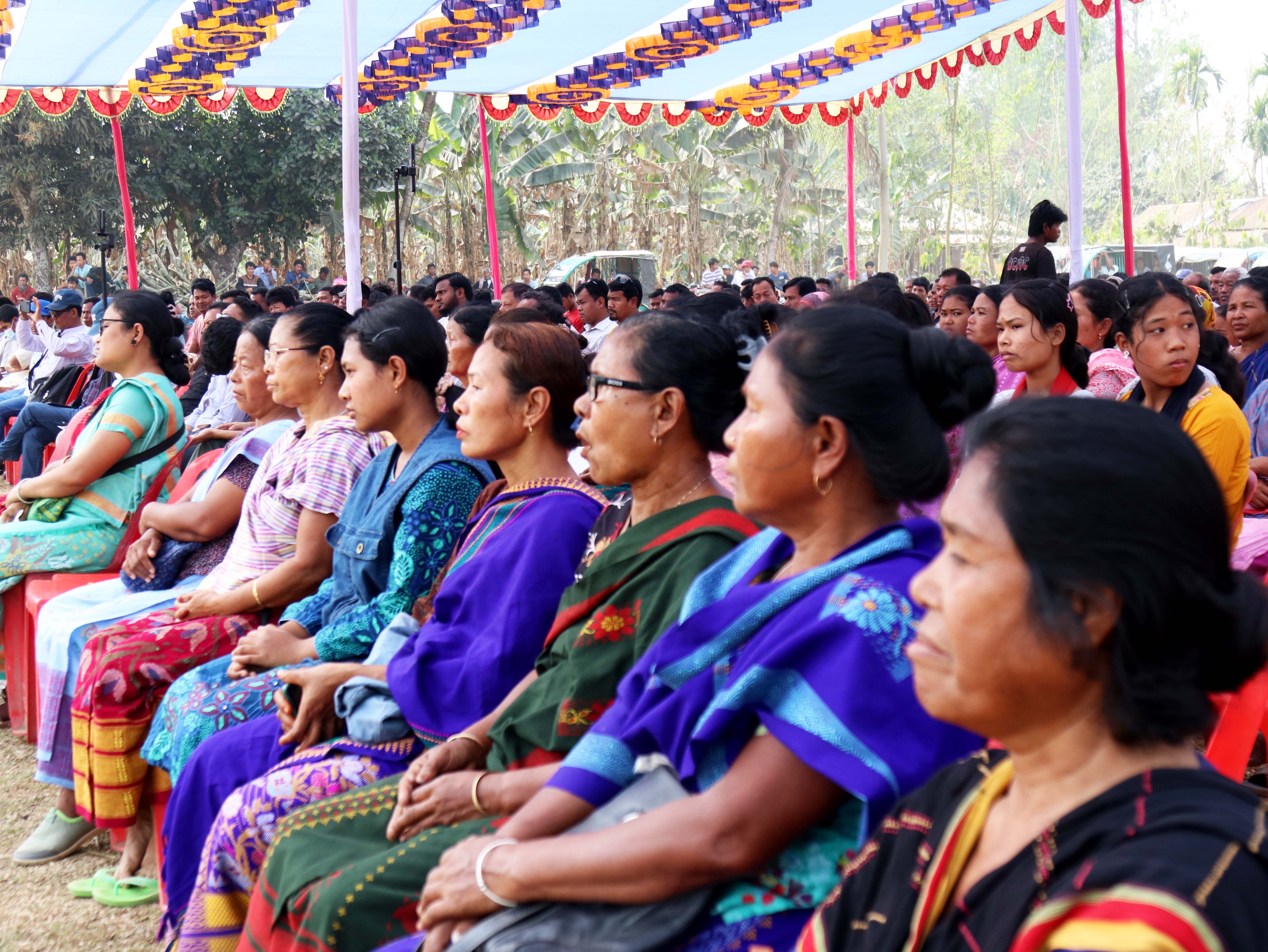
 Chiran spoke at a protest rally on March 6 in Madhupur’s Tangail district, where hundreds of Indigenous students and community members gathered to oppose the project. He said that if the artificial lake and eco-park are built, Indigenous people will lose their agricultural land and the natural forest will be destroyed, leaving the Garo and other Indigenous peoples with no means to sustain their way of life.Bangladesh is home to approximately 400,000 Catholics in a population of nearly 178 million, and more than half of the country’s Catholics come from Indigenous communities.Church voices supportFather Simon Hacha, the vicar general of the Diocese of Mymensingh, which covers the area, said the Church cannot support the government’s plans.“If this project is implemented, the Indigenous people’s cropland will be destroyed and they will face eviction. We think that is what the government wants,” Hacha told EWTN News.“We want to tell the government to back off from such shameful steps. The Catholic Church has always been for justice and has been giving moral support to the Indigenous movement,” he added.Decades-long disputeThe Bangladesh government first proposed an artificial lake and eco-park in the Madhupur forest in 2000. In 2004, at least one Garo man was killed by police gunfire during a protest, and many others were injured. The government subsequently halted the project.In 2026, authorities revived the plan and have already begun excavating the designated area. Indigenous leaders say the project amounts to a long-term strategy to force tribal communities from the region.Janoki Chisim, secretary of the Garo Indigenous Student Union, told EWTN News that the project would be an injustice not only to the forest but also to the people who depend on it.“Let the forest survive in its original form and glory. The Garo and Koch Indigenous people have lived in this forest since time immemorial,” Chisim said.
 
 An excavator digs inside the Madhupur forest in Bangladesh on March 6, 2026, as part of a government project to expand an artificial lake that Indigenous communities say threatens their ancestral land. | Credit: Stephan Uttom Rozario
 
 According to tribal elders, tigers, bears, deer, wild boars, and wild cats once roamed freely in the forest, and hundreds of bird species thrived alongside them. Forest dwellers traditionally collected wild potatoes and medicinal plants from the forest vines. That way of life, residents say, is slowly disappearing.After the Tenancy Act of 1950, the Forest Department encroached on tribal forestland. Successive government projects have steadily eroded the forest’s biodiversity. Remaining forest is being cleared for lakes, entertainment centers, hotels, and resorts, and the local Garo and Koch Indigenous people are being displaced, community leaders say.“If the customary land rights of the tribals are not ensured, a strong movement will be launched in the coming days,” Chisim told EWTN News.Forest officials respondForest officials say the lake is being expanded to 1,165 feet. An existing 665-foot-long lake, dug five decades ago, has silted up, causing a severe water shortage in the forest during the dry season.When rivers and canals dry up, monkeys, hanuman langurs, deer, and other wildlife venture into populated areas in search of water and are sometimes attacked, officials said.“Deer, peacocks, and tortoises in the breeding center also face water shortage. The expansion of this lake is necessary to protect the life of wildlife,” Mosharraf Hossain, a forest official, told EWTN News.Hossain added that no one has customary land rights in the reserved forest and that lakes are not being dug on Garo land. Forest department officials say some youths are spreading unnecessary confusion at the behest of a vested interest group.

‘They want to evict us’: Why Indigenous Catholics fight forest project in Bangladesh #Catholic MADHUPUR, Bangladesh — Indigenous Catholic and tribal leaders in central Bangladesh are warning the government that a stronger protest movement will follow if it does not withdraw a contested forest development project before the end of the Muslim fasting month of Ramadan this week.The Garo and Koch Indigenous peoples say a government plan to dig an artificial lake and build an eco-park in the Madhupur forest — about 94 miles north of the capital, Dhaka — is a pretext for evicting them from ancestral lands they have occupied for generations.“What the government is doing in the name of development is not development. It is a clear plan to evict the Garo and Koch Indigenous from this forest area,” said Toni Chiran, a Catholic from Corpus Christi Church in Jalchatra and president of the Bangladesh Indigenous Youth Forum. A speaker addresses Indigenous Garo people at a protest rally in Madhupur, Bangladesh, on March 6, 2026. | Credit: Stephan Uttom Rozario Chiran spoke at a protest rally on March 6 in Madhupur’s Tangail district, where hundreds of Indigenous students and community members gathered to oppose the project. He said that if the artificial lake and eco-park are built, Indigenous people will lose their agricultural land and the natural forest will be destroyed, leaving the Garo and other Indigenous peoples with no means to sustain their way of life.Bangladesh is home to approximately 400,000 Catholics in a population of nearly 178 million, and more than half of the country’s Catholics come from Indigenous communities.Church voices supportFather Simon Hacha, the vicar general of the Diocese of Mymensingh, which covers the area, said the Church cannot support the government’s plans.“If this project is implemented, the Indigenous people’s cropland will be destroyed and they will face eviction. We think that is what the government wants,” Hacha told EWTN News.“We want to tell the government to back off from such shameful steps. The Catholic Church has always been for justice and has been giving moral support to the Indigenous movement,” he added.Decades-long disputeThe Bangladesh government first proposed an artificial lake and eco-park in the Madhupur forest in 2000. In 2004, at least one Garo man was killed by police gunfire during a protest, and many others were injured. The government subsequently halted the project.In 2026, authorities revived the plan and have already begun excavating the designated area. Indigenous leaders say the project amounts to a long-term strategy to force tribal communities from the region.Janoki Chisim, secretary of the Garo Indigenous Student Union, told EWTN News that the project would be an injustice not only to the forest but also to the people who depend on it.“Let the forest survive in its original form and glory. The Garo and Koch Indigenous people have lived in this forest since time immemorial,” Chisim said. An excavator digs inside the Madhupur forest in Bangladesh on March 6, 2026, as part of a government project to expand an artificial lake that Indigenous communities say threatens their ancestral land. | Credit: Stephan Uttom Rozario According to tribal elders, tigers, bears, deer, wild boars, and wild cats once roamed freely in the forest, and hundreds of bird species thrived alongside them. Forest dwellers traditionally collected wild potatoes and medicinal plants from the forest vines. That way of life, residents say, is slowly disappearing.After the Tenancy Act of 1950, the Forest Department encroached on tribal forestland. Successive government projects have steadily eroded the forest’s biodiversity. Remaining forest is being cleared for lakes, entertainment centers, hotels, and resorts, and the local Garo and Koch Indigenous people are being displaced, community leaders say.“If the customary land rights of the tribals are not ensured, a strong movement will be launched in the coming days,” Chisim told EWTN News.Forest officials respondForest officials say the lake is being expanded to 1,165 feet. An existing 665-foot-long lake, dug five decades ago, has silted up, causing a severe water shortage in the forest during the dry season.When rivers and canals dry up, monkeys, hanuman langurs, deer, and other wildlife venture into populated areas in search of water and are sometimes attacked, officials said.“Deer, peacocks, and tortoises in the breeding center also face water shortage. The expansion of this lake is necessary to protect the life of wildlife,” Mosharraf Hossain, a forest official, told EWTN News.Hossain added that no one has customary land rights in the reserved forest and that lakes are not being dug on Garo land. Forest department officials say some youths are spreading unnecessary confusion at the behest of a vested interest group.

Catholic Indigenous leaders in Bangladesh say they will escalate protests if the government does not halt a forest development project they call a pretext for eviction.
Read More
Pakistani Christians join Muslims for Ramadan meals amid Iran war fallout #Catholic LAHORE, Pakistan — White bedsheets for Muslim worshippers were laid on the grassy lawn outside the Dominican Peace Center in Punjab an hour before the annual interfaith iftar — the fast-breaking meal during Ramadan.The aroma of crispy pakoras (fritters), dried dates, rose-flavored Rooh Afza, and dahi bhallay (lentil dumplings in yogurt) drew guests to the dining tables after they finished reciting their iftar prayers in Lahore, the provincial capital.Dominican Father James Channan, director of the center, has hosted such interfaith gatherings for 25 years in a country where religious tensions have periodically turned violent.
 
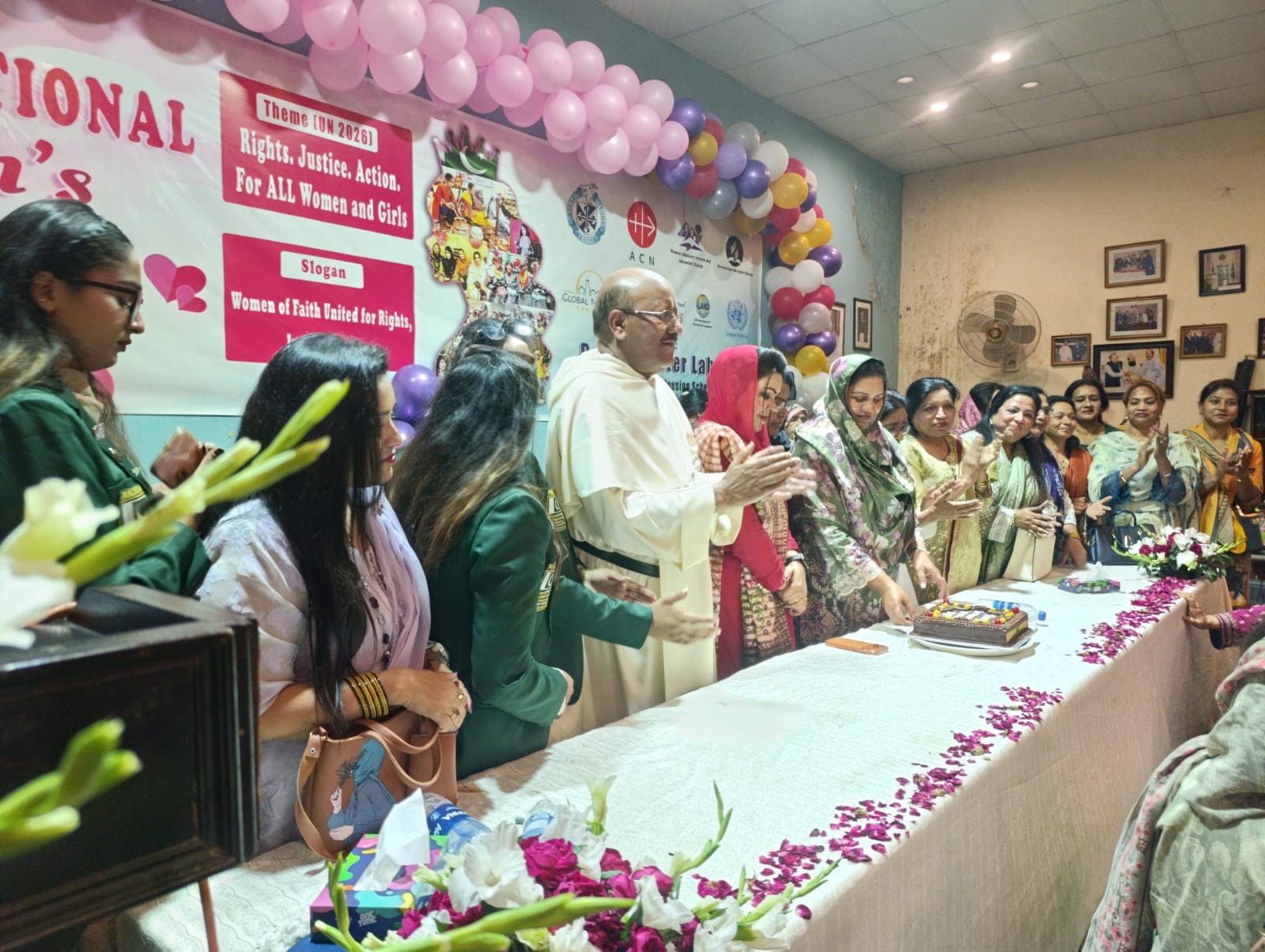
 Dominican Father James Channan speaks at a combined International Women’s Day and interfaith iftar program at the Dominican Peace Center in Lahore, Pakistan, on March 8, 2026. | Credit: Kamran Chaudhry
 
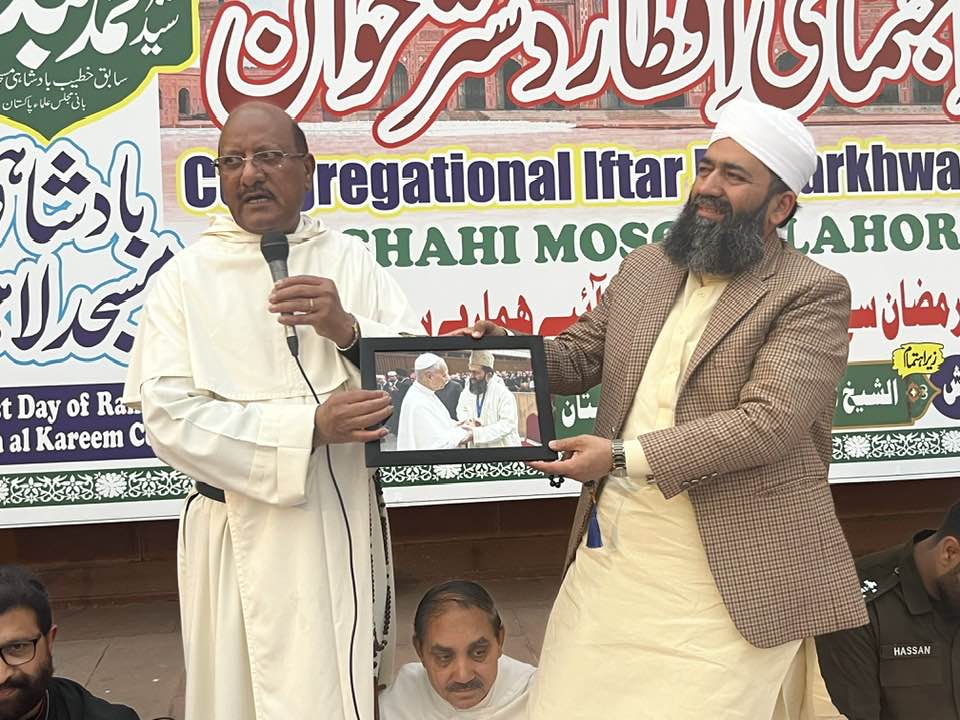
 “Table friendships are very important in our context. People attending such forums highlight them on social media, reaching millions,” he told EWTN News at the sidelines of the program, timed with International Women’s Day on March 8.“The combined meals and prayer services have helped curb trends of church attacks that followed U.S. wars in Muslim countries.”Pakistani Christians have faced multiple terrorist attacks since October 2001, after the United States — seen by many Pakistani Muslims as a Christian nation — launched its military campaign in Afghanistan.“It’s a bitter past. Churches and Christian settlements were considered soft targets. The ongoing conflicts are not crusades; they are wars of interest,” Channan said.Interfaith meals continue despite unrestInterfaith gatherings continued this year even as protests against U.S. and Israeli strikes on Iran left 26 dead in Pakistan.Church leaders joined clerics in prayers for peace and shared meals at mosques, church premises, and hotels across six dioceses and one apostolic vicariate, as Middle East air travel disruption and rising fuel prices added regional tension.Many Pakistanis view the United States and Western Europe as Christian nations, and some militant groups target local Christians as linked to these “Christian countries.”Communal tensions have also erupted locally. In May 2024, a mob attacked 74-year-old Christian Nazir Masih over alleged blasphemy in Sargodha. He later died of his injuries. In August 2023, violence in Jaranwala destroyed 26 churches and 80 Christian homes following allegations of Quran desecration.In a Feb. 17 message, Archbishop Joseph Arshad of Rawalpindi-Islamabad invited Christians and Muslims to offer special prayers for peace as Lent and Ramadan coincided this year. He encouraged people of both faiths “to visit one another, exchange greetings with respect, and unite in serving vulnerable segments of society.”Joint events across PakistanIn Multan, over 82 participants attended a Feb. 28 iftar jointly organized by the Catholic Commission for Inter-Religious Dialogue and Ecumenism; Saiban-e-Pakistan, a state peace initiative; and the Centre of Excellence on Countering Violent Extremism.A day earlier in Lahore, Channan and four Catholic priests attended the fast-breaking event at the Badshahi Mosque, the country’s second-largest mosque. He presented a framed photo of Abdul Khabeer Azad, the mosque’s “khateeb” (prayer leader), who met Pope Leo XIV in October 2025 at the “Christian-Muslim Dialogue and Daring Peace” conference in Rome organized by the Community of Sant’Egidio.
 
 Guests share the interfaith iftar meal at the Dominican Peace Center in Lahore on March 8, 2026. | Credit: Kamran Chaudhry
 
 Among 120 guests at the Dominican iftar was Muslim speaker Shehzad Qaiser. The event, held in collaboration with groups including the Seventh-day Adventist Church, highlighted ongoing social challenges.The head of external affairs at Sundas Foundation, which supports patients with blood disorders, agreed that Christians face discrimination in some offices and some Muslims refuse the food prepared by Christians.“It is very important to share our common practices, joys, and sorrows. Religious leaders have the duty to raise awareness. Sadly some mistake local Christians as ‘kafir’ (infidels),” Qaiser said.“During Ramadan, people distribute free meals to everyone without asking their religion. Blood donors don’t discriminate either. This is the real spirit of Ramadan and Lent.”

Pakistani Christians join Muslims for Ramadan meals amid Iran war fallout #Catholic LAHORE, Pakistan — White bedsheets for Muslim worshippers were laid on the grassy lawn outside the Dominican Peace Center in Punjab an hour before the annual interfaith iftar — the fast-breaking meal during Ramadan.The aroma of crispy pakoras (fritters), dried dates, rose-flavored Rooh Afza, and dahi bhallay (lentil dumplings in yogurt) drew guests to the dining tables after they finished reciting their iftar prayers in Lahore, the provincial capital.Dominican Father James Channan, director of the center, has hosted such interfaith gatherings for 25 years in a country where religious tensions have periodically turned violent. Dominican Father James Channan speaks at a combined International Women’s Day and interfaith iftar program at the Dominican Peace Center in Lahore, Pakistan, on March 8, 2026. | Credit: Kamran Chaudhry “Table friendships are very important in our context. People attending such forums highlight them on social media, reaching millions,” he told EWTN News at the sidelines of the program, timed with International Women’s Day on March 8.“The combined meals and prayer services have helped curb trends of church attacks that followed U.S. wars in Muslim countries.”Pakistani Christians have faced multiple terrorist attacks since October 2001, after the United States — seen by many Pakistani Muslims as a Christian nation — launched its military campaign in Afghanistan.“It’s a bitter past. Churches and Christian settlements were considered soft targets. The ongoing conflicts are not crusades; they are wars of interest,” Channan said.Interfaith meals continue despite unrestInterfaith gatherings continued this year even as protests against U.S. and Israeli strikes on Iran left 26 dead in Pakistan.Church leaders joined clerics in prayers for peace and shared meals at mosques, church premises, and hotels across six dioceses and one apostolic vicariate, as Middle East air travel disruption and rising fuel prices added regional tension.Many Pakistanis view the United States and Western Europe as Christian nations, and some militant groups target local Christians as linked to these “Christian countries.”Communal tensions have also erupted locally. In May 2024, a mob attacked 74-year-old Christian Nazir Masih over alleged blasphemy in Sargodha. He later died of his injuries. In August 2023, violence in Jaranwala destroyed 26 churches and 80 Christian homes following allegations of Quran desecration.In a Feb. 17 message, Archbishop Joseph Arshad of Rawalpindi-Islamabad invited Christians and Muslims to offer special prayers for peace as Lent and Ramadan coincided this year. He encouraged people of both faiths “to visit one another, exchange greetings with respect, and unite in serving vulnerable segments of society.”Joint events across PakistanIn Multan, over 82 participants attended a Feb. 28 iftar jointly organized by the Catholic Commission for Inter-Religious Dialogue and Ecumenism; Saiban-e-Pakistan, a state peace initiative; and the Centre of Excellence on Countering Violent Extremism.A day earlier in Lahore, Channan and four Catholic priests attended the fast-breaking event at the Badshahi Mosque, the country’s second-largest mosque. He presented a framed photo of Abdul Khabeer Azad, the mosque’s “khateeb” (prayer leader), who met Pope Leo XIV in October 2025 at the “Christian-Muslim Dialogue and Daring Peace” conference in Rome organized by the Community of Sant’Egidio. Guests share the interfaith iftar meal at the Dominican Peace Center in Lahore on March 8, 2026. | Credit: Kamran Chaudhry Among 120 guests at the Dominican iftar was Muslim speaker Shehzad Qaiser. The event, held in collaboration with groups including the Seventh-day Adventist Church, highlighted ongoing social challenges.The head of external affairs at Sundas Foundation, which supports patients with blood disorders, agreed that Christians face discrimination in some offices and some Muslims refuse the food prepared by Christians.“It is very important to share our common practices, joys, and sorrows. Religious leaders have the duty to raise awareness. Sadly some mistake local Christians as ‘kafir’ (infidels),” Qaiser said.“During Ramadan, people distribute free meals to everyone without asking their religion. Blood donors don’t discriminate either. This is the real spirit of Ramadan and Lent.”

Church leaders and Muslim clerics shared Ramadan fast-breaking meals across six Pakistani dioceses this year as the overlap of Lent and Ramadan inspired joint prayers for peace.
Read More
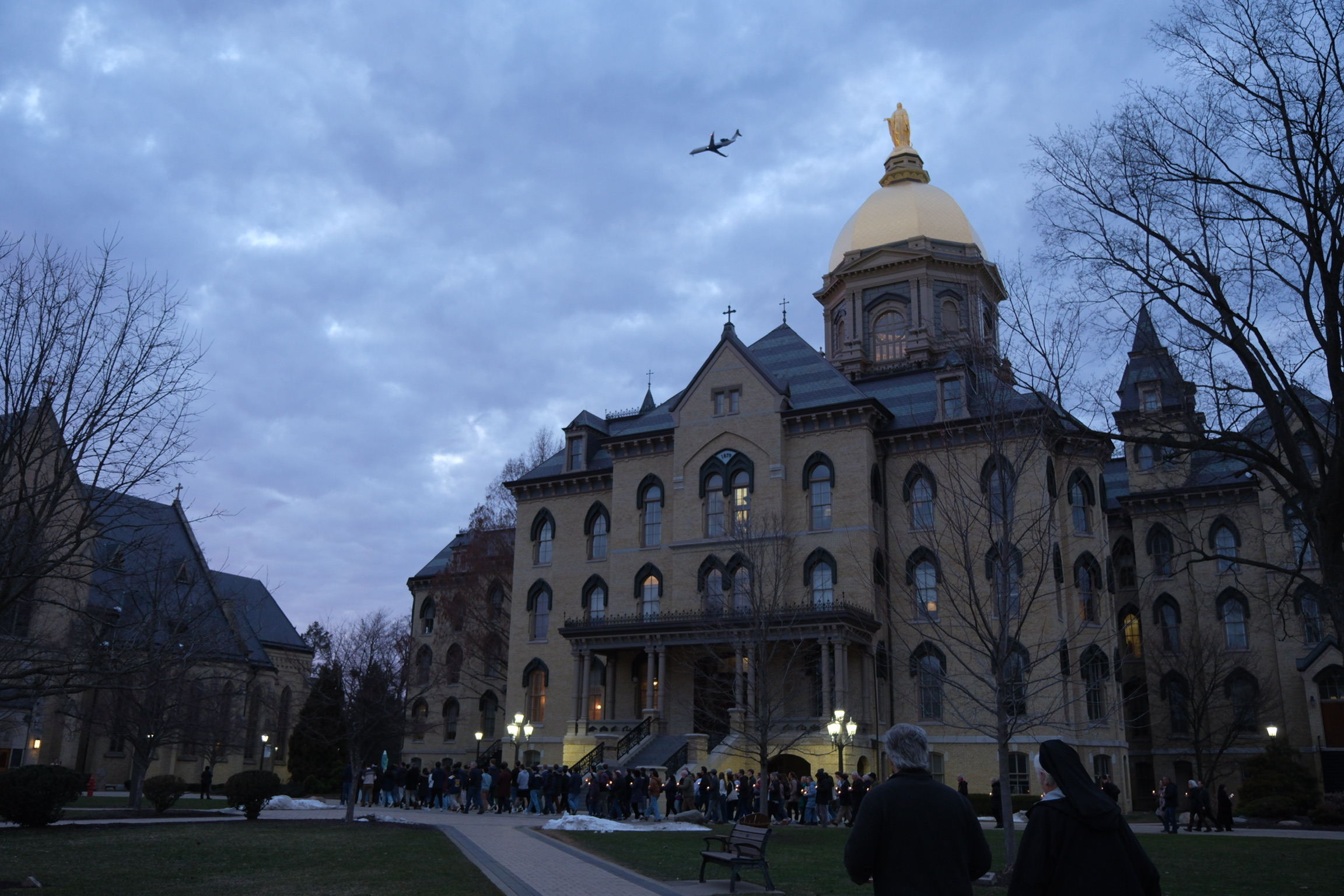
Students pray for Notre Dame’s Catholic identity after dispute over pro-abortion professor #Catholic Students at the University of Notre Dame gathered on Feb. 27 for a candlelit prayer service to offer thanksgiving for the university’s Catholic identity.The event was originally planned as a protest in response to the university’s appointment of abortion advocate Professor Susan Ostermann as the head of the Liu Institute for Asia and Asian Studies. After Ostermann withdrew from the position earlier this week, the student organizers turned the event into a prayer vigil offered “in thanksgiving and support for Notre Dame’s Catholic mission.”A group of about 150 students, community members, faculty and priests from the Congregation of Holy Cross met on the south quad of campus, where they were greeted by students Luke Woodyard and Gabe Ortner, the event’s organizers. After a blessing of candles, those present processed to the Grotto of Our Lady of Lourdes, where they prayed the Rosary.
 
 Students gather to pray the Rosary at the Grotto of Our Lady of Lourdes at the University of Notre Dame, Friday, Feb. 27, 2026 | Credit: Notre Dame Right to Life
 
 The event was co-sponsored by the major Catholic clubs on campus: Right to Life, Militia Immaculata, Children of Mary, the Knights of Columbus, and Students for Child-Oriented Policy.According to Woodyard, while a protest would have drawn a greater number of attendees, organizers agreed that changing the event to a prayer vigil would be a more appropriate response to the news of Ostermann’s withdrawal.“The big reason we changed the protest to a prayer vigil was because we won, we got Ostermann to not be appointed. And even though this was a victory in a battle, not the [larger] war, we can celebrate this victory now," Woodyard said.“If we came here with a bunch of protests, it would make us seem like we weren't grateful for the university listening to us," he added. "And we really are. We praise [President] Father [Robert] Dowd for any impact that he had on Ostermann withdrawing, and we pray for the future of Notre Dame.”Ostermann, whose appointment was announced in January, has publicly supported abortion on multiple occasions, calling it “freedom-enhancing” and “consistent with integral human development that emphasizes social justice and human dignity."She has also argued that the pro-life movement has its roots in “white supremacy and racism” and has described pregnancy resource centers “anti-abortion propaganda sites."Since the appointment was announced in January, the university has faced backlash from Catholics across the country, including students, alumni, faculty, and more than a dozen bishops. The university continued to defend Ostermann’s promotion amid the criticism, citing her expertise in Asian studies and her past research. When Ostermann withdrew from the position on Feb. 26, students were surprised at the unexpected reversal but grateful for the desired outcome.Maria Madigan, a sophomore who serves as the head of service for Notre Dame Right to Life, told EWTN News that the grateful and loving spirit of the prayer service was the same spirit in which the protest had been planned.“[The planned protest] was never filled with hate or any [kind of] malicious intent. …We love Notre Dame because of her Catholic mission and her identity," she said. "We wanted to protest the Ostermann appointment because we felt it that went against our mission. And then when Ostermann withdrew, the focus shifted, because… we want to think about having a positive vision going forward for Notre Dame.”Regarding Ostermann’s withdrawal, Woodyard said: “We don't know what happened behind the scenes — hopefully that will come out in the coming weeks — but what we do know is that she did withdraw, and so we're thankful for that, and that's why we're here, but at some point, we have to make sure this doesn't happen again.”Organizer Gabe Ortner emphasized that although the planned protest was turned into a prayer vigil, the defense of Notre Dame’s Catholic mission is far from over.“We have to recognize the work that Father Dowd has done in leading this university. He's clearly been working tirelessly on this with Bishop Rhoades, and I admire the direction that he seems to be taking Notre Dame in, and that gives me a lot of hope," Ortner said. "However, at the same time, there also seem to be particular members of the administration who do not entirely share the Catholic vision of Notre Dame," he said.“Ultimately, Notre Dame should be united in its Catholic identity among all of the members of administration, with no exception.”If the protest had gone forward, speakers would have included Anna Kelley,  president of the school's Right to Life group; Lucy Spence, editor-in-chief of the Irish Rover student newspaper; and Theo Austin, vice president of Students for Child-Oriented Policy.Students have expressed concern that the appointment shows a willingness of university administration — particularly on the part of Provost John McGreevy, who approved the appointment — to deviate from the university’s Catholic mission.Max McNiff, a student who attended the prayer vigil, shared his hopes that the controversy that precipitated Ostermann’s withdrawal would send a clear signal to the university.“I think this sets a sets a good precedent for stuff like this in the future. I think that the administration is going to be very cautious, and hopefully nothing like this will happen again.”“I think this also sets a precedent that researchers who are considered maybe ‘elite’ by secular academic standards, but who very manifestly publicly contradict Catholic doctrine [on matters] such as abortion, should not expect to come into leadership positions at Notre Dame," he said. Ultimately, however, students expressed their gratitude at the reversal of Ostermann’s appointment, calling it a “victory” in the battle for Notre Dame’s Catholic identity.“Having the opportunity to gather together and to thank God for his faithfulness, and the faithfulness of the university, is really beautiful, and I think you can see it in the passion of the students," Madigan said. "Everyone here knew it wasn’t a protest anymore, but they were still coming.”“We're all here because we care and we love this university and we want to uphold its Catholic mission and its pro-life mission as much as possible," she said. "And at the end of the day, whether one person showed up, or whether 200 people showed up, this was a prayer service, and it was to God, and the words that were said here were to him." "And that's what I really want the focus of this whole event to be on, praise and thanksgiving to the Lord for his faithfulness and to Our Lady for protecting her university.”

Students pray for Notre Dame’s Catholic identity after dispute over pro-abortion professor #Catholic Students at the University of Notre Dame gathered on Feb. 27 for a candlelit prayer service to offer thanksgiving for the university’s Catholic identity.The event was originally planned as a protest in response to the university’s appointment of abortion advocate Professor Susan Ostermann as the head of the Liu Institute for Asia and Asian Studies. After Ostermann withdrew from the position earlier this week, the student organizers turned the event into a prayer vigil offered “in thanksgiving and support for Notre Dame’s Catholic mission.”A group of about 150 students, community members, faculty and priests from the Congregation of Holy Cross met on the south quad of campus, where they were greeted by students Luke Woodyard and Gabe Ortner, the event’s organizers. After a blessing of candles, those present processed to the Grotto of Our Lady of Lourdes, where they prayed the Rosary. Students gather to pray the Rosary at the Grotto of Our Lady of Lourdes at the University of Notre Dame, Friday, Feb. 27, 2026 | Credit: Notre Dame Right to Life The event was co-sponsored by the major Catholic clubs on campus: Right to Life, Militia Immaculata, Children of Mary, the Knights of Columbus, and Students for Child-Oriented Policy.According to Woodyard, while a protest would have drawn a greater number of attendees, organizers agreed that changing the event to a prayer vigil would be a more appropriate response to the news of Ostermann’s withdrawal.“The big reason we changed the protest to a prayer vigil was because we won, we got Ostermann to not be appointed. And even though this was a victory in a battle, not the [larger] war, we can celebrate this victory now," Woodyard said.“If we came here with a bunch of protests, it would make us seem like we weren't grateful for the university listening to us," he added. "And we really are. We praise [President] Father [Robert] Dowd for any impact that he had on Ostermann withdrawing, and we pray for the future of Notre Dame.”Ostermann, whose appointment was announced in January, has publicly supported abortion on multiple occasions, calling it “freedom-enhancing” and “consistent with integral human development that emphasizes social justice and human dignity."She has also argued that the pro-life movement has its roots in “white supremacy and racism” and has described pregnancy resource centers “anti-abortion propaganda sites."Since the appointment was announced in January, the university has faced backlash from Catholics across the country, including students, alumni, faculty, and more than a dozen bishops. The university continued to defend Ostermann’s promotion amid the criticism, citing her expertise in Asian studies and her past research. When Ostermann withdrew from the position on Feb. 26, students were surprised at the unexpected reversal but grateful for the desired outcome.Maria Madigan, a sophomore who serves as the head of service for Notre Dame Right to Life, told EWTN News that the grateful and loving spirit of the prayer service was the same spirit in which the protest had been planned.“[The planned protest] was never filled with hate or any [kind of] malicious intent. …We love Notre Dame because of her Catholic mission and her identity," she said. "We wanted to protest the Ostermann appointment because we felt it that went against our mission. And then when Ostermann withdrew, the focus shifted, because… we want to think about having a positive vision going forward for Notre Dame.”Regarding Ostermann’s withdrawal, Woodyard said: “We don't know what happened behind the scenes — hopefully that will come out in the coming weeks — but what we do know is that she did withdraw, and so we're thankful for that, and that's why we're here, but at some point, we have to make sure this doesn't happen again.”Organizer Gabe Ortner emphasized that although the planned protest was turned into a prayer vigil, the defense of Notre Dame’s Catholic mission is far from over.“We have to recognize the work that Father Dowd has done in leading this university. He's clearly been working tirelessly on this with Bishop Rhoades, and I admire the direction that he seems to be taking Notre Dame in, and that gives me a lot of hope," Ortner said. "However, at the same time, there also seem to be particular members of the administration who do not entirely share the Catholic vision of Notre Dame," he said.“Ultimately, Notre Dame should be united in its Catholic identity among all of the members of administration, with no exception.”If the protest had gone forward, speakers would have included Anna Kelley,  president of the school's Right to Life group; Lucy Spence, editor-in-chief of the Irish Rover student newspaper; and Theo Austin, vice president of Students for Child-Oriented Policy.Students have expressed concern that the appointment shows a willingness of university administration — particularly on the part of Provost John McGreevy, who approved the appointment — to deviate from the university’s Catholic mission.Max McNiff, a student who attended the prayer vigil, shared his hopes that the controversy that precipitated Ostermann’s withdrawal would send a clear signal to the university.“I think this sets a sets a good precedent for stuff like this in the future. I think that the administration is going to be very cautious, and hopefully nothing like this will happen again.”“I think this also sets a precedent that researchers who are considered maybe ‘elite’ by secular academic standards, but who very manifestly publicly contradict Catholic doctrine [on matters] such as abortion, should not expect to come into leadership positions at Notre Dame," he said. Ultimately, however, students expressed their gratitude at the reversal of Ostermann’s appointment, calling it a “victory” in the battle for Notre Dame’s Catholic identity.“Having the opportunity to gather together and to thank God for his faithfulness, and the faithfulness of the university, is really beautiful, and I think you can see it in the passion of the students," Madigan said. "Everyone here knew it wasn’t a protest anymore, but they were still coming.”“We're all here because we care and we love this university and we want to uphold its Catholic mission and its pro-life mission as much as possible," she said. "And at the end of the day, whether one person showed up, or whether 200 people showed up, this was a prayer service, and it was to God, and the words that were said here were to him." "And that's what I really want the focus of this whole event to be on, praise and thanksgiving to the Lord for his faithfulness and to Our Lady for protecting her university.”

The event was originally planned as a protest in response to the university’s appointment of abortion advocate Professor Susan Ostermann as the head of the Liu Institute for Asia and Asian Studies.
Read More
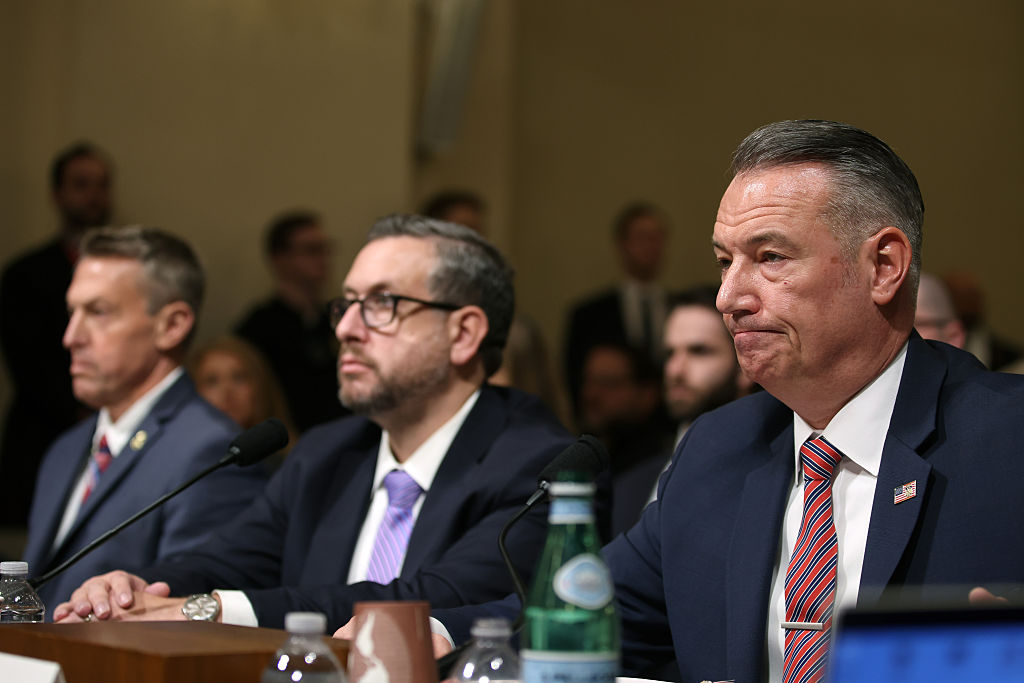
Democratic lawmaker asks ICE director if he’s ‘going to hell’ in fiery hearing #Catholic A Democratic lawmaker asked U.S. Immigration and Customs Enforcement (ICE) Acting Director Todd Lyons whether he believes he is “going to hell” in a contentious hearing with the House Homeland Security Committee on Tuesday, Feb. 10.Lyons — along with U.S. Citizenship and Immigration Services Director Joseph Edlow and Customs and Border Protection Commissioner Rodney Scott — testified before the committee as Congress negotiates potential reforms and funding for the agencies.On Feb. 3, Congress voted to extend funding for the Department of Homeland Security (DHS), which operates the three agencies, until Feb. 13 to end a four-day partial government shutdown. A deal has not yet been reached to extend funding further.At the hearing, Democratic lawmakers accused ICE of terrorizing the streets, using excessive force, and lacking accountability. Republicans defended ICE and rebuked Democratic officials in certain states for refusing to cooperate with federal immigration enforcement.One of the fiercest exchanges came from Rep. LaMonica McIver, D-New Jersey, who praised protesters for “peacefully rejecting your cruel agenda in the streets.” She said ICE believes it is “the highest power who decides which people deserve dignity, protection, and due process” and said “you are wrong [and] we are here for answers.”“How do you think judgment day will work for you, with so much blood on your hands?” McIver asked Lyons, to which he responded that he would not entertain the question.“Do you think you’re going to hell?” she followed up, before being chastised by Committee Chair Andrew Garbarino, R-New York, who told her to avoid personal attacks on witnesses and maintain decorum.McIver said “you guys are always talking about religion here, and the Bible.” She changed the subject slightly and asked Lyons whether he could name agencies that “routinely kill American citizens and still get funding,” which he also said was a question he was “not going to entertain.”“Once again, questions that you cannot answer and that is exactly why … we should not be funding this agency,” McIver said. “The people are watching you; they are watching you. And this is why we need to abolish ICE.”Lawmakers debate ICE operations, future of agencyThe killings of two American citizens at ICE protests — Renée Good and Alex Pretti — were a focal point of the hearing, and two examples that Democrats used to accuse ICE of excessive force and lacking accountability.Democratic Rep. Eric Swalwell, D-California, referenced both killings and criticized DHS Secretary Kristi Noem for referring to those who died as “domestic terrorists.” He asked Lyons whether he would apologize to the families or reject that characterization.Lyons said he would not comment on an ongoing investigation but would welcome a private conversation with the families.Democrats are split on whether to reform ICE or abolish it altogether.Rep. Seth Magaziner, D-Rhode Island, brought up instances in which he believes ICE used excessive force and suggested reforms are necessary before Congress awards funding.“It’s not just the actions of the agents in the field,” he said. “It is the lack of accountability from the top that has caused public trust to erode, and there needs to be major reforms before we vote to give any of you any more funding.”Alternatively, Rep. Delia Ramirez, D-Illinois, called for abolishing ICE and the entire DHS, which Congress formed to address terrorism threats after the Sept. 11, 2001, attacks. Ramirez said DHS was created to “violate our rights under the pretense of securing our safety.”“I’m going to say it loud and clear and I’m proud to stand by what I say,” she said. “DHS cannot be reformed. It must be dismantled and something new must take its place.”Rep. Michael McCaul, R-Texas, commented during the hearing that Democratic lawmakers “have called to abolish ICE [and] now they’re trying to shut it down” amid the negotiations and discussion during the hearing.He criticized the lack of coordination from Democratic-led “sanctuary” states and cities, which do not cooperate with ICE, saying the policies in Minneapolis “created a perfect storm for our officers being thrown into this situation.”Rep. August Pfluger, R-Texas, similarly expressed concern about ICE funding moving forward, based on the debates between the two parties.“It seems like one side of the aisle is in favor of open borders and wants to abolish ICE … and the other side of the aisle wants to enforce laws that are on the books,” he said.During the question and answer, Lyons expressed worry about the rhetoric from Democrats and noted that threats and assaults against ICE agents are on the rise. He said agents are trying to “keep America safe, restore order to our communities, [and] return the rule of law to this country.”“Those who illegally enter our country must be held accountable,” he said.Scott also showed concerns about the ongoing debate and expressed hope that DHS could receive support from both Republicans and Democrats.“I believe consistency and seeing support from the leadership on both sides of this building and the president is very important for our security,” he said. “I think the rhetoric and the … politicizing of law enforcement in general detracts from the general morale of our personnel.”Andrew Arthur, a resident fellow in law and policy at the Center for Immigration Studies, told “EWTN News Nightly” that he sees “much of [the Democratic threats to halt funding] as political theater,” noting that ICE will continue to operate regardless of whether Congress passes the funding bill.He said Democrats hope to take away an issue that made Trump popular during the 2024 election “and turn it into a bad issue for Republicans” in the midterms.Arthur said there may be some shifts in ICE’s approach in Minneapolis now that Border Czar Tom Homan is involved in seeking the “cooperation of state and city governments” that have been “reluctant, if not hostile” to immigration enforcement over the past year.The United States Conference of Catholic Bishops (USCCB) in November 2025 approved a special message with a 216-5 vote that declared opposition to “the indiscriminate mass deportation of people.”Late last month, about 300 Catholic leaders — including 15 bishops — asked Congress to reject ICE funding if the legislation fails to include reforms that have protections for migrants.

Democratic lawmaker asks ICE director if he’s ‘going to hell’ in fiery hearing #Catholic A Democratic lawmaker asked U.S. Immigration and Customs Enforcement (ICE) Acting Director Todd Lyons whether he believes he is “going to hell” in a contentious hearing with the House Homeland Security Committee on Tuesday, Feb. 10.Lyons — along with U.S. Citizenship and Immigration Services Director Joseph Edlow and Customs and Border Protection Commissioner Rodney Scott — testified before the committee as Congress negotiates potential reforms and funding for the agencies.On Feb. 3, Congress voted to extend funding for the Department of Homeland Security (DHS), which operates the three agencies, until Feb. 13 to end a four-day partial government shutdown. A deal has not yet been reached to extend funding further.At the hearing, Democratic lawmakers accused ICE of terrorizing the streets, using excessive force, and lacking accountability. Republicans defended ICE and rebuked Democratic officials in certain states for refusing to cooperate with federal immigration enforcement.One of the fiercest exchanges came from Rep. LaMonica McIver, D-New Jersey, who praised protesters for “peacefully rejecting your cruel agenda in the streets.” She said ICE believes it is “the highest power who decides which people deserve dignity, protection, and due process” and said “you are wrong [and] we are here for answers.”“How do you think judgment day will work for you, with so much blood on your hands?” McIver asked Lyons, to which he responded that he would not entertain the question.“Do you think you’re going to hell?” she followed up, before being chastised by Committee Chair Andrew Garbarino, R-New York, who told her to avoid personal attacks on witnesses and maintain decorum.McIver said “you guys are always talking about religion here, and the Bible.” She changed the subject slightly and asked Lyons whether he could name agencies that “routinely kill American citizens and still get funding,” which he also said was a question he was “not going to entertain.”“Once again, questions that you cannot answer and that is exactly why … we should not be funding this agency,” McIver said. “The people are watching you; they are watching you. And this is why we need to abolish ICE.”Lawmakers debate ICE operations, future of agencyThe killings of two American citizens at ICE protests — Renée Good and Alex Pretti — were a focal point of the hearing, and two examples that Democrats used to accuse ICE of excessive force and lacking accountability.Democratic Rep. Eric Swalwell, D-California, referenced both killings and criticized DHS Secretary Kristi Noem for referring to those who died as “domestic terrorists.” He asked Lyons whether he would apologize to the families or reject that characterization.Lyons said he would not comment on an ongoing investigation but would welcome a private conversation with the families.Democrats are split on whether to reform ICE or abolish it altogether.Rep. Seth Magaziner, D-Rhode Island, brought up instances in which he believes ICE used excessive force and suggested reforms are necessary before Congress awards funding.“It’s not just the actions of the agents in the field,” he said. “It is the lack of accountability from the top that has caused public trust to erode, and there needs to be major reforms before we vote to give any of you any more funding.”Alternatively, Rep. Delia Ramirez, D-Illinois, called for abolishing ICE and the entire DHS, which Congress formed to address terrorism threats after the Sept. 11, 2001, attacks. Ramirez said DHS was created to “violate our rights under the pretense of securing our safety.”“I’m going to say it loud and clear and I’m proud to stand by what I say,” she said. “DHS cannot be reformed. It must be dismantled and something new must take its place.”Rep. Michael McCaul, R-Texas, commented during the hearing that Democratic lawmakers “have called to abolish ICE [and] now they’re trying to shut it down” amid the negotiations and discussion during the hearing.He criticized the lack of coordination from Democratic-led “sanctuary” states and cities, which do not cooperate with ICE, saying the policies in Minneapolis “created a perfect storm for our officers being thrown into this situation.”Rep. August Pfluger, R-Texas, similarly expressed concern about ICE funding moving forward, based on the debates between the two parties.“It seems like one side of the aisle is in favor of open borders and wants to abolish ICE … and the other side of the aisle wants to enforce laws that are on the books,” he said.During the question and answer, Lyons expressed worry about the rhetoric from Democrats and noted that threats and assaults against ICE agents are on the rise. He said agents are trying to “keep America safe, restore order to our communities, [and] return the rule of law to this country.”“Those who illegally enter our country must be held accountable,” he said.Scott also showed concerns about the ongoing debate and expressed hope that DHS could receive support from both Republicans and Democrats.“I believe consistency and seeing support from the leadership on both sides of this building and the president is very important for our security,” he said. “I think the rhetoric and the … politicizing of law enforcement in general detracts from the general morale of our personnel.”Andrew Arthur, a resident fellow in law and policy at the Center for Immigration Studies, told “EWTN News Nightly” that he sees “much of [the Democratic threats to halt funding] as political theater,” noting that ICE will continue to operate regardless of whether Congress passes the funding bill.He said Democrats hope to take away an issue that made Trump popular during the 2024 election “and turn it into a bad issue for Republicans” in the midterms.Arthur said there may be some shifts in ICE’s approach in Minneapolis now that Border Czar Tom Homan is involved in seeking the “cooperation of state and city governments” that have been “reluctant, if not hostile” to immigration enforcement over the past year.The United States Conference of Catholic Bishops (USCCB) in November 2025 approved a special message with a 216-5 vote that declared opposition to “the indiscriminate mass deportation of people.”Late last month, about 300 Catholic leaders — including 15 bishops — asked Congress to reject ICE funding if the legislation fails to include reforms that have protections for migrants.

Top U.S. immigration officials defended their policies during a contentious hearing as lawmakers continue to negotiate potential ICE funding and reforms.
Read More