Rhetoric

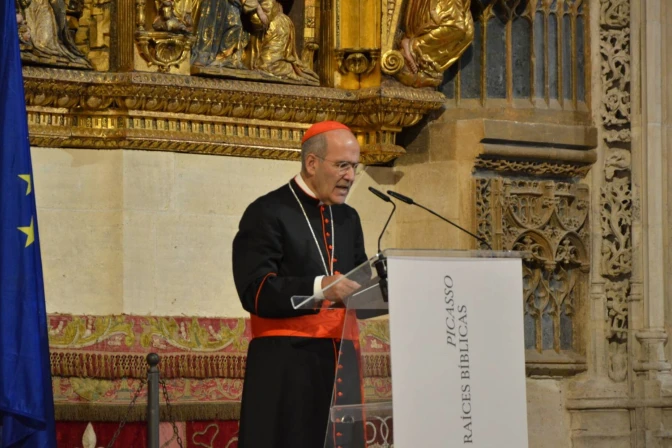
‘Biblical Roots’: Picasso’s spiritual ‘sensibilities’ on display at Burgos Cathedral #Catholic The Burgos Cathedral in Spain is hosting an exhibition of 44 works by Pablo Picasso titled “Biblical Roots,” which explores the biblical essence and Christian origins present in the Spanish painter’s work.Among those attending the March 2 opening of the exhibit were Cardinal José Tolentino de Mendonça, prefect of the Dicastery for Culture and Education, Queen Sofía, and Bernard Ruiz-Picasso, the artist’s grandson and president of the Bernard Ruiz-Picasso Foundation for Art (FABA, by its Spanish acronym).The cardinal emphasized during the opening that half a century after the artist’s death, “one of the least examined dimensions of Pablo Picasso is his radical exploration of transcendence,” according to a statement from the Archdiocese of Burgos. The cardinal also remarked that though the artist declared he had no faith, “he never abandoned the symbolic foundation of biblical and Christian tradition,” which constitutes “a generative tension throughout his work.”
 
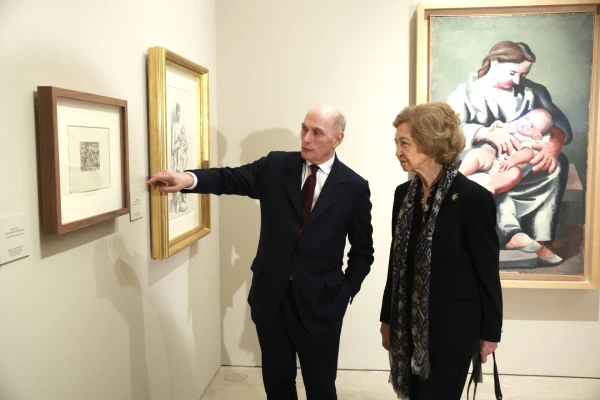
 Queen Sofía at the exhibition in Burgos Cathedral. | Credit: Archdiocese of Burgos
 
 He said the Bible was for Picasso a “profound structure” of his sensibility, “an inner interpretive key forged in the sensory experience of the liturgy and the sacred Catholic imagery of his childhood.”He emphasized that in many of Picasso’s works, “the body of Christ becomes an archetype of human suffering,” particularly visible in the painting “Guernica,” “where the rhetoric of sacred iconography emerges as a language of pain.”For the cardinal, this exhibition also constitutes “an exemplary act of cultural dialogue: The cathedral and Picasso are not viewed as separate entities, but rather they challenge and illuminate each other by addressing the ultimate questions about meaning, suffering, and fraternity.”On behalf of Pope Leo XIV, he encouraged continued promotion of an authentic dialogue between Christianity and contemporary culture, “convinced that the artistic experience demands taking a broad view capable of recognizing the spiritual depth that dwells even in those who do not profess to be believers.” The opening of the exhibition — organized by the Archdiocese of Burgos, the Metropolitan Chapter, the FABA Foundation, and the Burgos Consulate of the Sea Foundation — was also attended by the vicar general of the archdiocese, Father Carlos Izquierdo Yusta, and Archbishop Emeritus Fidel Herráez Vegas, as well as other local officials.For Archbishop Mario Iceta of Burgos, the exhibition “constitutes a new milestone in the cathedral’s historical dialogue with culture.”He also recalled that the Burgos Cathedral, since the laying of its foundation stone by King St. Ferdinand (1199–1252), “has integrated all artistic styles throughout the centuries like a living organism,” and that today it also seeks to open itself up to contemporary culture through the work Picasso, a “leading and highly influential” artist.The artist’s grandson emphasized that the exhibition also has a profound meaning for the Ruiz-Picasso family, since “the artist visited the church ‘incognito’ in 1936, accompanied by his wife and son,” in what would be his last visit to Spain.This story was first published by ACI Prensa, the Spanish-language sister service of EWTN News. It has been translated and adapted by EWTN News English.

‘Biblical Roots’: Picasso’s spiritual ‘sensibilities’ on display at Burgos Cathedral #Catholic The Burgos Cathedral in Spain is hosting an exhibition of 44 works by Pablo Picasso titled “Biblical Roots,” which explores the biblical essence and Christian origins present in the Spanish painter’s work.Among those attending the March 2 opening of the exhibit were Cardinal José Tolentino de Mendonça, prefect of the Dicastery for Culture and Education, Queen Sofía, and Bernard Ruiz-Picasso, the artist’s grandson and president of the Bernard Ruiz-Picasso Foundation for Art (FABA, by its Spanish acronym).The cardinal emphasized during the opening that half a century after the artist’s death, “one of the least examined dimensions of Pablo Picasso is his radical exploration of transcendence,” according to a statement from the Archdiocese of Burgos. The cardinal also remarked that though the artist declared he had no faith, “he never abandoned the symbolic foundation of biblical and Christian tradition,” which constitutes “a generative tension throughout his work.” Queen Sofía at the exhibition in Burgos Cathedral. | Credit: Archdiocese of Burgos He said the Bible was for Picasso a “profound structure” of his sensibility, “an inner interpretive key forged in the sensory experience of the liturgy and the sacred Catholic imagery of his childhood.”He emphasized that in many of Picasso’s works, “the body of Christ becomes an archetype of human suffering,” particularly visible in the painting “Guernica,” “where the rhetoric of sacred iconography emerges as a language of pain.”For the cardinal, this exhibition also constitutes “an exemplary act of cultural dialogue: The cathedral and Picasso are not viewed as separate entities, but rather they challenge and illuminate each other by addressing the ultimate questions about meaning, suffering, and fraternity.”On behalf of Pope Leo XIV, he encouraged continued promotion of an authentic dialogue between Christianity and contemporary culture, “convinced that the artistic experience demands taking a broad view capable of recognizing the spiritual depth that dwells even in those who do not profess to be believers.” The opening of the exhibition — organized by the Archdiocese of Burgos, the Metropolitan Chapter, the FABA Foundation, and the Burgos Consulate of the Sea Foundation — was also attended by the vicar general of the archdiocese, Father Carlos Izquierdo Yusta, and Archbishop Emeritus Fidel Herráez Vegas, as well as other local officials.For Archbishop Mario Iceta of Burgos, the exhibition “constitutes a new milestone in the cathedral’s historical dialogue with culture.”He also recalled that the Burgos Cathedral, since the laying of its foundation stone by King St. Ferdinand (1199–1252), “has integrated all artistic styles throughout the centuries like a living organism,” and that today it also seeks to open itself up to contemporary culture through the work Picasso, a “leading and highly influential” artist.The artist’s grandson emphasized that the exhibition also has a profound meaning for the Ruiz-Picasso family, since “the artist visited the church ‘incognito’ in 1936, accompanied by his wife and son,” in what would be his last visit to Spain.This story was first published by ACI Prensa, the Spanish-language sister service of EWTN News. It has been translated and adapted by EWTN News English.

While Pablo Picasso was a professed atheist, a new exhibit in Spain highlights the spiritual sensibilities of his art.
Read More
43 Catholic Democrats pledge migrant solidarity, invoke Leo XIV, Francis #Catholic More than 40 Catholic Democrats in the House of Representatives signed onto a statement of principles regarding immigration, which urged “solidarity” with migrants and cited Catholic social teaching and the visions of Pope Francis and Pope Leo XIV to back up their positions.The statement comes as the U.S. Conference of Catholic Bishops (USCCB) continues to speak out against indiscriminate mass deportations. Lawmakers are also negotiating an end to a partial government shutdown, which was spurred by debates about funding and potential reforms for immigration enforcement.“We feel called in solidarity to stand with immigrants — especially those who are poor, marginalized, or fleeing hardship — and to ensure they are treated with dignity, justice, and compassion,” the statement said.“As Catholics and elected officials, we believe that addressing long-standing inequities and expanding meaningful opportunities for immigrants is an essential part of our responsibility to community and to those most in need,” the lawmakers said.The statement was led by Rep. Rosa L. DeLauro, D-Connecticut, and signed by former House Speaker Nancy Pelosi, D-California, and 41 other Catholic Democrats. No Republicans signed onto the statement.The Catholic Democrats said their position is rooted in three principles of Catholic social teaching on immigration: that people have a right to migrate to sustain their lives and the lives of their families, that nations have a right to regulate borders, and that all enforcement must be consistent with justice and mercy.In their statement, they said Jesus Christ “identifies with the migrant” when he says in Matthew 25:35: “I was … a stranger and you welcomed me.” They also cited Pope Leo XIV’s encyclical Dilexi Te, commenting on migration, in which he said the Church knows that “in every rejected migrant, it is Christ himself who knocks at the door of the community.”They quoted Pope Francis’ 2019 message for the World Day of Migrants and Refugees, in which the former pontiff said the Church’s response to immigration can be summed up in four verbs: “welcome, protect, promote, and integrate.”The statement recognizes that regulations on immigration are legitimate, citing the Catechism of the Catholic Church, which teaches that “political authorities, for the sake of the common good for which they are responsible, may make the exercise of the right to immigrate subject to various juridical conditions.”“Catholic social teaching approaches migration with realism: It affirms the right of persons to seek safety and opportunity while recognizing the legitimate authority of nations to regulate their borders,” they said. “Sound immigration policy is ordered, humane, and sustainable, balancing solidarity with prudence in service of human dignity and the common good.”The Catholic Democrats said, however, that border enforcement “is never a license for cruelty, indifference, or dehumanization” but instead “must be governed by justice and mercy.” They accused Immigrations and Customs Enforcement (ICE) and Customs and Border Protection (CBP) of having “failed this moral standard.”“Their actions have separated families, removed law-abiding individuals from our communities, and, tragically, contributed to the deaths of detained migrants and citizens like Renee Good and Alex Pretti,” the statement read.The Catholic Democrats, in their statement, said their position on immigration is “guided by a living Catholic tradition that affirms the dignity of every human life.” Despite the USCCB having called “the threat of abortion” its “preeminent priority” in the 2024 election, the Democratic Party supports abortion access, identifying abortion as an essential component of health care.Negotiating ICE, CBP reformsThe signatories called on Congress to “bear the Church’s teachings in mind” when considering reforms to ICE and CBP, which are being negotiated.On Feb. 14, the government entered into a partial shutdown when Congress did not reach an agreement on funding for the Department of Homeland Security (DHS), which operates both ICE and CBP.Many Democrats are proposing reforms that would restrict immigration enforcement as a condition of approving funds. Some have gone further, calling for the abolition of ICE altogether.Catholic administration officials have rejected the Democrats’ characterization that immigration enforcement has violated the human dignity of migrants.In December 2025, border czar Tom Homan told EWTN News that “we treat everybody with dignity.” He said “the most humane thing you can do is enforce the law, secure the border, because it saves lives” and asserted that the administration targets criminals and cited its work to combat fentanyl and sex trafficking.Nathaniel Madden, principal deputy assistant secretary for communications at DHS, told EWTN News in November 2025 that detainees “are going to be treated like a person, and your dignity is going to be respected.” He said dignity and immigration enforcement are compatible and “we have to take into account that laws were broken.”In January, U.S. citizens Pretti and Good were both shot and killed by federal immigration officers in separate incidents in Minneapolis.In November 2025, the USCCB issued a special message that opposed “the indiscriminate mass deportation of people” and called for an end to “dehumanizing rhetoric and violence, whether directed at immigrants or at law enforcement.” The message was approved by a vote of 216-5.

43 Catholic Democrats pledge migrant solidarity, invoke Leo XIV, Francis #Catholic More than 40 Catholic Democrats in the House of Representatives signed onto a statement of principles regarding immigration, which urged “solidarity” with migrants and cited Catholic social teaching and the visions of Pope Francis and Pope Leo XIV to back up their positions.The statement comes as the U.S. Conference of Catholic Bishops (USCCB) continues to speak out against indiscriminate mass deportations. Lawmakers are also negotiating an end to a partial government shutdown, which was spurred by debates about funding and potential reforms for immigration enforcement.“We feel called in solidarity to stand with immigrants — especially those who are poor, marginalized, or fleeing hardship — and to ensure they are treated with dignity, justice, and compassion,” the statement said.“As Catholics and elected officials, we believe that addressing long-standing inequities and expanding meaningful opportunities for immigrants is an essential part of our responsibility to community and to those most in need,” the lawmakers said.The statement was led by Rep. Rosa L. DeLauro, D-Connecticut, and signed by former House Speaker Nancy Pelosi, D-California, and 41 other Catholic Democrats. No Republicans signed onto the statement.The Catholic Democrats said their position is rooted in three principles of Catholic social teaching on immigration: that people have a right to migrate to sustain their lives and the lives of their families, that nations have a right to regulate borders, and that all enforcement must be consistent with justice and mercy.In their statement, they said Jesus Christ “identifies with the migrant” when he says in Matthew 25:35: “I was … a stranger and you welcomed me.” They also cited Pope Leo XIV’s encyclical Dilexi Te, commenting on migration, in which he said the Church knows that “in every rejected migrant, it is Christ himself who knocks at the door of the community.”They quoted Pope Francis’ 2019 message for the World Day of Migrants and Refugees, in which the former pontiff said the Church’s response to immigration can be summed up in four verbs: “welcome, protect, promote, and integrate.”The statement recognizes that regulations on immigration are legitimate, citing the Catechism of the Catholic Church, which teaches that “political authorities, for the sake of the common good for which they are responsible, may make the exercise of the right to immigrate subject to various juridical conditions.”“Catholic social teaching approaches migration with realism: It affirms the right of persons to seek safety and opportunity while recognizing the legitimate authority of nations to regulate their borders,” they said. “Sound immigration policy is ordered, humane, and sustainable, balancing solidarity with prudence in service of human dignity and the common good.”The Catholic Democrats said, however, that border enforcement “is never a license for cruelty, indifference, or dehumanization” but instead “must be governed by justice and mercy.” They accused Immigrations and Customs Enforcement (ICE) and Customs and Border Protection (CBP) of having “failed this moral standard.”“Their actions have separated families, removed law-abiding individuals from our communities, and, tragically, contributed to the deaths of detained migrants and citizens like Renee Good and Alex Pretti,” the statement read.The Catholic Democrats, in their statement, said their position on immigration is “guided by a living Catholic tradition that affirms the dignity of every human life.” Despite the USCCB having called “the threat of abortion” its “preeminent priority” in the 2024 election, the Democratic Party supports abortion access, identifying abortion as an essential component of health care.Negotiating ICE, CBP reformsThe signatories called on Congress to “bear the Church’s teachings in mind” when considering reforms to ICE and CBP, which are being negotiated.On Feb. 14, the government entered into a partial shutdown when Congress did not reach an agreement on funding for the Department of Homeland Security (DHS), which operates both ICE and CBP.Many Democrats are proposing reforms that would restrict immigration enforcement as a condition of approving funds. Some have gone further, calling for the abolition of ICE altogether.Catholic administration officials have rejected the Democrats’ characterization that immigration enforcement has violated the human dignity of migrants.In December 2025, border czar Tom Homan told EWTN News that “we treat everybody with dignity.” He said “the most humane thing you can do is enforce the law, secure the border, because it saves lives” and asserted that the administration targets criminals and cited its work to combat fentanyl and sex trafficking.Nathaniel Madden, principal deputy assistant secretary for communications at DHS, told EWTN News in November 2025 that detainees “are going to be treated like a person, and your dignity is going to be respected.” He said dignity and immigration enforcement are compatible and “we have to take into account that laws were broken.”In January, U.S. citizens Pretti and Good were both shot and killed by federal immigration officers in separate incidents in Minneapolis.In November 2025, the USCCB issued a special message that opposed “the indiscriminate mass deportation of people” and called for an end to “dehumanizing rhetoric and violence, whether directed at immigrants or at law enforcement.” The message was approved by a vote of 216-5.

Catholic U.S. House Democrats cited Church teaching in defense of the dignity of migrants as Trump administration officials defend immigration enforcement.

Read More
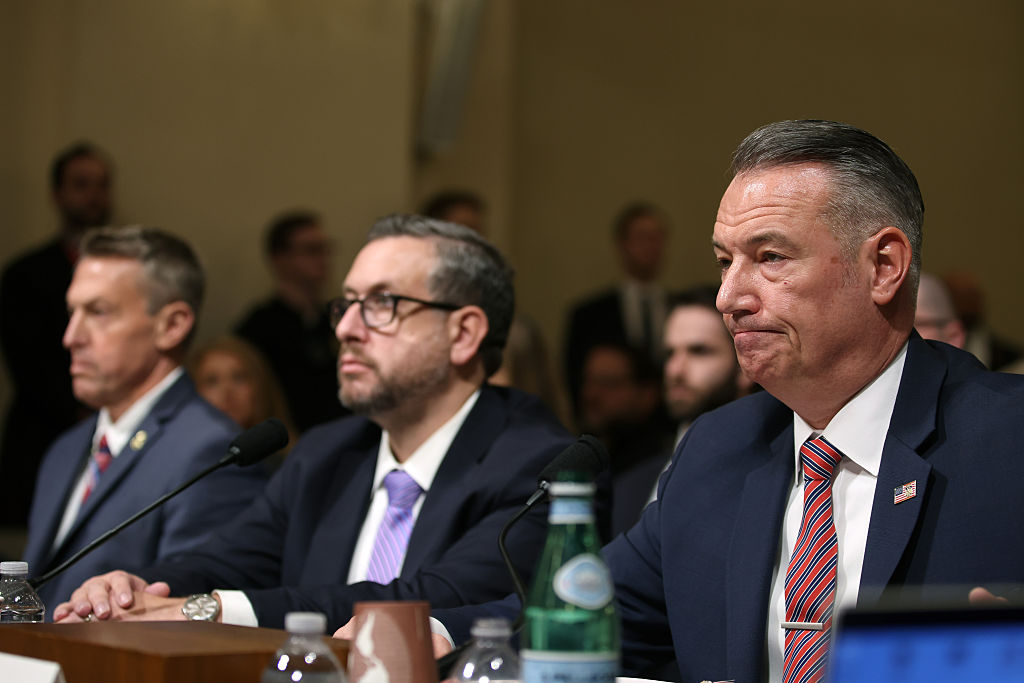
Democratic lawmaker asks ICE director if he’s ‘going to hell’ in fiery hearing #Catholic A Democratic lawmaker asked U.S. Immigration and Customs Enforcement (ICE) Acting Director Todd Lyons whether he believes he is “going to hell” in a contentious hearing with the House Homeland Security Committee on Tuesday, Feb. 10.Lyons — along with U.S. Citizenship and Immigration Services Director Joseph Edlow and Customs and Border Protection Commissioner Rodney Scott — testified before the committee as Congress negotiates potential reforms and funding for the agencies.On Feb. 3, Congress voted to extend funding for the Department of Homeland Security (DHS), which operates the three agencies, until Feb. 13 to end a four-day partial government shutdown. A deal has not yet been reached to extend funding further.At the hearing, Democratic lawmakers accused ICE of terrorizing the streets, using excessive force, and lacking accountability. Republicans defended ICE and rebuked Democratic officials in certain states for refusing to cooperate with federal immigration enforcement.One of the fiercest exchanges came from Rep. LaMonica McIver, D-New Jersey, who praised protesters for “peacefully rejecting your cruel agenda in the streets.” She said ICE believes it is “the highest power who decides which people deserve dignity, protection, and due process” and said “you are wrong [and] we are here for answers.”“How do you think judgment day will work for you, with so much blood on your hands?” McIver asked Lyons, to which he responded that he would not entertain the question.“Do you think you’re going to hell?” she followed up, before being chastised by Committee Chair Andrew Garbarino, R-New York, who told her to avoid personal attacks on witnesses and maintain decorum.McIver said “you guys are always talking about religion here, and the Bible.” She changed the subject slightly and asked Lyons whether he could name agencies that “routinely kill American citizens and still get funding,” which he also said was a question he was “not going to entertain.”“Once again, questions that you cannot answer and that is exactly why … we should not be funding this agency,” McIver said. “The people are watching you; they are watching you. And this is why we need to abolish ICE.”Lawmakers debate ICE operations, future of agencyThe killings of two American citizens at ICE protests — Renée Good and Alex Pretti — were a focal point of the hearing, and two examples that Democrats used to accuse ICE of excessive force and lacking accountability.Democratic Rep. Eric Swalwell, D-California, referenced both killings and criticized DHS Secretary Kristi Noem for referring to those who died as “domestic terrorists.” He asked Lyons whether he would apologize to the families or reject that characterization.Lyons said he would not comment on an ongoing investigation but would welcome a private conversation with the families.Democrats are split on whether to reform ICE or abolish it altogether.Rep. Seth Magaziner, D-Rhode Island, brought up instances in which he believes ICE used excessive force and suggested reforms are necessary before Congress awards funding.“It’s not just the actions of the agents in the field,” he said. “It is the lack of accountability from the top that has caused public trust to erode, and there needs to be major reforms before we vote to give any of you any more funding.”Alternatively, Rep. Delia Ramirez, D-Illinois, called for abolishing ICE and the entire DHS, which Congress formed to address terrorism threats after the Sept. 11, 2001, attacks. Ramirez said DHS was created to “violate our rights under the pretense of securing our safety.”“I’m going to say it loud and clear and I’m proud to stand by what I say,” she said. “DHS cannot be reformed. It must be dismantled and something new must take its place.”Rep. Michael McCaul, R-Texas, commented during the hearing that Democratic lawmakers “have called to abolish ICE [and] now they’re trying to shut it down” amid the negotiations and discussion during the hearing.He criticized the lack of coordination from Democratic-led “sanctuary” states and cities, which do not cooperate with ICE, saying the policies in Minneapolis “created a perfect storm for our officers being thrown into this situation.”Rep. August Pfluger, R-Texas, similarly expressed concern about ICE funding moving forward, based on the debates between the two parties.“It seems like one side of the aisle is in favor of open borders and wants to abolish ICE … and the other side of the aisle wants to enforce laws that are on the books,” he said.During the question and answer, Lyons expressed worry about the rhetoric from Democrats and noted that threats and assaults against ICE agents are on the rise. He said agents are trying to “keep America safe, restore order to our communities, [and] return the rule of law to this country.”“Those who illegally enter our country must be held accountable,” he said.Scott also showed concerns about the ongoing debate and expressed hope that DHS could receive support from both Republicans and Democrats.“I believe consistency and seeing support from the leadership on both sides of this building and the president is very important for our security,” he said. “I think the rhetoric and the … politicizing of law enforcement in general detracts from the general morale of our personnel.”Andrew Arthur, a resident fellow in law and policy at the Center for Immigration Studies, told “EWTN News Nightly” that he sees “much of [the Democratic threats to halt funding] as political theater,” noting that ICE will continue to operate regardless of whether Congress passes the funding bill.He said Democrats hope to take away an issue that made Trump popular during the 2024 election “and turn it into a bad issue for Republicans” in the midterms.Arthur said there may be some shifts in ICE’s approach in Minneapolis now that Border Czar Tom Homan is involved in seeking the “cooperation of state and city governments” that have been “reluctant, if not hostile” to immigration enforcement over the past year.The United States Conference of Catholic Bishops (USCCB) in November 2025 approved a special message with a 216-5 vote that declared opposition to “the indiscriminate mass deportation of people.”Late last month, about 300 Catholic leaders — including 15 bishops — asked Congress to reject ICE funding if the legislation fails to include reforms that have protections for migrants.

Democratic lawmaker asks ICE director if he’s ‘going to hell’ in fiery hearing #Catholic A Democratic lawmaker asked U.S. Immigration and Customs Enforcement (ICE) Acting Director Todd Lyons whether he believes he is “going to hell” in a contentious hearing with the House Homeland Security Committee on Tuesday, Feb. 10.Lyons — along with U.S. Citizenship and Immigration Services Director Joseph Edlow and Customs and Border Protection Commissioner Rodney Scott — testified before the committee as Congress negotiates potential reforms and funding for the agencies.On Feb. 3, Congress voted to extend funding for the Department of Homeland Security (DHS), which operates the three agencies, until Feb. 13 to end a four-day partial government shutdown. A deal has not yet been reached to extend funding further.At the hearing, Democratic lawmakers accused ICE of terrorizing the streets, using excessive force, and lacking accountability. Republicans defended ICE and rebuked Democratic officials in certain states for refusing to cooperate with federal immigration enforcement.One of the fiercest exchanges came from Rep. LaMonica McIver, D-New Jersey, who praised protesters for “peacefully rejecting your cruel agenda in the streets.” She said ICE believes it is “the highest power who decides which people deserve dignity, protection, and due process” and said “you are wrong [and] we are here for answers.”“How do you think judgment day will work for you, with so much blood on your hands?” McIver asked Lyons, to which he responded that he would not entertain the question.“Do you think you’re going to hell?” she followed up, before being chastised by Committee Chair Andrew Garbarino, R-New York, who told her to avoid personal attacks on witnesses and maintain decorum.McIver said “you guys are always talking about religion here, and the Bible.” She changed the subject slightly and asked Lyons whether he could name agencies that “routinely kill American citizens and still get funding,” which he also said was a question he was “not going to entertain.”“Once again, questions that you cannot answer and that is exactly why … we should not be funding this agency,” McIver said. “The people are watching you; they are watching you. And this is why we need to abolish ICE.”Lawmakers debate ICE operations, future of agencyThe killings of two American citizens at ICE protests — Renée Good and Alex Pretti — were a focal point of the hearing, and two examples that Democrats used to accuse ICE of excessive force and lacking accountability.Democratic Rep. Eric Swalwell, D-California, referenced both killings and criticized DHS Secretary Kristi Noem for referring to those who died as “domestic terrorists.” He asked Lyons whether he would apologize to the families or reject that characterization.Lyons said he would not comment on an ongoing investigation but would welcome a private conversation with the families.Democrats are split on whether to reform ICE or abolish it altogether.Rep. Seth Magaziner, D-Rhode Island, brought up instances in which he believes ICE used excessive force and suggested reforms are necessary before Congress awards funding.“It’s not just the actions of the agents in the field,” he said. “It is the lack of accountability from the top that has caused public trust to erode, and there needs to be major reforms before we vote to give any of you any more funding.”Alternatively, Rep. Delia Ramirez, D-Illinois, called for abolishing ICE and the entire DHS, which Congress formed to address terrorism threats after the Sept. 11, 2001, attacks. Ramirez said DHS was created to “violate our rights under the pretense of securing our safety.”“I’m going to say it loud and clear and I’m proud to stand by what I say,” she said. “DHS cannot be reformed. It must be dismantled and something new must take its place.”Rep. Michael McCaul, R-Texas, commented during the hearing that Democratic lawmakers “have called to abolish ICE [and] now they’re trying to shut it down” amid the negotiations and discussion during the hearing.He criticized the lack of coordination from Democratic-led “sanctuary” states and cities, which do not cooperate with ICE, saying the policies in Minneapolis “created a perfect storm for our officers being thrown into this situation.”Rep. August Pfluger, R-Texas, similarly expressed concern about ICE funding moving forward, based on the debates between the two parties.“It seems like one side of the aisle is in favor of open borders and wants to abolish ICE … and the other side of the aisle wants to enforce laws that are on the books,” he said.During the question and answer, Lyons expressed worry about the rhetoric from Democrats and noted that threats and assaults against ICE agents are on the rise. He said agents are trying to “keep America safe, restore order to our communities, [and] return the rule of law to this country.”“Those who illegally enter our country must be held accountable,” he said.Scott also showed concerns about the ongoing debate and expressed hope that DHS could receive support from both Republicans and Democrats.“I believe consistency and seeing support from the leadership on both sides of this building and the president is very important for our security,” he said. “I think the rhetoric and the … politicizing of law enforcement in general detracts from the general morale of our personnel.”Andrew Arthur, a resident fellow in law and policy at the Center for Immigration Studies, told “EWTN News Nightly” that he sees “much of [the Democratic threats to halt funding] as political theater,” noting that ICE will continue to operate regardless of whether Congress passes the funding bill.He said Democrats hope to take away an issue that made Trump popular during the 2024 election “and turn it into a bad issue for Republicans” in the midterms.Arthur said there may be some shifts in ICE’s approach in Minneapolis now that Border Czar Tom Homan is involved in seeking the “cooperation of state and city governments” that have been “reluctant, if not hostile” to immigration enforcement over the past year.The United States Conference of Catholic Bishops (USCCB) in November 2025 approved a special message with a 216-5 vote that declared opposition to “the indiscriminate mass deportation of people.”Late last month, about 300 Catholic leaders — including 15 bishops — asked Congress to reject ICE funding if the legislation fails to include reforms that have protections for migrants.

Top U.S. immigration officials defended their policies during a contentious hearing as lawmakers continue to negotiate potential ICE funding and reforms.
Read More
Archbishop Lori issues pastoral letter on political life in honor of 250th anniversary of the U.S. #Catholic Archbishop William Lori of Baltimore urged Catholics to foster a political culture grounded in Christ by prioritizing human dignity and genuine encounter amid partisan divisions.“In Charity and Truth: Toward a Renewed Political Culture,” released in anticipation of the 250th anniversary of the Declaration of Independence, is among the nine pastoral letters and reflections Lori has written as archbishop of Baltimore. The Feb. 9 letter explored how the anniversary can be “a moment of grace” and one of “responsibility.”The U.S. can both take pride in its achievements and “the vibrancy of our Catholic faith” while also recognizing “the fractures, wounds, and crises that mark both our national life and, sadly, even at times our ecclesial life,” Lori wrote.“As our nation approaches the 250th anniversary of the signing of the Declaration of Independence, we find ourselves invited into a moment of profound reflection and renewal,” Lori said. “Anniversaries are not merely occasions for nostalgia or celebration. Authentic remembrance always orients us toward renewal; it calls us to consider not only who we have been and who we are becoming — but, by God’s grace, who we are called to be.”The letter draws on teachings from the popes, the Second Vatican Council, the Constitution, and the lives of the saints.Addressing political discourse from a Catholic viewThe letter highlighted the U.S. political atmosphere, noting that “political discourse has become more vitriolic than usual.” Lori called for synodal listening, civic virtue, and patriotic charity — as exemplified by Blessed Michael McGivney — to renew public life with truth, responsibility, and hope.McGivney, founder of the Knights of Columbus, served immigrant families and addressed their economic insecurity and exclusion. Lori said genuine charity, unity, fraternity, and patriotic love should guide how Catholics engage with migrants and support their dignity and inclusion.
 
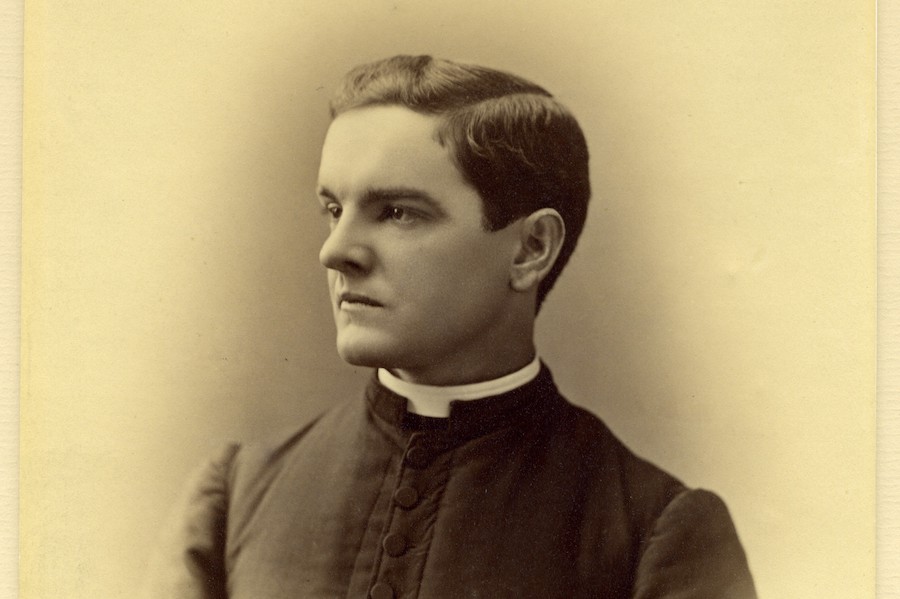
 Father Michael McGivney. | Credit: John Tierney/Father McGivney Guild
 
 Lori said ideological and cultural polarization “has produced an epidemic of loneliness and isolation — an aching sense of being unmoored, misunderstood, or unheard.”Lori wrote: “Synodality is, at its heart, a commitment to listening with humility, speaking with honesty, and discerning with the Holy Spirit — all while walking together, not apart.”“Such unity does not mean uniformity, nor does it eliminate disagreement,” Lori said. “Rather, it reflects a deeper truth. Our communion in Christ precedes our differences.”Synodality “does not dissolve disagreement. It expects it, because diverse people will inevitably see the world from different angles,” Lori said. The letter detailed what “synodality in politics looks like,” including a renewed willingness to listen, a refusal to demonize, a commitment to discernment, and a shared journey.Our world also needs “a new kind of politics — one that begins not with power but with the truth of the human person revealed in Jesus Christ,” Lori said. “Christ, in his incarnation, affirms the goodness of the human body and the meaning of human history.”According to Lori, this new type of politics includes resisting the idolatry of ideology. It must also honor the inherent dignity of every human life from conception to natural death, protect the vulnerable and the marginalized, engage in dialogue rather than accusation, and place the common good above partisan loyalty.A “mature Catholic political presence will” always defend human life in all its stages, advocate for the poor and the vulnerable, insist on racial and social justice, promote peace and reject violence, and uphold religious freedom for all, Lori said.In order to build a better political culture, “we must learn once more how to encounter, by stepping outside our ideological comfort zones, seeking out conversations with those on the margins or those with differing points of view, healing the wounds that divide us, committing ourselves to forgiveness,” Lori said.Virtue in public lifeLori called on U.S. citizens to employ the cardinal virtues in public life to create a “healthy political engagement.”People can use prudence by “evaluating policies not by slogans or emotional appeal but by their actual impact on human dignity,” Lori said. The virtue “helps us to see clearly, to judge wisely, and to act firmly.”Justice “is foundational to political life,” Lori said. “It is the virtue that moves us to honor the dignity of every human person and to recognize that each person has rights that must be protected and responsibilities that must be fulfilled.”Fortitude “strengthens us to pursue what is right despite fear, intimidation, or difficulty,” Lori said. “It empowers each of us to resist the pressure to conform to divisive rhetoric, to endure criticism when standing for truth, and to advocate for the vulnerable even when it is politically inconvenient.”Lastly, temperance “moderates our impulses and helps us resist the allure of excess,” Lori said. “In political culture, temperance is perhaps the virtue most needed today. Temperance invites us to slow down, to choose words carefully, to avoid rash judgments, and to discipline the desire to ‘win’ at the expense of relationship, truth, or the common good.”RenewalLori called for renewal ahead of the 250th anniversary of the U.S. He invited all Catholics and all people of goodwill to commit themselves to a renewed political culture and to answer the call of hope.The letter concluded by detailing “a path forward” on how to renew political culture, including: renewing prayer for the nation, practicing civil dialogue, rejecting hatred and violence, serving the common good, forming consciences, and encountering those different from oneself.“In the midst of political upheaval, the Church does not withdraw from public life, nor does she align herself with any partisan identity,” Lori said. “She remains what she has always been: a sacrament of unity, a beacon of hope, and a teacher of truth.”“Her mission is not to win elections but to form saints. Not to secure power but to proclaim the Gospel. Not to mirror the divisions of society but to heal them,” Lori said.“Our nation needs Catholics who embody this mission — women and men whose lives witness to the dignity of every human person, whose love bridges divides, whose courage resists hatred, and whose faith insists that despair does not have the final word. The civic landscape may look dark at times, but the Church has lived through darker times and emerged stronger, purified, and more faithful. So, too, can our nation,” he said.

Archbishop Lori issues pastoral letter on political life in honor of 250th anniversary of the U.S. #Catholic Archbishop William Lori of Baltimore urged Catholics to foster a political culture grounded in Christ by prioritizing human dignity and genuine encounter amid partisan divisions.“In Charity and Truth: Toward a Renewed Political Culture,” released in anticipation of the 250th anniversary of the Declaration of Independence, is among the nine pastoral letters and reflections Lori has written as archbishop of Baltimore. The Feb. 9 letter explored how the anniversary can be “a moment of grace” and one of “responsibility.”The U.S. can both take pride in its achievements and “the vibrancy of our Catholic faith” while also recognizing “the fractures, wounds, and crises that mark both our national life and, sadly, even at times our ecclesial life,” Lori wrote.“As our nation approaches the 250th anniversary of the signing of the Declaration of Independence, we find ourselves invited into a moment of profound reflection and renewal,” Lori said. “Anniversaries are not merely occasions for nostalgia or celebration. Authentic remembrance always orients us toward renewal; it calls us to consider not only who we have been and who we are becoming — but, by God’s grace, who we are called to be.”The letter draws on teachings from the popes, the Second Vatican Council, the Constitution, and the lives of the saints.Addressing political discourse from a Catholic viewThe letter highlighted the U.S. political atmosphere, noting that “political discourse has become more vitriolic than usual.” Lori called for synodal listening, civic virtue, and patriotic charity — as exemplified by Blessed Michael McGivney — to renew public life with truth, responsibility, and hope.McGivney, founder of the Knights of Columbus, served immigrant families and addressed their economic insecurity and exclusion. Lori said genuine charity, unity, fraternity, and patriotic love should guide how Catholics engage with migrants and support their dignity and inclusion. Father Michael McGivney. | Credit: John Tierney/Father McGivney Guild Lori said ideological and cultural polarization “has produced an epidemic of loneliness and isolation — an aching sense of being unmoored, misunderstood, or unheard.”Lori wrote: “Synodality is, at its heart, a commitment to listening with humility, speaking with honesty, and discerning with the Holy Spirit — all while walking together, not apart.”“Such unity does not mean uniformity, nor does it eliminate disagreement,” Lori said. “Rather, it reflects a deeper truth. Our communion in Christ precedes our differences.”Synodality “does not dissolve disagreement. It expects it, because diverse people will inevitably see the world from different angles,” Lori said. The letter detailed what “synodality in politics looks like,” including a renewed willingness to listen, a refusal to demonize, a commitment to discernment, and a shared journey.Our world also needs “a new kind of politics — one that begins not with power but with the truth of the human person revealed in Jesus Christ,” Lori said. “Christ, in his incarnation, affirms the goodness of the human body and the meaning of human history.”According to Lori, this new type of politics includes resisting the idolatry of ideology. It must also honor the inherent dignity of every human life from conception to natural death, protect the vulnerable and the marginalized, engage in dialogue rather than accusation, and place the common good above partisan loyalty.A “mature Catholic political presence will” always defend human life in all its stages, advocate for the poor and the vulnerable, insist on racial and social justice, promote peace and reject violence, and uphold religious freedom for all, Lori said.In order to build a better political culture, “we must learn once more how to encounter, by stepping outside our ideological comfort zones, seeking out conversations with those on the margins or those with differing points of view, healing the wounds that divide us, committing ourselves to forgiveness,” Lori said.Virtue in public lifeLori called on U.S. citizens to employ the cardinal virtues in public life to create a “healthy political engagement.”People can use prudence by “evaluating policies not by slogans or emotional appeal but by their actual impact on human dignity,” Lori said. The virtue “helps us to see clearly, to judge wisely, and to act firmly.”Justice “is foundational to political life,” Lori said. “It is the virtue that moves us to honor the dignity of every human person and to recognize that each person has rights that must be protected and responsibilities that must be fulfilled.”Fortitude “strengthens us to pursue what is right despite fear, intimidation, or difficulty,” Lori said. “It empowers each of us to resist the pressure to conform to divisive rhetoric, to endure criticism when standing for truth, and to advocate for the vulnerable even when it is politically inconvenient.”Lastly, temperance “moderates our impulses and helps us resist the allure of excess,” Lori said. “In political culture, temperance is perhaps the virtue most needed today. Temperance invites us to slow down, to choose words carefully, to avoid rash judgments, and to discipline the desire to ‘win’ at the expense of relationship, truth, or the common good.”RenewalLori called for renewal ahead of the 250th anniversary of the U.S. He invited all Catholics and all people of goodwill to commit themselves to a renewed political culture and to answer the call of hope.The letter concluded by detailing “a path forward” on how to renew political culture, including: renewing prayer for the nation, practicing civil dialogue, rejecting hatred and violence, serving the common good, forming consciences, and encountering those different from oneself.“In the midst of political upheaval, the Church does not withdraw from public life, nor does she align herself with any partisan identity,” Lori said. “She remains what she has always been: a sacrament of unity, a beacon of hope, and a teacher of truth.”“Her mission is not to win elections but to form saints. Not to secure power but to proclaim the Gospel. Not to mirror the divisions of society but to heal them,” Lori said.“Our nation needs Catholics who embody this mission — women and men whose lives witness to the dignity of every human person, whose love bridges divides, whose courage resists hatred, and whose faith insists that despair does not have the final word. The civic landscape may look dark at times, but the Church has lived through darker times and emerged stronger, purified, and more faithful. So, too, can our nation,” he said.

Archbishop William Lori urged Catholics to approach public life with synodal listening and civic virtue, drawing on Blessed Michael McGivney’s example of serving immigrant families.

Read More