Russia

Top 2025 religious freedom developments included mix of persecution, protection #Catholic 
 
 null / Credit: Joe Belanger/Shutterstock

Washington, D.C. Newsroom, Dec 19, 2025 / 06:00 am (CNA).
Here is an overview of some of the religious freedom developments and news in the United States and abroad in 2025:White House started the Religious Liberty CommissionPresident Donald Trump established the White House Religious Liberty Commission in May to report on threats to religious freedom in the U.S. and seek to advance legal protections. The commission and advisory boards include members of various religions. Catholic members on the commission include Cardinal Timothy Dolan and Bishop Robert Barron. Catholic advisory board members include Archbishop Salvatore J. Cordileone, Bishop Thomas Paprocki, Bishop Kevin Rhoades, and Father Thomas Ferguson.Lawmakers condemned persecution of Christians Rep. Riley Moore, R-West Virginia, and Sen. Josh Hawley, R-Missouri, introduced a joint resolution condemning the persecution of Christians in Muslim-majority countries across the world.The measure called on the Trump administration to leverage trade, security negotiations, and other diplomatic tools to advocate for religious freedom. Court blocked law that would require priests to violate the seal of confessionWashington Gov. Bob Ferguson signed a state law in May that would require priests to report child abuse to authorities even if they hear about it during the sacrament of confession. Catholic bishops brought a lawsuit against the measure. A federal judge blocked the controversial law.Trump announced federal guidelines to protect prayer at public schoolsPresident Donald Trump announced the U.S. Department of Education will issue federal guidelines to protect prayer at public schools during a Sept. 8 Religious Liberty Commission hearing. He said the guidelines will “protect the right to prayer in our public schools and [provide for] its total protection.”The president said he sought the guidelines after hearing about instances of public school students and staff being censored and facing disciplinary action for engaging in prayer, reading the Bible, and publicly expressing their faith.Report found most states fail to safeguard religious liberty About three-fourths of states scored less than 50% on Napa Legal Institute’s religious freedom index, which measures how well states safeguard religious liberty for faith-based organizations. The October report was part of Napa’s Faith & Freedom Index that showed Alabama scored the highest and Michigan scored the lowest.Lawmakers urged federal court to allow Ten Commandments displayFirst Liberty Institute and Heather Gebelin Hacker of Hacker Stephens LLP filed an amicus brief in December on behalf of 46 United States lawmakers urging the federal court to allow the Ten Commandments to be displayed in public schools.Speaker of the U.S. House of Representatives Mike Johnson, R-Louisiana; Rep. Chip Roy, R-Texas; and Sens. Ted Cruz and John Cornyn, R-Texas, were among the lawmakers who supported the cause after federal judges blocked Texas and Louisiana laws requiring the display of the commandments.Supreme Court ruled on religious freedom cases The U.S. Supreme Court ruled in favor of a group of Maryland parents who sued a school district over its refusal to allow families to opt their children out of reading LGBT-themed books. In a 6-3 decision on July 27 in Mahmoud v. Taylor, the court ruled the Catholic, Orthodox, and Muslim parents “are likely to succeed on their claim that the board’s policies unconstitutionally burden their religious exercise.” In July, the Supreme Court ordered the New York Court of Appeals to revisit Diocese of Albany v. Harris, which challenged a 2017 New York state mandate requiring employers to cover abortions in health insurance plans.In October, a Native American group working to stop the destruction of a centuries-old religious ritual site in Arizona lost its appeal to the Supreme Court.Religious liberty abroad: Religious freedom diminished in AfghanistanThe U.S. Commission on International Religious Freedom (USCIRF) said in a report that “religious freedom conditions in Afghanistan continue to decline dramatically under Taliban rule.”The USCIRF wrote in an Aug. 15 report examining the Taliban’s Law on the Propagation of Virtue and Prevention of Vice one year after its enactment: The morality law “impacts all Afghans” but “disproportionately affects religious minorities and women, eradicating their participation in public life and systematically eliminating their right to [freedom of religious belief].”Chinese government banned Catholic priests from evangelizing onlineIn September, the State Administration for Religious Affairs in China banned several forms of online evangelization for religious clergy of all religions, including Catholic priests.The Code of Conduct for Religious Clergy was made up of 18 articles including one that said faith leaders are banned from performing religious rituals through live broadcasts, short videos, or online meetings. U.S. commission said China should be designated as a country of particular concernThe USCIRF reported China tries to exert total control over religion and said the U.S. Department of State should redesignate China as a “country of particular concern” (CPC) regarding religious freedom.USCIRF said in September that China uses surveillance, fines, retribution against family members, imprisonment, enforced disappearance, torture, and other forms of abuse to control the Catholic Church and other religious communities in the nation.In its annual report, USCIRF also recommended Afghanistan, Burma, Cuba, Eritrea, India, Iran, Nicaragua, Nigeria, North Korea, Pakistan, Russia, Saudi Arabia, Tajikistan, Turkmenistan, and Vietnam be designated as CPCs.

Top 2025 religious freedom developments included mix of persecution, protection #Catholic null / Credit: Joe Belanger/Shutterstock Washington, D.C. Newsroom, Dec 19, 2025 / 06:00 am (CNA). Here is an overview of some of the religious freedom developments and news in the United States and abroad in 2025:White House started the Religious Liberty CommissionPresident Donald Trump established the White House Religious Liberty Commission in May to report on threats to religious freedom in the U.S. and seek to advance legal protections. The commission and advisory boards include members of various religions. Catholic members on the commission include Cardinal Timothy Dolan and Bishop Robert Barron. Catholic advisory board members include Archbishop Salvatore J. Cordileone, Bishop Thomas Paprocki, Bishop Kevin Rhoades, and Father Thomas Ferguson.Lawmakers condemned persecution of Christians Rep. Riley Moore, R-West Virginia, and Sen. Josh Hawley, R-Missouri, introduced a joint resolution condemning the persecution of Christians in Muslim-majority countries across the world.The measure called on the Trump administration to leverage trade, security negotiations, and other diplomatic tools to advocate for religious freedom. Court blocked law that would require priests to violate the seal of confessionWashington Gov. Bob Ferguson signed a state law in May that would require priests to report child abuse to authorities even if they hear about it during the sacrament of confession. Catholic bishops brought a lawsuit against the measure. A federal judge blocked the controversial law.Trump announced federal guidelines to protect prayer at public schoolsPresident Donald Trump announced the U.S. Department of Education will issue federal guidelines to protect prayer at public schools during a Sept. 8 Religious Liberty Commission hearing. He said the guidelines will “protect the right to prayer in our public schools and [provide for] its total protection.”The president said he sought the guidelines after hearing about instances of public school students and staff being censored and facing disciplinary action for engaging in prayer, reading the Bible, and publicly expressing their faith.Report found most states fail to safeguard religious liberty About three-fourths of states scored less than 50% on Napa Legal Institute’s religious freedom index, which measures how well states safeguard religious liberty for faith-based organizations. The October report was part of Napa’s Faith & Freedom Index that showed Alabama scored the highest and Michigan scored the lowest.Lawmakers urged federal court to allow Ten Commandments displayFirst Liberty Institute and Heather Gebelin Hacker of Hacker Stephens LLP filed an amicus brief in December on behalf of 46 United States lawmakers urging the federal court to allow the Ten Commandments to be displayed in public schools.Speaker of the U.S. House of Representatives Mike Johnson, R-Louisiana; Rep. Chip Roy, R-Texas; and Sens. Ted Cruz and John Cornyn, R-Texas, were among the lawmakers who supported the cause after federal judges blocked Texas and Louisiana laws requiring the display of the commandments.Supreme Court ruled on religious freedom cases The U.S. Supreme Court ruled in favor of a group of Maryland parents who sued a school district over its refusal to allow families to opt their children out of reading LGBT-themed books. In a 6-3 decision on July 27 in Mahmoud v. Taylor, the court ruled the Catholic, Orthodox, and Muslim parents “are likely to succeed on their claim that the board’s policies unconstitutionally burden their religious exercise.” In July, the Supreme Court ordered the New York Court of Appeals to revisit Diocese of Albany v. Harris, which challenged a 2017 New York state mandate requiring employers to cover abortions in health insurance plans.In October, a Native American group working to stop the destruction of a centuries-old religious ritual site in Arizona lost its appeal to the Supreme Court.Religious liberty abroad: Religious freedom diminished in AfghanistanThe U.S. Commission on International Religious Freedom (USCIRF) said in a report that “religious freedom conditions in Afghanistan continue to decline dramatically under Taliban rule.”The USCIRF wrote in an Aug. 15 report examining the Taliban’s Law on the Propagation of Virtue and Prevention of Vice one year after its enactment: The morality law “impacts all Afghans” but “disproportionately affects religious minorities and women, eradicating their participation in public life and systematically eliminating their right to [freedom of religious belief].”Chinese government banned Catholic priests from evangelizing onlineIn September, the State Administration for Religious Affairs in China banned several forms of online evangelization for religious clergy of all religions, including Catholic priests.The Code of Conduct for Religious Clergy was made up of 18 articles including one that said faith leaders are banned from performing religious rituals through live broadcasts, short videos, or online meetings. U.S. commission said China should be designated as a country of particular concernThe USCIRF reported China tries to exert total control over religion and said the U.S. Department of State should redesignate China as a “country of particular concern” (CPC) regarding religious freedom.USCIRF said in September that China uses surveillance, fines, retribution against family members, imprisonment, enforced disappearance, torture, and other forms of abuse to control the Catholic Church and other religious communities in the nation.In its annual report, USCIRF also recommended Afghanistan, Burma, Cuba, Eritrea, India, Iran, Nicaragua, Nigeria, North Korea, Pakistan, Russia, Saudi Arabia, Tajikistan, Turkmenistan, and Vietnam be designated as CPCs.


null / Credit: Joe Belanger/Shutterstock

Washington, D.C. Newsroom, Dec 19, 2025 / 06:00 am (CNA).

Here is an overview of some of the religious freedom developments and news in the United States and abroad in 2025:

White House started the Religious Liberty Commission

President Donald Trump established the White House Religious Liberty Commission in May to report on threats to religious freedom in the U.S. and seek to advance legal protections. 

The commission and advisory boards include members of various religions. Catholic members on the commission include Cardinal Timothy Dolan and Bishop Robert Barron. Catholic advisory board members include Archbishop Salvatore J. Cordileone, Bishop Thomas Paprocki, Bishop Kevin Rhoades, and Father Thomas Ferguson.

Lawmakers condemned persecution of Christians

Rep. Riley Moore, R-West Virginia, and Sen. Josh Hawley, R-Missouri, introduced a joint resolution condemning the persecution of Christians in Muslim-majority countries across the world.

The measure called on the Trump administration to leverage trade, security negotiations, and other diplomatic tools to advocate for religious freedom. 

Court blocked law that would require priests to violate the seal of confession

Washington Gov. Bob Ferguson signed a state law in May that would require priests to report child abuse to authorities even if they hear about it during the sacrament of confession. Catholic bishops brought a lawsuit against the measure. A federal judge blocked the controversial law.

Trump announced federal guidelines to protect prayer at public schools

President Donald Trump announced the U.S. Department of Education will issue federal guidelines to protect prayer at public schools during a Sept. 8 Religious Liberty Commission hearing. He said the guidelines will “protect the right to prayer in our public schools and [provide for] its total protection.”

The president said he sought the guidelines after hearing about instances of public school students and staff being censored and facing disciplinary action for engaging in prayer, reading the Bible, and publicly expressing their faith.

Report found most states fail to safeguard religious liberty 

About three-fourths of states scored less than 50% on Napa Legal Institute’s religious freedom index, which measures how well states safeguard religious liberty for faith-based organizations. The October report was part of Napa’s Faith & Freedom Index that showed Alabama scored the highest and Michigan scored the lowest.

Lawmakers urged federal court to allow Ten Commandments display

First Liberty Institute and Heather Gebelin Hacker of Hacker Stephens LLP filed an amicus brief in December on behalf of 46 United States lawmakers urging the federal court to allow the Ten Commandments to be displayed in public schools.

Speaker of the U.S. House of Representatives Mike Johnson, R-Louisiana; Rep. Chip Roy, R-Texas; and Sens. Ted Cruz and John Cornyn, R-Texas, were among the lawmakers who supported the cause after federal judges blocked Texas and Louisiana laws requiring the display of the commandments.

Supreme Court ruled on religious freedom cases 

The U.S. Supreme Court ruled in favor of a group of Maryland parents who sued a school district over its refusal to allow families to opt their children out of reading LGBT-themed books. 

In a 6-3 decision on July 27 in Mahmoud v. Taylor, the court ruled the Catholic, Orthodox, and Muslim parents “are likely to succeed on their claim that the board’s policies unconstitutionally burden their religious exercise.” 

In July, the Supreme Court ordered the New York Court of Appeals to revisit Diocese of Albany v. Harris, which challenged a 2017 New York state mandate requiring employers to cover abortions in health insurance plans.

In October, a Native American group working to stop the destruction of a centuries-old religious ritual site in Arizona lost its appeal to the Supreme Court.

Religious liberty abroad: Religious freedom diminished in Afghanistan

The U.S. Commission on International Religious Freedom (USCIRF) said in a report that “religious freedom conditions in Afghanistan continue to decline dramatically under Taliban rule.”

The USCIRF wrote in an Aug. 15 report examining the Taliban’s Law on the Propagation of Virtue and Prevention of Vice one year after its enactment: The morality law “impacts all Afghans” but “disproportionately affects religious minorities and women, eradicating their participation in public life and systematically eliminating their right to [freedom of religious belief].”

Chinese government banned Catholic priests from evangelizing online

In September, the State Administration for Religious Affairs in China banned several forms of online evangelization for religious clergy of all religions, including Catholic priests.

The Code of Conduct for Religious Clergy was made up of 18 articles including one that said faith leaders are banned from performing religious rituals through live broadcasts, short videos, or online meetings. 

U.S. commission said China should be designated as a country of particular concern

The USCIRF reported China tries to exert total control over religion and said the U.S. Department of State should redesignate China as a “country of particular concern” (CPC) regarding religious freedom.

USCIRF said in September that China uses surveillance, fines, retribution against family members, imprisonment, enforced disappearance, torture, and other forms of abuse to control the Catholic Church and other religious communities in the nation.

In its annual report, USCIRF also recommended Afghanistan, Burma, Cuba, Eritrea, India, Iran, Nicaragua, Nigeria, North Korea, Pakistan, Russia, Saudi Arabia, Tajikistan, Turkmenistan, and Vietnam be designated as CPCs.

Read More
Picture of the day


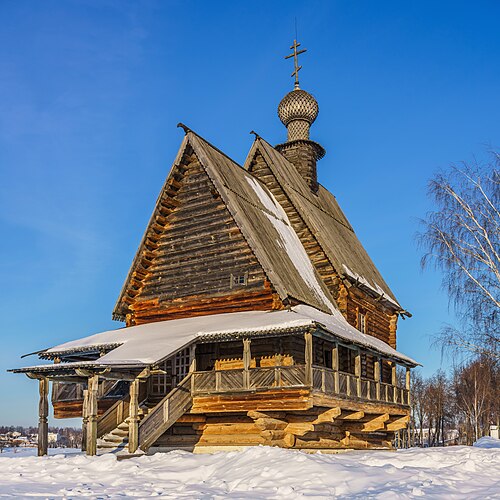
St. Nicholas the Wonderworker Church (1766) was relocated from the village of Glotovo, Vladimir Oblast to the Museum of Wooden Architecture at the Kremlin in Suzdal, Russia. Today is Saint Nicholas Day in much of Eastern and Western Christianity.
 #ImageOfTheDay
Picture of the day
St. Nicholas the Wonderworker Church (1766) was relocated from the village of Glotovo, Vladimir Oblast to the Museum of Wooden Architecture at the Kremlin in Suzdal, Russia. Today is Saint Nicholas Day in much of Eastern and Western Christianity.
Read More
Pope Leo sends surprise video message to Australian Catholic youth festival #Catholic 
 
 Thousands of young pilgrims gather for the closing Mass of the Australian Catholic Youth Festival at the Melbourne Convention and Exhibition Centre on Tuesday, Dec. 2, 2025. / Credit: Theresa Wimmer

Washington, D.C. Newsroom, Dec 5, 2025 / 08:00 am (CNA).
Here is a roundup of Catholic world news from the past week that you might have missed:Pope Leo sends surprise video message to Australian Catholic youth festival Pope Leo XIV sent a surprise video message to thousands of young Catholics at the Australian Catholic Youth Festival on Nov. 30, urging them to turn to God, “especially through prayer and the sacraments. That’s where you’ll hear your Heavenly Father’s voice most clearly.”The papal message — played during the opening plenary at the Melbourne Convention and Exhibition Centre — drew cheers from young Catholics who gathered from around the country under the 2025 Jubilee theme “Pilgrims of Hope.” The three-day event, held Nov. 30–Dec. 2, opened with a five-kilometer (three-mile) pilgrimage walk from St. Patrick’s Cathedral. Participants accompanied the World Youth Day Cross and Icon through the city streets to the convention center.“Our lives find their ultimate purpose in becoming who God made us to be, by living out his will,” Leo said. He reminded pilgrims of the words of Pope Benedict XVI: “You are not the result of a random process. Each of you is willed, each of you is loved, each of you is necessary.”Holy See Permanent Observer Mission to U.N. calls for end of Ukraine war ‘right now’The Holy See’s Permanent Observer Mission to the U.N. called for the end of Russia’s military offensive in Ukraine immediately during a Dec. 3 emergency session. Monsignor Robert Murphy, chargé d’affaires, said the war in Ukraine must halt “not at some undefined moment in the future, but right now.” Murphy emphasized the need for both sides of the conflict to bring about the return of children to their families and urged all nations represented in the assembly interested in ending the war “to reject passivity and provide tangible support for any initiative that could lead to genuine negotiations and lasting peace.”Bishops praise ‘historic decision’ to end child marriage in west Pakistan provinceThe western province of Balochistan in Pakistan has passed a law criminalizing child marriages, eliciting praise from Catholic bishops in the region. The 2025 Law on the Restriction of Child Marriage in Balochistan penalizes adults who facilitate arranged marriages for minors under the age of 18, repealing a previous law that set the minimum age for girls to be married at 14 years old. Bishop Samson Shukardin, OFM, of Hyderabad and president of the Pakistan Bishops’ Conference, called the new law “a historic decision to protect children and an important step toward strengthening the rights of minors,” according to a Fides report on Monday. The bishop further expressed gratitude to lawmakers for passing the law, noting that “the Church promotes the fundamental rights of every human being, especially those of girls,” adding: “Early marriage deprives them of their education, their health, and their self-confidence.” Sri Lankan cardinal urges Catholics to join emergency response amid natural disasterCardinal Malcolm Ranjith is urging Catholics to join emergency response efforts across Sri Lanka as the country recovers from Cyclone Ditwah, the worst natural disaster in its history.“We request our priests, religious, brothers, sisters, and lay leaders to work together with all the societies and organizations to provide relief to the people who are helpless at this moment,” Ranjith said in a statement, according to UCA News. Bishop Jude N. Silva of the Diocese of Badulla, one of the “worst affected,” according to UCA, instructed all priests to cancel Masses and programs “until the situation improved.” Caritas Sri Lanka has led the emergency response, according to AsiaNews.  European bishops talk Catholic-Muslim relations at three-day meeting on Nostra AetateThe Council of the Bishops’ Conferences of Europe discussed Catholic-Muslim dialogue at a three-day conference titled “Nostra Aetate, 60 Years On: Perspectives on Catholic-Muslim Dialogue.”The meeting took place in Augsburg, Germany, and included “over 30 participants, representatives of European Bishops’ Conferences, theologians, and witnesses from 20 European countries,” according to a press release from the council.In his keynote address, Cardinal Michael Louis Fitzgerald reflected on ways Nostra Aetate may frame encounters where interreligious dialogue takes place, the release said, noting that “the three days of the meeting were characterized by a wide-ranging exchange in the plenary conversations as well as beautiful liturgies celebrated in the churches of St. Moritz, St. Peter in Perlach, and the Basilica of Sts. Ulrich and Afra.” Capuchin Friars in Sumatra welcome those displaced by severe floodingCapuchin Friars in the Sibolga province of Indonesia welcomed those displaced by flooding in the country due to Cyclone Senyar, according to Fides. “The worst is over, but the emergency continues. Floods and landslides have swept away entire villages. Many people are homeless. Rescue teams are now trying to reach the displaced: for some it is possible, for others it is not, because the areas remain isolated,” said Provincial Superior of the Capuchin Friars in Sibolga Friar Yoseph Norbert Sinaga. The cyclone has affected 1.5 million people and displaced more than 570,000, according to the report.Archdiocese of Raipur, India, completes historic Eucharistic pilgrimage The Archdiocese of Raipur in India has concluded a historic Eucharistic yatra, or pilgrimage, covering 1,655 miles across 72 parishes. The Eucharistic yatra lasted 14 days, with pilgrims traveling through 19 civil districts of the Central Indian state of Chhattisgarh, stopping in each parish for an hour of Eucharistic adoration, according to a Catholic Connect report. Participants in the yatra used a vehicle that was converted into a mobile chapel donated by the Mid India Province of the SCSC Sisters.

Pope Leo sends surprise video message to Australian Catholic youth festival #Catholic Thousands of young pilgrims gather for the closing Mass of the Australian Catholic Youth Festival at the Melbourne Convention and Exhibition Centre on Tuesday, Dec. 2, 2025. / Credit: Theresa Wimmer Washington, D.C. Newsroom, Dec 5, 2025 / 08:00 am (CNA). Here is a roundup of Catholic world news from the past week that you might have missed:Pope Leo sends surprise video message to Australian Catholic youth festival Pope Leo XIV sent a surprise video message to thousands of young Catholics at the Australian Catholic Youth Festival on Nov. 30, urging them to turn to God, “especially through prayer and the sacraments. That’s where you’ll hear your Heavenly Father’s voice most clearly.”The papal message — played during the opening plenary at the Melbourne Convention and Exhibition Centre — drew cheers from young Catholics who gathered from around the country under the 2025 Jubilee theme “Pilgrims of Hope.” The three-day event, held Nov. 30–Dec. 2, opened with a five-kilometer (three-mile) pilgrimage walk from St. Patrick’s Cathedral. Participants accompanied the World Youth Day Cross and Icon through the city streets to the convention center.“Our lives find their ultimate purpose in becoming who God made us to be, by living out his will,” Leo said. He reminded pilgrims of the words of Pope Benedict XVI: “You are not the result of a random process. Each of you is willed, each of you is loved, each of you is necessary.”Holy See Permanent Observer Mission to U.N. calls for end of Ukraine war ‘right now’The Holy See’s Permanent Observer Mission to the U.N. called for the end of Russia’s military offensive in Ukraine immediately during a Dec. 3 emergency session. Monsignor Robert Murphy, chargé d’affaires, said the war in Ukraine must halt “not at some undefined moment in the future, but right now.” Murphy emphasized the need for both sides of the conflict to bring about the return of children to their families and urged all nations represented in the assembly interested in ending the war “to reject passivity and provide tangible support for any initiative that could lead to genuine negotiations and lasting peace.”Bishops praise ‘historic decision’ to end child marriage in west Pakistan provinceThe western province of Balochistan in Pakistan has passed a law criminalizing child marriages, eliciting praise from Catholic bishops in the region. The 2025 Law on the Restriction of Child Marriage in Balochistan penalizes adults who facilitate arranged marriages for minors under the age of 18, repealing a previous law that set the minimum age for girls to be married at 14 years old. Bishop Samson Shukardin, OFM, of Hyderabad and president of the Pakistan Bishops’ Conference, called the new law “a historic decision to protect children and an important step toward strengthening the rights of minors,” according to a Fides report on Monday. The bishop further expressed gratitude to lawmakers for passing the law, noting that “the Church promotes the fundamental rights of every human being, especially those of girls,” adding: “Early marriage deprives them of their education, their health, and their self-confidence.” Sri Lankan cardinal urges Catholics to join emergency response amid natural disasterCardinal Malcolm Ranjith is urging Catholics to join emergency response efforts across Sri Lanka as the country recovers from Cyclone Ditwah, the worst natural disaster in its history.“We request our priests, religious, brothers, sisters, and lay leaders to work together with all the societies and organizations to provide relief to the people who are helpless at this moment,” Ranjith said in a statement, according to UCA News. Bishop Jude N. Silva of the Diocese of Badulla, one of the “worst affected,” according to UCA, instructed all priests to cancel Masses and programs “until the situation improved.” Caritas Sri Lanka has led the emergency response, according to AsiaNews.  European bishops talk Catholic-Muslim relations at three-day meeting on Nostra AetateThe Council of the Bishops’ Conferences of Europe discussed Catholic-Muslim dialogue at a three-day conference titled “Nostra Aetate, 60 Years On: Perspectives on Catholic-Muslim Dialogue.”The meeting took place in Augsburg, Germany, and included “over 30 participants, representatives of European Bishops’ Conferences, theologians, and witnesses from 20 European countries,” according to a press release from the council.In his keynote address, Cardinal Michael Louis Fitzgerald reflected on ways Nostra Aetate may frame encounters where interreligious dialogue takes place, the release said, noting that “the three days of the meeting were characterized by a wide-ranging exchange in the plenary conversations as well as beautiful liturgies celebrated in the churches of St. Moritz, St. Peter in Perlach, and the Basilica of Sts. Ulrich and Afra.” Capuchin Friars in Sumatra welcome those displaced by severe floodingCapuchin Friars in the Sibolga province of Indonesia welcomed those displaced by flooding in the country due to Cyclone Senyar, according to Fides. “The worst is over, but the emergency continues. Floods and landslides have swept away entire villages. Many people are homeless. Rescue teams are now trying to reach the displaced: for some it is possible, for others it is not, because the areas remain isolated,” said Provincial Superior of the Capuchin Friars in Sibolga Friar Yoseph Norbert Sinaga. The cyclone has affected 1.5 million people and displaced more than 570,000, according to the report.Archdiocese of Raipur, India, completes historic Eucharistic pilgrimage The Archdiocese of Raipur in India has concluded a historic Eucharistic yatra, or pilgrimage, covering 1,655 miles across 72 parishes. The Eucharistic yatra lasted 14 days, with pilgrims traveling through 19 civil districts of the Central Indian state of Chhattisgarh, stopping in each parish for an hour of Eucharistic adoration, according to a Catholic Connect report. Participants in the yatra used a vehicle that was converted into a mobile chapel donated by the Mid India Province of the SCSC Sisters.


Thousands of young pilgrims gather for the closing Mass of the Australian Catholic Youth Festival at the Melbourne Convention and Exhibition Centre on Tuesday, Dec. 2, 2025. / Credit: Theresa Wimmer

Washington, D.C. Newsroom, Dec 5, 2025 / 08:00 am (CNA).

Here is a roundup of Catholic world news from the past week that you might have missed:

Pope Leo sends surprise video message to Australian Catholic youth festival 

Pope Leo XIV sent a surprise video message to thousands of young Catholics at the Australian Catholic Youth Festival on Nov. 30, urging them to turn to God, “especially through prayer and the sacraments. That’s where you’ll hear your Heavenly Father’s voice most clearly.”

The papal message — played during the opening plenary at the Melbourne Convention and Exhibition Centre — drew cheers from young Catholics who gathered from around the country under the 2025 Jubilee theme “Pilgrims of Hope.” The three-day event, held Nov. 30–Dec. 2, opened with a five-kilometer (three-mile) pilgrimage walk from St. Patrick’s Cathedral. Participants accompanied the World Youth Day Cross and Icon through the city streets to the convention center.

“Our lives find their ultimate purpose in becoming who God made us to be, by living out his will,” Leo said. He reminded pilgrims of the words of Pope Benedict XVI: “You are not the result of a random process. Each of you is willed, each of you is loved, each of you is necessary.”

Holy See Permanent Observer Mission to U.N. calls for end of Ukraine war ‘right now’

The Holy See’s Permanent Observer Mission to the U.N. called for the end of Russia’s military offensive in Ukraine immediately during a Dec. 3 emergency session. 

Monsignor Robert Murphy, chargé d’affaires, said the war in Ukraine must halt “not at some undefined moment in the future, but right now.” Murphy emphasized the need for both sides of the conflict to bring about the return of children to their families and urged all nations represented in the assembly interested in ending the war “to reject passivity and provide tangible support for any initiative that could lead to genuine negotiations and lasting peace.”

Bishops praise ‘historic decision’ to end child marriage in west Pakistan province

The western province of Balochistan in Pakistan has passed a law criminalizing child marriages, eliciting praise from Catholic bishops in the region. 

The 2025 Law on the Restriction of Child Marriage in Balochistan penalizes adults who facilitate arranged marriages for minors under the age of 18, repealing a previous law that set the minimum age for girls to be married at 14 years old. Bishop Samson Shukardin, OFM, of Hyderabad and president of the Pakistan Bishops’ Conference, called the new law “a historic decision to protect children and an important step toward strengthening the rights of minors,” according to a Fides report on Monday

The bishop further expressed gratitude to lawmakers for passing the law, noting that “the Church promotes the fundamental rights of every human being, especially those of girls,” adding: “Early marriage deprives them of their education, their health, and their self-confidence.” 

Sri Lankan cardinal urges Catholics to join emergency response amid natural disaster

Cardinal Malcolm Ranjith is urging Catholics to join emergency response efforts across Sri Lanka as the country recovers from Cyclone Ditwah, the worst natural disaster in its history.

“We request our priests, religious, brothers, sisters, and lay leaders to work together with all the societies and organizations to provide relief to the people who are helpless at this moment,” Ranjith said in a statement, according to UCA News. 

Bishop Jude N. Silva of the Diocese of Badulla, one of the “worst affected,” according to UCA, instructed all priests to cancel Masses and programs “until the situation improved.” Caritas Sri Lanka has led the emergency response, according to AsiaNews.  

European bishops talk Catholic-Muslim relations at three-day meeting on Nostra Aetate

The Council of the Bishops’ Conferences of Europe discussed Catholic-Muslim dialogue at a three-day conference titled “Nostra Aetate, 60 Years On: Perspectives on Catholic-Muslim Dialogue.”

The meeting took place in Augsburg, Germany, and included “over 30 participants, representatives of European Bishops’ Conferences, theologians, and witnesses from 20 European countries,” according to a press release from the council.

In his keynote address, Cardinal Michael Louis Fitzgerald reflected on ways Nostra Aetate may frame encounters where interreligious dialogue takes place, the release said, noting that “the three days of the meeting were characterized by a wide-ranging exchange in the plenary conversations as well as beautiful liturgies celebrated in the churches of St. Moritz, St. Peter in Perlach, and the Basilica of Sts. Ulrich and Afra.” 

Capuchin Friars in Sumatra welcome those displaced by severe flooding

Capuchin Friars in the Sibolga province of Indonesia welcomed those displaced by flooding in the country due to Cyclone Senyar, according to Fides

“The worst is over, but the emergency continues. Floods and landslides have swept away entire villages. Many people are homeless. Rescue teams are now trying to reach the displaced: for some it is possible, for others it is not, because the areas remain isolated,” said Provincial Superior of the Capuchin Friars in Sibolga Friar Yoseph Norbert Sinaga. The cyclone has affected 1.5 million people and displaced more than 570,000, according to the report.

Archdiocese of Raipur, India, completes historic Eucharistic pilgrimage

The Archdiocese of Raipur in India has concluded a historic Eucharistic yatra, or pilgrimage, covering 1,655 miles across 72 parishes. 

The Eucharistic yatra lasted 14 days, with pilgrims traveling through 19 civil districts of the Central Indian state of Chhattisgarh, stopping in each parish for an hour of Eucharistic adoration, according to a Catholic Connect report. Participants in the yatra used a vehicle that was converted into a mobile chapel donated by the Mid India Province of the SCSC Sisters.

Read More