![At SEEK 2026, young Catholics urged to use technology intentionally, as a tool #Catholic
Andrew Laubacher, executive director of Humanality, ahead of his talk at SEEK 2026 in Denver, Colorado on Jan. 2, 2026. Credit: Francesca Fenton/EWTN News
Jan 3, 2026 / 17:56 pm (CNA).
In 2018, Andrew Laubacher, a touring Catholic musician at the time, decided to quit social media completely. Despite his recording label telling him that he was making a terrible decision, he was exhausted from the impact it was having on his life and felt God calling him to make this change.Fast-forward to today and Laubacher is now the executive director of Humanality, a nonprofit organization that “exists to help people discover freedom through an intentional relationship with technology” and offers individuals help to break their digital addiction through a 12-week digital detox program.Speaking to hundreds of young Catholics at SEEK 2026 in Denver, Colorado, on Jan. 2, he explained how social media can become addictive and have negative effects on the human person – including depression, anxiety, and body image issues – and offered tips on how individuals can use technology practically and intentionally.Laubacher began by highlighting data from the U.S. Centers for Disease Control and Prevention (CDC), which showed that the average U.S. life expectancy decreased for the first time between 2017 and 2019 and that “Americans are 10 times more likely to have a depressive illness than they were 60 years ago."Citing the federal data as well as research in Jonathan Haidt’s 2024 book “The Anxious Generation,” Laubacher explained that in 2010 a new feature was introduced on smartphones which led to “drastic increases in anxiety and depression.”What was this feature? The front-facing camera.“When that front-facing camera came out, all of a sudden our lives became self-defining,” he argued.Laubacher shared how he saw this play out in his own life – constantly comparing himself and his life to others, experiencing lust, feeling lonely, and wasting his time mindlessly scrolling through his feeds.“These technologies affected me in many different ways,” he said, “And when I made that leap [off social media] everything got better. My friendships got better, my purity, my productivity, my prayer got better. Everything started to improve.”“So you guys, the way that you've grown up with these technologies has literally changed everything… It's changed the way you think. It's changed the way you behave. It's changed the way you relate to one another. It's changed the way you sleep. It's changed the way you perceive reality,” Laubacher told those gathered. “You have to understand algorithms are literally shaping your perception of what is true. And if you are living your life scrolling and getting stuck into these platforms like me you're not necessarily as you want to be.”Laubacher said that the average 18-year-old in 2025 is on pace to have a 90-year life span. He then broke this down into how many months one might spend doing different activities such as eating, sleeping, going to school or work, and driving. Over the course of one's life, the average person is left with “334 months of free time – this is where you fall in love. This is where you create music, this is where you write that book, this is where you go on the trip with your loved ones. This is where you discover your vocation,” Laubacher said.“Right now, of those 334 months, 93% of that time is going to be spent on the screen,” he said. “At the end of your lives, you in this crowd will have looked at the screen for 27 years of your life." "And friends, my mission is to help you get that time back into your life. So you can invest that time and attention into the things that matter most.”Offering those gathered practical tools to gain more freedom from digital media, Laubacher highlighted three of the 11 ways Humanality’s digital detox program aims to help individuals gain a more human way to be – be light, be giving, and be present.“Be light” focuses on individuals stopping the nighttime scrolling and beginning to acknowledge the difference between daytime and nighttime. Laubacher explained that people spend 90% of their time indoors versus 100 years ago when people spent 90% of their time outdoors. Additionally, when people scroll on their phones at nighttime, the light from the screen tells the brain it’s daytime.“So, our separation from light in the daytime — and you scrolling yourself to sleep in the nighttime — is a huge reason for our mental health slash sleep disorder slash fatigue and exhaustion,” he said.“Be giving” turns the self-centered nature of social media to one where you “start to think outside of yourself,” which leads a person to be “more happy and more healthy when you live a life that is giving,” Laubacher explained.The last way Laubacher highlighted was “be present,” which aims to simply teach people how to be present with themselves, with others, and with God.
“Friends, I want to tell you right now, the scariest, best, most amazing adventure in your life is going to be learning to love God, your neighbor, and yourself,” Laubacher said. “And if I'm honest, I can love people pretty easily, but it's really hard for me to love myself most of the time. And I found that my technologies were not allowing me to get to know the person that God has created me to be.”“These three ways – there's a lot more – but these three ways I think if you start to implement in your day today you'll start to use technology as a tool and get out of these addictions.”](https://unitedyam.com/wp-content/uploads/2026/01/at-seek-2026-young-catholics-urged-to-use-technology-intentionally-as-a-tool-catholic-andrew-laubacher-executive-director-of-humanality-ahead-of-his-talk-at-seek-2026-in-denver-colorado-on-j.png)

Andrew Laubacher, executive director of Humanality, ahead of his talk at SEEK 2026 in Denver, Colorado on Jan. 2, 2026. Credit: Francesca Fenton/EWTN News
Jan 3, 2026 / 17:56 pm (CNA).
In 2018, Andrew Laubacher, a touring Catholic musician at the time, decided to quit social media completely. Despite his recording label telling him that he was making a terrible decision, he was exhausted from the impact it was having on his life and felt God calling him to make this change.
Fast-forward to today and Laubacher is now the executive director of Humanality, a nonprofit organization that “exists to help people discover freedom through an intentional relationship with technology” and offers individuals help to break their digital addiction through a 12-week digital detox program.
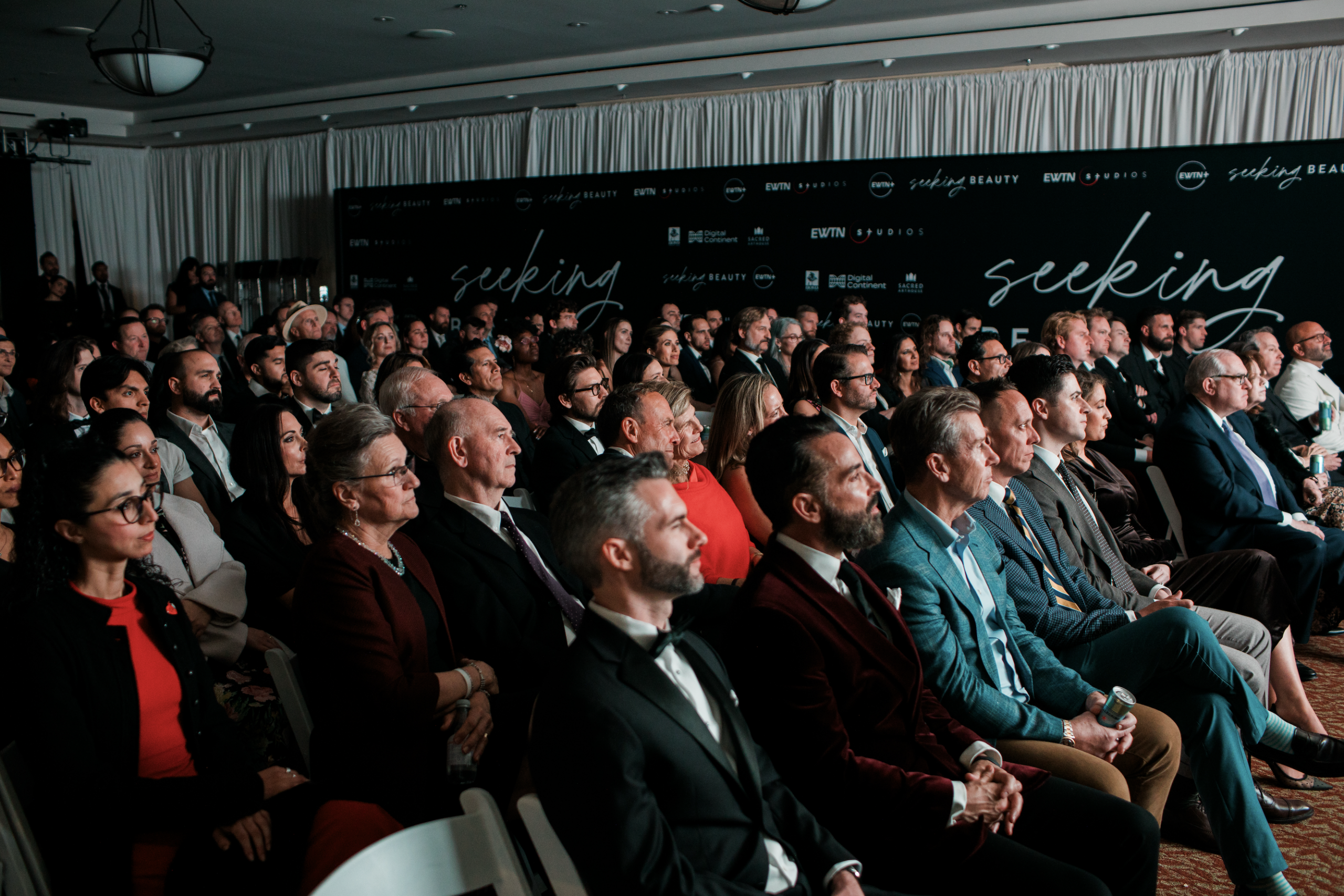
Speaking to hundreds of young Catholics at SEEK 2026 in Denver, Colorado, on Jan. 2, he explained how social media can become addictive and have negative effects on the human person – including depression, anxiety, and body image issues – and offered tips on how individuals can use technology practically and intentionally.
Laubacher began by highlighting data from the U.S. Centers for Disease Control and Prevention (CDC), which showed that the average U.S. life expectancy decreased for the first time between 2017 and 2019 and that “Americans are 10 times more likely to have a depressive illness than they were 60 years ago."
Citing the federal data as well as research in Jonathan Haidt’s 2024 book “The Anxious Generation,” Laubacher explained that in 2010 a new feature was introduced on smartphones which led to “drastic increases in anxiety and depression.”
What was this feature? The front-facing camera.
“When that front-facing camera came out, all of a sudden our lives became self-defining,” he argued.
Laubacher shared how he saw this play out in his own life – constantly comparing himself and his life to others, experiencing lust, feeling lonely, and wasting his time mindlessly scrolling through his feeds.
“These technologies affected me in many different ways,” he said, “And when I made that leap [off social media] everything got better. My friendships got better, my purity, my productivity, my prayer got better. Everything started to improve.”
“So you guys, the way that you've grown up with these technologies has literally changed everything… It's changed the way you think. It's changed the way you behave. It's changed the way you relate to one another. It's changed the way you sleep. It's changed the way you perceive reality,” Laubacher told those gathered.
“You have to understand algorithms are literally shaping your perception of what is true. And if you are living your life scrolling and getting stuck into these platforms like me you're not necessarily as you want to be.”
Laubacher said that the average 18-year-old in 2025 is on pace to have a 90-year life span. He then broke this down into how many months one might spend doing different activities such as eating, sleeping, going to school or work, and driving.
Over the course of one's life, the average person is left with “334 months of free time – this is where you fall in love. This is where you create music, this is where you write that book, this is where you go on the trip with your loved ones. This is where you discover your vocation,” Laubacher said.
“Right now, of those 334 months, 93% of that time is going to be spent on the screen,” he said. “At the end of your lives, you in this crowd will have looked at the screen for 27 years of your life."
"And friends, my mission is to help you get that time back into your life. So you can invest that time and attention into the things that matter most.”
Offering those gathered practical tools to gain more freedom from digital media, Laubacher highlighted three of the 11 ways Humanality’s digital detox program aims to help individuals gain a more human way to be – be light, be giving, and be present.
“Be light” focuses on individuals stopping the nighttime scrolling and beginning to acknowledge the difference between daytime and nighttime. Laubacher explained that people spend 90% of their time indoors versus 100 years ago when people spent 90% of their time outdoors.
Additionally, when people scroll on their phones at nighttime, the light from the screen tells the brain it’s daytime.
“So, our separation from light in the daytime — and you scrolling yourself to sleep in the nighttime — is a huge reason for our mental health slash sleep disorder slash fatigue and exhaustion,” he said.
“Be giving” turns the self-centered nature of social media to one where you “start to think outside of yourself,” which leads a person to be “more happy and more healthy when you live a life that is giving,” Laubacher explained.
The last way Laubacher highlighted was “be present,” which aims to simply teach people how to be present with themselves, with others, and with God.
“Friends, I want to tell you right now, the scariest, best, most amazing adventure in your life is going to be learning to love God, your neighbor, and yourself,” Laubacher said.
“And if I'm honest, I can love people pretty easily, but it's really hard for me to love myself most of the time. And I found that my technologies were not allowing me to get to know the person that God has created me to be.”
“These three ways – there's a lot more – but these three ways I think if you start to implement in your day today you'll start to use technology as a tool and get out of these addictions.”
Read More![Ancient Advent Mass gains new interest among younger Catholics #Catholic
The Rorate Caeli Advent Mass celebrated at The National Shrine of Our Lady of Champion. / Credit: The National Shrine of Our Lady of Champion
CNA Staff, Dec 14, 2025 / 06:00 am (CNA).
Advent is a season filled with rich Catholic traditions, but a slightly lesser-known one is growing in popularity among younger Catholics. The ancient liturgy of the Rorate Caeli Advent Mass honors the Blessed Virgin Mary through a Mass celebrated at dawn, in complete darkness, and lit only by candles, which symbolizes Christ, the Light of the World, entering into the world with Mary as the vessel. Emerging in the Middle Ages, the Rorate Caeli Mass gets its name from the prophecy of Isaiah. Rorate Caeli is Latin for “drop down, ye heavens.” These are the opening words of this liturgy’s Introit, which is used as an opening psalm or entrance antiphon and comes from Isaiah 45:8.Father Tony Stephens, rector at the National Shrine of Our Lady of Champion in Champion, Wisconsin, calls this Mass “a teachable moment.”“As all of us are gathered in the church, only lit with the candles, slowly the light begins coming in through the windows and it’s like the light of Christ,” he told CNA. The process symbolizes “the light of Christ coming into our lives, slowly but surely and progressively as we go through life.”“And just like that light begins to come in through the windows, as the physical sun rises, so in our journey as Catholics, the closer we get to Christ, the more his light shines in our life,” he said. Fr. Nathaneal Mudd, CPM, celebrates the Rorate Caeli Advent Mass at the National Shrine of Our Lady of Champion in 2024. Credit: The National Shrine of Our Lady of ChampionStephens has been rector of the National Shrine of Our Lady of Champion for two years but was scheduled to celebrate the Rorate Caeli Mass there for the first time on Dec. 13. The shrine is the first and only approved Marian apparition site in the United States. It was here that the Blessed Mother is believed to have appeared to Adele Brise in 1859. When speaking about the Blessed Mother’s role in Advent, Stephens described it as “a season of anticipating Our Lord, but when you look at the subtext of Advent, things about Mary are everywhere — in the readings and her role in salvation history is so important. And so that’s, again, part of the reason you have these special Marian Masses honoring her during this Advent season.”He also highlighted the fact that this ancient Mass is seeing a resurgence in popularity and credited Pope Benedict XVI, in part, for reintroducing Catholics to older, traditional practices and his “desire of the hermeneutic of continuity.” “He in his pontificate really emphasized a desire to have that continuity between the earlier traditions of the Church, even prior to the [Vatican II] council … looking at all of the rich liturgical heritage that we have as Catholics,” he added. The priest pointed out that young people are also searching for more traditional practices.“There is a great love, especially amongst young people, for things that are traditional,” he said, adding that the Mass also “appeals to the senses in a way that technology and phones don’t.” “The real light of a candle is way different than the electronic light put off by a cellphone screen,” he said. “A burning, living candle, the way it flickers, and you can’t recharge a candle — it gives everything it has like Jesus did on the cross. A candle burns with all its might to put off that light. And so there is a selflessness about that light of that candle that’s different than technology, and young people desire that kind of self-gift and authenticity.”Stephens said he hopes those who attend a Rorate Caeli Mass will leave with “an eager anticipation of Jesus coming at Christmastime.”“A Rorate Caeli Mass is one of those times that we can have a little consolation and we’re reminded of the author of all consolation and his mother,” he said.](https://unitedyam.com/wp-content/uploads/2025/12/ancient-advent-mass-gains-new-interest-among-younger-catholics-catholic-the-rorate-caeli-advent-mass-celebrated-at-the-national-shrine-of-our-lady-of-champion-credit-the-national-shrine-of-ou.webp)