sons

Maryland high school seniors arrive home safely after being stuck in Middle East during hostilities #Catholic A group of high schoolers from a Maryland boys' school found themselves in the crosshairs of international conflict in the Middle East this week, turning what was meant to be a brief layover in Abu Dhabi into a multi-day ordeal amid escalating hostilities between Iran, Israel, and the United States.The group — 18 seniors and two faculty members from the Heights School in Potomac, Maryland, just outside of Washington, D.C. — had departed on the afternoon of Feb. 27 for a cultural exchange trip to Thailand.The voyage was part of the school’s yearly Crescite Trips, where students in grades 9-12 participate during the first week of March in local seminars as well as domestic and international trips intended for the students’ growth.The group was scheduled for a two-hour layover in the United Arab Emirates after their 12-hour flight when regional airspace slammed shut following U.S.-Israeli strikes on Iran and Iranʼs retaliatory missile barrages.Initially, all flights were cancelled, but soon the airport was closed and had to be evacuated. According to Aidan Korn, a student on the trip, the group was seated at the gate for their next flight when they learned it had been suspended because “the war had begun.”“It was scary at first. We were sitting by a giant window at the gate and all of our phones started going off at the same time. I saw texts from friends in the U.S. asking if I was alive,” he said. “We saw military men running with guns through the airport.”Korn said the two faculty chaperones, Justin Myers and Dan Sushinsky, told them to get away from the windows and seek shelter in the airport bathroom. They learned later that a drone was intercepted above the airport, and the debris killed one person and injured several others.Myers and Sushinksy, both seasoned teachers as well as college counselors at the Heights, immediately called headmaster Alvaro de Vicente, who told EWTN News he called “everyone I know to help” the boys.De Vicente said the teachers and boys registered through the state department website for U.S. citizens stuck in the Middle East.The teachers “did an incredible job keeping the boys calm, safe, and engaged,” said de Vicente. He described the men as “real pros in handling a situation no teacher can prepare for.”“This is not what we do. We donʼt prepare for this!” he said.Bryson Begg, another senior on the trip, agreed, telling EWTN News that the teachers were "incredible. Their number-one priority was our safety. They cared for us so much.”Begg described a “confidence” that Myers and Sushinksy emanated that they would all get home safely. “We had this sense that they’ve got it.”The teachers instructed the boys to be cautious and not to post anything on social media that could compromise their security, Korn said.Myers told EWTN News the situation felt chaotic at first, as thousands of people with canceled flights tried to find hotels using airline-provided vouchers. Initially, the group was split up and assigned to different hotels, which they deemed unacceptable, so he and Sushinsky decided to stay the night in the airport, hoping a flight would open up while they waited.The airport was then closed and everyone was ordered to evacuate. After several hours, with the help of several airport employees, Myers said they were able to find a hotel for all 20 of them. When they boarded the bus, again amidst the chaos of thousands of evacuating travelers, the driver asked Myers where the hotel was, and they figured out the directions there together.Myers said either he or Sushinsky was on the phone almost constantly with the State Department, parents, de Vicente, Heights alumni who lived in the area, and  the U.S. embassy. Myers, who has taught at the Heights for over 30 years and has led many trips, told EWTN News it was “an unusually good group” of boys. "All of our top students were on this trip. They were very brave.”“They were probably not as scared as they should have been! And now that they’re home safe, they’re saying it was the best trip ever!” he laughed.Once at the hotel, he and Sushinsky held group meetings at set times each day, where they ate together, played games, prayed the rosary, and told funny stories. The leaders also made themselves available at set times each day to talk with any boys who wanted to.Begg said the teachers made sure the boys kept their bags packed and ready to go at all times in case they had to rush to the airport to catch an available flight out.Korn told EWTN News the hotel’s doors were initially zip tied shut, but as the days went on, they were occasionally allowed to venture outside briefly. On one of these occasions, Begg said he was praying the rosary when warning sirens went off, and the hotel staff urgently called him back inside.“Most of the time it felt perfectly safe,” Myers said. “We saw some drones a couple of times; saw them intercepted, mostly at night. We’d watch the news and they’d make it worse than it is. They kept showing the same building being hit.”“It was not like what was being shown on TV. People in the city were going about their daily lives.”Nevertheless, the boys spent most of their time indoors eating (“The hotel had really nice food,” said Korn), working out at the gym, watching movies in the presidential suite, where two of the students were staying, and even playing hide and seek throughout the hotel.Thanks to a Heights alumnus who lives there, the group (with all the parents’ permission) was able to go to the beach one day, and on a desert excursion to an oasis, where they rode camels, according to Begg.‘An overwhelming feeling of comfort’By 4:30 a.m. on Feb. 28, Karen Korn, Aidan’s mother, told EWTN News she was awakened by the dozens of notifications on her phone from the boys as well as other parents.“I’m so humbled by and grateful to the amount of people that reached out to us, who were praying,” she said. “I truly believe that was what got us through. It’s unbelievable how many people were praying.”“We had people praying 24 hours a day; priests at every church around us that had holy hours and said Masses for them … even outside of this area.”She described “an overwhelming feeling of comfort” knowing how many prayers were being said for the young men. While praying on Sunday, she said she saw an image of Jesus wrapping his arms around the boys, keeping them safe.‘Men fully alive’Begg, who has attended the Heights since 3rd grade, credited de Vicente for working “tirelessly to help us.”“He is the pinnacle of what a Heights man is. ‘Men fully alive’ is our motto, and he’s the epitome of that. He’s strong in his beliefs, and cared for us so much. He waited in the airport for hours before we arrived. It was incredibly heartwarming to see that.”“He was right at the front of the group of parents at the airport with a big smile on his face, welcoming us home. We all shook his hand.”De Vicente said he was “thankful to the United Arab Emirates government” for hosting the boys, providing them the hotel and transportation. He also said he was "thankful to our government for being able to get them out.”The boys left on a charter flight — one arranged by the U.S. State Department filled with other American families — and returned safely to Dulles Airport on the afternoon of Thursday, March 5.
 
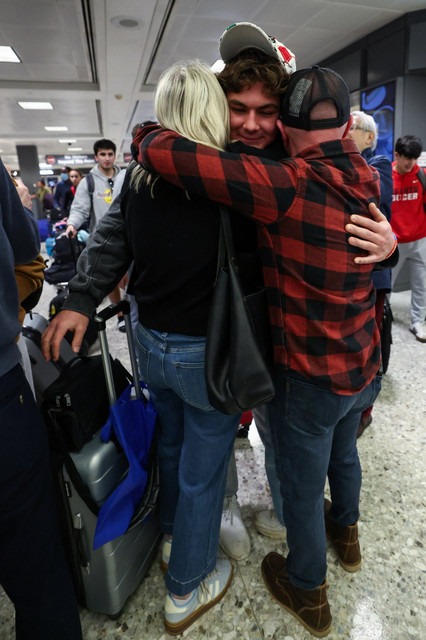
 Aidan Korn hugs his parents, Karen and Jason Korn, at Dulles Airport in Virginia upon his safe return, Thursday, March 5, 2026 | Credit: Courtesy of the Korn family
 
 The Heights School, an independent day school for grades 3-12, teaches boys “with a Christian spirit and in accord with the teachings of the Catholic Church” and the Personal Prelature of Opus Dei “provides chaplains for the school and oversees its program of classes in Catholic doctrine,” according to its website.Over the years, the school has drawn politically conservative families, including the sons of prominent politicians such as former senator and presidential candidate Rick Santorum as well as Maggie Gallagher, president of the National Organization for Marriage, among others.

Maryland high school seniors arrive home safely after being stuck in Middle East during hostilities #Catholic A group of high schoolers from a Maryland boys' school found themselves in the crosshairs of international conflict in the Middle East this week, turning what was meant to be a brief layover in Abu Dhabi into a multi-day ordeal amid escalating hostilities between Iran, Israel, and the United States.The group — 18 seniors and two faculty members from the Heights School in Potomac, Maryland, just outside of Washington, D.C. — had departed on the afternoon of Feb. 27 for a cultural exchange trip to Thailand.The voyage was part of the school’s yearly Crescite Trips, where students in grades 9-12 participate during the first week of March in local seminars as well as domestic and international trips intended for the students’ growth.The group was scheduled for a two-hour layover in the United Arab Emirates after their 12-hour flight when regional airspace slammed shut following U.S.-Israeli strikes on Iran and Iranʼs retaliatory missile barrages.Initially, all flights were cancelled, but soon the airport was closed and had to be evacuated. According to Aidan Korn, a student on the trip, the group was seated at the gate for their next flight when they learned it had been suspended because “the war had begun.”“It was scary at first. We were sitting by a giant window at the gate and all of our phones started going off at the same time. I saw texts from friends in the U.S. asking if I was alive,” he said. “We saw military men running with guns through the airport.”Korn said the two faculty chaperones, Justin Myers and Dan Sushinsky, told them to get away from the windows and seek shelter in the airport bathroom. They learned later that a drone was intercepted above the airport, and the debris killed one person and injured several others.Myers and Sushinksy, both seasoned teachers as well as college counselors at the Heights, immediately called headmaster Alvaro de Vicente, who told EWTN News he called “everyone I know to help” the boys.De Vicente said the teachers and boys registered through the state department website for U.S. citizens stuck in the Middle East.The teachers “did an incredible job keeping the boys calm, safe, and engaged,” said de Vicente. He described the men as “real pros in handling a situation no teacher can prepare for.”“This is not what we do. We donʼt prepare for this!” he said.Bryson Begg, another senior on the trip, agreed, telling EWTN News that the teachers were "incredible. Their number-one priority was our safety. They cared for us so much.”Begg described a “confidence” that Myers and Sushinksy emanated that they would all get home safely. “We had this sense that they’ve got it.”The teachers instructed the boys to be cautious and not to post anything on social media that could compromise their security, Korn said.Myers told EWTN News the situation felt chaotic at first, as thousands of people with canceled flights tried to find hotels using airline-provided vouchers. Initially, the group was split up and assigned to different hotels, which they deemed unacceptable, so he and Sushinsky decided to stay the night in the airport, hoping a flight would open up while they waited.The airport was then closed and everyone was ordered to evacuate. After several hours, with the help of several airport employees, Myers said they were able to find a hotel for all 20 of them. When they boarded the bus, again amidst the chaos of thousands of evacuating travelers, the driver asked Myers where the hotel was, and they figured out the directions there together.Myers said either he or Sushinsky was on the phone almost constantly with the State Department, parents, de Vicente, Heights alumni who lived in the area, and  the U.S. embassy. Myers, who has taught at the Heights for over 30 years and has led many trips, told EWTN News it was “an unusually good group” of boys. "All of our top students were on this trip. They were very brave.”“They were probably not as scared as they should have been! And now that they’re home safe, they’re saying it was the best trip ever!” he laughed.Once at the hotel, he and Sushinsky held group meetings at set times each day, where they ate together, played games, prayed the rosary, and told funny stories. The leaders also made themselves available at set times each day to talk with any boys who wanted to.Begg said the teachers made sure the boys kept their bags packed and ready to go at all times in case they had to rush to the airport to catch an available flight out.Korn told EWTN News the hotel’s doors were initially zip tied shut, but as the days went on, they were occasionally allowed to venture outside briefly. On one of these occasions, Begg said he was praying the rosary when warning sirens went off, and the hotel staff urgently called him back inside.“Most of the time it felt perfectly safe,” Myers said. “We saw some drones a couple of times; saw them intercepted, mostly at night. We’d watch the news and they’d make it worse than it is. They kept showing the same building being hit.”“It was not like what was being shown on TV. People in the city were going about their daily lives.”Nevertheless, the boys spent most of their time indoors eating (“The hotel had really nice food,” said Korn), working out at the gym, watching movies in the presidential suite, where two of the students were staying, and even playing hide and seek throughout the hotel.Thanks to a Heights alumnus who lives there, the group (with all the parents’ permission) was able to go to the beach one day, and on a desert excursion to an oasis, where they rode camels, according to Begg.‘An overwhelming feeling of comfort’By 4:30 a.m. on Feb. 28, Karen Korn, Aidan’s mother, told EWTN News she was awakened by the dozens of notifications on her phone from the boys as well as other parents.“I’m so humbled by and grateful to the amount of people that reached out to us, who were praying,” she said. “I truly believe that was what got us through. It’s unbelievable how many people were praying.”“We had people praying 24 hours a day; priests at every church around us that had holy hours and said Masses for them … even outside of this area.”She described “an overwhelming feeling of comfort” knowing how many prayers were being said for the young men. While praying on Sunday, she said she saw an image of Jesus wrapping his arms around the boys, keeping them safe.‘Men fully alive’Begg, who has attended the Heights since 3rd grade, credited de Vicente for working “tirelessly to help us.”“He is the pinnacle of what a Heights man is. ‘Men fully alive’ is our motto, and he’s the epitome of that. He’s strong in his beliefs, and cared for us so much. He waited in the airport for hours before we arrived. It was incredibly heartwarming to see that.”“He was right at the front of the group of parents at the airport with a big smile on his face, welcoming us home. We all shook his hand.”De Vicente said he was “thankful to the United Arab Emirates government” for hosting the boys, providing them the hotel and transportation. He also said he was "thankful to our government for being able to get them out.”The boys left on a charter flight — one arranged by the U.S. State Department filled with other American families — and returned safely to Dulles Airport on the afternoon of Thursday, March 5. Aidan Korn hugs his parents, Karen and Jason Korn, at Dulles Airport in Virginia upon his safe return, Thursday, March 5, 2026 | Credit: Courtesy of the Korn family The Heights School, an independent day school for grades 3-12, teaches boys “with a Christian spirit and in accord with the teachings of the Catholic Church” and the Personal Prelature of Opus Dei “provides chaplains for the school and oversees its program of classes in Catholic doctrine,” according to its website.Over the years, the school has drawn politically conservative families, including the sons of prominent politicians such as former senator and presidential candidate Rick Santorum as well as Maggie Gallagher, president of the National Organization for Marriage, among others.

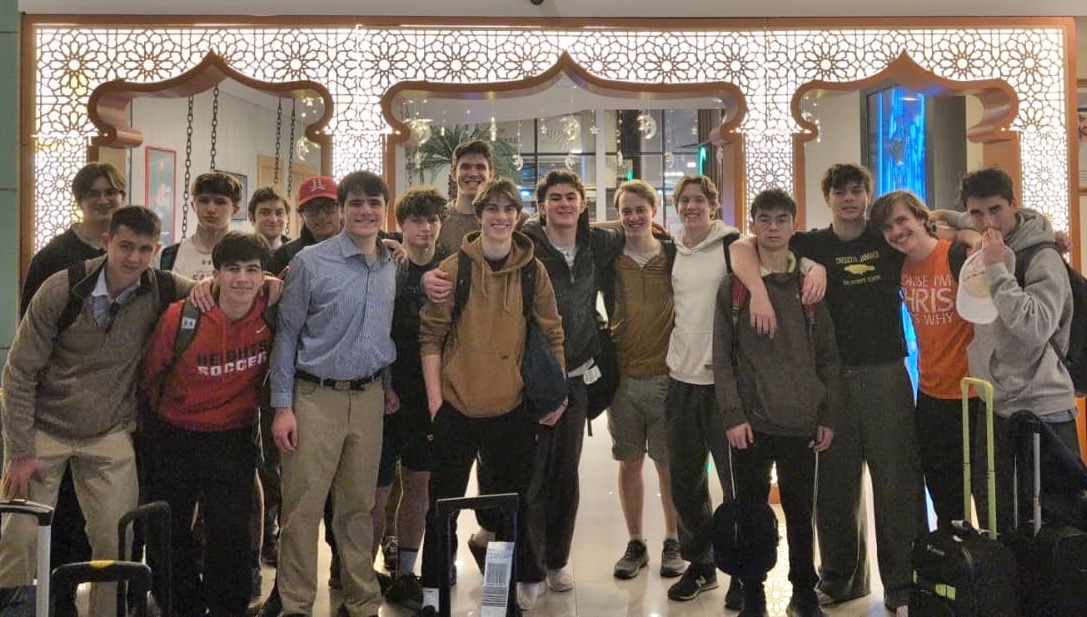
A group of high school seniors and their teacher chaperones spoke with EWTN News about being stuck in the Middle East during the beginning of hostilities there last week.
Read More
Bishop explains how Our Lady of Guadalupe can reach postmodern Silicon Valley #Catholic In a world marked by secularization and cultural fragmentation, Our Lady of Guadalupe remains a privileged path for proclaiming the Gospel, said Bishop Óscar Cantú of San Jose, California, as he shared how a recent event dedicated to the Virgin Mary illuminates the mission of the Church in the heart of Silicon Valley.During the recent “Theological and Pastoral Congress on the Guadalupe Event,” held in Mexico, the prelate described his diocese as a former valley of fruit orchards now transformed into the heart of global technology, home to world-class companies such as Google, Apple, Hewlett-Packard, and Nvidia.There, Cantú explained, people from India, China, Latin America, Africa, and many other countries live together, bringing with them their religions or their religious “indifference.”He spoke of “a strong secularization” there, calling it a “society that proudly proclaims itself postmodern, without need for God or religion.” He added that many “no longer have the time or space for religion” and that they “prefer modern practices” such as yoga or meditation, which they call mindfulness, which is “meditation without transcendence.”The bishop wants the pastoral and spiritual preparation for the 50th anniversary of the Diocese of San José in 2031 to be marked by Our Lady of Guadalupe, who he hopes will serve as a point of reference and model.Using Our Lady of Guadalupe’s methodology in Silicon ValleyThe bishop posed a direct challenge to priests, deacons, religious, and laity of his diocese: “How can we apply the methodology of Our Lady of Guadalupe, which she used 500 years ago in Mexico, now, in Silicon Valley, in a postmodern world?”He said the Spanish friars “did not have much success in evangelizing” because they arrived with the conquistadors, who used aggression and force. “But Our Lady had a great success that the friars could not have imagined. Millions of hearts were touched and transformed in a short time.”Cantú enumerated the key elements of this Guadalupan pedagogy, beginning with beauty and maternal tenderness of her words to Juan Diego: “‘My dearest Juan Diego, the littlest of my sons.’ Whose heart made of stone like we have in our Silicon Valley wouldn’t melt with those words?” he asked. He also emphasized how Mary “spoke to him in his language, not in Spanish. She used the symbolism of the Indigenous people, a codex that bore witness to what she recounted, which bore witness to what Juan Diego later told the other Indigenous people.” He recalled the Christological way the Virgin introduced herself, identifying herself as “the Mother of the God by whom we live,” and how she thus introduced “the beauty of truth” in contrast to the old logic of human sacrifice.Another element that Cantú emphasized is the role of the laity and, in particular, the poor. He highlighted that the Virgin involves Juan Diego in the mission of the Church when she tells him: “It is necessary that you go to the bishop.” He commented that “participation brings dignity and is an expression of dignity,” and that aspects of synodality are already evident in Guadalupe: participation and a voice within the ecclesial community.The bishop noted that Juan Diego’s participation does not create a separate structure, because “we shouldn’t create a parallel Church but rather everything should be under the authority, the structure that the Son of the Virgin left us, which is a hierarchical Church, with respect for the magisterium, but the magisterium, in turn, with the participation and listening of everyone, everyone, everyone.” For this reason, he defined it as “a hierarchical and synodal Church.”Among the elements the prelate highlighted is the concept of the sacred little house as a Church of mercy, a house where wounded humanity is welcomed: a “little house of love and compassion.”Our Lady of Guadalupe resonates with migrant communitiesCantú explained that in his diocese, faith has remained alive thanks to refugees and immigrants: Hispanics, Filipinos, Vietnamese, Indians, and Africans, many of them with histories of having to leave their native lands and discrimination.The Virgin of Guadalupe becomes a bridge of identity and solace there, not only for Mexicans, he noted. To illustrate this, he recounted an experience in a trilingual parish (Vietnamese, Filipino, and Hispanic) during a Mass in honor of Our Lady of Guadalupe.The bishop arrived prepared to celebrate Mass in Spanish with the Hispanic community, but discovered that about half of those present were Vietnamese, so he decided to preach by including his own story as the son of Mexican immigrants in Texas.“In Texas, many times Americans didn’t see me purely as American because my parents were born in another country, and at home they spoke Spanish; and when I went to visit my cousins ​​in Monterrey, they also didn’t see me as Mexican, so, well, I felt like a bit of an outsider.”As he shared this experience of not belonging, Cantú observed the faces of the Vietnamese faithful: “I saw in their faces that they understood, as refugees who left their country 30 or 40 years ago, that perhaps they never had the opportunity to learn the language well, to fully understand American politics or culture, that for the rest of their lives they felt like guests. And it was, I believe, at that moment that they identified with Juan Diego, whom the Virgin received in her little house.”This story was first published by ACI Prensa, the Spanish-language sister service of EWTN News. It has been translated and adapted by EWTN News English.

Bishop explains how Our Lady of Guadalupe can reach postmodern Silicon Valley #Catholic In a world marked by secularization and cultural fragmentation, Our Lady of Guadalupe remains a privileged path for proclaiming the Gospel, said Bishop Óscar Cantú of San Jose, California, as he shared how a recent event dedicated to the Virgin Mary illuminates the mission of the Church in the heart of Silicon Valley.During the recent “Theological and Pastoral Congress on the Guadalupe Event,” held in Mexico, the prelate described his diocese as a former valley of fruit orchards now transformed into the heart of global technology, home to world-class companies such as Google, Apple, Hewlett-Packard, and Nvidia.There, Cantú explained, people from India, China, Latin America, Africa, and many other countries live together, bringing with them their religions or their religious “indifference.”He spoke of “a strong secularization” there, calling it a “society that proudly proclaims itself postmodern, without need for God or religion.” He added that many “no longer have the time or space for religion” and that they “prefer modern practices” such as yoga or meditation, which they call mindfulness, which is “meditation without transcendence.”The bishop wants the pastoral and spiritual preparation for the 50th anniversary of the Diocese of San José in 2031 to be marked by Our Lady of Guadalupe, who he hopes will serve as a point of reference and model.Using Our Lady of Guadalupe’s methodology in Silicon ValleyThe bishop posed a direct challenge to priests, deacons, religious, and laity of his diocese: “How can we apply the methodology of Our Lady of Guadalupe, which she used 500 years ago in Mexico, now, in Silicon Valley, in a postmodern world?”He said the Spanish friars “did not have much success in evangelizing” because they arrived with the conquistadors, who used aggression and force. “But Our Lady had a great success that the friars could not have imagined. Millions of hearts were touched and transformed in a short time.”Cantú enumerated the key elements of this Guadalupan pedagogy, beginning with beauty and maternal tenderness of her words to Juan Diego: “‘My dearest Juan Diego, the littlest of my sons.’ Whose heart made of stone like we have in our Silicon Valley wouldn’t melt with those words?” he asked. He also emphasized how Mary “spoke to him in his language, not in Spanish. She used the symbolism of the Indigenous people, a codex that bore witness to what she recounted, which bore witness to what Juan Diego later told the other Indigenous people.” He recalled the Christological way the Virgin introduced herself, identifying herself as “the Mother of the God by whom we live,” and how she thus introduced “the beauty of truth” in contrast to the old logic of human sacrifice.Another element that Cantú emphasized is the role of the laity and, in particular, the poor. He highlighted that the Virgin involves Juan Diego in the mission of the Church when she tells him: “It is necessary that you go to the bishop.” He commented that “participation brings dignity and is an expression of dignity,” and that aspects of synodality are already evident in Guadalupe: participation and a voice within the ecclesial community.The bishop noted that Juan Diego’s participation does not create a separate structure, because “we shouldn’t create a parallel Church but rather everything should be under the authority, the structure that the Son of the Virgin left us, which is a hierarchical Church, with respect for the magisterium, but the magisterium, in turn, with the participation and listening of everyone, everyone, everyone.” For this reason, he defined it as “a hierarchical and synodal Church.”Among the elements the prelate highlighted is the concept of the sacred little house as a Church of mercy, a house where wounded humanity is welcomed: a “little house of love and compassion.”Our Lady of Guadalupe resonates with migrant communitiesCantú explained that in his diocese, faith has remained alive thanks to refugees and immigrants: Hispanics, Filipinos, Vietnamese, Indians, and Africans, many of them with histories of having to leave their native lands and discrimination.The Virgin of Guadalupe becomes a bridge of identity and solace there, not only for Mexicans, he noted. To illustrate this, he recounted an experience in a trilingual parish (Vietnamese, Filipino, and Hispanic) during a Mass in honor of Our Lady of Guadalupe.The bishop arrived prepared to celebrate Mass in Spanish with the Hispanic community, but discovered that about half of those present were Vietnamese, so he decided to preach by including his own story as the son of Mexican immigrants in Texas.“In Texas, many times Americans didn’t see me purely as American because my parents were born in another country, and at home they spoke Spanish; and when I went to visit my cousins ​​in Monterrey, they also didn’t see me as Mexican, so, well, I felt like a bit of an outsider.”As he shared this experience of not belonging, Cantú observed the faces of the Vietnamese faithful: “I saw in their faces that they understood, as refugees who left their country 30 or 40 years ago, that perhaps they never had the opportunity to learn the language well, to fully understand American politics or culture, that for the rest of their lives they felt like guests. And it was, I believe, at that moment that they identified with Juan Diego, whom the Virgin received in her little house.”This story was first published by ACI Prensa, the Spanish-language sister service of EWTN News. It has been translated and adapted by EWTN News English.

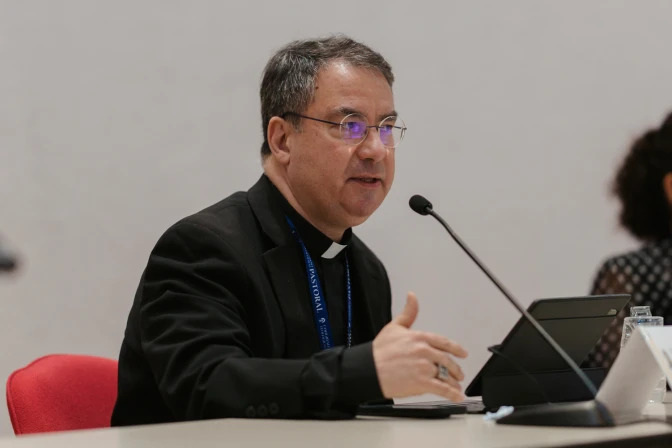
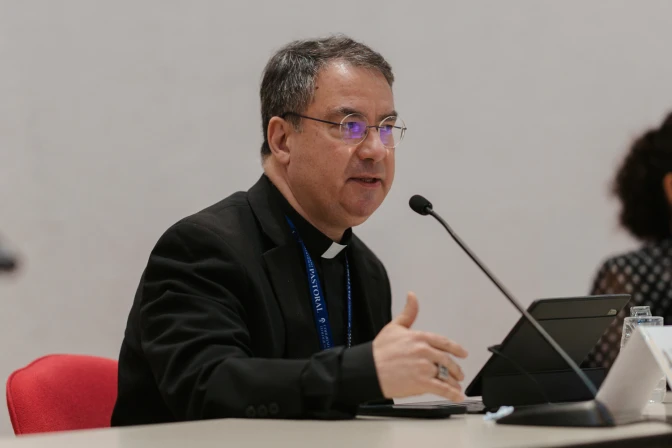
Bishop Óscar Cantú of San Jose, California, explains how the highly secularized society there can receive the message and imagery of Our Lady of Guadalupe in a way that is meaningful to them.
Read More
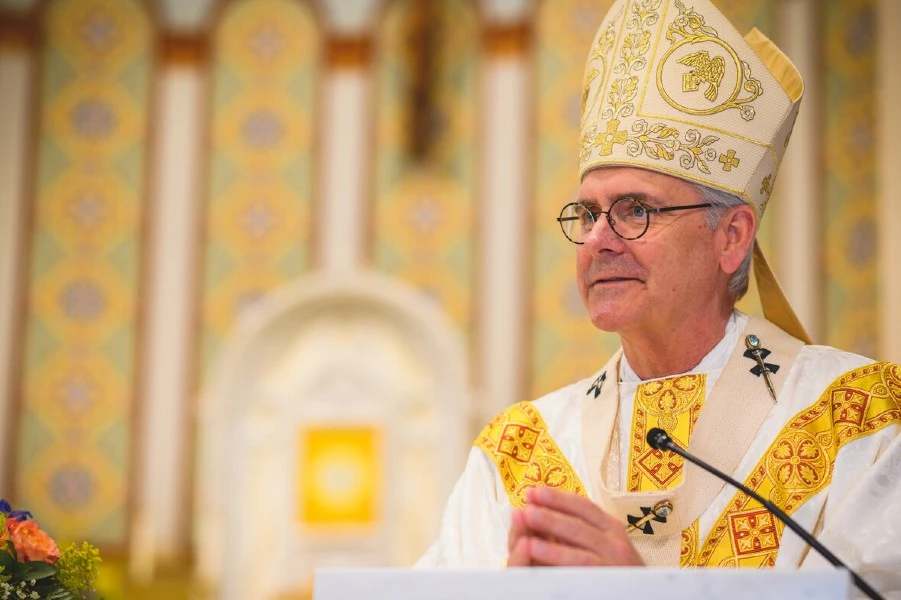
Archbishop Coakley mourns execution of Oklahoma murderer, urges prayers for end to death penalty #Catholic Oklahoma City Archbishop Paul Coakley this week lamented the state’s execution of convicted murderer Kendrick Simpson, urging prayers for an end to what he called the “inhumane” punishment of the death penalty. Oklahoma executed Simpson on Feb. 12 for the 2006 murders of 20-year-old Glen Palmer and 19-year-old Anthony Jones. Simpson was convicted of killing the two in a shooting outside of an Oklahoma City nightclub.Simpson’s execution came after the state’s Pardon and Parole Board voted against his clemency petition. The U.S. Supreme Court similarly rejected his appeal. He was pronounced dead at 10:19 a.m. on Feb. 12. Coakley in a statement on X said the execution — coming shortly after the state’s March for Life — “brought into stark reality just how much work remains” for pro-life advocates in the state. Tweet“Heinous crimes should not go unpunished and our compassion and support for the victims and their loved ones is necessary,” the archbishop said, urging the faithful to “pray for those left behind [who are] often dealing with incomprehensible grief.”Yet “the intentional killing of the perpetrator cannot heal those terrible wounds,” Coakley said, arguing that the “pain and loss of one death cannot be extinguished by another violent death.”“The death penalty is inhumane and a poor method of punishment, standing in opposition to our duty to respect and value all human life and cherish God’s plan for humankind, which includes merciful justice and the opportunity for the redemption of the soul,” he said. Coakley has long been an outspoken opponent of the death penalty, having regularly called for its abolition while arguing that it “only contributes to the continued coarsening of society and to the spiral of violence.”Oklahoma, meanwhile, has for years been among the most execution-heavy states in the country; it is first among states in executions per capita and seconded only by Texas in total numbers of executions.Coakley himself is among the numerous U.S. prelates who regularly advocate against capital punishment in their respective states. The Death Penalty Information Center says that 23 states and the District of Columbia have abolished capital punishment.The archbishop on Feb. 12 urged the faithful to join him in “praying for an end to the death penalty in our state and nationwide.” He also urged prayers “for the victims, Glen Palmer and Anthony Jones, and their families, as well as Kendrick Simpson and his family.”Simpson himself had openly confessed to the murders ahead of his execution as part of his clemency plea before the state board.At the hearing he also addressed the families of his victims, telling them directly: “I apologize for murdering your sons.”“I don’t make any excuses, I don’t blame others, and they didn’t deserve what happened to them,” he said.

Archbishop Coakley mourns execution of Oklahoma murderer, urges prayers for end to death penalty #Catholic Oklahoma City Archbishop Paul Coakley this week lamented the state’s execution of convicted murderer Kendrick Simpson, urging prayers for an end to what he called the “inhumane” punishment of the death penalty. Oklahoma executed Simpson on Feb. 12 for the 2006 murders of 20-year-old Glen Palmer and 19-year-old Anthony Jones. Simpson was convicted of killing the two in a shooting outside of an Oklahoma City nightclub.Simpson’s execution came after the state’s Pardon and Parole Board voted against his clemency petition. The U.S. Supreme Court similarly rejected his appeal. He was pronounced dead at 10:19 a.m. on Feb. 12. Coakley in a statement on X said the execution — coming shortly after the state’s March for Life — “brought into stark reality just how much work remains” for pro-life advocates in the state. Tweet“Heinous crimes should not go unpunished and our compassion and support for the victims and their loved ones is necessary,” the archbishop said, urging the faithful to “pray for those left behind [who are] often dealing with incomprehensible grief.”Yet “the intentional killing of the perpetrator cannot heal those terrible wounds,” Coakley said, arguing that the “pain and loss of one death cannot be extinguished by another violent death.”“The death penalty is inhumane and a poor method of punishment, standing in opposition to our duty to respect and value all human life and cherish God’s plan for humankind, which includes merciful justice and the opportunity for the redemption of the soul,” he said. Coakley has long been an outspoken opponent of the death penalty, having regularly called for its abolition while arguing that it “only contributes to the continued coarsening of society and to the spiral of violence.”Oklahoma, meanwhile, has for years been among the most execution-heavy states in the country; it is first among states in executions per capita and seconded only by Texas in total numbers of executions.Coakley himself is among the numerous U.S. prelates who regularly advocate against capital punishment in their respective states. The Death Penalty Information Center says that 23 states and the District of Columbia have abolished capital punishment.The archbishop on Feb. 12 urged the faithful to join him in “praying for an end to the death penalty in our state and nationwide.” He also urged prayers “for the victims, Glen Palmer and Anthony Jones, and their families, as well as Kendrick Simpson and his family.”Simpson himself had openly confessed to the murders ahead of his execution as part of his clemency plea before the state board.At the hearing he also addressed the families of his victims, telling them directly: “I apologize for murdering your sons.”“I don’t make any excuses, I don’t blame others, and they didn’t deserve what happened to them,” he said.

The archbishop called for prayers for both the family of the killer’s victims and the killer himself.
Read More