sorrow

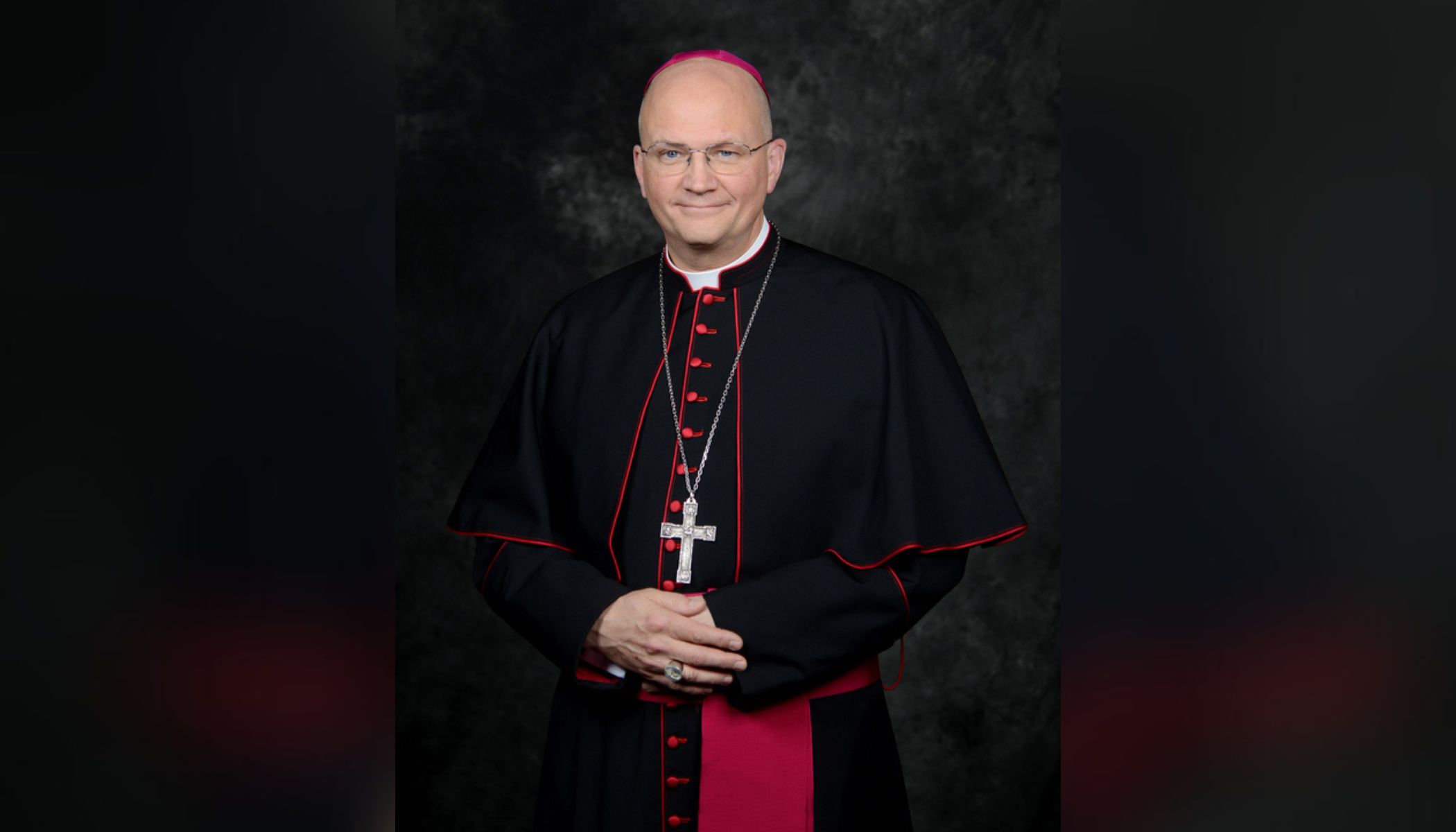
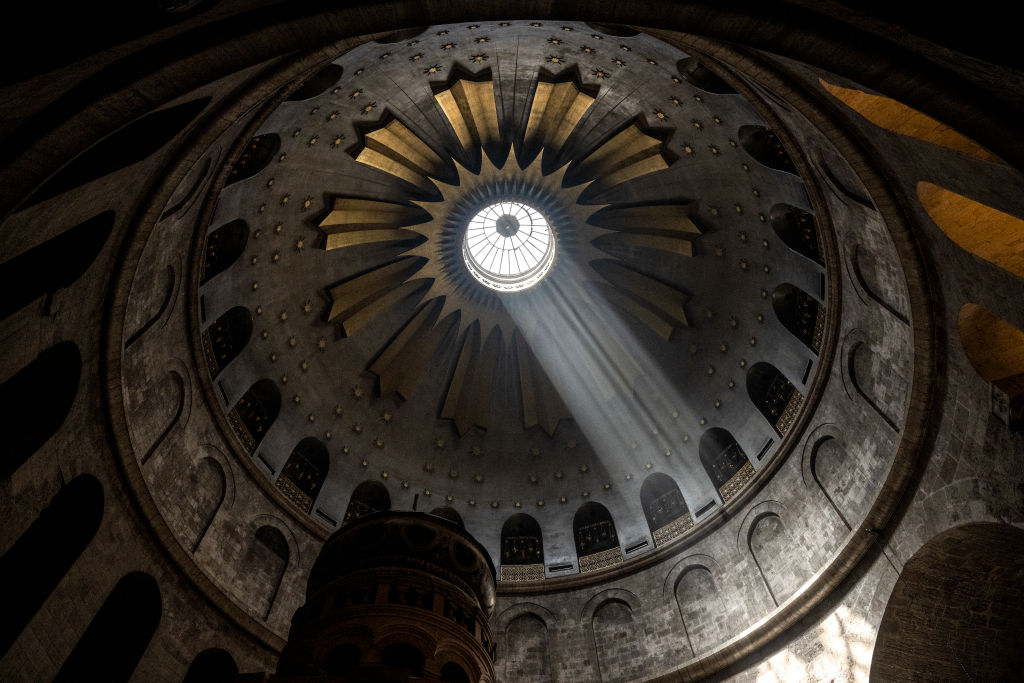
Israeli police block cardinal, custos from entering Church of the Holy Sepulchre #Catholic In an incident described as unprecedented, Israeli police prevented Cardinal Pierbattista Pizzaballa, Latin Patriarch of Jerusalem, along with Father Francesco Patton, Custos of the Holy Land and the official responsible for the Church of the Holy Sepulchre, from entering the church as they made their way to celebrate Palm Sunday Mass.According to a joint statement issued March 29 by the Latin Patriarchate of Jerusalem and the Custody of the Holy Land, police stopped the two church leaders on their way as they were proceeding privately “without any ceremonial or liturgical manifestations,” and forced them to turn back.The statement noted that, for the first time in centuries, this action prevented church leaders from celebrating Palm Sunday Mass at the Church of the Holy Sepulchre. It described the incident as a “serious and dangerous precedent,” adding that it “disregards the sentiments of millions of believers around the world whose eyes turn to Jerusalem during this week."Isaac Herzog, president of Israel, said in a statement on social media that he called Pizzaballa the Patton to express sorrow over the incident. “I clarified that the incident stemmed from security concerns due to the continuous threat of missile attacks from the Iranian terror regime against the civilian population in Israel, following previous incidents in which Iranian missiles fell in the area of the Old City of Jerusalem in recent days,” Herzog wrote. “I reaffirmed the State of Israelʼs unwavering commitment to freedom of religion for all faiths and to upholding the status quo at the holy sites of Jerusalem.”Mike Huckabee, U.S. ambassador to Israel, expressed gratitude for Herzogʼs “conciliatory” and “gracious” statement in a post on social media.TweetThe March 29 statement by the Latin Patriarchate of Jerusalem and the Custody of the Holy Land emphasized that church leaders had acted with full responsibility, noting that since the beginning of the war they had complied with all imposed restrictions, including canceling public gatherings and limiting attendance, while relying instead on broadcast celebrations reaching hundreds of millions of faithful worldwide during the Easter season. It further stressed that preventing the patriarch and the custos of the Holy Land—who represent the highest ecclesiastical authorities responsible for the Catholic Church and the holy sites—from entering the church constitutes a measure that is “clearly unreasonable and disproportionate.”The decision, the statement added, was “hasty and based on flawed grounds,” “tainted by inappropriate considerations,” and represents “a serious departure from the fundamental principles of reasonableness, freedom of worship, and respect for the status quo.” In conclusion, the two church leaders expressed their “deep regret” to Christians in the Holy Land and around the world after “prayer on one of the holiest days of the Christian calendar was prevented in this manner.” Celebrations under restrictionsOn the security front, Jerusalem and the wider Holy Land continue to experience heightened tensions amid the ongoing regional conflict, which has directly affected daily life and the practice of religious rites. According to media reports, preparations for religious celebrations such as Easter and Holy Saturday have been accompanied by strict security measures, with some traditional events canceled due to security threats and reports of rockets landing near religious sites in the Holy City. Authorities have imposed limits on gatherings and restricted access to certain holy places.Pizzaballa has repeatedly highlighted the deep suffering of Christians in the region amid the ongoing conflict, calling for prayer and support for Christian communities facing increasing challenges due to war and insecurity. In previous statements, he emphasized the importance of providing spiritual and moral support to Christians in the Holy Land, underscoring the need for them to remain in their homeland and affirming that the Church continues its mission and services despite ongoing risks.Reports from religious and community sources have also pointed to a rise in attacks against Christians and Christian properties in the West Bank and Jerusalem, including acts of violence by settlers. These developments, according to various reports, reflect the deteriorating security conditions for Palestinian Christian communities amid ongoing settlement expansion, increasing the risk of displacement and further diminishing their historic presence in the Holy Land.This story was updated at 1 p.m. ET on March 29, 2026, to include comments from Isaac Herzog, president of Israel, and Mike Huckabee, U.S. ambassador to Israel.

Israeli police block cardinal, custos from entering Church of the Holy Sepulchre #Catholic In an incident described as unprecedented, Israeli police prevented Cardinal Pierbattista Pizzaballa, Latin Patriarch of Jerusalem, along with Father Francesco Patton, Custos of the Holy Land and the official responsible for the Church of the Holy Sepulchre, from entering the church as they made their way to celebrate Palm Sunday Mass.According to a joint statement issued March 29 by the Latin Patriarchate of Jerusalem and the Custody of the Holy Land, police stopped the two church leaders on their way as they were proceeding privately “without any ceremonial or liturgical manifestations,” and forced them to turn back.The statement noted that, for the first time in centuries, this action prevented church leaders from celebrating Palm Sunday Mass at the Church of the Holy Sepulchre. It described the incident as a “serious and dangerous precedent,” adding that it “disregards the sentiments of millions of believers around the world whose eyes turn to Jerusalem during this week."Isaac Herzog, president of Israel, said in a statement on social media that he called Pizzaballa the Patton to express sorrow over the incident. “I clarified that the incident stemmed from security concerns due to the continuous threat of missile attacks from the Iranian terror regime against the civilian population in Israel, following previous incidents in which Iranian missiles fell in the area of the Old City of Jerusalem in recent days,” Herzog wrote. “I reaffirmed the State of Israelʼs unwavering commitment to freedom of religion for all faiths and to upholding the status quo at the holy sites of Jerusalem.”Mike Huckabee, U.S. ambassador to Israel, expressed gratitude for Herzogʼs “conciliatory” and “gracious” statement in a post on social media.TweetThe March 29 statement by the Latin Patriarchate of Jerusalem and the Custody of the Holy Land emphasized that church leaders had acted with full responsibility, noting that since the beginning of the war they had complied with all imposed restrictions, including canceling public gatherings and limiting attendance, while relying instead on broadcast celebrations reaching hundreds of millions of faithful worldwide during the Easter season. It further stressed that preventing the patriarch and the custos of the Holy Land—who represent the highest ecclesiastical authorities responsible for the Catholic Church and the holy sites—from entering the church constitutes a measure that is “clearly unreasonable and disproportionate.”The decision, the statement added, was “hasty and based on flawed grounds,” “tainted by inappropriate considerations,” and represents “a serious departure from the fundamental principles of reasonableness, freedom of worship, and respect for the status quo.” In conclusion, the two church leaders expressed their “deep regret” to Christians in the Holy Land and around the world after “prayer on one of the holiest days of the Christian calendar was prevented in this manner.” Celebrations under restrictionsOn the security front, Jerusalem and the wider Holy Land continue to experience heightened tensions amid the ongoing regional conflict, which has directly affected daily life and the practice of religious rites. According to media reports, preparations for religious celebrations such as Easter and Holy Saturday have been accompanied by strict security measures, with some traditional events canceled due to security threats and reports of rockets landing near religious sites in the Holy City. Authorities have imposed limits on gatherings and restricted access to certain holy places.Pizzaballa has repeatedly highlighted the deep suffering of Christians in the region amid the ongoing conflict, calling for prayer and support for Christian communities facing increasing challenges due to war and insecurity. In previous statements, he emphasized the importance of providing spiritual and moral support to Christians in the Holy Land, underscoring the need for them to remain in their homeland and affirming that the Church continues its mission and services despite ongoing risks.Reports from religious and community sources have also pointed to a rise in attacks against Christians and Christian properties in the West Bank and Jerusalem, including acts of violence by settlers. These developments, according to various reports, reflect the deteriorating security conditions for Palestinian Christian communities amid ongoing settlement expansion, increasing the risk of displacement and further diminishing their historic presence in the Holy Land.This story was updated at 1 p.m. ET on March 29, 2026, to include comments from Isaac Herzog, president of Israel, and Mike Huckabee, U.S. ambassador to Israel.

Police stopped the two church leaders on their way as they were proceeding privately “without any ceremonial or liturgical manifestations,” and forced them to turn back.
Read More
Attack on one faith wounds all, Detroit archbishop says after synagogue attack #Catholic Archbishop Edward J. Weisenburger of Detroit offered prayers and “profound sorrow” for the Jewish community after an attack on Temple Israel Synagogue in West Bloomfield, Michigan.“We stand in solidarity with our Jewish brothers and sisters, holding in prayer all those affected by this act of violence, especially those who are wounded, grieving, or shaken, including the congregation, first responders, and the greater community,” Weisenburger said in a statement.On March 12, an attacker drove a vehicle into Temple Israel in West Bloomfield, near Detroit, and opened fire.“An attack on one faith community wounds us all,” Weisenburger said. “As details continue to emerge, we remain united with our partners in faith, particularly our Jewish friends and neighbors.”“Together, we pray for an end to violence and for deeper peace in our world. May God’s abundant love and mercy guide us toward compassion, justice, and peace,” he said.Synagogue attackJennifer Runyan, special agent in charge of the FBI’s Detroit field office, said in a statement the FBI “forensically confirmed the assailant responsible” was 41-year-old Ayman Mohamad Ghazali of Dearborn Heights, Michigan. He “has no previous criminal history and registered weapons. He also has never been the subject of an FBI investigation.”In a timeline released by Runyan, the FBI reported Ghazali drove his vehicle into the synagogue building, injuring a security officer in the process. Ghazali then began firing a gun, starting a gunfight between him and security guards, the FBI said.Ghazali’s vehicle’s engine compartment caught fire and at some point during the gunfire, Ghazali suffered “a self-inflicted gunshot wound,” Runyan said.In the bed of his truck, law enforcement found “a large quantity of commercial grade fireworks and several jugs filled with a flammable liquid we believe to be gasoline, some of which was consumed in the fire,” she said.The FBI confirmed the suspect is deceased, but “thankfully, the brave officers and security personnel who protected the Temple … are recovering, and we continue to pray for their speedy healing,” Runyan said.

Attack on one faith wounds all, Detroit archbishop says after synagogue attack #Catholic Archbishop Edward J. Weisenburger of Detroit offered prayers and “profound sorrow” for the Jewish community after an attack on Temple Israel Synagogue in West Bloomfield, Michigan.“We stand in solidarity with our Jewish brothers and sisters, holding in prayer all those affected by this act of violence, especially those who are wounded, grieving, or shaken, including the congregation, first responders, and the greater community,” Weisenburger said in a statement.On March 12, an attacker drove a vehicle into Temple Israel in West Bloomfield, near Detroit, and opened fire.“An attack on one faith community wounds us all,” Weisenburger said. “As details continue to emerge, we remain united with our partners in faith, particularly our Jewish friends and neighbors.”“Together, we pray for an end to violence and for deeper peace in our world. May God’s abundant love and mercy guide us toward compassion, justice, and peace,” he said.Synagogue attackJennifer Runyan, special agent in charge of the FBI’s Detroit field office, said in a statement the FBI “forensically confirmed the assailant responsible” was 41-year-old Ayman Mohamad Ghazali of Dearborn Heights, Michigan. He “has no previous criminal history and registered weapons. He also has never been the subject of an FBI investigation.”In a timeline released by Runyan, the FBI reported Ghazali drove his vehicle into the synagogue building, injuring a security officer in the process. Ghazali then began firing a gun, starting a gunfight between him and security guards, the FBI said.Ghazali’s vehicle’s engine compartment caught fire and at some point during the gunfire, Ghazali suffered “a self-inflicted gunshot wound,” Runyan said.In the bed of his truck, law enforcement found “a large quantity of commercial grade fireworks and several jugs filled with a flammable liquid we believe to be gasoline, some of which was consumed in the fire,” she said.The FBI confirmed the suspect is deceased, but “thankfully, the brave officers and security personnel who protected the Temple … are recovering, and we continue to pray for their speedy healing,” Runyan said.

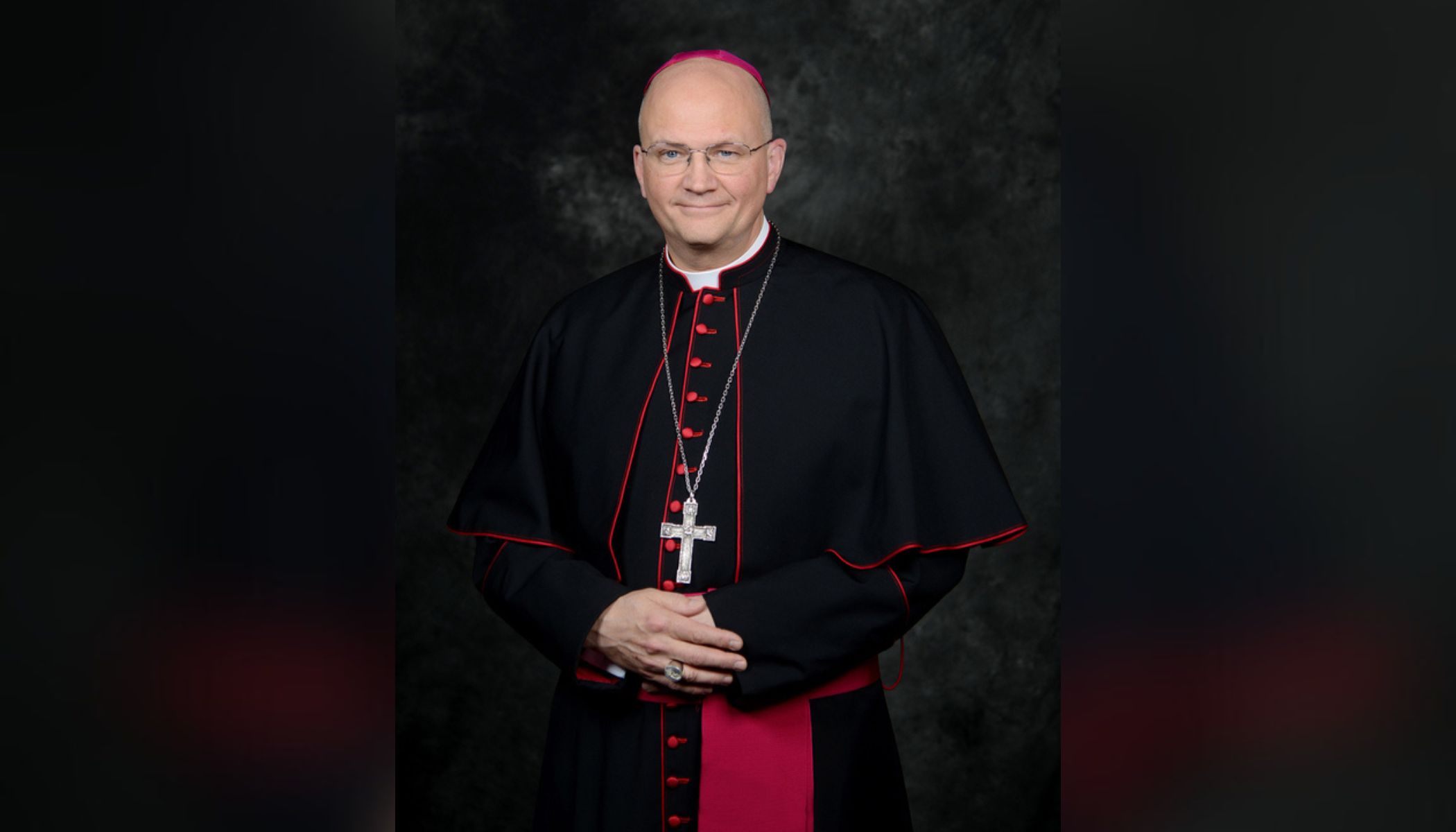
Michigan Catholics “stand in solidarity” with Jewish community after attack on a synagogue.
Read More
Lebanon mourns Father Pierre El-Rahi as calls for peace echo at his funeral #Catholic Amid a war weighing heavily on southern Lebanon with fear and destruction, a prayer of farewell rose from the town of Qlayaa for a priest who chose to remain beside his people until the very end. In the courtyard of St. George Church in a scene marked by tears, prayer, and hope, mourners bid farewell to Father Pierre El-Rahi, who was killed after shelling struck his town.The funeral and burial rites were held with the participation of Bishop Elias Nassar, representing Maronite Patriarch Cardinal Bechara Boutros al-Rahi, and Maronite Archbishop of Tyre Charbel Abdallah, along with Lebanese Army Commander Gen. Rodolphe Haykal, members of the clergy, and a large crowd of townspeople and loved ones who came to bid farewell to their pastor.In a message read on his behalf by Nassar, al-Rahi expressed his “deep pain and sorrow” at the news of the priest’s martyrdom. He described him as a “zealous and courageous pastor” and a man marked by “priestly virtues filled with divine grace.” Recalling El-Rahi’s priestly journey and pastoral service, the patriarch noted that the late priest was a son of the town of Debel and had lived his priesthood, since his ordination in 2014, with unconditional love, remaining close to children, youth, and families. As a result, St. George Parish in Qlayaa, which he had served for about five years, became “a model of a vibrant parish of Christ.”Al-Rahi noted that the martyred priest’s role was not limited to pastoral work. He also held ecclesial, canonical, and social responsibilities in the Archdiocese of Tyre, while serving those who were suffering, the poor, and prisoners. 
 
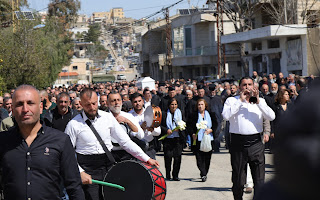
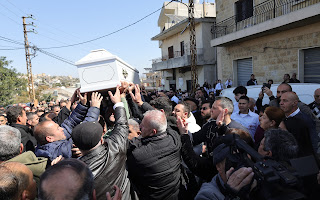
 Mourners gather for the funeral of Father Pierre El-Rahi at St. George Church in the town of Qlayaa in southern Lebanon. | Credit: ACI MENA
 
 The patriarch also stressed El-Rahi’s “courageous” decision to remain with the steadfast people of Qlayaa while the region bears the cost of the ongoing war. He added in his message: “We pray that his martyrdom may be an act of redemption for the people of Qlayaa and for all Lebanon and the Lebanese who reject this war and long for a just, comprehensive, and lasting peace.”Pope Leo XIV mourned the martyred priest at the end of his weekly general audience on Wednesday. He said El-Rahi embodied the meaning of his family name, becoming “a true shepherd,” always close to his flock and filled with the love and sacrifice of Jesus, the Good Shepherd. He added that the priest rushed without hesitation to help members of his parish as soon as he heard they had been wounded in the shelling. The pope concluded with a prayer for peace in the Middle East, saying: “We ask God to make his shed blood a seed of peace for beloved Lebanon.”This story was first published by ACI MENA, the Arabic-language sister service of EWTN News. It has been translated and adapted by EWTN News English.

Lebanon mourns Father Pierre El-Rahi as calls for peace echo at his funeral #Catholic Amid a war weighing heavily on southern Lebanon with fear and destruction, a prayer of farewell rose from the town of Qlayaa for a priest who chose to remain beside his people until the very end. In the courtyard of St. George Church in a scene marked by tears, prayer, and hope, mourners bid farewell to Father Pierre El-Rahi, who was killed after shelling struck his town.The funeral and burial rites were held with the participation of Bishop Elias Nassar, representing Maronite Patriarch Cardinal Bechara Boutros al-Rahi, and Maronite Archbishop of Tyre Charbel Abdallah, along with Lebanese Army Commander Gen. Rodolphe Haykal, members of the clergy, and a large crowd of townspeople and loved ones who came to bid farewell to their pastor.In a message read on his behalf by Nassar, al-Rahi expressed his “deep pain and sorrow” at the news of the priest’s martyrdom. He described him as a “zealous and courageous pastor” and a man marked by “priestly virtues filled with divine grace.” Recalling El-Rahi’s priestly journey and pastoral service, the patriarch noted that the late priest was a son of the town of Debel and had lived his priesthood, since his ordination in 2014, with unconditional love, remaining close to children, youth, and families. As a result, St. George Parish in Qlayaa, which he had served for about five years, became “a model of a vibrant parish of Christ.”Al-Rahi noted that the martyred priest’s role was not limited to pastoral work. He also held ecclesial, canonical, and social responsibilities in the Archdiocese of Tyre, while serving those who were suffering, the poor, and prisoners. Mourners gather for the funeral of Father Pierre El-Rahi at St. George Church in the town of Qlayaa in southern Lebanon. | Credit: ACI MENA The patriarch also stressed El-Rahi’s “courageous” decision to remain with the steadfast people of Qlayaa while the region bears the cost of the ongoing war. He added in his message: “We pray that his martyrdom may be an act of redemption for the people of Qlayaa and for all Lebanon and the Lebanese who reject this war and long for a just, comprehensive, and lasting peace.”Pope Leo XIV mourned the martyred priest at the end of his weekly general audience on Wednesday. He said El-Rahi embodied the meaning of his family name, becoming “a true shepherd,” always close to his flock and filled with the love and sacrifice of Jesus, the Good Shepherd. He added that the priest rushed without hesitation to help members of his parish as soon as he heard they had been wounded in the shelling. The pope concluded with a prayer for peace in the Middle East, saying: “We ask God to make his shed blood a seed of peace for beloved Lebanon.”This story was first published by ACI MENA, the Arabic-language sister service of EWTN News. It has been translated and adapted by EWTN News English.

In the courtyard of St. George Church, in a scene marked by tears, prayer, and hope, mourners bid farewell to a beloved priest who was killed after shelling struck his town.
Read More