Taxes

Archbishop Wenski makes case for ‘permanent’ solution for Haitian refugees in U.S. #Catholic Archbishop Thomas Wenski of Miami is calling on Congress to find a “permanent” solution for Haitian refugees in the United States.On Feb. 2 a federal judge blocked the Trump administration from ending Temporary Protected Status (TPS) for hundreds of thousands of Haitian immigrants that was given in 2010. TPS provides eligible Haitians in the U.S. with protection from deportation and work authorization, due to ongoing safety concerns in Haiti.As Florida has the largest Haitian population in the country, Wenski said there is “relief” after the judge blocked the order. Ending TPS “would affect possibly 300,000 Haitians, not only here in South Florida but throughout the United States,” he said in an interview with “EWTN News Nightly.”“It’s not the final solution … because the administration, I think, has the intention of making an appeal, and what is given could be quickly taken away as well. While the Haitians are breathing a sigh of relief, at the same time, we realize that it’s a temporary relief.”Now, Wenski said, it is up to Congress “to step up to the plate and provide a more permanent solution to the plight of these Haitians.” The administration “is applying the laws as they understand them, but it is Congress that makes the laws.”“If the laws are unfair, unjust, or inadequate to the real needs of our country, then they should be changed, and that’s a prerogative of Congress. So I would urge Congress to step up to provide a solution, because the Haitians being forced back to Haiti with very perilous, dangerous conditions right now … puts their lives in danger.”The Haitians “leaving South Florida and other places in the United States so abruptly would cause great economic damage to the United States,” Wenski said. He detailed that Haitians in the U.S. with TPS are working gainfully, paying taxes, and participating in the economy.“It is also important to remember, these people have temporary protective status, which also grants them a work permit. They are not illegals. They’re not violating any law because they have been given a status by the government,” Wenski said.TPS status does put them “in limbo,” Wenski said. It “doesn’t provide any path to permanent residency. If they would leave the country, they would not be able to return.”Concerns in HaitiAs the U.S. State Department tells Americans not to travel to Haiti, when “the Trump administration puts a travel ban, trying to stop people from Haiti,” it “shows the perilousness of the country conditions,” Wenski said.“For instance, the capital city, where there’s about 3 million people residing, is in the hands of gangs,” he said. “Here’s a country that has its school system in disarray because gangs make it impossible for kids to go to school.”Wenski also highlighted the issue of “almost nonexistent health care” as “doctors have been forced to flee and hospitals have been closed” in the country.“It is a place where there is no rule of law, no government, where these gangs and other criminals operate with impunity. For many people, the only lifeline that they have that allows them to survive is the remittances, small as they might be, that the Haitians in the United States are sending home to support families,” Wenski said.“It’s a real problem, not only in Haiti, but the Caribbean region,” Wenski said. He specifically noted Mexico, Venezuela, Colombia, and Ecuador.“We see the drugs that are being transported into Europe from Asia and also Africa. It is a worldwide problem. What I think we have to recognize is that the poorest people are not the ones that are driving the problem. They are the victims of the problem.”The Haitians in the U.S. seeking refuge and protection “did not create the problems, but they were the ones that have been victimized by the problems,” Wenski said. “We have to be careful that we don’t blame the victims because it’s easier to do that sometimes because they don’t have the strength to oppose us,” Wenski said.

Archbishop Wenski makes case for ‘permanent’ solution for Haitian refugees in U.S. #Catholic Archbishop Thomas Wenski of Miami is calling on Congress to find a “permanent” solution for Haitian refugees in the United States.On Feb. 2 a federal judge blocked the Trump administration from ending Temporary Protected Status (TPS) for hundreds of thousands of Haitian immigrants that was given in 2010. TPS provides eligible Haitians in the U.S. with protection from deportation and work authorization, due to ongoing safety concerns in Haiti.As Florida has the largest Haitian population in the country, Wenski said there is “relief” after the judge blocked the order. Ending TPS “would affect possibly 300,000 Haitians, not only here in South Florida but throughout the United States,” he said in an interview with “EWTN News Nightly.”“It’s not the final solution … because the administration, I think, has the intention of making an appeal, and what is given could be quickly taken away as well. While the Haitians are breathing a sigh of relief, at the same time, we realize that it’s a temporary relief.”Now, Wenski said, it is up to Congress “to step up to the plate and provide a more permanent solution to the plight of these Haitians.” The administration “is applying the laws as they understand them, but it is Congress that makes the laws.”“If the laws are unfair, unjust, or inadequate to the real needs of our country, then they should be changed, and that’s a prerogative of Congress. So I would urge Congress to step up to provide a solution, because the Haitians being forced back to Haiti with very perilous, dangerous conditions right now … puts their lives in danger.”The Haitians “leaving South Florida and other places in the United States so abruptly would cause great economic damage to the United States,” Wenski said. He detailed that Haitians in the U.S. with TPS are working gainfully, paying taxes, and participating in the economy.“It is also important to remember, these people have temporary protective status, which also grants them a work permit. They are not illegals. They’re not violating any law because they have been given a status by the government,” Wenski said.TPS status does put them “in limbo,” Wenski said. It “doesn’t provide any path to permanent residency. If they would leave the country, they would not be able to return.”Concerns in HaitiAs the U.S. State Department tells Americans not to travel to Haiti, when “the Trump administration puts a travel ban, trying to stop people from Haiti,” it “shows the perilousness of the country conditions,” Wenski said.“For instance, the capital city, where there’s about 3 million people residing, is in the hands of gangs,” he said. “Here’s a country that has its school system in disarray because gangs make it impossible for kids to go to school.”Wenski also highlighted the issue of “almost nonexistent health care” as “doctors have been forced to flee and hospitals have been closed” in the country.“It is a place where there is no rule of law, no government, where these gangs and other criminals operate with impunity. For many people, the only lifeline that they have that allows them to survive is the remittances, small as they might be, that the Haitians in the United States are sending home to support families,” Wenski said.“It’s a real problem, not only in Haiti, but the Caribbean region,” Wenski said. He specifically noted Mexico, Venezuela, Colombia, and Ecuador.“We see the drugs that are being transported into Europe from Asia and also Africa. It is a worldwide problem. What I think we have to recognize is that the poorest people are not the ones that are driving the problem. They are the victims of the problem.”The Haitians in the U.S. seeking refuge and protection “did not create the problems, but they were the ones that have been victimized by the problems,” Wenski said. “We have to be careful that we don’t blame the victims because it’s easier to do that sometimes because they don’t have the strength to oppose us,” Wenski said.

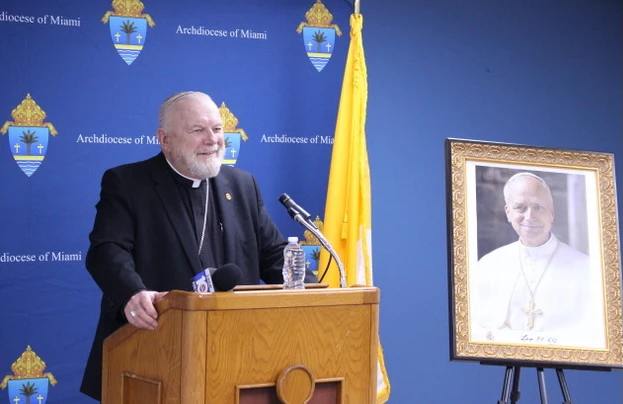
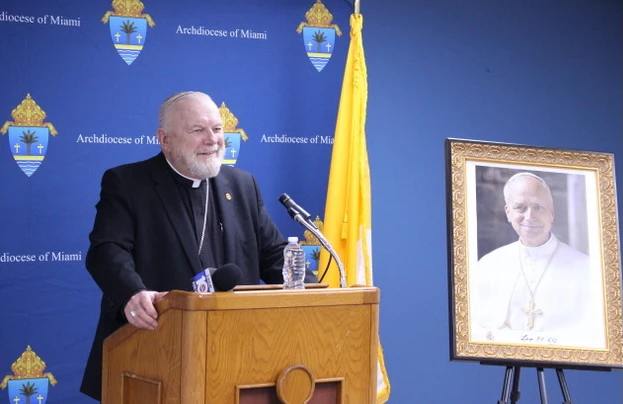
The Haitians “leaving South Florida and other places in the United States so abruptly would cause great economic damage to the United States,” Archbishop Thomas Wenski said.
Read More
Food assistance, housing top Catholic Charities’ policy wish list in 2026 #Catholic 
 
 Credit: Jonathan Weiss/Shutterstock

Jan 2, 2026 / 07:00 am (CNA).
Many people who receive assistance through anti-poverty programs faced disruptions in 2025, and Catholic Charities’ wish list for 2026 includes government support for food assistance and housing.The largest disruption came in October when food stamps received through the Supplemental Nutrition Assistance Program (SNAP) were delayed amid the government shutdown. Funding for rental and heating assistance were also disrupted.Confusion about how to implement a memo in January from the Office of Management and Budget calling for a grant freeze also caused delays in funding related to health care, housing affordability, and food assistance.Luz Tavarez, vice president of government relations at Catholic Charities USA, said “people get nervous and scared” amid disruptions.Many Catholic Charities affiliates saw an influx in clients, especially during the shutdown, but Tavarez said there are “very poor people who rely on SNAP subsidies for their meals” and who “can’t get to a Catholic Charities [affiliate] or other food pantry for assistance” when it happens.Long-term eligibility and funding changes to SNAP were also approved in the tax overhaul signed into law in July. Previous rules only included a work requirement up to age 54, but the law extended those requirements up to age 64. It added stricter and more frequent checks for verifying the work requirements.It also shifted some funding responsibilities away from the federal government and to the states.Tavarez expressed concern about some of the SNAP changes as well, saying the government should end “burdensome requirements for individuals and states.”Under the new law, there are stricter rules for verifying a person’s immigration status for benefits. It also limited which noncitizens could receive SNAP benefits, which excluded some refugees and people granted asylum. Tavarez expressed concern about such SNAP changes, encouraging the government to permit “humanitarian-based noncitizens” to receive those benefits.Overall the 2025 tax law gave the biggest boost to the richest families while poorer families might get a little less help than before, according to the Congressional Budget Office.The bill added a work requirement for Medicaid recipients, and this will not take effect until 2027. Under the previous law, there was no work requirement for this benefit. It also shifts some Medicaid funding requirements onto the states.Tavarez said Catholic Charities has “concerns with how [work requirements are] implemented” moving forward but does not oppose the idea outright: “There’s dignity in work so the Church isn’t necessarily opposed to people working as long as there’s some opportunities for people to do other things and other issues are taken into consideration.”She also expressed concerns about funding shifts: “We know that not every state views things like SNAP and Medicaid as a good thing. We don’t know how states are going to balance their budget and prioritize these programs.”2026 wish listLooking forward to 2026, Tavarez said Catholic Charities hopes the government will restore full funding to the Temporary Emergency Food Assistance Program for food banks and bulk food distribution programs and ensure that funding is protected for school meals and the Special Supplemental Nutrition Program for Women, Infants, and Children.The Department of Housing and Urban Development (HUD) made policy changes in November that would focus its homelessness funding on “transitional” housing instead of “permanent” housing. This move is facing legal challenges.President Donald Trump’s administration initially sought to cut federal housing assistance and shift much of those costs to states, but this was ultimately not included in the final version of the 2025 tax law.In December, Trump promised an “aggressive” housing reform plan that focuses on reducing costs. At this time, the specifics of that proposal have not been announced. The increased cost to buy a new home has outpaced the growth in wages for decades.Tavarez said Catholic Charities is focused on housing affordability in 2026 and that the solution must be multifaceted. This includes “building and developing affordable housing,” “a tax credit for developers,” “more affordable housing units,” and subsidies and Section 8 vouchers for low-income Americans, she said.“We recognize that there’s a real crisis — I think everybody does in a bipartisan way — but there needs to be a real bipartisan approach and it’s going to require money,” Tavarez said.Tax credits and economic trendsSome changes to the tax code included in the 2025 tax law are geared toward helping low-income Americans.Specifically, the law reduced taxes taken from tips and overtime work. It also increased the child tax credit from $2,000 to $2,200 and tied the credit to inflation, meaning that it will increase each year based on the rate of inflation.Tavarez characterized the changes to the child tax credit as a “win” and hopes it can be expanded further.The economy has been a mixed bag, with November unemployment numbers showing a 4.6% rate. In November of last year, it was slightly lower at 4.2%.Inflation has gone down a little, with the annual rate being around 2.7%. In 2024, it was around 2.9%. The average wage for workers also outpaced inflation, with hourly wages increasing by 3.5%, which shows a modest inflation-adjusted increase of 0.8%.

Food assistance, housing top Catholic Charities’ policy wish list in 2026 #Catholic Credit: Jonathan Weiss/Shutterstock Jan 2, 2026 / 07:00 am (CNA). Many people who receive assistance through anti-poverty programs faced disruptions in 2025, and Catholic Charities’ wish list for 2026 includes government support for food assistance and housing.The largest disruption came in October when food stamps received through the Supplemental Nutrition Assistance Program (SNAP) were delayed amid the government shutdown. Funding for rental and heating assistance were also disrupted.Confusion about how to implement a memo in January from the Office of Management and Budget calling for a grant freeze also caused delays in funding related to health care, housing affordability, and food assistance.Luz Tavarez, vice president of government relations at Catholic Charities USA, said “people get nervous and scared” amid disruptions.Many Catholic Charities affiliates saw an influx in clients, especially during the shutdown, but Tavarez said there are “very poor people who rely on SNAP subsidies for their meals” and who “can’t get to a Catholic Charities [affiliate] or other food pantry for assistance” when it happens.Long-term eligibility and funding changes to SNAP were also approved in the tax overhaul signed into law in July. Previous rules only included a work requirement up to age 54, but the law extended those requirements up to age 64. It added stricter and more frequent checks for verifying the work requirements.It also shifted some funding responsibilities away from the federal government and to the states.Tavarez expressed concern about some of the SNAP changes as well, saying the government should end “burdensome requirements for individuals and states.”Under the new law, there are stricter rules for verifying a person’s immigration status for benefits. It also limited which noncitizens could receive SNAP benefits, which excluded some refugees and people granted asylum. Tavarez expressed concern about such SNAP changes, encouraging the government to permit “humanitarian-based noncitizens” to receive those benefits.Overall the 2025 tax law gave the biggest boost to the richest families while poorer families might get a little less help than before, according to the Congressional Budget Office.The bill added a work requirement for Medicaid recipients, and this will not take effect until 2027. Under the previous law, there was no work requirement for this benefit. It also shifts some Medicaid funding requirements onto the states.Tavarez said Catholic Charities has “concerns with how [work requirements are] implemented” moving forward but does not oppose the idea outright: “There’s dignity in work so the Church isn’t necessarily opposed to people working as long as there’s some opportunities for people to do other things and other issues are taken into consideration.”She also expressed concerns about funding shifts: “We know that not every state views things like SNAP and Medicaid as a good thing. We don’t know how states are going to balance their budget and prioritize these programs.”2026 wish listLooking forward to 2026, Tavarez said Catholic Charities hopes the government will restore full funding to the Temporary Emergency Food Assistance Program for food banks and bulk food distribution programs and ensure that funding is protected for school meals and the Special Supplemental Nutrition Program for Women, Infants, and Children.The Department of Housing and Urban Development (HUD) made policy changes in November that would focus its homelessness funding on “transitional” housing instead of “permanent” housing. This move is facing legal challenges.President Donald Trump’s administration initially sought to cut federal housing assistance and shift much of those costs to states, but this was ultimately not included in the final version of the 2025 tax law.In December, Trump promised an “aggressive” housing reform plan that focuses on reducing costs. At this time, the specifics of that proposal have not been announced. The increased cost to buy a new home has outpaced the growth in wages for decades.Tavarez said Catholic Charities is focused on housing affordability in 2026 and that the solution must be multifaceted. This includes “building and developing affordable housing,” “a tax credit for developers,” “more affordable housing units,” and subsidies and Section 8 vouchers for low-income Americans, she said.“We recognize that there’s a real crisis — I think everybody does in a bipartisan way — but there needs to be a real bipartisan approach and it’s going to require money,” Tavarez said.Tax credits and economic trendsSome changes to the tax code included in the 2025 tax law are geared toward helping low-income Americans.Specifically, the law reduced taxes taken from tips and overtime work. It also increased the child tax credit from $2,000 to $2,200 and tied the credit to inflation, meaning that it will increase each year based on the rate of inflation.Tavarez characterized the changes to the child tax credit as a “win” and hopes it can be expanded further.The economy has been a mixed bag, with November unemployment numbers showing a 4.6% rate. In November of last year, it was slightly lower at 4.2%.Inflation has gone down a little, with the annual rate being around 2.7%. In 2024, it was around 2.9%. The average wage for workers also outpaced inflation, with hourly wages increasing by 3.5%, which shows a modest inflation-adjusted increase of 0.8%.


Credit: Jonathan Weiss/Shutterstock

Jan 2, 2026 / 07:00 am (CNA).

Many people who receive assistance through anti-poverty programs faced disruptions in 2025, and Catholic Charities’ wish list for 2026 includes government support for food assistance and housing.

The largest disruption came in October when food stamps received through the Supplemental Nutrition Assistance Program (SNAP) were delayed amid the government shutdown. Funding for rental and heating assistance were also disrupted.

Confusion about how to implement a memo in January from the Office of Management and Budget calling for a grant freeze also caused delays in funding related to health care, housing affordability, and food assistance.

Luz Tavarez, vice president of government relations at Catholic Charities USA, said “people get nervous and scared” amid disruptions.

Many Catholic Charities affiliates saw an influx in clients, especially during the shutdown, but Tavarez said there are “very poor people who rely on SNAP subsidies for their meals” and who “can’t get to a Catholic Charities [affiliate] or other food pantry for assistance” when it happens.

Long-term eligibility and funding changes to SNAP were also approved in the tax overhaul signed into law in July. Previous rules only included a work requirement up to age 54, but the law extended those requirements up to age 64. It added stricter and more frequent checks for verifying the work requirements.

It also shifted some funding responsibilities away from the federal government and to the states.

Tavarez expressed concern about some of the SNAP changes as well, saying the government should end “burdensome requirements for individuals and states.”

Under the new law, there are stricter rules for verifying a person’s immigration status for benefits. It also limited which noncitizens could receive SNAP benefits, which excluded some refugees and people granted asylum.

Tavarez expressed concern about such SNAP changes, encouraging the government to permit “humanitarian-based noncitizens” to receive those benefits.

Overall the 2025 tax law gave the biggest boost to the richest families while poorer families might get a little less help than before, according to the Congressional Budget Office.

The bill added a work requirement for Medicaid recipients, and this will not take effect until 2027. Under the previous law, there was no work requirement for this benefit. It also shifts some Medicaid funding requirements onto the states.

Tavarez said Catholic Charities has “concerns with how [work requirements are] implemented” moving forward but does not oppose the idea outright: “There’s dignity in work so the Church isn’t necessarily opposed to people working as long as there’s some opportunities for people to do other things and other issues are taken into consideration.”

She also expressed concerns about funding shifts: “We know that not every state views things like SNAP and Medicaid as a good thing. We don’t know how states are going to balance their budget and prioritize these programs.”

2026 wish list

Looking forward to 2026, Tavarez said Catholic Charities hopes the government will restore full funding to the Temporary Emergency Food Assistance Program for food banks and bulk food distribution programs and ensure that funding is protected for school meals and the Special Supplemental Nutrition Program for Women, Infants, and Children.

The Department of Housing and Urban Development (HUD) made policy changes in November that would focus its homelessness funding on “transitional” housing instead of “permanent” housing. This move is facing legal challenges.

President Donald Trump’s administration initially sought to cut federal housing assistance and shift much of those costs to states, but this was ultimately not included in the final version of the 2025 tax law.

In December, Trump promised an “aggressive” housing reform plan that focuses on reducing costs. At this time, the specifics of that proposal have not been announced. The increased cost to buy a new home has outpaced the growth in wages for decades.

Tavarez said Catholic Charities is focused on housing affordability in 2026 and that the solution must be multifaceted. This includes “building and developing affordable housing,” “a tax credit for developers,” “more affordable housing units,” and subsidies and Section 8 vouchers for low-income Americans, she said.

“We recognize that there’s a real crisis — I think everybody does in a bipartisan way — but there needs to be a real bipartisan approach and it’s going to require money,” Tavarez said.

Tax credits and economic trends

Some changes to the tax code included in the 2025 tax law are geared toward helping low-income Americans.

Specifically, the law reduced taxes taken from tips and overtime work. It also increased the child tax credit from $2,000 to $2,200 and tied the credit to inflation, meaning that it will increase each year based on the rate of inflation.

Tavarez characterized the changes to the child tax credit as a “win” and hopes it can be expanded further.

The economy has been a mixed bag, with November unemployment numbers showing a 4.6% rate. In November of last year, it was slightly lower at 4.2%.

Inflation has gone down a little, with the annual rate being around 2.7%. In 2024, it was around 2.9%. The average wage for workers also outpaced inflation, with hourly wages increasing by 3.5%, which shows a modest inflation-adjusted increase of 0.8%.

Read More