trading

Catholic digital assets company about to mint its first stablecoin #Catholic On March 15, a Catholic digital assets company known as Crescite Innovation Corporation will mint its first stablecoin, called Catholic USD.Stablecoins such as Catholic USD are a type of digital asset that is backed by and will have a 1-to-1 value equivalence with the U.S. dollar (and are not to be confused with cryptocurrencies like bitcoin).Catholic USDs can be used to make purchases from or donations to Catholic organizations the same way they would with any other payment method stored in smartphone wallets.Donations and other financial transactions can take place all over the world and will be nearly instantaneous, fee-free, and secure, thanks to blockchain technology, Eddie Cullen, co-founder of Crescite, told EWTN News.With blockchain technology, which has enabled the development of unregulated cryptocurrencies such as bitcoin and regulated digital assets such as stablecoins, traditional banks are no longer required to transfer or store money because all transactions are transparent and verifiable through the blockchain, which securely links together “blocks” of digital records.“Traditional banks are like Blockbuster video, and digital assets are like the streaming services we all use today,” Cullen said.“People will no longer need traditional banks, thanks to this new technology,” he continued.Cullen and his co-founder, Karl Kilb III, started Crescite “because we love the Church,” Cullen said. “We want Catholics to be at the forefront of this new technology, and we’re using it to enable greater access to resources for people and to do good.”“The only difference between us and banks is that they take your money and leverage it to make a profit,” Cullen said. “What we’re doing is we’re taking that leverage, and we’re giving it away to Catholic institutions and causes.”“We created Crescite to be at the intersection of faith and technology, using innovation to help those in need, and society as a whole,” Kilb said. “The Catholic community is global, with numerous organizations, projects, and causes that need sustainable, transparent funding, and we are leveraging blockchain technology to build such an ecosystem.”When a person buys Catholic USD, Crescite will invest that money in vehicles including U.S. Treasury bonds and will put 100% of that yield into a charity fund known as the Catholic Global Mercy Trust.The trust will fund Catholic poverty relief efforts, hospitals, schools, and other causes all over the world.“When we look at our work, it’s really a Catholic digital asset ecosystem,” Cullen said. “We have our stablecoin, and we are going to build upon that.”The money Crescite takes in through the sale of Catholic USD will be custodied, or held, in a digital wallet by a financial technology company known as BitGo, which in January completed its initial public offering (IPO) and began trading on the New York Stock Exchange. It is also chartered under U.S. law and authorized by the Office of the Comptroller of the Currency. BitGo is “the platform that’s issuing the stablecoin,” Cullen said. It and Crescite will have no intermingled investments.The funds Crescite holds are also insured.“Crescite” means to increase or grow in Latin. Cullen said he and Kilb, who co-own the company and founded it together in 2021, chose the name after reflecting on the effects of God’s touch on man-made things, as portrayed in the image of God’s hand touching Adam’s in Michaelangelo’s famous painting on the ceiling of the Sistine Chapel.Cullen said the name also refers to Genesis 1:28, when God tells Adam to “Be fruitful (increase) and multiply.”Bitcoin, the first cryptocurrencyThe first cryptocurrency, which is very different from the stablecoin Crescite is issuing, was bitcoin, which came out in 2009 and whose inventor or inventors, known as Satoshi Nakamoto, is/are still unknown.Bitcoin emerged as “pushback” to the 2008 financial crisis, according to The Catholic University of America Busch School of Business Professor Kevin May, who told EWTN News that consumers wanted something more “sound and reliable” than our current financial system after the crisis.Bitcoin is decentralized and is the only true “open source” cryptocurrency, according to May.Bitcoin’s inventors no longer had “trust in the current financial system,” where “the banks and bankers took bets; when they were right they privatized all the gains, and when they were wrong, they got bailed out and rebought their own shares,” May said. “Hardly any of them got in trouble” while the financial markets and consumers paid for their actions.The value of bitcoin has gone from several pennies at its initial launch to a high of 6,000 in October 2025. Currently, one bitcoin is valued at about ,000.Exchanges now exist where people can buy and sell bitcoin. There are even bitcoin-linked credit cards.Bitcoin, however, is a true cryptocurrency in that it is not insured or backed by any currency, and it is not regulated by the federal government, meaning it could collapse at any moment and investors could lose their money.A benefit of a cryptocurrency like bitcoin, according to May, is that it can “bank the unbanked, especially in societies where you cannot trust the leadership.”He used the example of a coffee farmer in Uganda who could trade in bitcoin and essentially have “his own bank on his cellphone,” without having to deal with a corrupt or inefficient system.The difference between ‘cryptocurrency’ and ‘digital assets’Digital assets like Catholic USD and cryptocurrencies such as bitcoin are alternatives to traditional financial institutions and government-backed currency made possible by blockchain technology.However, the terms “digital assets” and “cryptocurrency” mean different things: Digital assets refer to stablecoins as well as tokenized securities, commodities, and other digital representations of real-world assets that do not imply the unregulated, speculative trading or volatility inherent with bitcoin.Cullen explained that this is a major difference between bitcoin and stablecoins such as Catholic USD, which is actually backed by the U.S. dollar and will be regulated by the recently passed GENIUS Act, which is expected to increase the growth of and trust in stablecoins through clear regulatory rules.Other existing stablecoins include USD1, which, like Catholic USD, is also a U.S. dollar-pegged stablecoin (designed to maintain a 1-to-1 value with the U.S. dollar).USD1 was launched in March 2025 by World Liberty Financial, a decentralized finance (DeFi) platform and cryptocurrency venture closely associated with President Donald Trump and his family, though disclaimers emphasize that the Trump family are not officers or directors and that the cryptocurrency is not politically affiliated or endorsed.A company called Tether Unlimited issued a stablecoin, USDT, which is the longest-running and largest U.S. dollar-pegged stablecoin, launched in 2014 and with a market cap around 4 billion (as of early 2026). It holds roughly 60%-70% of the total stablecoin market share with 534 million users as of early this year.The GENIUS ActPassed with bipartisan support and signed into law by Trump in July 2025, the Guiding and Establishing National Innovation for U.S. Stablecoins (GENIUS) Act establishes a clear, regulatory framework that legitimizes payment stablecoins and digital asset infrastructure.It aims to preserve U.S. dollar leadership globally while allowing responsible private-sector innovation under defined guardrails.Under the act, qualified nonbank entities may issue payment stablecoins under federal or state supervision, while banks and affiliates may also participate. This dual pathway is intended to foster competition, reduce concentration risk, and avoid stifling innovation.Critics note the GENIUS Act does not fully address illicit finance risks in decentralized systems such as bitcoin, however.

Catholic digital assets company about to mint its first stablecoin #Catholic On March 15, a Catholic digital assets company known as Crescite Innovation Corporation will mint its first stablecoin, called Catholic USD.Stablecoins such as Catholic USD are a type of digital asset that is backed by and will have a 1-to-1 value equivalence with the U.S. dollar (and are not to be confused with cryptocurrencies like bitcoin).Catholic USDs can be used to make purchases from or donations to Catholic organizations the same way they would with any other payment method stored in smartphone wallets.Donations and other financial transactions can take place all over the world and will be nearly instantaneous, fee-free, and secure, thanks to blockchain technology, Eddie Cullen, co-founder of Crescite, told EWTN News.With blockchain technology, which has enabled the development of unregulated cryptocurrencies such as bitcoin and regulated digital assets such as stablecoins, traditional banks are no longer required to transfer or store money because all transactions are transparent and verifiable through the blockchain, which securely links together “blocks” of digital records.“Traditional banks are like Blockbuster video, and digital assets are like the streaming services we all use today,” Cullen said.“People will no longer need traditional banks, thanks to this new technology,” he continued.Cullen and his co-founder, Karl Kilb III, started Crescite “because we love the Church,” Cullen said. “We want Catholics to be at the forefront of this new technology, and we’re using it to enable greater access to resources for people and to do good.”“The only difference between us and banks is that they take your money and leverage it to make a profit,” Cullen said. “What we’re doing is we’re taking that leverage, and we’re giving it away to Catholic institutions and causes.”“We created Crescite to be at the intersection of faith and technology, using innovation to help those in need, and society as a whole,” Kilb said. “The Catholic community is global, with numerous organizations, projects, and causes that need sustainable, transparent funding, and we are leveraging blockchain technology to build such an ecosystem.”When a person buys Catholic USD, Crescite will invest that money in vehicles including U.S. Treasury bonds and will put 100% of that yield into a charity fund known as the Catholic Global Mercy Trust.The trust will fund Catholic poverty relief efforts, hospitals, schools, and other causes all over the world.“When we look at our work, it’s really a Catholic digital asset ecosystem,” Cullen said. “We have our stablecoin, and we are going to build upon that.”The money Crescite takes in through the sale of Catholic USD will be custodied, or held, in a digital wallet by a financial technology company known as BitGo, which in January completed its initial public offering (IPO) and began trading on the New York Stock Exchange. It is also chartered under U.S. law and authorized by the Office of the Comptroller of the Currency. BitGo is “the platform that’s issuing the stablecoin,” Cullen said. It and Crescite will have no intermingled investments.The funds Crescite holds are also insured.“Crescite” means to increase or grow in Latin. Cullen said he and Kilb, who co-own the company and founded it together in 2021, chose the name after reflecting on the effects of God’s touch on man-made things, as portrayed in the image of God’s hand touching Adam’s in Michaelangelo’s famous painting on the ceiling of the Sistine Chapel.Cullen said the name also refers to Genesis 1:28, when God tells Adam to “Be fruitful (increase) and multiply.”Bitcoin, the first cryptocurrencyThe first cryptocurrency, which is very different from the stablecoin Crescite is issuing, was bitcoin, which came out in 2009 and whose inventor or inventors, known as Satoshi Nakamoto, is/are still unknown.Bitcoin emerged as “pushback” to the 2008 financial crisis, according to The Catholic University of America Busch School of Business Professor Kevin May, who told EWTN News that consumers wanted something more “sound and reliable” than our current financial system after the crisis.Bitcoin is decentralized and is the only true “open source” cryptocurrency, according to May.Bitcoin’s inventors no longer had “trust in the current financial system,” where “the banks and bankers took bets; when they were right they privatized all the gains, and when they were wrong, they got bailed out and rebought their own shares,” May said. “Hardly any of them got in trouble” while the financial markets and consumers paid for their actions.The value of bitcoin has gone from several pennies at its initial launch to a high of $126,000 in October 2025. Currently, one bitcoin is valued at about $70,000.Exchanges now exist where people can buy and sell bitcoin. There are even bitcoin-linked credit cards.Bitcoin, however, is a true cryptocurrency in that it is not insured or backed by any currency, and it is not regulated by the federal government, meaning it could collapse at any moment and investors could lose their money.A benefit of a cryptocurrency like bitcoin, according to May, is that it can “bank the unbanked, especially in societies where you cannot trust the leadership.”He used the example of a coffee farmer in Uganda who could trade in bitcoin and essentially have “his own bank on his cellphone,” without having to deal with a corrupt or inefficient system.The difference between ‘cryptocurrency’ and ‘digital assets’Digital assets like Catholic USD and cryptocurrencies such as bitcoin are alternatives to traditional financial institutions and government-backed currency made possible by blockchain technology.However, the terms “digital assets” and “cryptocurrency” mean different things: Digital assets refer to stablecoins as well as tokenized securities, commodities, and other digital representations of real-world assets that do not imply the unregulated, speculative trading or volatility inherent with bitcoin.Cullen explained that this is a major difference between bitcoin and stablecoins such as Catholic USD, which is actually backed by the U.S. dollar and will be regulated by the recently passed GENIUS Act, which is expected to increase the growth of and trust in stablecoins through clear regulatory rules.Other existing stablecoins include USD1, which, like Catholic USD, is also a U.S. dollar-pegged stablecoin (designed to maintain a 1-to-1 value with the U.S. dollar).USD1 was launched in March 2025 by World Liberty Financial, a decentralized finance (DeFi) platform and cryptocurrency venture closely associated with President Donald Trump and his family, though disclaimers emphasize that the Trump family are not officers or directors and that the cryptocurrency is not politically affiliated or endorsed.A company called Tether Unlimited issued a stablecoin, USDT, which is the longest-running and largest U.S. dollar-pegged stablecoin, launched in 2014 and with a market cap around $184 billion (as of early 2026). It holds roughly 60%-70% of the total stablecoin market share with 534 million users as of early this year.The GENIUS ActPassed with bipartisan support and signed into law by Trump in July 2025, the Guiding and Establishing National Innovation for U.S. Stablecoins (GENIUS) Act establishes a clear, regulatory framework that legitimizes payment stablecoins and digital asset infrastructure.It aims to preserve U.S. dollar leadership globally while allowing responsible private-sector innovation under defined guardrails.Under the act, qualified nonbank entities may issue payment stablecoins under federal or state supervision, while banks and affiliates may also participate. This dual pathway is intended to foster competition, reduce concentration risk, and avoid stifling innovation.Critics note the GENIUS Act does not fully address illicit finance risks in decentralized systems such as bitcoin, however.

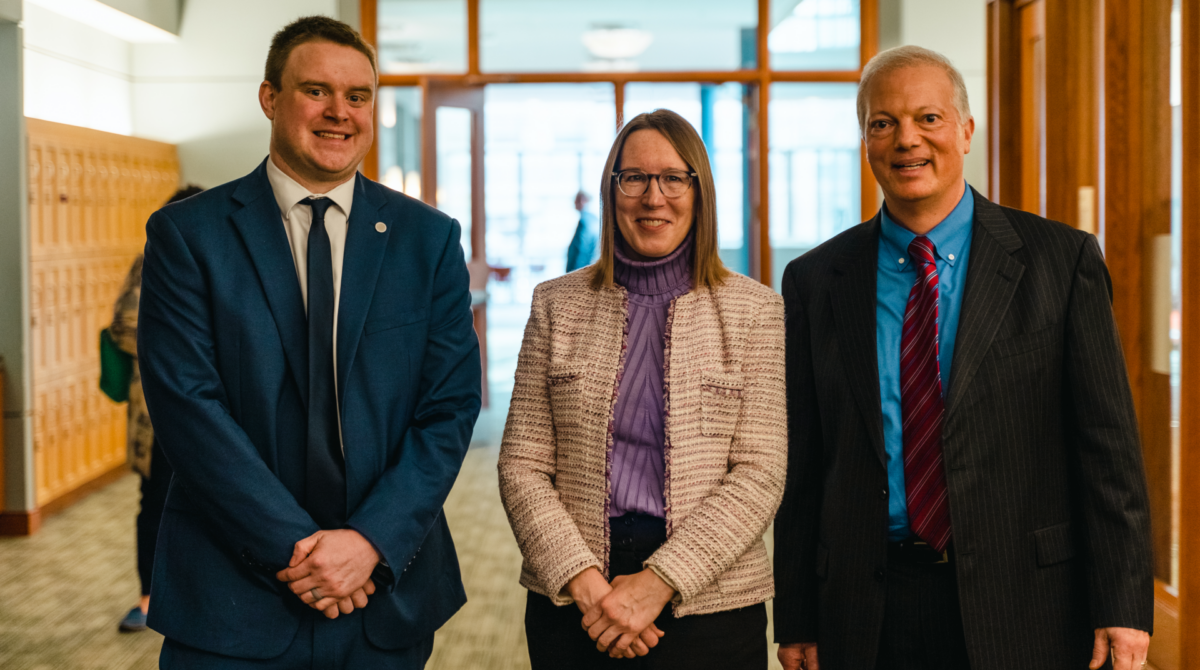
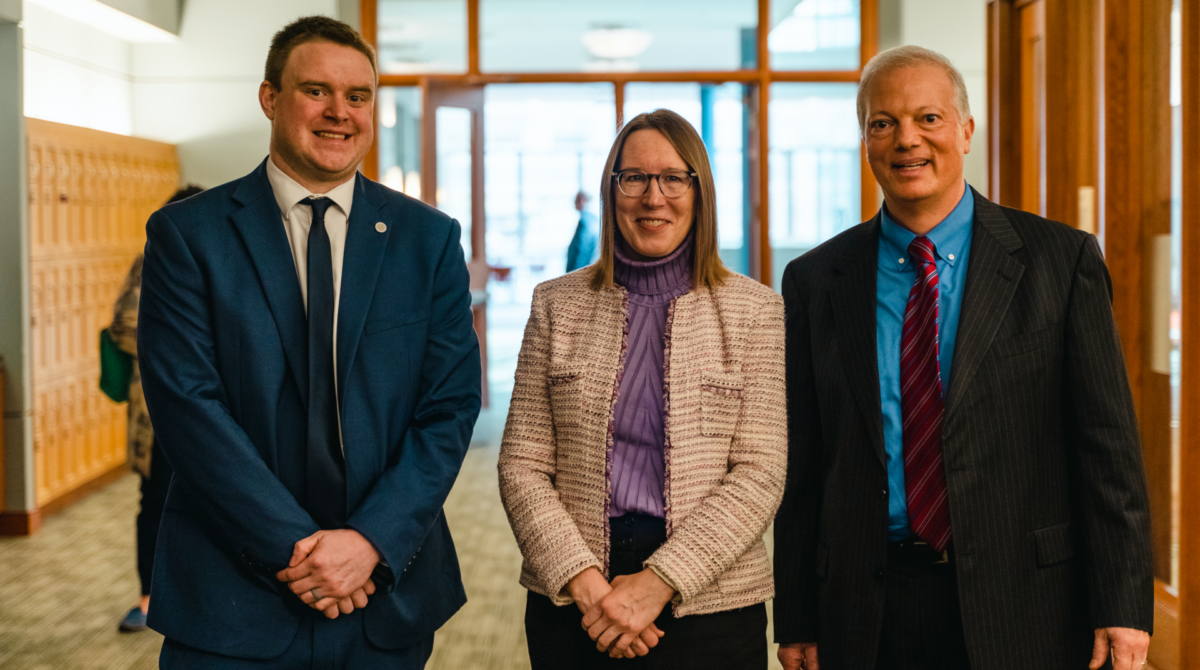
Catholic entrepreneurs Eddie Cullen and Karl Kilb want to use new financial technologies to benefit the Catholic Church and its charitable work.
Read More
Jonathan Roumie trades in Jesus sandals for dress shoes in new ‘wholesome’ rom-com #Catholic Jonathan Roumie, known for his role portraying Jesus in “The Chosen,” is trading in the sandals for dress shoes in a new movie titled “Solo Mio” to be released on Feb. 6.Roumie first appeared as Jesus in the hit series in 2019. In 2023, he took on the role of Lonnie Frisbee, an evangelical pastor, in the film “Jesus Revolution.” Now, Roumie is playing the role of Neil, a wannabe therapist, in his first non-faith-based role since taking on the role of Jesus Christ.“It was a lovely change of pace for me,” Roumie told EWTN News in an interview. “It was nice to play a character that is not shouldering the weight of the world.”“Solo Mio,” rated PG and taking place in Rome, is a romantic comedy starring Kevin James as Matt Taylor, an art teacher left at the altar in Rome who decides to go on his nonrefundable honeymoon despite no longer being in a relationship. Throughout his journey, he encounters fellow honeymooners Neil, played by Roumie, and Julian, played by Kim Coates, who offer friendship and advice.Roumie shared that he became friends with James, a practicing Catholic, during a Lenten spiritual retreat. Two years later, James reached out to Roumie to pitch him the idea of the movie.
 
 Kevin James and Jonathan Roumie in “Solo Mio.” | Credit: Angel Studios
 
 “I said, ‘I’d do anything you’re doing. Whatever you’re doing, if you want me in it, I’d be honored to be in it,” Roumie recalled. “Because I just love him, I love his heart, and I love who he is and getting to know him as a person and as a man of faith to me was like, ‘All right, whatever this guy’s doing I know it’s going to be — he’s got God at the center of his life, so I know it’ll be good no matter what.’”Reflecting on his character, Neil, and Jesus, Roumie pointed out a similarity the two share in that they “both have huge hearts.”“Neil wants to help people heal. That’s his thing. He’s a therapist and he wants to help people heal and so does Jesus. And so I think that’s where they can kind of connect in that way,” he added.Another major theme seen throughout the film is the importance of genuine male friendships — a theme also seen among Jesus and the disciples in “The Chosen.”Roumie said he believes portrayals of male friendships are important because “for whatever reason, culture or society or the world in its current state has driven culture to, I don’t know, paint this negative picture of what it means to be masculine and what it means to share brotherhood.”“I think it comes down to this detraction of masculinity. And the whole toxic masculinity thing I think was something adopted by the culture that became very pervasive over the last 10 years,” he added. “And so you’ve seen any image of men being just men, and like good men, just stripped from stories and stripped from culture as if that’s what people want to see. And I think it’s a gross mischaracterization of what it means to be a man.”The actor said he sees this new movie as a “real throwback to how stories used to be told and the kinds of movies that used to be made — they were just good films, with great stories, that were wholesome, and that were beloved by generations of fans.”Roumie admitted that he’s aware that there will be people who are “a little nervous to see it because they only want to see me as Jesus.”“To them I say: It’s OK. It’s going to be OK. You’re going to enjoy the film. It’s within the ethos of the projects that appeal to me. It’s within the ethos of the spirit of the work that I think God has put me on this Earth to do. It’s within the ethos of the mission and the ministry that I carry as an artist,” he said.

Jonathan Roumie trades in Jesus sandals for dress shoes in new ‘wholesome’ rom-com #Catholic Jonathan Roumie, known for his role portraying Jesus in “The Chosen,” is trading in the sandals for dress shoes in a new movie titled “Solo Mio” to be released on Feb. 6.Roumie first appeared as Jesus in the hit series in 2019. In 2023, he took on the role of Lonnie Frisbee, an evangelical pastor, in the film “Jesus Revolution.” Now, Roumie is playing the role of Neil, a wannabe therapist, in his first non-faith-based role since taking on the role of Jesus Christ.“It was a lovely change of pace for me,” Roumie told EWTN News in an interview. “It was nice to play a character that is not shouldering the weight of the world.”“Solo Mio,” rated PG and taking place in Rome, is a romantic comedy starring Kevin James as Matt Taylor, an art teacher left at the altar in Rome who decides to go on his nonrefundable honeymoon despite no longer being in a relationship. Throughout his journey, he encounters fellow honeymooners Neil, played by Roumie, and Julian, played by Kim Coates, who offer friendship and advice.Roumie shared that he became friends with James, a practicing Catholic, during a Lenten spiritual retreat. Two years later, James reached out to Roumie to pitch him the idea of the movie. Kevin James and Jonathan Roumie in “Solo Mio.” | Credit: Angel Studios “I said, ‘I’d do anything you’re doing. Whatever you’re doing, if you want me in it, I’d be honored to be in it,” Roumie recalled. “Because I just love him, I love his heart, and I love who he is and getting to know him as a person and as a man of faith to me was like, ‘All right, whatever this guy’s doing I know it’s going to be — he’s got God at the center of his life, so I know it’ll be good no matter what.’”Reflecting on his character, Neil, and Jesus, Roumie pointed out a similarity the two share in that they “both have huge hearts.”“Neil wants to help people heal. That’s his thing. He’s a therapist and he wants to help people heal and so does Jesus. And so I think that’s where they can kind of connect in that way,” he added.Another major theme seen throughout the film is the importance of genuine male friendships — a theme also seen among Jesus and the disciples in “The Chosen.”Roumie said he believes portrayals of male friendships are important because “for whatever reason, culture or society or the world in its current state has driven culture to, I don’t know, paint this negative picture of what it means to be masculine and what it means to share brotherhood.”“I think it comes down to this detraction of masculinity. And the whole toxic masculinity thing I think was something adopted by the culture that became very pervasive over the last 10 years,” he added. “And so you’ve seen any image of men being just men, and like good men, just stripped from stories and stripped from culture as if that’s what people want to see. And I think it’s a gross mischaracterization of what it means to be a man.”The actor said he sees this new movie as a “real throwback to how stories used to be told and the kinds of movies that used to be made — they were just good films, with great stories, that were wholesome, and that were beloved by generations of fans.”Roumie admitted that he’s aware that there will be people who are “a little nervous to see it because they only want to see me as Jesus.”“To them I say: It’s OK. It’s going to be OK. You’re going to enjoy the film. It’s within the ethos of the projects that appeal to me. It’s within the ethos of the spirit of the work that I think God has put me on this Earth to do. It’s within the ethos of the mission and the ministry that I carry as an artist,” he said.

“Solo Mio” will be released in theaters across the U.S. on Feb. 6.

Read More