Tragedy

Vatican urges Catholics not to leave Pope Leo XIV alone in opposing war #Catholic VATICAN CITY — Vatican Secretary of State Cardinal Pietro Parolin warned that the “logic of the strongest” risks prevailing on the international stage and called on Christians to become “voices of peace” who do not leave Pope Leo XIV standing alone in his opposition to war.In an interview with Dialoghi, a cultural magazine linked to Italian Catholic Action, Parolin said the voice of the pope is “prophetic” but risks becoming “a voice crying in the wilderness if it is not supported and helped concretely.”His remarks also offer a key to understanding the peace prayer vigil Leo XIV has called for April 11 in St. Peter’s Basilica.Parolin recalled the 2003 Iraq war, when St. John Paul II pleaded for the conflict to be avoided but “was left alone.” He therefore stressed the need to support the current pontiff’s appeal for a peace that is “unarmed and disarming” and to reject “the false propaganda of rearmament.”“There is a need for more voices of peace, more voices against the madness of the rush toward rearmament, more voices raised in favor of our poorest brothers and sisters, more voices and more proposals — I am thinking, for example, of the world of Catholic universities — for new economic models inspired by justice and care for the weakest instead of the idolatry of money,” Parolin said.The cardinal described an alarming international climate in which military action appears to impose itself too easily.“I am struck by how much determination — I was about to say ease — with which the military option is presented as decisive, almost inevitable,” he said.According to the Vatican secretary of state, this trend has left diplomacy practically “mute,” unable to activate alternative tools, while awareness of the tragedy of war and the value of shared rules is being lost.Parolin said the root of the problem is a “multi-polarism inspired by the primacy of power,” in which states place greater trust in force than in international law. That, he said, has produced “double standards,” visible in the differing reactions to attacks on civilians in Ukraine and the destruction in Gaza.“Many governments,” Parolin said, “have expressed indignation over attacks against Ukrainian civilians by Russian missiles and drones, imposing sanctions on the aggressors.”“I do not think the same has happened with the tragedy of the destruction of Gaza,” he added.For the cardinal, this is a case of “double standards” tied to the “primacy of power” — the dominance of one’s own country over others — with international law invoked “only when convenient” and ignored in many other cases.“It seems there has been a lack of awareness of the value of peace, awareness of the tragic reality of war, awareness of the importance of shared rules and of respecting them,” he said.Parolin also lamented the weakening of the global diplomatic architecture and said it is “utopian” to think peace can be guaranteed “by weapons and by balances imposed by the strongest rather than by international agreements.”“We cannot surrender to the logic of the strongest,” the cardinal insisted, because that logic “bends international law to its own interests” and weakens multilateral institutions.In that context, he also expressed regret that Europe has been unable to speak with one voice. He said it is necessary “to rekindle in peoples the sense of European belonging and, in leadership, the awareness of the need for common actions without ever failing the principles that are at the foundation of the European Union itself.”Regarding the United Nations, Parolin said the Holy See “continues to believe in its importance,” considering international organizations essential for restraining the logic of the strongest. At the same time, he acknowledged that the use of the veto has limited the U.N.’s ability to act.“We cannot move from the force of law to the law of force,” he warned.Parolin also highlighted the role believers can play, including defending life and human dignity, protecting religious freedom, promoting reforms to the economic and financial system in line with the Church’s social doctrine, and caring for creation.Finally, the cardinal addressed the cultural impact of new technologies, saying hyper-connectivity and the spread of fake news help fuel fear and build new walls.“As Christians, we must oppose this drift with our daily lives,” he concluded.This story was first published by ACI Prensa, the Spanish-language sister service of EWTN News. It has been translated and adapted by EWTN News English.

Vatican urges Catholics not to leave Pope Leo XIV alone in opposing war #Catholic VATICAN CITY — Vatican Secretary of State Cardinal Pietro Parolin warned that the “logic of the strongest” risks prevailing on the international stage and called on Christians to become “voices of peace” who do not leave Pope Leo XIV standing alone in his opposition to war.In an interview with Dialoghi, a cultural magazine linked to Italian Catholic Action, Parolin said the voice of the pope is “prophetic” but risks becoming “a voice crying in the wilderness if it is not supported and helped concretely.”His remarks also offer a key to understanding the peace prayer vigil Leo XIV has called for April 11 in St. Peter’s Basilica.Parolin recalled the 2003 Iraq war, when St. John Paul II pleaded for the conflict to be avoided but “was left alone.” He therefore stressed the need to support the current pontiff’s appeal for a peace that is “unarmed and disarming” and to reject “the false propaganda of rearmament.”“There is a need for more voices of peace, more voices against the madness of the rush toward rearmament, more voices raised in favor of our poorest brothers and sisters, more voices and more proposals — I am thinking, for example, of the world of Catholic universities — for new economic models inspired by justice and care for the weakest instead of the idolatry of money,” Parolin said.The cardinal described an alarming international climate in which military action appears to impose itself too easily.“I am struck by how much determination — I was about to say ease — with which the military option is presented as decisive, almost inevitable,” he said.According to the Vatican secretary of state, this trend has left diplomacy practically “mute,” unable to activate alternative tools, while awareness of the tragedy of war and the value of shared rules is being lost.Parolin said the root of the problem is a “multi-polarism inspired by the primacy of power,” in which states place greater trust in force than in international law. That, he said, has produced “double standards,” visible in the differing reactions to attacks on civilians in Ukraine and the destruction in Gaza.“Many governments,” Parolin said, “have expressed indignation over attacks against Ukrainian civilians by Russian missiles and drones, imposing sanctions on the aggressors.”“I do not think the same has happened with the tragedy of the destruction of Gaza,” he added.For the cardinal, this is a case of “double standards” tied to the “primacy of power” — the dominance of one’s own country over others — with international law invoked “only when convenient” and ignored in many other cases.“It seems there has been a lack of awareness of the value of peace, awareness of the tragic reality of war, awareness of the importance of shared rules and of respecting them,” he said.Parolin also lamented the weakening of the global diplomatic architecture and said it is “utopian” to think peace can be guaranteed “by weapons and by balances imposed by the strongest rather than by international agreements.”“We cannot surrender to the logic of the strongest,” the cardinal insisted, because that logic “bends international law to its own interests” and weakens multilateral institutions.In that context, he also expressed regret that Europe has been unable to speak with one voice. He said it is necessary “to rekindle in peoples the sense of European belonging and, in leadership, the awareness of the need for common actions without ever failing the principles that are at the foundation of the European Union itself.”Regarding the United Nations, Parolin said the Holy See “continues to believe in its importance,” considering international organizations essential for restraining the logic of the strongest. At the same time, he acknowledged that the use of the veto has limited the U.N.’s ability to act.“We cannot move from the force of law to the law of force,” he warned.Parolin also highlighted the role believers can play, including defending life and human dignity, protecting religious freedom, promoting reforms to the economic and financial system in line with the Church’s social doctrine, and caring for creation.Finally, the cardinal addressed the cultural impact of new technologies, saying hyper-connectivity and the spread of fake news help fuel fear and build new walls.“As Christians, we must oppose this drift with our daily lives,” he concluded.This story was first published by ACI Prensa, the Spanish-language sister service of EWTN News. It has been translated and adapted by EWTN News English.

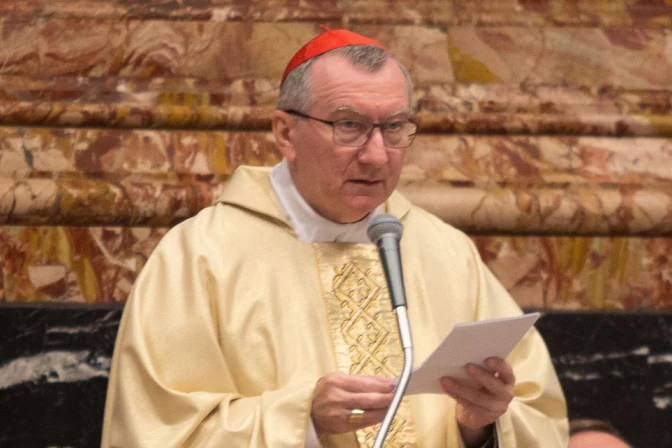
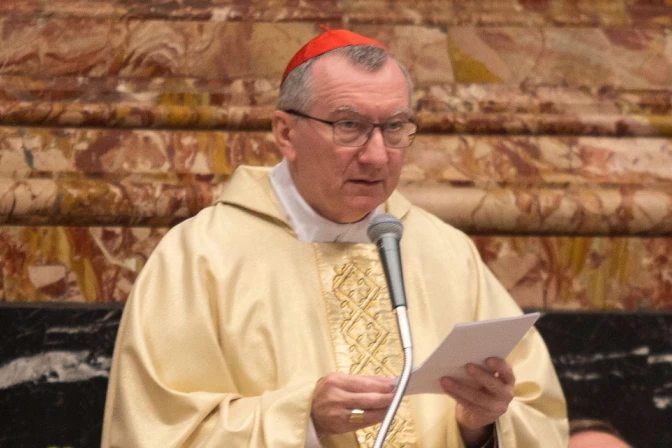
The Vatican Secretary of State said the pope’s appeals for peace need concrete support.

Read More
Pakistan Christian prisoners rebuild lives after church bombings #Catholic LAHORE, Pakistan — Every year during Lent, Sunil Masih remembers his elder brother as churches in Youhanabad — Lahore’s largest squatter settlement for poor Christians — mark the anniversary of the 2015 church bombings.The four Catholic brothers were among more than 150 Christians arrested by police days after twin suicide attacks on St. John’s Catholic Church and Christ Church on March 15, 2015, which killed at least 19 people and injured hundreds. The attacks were claimed by Jamaat-ul-Ahrar, an offshoot of Tehreek-e-Taliban Pakistan.The bombings sparked mob violence that mistakenly killed two Muslim men, who were later identified and detained through raids and video evidence.
 
 Sunil Masih stands beside his vegetable cart in front of his family’s former
milk shop in Youhanabad, Lahore, Pakistan, on March 15, 2025. | Credit:
Kamran Chaudhry
 
 Masih, now 28, said the trauma of prison changed him forever.“They hurled abuses at us, beat us with strips cut from vehicle tires, and in jail we were given old dried roti [flat bread],” he told EWTN News. “Water from the greasy toilet taps was served for drinking. Family meetings were allowed only after a month. It was a hellhole on earth.”He and his brother Sadaqat Perwaiz — popularly known as Monty — were released after six months in Central Jail Lahore. One brother, however, remained among 42 Christians and one Muslim charged in the lynching case.Devastation beyond prisonThe protracted court proceedings devastated the family’s four-decade-old milk business, saddled them with mounting debts, and forced the sale of their 680-square-foot home.Their worries deepened after two Christian inmates, Inderyas Masih, 36, and Usman Shaukat, 29, died in custody under suspicious circumstances during the trial. Police claimed tuberculosis and a heart attack, respectively, while families and the British Pakistani Christian Association reported bruises and unexplained injuries.
 
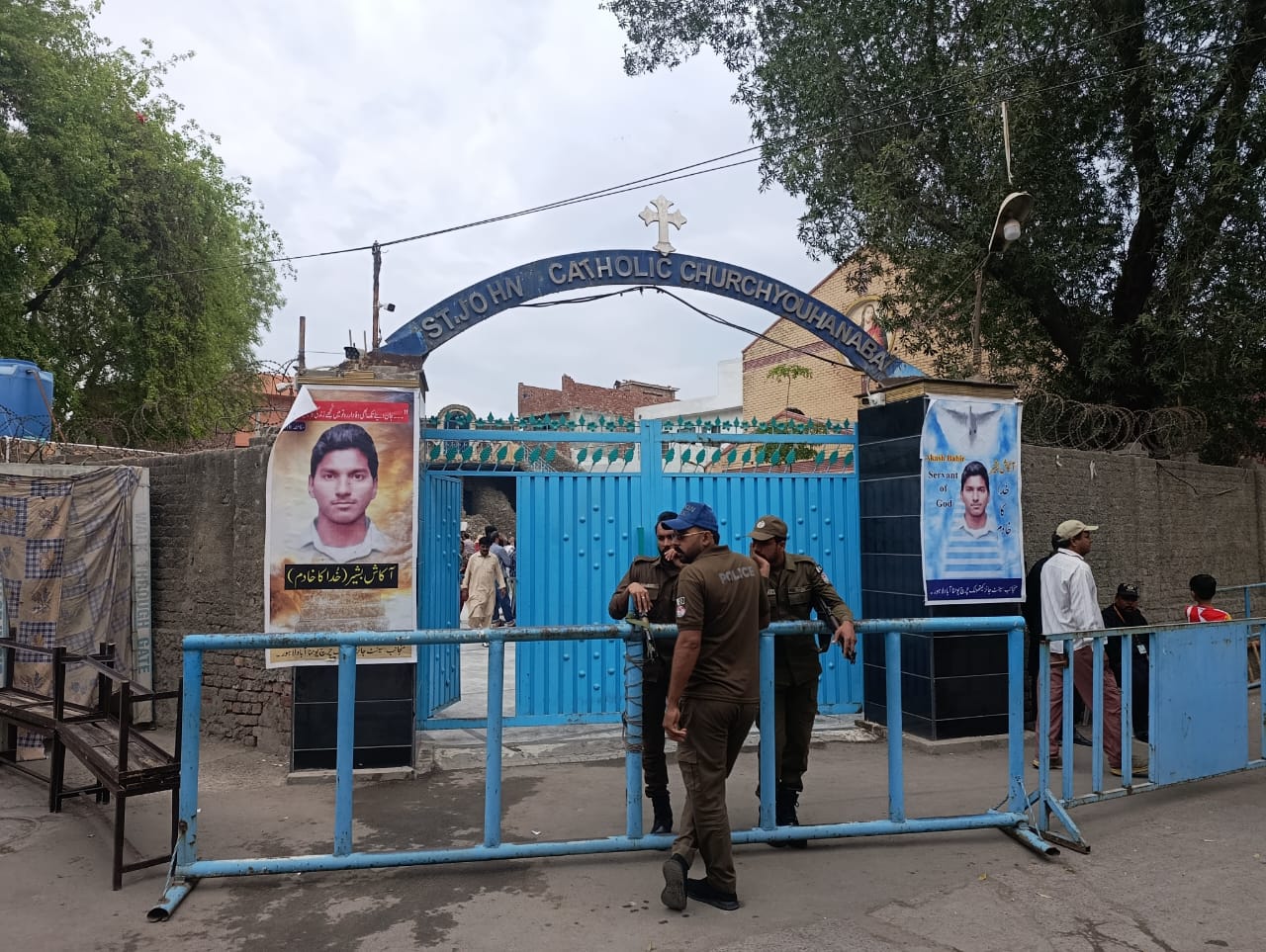
 Pakistani police stand guard outside St. John’s Catholic Church in
Youhanabad, Lahore, on March 15, 2025. Posters of Servant of God Akash Bashir flank the entrance gate on the 10th anniversary of twin suicide bombings that struck the neighborhood. | Credit: Kamran Chaudhry
 
 In January 2020, an anti-terrorism court acquitted the remaining 39 accused after blood money (Diyat) of 25 million rupees ($89,800) was paid to the victims’ families by Pastor Anwar Fazal, a prominent Christian televangelist.Under the Qisas and Diyat Ordinance 1990, introduced during Gen. Ziaul Haq’s Islamization process, courts calculate compensation based on the financial capacity of the convict and the victim’s heirs, with a minimum value linked to 30,630 grams of silver.Monty died of a heart attack in 2022, leaving behind two children aged 10 and 14. His faded poster still hangs in front of the family’s closed milk shop.“He was a stout man, known for his strong community ties and friendly nature in our neighborhood. Prison left him very lean and weakened by an infection that caused his legs to swell beneath the knees and bleed,” Masih said.Today, Sunil Masih sells vegetables from a wooden cart in front of the same shop, now leased to a real estate dealer. He hopes to marry once his new business stabilizes.‘The gift of a hero’On March 15, police guarded churches in Youhanabad, which houses more than 150,000 Christians, as the community observed the 11th bombing anniversary.At St. John’s, parishioners lit candles and placed flowers beneath a banner honoring Akash Bashir, the 20-year-old security volunteer who died preventing a suicide bomber from entering the church during that Sunday Mass.“Salute and gratitude to the martyrs of Youhanabad,” read the banner near the Marian grotto. In January 2022, the Vatican recognized Bashir as a servant of God, making him the first Pakistani Catholic on the path to canonization.
 
 Father Akram Javed (fifth from right), parish priest of St. John’s Catholic Church, lights a memorial candle for Servant of God Akash Bashir at a commemoration in Youhanabad, Lahore, Pakistan, on March 15, 2025. |
Credit: Kamran Chaudhry
 
 Father Akram Javed, parish priest of St. John’s, thanked police for security.“A group of 30 local volunteers carry on Akash’s mission, protecting the church and worshippers. The bombings were a terrible tragedy, but in that darkness, we received the gift of a hero,” he told EWTN News.‘The bombing was a national tragedy’Pentecostal politician Aslam Pervaiz Sahotra, who spent five years in prison, sees the anniversary as a moment of reflection for Pakistan’s 3.3 million Christians, many of whom continue to face discrimination, economic hardship, and lingering trauma.
 
 A man prays outside a church in Youhanabad, Lahore, Pakistan, on March 15, 2025, during commemorations marking the anniversary of the twin suicide bombings. Banners honoring Akash Bashir are visible in the background. | Credit: Kamran Chaudhry
 
 “The bombing was a national tragedy from which the authorities learnt nothing. We continue to suffer losses due to terrorism, with sporadic attacks targeting minority communities and security forces,” said the 65-year-old head of the Massiha Millat Party (Christian Nation Party).He alleged prison authorities tried to manipulate him, introducing Muslim prisoners to persuade him to stay passive.“Despite back pain from four displaced vertebrae, my time in prison strengthened my faith and resolve for activism. The trend of arresting Christians for alleged blasphemy to appease angry crowds will continue unless investigations are conducted on merit,” he added.
 
 Pakistani bishops demand probe into death of Christian farmworker
 
 The United States Commission on International Religious Freedom, in its 2025 annual report, said religious freedom in Pakistan continued to deteriorate, recommending it be designated a “country of particular concern,” citing blasphemy-related prosecutions, mob violence, and forced conversions targeting Christians and other minorities, and a growing climate of fear and impunity.

Pakistan Christian prisoners rebuild lives after church bombings #Catholic LAHORE, Pakistan — Every year during Lent, Sunil Masih remembers his elder brother as churches in Youhanabad — Lahore’s largest squatter settlement for poor Christians — mark the anniversary of the 2015 church bombings.The four Catholic brothers were among more than 150 Christians arrested by police days after twin suicide attacks on St. John’s Catholic Church and Christ Church on March 15, 2015, which killed at least 19 people and injured hundreds. The attacks were claimed by Jamaat-ul-Ahrar, an offshoot of Tehreek-e-Taliban Pakistan.The bombings sparked mob violence that mistakenly killed two Muslim men, who were later identified and detained through raids and video evidence. Sunil Masih stands beside his vegetable cart in front of his family’s former milk shop in Youhanabad, Lahore, Pakistan, on March 15, 2025. | Credit: Kamran Chaudhry Masih, now 28, said the trauma of prison changed him forever.“They hurled abuses at us, beat us with strips cut from vehicle tires, and in jail we were given old dried roti [flat bread],” he told EWTN News. “Water from the greasy toilet taps was served for drinking. Family meetings were allowed only after a month. It was a hellhole on earth.”He and his brother Sadaqat Perwaiz — popularly known as Monty — were released after six months in Central Jail Lahore. One brother, however, remained among 42 Christians and one Muslim charged in the lynching case.Devastation beyond prisonThe protracted court proceedings devastated the family’s four-decade-old milk business, saddled them with mounting debts, and forced the sale of their 680-square-foot home.Their worries deepened after two Christian inmates, Inderyas Masih, 36, and Usman Shaukat, 29, died in custody under suspicious circumstances during the trial. Police claimed tuberculosis and a heart attack, respectively, while families and the British Pakistani Christian Association reported bruises and unexplained injuries. Pakistani police stand guard outside St. John’s Catholic Church in Youhanabad, Lahore, on March 15, 2025. Posters of Servant of God Akash Bashir flank the entrance gate on the 10th anniversary of twin suicide bombings that struck the neighborhood. | Credit: Kamran Chaudhry In January 2020, an anti-terrorism court acquitted the remaining 39 accused after blood money (Diyat) of 25 million rupees ($89,800) was paid to the victims’ families by Pastor Anwar Fazal, a prominent Christian televangelist.Under the Qisas and Diyat Ordinance 1990, introduced during Gen. Ziaul Haq’s Islamization process, courts calculate compensation based on the financial capacity of the convict and the victim’s heirs, with a minimum value linked to 30,630 grams of silver.Monty died of a heart attack in 2022, leaving behind two children aged 10 and 14. His faded poster still hangs in front of the family’s closed milk shop.“He was a stout man, known for his strong community ties and friendly nature in our neighborhood. Prison left him very lean and weakened by an infection that caused his legs to swell beneath the knees and bleed,” Masih said.Today, Sunil Masih sells vegetables from a wooden cart in front of the same shop, now leased to a real estate dealer. He hopes to marry once his new business stabilizes.‘The gift of a hero’On March 15, police guarded churches in Youhanabad, which houses more than 150,000 Christians, as the community observed the 11th bombing anniversary.At St. John’s, parishioners lit candles and placed flowers beneath a banner honoring Akash Bashir, the 20-year-old security volunteer who died preventing a suicide bomber from entering the church during that Sunday Mass.“Salute and gratitude to the martyrs of Youhanabad,” read the banner near the Marian grotto. In January 2022, the Vatican recognized Bashir as a servant of God, making him the first Pakistani Catholic on the path to canonization. Father Akram Javed (fifth from right), parish priest of St. John’s Catholic Church, lights a memorial candle for Servant of God Akash Bashir at a commemoration in Youhanabad, Lahore, Pakistan, on March 15, 2025. | Credit: Kamran Chaudhry Father Akram Javed, parish priest of St. John’s, thanked police for security.“A group of 30 local volunteers carry on Akash’s mission, protecting the church and worshippers. The bombings were a terrible tragedy, but in that darkness, we received the gift of a hero,” he told EWTN News.‘The bombing was a national tragedy’Pentecostal politician Aslam Pervaiz Sahotra, who spent five years in prison, sees the anniversary as a moment of reflection for Pakistan’s 3.3 million Christians, many of whom continue to face discrimination, economic hardship, and lingering trauma. A man prays outside a church in Youhanabad, Lahore, Pakistan, on March 15, 2025, during commemorations marking the anniversary of the twin suicide bombings. Banners honoring Akash Bashir are visible in the background. | Credit: Kamran Chaudhry “The bombing was a national tragedy from which the authorities learnt nothing. We continue to suffer losses due to terrorism, with sporadic attacks targeting minority communities and security forces,” said the 65-year-old head of the Massiha Millat Party (Christian Nation Party).He alleged prison authorities tried to manipulate him, introducing Muslim prisoners to persuade him to stay passive.“Despite back pain from four displaced vertebrae, my time in prison strengthened my faith and resolve for activism. The trend of arresting Christians for alleged blasphemy to appease angry crowds will continue unless investigations are conducted on merit,” he added. Pakistani bishops demand probe into death of Christian farmworker The United States Commission on International Religious Freedom, in its 2025 annual report, said religious freedom in Pakistan continued to deteriorate, recommending it be designated a “country of particular concern,” citing blasphemy-related prosecutions, mob violence, and forced conversions targeting Christians and other minorities, and a growing climate of fear and impunity.

Eleven years after twin suicide bombings struck two Pakistan churches, survivors of mass arrests still bear the scars as a young martyr who died stopping the attack moves toward sainthood.

Read More
Suspect arrested after Nebraska deacon found murdered, police say #Catholic Local police have arrested a suspect in connection with the murder of a Catholic deacon in the Archdiocese of Omaha, Nebraska, this week. The Omaha Police Officers Association said in a March 13 Facebook post that a “person of interest” was taken into custody on March 12 after Deacon John Zak was reportedly murdered the previous night. Zak “was an active member of the community and a deacon at St. Peter’s Catholic Church” in the city’s Leavenworth neighborhood, the police association said. Father John Broheimer, the pastor of St. Peter’s, said in a statement on the parish website that Zak had been a member of the parish for more than 30 years and served as a deacon there for 25 years. “Through his ministry he touched countless lives, especially the young people of our parish, whom he served with generosity and sincere faith,” the pastor said. The priest urged parishioners to pray for Zak’s family and to “support them with your charity in the days ahead.”Police had not publicly identified a motive in the killing as of March 13, but local news reports said a “family member” named Martin Zak had been booked in local jail on homicide and felony theft charges.Jail records showed that an individual named Martin Zak was being held without bond.The Archdiocese of Omaha did not immediately respond to a request for comment on the tragedy.

Deacon John Zak was “an active member of the community” before he was killed on March 11, police said.

Read More