![Ireland sees modest revival in faith, especially among youth and young adults #Catholic An increase in spirituality and religious practice among young adults in Ireland aged 18 to 30 and confirmation that Ireland is in the “middle range” of religious countries in Europe are among the trends identified in a new report published by the Irish Catholic bishops titled “Turning the Tide.”Archbishop Eamon Martin of Armagh, primate of all Ireland, told EWTN News: “There has been a lot of talk recently about the so-called quiet revival in religious practice in recent years. The [report] looks at some of the research studies that have been carried out north and south of the island of Ireland into religious practice, religious awareness and spirituality, and interest in religion, and asks a question by comparing this with European social studies: Is there actually any uptake [in] religious practice and awareness and interest in Ireland?”Drawing on research from the European Social Survey, the Iona Institute’s two recent surveys conducted by Amárach Research, and a variety of relevant academic studies, the report seeks to provide an integrated, relevant, and current look at religious practice in Ireland.“The report very interestingly points to some type of uptick, as they call it, particularly among young people around the ages of 16 to 30 and the fact that they are taking a new interest in religion and in spirituality.”Encouraged by the positive trends emerging across different studies, Martin sounded a note of caution, highlighting the challenges that these findings pose for the Catholic Church in Ireland.“I don’t think we should get ourselves too enthusiastic thinking this is a complete reversal of the very obvious decline and religious practice over the last 10 or 20 years,” he said. “However, it is saying something on the turning tide.”The archbishop pointed to the implications for the Irish Church: “It’s asking us to reflect on this phenomenon in the light of research, and for instance what does this mean for us as Church, as parishes, as dioceses? How are we responding to this growing body of young people who want to know more more about God, about church, and about religion?”The report, co-authored by Stephen Bullivant, professor of theology and the sociology of religion at St. Mary’s University, Twickenham, and Emily Nelson, a doctoral student of sociology at Queen’s University Belfast, examined the overall religious profile of the island of Ireland, including areas of convergence and divergence between Northern Ireland and the Republic of Ireland.The authors drew together research studies on patterns in belief, practice, and religious identification between generations, with particular attention to differences within young adult cohorts. The work also provided insight on dimensions of religiosity, religious transmission, and attitudes toward Church teaching and institutions among both men and women.Ireland remains among the more religious countries in Europe, on measures of religious affiliation, religious service attendance, and frequency of prayer. Among western European countries, it is one of few outliers with a relatively high level of overall religiosity. It also ranks toward the higher end of (especially western) European countries on measures of weekly Mass attendance and daily prayer.While key measures of Irish religiosity have declined significantly since the European Social Survey began in 2002-2003, the most recent round in 2023-2024 shows a strong uptick in religious affiliation and religious practice.This effect is most strongly evident among those aged 16–29 years, across both Catholics and Protestants.Northern Ireland is both the most religious region of the United Kingdom, by a large margin, and the most religious part of the island of Ireland, in terms of both affiliation and religious practice.Although women in the Republic of Ireland are equally as likely as men to be religious, they continue to play an influential role in transmitting faith, even as they express higher levels of moral dissent and institutional dissatisfaction. The report revealed that 74% of Irish Catholic women were found to believe that the Church did not treat them with “a lot of respect.”According to the report, 51% of Irish adults — and 27% of Irish young adults —pray at least once a week, and 31% say they attend Mass at least once a week, placing them fourth overall, alongside Italy (32%) but well behind Poland (49%) and Slovakia (46%).There is a significant drop-off among young adults, whose reported religious practice is roughly half that of older adults. Irish 16- to 29-year-olds rank sixth overall compared with other countries, at 17%, though that is at least double the rates of the same age group in Switzerland, Germany, and Belgium, at 5%, and in Austria with less than 1%.The Irish report also pointed to a 2023 Barna study that found in certain respects, Irish teens are more religious than their global peers. Just over 3 in 5 (62%) Irish teens identify as Christian with nearly a third identify as atheist, agnostic, or of no faith.On average, 18- to 24-year-olds in the Republic of Ireland aren’t particularly positive about both Christianity and the Catholic Church in Ireland, but they are more positive than those in the 25–34 age range, and fewer have a negative attitude toward priests and nuns.In 2023, EWTN News’ Colm Flynn traveled to Ireland with the question “Is Ireland still Catholic?” He explored the various reasons for the decline of the faith in Ireland and the challenges the Church faces there today. In the three years since, and after many emails and messages pointing to signs of a “quiet revival” of faith in Ireland, Flynn recently returned to the country to explore those signs of renewal. In his report, he refers to the “Turning the Tide” report: Ireland sees modest revival in faith, especially among youth and young adults #Catholic An increase in spirituality and religious practice among young adults in Ireland aged 18 to 30 and confirmation that Ireland is in the “middle range” of religious countries in Europe are among the trends identified in a new report published by the Irish Catholic bishops titled “Turning the Tide.”Archbishop Eamon Martin of Armagh, primate of all Ireland, told EWTN News: “There has been a lot of talk recently about the so-called quiet revival in religious practice in recent years. The [report] looks at some of the research studies that have been carried out north and south of the island of Ireland into religious practice, religious awareness and spirituality, and interest in religion, and asks a question by comparing this with European social studies: Is there actually any uptake [in] religious practice and awareness and interest in Ireland?”Drawing on research from the European Social Survey, the Iona Institute’s two recent surveys conducted by Amárach Research, and a variety of relevant academic studies, the report seeks to provide an integrated, relevant, and current look at religious practice in Ireland.“The report very interestingly points to some type of uptick, as they call it, particularly among young people around the ages of 16 to 30 and the fact that they are taking a new interest in religion and in spirituality.”Encouraged by the positive trends emerging across different studies, Martin sounded a note of caution, highlighting the challenges that these findings pose for the Catholic Church in Ireland.“I don’t think we should get ourselves too enthusiastic thinking this is a complete reversal of the very obvious decline and religious practice over the last 10 or 20 years,” he said. “However, it is saying something on the turning tide.”The archbishop pointed to the implications for the Irish Church: “It’s asking us to reflect on this phenomenon in the light of research, and for instance what does this mean for us as Church, as parishes, as dioceses? How are we responding to this growing body of young people who want to know more more about God, about church, and about religion?”The report, co-authored by Stephen Bullivant, professor of theology and the sociology of religion at St. Mary’s University, Twickenham, and Emily Nelson, a doctoral student of sociology at Queen’s University Belfast, examined the overall religious profile of the island of Ireland, including areas of convergence and divergence between Northern Ireland and the Republic of Ireland.The authors drew together research studies on patterns in belief, practice, and religious identification between generations, with particular attention to differences within young adult cohorts. The work also provided insight on dimensions of religiosity, religious transmission, and attitudes toward Church teaching and institutions among both men and women.Ireland remains among the more religious countries in Europe, on measures of religious affiliation, religious service attendance, and frequency of prayer. Among western European countries, it is one of few outliers with a relatively high level of overall religiosity. It also ranks toward the higher end of (especially western) European countries on measures of weekly Mass attendance and daily prayer.While key measures of Irish religiosity have declined significantly since the European Social Survey began in 2002-2003, the most recent round in 2023-2024 shows a strong uptick in religious affiliation and religious practice.This effect is most strongly evident among those aged 16–29 years, across both Catholics and Protestants.Northern Ireland is both the most religious region of the United Kingdom, by a large margin, and the most religious part of the island of Ireland, in terms of both affiliation and religious practice.Although women in the Republic of Ireland are equally as likely as men to be religious, they continue to play an influential role in transmitting faith, even as they express higher levels of moral dissent and institutional dissatisfaction. The report revealed that 74% of Irish Catholic women were found to believe that the Church did not treat them with “a lot of respect.”According to the report, 51% of Irish adults — and 27% of Irish young adults —pray at least once a week, and 31% say they attend Mass at least once a week, placing them fourth overall, alongside Italy (32%) but well behind Poland (49%) and Slovakia (46%).There is a significant drop-off among young adults, whose reported religious practice is roughly half that of older adults. Irish 16- to 29-year-olds rank sixth overall compared with other countries, at 17%, though that is at least double the rates of the same age group in Switzerland, Germany, and Belgium, at 5%, and in Austria with less than 1%.The Irish report also pointed to a 2023 Barna study that found in certain respects, Irish teens are more religious than their global peers. Just over 3 in 5 (62%) Irish teens identify as Christian with nearly a third identify as atheist, agnostic, or of no faith.On average, 18- to 24-year-olds in the Republic of Ireland aren’t particularly positive about both Christianity and the Catholic Church in Ireland, but they are more positive than those in the 25–34 age range, and fewer have a negative attitude toward priests and nuns.In 2023, EWTN News’ Colm Flynn traveled to Ireland with the question “Is Ireland still Catholic?” He explored the various reasons for the decline of the faith in Ireland and the challenges the Church faces there today. In the three years since, and after many emails and messages pointing to signs of a “quiet revival” of faith in Ireland, Flynn recently returned to the country to explore those signs of renewal. In his report, he refers to the “Turning the Tide” report:](https://unitedyam.com/wp-content/uploads/2026/03/ireland-sees-modest-revival-in-faith-especially-among-youth-and-young-adults-catholic-an-increase-in-spirituality-and-religious-practice-among-young-adults-in-ireland-aged-18-to-30-and-confirmation-scaled.jpg)
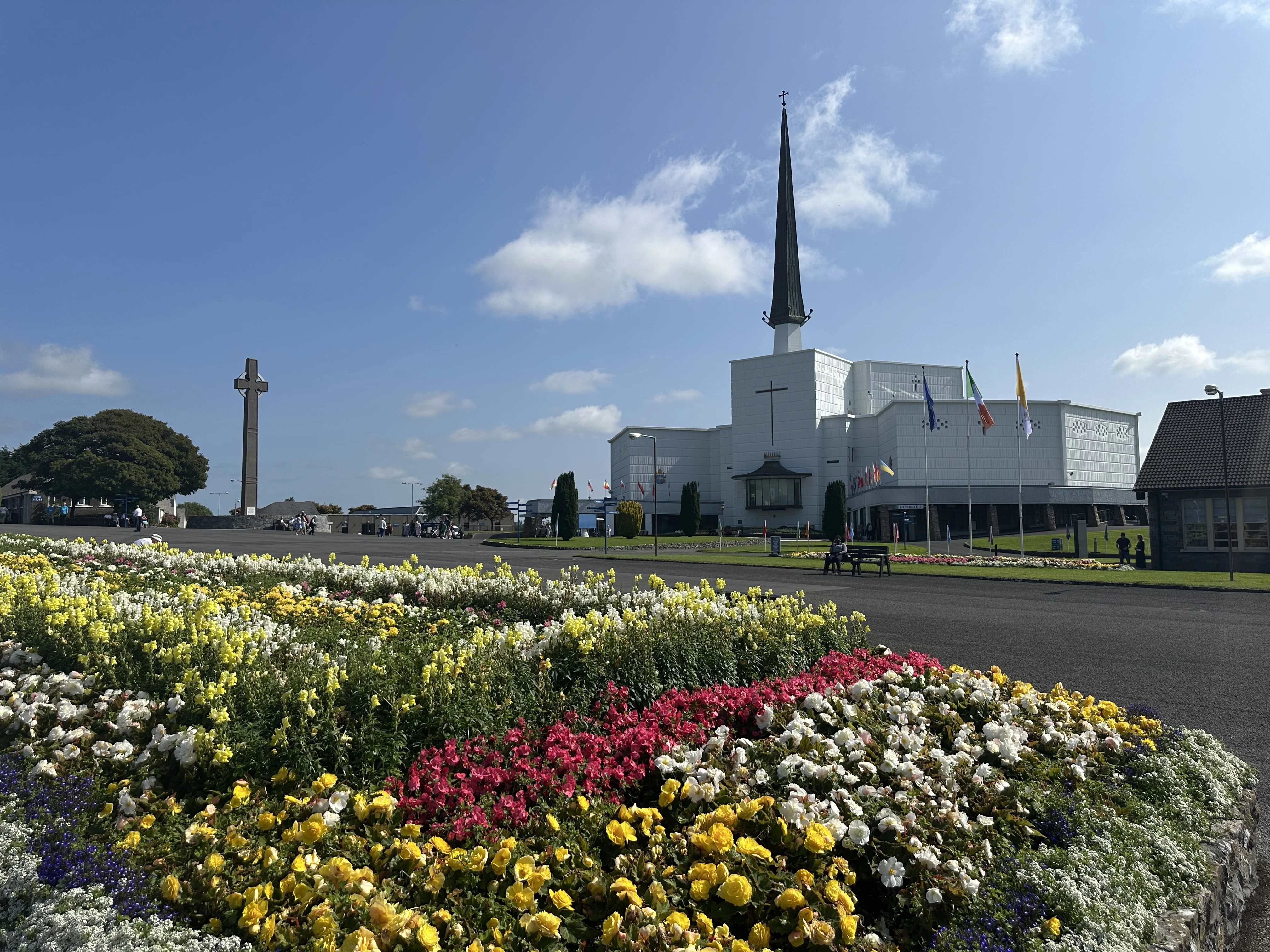
A new report examining surveys and research on the practice of the Catholic faith in Ireland shows an uptick in religious practice and spirituality among younger people.
![Ireland sees modest revival in faith, especially among youth and young adults #Catholic An increase in spirituality and religious practice among young adults in Ireland aged 18 to 30 and confirmation that Ireland is in the “middle range” of religious countries in Europe are among the trends identified in a new report published by the Irish Catholic bishops titled “Turning the Tide.”Archbishop Eamon Martin of Armagh, primate of all Ireland, told EWTN News: “There has been a lot of talk recently about the so-called quiet revival in religious practice in recent years. The [report] looks at some of the research studies that have been carried out north and south of the island of Ireland into religious practice, religious awareness and spirituality, and interest in religion, and asks a question by comparing this with European social studies: Is there actually any uptake [in] religious practice and awareness and interest in Ireland?”Drawing on research from the European Social Survey, the Iona Institute’s two recent surveys conducted by Amárach Research, and a variety of relevant academic studies, the report seeks to provide an integrated, relevant, and current look at religious practice in Ireland.“The report very interestingly points to some type of uptick, as they call it, particularly among young people around the ages of 16 to 30 and the fact that they are taking a new interest in religion and in spirituality.”Encouraged by the positive trends emerging across different studies, Martin sounded a note of caution, highlighting the challenges that these findings pose for the Catholic Church in Ireland.“I don’t think we should get ourselves too enthusiastic thinking this is a complete reversal of the very obvious decline and religious practice over the last 10 or 20 years,” he said. “However, it is saying something on the turning tide.”The archbishop pointed to the implications for the Irish Church: “It’s asking us to reflect on this phenomenon in the light of research, and for instance what does this mean for us as Church, as parishes, as dioceses? How are we responding to this growing body of young people who want to know more more about God, about church, and about religion?”The report, co-authored by Stephen Bullivant, professor of theology and the sociology of religion at St. Mary’s University, Twickenham, and Emily Nelson, a doctoral student of sociology at Queen’s University Belfast, examined the overall religious profile of the island of Ireland, including areas of convergence and divergence between Northern Ireland and the Republic of Ireland.The authors drew together research studies on patterns in belief, practice, and religious identification between generations, with particular attention to differences within young adult cohorts. The work also provided insight on dimensions of religiosity, religious transmission, and attitudes toward Church teaching and institutions among both men and women.Ireland remains among the more religious countries in Europe, on measures of religious affiliation, religious service attendance, and frequency of prayer. Among western European countries, it is one of few outliers with a relatively high level of overall religiosity. It also ranks toward the higher end of (especially western) European countries on measures of weekly Mass attendance and daily prayer.While key measures of Irish religiosity have declined significantly since the European Social Survey began in 2002-2003, the most recent round in 2023-2024 shows a strong uptick in religious affiliation and religious practice.This effect is most strongly evident among those aged 16–29 years, across both Catholics and Protestants.Northern Ireland is both the most religious region of the United Kingdom, by a large margin, and the most religious part of the island of Ireland, in terms of both affiliation and religious practice.Although women in the Republic of Ireland are equally as likely as men to be religious, they continue to play an influential role in transmitting faith, even as they express higher levels of moral dissent and institutional dissatisfaction. The report revealed that 74% of Irish Catholic women were found to believe that the Church did not treat them with “a lot of respect.”According to the report, 51% of Irish adults — and 27% of Irish young adults —pray at least once a week, and 31% say they attend Mass at least once a week, placing them fourth overall, alongside Italy (32%) but well behind Poland (49%) and Slovakia (46%).There is a significant drop-off among young adults, whose reported religious practice is roughly half that of older adults. Irish 16- to 29-year-olds rank sixth overall compared with other countries, at 17%, though that is at least double the rates of the same age group in Switzerland, Germany, and Belgium, at 5%, and in Austria with less than 1%.The Irish report also pointed to a 2023 Barna study that found in certain respects, Irish teens are more religious than their global peers. Just over 3 in 5 (62%) Irish teens identify as Christian with nearly a third identify as atheist, agnostic, or of no faith.On average, 18- to 24-year-olds in the Republic of Ireland aren’t particularly positive about both Christianity and the Catholic Church in Ireland, but they are more positive than those in the 25–34 age range, and fewer have a negative attitude toward priests and nuns.In 2023, EWTN News’ Colm Flynn traveled to Ireland with the question “Is Ireland still Catholic?” He explored the various reasons for the decline of the faith in Ireland and the challenges the Church faces there today. In the three years since, and after many emails and messages pointing to signs of a “quiet revival” of faith in Ireland, Flynn recently returned to the country to explore those signs of renewal. In his report, he refers to the “Turning the Tide” report: Ireland sees modest revival in faith, especially among youth and young adults #Catholic An increase in spirituality and religious practice among young adults in Ireland aged 18 to 30 and confirmation that Ireland is in the “middle range” of religious countries in Europe are among the trends identified in a new report published by the Irish Catholic bishops titled “Turning the Tide.”Archbishop Eamon Martin of Armagh, primate of all Ireland, told EWTN News: “There has been a lot of talk recently about the so-called quiet revival in religious practice in recent years. The [report] looks at some of the research studies that have been carried out north and south of the island of Ireland into religious practice, religious awareness and spirituality, and interest in religion, and asks a question by comparing this with European social studies: Is there actually any uptake [in] religious practice and awareness and interest in Ireland?”Drawing on research from the European Social Survey, the Iona Institute’s two recent surveys conducted by Amárach Research, and a variety of relevant academic studies, the report seeks to provide an integrated, relevant, and current look at religious practice in Ireland.“The report very interestingly points to some type of uptick, as they call it, particularly among young people around the ages of 16 to 30 and the fact that they are taking a new interest in religion and in spirituality.”Encouraged by the positive trends emerging across different studies, Martin sounded a note of caution, highlighting the challenges that these findings pose for the Catholic Church in Ireland.“I don’t think we should get ourselves too enthusiastic thinking this is a complete reversal of the very obvious decline and religious practice over the last 10 or 20 years,” he said. “However, it is saying something on the turning tide.”The archbishop pointed to the implications for the Irish Church: “It’s asking us to reflect on this phenomenon in the light of research, and for instance what does this mean for us as Church, as parishes, as dioceses? How are we responding to this growing body of young people who want to know more more about God, about church, and about religion?”The report, co-authored by Stephen Bullivant, professor of theology and the sociology of religion at St. Mary’s University, Twickenham, and Emily Nelson, a doctoral student of sociology at Queen’s University Belfast, examined the overall religious profile of the island of Ireland, including areas of convergence and divergence between Northern Ireland and the Republic of Ireland.The authors drew together research studies on patterns in belief, practice, and religious identification between generations, with particular attention to differences within young adult cohorts. The work also provided insight on dimensions of religiosity, religious transmission, and attitudes toward Church teaching and institutions among both men and women.Ireland remains among the more religious countries in Europe, on measures of religious affiliation, religious service attendance, and frequency of prayer. Among western European countries, it is one of few outliers with a relatively high level of overall religiosity. It also ranks toward the higher end of (especially western) European countries on measures of weekly Mass attendance and daily prayer.While key measures of Irish religiosity have declined significantly since the European Social Survey began in 2002-2003, the most recent round in 2023-2024 shows a strong uptick in religious affiliation and religious practice.This effect is most strongly evident among those aged 16–29 years, across both Catholics and Protestants.Northern Ireland is both the most religious region of the United Kingdom, by a large margin, and the most religious part of the island of Ireland, in terms of both affiliation and religious practice.Although women in the Republic of Ireland are equally as likely as men to be religious, they continue to play an influential role in transmitting faith, even as they express higher levels of moral dissent and institutional dissatisfaction. The report revealed that 74% of Irish Catholic women were found to believe that the Church did not treat them with “a lot of respect.”According to the report, 51% of Irish adults — and 27% of Irish young adults —pray at least once a week, and 31% say they attend Mass at least once a week, placing them fourth overall, alongside Italy (32%) but well behind Poland (49%) and Slovakia (46%).There is a significant drop-off among young adults, whose reported religious practice is roughly half that of older adults. Irish 16- to 29-year-olds rank sixth overall compared with other countries, at 17%, though that is at least double the rates of the same age group in Switzerland, Germany, and Belgium, at 5%, and in Austria with less than 1%.The Irish report also pointed to a 2023 Barna study that found in certain respects, Irish teens are more religious than their global peers. Just over 3 in 5 (62%) Irish teens identify as Christian with nearly a third identify as atheist, agnostic, or of no faith.On average, 18- to 24-year-olds in the Republic of Ireland aren’t particularly positive about both Christianity and the Catholic Church in Ireland, but they are more positive than those in the 25–34 age range, and fewer have a negative attitude toward priests and nuns.In 2023, EWTN News’ Colm Flynn traveled to Ireland with the question “Is Ireland still Catholic?” He explored the various reasons for the decline of the faith in Ireland and the challenges the Church faces there today. In the three years since, and after many emails and messages pointing to signs of a “quiet revival” of faith in Ireland, Flynn recently returned to the country to explore those signs of renewal. In his report, he refers to the “Turning the Tide” report:](https://unitedyam.com/wp-content/uploads/2026/03/ireland-sees-modest-revival-in-faith-especially-among-youth-and-young-adults-catholic-an-increase-in-spirituality-and-religious-practice-among-young-adults-in-ireland-aged-18-to-30-and-confirmation-scaled.jpg)
A new report examining surveys and research on the practice of the Catholic faith in Ireland shows an uptick in religious practice and spirituality among younger people.
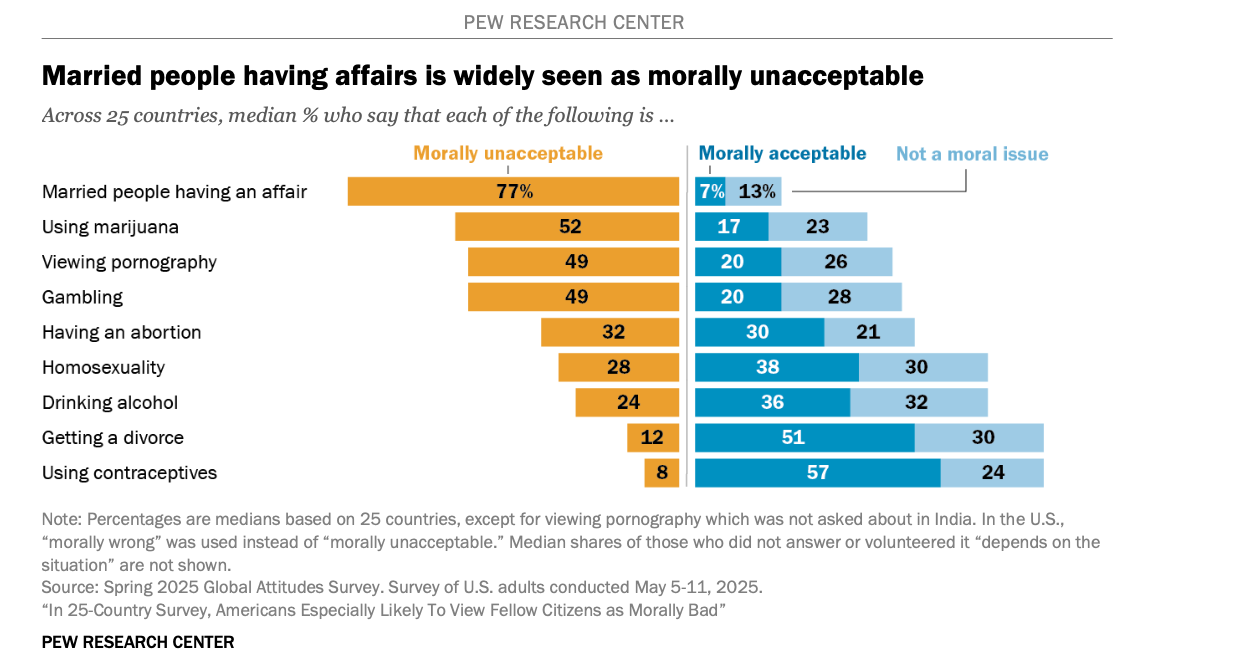

U.S. adults were among those most likely to condemn extramarital affairs as immoral in a study of 25 countries.



![Catholic convert Eva Vlaardingerbroek on censorship and immigration in Europe #Catholic Catholic Dutch political commentator and activist Eva Vlaardingerbroek said “the rule of law is dead” in Europe and detailed the issues of censorship and immigration on the continent.Vlaardingerbroek is an attorney and Catholic convert who has been outspoken about European immigration, national sovereignty, and free speech. Recently, the U.K. government banned her from entering the country due to her outspoken views.“Out of the blue, I saw that I had received an email from the U.K. government,” she told Raymond Arroyo on EWTN’s “The World Over with Raymond Arroyo.” It was “just a couple of sentences saying that my ETA, which is the travel authorization that Europeans need to travel to the U.K., had been revoked.”The reason they stated “was that I am ‘not conducive to the public good,’” she said. Vlaardingerbroek said she believes the ban occurred because she criticized the prime minister of the United Kingdom, Keir Starmer, on social media three days before receiving the email.The situation shows that “the rule of law is dead in Europe,” Vlaardingerbroek said. “Because if you get a notification like that out of the blue, you have no ability, no means to defend yourself … I don’t have a criminal record. I didn’t commit a crime.”“I got converted to Catholicism in the United Kingdom, so I have a couple of really dear friends there. Now, I’m no longer able to go because I say the wrong things, apparently. That is the state of Europe right now … They either throw you in jail or they make sure that you can’t enter the country. That’s what happens in the United Kingdom if you go against the grain,” she said.European immigrationVlaardingerbroek has also been outspoken about illegal immigration in Europe and said that mass immigration has destabilized Europe and led to spikes in violent crimes.“Anyone with two eyes can see that it’s true,” she said. Everyone who lives here, apart from maybe people living in ivory towers or in areas where there are no immigrants, everyone who lives in the real world knows that it’s true.”“I will continue speaking the truth about what I see happening to this beautiful continent of ours because it’s being destroyed,” she said. “We see churches burning down every week here in Europe, and that’s not a coincidence. That didn’t happen for hundreds of years, and suddenly now … they’re burning down faster than I can count.”“You can break the law coming here. It’s not being punished. In fact, it’s rewarded because people get to stay, people get free housing, people get free health care, and they’re able to just roam around even awaiting whether they are going to get their asylum approved or not.”“The governments and the legal system seem to be working hand in hand” and the “judges are complicit,” Vlaardingerbroek said. In Europe, the migrants that commit crimes are not held accountable because judges believe “they are traumatized because they come from a war zone” or due to their “their mental state.”“Then what ends up happening is these immigrants who rape, kill, and assault the native population, they just don’t get any real prison time, and they definitely do not get deported,” she said.“I think that this is a holdover from World War II,” she continued. Institutions including the European Union have “given evil one face and one face only” and “they refuse to see the difference between a Nazi and a conservative Christian.”“To them, it’s all the same, and that’s the way that they treat us,” she said. “I don’t think they’re afraid to acknowledge it. I think they honestly don’t care. I mean, the churches that are being burned down in France that we see, that’s a physical thing unfolding in front of our eyes.”The burning of churches “is powerful imagery that should wake people up to something else, something invisible, which is the agenda that is being carried out here to erode Christianity,” Vlaardingerbroek said.When the European Union discusses European culture, identity, and history, “they never mention Christianity,” Vlaardingerbroek said.“They actively removed it from their documents. They talk about the Enlightenment, but Christianity is never mentioned. They are actively eroding and erasing Christianity here in Europe because it threatens their agenda, because these people see [themselves] as God,” she said.U.S. immigrationAs debates over Immigration and Customs Enforcement (ICE) and law enforcement continue in the U.S, Vlaardingerbroek also discussed the status of immigration on this side of the pond.“As a Catholic, of course, we can be charitable. Nobody’s saying that we cannot allow some immigration or that we cannot help those in need. That is, of course, a Catholic ideal. That is a Catholic value … That’s what our legal system reflects,” she said.“That doesn’t mean, however, that when you come here illegally, which is what happens the majority of the time, and you break [the] laws, that we have to sit by and watch that happen.”ICE agents “are doing their job,” Vlaardingerbroek said. “They are enforcing the law. I think it’s a disgrace the way that they are being treated.”“I wish actually that here in Europe, we would have our version of ICE and that they would … send back home the people who come here illegally and who do not belong in these countries and who actively fight everything that we stand for, both in America and here in Europe,” Vlaardingerbroek said. Catholic convert Eva Vlaardingerbroek on censorship and immigration in Europe #Catholic Catholic Dutch political commentator and activist Eva Vlaardingerbroek said “the rule of law is dead” in Europe and detailed the issues of censorship and immigration on the continent.Vlaardingerbroek is an attorney and Catholic convert who has been outspoken about European immigration, national sovereignty, and free speech. Recently, the U.K. government banned her from entering the country due to her outspoken views.“Out of the blue, I saw that I had received an email from the U.K. government,” she told Raymond Arroyo on EWTN’s “The World Over with Raymond Arroyo.” It was “just a couple of sentences saying that my ETA, which is the travel authorization that Europeans need to travel to the U.K., had been revoked.”The reason they stated “was that I am ‘not conducive to the public good,’” she said. Vlaardingerbroek said she believes the ban occurred because she criticized the prime minister of the United Kingdom, Keir Starmer, on social media three days before receiving the email.The situation shows that “the rule of law is dead in Europe,” Vlaardingerbroek said. “Because if you get a notification like that out of the blue, you have no ability, no means to defend yourself … I don’t have a criminal record. I didn’t commit a crime.”“I got converted to Catholicism in the United Kingdom, so I have a couple of really dear friends there. Now, I’m no longer able to go because I say the wrong things, apparently. That is the state of Europe right now … They either throw you in jail or they make sure that you can’t enter the country. That’s what happens in the United Kingdom if you go against the grain,” she said.European immigrationVlaardingerbroek has also been outspoken about illegal immigration in Europe and said that mass immigration has destabilized Europe and led to spikes in violent crimes.“Anyone with two eyes can see that it’s true,” she said. Everyone who lives here, apart from maybe people living in ivory towers or in areas where there are no immigrants, everyone who lives in the real world knows that it’s true.”“I will continue speaking the truth about what I see happening to this beautiful continent of ours because it’s being destroyed,” she said. “We see churches burning down every week here in Europe, and that’s not a coincidence. That didn’t happen for hundreds of years, and suddenly now … they’re burning down faster than I can count.”“You can break the law coming here. It’s not being punished. In fact, it’s rewarded because people get to stay, people get free housing, people get free health care, and they’re able to just roam around even awaiting whether they are going to get their asylum approved or not.”“The governments and the legal system seem to be working hand in hand” and the “judges are complicit,” Vlaardingerbroek said. In Europe, the migrants that commit crimes are not held accountable because judges believe “they are traumatized because they come from a war zone” or due to their “their mental state.”“Then what ends up happening is these immigrants who rape, kill, and assault the native population, they just don’t get any real prison time, and they definitely do not get deported,” she said.“I think that this is a holdover from World War II,” she continued. Institutions including the European Union have “given evil one face and one face only” and “they refuse to see the difference between a Nazi and a conservative Christian.”“To them, it’s all the same, and that’s the way that they treat us,” she said. “I don’t think they’re afraid to acknowledge it. I think they honestly don’t care. I mean, the churches that are being burned down in France that we see, that’s a physical thing unfolding in front of our eyes.”The burning of churches “is powerful imagery that should wake people up to something else, something invisible, which is the agenda that is being carried out here to erode Christianity,” Vlaardingerbroek said.When the European Union discusses European culture, identity, and history, “they never mention Christianity,” Vlaardingerbroek said.“They actively removed it from their documents. They talk about the Enlightenment, but Christianity is never mentioned. They are actively eroding and erasing Christianity here in Europe because it threatens their agenda, because these people see [themselves] as God,” she said.U.S. immigrationAs debates over Immigration and Customs Enforcement (ICE) and law enforcement continue in the U.S, Vlaardingerbroek also discussed the status of immigration on this side of the pond.“As a Catholic, of course, we can be charitable. Nobody’s saying that we cannot allow some immigration or that we cannot help those in need. That is, of course, a Catholic ideal. That is a Catholic value … That’s what our legal system reflects,” she said.“That doesn’t mean, however, that when you come here illegally, which is what happens the majority of the time, and you break [the] laws, that we have to sit by and watch that happen.”ICE agents “are doing their job,” Vlaardingerbroek said. “They are enforcing the law. I think it’s a disgrace the way that they are being treated.”“I wish actually that here in Europe, we would have our version of ICE and that they would … send back home the people who come here illegally and who do not belong in these countries and who actively fight everything that we stand for, both in America and here in Europe,” Vlaardingerbroek said.](https://unitedyam.com/wp-content/uploads/2026/02/catholic-convert-eva-vlaardingerbroek-on-censorship-and-immigration-in-europe-catholic-catholic-dutch-political-commentator-and-activist-eva-vlaardingerbroek-said-the-rule-of-law-is-dead.png)
Catholic convert Eva Vlaardingerbroek discussed immigration and the state of free speech in Europe on EWTN’s “The World Over with Raymond Arroyo.”
