Universe

Jonathan Roumie tells Father Mike Schmitz: ‘Everything in my life has prepared me for this role’ #Catholic 
 
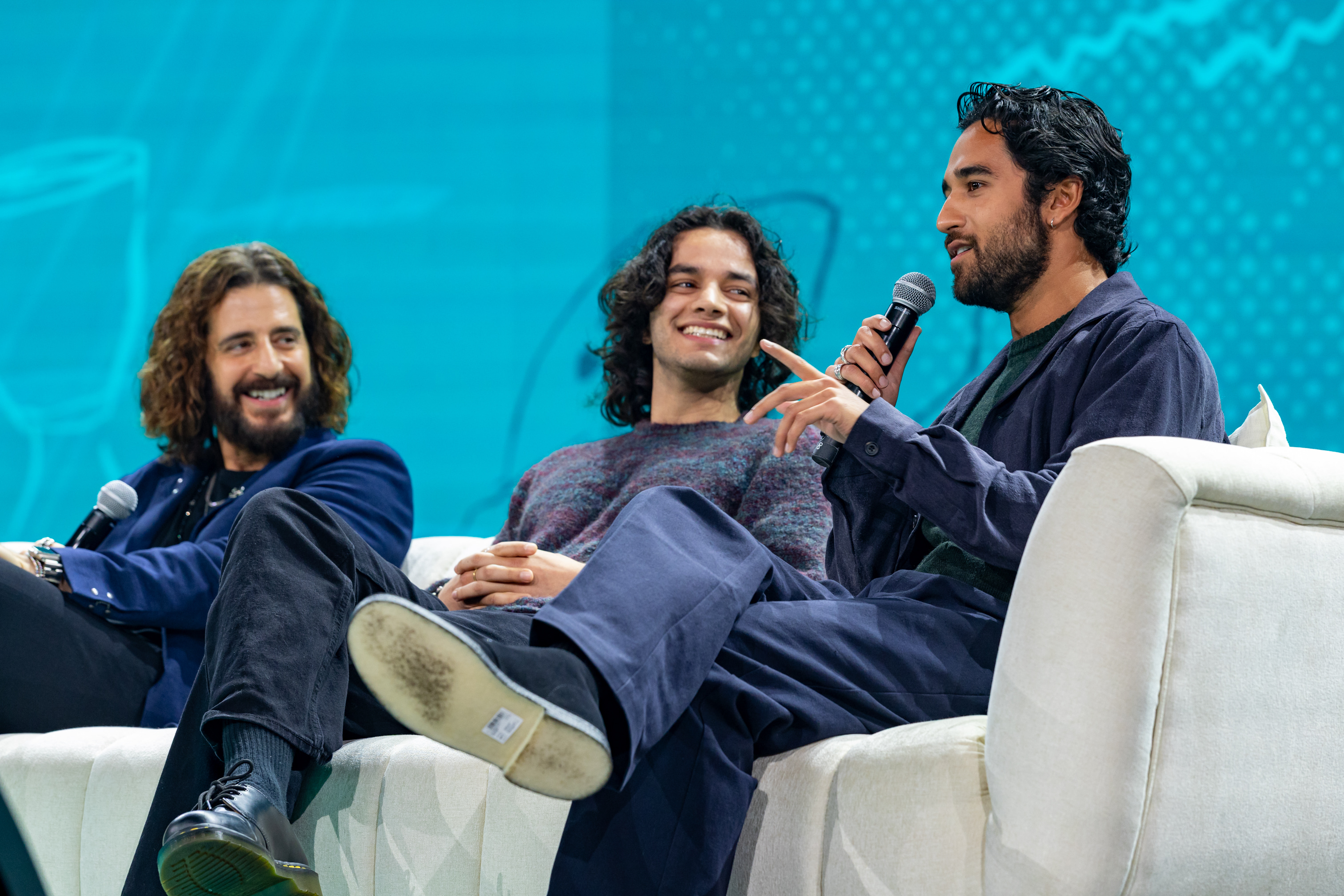
 Actor Jonathan Roumie, known for his role as Jesus in “The Chosen,” and Father Mike Schmitz, known for the “Bible in a Year” podcast, sit down for an in-depth interview. Credit: Ascension Presents

Dec 29, 2025 / 17:21 pm (CNA).
In a new sit-down interview with Father Mike Schmitz, who is best known for the “Bible in a Year” podcast and YouTube videos on Ascension Presents, actor Jonathan Roumie spoke in depth about his role portraying Jesus in the hit series “The Chosen.”“Everything in my life has prepared me for this role,” Roumie told Schmitz in the 43-minute-long interview, which aired Dec. 28 on the Ascension Presents YouTube channel.Looking back at his childhood, Roumie recalled a couple of moments and experiences that deeply impacted him and his own portrayal of Jesus. He said at 12 years old he reenacted Christ’s passion and crucifixion in his backyard after watching Robert Powell’s portrayal of Jesus in “Jesus of Nazareth.”“I had 2-by-8 planks that I found and I hammered them together and I hammered the nails where the hands would go and I painted the blood and the same thing with the feet,” he recalled. “And then I grabbed like a bush, a piece of a branch of a bush, and made my own crown of thorns and I painted blood on it and everything and I processed around to the side of my garage.”Roumie also opened up about his experience being bullied as a child and how it led him to offer up his past trauma to God as he was reenacting the Crucifixion during filming of Season 6 of “The Chosen,” which focuses on Jesus’ passion and crucifixion.“I was bullied as a kid a lot and I had to kind of look at what Jesus went through as a righteous man and a peaceful man and meek and humble and see just the level of devastation and terrorized bullying that he received to the point of death,” he said. “So for me, I think, and I’ll go back and look at all those experiences I had as a kid, which might have been part of the reason that led me to reenact the Passion, as something that I could relate to and I think all of that prepared me for this role.”He added: “I understand it now a bit more, at least I think, in my own sort of human ignorance and pride… Of course I don’t know exactly what all of this is about but it feels authentic. Like, ‘Well, I went through that as a kid and my compassion increased and my empathy increased and now I’m playing the most compassionate, empathetic human being that was God in the universe for all time.’ So I can lend that experience in his suffering and in his empathy even in wanting to forgive his enemies, which I had to do.”“I was beaten pretty bad. So, I had to offer up all of my past trauma to him as I was recreating it, knowing that that was part of my own personal sacrifice — was my own offering for him on behalf of what he suffered for humanity.”The actor shared that before beginning the filming of Season 6, he asked God in prayer that “if it were his will to allow me a fraction of a fraction of what he went through.”Before traveling to Matera, Italy — the location where the Crucifixion was filmed — Roumie injured his right shoulder after falling while filming a scene. An X-ray and MRI showed that he had separated a bit of his AC joint from the clavicle, causing sharp pain.“It was the right shoulder, so the shoulder that was carrying the beam [of the cross] on and it was extremely painful,” Roumie said. “And that was just one of many things.”Roumie added that while filming the Crucifixion “certain adjustments” also had to be made due to pain being felt by the metal and real nails being used during filming.“He [God] gave me exactly what I asked for — just a glimpse, just a glimpse,” he said. “And I think the thing that I got was that I got to enter into it in a way that I had never entered into it before.”Schmitz asked Roumie how his experience portraying Jesus’ passion and crucifixion has impacted the way he attends or prays at Mass. Roumie shared that in the past year he began to feel “convicted to give more reverence to Christ in the Eucharist.”“I started receiving on my knees and on the tongue, which I hadn’t before,” he said, adding that it was slightly “disorienting at first.”He recalled an experience at Mass where he kneeled to receive the Eucharist but the priest asked him to stand up. He hesitated but rose and continued on with the Mass. Afterward, he asked his spiritual director if that was permissible, to which he responded that a priest “shouldn’t do that but it happens.”After this experience, Roumie shared that he “doubled down on it and now I’m prepared to just wait as long as I need to until somebody concedes because I’m not going anywhere.”Returning to his time portraying Jesus in the series, Schmitz told Roumie that “the show is called ‘The Chosen’ in the sense that it’s also about those who were chosen, but you were chosen and there’s something in that that has changed you. You being chosen to not only portray Jesus, but to be his disciple, an imitator of him, as St. Paul says, and that’s changed you.”“That’s something I’m trying to wrap my head around and identify with,” Roumie responded. “It wasn’t somebody else. He picked me. And I, of course, said yes, because I needed the work initially. I didn’t know what it was going to do to me internally.”Once the final season of “The Chosen” airs, it will have been a span of 10 years that Roumie will have been portraying Jesus. He said that this experience is something that might take “the rest of my life to unpack.”There was an error serializing the imagefile_get_contents(https://iframe.ly/api/iframely/oembed?url=https%3A%2F%2Fwww.youtube.com%2Fwatch%3Fv%3DtLHZ1qYhph0&api_key=): Failed to open stream: HTTP request failed! HTTP/1.1 404 Not Found
“So, I have to give myself a little bit of grace, but it’s something that I think I will always live with. And in fact, I don’t know that I want to let it go because it keeps me connected to him, especially when the show ends.”

Jonathan Roumie tells Father Mike Schmitz: ‘Everything in my life has prepared me for this role’ #Catholic Actor Jonathan Roumie, known for his role as Jesus in “The Chosen,” and Father Mike Schmitz, known for the “Bible in a Year” podcast, sit down for an in-depth interview. Credit: Ascension Presents Dec 29, 2025 / 17:21 pm (CNA). In a new sit-down interview with Father Mike Schmitz, who is best known for the “Bible in a Year” podcast and YouTube videos on Ascension Presents, actor Jonathan Roumie spoke in depth about his role portraying Jesus in the hit series “The Chosen.”“Everything in my life has prepared me for this role,” Roumie told Schmitz in the 43-minute-long interview, which aired Dec. 28 on the Ascension Presents YouTube channel.Looking back at his childhood, Roumie recalled a couple of moments and experiences that deeply impacted him and his own portrayal of Jesus. He said at 12 years old he reenacted Christ’s passion and crucifixion in his backyard after watching Robert Powell’s portrayal of Jesus in “Jesus of Nazareth.”“I had 2-by-8 planks that I found and I hammered them together and I hammered the nails where the hands would go and I painted the blood and the same thing with the feet,” he recalled. “And then I grabbed like a bush, a piece of a branch of a bush, and made my own crown of thorns and I painted blood on it and everything and I processed around to the side of my garage.”Roumie also opened up about his experience being bullied as a child and how it led him to offer up his past trauma to God as he was reenacting the Crucifixion during filming of Season 6 of “The Chosen,” which focuses on Jesus’ passion and crucifixion.“I was bullied as a kid a lot and I had to kind of look at what Jesus went through as a righteous man and a peaceful man and meek and humble and see just the level of devastation and terrorized bullying that he received to the point of death,” he said. “So for me, I think, and I’ll go back and look at all those experiences I had as a kid, which might have been part of the reason that led me to reenact the Passion, as something that I could relate to and I think all of that prepared me for this role.”He added: “I understand it now a bit more, at least I think, in my own sort of human ignorance and pride… Of course I don’t know exactly what all of this is about but it feels authentic. Like, ‘Well, I went through that as a kid and my compassion increased and my empathy increased and now I’m playing the most compassionate, empathetic human being that was God in the universe for all time.’ So I can lend that experience in his suffering and in his empathy even in wanting to forgive his enemies, which I had to do.”“I was beaten pretty bad. So, I had to offer up all of my past trauma to him as I was recreating it, knowing that that was part of my own personal sacrifice — was my own offering for him on behalf of what he suffered for humanity.”The actor shared that before beginning the filming of Season 6, he asked God in prayer that “if it were his will to allow me a fraction of a fraction of what he went through.”Before traveling to Matera, Italy — the location where the Crucifixion was filmed — Roumie injured his right shoulder after falling while filming a scene. An X-ray and MRI showed that he had separated a bit of his AC joint from the clavicle, causing sharp pain.“It was the right shoulder, so the shoulder that was carrying the beam [of the cross] on and it was extremely painful,” Roumie said. “And that was just one of many things.”Roumie added that while filming the Crucifixion “certain adjustments” also had to be made due to pain being felt by the metal and real nails being used during filming.“He [God] gave me exactly what I asked for — just a glimpse, just a glimpse,” he said. “And I think the thing that I got was that I got to enter into it in a way that I had never entered into it before.”Schmitz asked Roumie how his experience portraying Jesus’ passion and crucifixion has impacted the way he attends or prays at Mass. Roumie shared that in the past year he began to feel “convicted to give more reverence to Christ in the Eucharist.”“I started receiving on my knees and on the tongue, which I hadn’t before,” he said, adding that it was slightly “disorienting at first.”He recalled an experience at Mass where he kneeled to receive the Eucharist but the priest asked him to stand up. He hesitated but rose and continued on with the Mass. Afterward, he asked his spiritual director if that was permissible, to which he responded that a priest “shouldn’t do that but it happens.”After this experience, Roumie shared that he “doubled down on it and now I’m prepared to just wait as long as I need to until somebody concedes because I’m not going anywhere.”Returning to his time portraying Jesus in the series, Schmitz told Roumie that “the show is called ‘The Chosen’ in the sense that it’s also about those who were chosen, but you were chosen and there’s something in that that has changed you. You being chosen to not only portray Jesus, but to be his disciple, an imitator of him, as St. Paul says, and that’s changed you.”“That’s something I’m trying to wrap my head around and identify with,” Roumie responded. “It wasn’t somebody else. He picked me. And I, of course, said yes, because I needed the work initially. I didn’t know what it was going to do to me internally.”Once the final season of “The Chosen” airs, it will have been a span of 10 years that Roumie will have been portraying Jesus. He said that this experience is something that might take “the rest of my life to unpack.”There was an error serializing the imagefile_get_contents(https://iframe.ly/api/iframely/oembed?url=https%3A%2F%2Fwww.youtube.com%2Fwatch%3Fv%3DtLHZ1qYhph0&api_key=): Failed to open stream: HTTP request failed! HTTP/1.1 404 Not Found “So, I have to give myself a little bit of grace, but it’s something that I think I will always live with. And in fact, I don’t know that I want to let it go because it keeps me connected to him, especially when the show ends.”


Actor Jonathan Roumie, known for his role as Jesus in “The Chosen,” and Father Mike Schmitz, known for the “Bible in a Year” podcast, sit down for an in-depth interview. Credit: Ascension Presents

Dec 29, 2025 / 17:21 pm (CNA).

In a new sit-down interview with Father Mike Schmitz, who is best known for the “Bible in a Year” podcast and YouTube videos on Ascension Presents, actor Jonathan Roumie spoke in depth about his role portraying Jesus in the hit series “The Chosen.”

“Everything in my life has prepared me for this role,” Roumie told Schmitz in the 43-minute-long interview, which aired Dec. 28 on the Ascension Presents YouTube channel.

Looking back at his childhood, Roumie recalled a couple of moments and experiences that deeply impacted him and his own portrayal of Jesus. He said at 12 years old he reenacted Christ’s passion and crucifixion in his backyard after watching Robert Powell’s portrayal of Jesus in “Jesus of Nazareth.”

“I had 2-by-8 planks that I found and I hammered them together and I hammered the nails where the hands would go and I painted the blood and the same thing with the feet,” he recalled. “And then I grabbed like a bush, a piece of a branch of a bush, and made my own crown of thorns and I painted blood on it and everything and I processed around to the side of my garage.”

Roumie also opened up about his experience being bullied as a child and how it led him to offer up his past trauma to God as he was reenacting the Crucifixion during filming of Season 6 of “The Chosen,” which focuses on Jesus’ passion and crucifixion.

“I was bullied as a kid a lot and I had to kind of look at what Jesus went through as a righteous man and a peaceful man and meek and humble and see just the level of devastation and terrorized bullying that he received to the point of death,” he said.

“So for me, I think, and I’ll go back and look at all those experiences I had as a kid, which might have been part of the reason that led me to reenact the Passion, as something that I could relate to and I think all of that prepared me for this role.”

He added: “I understand it now a bit more, at least I think, in my own sort of human ignorance and pride… Of course I don’t know exactly what all of this is about but it feels authentic. Like, ‘Well, I went through that as a kid and my compassion increased and my empathy increased and now I’m playing the most compassionate, empathetic human being that was God in the universe for all time.’ So I can lend that experience in his suffering and in his empathy even in wanting to forgive his enemies, which I had to do.”

“I was beaten pretty bad. So, I had to offer up all of my past trauma to him as I was recreating it, knowing that that was part of my own personal sacrifice — was my own offering for him on behalf of what he suffered for humanity.”

The actor shared that before beginning the filming of Season 6, he asked God in prayer that “if it were his will to allow me a fraction of a fraction of what he went through.”

Before traveling to Matera, Italy — the location where the Crucifixion was filmed — Roumie injured his right shoulder after falling while filming a scene. An X-ray and MRI showed that he had separated a bit of his AC joint from the clavicle, causing sharp pain.

“It was the right shoulder, so the shoulder that was carrying the beam [of the cross] on and it was extremely painful,” Roumie said. “And that was just one of many things.”

Roumie added that while filming the Crucifixion “certain adjustments” also had to be made due to pain being felt by the metal and real nails being used during filming.

“He [God] gave me exactly what I asked for — just a glimpse, just a glimpse,” he said. “And I think the thing that I got was that I got to enter into it in a way that I had never entered into it before.”

Schmitz asked Roumie how his experience portraying Jesus’ passion and crucifixion has impacted the way he attends or prays at Mass. Roumie shared that in the past year he began to feel “convicted to give more reverence to Christ in the Eucharist.”

“I started receiving on my knees and on the tongue, which I hadn’t before,” he said, adding that it was slightly “disorienting at first.”

He recalled an experience at Mass where he kneeled to receive the Eucharist but the priest asked him to stand up. He hesitated but rose and continued on with the Mass. Afterward, he asked his spiritual director if that was permissible, to which he responded that a priest “shouldn’t do that but it happens.”

After this experience, Roumie shared that he “doubled down on it and now I’m prepared to just wait as long as I need to until somebody concedes because I’m not going anywhere.”

Returning to his time portraying Jesus in the series, Schmitz told Roumie that “the show is called ‘The Chosen’ in the sense that it’s also about those who were chosen, but you were chosen and there’s something in that that has changed you. You being chosen to not only portray Jesus, but to be his disciple, an imitator of him, as St. Paul says, and that’s changed you.”

“That’s something I’m trying to wrap my head around and identify with,” Roumie responded. “It wasn’t somebody else. He picked me. And I, of course, said yes, because I needed the work initially. I didn’t know what it was going to do to me internally.”

Once the final season of “The Chosen” airs, it will have been a span of 10 years that Roumie will have been portraying Jesus. He said that this experience is something that might take “the rest of my life to unpack.”

There was an error serializing the image

file_get_contents(https://iframe.ly/api/iframely/oembed?url=https%3A%2F%2Fwww.youtube.com%2Fwatch%3Fv%3DtLHZ1qYhph0&api_key=): Failed to open stream: HTTP request failed! HTTP/1.1 404 Not Found

“So, I have to give myself a little bit of grace, but it’s something that I think I will always live with. And in fact, I don’t know that I want to let it go because it keeps me connected to him, especially when the show ends.”

Read More
CNA explains: How does ‘Mass dispensation’ work, and when is it used? #Catholic 
 
 null / Credit: FotoDax/Shutterstock

CNA Staff, Dec 26, 2025 / 06:00 am (CNA).
Amid heavy immigration enforcement by the Trump administration, several bishops in the U.S. have recently issued broad dispensations to Catholics in their dioceses, allowing them to refrain from attending Mass on Sundays if they fear arrest or deportation from federal officials.Bishops in North Carolina, California, and elsewhere have issued such dispensations, stating that those with legitimate concerns of being detained by immigration agents are free from the usual Sunday obligation.The Church’s canon law dictates that Sunday is considered the “primordial holy day of obligation,” one on which all Catholics are “obliged to participate in the Mass.” Several other holy days of obligation exist throughout the liturgical year, though Sunday (or the Saturday evening prior) is always considered obligatory for Mass attendance.The numerous dispensations issued recently in dioceses around the country have underscored, however, that bishops have some discretion in allowing Catholics to stay home from Mass for legitimate reasons.Dispensation must be ‘just,’ ‘reasonable’David Long, an assistant professor in the school of canon law at The Catholic University of America as well as the director of the school’s Institute for Policy Research and Catholic Studies, told CNA that bishops have the authority to dispense the faithful in their diocese with, as the Code of Canon Law puts it, a “just and reasonable cause.”“This generally applies when a holy day of obligation falls on a Saturday or Monday, during severe weather events (snowstorms, hurricanes, floods, etc.), when there is no reasonable access to Mass, or during public emergencies such as pandemics or plagues,” he said. Once such circumstances end, he noted, the dispensation itself would cease.By virtue of their office, diocesan administrators, vicars general, and episcopal vicars also have the power to issue dispensations, Long said.Priests, however, normally do not have that authority “unless expressly granted by a higher authority, such as their diocesan bishop,” he said.Canon law, he said, dictates that a dispensation can only be granted when a bishop “judges that it contributes to [the] spiritual good” of his flock, for a just cause, and “after taking into account the circumstances of the case and the gravity of the law from which dispensation is given.”The lay faithful themselves can determine, in some cases, when they can refrain from going to Mass, though Long stressed that such instances do not constitute “dispensation,” as the laity “does not have the power to dispense at any time” that authority being tied to “executive power in the Church” via ordination.Canon law dictates, however, that Catholics are not bound to attend Mass when “participation in the Eucharistic celebration becomes impossible.”Long said such scenarios include “when [the faithful] are sick, contagious, or housebound, when they are the primary caregiver for someone else and cannot arrange coverage for that person, when traveling to Mass is dangerous, when there is no realistic access to Mass, or for some other grave cause.”“This is not a dispensation,” he said, “but instead is a legal recognition of moral and physical impossibility at times.”The recent immigration-related controversy isn’t the only large-scale dispensation in recent memory. Virtually every Catholic in the world was dispensed from Mass in the earliest days of the COVID-19 crisis, when government authorities sharply limited public gatherings, including religious gatherings, all over the world.In 2024, on the other hand, the Vatican said that Catholics in the United States must still attend Mass on holy days of obligation even when they are transferred to Mondays or Saturdays, correcting a long-standing practice in the U.S. Church and ending a dispensation with which many Catholics were familiar.‘The most incredible privilege we could possibly imagine’Though the obligation to attend Mass is a major aspect of Church canon law, Father Daniel Brandenburg, LC, cautioned against interpreting it uncharitably.“This ‘obligation’ is sort of like the obligation of eating,” he said. “If you don’t eat, you’ll die. Similarly, the Church simply recognizes that if we don’t nourish our soul, it withers away and dies. The bare minimum to survive is Mass once a week on Sundays.”“Most people find the ‘obligation’ of eating to be quite pleasurable,” he continued, “and I think anyone with a modicum of spiritual awareness finds deep joy in attending Mass and receiving the Creator of the universe into their soul. At least I do.”Like Long, Brandenburg stressed that the lay faithful lack the authority to “dispense” themselves from Mass. Instead, they are directed to follow their consciences when determining if they are incapable of attending Mass, particularly by applying the principle of moral theology “ad impossibilia, nemo tenetur” “(no one is obliged to do what is impossible”).Being too sick, facing dangerous inclement weather, or lacking the ability to transport themselves are among the reasons the faithful might determine they are unable to attend Mass, he said.“Here, beware the lax conscience which gives easy excuses,” Brandenburg warned, “and remember that the saints became holy not through excuses, but through heroic love.”

CNA explains: How does ‘Mass dispensation’ work, and when is it used? #Catholic null / Credit: FotoDax/Shutterstock CNA Staff, Dec 26, 2025 / 06:00 am (CNA). Amid heavy immigration enforcement by the Trump administration, several bishops in the U.S. have recently issued broad dispensations to Catholics in their dioceses, allowing them to refrain from attending Mass on Sundays if they fear arrest or deportation from federal officials.Bishops in North Carolina, California, and elsewhere have issued such dispensations, stating that those with legitimate concerns of being detained by immigration agents are free from the usual Sunday obligation.The Church’s canon law dictates that Sunday is considered the “primordial holy day of obligation,” one on which all Catholics are “obliged to participate in the Mass.” Several other holy days of obligation exist throughout the liturgical year, though Sunday (or the Saturday evening prior) is always considered obligatory for Mass attendance.The numerous dispensations issued recently in dioceses around the country have underscored, however, that bishops have some discretion in allowing Catholics to stay home from Mass for legitimate reasons.Dispensation must be ‘just,’ ‘reasonable’David Long, an assistant professor in the school of canon law at The Catholic University of America as well as the director of the school’s Institute for Policy Research and Catholic Studies, told CNA that bishops have the authority to dispense the faithful in their diocese with, as the Code of Canon Law puts it, a “just and reasonable cause.”“This generally applies when a holy day of obligation falls on a Saturday or Monday, during severe weather events (snowstorms, hurricanes, floods, etc.), when there is no reasonable access to Mass, or during public emergencies such as pandemics or plagues,” he said. Once such circumstances end, he noted, the dispensation itself would cease.By virtue of their office, diocesan administrators, vicars general, and episcopal vicars also have the power to issue dispensations, Long said.Priests, however, normally do not have that authority “unless expressly granted by a higher authority, such as their diocesan bishop,” he said.Canon law, he said, dictates that a dispensation can only be granted when a bishop “judges that it contributes to [the] spiritual good” of his flock, for a just cause, and “after taking into account the circumstances of the case and the gravity of the law from which dispensation is given.”The lay faithful themselves can determine, in some cases, when they can refrain from going to Mass, though Long stressed that such instances do not constitute “dispensation,” as the laity “does not have the power to dispense at any time” that authority being tied to “executive power in the Church” via ordination.Canon law dictates, however, that Catholics are not bound to attend Mass when “participation in the Eucharistic celebration becomes impossible.”Long said such scenarios include “when [the faithful] are sick, contagious, or housebound, when they are the primary caregiver for someone else and cannot arrange coverage for that person, when traveling to Mass is dangerous, when there is no realistic access to Mass, or for some other grave cause.”“This is not a dispensation,” he said, “but instead is a legal recognition of moral and physical impossibility at times.”The recent immigration-related controversy isn’t the only large-scale dispensation in recent memory. Virtually every Catholic in the world was dispensed from Mass in the earliest days of the COVID-19 crisis, when government authorities sharply limited public gatherings, including religious gatherings, all over the world.In 2024, on the other hand, the Vatican said that Catholics in the United States must still attend Mass on holy days of obligation even when they are transferred to Mondays or Saturdays, correcting a long-standing practice in the U.S. Church and ending a dispensation with which many Catholics were familiar.‘The most incredible privilege we could possibly imagine’Though the obligation to attend Mass is a major aspect of Church canon law, Father Daniel Brandenburg, LC, cautioned against interpreting it uncharitably.“This ‘obligation’ is sort of like the obligation of eating,” he said. “If you don’t eat, you’ll die. Similarly, the Church simply recognizes that if we don’t nourish our soul, it withers away and dies. The bare minimum to survive is Mass once a week on Sundays.”“Most people find the ‘obligation’ of eating to be quite pleasurable,” he continued, “and I think anyone with a modicum of spiritual awareness finds deep joy in attending Mass and receiving the Creator of the universe into their soul. At least I do.”Like Long, Brandenburg stressed that the lay faithful lack the authority to “dispense” themselves from Mass. Instead, they are directed to follow their consciences when determining if they are incapable of attending Mass, particularly by applying the principle of moral theology “ad impossibilia, nemo tenetur” “(no one is obliged to do what is impossible”).Being too sick, facing dangerous inclement weather, or lacking the ability to transport themselves are among the reasons the faithful might determine they are unable to attend Mass, he said.“Here, beware the lax conscience which gives easy excuses,” Brandenburg warned, “and remember that the saints became holy not through excuses, but through heroic love.”


null / Credit: FotoDax/Shutterstock

CNA Staff, Dec 26, 2025 / 06:00 am (CNA).

Amid heavy immigration enforcement by the Trump administration, several bishops in the U.S. have recently issued broad dispensations to Catholics in their dioceses, allowing them to refrain from attending Mass on Sundays if they fear arrest or deportation from federal officials.

Bishops in North Carolina, California, and elsewhere have issued such dispensations, stating that those with legitimate concerns of being detained by immigration agents are free from the usual Sunday obligation.

The Church’s canon law dictates that Sunday is considered the “primordial holy day of obligation,” one on which all Catholics are “obliged to participate in the Mass.” Several other holy days of obligation exist throughout the liturgical year, though Sunday (or the Saturday evening prior) is always considered obligatory for Mass attendance.

The numerous dispensations issued recently in dioceses around the country have underscored, however, that bishops have some discretion in allowing Catholics to stay home from Mass for legitimate reasons.

Dispensation must be ‘just,’ ‘reasonable’

David Long, an assistant professor in the school of canon law at The Catholic University of America as well as the director of the school’s Institute for Policy Research and Catholic Studies, told CNA that bishops have the authority to dispense the faithful in their diocese with, as the Code of Canon Law puts it, a “just and reasonable cause.”

“This generally applies when a holy day of obligation falls on a Saturday or Monday, during severe weather events (snowstorms, hurricanes, floods, etc.), when there is no reasonable access to Mass, or during public emergencies such as pandemics or plagues,” he said. Once such circumstances end, he noted, the dispensation itself would cease.

By virtue of their office, diocesan administrators, vicars general, and episcopal vicars also have the power to issue dispensations, Long said.

Priests, however, normally do not have that authority “unless expressly granted by a higher authority, such as their diocesan bishop,” he said.

Canon law, he said, dictates that a dispensation can only be granted when a bishop “judges that it contributes to [the] spiritual good” of his flock, for a just cause, and “after taking into account the circumstances of the case and the gravity of the law from which dispensation is given.”

The lay faithful themselves can determine, in some cases, when they can refrain from going to Mass, though Long stressed that such instances do not constitute “dispensation,” as the laity “does not have the power to dispense at any time” that authority being tied to “executive power in the Church” via ordination.

Canon law dictates, however, that Catholics are not bound to attend Mass when “participation in the Eucharistic celebration becomes impossible.”

Long said such scenarios include “when [the faithful] are sick, contagious, or housebound, when they are the primary caregiver for someone else and cannot arrange coverage for that person, when traveling to Mass is dangerous, when there is no realistic access to Mass, or for some other grave cause.”

“This is not a dispensation,” he said, “but instead is a legal recognition of moral and physical impossibility at times.”

The recent immigration-related controversy isn’t the only large-scale dispensation in recent memory. Virtually every Catholic in the world was dispensed from Mass in the earliest days of the COVID-19 crisis, when government authorities sharply limited public gatherings, including religious gatherings, all over the world.

In 2024, on the other hand, the Vatican said that Catholics in the United States must still attend Mass on holy days of obligation even when they are transferred to Mondays or Saturdays, correcting a long-standing practice in the U.S. Church and ending a dispensation with which many Catholics were familiar.

‘The most incredible privilege we could possibly imagine’

Though the obligation to attend Mass is a major aspect of Church canon law, Father Daniel Brandenburg, LC, cautioned against interpreting it uncharitably.

“This ‘obligation’ is sort of like the obligation of eating,” he said. “If you don’t eat, you’ll die. Similarly, the Church simply recognizes that if we don’t nourish our soul, it withers away and dies. The bare minimum to survive is Mass once a week on Sundays.”

“Most people find the ‘obligation’ of eating to be quite pleasurable,” he continued, “and I think anyone with a modicum of spiritual awareness finds deep joy in attending Mass and receiving the Creator of the universe into their soul. At least I do.”

Like Long, Brandenburg stressed that the lay faithful lack the authority to “dispense” themselves from Mass. Instead, they are directed to follow their consciences when determining if they are incapable of attending Mass, particularly by applying the principle of moral theology “ad impossibilia, nemo tenetur” “(no one is obliged to do what is impossible”).

Being too sick, facing dangerous inclement weather, or lacking the ability to transport themselves are among the reasons the faithful might determine they are unable to attend Mass, he said.

“Here, beware the lax conscience which gives easy excuses,” Brandenburg warned, “and remember that the saints became holy not through excuses, but through heroic love.”

Read More
Doug Keck honored with 2025 Mother Angelica Award #Catholic 
 
 Former EWTN president Doug Keck was presented with the Mother Angelica Award on Dec. 12, 2025. / Credit: EWTN News

Washington, D.C. Newsroom, Dec 12, 2025 / 20:02 pm (CNA).
The EWTN Global Catholic Network presented the 2025 Mother Angelica Award to its longtime former president, Doug Keck, in recognition of his decades of service, faithful leadership, and tireless commitment to the mission of evangelization.Following a 29-year career at EWTN, Keck retired from his duties as EWTN president and chief operating officer in June. He subsequently assumed the honorary title of president emeritus and continues to host his signature series “EWTN Bookmark” as well as serve as co-host of “Father Spitzer’s Universe.”The Mother Angelica Award, which was presented to Keck during a special ceremony broadcast globally, is the highest honor bestowed by the network to recognize individuals whose lives reflect the spirit of faith, courage, and evangelistic zeal embodied by EWTN’s foundress, Mother Angelica.“On behalf of the entire EWTN family around the globe, I want to thank Doug for keeping the mission of EWTN our No. 1 priority over the years and never compromising on sharing the truth of the Gospel for views or clicks,” said EWTN Chairman of the Board and CEO Michael Warsaw.“He is more than deserving of this award,” Warsaw added.Keck joined EWTN in 1996 after a highly successful career in cable television in New York City, where he contributed to the growth of networks such as Sports Channel, Bravo, AMC, and CNBC. Over the years at EWTN, Keck helped develop and launch numerous flagship programs, including “Life on the Rock,” “The Journey Home,” “EWTN Bookmark,” and “The World Over with Raymond Arroyo,” playing a central role in the network’s expansion across television, radio, and digital platforms.In 2009, Keck became the network’s executive vice president and chief operating officer, and in 2013 he was named president and chief operating officer. Under his leadership, EWTN grew to become the largest global Catholic media organization, reaching millions of households worldwide and offering content across multiple languages and media channels.“Mother Angelica always said our job is to soak the earth with the truth of the Gospel and the Catholic Church. That’s been EWTN’s No. 1 priority, and I’ve been proud to be a part of it alongside so many other dedicated people,” Keck said.Reflecting on how God called him out of his career in secular media, Keck’s message to any Catholic is to consider how God might be calling him or her to put their talents to the service of the Gospel.  “That’s what we’re called to do, really,” he said. “You don’t bury what you’ve been given. You give your talents over to him.” The full award ceremony, including tributes from those whose lives have been touched by Keck, will be available for viewing on EWTN On Demand at www.ondemand.ewtn.com.Keck now joins previous distinguished recipients of the Mother Angelica Award including Archbishop Emeritus of Philadelphia Charles J. Chaput, OFM Cap; former New Orleans Saints wide receiver and football coach Danny Abramowicz; and co-founders of the Fellowship of Catholic University Students (FOCUS) Curtis and Michaelann Martin.Inaugurated in 2021 on the 40th anniversary of EWTN’s founding, the Mother Angelica Award honors recipients for their extraordinary contribution to the Church and the new evangelization — serving as witnesses to God’s providence through their ministry and leadership.The largest Catholic media organization in the world, EWTN’s 11 global television channels broadcast in multiple languages 24 hours a day. The network also operates radio services via SiriusXM, iHeartRadio, and hundreds of AM/FM affiliates as well as one of the most visited Catholic websites in the U.S., a publishing division, and a robust global news operation.The network’s diverse range of programming includes catechetical series, devotions, news, talk shows, documentaries, and live coverage of major Church events — reaching hundreds of millions of viewers worldwide.

Doug Keck honored with 2025 Mother Angelica Award #Catholic Former EWTN president Doug Keck was presented with the Mother Angelica Award on Dec. 12, 2025. / Credit: EWTN News Washington, D.C. Newsroom, Dec 12, 2025 / 20:02 pm (CNA). The EWTN Global Catholic Network presented the 2025 Mother Angelica Award to its longtime former president, Doug Keck, in recognition of his decades of service, faithful leadership, and tireless commitment to the mission of evangelization.Following a 29-year career at EWTN, Keck retired from his duties as EWTN president and chief operating officer in June. He subsequently assumed the honorary title of president emeritus and continues to host his signature series “EWTN Bookmark” as well as serve as co-host of “Father Spitzer’s Universe.”The Mother Angelica Award, which was presented to Keck during a special ceremony broadcast globally, is the highest honor bestowed by the network to recognize individuals whose lives reflect the spirit of faith, courage, and evangelistic zeal embodied by EWTN’s foundress, Mother Angelica.“On behalf of the entire EWTN family around the globe, I want to thank Doug for keeping the mission of EWTN our No. 1 priority over the years and never compromising on sharing the truth of the Gospel for views or clicks,” said EWTN Chairman of the Board and CEO Michael Warsaw.“He is more than deserving of this award,” Warsaw added.Keck joined EWTN in 1996 after a highly successful career in cable television in New York City, where he contributed to the growth of networks such as Sports Channel, Bravo, AMC, and CNBC. Over the years at EWTN, Keck helped develop and launch numerous flagship programs, including “Life on the Rock,” “The Journey Home,” “EWTN Bookmark,” and “The World Over with Raymond Arroyo,” playing a central role in the network’s expansion across television, radio, and digital platforms.In 2009, Keck became the network’s executive vice president and chief operating officer, and in 2013 he was named president and chief operating officer. Under his leadership, EWTN grew to become the largest global Catholic media organization, reaching millions of households worldwide and offering content across multiple languages and media channels.“Mother Angelica always said our job is to soak the earth with the truth of the Gospel and the Catholic Church. That’s been EWTN’s No. 1 priority, and I’ve been proud to be a part of it alongside so many other dedicated people,” Keck said.Reflecting on how God called him out of his career in secular media, Keck’s message to any Catholic is to consider how God might be calling him or her to put their talents to the service of the Gospel.  “That’s what we’re called to do, really,” he said. “You don’t bury what you’ve been given. You give your talents over to him.” The full award ceremony, including tributes from those whose lives have been touched by Keck, will be available for viewing on EWTN On Demand at www.ondemand.ewtn.com.Keck now joins previous distinguished recipients of the Mother Angelica Award including Archbishop Emeritus of Philadelphia Charles J. Chaput, OFM Cap; former New Orleans Saints wide receiver and football coach Danny Abramowicz; and co-founders of the Fellowship of Catholic University Students (FOCUS) Curtis and Michaelann Martin.Inaugurated in 2021 on the 40th anniversary of EWTN’s founding, the Mother Angelica Award honors recipients for their extraordinary contribution to the Church and the new evangelization — serving as witnesses to God’s providence through their ministry and leadership.The largest Catholic media organization in the world, EWTN’s 11 global television channels broadcast in multiple languages 24 hours a day. The network also operates radio services via SiriusXM, iHeartRadio, and hundreds of AM/FM affiliates as well as one of the most visited Catholic websites in the U.S., a publishing division, and a robust global news operation.The network’s diverse range of programming includes catechetical series, devotions, news, talk shows, documentaries, and live coverage of major Church events — reaching hundreds of millions of viewers worldwide.


Former EWTN president Doug Keck was presented with the Mother Angelica Award on Dec. 12, 2025. / Credit: EWTN News

Washington, D.C. Newsroom, Dec 12, 2025 / 20:02 pm (CNA).

The EWTN Global Catholic Network presented the 2025 Mother Angelica Award to its longtime former president, Doug Keck, in recognition of his decades of service, faithful leadership, and tireless commitment to the mission of evangelization.

Following a 29-year career at EWTN, Keck retired from his duties as EWTN president and chief operating officer in June. He subsequently assumed the honorary title of president emeritus and continues to host his signature series “EWTN Bookmark” as well as serve as co-host of “Father Spitzer’s Universe.”

The Mother Angelica Award, which was presented to Keck during a special ceremony broadcast globally, is the highest honor bestowed by the network to recognize individuals whose lives reflect the spirit of faith, courage, and evangelistic zeal embodied by EWTN’s foundress, Mother Angelica.

“On behalf of the entire EWTN family around the globe, I want to thank Doug for keeping the mission of EWTN our No. 1 priority over the years and never compromising on sharing the truth of the Gospel for views or clicks,” said EWTN Chairman of the Board and CEO Michael Warsaw.

“He is more than deserving of this award,” Warsaw added.

Keck joined EWTN in 1996 after a highly successful career in cable television in New York City, where he contributed to the growth of networks such as Sports Channel, Bravo, AMC, and CNBC.

Over the years at EWTN, Keck helped develop and launch numerous flagship programs, including “Life on the Rock,” “The Journey Home,” “EWTN Bookmark,” and “The World Over with Raymond Arroyo,” playing a central role in the network’s expansion across television, radio, and digital platforms.

In 2009, Keck became the network’s executive vice president and chief operating officer, and in 2013 he was named president and chief operating officer. Under his leadership, EWTN grew to become the largest global Catholic media organization, reaching millions of households worldwide and offering content across multiple languages and media channels.

“Mother Angelica always said our job is to soak the earth with the truth of the Gospel and the Catholic Church. That’s been EWTN’s No. 1 priority, and I’ve been proud to be a part of it alongside so many other dedicated people,” Keck said.

Reflecting on how God called him out of his career in secular media, Keck’s message to any Catholic is to consider how God might be calling him or her to put their talents to the service of the Gospel.  

“That’s what we’re called to do, really,” he said. “You don’t bury what you’ve been given. You give your talents over to him.” 

The full award ceremony, including tributes from those whose lives have been touched by Keck, will be available for viewing on EWTN On Demand at www.ondemand.ewtn.com.

Keck now joins previous distinguished recipients of the Mother Angelica Award including Archbishop Emeritus of Philadelphia Charles J. Chaput, OFM Cap; former New Orleans Saints wide receiver and football coach Danny Abramowicz; and co-founders of the Fellowship of Catholic University Students (FOCUS) Curtis and Michaelann Martin.

Inaugurated in 2021 on the 40th anniversary of EWTN’s founding, the Mother Angelica Award honors recipients for their extraordinary contribution to the Church and the new evangelization — serving as witnesses to God’s providence through their ministry and leadership.

The largest Catholic media organization in the world, EWTN’s 11 global television channels broadcast in multiple languages 24 hours a day. The network also operates radio services via SiriusXM, iHeartRadio, and hundreds of AM/FM affiliates as well as one of the most visited Catholic websites in the U.S., a publishing division, and a robust global news operation.

The network’s diverse range of programming includes catechetical series, devotions, news, talk shows, documentaries, and live coverage of major Church events — reaching hundreds of millions of viewers worldwide.

Read More
Sparkling Andromeda

The Andromeda galaxy, also known as Messier 31 (M31), is the closest spiral galaxy to the Milky Way at a distance of about 2.5 million light-years. This new composite image contains data of M31 taken by some of the world’s most powerful telescopes in different kinds of light. This image is released in tribute to the groundbreaking legacy of Dr. Vera Rubin, whose observations transformed our understanding of the universe.

Read More
SPHEREx’s Concentric Cones

NASA’s SPHEREx observatory is oriented in a horizontal position, revealing all three layers of photon shields as well as the telescope. This photo was taken at BAE Systems in Boulder, Colorado, in April 2024.

Short for Spectro-Photometer for the History of the Universe, Epoch of Reionization and Ices Explorer, SPHEREx will create a map of the cosmos like no other. Using a technique called spectroscopy to image the entire sky in 102 wavelengths of infrared light, SPHEREx will gather information about the composition of and distance to millions of galaxies and stars. With this map, scientists will study what happened in the first fraction of a second after the big bang, how galaxies formed and evolved, and the origins of water in planetary systems in our galaxy.

Read More