war

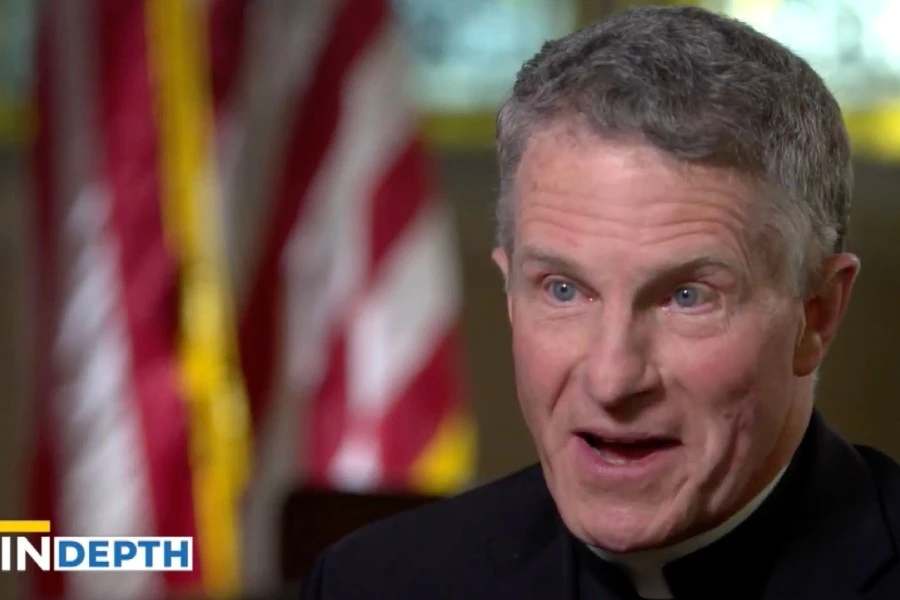
Arthur Brooks at SEEK26: ‘Your job isn’t to win arguments, it’s to win a soul’ #Catholic 
 
 Arthur Brooks gives a keynote address at SEEK 2026 on Jan. 4, 2026, in Columbus, Ohio. | Credit: Madalaine Elhabbal/CNA

Jan 6, 2026 / 12:29 pm (CNA).
New York Times bestselling author and Harvard professor Arthur Brooks encouraged attendees at SEEK 2026 to resist the temptation as missionaries to “fight fire with fire.”In his Jan. 4 keynote speech in Columbus, Ohio, Brooks said the world “is not just a cold world” but “a world that attacks you.” In this context, he said, it can be challenging not to fight back.However, he said, “your job isn’t to win arguments, it’s to win a soul.”Brooks teaches at the Harvard Kennedy School and Harvard Business School and has written multiple books on finding happiness and meaning in life, including “From Strength to Strength” and “Build the Life You Want,” which he coauthored with Oprah Winfrey. He also writes a column for The Free Press.Some 26,000 attendees have gathered through Jan. 5 in Columbus, Denver, and Fort Worth, Texas, for the SEEK 2026 conference organized by FOCUS.“The spirit of the missionary will take you into the heart of a culture war,” Brooks said. “And in that culture war, you won’t win with violence … as you can win with love.” Brooks recounted his experience giving a talk in Manchester, New Hampshire, in 2014 for an audience he said was “a very ideologically oriented group.”According to Brooks, he was the only speaker out of the 15 present who was not a presidential candidate. He said that during his address, he told his audience: “You’ve been hearing from political candidates who want your vote. And what they’re telling you is that you’re right and the people who disagree with you are stupid people and hate America, but I want you to remember something. Those people, they’re your neighbors, and they’re your family … It’s not that they hate America, it’s that they disagree with you.”When acting as a missionary, he said, the goal is to persuade people. “If you want to persuade them, you can’t do that with hatred, because nobody has ever been insulted into agreement,” Brooks said.‘Entering mission territory’Brooks concluded by telling about a retreat center that he and his wife, Ester, visit when they give marriage preparation. Inside the chapel of the retreat center, he said, there is a sign over the door to exit the chapel that reads: “You are now entering mission territory.”“So as you leave this beautiful, beautiful gathering tomorrow, the signs on the door of your hotel or this conference facility, any place that you find yourself as you leave this city, and effectively for the last time tomorrow, is that you’re entering mission territory,” Brooks said. “Let’s set the world on fire together.”Katie Tangeman, a sophomore at Northwest Missouri State University, said she came away from Brooks’ talk motivated to “just take a step back whenever I’m feeling frustrated or annoyed with somebody, or if they’re attacking me, to just see them as a beloved son or daughter of God and approach them with love instead of the contempt and hate that [Brooks] was talking about.”“Because that’s not being a good Christian,” she added.“I want to say the biggest thing I took away from Arthur Brooks’ talk tonight, his keynote speech, [is] that you can change the trajectory of how a conversation goes by battling it with kindness in a way,” said Andrew Stuart, an agricultural business major, also at Northwest Missouri State.

Arthur Brooks at SEEK26: ‘Your job isn’t to win arguments, it’s to win a soul’ #Catholic Arthur Brooks gives a keynote address at SEEK 2026 on Jan. 4, 2026, in Columbus, Ohio. | Credit: Madalaine Elhabbal/CNA Jan 6, 2026 / 12:29 pm (CNA). New York Times bestselling author and Harvard professor Arthur Brooks encouraged attendees at SEEK 2026 to resist the temptation as missionaries to “fight fire with fire.”In his Jan. 4 keynote speech in Columbus, Ohio, Brooks said the world “is not just a cold world” but “a world that attacks you.” In this context, he said, it can be challenging not to fight back.However, he said, “your job isn’t to win arguments, it’s to win a soul.”Brooks teaches at the Harvard Kennedy School and Harvard Business School and has written multiple books on finding happiness and meaning in life, including “From Strength to Strength” and “Build the Life You Want,” which he coauthored with Oprah Winfrey. He also writes a column for The Free Press.Some 26,000 attendees have gathered through Jan. 5 in Columbus, Denver, and Fort Worth, Texas, for the SEEK 2026 conference organized by FOCUS.“The spirit of the missionary will take you into the heart of a culture war,” Brooks said. “And in that culture war, you won’t win with violence … as you can win with love.” Brooks recounted his experience giving a talk in Manchester, New Hampshire, in 2014 for an audience he said was “a very ideologically oriented group.”According to Brooks, he was the only speaker out of the 15 present who was not a presidential candidate. He said that during his address, he told his audience: “You’ve been hearing from political candidates who want your vote. And what they’re telling you is that you’re right and the people who disagree with you are stupid people and hate America, but I want you to remember something. Those people, they’re your neighbors, and they’re your family … It’s not that they hate America, it’s that they disagree with you.”When acting as a missionary, he said, the goal is to persuade people. “If you want to persuade them, you can’t do that with hatred, because nobody has ever been insulted into agreement,” Brooks said.‘Entering mission territory’Brooks concluded by telling about a retreat center that he and his wife, Ester, visit when they give marriage preparation. Inside the chapel of the retreat center, he said, there is a sign over the door to exit the chapel that reads: “You are now entering mission territory.”“So as you leave this beautiful, beautiful gathering tomorrow, the signs on the door of your hotel or this conference facility, any place that you find yourself as you leave this city, and effectively for the last time tomorrow, is that you’re entering mission territory,” Brooks said. “Let’s set the world on fire together.”Katie Tangeman, a sophomore at Northwest Missouri State University, said she came away from Brooks’ talk motivated to “just take a step back whenever I’m feeling frustrated or annoyed with somebody, or if they’re attacking me, to just see them as a beloved son or daughter of God and approach them with love instead of the contempt and hate that [Brooks] was talking about.”“Because that’s not being a good Christian,” she added.“I want to say the biggest thing I took away from Arthur Brooks’ talk tonight, his keynote speech, [is] that you can change the trajectory of how a conversation goes by battling it with kindness in a way,” said Andrew Stuart, an agricultural business major, also at Northwest Missouri State.


Arthur Brooks gives a keynote address at SEEK 2026 on Jan. 4, 2026, in Columbus, Ohio. | Credit: Madalaine Elhabbal/CNA

Jan 6, 2026 / 12:29 pm (CNA).

New York Times bestselling author and Harvard professor Arthur Brooks encouraged attendees at SEEK 2026 to resist the temptation as missionaries to “fight fire with fire.”

In his Jan. 4 keynote speech in Columbus, Ohio, Brooks said the world “is not just a cold world” but “a world that attacks you.” In this context, he said, it can be challenging not to fight back.

However, he said, “your job isn’t to win arguments, it’s to win a soul.”

Brooks teaches at the Harvard Kennedy School and Harvard Business School and has written multiple books on finding happiness and meaning in life, including “From Strength to Strength” and “Build the Life You Want,” which he coauthored with Oprah Winfrey. He also writes a column for The Free Press.

Some 26,000 attendees have gathered through Jan. 5 in Columbus, Denver, and Fort Worth, Texas, for the SEEK 2026 conference organized by FOCUS.

“The spirit of the missionary will take you into the heart of a culture war,” Brooks said. “And in that culture war, you won’t win with violence … as you can win with love.” Brooks recounted his experience giving a talk in Manchester, New Hampshire, in 2014 for an audience he said was “a very ideologically oriented group.”

According to Brooks, he was the only speaker out of the 15 present who was not a presidential candidate. He said that during his address, he told his audience: “You’ve been hearing from political candidates who want your vote. And what they’re telling you is that you’re right and the people who disagree with you are stupid people and hate America, but I want you to remember something. Those people, they’re your neighbors, and they’re your family … It’s not that they hate America, it’s that they disagree with you.”

When acting as a missionary, he said, the goal is to persuade people. “If you want to persuade them, you can’t do that with hatred, because nobody has ever been insulted into agreement,” Brooks said.

‘Entering mission territory’

Brooks concluded by telling about a retreat center that he and his wife, Ester, visit when they give marriage preparation. Inside the chapel of the retreat center, he said, there is a sign over the door to exit the chapel that reads: “You are now entering mission territory.”

“So as you leave this beautiful, beautiful gathering tomorrow, the signs on the door of your hotel or this conference facility, any place that you find yourself as you leave this city, and effectively for the last time tomorrow, is that you’re entering mission territory,” Brooks said. “Let’s set the world on fire together.”

Katie Tangeman, a sophomore at Northwest Missouri State University, said she came away from Brooks’ talk motivated to “just take a step back whenever I’m feeling frustrated or annoyed with somebody, or if they’re attacking me, to just see them as a beloved son or daughter of God and approach them with love instead of the contempt and hate that [Brooks] was talking about.”

“Because that’s not being a good Christian,” she added.

“I want to say the biggest thing I took away from Arthur Brooks’ talk tonight, his keynote speech, [is] that you can change the trajectory of how a conversation goes by battling it with kindness in a way,” said Andrew Stuart, an agricultural business major, also at Northwest Missouri State.

Read More
Rest in peace: Looking back at notable Catholics who passed away in 2025 #Catholic 
 
 Credit: udra11/Shutterstock

Dec 31, 2025 / 06:00 am (CNA).
The past year has seen several notable Catholics pass away — from public officials to the vicar of Christ himself.Here’s a rundown of some prominent Catholics around the world who left us in 2025:Pope Francis (Dec. 17, 1936 — April 21, 2025)The Holy Father, Pope Francis, passed away at 7:35 a.m. on Easter Monday, April 21, at his residence in the Vatican’s Casa Santa Marta. The 88-year-old pontiff led the Catholic Church for a little more than 12 years.The first Latin American pope in history as well as the first Jesuit pope, Francis led the Church through significant canonical and catechetical reforms, urging the faithful to reach out and minister to those on the margins of society while preaching the mercy of God.Upon his death he left the legacy of what Cardinal Kevin Farrell said was a life “dedicated to the service of God and his Church,” one that urged the faithful to “live the values of the Gospel with fidelity, courage, and universal love, especially for the poorest and most marginalized.”Pope Francis was succeeded in the chair of St. Peter by Pope Leo XIV on May 8.Mabel Landry Staton (Nov. 20, 1932 — Feb. 20, 2025)Mabel Landry Staton, a trailblazing athlete who briefly set an Olympic record at the 1952 Summer Olympics, died on Feb. 20 at age 92.Representing the United States at the Olympic games in Helsinki in 1952, Staton — known as “Dolly” after a nickname from her father — set a record in the long jump category at 19 feet 3.25 inches. Though the record only lasted for several minutes before New Zealand athlete Yvette Williams bested it, Staton would go on to win medals in the 1955 Pan American Games.The Philadelphia Inquirer reported that Staton served as a Eucharistic minister at St. Thomas More Church in Cherry Hill, New Jersey, as well as on the board of the Black Catholic Ministry of the Diocese of Camden.According to the Inquirer, Staton “could still outsprint some of the local high school boys in her 70s.”Alasdair MacIntyre (Jan. 12, 1929 — May 21, 2025)Alasdair MacIntyre, a towering figure in moral philosophy and a Catholic convert credited with reviving the discipline of virtue ethics, died on May 21 at age 96.His seminal 1981 work “After Virtue” reshaped contemporary moral and political philosophy, emphasizing virtue over utilitarian or deontological frameworks.Known by many as “the most important” modern Catholic philosopher, MacIntyre’s intellectual and spiritual journey spanned atheism, Marxism, Anglicanism, and ultimately Roman Catholicism.James Hitchcock (Feb. 13, 1938 — July 14, 2025)James Hitchcock — a noted historian of the Catholic Church, popular author, and longtime college professor — died on July 14 at age 87.Hitchcock was remembered by friends and colleagues as a man of prophetic insight who defended Church teaching and helped to make the Catholic intellectual tradition accessible for his students and readers.Hitchcock taught history at Saint Louis University from the late 1960s until 2013. Some of the most popular of the dozen books he wrote include his one-volume “History of the Catholic Church: From the Apostolic Age to the Third Millennium,” published in 2012 by Ignatius Press.Frank Caprio (Nov. 24, 1936 — Aug. 20, 2025)Frank Caprio, who served as a Providence, Rhode Island, municipal court judge for nearly 40 years and came to be known as “America’s nicest judge,” passed away on Aug. 20 from pancreatic cancer.Caprio gained worldwide fame for a lenient judicial style that blended justice, extreme empathy, and mercy when his courtroom was televised in a program called “Caught in Providence.”The program began in 1999 and went viral in 2017, achieving hundreds of millions of views since then. The show was nominated for a Daytime Emmy Award in 2021 and has a YouTube channel with nearly 3 million subscribers.Caprio told EWTN News in February that he always kept in mind something his father, a hardworking Italian immigrant with a fifth-grade education, had impressed upon him: “What might seem like a small fine to some was something that many couldn’t afford.”“Your case is dismissed” became Caprio’s signature phrase.Thomas A. Nelson (March 1, 1937 — Aug. 16, 2025)Thomas A. Nelson, the founder of TAN Books — a Catholic publishing house known for its books promoting traditional Catholicism in the post-Vatican II era — died Aug. 16 at age 88.Nelson, who had previously worked as a teacher, founded TAN Books and Publishers Inc. in Rockford, Illinois, in 1967 and an accompanying printing plant in 1978. In addition to being Nelson’s initials, TAN is an acronym for the Latin phrase “Tuum Adoramus Nomen” (“Let Us Adore Thy Name”).Under Nelson’s ownership, TAN became known for publishing orthodox Catholic books, including reprints of classic Catholic works on theology, Scripture, traditional devotions, the Traditional Latin Mass, and the lives of the saints as well as new titles on these subjects by contemporary authors.Katharine, Duchess of Kent (Feb. 22, 1933 — Sept. 4, 2025)The Duchess of Kent, who became the first senior British royal to be received into the Catholic Church since the 17th century, died on Sept. 4 at the age of 92.Renowned for her natural charm, compassion for the sick and downtrodden, and commitment to serving others, the duchess was a much-loved and hardworking British royal whose popularity was enhanced by her own personal suffering and self-effacing nature.She was received into the Church in January 1994 by Cardinal Basil Hume. Up until then, no senior royal had publicly been received into the Church since 1685.Katharine spoke favorably of the Church’s moral precepts. “I do love guidelines and the Catholic Church offers you guidelines,” she once told the BBC. “I have always wanted that in my life. I like to know what’s expected of me.”Sister Jean Dolores Schmidt (Aug. 21, 1919 — Oct. 9, 2025)Sister Jean Dolores Schmidt, the beloved Catholic nun who became known across the country at the age of 98 as the chaplain of the Loyola University Chicago men’s basketball team, died Oct. 9 at the age of 106.Sister Jean was born Dolores Bertha Schmidt on Aug. 21, 1919, to Joseph and Bertha Schmidt. She was raised in a devout Catholic home in San Francisco’s Castro District.In 1937, she joined the Sisters of Charity of the Blessed Virgin Mary and took the name Sister Jean Dolores. In 1991, she joined the staff at Loyola Chicago and three years later became part of the basketball team, first as an academic adviser before transitioning to chaplain.Sister Jean led the team in prayer before each game — praying for her players to be safe, for the referees to be fair, and for God’s assistance during the game.She also admitted to praying for the opposing team, though “not as hard.”Sister Mary Michael of the Eucharistic Heart of Jesus, PCPA (Feb. 25, 1931 — Nov. 10, 2025)Sister Mary Michael of the Eucharistic Heart of Jesus, PCPA, died on Nov. 10 at age 94 after roughly three-quarters of a century of religious life.Sister Mary Michael was the last of the original five nuns who, along with EWTN foundress Mother Angelica, began the Our Lady of the Angels Monastery in Irondale, Alabama.Born Evelyn Shinosky on Feb. 25, 1931, to Joseph and Helen Shinosky, she entered Sancta Clara Monastery in Canton, Ohio, on Aug. 15, 1951, and received the habit and her new name the following May.Her passing marked the end of an era at EWTN and at the monastery — one that saw both the launch of the global Catholic network and the expansion of the religious community to include the Shrine of the Most Blessed Sacrament of Our Lady of the Angels Monastery.Paul Badde (March 10, 1948 — Nov. 10, 2025)Paul Badde, author of many well-known books such as “Benedict Up Close,” “The Face of God,” and “The True Icon,” died on Nov. 10 at the age of 77 after a long illness. Badde was also a veteran contributor to EWTN and CNA Deutsch, CNA’s German-language news partner.Born in Schaag, Germany — a small village on the Lower Rhine — he studied philosophy and sociology in Freiburg as well as art history, history, and political science in Frankfurt. Before embarking on a journalistic career, Badde worked as a teacher for several years.A founding editor of Vatican Magazine, Paul and his wife, Ellen, had five children. Sister JoAnn Persch (June 27, 1934 — Nov. 14, 2025)Longtime immigrant rights advocate Sister JoAnn Persch died on Nov. 14 at age 91.Two weeks before her death, Persch attempted to bring Communion to detainees at the Broadview, Illinois, Immigration and Customs Enforcement (ICE) facility where for decades the Sisters of Mercy ministered to migrants and refugees. Officials denied her entry.Persch and Sister Pat Murphy were founding members of the Su Casa Catholic Worker House in Chicago, serving refugees from Central America who were survivors of war, torture, and political persecution.May the souls of the faithful departed, through the mercy of God, rest in peace.

Rest in peace: Looking back at notable Catholics who passed away in 2025 #Catholic Credit: udra11/Shutterstock Dec 31, 2025 / 06:00 am (CNA). The past year has seen several notable Catholics pass away — from public officials to the vicar of Christ himself.Here’s a rundown of some prominent Catholics around the world who left us in 2025:Pope Francis (Dec. 17, 1936 — April 21, 2025)The Holy Father, Pope Francis, passed away at 7:35 a.m. on Easter Monday, April 21, at his residence in the Vatican’s Casa Santa Marta. The 88-year-old pontiff led the Catholic Church for a little more than 12 years.The first Latin American pope in history as well as the first Jesuit pope, Francis led the Church through significant canonical and catechetical reforms, urging the faithful to reach out and minister to those on the margins of society while preaching the mercy of God.Upon his death he left the legacy of what Cardinal Kevin Farrell said was a life “dedicated to the service of God and his Church,” one that urged the faithful to “live the values of the Gospel with fidelity, courage, and universal love, especially for the poorest and most marginalized.”Pope Francis was succeeded in the chair of St. Peter by Pope Leo XIV on May 8.Mabel Landry Staton (Nov. 20, 1932 — Feb. 20, 2025)Mabel Landry Staton, a trailblazing athlete who briefly set an Olympic record at the 1952 Summer Olympics, died on Feb. 20 at age 92.Representing the United States at the Olympic games in Helsinki in 1952, Staton — known as “Dolly” after a nickname from her father — set a record in the long jump category at 19 feet 3.25 inches. Though the record only lasted for several minutes before New Zealand athlete Yvette Williams bested it, Staton would go on to win medals in the 1955 Pan American Games.The Philadelphia Inquirer reported that Staton served as a Eucharistic minister at St. Thomas More Church in Cherry Hill, New Jersey, as well as on the board of the Black Catholic Ministry of the Diocese of Camden.According to the Inquirer, Staton “could still outsprint some of the local high school boys in her 70s.”Alasdair MacIntyre (Jan. 12, 1929 — May 21, 2025)Alasdair MacIntyre, a towering figure in moral philosophy and a Catholic convert credited with reviving the discipline of virtue ethics, died on May 21 at age 96.His seminal 1981 work “After Virtue” reshaped contemporary moral and political philosophy, emphasizing virtue over utilitarian or deontological frameworks.Known by many as “the most important” modern Catholic philosopher, MacIntyre’s intellectual and spiritual journey spanned atheism, Marxism, Anglicanism, and ultimately Roman Catholicism.James Hitchcock (Feb. 13, 1938 — July 14, 2025)James Hitchcock — a noted historian of the Catholic Church, popular author, and longtime college professor — died on July 14 at age 87.Hitchcock was remembered by friends and colleagues as a man of prophetic insight who defended Church teaching and helped to make the Catholic intellectual tradition accessible for his students and readers.Hitchcock taught history at Saint Louis University from the late 1960s until 2013. Some of the most popular of the dozen books he wrote include his one-volume “History of the Catholic Church: From the Apostolic Age to the Third Millennium,” published in 2012 by Ignatius Press.Frank Caprio (Nov. 24, 1936 — Aug. 20, 2025)Frank Caprio, who served as a Providence, Rhode Island, municipal court judge for nearly 40 years and came to be known as “America’s nicest judge,” passed away on Aug. 20 from pancreatic cancer.Caprio gained worldwide fame for a lenient judicial style that blended justice, extreme empathy, and mercy when his courtroom was televised in a program called “Caught in Providence.”The program began in 1999 and went viral in 2017, achieving hundreds of millions of views since then. The show was nominated for a Daytime Emmy Award in 2021 and has a YouTube channel with nearly 3 million subscribers.Caprio told EWTN News in February that he always kept in mind something his father, a hardworking Italian immigrant with a fifth-grade education, had impressed upon him: “What might seem like a small fine to some was something that many couldn’t afford.”“Your case is dismissed” became Caprio’s signature phrase.Thomas A. Nelson (March 1, 1937 — Aug. 16, 2025)Thomas A. Nelson, the founder of TAN Books — a Catholic publishing house known for its books promoting traditional Catholicism in the post-Vatican II era — died Aug. 16 at age 88.Nelson, who had previously worked as a teacher, founded TAN Books and Publishers Inc. in Rockford, Illinois, in 1967 and an accompanying printing plant in 1978. In addition to being Nelson’s initials, TAN is an acronym for the Latin phrase “Tuum Adoramus Nomen” (“Let Us Adore Thy Name”).Under Nelson’s ownership, TAN became known for publishing orthodox Catholic books, including reprints of classic Catholic works on theology, Scripture, traditional devotions, the Traditional Latin Mass, and the lives of the saints as well as new titles on these subjects by contemporary authors.Katharine, Duchess of Kent (Feb. 22, 1933 — Sept. 4, 2025)The Duchess of Kent, who became the first senior British royal to be received into the Catholic Church since the 17th century, died on Sept. 4 at the age of 92.Renowned for her natural charm, compassion for the sick and downtrodden, and commitment to serving others, the duchess was a much-loved and hardworking British royal whose popularity was enhanced by her own personal suffering and self-effacing nature.She was received into the Church in January 1994 by Cardinal Basil Hume. Up until then, no senior royal had publicly been received into the Church since 1685.Katharine spoke favorably of the Church’s moral precepts. “I do love guidelines and the Catholic Church offers you guidelines,” she once told the BBC. “I have always wanted that in my life. I like to know what’s expected of me.”Sister Jean Dolores Schmidt (Aug. 21, 1919 — Oct. 9, 2025)Sister Jean Dolores Schmidt, the beloved Catholic nun who became known across the country at the age of 98 as the chaplain of the Loyola University Chicago men’s basketball team, died Oct. 9 at the age of 106.Sister Jean was born Dolores Bertha Schmidt on Aug. 21, 1919, to Joseph and Bertha Schmidt. She was raised in a devout Catholic home in San Francisco’s Castro District.In 1937, she joined the Sisters of Charity of the Blessed Virgin Mary and took the name Sister Jean Dolores. In 1991, she joined the staff at Loyola Chicago and three years later became part of the basketball team, first as an academic adviser before transitioning to chaplain.Sister Jean led the team in prayer before each game — praying for her players to be safe, for the referees to be fair, and for God’s assistance during the game.She also admitted to praying for the opposing team, though “not as hard.”Sister Mary Michael of the Eucharistic Heart of Jesus, PCPA (Feb. 25, 1931 — Nov. 10, 2025)Sister Mary Michael of the Eucharistic Heart of Jesus, PCPA, died on Nov. 10 at age 94 after roughly three-quarters of a century of religious life.Sister Mary Michael was the last of the original five nuns who, along with EWTN foundress Mother Angelica, began the Our Lady of the Angels Monastery in Irondale, Alabama.Born Evelyn Shinosky on Feb. 25, 1931, to Joseph and Helen Shinosky, she entered Sancta Clara Monastery in Canton, Ohio, on Aug. 15, 1951, and received the habit and her new name the following May.Her passing marked the end of an era at EWTN and at the monastery — one that saw both the launch of the global Catholic network and the expansion of the religious community to include the Shrine of the Most Blessed Sacrament of Our Lady of the Angels Monastery.Paul Badde (March 10, 1948 — Nov. 10, 2025)Paul Badde, author of many well-known books such as “Benedict Up Close,” “The Face of God,” and “The True Icon,” died on Nov. 10 at the age of 77 after a long illness. Badde was also a veteran contributor to EWTN and CNA Deutsch, CNA’s German-language news partner.Born in Schaag, Germany — a small village on the Lower Rhine — he studied philosophy and sociology in Freiburg as well as art history, history, and political science in Frankfurt. Before embarking on a journalistic career, Badde worked as a teacher for several years.A founding editor of Vatican Magazine, Paul and his wife, Ellen, had five children. Sister JoAnn Persch (June 27, 1934 — Nov. 14, 2025)Longtime immigrant rights advocate Sister JoAnn Persch died on Nov. 14 at age 91.Two weeks before her death, Persch attempted to bring Communion to detainees at the Broadview, Illinois, Immigration and Customs Enforcement (ICE) facility where for decades the Sisters of Mercy ministered to migrants and refugees. Officials denied her entry.Persch and Sister Pat Murphy were founding members of the Su Casa Catholic Worker House in Chicago, serving refugees from Central America who were survivors of war, torture, and political persecution.May the souls of the faithful departed, through the mercy of God, rest in peace.


Credit: udra11/Shutterstock

Dec 31, 2025 / 06:00 am (CNA).

The past year has seen several notable Catholics pass away — from public officials to the vicar of Christ himself.

Here’s a rundown of some prominent Catholics around the world who left us in 2025:

Pope Francis (Dec. 17, 1936 — April 21, 2025)

The Holy Father, Pope Francis, passed away at 7:35 a.m. on Easter Monday, April 21, at his residence in the Vatican’s Casa Santa Marta. The 88-year-old pontiff led the Catholic Church for a little more than 12 years.

The first Latin American pope in history as well as the first Jesuit pope, Francis led the Church through significant canonical and catechetical reforms, urging the faithful to reach out and minister to those on the margins of society while preaching the mercy of God.

Upon his death he left the legacy of what Cardinal Kevin Farrell said was a life “dedicated to the service of God and his Church,” one that urged the faithful to “live the values of the Gospel with fidelity, courage, and universal love, especially for the poorest and most marginalized.”

Pope Francis was succeeded in the chair of St. Peter by Pope Leo XIV on May 8.

Mabel Landry Staton (Nov. 20, 1932 — Feb. 20, 2025)

Mabel Landry Staton, a trailblazing athlete who briefly set an Olympic record at the 1952 Summer Olympics, died on Feb. 20 at age 92.

Representing the United States at the Olympic games in Helsinki in 1952, Staton — known as “Dolly” after a nickname from her father — set a record in the long jump category at 19 feet 3.25 inches. Though the record only lasted for several minutes before New Zealand athlete Yvette Williams bested it, Staton would go on to win medals in the 1955 Pan American Games.

The Philadelphia Inquirer reported that Staton served as a Eucharistic minister at St. Thomas More Church in Cherry Hill, New Jersey, as well as on the board of the Black Catholic Ministry of the Diocese of Camden.

According to the Inquirer, Staton “could still outsprint some of the local high school boys in her 70s.”

Alasdair MacIntyre (Jan. 12, 1929 — May 21, 2025)

Alasdair MacIntyre, a towering figure in moral philosophy and a Catholic convert credited with reviving the discipline of virtue ethics, died on May 21 at age 96.

His seminal 1981 work “After Virtue” reshaped contemporary moral and political philosophy, emphasizing virtue over utilitarian or deontological frameworks.

Known by many as “the most important” modern Catholic philosopher, MacIntyre’s intellectual and spiritual journey spanned atheism, Marxism, Anglicanism, and ultimately Roman Catholicism.

James Hitchcock (Feb. 13, 1938 — July 14, 2025)

James Hitchcock — a noted historian of the Catholic Church, popular author, and longtime college professor — died on July 14 at age 87.

Hitchcock was remembered by friends and colleagues as a man of prophetic insight who defended Church teaching and helped to make the Catholic intellectual tradition accessible for his students and readers.

Hitchcock taught history at Saint Louis University from the late 1960s until 2013. Some of the most popular of the dozen books he wrote include his one-volume “History of the Catholic Church: From the Apostolic Age to the Third Millennium,” published in 2012 by Ignatius Press.

Frank Caprio (Nov. 24, 1936 — Aug. 20, 2025)

Frank Caprio, who served as a Providence, Rhode Island, municipal court judge for nearly 40 years and came to be known as “America’s nicest judge,” passed away on Aug. 20 from pancreatic cancer.

Caprio gained worldwide fame for a lenient judicial style that blended justice, extreme empathy, and mercy when his courtroom was televised in a program called “Caught in Providence.”

The program began in 1999 and went viral in 2017, achieving hundreds of millions of views since then. The show was nominated for a Daytime Emmy Award in 2021 and has a YouTube channel with nearly 3 million subscribers.

Caprio told EWTN News in February that he always kept in mind something his father, a hardworking Italian immigrant with a fifth-grade education, had impressed upon him: “What might seem like a small fine to some was something that many couldn’t afford.”

“Your case is dismissed” became Caprio’s signature phrase.

Thomas A. Nelson (March 1, 1937 — Aug. 16, 2025)

Thomas A. Nelson, the founder of TAN Books — a Catholic publishing house known for its books promoting traditional Catholicism in the post-Vatican II era — died Aug. 16 at age 88.

Nelson, who had previously worked as a teacher, founded TAN Books and Publishers Inc. in Rockford, Illinois, in 1967 and an accompanying printing plant in 1978. In addition to being Nelson’s initials, TAN is an acronym for the Latin phrase “Tuum Adoramus Nomen” (“Let Us Adore Thy Name”).

Under Nelson’s ownership, TAN became known for publishing orthodox Catholic books, including reprints of classic Catholic works on theology, Scripture, traditional devotions, the Traditional Latin Mass, and the lives of the saints as well as new titles on these subjects by contemporary authors.

Katharine, Duchess of Kent (Feb. 22, 1933 — Sept. 4, 2025)

The Duchess of Kent, who became the first senior British royal to be received into the Catholic Church since the 17th century, died on Sept. 4 at the age of 92.

Renowned for her natural charm, compassion for the sick and downtrodden, and commitment to serving others, the duchess was a much-loved and hardworking British royal whose popularity was enhanced by her own personal suffering and self-effacing nature.

She was received into the Church in January 1994 by Cardinal Basil Hume. Up until then, no senior royal had publicly been received into the Church since 1685.

Katharine spoke favorably of the Church’s moral precepts. “I do love guidelines and the Catholic Church offers you guidelines,” she once told the BBC. “I have always wanted that in my life. I like to know what’s expected of me.”

Sister Jean Dolores Schmidt (Aug. 21, 1919 — Oct. 9, 2025)

Sister Jean Dolores Schmidt, the beloved Catholic nun who became known across the country at the age of 98 as the chaplain of the Loyola University Chicago men’s basketball team, died Oct. 9 at the age of 106.

Sister Jean was born Dolores Bertha Schmidt on Aug. 21, 1919, to Joseph and Bertha Schmidt. She was raised in a devout Catholic home in San Francisco’s Castro District.

In 1937, she joined the Sisters of Charity of the Blessed Virgin Mary and took the name Sister Jean Dolores. In 1991, she joined the staff at Loyola Chicago and three years later became part of the basketball team, first as an academic adviser before transitioning to chaplain.

Sister Jean led the team in prayer before each game — praying for her players to be safe, for the referees to be fair, and for God’s assistance during the game.

She also admitted to praying for the opposing team, though “not as hard.”

Sister Mary Michael of the Eucharistic Heart of Jesus, PCPA (Feb. 25, 1931 — Nov. 10, 2025)

Sister Mary Michael of the Eucharistic Heart of Jesus, PCPA, died on Nov. 10 at age 94 after roughly three-quarters of a century of religious life.

Sister Mary Michael was the last of the original five nuns who, along with EWTN foundress Mother Angelica, began the Our Lady of the Angels Monastery in Irondale, Alabama.

Born Evelyn Shinosky on Feb. 25, 1931, to Joseph and Helen Shinosky, she entered Sancta Clara Monastery in Canton, Ohio, on Aug. 15, 1951, and received the habit and her new name the following May.

Her passing marked the end of an era at EWTN and at the monastery — one that saw both the launch of the global Catholic network and the expansion of the religious community to include the Shrine of the Most Blessed Sacrament of Our Lady of the Angels Monastery.

Paul Badde (March 10, 1948 — Nov. 10, 2025)

Paul Badde, author of many well-known books such as “Benedict Up Close,” “The Face of God,” and “The True Icon,” died on Nov. 10 at the age of 77 after a long illness. Badde was also a veteran contributor to EWTN and CNA Deutsch, CNA’s German-language news partner.

Born in Schaag, Germany — a small village on the Lower Rhine — he studied philosophy and sociology in Freiburg as well as art history, history, and political science in Frankfurt. Before embarking on a journalistic career, Badde worked as a teacher for several years.

A founding editor of Vatican Magazine, Paul and his wife, Ellen, had five children.

Sister JoAnn Persch (June 27, 1934 — Nov. 14, 2025)

Longtime immigrant rights advocate Sister JoAnn Persch died on Nov. 14 at age 91.

Two weeks before her death, Persch attempted to bring Communion to detainees at the Broadview, Illinois, Immigration and Customs Enforcement (ICE) facility where for decades the Sisters of Mercy ministered to migrants and refugees. Officials denied her entry.

Persch and Sister Pat Murphy were founding members of the Su Casa Catholic Worker House in Chicago, serving refugees from Central America who were survivors of war, torture, and political persecution.

May the souls of the faithful departed, through the mercy of God, rest in peace.

Read More
In effort to stem violence against Christians, U.S. conducts airstrikes on ISIS in Nigeria #Catholic 
 
 null / Credit: hyotographics/Shutterstock

CNA Staff, Dec 25, 2025 / 22:08 pm (CNA).
With the support of the Nigerian government, U.S. President Donald Trump announced that the U.S. military has carried out strikes against elements of ISIS in Nigeria that “have been targeting and viciously killing, primarily, innocent Christians.”“I have previously warned these terrorists that if they did not stop the slaughtering of Christians, there would be hell to pay, and tonight, there was,” Trump said of the Dec. 25 action. Nigeria’s Ministry of Foreign Affairs confirmed that “precision hits on terrorist targets” in the country’s northwestern Sokoto state were carried out in cooperation with the United States.   U.S. Secretary of War Pete Hegseth said he was “grateful for Nigerian government support and cooperation” in the counterterrorism effort. Upon announcing the action, Trump emphasized that “under my leadership, our country will not allow radical Islamic terrorism to prosper” and that further strikes will be carried out if the “slaughter of Christians” continues in Africa’s most populous country.Applauding the action, Rep. Riley Moore, R-West Virginia, a Catholic who has championed the cause of persecuted Nigerian Christians in the U.S. House of Representatives, said that “tonight’s strike in coordination with the Nigerian government is just the first step to ending the slaughter of Christians and the security crisis affecting all Nigerians.”This is a developing story.

In effort to stem violence against Christians, U.S. conducts airstrikes on ISIS in Nigeria #Catholic null / Credit: hyotographics/Shutterstock CNA Staff, Dec 25, 2025 / 22:08 pm (CNA). With the support of the Nigerian government, U.S. President Donald Trump announced that the U.S. military has carried out strikes against elements of ISIS in Nigeria that “have been targeting and viciously killing, primarily, innocent Christians.”“I have previously warned these terrorists that if they did not stop the slaughtering of Christians, there would be hell to pay, and tonight, there was,” Trump said of the Dec. 25 action. Nigeria’s Ministry of Foreign Affairs confirmed that “precision hits on terrorist targets” in the country’s northwestern Sokoto state were carried out in cooperation with the United States.   U.S. Secretary of War Pete Hegseth said he was “grateful for Nigerian government support and cooperation” in the counterterrorism effort. Upon announcing the action, Trump emphasized that “under my leadership, our country will not allow radical Islamic terrorism to prosper” and that further strikes will be carried out if the “slaughter of Christians” continues in Africa’s most populous country.Applauding the action, Rep. Riley Moore, R-West Virginia, a Catholic who has championed the cause of persecuted Nigerian Christians in the U.S. House of Representatives, said that “tonight’s strike in coordination with the Nigerian government is just the first step to ending the slaughter of Christians and the security crisis affecting all Nigerians.”This is a developing story.


null / Credit: hyotographics/Shutterstock

CNA Staff, Dec 25, 2025 / 22:08 pm (CNA).

With the support of the Nigerian government, U.S. President Donald Trump announced that the U.S. military has carried out strikes against elements of ISIS in Nigeria that “have been targeting and viciously killing, primarily, innocent Christians.”

“I have previously warned these terrorists that if they did not stop the slaughtering of Christians, there would be hell to pay, and tonight, there was,” Trump said of the Dec. 25 action. 

Nigeria’s Ministry of Foreign Affairs confirmed that “precision hits on terrorist targets” in the country’s northwestern Sokoto state were carried out in cooperation with the United States.   

U.S. Secretary of War Pete Hegseth said he was “grateful for Nigerian government support and cooperation” in the counterterrorism effort. 

Upon announcing the action, Trump emphasized that “under my leadership, our country will not allow radical Islamic terrorism to prosper” and that further strikes will be carried out if the “slaughter of Christians” continues in Africa’s most populous country.

Applauding the action, Rep. Riley Moore, R-West Virginia, a Catholic who has championed the cause of persecuted Nigerian Christians in the U.S. House of Representatives, said that “tonight’s strike in coordination with the Nigerian government is just the first step to ending the slaughter of Christians and the security crisis affecting all Nigerians.”

This is a developing story.

Read More
Vice President Vance presents a Christian vision of politics #Catholic 
 
 U.S. Vice President JD Vance. / Credit: Gage Skidmore, CC BY-SA 4.0, via Wikimedia Commons

CNA Staff, Dec 23, 2025 / 14:27 pm (CNA).
U.S. Vice President JD Vance, America’s second Catholic vice president, laid out a distinctly Christian vision for American politics in a speech this week, declaring that “the only thing that has truly served as an anchor of the United States of America is that we have been and, by the grace of God, we always will be a Christian nation.”Speaking to more than 30,000 young conservatives at Turning Point USA’s AmFest 2025 some three months after the death of its founder Charlie Kirk, Vance called for a politics rooted in a Christian faith that honors the family, protects the weak, and rejects what he described as a decades-long “war” on Christianity in public life.The Christian faith has provided a “shared moral language” since the nation’s founding, the Yale-trained lawyer argued, which led to “our understanding of natural law and rights, our sense of duty to one’s neighbor, the conviction that the strong must protect the weak, and the belief in individual conscience.”“Christianity is America’s creed,” the vice president said to loud cheers, while acknowledging that not everyone needs to be a Christian and “we must respect each individual’s pathway” to God. Even so, he said, “even our famously American idea of religious liberty is a Christian concept.” Vance described how, over the past several decades, “freedom of religion transformed into freedom from religion” as a result of the cultural assault on Christian faith from those on “the left” who have “labored to push Christianity out of national life. They’ve kicked it out of the schools, out of the workplace, out of the fundamental parts of the public square.”He continued: “And in a public square devoid of God, we got a vacuum. And the ideas that filled that void preyed on the very worst of human nature rather than uplifting it.”Vance said cultural voices opposed to Christian faith “told us not that we were children of God, but children of this or that identity group. They replaced God’s beautiful design for the family that men and women could rely on … with the idea that men could turn into women so long as they bought the right bunch of pills from Big Pharma.” The former U.S. senator and Catholic convert credited President Donald Trump for ending the cultural “war that has been waged on Christians and Christianity in the United States of America,” touting the administration’s policy priorities as the fruit of Christian motivation.“We help older Americans in retirement, including by ending taxes on Social Security, because we believe in honoring your father and mother rather than shipping all of their money off to Ukraine,” he said. “We believe in taking care of the poor, which is why we have Medicaid, so that the least among us can afford their prescriptions or to take their kids to see a doctor.”Speaking of the despair he felt after the assassination of his friend Kirk, he said: “What saved me was realizing that the story of the Christian faith … is one of immense loss followed by even bigger victory. It’s a story of very dark nights followed by very bright dawns. What saved me was remembering the inherent goodness of God and that his grace overflows when we least expect it.”Of masculinity, Vance said: “The fruits of true Christianity are good husbands, patient fathers, builders of great things, and slayers of dragons. And yes, men who are willing to die for a principle if that’s what God asked them to do.”He described how he saw the fruits of Christian men living out their faith during a recent visit to a men’s ministry that aids those who struggle with addiction and homelessness: “They feed them. They clothe them. They give them shelter and financial advice. They live out the very best part of Christ’s commission.”After eating lunch with some of the men who were “all back on their feet” after receiving help, Vance said he saw that the answer to “What saved them?” was not “racial commonality or grievance … a DEI prep course” or “a welfare check.”“It was the fact that a carpenter died 2,000 years ago and changed the world in the process.” “A true Christian politics,” he said, “cannot just be about the protection of the unborn or the promotion of the family. As important as those things absolutely are, it must be at the heart of our full understanding of government.” On immigration policy, Vance has challenged U.S. bishops, popesThe vice president has publicly disagreed with the U.S. bishops on their reaction to the Trump administration’s immigration policies, as well as with Pope Leo XIV and the late Pope Francis, who seemed to criticize Vance in a letter the pontiff penned to the U.S. bishops last winter. In defense of the administration’s approach to immigration, Vance had in a late January interview invoked an “old school … Christian concept” he later identified as the “ordo amoris,” or “rightly ordered love.” He said that according to the concept, one’s “compassion belongs first” to one’s family and fellow citizens, “and then after that” to the rest of the world.After Pope Leo on Nov. 18 asked Americans to listen to U.S. bishops’ message opposing “the indiscriminate mass deportation of people” and urging the humane treatment of migrants, Vance countered: “Border security is not just good for American citizens. It is the humanitarian thing to do for the entire world.”Vance continued: “Open borders” do not promote “[human] dignity, even of the illegal migrants themselves,” citing drug and sex trafficking.“When you empower the cartels and when you empower the human traffickers, whether in the United States or anywhere else, you’re empowering the very worst people in the world,” Vance said.In this week’s AmFest speech, he touted the administration’s successes regarding immigration: “December marks seven months straight of zero releases at the southern border. More than 2.5 million illegal immigrants have left the United States. The first time in over 50 years that we have had negative net migration.”At the end of the speech, Vance told the thousands of young people that while “only God can promise you salvation in heaven” if they have faith in God, “I promise you closed borders and safe communities. I promise you good jobs and a dignified life … together, we can fulfill the promise of the greatest nation in the history of the earth.”

Vice President Vance presents a Christian vision of politics #Catholic U.S. Vice President JD Vance. / Credit: Gage Skidmore, CC BY-SA 4.0, via Wikimedia Commons CNA Staff, Dec 23, 2025 / 14:27 pm (CNA). U.S. Vice President JD Vance, America’s second Catholic vice president, laid out a distinctly Christian vision for American politics in a speech this week, declaring that “the only thing that has truly served as an anchor of the United States of America is that we have been and, by the grace of God, we always will be a Christian nation.”Speaking to more than 30,000 young conservatives at Turning Point USA’s AmFest 2025 some three months after the death of its founder Charlie Kirk, Vance called for a politics rooted in a Christian faith that honors the family, protects the weak, and rejects what he described as a decades-long “war” on Christianity in public life.The Christian faith has provided a “shared moral language” since the nation’s founding, the Yale-trained lawyer argued, which led to “our understanding of natural law and rights, our sense of duty to one’s neighbor, the conviction that the strong must protect the weak, and the belief in individual conscience.”“Christianity is America’s creed,” the vice president said to loud cheers, while acknowledging that not everyone needs to be a Christian and “we must respect each individual’s pathway” to God. Even so, he said, “even our famously American idea of religious liberty is a Christian concept.” Vance described how, over the past several decades, “freedom of religion transformed into freedom from religion” as a result of the cultural assault on Christian faith from those on “the left” who have “labored to push Christianity out of national life. They’ve kicked it out of the schools, out of the workplace, out of the fundamental parts of the public square.”He continued: “And in a public square devoid of God, we got a vacuum. And the ideas that filled that void preyed on the very worst of human nature rather than uplifting it.”Vance said cultural voices opposed to Christian faith “told us not that we were children of God, but children of this or that identity group. They replaced God’s beautiful design for the family that men and women could rely on … with the idea that men could turn into women so long as they bought the right bunch of pills from Big Pharma.” The former U.S. senator and Catholic convert credited President Donald Trump for ending the cultural “war that has been waged on Christians and Christianity in the United States of America,” touting the administration’s policy priorities as the fruit of Christian motivation.“We help older Americans in retirement, including by ending taxes on Social Security, because we believe in honoring your father and mother rather than shipping all of their money off to Ukraine,” he said. “We believe in taking care of the poor, which is why we have Medicaid, so that the least among us can afford their prescriptions or to take their kids to see a doctor.”Speaking of the despair he felt after the assassination of his friend Kirk, he said: “What saved me was realizing that the story of the Christian faith … is one of immense loss followed by even bigger victory. It’s a story of very dark nights followed by very bright dawns. What saved me was remembering the inherent goodness of God and that his grace overflows when we least expect it.”Of masculinity, Vance said: “The fruits of true Christianity are good husbands, patient fathers, builders of great things, and slayers of dragons. And yes, men who are willing to die for a principle if that’s what God asked them to do.”He described how he saw the fruits of Christian men living out their faith during a recent visit to a men’s ministry that aids those who struggle with addiction and homelessness: “They feed them. They clothe them. They give them shelter and financial advice. They live out the very best part of Christ’s commission.”After eating lunch with some of the men who were “all back on their feet” after receiving help, Vance said he saw that the answer to “What saved them?” was not “racial commonality or grievance … a DEI prep course” or “a welfare check.”“It was the fact that a carpenter died 2,000 years ago and changed the world in the process.” “A true Christian politics,” he said, “cannot just be about the protection of the unborn or the promotion of the family. As important as those things absolutely are, it must be at the heart of our full understanding of government.” On immigration policy, Vance has challenged U.S. bishops, popesThe vice president has publicly disagreed with the U.S. bishops on their reaction to the Trump administration’s immigration policies, as well as with Pope Leo XIV and the late Pope Francis, who seemed to criticize Vance in a letter the pontiff penned to the U.S. bishops last winter. In defense of the administration’s approach to immigration, Vance had in a late January interview invoked an “old school … Christian concept” he later identified as the “ordo amoris,” or “rightly ordered love.” He said that according to the concept, one’s “compassion belongs first” to one’s family and fellow citizens, “and then after that” to the rest of the world.After Pope Leo on Nov. 18 asked Americans to listen to U.S. bishops’ message opposing “the indiscriminate mass deportation of people” and urging the humane treatment of migrants, Vance countered: “Border security is not just good for American citizens. It is the humanitarian thing to do for the entire world.”Vance continued: “Open borders” do not promote “[human] dignity, even of the illegal migrants themselves,” citing drug and sex trafficking.“When you empower the cartels and when you empower the human traffickers, whether in the United States or anywhere else, you’re empowering the very worst people in the world,” Vance said.In this week’s AmFest speech, he touted the administration’s successes regarding immigration: “December marks seven months straight of zero releases at the southern border. More than 2.5 million illegal immigrants have left the United States. The first time in over 50 years that we have had negative net migration.”At the end of the speech, Vance told the thousands of young people that while “only God can promise you salvation in heaven” if they have faith in God, “I promise you closed borders and safe communities. I promise you good jobs and a dignified life … together, we can fulfill the promise of the greatest nation in the history of the earth.”


U.S. Vice President JD Vance. / Credit: Gage Skidmore, CC BY-SA 4.0, via Wikimedia Commons

CNA Staff, Dec 23, 2025 / 14:27 pm (CNA).

U.S. Vice President JD Vance, America’s second Catholic vice president, laid out a distinctly Christian vision for American politics in a speech this week, declaring that “the only thing that has truly served as an anchor of the United States of America is that we have been and, by the grace of God, we always will be a Christian nation.”

Speaking to more than 30,000 young conservatives at Turning Point USA’s AmFest 2025 some three months after the death of its founder Charlie Kirk, Vance called for a politics rooted in a Christian faith that honors the family, protects the weak, and rejects what he described as a decades-long “war” on Christianity in public life.

The Christian faith has provided a “shared moral language” since the nation’s founding, the Yale-trained lawyer argued, which led to “our understanding of natural law and rights, our sense of duty to one’s neighbor, the conviction that the strong must protect the weak, and the belief in individual conscience.”

“Christianity is America’s creed,” the vice president said to loud cheers, while acknowledging that not everyone needs to be a Christian and “we must respect each individual’s pathway” to God. Even so, he said, “even our famously American idea of religious liberty is a Christian concept.” 

Vance described how, over the past several decades, “freedom of religion transformed into freedom from religion” as a result of the cultural assault on Christian faith from those on “the left” who have “labored to push Christianity out of national life. They’ve kicked it out of the schools, out of the workplace, out of the fundamental parts of the public square.”

He continued: “And in a public square devoid of God, we got a vacuum. And the ideas that filled that void preyed on the very worst of human nature rather than uplifting it.”

Vance said cultural voices opposed to Christian faith “told us not that we were children of God, but children of this or that identity group. They replaced God’s beautiful design for the family that men and women could rely on … with the idea that men could turn into women so long as they bought the right bunch of pills from Big Pharma.” 

The former U.S. senator and Catholic convert credited President Donald Trump for ending the cultural “war that has been waged on Christians and Christianity in the United States of America,” touting the administration’s policy priorities as the fruit of Christian motivation.

“We help older Americans in retirement, including by ending taxes on Social Security, because we believe in honoring your father and mother rather than shipping all of their money off to Ukraine,” he said. “We believe in taking care of the poor, which is why we have Medicaid, so that the least among us can afford their prescriptions or to take their kids to see a doctor.”

Speaking of the despair he felt after the assassination of his friend Kirk, he said: “What saved me was realizing that the story of the Christian faith … is one of immense loss followed by even bigger victory. It’s a story of very dark nights followed by very bright dawns. What saved me was remembering the inherent goodness of God and that his grace overflows when we least expect it.”

Of masculinity, Vance said: “The fruits of true Christianity are good husbands, patient fathers, builders of great things, and slayers of dragons. And yes, men who are willing to die for a principle if that’s what God asked them to do.”

He described how he saw the fruits of Christian men living out their faith during a recent visit to a men’s ministry that aids those who struggle with addiction and homelessness: “They feed them. They clothe them. They give them shelter and financial advice. They live out the very best part of Christ’s commission.”

After eating lunch with some of the men who were “all back on their feet” after receiving help, Vance said he saw that the answer to “What saved them?” was not “racial commonality or grievance … a DEI prep course” or “a welfare check.”

“It was the fact that a carpenter died 2,000 years ago and changed the world in the process.” 

“A true Christian politics,” he said, “cannot just be about the protection of the unborn or the promotion of the family. As important as those things absolutely are, it must be at the heart of our full understanding of government.” 

On immigration policy, Vance has challenged U.S. bishops, popes

The vice president has publicly disagreed with the U.S. bishops on their reaction to the Trump administration’s immigration policies, as well as with Pope Leo XIV and the late Pope Francis, who seemed to criticize Vance in a letter the pontiff penned to the U.S. bishops last winter. 

In defense of the administration’s approach to immigration, Vance had in a late January interview invoked an “old school … Christian concept” he later identified as the “ordo amoris,” or “rightly ordered love.” 

He said that according to the concept, one’s “compassion belongs first” to one’s family and fellow citizens, “and then after that” to the rest of the world.

After Pope Leo on Nov. 18 asked Americans to listen to U.S. bishops’ message opposing “the indiscriminate mass deportation of people” and urging the humane treatment of migrants, Vance countered: “Border security is not just good for American citizens. It is the humanitarian thing to do for the entire world.”

Vance continued: “Open borders” do not promote “[human] dignity, even of the illegal migrants themselves,” citing drug and sex trafficking.

“When you empower the cartels and when you empower the human traffickers, whether in the United States or anywhere else, you’re empowering the very worst people in the world,” Vance said.

In this week’s AmFest speech, he touted the administration’s successes regarding immigration: “December marks seven months straight of zero releases at the southern border. More than 2.5 million illegal immigrants have left the United States. The first time in over 50 years that we have had negative net migration.”

At the end of the speech, Vance told the thousands of young people that while “only God can promise you salvation in heaven” if they have faith in God, “I promise you closed borders and safe communities. I promise you good jobs and a dignified life … together, we can fulfill the promise of the greatest nation in the history of the earth.”

Read More
Trump honors Mary’s ‘freedom from original sin’ in Immaculate Conception message #Catholic 
 
 U.S. President Donald Trump delivers remarks on Dec. 6, 2025, in Washington, D.C. / Credit: Aaron Schwartz/Getty Images

Washington, D.C. Newsroom, Dec 8, 2025 / 18:09 pm (CNA).
President Donald Trump honored the feast of the Immaculate Conception on Dec. 8, which appears to be the first time an American president formally recognized the Catholic holy day.The presidential statement recognized the role Mary played in the salvation of humanity and the importance she has in American history. The statement does, however, contain one theological error about the Incarnation. It says God became man when Christ was born, although Catholic doctrine recognizes God becoming man at the Incarnation: when Mary conceived him.“Today, I recognize every American celebrating Dec. 8 as a holy day honoring the faith, humility, and love of Mary, mother of Jesus and one of the greatest figures in the Bible,” the statement said. Trump, who is not Catholic and describes himself as a “non-denominational Christian,” has cultivated strong bonds with a broad range of Christians and frequently referenced religious holidays and symbols in ways that resonate with supporters.CNA could not find similar proclamations on the Immaculate Conception from other presidents, including none from the only two Catholic presidents: John F. Kennedy and Joe Biden. Other presidents have spoken about Mary and the Immaculate Conception, sometimes in messages relating to Christmas or other topics, but not in a formal recognition of this feast.“On the feast of the Immaculate Conception, Catholics celebrate what they believe to be Mary’s freedom from original sin as the mother of God,” the statement read.The feast day celebrates the miracle in which Mary was conceived without the stain of original sin. Every person — with the exception of Mary and Jesus Christ — receives the hereditary stain of original sin, which was brought onto humanity through the first sin of Adam and Eve when they disobeyed God by eating fruit from the tree of knowledge of good and evil.Mary’s importance to humanity and the United StatesThe presidential statement said Mary’s agreement at the Annunciation to conceive and bear the child Christ was “one of the most profound and consequential acts of history,” and Mary “heroically accepted God’s will with trust and humility.” It cites Luke 1:38: “Behold, I am the handmaid of the Lord. May it be done to me according to your word.” “Mary’s decision forever altered the course of humanity,” the statement read, adding that Christ “would go on to offer his life on the Cross for the redemption of sins and the salvation of the world.”President Trump’s statement also describes the annunciation by the archangel Gabriel, who calls the Blessed Mother “favored one” and tells her “you will conceive in your womb and bear a son, and you shall name him Jesus.”Later in the document, the presidential message says “we remember the sacred words that have brought aid, comfort, and support to generations of American believers in times of need,” and includes the text of the Hail Mary.Trump’s statement also acknowledges the “distinct role” Mary has played “in our great American story.”The president’s statement also specifically references Bishop John Carroll’s consecration of the United States to the Blessed Mother. Carroll was the only Catholic to sign the Declaration of Independence. In addition, the statement references the annual Mass of Thanksgiving in New Orleans on Jan. 8, in which Catholics celebrate Mary’s perceived assistance to U.S. troops under the command of General Andrew Jackson in winning the Battle of New Orleans.The message notes that “American legends” including St. Elizabeth Ann Seton, St. Frances Xavier Cabrini, and Venerable Fulton Sheen “held a deep devotion to Mary” and that many American churches, hospitals, universities, and schools bear her name. It adds that many Americans will also celebrate Our Lady of Guadalupe on Dec. 12.“As we approach 250 years of glorious American independence, we acknowledge and give thanks, with total gratitude, for Mary’s role in advancing peace, hope, and love in America and beyond our shores,” the presidential message reads.The presidential message also recognizes Pope Benedict XV dedicating a statue of Mary, Queen of Peace, to encourage Christians “to look to her example of peace by praying for a stop to the horrific slaughter” occurring in World War I, which then ended just a few months later.“Today, we look to Mary once again for inspiration and encouragement as we pray for an end to war and for a new and lasting era of peace, prosperity, and harmony in Europe and throughout the world,” Trump’s statement added.Catholics react to Trump’s messageChad Pecknold, a political science professor at The Catholic University of America, said he welcomed the president’s recognition of the feast day.“The more America publicly honors Christian feast days such as Christmas, Good Friday, and Easter, and the more we remember our greatest saints, as well as our national heroes, the better oriented our nation will be to God,” he said. “This is the spiritual key to raising up the Res Americana for the next 250 years.”Susan Hanssen, a history professor at the University of Dallas (a Catholic institution), called the presidential message “a jaw-droppingly historic event.” For a president to celebrate Mary as “full of grace” and celebrate “the centrality of the Incarnation,” she said “goes beyond anything that Americans have ever heard in presidential public speeches.”“This pronouncement, along with the first American pope in world history, marks a watershed moment in American cultural history,” Hanssen said. Caleb Henry, a political science professor at Franciscan University, told CNA Trump’s message appears to be an extension of the president’s America Prays campaign, which asks Americans to pray for the country ahead of the 250th anniversary of the Declaration of Independence next year.Henry said the initiative seeks to “reconnect America’s people of faith with … the signing of the Declaration of Independence.” He said the Immaculate Conception statement appears to be “a message to America’s Catholic faithful,” that the country’s history “while complicated, is rooted in these truths of natural law, laws of nature, and of nature’s God.”“We have a Marian tradition here in our country as well,” he said. The statement comes as the nation’s Catholic bishops have welcomed some of Trump’s policies, such as regarding gender ideology. Bishops also have expressed dismay about indiscriminate immigration enforcement and a plan to expand in vitro fertilization (IVF).The United States Conference of Catholic Bishops issued a unified special pastoral message against “indiscriminate mass deportations” on Nov. 12.Henry said a message like the one issued on the Immaculate Conception is “a typical Trump move” by “ignoring all existing hierarchies and going straight to the people.”Theological error in the messageThe statement contains a theological error. After discussing the Annunciation, the message states “nine months later, God became man when Mary gave birth to a son, Jesus.”Christ became man at the moment of the Incarnation, when Mary conceived him, not when he was born. Father Aquinas Guilbeau, OP, told CNA that although early councils clarified this teaching, the misunderstanding “endures today.” He said: “Even among Christians, sadly. It remains a favorite of poets.” He noted that even in “Silent Night,” the verse that says “Jesus, Lord, at thy birth” falls into this error because: “Jesus is Lord before his birth. He is Lord at his conception.”“Wherever it appears, the error may be pious and well-intentioned but it remains theologically inaccurate,” Guilbeau said.

Trump honors Mary’s ‘freedom from original sin’ in Immaculate Conception message #Catholic U.S. President Donald Trump delivers remarks on Dec. 6, 2025, in Washington, D.C. / Credit: Aaron Schwartz/Getty Images Washington, D.C. Newsroom, Dec 8, 2025 / 18:09 pm (CNA). President Donald Trump honored the feast of the Immaculate Conception on Dec. 8, which appears to be the first time an American president formally recognized the Catholic holy day.The presidential statement recognized the role Mary played in the salvation of humanity and the importance she has in American history. The statement does, however, contain one theological error about the Incarnation. It says God became man when Christ was born, although Catholic doctrine recognizes God becoming man at the Incarnation: when Mary conceived him.“Today, I recognize every American celebrating Dec. 8 as a holy day honoring the faith, humility, and love of Mary, mother of Jesus and one of the greatest figures in the Bible,” the statement said. Trump, who is not Catholic and describes himself as a “non-denominational Christian,” has cultivated strong bonds with a broad range of Christians and frequently referenced religious holidays and symbols in ways that resonate with supporters.CNA could not find similar proclamations on the Immaculate Conception from other presidents, including none from the only two Catholic presidents: John F. Kennedy and Joe Biden. Other presidents have spoken about Mary and the Immaculate Conception, sometimes in messages relating to Christmas or other topics, but not in a formal recognition of this feast.“On the feast of the Immaculate Conception, Catholics celebrate what they believe to be Mary’s freedom from original sin as the mother of God,” the statement read.The feast day celebrates the miracle in which Mary was conceived without the stain of original sin. Every person — with the exception of Mary and Jesus Christ — receives the hereditary stain of original sin, which was brought onto humanity through the first sin of Adam and Eve when they disobeyed God by eating fruit from the tree of knowledge of good and evil.Mary’s importance to humanity and the United StatesThe presidential statement said Mary’s agreement at the Annunciation to conceive and bear the child Christ was “one of the most profound and consequential acts of history,” and Mary “heroically accepted God’s will with trust and humility.” It cites Luke 1:38: “Behold, I am the handmaid of the Lord. May it be done to me according to your word.” “Mary’s decision forever altered the course of humanity,” the statement read, adding that Christ “would go on to offer his life on the Cross for the redemption of sins and the salvation of the world.”President Trump’s statement also describes the annunciation by the archangel Gabriel, who calls the Blessed Mother “favored one” and tells her “you will conceive in your womb and bear a son, and you shall name him Jesus.”Later in the document, the presidential message says “we remember the sacred words that have brought aid, comfort, and support to generations of American believers in times of need,” and includes the text of the Hail Mary.Trump’s statement also acknowledges the “distinct role” Mary has played “in our great American story.”The president’s statement also specifically references Bishop John Carroll’s consecration of the United States to the Blessed Mother. Carroll was the only Catholic to sign the Declaration of Independence. In addition, the statement references the annual Mass of Thanksgiving in New Orleans on Jan. 8, in which Catholics celebrate Mary’s perceived assistance to U.S. troops under the command of General Andrew Jackson in winning the Battle of New Orleans.The message notes that “American legends” including St. Elizabeth Ann Seton, St. Frances Xavier Cabrini, and Venerable Fulton Sheen “held a deep devotion to Mary” and that many American churches, hospitals, universities, and schools bear her name. It adds that many Americans will also celebrate Our Lady of Guadalupe on Dec. 12.“As we approach 250 years of glorious American independence, we acknowledge and give thanks, with total gratitude, for Mary’s role in advancing peace, hope, and love in America and beyond our shores,” the presidential message reads.The presidential message also recognizes Pope Benedict XV dedicating a statue of Mary, Queen of Peace, to encourage Christians “to look to her example of peace by praying for a stop to the horrific slaughter” occurring in World War I, which then ended just a few months later.“Today, we look to Mary once again for inspiration and encouragement as we pray for an end to war and for a new and lasting era of peace, prosperity, and harmony in Europe and throughout the world,” Trump’s statement added.Catholics react to Trump’s messageChad Pecknold, a political science professor at The Catholic University of America, said he welcomed the president’s recognition of the feast day.“The more America publicly honors Christian feast days such as Christmas, Good Friday, and Easter, and the more we remember our greatest saints, as well as our national heroes, the better oriented our nation will be to God,” he said. “This is the spiritual key to raising up the Res Americana for the next 250 years.”Susan Hanssen, a history professor at the University of Dallas (a Catholic institution), called the presidential message “a jaw-droppingly historic event.” For a president to celebrate Mary as “full of grace” and celebrate “the centrality of the Incarnation,” she said “goes beyond anything that Americans have ever heard in presidential public speeches.”“This pronouncement, along with the first American pope in world history, marks a watershed moment in American cultural history,” Hanssen said. Caleb Henry, a political science professor at Franciscan University, told CNA Trump’s message appears to be an extension of the president’s America Prays campaign, which asks Americans to pray for the country ahead of the 250th anniversary of the Declaration of Independence next year.Henry said the initiative seeks to “reconnect America’s people of faith with … the signing of the Declaration of Independence.” He said the Immaculate Conception statement appears to be “a message to America’s Catholic faithful,” that the country’s history “while complicated, is rooted in these truths of natural law, laws of nature, and of nature’s God.”“We have a Marian tradition here in our country as well,” he said. The statement comes as the nation’s Catholic bishops have welcomed some of Trump’s policies, such as regarding gender ideology. Bishops also have expressed dismay about indiscriminate immigration enforcement and a plan to expand in vitro fertilization (IVF).The United States Conference of Catholic Bishops issued a unified special pastoral message against “indiscriminate mass deportations” on Nov. 12.Henry said a message like the one issued on the Immaculate Conception is “a typical Trump move” by “ignoring all existing hierarchies and going straight to the people.”Theological error in the messageThe statement contains a theological error. After discussing the Annunciation, the message states “nine months later, God became man when Mary gave birth to a son, Jesus.”Christ became man at the moment of the Incarnation, when Mary conceived him, not when he was born. Father Aquinas Guilbeau, OP, told CNA that although early councils clarified this teaching, the misunderstanding “endures today.” He said: “Even among Christians, sadly. It remains a favorite of poets.” He noted that even in “Silent Night,” the verse that says “Jesus, Lord, at thy birth” falls into this error because: “Jesus is Lord before his birth. He is Lord at his conception.”“Wherever it appears, the error may be pious and well-intentioned but it remains theologically inaccurate,” Guilbeau said.


U.S. President Donald Trump delivers remarks on Dec. 6, 2025, in Washington, D.C. / Credit: Aaron Schwartz/Getty Images

Washington, D.C. Newsroom, Dec 8, 2025 / 18:09 pm (CNA).

President Donald Trump honored the feast of the Immaculate Conception on Dec. 8, which appears to be the first time an American president formally recognized the Catholic holy day.

The presidential statement recognized the role Mary played in the salvation of humanity and the importance she has in American history. The statement does, however, contain one theological error about the Incarnation. It says God became man when Christ was born, although Catholic doctrine recognizes God becoming man at the Incarnation: when Mary conceived him.

“Today, I recognize every American celebrating Dec. 8 as a holy day honoring the faith, humility, and love of Mary, mother of Jesus and one of the greatest figures in the Bible,” the statement said. Trump, who is not Catholic and describes himself as a “non-denominational Christian,” has cultivated strong bonds with a broad range of Christians and frequently referenced religious holidays and symbols in ways that resonate with supporters.

CNA could not find similar proclamations on the Immaculate Conception from other presidents, including none from the only two Catholic presidents: John F. Kennedy and Joe Biden. Other presidents have spoken about Mary and the Immaculate Conception, sometimes in messages relating to Christmas or other topics, but not in a formal recognition of this feast.

“On the feast of the Immaculate Conception, Catholics celebrate what they believe to be Mary’s freedom from original sin as the mother of God,” the statement read.

The feast day celebrates the miracle in which Mary was conceived without the stain of original sin. Every person — with the exception of Mary and Jesus Christ — receives the hereditary stain of original sin, which was brought onto humanity through the first sin of Adam and Eve when they disobeyed God by eating fruit from the tree of knowledge of good and evil.

Mary’s importance to humanity and the United States

The presidential statement said Mary’s agreement at the Annunciation to conceive and bear the child Christ was “one of the most profound and consequential acts of history,” and Mary “heroically accepted God’s will with trust and humility.” 

It cites Luke 1:38: “Behold, I am the handmaid of the Lord. May it be done to me according to your word.” 

“Mary’s decision forever altered the course of humanity,” the statement read, adding that Christ “would go on to offer his life on the Cross for the redemption of sins and the salvation of the world.”

President Trump’s statement also describes the annunciation by the archangel Gabriel, who calls the Blessed Mother “favored one” and tells her “you will conceive in your womb and bear a son, and you shall name him Jesus.”

Later in the document, the presidential message says “we remember the sacred words that have brought aid, comfort, and support to generations of American believers in times of need,” and includes the text of the Hail Mary.

Trump’s statement also acknowledges the “distinct role” Mary has played “in our great American story.”

The president’s statement also specifically references Bishop John Carroll’s consecration of the United States to the Blessed Mother. Carroll was the only Catholic to sign the Declaration of Independence. In addition, the statement references the annual Mass of Thanksgiving in New Orleans on Jan. 8, in which Catholics celebrate Mary’s perceived assistance to U.S. troops under the command of General Andrew Jackson in winning the Battle of New Orleans.

The message notes that “American legends” including St. Elizabeth Ann Seton, St. Frances Xavier Cabrini, and Venerable Fulton Sheen “held a deep devotion to Mary” and that many American churches, hospitals, universities, and schools bear her name. It adds that many Americans will also celebrate Our Lady of Guadalupe on Dec. 12.

“As we approach 250 years of glorious American independence, we acknowledge and give thanks, with total gratitude, for Mary’s role in advancing peace, hope, and love in America and beyond our shores,” the presidential message reads.

The presidential message also recognizes Pope Benedict XV dedicating a statue of Mary, Queen of Peace, to encourage Christians “to look to her example of peace by praying for a stop to the horrific slaughter” occurring in World War I, which then ended just a few months later.

“Today, we look to Mary once again for inspiration and encouragement as we pray for an end to war and for a new and lasting era of peace, prosperity, and harmony in Europe and throughout the world,” Trump’s statement added.

Catholics react to Trump’s message

Chad Pecknold, a political science professor at The Catholic University of America, said he welcomed the president’s recognition of the feast day.

“The more America publicly honors Christian feast days such as Christmas, Good Friday, and Easter, and the more we remember our greatest saints, as well as our national heroes, the better oriented our nation will be to God,” he said. “This is the spiritual key to raising up the Res Americana for the next 250 years.”

Susan Hanssen, a history professor at the University of Dallas (a Catholic institution), called the presidential message “a jaw-droppingly historic event.” For a president to celebrate Mary as “full of grace” and celebrate “the centrality of the Incarnation,” she said “goes beyond anything that Americans have ever heard in presidential public speeches.”

“This pronouncement, along with the first American pope in world history, marks a watershed moment in American cultural history,” Hanssen said. 

Caleb Henry, a political science professor at Franciscan University, told CNA Trump’s message appears to be an extension of the president’s America Prays campaign, which asks Americans to pray for the country ahead of the 250th anniversary of the Declaration of Independence next year.

Henry said the initiative seeks to “reconnect America’s people of faith with … the signing of the Declaration of Independence.” He said the Immaculate Conception statement appears to be “a message to America’s Catholic faithful,” that the country’s history “while complicated, is rooted in these truths of natural law, laws of nature, and of nature’s God.”

“We have a Marian tradition here in our country as well,” he said. 

The statement comes as the nation’s Catholic bishops have welcomed some of Trump’s policies, such as regarding gender ideology. Bishops also have expressed dismay about indiscriminate immigration enforcement and a plan to expand in vitro fertilization (IVF).

The United States Conference of Catholic Bishops issued a unified special pastoral message against “indiscriminate mass deportations” on Nov. 12.

Henry said a message like the one issued on the Immaculate Conception is “a typical Trump move” by “ignoring all existing hierarchies and going straight to the people.”

Theological error in the message

The statement contains a theological error. After discussing the Annunciation, the message states “nine months later, God became man when Mary gave birth to a son, Jesus.”

Christ became man at the moment of the Incarnation, when Mary conceived him, not when he was born. 

Father Aquinas Guilbeau, OP, told CNA that although early councils clarified this teaching, the misunderstanding “endures today.” He said: “Even among Christians, sadly. It remains a favorite of poets.” 

He noted that even in “Silent Night,” the verse that says “Jesus, Lord, at thy birth” falls into this error because: “Jesus is Lord before his birth. He is Lord at his conception.”

“Wherever it appears, the error may be pious and well-intentioned but it remains theologically inaccurate,” Guilbeau said.

Read More
Pope Leo sends surprise video message to Australian Catholic youth festival #Catholic 
 
 Thousands of young pilgrims gather for the closing Mass of the Australian Catholic Youth Festival at the Melbourne Convention and Exhibition Centre on Tuesday, Dec. 2, 2025. / Credit: Theresa Wimmer

Washington, D.C. Newsroom, Dec 5, 2025 / 08:00 am (CNA).
Here is a roundup of Catholic world news from the past week that you might have missed:Pope Leo sends surprise video message to Australian Catholic youth festival Pope Leo XIV sent a surprise video message to thousands of young Catholics at the Australian Catholic Youth Festival on Nov. 30, urging them to turn to God, “especially through prayer and the sacraments. That’s where you’ll hear your Heavenly Father’s voice most clearly.”The papal message — played during the opening plenary at the Melbourne Convention and Exhibition Centre — drew cheers from young Catholics who gathered from around the country under the 2025 Jubilee theme “Pilgrims of Hope.” The three-day event, held Nov. 30–Dec. 2, opened with a five-kilometer (three-mile) pilgrimage walk from St. Patrick’s Cathedral. Participants accompanied the World Youth Day Cross and Icon through the city streets to the convention center.“Our lives find their ultimate purpose in becoming who God made us to be, by living out his will,” Leo said. He reminded pilgrims of the words of Pope Benedict XVI: “You are not the result of a random process. Each of you is willed, each of you is loved, each of you is necessary.”Holy See Permanent Observer Mission to U.N. calls for end of Ukraine war ‘right now’The Holy See’s Permanent Observer Mission to the U.N. called for the end of Russia’s military offensive in Ukraine immediately during a Dec. 3 emergency session. Monsignor Robert Murphy, chargé d’affaires, said the war in Ukraine must halt “not at some undefined moment in the future, but right now.” Murphy emphasized the need for both sides of the conflict to bring about the return of children to their families and urged all nations represented in the assembly interested in ending the war “to reject passivity and provide tangible support for any initiative that could lead to genuine negotiations and lasting peace.”Bishops praise ‘historic decision’ to end child marriage in west Pakistan provinceThe western province of Balochistan in Pakistan has passed a law criminalizing child marriages, eliciting praise from Catholic bishops in the region. The 2025 Law on the Restriction of Child Marriage in Balochistan penalizes adults who facilitate arranged marriages for minors under the age of 18, repealing a previous law that set the minimum age for girls to be married at 14 years old. Bishop Samson Shukardin, OFM, of Hyderabad and president of the Pakistan Bishops’ Conference, called the new law “a historic decision to protect children and an important step toward strengthening the rights of minors,” according to a Fides report on Monday. The bishop further expressed gratitude to lawmakers for passing the law, noting that “the Church promotes the fundamental rights of every human being, especially those of girls,” adding: “Early marriage deprives them of their education, their health, and their self-confidence.” Sri Lankan cardinal urges Catholics to join emergency response amid natural disasterCardinal Malcolm Ranjith is urging Catholics to join emergency response efforts across Sri Lanka as the country recovers from Cyclone Ditwah, the worst natural disaster in its history.“We request our priests, religious, brothers, sisters, and lay leaders to work together with all the societies and organizations to provide relief to the people who are helpless at this moment,” Ranjith said in a statement, according to UCA News. Bishop Jude N. Silva of the Diocese of Badulla, one of the “worst affected,” according to UCA, instructed all priests to cancel Masses and programs “until the situation improved.” Caritas Sri Lanka has led the emergency response, according to AsiaNews.  European bishops talk Catholic-Muslim relations at three-day meeting on Nostra AetateThe Council of the Bishops’ Conferences of Europe discussed Catholic-Muslim dialogue at a three-day conference titled “Nostra Aetate, 60 Years On: Perspectives on Catholic-Muslim Dialogue.”The meeting took place in Augsburg, Germany, and included “over 30 participants, representatives of European Bishops’ Conferences, theologians, and witnesses from 20 European countries,” according to a press release from the council.In his keynote address, Cardinal Michael Louis Fitzgerald reflected on ways Nostra Aetate may frame encounters where interreligious dialogue takes place, the release said, noting that “the three days of the meeting were characterized by a wide-ranging exchange in the plenary conversations as well as beautiful liturgies celebrated in the churches of St. Moritz, St. Peter in Perlach, and the Basilica of Sts. Ulrich and Afra.” Capuchin Friars in Sumatra welcome those displaced by severe floodingCapuchin Friars in the Sibolga province of Indonesia welcomed those displaced by flooding in the country due to Cyclone Senyar, according to Fides. “The worst is over, but the emergency continues. Floods and landslides have swept away entire villages. Many people are homeless. Rescue teams are now trying to reach the displaced: for some it is possible, for others it is not, because the areas remain isolated,” said Provincial Superior of the Capuchin Friars in Sibolga Friar Yoseph Norbert Sinaga. The cyclone has affected 1.5 million people and displaced more than 570,000, according to the report.Archdiocese of Raipur, India, completes historic Eucharistic pilgrimage The Archdiocese of Raipur in India has concluded a historic Eucharistic yatra, or pilgrimage, covering 1,655 miles across 72 parishes. The Eucharistic yatra lasted 14 days, with pilgrims traveling through 19 civil districts of the Central Indian state of Chhattisgarh, stopping in each parish for an hour of Eucharistic adoration, according to a Catholic Connect report. Participants in the yatra used a vehicle that was converted into a mobile chapel donated by the Mid India Province of the SCSC Sisters.

Pope Leo sends surprise video message to Australian Catholic youth festival #Catholic Thousands of young pilgrims gather for the closing Mass of the Australian Catholic Youth Festival at the Melbourne Convention and Exhibition Centre on Tuesday, Dec. 2, 2025. / Credit: Theresa Wimmer Washington, D.C. Newsroom, Dec 5, 2025 / 08:00 am (CNA). Here is a roundup of Catholic world news from the past week that you might have missed:Pope Leo sends surprise video message to Australian Catholic youth festival Pope Leo XIV sent a surprise video message to thousands of young Catholics at the Australian Catholic Youth Festival on Nov. 30, urging them to turn to God, “especially through prayer and the sacraments. That’s where you’ll hear your Heavenly Father’s voice most clearly.”The papal message — played during the opening plenary at the Melbourne Convention and Exhibition Centre — drew cheers from young Catholics who gathered from around the country under the 2025 Jubilee theme “Pilgrims of Hope.” The three-day event, held Nov. 30–Dec. 2, opened with a five-kilometer (three-mile) pilgrimage walk from St. Patrick’s Cathedral. Participants accompanied the World Youth Day Cross and Icon through the city streets to the convention center.“Our lives find their ultimate purpose in becoming who God made us to be, by living out his will,” Leo said. He reminded pilgrims of the words of Pope Benedict XVI: “You are not the result of a random process. Each of you is willed, each of you is loved, each of you is necessary.”Holy See Permanent Observer Mission to U.N. calls for end of Ukraine war ‘right now’The Holy See’s Permanent Observer Mission to the U.N. called for the end of Russia’s military offensive in Ukraine immediately during a Dec. 3 emergency session. Monsignor Robert Murphy, chargé d’affaires, said the war in Ukraine must halt “not at some undefined moment in the future, but right now.” Murphy emphasized the need for both sides of the conflict to bring about the return of children to their families and urged all nations represented in the assembly interested in ending the war “to reject passivity and provide tangible support for any initiative that could lead to genuine negotiations and lasting peace.”Bishops praise ‘historic decision’ to end child marriage in west Pakistan provinceThe western province of Balochistan in Pakistan has passed a law criminalizing child marriages, eliciting praise from Catholic bishops in the region. The 2025 Law on the Restriction of Child Marriage in Balochistan penalizes adults who facilitate arranged marriages for minors under the age of 18, repealing a previous law that set the minimum age for girls to be married at 14 years old. Bishop Samson Shukardin, OFM, of Hyderabad and president of the Pakistan Bishops’ Conference, called the new law “a historic decision to protect children and an important step toward strengthening the rights of minors,” according to a Fides report on Monday. The bishop further expressed gratitude to lawmakers for passing the law, noting that “the Church promotes the fundamental rights of every human being, especially those of girls,” adding: “Early marriage deprives them of their education, their health, and their self-confidence.” Sri Lankan cardinal urges Catholics to join emergency response amid natural disasterCardinal Malcolm Ranjith is urging Catholics to join emergency response efforts across Sri Lanka as the country recovers from Cyclone Ditwah, the worst natural disaster in its history.“We request our priests, religious, brothers, sisters, and lay leaders to work together with all the societies and organizations to provide relief to the people who are helpless at this moment,” Ranjith said in a statement, according to UCA News. Bishop Jude N. Silva of the Diocese of Badulla, one of the “worst affected,” according to UCA, instructed all priests to cancel Masses and programs “until the situation improved.” Caritas Sri Lanka has led the emergency response, according to AsiaNews.  European bishops talk Catholic-Muslim relations at three-day meeting on Nostra AetateThe Council of the Bishops’ Conferences of Europe discussed Catholic-Muslim dialogue at a three-day conference titled “Nostra Aetate, 60 Years On: Perspectives on Catholic-Muslim Dialogue.”The meeting took place in Augsburg, Germany, and included “over 30 participants, representatives of European Bishops’ Conferences, theologians, and witnesses from 20 European countries,” according to a press release from the council.In his keynote address, Cardinal Michael Louis Fitzgerald reflected on ways Nostra Aetate may frame encounters where interreligious dialogue takes place, the release said, noting that “the three days of the meeting were characterized by a wide-ranging exchange in the plenary conversations as well as beautiful liturgies celebrated in the churches of St. Moritz, St. Peter in Perlach, and the Basilica of Sts. Ulrich and Afra.” Capuchin Friars in Sumatra welcome those displaced by severe floodingCapuchin Friars in the Sibolga province of Indonesia welcomed those displaced by flooding in the country due to Cyclone Senyar, according to Fides. “The worst is over, but the emergency continues. Floods and landslides have swept away entire villages. Many people are homeless. Rescue teams are now trying to reach the displaced: for some it is possible, for others it is not, because the areas remain isolated,” said Provincial Superior of the Capuchin Friars in Sibolga Friar Yoseph Norbert Sinaga. The cyclone has affected 1.5 million people and displaced more than 570,000, according to the report.Archdiocese of Raipur, India, completes historic Eucharistic pilgrimage The Archdiocese of Raipur in India has concluded a historic Eucharistic yatra, or pilgrimage, covering 1,655 miles across 72 parishes. The Eucharistic yatra lasted 14 days, with pilgrims traveling through 19 civil districts of the Central Indian state of Chhattisgarh, stopping in each parish for an hour of Eucharistic adoration, according to a Catholic Connect report. Participants in the yatra used a vehicle that was converted into a mobile chapel donated by the Mid India Province of the SCSC Sisters.


Thousands of young pilgrims gather for the closing Mass of the Australian Catholic Youth Festival at the Melbourne Convention and Exhibition Centre on Tuesday, Dec. 2, 2025. / Credit: Theresa Wimmer

Washington, D.C. Newsroom, Dec 5, 2025 / 08:00 am (CNA).

Here is a roundup of Catholic world news from the past week that you might have missed:

Pope Leo sends surprise video message to Australian Catholic youth festival 

Pope Leo XIV sent a surprise video message to thousands of young Catholics at the Australian Catholic Youth Festival on Nov. 30, urging them to turn to God, “especially through prayer and the sacraments. That’s where you’ll hear your Heavenly Father’s voice most clearly.”

The papal message — played during the opening plenary at the Melbourne Convention and Exhibition Centre — drew cheers from young Catholics who gathered from around the country under the 2025 Jubilee theme “Pilgrims of Hope.” The three-day event, held Nov. 30–Dec. 2, opened with a five-kilometer (three-mile) pilgrimage walk from St. Patrick’s Cathedral. Participants accompanied the World Youth Day Cross and Icon through the city streets to the convention center.

“Our lives find their ultimate purpose in becoming who God made us to be, by living out his will,” Leo said. He reminded pilgrims of the words of Pope Benedict XVI: “You are not the result of a random process. Each of you is willed, each of you is loved, each of you is necessary.”

Holy See Permanent Observer Mission to U.N. calls for end of Ukraine war ‘right now’

The Holy See’s Permanent Observer Mission to the U.N. called for the end of Russia’s military offensive in Ukraine immediately during a Dec. 3 emergency session. 

Monsignor Robert Murphy, chargé d’affaires, said the war in Ukraine must halt “not at some undefined moment in the future, but right now.” Murphy emphasized the need for both sides of the conflict to bring about the return of children to their families and urged all nations represented in the assembly interested in ending the war “to reject passivity and provide tangible support for any initiative that could lead to genuine negotiations and lasting peace.”

Bishops praise ‘historic decision’ to end child marriage in west Pakistan province

The western province of Balochistan in Pakistan has passed a law criminalizing child marriages, eliciting praise from Catholic bishops in the region. 

The 2025 Law on the Restriction of Child Marriage in Balochistan penalizes adults who facilitate arranged marriages for minors under the age of 18, repealing a previous law that set the minimum age for girls to be married at 14 years old. Bishop Samson Shukardin, OFM, of Hyderabad and president of the Pakistan Bishops’ Conference, called the new law “a historic decision to protect children and an important step toward strengthening the rights of minors,” according to a Fides report on Monday

The bishop further expressed gratitude to lawmakers for passing the law, noting that “the Church promotes the fundamental rights of every human being, especially those of girls,” adding: “Early marriage deprives them of their education, their health, and their self-confidence.” 

Sri Lankan cardinal urges Catholics to join emergency response amid natural disaster

Cardinal Malcolm Ranjith is urging Catholics to join emergency response efforts across Sri Lanka as the country recovers from Cyclone Ditwah, the worst natural disaster in its history.

“We request our priests, religious, brothers, sisters, and lay leaders to work together with all the societies and organizations to provide relief to the people who are helpless at this moment,” Ranjith said in a statement, according to UCA News. 

Bishop Jude N. Silva of the Diocese of Badulla, one of the “worst affected,” according to UCA, instructed all priests to cancel Masses and programs “until the situation improved.” Caritas Sri Lanka has led the emergency response, according to AsiaNews.  

European bishops talk Catholic-Muslim relations at three-day meeting on Nostra Aetate

The Council of the Bishops’ Conferences of Europe discussed Catholic-Muslim dialogue at a three-day conference titled “Nostra Aetate, 60 Years On: Perspectives on Catholic-Muslim Dialogue.”

The meeting took place in Augsburg, Germany, and included “over 30 participants, representatives of European Bishops’ Conferences, theologians, and witnesses from 20 European countries,” according to a press release from the council.

In his keynote address, Cardinal Michael Louis Fitzgerald reflected on ways Nostra Aetate may frame encounters where interreligious dialogue takes place, the release said, noting that “the three days of the meeting were characterized by a wide-ranging exchange in the plenary conversations as well as beautiful liturgies celebrated in the churches of St. Moritz, St. Peter in Perlach, and the Basilica of Sts. Ulrich and Afra.” 

Capuchin Friars in Sumatra welcome those displaced by severe flooding

Capuchin Friars in the Sibolga province of Indonesia welcomed those displaced by flooding in the country due to Cyclone Senyar, according to Fides

“The worst is over, but the emergency continues. Floods and landslides have swept away entire villages. Many people are homeless. Rescue teams are now trying to reach the displaced: for some it is possible, for others it is not, because the areas remain isolated,” said Provincial Superior of the Capuchin Friars in Sibolga Friar Yoseph Norbert Sinaga. The cyclone has affected 1.5 million people and displaced more than 570,000, according to the report.

Archdiocese of Raipur, India, completes historic Eucharistic pilgrimage

The Archdiocese of Raipur in India has concluded a historic Eucharistic yatra, or pilgrimage, covering 1,655 miles across 72 parishes. 

The Eucharistic yatra lasted 14 days, with pilgrims traveling through 19 civil districts of the Central Indian state of Chhattisgarh, stopping in each parish for an hour of Eucharistic adoration, according to a Catholic Connect report. Participants in the yatra used a vehicle that was converted into a mobile chapel donated by the Mid India Province of the SCSC Sisters.

Read More
The unlikely hero of India: St. Francis Xavier  #Catholic 
 
 A 17th-century Japanese depiction of St. Francis Xavier from the Kobe City Museum collection. / Credit: Public domain

Washington, D.C. Newsroom, Dec 3, 2025 / 04:00 am (CNA).
How far would you go to serve God? Would you be willing to travel to the ends of the earth, with nothing but the guarantee of hardship, deprivation, and persecution? Dec. 3 is the feast of St. Francis Xavier, the patron saint of missionaries and missions who led an unlikely life of adventure and heroism, full of unexpected twists and turns, taking the faith to the ends of the earth. Born in 1506 to a noble Navarrese-Basque family, Francis grew up in a land wracked with war. Wedged between the growing imperial powers of Castile-Aragon (Spain) and France, Navarre seldom knew peace during Francis’ childhood. As a member of the nobility, Francis was expected to lead a warrior’s life along with his father and brothers. But at the age of 10, his life took its first dramatic and tragic turn. His father died, his homeland kingdom of Navarre was defeated by Spain, his brothers were imprisoned, and his childhood home, the Castle of the House of Javier (Xavier), was almost entirely destroyed. With Francis’ family disgraced and nearly wiped out, his prospects for a bright future looked dim. But God still had incredible plans for young Francis. Hoping to rebuild the family’s legacy, Francis was sent in 1525 to the center of European theology and studies — the University of Paris.There, Francis quickly made a name for himself. Handsome, he also had a keen intellect and was an agile athlete with a particular gift for pole vaulting. The last thing on young Francis’ mind was a life of humble service to God and the Church. However, his life took a second dramatic turn after he met a fellow Basque noble, Ignatius of Loyola. Headstrong and stubborn, Francis was initially repelled by Ignatius’ ideas of radical devotion to God. But Ignatius would remind him of Jesus’ words in the Bible: “For what doth it profit a man, if he gains the whole world and suffers the loss of his own soul?” (Mt 16:26).Inspired by Ignatius’ piety and fervor, Francis finally decided to dedicate his life to the service of God. In 1534, along with Ignatius and five others, Francis took vows of poverty, chastity, and obedience in a chapel at Montmartre in France.Receiving holy orders alongside Ignatius in 1537, Francis had intended to make a pilgrimage to the Holy Land. But war in the region made such a journey impossible. Once again, God was about to unexpectedly and radically alter the course of Francis’ life.Pope Leo III asked the newly-founded Jesuits to send missionaries to the Portuguese colonies in India. Though Francis was originally not supposed to go, one of the Jesuits assigned to the mission fell ill, and Francis volunteered in his place. Through that courageous act of trust, God would use Francis to transform the entire Asian continent.Francis set out for India in 1541 on his 35th birthday. Traveling by sea at this time was extremely dangerous and uncomfortable, and those who dared to do so risked disease with no guarantee of ever successfully arriving at their destination. Francis had to sail all the way around Africa, past the Cape of Good Hope, almost to the very bottom of the globe, just to cross the Indian Ocean and arrive in Goa, a province in India.Upon his arrival in India in 1542, Francis immediately faced countless challenges in bringing the word of God to the people of this new and foreign region. For seven years Francis preached in the streets and public squares, laboring tirelessly across India and the Asian Pacific islands, contending with persecution from warlords and at times even from the Portuguese authorities meant to help him. After converting tens of thousands and planting the seeds of a renewed and lasting Christian Church in India, Francis began to hear stories about an enchanting island nation known as “Japan.” His heart was set ablaze with the desire to bring the Gospel to Japan. After he had ensured the faithful in India would be properly cared for, Francis set sail for the mysterious new land, becoming the first to bring the Christian faith to Japan, on the complete opposite side of the world from his home in Navarre. In Japan, Francis and his companions traveled far and wide, often on foot and with almost no resources. Crisscrossing the nation, he built up a vibrant Christian community more than 6,000 miles from Rome. Francis would then hear of the even more mysterious and closely guarded nation of China and there, too, he decided to bring the word of God. But before he could find a way into China’s heartland, he became ill and died in 1552 while on the Chinese Shangchuan Island. Now considered one of the greatest of all the Church’s missionaries, St. Francis Xavier proved that one life lived in complete trust in God can transform an entire continent and the whole world. This story was first published on Dec. 3, 2022, and has been updated.

The unlikely hero of India: St. Francis Xavier  #Catholic A 17th-century Japanese depiction of St. Francis Xavier from the Kobe City Museum collection. / Credit: Public domain Washington, D.C. Newsroom, Dec 3, 2025 / 04:00 am (CNA). How far would you go to serve God? Would you be willing to travel to the ends of the earth, with nothing but the guarantee of hardship, deprivation, and persecution? Dec. 3 is the feast of St. Francis Xavier, the patron saint of missionaries and missions who led an unlikely life of adventure and heroism, full of unexpected twists and turns, taking the faith to the ends of the earth. Born in 1506 to a noble Navarrese-Basque family, Francis grew up in a land wracked with war. Wedged between the growing imperial powers of Castile-Aragon (Spain) and France, Navarre seldom knew peace during Francis’ childhood. As a member of the nobility, Francis was expected to lead a warrior’s life along with his father and brothers. But at the age of 10, his life took its first dramatic and tragic turn. His father died, his homeland kingdom of Navarre was defeated by Spain, his brothers were imprisoned, and his childhood home, the Castle of the House of Javier (Xavier), was almost entirely destroyed. With Francis’ family disgraced and nearly wiped out, his prospects for a bright future looked dim. But God still had incredible plans for young Francis. Hoping to rebuild the family’s legacy, Francis was sent in 1525 to the center of European theology and studies — the University of Paris.There, Francis quickly made a name for himself. Handsome, he also had a keen intellect and was an agile athlete with a particular gift for pole vaulting. The last thing on young Francis’ mind was a life of humble service to God and the Church. However, his life took a second dramatic turn after he met a fellow Basque noble, Ignatius of Loyola. Headstrong and stubborn, Francis was initially repelled by Ignatius’ ideas of radical devotion to God. But Ignatius would remind him of Jesus’ words in the Bible: “For what doth it profit a man, if he gains the whole world and suffers the loss of his own soul?” (Mt 16:26).Inspired by Ignatius’ piety and fervor, Francis finally decided to dedicate his life to the service of God. In 1534, along with Ignatius and five others, Francis took vows of poverty, chastity, and obedience in a chapel at Montmartre in France.Receiving holy orders alongside Ignatius in 1537, Francis had intended to make a pilgrimage to the Holy Land. But war in the region made such a journey impossible. Once again, God was about to unexpectedly and radically alter the course of Francis’ life.Pope Leo III asked the newly-founded Jesuits to send missionaries to the Portuguese colonies in India. Though Francis was originally not supposed to go, one of the Jesuits assigned to the mission fell ill, and Francis volunteered in his place. Through that courageous act of trust, God would use Francis to transform the entire Asian continent.Francis set out for India in 1541 on his 35th birthday. Traveling by sea at this time was extremely dangerous and uncomfortable, and those who dared to do so risked disease with no guarantee of ever successfully arriving at their destination. Francis had to sail all the way around Africa, past the Cape of Good Hope, almost to the very bottom of the globe, just to cross the Indian Ocean and arrive in Goa, a province in India.Upon his arrival in India in 1542, Francis immediately faced countless challenges in bringing the word of God to the people of this new and foreign region. For seven years Francis preached in the streets and public squares, laboring tirelessly across India and the Asian Pacific islands, contending with persecution from warlords and at times even from the Portuguese authorities meant to help him. After converting tens of thousands and planting the seeds of a renewed and lasting Christian Church in India, Francis began to hear stories about an enchanting island nation known as “Japan.” His heart was set ablaze with the desire to bring the Gospel to Japan. After he had ensured the faithful in India would be properly cared for, Francis set sail for the mysterious new land, becoming the first to bring the Christian faith to Japan, on the complete opposite side of the world from his home in Navarre. In Japan, Francis and his companions traveled far and wide, often on foot and with almost no resources. Crisscrossing the nation, he built up a vibrant Christian community more than 6,000 miles from Rome. Francis would then hear of the even more mysterious and closely guarded nation of China and there, too, he decided to bring the word of God. But before he could find a way into China’s heartland, he became ill and died in 1552 while on the Chinese Shangchuan Island. Now considered one of the greatest of all the Church’s missionaries, St. Francis Xavier proved that one life lived in complete trust in God can transform an entire continent and the whole world. This story was first published on Dec. 3, 2022, and has been updated.


A 17th-century Japanese depiction of St. Francis Xavier from the Kobe City Museum collection. / Credit: Public domain

Washington, D.C. Newsroom, Dec 3, 2025 / 04:00 am (CNA).

How far would you go to serve God? Would you be willing to travel to the ends of the earth, with nothing but the guarantee of hardship, deprivation, and persecution? 

Dec. 3 is the feast of St. Francis Xavier, the patron saint of missionaries and missions who led an unlikely life of adventure and heroism, full of unexpected twists and turns, taking the faith to the ends of the earth. 

Born in 1506 to a noble Navarrese-Basque family, Francis grew up in a land wracked with war. Wedged between the growing imperial powers of Castile-Aragon (Spain) and France, Navarre seldom knew peace during Francis’ childhood. 

As a member of the nobility, Francis was expected to lead a warrior’s life along with his father and brothers. But at the age of 10, his life took its first dramatic and tragic turn. His father died, his homeland kingdom of Navarre was defeated by Spain, his brothers were imprisoned, and his childhood home, the Castle of the House of Javier (Xavier), was almost entirely destroyed. 

With Francis’ family disgraced and nearly wiped out, his prospects for a bright future looked dim. But God still had incredible plans for young Francis. 

Hoping to rebuild the family’s legacy, Francis was sent in 1525 to the center of European theology and studies — the University of Paris.

There, Francis quickly made a name for himself. Handsome, he also had a keen intellect and was an agile athlete with a particular gift for pole vaulting. The last thing on young Francis’ mind was a life of humble service to God and the Church. However, his life took a second dramatic turn after he met a fellow Basque noble, Ignatius of Loyola.

Headstrong and stubborn, Francis was initially repelled by Ignatius’ ideas of radical devotion to God. But Ignatius would remind him of Jesus’ words in the Bible: “For what doth it profit a man, if he gains the whole world and suffers the loss of his own soul?” (Mt 16:26).

Inspired by Ignatius’ piety and fervor, Francis finally decided to dedicate his life to the service of God. In 1534, along with Ignatius and five others, Francis took vows of poverty, chastity, and obedience in a chapel at Montmartre in France.

Receiving holy orders alongside Ignatius in 1537, Francis had intended to make a pilgrimage to the Holy Land. But war in the region made such a journey impossible. Once again, God was about to unexpectedly and radically alter the course of Francis’ life.

Pope Leo III asked the newly-founded Jesuits to send missionaries to the Portuguese colonies in India. Though Francis was originally not supposed to go, one of the Jesuits assigned to the mission fell ill, and Francis volunteered in his place. Through that courageous act of trust, God would use Francis to transform the entire Asian continent.

Francis set out for India in 1541 on his 35th birthday. Traveling by sea at this time was extremely dangerous and uncomfortable, and those who dared to do so risked disease with no guarantee of ever successfully arriving at their destination. Francis had to sail all the way around Africa, past the Cape of Good Hope, almost to the very bottom of the globe, just to cross the Indian Ocean and arrive in Goa, a province in India.

Upon his arrival in India in 1542, Francis immediately faced countless challenges in bringing the word of God to the people of this new and foreign region. For seven years Francis preached in the streets and public squares, laboring tirelessly across India and the Asian Pacific islands, contending with persecution from warlords and at times even from the Portuguese authorities meant to help him. 

After converting tens of thousands and planting the seeds of a renewed and lasting Christian Church in India, Francis began to hear stories about an enchanting island nation known as “Japan.” His heart was set ablaze with the desire to bring the Gospel to Japan.

After he had ensured the faithful in India would be properly cared for, Francis set sail for the mysterious new land, becoming the first to bring the Christian faith to Japan, on the complete opposite side of the world from his home in Navarre.

In Japan, Francis and his companions traveled far and wide, often on foot and with almost no resources. Crisscrossing the nation, he built up a vibrant Christian community more than 6,000 miles from Rome. 

Francis would then hear of the even more mysterious and closely guarded nation of China and there, too, he decided to bring the word of God. But before he could find a way into China’s heartland, he became ill and died in 1552 while on the Chinese Shangchuan Island. 

Now considered one of the greatest of all the Church’s missionaries, St. Francis Xavier proved that one life lived in complete trust in God can transform an entire continent and the whole world. 

This story was first published on Dec. 3, 2022, and has been updated.

Read More
Filipino archbishop asks Catholics to attend protests against government corruption #Catholic 
 
 Members of Iglesia ni Cristo take part in a protest against corruption on Nov. 16, 2025 in Manila, Philippines. A powerful Philippine megachurch, Iglesia ni Cristo, mobilized over half a million members to join growing protests over alleged corruption in multibillion-peso flood control projects. Catholic leaders in the Philippines have also mobilized Catholics to participate in similar marches. / Credit: Ezra Acayan/Getty Images

CNA Staff, Nov 28, 2025 / 05:53 am (CNA).
Here is a roundup of Catholic world news from the past week that you might have missed. Filipino archbishop asks Catholics to attend protests against government corruptionCardinal Pablo Virgilio David, the outgoing president of the Catholic Bishops’ Conference of the Philippines, has invited Filipinos across the country to attend rallies this weekend in Manila to protest government corruption. The protest comes on the heels of the Trillion Peso March held on Sept. 21, which drew hundreds of thousands.Thousands of Filipinos are expected to participate in the march Sunday, according to Herald Malaysia Online. The protests come amid a growing political crisis and rising public anger over scandals and abuses of government funds.Priest and security guard attacked in Trinidad A priest and a security guard at St. Benedict’s Roman Catholic Church in La Romaine, Trinidad, were the victims of an attack and robbery on Monday, Trinidad Express reported. Five attackers cut the electricity, bound the security guard, entered the rectory, woke and tied up the priest Father Derek Anton, and stole various electronics and cash. The crime is being investigated and the Archdiocese of Port of Spain has confirmed it. “At this time we ask you all for your prayers [for the victims] and for all victims of crime,” the archdiocese said in its statement.Mozambique archbishop pleads for humanitarian support to aid displaced peopleArchbishop Inacio Saure of Namula, Mozambique, has issued an urgent plea for humanitarian aid for more than 30,000 people who have been displaced in the Alua district of Memba. Saure, who is also president of the Episcopal Conference of Mozambique told Vatican News that the people have fled their homes “are currently sheltering in the administrative post of Alua” due to recent terrorist incursions in Nampula province. The archbishop said he has instructed Caritas in Nampula to respond to the crisis. Catholic Church rallies in Thailand to assist victims of historic flooding Historic flooding in southern Thailand has impacted over two million people, causing death and destruction and stranding many tourists. According to Vatican News, in response to the disaster Bishop Paul Trairong Multree of the Diocese of Surat Thani called a meeting Tuesday of Church-led relief groups. “Our relief team will get working tomorrow morning immediately with [the Catholic Office for Emergency Relief and Refugees], bringing drinking water and essentials to the people affected,” Trairong reportedly told LiCAS News, adding that supplies are expected to arrive from Bangkok and other dioceses. Tensions between Pakistanis and Afghans may erupt into new war, says Karachi priestEscalating tensions between Pakistan and Afghanistan have created fear that a new war may be on the horizon, according to Father Mario Angelo Rodrigues, a priest of the Archdiocese of Karachi and rector of St. Patrick’s Catholic High School in Karachi. He told Fides that resentments and fears have built in the wake of the influx of Afghani refugees and recent terrorist attacks. “To re-establish a climate of mutual trust and embark on a path to peace, the Pakistani government should accept the situation and grant residency to Afghan refugees who are living peacefully and have no links to terrorism, in the spirit of an open and pluralistic society,” the priest said. He also noted that “the government in Kabul should cooperate in combating terrorism, our common enemy. As Pakistani Christians, we support paths of acceptance and brotherhood so that we can live in true peace within our society and with our neighbors." Nun who fights human trafficking reacts to new UN report on femicideIn the wake of a new UN report highlighting the high numbers of women killed by men and new forms of violence being caused by tech developments, Sister Abby Avelino, the international coordinator of Talitha Kum, an international group that fights human trafficking, told Vatican News that, “Digital violence is increasingly widespread, and the online world is now a major site of exploitation.” The UN report shows that more than 38% of women are estimated to have experienced online violence, while 85% have witnessed abuse directed at other women on digital platforms.

Filipino archbishop asks Catholics to attend protests against government corruption #Catholic Members of Iglesia ni Cristo take part in a protest against corruption on Nov. 16, 2025 in Manila, Philippines. A powerful Philippine megachurch, Iglesia ni Cristo, mobilized over half a million members to join growing protests over alleged corruption in multibillion-peso flood control projects. Catholic leaders in the Philippines have also mobilized Catholics to participate in similar marches. / Credit: Ezra Acayan/Getty Images CNA Staff, Nov 28, 2025 / 05:53 am (CNA). Here is a roundup of Catholic world news from the past week that you might have missed. Filipino archbishop asks Catholics to attend protests against government corruptionCardinal Pablo Virgilio David, the outgoing president of the Catholic Bishops’ Conference of the Philippines, has invited Filipinos across the country to attend rallies this weekend in Manila to protest government corruption. The protest comes on the heels of the Trillion Peso March held on Sept. 21, which drew hundreds of thousands.Thousands of Filipinos are expected to participate in the march Sunday, according to Herald Malaysia Online. The protests come amid a growing political crisis and rising public anger over scandals and abuses of government funds.Priest and security guard attacked in Trinidad A priest and a security guard at St. Benedict’s Roman Catholic Church in La Romaine, Trinidad, were the victims of an attack and robbery on Monday, Trinidad Express reported. Five attackers cut the electricity, bound the security guard, entered the rectory, woke and tied up the priest Father Derek Anton, and stole various electronics and cash. The crime is being investigated and the Archdiocese of Port of Spain has confirmed it. “At this time we ask you all for your prayers [for the victims] and for all victims of crime,” the archdiocese said in its statement.Mozambique archbishop pleads for humanitarian support to aid displaced peopleArchbishop Inacio Saure of Namula, Mozambique, has issued an urgent plea for humanitarian aid for more than 30,000 people who have been displaced in the Alua district of Memba. Saure, who is also president of the Episcopal Conference of Mozambique told Vatican News that the people have fled their homes “are currently sheltering in the administrative post of Alua” due to recent terrorist incursions in Nampula province. The archbishop said he has instructed Caritas in Nampula to respond to the crisis. Catholic Church rallies in Thailand to assist victims of historic flooding Historic flooding in southern Thailand has impacted over two million people, causing death and destruction and stranding many tourists. According to Vatican News, in response to the disaster Bishop Paul Trairong Multree of the Diocese of Surat Thani called a meeting Tuesday of Church-led relief groups. “Our relief team will get working tomorrow morning immediately with [the Catholic Office for Emergency Relief and Refugees], bringing drinking water and essentials to the people affected,” Trairong reportedly told LiCAS News, adding that supplies are expected to arrive from Bangkok and other dioceses. Tensions between Pakistanis and Afghans may erupt into new war, says Karachi priestEscalating tensions between Pakistan and Afghanistan have created fear that a new war may be on the horizon, according to Father Mario Angelo Rodrigues, a priest of the Archdiocese of Karachi and rector of St. Patrick’s Catholic High School in Karachi. He told Fides that resentments and fears have built in the wake of the influx of Afghani refugees and recent terrorist attacks. “To re-establish a climate of mutual trust and embark on a path to peace, the Pakistani government should accept the situation and grant residency to Afghan refugees who are living peacefully and have no links to terrorism, in the spirit of an open and pluralistic society,” the priest said. He also noted that “the government in Kabul should cooperate in combating terrorism, our common enemy. As Pakistani Christians, we support paths of acceptance and brotherhood so that we can live in true peace within our society and with our neighbors.” Nun who fights human trafficking reacts to new UN report on femicideIn the wake of a new UN report highlighting the high numbers of women killed by men and new forms of violence being caused by tech developments, Sister Abby Avelino, the international coordinator of Talitha Kum, an international group that fights human trafficking, told Vatican News that, “Digital violence is increasingly widespread, and the online world is now a major site of exploitation.” The UN report shows that more than 38% of women are estimated to have experienced online violence, while 85% have witnessed abuse directed at other women on digital platforms.


Members of Iglesia ni Cristo take part in a protest against corruption on Nov. 16, 2025 in Manila, Philippines. A powerful Philippine megachurch, Iglesia ni Cristo, mobilized over half a million members to join growing protests over alleged corruption in multibillion-peso flood control projects. Catholic leaders in the Philippines have also mobilized Catholics to participate in similar marches. / Credit: Ezra Acayan/Getty Images

CNA Staff, Nov 28, 2025 / 05:53 am (CNA).

Here is a roundup of Catholic world news from the past week that you might have missed. 

Filipino archbishop asks Catholics to attend protests against government corruption

Cardinal Pablo Virgilio David, the outgoing president of the Catholic Bishops’ Conference of the Philippines, has invited Filipinos across the country to attend rallies this weekend in Manila to protest government corruption. The protest comes on the heels of the Trillion Peso March held on Sept. 21, which drew hundreds of thousands.

Thousands of Filipinos are expected to participate in the march Sunday, according to Herald Malaysia Online. The protests come amid a growing political crisis and rising public anger over scandals and abuses of government funds.

Priest and security guard attacked in Trinidad 

A priest and a security guard at St. Benedict’s Roman Catholic Church in La Romaine, Trinidad, were the victims of an attack and robbery on Monday, Trinidad Express reported.

Five attackers cut the electricity, bound the security guard, entered the rectory, woke and tied up the priest Father Derek Anton, and stole various electronics and cash.

The crime is being investigated and the Archdiocese of Port of Spain has confirmed it. “At this time we ask you all for your prayers [for the victims] and for all victims of crime,” the archdiocese said in its statement.

Mozambique archbishop pleads for humanitarian support to aid displaced people

Archbishop Inacio Saure of Namula, Mozambique, has issued an urgent plea for humanitarian aid for more than 30,000 people who have been displaced in the Alua district of Memba.

Saure, who is also president of the Episcopal Conference of Mozambique told Vatican News that the people have fled their homes “are currently sheltering in the administrative post of Alua” due to recent terrorist incursions in Nampula province. The archbishop said he has instructed Caritas in Nampula to respond to the crisis. 

Catholic Church rallies in Thailand to assist victims of historic flooding

Historic flooding in southern Thailand has impacted over two million people, causing death and destruction and stranding many tourists. According to Vatican News, in response to the disaster Bishop Paul Trairong Multree of the Diocese of Surat Thani called a meeting Tuesday of Church-led relief groups.

“Our relief team will get working tomorrow morning immediately with [the Catholic Office for Emergency Relief and Refugees], bringing drinking water and essentials to the people affected,” Trairong reportedly told LiCAS News, adding that supplies are expected to arrive from Bangkok and other dioceses.

Tensions between Pakistanis and Afghans may erupt into new war, says Karachi priest

Escalating tensions between Pakistan and Afghanistan have created fear that a new war may be on the horizon, according to Father Mario Angelo Rodrigues, a priest of the Archdiocese of Karachi and rector of St. Patrick’s Catholic High School in Karachi.

He told Fides that resentments and fears have built in the wake of the influx of Afghani refugees and recent terrorist attacks. 

“To re-establish a climate of mutual trust and embark on a path to peace, the Pakistani government should accept the situation and grant residency to Afghan refugees who are living peacefully and have no links to terrorism, in the spirit of an open and pluralistic society,” the priest said.

He also noted that “the government in Kabul should cooperate in combating terrorism, our common enemy. As Pakistani Christians, we support paths of acceptance and brotherhood so that we can live in true peace within our society and with our neighbors.”

Nun who fights human trafficking reacts to new UN report on femicide

In the wake of a new UN report highlighting the high numbers of women killed by men and new forms of violence being caused by tech developments, Sister Abby Avelino, the international coordinator of Talitha Kum, an international group that fights human trafficking, told Vatican News that, “Digital violence is increasingly widespread, and the online world is now a major site of exploitation.” 

The UN report shows that more than 38% of women are estimated to have experienced online violence, while 85% have witnessed abuse directed at other women on digital platforms.

Read More
Report details persecution of Turkish Christians ahead of Pope Leo XIV's visit #Catholic 
 
 The scene outside a Catholic church in Istanbul, Turkey, where a reported armed attack took place on Jan. 28, 2024. / Credit: Rudolf Gehrig/EWTN

Washington, D.C. Newsroom, Nov 26, 2025 / 16:15 pm (CNA).
A Christian advocacy group’s report details “legal, institutional, and social hostility” toward Turkish Christians as Pope Leo XIV begins his six-day visit to Turkey and Lebanon Thursday.The report from The European Centre for Law and Justice (ECLJ), titled “The Persecution of Christians in Turkey,” explores government interference against clergy and Christian entities, restrictions on foreign Christians who visit the country, and widespread social animosity toward the faithful, which sometimes includes direct violence.“Communities that were once integral to the cultural, religious, and historical fabric of Anatolia have been reduced to a fragile remnant,” the authors state.“Their disappearance is not the product of a single event but the cumulative result of restrictive legislation, administrative obstruction, property confiscations, denial of legal personality, and — more recently — arbitrary expulsions of clergy, missionaries, and converts,” they add.Modern-day Turkey, which was governed by Christians prior to the Ottoman Empire invasions in late Middle Ages, is still home to about 257,000 Christians. In 1915, Christians still accounted for about 20% of the Turkish population, but the number has dwindled over the past century and they now account for less than 0.3% of the population.Persecution of ChristiansThe report says hostility toward Christians is kept alive through environmental factors, such as Turkey’s refusal to recognize its past by continuing to deny the genocide of Armenians and other Christians during World War I. At that time, about 1.5 million Armenians and 500,000 other Christians were forcibly deported or massacred, and Turkey’s criminalization of “insulting the Turkish nation” and “insulting Turkishness” is often enforced to quell speech about the historical events, according to the report.It notes that politicians and state-run media frequently scapegoat Christians for societal issues and depict them as an external and internal threat, with one example being President Recep Tayyip Erdoğan referring to survivors of the genocide as “terrorists escaped from the sword” and another being the state-run Yeni Akit allegedly editing Wikipedia to smear Christians, Jews, and other groups.In some cases, this hostility yields violence, including a 2024 terrorist attack on a Catholic church that killed one person, and other acts of violence and vandalism.The report notes that Turkey signed the Treaty of Lausanne after the Armenian genocide, which granted people who believe some non-majority faiths full legal recognition and property rights.Yet, a narrow interpretation of the treaty ensures “a national narrative that presents Sunni Islam as the primary marker of Turkish identity,” the report says. The treaty also fails to recognize all Christians, only giving a specific reference to Greek Orthodox, Armenian Apostolic Christians, and Jews, but not Catholics or Protestants, according to the report.It states that Sunni Islam is often tied to Turkish identity in public education and the process to be exempt from compulsory Islamic education is burdensome for Christians not covered under the treaty.No church holds legal personality as a religious institution, which means patriarchates, dioceses, and churches cannot “own property in their own name, initiate legal proceedings, employ staff, open bank accounts, or formally interact with public authorities,” the report states.The government also interferes with religious leadership, prohibiting non-Turkish citizens from being elected as Ecumenical Patriarch, sitting on the Holy Synod, or participating in patriarchal elections in the Greek Orthodox Church. The government also regulates elections for leadership in the Armenian Apostolic Church.Turkey shut down the Greek Orthodox Halki Seminary in 1971 and — despite promises to let it reopen — keeps it shut down, according to the report.The report also says Turkey imposes legal constraints and administrative obstruction on Christian “community foundations,” which operate churches, schools, hospitals, and charitable institutions.This includes blocking board elections and failing to enforce court orders. One of the more egregious violations is imposing “mazbut” trusteeship, which ends Christian institutions’ legal recognition and grants control to the government, which essentially confiscates property, the report said.“These practices reveal a structural system designed to undermine the autonomy, continuity, and survival of Christian communities in Turkey,” the report states.According to the report, foreign Protestant pastors are often expelled from seminaries. More broadly, it states that foreign missionaries and converts are often targeted as “national security” threats and frequently expelled from Turkey. The authors encouraged Turkey to grant full legal recognition to all churches, halt interference in Christian organizations, protect places of worship, end arbitrary expulsions, and return property that has been confiscated.

Report details persecution of Turkish Christians ahead of Pope Leo XIV's visit #Catholic The scene outside a Catholic church in Istanbul, Turkey, where a reported armed attack took place on Jan. 28, 2024. / Credit: Rudolf Gehrig/EWTN Washington, D.C. Newsroom, Nov 26, 2025 / 16:15 pm (CNA). A Christian advocacy group’s report details “legal, institutional, and social hostility” toward Turkish Christians as Pope Leo XIV begins his six-day visit to Turkey and Lebanon Thursday.The report from The European Centre for Law and Justice (ECLJ), titled “The Persecution of Christians in Turkey,” explores government interference against clergy and Christian entities, restrictions on foreign Christians who visit the country, and widespread social animosity toward the faithful, which sometimes includes direct violence.“Communities that were once integral to the cultural, religious, and historical fabric of Anatolia have been reduced to a fragile remnant,” the authors state.“Their disappearance is not the product of a single event but the cumulative result of restrictive legislation, administrative obstruction, property confiscations, denial of legal personality, and — more recently — arbitrary expulsions of clergy, missionaries, and converts,” they add.Modern-day Turkey, which was governed by Christians prior to the Ottoman Empire invasions in late Middle Ages, is still home to about 257,000 Christians. In 1915, Christians still accounted for about 20% of the Turkish population, but the number has dwindled over the past century and they now account for less than 0.3% of the population.Persecution of ChristiansThe report says hostility toward Christians is kept alive through environmental factors, such as Turkey’s refusal to recognize its past by continuing to deny the genocide of Armenians and other Christians during World War I. At that time, about 1.5 million Armenians and 500,000 other Christians were forcibly deported or massacred, and Turkey’s criminalization of “insulting the Turkish nation” and “insulting Turkishness” is often enforced to quell speech about the historical events, according to the report.It notes that politicians and state-run media frequently scapegoat Christians for societal issues and depict them as an external and internal threat, with one example being President Recep Tayyip Erdoğan referring to survivors of the genocide as “terrorists escaped from the sword” and another being the state-run Yeni Akit allegedly editing Wikipedia to smear Christians, Jews, and other groups.In some cases, this hostility yields violence, including a 2024 terrorist attack on a Catholic church that killed one person, and other acts of violence and vandalism.The report notes that Turkey signed the Treaty of Lausanne after the Armenian genocide, which granted people who believe some non-majority faiths full legal recognition and property rights.Yet, a narrow interpretation of the treaty ensures “a national narrative that presents Sunni Islam as the primary marker of Turkish identity,” the report says. The treaty also fails to recognize all Christians, only giving a specific reference to Greek Orthodox, Armenian Apostolic Christians, and Jews, but not Catholics or Protestants, according to the report.It states that Sunni Islam is often tied to Turkish identity in public education and the process to be exempt from compulsory Islamic education is burdensome for Christians not covered under the treaty.No church holds legal personality as a religious institution, which means patriarchates, dioceses, and churches cannot “own property in their own name, initiate legal proceedings, employ staff, open bank accounts, or formally interact with public authorities,” the report states.The government also interferes with religious leadership, prohibiting non-Turkish citizens from being elected as Ecumenical Patriarch, sitting on the Holy Synod, or participating in patriarchal elections in the Greek Orthodox Church. The government also regulates elections for leadership in the Armenian Apostolic Church.Turkey shut down the Greek Orthodox Halki Seminary in 1971 and — despite promises to let it reopen — keeps it shut down, according to the report.The report also says Turkey imposes legal constraints and administrative obstruction on Christian “community foundations,” which operate churches, schools, hospitals, and charitable institutions.This includes blocking board elections and failing to enforce court orders. One of the more egregious violations is imposing “mazbut” trusteeship, which ends Christian institutions’ legal recognition and grants control to the government, which essentially confiscates property, the report said.“These practices reveal a structural system designed to undermine the autonomy, continuity, and survival of Christian communities in Turkey,” the report states.According to the report, foreign Protestant pastors are often expelled from seminaries. More broadly, it states that foreign missionaries and converts are often targeted as “national security” threats and frequently expelled from Turkey. The authors encouraged Turkey to grant full legal recognition to all churches, halt interference in Christian organizations, protect places of worship, end arbitrary expulsions, and return property that has been confiscated.


The scene outside a Catholic church in Istanbul, Turkey, where a reported armed attack took place on Jan. 28, 2024. / Credit: Rudolf Gehrig/EWTN

Washington, D.C. Newsroom, Nov 26, 2025 / 16:15 pm (CNA).

A Christian advocacy group’s report details “legal, institutional, and social hostility” toward Turkish Christians as Pope Leo XIV begins his six-day visit to Turkey and Lebanon Thursday.

The report from The European Centre for Law and Justice (ECLJ), titled “The Persecution of Christians in Turkey,” explores government interference against clergy and Christian entities, restrictions on foreign Christians who visit the country, and widespread social animosity toward the faithful, which sometimes includes direct violence.

“Communities that were once integral to the cultural, religious, and historical fabric of Anatolia have been reduced to a fragile remnant,” the authors state.

“Their disappearance is not the product of a single event but the cumulative result of restrictive legislation, administrative obstruction, property confiscations, denial of legal personality, and — more recently — arbitrary expulsions of clergy, missionaries, and converts,” they add.

Modern-day Turkey, which was governed by Christians prior to the Ottoman Empire invasions in late Middle Ages, is still home to about 257,000 Christians. In 1915, Christians still accounted for about 20% of the Turkish population, but the number has dwindled over the past century and they now account for less than 0.3% of the population.

Persecution of Christians

The report says hostility toward Christians is kept alive through environmental factors, such as Turkey’s refusal to recognize its past by continuing to deny the genocide of Armenians and other Christians during World War I. 

At that time, about 1.5 million Armenians and 500,000 other Christians were forcibly deported or massacred, and Turkey’s criminalization of “insulting the Turkish nation” and “insulting Turkishness” is often enforced to quell speech about the historical events, according to the report.

It notes that politicians and state-run media frequently scapegoat Christians for societal issues and depict them as an external and internal threat, with one example being President Recep Tayyip Erdoğan referring to survivors of the genocide as “terrorists escaped from the sword” and another being the state-run Yeni Akit allegedly editing Wikipedia to smear Christians, Jews, and other groups.

In some cases, this hostility yields violence, including a 2024 terrorist attack on a Catholic church that killed one person, and other acts of violence and vandalism.

The report notes that Turkey signed the Treaty of Lausanne after the Armenian genocide, which granted people who believe some non-majority faiths full legal recognition and property rights.

Yet, a narrow interpretation of the treaty ensures “a national narrative that presents Sunni Islam as the primary marker of Turkish identity,” the report says. The treaty also fails to recognize all Christians, only giving a specific reference to Greek Orthodox, Armenian Apostolic Christians, and Jews, but not Catholics or Protestants, according to the report.

It states that Sunni Islam is often tied to Turkish identity in public education and the process to be exempt from compulsory Islamic education is burdensome for Christians not covered under the treaty.

No church holds legal personality as a religious institution, which means patriarchates, dioceses, and churches cannot “own property in their own name, initiate legal proceedings, employ staff, open bank accounts, or formally interact with public authorities,” the report states.

The government also interferes with religious leadership, prohibiting non-Turkish citizens from being elected as Ecumenical Patriarch, sitting on the Holy Synod, or participating in patriarchal elections in the Greek Orthodox Church. The government also regulates elections for leadership in the Armenian Apostolic Church.

Turkey shut down the Greek Orthodox Halki Seminary in 1971 and — despite promises to let it reopen — keeps it shut down, according to the report.

The report also says Turkey imposes legal constraints and administrative obstruction on Christian “community foundations,” which operate churches, schools, hospitals, and charitable institutions.

This includes blocking board elections and failing to enforce court orders. One of the more egregious violations is imposing “mazbut” trusteeship, which ends Christian institutions’ legal recognition and grants control to the government, which essentially confiscates property, the report said.

“These practices reveal a structural system designed to undermine the autonomy, continuity, and survival of Christian communities in Turkey,” the report states.

According to the report, foreign Protestant pastors are often expelled from seminaries. More broadly, it states that foreign missionaries and converts are often targeted as “national security” threats and frequently expelled from Turkey. 

The authors encouraged Turkey to grant full legal recognition to all churches, halt interference in Christian organizations, protect places of worship, end arbitrary expulsions, and return property that has been confiscated.

Read More
Picture of the day


Damage following an Israeli airstrike on the El-Remal area in Gaza City on October 9, 2023, during the first few days of the Gaza War. The war is the deadliest for Palestinians in the history of the Israeli–Palestinian conflict.
 #ImageOfTheDay
Picture of the day
Damage following an Israeli airstrike on the El-Remal area in Gaza City on October 9, 2023, during the first few days of the Gaza War. The war is the deadliest for Palestinians in the history of the Israeli–Palestinian conflict.
Read More
Picture of the day


Coral (Favia favus), Ras Muhammad National Park, Red Sea, Egypt. This species of stony corals is massive and forms thickly encrusting dome-shaped colonial corals. There is a great diversity of form even among the same species. The corallites project slightly above the surface of the coral and each has its own wall. The septa and costae linked to the corallite wall are well developed and covered by fine teeth. The polyps only extend and feed during the night. Each one has a small number of tapering tentacles which often have a darker coloured tip; these are called stinger tentacles, or sweeper tentacles. They use these to sweep the water to see if any other coral is in its area; if so, then they begin to sting the other coral. This is commonly known as coral war. Each coral is trying to make sure it has enough room around it so it can continue to grow and have more surface area for its offspring.
 #ImageOfTheDay
Picture of the day
Coral (Favia favus), Ras Muhammad National Park, Red Sea, Egypt. This species of stony corals is massive and forms thickly encrusting dome-shaped colonial corals. There is a great diversity of form even among the same species. The corallites project slightly above the surface of the coral and each has its own wall. The septa and costae linked to the corallite wall are well developed and covered by fine teeth. The polyps only extend and feed during the night. Each one has a small number of tapering tentacles which often have a darker coloured tip; these are called stinger tentacles, or sweeper tentacles. They use these to sweep the water to see if any other coral is in its area; if so, then they begin to sting the other coral. This is commonly known as coral war. Each coral is trying to make sure it has enough room around it so it can continue to grow and have more surface area for its offspring.
Read More