wealth

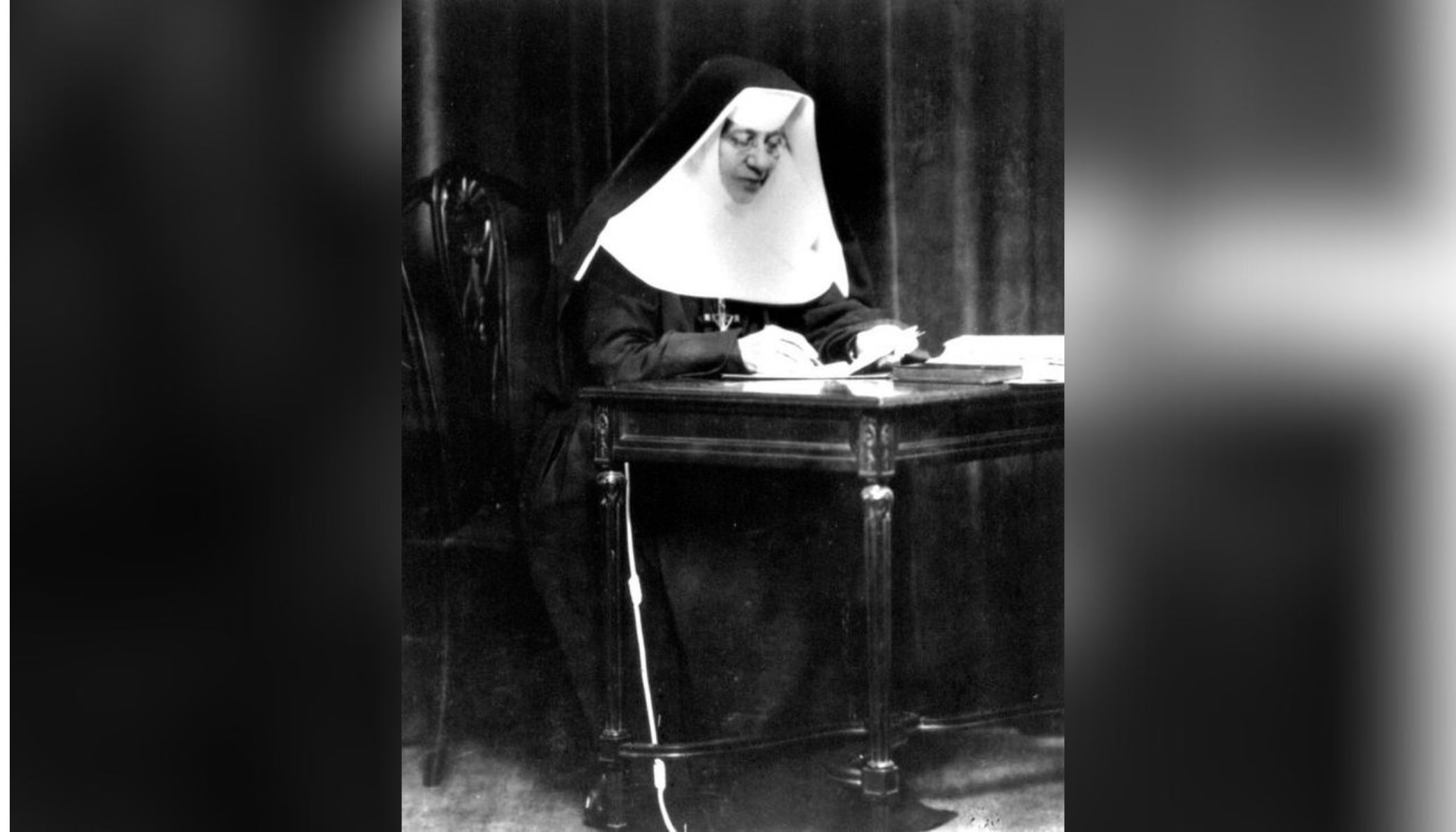
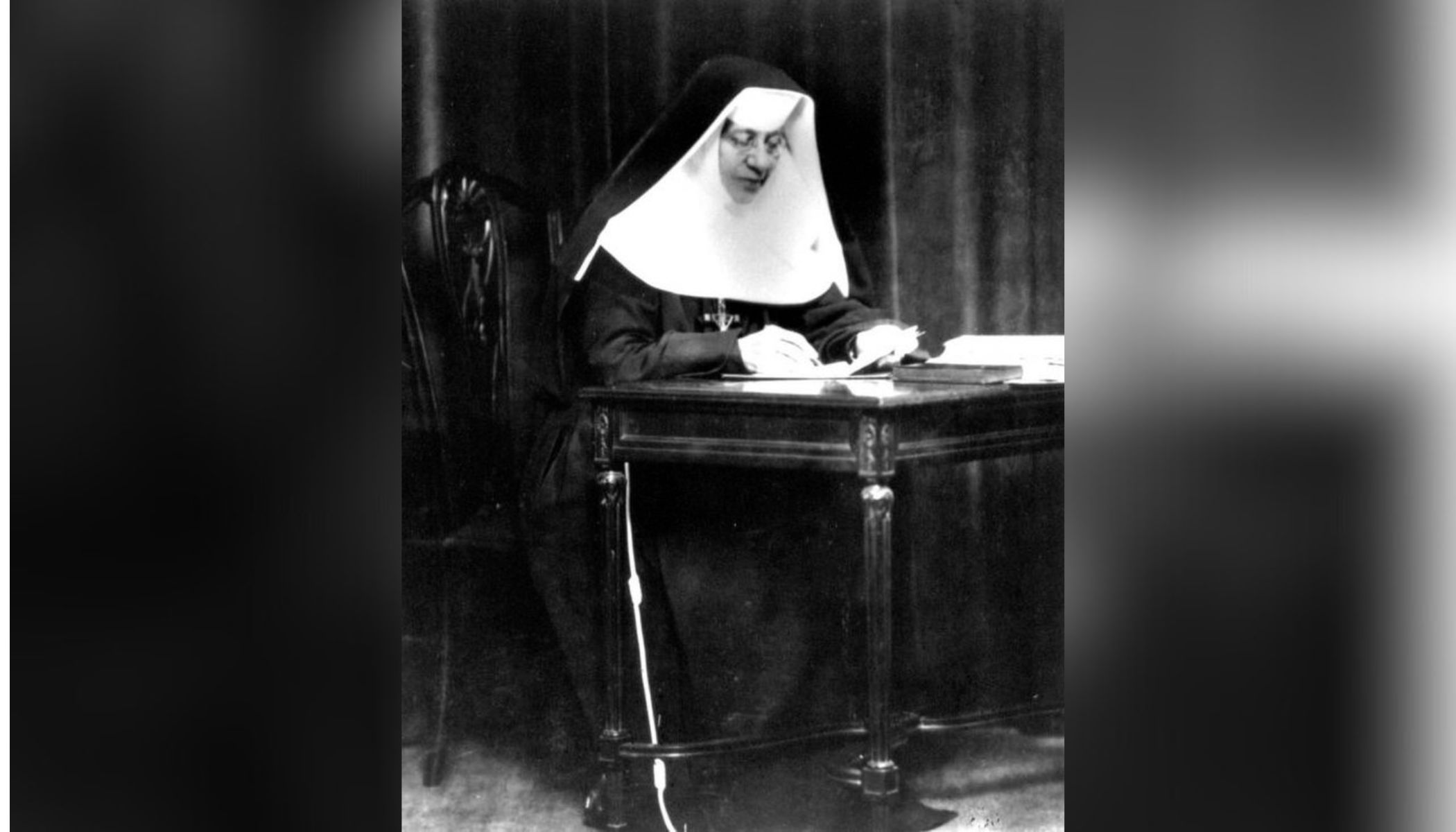
From heiress to saint: The radical life of St. Katharine Drexel #Catholic St. Katharine Drexel was born in 1858 to a wealthy family in Philadelphia. Five weeks after her birth, her mother died. She and her two sisters were reared by their father, Frank, a successful international banker, and stepmother, Emma — whom Katharine always considered her mother. Both were devout Catholics and loving parents. The family was generous with the poor — three times a week they opened their lavish home to those in need, offering them food, clothing, medicine, and other necessities.From the earliest ages, the Drexel children were taught to pursue personal holiness through daily Mass, meditation, the rosary, and other devotions as well as by acts of penance and sacrifice. Katharine kept notes on her efforts to grow in virtue. In 1878, she wrote: “I am resolved during this year to try to overcome impatience and give attention to lessons. I, Katie, put these resolutions at the feet of Jesus, Mary, and Joseph hoping that they will find acceptance there. May Jesus, Mary, and Joseph help me to bear much fruit in the year 1878.”When she was in her 20s, Katharine lost both of her parents and inherited a portion of the family’s vast wealth. At this time, she became aware of the plight of the Native Americans, many of whom suffered from dire poverty and a lack of education. She would devote the remainder of her life to assisting them.In two private audiences with Pope Leo XIII, she begged him to send more missionaries to the Native Americans. During one of these meetings, the Holy Father suggested to an astonished Katharine that she herself become such a missionary.Although Katharine enjoyed an opulent lifestyle, she became disillusioned with the things of the world. She wrote a longtime friend, Bishop James O’Connor, of her desire to enter religious life.“Like the little girl who wept when she found that her doll was stuffed with sawdust and her drum was hollow, I, too, have made a horrifying discovery and my discovery, like hers, is true. I have ripped both the doll and the drum open and the fact lies plainly and in all its glaring reality before me: All, all, all (there is no exception) is passing away and will pass away,” she wrote.The bishop thought Katharine could do more for the Church in her position in society and worried she might have difficulty in renouncing her wealth. She responded: “The question alone important, the solution of which depends upon how I have spent my life, is the state of my soul at the moment of death. Infinite misery or infinite happiness! There is no half and half, either one or the other.”The bishop eventually relented and advised her to found a community to work among Native Americans and African Americans, declaring: “God has put in your heart a great love for the Indian and the Negroes.” In 1891, joined by 13 others, she founded the Sisters of the Blessed Sacrament.Mother Drexel went to work opening mission churches and boarding schools for Black and Native American children throughout the U.S.At times, prejudice and racism hindered her work. She would often buy buildings to create schools through third parties — otherwise, when sellers learned Mother Drexel was buying them to educate Black or Native children, they wouldn’t sell to her.Once, when members of the Nashville, Tennessee, city council wondered if Blacks were capable of higher education, she responded: “I cannot share these views with regard to the education of the race. I feel that if among our colored people we find individuals gifted with capabilities, with those sterling qualities which constitute character, our holy mother the Church who fosters and develops the intellect only that it may give God more glory and be of benefit to others, should also concede to the Negro the privilege of higher education.”In 1915, Katharine founded a teachers’ college in Louisiana, which would eventually become Xavier University of New Orleans and one of the first American colleges to admit Black students.Throughout her life, Mother Drexel’s chief motivation in addition to her missionary outreach was to help more souls know and love Jesus in the Blessed Sacrament. She believed devotion to the Blessed Sacrament was key to the success to her community’s missionary work.She died in 1955 at the age of 96 and was canonized by Pope John Paul II in 2000. Her community’s motherhouse for decades was located in Bensalem, Pennsylvania, a Philadelphia suburb, which included a shrine — elements of which included Mother Drexel’s remains and a museum dedicated to her memory. However, due to a lack of vocations, the motherhouse closed and the property sold at the end of 2017. The St. Katharine Drexel Shrine is now part of the Cathedral Basilica of Sts. Peter and Paul in Philadelphia.St. Katharine Drexel is honored in the Church on March 3.This story was first published by the National Catholic Register, a sister news service of EWTN News, on March 3, 2021, and has been updated and adapted by EWTN News.

From heiress to saint: The radical life of St. Katharine Drexel #Catholic St. Katharine Drexel was born in 1858 to a wealthy family in Philadelphia. Five weeks after her birth, her mother died. She and her two sisters were reared by their father, Frank, a successful international banker, and stepmother, Emma — whom Katharine always considered her mother. Both were devout Catholics and loving parents. The family was generous with the poor — three times a week they opened their lavish home to those in need, offering them food, clothing, medicine, and other necessities.From the earliest ages, the Drexel children were taught to pursue personal holiness through daily Mass, meditation, the rosary, and other devotions as well as by acts of penance and sacrifice. Katharine kept notes on her efforts to grow in virtue. In 1878, she wrote: “I am resolved during this year to try to overcome impatience and give attention to lessons. I, Katie, put these resolutions at the feet of Jesus, Mary, and Joseph hoping that they will find acceptance there. May Jesus, Mary, and Joseph help me to bear much fruit in the year 1878.”When she was in her 20s, Katharine lost both of her parents and inherited a portion of the family’s vast wealth. At this time, she became aware of the plight of the Native Americans, many of whom suffered from dire poverty and a lack of education. She would devote the remainder of her life to assisting them.In two private audiences with Pope Leo XIII, she begged him to send more missionaries to the Native Americans. During one of these meetings, the Holy Father suggested to an astonished Katharine that she herself become such a missionary.Although Katharine enjoyed an opulent lifestyle, she became disillusioned with the things of the world. She wrote a longtime friend, Bishop James O’Connor, of her desire to enter religious life.“Like the little girl who wept when she found that her doll was stuffed with sawdust and her drum was hollow, I, too, have made a horrifying discovery and my discovery, like hers, is true. I have ripped both the doll and the drum open and the fact lies plainly and in all its glaring reality before me: All, all, all (there is no exception) is passing away and will pass away,” she wrote.The bishop thought Katharine could do more for the Church in her position in society and worried she might have difficulty in renouncing her wealth. She responded: “The question alone important, the solution of which depends upon how I have spent my life, is the state of my soul at the moment of death. Infinite misery or infinite happiness! There is no half and half, either one or the other.”The bishop eventually relented and advised her to found a community to work among Native Americans and African Americans, declaring: “God has put in your heart a great love for the Indian and the Negroes.” In 1891, joined by 13 others, she founded the Sisters of the Blessed Sacrament.Mother Drexel went to work opening mission churches and boarding schools for Black and Native American children throughout the U.S.At times, prejudice and racism hindered her work. She would often buy buildings to create schools through third parties — otherwise, when sellers learned Mother Drexel was buying them to educate Black or Native children, they wouldn’t sell to her.Once, when members of the Nashville, Tennessee, city council wondered if Blacks were capable of higher education, she responded: “I cannot share these views with regard to the education of the race. I feel that if among our colored people we find individuals gifted with capabilities, with those sterling qualities which constitute character, our holy mother the Church who fosters and develops the intellect only that it may give God more glory and be of benefit to others, should also concede to the Negro the privilege of higher education.”In 1915, Katharine founded a teachers’ college in Louisiana, which would eventually become Xavier University of New Orleans and one of the first American colleges to admit Black students.Throughout her life, Mother Drexel’s chief motivation in addition to her missionary outreach was to help more souls know and love Jesus in the Blessed Sacrament. She believed devotion to the Blessed Sacrament was key to the success to her community’s missionary work.She died in 1955 at the age of 96 and was canonized by Pope John Paul II in 2000. Her community’s motherhouse for decades was located in Bensalem, Pennsylvania, a Philadelphia suburb, which included a shrine — elements of which included Mother Drexel’s remains and a museum dedicated to her memory. However, due to a lack of vocations, the motherhouse closed and the property sold at the end of 2017. The St. Katharine Drexel Shrine is now part of the Cathedral Basilica of Sts. Peter and Paul in Philadelphia.St. Katharine Drexel is honored in the Church on March 3.This story was first published by the National Catholic Register, a sister news service of EWTN News, on March 3, 2021, and has been updated and adapted by EWTN News.

Throughout her life, St. Katharine Drexel’s chief motivation was to help more people know and love Jesus in the Blessed Sacrament.

Read More
U.S., Hungarian thought leaders share ethical concerns over mass migration #Catholic “The Crisis of Migration for Families and Nations” was the subject of a Feb. 4 symposium that brought together American and Hungarian thought leaders who share concerns about the phenomenon of mass migration and its impact on the common good of their respective nations. The event coincided with the release of a new paper titled “Migration and Ethics: The Axioms of a Christian Migration Policy” by the Budapest-based Axioma Center, a Christian think tank. 
 
 The Catholic University of America’s Chad Pecknold (left) endorses the Hungarian think tank’s approach to Christian migration policy. | Credit: Ken Oliver-Méndez/EWTN News
 
 The paper, which was endorsed by Chad Pecknold, associate professor of systematic theology at The Catholic University of America, notes that “the Christian perspective on immigration has historically emphasized compassion and solidarity with refugees, along with a welcoming attitude towards foreigners.”However, the paper continues, the Christian perspective on immigration “also calls for a prudent balance between these values and the legitimate responsibility of rulers to protect their people.” In this context, the paper explains, “national security, cultural and moral traditions, the rule of law, public order, and social cohesion are all essential components of what constitutes the common good.” In the face of illegal immigration, the authors assert that “mass deportations may be a legitimate response to mass migration.”At the event, Samuel Samson, a senior adviser at the U.S. State Department’s Bureau of Democracy, Human Rights, and Labor, said he does not see large-scale migration as a “moral necessity” but rather the opposite.“It is actually fundamentally disordered and impacts the well-being and the common good of society,” he said. Samson said the Trump administration has sought to “shift the general narrative” about migration to bring this awareness to the fore.In the United States, more than 14% of the population was born outside the country. In the European Union (EU), nearly 10% of the population was born in a country that is not an EU member.
 
 The panel was moderated by the America First Policy Institute’s Kristen Ziccarelli (left) and included the participation of Center for Immigration Studies Executive Director Mark Krikorian (right). | Credit: Ken Oliver-Méndez/EWTN News
 
 For his part, Heritage Foundation Vice President for Economic and Domestic Policy Roger Severino contended that the United States is not essentially a “nation of immigrants” but “a country of pioneers who took on immigrants who bought into the ethos of the United States.”Addressing the issue of the assimilation of immigrants, Severino, who is Catholic and the son of Colombian immigrants, lamented that the “salad bowl” (as opposed to “melting pot”) concept of immigration encourages “separate independent cultures that, in practice, don’t even end up talking to each other.”Severino also faulted the largesse and abuses of the modern welfare state for not serving the interests of either the nation or immigrants.In his remarks, Pecknold reflected on the corrosion of the understanding of the family and the understanding of the nation. “A nation comes from a commonwealth of families that bring life,” he said.Pecknold said the wealth of nations is not simply the GDP but rather, in Christian terms, has been “providentially given” by God and said the erosion of borders, heritage, language, customs, and religion is an “attempt to deconstruct the very belief of God as the providential provider” of families and nations.Pecknold also contended that mass migration has negative impacts on family for both the immigrants and the native-born population.For migrants, he said “it almost inevitably breaks up the family,” with some leaving their home country and others staying behind or sometimes trying to enter illegally. He said it also hurts the American family by filling the workforce with cheap labor, saying: “You actually are taking jobs away from … young Americans who deserve those jobs.”Pecknold encouraged Christians to take into account the faith’s long tradition on the subject of immigration, citing St. Thomas Aquinas as a prime example. In the Summa Theologiae, Aquinas speaks about the need for assimilation and that danger could otherwise arise if someone who does “not yet having the common good firmly at heart” is given full citizenship.“Christians have to take some of these principles and think outside of the bounds of liberalism,” he said.USCCB approachThe United States Conference of Catholic Bishops (USCCB) has recently raised concerns on immigration that markedly differ from those presented at the Hungarian embassy symposium, particularly when it comes to the Trump administration’s mass deportation program.In November 2025, the bishops voted 216-5 to issue a special message rejecting “the indiscriminate mass deportation of people.” It noted that Scripture commands Christians to care for vulnerable people, including “the stranger,” and said Catholic teaching instructs nations “to recognize the fundamental dignity of all persons, including immigrants.”The Catechism of the Catholic Church instructs prosperous nations “to the extent they are able, to welcome the foreigner.” It also instructs immigrants “to respect with gratitude the material and spiritual heritage of the country that receives them, to obey its laws and to assist in carrying civic burdens.”According to the catechism, political authorities can regulate immigration “for the sake of the common good for which they are responsible.”

U.S., Hungarian thought leaders share ethical concerns over mass migration #Catholic “The Crisis of Migration for Families and Nations” was the subject of a Feb. 4 symposium that brought together American and Hungarian thought leaders who share concerns about the phenomenon of mass migration and its impact on the common good of their respective nations. The event coincided with the release of a new paper titled “Migration and Ethics: The Axioms of a Christian Migration Policy” by the Budapest-based Axioma Center, a Christian think tank. The Catholic University of America’s Chad Pecknold (left) endorses the Hungarian think tank’s approach to Christian migration policy. | Credit: Ken Oliver-Méndez/EWTN News The paper, which was endorsed by Chad Pecknold, associate professor of systematic theology at The Catholic University of America, notes that “the Christian perspective on immigration has historically emphasized compassion and solidarity with refugees, along with a welcoming attitude towards foreigners.”However, the paper continues, the Christian perspective on immigration “also calls for a prudent balance between these values and the legitimate responsibility of rulers to protect their people.” In this context, the paper explains, “national security, cultural and moral traditions, the rule of law, public order, and social cohesion are all essential components of what constitutes the common good.” In the face of illegal immigration, the authors assert that “mass deportations may be a legitimate response to mass migration.”At the event, Samuel Samson, a senior adviser at the U.S. State Department’s Bureau of Democracy, Human Rights, and Labor, said he does not see large-scale migration as a “moral necessity” but rather the opposite.“It is actually fundamentally disordered and impacts the well-being and the common good of society,” he said. Samson said the Trump administration has sought to “shift the general narrative” about migration to bring this awareness to the fore.In the United States, more than 14% of the population was born outside the country. In the European Union (EU), nearly 10% of the population was born in a country that is not an EU member. The panel was moderated by the America First Policy Institute’s Kristen Ziccarelli (left) and included the participation of Center for Immigration Studies Executive Director Mark Krikorian (right). | Credit: Ken Oliver-Méndez/EWTN News For his part, Heritage Foundation Vice President for Economic and Domestic Policy Roger Severino contended that the United States is not essentially a “nation of immigrants” but “a country of pioneers who took on immigrants who bought into the ethos of the United States.”Addressing the issue of the assimilation of immigrants, Severino, who is Catholic and the son of Colombian immigrants, lamented that the “salad bowl” (as opposed to “melting pot”) concept of immigration encourages “separate independent cultures that, in practice, don’t even end up talking to each other.”Severino also faulted the largesse and abuses of the modern welfare state for not serving the interests of either the nation or immigrants.In his remarks, Pecknold reflected on the corrosion of the understanding of the family and the understanding of the nation. “A nation comes from a commonwealth of families that bring life,” he said.Pecknold said the wealth of nations is not simply the GDP but rather, in Christian terms, has been “providentially given” by God and said the erosion of borders, heritage, language, customs, and religion is an “attempt to deconstruct the very belief of God as the providential provider” of families and nations.Pecknold also contended that mass migration has negative impacts on family for both the immigrants and the native-born population.For migrants, he said “it almost inevitably breaks up the family,” with some leaving their home country and others staying behind or sometimes trying to enter illegally. He said it also hurts the American family by filling the workforce with cheap labor, saying: “You actually are taking jobs away from … young Americans who deserve those jobs.”Pecknold encouraged Christians to take into account the faith’s long tradition on the subject of immigration, citing St. Thomas Aquinas as a prime example. In the Summa Theologiae, Aquinas speaks about the need for assimilation and that danger could otherwise arise if someone who does “not yet having the common good firmly at heart” is given full citizenship.“Christians have to take some of these principles and think outside of the bounds of liberalism,” he said.USCCB approachThe United States Conference of Catholic Bishops (USCCB) has recently raised concerns on immigration that markedly differ from those presented at the Hungarian embassy symposium, particularly when it comes to the Trump administration’s mass deportation program.In November 2025, the bishops voted 216-5 to issue a special message rejecting “the indiscriminate mass deportation of people.” It noted that Scripture commands Christians to care for vulnerable people, including “the stranger,” and said Catholic teaching instructs nations “to recognize the fundamental dignity of all persons, including immigrants.”The Catechism of the Catholic Church instructs prosperous nations “to the extent they are able, to welcome the foreigner.” It also instructs immigrants “to respect with gratitude the material and spiritual heritage of the country that receives them, to obey its laws and to assist in carrying civic burdens.”According to the catechism, political authorities can regulate immigration “for the sake of the common good for which they are responsible.”

A Hungarian think tank’s new paper “Migration and Ethics: The Axioms of a Christian Migration Policy” prompts a meeting of the minds.

Read More