Day: January 3, 2026

Soul of Jesus,
Sanctify me.

Blood of Jesus,
Wash me,

Passion of Jesus,
Comfort me.

Wounds of Jesus,
Hide me.

Heart of Jesus,
Receive me.

Spirit of Jesus,
Enliven me.

Goodness of Jesus,
Pardon me.

Beauty of Jesus,
Draw me.

Humility of Jesus,
Humble me.

Peace of Jesus,
Pacify me.

Love of Jesus,
Inflame me.

Kingdom of Jesus,
Come to me.

Grace of Jesus,
Replenish me.

Mercy of Jesus,
Pity me. …

Read More

Gospel and Word of the Day – 04 January 2026 – A reading from the Book of Isaiah 60:1-6 Rise up in splendor, Jerusalem! Your light has come, the glory of the Lord shines upon you. See, darkness covers the earth, and thick clouds cover the peoples; but upon you the LORD shines, and over you appears his glory. Nations shall walk by your light, and kings by your shining radiance. Raise your eyes and look about; they all gather and come to you: your sons come from afar, and your daughters in the arms of their nurses. Then you shall be radiant at what you see, your heart shall throb and overflow, for the riches of the sea shall be emptied out before you, the wealth of nations shall be brought to you. Caravans of camels shall fill you, dromedaries from Midian and Ephah; all from Sheba shall come bearing gold and frankincense, and proclaiming the praises of the LORD.   A reading from the Letter to the Ephesians 3:2-3a, 5-6 Brothers and sisters: You have heard of the stewardship of God’s grace that was given to me for your benefit, namely, that the mystery was made known to me by revelation. It was not made known to people in other generations as it has now been revealed to his holy apostles and prophets by the Spirit: that the Gentiles are coheirs, members of the same body, and copartners in the promise in Christ Jesus through the gospel.From the Gospel according to Matthew 2:1-12 When Jesus was born in Bethlehem of Judea, in the days of King Herod, behold, magi from the east arrived in Jerusalem, saying, “Where is the newborn king of the Jews? We saw his star at its rising and have come to do him homage.” When King Herod heard this, he was greatly troubled, and all Jerusalem with him. Assembling all the chief priests and the scribes of the people, He inquired of them where the Christ was to be born. They said to him, “In Bethlehem of Judea, for thus it has been written through the prophet: And you, Bethlehem, land of Judah, are by no means least among the rulers of Judah; since from you shall come a ruler, who is to shepherd my people Israel.” Then Herod called the magi secretly and ascertained from them the time of the star’s appearance. He sent them to Bethlehem and said, “Go and search diligently for the child. When you have found him, bring me word, that I too may go and do him homage.” After their audience with the king they set out. And behold, the star that they had seen at its rising preceded them, until it came and stopped over the place where the child was. They were overjoyed at seeing the star, and on entering the house they saw the child with Mary his mother. They prostrated themselves and did him homage. Then they opened their treasures and offered him gifts of gold, frankincense, and myrrh. And having been warned in a dream not to return to Herod, they departed for their country by another way.Brothers and sisters, let us open our hearts to restlessness, let us ask for the courage to continue our journey, and let us finish in worship! Let us not be afraid, for this is the path of the Magi, the path of all the saints throughout history: to welcome our restlessness, to set out and to worship.  Brothers and sisters, may we never stop our restless questioning; may we never interrupt our journey by yielding to apathy or convenience; and in our encounter with the Lord, may we abandon ourselves to the wonder of worship. Then we will discover that a light shines even in the darkest nights: the light of Jesus, the radiant morning star, the sun of justice the merciful splendour of God, who loves every man and woman, and all the peoples of the earth. (Pope Francis,  Homily, Solemnity of the Epiphany of the Lord, 6 january 2023)

A reading from the Book of Isaiah
60:1-6

Rise up in splendor, Jerusalem! Your light has come,
the glory of the Lord shines upon you.
See, darkness covers the earth,
and thick clouds cover the peoples;
but upon you the LORD shines,
and over you appears his glory.
Nations shall walk by your light,
and kings by your shining radiance.
Raise your eyes and look about;
they all gather and come to you:
your sons come from afar,
and your daughters in the arms of their nurses.

Then you shall be radiant at what you see,
your heart shall throb and overflow,
for the riches of the sea shall be emptied out before you,
the wealth of nations shall be brought to you.
Caravans of camels shall fill you,
dromedaries from Midian and Ephah;
all from Sheba shall come
bearing gold and frankincense,
and proclaiming the praises of the LORD.


A reading from the Letter to the Ephesians
3:2-3a, 5-6

Brothers and sisters:
You have heard of the stewardship of God’s grace
that was given to me for your benefit,
namely, that the mystery was made known to me by revelation.
It was not made known to people in other generations
as it has now been revealed
to his holy apostles and prophets by the Spirit:
that the Gentiles are coheirs, members of the same body,
and copartners in the promise in Christ Jesus through the gospel.

From the Gospel according to Matthew
2:1-12

When Jesus was born in Bethlehem of Judea,
in the days of King Herod,
behold, magi from the east arrived in Jerusalem, saying,
“Where is the newborn king of the Jews?
We saw his star at its rising
and have come to do him homage.”
When King Herod heard this,
he was greatly troubled,
and all Jerusalem with him.
Assembling all the chief priests and the scribes of the people,
He inquired of them where the Christ was to be born.
They said to him, “In Bethlehem of Judea,
for thus it has been written through the prophet:
And you, Bethlehem, land of Judah,
are by no means least among the rulers of Judah;
since from you shall come a ruler,
who is to shepherd my people Israel.”
Then Herod called the magi secretly
and ascertained from them the time of the star’s appearance.
He sent them to Bethlehem and said,
“Go and search diligently for the child.
When you have found him, bring me word,
that I too may go and do him homage.”
After their audience with the king they set out.
And behold, the star that they had seen at its rising preceded them,
until it came and stopped over the place where the child was.
They were overjoyed at seeing the star,
and on entering the house
they saw the child with Mary his mother.
They prostrated themselves and did him homage.
Then they opened their treasures
and offered him gifts of gold, frankincense, and myrrh.
And having been warned in a dream not to return to Herod,
they departed for their country by another way.

Brothers and sisters, let us open our hearts to restlessness, let us ask for the courage to continue our journey, and let us finish in worship! Let us not be afraid, for this is the path of the Magi, the path of all the saints throughout history: to welcome our restlessness, to set out and to worship.  Brothers and sisters, may we never stop our restless questioning; may we never interrupt our journey by yielding to apathy or convenience; and in our encounter with the Lord, may we abandon ourselves to the wonder of worship. Then we will discover that a light shines even in the darkest nights: the light of Jesus, the radiant morning star, the sun of justice the merciful splendour of God, who loves every man and woman, and all the peoples of the earth. (Pope Francis,  Homily, Solemnity of the Epiphany of the Lord, 6 january 2023)

Read More
At SEEK 2026, young Catholics urged to use technology intentionally, as a tool #Catholic 
 
 Andrew Laubacher, executive director of Humanality, ahead of his talk at SEEK 2026 in Denver, Colorado on Jan. 2, 2026. Credit: Francesca Fenton/EWTN News

Jan 3, 2026 / 17:56 pm (CNA).
In 2018, Andrew Laubacher, a touring Catholic musician at the time, decided to quit social media completely. Despite his recording label telling him that he was making a terrible decision, he was exhausted from the impact it was having on his life and felt God calling him to make this change.Fast-forward to today and Laubacher is now the executive director of Humanality, a nonprofit organization that “exists to help people discover freedom through an intentional relationship with technology” and offers individuals help to break their digital addiction through a 12-week digital detox program.Speaking to hundreds of young Catholics at SEEK 2026 in Denver, Colorado, on Jan. 2, he explained how social media can become addictive and have negative effects on the human person – including depression, anxiety, and body image issues – and offered tips on how individuals can use technology practically and intentionally.Laubacher began by highlighting data from the U.S. Centers for Disease Control and Prevention (CDC), which showed that the average U.S. life expectancy decreased for the first time between 2017 and 2019 and that “Americans are 10 times more likely to have a depressive illness than they were 60 years ago."Citing the federal data as well as research in Jonathan Haidt’s 2024 book “The Anxious Generation,” Laubacher explained that in 2010 a new feature was introduced on smartphones which led to “drastic increases in anxiety and depression.”What was this feature? The front-facing camera.“When that front-facing camera came out, all of a sudden our lives became self-defining,” he argued.Laubacher shared how he saw this play out in his own life – constantly comparing himself and his life to others, experiencing lust, feeling lonely, and wasting his time mindlessly scrolling through his feeds.“These technologies affected me in many different ways,” he said, “And when I made that leap [off social media] everything got better. My friendships got better, my purity, my productivity, my prayer got better. Everything started to improve.”“So you guys, the way that you've grown up with these technologies has literally changed everything… It's changed the way you think. It's changed the way you behave. It's changed the way you relate to one another. It's changed the way you sleep. It's changed the way you perceive reality,” Laubacher told those gathered. “You have to understand algorithms are literally shaping your perception of what is true. And if you are living your life scrolling and getting stuck into these platforms like me you're not necessarily as you want to be.”Laubacher said that the average 18-year-old in 2025 is on pace to have a 90-year life span. He then broke this down into how many months one might spend doing different activities such as eating, sleeping, going to school or work, and driving. Over the course of one's life, the average person is left with “334 months of free time – this is where you fall in love. This is where you create music, this is where you write that book, this is where you go on the trip with your loved ones. This is where you discover your vocation,” Laubacher said.“Right now, of those 334 months, 93% of that time is going to be spent on the screen,” he said. “At the end of your lives, you in this crowd will have looked at the screen for 27 years of your life." "And friends, my mission is to help you get that time back into your life. So you can invest that time and attention into the things that matter most.”Offering those gathered practical tools to gain more freedom from digital media, Laubacher highlighted three of the 11 ways Humanality’s digital detox program aims to help individuals gain a more human way to be – be light, be giving, and be present.“Be light” focuses on individuals stopping the nighttime scrolling and beginning to acknowledge the difference between daytime and nighttime. Laubacher explained that people spend 90% of their time indoors versus 100 years ago when people spent 90% of their time outdoors. Additionally, when people scroll on their phones at nighttime, the light from the screen tells the brain it’s daytime.“So, our separation from light in the daytime — and you scrolling yourself to sleep in the nighttime — is a huge reason for our mental health slash sleep disorder slash fatigue and exhaustion,” he said.“Be giving” turns the self-centered nature of social media to one where you “start to think outside of yourself,” which leads a person to be “more happy and more healthy when you live a life that is giving,” Laubacher explained.The last way Laubacher highlighted was “be present,” which aims to simply teach people how to be present with themselves, with others, and with God.
“Friends, I want to tell you right now, the scariest, best, most amazing adventure in your life is going to be learning to love God, your neighbor, and yourself,” Laubacher said. “And if I'm honest, I can love people pretty easily, but it's really hard for me to love myself most of the time. And I found that my technologies were not allowing me to get to know the person that God has created me to be.”“These three ways – there's a lot more – but these three ways I think if you start to implement in your day today you'll start to use technology as a tool and get out of these addictions.”

At SEEK 2026, young Catholics urged to use technology intentionally, as a tool #Catholic Andrew Laubacher, executive director of Humanality, ahead of his talk at SEEK 2026 in Denver, Colorado on Jan. 2, 2026. Credit: Francesca Fenton/EWTN News Jan 3, 2026 / 17:56 pm (CNA). In 2018, Andrew Laubacher, a touring Catholic musician at the time, decided to quit social media completely. Despite his recording label telling him that he was making a terrible decision, he was exhausted from the impact it was having on his life and felt God calling him to make this change.Fast-forward to today and Laubacher is now the executive director of Humanality, a nonprofit organization that “exists to help people discover freedom through an intentional relationship with technology” and offers individuals help to break their digital addiction through a 12-week digital detox program.Speaking to hundreds of young Catholics at SEEK 2026 in Denver, Colorado, on Jan. 2, he explained how social media can become addictive and have negative effects on the human person – including depression, anxiety, and body image issues – and offered tips on how individuals can use technology practically and intentionally.Laubacher began by highlighting data from the U.S. Centers for Disease Control and Prevention (CDC), which showed that the average U.S. life expectancy decreased for the first time between 2017 and 2019 and that “Americans are 10 times more likely to have a depressive illness than they were 60 years ago."Citing the federal data as well as research in Jonathan Haidt’s 2024 book “The Anxious Generation,” Laubacher explained that in 2010 a new feature was introduced on smartphones which led to “drastic increases in anxiety and depression.”What was this feature? The front-facing camera.“When that front-facing camera came out, all of a sudden our lives became self-defining,” he argued.Laubacher shared how he saw this play out in his own life – constantly comparing himself and his life to others, experiencing lust, feeling lonely, and wasting his time mindlessly scrolling through his feeds.“These technologies affected me in many different ways,” he said, “And when I made that leap [off social media] everything got better. My friendships got better, my purity, my productivity, my prayer got better. Everything started to improve.”“So you guys, the way that you've grown up with these technologies has literally changed everything… It's changed the way you think. It's changed the way you behave. It's changed the way you relate to one another. It's changed the way you sleep. It's changed the way you perceive reality,” Laubacher told those gathered. “You have to understand algorithms are literally shaping your perception of what is true. And if you are living your life scrolling and getting stuck into these platforms like me you're not necessarily as you want to be.”Laubacher said that the average 18-year-old in 2025 is on pace to have a 90-year life span. He then broke this down into how many months one might spend doing different activities such as eating, sleeping, going to school or work, and driving. Over the course of one's life, the average person is left with “334 months of free time – this is where you fall in love. This is where you create music, this is where you write that book, this is where you go on the trip with your loved ones. This is where you discover your vocation,” Laubacher said.“Right now, of those 334 months, 93% of that time is going to be spent on the screen,” he said. “At the end of your lives, you in this crowd will have looked at the screen for 27 years of your life." "And friends, my mission is to help you get that time back into your life. So you can invest that time and attention into the things that matter most.”Offering those gathered practical tools to gain more freedom from digital media, Laubacher highlighted three of the 11 ways Humanality’s digital detox program aims to help individuals gain a more human way to be – be light, be giving, and be present.“Be light” focuses on individuals stopping the nighttime scrolling and beginning to acknowledge the difference between daytime and nighttime. Laubacher explained that people spend 90% of their time indoors versus 100 years ago when people spent 90% of their time outdoors. Additionally, when people scroll on their phones at nighttime, the light from the screen tells the brain it’s daytime.“So, our separation from light in the daytime — and you scrolling yourself to sleep in the nighttime — is a huge reason for our mental health slash sleep disorder slash fatigue and exhaustion,” he said.“Be giving” turns the self-centered nature of social media to one where you “start to think outside of yourself,” which leads a person to be “more happy and more healthy when you live a life that is giving,” Laubacher explained.The last way Laubacher highlighted was “be present,” which aims to simply teach people how to be present with themselves, with others, and with God. “Friends, I want to tell you right now, the scariest, best, most amazing adventure in your life is going to be learning to love God, your neighbor, and yourself,” Laubacher said. “And if I'm honest, I can love people pretty easily, but it's really hard for me to love myself most of the time. And I found that my technologies were not allowing me to get to know the person that God has created me to be.”“These three ways – there's a lot more – but these three ways I think if you start to implement in your day today you'll start to use technology as a tool and get out of these addictions.”


Andrew Laubacher, executive director of Humanality, ahead of his talk at SEEK 2026 in Denver, Colorado on Jan. 2, 2026. Credit: Francesca Fenton/EWTN News

Jan 3, 2026 / 17:56 pm (CNA).

In 2018, Andrew Laubacher, a touring Catholic musician at the time, decided to quit social media completely. Despite his recording label telling him that he was making a terrible decision, he was exhausted from the impact it was having on his life and felt God calling him to make this change.

Fast-forward to today and Laubacher is now the executive director of Humanality, a nonprofit organization that “exists to help people discover freedom through an intentional relationship with technology” and offers individuals help to break their digital addiction through a 12-week digital detox program.

Speaking to hundreds of young Catholics at SEEK 2026 in Denver, Colorado, on Jan. 2, he explained how social media can become addictive and have negative effects on the human person – including depression, anxiety, and body image issues – and offered tips on how individuals can use technology practically and intentionally.

Laubacher began by highlighting data from the U.S. Centers for Disease Control and Prevention (CDC), which showed that the average U.S. life expectancy decreased for the first time between 2017 and 2019 and that “Americans are 10 times more likely to have a depressive illness than they were 60 years ago."

Citing the federal data as well as research in Jonathan Haidt’s 2024 book “The Anxious Generation,” Laubacher explained that in 2010 a new feature was introduced on smartphones which led to “drastic increases in anxiety and depression.”

What was this feature? The front-facing camera.

“When that front-facing camera came out, all of a sudden our lives became self-defining,” he argued.

Laubacher shared how he saw this play out in his own life – constantly comparing himself and his life to others, experiencing lust, feeling lonely, and wasting his time mindlessly scrolling through his feeds.

“These technologies affected me in many different ways,” he said, “And when I made that leap [off social media] everything got better. My friendships got better, my purity, my productivity, my prayer got better. Everything started to improve.”

“So you guys, the way that you've grown up with these technologies has literally changed everything… It's changed the way you think. It's changed the way you behave. It's changed the way you relate to one another. It's changed the way you sleep. It's changed the way you perceive reality,” Laubacher told those gathered.

“You have to understand algorithms are literally shaping your perception of what is true. And if you are living your life scrolling and getting stuck into these platforms like me you're not necessarily as you want to be.”

Laubacher said that the average 18-year-old in 2025 is on pace to have a 90-year life span. He then broke this down into how many months one might spend doing different activities such as eating, sleeping, going to school or work, and driving.

Over the course of one's life, the average person is left with “334 months of free time – this is where you fall in love. This is where you create music, this is where you write that book, this is where you go on the trip with your loved ones. This is where you discover your vocation,” Laubacher said.

“Right now, of those 334 months, 93% of that time is going to be spent on the screen,” he said. “At the end of your lives, you in this crowd will have looked at the screen for 27 years of your life."

"And friends, my mission is to help you get that time back into your life. So you can invest that time and attention into the things that matter most.”

Offering those gathered practical tools to gain more freedom from digital media, Laubacher highlighted three of the 11 ways Humanality’s digital detox program aims to help individuals gain a more human way to be – be light, be giving, and be present.

“Be light” focuses on individuals stopping the nighttime scrolling and beginning to acknowledge the difference between daytime and nighttime. Laubacher explained that people spend 90% of their time indoors versus 100 years ago when people spent 90% of their time outdoors.

Additionally, when people scroll on their phones at nighttime, the light from the screen tells the brain it’s daytime.

“So, our separation from light in the daytime — and you scrolling yourself to sleep in the nighttime — is a huge reason for our mental health slash sleep disorder slash fatigue and exhaustion,” he said.

“Be giving” turns the self-centered nature of social media to one where you “start to think outside of yourself,” which leads a person to be “more happy and more healthy when you live a life that is giving,” Laubacher explained.

The last way Laubacher highlighted was “be present,” which aims to simply teach people how to be present with themselves, with others, and with God.
“Friends, I want to tell you right now, the scariest, best, most amazing adventure in your life is going to be learning to love God, your neighbor, and yourself,” Laubacher said.

“And if I'm honest, I can love people pretty easily, but it's really hard for me to love myself most of the time. And I found that my technologies were not allowing me to get to know the person that God has created me to be.”

“These three ways – there's a lot more – but these three ways I think if you start to implement in your day today you'll start to use technology as a tool and get out of these addictions.”

Read More
Trump says U.S. will 'run' Venezuela until 'transition' to new president - #Catholic - 
 
 U.S. President Donald Trump delivers a press conference after the capture of Venezuela President Nicolás Maduro, Washington, D.C., Saturday, Jan. 3, 2026. Credit: JIM WATSON / Getty Images

Jan 3, 2026 / 12:56 pm (CNA).
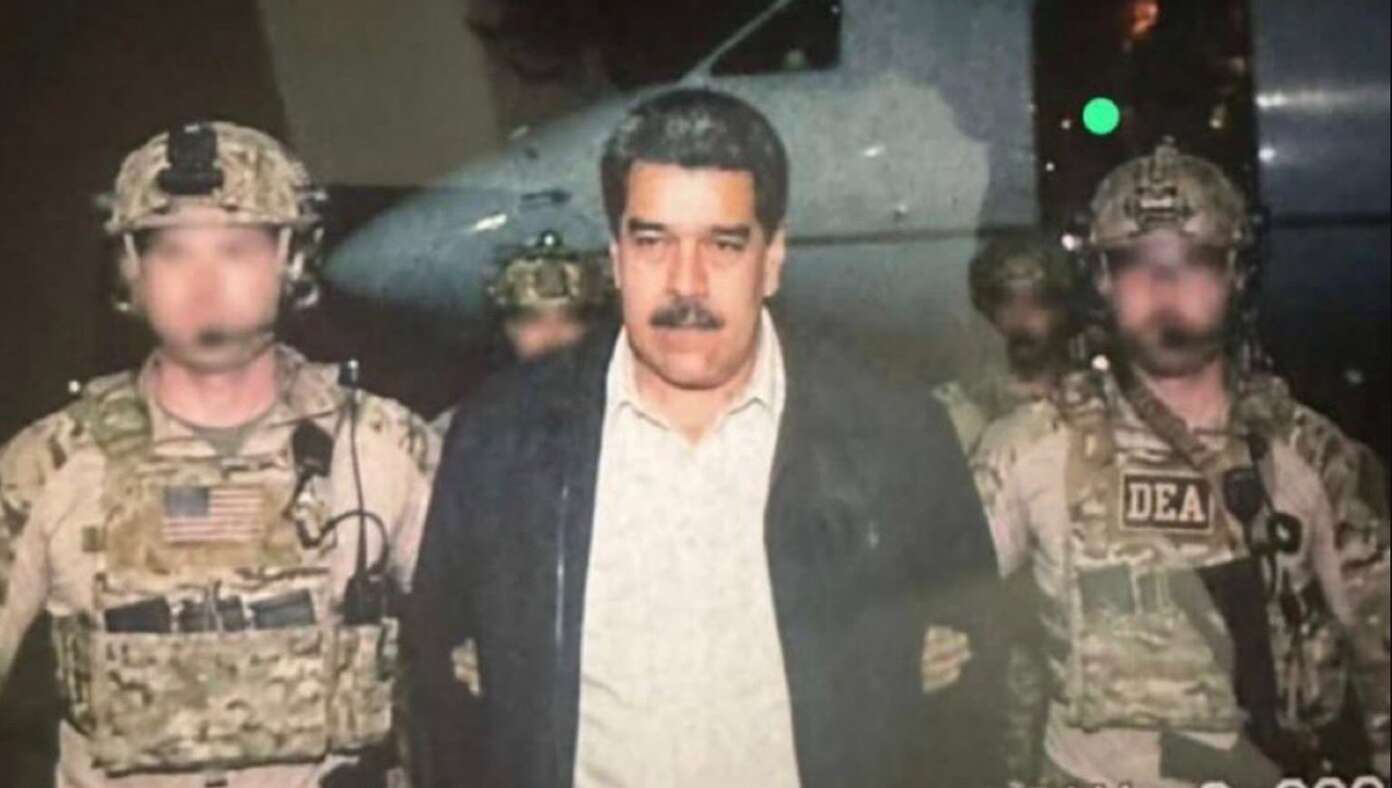
U.S. President Donald Trump on Jan. 3 said the United States would "run" Venezuela until a replacement for President Nicolás Maduro can be found, with the U.S. leader vowing a "safe, proper, and judicious transition" after American forces arrested Maduro and brought him to New York State for indictment. The U.S. launched strikes in the Venezuelan capital of Caracas on Jan. 3 before capturing Maduro and transporting him to the U.S., where he was indicted on drug and weapons charges in a New York district court.In a press conference on Jan. 3, Trump revealed that the U.S. would "run the country until such time as we can do a safe, proper, and judicious transition." "We don't want to be involved with having somebody else get in and [then] we have the same situation that we had for the last long period of years," Trump said, emphasizing: "We are going to run the country."The president alleged that the Maduro regime in Venezuela "emptied out their prisons [and] sent their worst and most violent monsters into the United States."He referenced the June 2024 killing of Jocelyn Nungaray, who was raped and strangled in Texas allegedly by two Venezuelan immigrants in the country illegally. Asked how long the U.S. would be in charge of Venezuela, Trump said: "I'd like to do it quickly." He said such operations take "a lot of time." He described the country’s infrastructure as in poor shape. “We’re going to take a lot of money out so that we can take care of the country,” he saidU.S. Secretary of Defense Pete Hegseth at the press conference praised the soldiers who carried out the Venezuelan operation early on Jan. 3, describing them as the "elite of America.""Our adversaries remain on notice," Hesgeth said. "America can project our will anywhere, anytime."National leaders in Latin America expressed condemnation of the U.S. operations in Venezuela on Jan. 3, with executives in Colombia, Brazil and elsewhere warning of U.S. aggression and regional instability after the strikes. The bishops of Venezuela, meanwhile, said they are in prayer and communicating with each other amid the ongoing incident.

Trump says U.S. will 'run' Venezuela until 'transition' to new president – #Catholic – U.S. President Donald Trump delivers a press conference after the capture of Venezuela President Nicolás Maduro, Washington, D.C., Saturday, Jan. 3, 2026. Credit: JIM WATSON / Getty Images Jan 3, 2026 / 12:56 pm (CNA). U.S. President Donald Trump on Jan. 3 said the United States would "run" Venezuela until a replacement for President Nicolás Maduro can be found, with the U.S. leader vowing a "safe, proper, and judicious transition" after American forces arrested Maduro and brought him to New York State for indictment. The U.S. launched strikes in the Venezuelan capital of Caracas on Jan. 3 before capturing Maduro and transporting him to the U.S., where he was indicted on drug and weapons charges in a New York district court.In a press conference on Jan. 3, Trump revealed that the U.S. would "run the country until such time as we can do a safe, proper, and judicious transition." "We don't want to be involved with having somebody else get in and [then] we have the same situation that we had for the last long period of years," Trump said, emphasizing: "We are going to run the country."The president alleged that the Maduro regime in Venezuela "emptied out their prisons [and] sent their worst and most violent monsters into the United States."He referenced the June 2024 killing of Jocelyn Nungaray, who was raped and strangled in Texas allegedly by two Venezuelan immigrants in the country illegally. Asked how long the U.S. would be in charge of Venezuela, Trump said: "I'd like to do it quickly." He said such operations take "a lot of time." He described the country’s infrastructure as in poor shape. “We’re going to take a lot of money out so that we can take care of the country,” he saidU.S. Secretary of Defense Pete Hegseth at the press conference praised the soldiers who carried out the Venezuelan operation early on Jan. 3, describing them as the "elite of America.""Our adversaries remain on notice," Hesgeth said. "America can project our will anywhere, anytime."National leaders in Latin America expressed condemnation of the U.S. operations in Venezuela on Jan. 3, with executives in Colombia, Brazil and elsewhere warning of U.S. aggression and regional instability after the strikes. The bishops of Venezuela, meanwhile, said they are in prayer and communicating with each other amid the ongoing incident.


U.S. President Donald Trump delivers a press conference after the capture of Venezuela President Nicolás Maduro, Washington, D.C., Saturday, Jan. 3, 2026. Credit: JIM WATSON / Getty Images

Jan 3, 2026 / 12:56 pm (CNA).

U.S. President Donald Trump on Jan. 3 said the United States would "run" Venezuela until a replacement for President Nicolás Maduro can be found, with the U.S. leader vowing a "safe, proper, and judicious transition" after American forces arrested Maduro and brought him to New York State for indictment.

The U.S. launched strikes in the Venezuelan capital of Caracas on Jan. 3 before capturing Maduro and transporting him to the U.S., where he was indicted on drug and weapons charges in a New York district court.

In a press conference on Jan. 3, Trump revealed that the U.S. would "run the country until such time as we can do a safe, proper, and judicious transition."

"We don't want to be involved with having somebody else get in and [then] we have the same situation that we had for the last long period of years," Trump said, emphasizing: "We are going to run the country."

The president alleged that the Maduro regime in Venezuela "emptied out their prisons [and] sent their worst and most violent monsters into the United States."

He referenced the June 2024 killing of Jocelyn Nungaray, who was raped and strangled in Texas allegedly by two Venezuelan immigrants in the country illegally.

Asked how long the U.S. would be in charge of Venezuela, Trump said: "I'd like to do it quickly." He said such operations take "a lot of time."

He described the country’s infrastructure as in poor shape. “We’re going to take a lot of money out so that we can take care of the country,” he said

U.S. Secretary of Defense Pete Hegseth at the press conference praised the soldiers who carried out the Venezuelan operation early on Jan. 3, describing them as the "elite of America."

"Our adversaries remain on notice," Hesgeth said. "America can project our will anywhere, anytime."

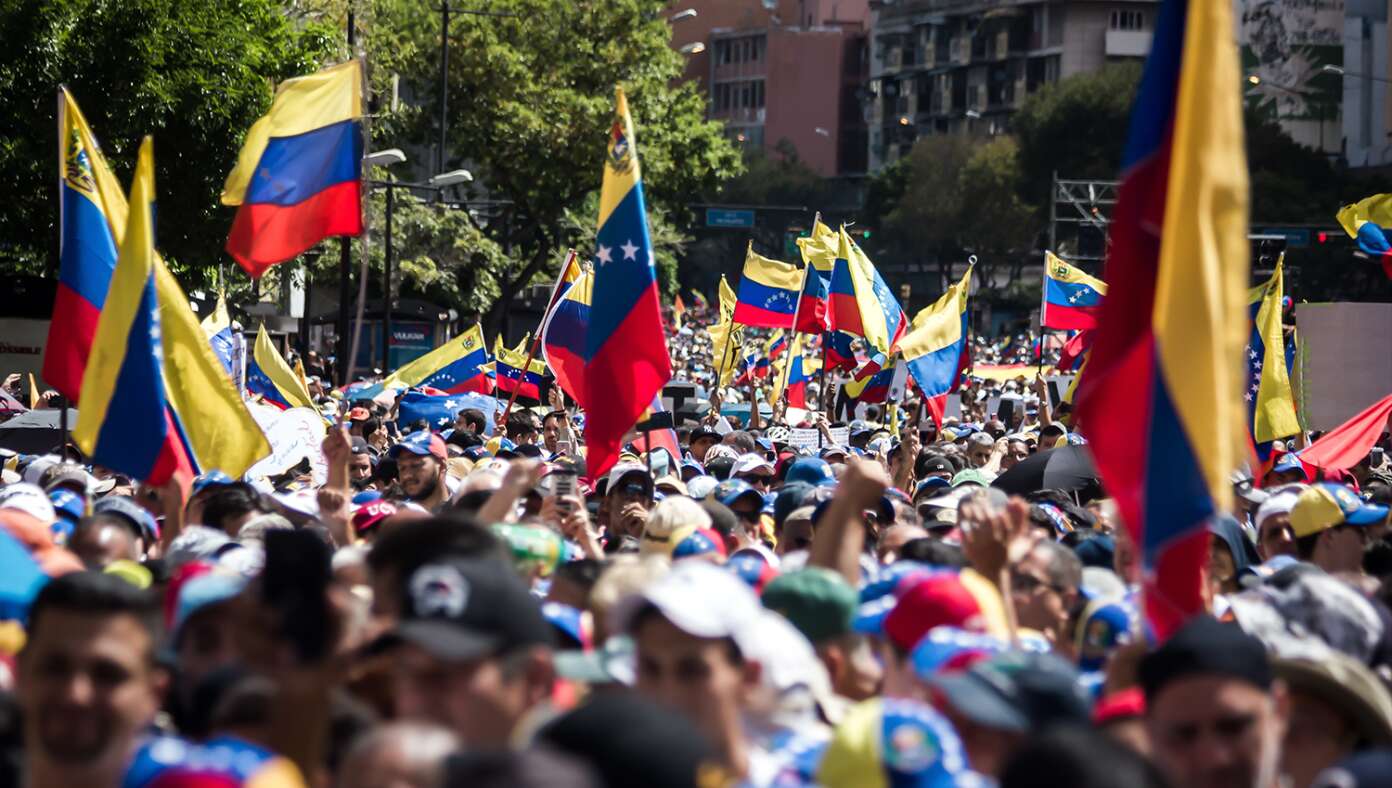
National leaders in Latin America expressed condemnation of the U.S. operations in Venezuela on Jan. 3, with executives in Colombia, Brazil and elsewhere warning of U.S. aggression and regional instability after the strikes.

The bishops of Venezuela, meanwhile, said they are in prayer and communicating with each other amid the ongoing incident.

Read More
Seminarian says ‘God will give you the grace to say yes’ – #Catholic – 
 
 Xavier Polisetty, a seminarian for the Diocese of Fort Worth from Grapevine, Texas, attends SEEK 2026 on Jan. 2, 2026. | Credit: Amira Abuzeid/CNA

Jan 3, 2026 / 12:26 pm (CNA).
Xavier Polisetty, 25, a seminarian from Texas, encouraged men considering the priesthood to trust that God will give the grace to continue.“I always felt the call at the back of my heart. It never went away,” he said with a smile.Hundreds of seminarians are attending the SEEK 2026 conference being held in Grapevine, Texas, this week with thousands of other young Catholics from around the country.As a child, “I played Mass like a lot of other Catholic boys,” said Polisetty, who grew up in Grapevine. He also noticed that his parents, whose faith he described as devout, admired the priests they knew, and he felt from the beginning that he wanted to be one of them.While studying computer science at Texas A&M University, he participated in several ministries through St. Mary’s Catholic Center, including a weekend retreat called Aggie Awakening, which he said emphasized the importance of having a relationship with Christ. He said he also made several good friendships where a relationship with Christ was at the core.After graduating in 2022, he entered seminary at The Catholic University of America in Washington, D.C., and is halfway through his seven years of seminary training.Polisetty said he was inspired by Father David Michael Moses’ words on the first night of the conference: “Being a priest means that you are so close to Jesus Christ, when you say, at Mass, ‘This is my body,’ Jesus makes it become his body,” Moses said. “When a person walks into confession, when you say ‘I absolve you,’ you are so close to Jesus you speak for him.”Father David Michael Moses addresses SEEK 2026 in Texas on Jan. 2, 2026. | Credit: Amira Abuzeid/CNAPolisetty said he is sure he is called to the priesthood but does experience doubts “almost on a weekly basis. When I watch movies, or look at stories of people doing great things in business or in family life, it’s easy to be tempted.”He said he dated a young woman in college with whom “there were miscommunications. It was hard.”But, he continued: “That’s where the gift of God’s grace comes in.”“God has used those desires to bring fruit to my ministry even now, and hopefully one day when I am ordained. The experience and empathy my journey has given me; though it’s been difficult at times, but God’s grace, every time; he’s given me the grace to continue.”He encouraged young men to consider the priesthood even if they struggle with accepting the celibacy aspect. “Everyone has those desires,” he acknowledged. “I have those desires, all my brother seminarians have them. We’re open about them and talk about them.” Seminarians (left to right) Xavier Polisetty, Nicholas Hoelscher, Lane Tschirhart, and Eric Hernandez explore the booths at Mission Way, an exhibition filled with information booths for Catholic ministries, religious orders, and vendors, at SEEK 2026 in Fort Worth, Texas, on Jan. 2, 2026. | Credit: Amira Abuzeid/CNA“It’s a greater gift to give God,” he continued, “to offer up those desires for the sake of a greater good.”“When parents see their newborns, they often say they love more than they ever could have imagined they could. It’s the same thing in the priesthood. Being in environments like this SEEK conference, you see all these Catholics, and it gives me this great love,” he said.“I want to be ordained so I can minister to them. They’re seeking. By being a priest, I can love them in that way. There’s sacrifices involved, but every lifestyle has that,” he said.“Christ on the cross shows that sacrifice is our path to salvation,” Polisetty said. “It’s a great blessing. There are so many reasons to say no, but God will give you the grace to say yes. There will be so many gifts.”

Seminarian says ‘God will give you the grace to say yes’ – #Catholic – Xavier Polisetty, a seminarian for the Diocese of Fort Worth from Grapevine, Texas, attends SEEK 2026 on Jan. 2, 2026. | Credit: Amira Abuzeid/CNA Jan 3, 2026 / 12:26 pm (CNA). Xavier Polisetty, 25, a seminarian from Texas, encouraged men considering the priesthood to trust that God will give the grace to continue.“I always felt the call at the back of my heart. It never went away,” he said with a smile.Hundreds of seminarians are attending the SEEK 2026 conference being held in Grapevine, Texas, this week with thousands of other young Catholics from around the country.As a child, “I played Mass like a lot of other Catholic boys,” said Polisetty, who grew up in Grapevine. He also noticed that his parents, whose faith he described as devout, admired the priests they knew, and he felt from the beginning that he wanted to be one of them.While studying computer science at Texas A&M University, he participated in several ministries through St. Mary’s Catholic Center, including a weekend retreat called Aggie Awakening, which he said emphasized the importance of having a relationship with Christ. He said he also made several good friendships where a relationship with Christ was at the core.After graduating in 2022, he entered seminary at The Catholic University of America in Washington, D.C., and is halfway through his seven years of seminary training.Polisetty said he was inspired by Father David Michael Moses’ words on the first night of the conference: “Being a priest means that you are so close to Jesus Christ, when you say, at Mass, ‘This is my body,’ Jesus makes it become his body,” Moses said. “When a person walks into confession, when you say ‘I absolve you,’ you are so close to Jesus you speak for him.”Father David Michael Moses addresses SEEK 2026 in Texas on Jan. 2, 2026. | Credit: Amira Abuzeid/CNAPolisetty said he is sure he is called to the priesthood but does experience doubts “almost on a weekly basis. When I watch movies, or look at stories of people doing great things in business or in family life, it’s easy to be tempted.”He said he dated a young woman in college with whom “there were miscommunications. It was hard.”But, he continued: “That’s where the gift of God’s grace comes in.”“God has used those desires to bring fruit to my ministry even now, and hopefully one day when I am ordained. The experience and empathy my journey has given me; though it’s been difficult at times, but God’s grace, every time; he’s given me the grace to continue.”He encouraged young men to consider the priesthood even if they struggle with accepting the celibacy aspect. “Everyone has those desires,” he acknowledged. “I have those desires, all my brother seminarians have them. We’re open about them and talk about them.” Seminarians (left to right) Xavier Polisetty, Nicholas Hoelscher, Lane Tschirhart, and Eric Hernandez explore the booths at Mission Way, an exhibition filled with information booths for Catholic ministries, religious orders, and vendors, at SEEK 2026 in Fort Worth, Texas, on Jan. 2, 2026. | Credit: Amira Abuzeid/CNA“It’s a greater gift to give God,” he continued, “to offer up those desires for the sake of a greater good.”“When parents see their newborns, they often say they love more than they ever could have imagined they could. It’s the same thing in the priesthood. Being in environments like this SEEK conference, you see all these Catholics, and it gives me this great love,” he said.“I want to be ordained so I can minister to them. They’re seeking. By being a priest, I can love them in that way. There’s sacrifices involved, but every lifestyle has that,” he said.“Christ on the cross shows that sacrifice is our path to salvation,” Polisetty said. “It’s a great blessing. There are so many reasons to say no, but God will give you the grace to say yes. There will be so many gifts.”


Xavier Polisetty, a seminarian for the Diocese of Fort Worth from Grapevine, Texas, attends SEEK 2026 on Jan. 2, 2026. | Credit: Amira Abuzeid/CNA

Jan 3, 2026 / 12:26 pm (CNA).

Xavier Polisetty, 25, a seminarian from Texas, encouraged men considering the priesthood to trust that God will give the grace to continue.

“I always felt the call at the back of my heart. It never went away,” he said with a smile.

Hundreds of seminarians are attending the SEEK 2026 conference being held in Grapevine, Texas, this week with thousands of other young Catholics from around the country.

As a child, “I played Mass like a lot of other Catholic boys,” said Polisetty, who grew up in Grapevine. He also noticed that his parents, whose faith he described as devout, admired the priests they knew, and he felt from the beginning that he wanted to be one of them.

While studying computer science at Texas A&M University, he participated in several ministries through St. Mary’s Catholic Center, including a weekend retreat called Aggie Awakening, which he said emphasized the importance of having a relationship with Christ. He said he also made several good friendships where a relationship with Christ was at the core.

After graduating in 2022, he entered seminary at The Catholic University of America in Washington, D.C., and is halfway through his seven years of seminary training.

Polisetty said he was inspired by Father David Michael Moses’ words on the first night of the conference: “Being a priest means that you are so close to Jesus Christ, when you say, at Mass, ‘This is my body,’ Jesus makes it become his body,” Moses said. “When a person walks into confession, when you say ‘I absolve you,’ you are so close to Jesus you speak for him.”

Father David Michael Moses addresses SEEK 2026 in Texas on Jan. 2, 2026. | Credit: Amira Abuzeid/CNA

Polisetty said he is sure he is called to the priesthood but does experience doubts “almost on a weekly basis. When I watch movies, or look at stories of people doing great things in business or in family life, it’s easy to be tempted.”

He said he dated a young woman in college with whom “there were miscommunications. It was hard.”

But, he continued: “That’s where the gift of God’s grace comes in.”

“God has used those desires to bring fruit to my ministry even now, and hopefully one day when I am ordained. The experience and empathy my journey has given me; though it’s been difficult at times, but God’s grace, every time; he’s given me the grace to continue.”

He encouraged young men to consider the priesthood even if they struggle with accepting the celibacy aspect. “Everyone has those desires,” he acknowledged. “I have those desires, all my brother seminarians have them. We’re open about them and talk about them.”

Seminarians (left to right) Xavier Polisetty, Nicholas Hoelscher, Lane Tschirhart, and Eric Hernandez explore the booths at Mission Way, an exhibition filled with information booths for Catholic ministries, religious orders, and vendors, at SEEK 2026 in Fort Worth, Texas, on Jan. 2, 2026. | Credit: Amira Abuzeid/CNA

“It’s a greater gift to give God,” he continued, “to offer up those desires for the sake of a greater good.”

“When parents see their newborns, they often say they love more than they ever could have imagined they could. It’s the same thing in the priesthood. Being in environments like this SEEK conference, you see all these Catholics, and it gives me this great love,” he said.

“I want to be ordained so I can minister to them. They’re seeking. By being a priest, I can love them in that way. There’s sacrifices involved, but every lifestyle has that,” he said.

“Christ on the cross shows that sacrifice is our path to salvation,” Polisetty said. “It’s a great blessing. There are so many reasons to say no, but God will give you the grace to say yes. There will be so many gifts.”

Read More
Vatican newspaper leads with U.S. attack on Venezuela – #Catholic – 
 
 A highway sits empty in Caracas after U.S. strikes in the area and the arrest of Venezuelan President Nicolás Maduro, Saturday, Jan. 3, 2026. | Credit: FEDERICO PARRA/Getty Images

Jan 3, 2026 / 11:56 am (CNA).
The Vatican’s daily newspaper L’Osservatore Romano opened its Saturday edition with news of U.S. airstrikes against Venezuela, reporting attacks in the capital, Caracas, as well as on several military bases around the country.The main image on the paper’s front page showed a dense column of smoke rising over an urban area, reflecting what the paper described as the impact of the military offensive and the sudden escalation of the regional crisis.The newspaper said air raids hit Caracas overnight and several military installations, and it referred to a claim by U.S. President Donald Trump that Venezuelan President Nicolás Maduro had been captured and removed from the country.The paper said the situation remains “highly volatile,” with growing uncertainty about the political, social, and humanitarian consequences of the attack.Founded on July 1, 1861, L’Osservatore Romano — defined on its masthead as a “political-religious daily” — aims to report on and reflect the life of the Church and serves as a vehicle for disseminating the pope’s voice, rather than functioning as a direct public outlet for the Vatican.The L’Osservatore Romano article, written in Italian, also reported the response of the Caracas government, which called the events a “most serious aggression” and denounced what it said was a direct violation of national sovereignty.So far, there has been no official comment from the Vatican or from Pope Leo XIV regarding the incident, though the Holy Father could address the situation in Venezuela after praying the Angelus on Sunday.On Dec. 2, 2025, returning from his first international trip — to Turkey and Lebanon — the pope voiced concern about the risk of a U.S. invasion of Venezuela.The pontiff said at the time that he was closely following the situation, both through the Venezuelan bishops and through the apostolic nuncio in the country, Archbishop Alberto Ortega Martín.“Regarding Venezuela, at the level of the episcopal conference, with the nuncio, we are looking for ways to calm the situation, above all seeking the good of the people, because so many times the ones who suffer in those situations are the people, not the authorities,” the pope told reporters on the return flight.He added: “It is better to look for ways of dialogue — even pressure, economic pressure — but seeking another way to bring about change, if that is what they decide to do in the United States.”Vatican Secretary of State Cardinal Pietro Parolin, who served as apostolic nuncio in Venezuela from 2009 to 2013 and is well acquainted with the country’s situation, also denounced the existence of “unjust prisons” and “oppressed” people in Venezuela on Oct. 21, 2025.In a homily during a Mass of thanksgiving for the canonization of Venezuela’s first two saints — St. José Gregorio Hernández and St. Carmen Rendiles — Parolin urged the faithful to imitate them and said: “Only in this way, dear Venezuela, will you pass from death to life!” “Only in this way, dear Venezuela, will your light shine in the darkness, your darkness will become noon — if you listen to the Word of the Lord who calls you to open unjust prisons, to break the bars of the stocks, to set the oppressed free, to break every yoke,” Parolin said.This story was first published by ACI Prensa, CNA’s Spanish-language news partner. It has been translated and adapted by CNA.

Vatican newspaper leads with U.S. attack on Venezuela – #Catholic – A highway sits empty in Caracas after U.S. strikes in the area and the arrest of Venezuelan President Nicolás Maduro, Saturday, Jan. 3, 2026. | Credit: FEDERICO PARRA/Getty Images Jan 3, 2026 / 11:56 am (CNA). The Vatican’s daily newspaper L’Osservatore Romano opened its Saturday edition with news of U.S. airstrikes against Venezuela, reporting attacks in the capital, Caracas, as well as on several military bases around the country.The main image on the paper’s front page showed a dense column of smoke rising over an urban area, reflecting what the paper described as the impact of the military offensive and the sudden escalation of the regional crisis.The newspaper said air raids hit Caracas overnight and several military installations, and it referred to a claim by U.S. President Donald Trump that Venezuelan President Nicolás Maduro had been captured and removed from the country.The paper said the situation remains “highly volatile,” with growing uncertainty about the political, social, and humanitarian consequences of the attack.Founded on July 1, 1861, L’Osservatore Romano — defined on its masthead as a “political-religious daily” — aims to report on and reflect the life of the Church and serves as a vehicle for disseminating the pope’s voice, rather than functioning as a direct public outlet for the Vatican.The L’Osservatore Romano article, written in Italian, also reported the response of the Caracas government, which called the events a “most serious aggression” and denounced what it said was a direct violation of national sovereignty.So far, there has been no official comment from the Vatican or from Pope Leo XIV regarding the incident, though the Holy Father could address the situation in Venezuela after praying the Angelus on Sunday.On Dec. 2, 2025, returning from his first international trip — to Turkey and Lebanon — the pope voiced concern about the risk of a U.S. invasion of Venezuela.The pontiff said at the time that he was closely following the situation, both through the Venezuelan bishops and through the apostolic nuncio in the country, Archbishop Alberto Ortega Martín.“Regarding Venezuela, at the level of the episcopal conference, with the nuncio, we are looking for ways to calm the situation, above all seeking the good of the people, because so many times the ones who suffer in those situations are the people, not the authorities,” the pope told reporters on the return flight.He added: “It is better to look for ways of dialogue — even pressure, economic pressure — but seeking another way to bring about change, if that is what they decide to do in the United States.”Vatican Secretary of State Cardinal Pietro Parolin, who served as apostolic nuncio in Venezuela from 2009 to 2013 and is well acquainted with the country’s situation, also denounced the existence of “unjust prisons” and “oppressed” people in Venezuela on Oct. 21, 2025.In a homily during a Mass of thanksgiving for the canonization of Venezuela’s first two saints — St. José Gregorio Hernández and St. Carmen Rendiles — Parolin urged the faithful to imitate them and said: “Only in this way, dear Venezuela, will you pass from death to life!” “Only in this way, dear Venezuela, will your light shine in the darkness, your darkness will become noon — if you listen to the Word of the Lord who calls you to open unjust prisons, to break the bars of the stocks, to set the oppressed free, to break every yoke,” Parolin said.This story was first published by ACI Prensa, CNA’s Spanish-language news partner. It has been translated and adapted by CNA.


A highway sits empty in Caracas after U.S. strikes in the area and the arrest of Venezuelan President Nicolás Maduro, Saturday, Jan. 3, 2026. | Credit: FEDERICO PARRA/Getty Images

Jan 3, 2026 / 11:56 am (CNA).

The Vatican’s daily newspaper L’Osservatore Romano opened its Saturday edition with news of U.S. airstrikes against Venezuela, reporting attacks in the capital, Caracas, as well as on several military bases around the country.

The main image on the paper’s front page showed a dense column of smoke rising over an urban area, reflecting what the paper described as the impact of the military offensive and the sudden escalation of the regional crisis.

The newspaper said air raids hit Caracas overnight and several military installations, and it referred to a claim by U.S. President Donald Trump that Venezuelan President Nicolás Maduro had been captured and removed from the country.

The paper said the situation remains “highly volatile,” with growing uncertainty about the political, social, and humanitarian consequences of the attack.

Founded on July 1, 1861, L’Osservatore Romano — defined on its masthead as a “political-religious daily” — aims to report on and reflect the life of the Church and serves as a vehicle for disseminating the pope’s voice, rather than functioning as a direct public outlet for the Vatican.

The L’Osservatore Romano article, written in Italian, also reported the response of the Caracas government, which called the events a “most serious aggression” and denounced what it said was a direct violation of national sovereignty.

So far, there has been no official comment from the Vatican or from Pope Leo XIV regarding the incident, though the Holy Father could address the situation in Venezuela after praying the Angelus on Sunday.

On Dec. 2, 2025, returning from his first international trip — to Turkey and Lebanon — the pope voiced concern about the risk of a U.S. invasion of Venezuela.

The pontiff said at the time that he was closely following the situation, both through the Venezuelan bishops and through the apostolic nuncio in the country, Archbishop Alberto Ortega Martín.

“Regarding Venezuela, at the level of the episcopal conference, with the nuncio, we are looking for ways to calm the situation, above all seeking the good of the people, because so many times the ones who suffer in those situations are the people, not the authorities,” the pope told reporters on the return flight.

He added: “It is better to look for ways of dialogue — even pressure, economic pressure — but seeking another way to bring about change, if that is what they decide to do in the United States.”

Vatican Secretary of State Cardinal Pietro Parolin, who served as apostolic nuncio in Venezuela from 2009 to 2013 and is well acquainted with the country’s situation, also denounced the existence of “unjust prisons” and “oppressed” people in Venezuela on Oct. 21, 2025.

In a homily during a Mass of thanksgiving for the canonization of Venezuela’s first two saints — St. José Gregorio Hernández and St. Carmen Rendiles — Parolin urged the faithful to imitate them and said: “Only in this way, dear Venezuela, will you pass from death to life!”

“Only in this way, dear Venezuela, will your light shine in the darkness, your darkness will become noon — if you listen to the Word of the Lord who calls you to open unjust prisons, to break the bars of the stocks, to set the oppressed free, to break every yoke,” Parolin said.

This story was first published by ACI Prensa, CNA’s Spanish-language news partner. It has been translated and adapted by CNA.

Read More

The Spirit rover landed on Mars on Jan. 4, 2004. Like its twin, Opportunity, Spirit was assigned an initial mission of only 90 sols. It exceeded this mission lifetime by more than 20 times, delivering invaluable science as it explored the Red Planet. It made its home in Gusev Crater, an ancient impact site andContinue reading “Jan. 3, 2004: Spirit lands on Mars”

The post Jan. 3, 2004: Spirit lands on Mars appeared first on Astronomy Magazine.

Read More
FOCUS expands reach into parishes, hoping to revitalize local Church #Catholic 
 
 Left to right: Curtis Martin, founder of FOCUS, and his son, Brock Martin, vice president of parish outreach at FOCUS, sit down for an interview with CNA on Dec. 10, 2025. | Credit: Francesca Fenton/EWTN News

Jan 3, 2026 / 08:00 am (CNA).
For nearly 30 years, FOCUS has been known for its missionary work on college campuses. Earlier this year, the ministry began to expand its reach with a new branch — FOCUS Parish.FOCUS Parish brings FOCUS missionaries into Catholic parishes to help revitalize the parish itself and the parishioners, and to form missionary disciples — laypeople who effectively spread the Gospel message in the local community and diocese.Founder of FOCUS Curtis Martin and his son, Brock Martin, vice president of parish outreach at FOCUS, both agree that FOCUS Parish is a response to the need of sending missionaries to “where the people are.”“If we’re trying to bring the Gospel to every man, woman, and child on the face of the earth, the vast majority of people don’t currently live on U.S. college campuses,” Brock told CNA in an interview. “The Catholic Church has amazingly already done this work — every inch of the globe is already mapped out into a parish structure. So, FOCUS’ move into parishes is really a response to the fact that we want to take this mission seriously. We need to send missionaries to where the people are.”Curtis added: “Everybody lives in a parish, as Brock said, and evangelization takes root when there’s real transformation. It’s going to take place in families and in parishes. That’s where Catholics live. And so we want to be with them to share the Gospel of Jesus Christ with them in the midst, as Brock said, in the midst of friendship.”Parishes who take part in FOCUS’ new ministry will receive two full-time missionaries who become part of the parish’s leadership team, help advise and lead parish ministries, and work to create small communities where the Gospel message is shared and spread to all parishioners.“These missionaries are imbedding into the parish culture,” Brock said.FOCUS Parish is currently in 25 parishes and plans to expand to an additional 25 parishes in 2026.When speaking to the fact that FOCUS Parish has become the fastest-growing part of the apostolate, Brock credited the current “landscape of the parish in the United States.”“Right now there’s about 16,000 parishes [in the U.S.],” Brock said. “I think the number of parishes who are waking up, the number of pastors who recognize that business as usual is not working, we have to, with new ardor and new methodologies, try to figure out how to live the new evangelization. I just think there’s a unique moment where as pastors and finance councils become aware of the opportunity, we’re seeing more and more people start to raise their hand at a faster rate.”Curtis highlighted the retention rate of FOCUS Parish missionaries leading to the success of the ministry.“We’re seeing greater longevity with our missionaries because they’re not walking with 18- to 22-year-olds, they’re walking with people who are of their same age, maybe older, maybe younger,” he explained. “The retention rate for FOCUS missionaries in Parish last year was 100%. Nobody left. By way of comparison, probably 25% of the missionaries left on campus; that’s part of our cycle. And so to be able to recognize, we can grow because of the longevity.”With the growth to 25 more parishes in the new year, FOCUS is looking to hire an additional 50 to 55 missionaries — considering both moving campus missionaries to parishes and hiring individuals who have never been FOCUS missionaries.As for his hopes for the future, Brock said: “My deepest hope in FOCUS Parish is that this would be a simple and repeatable gift that we can offer to the Church.”Curtis said: “My hope for FOCUS in the parish is actually hope. I think a lot of leaders in the Church are good people but they’re discouraged and they’re kind of managing a slow decline. And that’s not the way Christianity works. Christianity has grown in every generation since the time of Christ. We’re living in a very abnormal time, at least in the West. It’s shrinking. That’s not the way it should be.”He added: “There’s a resurgence of faith — articles are being written about this all over the world — FOCUS is just participating in a little way. Millions of people awakening to Christ. We need to welcome them and to be able to recognize the Church ought to be growing. This can work. And when you have hope you start to make decisions based upon that and all of a sudden you see the Church should be a place of growth.”

FOCUS expands reach into parishes, hoping to revitalize local Church #Catholic Left to right: Curtis Martin, founder of FOCUS, and his son, Brock Martin, vice president of parish outreach at FOCUS, sit down for an interview with CNA on Dec. 10, 2025. | Credit: Francesca Fenton/EWTN News Jan 3, 2026 / 08:00 am (CNA). For nearly 30 years, FOCUS has been known for its missionary work on college campuses. Earlier this year, the ministry began to expand its reach with a new branch — FOCUS Parish.FOCUS Parish brings FOCUS missionaries into Catholic parishes to help revitalize the parish itself and the parishioners, and to form missionary disciples — laypeople who effectively spread the Gospel message in the local community and diocese.Founder of FOCUS Curtis Martin and his son, Brock Martin, vice president of parish outreach at FOCUS, both agree that FOCUS Parish is a response to the need of sending missionaries to “where the people are.”“If we’re trying to bring the Gospel to every man, woman, and child on the face of the earth, the vast majority of people don’t currently live on U.S. college campuses,” Brock told CNA in an interview. “The Catholic Church has amazingly already done this work — every inch of the globe is already mapped out into a parish structure. So, FOCUS’ move into parishes is really a response to the fact that we want to take this mission seriously. We need to send missionaries to where the people are.”Curtis added: “Everybody lives in a parish, as Brock said, and evangelization takes root when there’s real transformation. It’s going to take place in families and in parishes. That’s where Catholics live. And so we want to be with them to share the Gospel of Jesus Christ with them in the midst, as Brock said, in the midst of friendship.”Parishes who take part in FOCUS’ new ministry will receive two full-time missionaries who become part of the parish’s leadership team, help advise and lead parish ministries, and work to create small communities where the Gospel message is shared and spread to all parishioners.“These missionaries are imbedding into the parish culture,” Brock said.FOCUS Parish is currently in 25 parishes and plans to expand to an additional 25 parishes in 2026.When speaking to the fact that FOCUS Parish has become the fastest-growing part of the apostolate, Brock credited the current “landscape of the parish in the United States.”“Right now there’s about 16,000 parishes [in the U.S.],” Brock said. “I think the number of parishes who are waking up, the number of pastors who recognize that business as usual is not working, we have to, with new ardor and new methodologies, try to figure out how to live the new evangelization. I just think there’s a unique moment where as pastors and finance councils become aware of the opportunity, we’re seeing more and more people start to raise their hand at a faster rate.”Curtis highlighted the retention rate of FOCUS Parish missionaries leading to the success of the ministry.“We’re seeing greater longevity with our missionaries because they’re not walking with 18- to 22-year-olds, they’re walking with people who are of their same age, maybe older, maybe younger,” he explained. “The retention rate for FOCUS missionaries in Parish last year was 100%. Nobody left. By way of comparison, probably 25% of the missionaries left on campus; that’s part of our cycle. And so to be able to recognize, we can grow because of the longevity.”With the growth to 25 more parishes in the new year, FOCUS is looking to hire an additional 50 to 55 missionaries — considering both moving campus missionaries to parishes and hiring individuals who have never been FOCUS missionaries.As for his hopes for the future, Brock said: “My deepest hope in FOCUS Parish is that this would be a simple and repeatable gift that we can offer to the Church.”Curtis said: “My hope for FOCUS in the parish is actually hope. I think a lot of leaders in the Church are good people but they’re discouraged and they’re kind of managing a slow decline. And that’s not the way Christianity works. Christianity has grown in every generation since the time of Christ. We’re living in a very abnormal time, at least in the West. It’s shrinking. That’s not the way it should be.”He added: “There’s a resurgence of faith — articles are being written about this all over the world — FOCUS is just participating in a little way. Millions of people awakening to Christ. We need to welcome them and to be able to recognize the Church ought to be growing. This can work. And when you have hope you start to make decisions based upon that and all of a sudden you see the Church should be a place of growth.”


Left to right: Curtis Martin, founder of FOCUS, and his son, Brock Martin, vice president of parish outreach at FOCUS, sit down for an interview with CNA on Dec. 10, 2025. | Credit: Francesca Fenton/EWTN News

Jan 3, 2026 / 08:00 am (CNA).

For nearly 30 years, FOCUS has been known for its missionary work on college campuses. Earlier this year, the ministry began to expand its reach with a new branch — FOCUS Parish.

FOCUS Parish brings FOCUS missionaries into Catholic parishes to help revitalize the parish itself and the parishioners, and to form missionary disciples — laypeople who effectively spread the Gospel message in the local community and diocese.

Founder of FOCUS Curtis Martin and his son, Brock Martin, vice president of parish outreach at FOCUS, both agree that FOCUS Parish is a response to the need of sending missionaries to “where the people are.”

“If we’re trying to bring the Gospel to every man, woman, and child on the face of the earth, the vast majority of people don’t currently live on U.S. college campuses,” Brock told CNA in an interview. “The Catholic Church has amazingly already done this work — every inch of the globe is already mapped out into a parish structure. So, FOCUS’ move into parishes is really a response to the fact that we want to take this mission seriously. We need to send missionaries to where the people are.”

Curtis added: “Everybody lives in a parish, as Brock said, and evangelization takes root when there’s real transformation. It’s going to take place in families and in parishes. That’s where Catholics live. And so we want to be with them to share the Gospel of Jesus Christ with them in the midst, as Brock said, in the midst of friendship.”

Parishes who take part in FOCUS’ new ministry will receive two full-time missionaries who become part of the parish’s leadership team, help advise and lead parish ministries, and work to create small communities where the Gospel message is shared and spread to all parishioners.

“These missionaries are imbedding into the parish culture,” Brock said.

FOCUS Parish is currently in 25 parishes and plans to expand to an additional 25 parishes in 2026.

When speaking to the fact that FOCUS Parish has become the fastest-growing part of the apostolate, Brock credited the current “landscape of the parish in the United States.”

“Right now there’s about 16,000 parishes [in the U.S.],” Brock said. “I think the number of parishes who are waking up, the number of pastors who recognize that business as usual is not working, we have to, with new ardor and new methodologies, try to figure out how to live the new evangelization. I just think there’s a unique moment where as pastors and finance councils become aware of the opportunity, we’re seeing more and more people start to raise their hand at a faster rate.”

Curtis highlighted the retention rate of FOCUS Parish missionaries leading to the success of the ministry.

“We’re seeing greater longevity with our missionaries because they’re not walking with 18- to 22-year-olds, they’re walking with people who are of their same age, maybe older, maybe younger,” he explained. “The retention rate for FOCUS missionaries in Parish last year was 100%. Nobody left. By way of comparison, probably 25% of the missionaries left on campus; that’s part of our cycle. And so to be able to recognize, we can grow because of the longevity.”

With the growth to 25 more parishes in the new year, FOCUS is looking to hire an additional 50 to 55 missionaries — considering both moving campus missionaries to parishes and hiring individuals who have never been FOCUS missionaries.

As for his hopes for the future, Brock said: “My deepest hope in FOCUS Parish is that this would be a simple and repeatable gift that we can offer to the Church.”

Curtis said: “My hope for FOCUS in the parish is actually hope. I think a lot of leaders in the Church are good people but they’re discouraged and they’re kind of managing a slow decline. And that’s not the way Christianity works. Christianity has grown in every generation since the time of Christ. We’re living in a very abnormal time, at least in the West. It’s shrinking. That’s not the way it should be.”

He added: “There’s a resurgence of faith — articles are being written about this all over the world — FOCUS is just participating in a little way. Millions of people awakening to Christ. We need to welcome them and to be able to recognize the Church ought to be growing. This can work. And when you have hope you start to make decisions based upon that and all of a sudden you see the Church should be a place of growth.”

Read More
‘Remarkable results’ at Morris Plains Knights’ Poker Night #Catholic – Knights of Columbus Bishop McLaughlin Council 3495 of Morris Plains, N.J., netted remarkable results with its Charity Poker Night Fundraiser on Dec. 6 at the Red Oaks School, also in Morris Plains. Mike’s Poker Tables ran the event, which raised more than ,700, thanks to the large community turnout.
The knights thank many for their Poker Night efforts, including Father Lukasz Wnuk, administrator of St. Virgil Parish in Morris Plains; Red Oaks School; knights members for volunteering to work the event; and businesses and organizations that advertised, donated, or sponsored a Poker Table.

Click here to subscribe to our weekly newsletter.

‘Remarkable results’ at Morris Plains Knights’ Poker Night #Catholic –

Knights of Columbus Bishop McLaughlin Council 3495 of Morris Plains, N.J., netted remarkable results with its Charity Poker Night Fundraiser on Dec. 6 at the Red Oaks School, also in Morris Plains. Mike’s Poker Tables ran the event, which raised more than $4,700, thanks to the large community turnout.

The knights thank many for their Poker Night efforts, including Father Lukasz Wnuk, administrator of St. Virgil Parish in Morris Plains; Red Oaks School; knights members for volunteering to work the event; and businesses and organizations that advertised, donated, or sponsored a Poker Table.


Click here to subscribe to our weekly newsletter.

Knights of Columbus Bishop McLaughlin Council 3495 of Morris Plains, N.J., netted remarkable results with its Charity Poker Night Fundraiser on Dec. 6 at the Red Oaks School, also in Morris Plains. Mike’s Poker Tables ran the event, which raised more than $4,700, thanks to the large community turnout. The knights thank many for their Poker Night efforts, including Father Lukasz Wnuk, administrator of St. Virgil Parish in Morris Plains; Red Oaks School; knights members for volunteering to work the event; and businesses and organizations that advertised, donated, or sponsored a Poker Table. Click here to subscribe to our weekly

Read More
Chatham Township priest receives prestigious dissertation award in Rome #Catholic – On Nov. 21 in Rome, Father James Platania, a priest of the Paterson Diocese in New Jersey, received the Bellarmine Award at the Pontifical Gregorian University. The award is the university’s highest distinction for doctoral research and is granted each year to one dissertation judged to make an exceptional contribution to theological scholarship.
Father Platania, S.S.L., S.Th.D., serves as parochial vicar at Corpus Christi Parish in Chatham Township, N.J., teaches at Seton Hall University in South Orange, N.J., and serves as Catholic chaplain to the New York Giants.
The award was bestowed by Jesuit Father Mark Lewis, rector of the university, during a formal ceremony held in conjunction with a meeting of rectors from Jesuit universities across Europe. Named for Robert Bellarmine, Doctor of the Church and a major figure in the Catholic intellectual tradition, the award honors work that exemplifies rigorous scholarship in the service of the Church’s intellectual mission.

Click here to subscribe to our weekly newsletter.

Father Platania received the award for his doctoral dissertation, completed in 2024, which examines the emergence of Shabbat in the book of Exodus. The research challenges the common assumption that this central biblical practice is instituted either in God’s rest at creation or solely in the law given at Mount Sinai. Instead, it argues that Shabbat first takes shape in the wilderness as a lived practice, discovered as the people learn to trust in God’s daily provision. Through a close narrative analysis of Exodus 16, the work highlights Moses as a faithful interpreter who helps the people discern meaning in God’s actions and respond with concrete practices of trust and obedience.
The conferral of the Bellarmine Award in Rome, within the context of an international gathering of Jesuit academic leaders, underscores the vitality of contemporary Catholic biblical scholarship and its enduring commitment to faith seeking understanding.

Chatham Township priest receives prestigious dissertation award in Rome #Catholic – On Nov. 21 in Rome, Father James Platania, a priest of the Paterson Diocese in New Jersey, received the Bellarmine Award at the Pontifical Gregorian University. The award is the university’s highest distinction for doctoral research and is granted each year to one dissertation judged to make an exceptional contribution to theological scholarship. Father Platania, S.S.L., S.Th.D., serves as parochial vicar at Corpus Christi Parish in Chatham Township, N.J., teaches at Seton Hall University in South Orange, N.J., and serves as Catholic chaplain to the New York Giants. The award was bestowed by Jesuit Father Mark Lewis, rector of the university, during a formal ceremony held in conjunction with a meeting of rectors from Jesuit universities across Europe. Named for Robert Bellarmine, Doctor of the Church and a major figure in the Catholic intellectual tradition, the award honors work that exemplifies rigorous scholarship in the service of the Church’s intellectual mission. Click here to subscribe to our weekly newsletter. Father Platania received the award for his doctoral dissertation, completed in 2024, which examines the emergence of Shabbat in the book of Exodus. The research challenges the common assumption that this central biblical practice is instituted either in God’s rest at creation or solely in the law given at Mount Sinai. Instead, it argues that Shabbat first takes shape in the wilderness as a lived practice, discovered as the people learn to trust in God’s daily provision. Through a close narrative analysis of Exodus 16, the work highlights Moses as a faithful interpreter who helps the people discern meaning in God’s actions and respond with concrete practices of trust and obedience. The conferral of the Bellarmine Award in Rome, within the context of an international gathering of Jesuit academic leaders, underscores the vitality of contemporary Catholic biblical scholarship and its enduring commitment to faith seeking understanding.

Chatham Township priest receives prestigious dissertation award in Rome #Catholic –

On Nov. 21 in Rome, Father James Platania, a priest of the Paterson Diocese in New Jersey, received the Bellarmine Award at the Pontifical Gregorian University. The award is the university’s highest distinction for doctoral research and is granted each year to one dissertation judged to make an exceptional contribution to theological scholarship.

Father Platania, S.S.L., S.Th.D., serves as parochial vicar at Corpus Christi Parish in Chatham Township, N.J., teaches at Seton Hall University in South Orange, N.J., and serves as Catholic chaplain to the New York Giants.

The award was bestowed by Jesuit Father Mark Lewis, rector of the university, during a formal ceremony held in conjunction with a meeting of rectors from Jesuit universities across Europe. Named for Robert Bellarmine, Doctor of the Church and a major figure in the Catholic intellectual tradition, the award honors work that exemplifies rigorous scholarship in the service of the Church’s intellectual mission.


Click here to subscribe to our weekly newsletter.

Father Platania received the award for his doctoral dissertation, completed in 2024, which examines the emergence of Shabbat in the book of Exodus. The research challenges the common assumption that this central biblical practice is instituted either in God’s rest at creation or solely in the law given at Mount Sinai. Instead, it argues that Shabbat first takes shape in the wilderness as a lived practice, discovered as the people learn to trust in God’s daily provision. Through a close narrative analysis of Exodus 16, the work highlights Moses as a faithful interpreter who helps the people discern meaning in God’s actions and respond with concrete practices of trust and obedience.

The conferral of the Bellarmine Award in Rome, within the context of an international gathering of Jesuit academic leaders, underscores the vitality of contemporary Catholic biblical scholarship and its enduring commitment to faith seeking understanding.

On Nov. 21 in Rome, Father James Platania, a priest of the Paterson Diocese in New Jersey, received the Bellarmine Award at the Pontifical Gregorian University. The award is the university’s highest distinction for doctoral research and is granted each year to one dissertation judged to make an exceptional contribution to theological scholarship. Father Platania, S.S.L., S.Th.D., serves as parochial vicar at Corpus Christi Parish in Chatham Township, N.J., teaches at Seton Hall University in South Orange, N.J., and serves as Catholic chaplain to the New York Giants. The award was bestowed by Jesuit Father Mark Lewis, rector of the

Read More
How a Catholic university is combating the health care crisis in Maryland #Catholic 
 
 Mount St. Mary’s University Physician Assistant Program Director Mary Jackson, MMS, PA-C, CAQ-EM, demonstrates hands-on ultrasound techniques with students at Mount St. Mary’s University in Emmitsburg, Maryland. / Credit: Photo courtesy of Mount St. Mary’s University

CNA Staff, Jan 3, 2026 / 06:00 am (CNA).
In response to Maryland’s growing health care crisis, Mount St. Mary’s University is launching a physician assistant program later this month. The private Catholic liberal arts university, located in Emmitsburg, Maryland, is partnering with the Daughters of Charity — the religious order founded by St. Elizabeth Ann Seton — to bring more students into the field of health care.Exterior view of the new Timothy E. Trainor School of Health Professions at Mount St. Mary’s University in Emmitsburg, Maryland. Credit: Photo courtesy of Mount St. Mary’s UniversityAmid a staffing shortage, Maryland has had the longest emergency room wait times in the nation for nine years, averaging more than four hours. The number of serious medical mistakes that have resulted in death or severe disability for patients has risen each year in Maryland for the past four years, according to a report published in September 2025.A recent projection found that Maryland needs to increase the number of primary physicians by 23% by 2030 to cover the gap in primary care providers.The Maryland Department of Health has cited staffing shortages — among several causes of rising medical errors — as something that Mount St. Mary’s program hopes to mitigate.Ndidi Nwokorie, MBBS, FAAP, medical director of the Mount St. Mary’s physician assistant program, works one-on-one with a PA student. Credit: Photo courtesy of Mount St. Mary’s UniversityThe program — part of the college’s recent move into the health care arena — will welcome its inaugural class of 43 students on Jan. 20.The school’s new program includes resources for students to prevent burnout through its Center for Clinician Well-Being.CNA spoke with physician assistant program director Mary Jackson about the new program.Kevin Richardson, MSPAS, PA-C, director of assessments for the physician assistant program, leads a classroom lecture. Credit: Photo courtesy of Mount St. Mary’s UniversityCNA: What inspired the launch of the new physician assistant program? Mary Jackson: The Mount made a very intentional decision to enter the health care education arena as another way to live out our mission. As a Catholic university, Mount St. Mary’s graduates ethical leaders who are inspired by a passion for learning and who lead lives of significance in service to God and others. Preparing future health care clinicians is a natural extension of this mission, one that allows our students to serve individuals, families, and communities at moments of greatest vulnerability. We chose to launch a physician assistant program because the PA profession consistently ranks among the top careers nationally, with strong student interest and growing workforce demand. With a growing health care shortage in Maryland, how do you hope this program will address this crisis?  Maryland, like much of the country, is experiencing a significant health care workforce shortage, marked by long wait times, limited access in rural and underserved areas, and an aging population with increasing medical needs.Physician assistants play a vital role in expanding access to high-quality care. By educating future PAs who are clinically excellent, compassionate, and mission-driven, our program aims to strengthen Maryland’s health care workforce and ensure that more patients receive timely, patient-centered care.Associate Program Director Leanne Hedges, MMS, PA-C, demonstrates a comprehensive physical examination as part of clinical training for PA students. Credit: Photo courtesy of Mount St. Mary’s UniversityHow does your mission as a Catholic university drive the physician assistant program? Our Catholic identity shapes every aspect of the physician assistant program. The Mount’s commitment to service, compassion, equity, and well-being calls us to prepare clinicians who go beyond transactional medicine.We aim to form PAs who care deeply for all patients, especially those who are underserved, while also tending to their own well-being so they can flourish long term in their calling to health care.How did Mount St. Mary’s work with the Daughters of Charity to build this program?   The Daughters of Charity have been extraordinary partners in bringing this vision to life. Their legacy of caring for the poor and vulnerable has inspired the program’s mission and helped us ground our work in the values of humility and loving service.The Daughters have generously provided both tangible and in-kind support, enabling our inspiring facility, helping fund our Care for America scholarships, and working with us as thought leaders in this work.

How a Catholic university is combating the health care crisis in Maryland #Catholic Mount St. Mary’s University Physician Assistant Program Director Mary Jackson, MMS, PA-C, CAQ-EM, demonstrates hands-on ultrasound techniques with students at Mount St. Mary’s University in Emmitsburg, Maryland. / Credit: Photo courtesy of Mount St. Mary’s University CNA Staff, Jan 3, 2026 / 06:00 am (CNA). In response to Maryland’s growing health care crisis, Mount St. Mary’s University is launching a physician assistant program later this month. The private Catholic liberal arts university, located in Emmitsburg, Maryland, is partnering with the Daughters of Charity — the religious order founded by St. Elizabeth Ann Seton — to bring more students into the field of health care.Exterior view of the new Timothy E. Trainor School of Health Professions at Mount St. Mary’s University in Emmitsburg, Maryland. Credit: Photo courtesy of Mount St. Mary’s UniversityAmid a staffing shortage, Maryland has had the longest emergency room wait times in the nation for nine years, averaging more than four hours. The number of serious medical mistakes that have resulted in death or severe disability for patients has risen each year in Maryland for the past four years, according to a report published in September 2025.A recent projection found that Maryland needs to increase the number of primary physicians by 23% by 2030 to cover the gap in primary care providers.The Maryland Department of Health has cited staffing shortages — among several causes of rising medical errors — as something that Mount St. Mary’s program hopes to mitigate.Ndidi Nwokorie, MBBS, FAAP, medical director of the Mount St. Mary’s physician assistant program, works one-on-one with a PA student. Credit: Photo courtesy of Mount St. Mary’s UniversityThe program — part of the college’s recent move into the health care arena — will welcome its inaugural class of 43 students on Jan. 20.The school’s new program includes resources for students to prevent burnout through its Center for Clinician Well-Being.CNA spoke with physician assistant program director Mary Jackson about the new program.Kevin Richardson, MSPAS, PA-C, director of assessments for the physician assistant program, leads a classroom lecture. Credit: Photo courtesy of Mount St. Mary’s UniversityCNA: What inspired the launch of the new physician assistant program? Mary Jackson: The Mount made a very intentional decision to enter the health care education arena as another way to live out our mission. As a Catholic university, Mount St. Mary’s graduates ethical leaders who are inspired by a passion for learning and who lead lives of significance in service to God and others. Preparing future health care clinicians is a natural extension of this mission, one that allows our students to serve individuals, families, and communities at moments of greatest vulnerability. We chose to launch a physician assistant program because the PA profession consistently ranks among the top careers nationally, with strong student interest and growing workforce demand. With a growing health care shortage in Maryland, how do you hope this program will address this crisis?  Maryland, like much of the country, is experiencing a significant health care workforce shortage, marked by long wait times, limited access in rural and underserved areas, and an aging population with increasing medical needs.Physician assistants play a vital role in expanding access to high-quality care. By educating future PAs who are clinically excellent, compassionate, and mission-driven, our program aims to strengthen Maryland’s health care workforce and ensure that more patients receive timely, patient-centered care.Associate Program Director Leanne Hedges, MMS, PA-C, demonstrates a comprehensive physical examination as part of clinical training for PA students. Credit: Photo courtesy of Mount St. Mary’s UniversityHow does your mission as a Catholic university drive the physician assistant program? Our Catholic identity shapes every aspect of the physician assistant program. The Mount’s commitment to service, compassion, equity, and well-being calls us to prepare clinicians who go beyond transactional medicine.We aim to form PAs who care deeply for all patients, especially those who are underserved, while also tending to their own well-being so they can flourish long term in their calling to health care.How did Mount St. Mary’s work with the Daughters of Charity to build this program?   The Daughters of Charity have been extraordinary partners in bringing this vision to life. Their legacy of caring for the poor and vulnerable has inspired the program’s mission and helped us ground our work in the values of humility and loving service.The Daughters have generously provided both tangible and in-kind support, enabling our inspiring facility, helping fund our Care for America scholarships, and working with us as thought leaders in this work.


Mount St. Mary’s University Physician Assistant Program Director Mary Jackson, MMS, PA-C, CAQ-EM, demonstrates hands-on ultrasound techniques with students at Mount St. Mary’s University in Emmitsburg, Maryland. / Credit: Photo courtesy of Mount St. Mary’s University

CNA Staff, Jan 3, 2026 / 06:00 am (CNA).

In response to Maryland’s growing health care crisis, Mount St. Mary’s University is launching a physician assistant program later this month. 

The private Catholic liberal arts university, located in Emmitsburg, Maryland, is partnering with the Daughters of Charity — the religious order founded by St. Elizabeth Ann Seton — to bring more students into the field of health care.

Exterior view of the new Timothy E. Trainor School of Health Professions at Mount St. Mary’s University in Emmitsburg, Maryland. Credit: Photo courtesy of Mount St. Mary’s University

Amid a staffing shortage, Maryland has had the longest emergency room wait times in the nation for nine years, averaging more than four hours. The number of serious medical mistakes that have resulted in death or severe disability for patients has risen each year in Maryland for the past four years, according to a report published in September 2025.

A recent projection found that Maryland needs to increase the number of primary physicians by 23% by 2030 to cover the gap in primary care providers.

The Maryland Department of Health has cited staffing shortages — among several causes of rising medical errors — as something that Mount St. Mary’s program hopes to mitigate.

Ndidi Nwokorie, MBBS, FAAP, medical director of the Mount St. Mary’s physician assistant program, works one-on-one with a PA student. Credit: Photo courtesy of Mount St. Mary's University
Ndidi Nwokorie, MBBS, FAAP, medical director of the Mount St. Mary’s physician assistant program, works one-on-one with a PA student. Credit: Photo courtesy of Mount St. Mary’s University

The program — part of the college’s recent move into the health care arena — will welcome its inaugural class of 43 students on Jan. 20.

The school’s new program includes resources for students to prevent burnout through its Center for Clinician Well-Being.

CNA spoke with physician assistant program director Mary Jackson about the new program.

Kevin Richardson, MSPAS, PA-C, director of assessments for the physician assistant program, leads a classroom lecture. Credit: Photo courtesy of Mount St. Mary's University
Kevin Richardson, MSPAS, PA-C, director of assessments for the physician assistant program, leads a classroom lecture. Credit: Photo courtesy of Mount St. Mary’s University

CNA: What inspired the launch of the new physician assistant program? 

Mary Jackson: The Mount made a very intentional decision to enter the health care education arena as another way to live out our mission. As a Catholic university, Mount St. Mary’s graduates ethical leaders who are inspired by a passion for learning and who lead lives of significance in service to God and others. 

Preparing future health care clinicians is a natural extension of this mission, one that allows our students to serve individuals, families, and communities at moments of greatest vulnerability. 

We chose to launch a physician assistant program because the PA profession consistently ranks among the top careers nationally, with strong student interest and growing workforce demand. 

With a growing health care shortage in Maryland, how do you hope this program will address this crisis?  

Maryland, like much of the country, is experiencing a significant health care workforce shortage, marked by long wait times, limited access in rural and underserved areas, and an aging population with increasing medical needs.

Physician assistants play a vital role in expanding access to high-quality care. By educating future PAs who are clinically excellent, compassionate, and mission-driven, our program aims to strengthen Maryland’s health care workforce and ensure that more patients receive timely, patient-centered care.

Associate Program Director Leanne Hedges, MMS, PA-C, demonstrates a comprehensive physical examination as part of clinical training for PA students. Credit: Photo courtesy of Mount St. Mary's University
Associate Program Director Leanne Hedges, MMS, PA-C, demonstrates a comprehensive physical examination as part of clinical training for PA students. Credit: Photo courtesy of Mount St. Mary’s University

How does your mission as a Catholic university drive the physician assistant program? 

Our Catholic identity shapes every aspect of the physician assistant program. The Mount’s commitment to service, compassion, equity, and well-being calls us to prepare clinicians who go beyond transactional medicine.

We aim to form PAs who care deeply for all patients, especially those who are underserved, while also tending to their own well-being so they can flourish long term in their calling to health care.

How did Mount St. Mary’s work with the Daughters of Charity to build this program?   

The Daughters of Charity have been extraordinary partners in bringing this vision to life. Their legacy of caring for the poor and vulnerable has inspired the program’s mission and helped us ground our work in the values of humility and loving service.

The Daughters have generously provided both tangible and in-kind support, enabling our inspiring facility, helping fund our Care for America scholarships, and working with us as thought leaders in this work.

Read More